GENDER, PERCEPTIONS OF HIV-RELATED STIGMA AND SOCIAL SUPPORT,
AND HIV SEROSTATUS DISCLOSURE DECISION-MAKING IN
HO CHI MINH CITY, VIETNAM: A MIXED METHODS APPROACH
by
Nikhil Dharmaraj Patil
A paper presented to the faculty of The University of North Carolina at Chapel Hill in partial fulfillment of the requirements for the degree of Master of Public Health
in the Department of Maternal and Child Health. Chapel Hill, NC
May 14th, 2012
Approved by:
_____________
TABLE OF CONTENTS
I. Abstract Pg. 3
II. Introduction Pg. 4
A. HIV-Related Stigma and Social Support Pg. 5
B. HIV and Vietnam Pg. 6
C. Proximate-Determinants Conceptual Framework Pg. 7
III. Methods Pg. 9
A. Study Design and Data Collection Pg. 9
B. Data Analysis Pg. 10
IV. Results Pg. 11
A. Participant Characteristics & Descriptive Statistics Pg. 11
B. HIV-Related Stigma Pg. 13
C. Social Support Pg. 14
D. Emergent Themes Pg. 15
V. Discussion Pg. 18
VI. Acknowledgements Pg. 21
References Pg. 22
I. ABSTRACT
OBJECTIVE: People’s perceptions of HIV-related stigma and social support in their neighborhoods affect their decisions to disclose their HIV serostatus. The aim of this study is to explore how those perceptions vary by gender and what role that variance has on disclosure status among 60 HIV positive men and women who engage in high-risk sexual activity in Ho Chi Minh City, Vietnam.
METHODS: Quantitative analyses involved descriptive statistics (frequency counts and cross-tabulations). A two-stage directed content analysis was used to identify deductive and emergent themes. Respondents were then stratified by gender and disclosure status and comparisons were made across the four families.
II. INTRODUCTION
Effective HIV prevention and control requires specific strategies along the prevention-to-care continuum to prevent new infections and to treat infected individuals1. HIV voluntary counseling and testing (VCT) and serostatus disclosure is a necessary and integral step addressing this issue on the continuum. There are many benefits of HIV disclosure including earlier initiation of HIV care and treatment services2,3; improved mental health status4,5 and reductions in post-test HIV risk behaviors 5-7. This last point is particularly important for the prevention of HIV transmission between sero-discordant partners6,8,9. However, HIV serostatus disclosure is a highly complex behavioral process that can yield the potential for both benefit and harm. People who disclose their HIV test results also risk experiencing negative outcomes such as becoming targets of discrimination and social rejection6,7,10. Women are particularly vulnerable to risks from HIV disclosure such as abandonment and intimate-partner violence due to pre-existing gender inequalities that reinforce women’s disadvantaged status, economically and socially5,11,12.
Increased attention to the importance of gender in the field of HIV highlights the need to apply a gender perspective when studying obstacles to HIV treatment and care13,14. Recent data from Africa suggest that women are less likely to disclose their HIV serostatus than men as documented in Uganda, Burkina Faso, and Swaziland6,12,14. However, few studies examine barriers to HIV disclosure decision-making through a gender lens7,13.
A.
HIV-Related Stigma and Social Support
Goffman defined stigmatized individuals as people who possess an “undesirable difference” and in general, stigma refers to a socially-constructed, negatively perceived characteristic or attribute, either tangible or intangible, which is used to set the affected persons or groups apart from normalized social order to imply devaluation because of that deviance15,16. HIV-related stigma therefore is specific to the socially shared knowledge about the devalued status of people living with HIV/AIDS (PLWHA) and is linked to social constructions of power and domination17,18. In 2008, Steward et al.11 developed a theoretical framework that divides HIV stigma into four categories. HIV-related enacted stigma is described as overt acts of discrimination and hostility directed at a person because of his or her perceived HIV status. Normative stigma is the subjective awareness of stigma and the degree to which people perceive that stigma to be normal. Perceptions of normative stigma often provide the basis for an individual’s behavior. Internalized stigma is the extent to which an individual accepts HIV stigma as valid. If the person is stigmatized, internalized stigma often results in “self-stigma” and shame; however, if the person is non-stigmatized, this type of belief can shape the foundation of his or her prejudice towards HIV positive individuals. Finally, HIV-related vicarious stigma refers to knowledge of stories and events that illustrate the social consequences of living with HIV. The different types of stigma and resulting discrimination have different effects on the health and well-being of the stigmatized population11.
HIV/AIDS stigma often arises due to fear, ignorance about modes of transmission, pre-existing prejudices about groups most affected by HIV and a lack of resources to support infected individuals11,19,20. A widespread belief that HIV/AIDS is “shameful” is a powerful driver of HIV-related stigma22 stigmatized and populations fear severe consequences of being identified as HIV positive5,12,23.
Social support is broadly defined as “the mechanism by which interpersonal relationships presumably buffer one against a stressful environment” (253)24
well-being26. Understood in the context of social networks, Langford et al.26 categorized social support into four distinct types of behaviors: emotional, instrumental, informational and attitudinal. Emotional support includes the provision of care, empathy, love and trust. Instrumental support requires provision of tangible assistance such as money or gifts. Informational support is a form of support involving information provided to someone such as advice or assisting with problem-solving. The last type of social support, attitudinal support, is also known as affirmational support and is similar to informational support except the information provided is relevant to self-evaluation rather than problem-solving. In the context of HIV, social support can be viewed as a buffer to HIV-related stigma. Studies examining barriers to HIV disclosure often cite social support as a facilitator encouraging people to disclose their status if they perceive that the rewards of social support will outweigh the consequences of stigma5,20,27,28.
B.
HIV and Vietnam
Although low, Vietnam has one of the fastest growing HIV epidemics in Southeast Asia. With a HIV prevalence of approximately 0.47%, Vietnam is considered a “concentrated” country where the HIV epidemic is largely prevalent among individuals who practice high-risk behaviors, particularly injection drug users (IDU), female sex workers (FSW) and men who have sex with men (MSM)29,30. Based on the 2009 HIV/STI Integrated Biological and Behavioral Surveillance, 18.4% of IDU and 3.2% of FSW are infected with HIV29.
C.
Proximate-Determinants Conceptual Framework
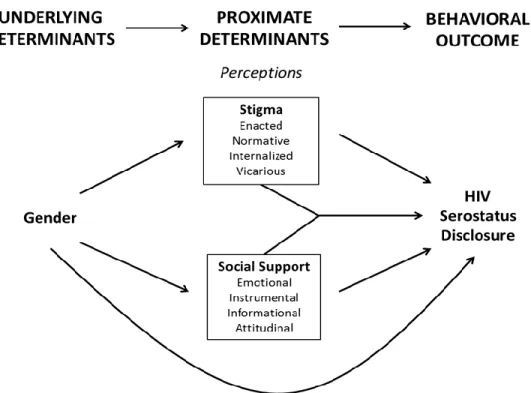
To better understand the relationship between gender and decisions to disclose one’s HIV serostatus, a proximate-determinants framework is useful34. It is hypothesized that the relationship between disclosure status and gender, an underlying determinant and root socio-cultural driver of the HIV epidemic, will be mediated by perceptions of HIV-related stigma and social support. As mentioned above, previous literature supports the role of HIV-related stigma and social support perceptions as salient proximate-determinants influencing the decision-making process around HIV serostatus disclosure.
Figure 1. Proximate-determinants framework demonstrating the relationship between gender and HIV serostatus disclosure via perceptions in HIV-related stigma and social support
III. METHODS
A.
Study Design & Data Collection
The in-depth interviews were conducted as a qualitative arm to the study Sexual Behavioral Relationships and HIV Infection in Ho Chi Minh City, Vietnam, heretofore referred to as the VN Network study. The VN Network study is linked to Combined Cross-Sectional and Prospective Study of HIV Incidence and Detection of Acute HIV Infection among High Risk Populations in Ho Chi Minh City
(Sexton et al, 2011) which is part of the Site Identification and Development Initiative (SIDI), funded through the US Agency for International Development (USAID), to identify and develop new study sites for HIV prevention research. For more information on SIDI please refer to Sexton et al.36 and Costenbader et al.37
88 in-depth interview participants were purposively sampled from the SIDI study to explore how their voluntary counseling and testing (VCT) center experiences and knowledge of personal HIV status affected their individual behaviors and relationships. After being tested for HIV at one of three VCT centers in Ho Chi Minh City, study participants who consented were interviewed no sooner than one week after receiving their SIDI study-related results. Only study participants who tested positive were included in this secondary data analysis.
Local Vietnamese interviewers were trained by FHI360 staff to conduct the in-depth interviews. The interviews consisted of structured, open-ended questions on several topics related to: participants’ experience with SIDI-related HIV testing and diagnosis; their decisions to disclose their HIV status; their perceptions of neighborhood acceptance of people living with HIV/AIDS (PLWHA) and social support; and, the effect of receiving their HIV test results on post-test behaviors. All interviews took no longer than 1 hour to conduct and were digitally recorded, transcribed and translated from Vietnamese to English according to a standardized protocol.
section on neighborhood acceptance of PLHWA. Participants were coded as either self-disclosed or non-disclosed. An HIV+ participant was coded as disclosed if s/he has informed at least one other person of his/her HIV status. An HIV+ participant was coded as non-disclosed if s/he actively chose to not reveal his/her HIV status; this includes cases when a third party disclosed the participant’s status without his or her consent. Sex and HIV serostatus were cross-checked with demographic information collected in the VN Network study.
B.
Data Analysis
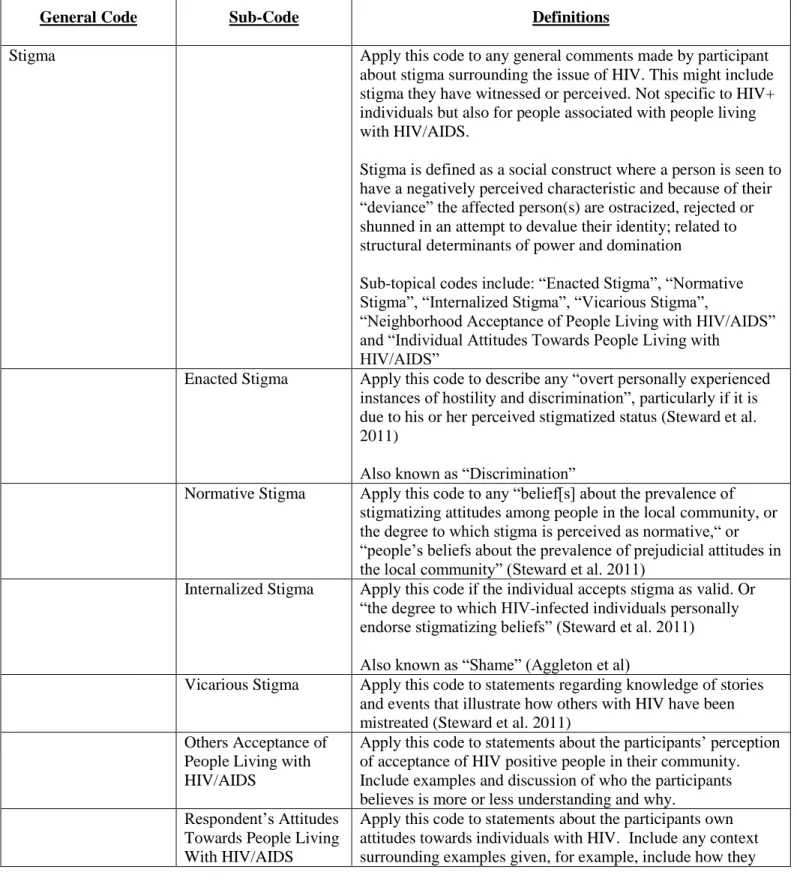
A two-stage directed content analysis was used to analyze the IDI transcripts. To remain consistent with other research from the VN Network study, relevant topical codes from the primary codebook were applied to the transcripts including HIV disclosure status, HIV stigma (enacted, normative, internalized and vicarious), and social support (emotional, informational, instrumental and attitudinal). Respondents were also coded for who they disclosed their HIV status to (if self-disclosed) or intended to disclose their status to. In the second stage, transcripts were re-coded for emergent themes that developed during the stage I coding process. Transcripts underwent multiple readings and analyses, resulting in an iterative process for identifying and modifying themes. For a detailed look at the codebook, please refer to Appendix Table A. Respondents were then stratified by gender and disclosure status into four families and comparisons were made across the groups. ATLAS.ti Version 6.238 was used for coding and qualitative analysis.
IV. RESULTS
Table 1. In-Depth Interview Demographics for HIV Positive Participants by Gender
Sex
Respondent Characteristic Males
n (%)
Females
n (%)
Total
n (%)
Mean Age (standard deviation) 29.3 (2.9) 27.8 (2.9) 28.1 (2.9) Marital Status
Single 6 (50%) 17 (35%) 23 (38%)
Married 4 (33%) 24 (50%) 28 (47%)
Other 2 (17%) 7 (15%) 9 (15%)
Category of Work
Sex Worker 0 (0%) 19 (40%) 19 (32%)
Manual Labor 7 (58%) 12 (25%) 19 (32%)
Food Service 1 (8%) 7 (15%) 8 (13%)
Office Work 0 (0%) 1 (2%) 1 (1%)
Sales 2 (17%) 1 (2%) 3 (5%)
Other 2 (17%) 8 (16%) 10 (17%)
HIV Disclosure Status
Self-Disclosed 11 (92%) 34 (71%) 45 (75%)
Non-Disclosed* 1 (8%) 14 (29%) 15 (25%)
TOTAL 12 48 60
* Includes participants where HIV serostatus results were disclosed by a third party without consent of participant
A.
Participant Characteristics and Descriptive Statistics
Figure 1. HIV Serostatus Disclosure Confidants among Self-Disclosed HIV Positive Participants by Gender
Figure 2. Intent to Disclose HIV Serostatus Results by Gender*
* Includes both self-disclosed and non-disclosed study participants
Among those self-disclosed (n=45), the respondents chose to disclose their HIV serostatus to a variety of confidants: primary partners (87%), family members (80%), close friends (20%), community members (9%), and co-workers (7%) (Figure 1). All men self-disclosed to at least one family member and 94% of women (n=32) self-disclosed to a primary partner. At the time of the interview, participants also intended to disclose their HIV status to primary partners (13%) and/or family members (32%); however,
0.0% 20.0% 40.0% 60.0% 80.0% 100.0% 120.0%
Primary Partner Casual Partner Family Close Friends Co-Worker Community
Total
Women
Men
Primary Partner Casual Partner Family Close Friends Co-Worker Community
0% 10% 20% 30% 40%
Total
Women
this was mainly reported by women as only one man who was non-disclosed intended to disclose his status to a family member (Figure 2).
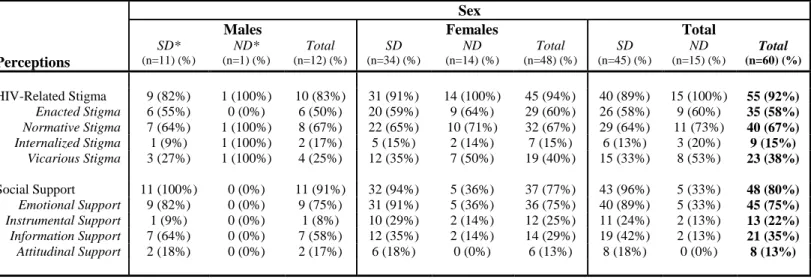
Table 3. Participants Who Reported Perceptions of Stigma and Social Support by Gender and Disclosure Status
Sex
Males Females Total
SD* ND* Total SD ND Total SD ND Total
Perceptions (n=11) (%) (n=1) (%) (n=12) (%) (n=34) (%) (n=14) (%) (n=48) (%) (n=45) (%) (n=15) (%) (n=60) (%)
HIV-Related Stigma 9 (82%) 1 (100%) 10 (83%) 31 (91%) 14 (100%) 45 (94%) 40 (89%) 15 (100%) 55 (92%)
Enacted Stigma 6 (55%) 0 (0%) 6 (50%) 20 (59%) 9 (64%) 29 (60%) 26 (58%) 9 (60%) 35 (58%)
Normative Stigma 7 (64%) 1 (100%) 8 (67%) 22 (65%) 10 (71%) 32 (67%) 29 (64%) 11 (73%) 40 (67%)
Internalized Stigma 1 (9%) 1 (100%) 2 (17%) 5 (15%) 2 (14%) 7 (15%) 6 (13%) 3 (20%) 9 (15%)
Vicarious Stigma 3 (27%) 1 (100%) 4 (25%) 12 (35%) 7 (50%) 19 (40%) 15 (33%) 8 (53%) 23 (38%)
Social Support 11 (100%) 0 (0%) 11 (91%) 32 (94%) 5 (36%) 37 (77%) 43 (96%) 5 (33%) 48 (80%)
Emotional Support 9 (82%) 0 (0%) 9 (75%) 31 (91%) 5 (36%) 36 (75%) 40 (89%) 5 (33%) 45 (75%)
Instrumental Support 1 (9%) 0 (0%) 1 (8%) 10 (29%) 2 (14%) 12 (25%) 11 (24%) 2 (13%) 13 (22%)
Information Support 7 (64%) 0 (0%) 7 (58%) 12 (35%) 2 (14%) 14 (29%) 19 (42%) 2 (13%) 21 (35%)
Attitudinal Support 2 (18%) 0 (0%) 2 (17%) 6 (18%) 0 (0%) 6 (13%) 8 (18%) 0 (0%) 8 (13%)
*SD = Self-Disclosed; ND = Non-Disclosed
Interview data were coded, tabulated and analyzed using four identified types of stigma (enacted, normative, internalized, vicarious) and four types of social support (emotional, instrumental, information, attitudinal). Regardless of gender and disclosure status, almost all participants (92%) reported perceiving at least one of the four types of HIV-related stigma: enacted stigma (58%), normative stigma (67%), internalized stigma (15%) and vicarious stigma (38%). In general, those who were non-disclosed were slightly more likely to report perceptions of stigma than those who were self-disclosed. However, while 80% of respondents (n=48) reported perceptions of social support, there was a large difference in reports between men who self-disclosed (100%) and women who were non-disclosed (36%). Emotional support (75%) was the most reported social support perception followed by informational support (35%), instrumental support (22%), and attitudinal support (13%).
B.
HIV-Related Stigma
feared being stigmatized and cited stigma as one of the main barriers to disclosure. As one female describes her fear of enacted stigma and her uncertainty of how others will treat her:
“I just know my result, I don’t want to tell anyone. Sometimes, I also wanted to tell others but I wondered if they know, do they discriminate me or console me?”
- female, non-disclosed, food service, age 25
Women in general reported more examples of perceived stigma than men, and specifically felt normative stigma to be common. They often described how people don’t accept people living with HIV in their communities and feared being isolated or discriminated against for being HIV positive.
Even among those who disclosed their status, stigma was still a common perception prior to disclosure and a common outcome after disclosure. One respondent described his experience with enacted stigma after disclosing to close friends:
“Yeah, it was kind of discrimination or…isolation. It was like…rumors. They whispered to each other, I had no idea what they were talking about…Every time I passed by them, I mean since the day I disclosed my HIV status, I saw them looking at me strangely…they became reluctant to meet me.”
- male, self-disclosed, sales, age 35
Stigma was often associated with shameful activities, which is most likely linked to the after-effects of the “social evils” campaign. Even if a respondent had accepted their own HIV status, they feared others looking down on them for acquiring the disease through a “shameful” activity such as drug use or sex work. Giving an example of vicarious stigma, one respondent explained:
“Some people whispered that he died because of AIDS, if one ate or drank together…many people don’t think that it can be transmitted by those ways. They just think…she goes with him, she may be infected too…they only think if she goes with him, it means having relations.”
- female, non-disclosed, sex worker, age 31
C.
Social Support
“I just told [my mom] when she finally asked me one day. No one loves us as much as our parents. Whoever I am, my parents are always sympathetic and forgiving, unlike people out there who are afraid of us. Whoever you are, your parents will always love you and give you best advice.”
- female, self-disclosed, sex worker, age 27
The interplay between HIV-related stigma and social support is evident and validates the idea of
social support as a buffer against stigma.
Emotional support was the most cited form of social support and allowed study participants to cope with their diagnosis while receiving the necessary care they needed to survive.
“[Disclosing] really helped. It gave me more resilience to move on…It gave me hope and motivation. It was so great to have support and encouragement from family members. I wanted nothing more…My parents paid more attention to me whenever I was sick, even when I had a common fever or a cold. They did not discriminate me a fraction. They treated me as before. I didn’t have to live separately from my family.”
- male, self-disclosed, manual labor, age 27
“But you can only get that kind of sympathy and compassion at home. Life out there is quite opposite…when my husband died. Everyone in our family circle treated me well. In fact, they paid more attention and care for me than before.”
- female, self-disclosed, unemployed, age 26
Social support appeared to decrease the negative effect that perceptions of stigma had on the HIV infected individual.
Mothers, as opposed to fathers, appeared to be the most likely family members to provide social support as many participants who disclosed their status reported disclosing to their mothers first. Even among the non-disclosed, when asked, several mentioned mothers specifically as someone they would feel comfortable disclosing to or intend to disclose to in the future. Respondents also preferred not to disclose to their fathers for fear of violence.
D.
Emergent Themes
Trust
to those they trusted and decided to not tell people they didn’t trust. One self-disclosed male (manual labor, age 29) said that he “had complete trust in my mom but not to my girlfriend. I was afraid she couldn’t keep her mouth shut.” Lack of trust was associated with spreading rumors and often respondents felt that those they didn’t trust would tell others that s/he was infected.
“I don’t trust anybody now. I hang out with friends outside a lot. I found that some friends were bad. In our society today, people tend to pay attention to appearances alone. They can exaggerate a story 10 times of its origin.”
– female, non-disclosed, unemployed, age 30
If their HIV status became public knowledge, many respondents perceived that they would be stigmatized and discriminated or socially isolated.
Interestingly, despite other studies suggesting that knowing HIV infected individuals is positively correlated with HIV disclosure 40,41, one participant (female, non-disclosed, unemployed, age 30) actually cited that as a reason not to disclose explaining, “Just think about this – how can they keep my secret while they told everyone theirs?” This example highlights the complexity of HIV disclosure and the potential for unintended negative consequences.
Protection & Isolation
Another emergent theme was the role of protection and isolation in respondent’s decisions to disclose or avoid disclosure. Protection served a dual role in decision making around HIV serostatus disclosure. On one hand, many respondents chose not to disclose their status so as not to distress or be a burden to other people. As one non-disclosed, female sex-worker, age 30, said:
“I am also very worried for my family. I am worried whether I would transmit the disease to my child and to my parents. At the beginning, I was afraid that HIV could be transmitted through eating. I later learnt that HIV is not transmitted through eating or any casual contact, so I felt released. But I am getting more careful in casual contacts.”
On the other hand, some participants chose to disclose their serostatus out of a felt responsibility to protect or inform others and prevent further transmission of the disease, particularly to sexual partners.
“I thought I had to tell him so that he was aware of his own infection and seek proper treatment at the clinic. I was concerned of his health.”
As a result of wanting to protect others, particularly among women, many chose to self-isolate themselves. For example, one woman wanted to protect her children from getting infected and stayed in her room to prevent transmission due to a misconception about how the virus is acquired.
“My only thought at that time was to protect people from getting infected. And the only way I could think of was to isolate myself from them. That’s why I kept myself inside the room for months. I didn’t even dare to stay in the same table to eat with my children. I often waited until my children went to school before I could get out of my room and had my meals. It went on like that for months.”
- female, self-disclosed, manual labor, age 34
Half Disclosure
While specific to only a few women, half-disclosure was an interesting phenomenon that occurred with some participants. In an attempt to “test the waters” and see if a person would accept their HIV positive status, the respondent would “half-disclose” or disclose without any real intention of the other person knowing the truth about their serostatus. Often the half-disclosure would be performed in a playful, sarcastic manner. As one female respondent described:
“I just said vaguely, I came home…I didn’t share really. I smiled while I told him, so he thought I made a joke […] I was sad, but I always smiled so he didn’t believe. Such as you, if your friend smiles while telling a story, do you believe in this story? You believe a half, not completely…”
- female, non-disclosed, sex worker, age 31
V. DISCUSSION
Three fourths of the study participants chose to self-disclose their HIV serostatus to primary partners and family members, yet there appeared to be differences in disclosure prevalence between men and women. While most men chose to disclose their HIV serostatus to at least one person, a little less than one third of women chose to hide their test results. Among those women who chose not to disclose their HIV status, many intended to disclose their status to primary partners and family members.
Using frequency counts of reported perceptions of HIV-related stigma and social support in the in-depth interview (IDI) transcripts, stigma was perceived by most participants across the board. However, an interesting disparity arose between self-disclosed men and non-disclosed women when looking at perceptions of social support. While all self-disclosed men reported perceiving at least one type of social support, only a third of non-disclosed women reported perceiving any social support. When examining the transcripts and respondents reasons for or against disclosure, stigma and social support appeared to play contrasting yet simultaneous roles in the decision-making process.
Few studies have examined HIV serostatus disclosure from a gender perspective, specifically comparing women and men. Additionally, most studies have been strictly quantitative and are unable to draw inferences about why gender differences exist. Unfortunately, while gender differences are apparent in this study, the IDIs failed to conjure concrete examples of the role of gender norms. A few women mentioned that they felt uncomfortable discussing sex with someone of the opposite gender which might explain their general reluctance to talk about their HIV status which is intrinsically tied to sex. However, their comments were not specific to HIV disclosure so they are insufficient to draw conclusions around the relationship between gender norms and disclosure; future studies should aim to explore the socio-cultural roots of the gender differences found in this study.
Second, it was difficult to code some disclosure decisions because some of the transcripts were translated awkwardly from Vietnamese to English. For the most part, it was easy to code self-disclosed participants and who they disclosed their HIV tests results too. However, non-disclosure was a little more difficult particularly in cases where third party disclosure or “half-disclosure” occurred. Since an external team at FHI360 had already reviewed the transcripts and achieved group consensus on whether a respondent was self-disclosed or non-disclosed, disclosure coding was cross-checked with their results.
Regarding the qualitative analysis, comparisons were supposed to be made across four families of respondents: self-disclosed males, non-disclosed males, self-disclosed females and non-disclosed females. Unfortunately, there was only one non-disclosed male making it difficult to make comparisons between him and the other three groups. Additionally, half of his transcript was lost as a result of poor audio recording and inaudible responses. While this was a big complication, there appeared to be enough differences between self-disclosed males and non-disclosed females to suggest a gender disparity and further research is necessary with a larger sample size of men.
Since a modified version of respondent driven sampling was used to recruit SIDI study participants, this study was more likely to include the partners of HIV positive participants in the sample so that might explain the large number of people who reported disclosing their HIV serostatus to their primary partners. Additionally, injection drug users (IDU) were underrepresented in the study population since the parent study focused on individuals who were sexually high-risk for HIV.
Finally, due to the small sample size, the quantitative results are not necessarily generalizable to the larger HIV population in Vietnam. For this reason, descriptive statistics (frequency counts and cross-tabulation), as opposed to inferential statistics, were used to demonstrate general trends.
generalizable and the sample size is quite small, in this study sample there appeared to be differences among the male and female respondents in their post-VCT experiences which is an indication that gender is an important factor to consider when designing HIV testing programs for HIV prevention.
Since fear of stigma was one of the most commonly mentioned barriers to disclosing HIV test results, community-based programs should help normalize HIV testing and reduce the level of stigma people perceive towards people infected with HIV/AIDS, particularly for women, in order to allow them to feel more comfortable disclosing their test results. The lingering effects of the HIV “social evils” campaign are still being felt today, evident by the number of respondents that made references to “shameful activities” associated with HIV transmission and this needs to be addressed in HIV prevention campaigns. To support women and encourage them to disclose their test results, increased social support services could be provided, such as post-test clubs, so that women can gain the support to disclose their results and these programs should address barriers around trust, protection and isolation.
VI. ACKNOWLEDGEMENTS
This work was made possible by the generous support of the American people through the U.S. Agency for International Development (USAID). Funding was provided by USAID under the terms of Cooperative Agreement No. GPO-A-00-05-00022-00, the Contraceptive and Reproductive Health Technologies Research and Utilization (CRTU) Program. The contents are the responsibility of FHI360 and do not necessarily reflect the views of USAID or the United States Government.
REFERENCES
1. MacNeil J, Anderson S. Beyond the dichotomy: linking HIV prevention with care. AIDS. 1998; 12(Suppl 2): 19S-26S.
2. Stirratt M et al. The role of HIV serostatus disclosure in antiretroviral medication adherence.
AIDS Behavior. 2006; 10(5): 483-493.
3. Wolfe W et al. Effects of HIV-related stigma among an early sample of patients receiving antiretroviral therapy in Botswana. AIDS Care. 2006; 18(8): 931-933.
4. Kalichman S et al. Stress, social support and HIV-status disclosure to family and friends among HIV-positive men and women. Journal of Behavioral Medicine. 2003; 26(4): 315-332.
5. Medley A et al. Rates, barriers and outcomes of HIV serostatus disclosure among women in developing countries: implications for prevention of mother-to-child transmission programmes.
Bulletin of the World Health Organization. 2004; 82(4): 299-307.
6. King R et al. Processes and outcomes of HIV serostatus disclosure to sexual partners among people living with HIV in Uganda. AIDS Behavior. 2008; 12(2): 232-243.
7. Obermeyer C, Paijal B, Pegurri E. Facilitating HIV disclosure across diverse settings: a review.
American Journal of Public Health. 2011; 101(6): 1011-1023.
8. Simbayi L et al. Internalized stigma, discrimination, and depression among men and women living with HIV/AIDS in Cape Town, South Africa. Social Science & Medicine. 2007; 64(9): 1823-1831.
9. Pinkerton S, Galletly C. Reducing HIV transmission risk by increasing serostatus disclosure: a mathematical modeling analysis. AIDS Behavior. 2007; 11(5): 698-705.
10. Chaudoir S, Fisher J. The disclosure processes model: understanding disclosure decision-making and post-disclosure outcomes among people living with a concealable stigmatized identity.
Psychology Bulletin. 2010; 136(2): 236-256.
12. Shamos K, Hartwig K, Zindela N. Men’s and women’s experiences with HIV and stigma in Swaziland. Qualitative Health Research. 2009; 19(12): 1678-1689.
13. Brown L, Mackintyre K, Trujillo L. Interventions to reduce HIV/AIDS stigma: what have we learned? AIDS Education and Prevention. 2003; 15(1): 49-69.
14. Obermeyer C et al. Gender and HIV testing in Burkina Faso: an exploratory study. Social Science & Medicine. 2009; 69: 877-884.
15. Goffman E. Stigma: Notes on the management of spoiled identity. Englewood Cliffs, NJ: Prentice Hall; 1963.
16. Link B, Phelan J. Conceptualizing stigma. Annual Review of Sociology. 2001; 27: 363-385. 17. Tewksbury R, McGaughey D. Stigmatization of persons with HIV disease: perceptions,
management, and consequences of AIDS. Sociological Spectrum. 1997; 17(1): 49-70. 18. Parker R. Stigma, prejudice and discrimination in global public health. Cadernos de Saúde
Pública. 2012; 28(1): 164-169.
19. Parker R, Aggleton P. HIV and AIDS-related stigma and discrimination: a conceptual framework and implications for action. Social Science & Medicine. 2003; 57(1): 13-24.
20. Maman S et al. A comparison of HIV stigma and discrimination in five international sites: the influence of care and treatment resources in high prevalence settings. Social Science & Medicine. 2008; 68(12): 2271-2278.
21. Anh Thi et al. A qualitative study of stigma and discrimination against people living with HIV in Ho Chi Minh City, Vietnam. AIDS Behavior. 2008; 12 (Suppl 1): 63S-70S.
22. Aggleton P et al. HIV-related stigma, discrimination and human rights violations: case studies of successful programs. UNAIDS Best Practices Collection. 2005.
24. Cohen S, McKay G. Chapter 10. Social support, stress and the buffering hypothesis: a theoretical analysis. In: Baum A, Taylor S, Singer J, eds. Handbook of Psychology and Health. Hillsdale, NJ; 1984.
25. Shumaker S, Brownell A. Toward a theory of social support: closing conceptual gaps. Journal of Social Issues. 1984; 40(4): 11-33.
26. Langford C et al. Social support: a conceptual analysis. Journal of Advanced Nursing. 1997; 25(1): 95-100.
27. Serovich J. A test of two disclosure theories. AIDS Education Prevention. 2001; 13(4): 355-364. 28. Smith R, Rossetto K, Peterson B. A meta-analysis of disclosure of one’s HIV-positive status,
stigma and social support. AIDS Care. 2008; 20(10): 1266-1275.
29. UN General Assembly. 2001. Declaration of commitment on HIV and AIDS adopted at the 26th United Nations General Assembly Special Session in June 2001: Reporting Period January 2008-December 2009. General Assembly, 26th special session. Hanoi, March 2010.
30. Nguyen T et al. A hidden HIV epidemic among women in Vietnam. BMC Public Health. 2008; 8: 37-47.
31. Hong K, Van Anh N, Ogden J. Understanding HIV and AIDS-related stigma and discrimination in Vietnam. In: International Center for Research on Women (ICRW) ed. Washington, DC: International Center for Research on Women. 2004.
32. Ngo A et al. Health seeking behavior for sexually transmitted infections and HIV testing among female sex workers in Vietnam. AIDS Care. 2007; 19(7): 878-887.
33. Quan V, Hien N, Go V. Chapter 20. The HIV epidemic in Vietnam: past, present and opportunities. In: Celetano D, Beyrer C, eds. Public Health Aspects of HIV/AIDS in Low and Middle Income Countries. 2008
35. Serovich J, Kimberly J, Greene K. Perceived family member reaction to women’s disclosure of HIV-positive information. Family Relations. 1998; 47(1): 15-22.
36. Sexton C et al. Correlation of prospective and cross-sectional measures of HIV type I incidence in a higher risk cohort in Ho Chi Minh City, Vietnam. AIDS Research and Human Retroviruses. 2011; 27(00): 1-8.
37. Costenbader B et al. Serostatus disclosure decisions and experiences with stigma among HIV-infected in Ho Chi Minh City, Vietnam. AIDS Care (Draft). 2011.
38. ATLAS.ti Scientific Software Development GmbH. ATLAS.ti (Version 6.2) [Computer software], Berlin, Germany: ATLAS.ti Scientific Software Development GmbH.
39. StataCorp. 2011. Stata Statistical Software: Release 12. College Station, TX: StataCorp LP. 40. Antleman G et al. Predictors of HIV-1 status disclosure: a prospective study among HIV-infected
pregnant women in Dar Es Salaam, Tanzania. AIDS. 2001; 15(14): 1865-1874.
APPENDIX
Table A. Code book of topical and emergent themes
General Code Sub-Code Definitions
Stigma Apply this code to any general comments made by participant
about stigma surrounding the issue of HIV. This might include stigma they have witnessed or perceived. Not specific to HIV+ individuals but also for people associated with people living with HIV/AIDS.
Stigma is defined as a social construct where a person is seen to have a negatively perceived characteristic and because of their “deviance” the affected person(s) are ostracized, rejected or shunned in an attempt to devalue their identity; related to structural determinants of power and domination
Sub-topical codes include: “Enacted Stigma”, “Normative Stigma”, “Internalized Stigma”, “Vicarious Stigma”,
“Neighborhood Acceptance of People Living with HIV/AIDS” and “Individual Attitudes Towards People Living with
HIV/AIDS”
Enacted Stigma Apply this code to describe any “overt personally experienced instances of hostility and discrimination”, particularly if it is due to his or her perceived stigmatized status (Steward et al. 2011)
Also known as “Discrimination”
Normative Stigma Apply this code to any “belief[s] about the prevalence of stigmatizing attitudes among people in the local community, or the degree to which stigma is perceived as normative,“ or “people’s beliefs about the prevalence of prejudicial attitudes in the local community” (Steward et al. 2011)
Internalized Stigma Apply this code if the individual accepts stigma as valid. Or “the degree to which HIV-infected individuals personally endorse stigmatizing beliefs” (Steward et al. 2011) Also known as “Shame” (Aggleton et al)
Vicarious Stigma Apply this code to statements regarding knowledge of stories and events that illustrate how others with HIV have been mistreated (Steward et al. 2011)
Others Acceptance of People Living with HIV/AIDS
Apply this code to statements about the participants’ perception of acceptance of HIV positive people in their community. Include examples and discussion of who the participants believes is more or less understanding and why.
Respondent’s Attitudes Towards People Living With HIV/AIDS
know the individual, what their interactions have been, etc. Social Support Apply this code to statements made by the participant regarding
actual social support received (if disclosed) or perceived (lack of) social support (if non-disclosed) from their family, friends and/or community.
Social support is “the mechanism by which interpersonal relationships presumably buffer one against a stressful environment” (Cohen & McKay, 1984); “the assistance and protection given to others, especially to individuals” (Shumaker & Brownell, 1984)
Sub-topical codes include: “Emotional Support”, “Instrumental Support”, “Information Support” and “Attitudinal Support” Emotional Support Apply this code if social support “involves the provision of caring, empathy, love and trust” (Langford CP et al. 1997) Instrumental Support Apply this code if social support involves the “provision of
tangible goods and services, or tangible aid” (Langford CP et al. 1997)
Information Support Apply this code if social support is in the form of information provided to another during a time of stress; assistance to person with problem-solving (Langford CP et al. 1997)
Attitudinal Support Apply this code if social support “involves the communication of information which is relevant to self-evaluation rather than problem-solving”; also known as “affirmational support” (Langford CP et al. 1997)
Disclosure Apply this code to responses that indicate who the participant
disclosed or plans to disclose their HIV status to. Include context such as how, where, how the person responded/reacted, etc. Also include statements indicating non-disclosure and why.
Sub-topical codes include: “Self-Disclosed HIV Status”, “Non-Disclosed HIV Status”, “Third-Party Disclosure”, “Reasons for Disclosing/Non-Disclosing HIV Status” and “Other People’s Reactions to Disclosing HIV Status”
Self-Disclosed HIV Status
Apply this code if participant disclosed their HIV status to one or more people
Non-Disclosed HIV Status
Apply this code if participant has not disclosed their HIV status to anyone. Also known as “avoidance”
Third Party Disclosure Apply this code if participant’s HIV status disclosed by someone other than the participant without their consent. Classified as “Non-Disclosed” for analysis purposes. Reasons for Disclosing
/ Non-Disclosing HIV Status
Apply this code when the participant discusses rationale for why they disclosed or did not disclose their HIV status. Other People’s
Reactions to Disclosing HIV Status
reactions will be when/if they disclose. Exposure to HIV/AIDS
Information
Apply this code to statements made by the participant regarding their exposure to information around HIV. This can be any IEC/BCC message related to HIV (ex. HIV prevention message, VCT marketing, etc.) including the context (poster, TV, etc.)
Discussion of
HIV/AIDS with Others
Apply this code to responses from participants regarding discussions they have had with their friends about HIV/AIDS. Include context regarding how the conversation came up and what was said.
Questions about HIV/AIDS
Apply this code to questions that the participant has regarding HIV/AIDS.
Gender Roles* Apply this code to any response that makes a gender-based
distinction within their comment. Trust*
Lack of Trust*
Protection* Dual role of protection:
Protect Others vs. Protect Self
Often associated with isolation, or more specifically self-imposed isolation
Isolation* Half-Disclosure* Shameful Activities* Acceptance of HIV Positive Test Result* Accessing Support Services*
Table B. HIV Serostatus Disclosure Confidant by Study Participant Gender
Sex
Disclosure Males
n (%)
Females
n (%)
Total
n (%)
Self-Disclosed*
Primary Partner 7 (64%) 32 (94%) 39 (87%)
Casual Partner 1 (9%) 1 (3%) 2 (4%)
Family 11 (100%) 25 (74%) 36 (80%)
Close Friend 3 (27%) 6 (18%) 9 (20%)
Co-Worker 1 (9%) 2 (6%) 3 (7%)
Community 0 (0%) 4 (12%) 4 (9%)
Intend to Disclose†
Primary Partner 0 (0%) 8 (17%) 8 (13%)
Casual Partner 0 (0%) 0 (0%) 0 (0%)
Family 1 (8%) 18 (38%) 19 (32%)
Close Friend 0 (0%) 1 (2%) 1 (2%)
Co-Worker 0 (0%) 0 (0%) 0 (0%)
Community 0 (0%) 0 (0%) 0 (0%)
*Only includes self-disclosed participants