Introduction
In the United States diabetes is a growing epidemic that places an immense burden on both the health system and the individual managing the disease. In 2012, 29.1 million people or over 9% of the U.S. population had diabetes.1 The prevalence of diabetes is growing; in fact the World Health Organization (WHO) predicts that diabetes will be the 7th leading cause of death in 2030.2 These trends are mirrored within North Carolina where the prevalence of adults with diabetes doubled from 4.5 percent in 1995 to 9.6 percent in 2009.3 Diabetes places a costly burden on the state, and if this epidemic continues to grow at these rates annual health care costs are predicted to exceed $17 billion by 2025.4
implementation into clinical workflows can be challenging due to a variety of human, organizational and technical factors.
The interplay between the human, organizational and technical factors within an organization create a particular IT environment. Human factors include cognition at the individual level such as beliefs or culture.7 Organizational factors are aspects of the clinical workflow design, the structure and decisions of the organization. Technical factors directly relate to the specific information system utilized. This technical level includes the architecture of a system and its usability. As a physician is operating an information system, factors on the human,
organizational and technical levels are contributing to their interaction with the technology. Further, a physician utilizing the system establishes situational
awareness based upon the environment, which includes the human, organizational and technological levels.
A clinical decision support tool could aid physicians within and through the process of diagnosing, treating and managing diabetes. An assessment of the
human, organizational and technical factors within an organization that utilizes CDS for diabetic patients would identify the barriers and opportunities to implementing this type of system into a clinical practice. UNC Family Medicine, a physician
practice in North Carolina that utilizes CDS was identified and an evaluation was conducted of their use of this system.
Research Questions
• What main challenges do physicians face when treating patients with Type 2 diabetes?
• How do human factors contribute to a clinician’s engagement with a clinical decision support tool?
• In what ways do technological factors, such as system architecture, contribute to the use of a clinical decision support system by healthcare providers?
• How does organizational structure and workflow design affect the use of a CDS?
• How and in what ways is situational awareness achieved through the use of clinical decision support?
Literature Review
Prevalence of Diabetes
Type 2 diabetes is characterized by a resistance to the action of insulin along with insufficient production of insulin.8 Diabetes mellitus is a disease in which the level of glucose in the blood is abnormally high.9 This disease is associated with older age, obesity, certain genetics, and physical inactivity. Diabetes contributes to an individual’s likelihood to develop stroke, depression and heart disease. The leading cause of new cases of blindness, nontraumatic amputation, and kidney failure among adults is diabetes.10 Common treatment and management activities for diabetes are taking medication, making healthy nutrition choices, engaging in physical activity, and controlling cholesterol and blood pressure levels.11
Diabetes places an enormous economic burden on our health system and therefore the economy as a whole. In 2007 the total estimated cost of diabetes was $174 billion.12 This cost includes excess medical expenditures along with lost productivity. The medical cost of Type 2 diabetes alone is $105.7 billion.13 Type 2 diabetes is largely preventable and certainly manageable, yet our system is
incurring a huge medical cost due to the burden of this disease.14
diabetes, often 11.7% prevalence compared to 8.5% prevalence across the rest of the country.16 The state must implement innovative solutions in order reduce the burden of this disease that strains caregivers, individuals, the economy, and the health system.
Figure 1: Prevalence of Diabetes in the United States in 2007
Note: Data from Centers for Disease Control and Prevention. (n.d.). CDC Identifies Diabetes Belt. Retrieved from http://www.cdc.gov/diabetes/pdfs/newsroom/diabetesbelt.pdf
Clinical Decision Support
support systems were created from research in which developers used a knowledge base and a set of rules that attempted to recreate clinician thinking when confronted with a certain patient or diagnosis. Researchers saw an application for this type of system within the clinical workflow. This formed into CDS, which can take over routine tasks for the clinician and assist them in decision-‐making. CDS is used to aid in diagnosing a patient, suggesting treatment and management plans, ensuring screening for preventable diseases, and warning against adverse drug reactions and interactions. Beyond clinical needs, CDS can lower costs and improve efficiency by alerting clinicians before a duplicate test is performed, for example.
Clinical decision support systems contain a knowledge base that is the foundation of the technology. This knowledge base can consist of information on drug interactions, clinical information on specific diagnoses, treatment algorithms, and guidelines. When a clinician is treating a particular patient, the patient’s medical data is pulled from their EMR/EHR and combined with the existing
knowledge base in the system. CDS systems serve a variety of functions, including reminding clinicians of things they need to do, providing information from the knowledge base when clinicians are unsure what to do, correcting any errors a clinician makes, and recommending a change in the clinician’s plan.
reported high levels of satisfaction with the system.18 In fact, the use of the EHR-‐ based CDS improved glucose control and some aspects of blood pressure control among diabetic adults. The findings also suggest that physicians were able to apply what they learned using CDS with one patient to care for other patients.
Situational Awareness and the Human, Technical and Organizational Factors
Situational awareness (SA) is a key factor in the use and effectiveness of a system like clinical decision support. Situational awareness is being conscious of things that are happening in the environment and understanding the meaning of this information.19 SA typically relates to the objectives of a particular function or job. Therefore, only the pieces of information related to that specific function or job are relevant for SA. For example, the pilot of an aircraft needs to know about the location of other planes and the weather, but they do not need to know what their copilot had for lunch.20 Situational awareness is “the perception of the elements in the environment within a volume of time and space, the comprehension of their meaning, and the projection of their status in the near future”.21 SA is often the foundation for decision making in many fields, particularly healthcare. In order to assess SA it is important to examine the human, technical and organizational factors.
Human factors include inherent human behaviors, abilities, limitations, and the relationship between people and their work environment. Human factors in
displayed and relayed so that a user can develop an unbiased view. Human factors such as the user’s knowledge, awareness, attitudes and beliefs are all essential to how they operate the system and their perceptions of the technology.22 Also, the extent to which an individual utilizes their working or long-‐term memory while operating the system can have an impact on the efficiency of the clinical decision support system. A final component of the human factors are the human projections that take place outside the system and the process for debriefing and drawing conclusions. This can be particularly important with the use of a clinical decision support system, since often decisions need to be made about the most effective course of treatment for a patient.
The technical factors include components of the actual system architecture. Technological factors in a clinical decision support system include the system design and blueprint of the processes. A system that is easily adapted or customized may allow a clinical practice to tailor its functionality to their needs. An important technical factor for CDS is the way in which it is linked to other systems and databases including the electronic health record. The user interface, format of alerts, process for updating information and storage of data are all components of the technical factors of an information system.
understanding of the system. Most of the organizational factors fall within structure and environment. Structure includes size, culture, planning, control systems,
management and communication strategy. Organizational politics, type of
populations served, and competition encompass the organization’s environment.23
Methods
Research Design
This qualitative case study assesses the use of a clinical decision support system in the treatment and management of diabetes. The case study methodology was employed because a rich description of the technological environment was being sought through the study of a CDSS in the natural environment of a clinical practice.24 This is an instrumental case study because although a single case is being considered, the research aims to use the individual case to inform a wide variety of settings and cases.25 Situational awareness was assessed from the physician perspective at multiple levels. A holistic approach was used in the study design. Human, technical and organizational factors were examined to evaluate the IT environment in its entirety. The physicians were surveyed about the human, organizational and technical factors. Informal conversations with nurses provided information about the human and organizational factors. Finally, through
observation and shadowing, insights were gained about the organizational and technical factors.
Figure 2 – Key Sources for Three Main Factors
Human Organizational Technical
Physicians
Observation
Nurses
Research Methods
Interviews were conducted with physicians who utilize the clinical decision support system in their decision making process. Based upon the theoretical framework, the interview was divided into three main sections, focusing on the human, organizational and technical dimensions of implementing the CDS. The interview consisted of mostly open-‐ended questions across all three factors. For example, a question within the organizational factors section could ask, “What do you view as the main mission of your practice?” (See Appendix for full physician interview guide) In order to gain an adequate sampling, 5 physicians were
interviewed. In addition, it is important to administer the interview verbally and in-‐ person so that non-‐verbal cues and the body language of the informant can also be assessed. Notes recorded by the researcher included any non-‐verbal cues that
revealed attitudes, beliefs, or other pieces of information related to the three factors. The interview was created through an extensive planning process that included the focused development of questions. Next, the interview was piloted and any
modifications were made to the interview guide before it was administered. The interview was piloted by distributing the interview guide to 4 colleagues who read the questions and made comments to ensure clarity. Based upon this feedback modifications were made to the wording of questions along with adding probes.
study does not explicitly involve culture, the process of ethnographic observation was utilized. The researcher engaged in cultural immersion by spending time in the physician practice setting, listening, observing and asking questions to understand the daily operations of the practice and the root of certain behaviors and attitudes.27 This observation was done in two main ways: first the researcher conducted
observation by staying at the nurse’s station and listening and observing in this environment. Second, the researcher conducted observations by shadowing a physician for a half-‐day of patient visits and other daily activities the physician completes. Cultural immersion is particularly useful for analyzing the human factors and gathering data about the beliefs and attitudes of each key informant. Unstructured interviews were conducted with nurses and other medical personnel during the observation process in the form of paying attention to existing
conversations and asking relevant questions. The data collected from these interactions was used to supplement and flesh out facts collected from the interviews with physicians. A question for a nurse may ask, “What steps do you usually complete in Epic before the physician meets with a patient?”
Data Analysis
Creditability of these qualitative methods was established through the consistency of the methods with each key informant and also uniformity in the evaluation of the collected data. The interviews were administered verbally and in-‐ person, therefore the data were collected in the form of recordings and notes. The majority of the questions only required a short response, so extensive coding techniques were not needed. Instead, data such as notes and/or recordings were reviewed for main themes and key points. The more in-‐depth interviews with the physicians yielded more extensive qualitative data. For these interviews, any recordings were transcribed and then the transcriptions and notes were coded for main themes.28 These methodologies are designed as change-‐oriented objectives. The methodologies outlined above aim to complete an assessment that allows future CDS systems to be designed and implemented more effectively. This assessment will evaluate situational awareness and identify areas of strength and opportunity within the human, technical and organizational factors within the context of utilizing a clinical decision support system. Therefore, the data collected by these methodologies can be analyzed and utilized to design more efficient and effective CDS systems in the future. Improving the design of CDS improves situational awareness and this in turn generates better patient outcomes.
UNC Family Medicine
This study was conduced at UNC Family Medicine. Family Medicine is a primary care physician practice that falls under the larger UNC Hospitals umbrella. This physician practice provides care to patients in North Carolina including those who are underserved, mothers and children, the elderly and other at risk
populations. Overall, Family Medicine serves approximately 5,000 patients a month; of these patients about 35% are on Medicare and 30% have private insurance. A new EHR system, Epic, was implemented across UNC Hospitals, including in Family Medicine, on April 4, 2014. This implementation included a clinical decision support system that consists of Best Practice Alerts (BPAs) and warnings for drug interactions and reactions. Although this clinical decision
support system is utilized for a variety of conditions and diagnoses, Family Medicine serves a large population of diabetic patients and the system has tailored alerts and advisories for Type 2 diabetes.
Ethical Considerations
Institutional Review Board approval was obtained in January 2014 at The University of North Carolina at Chapel Hill. As this research involves human beings, it was conducted with care and regard for all individuals involved.
Findings
Challenges to Diabetes Management
Physicians face many barriers when treating patients with Type 2 diabetes. Many of the physicians who were interviewed identified temporal issues. For example, often patients seek care for their diabetes after a related adverse medical event has occurred. At this point in time it may be too late to reverse some of the effects of the diabetes and the physician is only able to work retroactively in order to help the patient manage their chronic disease.
Physicians also identified social and behavioral barriers as some of the most significant challenges to address in patients with diabetes. Lifestyle factors such as diet and exercise are the root cause of most cases of Type 2 diabetes, and these are the hardest factors to address for a physician. UNC Family Medicine serves a demographic that includes many low-‐income individuals. This adds an extra challenge because individuals do not have a lot of money to buy healthy food or make more active lifestyle choices. Portion control is an important part of managing diet and one physician identified that patients with insurance can be referred to a nutritionist who can help to address this barrier.
Another behavior barrier is adherence to medications. Diabetes is often
physician, it is important to get patients on effective medications and then to closely follow-‐up with the patient.
The final challenge physicians identified was addressing comorbidities. One doctor identified that 50% of her patients with Type 2 diabetes also have
depression. Comorbidities, like depression, complicate the treatment and management of Type 2 diabetes.
In order to provide high quality care physicians must make a variety of decisions with their diabetic patients. Most of the physicians stated that the decisions they have to make are highly variable, but a few areas of decision-‐making are
to ensure that their diabetic patients are receiving the best care and that they are meeting appropriate clinical ranges for blood pressure, A1c, and other clinical indicators. In order to ensure diabetic patients are staying healthy physicians must decide the frequency of patient visits. One physician explained that once diabetes is managed they only need to see a patient twice a year, but if the diabetes is not managed they need to see the patient at least once a month. Decisions about medication, social factors, lifestyle, and frequency of visits are all important for managing diabetes, and physicians can be assisted in this process through the use of clinical decision support.
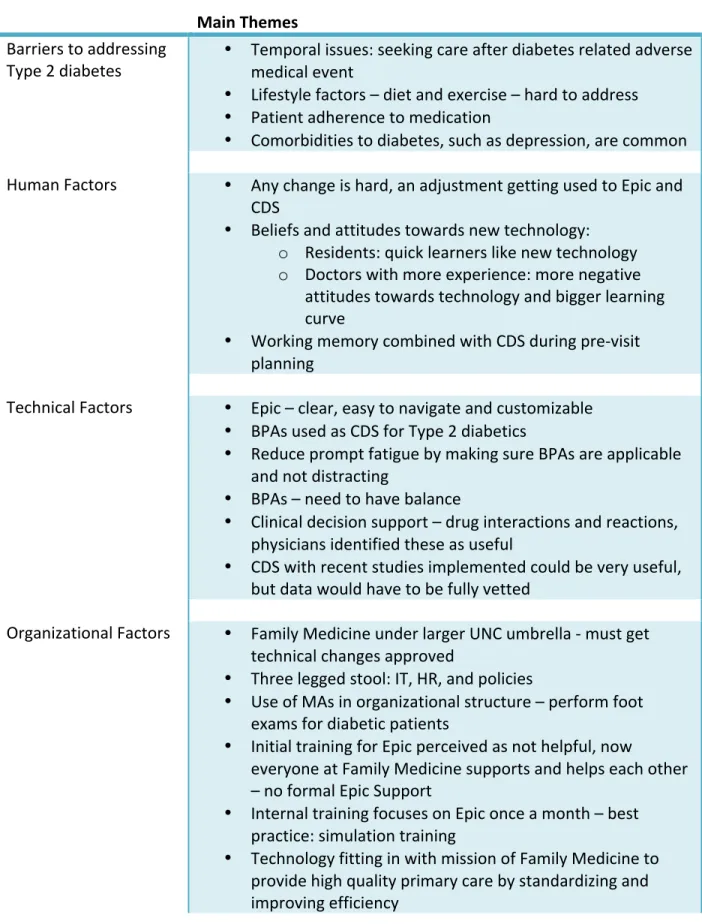
Table 1 – Main Themes Identified in Findings
Main Themes
Barriers to addressing
Type 2 diabetes • Temporal issues: seeking care after diabetes related adverse medical event • Lifestyle factors – diet and exercise – hard to address
• Patient adherence to medication
• Comorbidities to diabetes, such as depression, are common
Human Factors • Any change is hard, an adjustment getting used to Epic and CDS
• Beliefs and attitudes towards new technology: o Residents: quick learners like new technology o Doctors with more experience: more negative
attitudes towards technology and bigger learning curve
• Working memory combined with CDS during pre-‐visit planning
Technical Factors • Epic – clear, easy to navigate and customizable • BPAs used as CDS for Type 2 diabetics
• Reduce prompt fatigue by making sure BPAs are applicable and not distracting
• BPAs – need to have balance
• Clinical decision support – drug interactions and reactions, physicians identified these as useful
• CDS with recent studies implemented could be very useful, but data would have to be fully vetted
Organizational Factors • Family Medicine under larger UNC umbrella -‐ must get technical changes approved
• Three legged stool: IT, HR, and policies
• Use of MAs in organizational structure – perform foot exams for diabetic patients
• Initial training for Epic perceived as not helpful, now
everyone at Family Medicine supports and helps each other – no formal Epic Support
• Internal training focuses on Epic once a month – best practice: simulation training
Human Factors
Many human factors took effect when the new Epic electronic health record (EHR) was implemented at Family Medicine, and these factors continue to play a role in the day-‐to-‐day operation of the EHR and the clinical decision support system within that. The first human factor that doctors addressed was that any change is hard for individuals to adapt to. This is especially true with the implementation of Epic because it is such a large system and a big change from the previous
homegrown system Family Medicine had, WebCIS. It takes time to adjust and learn a new system. One doctor said that when Epic was implemented, “No one knew what they were doing; it was the blind leading the blind.” This doctor stated that he knew that he signed an order but wondered if it was going to the right place. In addition, he stated that he felt as though the practice lost ground when Epic was implemented, especially with regards to population management.
experienced physicians that were interviewed both spoke about one provider that stopped practicing after Epic was implemented because this individual did not want to deal with learning the new technology. An experienced physician explained it well, how someone handled implementation depended on where they were in their training. It was more challenging for the established physicians because they know the medicine but now they have to establish efficiency with Epic, and it was not a challenge for the new doctors because although they still need to learn the medicine they took to the technology quickly. Most people have adopted the new system with clinical decision support, and this could be partially due to the fact that the previous system was antiquated and many were looking for something updated. One
organizational and human factor overlap is the environment of an academic center and the type of people that this type of center attracts. This environment tends to draw lots of learners to Family Medicine, along with medical professionals who are used to the teaching and learning environment. This common attitude and
environment makes the uptake of new technology, like clinical decision support, easier.
information stored on a temporary basis.29 New information from alerts is
perceived and combined with existing knowledge in a physicians working memory to create an updated mental picture of the situation. Often this leads physicians to make projections about the future and this guides their actions. A high level of situational awareness can be reached through this process.
Balancing alerts while keeping focus is a human factor challenge that many physicians at Family Medicine face. One physician stated that it was difficult to look at the patient and listen to them while being in the moment due to the number of clicks she needs to get through in the system and specifically with the best practice alerts (BPAs) that are part of the CDS. Another physician pointed out that if a doctor is busy they do not look at alerts and they are easy to ignore in the system. He goes on to say that these alerts should be easy to ignore otherwise physicians would become increasingly frustrated with them and would lose some of their autonomy. It is imperative that the BPAs are balanced so that the physician is well informed but not distracted. Human factors that were identified during key informant interviews including: individual adaptability to change, attitudes and beliefs towards new technology and working memory, all effect the way in which medical professionals engage with clinical decision support.
Technical Factors
system as clear and easy to navigate. One doctor pointed out that the system is highly customizable and anything can be built into the technical architecture. Two of the interviewed physicians pointed out the importance of using Epic on
widescreen computers in order to see the largest amount information at once and to reduce the number of clicks the physician needs to make. One physician who has become an expert on the system describes it as busy but says that once you learn it, the technology it is easy to navigate. He goes on to say that with electronic health records you have to balance power and accessibility and often the more powerful the system the less easy it is to navigate. Everything in the EHR has to happen quickly so that its use is efficient and physicians are maximizing their time.
Compared to the previous system, WebCIS, which was described as clunky, Epic is more streamlined and has searchability.
The main part of Family Medicine’s clinical decision support system within Epic takes the form of best practice alerts (BPAs). BPAs were launched at Family Medicine after Epic go-‐live. BPAs are under the “plan tab” in Epic and they are programmed to pop-‐up and are color coded according to importance. These BPAs are used across all patients, which includes a large portion of Type 2 diabetics that Family Medicine serves. BPAs for Type 2 diabetics include reminders about checking A1c levels, foot exams, eye exams, drug management, and other key treatments and screenings.
feels that it is best to have the BPAs all at the beginning of the visit. There are some challenges with these BPAs, though. One key informant said that often she clicks on a BPA that reminds her to check a patients A1c, but she can’t figure out how to order the test. She says that there are 20 ways to order an A1c and it is just easier to turn off the alerts and order on her own. The other four physicians that were
BPAs to specific staff versus providers would have to be approved by the overall UNC system. His second suggestion was to use an algorithm that limited the total number of prompts to 3, for example, and chose these alerts based on various factors so that alerts were prioritized. Finally, this physician suggested utilizing the high, medium and low priority hierarchy that is already in place and color-‐coded by rotating the medium and low alerts.
The second component of clinical decision support at Family Medicine is the warnings and notifications for adverse drug interactions and reactions. All of the interviewed doctors said that this was a useful part of the technology. This portion of the system notifies the physician when a duplicate drug or lab is ordered along with identifying drug-‐drug and drug-‐disease interactions. The system can also give potential side effects of the medication that is being prescribed.
The final component of the technical factors includes a discussion of the future of clinical decision support. The interviewees liked the idea of a CDS system that included suggestions for treatment or management plans for diabetic patients based upon current literature that takes into account demographic information from a patient’s medical record. Most also stated that the best practices
might be some pushback with this type of expansion of CDS. The current system takes into account age and sex for clinical decision support, to expand this further there would need to be a centralized group to oversee this process. Technical factors such as system usability, prompt fatigue, balance of BPAs and CDS
capabilities all contribute the to the use of the system by heath care providers at Family Medicine.
Organizational Factors
Family Medicine has a unique set of organizational factors because they are a non-‐hospital based clinic under the larger UNC umbrella. The UNC Hospitals system provides Family Medicine with organizational structure and resources. This means that Family Medicine must have everything, including changes to technology,
approved system-‐wide. This makes it challenging for Family Medicine to customize and make changes to the clinical decision support system because they must be approved and adopted at the system level. One doctor described the organizational factors as a three-‐legged stool consisting of IT, HR, and policies (standard work and training). These three legs must be in balance and in sync for the practice to run effectively. Family Medicine is a level 3 Patient Centered Medical Home (PCMH), which means that Family Medicine is organized in a way that promotes care
organize clinical information, and many other efforts that allow Family Medicine to deliver high quality primary care.30
It is important for clinical decision support systems to fit into the
organizational structure. At Family Medicine, this is done by clearly defining the roles of the various medical professionals. Medical assistants (MAs), nurses and physicians all have different roles and utilize the system at different points in the clinical workflow. From both observation and interviews it was clear that the MAs often utilize the system before the patient appointment to prep the doctor. The medical assistants are even trained to do a foot exam for diabetics, so if they see an alert in the CDS system that the patient is due for a foot exam they are able to perform this function. Recently, Family Medicine hired a lot of new medical
assistants because they work off a medical license and can perform more tests and procedures than a LPN. LPNs work off a nursing license, so it made sense for Family Medicine to switch its organizational structure towards having more MAs and one or two RNs. Clearly defined roles among providers and staff help the practice to be efficient.
trainings every month along with Epic “Super Users”. Epic Super Users are peers that had more training during go-‐live and are able to help those in the practice that have questions or are having trouble. The extra training they received was mostly about how to teach others and so some questioned whether this was helpful. Most of the Super Users have not been active since 1-‐2 months after go-‐live. One doctor described the current organizational environment as one in which everyone just helps each other out. During observation a bulletin board was noted that was in the break room and included Epic challenges, tips and tricks and sticky notes for
everyone to add ideas and questions. Every Wednesday from 8-‐12 is teaching time within Family Medicine for residents, and once a month this is for Epic. Established physicians get slightly less training at about an hour and a half every week. One doctor stated that simulation training is the best and most effective option. There is some internal support within Epic under the “References” button where there are tips sheets and screen grabs of how to complete a particular task or function. Family Medicine does have an internal IT Help Desk, but this is mostly used for issues such as, “I forgot my password”. There is no support for making the system faster and more efficient. One interviewee started learning the system on his own time almost as a hobby, and he has been self-‐designated as the “Epic Liaison”. He helps other doctors and members of the medical staff within Family Medicine, but this is something that he decided to learn and do purely on his own time.
that Epic and clinical decision support fit well with the mission of Family Medicine. The mission of Family Medicine is to provide care to those who need it and are underserved and to deliver high quality primary care. One example that was given by a resident of the mission fitting with technology was the use of MyChart. Epic has a functionality called MyChart that is a patient portal and allows patients who are low income to access this portal and communicate with their doctor without having to worry about coming for an in-‐person visit. One physician stated that health care is about relationships. This doctor shared an anecdote about a 90-‐year-‐old patient that he saw after the Epic go-‐live. The next visit she had with the physician she said that she didn’t feel like she had met the physician at the last visit. She expressed that she felt this particular physician was staring at the screen. This is important because although technology can help create standardization, efficiency and population management, the patient-‐physician relationship is still key. Family Medicine has reworked the physical set-‐up of the exam room in order to ensure that the doctors and patients are able to interact. With the paper chart physicians could turn around and face the patient. One doctor spoke of the importance of
technology, initial and continuing training, and technology fitting with the mission, present some challenges for technology implementation but overall these factors make the integration of clinical decision support into the practice seamless.
Discussion
This case study analyzing the human, technical and organizational factors of Family Medicine’s implementation and use of Epic and clinical decision support yielded important findings. An overarching human factor that comes with the employment of new technology is that any change takes time to adjust to and learn. In this case study there was a divide in beliefs and attitudes towards new
technology between residents with fewer years of experience and doctors that have practiced many years. Overall, residents have a positive attitude towards new technology and are quick learners while more experienced physicians take longer to learn the system and are more skeptical of new technology. Technical factors
when utilizing technology. Epic and clinical decision support fit into Family
Medicine’s mission to provide quality primary care by helping to circumvent certain social and behavioral barriers along with standardizing care and creating efficiency.
Figure 3 – Factors Effecting the Adoption, Usage and Impact of Clinical Decision Support
This study was designed to achieve change-‐oriented objectives and these results are important because they can in fact trigger change. These results can not only help Family Medicine improve their use of clinical decision support but these findings can also help guide other practices hoping to implement new IT or to improve their existing use of technology. The technical and human factors can inform future development and design of information technology. Findings from the organizational factors section can help other health care entities create and improve their organizational environment to be most conducive for technology.
Relation to Prior Literature
Previous literature uses the human, technical and organizational factors model to evaluate an IT environment, but to date no studies have used this model specifically for evaluating treatment and management of Type 2 diabetes with clinical decision support. Literature that specifically assesses clinical decision support and Type 2 diabetes mostly focuses on the effect of this technology on patient outcomes. For example, one study found that the implementation of clinical decision support improved glucose control and some aspects of blood pressure control among diabetic adults.31 Our study is unique because the assessment is not from the patient outcomes perspective but rather an internal provider and
physician practice perspective. Findings were consistent with some components of another study in which a CDS called Diabetes Wizard was implemented. In the Diabetes Wizard study they also found that clearly defining the roles of
nurses/assistants versus the primary care providers in regards to use of technology was important for success.32 Overall, since our study is specific to Type 2 diabetes and clinical decision support from the internal provider/physician practice
perspective, it represents an important extension of the existing literature.
Implications
doctors with decision making, but this technology should never override or take away a physicians ability to make decisions about patient care. Along with this, future clinical decision support systems and health technology in general should be designed with the physician and other end-‐users in mind. Other industries
including, aviation and cellular device, spend a large portion of the design process learning end-‐user behaviors and processes to create a product that is ideal for that user. This is a best practice that health care technology developers could employ to create better-‐designed systems that cater to end-‐users and fit seamlessly into existing clinical workflows. A final key implication from the physician perspective is making sure that clinical decision support systems are reinforced by incentives. These incentives can be monetary or a simple emphasis on the importance of the system in improving patient outcomes.
The future of healthcare information systems, like clinical decision support, rests on the ability to harness the massive amounts of data that are available. Big data is a reality of our current IT environment, so it is vital that the systems we utilize take advantage of this. The basis of clinical decision support is that it pulls from a repository of information and so the quality of these systems depends on the quality of the data stored in the repository. Ensuring that the data in clinical
to-‐date diabetes studies and guidelines based on individual patient’s medical
history, comorbidities and other metrics from their electronic health record. Future systems also could go a step further by engaging the patient in their own care by allowing them to manage chronic conditions, like diabetes, from home. Changing a dosage and other small medical decisions could be communicated and done from a patient’s home. One area of future improvement is blood glucose monitoring; many physicians at Family Medicine explained that their patients often bring in hand written blood glucose readings that are hard to interpret. Using a blood glucose monitor that plugged into a mobile device or was able to sync to a cloud database could improve the data in the clinical decision support system and use of analytics would allow for accurate tracking of trends in these key diabetic clinical outcome measures. At least three of the doctors interviewed pointed towards lifestyle factors as some of the hardest barriers to address with diabetic patients. In the future, patients could utilize a smartphone application to keep track of calories and exercise and this data could be automatically pushed to the EHR and utilized for CDS.
The findings of our study have many implications for future design of clinical decision support systems. The most common area for improvement that key
the clinical workflow should be taken into account when the system is designed so it can fit into the practice environment, or the system should be designed with some flexibility so it can be alerted to fit within the clinical workflow. Creating this kind of collaboration will ultimately make the systems better suited for the end-‐user and hopefully will lead to improved efficiency and patient outcomes.
The final implications of our study relate to the reality that Family Medicine, and practices across the country, face when they implement a large piece of new technology. When the new EHR was implemented along with CDS, Family Medicine faced many challenges and a productivity paradox arose. This paradox is the lag between when a new piece of technology that is designed to improve efficiency is implemented and the realization of productivity gains. This lag takes time, training, commitment and various technical, human and organizational adjustments to overcome. In order to improve health care systems we need to make thoughtful use of technology. This means asking questions about IT instead of blindly
and efficiency that can be fostered with clinical decision support and Type 2 diabetes holds great promise.
Limitations of the Methods
The study setting is a single physician practice that implemented a clinical decision support system; therefore, this study may not be representative of all health care settings that employ CDS. The organizational factors are taken into consideration so that the particular type of clinical setting and organizational structure at Family Medicine is apparent. Personal biases of certain physicians may affect the survey data. Bias could also be present in the interviews with residents because these interviews were conducted in semi-‐private areas of Family Medicine, and so these key informants may have felt pressured to express opinions that were common among physicians or views that are generally accepted. Finally, the sample size of key informants is small, but this was necessary due to time constraints and the fact that Family Medicine is a small sized physician practice.
Future Research
organizational structures along with training and IT support that creates an
environment that is most conducive for implementation of clinical decision support.
Appendix
Interview Guide
What are the major challenges in treating patients with Type 2 diabetes?
What are the main decisions that need to be made about an individual’s diabetes management plan?
Human Factors
What main challenges did Family Medicine face when Epic was implemented?
How can a piece of technology be implemented without disrupting or interrupting your clinical workflow? Follow up: Best practice example of how this was done with the new EHR?
Is there a common attitude or belief that is held by most physicians in relation to new technology? Does this view change with number of years of experience or other factors?
Technical Factors
How frequent and what types of alerts would be most helpful and least disruptive to the clinical workflow?
Do you think using a CDS to identify adverse drug interactions is helpful in treating diabetic patients?
Reminders about administering screening tests?
Suggest treatment or management plans?
Overall, do you think clinical decision support is a useful and feasible extension of your current EHR?
Organizational Factors
Does your organization have support for information technology in the form of personnel or other?
1 Centers for Disease Control and Prevention. (2014). National diabetes statistics
2 Diabetes. (2013, October 1). World Health Organization. Retrieved , from http://www.who.int/mediacentre/factsheets/fs312/en/
3 The Burden of Diabetes in North Carolina 2010. (2010). Retrieved from
http://www.gvdhd.org/download/CHA%20Appendix%20K_Diabetes%20Burden% 20in%20NC_%202010%20Fact%20Sheet_2012.pdf
4 Konen, J. (2012). The State of Diabetes in North Carolina. North Carolina Medical
Journal, 72(5), 373-‐378. Retrieved from http://www.ncmedicaljournal.com/wp-‐
content/uploads/2011/09/72505-‐web.pdf
5 Clinical Decision Support (CDS). (n.d.). Retrieved from
http://www.healthit.gov/policy-‐researchers-‐implementers/contact-‐us
6 Clinical Decision Support: More Than Just ‘Alerts’ Tipsheet. (2014). Retrieved from http://www.cms.gov/Regulations-‐and-‐
Guidance/Legislation/EHRIncentivePrograms/Downloads/ClinicalDecisionSupport
_Tipsheet-‐.pdf
7 Werlinger, R. (2009). An integrated view of human, organizational, and
technological challenges of IT security management. Information Management & Computer Security, 17(1), 4-‐19. Retrieved from http://lersse-‐
dl.ece.ubc.ca/record/176/files/176.pdf
8 Konen, J., & Page, J. (1999). The State of Diabetes in North Carolina, 72(5), 373– 378.
9 Dall, T. M., Zhang, Y., Chen, Y. J., Quick, W. W., Yang, W. G., & Fogli, J. (2010). The economic burden of diabetes. Health Affairs (Project Hope), 29(2), 297–303. doi:10.1377/hlthaff.2009.0155
10 Konen, J., & Page, J. (1999). The State of Diabetes in North Carolina, 72(5), 373– 378.
11 National Diabetes Information Clearinghouse. Diabetes Information. 2014.
Available at: http://www.diabetes.niddk.nih.gov/dm/pubs/type1and2/index.aspx.
12 Economic costs of diabetes in the U.S. In 2007. Diabetes Care 2008;31(3):596-‐615. doi:10.2337/dc08-‐9017.
15 Konen, J., & Page, J. (1999). The State of Diabetes in North Carolina, 72(5), 373– 378.
16 Konen, J., & Page, J. (1999). The State of Diabetes in North Carolina, 72(5), 373– 378.
17 Berner, E. (2009). Clinical Decision Support Systems: State of the Art. AHRQ.
Retrieved from http://healthit.ahrq.gov/sites/default/files/docs/page/09-‐0069-‐ EF_1.pdf
18 Trial, C. A. R., & Gilmer, T. P. (2011). Impact of Electronic Health Record Clinical Decision Support on Diabetes, 12–21. doi:10.1370/afm.1196.INTRODUCTION
19 Endsley, M., & Jones, D. (2012). Designing for Situational Awareness (p. 370). Boca Raton: Taylor & Francis Group.
20 Endsley, M., & Jones, D. (2012). Designing for Situational Awareness (p. 370). Boca Raton: Taylor & Francis Group.
21 Endsley, M., & Jones, D. (2012). Designing for Situational Awareness (p. 370). Boca Raton: Taylor & Francis Group.
22 Yusof, M. (2008). An evaluation framework for Health Information Systems: Human, organization and technology-‐fit factors (HOT-‐fit). International Journal of Medical Informatics, 77(6), 386–398-‐386–398. Retrieved from
http://www.sciencedirect.com/science/article/pii/S1386505607001608
23 Yusof, M. (2008). An evaluation framework for Health Information Systems: Human, organization and technology-‐fit factors (HOT-‐fit). International Journal of Medical Informatics, 77(6), 386–398-‐386–398. Retrieved from
http://www.sciencedirect.com/science/article/pii/S1386505607001608
24 Lapan, S. (2009). Research Essentials: An Introduction to Designs and Practices (p.
384).That
25 Bassett, C. (2004). Illuminative Case Studies. In Qualitative Research in Health Care. London: Where.
26 Taylor, B. (2013). Ethnography. In Qualitative research in the health sciences: Methodologies, methods, and processes. Hoboken: Taylor and Francis.