Third Edition, 2014
The State of
Learning
Disabilities
Our Mission
The National Center for Learning Disabilities (NCLD) is committed to improving the lives of all people with learning difficulties and disabilities by:
• empowering parents • enabling young adults • transforming schools
• creating policy and advocacy impact
We envision a society in which every individual possesses the academic, social and emotional skills needed to succeed in school, at work and in life.
381 Park Avenue South, Suite 1401, New York, NY 10016-8806 Phone: 888.575.7373 Fax: 212.545.9665
LD.org, RTInetwork.org, GetReadytoRead.org, LDNavigator.org, FriendsofQuinn.org
The State of
Learning Disabilities
Facts, Trends and Emerging Issues
(Third Edition, 2014)
A publication of the National Center for Learning Disabilities
Executive Director: James H. Wendorf, National Center for Learning Disabilities Authors: Candace Cortiella, The Advocacy Institute
Sheldon H. Horowitz, Ed.D., National Center for Learning Disabilities
With contributions by: Lynn Newman, Ed.D., Senior Education Researcher, SRI International H. Stephen Kaye, Ph.D., University of California, San Francisco Publication Design: Deb Tanner and Fil Vocasek
Citation: Cortiella, Candace and Horowitz, Sheldon H. The State of Learning Disabilities: Facts, Trends and Emerging Issues. New York: National Center for Learning Disabilities, 2014.
© 2014 by National Center for Learning Disabilities, Inc. All rights reserved. This publication is provided free of charge by the National Center for Learning Disabilities. Wide dissemination is encouraged! Copies may be made and distributed in keeping with the following guidelines: The publication must be reproduced in its entirety, including pages containing information about the National Center for Learning Disabilities. Copies of the publication may not be sold.
Foreword
By Donald D. Deshler, Ph.D.
Chair, NCLD Professional Advisory Board
For more than 35 years, the National Center for Learning Disabilities (NCLD) has provided essential information and needed resources and services to the learning disabilities community. And in response to a rapidly changing educational landscape, it has recently broadened its mission to address the needs of the more than one in five children, adolescents and adults who are impacted by learning and attention issues every day, in school, at home, in the community and in the workplace.
This revised and expanded 2014 edition of The State of Learning Disabilities
reflects NCLD’s commitment to ensuring that everyone who is concerned about the well-being of individuals — with or without identified learning disabilities — has access to the most relevant and updated information.
This new report is much more than a collection of facts. It provides an overview of what learning disabilities are, of the impact they have on the lives of children during the school-age years and of the ways that they shape the rocky transition that teens and young adults all too frequently have when moving from school to postsecondary educational settings and the workplace.
This report has been reformatted to tell a story about the realities of LD in society today: where we’ve been, where we are now and where we seem to be heading. It also points to areas of interest and concern where data specific to individuals with learning disabilities are either outdated, limited or missing. These areas encompass such topics as Response to Intervention, charter schools, vouchers, online and blended learning and juvenile justice. Also worthy of mention in this new report is a section devoted to public perceptions of learning and attention issues. Recent work has yielded results from national surveys and interviews that offer insights into how learning challenges are understood and misunderstood. These data tell a critical story about the realities of having LD in today’s world.
We hope that you will read this report, share it with others and reflect upon the story told by the data presented. Please use it to inform the public and create opportunities for all concerned citizens to work together to ensure that individuals with LD achieve their goals at school, at home and in life.
Sincerely,
Donald D. Deshler, Ph.D. is the Williamson Family Distinguished Professor of Special Education and Director of the Center for Research on Learning (CRL) at the University of Kansas.
Contents
Overview
. . . .2
What We Know About LD. . . 3
Common Types of Learning Disabilities . . . 3
Legal Protections for People With LD . . . 5
Public Perceptions of LD
. . . .7
NCLD 2012 Survey of Public Perceptions of LD. . . 7
2013 Research on Parents of Children With Learning and Attention Issues . . . 9
Emily Hall Tremaine Foundation GfK Roper 2010 Study on Public Attitudes About Children With LD . . . 10
LD in the Schools
. . . .12
Prevalence and Characteristics of Students With LD . . . 12
Academic Performance and School Outcomes . . . 16
LD Beyond School
. . . .25
Prevalence and Characteristics of Individuals With LD . . . 25
Postsecondary Education. . . 28
Employment . . . 32
Emerging Issues
. . . .34
Response to Intervention. . . 34
Common Core State Standards and Assessments . . . 35
Online Learning . . . 37
Accessible Instructional Materials . . . 38
Charter Schools. . . 38
School Vouchers . . . 39
Juvenile Justice. . . 40
Conclusions
. . . .41
Appendices
. . . .43
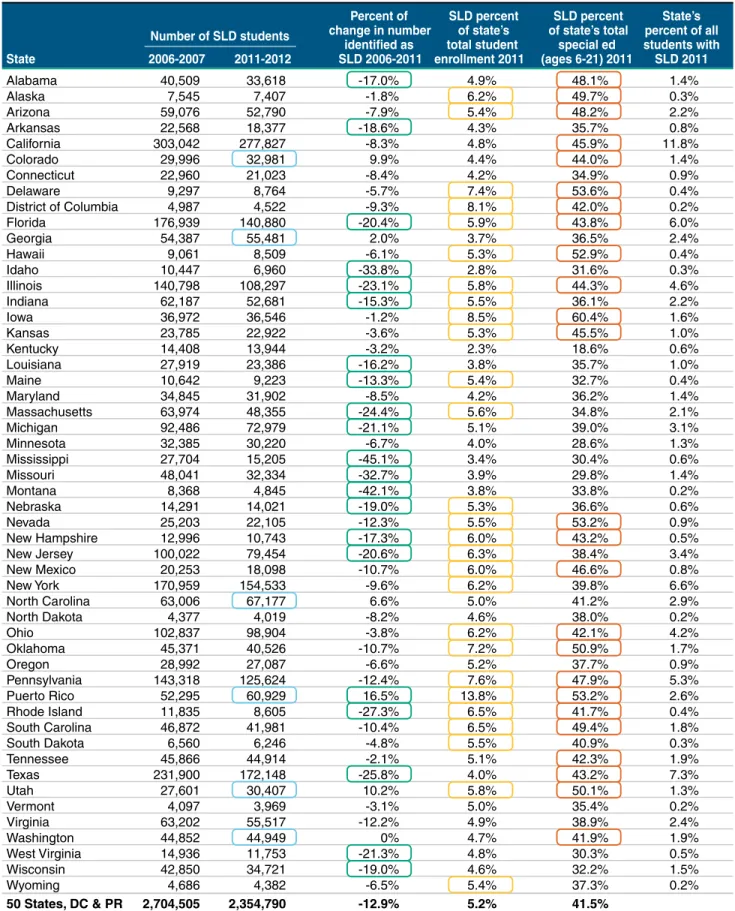
Table 1: State-by-State Change in LD Identification Rates, 2006–2011 . . . 43
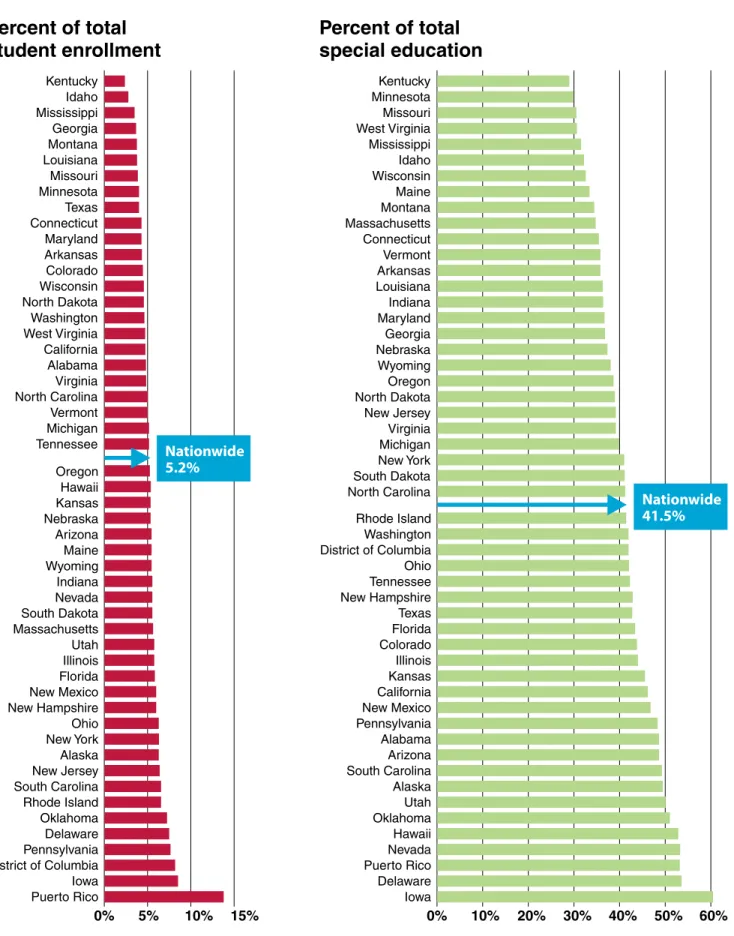
Table 2: State-by-State LD Percentage of Total Enrollment and Total Special Education, 2011 . . . 44
Overview
descriptions of symptoms and criteria for diagnosing a wide range of disorders. While it is primarily used by mental health practitioners as a guide to achieving accuracy and consistency in diagnosis, there is considerable overlap in its use among professionals in educational and therapeutic settings who provide evaluation and treatment services to individuals of all ages who have learning disabilities.
The DSM uses the term “specific learning disorder.” Revised in 2013, the current version, DSM-5, broadens the previous definition to reflect the latest scientific understanding of the condition.
The diagnosis requires persistent difficulties in
reading, writing, arithmetic, or mathematical reasoning skills during formal years of schooling. Symptoms may include inaccurate or slow and effortful reading, poor written expression that lacks clarity, difficulties remembering number facts, or inaccurate mathematical reasoning.
Current academic skills must be well below the average range of scores in culturally and linguistically appropriate tests of reading, writing, or mathematics. The individual’s difficulties must not be better
explained by developmental, neurological, sensory (vision or hearing), or motor disorders and must significantly interfere with academic achievement, occupational performance, or activities of daily living. Specific learning disorder is diagnosed through a clinical review of the individual’s developmental, medical, educational, and family history, reports of test scores and teacher observations, and response to academic interventions.
(Specific Learning Disorder fact sheet, American Psychiatric Association, 2013)
It’s necessary to define what a learning disability (LD) is in order to understand how Americans with learning disabilities are functioning today in schools, colleges and workplaces.
For the school-age population, the most commonly used definition is found in the federal special education law, the Individuals with Disabilities Education Act (IDEA). IDEA uses the term “specific learning disability (SLD).”
According to IDEA, SLD is “a disorder in one or more of the basic psychological processes involved in understanding or in using language, spoken or written, which disorder may manifest itself in the imperfect ability to listen, think, speak, read, write, spell, or do mathematical calculations. Such term includes such conditions as perceptual disabilities, brain injury, minimal brain dysfunction, dyslexia, and developmental aphasia. Such term does not include a learning problem that is primarily the result of visual, hearing, or motor disabilities, of mental retardation*, of emotional disturbance, or of environmental, cultural, or economic disadvantage.” (20 U.S.C. § 1401 (30)) *Now known as intellectual disability.
Procedures for identifying a specific learning disability, for purposes of establishing the need for special education services, are spelled out in the IDEA federal regulations. (34 CFR §§ 300.307–300.311)
For more information on the IDEA federal law and regulations, visit idea.ed.gov.
Another definition of SLD appears in the Diagnostic and Statistical Manual of Mental Disorders (DSM) published by the American Psychiatric Association. The DSM contains
What We Know About LD
Learning disabilities arise from neurological differences in brain structure and function and affect a person’s ability to receive, store, process, retrieve or communicate information. While the specific nature of these brain-based disorders is still not well understood, considerable progress has been made in mapping some of the characteristic difficulties of LD to specific brain regions and structures. Progress has also been made in understanding the interface between genetics and LD, with documentation of LD, ADHD and related disorders occurring with considerable frequency within members of the same families (e.g., parents, siblings, aunts/uncles, cousins).
Learning disabilities may also be a consequence of insults to the developing brain before or during birth, involving such factors as significant maternal illness or injury, drug or alcohol use during pregnancy, maternal malnutrition, low birth weight, oxygen deprivation and premature or prolonged labor. Postnatal events resulting in LD might include traumatic injuries, severe nutritional deprivation or exposure to poisonous substances such as lead.
Learning disabilities are not caused by visual, hearing or motor disabilities, intellectual disabilities (formerly referred to as mental retardation), emotional disturbance, cultural factors, limited English proficiency, environmental or economic disadvantages, or inadequate instruction. However, there is a higher reported incidence of learning disabilities among people living in poverty, perhaps due to increased risk of exposure to poor nutrition, ingested and environmental toxins (e.g., lead, tobacco and alcohol) and other risk factors during early and critical stages of development.
Learning disabilities are both real and permanent. Yet some people never discover that learning disabilities are responsible for their lifelong difficulties in such areas as reading, math, written expression and in comprehension. Others aren’t identified as having LD until they are adults. Many individuals with LD suffer from low self-esteem, set low expectations for themselves, struggle with underachievement and underemployment, have few friends and, with greater frequency than their non-LD peers, appear to end up in trouble with the law.
Learning disabilities are perhaps best described as unexpected, significant difficulties in academic achievement and related areas of learning and behavior
in individuals who have not responded to high-quality instruction and for whom struggle cannot be attributed to medical, educational, environmental or psychiatric causes. Early recognition that children may be at risk for LD can prevent years of struggle and self-doubt. As they grow older, learning about the specific nature of their LD, accepting that LD is not who they are but what they have and orchestrating the types of services, accommodations and supports they need to be successful will help them overcome barriers to learning and become independent, self-confident and contributing members of society.
“Learning disabilities are not a
prescription for failure. With the right
kinds of instruction, guidance and
support, there are no limits to what
individuals with LD can achieve.”
Sheldon H. Horowitz, Ed.D., Director of LD Resources National Center for Learning DisabilitiesCommon Types of
Learning Disabilities
The most common types of specific learning disabilities are those that impact the areas of reading, math and written expression. They may co-occur with other disorders of attention, language and behavior, but are distinct in how they impact learning.
Dyslexia is the term associated with specific learning disabilities in reading. Although features of LD in reading vary from person to person, common characteristics include:
difficulty with phonemic awareness (the ability to notice,
think about and work with individual sounds in words)
phonological processing (detecting and discriminating
differences in phonemes or speech sounds)
difficulties with word decoding, fluency, rate of reading,
rhyming, spelling, vocabulary, comprehension and written expression
Dyslexia is the most prevalent and well-recognized of the subtypes of specific learning disabilities.
Dyscalculia is the term associated with specific learning disabilities in math. Although features of LD in math vary from person to person, common characteristics include:
difficulty with counting, learning number facts and
doing math calculations
difficulty with measurement, telling time, counting
money and estimating number quantities
trouble with mental math and problem-solving
strategies
Dysgraphia is the term associated with specific learning disabilities in writing. It is used to capture both the physi-cal act of writing and the quality of written expression. Features of learning disabilities in writing are often seen in individuals who struggle with dyslexia and dyscalculia, and will vary from person to person and at different ages and stages of development. Common characteristics include:
tight, awkward pencil grip and body position tiring quickly while writing, and avoiding writing or
drawing tasks
trouble forming letter shapes as well as inconsistent
spacing between letters or words
difficulty writing or drawing on a line or within
margins
trouble organizing thoughts on paper
trouble keeping track of thoughts already written
down
difficulty with syntax structure and grammar large gap between written ideas and understanding
demonstrated through speech
Associated Deficits and Disorders
While not designated as specific subtypes of LD, there are a number of areas of information processing that are commonly associated with LD. Weaknesses in the ability to receive, process, associate, retrieve and express information can often help explain why a person has trouble with learning and performance. The inability to process information efficiently can lead to frustration, low self-esteem and social withdrawal, and understanding how these areas of weakness impact individuals with LD and ADHD can be beneficial in planning for effective instruction and support. Ongoing research is uncovering the specific nature and impact of these problems.
Auditory Processing Deficit (or Auditory Processing Disorder) is the term used to describe a weakness in the ability to understand and use auditory information. Individuals with these types of difficulties often have trouble with:
auditory discrimination (the ability to notice, compare
and distinguish the distinct and separate sounds in words — a skill that is vital for reading)
auditory figure-ground discrimination (the ability to
pick out important sounds from a noisy background)
auditory memory (short-term and long-term abilities
to recall information presented orally)
auditory sequencing (the ability to understand and
recall the order of sounds and words)
spelling, reading and written expression
Visual Processing Deficit (or Visual Processing Disorder) is the term used to describe a weakness in the ability to understand and use visual information. Individuals with these types of difficulties often have trouble with:
visual discrimination (the ability to notice and
compare the features of different items and to distinguish one item from another)
visual figure-ground discrimination (the ability to
distinguish a shape or printed character from its background)
visual sequencing (the ability to see and distinguish
the order of symbols, words or images)
visual motor processing (using visual feedback to
coordinate body movement)
visual memory (the ability to engage in short-term and
long-term recall of visual information)
visual closure (the ability to know what an object is
when only parts of it are visible)
spatial relationships (the ability to understand how
objects are positioned in space)
Non-Verbal Learning Disabilities is the term used to describe the characteristics of individuals who have unique learning and behavioral profiles that may overlap with dyslexia, dyscalculia and dysgraphia but that differ in significant ways. Most notably, these individuals often have strengths in the areas of verbal expression, vocabulary,
reading, comprehension, auditory memory and attention to detail. They have trouble with:
math computation and problem solving visual-spatial tasks and motor coordination
reading body language and social cues; seeing the “big
picture” in social and academic contexts Executive Functioning Deficits is the term used to describe weaknesses in the ability to plan, organize, strategize, remember details and manage time and space efficiently. These are hallmark characteristics in individuals with attention deficit/hyperactivity disorder (ADHD) and are often seen in those with LD.
Attention Deficit/Hyperactivity Disorder(ADHD) is a brain-based disorder that results in significant inattention, hyperactivity, distractibility or a combination of these characteristics. It is estimated that as many as one-third of those with LD also have ADHD, and like learning disabilities, this disorder is linked both to heredity (genetics) as well as to brain structure and function. Unlike LD, features of this disorder can be attributed to neurochemical imbalances that can be effectively treated with a combination of behavioral and, as needed, pharmacological therapies.
Legal Protections for
People With LD
Three federal laws establish and undergird the rights of children and adults with LD. They ensure that all citizens receive needed and appropriate special education services, as well as fair treatment in public schools, postsecondary education settings and the workplace.
The Individuals with Disabilities Education Act (IDEA) provides special education and related services to children and youth with disabilities who are 3–21 years old. Passed in 1975 as the Education for All Handicapped Children Act, this law guarantees each child a free appropriate public education tailored to his or her individual needs and delivered in the least restrictive environment appropriate to the individual’s needs. It also guarantees the right of children and their parents or guardians to timely evaluation, access to all meetings and paperwork and transition planning. IDEA specifies that children with any of 13 possible educationally handicapping conditions (including specific learning disabilities) are eligible for these services. IDEA also provides federal funds to states and local school districts to help support the additional costs of special education. The law provides several ways to address disputes between schools and parents, including mediation, due process hearings and written complaints to the state.
Section 504 of the Rehabilitation Act of 1973 (Section 504) prohibits discrimination against people with disabilities in federally funded programs and activities. While this civil rights law doesn’t fund programs, it does permit the withdrawal of funds from programs that fail to comply with the law. Persons with a physical or mental impairment that substantially restricts one or more major life activities are eligible for services under Section 504. Some schools use Section 504 to support students with LD needing only reasonable accommodations or modifications. Children and youth with ADHD who don’t need more comprehensive special education support also are frequently served under this law. Section 504 provides for both complaints to the Office for Civil Rights at the U.S. Department of Education and due process hearings. (An important note: All students eligible for special education services under IDEA are also eligible under Section 504, while the reverse is not true.)
ADHD by the Numbers
According to recent data from the Centers for Disease Control and Prevention:
About 6.4 million children have received an ADHD diagnosis at some point.
ADHD diagnoses have increased 16 percent since 2007 and 53 percent in the past decade.
Boys (13.2 percent) were more likely than girls (5.6 percent) to have ever been diagnosed with ADHD.
Rates of ADHD diagnosis increased at a greater rate among older teens as compared to younger children.
For more information about these data visit cdc.gov/ncbddd/ADHD.
The Americans with Disabilities Act (ADA) is another civil rights law that protects people with disabilities from discrimination in schools, the
workplace and other environments. The ADA protects people who have a physical or mental impairment that substantially restricts one or more major life activities. Since “learning” is considered such an activity under the ADA, students served under IDEA are also covered by this law.
In addition, people with disabilities are protected from discrimination in employment settings by the ADA. The law prohibits employers from using unnecessary qualification standards to weed out applicants with disabilities, while not requiring employers to hire unqualified applicants with disabilities. Employers are prohibited from making reference to inaccurate job descriptions to determine that an employee with a disability can no longer perform his or her job. Employers are also prohibited from failing to provide reasonable accommodations that do not cause undue hardship to them. Like Section 504, the ADA provides no federal funds. It was amended in 2008 in order to clarify how its definition of disability should be interpreted in light of several court decisions. As a result, more people (including those with learning disabilities) are now able to satisfy the definition of disability, to gain access to reasonable accommodations and to be protected from discrimination. Issues of noncompliance are handled through complaints to federal agencies and the courts.
In addition to these three federal laws focusing specifically on disability, there is an important federal education law — the Elementary and Secondary Education Act (ESEA) — that includes students with disabilities. First passed in 1965 as part of President Lyndon B. Johnson’s war on poverty, the current version of ESEA, enacted in 2001, is known as the No Child Left Behind Act, or NCLB.
ESEA requires schools to meet rigorous standards for educational content and student achievement (i.e., what and how well students should be learning). It also requires schools to measure student achievement and progress annually in reading and math. Under ESEA, schools must provide data on overall student performance as well as on progress made by discrete student groups, including students with disabilities. ESEA is currently due (in fact, overdue) for reauthorization by Congress, and in the interim, the U.S. Department of Education has allowed states to have flexibility in meeting core accountability requirements.
“Congress could change these laws at any time—for better or
for worse—and we must be vigilant, working with lawmakers
to both allow for advances in science and educational
practice and to protect all individuals with LD.”
Lindsay E. Jones, Esq., Director of Public Policy and Advocacy National Center for Learning DisabilitiesPublic
Perceptions
of LD
Learning Disability Diagnosis,
Causes and Treatment
A majority of people (62 percent) say diagnosing a
learning disability is a joint effort between the child’s pediatrician, parent/caregiver, teacher and school administrator.
Learning disabilities are thought to be diagnosed in
early schooling.
- Over half (53 percent) believe that learning disabilities are diagnosed during grades 1–4. - Nearly a quarter (23 percent) think that they’re
diagnosed in kindergarten.
Nearly eight in ten people (76 percent) correctly say
that genetics can be a cause of learning disabilities.
Many respondents (43 percent) wrongly think that
learning disabilities are correlated with IQ. Despite the reality that many millions of individuals face
the challenges of learning disabilities every day, there remains widespread confusion and misinformation about the nature and impact of LD. Lack of accurate information about LD increases the risk of stigmatization as well as the possibility of lowered expectations and missed opportunities in school, the workplace and the community.
NCLD 2012 Survey of
Public Perceptions of LD
In August 2012 NCLD collected data from a random sampling of 1,980 adults in the United States, evenly distributed across males and females, via an online survey. The sampling was representative of the U.S. population and had a margin of error of 4.4 percent.
Twelve percent of the respondents cited having a learning disability and 8 percent of the parents surveyed had a child with a learning disability.
General Knowledge About
Learning Disabilities
Most people (84 percent) see learning disabilities as a
growing issue in the U.S.
Almost two-thirds of people (63 percent) know
someone who has a learning disability.
When asked about different types of learning disabilities:
Most people (91 percent) are familiar with dyslexia. Two-thirds of people do not know what dysgraphia,
dyscalculia and dyspraxia are.
“These surveys clearly demonstrate
the need for greater understanding of
LD throughout society.”
James H. Wendorf, Executive Director National Center for Learning Disabilities
Life With a Learning Disability
Most respondents (84 percent) feel that students
with learning disabilities deserve individual classroom attention and extra time on tests.
Nearly half of the parents of children with learning
disabilities (45 percent) say that their child has been bullied in the past year.
Two-thirds of respondents (66 percent) feel that
children with learning disabilities are bullied more than other children.
Over one-third of parents (37 percent) say that their
child’s school inadequately tests for learning disabilities.
Almost two-thirds of parents (64 percent) say that their
child’s school doesn’t provide information on learning disabilities.
Some parents of children with learning disabilities (20
percent) say they’re most comfortable consulting the internet for information regarding their child’s learning disability.
Over two-thirds of parents with children who have
learning disabilities prefer talking to a teacher (67 percent) or pediatrician (62 percent) about their concerns.
Most parents of children with learning disabilities (75
percent) believe they could do more to help their child.
Nearly one-third of people incorrectly think that it is
lawful for an employer to ask an interviewee if they have a learning disability.
Almost all respondents (90 percent) know that it is
unlawful for an employer to terminate an employee because of a learning disability.
Up to one-third of people attribute LD to causes that
were inaccurate:
- Nearly one-quarter of respondents (22 percent) think learning disabilities can be caused by too much time spent watching television.
- Thirty-one percent believe a cause is poor diet. - Twenty-four percent believe a cause is childhood
vaccinations.
More than one-third of respondents think that a lack
of early childhood parent/teacher involvement can cause a learning disability.
Most (83 percent) say that early intervention can help,
but over half incorrectly cite medication and mental health counseling as treatments.
Over half of the respondents (55 percent) wrongly
believe that corrective eyewear can treat certain learning disabilities.
Source: 2012 Survey of Public Perceptions of LD, NCLD Percentage of People Who
2013 Research on Parents of
Children With Learning and
Attention Issues
Independent research conducted in 2013 with the support and involvement of NCLD and others in the LD field identified a broad spectrum of attitudes, beliefs, values and challenges among parents of children with learning and attention issues. The survey drew on information provided by 2,241 parents of children ages 3–18. Sixty-eight percent of these parents reported to have children with formally identified learning or attention issues and 32 percent of them suspected their child had learning or attention issues that were not formally recognized. The sample was representative of the U.S. census. Survey data yielded information about parents who fell into three categories:
those who were struggling with the challenges that
come with having a child with learning and attention issues and who report to be in most need of help;
those who were conflicted about their ability to
manage the needs of their child with these issues;
those who were optimistic about their family’s journey
with learning and attention issues but continue to need information and guidance.
Strugglers
One in three parents (35 percent) are deeply struggling with their attitude toward and ability to cope with their child’s learning and attention issues, including:
seeing parenting as difficult and the challenges as
daunting
experiencing financial pressure because of learning and
attention issues
feeling isolated and reporting anxiety generated by
multiple sources: the school system, the child, family members
experiencing difficulty maintaining a positive
relationship with spouse/partner, child, relatives or school system personnel
being unable to manage their own stress and feelings
of guilt
feeling worried and pessimistic about their child’s
future
Conflicted
Another one-third of parents (31 percent) admit to having conflicting feelings about their child’s learning and attention issues and their ability as a parent to help. These parents:
feel ambivalence, meaning they accept their child’s
learning and attention issues but also express some denial-like doubts about them
have trouble managing their own stress and being
patient with their child
are uncertain about teaching their child how to resolve
issues, when to ask for help and when to resolve issues themselves
are unsure about advocating for their child and seeking
the help of experts
are frustrated with school system, child and family
pressures
worry about their child’s social and academic future,
and occasionally do their child’s homework for them
Optimistic
Finally, one-third (34 percent) of parents have positive feelings about their child’s learning and attention issues and their own ability to cope. This group is characterized by parents who:
see themselves as successful, able to deal with virtually
any challenge
effectively advocate/interact with teachers and are able
to navigate the school system
are able to find experts when needed
teach their child to understand their difficulties and
how best to cope
are able to manage stress
have a strong support system: partner/spouse, relatives,
friends, doctors
had no evidence of guilty feelings; are not stressed or
frustrated
express confident attitudes
have developed ways to deal with their child’s learning
GfK Roper 2010 Study on Public
Attitudes About Children With
Learning Disabilities
The Emily Hall Tremaine Foundation commissioned the fourth in a series of GfK Roper studies to examine the public’s attitudes about LD. The 2010 report captured the understanding and attitudes of the public and of educators, and offered data to assess progress — or lack of progress — in how both parents and the United States educational system are addressing the needs of children who learn differently.
The study was conducted by telephone interviews and involved a nationally representative sample of one thousand American adults ages 18 and older and sub-samples of seven hundred parents of children under 18 as well as seven hundred teachers and school administrators. It identified some advances in the public’s understanding of learning disabilities and support for tailoring the educational process to match children’s differing learning styles. Yet the poll also highlighted persistent misperceptions that present barriers for anyone interested in ensuring that children with learning differences are helped to achieve their full potential.
Gratifying Trends
Since 1995, when the survey initiative began, the issue of learning disabilities has gained some traction. Both the general public and parents, as well as educators, increasingly embrace the foundational notion that individuals with LD have unique learning needs and challenges and that their ability to achieve is not due to factors such as below-average intelligence. The 2010 study found that:
A majority of the general public and educators in the
U.S. agree that children learn in different ways. Eight in 10 Americans (79 percent, a value that is up nine points from 2004) agree (strongly/somewhat) that children learn in different ways. Virtually all educators (99 percent) say the same.
The number of Americans who say they are familiar
with learning disabilities is on the rise. In 2010, members of the general public were much more likely to say that they have heard or read “a lot” about learning disabilities than in both 2004 and 1999.
The majority of the general public recognizes the fact
that children with learning disabilities are of average or above-average intelligence. Eight in 10 Americans (80 percent) consider the statement “children with learning disabilities are just as smart as you and me” to be accurate.
Almost all parents (96 percent) today agree that
children can learn to compensate for a learning disability with proper instruction.
Source: Tremaine Foundation, 2010
Percentage of Americans Who Say It’s Accurate That “Children With Learning Disabilities Are Just as Smart as You and Me.”
Troubling Trends
While the public’s perception of learning disabilities has improved, parents and educators still have an alarming lack of knowledge about learning disabilities.
Seven out of 10 parents, educators and members of
the general public incorrectly link learning disabilities with intellectual disability (“mental retardation”) and autism. Half or more of school administrators do so as well.
Almost four in 10 mistakenly associate learning
disabilities with sensory impairments like blindness and deafness.
A majority of the public (55 percent) and parents
(55 percent) mistakenly believe learning disabilities are often a product of the home environment in which children are raised. Four in 10 teachers and three in 10 administrators have the same belief.
Approximately half (51 percent) think that what
people call “learning disabilities” are the result of laziness.
Source: Tremaine Foundation, 2010
How Parents View
Behaviors of 3- to 4-Year-Olds
Many parents continue to ignore potential signs of
trouble — instead choosing to wait and see if their child will grow out of it.
- A sizable number of parents believe a 5- to 8-year-old child will grow out of such behaviors as trouble using a pen or pencil, matching letters with their sounds and making friends — typical warning signs of LD.
- Parents are even more forgiving of these traits in 3- to 4-year-old children, with two in three expressing reluctance to inquire about early identification and intervention.
The majority of educators (66 percent) consider that a
lack of support from parents in helping their children learn is a major challenge confronting schools working with children with LD.
Despite confusion among educators about learning
disabilities, eight in 10 say they feel confident teaching children with LD.
The 2010 study is available from the Emily Hall Tremaine Foundation at TremaineFoundation.org.
Source: Tremaine Foundation, 2010 *Now known as Intellectual Disability
Percentage Who Think Each of the Following Are Associated With Learning Disabilities
LD in the
Schools
A great deal is known about the 5% of our nation’s school-age population whose learning disabilities (LD) have been formally identified. Data suggest that an additional 15% or more of students struggle due to unidentified and unaddressed learning and attention issues.
Prevalence and
Characteristics
of Students With LD
LD is the largest category of students receiving special education services.
• There are 2.4 million American public school students (approximately 5 percent of the total public school enrollment) identified with learning disabilities under the Individuals with Disabilities Education Act (IDEA).
• Forty-two percent of the 5.7 million
school-age children with all kinds of disabilities who receive special education services are served in this category.
The number of students identified with LD has declined by 18 percent between 2002 and 2011, while total special
education has declined by just 3 percent.
Two-thirds of students identified with LD are male.
Black and Hispanic students are overrepresented in many states while white and Asian students are underrepresented in the LD category.
Prevalence
Once the fastest growing category of special education — increasing more than 300 percent between 1976 and 2000 — the LD category has now declined by almost 2 percent annually since 2002.
Source: IDEA Part B Child Count, Ages 6–21. Does not include Developmental Delay category (allowable to age 9).
Special Education Students: 2011 By Disability Category
Students With
Multiple Disabilities
School-age students eligible for special education services are reported only by their primary disability. However, many students have multiple disabling conditions and may receive a variety of services to address conditions that interfere with their educational progress.
A 2001 study found that schools reported 30 percent of students with a primary disability of LD also had a secondary disability, while 7 percent had two or three additional disabilities, such as speech/language impairments or emotional disturbance.
(SEELS Wave 1 School Program Survey,2001)
Why Are Fewer Students Being
Classified as Having LD in Most States?
There are several possible reasons for the decline, among them:
Expansion of and attention to early childhood education,
including universal preschool and the use of early screenings and diagnostic evaluations to support school readiness, is increasingly common.
Improvements have been made
in reading instruction provided in general education, making reading difficulties—a characteristic of most students classified as having LD—less prevalent in our nation’s elementary schools.
A dramatic shift in the way LD is
identified. Changes made to the 2004 version of IDEA and its 2006 regulations required all states to develop new criteria for LD identification and eliminate the requirement for an “ability versus achievement” discrepancy. As a result, states have developed a variety of ways to identify LD. Many include the use of Response to Intervention (RTI) (see box, page 14), which might result in greater numbers of struggling students receiving early assistance in general education and ultimately reducing the
need for special education classification. Source: IDEAdata.org Percent Change In
LD Identification: 2006–2011 Source: IDEA Part B Child Count, Ages 6–21, 2002–2011
Number of Students (Ages 6–21)
What Is Response to Intervention (RTI) and
Multi-Tier System of Supports (MTSS)?
Response to Intervention (RTI) is a data-based process of decision making conducted in a Multi-Tier System of Supports (MTSS) that ensures early identification and support for students with learning and behavioral difficulties and disabilities. The RTI process begins with high-quality instruction and universal screening of all children in the general education classroom and provides
struggling learners with interventions at increasing levels of intensity to accelerate their rate of learning. Components of RTI/MTSS include:
data-driven decision making
curriculum
instruction
assessments
leadership
an empowering culture
professional learning
These services may be provided by a variety of personnel, including general education teachers, special educators and specialists. Student progress is closely monitored to assess both the learning rate and the level of performance of individual students. Educational decisions about the intensity and duration of interventions are based on an individual student’s response to instruction. RTI is intended for
use at all grade levels, from pre-K through high school, and when implemented with fidelity, will result in a well-integrated Multi-Tier System of Supports driven by child outcome data. For more information on RTI and MTSS, visit the RTI Action Network at RTInetwork.org.
Since 2006 the number of students identified as having LD has declined in almost every state, with decreases as high as 45 percent. Only five states have seen either no change or slight increases in the number of students with LD. See Appendices for additional state-by-state information.
Not all students with LD receive special education. The numbers discussed here reflect only those students who are formally identified as having a learning disability and, because of that disability, are in need of special education as specified under IDEA.
“The key to solving the student
achievement gap is implementing
evidence-based practice with fidelity.”
Stevan J. Kukic, Ph.D., Director, School Transformation National Center for Learning Disabilities
Students may also receive accommodations for LD under Section 504 of the Rehabilitation Act of 1973 (discussed on page 5). Little is known about the numbers or characteristics of students with LD or other disabilities covered under Section 504. However, more is being learned thanks to expanded information being collected by the Office for Civil Rights at the U.S. Department of Education through the Civil Rights Data Collection (CRDC). The CRDC provides information for a large sample of the nation’s public schools and school districts about enrollment demographics, advanced courses, SAT and ACT completion and much more (see ocrdata.ed.gov).
Characteristics
General
Two-thirds of students identified with LD are male (66 percent) while overall public school enrollment is almost evenly split between males (51 percent) and females (49 percent). This overrepresentation of boys occurs across different racial and ethnic groups.
Students with LD are also more often in foster care or are homeless.
Children with disabilities live in foster care at
twice the rate of children in the general population, according to studies conducted by the National Council on Disability and other organizations. The educational needs of these children are often unknown or overlooked.
Children who are homeless are twice as likely to have
learning disabilities, according to the National Center on Family Homelessness. Children who are homeless and have disabilities may not receive the special education services for which they are eligible.
Minority Children
The rate of identification of minority students in need of special education varies across states.
When the percent of students from a particular minority or ethnic group identified for special education in a state exceeds that group’s percentage of the state’s total school enrollment, some argue the group is overrepresented in special education, also known as “disproportionality.” However, since the connection between socioeconomic status — particularly income —and disability is well established, minority groups that experience significantly higher rates of poverty could have a higher rate of need for special education.
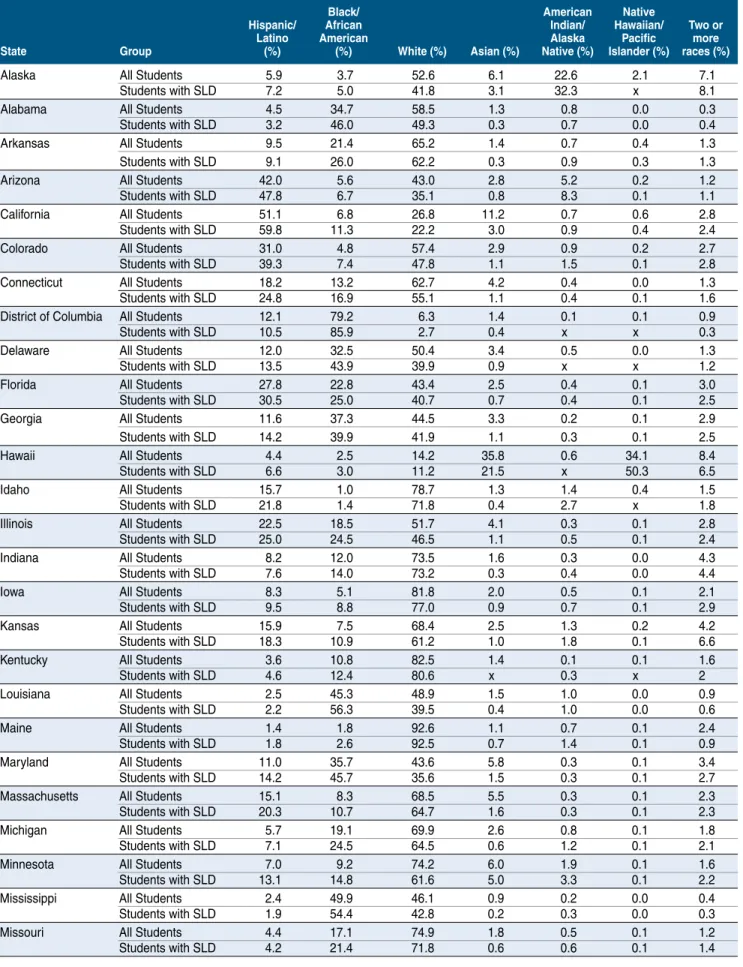
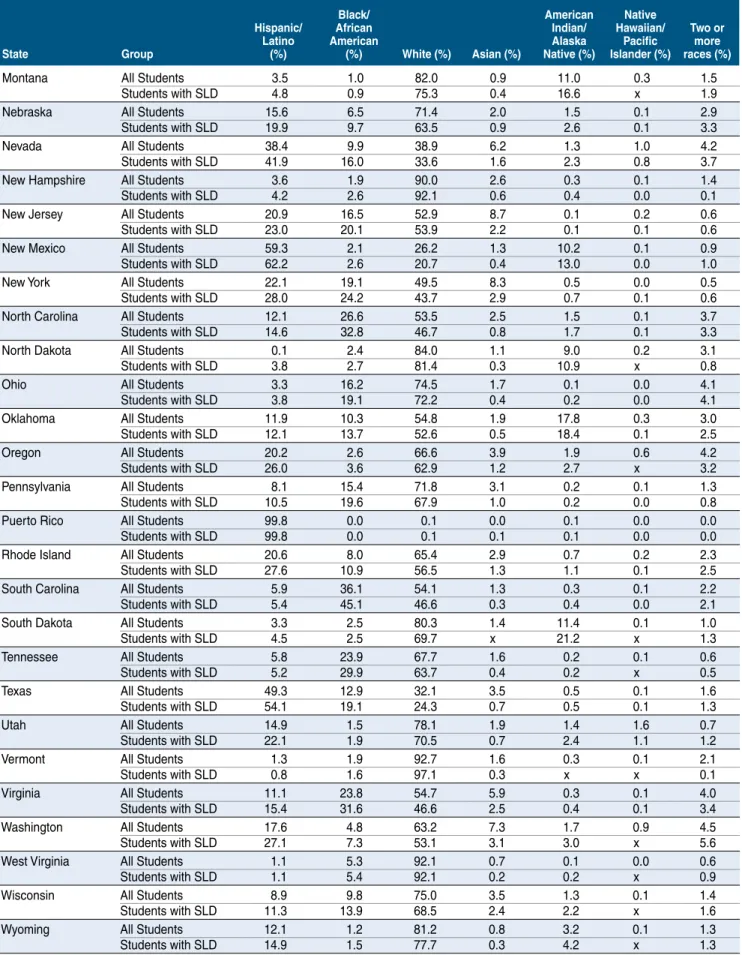
Black and Hispanic students are overrepresented
in many states, while white and Asian students are underrepresented. For example:
- In Nevada 16 percent of students with LD are black, but black students make up just 9.9 percent of the state’s total school enrollment.
- In California just 3 percent of students with LD are Asian, while 11.2 percent of the total school enrollment is Asian.
The rate of identification of minorities and ethnic groups in the category of LD compared to the total school enrollment for each state appears in the Appendices. Rates of identification for all disability categories can be found at LD.org/IDEAstatedata.
The specific reasons for this gender imbalance are
unclear, but because the population of students with LD is heavily male, it is important to keep in mind that the experiences of these students as a group disproportionately reflect the experiences of boys.
Research studies show that equal numbers of boys
and girls share the most common characteristic of LD — difficulty with reading. Consequently, many girls with learning difficulties may go unidentified and unserved by special education.
Further investigation into this gender disparity is warranted. In what ways and to what extent changes to LD identification criteria impact gender distribution are questions that deserve close attention and study.
Children at Risk
More students with LD are found in households living in poverty than in children from the general population. Living in a low income household creates a greater likelihood of poor health, poor performance in school and a variety of poor outcomes in adolescence.
Academic Performance and School Outcomes
IDEA State Data Displays
The U.S. Department of Education recently introduced new profiles of students with disabilities in each state. Called “Data Displays,” these handy profiles provide a snapshot of student demographics, assessment performance, educational environments, graduation rates and post-school outcomes.IDEA State Data Displays are available at LD.org/IDEAstatedata.
Between 12 percent to 26 percent of secondary students with LD received average or above-average scores on math and reading assessments, compared with 50 percent of students in the general population.
Between 7 percent to 23 percent of secondary students with LD received very below-average scores on academic performance, compared with only 2 percent of students in the general population.
Students with LD earn lower grades
and experience higher rates of course failure in high school than students without LD.
One-third of students with LD have been held back (retained) in a grade at least once.
One in every two students with LD faced a school disciplinary action such as suspension or expulsion in 2011. (Only students served in the category of emotional disturbance received more disciplinary actions.)
Students with LD have post-high school goals similar to students without LD. However, too few take an active or leadership role in planning for their transition from school.
Sixty-eight percent of students with LD leave high school with a regular diploma while 19 percent drop out and 12 percent receive a certificate of completion.
Black and Hispanic students with
disabilities experience much higher rates of school disciplinary actions, higher rates of drop out and lower rates of graduation.
Instructional Environments
Students with LD are spending more and more of their school day in general education classrooms.
Sixty-six percent of students with LD spend 80
percent or more of their school day in general education classrooms, up from 47 percent a decade ago.
Experiencing most academic instruction within
general education is typically associated with better outcomes for students with disabilities. It also reflects a core requirement of IDEA, known as “least restrictive environment,” specifying that students with disabilities — to the maximum extent possible — must be educated with their peers who do not have disabilities.
The setting in which students with LD spend their school day does, however, vary significantly across states. See LD.org/IDEAstatedata for additional information.
Academic Performance
While the amount of time students with LD spend in general education classrooms has steadily increased, the academic achievement of these students continues to lag far behind the general student population.
Grade Retention
Students with disabilities—including those with LD—are much more likely to be retained in grades than their peers who don’t have disabilities. According to a parental survey, almost one-third of students with disabilities have been held back in a grade at least once.
School-age children with disabilities who are retained
in grade are disproportionately black and from lower-income households.
Retention is linked to increased behavior problems
that become more pronounced as children reach adolescence and is also known to highly correlate with dropping out of school.
Dropouts are five times more likely to have repeated a
grade than are high school graduates.
Students who repeat two grades have an almost 100
percent chance of dropping out of school.
The high rate of grade retention among students with disabilities may be directly related to the unacceptably high drop-out rate of this group.
Course Failure and
Grade Point Average (GPA)
Students with LD experience course failure at a much higher rate than their non-disabled peers.
Sixty-nine percent of students with LD have failed
one or more graded courses in secondary school, compared to 47 percent of students in the general population. Only students in one other disability category—emotional disturbance—have higher rates of course failure.
The mean grade point average (GPA) in graded
courses for students with LD was 2.2, compared to 2.7 for students in the general population.
As evidenced with retention, course failure and low GPA, particularly in the freshman year of high school, are strong indicators of a high risk for dropping out of school.
Source: IDEAdata.org, Educational Environments by Disability, Ages 6–21, 2002–2011 Students With LD Spending Their
School Day in General Education: 2002–2011
Source: National Longitudinal Transition Survey-2, 2006
Results are from subtests of the research edition of the Woodcock-Johnson III given to students 16–18 years old. Performance for students in the general population is standardized across all tests.
Comparison of Academic Perfomance in Reading and Math for Secondary Students in General Population and Students With LD
The National Assessment of Educational Progress, or NAEP, is the only nationally administered measure of student academic achievement in reading and math.
Given periodically to a nationally representative sample of students in fourth and eighth grades, NAEP provides an important comparison across states and between student groups.
NAEP performance levels—Basic, Proficient and Advanced—measure what students should know and be able to do at each grade assessed.
Basic represents partial mastery of prerequisite knowledge and skills that are fundamental for proficient work at each grade assessed.
Proficient represents solid academic performance for each grade assessed.
Students reaching this level have demonstrated competency over challenging subject matter.
Advanced represents superior performance.
NAEP also reports the proportion of students whose scores place them below the Basic achievement level.
NAEP results show wide and persistent achievement gaps between students with and without disabilities in both reading and math. There has been no significant improvement seen in the NAEP performance for students with disabilities in the last three administrations (2009, 2011, 2013).
Of ongoing concern is the high rate of exclusion of students with disabilities (students selected for testing but who were not tested). However, the rate of exclusion has been reduced substantially in the most recent NAEP administrations.
Note: Information on state NAEP performance for students with and without disabilities as well as the rate of exclusion of students with disabilities is available at LD.org/IDEAstatedata.
National Assessment of Educational Progress (NAEP)
Source: National Assessment of Educational Progress, Reading and Mathematics Grade 4 and 8 National Results, 2013. Students with disabilities includes students with both IEPs and 504 plans.
National Assessment of Educational Progress (NAEP) 2013: How Students With and Without Disabilities Perform
Disciplinary Removals
The academic performance of students with LD is further compromised by their high rate of disciplinary removals.
One in two students with LD experiences a suspension
(in or out of school) or expulsion.
Only students with emotional disturbance receive
more disciplinary removals.
Programs such as Positive Behavioral Interventions
and Supports (PBIS), implemented on a school-wide basis, have a proven, positive impact on all students.
Planning and implementing behavior intervention
plans for those students with LD who have challenging behaviors is critical to their success. All of these academic characteristics and experiences paint a very clear picture of students who do not have the basic reading, math and social skills to master academic subjects and to earn a regular high school diploma. As states implement more robust standards in reading and math, these students are at even higher risk of school failure.
The disproportionate use of disciplinary removals for students with LD will continue to be problematic until schools implement evidence-based practices proven to reduce problem behavior.
Freshman Year Holds Critical Performance Indicators
A 2009 study conducted by the National High School Center and the Consortium on Chicago School Research at the University of Chicago Urban Education Institute (CCSR) identified four freshman year performance indicators useful for identifying students who are at risk of dropping out: grades, course failures, absences and on-track status. Each of these indicators was found to have a strong connection with graduation rates. As the researchers noted, “Helping these students pass more courses and get higher grades during their first year in high school may be an essential step in reducing the likelihood of dropping out.”
Freshman grades (GPA):
In the group studied, students with LD had an average GPA of 1.6 (D+) compared to 2.1 for students with no identified disability.
Students with a 2.5 (C+) average or higher were very likely to graduate from high school within five years.
Only one-quarter to one-third of students with a 1.0 (D) average graduated in five years.
Freshman course failures:
Students with LD failed approximately three semester courses during their freshman year compared to 2.1 courses for students with no identified disability.
Fewer course failures corresponded to higher graduation rates, and large reductions in graduation rates occurred for each additional course failure.
Eighty-six percent of students with LD graduate in five years if they have no course failures.
With only one to two Fs, graduation rates were reduced by 20 percentage points.
Freshman absences:
Students with LD were absent an average of 12 days per semester compared to eight days for students with no identified disability.
Students with LD who had zero to four absences per semester have graduation rates of 90 percent or greater.
Freshman on-track status:
“A student is on-track if he or she has accumulated five full-year credits (10 semester credits) and has no more than one semester F in a core subject (English, math, science or social science) by the end of the first year of high school.”
Students on track at the end of their freshman year were four times more likely to graduate than off-track students.
Just over half—52 percent—of students with LD were on track at the end of their freshman year compared to 65 percent for students with no identified disability.
Source: What Matters for Staying On-Track and
Graduating in Chicago Public Schools: A Focus on Students With Disabilities, available at betterhighschools.org/docs/ NHSCCCSRSpecialEd.pdf.
Exiting School: Diplomas,
Certificates and Dropping Out
The rate at which students with LD leave high school with a regular high school diploma has been gradually rising for a decade, yet still remains well below the graduation rate for students without special education status.
Sixty-eight percent received a regular high school
diploma in 2011 versus 57 percent a decade ago.
The number of students with LD receiving a certificate
has increased. Twelve percent received a certificate of completion (something other than a regular high school diploma) in 2011 versus 7 percent in 2002.
Certificates recognize school completion but provide
no avenue to higher education or military service. The drop-out rate for students with LD has fallen steadily over the past decade.
Nineteen percent of students with LD dropped out of
school in 2011 versus 35 percent in 2002.
Students with LD continue to experience one of
the highest drop-out rates among all students with disabilities; only one other category of students— those with emotional disturbance—experience a higher drop-out rate.
For students with LD, drop-out rates vary widely
across states, ranging from a high of 48 percent in South Carolina to a low of 7 percent in Hawaii.
Three states — Louisiana, Nevada and South
Carolina — have higher drop-out rates than graduation rates for students with LD.
For state-level graduation and dropout rates see Diplomas at Risk: A Critical Look at the Graduation Rate of Students With Learning Disabilities, available at LD.org/diplomas.
Increasing the graduation rate and reducing the drop-out rate for students with LD continues to be a high priority for parents and educators. Given all that is known about the importance of a regular high school diploma and the detrimental and lifelong effects of dropping out of school, efforts to implement effective drop-out prevention programs should be a top priority. Drop-out prevention programs need to be adopted with fidelity on a large scale in order to reduce this silent epidemic that threatens to undermine the success of so many youth with LD.
Transition Planning
According to IDEA, planning for transition to post-school life is a required part of every student’s Individualized Education Program (IEP), and participation in the development of a transition plan is critical to post-school success.
Source: IDEAdata.org, Exiting by Disability, Ages 14–21, 2002–2011 How Students With LD
Access to Accelerated Programs
Students with disabilities are entitled toequal access to accelerated programs such as Advanced Placement and International Baccalaureate classes. In late 2007 the U.S. Department of Education acted upon reports of school policies that restricted access for students with disabilities. For example, qualified students with disabilities could not be required to give up any specialized services that had been designed to meet their individual needs as a condition of their participation. In a 2007 “Dear Colleague” letter, the Office for Civil Rights at the U.S. Department of Education clarified that limiting access by students with disabilities to challenging
academic programs on the basis of their disability violates both Section 504 and the ADA. Additionally, it was made clear that the imposition of conditions on participation in accelerated classes or programs by qualified students with disabilities (e.g., the forfeiture of necessary special education or related aids and services) amounts to a denial of a free appropriate public education under both IDEA and Section 504. (USED OCR, December 26, 2007) The rate at which students with disabilities, including those with LD, take and pass Advanced Placement courses is available from the Civil Rights Data Collection available at ocrdata.ed.gov.
Exit Exams
In many states the graduation requirements for students with LD include passing a high school exit exam. A 2012 study by the Center on Education Policy found that 26 states required high school exit exams in the 2011–2012 school year.
A majority of students with LD — 55 percent — are educated in states with exit exam requirements.
Policies regarding high school exit exams for students with disabilities vary dramatically across states. In some cases, states have unfortunately agreed to exempt students with disabilities from exit exams —allowing them to be awarded a diploma without meeting the requirements.
Source: State High School Exit Exams: A Policy in Transition, Center on Education Policy, Washington, DC, 2012 High School Exit Exam Policies: School Year 2011–2012
Student, Parent and Outside Agency
Participation in Transition Planning
Most students (96 percent) attend IEP meetings
involving transition planning.
A majority of students (60 percent) are moderately
involved in the transition planning process.
Only a small number of students (15 percent) take an
active leadership role in transition planning.
Source: National Longitudinal Transition Study-2, 2003 How Students With LD
Participate in Transition Planning Source: National Longitudinal Transition Study-2, 2003
Secondary Students With LD: Goals After High School
Student and Parent Goals
After High School
Students with LD express goals for post-high school life that are very similar to students without LD.
A majority (54 percent) have the goal to attend a two-
or four-year college.
Forty-three percent would like to attend a vocational
training program.
More than half (57 percent) want to obtain
competitive employment.
Half (50 percent) want to live independently.
Parents of students with LD express expectations different from those self-reported by students.
Few parents (28 percent) expressed strong confidence
that their child would attend postsecondary school.
This is in sharp contrast to the 54 percent of students
with LD who had a stated goal of attending either a two- or four-year college.
Parental expectations are important because research has found them to be associated with both levels of student achievement and general post-high school outcomes. Unfortunately, low parental expectations align more with current levels of postsecondary success than do the expectations that students with LD have for themselves.
Source: National Longitudinal Transition Study-2, 2003
Parents’ Expectations of Students After Graduation: Students With LD
Despite limited involvement of outside agencies, the majority of students with LD—75 percent—had transition plans that identified the need for some type of services after high school, such as:
postsecondary education accommodations (55 percent) vocational training, placement or support (32 percent) behavioral intervention (4 percent)
social work services (3 percent) mental health services (2 percent)
These data confirm the need for greater involvement by students, parents and outside agencies in the transition planning process. To ensure that students with LD have the best chances of success after leaving high school, transition planning activities must be more heavily influenced by the students themselves and be better connected to the skills they need to realize post-school goals. Professionals from other agencies must be more frequently involved in transition planning for students with LD, particularly disability support services personnel in colleges and universities. Data show that while 55 percent of students with LD had transition plans outlining the need for accommodations in postsecondary education, representatives of two- or four-year colleges were contacted only 26 percent of the time.
Parents play a less than optimal role in transition planning.
While 83 percent of parents surveyed attended their
most recent IEP/transition planning meeting, 44 percent reported that school staff alone most often determined the student’s transition goals.
A team process—one that included parents and
students—determined the transition goals only about one-third of the time.
A majority of parents (82 percent) reported that the
transition planning for their child was very useful (35 percent) or somewhat useful (47 percent).
Only 18 percent found their child’s transition planning
to be not very or not at all useful.
The involvement of representatives of other agencies and service providers is a critical component of the transition planning process. However, a relatively low level of involvement of agencies and organizations is reported.
Two- or four-year colleges 26%
Vocational schools 26%
Potential employers 17%
Military 18%
Job placement agencies 21%
Other vocational training programs 27% Vocational Rehab agency 34% Other social services agencies 12%
Source: National Longitudinal Transition Study-2, 2003 Contacts Made by Schools