ARTIGO DE REVISÃO
Symptomatic Control in End-of-Life Patients
Controlo Sintomático nos Doentes em Fim de Vida
1. Serviço de Medicina III. Hospital Pulido Valente. Centro Hospitalar Lisboa Norte. Lisboa. Portugal. 2. Unidade de Cuidados Continuado e Paliativos. Hospital da Luz. Lisboa. Portugal.
Autor correspondente: Mariana Alves. [email protected]
Recebido: 16 de março de 2016 - Aceite: 02 de setembro de 2016 | Copyright © Ordem dos Médicos 2017
Mariana ALVES1, Rita ABRIL2, Isabel Galriça NETO2
Acta Med Port 2017 Jan;30(1):61-68 ▪ http://dx.doi.org/10.20344/amp.7626
RESUMO
Doentes em fim de vida apresentam uma multiplicidade de sintomas que são causa de sofrimento para os próprios e respetivas famílias. Os profissionais de saúde ao longo da faculdade, internato e carreira médica são pouco preparados para gerir e melhorar a qualidade de vida destes doentes. O presente artigo pretende fornecer competências básicas no controlo sintomático dos doentes em fim de vida, focando em particular o controlo da dor, dispneia, fadiga, náuseas, vómitos e anorexia. Pretende-se ainda alertar para conceitos básicos sobre controlo de sintomas refratários e a sedação paliativa.
Palavras-chave: Assistência Terminal; Cuidados Paliativos Hipnóticos e Sedativos; Sedação Consciente ABSTRACT
End-of-life patients present a variety of symptoms that cause suffering for them and their respective families. Health professionals throughout their university, internship and medical careers are ill-prepared to manage and improve the quality of life of these patients. This article aims to provide basic skills in the symptomatic management of end-of-life patients, focusing in particular on the control of pain, dyspnoea, fatigue, nausea, vomiting and anorexia. It also aims to draw attention to basic concepts of control concerning refractory symptoms and palliative sedation.
Keywords: Conscious Sedation; Hypnotics and Sedatives; Palliative Care; Terminal Care
INTRODUCTION
In Portugal, over 100 000 people die each year.1,2 Of
these fatalities, about 32 000 are due to cardiovascular disease, 25 000 to malignant tumours and 12 000 result from respiratory diseases.1 In the past two decades (1988
to 2010), the number of deaths in hospitals has increased from 45% to 62%, with malignant tumours leading to more deaths than other causes.2
Medical wards are currently occupied by many acute patients who have chronic diseases and are often at the end of their lives.2-5 Although they are living longer, chronic patients often present uncontrolled symptoms associated with the advancement of their disease.5,6 However, health professionals are poorly prepared to approach and manage this reality,2-4,7 which can be detrimental to a patient’s quality of life. Moreover, maintaining the type of care provided to acute patients often results in the unnecessary use of punctures, catheters, enteric probes and other futile measures, even when patients have entered the agonizing phase.3,4,6,8 Palliative care’s core competencies of communication, symptom control and psychosocial assessment are non-existent or nearly absent in medical schools and training programmes.2,7
Although 60% of Portuguese people die in hospitals,2,3 their agonizing situation (the last hours or days of life) is a diagnosis not often recognized by physicians.3 National studies have predicted that by 2030 the number of deaths in hospitals will increase by more than 25% as a result of the population aging.2
An international prospective study, lasting 10 years, identified five trajectories in the last year of life (without
disability and with catastrophic, accelerated, progressive or persistently severe disability).9 This knowledge enables physicians to adapt their approach to the patient and family. In cancer patients, a progressive evolution with natural terminal deterioration is expected. In organ diseases, such as heart failure or pulmonary disease, there is a long-term limitation with periods of exacerbation that are often associated with intensive care and hospital admission. Patients with dementia or a generalized weakness of several organs and systems have long periods of progressive functional deterioration.10,11 Other diseases such as strokes may fall within the three previously described types; in other cases, such as kidney failure, the course of the disease depends on its aetiology and associated comorbidities.10 National studies have addressed the inadequate control of symptoms in end-of-life patients in addition to the difficulty health teams have in considering that patients may benefit from palliative actions or palliative care, opting instead to promote the continuation of futile measures and adopting an attitude of denial towards death.8 The inappropriate use of opioids, the underutilization of neuroleptics and the abuse of invasive strategies at the end-of-life stage are forms of iatrogenic procedures, which can be ignored by doctors.3 In 2010, Portugal was placed at the bottom of a table that assessed the quality and availability of end-of-life care, while countries such as the United Kingdom, Australia, New Zealand occupy the top positions.3,12 End-of-life care requires specialized training and should be a performance indicator of health systems.8
ARTIGO DE REVISÃO physically present in all wards, it is essential that physicians
prepare themselves for relative tasks in their day-to-day operations.4
Criteria to define end-of-life
Physicians tend to underestimate the survival of patients, so the use of prognostic indexes may be helpful to indicate that patients are benefitting from palliative care.13 Several studies have attempted to identify prognostic indicators or indexes that inform when a palliative care approach should be initiated.14,15
The CARING criteria (C = cancer; A = admissions ≥ 2 in the last year; R = residence in a nursing home; I = intensive care unit admit with multiple organ failure; NG = ≥ 2 criteria for admission to noncancer hospice) assesses the risk of death one year after a patient is admitted to a hospital.13 A simple approach, widely used as an indicator of eligibility for palliative care, is called the ‘surprise question’ (‘Would you be surprised if your patient died within the next 12 months?’).11,16
Using these criteria and identifying whether patients would benefit from palliative care allows for the adjusting of clinical decisions and treatment goals to the reduced estimated survival of patients.13 End-of-life is defined as the last 12 months of life; for a terminally ill patient, this is in the last 3 - 6 months of life. If he/she is in the last days of life, it is considered agonizing.17
In elderly patients with dementia, identifying the end-of-life stage is not always easy. However, a practical approach involves clinical assessment, talking with family members and caregivers and reviewing the care goals at the end-of-life stage. In particular, the need for hospitalization due to respiratory or urinary tract infection should alert a physician to the possibility of imminent death in patients with advanced dementia syndrome.14,15
When a patient begins to agonize, clinical criteria such as breathing pattern changes, altered state of consciousness (delirium), increased asthenia, skin colour changes and loss of ability/interest in eating and drinking can be identified.18
Strategies to implement symptomatic control
The control of symptoms is very important for patients and is a top priority in terms of one’s well-being at the end-of-life stage.19
The approach to patients with symptoms should follow guidelines to allow for detection and management. Health professionals should show interest in the symptoms
of patients; at end-of-life, these patients believe they are doomed to suffer and may not freely express their complaints.20
Symptoms must be prioritized. Their pathophysiology must be understood, and treatment should consider dosage, administering route and posology. Using a rescue dose improves treatment efficacy and minimizes side effects.20 As an important part of the guiding principles, it is essential to tailor treatment to the individual patient, considering his/ her age and frailty.18,20 The cost of drugs should also be taken into account, and possible adverse effects should be anticipated. The medication should be regularly reviewed, and only one change at a time should be made in order to assess the effect of the measure. Ineffective or unnecessary drugs should be suspended.18,20,21 Medication for specific comorbidities (e.g. statins in patients with dyslipidaemia), of which the beneficial effect occurs only in the long-term, should be reviewed and suspended to avoid the unwanted effects of polymedication.21
A simple scale often used in palliative care is the Edmonton Symptoms Assessment Scale. Its use during hospitalization and after discharge enables one to identify and assess the effectiveness of the measures taken in the control of a patient’s symptoms.4
The oral administration route is naturally preferred due to its efficacy, ease of administration, tolerability and minimum discomfort. However, many reasons may justify the need to resort to other administration routes. Subcutaneous use is a frequent and valid option in chronically ill and end-of-life patients - particularly in the agony period -for pain and vomiting control when patients are unable to swallow and in situations where sedation is required.19 The drugs commonly used in this way are listed in Table 1.19
In patients with advanced renal failure, it is essential to adjust the medication, reducing the dose of drugs and increasing the interval between doses.22 In these patients,
it is preferable to use short-acting drugs to prevent drug toxicity.22
Most prevalent symptoms
Patients with advanced severe disease have multiple symptoms that cause suffering and anguish. Pain, dyspnoea, fatigue, anorexia, nausea or vomiting, constipation, anxiety and depression are some of the most common.5,7
Like cancer patients, patients with organ disease such as heart failure, COPD, chronic kidney disease or AIDS have a high prevalence (> 50%) of symptoms at the
Table 1 - Drugs most commonly used subcutaneously19
Drug class Active principle
Opioid Morphine, tramadol, fentanyl
Neuroleptic Haloperidol, levomepromazine
Antiemetic Metoclopramide, haloperidol, Levomepromazine
Anticholinergic Butylescopolamine
Others Midazolam, octreotide, furosemide, ceftriaxone, cefepime, ertapenem
ARTIGO DE REVISÃO
Figure 1 – Analgesic scale
Adjuvants: NSAIDs, bisphosphonates, palliative radiotherapy, corticosteroids (if bone pain); amitriptyline, gabapentin, pregabalin (if neuropathic pain); diazepam, baclofen, tizanidine (if skeletal muscle spasms); dexamethasone (if visceral or intracranial pressure
increases)5,24
Step 1
Paracetamol
+/- adjuvants
Step 2
Weak opioid
+/- Paracetamol
+/- adjuvants
Step 3
Strong opioid
+/- Paracetamol
+/- adjuvants
end-of-life stage. Such symptoms can include pain, fatigue and dyspnoea.5
National studies in medical wards have identified pain and dyspnoea as the most commonly reported symptoms in end-of-life patients.4,8 In the population at the end-of-life stage, nausea/vomiting, anorexia and fatigue are also more prevalent.4
Pain
Pain can be classified as nociceptive or neuropathic. The first results from the direct stimulation of nociceptors and is usually easy to locate. Neuropathic pain, by nerve damage, is referred to as a burning, tingling, electric shock and has a more unspecific location.23
Opioids are the drugs used the most for the treatment of severe nociceptive pain. However, non-steroidal anti-inflammatory drugs (NSAIDs) and paracetamol may be used in the control of mild to moderate pain.6,7,24 The three-step ladder for the treatment of pain proposed by the World Health Organization (WHO) does not imply that one has to go through all the steps. When a patient has moderate to severe pain (> 3/10), he or she should start getting treatment with opioids (Fig. 1). Intensity is the key factor in the choice of analgesics, not the patient’s diagnosis or prognosis.17 Patients with dementia may have communication problems and may express their pain through agitation, depression and abnormal behaviour. For these patients, scales such as the ‘Pain Assessment in Advanced Dementia’ scale (PAINAD) may be required, and usually simple drugs like paracetamol and NSAIDs are effective.14
Patients who initiate treatment with opioids should be alerted to the possible adverse effects on the digestive tract that occur in the first days of treatment (e.g. nausea, vomiting). Usually, however, they are well tolerated except
in cases of constipation, for which preventive treatment with contact laxatives should be started simultaneously (e.g. sennosides or bisacodyl).5-7,23
The control of pain complaints should be initiated with a rapid onset of action medication (e.g. morphine sulphate - Oramorph®, Sevredol®) and, after titration, pain control
and confirmation of the right dose, sustained release (e.g. morphine sulphate - MST®; hydromorphone - Jurnista®) or
transdermal (e.g. buprenorphine - Transtec® or fentanyl
patch) formulations can be prescribed when there is oral intolerance, absorption or swallowing problems.7,24
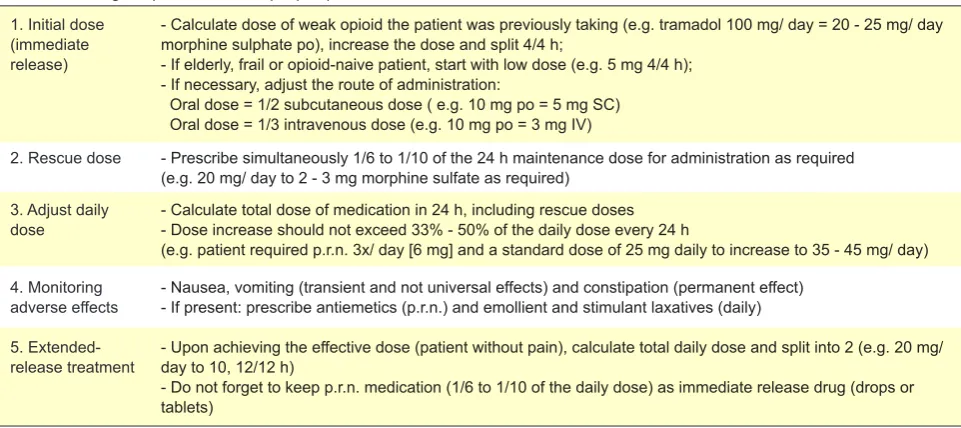
It is essential to not forget the prescription of rescue medication (i.e. SOS). In the case of morphine, a dose of 1/6 to 1/10 of the total prescribed daily dose is to be administered every 15 - 60 min in accordance with the patient’s complaint.7,17 If a patient needs SOS medication several times, it may be due to poor control of the basal pain, requiring increasing the dose, or to the presence of breakthrough pain that can be predictable (e.g. during movements) or unpredictable (spontaneous).24 The titration of the basal dose should be 30% - 50% of the dose for the 24-hour period until the pain is relieved or adverse effects occur. It should be emphasised that morphine is poorly absorbed by the oral route; so if this route is replaced by the subcutaneous one, the oral dose should be reduced by half. When switching from oral to IV, it must be reduced to 1/3 (Table 2).17,24
ARTIGO DE REVISÃO the root of uncontrolled pain is anxiety, fear or anxiety, and
these symptoms are not treated by increasing the number of painkillers.
According to the aetiology of complaints, other treatment options can be considered. In particular, in the presence of bone metastases, radiation therapy, bisphosphonates and NSAIDs and corticosteroids can be effective.7,24 In patients with neuropathic pain syndromes, treatment with anticonvulsant (e.g. gabapentin, pregabalin), tricyclic antidepressants (e.g. amitriptyline), topical lidocaine or the combination of these drugs with opioids may be beneficial.6,7,17 In specific cases, a regional block of the affected nerves can be considered.7
In patients with advanced kidney disease, the use of NSAIDs should be avoided due to the risk of worsening renal function and increasing the risk of bleeding. In the second step proposed by the WHO, a low dose of buprenorphine as a weak opioid can be used every seven days or 50 mg 12/12 hours of quick-release tramadol (avoiding association with SSRI antidepressants due to the risk of serotonin syndrome). In the group of strong opioids, the most used drug is a low dose of transdermal fentanyl.17 In renal failure patients with neuropathic pain, gabapentin 100 mg at bedtime, pregabalin 25 mg 12/12 hours or amitriptyline 10 mg at night can be used with caution.22
Fatigue
Fatigue is a common symptom and causes a lot of frustration in previously active patients.7,20 It is important to distinguish between physical tiredness and dyspnoea or depressive disorders.20 Other reversible causes that must be looked for include anaemia, sleep disorders, nutritional deficit, endocrine disorders (e.g. hypothyroidism or hypogonadism) and organ dysfunction (e.g. cardiac insufficiency or pulmonary fibrosis).20,25
It is also important to explain to the patient and his or her family that this is a symptom related to the underlying disease - since it is sometimes misinterpreted as being the
patient ‘giving up’ or ‘stoping the fight’ against the disease.23 Non-pharmacological treatment using conservative energy strategies - promoting adaptations at home and in the type of tasks to be performed - and rehabilitation programmes adjusted to expectations are important in the control of symptoms.7,20,23 Exercising during or after cancer treatment has shown to be beneficial for symptoms of fatigue, quality of life, functional capacity and emotional distress.25
The use of psychostimulants, such as methylphenidate (Ritalin®), is effective in some patients, but it should be
used with caution in cardiac or delirium patients.20 The gradual start of a low dose (5 mg breakfast and lunch) is recommended, with improvement in the symptoms expected to occur within 24 to 48 hours.20
Modafinil has demonstrated improvement of severe fatigue symptoms in cancer patients. The use of 50 to 200 mg in the morning and at lunch is recommended.20,25 The benefit of corticosteroid therapy for this symptom was studied in terminal patients for a short period of time, and its various potential long-term adverse effects should be considered, for which reason this measure is not usually recommended.20,25
Nausea and vomiting
Multiple reversible causes of nausea and vomiting may be present and should be investigated, including drugs, uremic state, infections, anxiety, constipation, gastric irritation and proximal gastrointestinal obstruction.6,20 The major neurotransmitters involved in the physiopathology of nausea and vomiting are dopamine, histamine, acetylcholine and serotonin.23 In the gastrointestinal system, the serotonergic effect predominates, while in the vestibular system, acetylcholine and histamine are decisive.23
The choice of the suitable drug varies according to the cause of the symptoms. However, a systematic review showed that the empirical choice of antiemetics used in
Table 2 - Starting morphine treatment (for pain)17
1. Initial dose (immediate release)
- Calculate dose of weak opioid the patient was previously taking (e.g. tramadol 100 mg/ day = 20 - 25 mg/ day morphine sulphate po), increase the dose and split 4/4 h;
- If elderly, frail or opioid-naive patient, start with low dose (e.g. 5 mg 4/4 h); - If necessary, adjust the route of administration:
Oral dose = 1/2 subcutaneous dose ( e.g. 10 mg po = 5 mg SC) Oral dose = 1/3 intravenous dose (e.g. 10 mg po = 3 mg IV)
2. Rescue dose - Prescribe simultaneously 1/6 to 1/10 of the 24 h maintenance dose for administration as required
(e.g. 20 mg/ day to 2 - 3 mg morphine sulfate as required) 3. Adjust daily
dose - Calculate total dose of medication in 24 h, including rescue doses- Dose increase should not exceed 33% - 50% of the daily dose every 24 h
(e.g. patient required p.r.n. 3x/ day [6 mg] and a standard dose of 25 mg daily to increase to 35 - 45 mg/ day)
4. Monitoring
adverse effects - Nausea, vomiting (transient and not universal effects) and constipation (permanent effect)- If present: prescribe antiemetics (p.r.n.) and emollient and stimulant laxatives (daily)
5.
Extended-release treatment - Upon achieving the effective dose (patient without pain), calculate total daily dose and split into 2 (e.g. 20 mg/day to 10, 12/12 h)
ARTIGO DE REVISÃO
patients with advanced cancer was effective.23
Nausea mediated by dopamine is the most frequent,23
so the initial step is using metoclopramide (unless there is total intestinal obstruction). If ineffective, it should be replaced by haloperidol (also a dopamine antagonist) or erythromycin (motilin agonist).17,20 If the symptoms continue, olanzapine or levomepromazine (more potent and sedative) can be used and/or in combination with dexamethasone (if one suspects brain metastases or is adjuvant to treatment, being considered to be a broad spectrum antiemetic).6,20 Ondansetron (serotonin 5HT3 receptor antagonist) is used in patients with nausea and vomiting associated with chemotherapy and radiotherapy as well as nausea refractory to other treatments.6,20,23
Nausea resulting from uremic conditions is usually treated with haloperidol in small doses, levomepromazine being a viable option in refractory situations.22 In situations
of suspected gastroparesis or delayed gastric emptying (e.g. diabetic or uremic neuropathy), domperidone or metoclopramide is recommended, bearing in mind that the latter should be administered in low doses, for a limited time and with caution due to the risk of accumulating and causing extrapyramidal reactions.22
Dyspnoea
Dyspnoea is a subjective sensation of breathlessness, and it is a cause of great discomfort and anxiety in patients.18,20,23 Opioid medication is effective in the symptomatic treatment, although in common practice it is underutilized for fear of causing respiratory depression.20 The doses used in the control of dyspnoea are usually lower than those needed to control pain complaints.6,20,23 In de novo patients, the safe and appropriate starting dose is 2 mg morphine sulphate every 2 hours according to the patient’s symptoms.20
Oxygen is often used, but it has not been shown that it improves the sensation of dyspnoea.6,20 In the minority of patients with hypoxemia, oxygen therapy is indicated,7,18,23 but in most cases this is not a first-line treatment for dyspnoea in terminally ill patients. The use of a fan to ventilate the air on the face of the patient proved to be effective in relieving dyspnoea through stimulation of the maxillary branch of the trigeminal nerve.6,7,20,23
Due to their anxiolytic effect, the use of benzodiazepines can be associated with opioid treatment.23 Lorazepam (1 mg sublingual) or diazepam (2 mg in the evening or 12/12 hours) can be used in patients with maintained oral route; if this is not feasible, midazolam (subcutaneous 2.5 mg) is recommended.24
Non-pharmacological measures such as pulmonary rehabilitation and non-invasive ventilation as well as directed pharmacological therapy (e.g. bronchodilators, diuretics, antibiotics, corticosteroids) are complementary and can be beneficial according to the patient’s clinical condition.6,7,18,24
Anorexia and cachexia
Usually anorexia by itself causes more anxiety in the
family than it generates malaise in the patient.20 However, the physical changes associated with decreased food intake, together with the hypermetabolic state associated with the disease, can have an important psychological impact on the patient and his or her family.20
The research and treatment of reversible causes should be the first step in the approach, considering the presence of stomatitis, constipation, uncontrolled pain or dyspnoea, delirium, nausea or vomiting and depression or gastroparesis.20
The treatment of anorexia begins by using non-pharmacological measures, such as dietary assessment, the use of protein or energy supplements and increased physical activity.20
Treatment with megestrol (Ascestrol®) proved to be
effective in improving appetite and weight gain through increased fat mass and not from muscle. Adding olanzapine to megestrol was also effective in patients with advanced cancer disease.20
Corticosteroid dexamethasone showed improvement in various symptoms, and also in improving appetite, with an objective effect in 3 to 5 days. However, the multiple adverse effects of this treatment must be taken into consideration, and the minimum effective dose should be used.20
Studies with dronabinol (active ingredient of marijuana) proved to be effective in patients with AIDS, but there are few studies in other populations and the adverse effects are significant (neurotoxicity, anxiety, euphoria, drowsiness).20 Nasogastric tube or parenteral feeding does not improve survival or the comfort of terminally ill patients. In contrast, it is associated with aspiration pneumonia, sepsis, abdominal pain and diarrhoea.20
When dealing with patients’ anorexia and cachexia, it is essential to explain to their families that it is not malnutrition and that the clinical deterioration is not due to reduced food intake but to the progression of the disease, which is not treatable with forced intake (Table 3).
Intervention in refractory symptoms Palliative sedation
Palliative sedation is a last-line treatment that aims to induce a state of reduced consciousness to relieve refractory symptoms and should be discussed in advance with the patient.6,18,26,27 A refractory symptom happens when it cannot be adequately controlled by first-line measures despite significant effort in managing treatment tolerated by the patient and does not compromise the state of consciousness.27 It can be used in various contexts and in different degrees (intermittent, mild, continuous).26,27 The main indications for continuous palliative sedation include refractory hyperactive delirium and refractory and intolerable dyspnoea.27 Pain is not a usual reason to use palliative sedation.
In clinical practice, the improper, abusive or unreasonable use of palliative sedation can lead to adverse consequences for the patient, including speeding up the death process.26
ARTIGO DE REVISÃO
Table 3 - Drug treatment recommended in controlling symptoms6,7,17,20,23,24
Drug Route of administration Posology Adverse effects PAIN
Paracetamol Oral, IV 1000 mg 8/8 h
(max 4000 mg/ day) Hepatotoxicity
NSAIDs - Ibuprofen
- Naproxen
Oral, SC, IV, rectal 400 mg 8/8 h
(max 800 mg 8/8 h) 500 mg - 1 gr/ day (max 500 mg 8/8 h)
Gastropathy, nephropathy, antiplatelet effect, hypertension, heart failure, headache
Tramadol Oral, SC, IV 50 mg 6/6 h
(max 400 mg/ day) Dizziness, nausea, vomiting
Morphine sulphate Oral, SC, IV 5 - 10 mg oral every 15 min Constipation, dry mouth, nausea/
vomiting, sedation, sweating - Gabapentin
- Pregabalin
Oral 100 mg 12/12 h
(max 1800 mg/ day) 25 12/12 hours (max 300 mg/ day)
Heart failure
Amitriptilin Oral 10 a 75 mg at night Arrhythmia, heart failure, ischemic
heart disease
Lidocain Topical Apply for 12 h and remove Local skin reactions
FATIGUE
Methylphenidate Oral Start morning and lunch
(max 20 mg/ day) Anorexia, insomnia, anxiety, confusion, tremor, tachycardia
Modafinil Oral 50 a 200 mg/ day
(max 400 mg/ day) Headache, anxiety, insomnia
Corticosteroids Oral, SC, IV Insomnia, muscle atrophy, edema,
hyperglycaemia
NAUSEA AND VOMITING
Metoclopramide Oral, SC, IV 10 mg before meals and at
night (max 60 mg/ day) 40 – 60 mg/ day (continuous infusion)
Abdominal pain, diarrhoea, sedation, extrapyramidal symptoms
Domperidone Oral 10 mg before meals
Erythromycin Oral 250 mg 12/12 h Intestinal colic, diarrhoea
Haloperidol Oral, SC, IV 1 mg every 8 h - 12 h
(max 20 mg/ day) 5-15 mg/ day (continuous infusion)
Sedation, QT prolongation, extrapyramidal symptoms
Olanzapine Sublingual 2.5-5 mg 12/12 h
(max 2.5 - 5 mg till 6h) Hepatotoxicity, seizures, dyskinesia
Ondansetron Oral, IV 4-8 mg 12/12 h
(max 32 mg/day) Headache, flushing, constipation
Levomepromazine Oral, SC 6 - 12.5 mg
(max 100 mg/ day) Hepatotoxicity, seizures, dyskinesia
Dexamethasone Oral, IV, SC 8 mg morning and afternoon Insomnia, muscle atrophy, edema,
hyperglycaemia
DYSPNOEA
Morphine sulfate Oral, SC, IV 2 mg oral till 2/2 h
(in ‘naïve patients’) Constipation, dry mouth, nausea/vomiting, sedation, sweating
Benzodiazepine - Lorazepam - Diazepam - Midazolam
Oral, sublingual 500 mcg – 1 mg
2 mg 12/12 h 2.5 mg (sc)
Drowsiness, fatigue, difficulty concentrating, hypotonia
Oxygen (only if hypoxemia) Nasal cannula
ANOREXIA
Megestrol Oral 80 to 160 mg/ day
(max 800 mg/ day) Thromboembolism, hyperglycaemia
Dexamethasone Oral, SC, IV 4 to 16 mg/ day Insomnia, muscle atrophy, edema,
ARTIGO DE REVISÃO
Among the mistakes made by inexperienced professionals, the misuse of this therapy as well as the misuse of opioids for the purpose of inducing sedation (Table 4) stand out.26,27 Morphine is not indicated as sedation, and it is incorrect to use it for this purpose.26,27
To this effect, the European Society for Palliative Care proposed a systematic and thorough approach for the decision to initiate, monitor and adjust the treatment to the condition of each patient.26
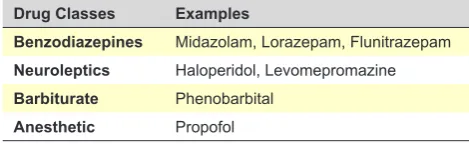
The start of treatment with palliative sedation should be anticipated in the course of the disease, and professionals must follow this protocol: (a) evaluate the patient, seeking reversible or treatable causes for suffering (e.g. intestinal obstruction, increased intracranial pressure); (b) discuss in detail with the patient the end-of-life approach he or she wants; (c) obtain consent after explaining the objectives, benefits and risks of the treatment; d) discuss with family members, if they did not participate in the process of obtaining consent with the patient; (e) choose the appropriate drug (Table 5); (f) choose the administration route (e.g. subcutaneous, intravenous); (g) monitor the patient (patient in imminent death does not benefit from the assessment of vital signs - on the other hand, for patients undergoing temporary sedation it is essential to monitor vital signs and adjust drug dosage if signs of respiratory depression appear); h) discuss the risks/benefits of
hydration and nutrition for the patient; (i) administer the routine medication relevant for the symptomatic control of the patient (e.g. opioid analgesia).26,28
CONCLUSION
Palliative care is a global necessity and it comprehend multiple pathologies.29 Training in this area is crucial for better care.
There are a variety of common symptoms in patients with advanced chronic illnesses, wherein the objective of care focus in the comfort and promoting of quality of life. Looking out for them should be a part of a doctor’s routine evaluation since many of them can be mitigated and thus offer patients a better quality of life. The implementation of palliative actions is crucial to promote the welfare and dignity of this very large group of patients.
The clinician has a vast arsenal of strategies (nonpharmacological and pharmacological) which must be used judiciously in accordance with well-established recommendations. The control of symptoms as an essential part of the treatment of these patients must be accompanied by proper communication and relationship skills with the patients and their families.
In the rare situations where symptoms reveal to be refractories, and never as first line, the palliative sedation should be used, following the systematic approach proposed by international societies.
CONFLICTS OF INTEREST
The authors declare that there are no conflicts of interest.
FUNDING SOURCES
No subsidies or grants contributed to this work.
REFERENCES
1. Instituto Nacional de Estatística. Anuário Estatístico de Portugal 2014.
Atualizado: 11-02-2016. Lisboa: INE; 2016. 2. Sarmento VP, Higginson IJ, Ferreira PL, Gomes B. Past trends and projections of hospital deaths to inform the integration of palliative care in Table 4 - Common clinical practice errors related to palliative sedation26
Errors/problems in clinical practice Examples
Palliative sedation abuse - Intend to accelerate the patient’s death
Inadequate use of palliative sedation - Inadequate assessment of the patient (neglect of reversible causes of suffering) - Failure in communication with experts
- Fatigue and frustration of professionals by the complexity of the patient’s symptoms - Palliative sedation requirement by the family (and not by the patient)
Delayed onset of palliative sedation - Persistence in ineffective treatment options for symptomatic relief
Providing low-quality care - Failure in communication with patient and/or family members regarding the indications, risks and treatment goals
- Inadequate monitoring of symptom relief
- Inadequate assessment of psychological, spiritual or social factors - Inadequate monitoring of drug toxicity signs
- Accelerated titration dose of sedative drugs - Use of inappropriate medications (e.g. opiates) - Negligence support for family members
- Neglect of the spiritual well-being and emotional health professionals
Table 5 - Drugs used for palliative sedation
Drug Classes Examples
Benzodiazepines Midazolam, Lorazepam, Flunitrazepam
Neuroleptics Haloperidol, Levomepromazine
Barbiturate Phenobarbital
ARTIGO DE REVISÃO one of the most ageing countries in the world. Palliat Med. 2016;30:363-73. 3. Carneiro R. Medicina interna, cronicidade e terminalidade. Rev Port
Med Int. 2014;21:91-6.
4. Monteiro PH, Silva MJ, Fraga M, Mota C, Suarez A, Ponte C, et al. Necessidade de cuidados paliativos num serviço de medicina interna. Rev Port Med Int. 2013;20:7-20.
5. Solano JP, Gomes B, Higginson IJ. A comparison of symptom prevalence in far advanced cancer, AIDS, heart disease, chronic obstructive pulmonary disease and renal disease. J Pain Symptom Manage. 2006;31:58-69.
6. Blinderman CD, Billings JA. Comfort care for patients dying in the hospital. N Engl J Med. 2015;373:2549-61.
7. Kelley AS, Morrison RS. Palliative care for the seriously ill. N Engl J Med. 2015;373:747-55.
8. Pulido I, Baptista I, Brito M, Matias T. Como morrem os doentes numa enfermaria de medicina interna. Rev Port Med Int. 2010;17:222-6. 9. Gill TM, Gahbauer EA, Han L, Allore HG. Trajectories of disability in the
last year of life. N Engl J Med. 2010; 362:1173-80.
10. Murray S, Kendall M, Boyd K, Sheikh A. Illness trajectories and palliative care. BMJ. 2005;330:1007-11.
11. Thomas K. Prognostic Indicator Guidance (PIG). 4th ed. Shropshire: The Gold Standards Framework Centre In End of Life Care CIC; 2011. 12. The 2015 Quality of Death Index -Ranking palliative care across the
world. A report by The Economist Intelligence Unit. London: The Economist Intelligence Unit; 2015.
13. Youngwerth J, Min SJ, Statland B, Allyn R, Fischer S. Caring about prognosis: a validation study of the caring criteria to identify hospitalized patients at high risk for death at 1 year. J Hosp Med. 2013;8:696-701. 14. Dening KH. Palliative and end of life care for people with dementia. Nurs
Stand. 2016;30:42-9.
15. Lillyman S, Bruce M. Palliative care for people with dementia: a literature review. Int J Palliat Nurs. 2016;22:76-81.
16. Hui D. Prognostication of survival in patients with advanced cancer: predicting the unpredictable? Cancer Control. 2015;22:489-97.
17. Twycross R, Wilcock A, Howard P, editors. Palliative Care Formulary. 5th ed. Nottingham: Palliative drugs.com Ltd; 2014.
18. Bausewein C, Simon ST, Pralong A, Radbruch L, Nauck F, Voltz R. Palliative care of adult patients with cancer. Dtsch Arztebl Int. 2015;112:863-70.
19. Neto I. Utilização da via subcutânea na prática clínica. Rev Soc Port Med Int. 2008;15:277-83.
20. Shoemaker L, Estfan B, Induru R, Walsh TD. Symptom management: an important part of cancer care. Cleve Clin J Med. 2011;78:25-34. 21. van Nordennen RT, Lavrijsen JC, Heesterbeek MJ, Bor H, Vissers KC,
Koopmans RT. Changes in prescribed drugs between admission and the end of life in patients admitted to palliative care facilities. J Am Med Dir Assoc. 2016;17:514-8.
22. Douglas CA. Palliative care for patients with advance chronic kidney disease. J R Coll Physicians Edinb. 2014;44:224-31.
23. Ferris FD, von Gunten GF, Emanuel LL. Ensuring competency in end-of-life care: controlling symptoms. BMC Palliat Care. 2002;1:5.
24. Yorkshire Cancer Network, North East Yorkshire and Humber Clinical Alliance. Guide to Symptom Management in Palliative Care (version 5.1, 2012). Harrogate: Yorkshire Cancer Network Palliative and End of Life Care Group; 2014.
25. Campos MP, Hassan BJ, Riechelmann R, Del Giglio A. Cancer-related fatigue: a practical review. Ann Oncol. 2011;22:1273-9.
26. Cherny N, Radbruch L. European Association for Paliative Care recommended framework for the use of sedation in palliative care. Palliat Med. 2009;23:581-93.
27. Voeuk A, Oneschuk D. Continuous palliative sedation therapy. Can Fam Physician. 2014;60:813–5.
28. Cherny N, on behalf of the ESMO Guidelines Working Group. ESMO Clinical Practice Guidelines for the management of refractory symptoms at the end of life and the use of palliative sedation. Ann of Oncol. 2014;25:iii143–52.