COMPONENTS OF REWARD-DRIVEN ATTENTIONAL BIAS AND IMPULSIVITY
Kristin N. Meyer
A thesis submitted to the faculty at the University of North Carolina at Chapel Hill in partial fulfillment of the requirements for the degree of Master of Arts in the Department of Psychology
and Neuroscience in the College of Arts and Sciences (Clinical Psychology).
Chapel Hill 2018
ABSTRACT
Kristin N. Meyer: Components of Reward-driven Attentional Bias and Impulsivity (Under the direction of Margaret Sheridan and Joseph Hopfinger)
TABLE OF CONTENTS
LIST OF FIGURES ... vi
LIST OF TABLES ... vii
LIST OF ABBREVIATIONS ... viii
Introduction ... 1
Attention and Decision-making ... 2
Reward Biases Attentional Selection ... 3
Awareness of Stimulus-reward association ... 8
Components of RDAB ... 8
Summary and Current Study ... 15
Study 1 ... 17
Methods... 17
Results. ... 20
Discussion. ... 24
Study 2 ... 31
Introduction. ... 31
Methods... 33
LIST OF FIGURES
Figure 1. Reward-training paradigm adopted from Anderson (2011). ... 47
Figure 2. Testing paradigm adopted from Failing and Theeuwes (2014).. ... 48
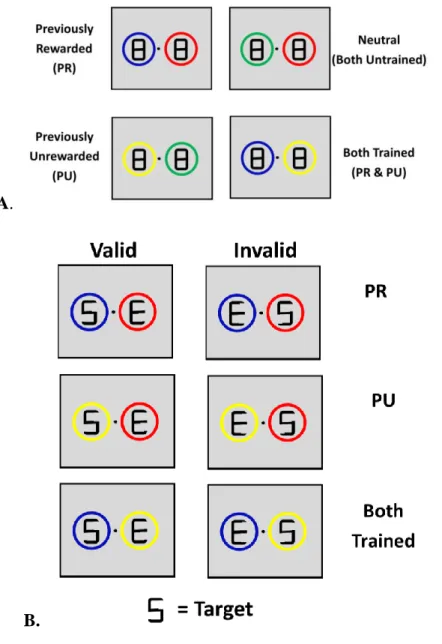
Figure 3. Description and examples of cue types. ... 49
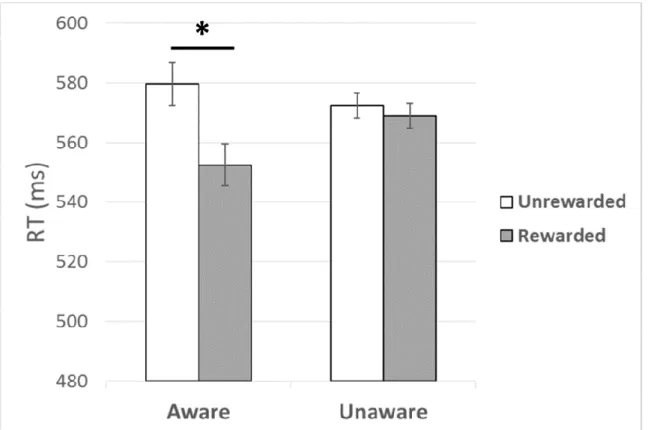
Figure 4. Effect of reward on performance during training in Study 1. ... 50
Figure 5. Performance on cueing task in study 1.. ... 52
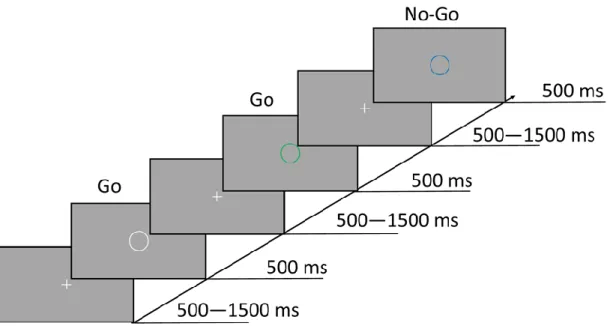
Figure 6. Go/No-Go paradigm. ... 53
Figure 7. Delay Discounting Task. ... 54
Figure 8. Significant effect of reward on training in Study 2. ... 55
LIST OF TABLES
LIST OF ABBREVIATIONS
RDAB Reward-driven Attentional Bias
RT Reaction Time
ERP Event-related Potential
EEG Electro-Encephalogram
fMRI Functional Magnetic Resonance Imaging
PR Previously Rewarded
PU Previously Unrewarded
DDT Delay Discounting Task
Introduction
The proposed project aims to address this gap in the literature by explicitly testing how RDAB relates to impulsivity. To this end, I will first review the importance of attention in decision-making. Secondly, I will describe how reward modifies attentional selection even when there is no prospect of reward receipt by (a) acting as a motivator when reward and task-goals are compatible, (b) priming attentional selection during tasks that manipulate relevance of certain stimulus features, and (c) acting as a distractor when irrelevant to or at odds with task goals. Next I will review some methodological considerations that limit our current understanding of attentional bias to reward and argue for the importance of separating facilitated capture and impaired disengagement for characterizing RDAB. Finally, I will explain how testing the separate components of RDAB, facilitated attentional capture and difficulty disengaging, could increase the clinical utility of RDAB investigations.
Attention and Decision-making
Although allocation of attentional resources happens at an early stage of cognitive processing, it influences later-stage preferences and choices (Armel, Beaumel, & Rangel, 2008). Repeatedly, research has shown that manipulating attention affects decisions and behavior. Experimental manipulation of attention to a food-item increases the likelihood that item will be selected for consumption over an food-item with equal exposure time but no attention
in reducing relapse and associated symptomology in people with a history of substance use. However, further understanding of the nature of attentional bias through larger studies and the use of more rigorous controls are needed for this type of intervention (Lopes et al., 2015; for reviews see (Cox, Fadardi, Intriligator, & Klinger, 2014; Field, Marhe, & Franken, 2014; Lopes et al., 2015). Given that changes in attention alone can influence behavior toward appetitive stimuli, it is important to understand how individual differences in attentional processing of appetitive stimuli might relate to impulsive behavior.
Reward Biases Attentional Selection
Attention functions to select the most relevant stimuli in the environment, and reward helps to reinforce rules of the environment and update priorities, thus, it is not surprising that reward has robust effects on attentional selection. When rewards are compatible with task-goals, the reward acts as motivation and performance on voluntary attention tasks improves
(Engelmann et al., 2009; Engelmann & Pessoa, 2014). Behaviorally, the prospect of reward results in decreased reaction times and increases in target detection sensitivity (Engelmann et al., 2009; Engelmann & Pessoa, 2014). Mechanistically, attentional priority is given to the location of reward-related cues, which results in enhanced stimulus representation in early visual
processing and facilitated responses to stimuli at that location (Bisley & Goldberg, 2010; Peck, Jangraw, Suzuki, Efem, & Gottlieb, 2009; Serences, 2008; Serences & Saproo, 2010).
Another set of experiments extended these findings to demonstrate that history of reward associated with stimulus features biases later attentional selection (Libera & Chelazzi, 2006). Specifically, the experimenters were interested in whether reward could induce positive priming, which is the facilitation of responses when previous targets serve as current targets, and negative priming, which is the decrement in performance when previous targets serve as current
distractors (Tipper, 1985). After highly rewarded trials, participants showed a negative priming effect; the stimulus feature or color that served as a distractor in a highly-rewarded prime trial hindered responses when it served as a target in probe trials (Libera & Chelazzi, 2006). A follow-up EEG study showed evidence for capture to reward-related stimuli, indicating that reward upregulates attentional priority of the reward-related target rather than simply increasing suppression of non-reward distractors (Hickey, Chelazzi, & Theeuwes, 2010a). This set of studies was the earliest to show that reward influenced attentional selection after receiving a reward and that reward can diminish performance when used as a distractor.
effects of reward on attention in peripheral cueing tasks are more robust in covert than overt attention tasks (Dunne, Ellison, & Smith, 2015; Pool, Brosch, Delplanque, & Sander, 2014). Consequently, paradigms capable of testing covert attentional shifts may be more sensitive to reward-related changes in attentional priority.
Up to this point, the literature reviewed is consistent with reward modulating attention in an involuntary, automatic manner; however, because each of the paradigms examined RDAB while participants were obtaining rewards within the task, these paradigms cannot rule out that RDAB may be dependent on a reward-motivated attentional set for the task (Anderson, 2013). With this in mind, the best way to test RDAB while controlling for reward history is to first experimentally manipulate reward-association in a training phase and then to test RDAB in a separate phase without the prospect for reward. Anderson and colleagues addressed this gap in the literature by developing a paradigm with separate testing and training phases (Anderson et al., 2011b). Anderson’s design (explained below) will be modified for the proposed experiment’s procedure because using separate training and testing phases is the best way to address the research questions at hand.
assigned for either red or green circles to be the high-reward stimulus while the other color served as the low-reward stimulus. Correct responses to high-reward stimuli earned a large reward (5¢ experiment 1; 10¢ experiment 3) on 80% of trials and a small reward (1¢ experiment 1; 2¢ experiment 3) on 20% of trials. The reverse proportions were true for low-reward stimuli, although participants were not explicitly informed of these contingencies.
The test phase used a shape singleton paradigm with no prospect for reward. In the test phase, the previously rewarded targets always served as distractors in the array. The search array now consisted of five circle non-targets and a physically salient shape singleton, a diamond. Participants reported the orientation of the white line inside the diamond, which was never red or green, and were to ignore all of the circles. On half of the trials, one of the non-targets was either red or green, each equally often, and for the other half of the trials, all of the non-targets had no association with reward. As such, trials were classified as containing either high-value
distractors, low-value distractors, or distractor-absent.
Results showed that participants responded to the target more slowly on trials with high-value-distractors than on distractor-absent trials, and that there was a linear trend of reward-magnitude’s influence on reaction time (Anderson et al., 2011b). Effects of reward on response time mimicked that of effects of a physically salient distractor (Theeuwes, 1991, 1992), even though both physical-salience and top-down attentional set should bias attention to the shape-singleton (diamond) target. These results are consistent both for long reward-training
(experiment 1; 1,008 trials) and for short reward-training (experiment 3; 240 trials) and were due explicitly to reward manipulation rather than previous selection as a target (experiment 2;
distractor locations on immediately subsequent trials supports that RT slowing is attributed to attentional capture to reward rather than merely a filtering cost (Anderson et al., 2011b). Further corroborating attentional capture to reward, an N2pc component is elicited to reward-related distractors in this paradigm (Qi, Zeng, Ding, & Li, 2013). Taken together, these results show that associating reward with an arbitrary stimulus can bias attention even when the prospect of
reward is no longer directly motivating in the task and when such bias is detrimental to task-goals. This study also demonstrates an inability to resist capture to reward (e.g. Pearson et al., 2015), as follow-up analyses of response-time distributions show that even the fastest response times on high-value distractor trials were slower than distractor-absent trials, which signifies that capture occurred consistently across trials (Anderson et al., 2011b).
2012). While these studies have helped to expand our understanding of RDAB, several gaps in the literature remain which I address here.
Awareness of Stimulus-reward association
First, previous work has indicated that the reward-learning in this paradigm is primarily implicit in nature, given that participants did no better than chance at explicitly stating the reward contingencies (Anderson, 2015c). Furthermore, biased processing of rewarded stimuli can occur without conscious awareness of reward contingencies or even conscious processing of stimuli (Seitz, Kim, & Watanabe, 2009). Relatively few studies have specifically tested how conscious awareness impact RDAB, and the findings are somewhat mixed. One study, with 20% of participants correctly identifying the more highly rewarded stimulus, found that RDAB did not differ between aware and unaware individuals (Anderson et al., 2013). However, another study (with 37% of participants identifying which stimulus was associated with reward) found that RDAB was stronger in aware than unaware participants (Bourgeois, Neveu, Bayle, &
Vuilleumier, 2017). Given the potential for awareness to modulate the strength of RDAB, the current study will probe for awareness of reward contingencies.
Components of RDAB
Attentional bias is comprised of both initial orienting toward the stimulus (capture) and difficulty reallocating attention toward a more goal-relevant stimulus or location (Corbetta & Shulman, 2002; Posner et al., 1987). The distinction between these two processes is important in attentional bias to substance-related cues in individuals with a history of substance use by
linked to one of the two components. Here, I employed Anderson’s reward training paradigm to associate reward with a given stimulus. I then test RDAB in a paradigm (adapted from Failing and Theeuwes, 2014) with different task goals and stimuli arrangements than in training. This extends previous RDAB work using Anderson’s paradigm by differentiating the fast, more automatic component of RDAB (capture) and the slower, more controlled component of RDAB (disengagement). Furthermore, unlike previous work, which used matching targets, task goals, and search arrays in training and testing, the current study tests RDAB when the stimuli arrangement, task goals, and targets differ between training and testing. Finally, by separating RDAB into the elements of facilitated capture and impaired disengagement, I aim to better characterize the relationship between RDAB and impulsivity.
Impaired disengagement from reward-related stimuli may be more closely linked with individual differences in cognitive control over reward than facilitated capture. Disengaging from distractor-stimuli that have already captured attention requires reactive attentional control in the form of distractor suppression (Geng, 2014). Disengagement of attention may be
particularly important to measure, as emotional arousal level associated with a stimulus influences disengagement more than capture (Vogt, De Houwer, Koster, Van Damme, & Crombez, 2008). Furthermore, disengagement from emotional stimuli (rather than capture) has been more closely associated with individual variability in personality (Derryberry & Reed, 1994) and impaired disengagement from substance cues has shown marginally larger
relationships with individual variability in substance-use cravings, although the trending
Wiers, 2015), which is consistent with the importance of isolating impaired disengagement (the component of RDAB linked with executive functioning. It is likely that delayed
time-to-disengage contributed to variability in reaction times when using Anderson’s paradigm: a median split analysis indicated that an N2pc component, indexing capture, was exhibited for both fast and slow trials (Qi et al., 2013); however, a later positive deflection component, an ERP measure associated with efficient suppression of distractors (Sawaki & Luck, 2013; Schupp et al., 2007), was only evident on fast trials (Qi et al., 2013).
(Anderson, Kuwabara, et al., 2016). During testing, individuals without evidence of RDAB not only showed reduced dopamine levels as compared to other people, but showed a suppression of dopamine when performing the task with reward-related distractors relative to the same task without reward-related distractors (Anderson, 2016). These individuals may be recruiting top-down control to suppress striatal activity, and therefore eliminate attentional bias to reward-related stimuli when such bias is at odds with contextual goals.
On the other hand, facilitated capture to reward appears to be less modulated by cognitive control (Geng, 2014). Emotional significance of a distractor can drive initial orienting to that stimulus (Öhman, Flykt, & Esteves, 2001). Capture to reward-related stimuli has been shown consistently across trials within participants, as demonstrated by reaction time distributions (Anderson et al., 2011b). There is some evidence to suggest that initial capture to reward-related stimuli cannot be effortfully prevented, because individuals exhibit attentional capture to reward-related distractors to the same degree regardless of whether they are given the opportunity to control their attention by being made aware of negative contingencies of attending to that
stimulus (Pearson et al., 2015). A meta-analysis confirms that the effects of capture in RDAB are overall more consistently present across studies and stronger than disengagement (Pool, Brosch, Delplanque, & Sander, 2016). Furthermore, rather than being related to aspects of executive functioning, capture to reward-related stimuli has been linked with heightened reward response (Anderson, Kuwabara, et al., 2016; Qi et al., 2013).
Given the different potential underlying mechanisms and relationship to clinically significant differences, it is important to differentiate capture and disengagement when
significantly (Pool et al., 2016). For example, Raymond and O’Brien (2009) manipulated reward association with faces that were later used in an attentional blink paradigm. Their results showed that a reward-associated face was more likely to survive attentional blink, indicating facilitated processing, but that reward-associated faces did not extend the attentional blink as compared to a neutral face, indicating no increased difficulty disengaging (Raymond & O’Brien, 2009).
However, this should be interpreted cautiously, because faces are known to hold attention longer than neutral stimuli (Parks, Kim, & Hopfinger, 2014), and consequently the influence of faces and reward on extended attentional processing may not be additive.
Another study used pavlovian conditioning with puffs of chocolate odor to manipulate reward-assocatiation to visual stimuli and tested reward bias in a cueing paradigm (Pool et al., 2014). While results indicated that reward enhanced initial capture, but did not affect
disengagement, limitations in the training paradigm make these results somewhat inconclusive. Passive reward-association paradigms are less likely to form associations quickly (e.g. in one experimental session), because ventral striatal activation, which is involved in stimulus-reward paring is reduced in passive receipt tasks as compared to active tasks in which reward receipt is dependent upon a correct response (Zink, Pagnoni, Martin-Skurski, Chappelow, & Berns, 2004). Less than optimal reward training was made evident by the fact that only half of the participants were effectively conditioned as measured by self-report and reaction times (Pool et al., 2014).
Some evidence for difficulty disengaging from reward-related stimuli stems from modified Stroop (1935) paradigms in which participants are asked to name the ink-color of color-named-words and some ink-colors are associated with reward. Suppression of emotionally salient stimuli in emotional Stroop paradigms is more closely linked to disengagement of
task-irrelevant reward-associated semantic meaning slows down response time as compared to neutral words (Krebs, Boehler, Egner, & Woldorff, 2011; Krebs, Boehler, & Woldorff, 2010). Importantly, activity in the pre-supplementary motor area, an area involved in exerting control over responses when response conflict arises (Nachev, Wydell, O’Neill, Husain, & Kennard, 2007), was highly selective to trials in which reward-associated features conflicted with task goals (Krebs et al., 2011).
Support for disengagement has also been found in covert spatial attention. Failing and Theeuwes (2014) manipulated reward-association and then tested it using a double-cue
Given the links between disengagement and other frontal control processes as well as the more pervasive and automatic nature of capture within RDAB, I hypothesize that impulsivity is more likely to be linked to difficulty disengaging than it is to capture. Impulsivity has been defined as acting prematurely and without forethought (Dickman, 1993). This construct is associated with conduct disorder, attention-deficit hyperactivity disorder, and risk-taking behaviors, such as substance use and risky sex practices (Ahn, Ramesh, Moeller, & Vassileva, 2016; Castellanos-Ryan, Rubia, & Conrod, 2011; Herrman, Hand, Johnson, Badger, & Heil, 2014; Winstanley, Eagle, & Robbins, 2006). It has been proposed that impulsivity is linked to the prefrontal cortex and modulated by the reward-related fronto-striatal system (Bechara, 2005; Bechara & Van Der Linden, 2005). Given that resistance to impulsivity requires top-down prefrontal cortical communications with sub-cortical areas such as the ventral striatum and basal ganglia (Chambers, Garavan, & Bellgrove, 2009; Dalley, Everitt, & Robbins, 2011), it seems likely that individuals with disrupted impulsivity will also exhibit difficulty disengaging from reward-related stimuli.
The research thus far that has been conducted to test a relationship between RDAB and impulsivity has used the BIS-11, and findings are somewhat inconsistent. Some experiments have found relationships between impulsivity and RDAB (Anderson, Kronemer, et al., 2016; Anderson et al., 2011b exp 1); however, others have not replicated that finding (Anderson et al., 2011b exp 3; Pearson et al., 2015 exp 2), or even found an inverse relationship (Pearson et al., 2015 exp 1). RDAB is also exaggerated in populations shown to be higher on impulsivity, such as adolescents and individuals with a history of substance use (Anderson et al., 2013; Roper et al., 2014). Conflating facilitated capture to reward and impaired disengagement likely
Summary and Current Study
Reward-related disruptions in cognitive control, such as is evidenced by RDAB, have been well documented; however, relatively little research has been dedicated toward examining the attentional components that make-up RDAB. Attention research and literature on attentional bias in other populations has revealed that differentiating components of attentional bias
(facilitated capture and slowed disengagement) is important, because these components differ in their driving mechanisms and relationships to individual differences in behavior. The few studies that have examined facilitated capture and impaired disengagement in RDAB provide some initial support for these processes; however, methodological considerations described above (e.g. use of faces and identical training and testing paradigms) limit the generalizability of these findings. Furthermore, because of its potential for clinical utility, some studies have tested the relationship between RDAB and impulsivity with mixed results. One possibility for this inconsistency is that no study to date has tested the relationship between impulsivity and individual components of RDAB, leaving the mechanisms of this relationship unclear. Without examining components of RDAB individually, it is impossible to elucidate whether impulsivity is linked to reward more easily capturing attention (failures in proactive attentional control) or deficits in disengaging from reward in order to accomplish contextual goals (failures in reactive attentional control) or both. Understanding these mechanisms has implications for future interventions that could then more specifically target attentional monitoring and reducing distractibility or suppressing distractors and more quickly reorienting attention to goal relevant aspects of the environment.
Study 1
Methods.
Participants and Overall Design. All procedures were approved by the UNC Chapel Hill Institutional Review Board. Participants were 41 healthy adults (ages 18-23, 56% female) with self-reported normal or corrected-to-normal eyesight and no colorblindness, which was confirmed using the Ishihara Color vision test (Ishihara, 1973). Participants were recruited via flyers and a university listserv. Monetary compensation was provided based on participant performance (mean = $14.92). Cognitive tasks and questionnaires were completed in a 1 hour study visit. Attentional bias to reward was first manipulated in a reward training task and then tested using a modified Posner cueing paradigm.
by pressing the appropriate key with their index finger. Participants had 800 ms to respond. After the search display, a feedback display showed the amount of money earned (if any) and the current total. If no response was given within the time-frame, a 500ms 1,000 Hz feedback tone informed participants that the trial timed out, and the feedback screen displayed “Slow” along with the current total money.
The color of the rewarded target (green, red, blue, or yellow) was counterbalanced across participants. For the rewarded target, 80% of trials were worth 12 cents and 20% were worth no money. For the unrewarded target, all trials were worth no money. Training consisted of 360 trials across 3 blocks, and was preceded by a practice block of 50 trials. All tasks were programmed using OpenSesame (Mathôt, Schreij, & Theeuwes, 2012) and stimuli were
presented on a 22 inch color monitor with a refresh rate of 60 frames per second. All tasks were completed in a sound-attenuated booth. Participants were seated in a chair such that their eyes were approximately 75 cm from the screen, as measured by a trained research assistant.
Reward Bias Testing. The testing paradigm (Figure 2) was a cueing paradigm modified
from Failing and Theeuwes (2014). Testing trials consisted of a fixation, a double-cue display, and a target display. The fixation was displayed for a randomly determined period of 400-600 ms. The cue display was presented for 200 ms and consisted of two differently colored circles (red, green, yellow, or blue; 3.4˚ diameter) with figure-eight placeholders inside the circles (2.3˚ x 1.1˚). After 200ms, an offset of two line segments in each of the figure-eight premasks
revealed the target display. The target display consisted of the same circles as the cueing display, but with a letter revealed inside each circle (“S”, “P”, “H”, “E”; 2.3˚ x 1.1˚). One of the two letters was a target letter (“S” or “P”) and the other was a distractor letter (“H” or “E”).
by pressing the appropriate key with their index finger. The target display remained on the screen for 800 ms or until a response was given. For this phase, participants were explicitly informed that they would not receive money for their performance and that the circles were unrelated to the location of the target letter, emphasizing the color of the circles was task-irrelevant. Participants completed a 48 trials practice block prior to both training and testing. Testing consisted of 496 trials across 5 blocks. Trials were coded as previously rewarded (PR),
previously unrewarded (PU), neutral, or both trained present according to the cue types present (Figure 3).
Impulsivity. Participants completed the Barratt Impulsiveness Scale (BIS-11), a 30-item
self-report that is one of the most widely used scales for impulsivity (Patton, Stanford, & Barratt, 1995). The BIS-11 has and significant test-retest reliability (Stanford et al., 2009) and shows good internal consistency in this sample (α = .87).
Reward-contingency Awareness. Awareness of the reward-association in training was probed using a set of questions adapted from Anderson (2015b). A binary variable of whether participants correctly picked the reward contingency from 6 possible options (Appendix A) was used to define aware and unaware groups.
Analysis. Attentional bias effects were measured using reaction time (RT). Any RTs
analysis of variance (ANOVA), Greenhouse-Geisser corrected degrees of freedom and probability values are reported.
In order to test a linear-effect of orienting, an ANOVA was conducted on RT using a within-subjects factor of trial type (invalid PR, neutral, valid PR). Follow-up ANOVAs were used to test paired differences for overall attentional bias (invalid PR minus valid PR), facilitated capture (neutral minus valid PR), and impaired disengagement (invalid PR minus neutral). While the PR trial types are of primary interest, similar follow-up analyses will be conducted for the trial types of previously unrewarded (PU) and both PR and PU present. These follow-up analyses will determine whether a similar bias can be elicited from training alone (PU) and whether reward-driven bias is exhibited above and beyond training alone when both trial types are present (both trained present). All analyses included awareness of reward contingencies as a between subjects factor, and interactions between reward effects and awareness were tested.
We hypothesized that impaired disengagement from reward would be linked with individual differences in impulsivity, while controlling for individual differences in facilitated capture. This was tested using a linear regression predicting self-reported BIS-11 scores from a disengagement score (invalid – neutral RT) and capture score (neutral – valid RT). The
regression was conducted for PR trial types, PU trial types, and both trained present trial types. This allows for determination if the relationship to impulsivity is reward-specific or due to training.
Results.
reward-contingencies and 24 participants were classified as unaware. Independent samples t-tests confirmed that Aware and Unaware participants showed no differences on impulsivity, average RT on training, accuracy on training, amount of money earned, or average RT on testing, all p’s
> .1. While accuracy was generally high across participants in the testing phase, Aware
participants showed a higher accuracy overall on testing (M = 92.2%, SD = 3.2%) than Unaware participants (M = 89.6%, SD = 4.2%), t(39) = 2.12, p = .04.
Training. A mixed measures ANOVA was conducted to test for a reward-driven training
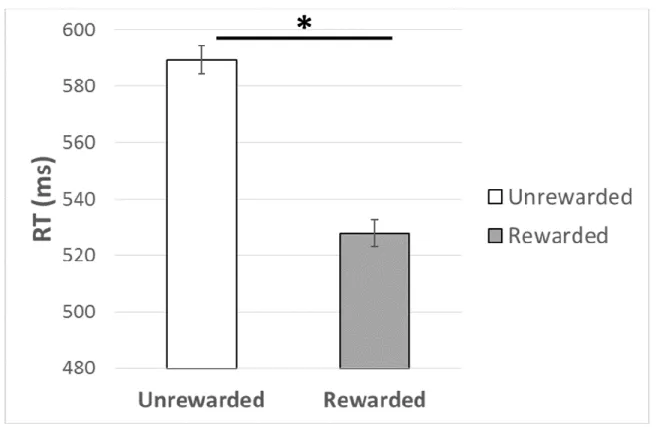
effect with reward (rewarded, unrewarded) as a within-subjects factor, with awareness (aware, unaware) as a between-subjects factor. In this analysis there was a trending effect of reward on RT, F(1, 38) = 2.92, p = .10, η2 = .07, which was qualified by a significant reward by awareness interaction, F(1, 38) = 12.55, p < .01, η2 = .25. As shown in Figure 4, follow-up analyses
revealed that aware participants were faster on rewarded compared to unrewarded trials, F(1, 15) = 6.40, p = .02, η2 = .30. There was no effect of reward in the unaware group, p = .52.
Components of Reward-Driven Attentional Bias. Attentional bias was measured in the
F(1, 38) = 6.00, p = .02, η2 = .14. This effect was qualified by an interaction with awareness,
F(1.73, 65.70) = 3.78, p = .03, η2 = .09 (Figure 5).
Due to the awareness by reward-effect interactions, follow-up analyses were conducted separately for aware and unaware participants. Aware individuals were faster on valid relative to invalid PR trials, F(1, 15) = 6.96, p = .02, η2 = .32, indicating an overall attentional bias to reward. This was further characterized by a significant effect of facilitated capture (valid relative to neutral; Table 1), F(1, 15) = 15.48, p < .01, η2 = . 51, and no effect of impaired disengagement (invalid relative to neutral; Table 1), p = .52. Within the unaware group, there was no evidence of overall attentional bias to reward, facilitated capture to reward, or impaired disengagement from reward, p’s > .1.
Performance on trial types with both PR and PU cues present were investigated to test whether this reward bias was exhibited beyond previously trained but never rewarded cues. A similar mixed measures ANOVA with factors of trial type and awareness was conducted for both PR and PU present cues. There was no effect of trial type or interaction with awareness, p’s > .1.
To test whether the results of attentional bias were due to training alone, performance on trials with PU trial types (i.e. PU vs. Neutral) was examined. For PU cues, there was no effect of trial type or interaction with awareness, p’s > .1, indicating no attentional bias to cues that were
trained but never rewarded.
Relationships to Impulsivity.To test whether separate components of reward-driven
attentional bias independently predict impulsivity, a linear regression predicting BIS-11 score from disengagement score, capture score, and awareness status was conducted. Separate
indicating that neither facilitated capture nor impaired disengagement from reward-related cues is linked with impulsivity. Given that previous research has investigated relationships between attentional bias to reward and impulsivity using total attentional bias scores (i.e. invalid RT – valid RT; Table 1), follow-up regression analyses were conducted predicting BIS-11 scores from total attentional bias and awareness status. Separate regressions were conducted using
performance on (1) PR trials, (2) PU trials, and (3) PR and PU present trials. Total attentional bias to the PR cue on both trained present (PR and PU) trials explained 18.1% of the variance in impulsivity, F(3, 37) = 3.95, p = .02 (Table 2). Interestingly, the regression model with total attentional bias to reward explained variance in impulsivity better than a model with capture and disengagement entered separately. This is despite the fact that correlational analyses show no relationship between capture and disengagement on both trained present trials, r(39) = .19, p = .25, indicating that these are separable components. Total attentional bias on PR trials and on PU trials did not significantly explain variance in impulsivity, p’s > .1.
Relationship between Reward-training and Reward-driven Attentional Bias. Previous work has demonstrated that individual differences in reward-biasing during training predicted RDAB in testing (Failing & Theeuwes, 2014). In the current study, the paradigms used in training and testing differed in both task goals and stimulus configurations. Our results
demonstrating RDAB in testing already show a transfer of reward learning; however, here we are testing whether the degree of learning in training can predict the degree of interference by reward in testing. As has been used previously (Failing & Theeuwes, 2014), here we tested this
for both trained present (PR and PU) trials. There is a significant relationship between reward bias in training and reward bias on PR trials, r(39) = .45, p < .01, as well as a significant relationship between training and reward bias on both present trials, r(39) = .32, p = .04.
Discussion.
This study was designed to test how reward-training to a stimulus in a search array would impact attentional bias to that stimulus in the context of a separate task in which reward-prospect was no longer present. Specifically, this study aimed to characterize facilitated attentional
capture and impaired disengagement from previously rewarded stimuli. Consistent with RDAB, our results demonstrate that when a circle with a history of reward is present, participants are faster to respond to a target that appears in the previously rewarded circle than if it appears in the opposite location; however, this effect was specific to individuals who were aware of the reward contingencies (i.e. could identify which circle was worth money).
Bandettini, 2009; Smith, Clark, Manns, & Squire, 2005; Wiens & Öhman, 2002). Furthermore, reward learning can be found even when the rewards themselves are outside of conscious awareness (Bijleveld, Custers, & Aarts, 2010; Bijleveld et al., 2014; Custers & Aarts, 2010; Pessiglione et al., 2007), indicating that conscious awareness is not an essential component of the acquisition of reward association. However, compared to when rewards are presented
subliminally, when rewards are presented consciously, they show greater impact on expended effort, task strategies, and neural activity in task-related and reward-related regions (Aarts, Custers, & Marien, 2008; Bijleveld et al., 2010, 2014). These findings suggest that it is possible for affective learning to occur outside conscious awareness but may be amplified by awareness.
This study did not replicate previous findings that attentional bias to reward is exhibited when both previously rewarded and previously unrewarded cues are presented at the same time (Failing & Theeuwes, 2014). The results show that for this trial type, there was no effect of reward for either aware or unaware participants. This may be because, the study conducted by Failing and Theeuwes (2014) used the same cueing paradigm for both training and testing, which may have contributed to stronger reward effects. Additionally, reward effects in this study are only evident for aware participants, and so the current study may have been underpowered to detect effects in this more stringent contrast in only 17 aware participants. This final possibility is consistent with the fact that direct comparisons between PR and PU stimuli used in training appears to less consistently yield significant differences (Anderson et al., 2013, 2011b). Finally, this study aimed to investigate the link between RDAB and impulsivity. It was hypothesized that disengagement would be more closely linked with impulsivity, because disengagement has been linked with executive functioning (Fukuda & Vogel, 2009, 2011) and disengagement from affective cues requires the recruitment of top-down control over subcortical regions (for review see Cisler & Koster, 2010). As such, it was expected that impaired
disengagement would encompass both aspects of biased affective processing and failures in top-down control that would better relate to impulsivity than total attentional bias or capture alone. Results instead support that impulsivity is linked with total attentional bias to reward (RDAB) but neither facilitated capture nor impaired disengagement alone predicted impulsivity.
predicted impulsivity across both aware and unaware individuals. Impulsivity has been linked with performance on visual tasks (Dickman & Meyer, 1988) as well as with reward sensitivity (Martin & Potts, 2004). And it is theorized that impulsivity reflects at least in part an inability to inhibit prepotent responses (Aichert et al., 2012). Our results indicate that impulsive individuals are more likely to perpetuate reward-related attentional biases even after the prospect of reward is removed. This finding indicates that total attentional bias may better encompass that processes linked with impulsivity than disengagement or capture alone. Impulsivity is a construct that encompasses actions initiated without thought for the future, which are inappropriate to the situation, or which are premature (Daruna & Barnes, 1993). Neurally, impulsivity is
characterized in failures of top-down prefrontal control over striatal, reward-related, regions (Bechara, 2005; Bechara & Van Der Linden, 2005; Chambers et al., 2009; Dalley et al., 2011). While disengagement is related to executive functioning and has been characterized by top-down control over subcortical regions, facilitated capture to reward has been linked with individual differences in reward sensitivity (Anderson, Kuwabara, et al., 2016; Hickey, Chelazzi, & Theeuwes, 2010b; Qi et al., 2013). It may be that the conjunction of these two processes better captures both variability in reward sensitivity and executive functioning that are linked with impulsivity. Additionally, impulsivity was measured using the BIS-11, which generally assesses impulsivity outside of affective contexts. Given that RDAB assesses attentional control in the face of rewarding stimuli, this study leaves open the possibility that affective impulsivity (i.e. impulsivity in the context of strong positive or negative emotions) may be more closely linked with RDAB and show differential patterns of associations between capture and disengagement.
of explicit awareness of reward contingencies. RDAB is elicited in contexts where reward is no longer available, even when the testing and reward-training paradigms differ. However, these effects are restricted to individuals who are aware of which stimulus was associated with reward, indicating an importance of explicit awareness in either the development or maintenance of RDAB. Furthermore, while a general orienting effect is found, this effect is characterized by a significant facilitated capture effect, but impaired disengagement effect does not reach
significance. This is consistent with previous findings that point toward facilitated capture generally being a more robust effect than disengagement.
Despite these contributions to the literature, there are remaining questions that require further investigation, which will be addressed in a follow-up study. Firstly, due to the interaction effects with awareness, effects of RDAB were investigated in a relatively small (n = 17) sample. This limits the ability to interpret the effect of disengagement not reaching significance,
Study 2
Introduction.
Results of Study 1 served as an initial step in characterizing components of RDAB and the relationship between RDAB and impulsivity. However, there are some findings that require further investigation. Reward learning tends to be stronger in the context of awareness
(Lovibond, 2003, 2004), and the results of Study 1 highlighted the potential importance of explicit awareness of reward-contingencies in developing and maintaining RDAB. Importantly, Study 1 cannot differentiate whether better reward-learning led to awareness or whether
awareness led to better reward learning. Without explicitly manipulating awareness, some participants may become aware of the reward-contingencies later than others or not at all. This follow-up study was designed to address this issue by making all participants explicitly aware of which stimulus is worth money prior to beginning reward training in Study 2. It is hypothesized that by explicitly making participants aware of reward contingencies in Study 2, the effects of RDAB will be stronger, thus increasing power to address the research questions at hand.
Additionally, Study 1 demonstrated that attentional bias to previously rewarded relative to previously unrewarded stimuli is correlated with self-reported impulsivity; however,
impulsivity was measured only using self-report on the BIS-11. The BIS-11 has been used previously when RDAB studies have investigated relationships to impulsivity (Anderson,
impulsivity across both research and clinical settings, which provides a rich context for which one can understand relationships to BIS-11 scores (Stanford et al., 2009). However, the BIS-11 measures impulsivity quite generally, not specifically impulsivity in the context of affect, which we might expect to be more related to the RDAB task. Recently a scale of impulsivity has been developed that aims to measure impulsivity in the context of affect (Lynam, Smith, Cyders, Fischer, & Whiteside, 2006). In addition to measuring the more “cold” constructs of impulsivity measured in the BIS-11, the Urgency, Premeditation, Perseverance, Sensation Seeking, Positive Urgency, Impulsive Behavior Scale (UPPS-P) measures impulsive behavior in the context of positive and negative affect (i.e. positive and negative urgency respectively). Because RDAB measures failures in cognitive control in the face of rewarding stimuli, it is possible that this cognitive process may be more closely linked with affective forms of impulsivity, which this study will clarify.
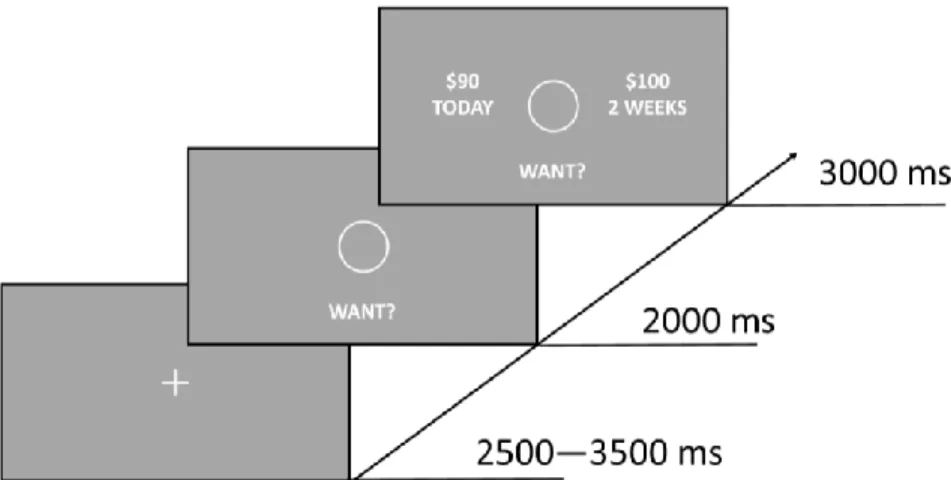
Additionally, impulsivity has been identified as a multifaceted construct, and thus far no one behavioral task adequately captures variance in the more complex construct of impulsivity (Cyders & Coskunpinar, 2011); however, some tasks have been developed to measure specific facets of impulsivity. The Go/No-Go task is a measure of motor disinhibition and has been linked with impulsivity (see Bari & Robbins, 2013 for review). The Delay Discounting Task has been developed as a measure of impulsive choice responding, with a willingness to forgo larger gains for more immediate rewards being indicative of greater levels of impulsivity (Reimers, Maylor, Stewart, & Chater, 2009). We have preliminary evidence in study 1 that RDAB is also linked with impulsivity, one important question is if this new task provides additional
other typically used tasks (i.e. Go/No-Go and Delay Discounting Task). Given that RDAB incorporates both aspects of reward sensitivity and cognitive control, it is hypothesized that RDAB will better predict self-reported impulsivity than performance on Go/No-Go or Delay Discounting Tasks.
Methods.
Participants and Design. All data collected in Study 2 was part of a larger study visit that lasted approximately 3 hours of cognitive tasks and questionnaires. The specific tasks and questionnaires analyzed for this study are described below. Participants were 45 healthy adults (ages 18-30, 60% female) with normal or corrected-to-normal eye-sight and no current diagnosis of depression, as confirmed by self-report, as well as no colorblindness, as confirmed using the Ishihara Color vision test (Ishihara, 1973). Participants were recruited via flyers and a university listserv. Monetary compensation was provided based on participant task performance (mean = $32.85 for study visit; mean = $19.43 for tasks described here).
Reward Bias Training and Testing. The procedure and task goals described for
reward-training in Study 1 were also used for Study 2; however, in Study 2 participants were made explicitly aware of which color circle would be associated with money on some trials and which color circle would never be associated with money. Additionally, because Study 1 did not reveal an interaction between reward effect and target color, blue and yellow circles were used as the target circles in training.1 The color of the rewarded circle was counterbalanced across
participants. Finally, to account for a longer study visit and ensure that participants were earning the same rate of pay per hour, the reward amount was increased to 15 cents on the winning trials.
1Attentional bias models for PR, PU, and both trained present trials were tested including an interaction term with
The rate of reward remained the same, such that for the rewarded circle, 80% of trials were worth money and 20% were not, whereas no trials were worth money for the unrewarded circle. The testing paradigm for Study 2 was identical to that used in Study 1.
Impulsivity. As in Study 1, participants completed the BIS-11, which again had good internal consistency in this sample (α = .76). Another common measure of impulsivity is the Urgency, Premeditation, Perseverance, Sensation Seeking, Positive Urgency, Impulsive Behavior Scale (UPPS-P).The UPPS-P is a 59-item scale designed to assess impulsivity, including lack of planning, lack of perseverance, negative urgency, positive urgency, and
sensation seeking (Lynam et al., 2006). The scale shows high internal consistency in this sample (α = .85). For Study 2, participants completed the UPPS-P in addition to the BIS-11, in order to both replicate results from Study 1 and extend to a different scale.
Go No/Go task. In order to obtain measure of motor inhibitory control, a Go/No-Go task
and neural responses on these trials are similar to those of other No-Go tasks (Davidow et al., in press; Winter & Sheridan, 2014). Future work will examine the associations between reward driven attentional bias across subsequent task types (e.g., Go/No-Go and Spatial Orienting). Delay Discounting Task. To measure impulsive choice responding, we employed a
trials. Participants were instructed to indicate the sooner time for “Sooner” trials and to indicate the larger monetary amount for “Larger” trials.
On 50% of trials, the cue and options were in blue font, and the remaining 50% of trials were in yellow font. These colors corresponded to PR and PU colors. The effect of reward history on temporal discounting will be reported in a separate paper, and here we focus on temporal discounting for trials in the PU color. Temporal discounting was measured using an impulsive choice ratio (ICR), which was determined using the proportion of sooner trials selected. This measure has been used previously for delay discounting tasks, and has been commonly used with this particular task (Ainslie & Monterosso, 2003; Altamirano et al., 2011; Boettiger et al., 2007; Mitchell et al., 2005, 2007; Smith & Boettiger, 2012). One participant’s delay discounting task data was excluded due to misunderstanding the instructions.
Analysis. Similar to Study 1, a mixed measures analysis of variance (ANOVA) was
conducted on RT with a within-subjects factor of trial type (invalid PR, neutral, valid PR) to test a linear effect of orienting. Gender was included as a covariate for all analyses. Because all subjects were made explicitly aware, awareness was not included as in effect of interest in analyses. As in Study 1, analyses were used to test overall attentional bias, facilitated capture, and impaired disengagement and follow-up analyses were used to determine whether reward-driven bias is exhibited above and beyond training alone.
because this is trial type showed a relationship with impulsivity in Study 1. The linear regression predicted self-reported impulsivity scores from a disengagement score (invalid – neutral RT; Table 1) and capture score (neutral – valid inverse RT; Table 1).
I have hypothesized that components of RDAB will predict impulsivity. Previous work demonstrates that both lack of inhibitory control and impulsive choice responding have also been linked with impulsivity. A more stringent test of the relationship between RDAB and impulsivity is to examine whether components of RDAB predict impulsivity above and beyond other task measures (i.e. false alarms on a go/no-go and impulsive choice responding on a delay
discounting task). To test this, an hierarchical regression model was used. The first model included No-Go false alarm rate, and proportion of sooner choices selected on the DDT as predictors of self-reported impulsivity. The second model included the same predictors as well as capture and disengagement scores from the both trained present trial type as predictors of self-reported impulsivity. The difference in the amount of variance in impulsivity explained by these two models is reported.
Results.
Training. To assess a reward-effect in training, a mixed-measures ANOVA with reward status (rewarded, unrewarded) as a within-subjects factor was implemented on RT. Results indicated that participants were faster on trials with the rewarded color than the unrewarded color, F(1, 43) = 120.91, p < .01, η2 = .74, as shown in Figure 8.
type (invalid, baseline, valid). Results indicated there was an effect of trial type, F(1.54, 66.62) = 12.06, p < .01, η2 = .22. Within-subjects contrasts confirmed that the effect of trial type was linear, such that performance followed the expected pattern across trial types, F(1, 43) = 16.43, p
< .01, η2 = .28, Figure 9. Separate follow-up ANOVAs tested the specific effect of capture (PR valid relative to neutral baseline) and disengagement (PR invalid relative to neutral). Results indicated a significant effect of capture, F(1, 43) = 12.44, p < .01, η2 = .22, and a significant effect of impaired disengagement, F(1, 43) = 5.45, p = .02, η2 = .11.
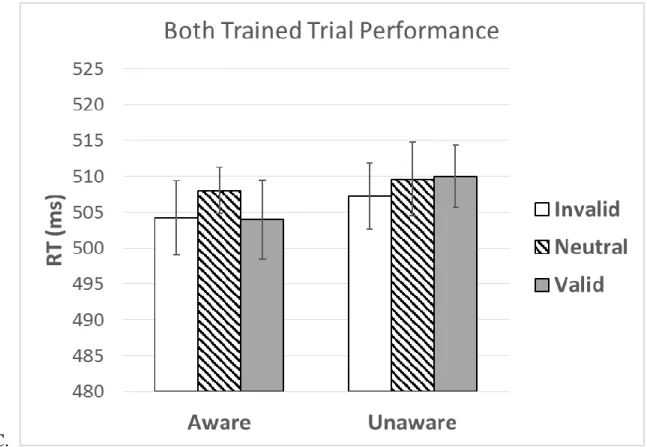
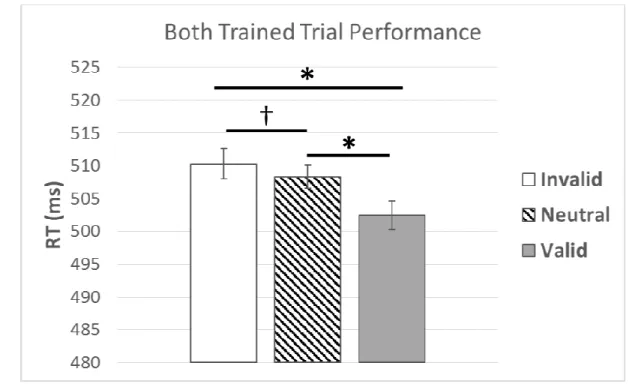
To test whether the reward-biasing effect was exhibited when both the PR and the PU circles were presented at the same time, performance on trials with the both trained present cue was analyzed. For this cue, a trial was coded as “valid” if the target appeared in the PR circle and considered “invalid” if the target appeared in the PU circle (Figure 3). An ANOVA with the within-subjects factor of trial type (invalid, neutral baseline, valid) was conducted for both trained present trials. Results indicated there was an effect of trial type, F(2, 86) = 8.39, p < .01,
η2 = .16. Within-subjects contrasts confirmed that the effect of trial type was linear, such that performance followed the expected pattern across trial types, F(1, 43) = 13.36, p < .01, η2 = .24, Figure 9. Separate follow-up ANOVAs tested the specific effect of capture (PR valid relative to neutral baseline) and disengagement (PR invalid relative to neutral). Results indicated a
significant effect of capture, F(1, 43) = 6.92, p = .01, η2 = .14, and a trending effect of impaired disengagement, F(1, 43) = 3.10, p = .09, η2 = .07.
As an indication that the orienting effect is reward-specific, we tested whether an
was implemented for PU trials. There was no effect of trial type, p = .87, indicating no attentional bias to PU cues.
Relationship between Reward-training and Reward-driven Attentional Bias. As described in Study 1, here we tested whether the relationship between reward-learning during training and RDAB in testing. Training bias was calculated as the difference between RT for trials with the rewarded circle and RT for trials with the unrewarded circle. RDAB in testing was calculated using the total attentional bias score (Table 1) first for PR trials and then for both trained present (PR and PU) trials. Unlike in Study 1, our results here showed no relationship between reward-bias on training and reward-bias on test, r(39) = -.02, p = .87.
Relationships to Impulsivity. Because results from Study 1 indicated that impulsivity is linked with variability in reward-driven attentional bias when both PU and PR cues were present, our analyses for Study 2 were conducted on the both trained present trial types. A linear
regression model was conducted similar to Study 1, in which self-reported impulsivity was predicted from capture score and disengagement score. Models predicting BIS-11 score and UPPS-P score were analyzed separately. Neither model significantly explained impulsivity, p’s >
.1.
scores, F(3, 40) = 3.312, p = .030, adjusted R2 = .139.2,3 Within this model, higher No-Go false alarm rate significantly predicted more impulsivity, β = .318, p = .035. Proportion of sooner choices on the delay discounting task did not predict impulsivity, p = .147. When disengagement score and capture score were entered as additional predictors, no additional variance in
impulsivity was explained, R2 change = .028, p = .509. Follow-up bivariate correlation analyses confirmed that this was not due to a relationship between task measures, as there were no significant correlations among disengagement score, capture score, total RDAB, proportion of sooner choices on the DDT, and no-go false alarm rate, p’s > .1. When similar linear regression
and hierarchical regression models were conducted predicting UPPS total scores, none of the models significantly explained variance in UPPS scores, p’s > .1. Follow-up regressions
confirmed that total attentional bias to reward measures (Table 1) also did not predict impulsivity, as measured either by UPPS or BIS-11, p’s > .1.
2 Results from this study indicate that participants were engaged with task, given the low rate of errors of omission
(M = 1.6%, SD = 2.4%), and that false alarm rate to the PU stimuli (M = 33.7%, SD = 17.3%) were similar to false alarm rates in other No-Go tasks that also stimuli with high perceptual overlap and a 25% No-Go trial rate (Luijten, Littel, & Franken, 2011; Nieuwenhuis, Yeung, & Cohen, 2004). Additionally, RT’s for false alarms to PU stimuli (M = 387 ms, SD = 35 ms) were faster than RT’s for Go stimuli (M = 417 ms, SD = 40 ms), t(44) = 7.20, p < .01. In the context of the race model of inhibitory control (Logan & Cowan, 1984), faster responses for false alarm than for go trials is consistent with false alarms escaping inhibitory control.
3 The ICR for PU trials in this study (M = 44.8% sooner choices, SD = 32.5%) was similar to the ICR found in
Conclusions
In this study, we tested the effects of reward-training under explicit awareness on RDAB in a cueing paradigm when the prospect of reward was no longer present. When awareness was explicitly manipulated in Study 2, our results show more robust reward effects in testing, such that reward bias is present as compared to neutral and previously rewarded stimuli, whereas in Study 1 reward effects in testing were only present compared to neutral stimuli and specifically for individuals who became aware of the reward contingencies. These findings give further support to claims that explicit awareness of reward contingencies enhances reward learning (Aarts et al., 2008; Bijleveld et al., 2010), and that RDAB is apparent in individuals aware of reward contingencies (Bourgeois et al., 2017).
rewarded relative to neutral cues. Additionally, in study 1, there were no RDAB effects when previously rewarded and previously unrewarded cues were presented simultaneously. On the other hand, results of study 2 show an overall RDAB effect even on trials with both previously rewarded and previously unrewarded cues present. The ladder finding more closely mirrors studies that have found reward bias when directly comparing higher and lower value stimuli both with a history of training (Anderson, Kronemer, et al., 2016; Anderson & Yantis, 2013; Failing & Theeuwes, 2014).
Our findings also support the argument that facilitated capture is a more consistent, robust component of RDAB than is impaired disengagement (Pool et al., 2014, 2016). A significant facilitated capture effect was evident in study 1 for previously rewarded relative to neutral cues, and the impaired disengagement effect for the same trial type, while in the expected direction, did not reach significance. Similarly, in study 2, a significant facilitated capture effect for previously rewarded relative to both neutral and previously trained but unrewarded stimuli, while the impaired disengagement effect was significant for previously rewarded relative to neutral stimuli and trending for previously rewarded relative to previously unrewarded stimuli.
This study further examined how reward-biasing in training related to reward biasing in testing after the prospect of reward had been removed. Echoing previous results (Failing & Theeuwes, 2014; Yantis, Anderson, Wampler, & Laurent, 2012), study 1 showed a moderate relationship between reward-bias in training and in testing. In study 2, reward-biasing in training did not predict the degree of reward-biasing in testing. One possible explanation for this
regions involved in sending reward feedback signals, such as the ventromedial prefrontal cortex and ventral striatum (Li, Delgado, & Phelps, 2011) which is related to increased recruitment of frontal control regions, such as the anterior cingulate cortex and dorsolateral prefrontal cortex (Li et al., 2011; Tabbert et al., 2011). It has been suggested that recruitment of frontal control
regions in this type of task, regulate the degree to which a model-free or model-based learning approach is employed, with the ladder resulting in dampened activation in the putamen (Lee, Shimojo, & O’Doherty, 2014). In Study 2, participants can employ this type of model-based learning because they are given explicit instructions as to which stimulus is associated with reward. As such, participants may be engaging in more top-down strategies during training in study 2, which likely differ from the mechanisms through which reward disrupts attention in testing, given that top-down strategies in testing should instead limit the attentional bias to rewarding stimuli.
Finally, it was hypothesized that RDAB, specifically impaired disengagement from reward, would relate to impulsivity. Results of study 1 failed to support this specific hypothesis, but did indicate that a measure of total bias to reward related to impulsivity. Study 2 was
this null result is due to restricted variability in impulsivity. Given the findings demonstrating RDAB is heightened in groups with higher impulsivity, specifically adolescents and individuals with a substance use history, (Anderson et al., 2013; Roper et al., 2014) and previous work linking impulsivity with RDAB (Anderson, Kronemer, et al., 2016; Anderson et al., 2011b exp 1), it was expected that RDAB would predict impulsivity in these paradigms. As has been noted, though, the association between RDAB and impulsivity is inconsistently observed (Anderson et al., 2011b exp 3; Pearson et al., 2015). As such, one explanation for the discrepant findings between study 1 and study 2 could be a reflection of an inconsistent relationship between impulsivity and RDAB. Furthermore, these studies aimed at testing this hypothesis across a normative range of impulsivity. There has been at least one study suggesting task measures of cognitive control correlate with self-reported impulsivity more strongly in high-impulsive individuals (Johnson, Tharp, Peckham, Sanchez, & Carver, 2016). One possibility is that the relationship between RDAB and impulsivity becomes evident at higher levels of impulsivity, as might be seen in clinical samples.
It is possible that RDAB may better reflect inflexible responding (compulsivity) than it does acting without forethought (impulsivity). Impulsivity and compulsivity are both linked with one another, are both elevated individuals with a history a substance use, and both involve fronto-striatal neural circuits (Chamberlain, Stochl, Redden, & Grant, 2018; Robbins, Gillan, Smith, de Wit, & Ersche, 2012). Furthermore, exaggerated RDAB in adolescents appears to be driven by adolescents persisting in their attentional bias to the previously rewarded stimulus relative to adults (Roper et al., 2014). Additionally, the difference between study 1 and study 2 impulsivity findings could be driven by differing modes of learning in the reward-training
contingencies, the relationship between impulsivity and the degree to which participants biased processing of reward-related stimuli relative to trained but never rewarded stimuli was
significant irrespective of awareness status. As such it may be that impulsivity is strictly linked with RDAB driven by implicit reward learning. Consistent with this idea, individuals who are higher in impulsivity show a behavioral preference for model-free learning and show reductions in dorsolateral prefrontal cortex activation during model-based learning (Deserno et al., 2015).
The current studies have extended previous work on RDAB in several ways. Firstly, these studies evidenced that RDAB can be elicited to a previously rewarded stimulus even when testing and training stimuli and goals differ. Secondly, the data support that the cognitive
processes of RDAB involve spatial orienting, such that reward history both facilitates capture and impairs disengagement. Furthermore, capture effects are evidenced more consistently than impaired disengagement, which is consistent with more variability in the disengagement effect. Thirdly, these studies have furthered previous research on the cognitive mechanisms through which RDAB is formulated and sustained, by demonstrating that the effects are evident both during training and testing when participants are aware of the reward contingency, either through explicit instruction or incidental awareness. Given that the effect was only evident in aware individuals, this indicates that explicit strategies for obtaining reward may aid in part the formation of RDAB. Finally, these studies cast some doubt on the relationship between impulsivity and RDAB, and further clarify that neither facilitated capture nor impaired
Figure 1. Reward-training paradigm adopted from Anderson (2011). Participants were instructed
A.
B.
Figure 4. Effect of reward on performance during training in Study 1. Participants who reported
A.
C.
Figure 6. Go/No-Go paradigm. Every trial began with a fixation screen presented for either 500, 1000, or 1500 ms, which was followed by a centrally presented circle for 500 ms. On 75% of trials, the color of the circle (white, cyan, green, pink, or orange) indicated that the participant should press the spacebar (Go trials). On the other 25% of trials, the color of the circle (yellow or blue) indicated that the participant should withhold a response (No-Go trials). Participants
Figure 7. Delay Discounting Task. There were four trial types: “Want”, “Don’t Want”,
A.
C.
Figure 9. Performance on cueing task in study 2 for (A) PR trials, (B) PU trials, and (C) Both
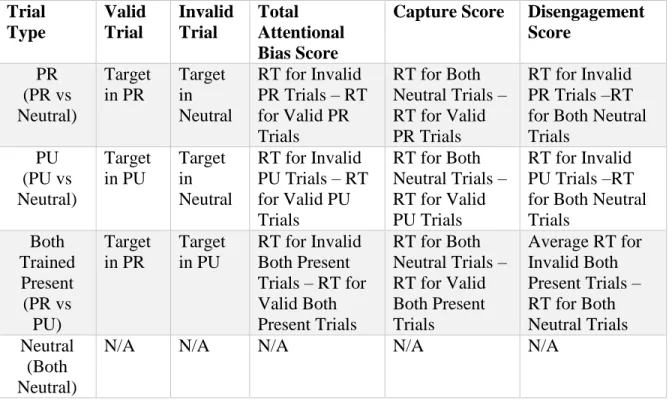
Trial Type Valid Trial Invalid Trial Total Attentional Bias Score
Capture Score Disengagement Score PR (PR vs Neutral) Target in PR Target in Neutral
RT for Invalid PR Trials – RT for Valid PR Trials
RT for Both Neutral Trials – RT for Valid PR Trials
RT for Invalid PR Trials –RT for Both Neutral Trials PU (PU vs Neutral) Target in PU Target in Neutral
RT for Invalid PU Trials – RT for Valid PU Trials
RT for Both Neutral Trials – RT for Valid PU Trials
RT for Invalid PU Trials –RT for Both Neutral Trials Both Trained Present (PR vs PU) Target in PR Target in PU
RT for Invalid Both Present Trials – RT for Valid Both Present Trials
RT for Both Neutral Trials – RT for Valid Both Present Trials
Average RT for Invalid Both Present Trials – RT for Both Neutral Trials Neutral
(Both Neutral)
N/A N/A N/A N/A N/A
Source B SE B β t p
Constant 60.36 2.85 21.18 <.01
Attentional Bias on Both Present (Valid Both Present – Invalid Both Present)
0.27 0.09 0.465 3.18 <.01
Awareness 0.684 3.44 0.030 0.20 .84
Gender 2.207 3.453 0.096 0.639 .53
APPENDIX A: REWARD-CONTINGENCY AWARENESS PROBE MODIFIED FROM ANDERSON (2015)
Which option do you believe best describes the part of the experiment in which you were earning money (please choose only one):
1. The blue circle was generally worth more than the yellow circle regardless of what the line orientation was
2. The yellow circle was generally worth more than the blue circle regardless of what the line orientation was
3. The two circles were worth the same overall, but one color was worth more when it appeared with a horizontal line and the other was worth more when it appeared with a vertical line
REFERENCES
Aarts, H., Custers, R., & Marien, H. (2008). Preparing and Motivating Behavior Outside of Awareness. Science, 319(5870), 1639–1639. https://doi.org/10.1126/science.1150432
Ahn, W.-Y., Ramesh, D., Moeller, F. G., & Vassileva, J. (2016). Utility of Machine-Learning Approaches to Identify Behavioral Markers for Substance Use Disorders: Impulsivity Dimensions as Predictors of Current Cocaine Dependence. Frontiers in Psychiatry, 7. https://doi.org/10.3389/fpsyt.2016.00034
Aichert, D. S., Wöstmann, N. M., Costa, A., Macare, C., Wenig, J. R., Möller, H.-J., … Ettinger, U. (2012). Associations between trait impulsivity and prepotent response inhibition.
Journal of Clinical and Experimental Neuropsychology, 34(10), 1016–1032. https://doi.org/10.1080/13803395.2012.706261
Ainslie, G., & Monterosso, J. R. (2003). Building blocks of self-control: increased tolerance for delay with bundled rewards. Journal of the Experimental Analysis of Behavior, 79(1), 37–48. https://doi.org/10.1901/jeab.2003.79-37
Altamirano, L. J., Fields, H. L., D’Esposito, M., & Boettiger, C. A. (2011). Interaction between family history of alcoholism and Locus of Control in the opioid regulation of impulsive responding under the influence of alcohol. Alcoholism, Clinical and Experimental Research, 35(11), 1905–1914. https://doi.org/10.1111/j.1530-0277.2011.01535.x
Anderson, B. A. (2013). A value-driven mechanism of attentional selection. Journal of Vision,
13(3), 7–7. https://doi.org/10.1167/13.3.7
Anderson, B. A. (2015a). Value-driven attentional capture in the auditory domain. Attention, Perception, & Psychophysics, 78(1), 242–250. https://doi.org/10.3758/s13414-015-1001-7
Anderson, B. A. (2015b). Value-driven attentional capture is modulated by spatial context.
Visual Cognition, 23(1–2), 67–81. https://doi.org/10.1080/13506285.2014.956851
Anderson, B. A. (2015c). Value-driven attentional priority is context specific. Psychonomic Bulletin & Review, 22(3), 750–756.