Review article
Barriers to HIV remission research in low- and
middle-income countries
Theresa Rossouw
1, Joseph D. Tucker
2,3, Gert U. van Zyl
4,5, Kenly Sikwesi
6and Catherine Godfrey
7§§
Corresponding author: Catherine Godfrey, National Institute of Allergy and Infectious Diseases, National Institutes of Health, 5601 Fisher’s Lane Room 9E49 MSC 9830, Bethesda, MD 20892-9830, USA. Tel: +1 240 627 3074. ([email protected])
Abstract
Introduction: HIV eradication and remission research has largely taken place in high-income countries. In low- and middle-income countries (LMIC), there may be factors that have a substantial impact on the size of the latent HIV reservoir and the immunological response to infection. If a curative strategy is to be available to all HIV-infected individuals, these factors must be understood.
Methods: We use a scoping review to examine the literature on biological factors that may have an impact on HIV persistence in LMIC. Three databases were searched without date restrictions.
Results: Uncontrolled viral replication and higher coinfection prevalence may alter the immunological milieu of individuals in LMIC and increase the size of the HIV reservoir. Differences in HIV subtype could also influence the measurement and size of the HIV reservoir. Immune activation may differ due to late presentation to care, presence of chronic infections, increased gut translocation of bacterial products and poor nutrition.
Conclusions: Research on HIV remission is urgently needed in LMIC. Research into chronic immune activation in resource poor environments, the immune response to infection, the mechanisms of HIV persistence and latency in different viral clades and the effect of the microbiological milieu must be performed. Geographic differences, which may be substantial and may delay access to curative strategies, should be identified.
Keywords:HIV eradication; HIV cure; HIV remission; resource limited; low- and middle-income countries; immune system
Received16 September 2016;Accepted19 May 2017;Published5 June 2017
Copyright:© 2017 Rossouw T et al; licensee International AIDS Society. This is an Open Access article distributed under the terms of the Creative Commons Attribution 3.0 Unported (CC BY 3.0) License (http://creativecommons.org/licenses/by/3.0/), which permits unrestricted use, distribution, and reproduction in any medium, provided the original work is properly cited.
Introduction
Access to antiretroviral therapy (ART) has improved the lives of millions affected by HIV, but HIV remains incurable. In 2015, there were an estimated 36 million people living with HIV (PLHIV), most of whom live in low- and middle-income countries (LMIC). Worldwide, approximately half of HIV-infected individuals accessed HIV treatment but there are wide differences between countries in the number of HIV-infected individuals on treatment [1]. Recent data have spurred the World Health Organization (WHO) to recom-mend ART for all HIV-infected individuals [2]; thus, there will be more individuals receiving treatment in the near to medium future. HIV treatment is lifelong and strict adher-ence to treatment regimens is required for successful ther-apy. The burden of care for treatment programmes in countries with limited resources is enormous and will con-tinue to grow. Moreover, the immunological damage due to HIV infection and ongoing viral replication leads to a cas-cade of events that are associated with important nonin-fectious morbidities which will likely stress healthcare resources even further. Sustained remission of HIV without the need for ART, if attainable, will be critical to the overall health of the population and will allow for a broader dis-tribution of resources.
important have already been reviewed in this journal [6]. This article focuses on biological factors that may be important in eradication research that are different in different geographic environments.
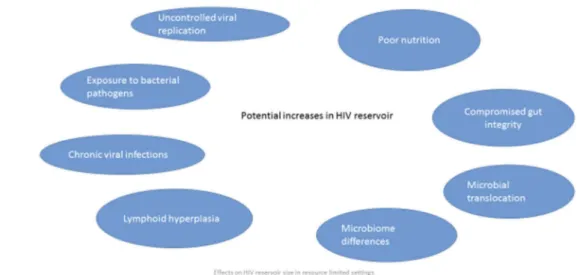
A critical barrier to achieving sustained remission of HIV is the presence of long-lived latently infected memory CD4+ T cells that contain replication competent HIV DNA, the“ reser-voir”. A first step towards remission is reducing the reservoir. Factors affecting the reservoir size have not entirely been elucidated, but in LMIC, late presentation to care, the pre-sence of chronic infections causing immune activation and chronic inflammation, increased gut translocation of specific bacterial products and poor nutrition which attenuates the response to infections may be important determinants of the size of the HIV reservoir and may be different in resource-rich and resource-limited environments.
Methods
We used a scoping review to examine the literature using Arksey and O’Malley’s framework [7]. Scoping studies sum-marize key evidence on a topic but do not go through the process of a formal systematic review. We searched the fol-lowing databases: MEDLINE (OVID interface, 1946 onwards), EMBASE (OVID interface, 1947 onwards) and the Cochrane Library. We reviewed this literature to explore biological dif-ferences between resource rich and LMIC, focusing on poten-tial differences in the HIV reservoir. No ethics approval was required because this was not human subjects research.
Immune activation and inflammation
Pre-ART immune activation and inflammation pose an important barrier to reservoir eradication, in several ways: First, inflammation may increase the size and persistence of
reservoirs. Patients with higher levels of inflammation and activation before ART initiation have long-lasting higher levels of persisting HIV-infected cells and HIV cell associated RNA [8]. Moreover, chronic inflammation, associated with T-cell activation and proliferation, may result in an increased number of cells harbouring replication competent HIV [9–11]. Immune stimulation also causes lymphoid hyperplasia locally, and the lymphoid follicle has now been shown to be critical to HIV persistence [12]. Integrated HIV DNA, localized in T follicular helper cells within the B-cell follicle, are inaccessible to immune killing at least in part because there are few cytotoxic T lympho-cytes (CTLs) with a CD8 phenotype in this compartment. Second, inflammation may limit killing of infected cells, which is an important component of the “kick and kill strategy” for reservoir reduction. T-cell exhaustion, the progressive and irreversible loss of T-cell function, is char-acterized by decreased effector function, a change in the ability to respond to different antigens and sustained expression of inhibitory receptors such as the checkpoint molecules (for example PD1 and LAG 3) [13–17]. Chronic immune activation is associated with bystander killing of CD4 cells and exhaustion of HIV-1-specific CD4 and CTLs [16,18–20]. Importantly, expression of these markers of immune exhaustion is associated with higher levels of inte-grated DNA and a more rapid virological rebound in a cohort interrupting therapy suggesting that this process is also associated with an expanded HIV reservoir size [21]. Exhausted CD8 cells are unable to kill HIV-infected cells even when latency is reversed and infected cells express CTL epitopes [22]. While cytokine secretion improves and expression of PD-1 decreases in the presence of durable, suppressive ART [23], functional capacity is not fully restored and multiparametric T-cell pathology persists, despite early initiation of ART [24].
Uncontrolled HIV
Uncontrolled viral replication is probably the most impor-tant factor driving increased immune activation and inflam-mation in LMIC. Despite changes in guidelines which now recommend therapy for all HIV-infected individuals, full access to HIV treatment is limited. In South Africa, for example, of the estimated 7 million HIV-infected people, only approximately 3 million were on therapy in 2015 [25]. Even when guidelines recommend initiation of therapy, late presentation to care is common. A recent meta-analysis documented profound immunosuppression at ART initiation in many sub-Saharan African countries [26,27]. In addition, although viral load monitoring for clinical care is now recommended, it is not universally available and even when it is available, it is often not acted upon [28]. Uncontrolled HIV replication is associated with a heigh-tened state of inflammation due to both HIV itself and the presence of other infections which are poorly con-trolled in the setting of immune suppression.
ART initiation at low CD4 counts is often indicative of a prolonged period of uncontrolled HIV and is associated with a greater degree of immune activation [29]. Immune recon-stitution is incomplete even after ART has rendered the viral load undetectable, shown in both resource rich and resource poor environments, though there are no direct comparisons [30,31]. Importantly, very early therapy may protect mucosa-associated immune tissue, limit reservoir seeding, prevent CTL escape and retain functional CD4 and CD8 HIV-1 immune responses [32]. Recent work from Thailand has attempted to identify the specific immune lesions in the setting of acute infection and has found that acute HIV infection is associated with increased levels of the biomarkers of intestinal damage, inflammation, coa-gulation and fibrosis [31]. With suppressive ART initiated during acute HIV infection, the procoagulant state nor-malizes but gut damage persists and monocyte activation, systemic inflammation and fibrosis remain increased, albeit lower than in individuals starting ART in chronic HIV infec-tion. Importantly, increases in CD4 T-cell populations corre-late with decreases in specific markers of immune activation [33]. The notion that immune damage persists after the initial insult was confirmed in a study of biomarkers in the United States [34], and recent data from the AIDS clinical trials group suggest that HIV levels correlate with inflamma-tion and activainflamma-tion before starting therapy but not during long-term suppressive therapy, suggesting that HIV reservoir size is related to factors present before ART initiation [8]. CD8 activation has an important impact on CD4 T-cell recov-ery [35] and a low CD4/CD8 ratio correlates with T-cell activation; those who start treatment with a low ratio are less likely to normalize over time [36]. The absence of immune exhaustion and premature immune senescence may increase the ability to respond to future therapeutic interventions designed to induce HIV remission [32].
Viral subtype
Viral subtype may be important in HIV persistence. Globally, subtype C represents about half of all infections and is by
far the most common subtype found in LMIC. Subtype B accounts for only approximately 12% of all infections world-wide [37] but the majority of remission-related research is done in patients infected with subtype B virus and there may be significant differences. The HIV tat protein is critical to transcriptional activity and may play an important role in establishing and maintaining latency [38]. Pronounced dif-ferences in clade B and C tat protein have been identified [39]; the significance of this to cure strategies has not yet been determined. Investigations into the differences in neurological complications of HIV have revealed that clade C virus is associated with a very different inflammatory environment in the central nervous system and is asso-ciated with the expression of different cytokines such as IL-33, leading to different rates of apoptosis of cells infected with clade C virus [40]. Ongoing studies are eval-uating the cytokine profiles in patients infected with differ-ent subtypes and the differences may be profound [41]. HIV LTR promotors, which are different in different clades, affect transcription of cellular genes. Induction of HIV-1 subtype C viral production may be more responsive to a cellular inflammatory milieu, in particular TNFαproduction due to an additional NF-κB element in its long terminal repeat (LTR) promoter region [42]. When studying various subtypes and inter-subtype recombinants in Tanzania, sub-type C LTR was also associated with a sixfold increased risk of HIV mother to child transmission [43], CD4 cells with HIV DNA integrated near growth genes may proliferate more than other HIV-infected or uninfected cells [44,45]. Studies of cells with identical viral integration sites, indicative of clonal expansion, are currently limited to resource-rich set-tings and significant differences may exist in LMIC; this is an important knowledge gap that requires research. Importantly, after years on treatment, the integration site repertoire may be affected by the pervasive CD4 cell milieu which may differ in patients with high levels of chronic immune stimulation. It is unknown whether there is link between viral integration and a particular cytokine milieu that affects CD4 proliferation, stimulation and differentia-tion [46].
Chronic infections
Specific examples of pathogens that are more common in LMIC and affect the populations most impacted by the epidemic may be illustrative of mechanisms that are impor-tant in establishing and maintaining the HIV reservoir.
Tuberculosis (TB)
TB is the most clinically important coinfection for PLHIV in LMIC and is the leading cause of death among PLHIV world-wide [48]. The immune response to TB is characterized by a sustained inflammatory response that persists in many individuals even after therapy for TB has been completed [49]. T-cell activation, as measured by elevated CD38 and HLA-DR expression on CD4+ and CD8+ T-lymphocytes, is described in both latent TB infection and in active TB disease [50]. These lymphocytes can harbour replication competent HIV DNA but it is unknown whether the expan-sion of these cells in the setting of TB is associated with an increased reservoir size. TB overcomes the intracellular kill-ing mechanisms of the host macrophage’s defences and there may be a synergistic relationship between HIV and TB in which the autophagic pathways are disrupted leading to increased longevity of HIV-infected cells and increased replication of TB in macrophages [51].
Sexually transmitted bacterial infections
LMIC often have a higher burden of sexually transmitted infections (STIs) and it is plausible that STI coinfection may increase the size of the active HIV reservoir. WHO data-bases show that antenatal syphilis is more common in LMIC [52]. A systematic review found that 91% of incident infec-tions of chlamydia, gonorrhoea and trichomonas were from individuals in LMIC [53], a finding confirmed by the Global Burden of Disease 2013 Study [54]. Similarly, trichomonas infection is disproportionately found in LMIC [53]. Coinfection with STIs is associated with HIV shedding even when HIV is adequately controlled [55]. One study identi-fied approximately a 2.5-fold risk of HIV shedding in the setting of chlamydia and gonorrhoea in women and a specific cytokine profile in the female genital tract asso-ciated with HIV shedding that is also assoasso-ciated with recruitment of CD4 T cells in women seroconverting to HIV [56]. Several studies have found greater HIV shedding in individuals with HIV–trichomonas coinfection [57,58]. Among women with HIV–trichomonas coinfection, tricho-monas treatment reduced vaginal HIV shedding at three months post-treatment [58]. Another study from Kenya found a fourfold decrease in vaginal HIV shedding after trichomonas treatment [59]. Both studies included coin-fected women who had undetectable HIV viral load in plasma but detectable viral shedding in the genital tract. Although we do not know the implications of these trends for latency, increased shedding may be reflective of an active mucosal reservoir which could pose challenges for immune control and reservoir reduction. Recent work in HIV-uninfected women documented recruitment of poten-tial reservoir cells into the genital tract in women with concomitant STIs, lending credence to the notion that
local inflammation may be associated with an expansion of cells that could contain replication competent HIV [60,61]. This is an area that requires further study.
Other encapsulated bacteria
Streptococcus pneumoniae (pneumococcus) and
Haemophilus influenzae are important pathogens and have a huge disease burden in both HIV-infected and unin-fected children. Nasopharyngeal carriage of pneumococcus has been studied in the context of studies of the conju-gated pneumococcal vaccine. The prevalence of pneumo-coccal carriage was as high as 93% in young children [62] in LMIC. In contrast, the highest rates described in resource-rich countries were 50.8% [63]. Higher rates of CD4 cells with memory and effector phenotypes have been described in adenoidal tissue of children colonized with pneumococ-cus [64]. Rates of H. influenzae carriage in HIV-infected children in India were double that of uninfected children [65]. As described above, lymphoid tissue plays a major role in HIV persistence as lymph node follicles are a major HIV reservoir site [14]. The relationship between oropharyngeal carriage of bacterial pathogens, including pneumococcus, and the size of the local HIV reservoir in oropharyngeal mucosa is entirely unknown but may be significant. Given the population structure of the HIV epidemic in LMIC is important to study.
Viral infections
Helminths and other parasites
There is significant geographic overlap between the com-munities most affected by HIV and helminthic infections. The immunopathology of helminthic infection is complex; they stimulate immune responses via tissue damage and egg production during acute infection but have evolved mechanisms of immune evasion, often using regulatory immune mechanisms. A common feature of all helminthic infections is Th1/Th17-mediated inflammation and Th2-dependent pathology [78,79]. Th2 cells orchestrate the protective immunity against worm infections but, at the same time, the T-regulatory cells induced by helminths appear to attenuate Th2 responses that mediate allergy and autoimmune diseases [80]. Increased levels of immu-nosuppressive cytokines such as IL-10 and TGF-β1 have been demonstrated [81]. Helminthic infections are asso-ciated with the expression of markers of T cell exhaustion [82] and it is plausible that helminthic infestations may contribute to an expansion of the pool of latently infected cells.
Microbial translocation
One of the key drivers of immune activation in HIV infec-tion is considered to be translocainfec-tion of intestinal organ-isms because of early disruption of the intestinal epithelial barrier, due to preferential infection and depletion of CCR5-expressing CD4+ T lymphocytes in the gut associated lym-phoid tissue. Portal circulation of these gut organisms may contribute to immune activation [83–87]. Binding of micro-bial-associated molecular patterns, such as peptidoglycan, lipopolysaccharide, flagellin and CpG DNA, to pattern recog-nition receptors, activates a signalling cascade in innate immune cells, resulting in the production of pro-inflamma-tory cytokines, such as interleukin (IL)-1β, IL-6, tumour necrosis factor and type 1 interferons [88,89].
Very early initiation of ART (during stage FI/II) has been shown to maintain the mucosal barrier and fully reverse the initial mucosal and systemic immune activation, most likely through preservation of mucosal CD4+ Th17 cells [90].
The role of intestinal microbiota in aggravating or ameli-orating microbial translocation is increasingly recognized [91–93]. HIV has been associated with“bidirectional unba-lances [sic]”in metabolic activity of the intestine, poten-tially affecting the integrity and function of the mucosal barrier as well as local and systemic inflammation [94]. More severe immunosuppression is associated with low diversity microbiota and increased immune activation [95,96] that is present even in people on ART. In LMIC, poor sanitation and hygiene, persistent diarrhoea, inade-quate diet and severe acute malnutrition have been described [97] and are associated with inflammation of the small intestine, reduced absorptive capacity, increased intestinal permeability and subsequent increased microbial translocation. Very few studies have examined whether microbial translocation differs between persons living in resource-limited and resource-rich settings. In one study, products of gut translocation were found to be higher in
HIV-infected patients from Vietnam and Ethiopia compared to Swedish patients. The researchers proposed in addition to the factors described above that HIV subtype may play a role [98].
Nutrition
The contribution of nutrition to immunological health can-not be overstated [99]. Inadequate dietary intake leads to a loss of epithelial integrity in the skin, histologically charac-terized by atrophy and a cutaneous inflammatory response. Malnutrition-associated enteropathy compromises the intestinal barrier function and is accompanied by an inflam-matory mucosal infiltrate [100,101]. A Th2 response has been noted and a state of heightened inflammation has been postulated, although a greater proportion of activated T cells has not been found. Intestinal infections, common in LMIC, contribute to micronutrient malabsorption. Vitamins and other micronutrients have been implicated in disease progression and may be important in the microenviron-ment in which cellular signalling occurs [102,103]. The specific defects that may affect HIV persistence are entirely unknown.
Laboratory evaluation of the reservoir
[108]. Low copy viremia detected by a single copy HIV-1 plasma RNA assay correlates well with QVOA but is unde-tectable in a large proportion of patients [113]. The evalua-tion of tissue, including lymph nodes and other pathological specimens, requires substantial clinical and laboratory infra-structure which are not available in many LMIC facilities [114,115]. In addition to the above, PCR-based assays require validation across various subtypes and uniform reporting against a reference standard such as the number of cells assayed is required.
Community response
Community acceptance is critical to a successful cure strat-egy [116]. Stakeholder engagement among a diverse group of individuals from different local contexts was identified as a priority by the International AIDS Society [117]; yet, communities in regions most affected by the epidemic do not have input into cure studies. Some of the concepts are complex, and messaging needs to be carefully tailored to the specific audience [118]; however, attitudes that suggest that the principles cannot be understood are divisive, pre-sumptuous and unhelpful. HIV remission research will need to be integrated within existing HIV prevention and treat-ment strategies and prioritized within the context of the overall goal of ending the epidemic. It is likely that focus on immediate prevention and treatment goals is deemed more attainable and more practical than cure goals, but as the field moves forward, access to curative strategies may be delayed because of the need for local safety and efficacy data. Importantly, lack of meaningful participation through mechanisms such as advisory boards could ultimately affect the acceptability of remission strategies [119]. Preparatory research must be implemented in LMIC or the majority of PLHIV globally will not have access to this important strategy.
Conclusion
The inclusion of patients from high burden LMIC is essential for cure research. HIV subtype diversity, differ-ences in inflammation and concurrent infections, may have an important impact on the size and cell and tissue distribution of the reservoir. The inclusion of patients from high burden LMIC is essential for cure research. Curative strategies that rely on immune func-tion may be sensitive to differences in immune exhaus-tion, and the determinants of immune exhaustion in diverse settings need to be studied. We outline specific areas for research (Table 1), but it is clear that including patients from LMIC early in the process of clinical research might then accelerate the gradual process of scaling up an effective HIV cure in the future. In the SPARTAC study, a high proportion (22.7%) of early trea-ted African patients achieved post-therapy control [120] demonstrating that treatment goals are feasible and acceptable. Early treatment would reduce the burden of opportunistic infections associated with delayed initiation and prevent onward transmission from early
acute hyper-infectious individuals. Such an approach towards remission should be prioritized in LMIC.
Authors’affiliations
1
Institute for Cellular and Molecular Medicine, Department of Immunology, University of Pretoria South Africa, Pretoria, Republic of South Africa;
2
Institute for Global Health and Infectious Diseases, UNC Chapel Hill, Chapel Hill, NC, USA; 3UNC Project-China, Institute for Global Health and
Infectious Diseases, Sikwese African Community Advisory Board (AFROCAB), Guangzhou, China;4Division of Medical Virology, Stellenbosch University and
NHLS Tygerberg, Cape Town, South Africa; 5National Health Laboratory Services, Tygerberg, Cape Town, South Africa;6Coordinator of the African
Community Advisory Board (AFROCAB), Lusaka, Zambia;7National Institute of Allergy and Infectious Diseases, National Institutes of Health, Bethesda, MD, USA
Competing interests
The authors have no competing interests. This paper was written by Catherine Godfrey in her capacity as an NIH employee, but the views expressed in this paper do not necessarily represent those of the NIH.
Authors contributions
All authors participated in the literature search and wrote the manuscript. All authors have read and approved the final version.
References
[1] UNAIDS. AIDS by the Numbers: UNAIDS;2016. Available from:http:// www.unaids.org/en/resources/documents/2016/AIDS-by-the-numbers
[2] World Health Organization. Consolidated Guidelines on the Use of Antiretroviral Drugs for Treating and Preventing HIV Infection: recommenda-tions for a Public Health Approach. Geneva: WHO;2016. Available from:
http://www.who.int/hiv/pub/arv/arv-2016/en/. Accessed 24/5/2017. [3] Women U. Facts and figures: HIV and AIDS2016. [updated 2016 Jun. Available from: http://www.unwomen.org/en/what-we-do/hiv-and-aids/ facts-and-figures#notes
[4] UNICEF. UNICEF data: monitoring the situation of children and women.
2016. [updated 2016 Dec]. Available from:https://data.unicef.org/topic/ hivaids/global-regional-trends/
Table 1. Knowledge gaps regarding HIV remission research in low- and middle-income countries
Role of HIV subtype in viral integration, transcriptional activation
and CD4+ T cell growth
Effect of a particular cytokine milieu that affects CD4 proliferation,
stimulation and differentiation on viral integration
Whether TB-induced expansion of T cells increases HIV reservoir
size
Association between chronic viral infections, such as hepatitis B,
hepatitis C and HPV, and the HIV reservoir
The relationship between oropharyngeal carriage of bacterial
pathogens and the size of the local HIV reservoir in
oropharyngeal mucosa
Whether viral shedding in the presence of coinfections, such as
trichomonas, impacts of measures to achieve latency
Impact of poor nutrition on immune function, activation and the
size of the HIV reservoir
[5] Phillips A, Cambiano V, Revill P, Nakagawa F, Lundgren J, Bansi-Matharu L, et al. Identifying key drivers of the impact of an HIV cure intervention in sub-Saharan Africa. J Infect Dis.2016;214:73–79.
[6] Gianella S, Tsibris A, Barr L, Godfrey C. Barriers to a cure for HIV in women. J Int AIDS Soc.2016;19(1):20706.
[7] Arksey H, O’Malley L. Scoping studies: towards a methodological frame-work. Int J Soc Res Methodol.2005;8(1):19–32.
[8] Gandhi RT, McMahon DK, Bosch RJ, Lalama C, Macatangay B, Cyktor J, et al. Levels of HIV-1 persistence on antiretroviral therapy are not associated with markers of inflammation or activation. PLoS Pathog.2017;13:e1006285. [9] Hatano H, Jain V, Hunt PW, Lee TH, Sinclair E, Do TD, et al. Cell-based measures of viral persistence are associated with immune activation and programmed cell death protein 1 (PD-1)-expressing CD4+ T cells. J Infect Dis.
2013;208(1):50–56.
[10] Cockerham LR, Siliciano JD, Sinclair E, O’Doherty U, Palmer S, Yukl SA, et al. CD4+ and CD8+ T cell activation are associated with HIV DNA in resting CD4+ T cells. Plos One.2014;9(10):e110731.
[11] Massanella M, Fromentin R, Chomont N. Residual inflammation and viral reservoirs: alliance against an HIV cure. Curr Opin HIV AIDS.2016;11(2):234–41. [12] Miles B, Connick E. TFH in HIV latency and as sources of replication-competent virus. Trends Microbiol.2016;24(5):338–44.
[13] Wherry EJ. T cell exhaustion. Nat Immunol.2011;12(6):492–99. [14] Banga R, Procopio FA, Noto A, Pollakis G, Cavassini M, Ohmiti K, et al. PD-1(+) and follicular helper T cells are responsible for persistent HIV-1 transcription in treated aviremic individuals. Nat Med.2016;22(7):754–61. [15] Connick E, Mattila T, Folkvord JM, Schlichtemeier R, Meditz AL, Ray MG, et al. CTL fail to accumulate at sites of HIV-1 replication in lymphoid tissue. J Immunol (Baltimore, Md 1950).2007;178(11):6975–83.
[16] Kahan SM, Wherry EJ, Zajac AJ. T cell exhaustion during persistent viral infections. Virology.2015;479-480:180–93.
[17] Kohler SL, Pham MN, Folkvord JM, Arends T, Miller SM, Miles B, et al. Germinal center T follicular helper cells are highly permissive to HIV-1 and alter their phenotype during virus replication. J Immunol (Baltimore, Md 1950).2016;196(6):2711–22.
[18] Wherry EJ, Kurachi M. Molecular and cellular insights into T cell exhaus-tion. Nat Rev Immunol.2015;15(8):486–99.
[19] Shive CL, Clagett B, McCausland MR, Mudd JC, Funderburg NT, Freeman ML, et al. Inflammation perturbs the IL-7 axis, promoting senescence and exhaustion that broadly characterize immune failure in treated HIV infection. J Acquir Immune Defic Syndr.2016;71(5):483–92.
[20] Bui JK, Mellors JW. Reversal of T-cell exhaustion as a strategy to improve immune control of HIV-1. AIDS.2015;29(15):1911–15.
[21] Hurst J, Hoffmann M, Pace M, Williams JP, Thornhill J, Hamlyn E, et al. Immunological biomarkers predict HIV-1 viral rebound after treatment inter-ruption. Nat Commun.2015;6:8495.
[22] Shan L, Siliciano RF. From reactivation of latent HIV-1 to elimination of the latent reservoir: the presence of multiple barriers to viral eradication. Bioessays.2013;35(6):544–52.
[23] Rehr M, Cahenzli J, Haas A, Price DA, Gostick E, Huber M, et al. Emergence of polyfunctional CD8+ T cells after prolonged suppression of human immunodeficiency virus replication by antiretroviral therapy. J Virol.
2008;82(7):3391–404.
[24] Tauriainen J, Scharf L, Frederiksen J, Naji A, Ljunggren HG, Sonnerborg A, et al. Perturbed CD8+ T cell TIGIT/CD226/PVR axis despite early initiation of antiretroviral treatment in HIV infected individuals. Sci Rep.2017;7:40354.
[25] PEPFAR. Pepfar dashboards.2015. Available from:https://data.pepfar. net/global
[26] Siedner MJ, Ng CK, Bassett IV, Katz IT, Bangsberg DR, Tsai AC. Trends in CD4 count at presentation to care and treatment initiation in Sub-Saharan Africa, 2002–2013: a meta-analysis. Clin Infect Dis: Off Publ Infect Dis Soc America.2015;60(7):1120–27.
[27] Ford N, Mills EJ, Egger M. Editorial commentary: immunodeficiency at start of antiretroviral therapy: the persistent problem of late presen-tation to care. Clin Infect Dis: Off Publ Infect Dis Soc America.2015;60 (7):1128–30.
[28] Petersen ML, Tran L, Geng EH, Reynolds SJ, Kambugu A, Wood R, et al. Delayed switch of antiretroviral therapy after virologic failure associated with elevated mortality among HIV-infected adults in Africa. AIDS (London, England).2014;28(14):2097–107.
[29] Skogmar S, Schön T, Balcha TT, Sturegård E, Jansson M, Björkman P, et al. plasma levels of neopterin and C-reactive protein (CRP) in tuberculosis
(TB) with and without HIV coinfection in relation to CD4 cell count. Plos One.
2015;10(12):e0144292.
[30] Guo F-P, Li Y-J, Qiu Z-F, Lv W, Han Y, Xie J, et al. Baseline naive CD4+ T-cell level predicting immune reconstitution in treated HIV-infected late presenters. Chin Med J.2016;129(22):2683–90.
[31] Robbins GK, Spritzler JG, Chan ES, Asmuth DM, Gandhi RT, Rodriguez BA, et al. Incomplete reconstitution of T cell subsets on combination anti-retroviral therapy in the AIDS Clinical Trials Group protocol 384. Clin Infect Dis.2009;48(3):350–61.
[32] Krebs SJ, Ananworanich J. Immune activation during acute HIV infection and the impact of early antiretroviral therapy. Curr Opin HIV AIDS.2016;11 (2):163–72.
[33] Sereti I, Krebs SJ, Phanuphak N, Fletcher JL, Slike B, Pinyakorn S, et al. Persistent, albeit reduced, chronic inflammation in persons starting antire-troviral therapy in acute HIV infection. Clin Infect Dis.2017;64(2):124–31. [34] Macatangay BJ, Yang M, Sun X, Morton J, Gruttola V, Little S, et al. Changes in levels of inflammation following antiretroviral treatment during early HIV infection in ACTG A5217. J Acquir Immune Defic Syndr.
2017;75:137–41.
[35] Hunt PW, Cao HL, Muzoora C, Ssewanyana I, Bennett J, Emenyonu N, et al. Impact of CD8+ T cell activation on CD4+ T cell recovery and mortality in HIV-infected Ugandans initiating antiretroviral therapy. AIDS (London, England).2011;25(17):2123–31.
[36] Bellissimo F, Pinzone MR, Celesia BM, Cacopardo B, Nunnari G. Baseline CD4/CD8 T-cell ratio predicts prompt immune restoration upon cART initia-tion. Curr HIV Res.2016;14:491–96.
[37] Hemelaar J. The origin and diversity of the HIV-1 pandemic. Trends Mol Med.2012;18(3):182–92.
[38] Razooky BS, Pai A, Aull K, Rouzine IM, Weinberger LS. A hardwired HIV latency program. Cell.2015;160(5):990–1001.
[39] Zhao X, Qian L, Zhou D, Qi D, Liu C, Kong X. Stability of HIV-1 subtype B and C Tat is associated with variation in the carboxyl-terminal region. Virol Sin.2016;31(3):199–206.
[40] Yndart A, Kaushik A, Agudelo M, Raymond A, Atluri VS, Saxena SK, et al. Investigation of neuropathogenesis in HIV-1 clade B and C infection asso-ciated with IL-33 and ST2 regulation. ACS Chem Neurosci.2015;6(9):1600– 12.
[41] Tm R. HIV-1-induced immune activation as a predictor of treatment outcome in patients receiving highly-active antiretroviral therapy.[Submitted in fulfilment of the requirements of the degree of Doctor of Philosophy]. University of Pretoria;2016.
[42] Montano MA, Nixon CP, Ndung’u T, Bussmann H, Novitsky VA, Dickman D, et al. Elevated tumor necrosis factor-alpha activation of human immunodeficiency virus type 1 subtype C in Southern Africa is associated with an NF-kappaB enhancer gain-of-function. J Infect Dis.
2000;181(1):76–81.
[43] Blackard JT, Renjifo B, Fawzi W, Hertzmark E, Msamanga G, Mwakagile D, et al. HIV-1 LTR subtype and perinatal transmission. Virology.2001;287 (2):261–65.
[44] Wagner TA, McLaughlin S, Garg K, Cheung CY, Larsen BB, Styrchak S, et al. HIV latency. Proliferation of cells with HIV integrated into cancer genes contributes to persistent infection. Science. 2014;345 (6196):570–73.
[45] Maldarelli F, Wu X, Su L, Simonetti FR, Shao W, Hill S, et al. HIV latency. Specific HIV integration sites are linked to clonal expansion and persistence of infected cells. Science.2014;345(6193):179–83.
[46] Zhang H, Jiao Y, Li H, Zhu W, Li W, Huang X, et al. Longitudinal changes in total, 2-LTR circular, and integrated 1 DNA during the first year of HIV-1 infection in CD4Low and CD4High patient groups with HIV-HIV-1 subtype AE. Viral Immunol.2014;27(9):478–82.
[47] Hellmuth J, Valcour V, Spudich S. CNS reservoirs for HIV: implications for eradication. J Virus Eradication.2015;1(2):67–71.
[48] Organization WH.2016. [cited 2016 Sep 8]. Available from:http://www. who.int/mediacentre/factsheets/fs104/en/
[49] Young JM, Adetifa IM, Ota MO, Sutherland JS. Expanded polyfunctional T cell response to mycobacterial antigens in TB disease and contraction post-treatment. Plos One.2010;5(6):e11237.
[50] Sullivan ZA, Wong EB, Ndung’u T, Kasprowicz VO, Bishai WR. Latent and active tuberculosis infection increase immune activation in individuals co-infected with HIV. EBioMedicine.2015;2(4):334–40.
[52] Newman L, Kamb M, Hawkes S, Gomez G, Say L, Seuc A, et al. Global estimates of syphilis in pregnancy and associated adverse outcomes: analysis of multinational antenatal surveillance data. Plos Med.2013;10(2):e1001396. [53] Newman L, Rowley J, Vander Hoorn S, Wijesooriya NS, Unemo M, Low N, et al. Global estimates of the prevalence and incidence of four curable sexually transmitted infections in 2012 based on systematic review and global reporting. Plos One.2015;10(12):e0143304.
[54] Global Burden of Disease Study C. Global, regional, and national inci-dence, prevalence, and years lived with disability for 301 acute and chronic diseases and injuries in 188 countries, 1990-2013: a systematic analysis for the Global Burden of Disease Study 2013. Lancet.2015;386(9995):743–800. [55] Mitchell C, Hitti J, Paul K, Agnew K, Cohn SE, Luque AE, et al. Cervicovaginal shedding of HIV type 1 is related to genital tract inflammation independent of changes in vaginal microbiota. AIDS Res Hum Retroviruses.
2011;27(1):35–39.
[56] Mauck C, Chen PL, Morrison CS, Fichorova RN, Kwok C, Chipato T, et al. Biomarkers of cervical inflammation and immunity associated with cervical shedding of HIV-1. AIDS Res Hum Retroviruses.2016;32(5):443–51. [57] Tanton C, Weiss HA, Le Goff J, Changalucha J, Rusizoka M, Baisley K, et al. Correlates of HIV-1 genital shedding in Tanzanian women. Plos One.
2011;6(3):e17480.
[58] Kissinger P, Amedee A, Clark RA, Dumestre J, Theall KP, Myers L, et al. Trichomonas vaginalis treatment reduces vaginal HIV-1 shedding. Sex Transm Dis.2009;36(1):11–16.
[59] Wang CC, McClelland RS, Reilly M, Overbaugh J, Emery SR, Mandaliya K, et al. The effect of treatment of vaginal infections on shedding of human immunodeficiency virus type 1. J Infect Dis.2001;183(7):1017–22. [60] Anahtar MN, Byrne EH, Doherty KE, Bowman BA, Yamamoto HS, Soumillon M, et al. Cervicovaginal bacteria are a major modulator of host inflammatory responses in the female genital tract. Immunity. 2015;42 (5):965–76.
[61] Passmore JA, Jaspan HB, Masson L. Genital inflammation, immune activation and risk of sexual HIV acquisition. Curr Opin HIV AIDS.2016;11 (2):156–62.
[62] Adegbola RA, DeAntonio R, Hill PC, Roca A, Usuf E, Hoet B, et al. Carriage of Streptococcus pneumoniae and other respiratory bacterial patho-gens in low and lower-middle income countries: a systematic review and meta-analysis. Plos One.2014;9(8):e103293.
[63] Bogaert D, de Groot R, Hermans PWM. Streptococcus pneumoniae colonisation: the key to pneumococcal disease. Lancet Infect Dis.2004;4 (3):144–54.
[64] Zhang Q, Leong SC, McNamara PS, Mubarak A, Malley R, Finn A. Characterisation of regulatory T cells in nasal associated lymphoid tissue in children: relationships with pneumococcal colonization. Plos Pathog.2011;7 (8):e1002175.
[65] Arya BK, Bhattacharya SD, Sutcliffe C, Niyogi SK, Bhattacharyya S, Hemram S, et al. Impact of haemophilus influenzae type b conjugate vac-cines (HibCV) on nasopharyngeal carriage in HIV infected children and their parents from West Bengal, India. Pediatr Infect Dis J.2016;35:e339-e347. [66] Looker KJ, Magaret AS, Turner KM, Vickerman P, Gottlieb SL, Newman LM. Global estimates of prevalent and incident herpes simplex virus type 2 infections in 2012. Plos One.2015;10(1):e114989.
[67] Looker KJ, Magaret AS, May MT, Turner KM, Vickerman P, Gottlieb SL, et al. Global and regional estimates of prevalent and incident herpes simplex virus type 1 infections in 2012. Plos One.2015;10(10):e0140765.
[68] Akbar AN, Fletcher JM. Memory T cell homeostasis and senescence during aging. Curr Opin Immunol.2005;17(5):480–85.
[69] Hunt PW. HIV and inflammation: mechanisms and consequences. Curr HIV/AIDS Rep.2012;9(2):139–47.
[70] Adland E, Klenerman P, Goulder P, Matthews PC. Ongoing burden of disease and mortality from HIV/CMV coinfection in Africa in the antiretro-viral therapy era. Front Microbiol.2015;6:1016.
[71] Gianella S, Anderson CM, Var SR, Oliveira MF, Lada SM, Vargas MV, et al. Replication of human herpesviruses is associated with higher HIV DNA levels during antiretroviral therapy started at early phases of HIV infection. J Virol.
2016;90(8):3944–52.
[72] Gower E, Estes C, Blach S, Razavi-Shearer K, Razavi H. Global epidemiol-ogy and genotype distribution of the hepatitis C virus infection. J Hepatol.
2014;61(1 Suppl):S45–57.
[73] Ott JJ, Stevens GA, Groeger J, Wiersma ST. Global epidemiology of hepatitis B virus infection: new estimates of age-specific HBsAg seropreva-lence and endemicity. Vaccine.2012;30(12):2212–19.
[74] Mandeville KL, Krabshuis J, Ladep NG, Mulder CJ, Quigley EM, Khan SA. Gastroenterology in developing countries: issues and advances. World J Gastroenterol.2009;15(23):2839–54.
[75] Forman D, de Martel C, Lacey CJ, Soerjomataram I, Lortet-Tieulent J, Bruni L, et al. Global burden of human papillomavirus and related diseases. Vaccine.2012;30(Suppl 5):F12–23.
[76] Buckley N, Huber A, Lo Y, Castle PE, Kemal K, Burk RD, et al. Association of high-risk human papillomavirus with genital tract mucosal immune factors in HIV-infected women. Am J Reprod Immunol (New York, NY 1989).2016;75(2):146–54. [77] Papasavvas E, Surrey LF, Glencross DK, Azzoni L, Joseph J, Omar T, et al. High-risk oncogenic HPV genotype infection associates with increased immune activation and T cell exhaustion in ART-suppressed HIV-1-infected women. OncoImmunology.2016;5(5):e1128612.
[78] George PJ, Kumar NP, Sridhar R, Hanna LE, Nair D, Banurekha VV, et al. Coincident helminth infection modulates systemic inflammation and immune activation in active pulmonary tuberculosis. Plos Negl Trop Dis.2014;8(11):e3289. [79] Finlay CM, Walsh KP, Mills KHG. Induction of regulatory cells by hel-minth parasites: exploitation for the treatment of inflammatory diseases. Immunol Rev.2014;259(1):206–30.
[80] Maizels RM, Yazdanbakhsh M. T-cell regulation in helminth parasite infections: implications for inflammatory diseases. Chem Immunol Allergy.
2008;94:112–23.
[81] Borkow G, Bentwich Z. Chronic immune activation associated with chronic helminthic and human immunodeficiency virus infections: role of hyporesponsiveness and anergy. Clin Microbiol Rev. 2004;17(4):1012–30. table of contents.
[82] Zander RA, Butler NS. Dysfunctional adaptive immunity during parasitic infections. Curr Immunol Rev.2013;9(3):179–89.
[83] Mehandru S, Ma P, Tenner-Racz K, Jean-Pierre P, Manuelli V, Lopez P, et al. Lack of mucosal immune reconstitution during prolonged treatment of acute and early HIV-1 infection. Plos Med.2006;3(12):e484.
[84] Hayes TL, Asmuth DM, Critchfield JW, Knight TH, McLaughlin BE, Yotter T, et al. Impact of highly active antiretroviral therapy initiation on CD4(+) T-cell repopulation in duodenal and rectal mucosa. AIDS.2013;27(6):867–77. [85] Gordon SN, Cervasi B, Odorizzi P, Silverman R, Aberra F, Ginsberg G, et al. Disruption of intestinal CD4+ T cell homeostasis is a key marker of systemic CD4+ T cell activation in HIV-infected individuals. J Immunol.
2010;185(9):5169–79.
[86] Brenchley JM, Douek DC. Microbial translocation across the GI tract. Annu Rev Immunol.2012;30:149–73.
[87] Mavigner M, Cazabat M, Dubois M, L’Faqihi FE, Requena M, Pasquier C, et al. Altered CD4+ T cell homing to the gut impairs mucosal immune reconstitution in treated HIV-infected individuals. J Clin Invest. 2012;122 (1):62–69.
[88] Hayashi F, Smith KD, Ozinsky A, Hawn TR, Yi EC, Goodlett DR, et al. The innate immune response to bacterial flagellin is mediated by Toll-like recep-tor 5. Nature.2001;410(6832):1099–103.
[89] Sandler NG, Douek DC. Microbial translocation in HIV infection: causes, consequences and treatment opportunities. Nat Rev Microbiol. 2012;10 (9):655–66.
[90] Schuetz A, Deleage C, Sereti I, Rerknimitr R, Phanuphak N, Phuang-Ngern Y, et al. Initiation of ART during early acute HIV infection preserves mucosal Th17 function and reverses HIV-related immune activation. Plos Pathog.2014;10(12):e1004543.
[91] Gori A, Tincati C, Rizzardini G, Torti C, Quirino T, Haarman M, et al. Early impairment of gut function and gut flora supporting a role for alteration of gastrointestinal mucosa in human immunodeficiency virus pathogenesis. J Clin Microbiol.2008;46(2):757–58.
[94] Guillén YN-JM, Muntsa Rocafort M, Mariona Parera M, Casadellà M, Bravo I, Coll J, et al. Functional profiling of the gut microbiome in HIV infection. Seattle (WA): CROI;2017.
[95] Mutlu EA, Keshavarzian A, Losurdo J, Swanson G, Siewe B, Forsyth C, et al. A compositional look at the human gastrointestinal microbiome and immune activa-tion parameters in HIV infected subjects. Plos Pathog.2014;10(2):e1003829. [96] Monaco CL, Gootenberg DB, Zhao G, Handley SA, Ghebremichael MS, Lim ES, et al. Altered virome and bacterial microbiome in human immuno-deficiency virus-associated acquired immunoimmuno-deficiency syndrome. Cell Host Microbe.2016;19(3):311–22.
[97] Prendergast A, Kelly P. Enteropathies in the developing world: neglected effects on global health. Am J Trop Med Hyg.2012;86(5):756–63. [98] Abdurahman S, Barqasho B, Nowak P, Cuong Do D, Amogne W, Larsson M, et al. Pattern of microbial translocation in patients living with HIV-1 from Vietnam, Ethiopia and Sweden. J Int AIDS Soc.2014;17:18841.
[99] Katona P, Katona-Apte J. The interaction between nutrition and infec-tion. Clin Infect Dis.2008;46(10):1582–88.
[100] Prendergast AJ. Malnutrition and vaccination in developing countries. Philosophical Trans Royal Soc B: Biol Sci.2015;370(1671):20140141. [101] Rytter MJ, Kolte L, Briend A, Friis H, Christensen VB. The immune system in children with malnutrition–a systematic review. Plos One.2014;9(8):e105017. [102] Amare B, Moges B, Mulu A, Yifru S, Kassu A. Quadruple burden of HIV/AIDS, tuberculosis, chronic intestinal parasitoses, and multiple micronutrient deficiency in ethiopia: a summary of available findings. Biomed Res Int.2015;2015:598605. [103] Abhimanyu MV, Jeffery TJ, Vitamin BL. D status in South Africa and tuberculosis. Lung.2015;193(6):975–84.
[104] Procopio FA, Fromentin R, Kulpa DA, Brehm JH, Bebin AG, Strain MC, et al. A novel assay to measure the magnitude of the inducible viral reservoir in HIV-infected individuals. EBioMedicine.2015;2(8):874–83.
[105] Bruner KM, Hosmane NN, Siliciano RF. Towards an HIV-1. cure: mea-suring the latent reservoir. Trends in microbiology;2015.
[106] Hong F, Aga E, Cillo AR, Yates AL, Besson G, Fyne E, et al. Novel assays for measurement of total cell-associated HIV-1 DNA and RNA. J Clin Microbiol.2016;54(4):902–11.
[107] Sanchez AM, Denny TN, O’Gorman M. Introduction to a special issue of the journal of immunological methods: building global resource programs to support HIV/AIDS clinical trial studies. J Immunol Methods.2014;409:1–5. [108] Ho YC, Shan L, Hosmane NN, Wang J, Laskey SB, Rosenbloom DI, et al. Replication-competent noninduced proviruses in the latent reservoir increase barrier to HIV-1 cure. Cell.2013;155(3):540–51.
[109] Bruner KM, Murray AJ, Pollack RA, Soliman MG, Laskey SB, Capoferri AA, et al. Defective proviruses rapidly accumulate during acute HIV-1 infec-tion. Nat Med.2016;22(9):1043–49.
[110] Metcalf Pate KA, Pohlmeyer CW, Walker-Sperling VE, Foote JB, Najarro KM, Cryer CG, et al. A murine viral outgrowth assay to detect residual HIV type 1 in patients with undetectable viral loads. J Infect Dis. 2015;212 (9):1387–96.
[111] Rainwater-Lovett K, Luzuriaga K, Persaud D. Very early combination antiretroviral therapy in infants: prospects for cure. Curr Opin HIV AIDS.
2015;10(1):4–11.
[112] Anthony CMS, Buckley T, John Bui JCC, Mellors JW. Latent HIV is missed by assaying only resting CD4+ T cells. Paper presented at: Conference on Retroviruses and Opportunistic Infections (CROI), Seattle (WA);
2017.
[113] Crooks AM, Bateson R, Cope AB, Dahl NP, Griggs MK, Kuruc JD, et al. Precise quantitation of the latent HIV-1 reservoir: implications for eradica-tion strategies. J Infect Dis.2015;212(9):1361–65.
[114] Adesina A, Chumba D, Nelson AM, Orem J, Roberts DJ, Wabinga H, et al. Improvement of pathology in sub-Saharan Africa. Lancet Oncol.
2013;14(4):e152–7.
[115] Adewole I, Martin DN, Williams MJ, Adebamowo C, Bhatia K, Berling C, et al. Building capacity for sustainable research programmes for cancer in Africa. Nat Rev Clin Oncol.2014;11(5):251–59.
[116] Tucker JD, Rennie S. Ethical Working Group on HIVC. Social and ethical implications of HIV cure research. AIDS.2014;28:1247–50.
[117] Deeks SG, Lewin SR, Ross AL, Ananworanich J, Benkirane M, Cannon P, et al. International AIDS Society global scientific strategy: towards an HIV cure 2016. Nat Med.2016;22(8):839–50.
[118] Tucker JD, Volberding PA, Margolis DM, Rennie S, Barré-Sinoussi F. Words matter: discussing research towards an HIV cure in research and clinical contexts. J Acquir Immune Defic Syndr. 2014;67(3): e110–1.
[119] Lo Y, Chu C, Ananworanich J, Excler J, Tucker JD. Stakeholder engage-ment in HIV cure research: lessons learned from other HIV interventions and the way forward. AIDS Patient Care & Stds.2015;29:389–99.