UNDERSTANDING THE OCCUPATION OF PLAY: A MIDDLE EASTERN REVELATION A PRELIMINARY EXPLORATION INTO ARAB PARENTAL VALUES AND
CHILDREN’S ENGAGEMENT IN PLAY IN KUWAIT
Feddah Musaed Ahmad
A dissertation submitted to the faculty at the University of North Carolina at Chapel Hill in partial fulfillment of the requirements for the degree of Doctor of Philosophy in the Department of Allied
Health Sciences (Division of Occupational Science and Occupational Therapy).
Chapel Hill 2020
© 2020
ABSTRACT
Feddah Musaed Ahmad: Understanding the Occupation of Play: A Middle Eastern Revelation A Preliminary Exploration into Arab Parental Values and Children’s Engagement in Play
in Kuwait
(Under the direction of Ruth Humphry)
ACKNOWLEDGEMENTS
Writing my dissertation has been the one of the most significant academic challenge I have ever faced. Without the support, patience, and guidance, I would not have completed this degree. To them I owe my deepest gratitude. This dissertation contains far more than the
accumulation of years of studying. These pages reflect the relationships with many generous and inspiring people I have met along this journey.
Dr. Ruth Humphry, my advisor and mentor, despite her many other academic and professional commitments, and retirement embarked upon this journey as my advisor. Her wisdom, knowledge, and commitment to the highest standards inspired and motivated me class by class and page by page. Without her faith, guidance, and persistent help completing this dissertation would have been impossible.
I am grateful to my committee members and division faculty, for their encouraging words of wisdom, thoughtful advice, and time and attention throughout many busy semesters. Dr. Nancy Bagatell, Dr. Linn Wakeford, Dr. Wanqing Zhang and Dr. Mohammed Nadar,
continuously conveyed excitement about my research and inspired my final effort despite the enormous pressures of each semester and other professional commitments. To both my editors David and Kathleen for their help, knowledge, technical assistance, and guidance. Their
devoted participants and children without whose dedication to the research project, I would have been unable to embark on this endeavor.
I am thankful for my invaluable network of supportive, generous, and loving siblings especially Mohammed, all my loving friends and my cohort (you know who you are!) … without whom I could not have survived this process and have been paramount in completing this
journey. I will be forever grateful for their ears, eyes and hearts for believing in my purpose! Without the great examples in my life, and positive energy shining over me, I hope you are well up above! Rest in peace. I thank my grandmother, uncle, and father for instilled that “ I can achieve anything”. To my mother, Qumasha, for continuing to instill the same idea but that I can also set out to do it, if I do it wholeheartedly. Thank you all for the love and support! I would not be who I am today. Thank you for believing in me, for that I am forever in debt!
TABLE OF CONTENTS
LIST OF TABLES ... xv
LIST OF FIGURES ...xvi
LIST OF ABBREVIATIONS...xix
CHAPTER 1: INTRODUCTION ...1
CHAPTER 2: CULTURAL BACKGROUND OF THE STUDY ...3
Kuwait’s Demographics ...3
Identity ...4
Impact of Globalization ...4
Cultural Shifts ...6
Children’s Worlds ...7
Influence of Religious Beliefs and Cultural Practices ...8
Parental Figures, Family, and Community ...9
Schools ... 11
CHAPTER 3: LITERATURE REVIEW ... 14
Literature Search Procedure ... 14
Play ... 15
Importance of Play... 15
Occupation and Development ... 15
Relationships: Parents and Communities ... 17
Parental Role ... 17
Community ... 19
Need for the Research ... 20
Purpose of Study... 20
Research Aims ... 22
CHAPTER 4: METHODOLOGY ... 23
Researcher Reflections: Understanding a Paradigm ... 23
Theoretical Frameworks ... 25
Transactional Perspective on Occupations: Relationship with the Social and Physical Worlds ... 26
Social Constructivist and Interpretive Reproduction Approaches ... 27
Study Design ... 29
Ethical Approval: Kuwait University and University of North Carolina-CH ... 30
Ethical Considerations of Photo Elicitation Methods ... 31
Participants ... 31
Participant Inclusion and Exclusion Criteria... 32
Recruitment Procedures ... 32
Participant Incentives... 33
Data Collection and Data Analysis... 34
Study Phases ... 34
Preliminary Instrument Development Phase (Credibility and Cognitive Interviewing) ... 34
Phase I ... 35
Phase II... 43
Final Analysis ... 46
Researcher Credibility ... 47
CHAPTER 5: FINDINGS: PARENTAL SEMI- STRUCTURED AND PHOTO- ELICITED INTERVIEWS ... 49
Management of Cultural Routines and Rituals ... 54
Modeling and Observational Learning ... 55
Tradition, History, and Religion... 57
Parental Investment ... 60
Type of Parent and Role ... 61
Influences on Play Patterns ... 64
What is Play?... 71
Definition, Categories, and Aims of Play ... 71
Children’s Personality and Temperament: Tailoring Play ... 80
Idiosyncratic Social Change (Ideologies, Environments, Places, and Spaces) ... 82
Play: Changing Ideas and Modernized Lifestyles ... 82
Play and Future Skills: Growth and Development ... 95
Leadership and Citizenship: The Individual and the Collective ... 96
Conclusion ... 100
CHAPTER 6: FINDINGS: OBSERVATIONS OF CHILDREN’S PLAY PATTERNS IN SCHOOL ENVIRONMENTS ... 101
Naturalistic Observation Findings: Evolving Childhoods and Play Patterns ... 101
Qualitative Observational Findings ... 103
Conclusion ... 127
CHAPTER 7: DISCUSSION ... 129
Overview ... 129
Addressing Research Aims ... 131
Part I ... 133
Theme 1: Management of Cultural Routines and Rituals ... 133
Theme 2: Parental Investments ... 136
Theme 3: What is Play? Definition, Categorization, and Aims of Play ... 137
Theme 4: Children’s Personality and Temperament: Tailoring Play ... 141
Theme 5: Idiosyncratic Social Changes (Ideologies, Environments, Places, and Spaces) ... 142
Theme 6: Play and Future Skills; Growth and Development (Social Competence) ... 146
Part II ... 148
Theme 1: State, Community, and School Expectations and Observed Development Through Play ... 148
Theme 2: Fluctuating Ecological Environments: Structure Vs. Unstructured Play ... 149
Theme 4: Challenging School and Class Rules ... 152
Part III ... 153
Contributions to Occupational Science... 153
Occupational Science (OS) and Occupational Therapy (OT) Study Implications and Limitations... 154
Occupational Science and Occupational Therapy Study Limitations ... 159
Methodological Implications and Limitations ... 160
Methodological Implications ... 160
Methodological Limitations of Methods ... 162
Retrospect ... 164
Future Directions and Implications for Research ... 165
Incorporating Mixed Methods Approaches: Qualitative and Quantitative ... 165
Practice Translation and Implementation: Instruments, Contexts, and Roles ... 166
Taking on a Life-Course Perspective ... 167
Occupation-Based Frameworks Integrated into OT International Curriculums ... 168
APPENDIX A: KUWAIT ADMINISTRATIVE MAP/ GEOGRAPHICAL
FEATURES OF THE GOVERNATES ... 171
APPENDIX B: RESEARCH PROCESS GUIDE ... 172
APPENDIX C: KUWAIT UNIVERSITY INFORMED CONSENT... 173
APPENDIX D: DEMOGRAPHICS FORM ... 176
APPENDIX E: INITIAL/ POST PHOTO- ELICITED DEBRIEFING PARENTAL PLAY INTERVIEW PROTOCOLS ... 178
APPENDIX F: DATA COLLECTION GUIDES ... 181
APPENDIX G: DATA COLLECTION & DATA ANALYSIS TIMETABLE... 182
APPENDIX H: THEORETICAL/CONCEPTUAL MODEL ... 183
APPENDIX I: PARTICIPANTS DEMOGRAPHICS ... 184
LIST OF TABLES
Table 5.1. Participants and their Demographics (See Appendix I) ... 49
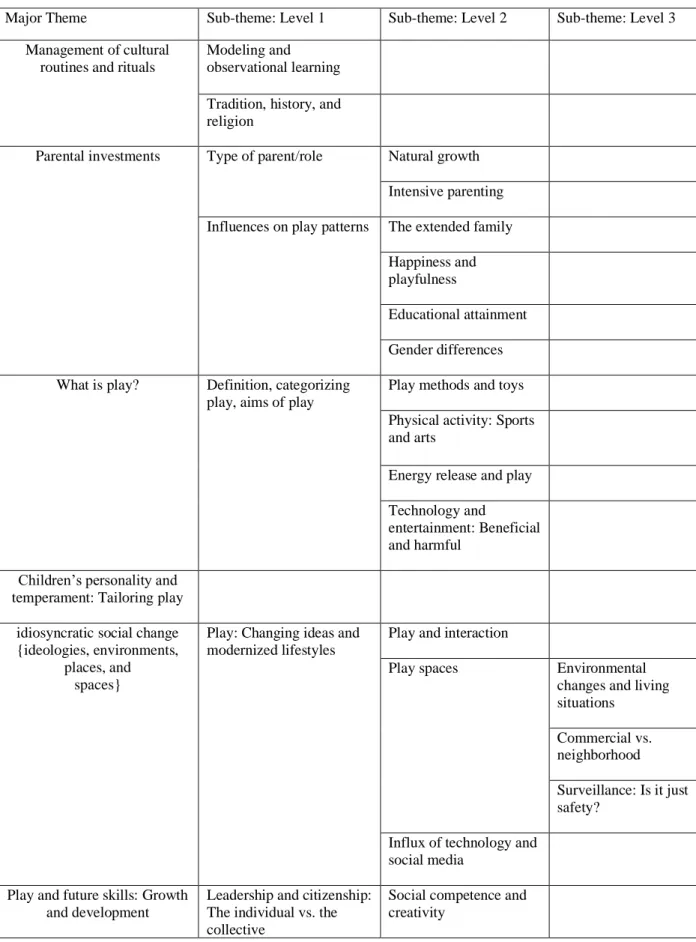
Table 5.2. Six Overarching Themes with their Sub-Categories ... 53
LIST OF FIGURES
Figure 4.1. Researcher’s Anticipation on Parents Processing of Interview
Questions ... 41
Figure 5.1. Model of Overarching Themes Informing Parental Expectations. ... 52
Figure 5.2. A Child Observing Others Engaging in Play ... 57
Figure 5.3. Learning How to Kick and Aim: A Cultural Initiation into the Most
Popular Sport in the Middle-East ... 58
Figure 5.4. Practicing Position of Fingers and Form when Participating in an Old
Traditional Game (Marbles; In Arabic: Ityal) ... 59
Figure 5.5. A Little Girl Reconstructing Grocery Boxes Into Supplies and Later
Engage in a Grocery Shopping Activity ... 60
Figure 5.6. A Child's Own Space is a Creative World of their Own ... 62
Figure 5.7. Children Engaging in a Tabletop Activity While Waiting for their Swimming Class to Star; An Organized Sport (e.g., Martial Arts, Squash, and
Soccer) ... 64
Figure 5.8. Smiles, Laughs, and Having Fun; Playfulness is a Parental
Expectation in Play ... 67
Figure 5.9. A Girl Shows- Off Newly Manicured Nails. ... 70
Figure 5.10. Siblings Share Legos While Participating in Activities of
Construction. ... 74
Figure 5.11. Children Engaging in Organized Sports where Parents expected Change in Behavior, Patience, and Participation Among many Characteristics for
Figure 5.12. Children Play Dentist at Kidzainia’s; A Career Play Center for
Various Child Experiences. ... 86
Figure 5.13. Commercialized Opportunities for Play ... 88
Figure 5.14. Smaller Living Spaces Accommodating for Play Space ... 90
Figure 5.15. Riding a Bike Outdoors in a Safe Space ... 92
Figure 6.1. Picture of MOE Mission Statement in Arabic ... 105
Figure 6.2. School Hallway ... 106
Figure 6.3. Image of School Classroom ... 107
Figure 6.4. A Classroom Layout ... 108
Figure 6.5. One of the Many Stations Set Up for Play; A Bedroom Station... 109
Figure 6.7. Outdoor Nook Made of Recycled Material ... 110
Figure 6.6. Outdoor Quiet Play Area ... 110
Figure 6.8. Outdoor Play Area ... 111
Figure 6.9. Photographs in the Auditorium of the Emir of Kuwait and Crowned Prince ... 112
Figure 6.10. Police Car at School During Traffic Week ... 115
Figure 7.1. A Child Leading His Toys in Prayer ... 135
Figure 7.3. Privatized Spaces: Child Playing Independently with Other Same
Aged Children ... 141
Figure 7.4. Tailoring Activities: A Little Boy Enjoys Puzzles, Shapes and Letters ... 142
Figure 7.5. Tailoring Activities: A Little Girl Combines Different Colors While
Painting ... 142
Figure 7.6. Use of Kitchen Set-Up in Playroom to Imitate Cooking Lunch ... 147
Figures 7.7. Different Outdoor Equipment Illustrating the Effort of Educators to
be Sure that All Schools in the System have Settings that Foster Free Play. ... 150
Figure 7.8. Hands-On Stations (Cues on Table to Indicate Activity Options e.g.,
Connect-the-Dots, Tracing, Coloring, and Drawing) ... 151
Figure 7.9. Definition of Play from an Oxford Arabic Dictionary Translated to
LIST OF ABBREVIATIONS
OTPF Occupational therapy practice framework
OS Occupational science
OT Occupational therapy
ME Middle East
APA American Pediatric Association
GCC Gulf Cooperation Council
UNESCO United Nations Educational, Scientific, and Cultural Organization
DC District of Colombia
TP Transactional perspective
HSERC Health Sciences Centre Ethical Research Committee
OHRE Office of Human Research Ethics
IRB Institutional review board
KD Kuwaiti Dinar
CHAPTER 1: INTRODUCTION
The act of play may be one of the most important aspects of a developing child’s life. Much of the current research about play revolves around play being universal for all children and reflects the idea that children have a right to play (Stagnitti, Unsworth, & Rodger, 2000). There is a plethora of research both within and outside occupational science and occupational therapy that is devoted to presenting the importance of play in child development. But there is an unfortunate lack of information pertaining to parental perceptions and expectations of play and how play is enacted by children in non-Western cultures, especially in Arab families. The impact of culture is often overlooked because we are unaware of how much culture influences our experiences. Researchers have slowly started to clarify that when measuring children's development, expectations should be relative to their culture. Adding a cultural dimension is necessary because in attempting to generalize what is typical of child behavior, researchers have frequently misinterpreted the cultural and ethnic differences observed in children's play as signs of deficiency rather than variation (Stagnitti, 2004).
CHAPTER 2: CULTURAL BACKGROUND OF THE STUDY
The following section provides demographic, cultural, and social information about Kuwait to support the aims and purpose of the study.
Kuwait’s Demographics
While Kuwait may be a geographically small country (about 17,819 square kilometers) in the Middle East, it has a relatively recent wealthy economy (see Appendix A). It is a
conservative constitutional state that stands out from the other Gulf monarchies for having an open political and economic system (Kuwait, 2016). It is the most socially progressive country in the Gulf region. Islam is the official religion in Kuwait, making a majority of the country’s population Muslim. Kuwaiti citizens account for 40% of Kuwait’s total population, while 60% are foreign nationals; of Kuwait’s total population, 22% are of Arab nationality (Kuwait, 2016). Kuwait consists of six governorates and administrative districts (see Appendix A). Most
Kuwaitis live in Hawalli, Al-Asimah, Mubarak Al-Kabeer, and Farwaniyah governorates, while the governorates of Al-Jahra and Al-Ahmadi are considered outlying areas with a vast growing population.
Identity
Kuwaiti identity is deeply influenced by the process of overcoming hardships. As a result, the state holds a strong sense of unity (Wheeler, 2000). However, the conflicting generational, political, and religious opinions about globalization has deterred at times the development of any local consensus about how Kuwait should advance as a country (Kanna, 2011; Maktabi, 2016). While the presence of globalization in Kuwait does not interrupt national consciousness, it does aid in openness for the purpose of developing national capabilities to their fullest (Wheeler, 2000). The guiding philosophy of the state is "to provide for the Kuwaiti people's needs,” “to encourage their ambitions and aspirations," and to "develop, renew and exploit all available facilities to promote the well-being of the people” (Wheeler, 2000, p. 433). Adapting to a new cultural world, where local meanings and values are forcibly shifting, is not what Kuwaitis’ anticipated as developmental growth; globalization complicates the mediation of culture (Wheeler, 2000).
Impact of Globalization
Globalization is an expression commonly used for the dominant factor driving social change in today’s world (Singer, Samihaian, Holbrook, & Crisan, 2014). It also cultivates the interaction of people through the growth of the international flow of money and ideas involving goods, services, and economic capital. Globalization is subdivided into three major areas:
Globalization establishes Western attitudes of neoliberalism, free trade capitalism, and private ownership as means of allowing for family trade monopolies to rise in Kuwait, which in turn influences cultural behavior in many areas of life. Western attitudes drive consumerism, and the exposure of materialistic values has Kuwaiti society’s traditional values competing with the market-set standards for modern living (Maktabi, 2016). Market-set standards are the locally set trends based on international factors (e.g., the use of innovative technology, latest fashion trends, and medical/cosmetic advancement) that determine the conditions for a successful modern lifestyle. For example, these market standards may influence the use of certain toys, technologies, and games in daily life (Wheeler, 2000). Individualism and international educational reform are spread through these Western attitudes noted previously, which then further spread these values of consumerism and materialism.
Drastic change has also been seen within family values, parental perceptions, and the practice of parenting (Kanna, 2011; Wilson & Hennon, 2008). Members of Kuwaiti society may acquire knowledge and decide on childcare based on Western childcare practices, which in turn may influence how children engage and interact in society. Even more so, they follow the guidelines of different associations (e.g., American Pediatric Association, APA) to shape their ways for childcare, family practices, parental interaction, and appropriate play methods. Along with other changes, all aspects of daily living—brushing teeth, washing clothes, and getting around town—have been altered.
Cultural Shifts
Kuwait, as a small country of four million people, is situated between two powerful opposing forces: its traditional, Islamic past and the pressures of globalization that are fueling a push for the adoption of Western values. In response, Kuwaiti lifestyle has drastically shifted to keep up with the trends that globalization sets forth (Maktabi, 2016).
As the country continues to advance in its economic growth, the beliefs about the effect of globalization on Kuwaiti society still lie on opposite ends of the spectrum (Wheeler, 2000). On one end, some believe that globalization is superficially affecting the country (e.g., the use of utensils for eating traditional food and dining at the table); while on the other end, some see it as relentlessly importing incompatible ideas and values that are deteriorating Kuwaiti culture. Nevertheless, regardless of these conflicting views on globalization, there is agreement that globalization has definitely changed the lifestyles of Kuwaiti families.
Globalization’s effect on Kuwaiti society is seen as a representation of a new culture that is evolving (Maktabi, 2016). The young generation compromises between preserving the old-fashioned notions of tradition and family and the uptake of a more global, consumerist,
the new modern environment has manifested in a renewed culture that is incompatible with Kuwaiti’s past (Maktabi, 2016), disregarding older generations’ idealization of family and the interconnectedness of communities. Nevertheless, in spite of strong cultural shifts, Kuwaiti cultural identity remains strong (Wheeler, 2000).
Children’s Worlds
There is a generational gap between the way in which citizens of the transitional pre-oil years (i.e., grandparents), transitional post-oil years (i.e., parents) and post-oil years (i.e., children) understand the cultural world (Kinninmont, 2015; Wheeler, 2000). Social and cultural norms and values shifted in an uneven and contested fashion within these groups to conform with existing lifestyle reforms (Kinninmont, 2015). Even though norms have changed, the foundational values of family and community are what keep people connected in this society. These elemental values are a form of educational conservativism, and they instill continuity between generations of people. While it is evident that some traditions will not survive as older generations pass away, Kuwaiti children are constantly reminded to never separate themselves from the desert and history of the land (i.e., cultural roots; Wheeler, 2000).
Undoubtedly, Islamic and Western cultural views of children and their play are different. In early Western literature, children are presented as a smaller version of adults with the same wants and needs (Corsaro, 2015; Goncu, Jain, & Tuermer, 2006). The Western view perceives of children, parents and caretakes, and communities as separate entities or independent elements; this perception is incompatible with Kuwait’s social standards. In Kuwait, children, parents, and communities are understood to be one entity, and this concept is core to Kuwaiti identity.
socio-economic status. Ethnic heritage—whether nationality, religion or kinship network—is a key element of self-concept for Arabs and a major focus of their networks of association. Religion is an important form of bonding—an avenue for community participation and social connection. Therefore, national identity itself is defined by being Muslim, being born Kuwaiti and undergoing major shared and life-changing events, such as the discovery of oil and the Iraqi occupation of Kuwait (Wheeler, 2000). More than anything else, the major aspect that defines Kuwaiti people is their religiously enriched culture (Wheeler, 2000). The primary religion in Kuwait is Islam, and its theological ideas relate to day-to-day decisions, outcomes, and all aspects of life for those who practice the religion.
Influence of Religious Beliefs and Cultural Practices
In early literature, Islamic theology stressed that childhood represents a unique period in an individual’s life, separate from adulthood (Al-Aak, 2009). In Arab populations practicing Islam, the boundary between childhood and adulthood appears at puberty (Al-Aak, 2009; Quran); however, there are certain obligations set for parents regarding their children. The Prophet (Peace Be Upon Him [PBUH1) states:
Each of you is a shepherd and responsible for his flock. The ruler is a shepherd and is responsible for his flock. A man is the shepherd of his family and responsible for his flock. A woman is the shepherd of her husband’s household and responsible for her flock. (Sunna Al Nabawiyah, 2007)
This means that within the religion of Islam, parents are accountable for the actions and interactions of their children. The rights and responsibilities pertaining to children presented in the Hadeeth (teachings/actions) are obligatory and clear cut. Islam, through both the Holy Quran and Hadeeths of the Prophet (PBUH), influences public attitudes about play by providing
positive lessons for childcare. According to one religious teaching, the Prophet (PBUH) was leading prayer in the stance of prostration, when his grandson climbed on his back and onto his neck. The Prophet prolonged his prostration. After prayer, many of his followers asked why he took so long in his stance, and he stated, “I did not want to disrupt my grandson’s play, and rush him” (Al-Aak, 2009; Sunna Al Nabawiyah, 2007). With this statement, the Prophet clearly suggests the importance of play and the perception that children need to be given time and space to play at their own pace without interference.
In other Hadeeths, the Prophet engages playfully with his grandsons, reciprocating their displays of playfulness and signals to interact. Nowadays, many assume that Arab populations that practice Islam also impose strict parental control patterns over a child’s experience. But Islam dictates the right for each child to benefit from parental wellbeing that is equally physical, emotional, and spiritual (Al-Aak, 2009). This indicates that all aspects of wellbeing are of equal importance to children’s development.
Parental Figures, Family, and Community
All elders and individuals of authority are considered parental figures and are responsible for guiding children through their lived experiences. These figures are also considered the
backbone of society, leading children to reach their full potential.
children experiment, and due to children’s impulsive urges they need consistent support and guidance by parental figures. They are also accountable for the consequence of their own actions at this stage (ages 15-21; Al- Aak, 2009). Many Arab educators vary in how they view the importance of play, despite the significance to children’s development that Islamic teachings place on it. However, children still need to be given the freedom to learn from their own surroundings and experiences regardless of these guidelines.
Schools
Kuwait provides its citizens with free education at all levels, including higher education, under the country’s written constitution. Kindergarten schools register any child who resides near a neighboring school or is within residence of the governorate zone (see Appendix A). Free education is also provided to the children of families from countries that make up the Gulf Cooperation Council (GCC) in the Middle East, while other Arab country nationals pay a small fee for schooling. Public school systems’ kindergarten philosophy and kindergarten curriculum incorporate varying degrees of religious content, traditions, and the Gulf States’ histories. All classes are given in Arabic except for a basic English class.
Kuwait offers an educational context that combines strong religious traditions, old fashioned ways of teaching, rich potentiality of resources, and a modern vision to reform education for a highly competitive society (Singer et al., 2014). The contemporary concept of school education emphasizes specific aims within the educational system at an early age (Singer et al., 2014). Most importantly, a child is to be a respectful individual who assumes the values of society and is devoted to positively contributing to community development (Singer et al., 2014). The Ministry of Education allocates a budget to improve educational standards at each state level.
The Kuwaiti government mandates all children, from the age of six, to be enrolled in school. Even though kindergarten programs are not integrated in the educational ladder, all curriculums are approved and provided for under the Ministry of Education’s classroom
forces most mothers to enroll their children in childcare or in schooling prior to age four. Therefore, some children are enrolled into kindergartens early, adding an extra year to the program’s approximate duration of two years. In 2004, about 73% of children between the ages of three and four were enrolled in some type of public-school kindergarten program or some type of kindergarten play based program (UNESCO International Bureau of Education, 2006).
For this study, the appreciation of children’s societal, cultural, and religious experiences was crucial in understanding how they are socially and contextually positioned. Through the observation of parental perceptions and the examination of social change regarding play, the researcher built a more refined understanding about how cultural views shape play. Specifically, this was accomplished by gathering perspectives on the function of play in Kuwaiti children’s development and how their play is used in everyday routines at home and when engaged in school environments.
The Term Play: Parents and School Administration
A further discussion on all raw data collected will be presented in chapters 4 and 5. The review in each section will provide the reader with insightful information into the cultural milieu influencing perceptions, values, and expectations with regard to children’s patterns and
CHAPTER 3: LITERATURE REVIEW
Literature Search Procedure
I conducted a search of available literature using terms such as play, children, childhood, culture, childhood occupations, parenting perceptions, and parental expectations. The search provided topics from many areas including cultural perceptions, childhood behaviors,
development, parental and community roles, parenting skills, and family polices. The most-recently published articles about play, development, and occupation in both occupational therapy and occupational science literature date back to 2010. There have been no new publications of this kind in seven years due to similar findings in the Western regions. There were new publications in 2017, questioning the Eurocentric focus and findings throughout the research. Scholars have been continuously researching cultural aspects of play and comparisons of the role of culture to daily life in diverse cultural groups in other disciplines, for example Rogoff’s, Goncu’s, and Super and Harkness’s publications dating back to 2007.
many disciplines in various forms (e.g., books, articles, local newspapers). The books, articles, and newspapers included in this literature review were published between 2003 and 2016. Play
Importance of Play
While some cultures consider play to be non-essential, the following researchers proposed theoretical claims about the functions of children’s play as a fundamental and vital dimension of childhood. They recognize play as integral in young children’s development and learning. Though play is simplistic in appearance, it is actually complex in the many disparate functions it serves (Stagnitti, 2004). Parham (2008) indicated that play influences language, mastery of experience, and interaction with peers and the physical world. Furthermore, according to Corsaro (2015), development occurs principally through children’s reproduction of adults’ actions during play. Goncu and Gaskins (2006) stated that the act of play has various
characteristics that separate it from other childhood activities. Meanwhile, Bryce (2008) perceived play as a process in cultivating identity, meaning, and the use of the surroundings to apprehend the unknown. He explained that children explore their environments and develop through play based on their own paced potential to experience those environments. As can be evidenced by these descriptions of play, scholars have not yet reached a consensus about the relationship between play and development.
Occupation and Development
or learning (Goncu, 1999). Children’s variability in participation builds their ability to plan without explicit instruction. Case-Smith (2015) emphasized that children identify occupational opportunities by recognizing affordances in the environment, and at the same time, children learn how to belong and fit within that environment through their experiences. More so, Lawlor (2003) suggested that children’s interactions are based on the occupational exposures, opportunities, and resources the context provides. She considered occupation as what changes when examining the experience of children engaging in their social worlds. More recently, Humphry (2016) stressed development as an inclination to the purposeful ways of being and doing things in a cultural manner (e.g., imitating the occupations of others).
Children, as individuals, do not develop in isolation. Rogoff (1995) insisted that children develop as social beings through relationships, cultural routines, experience, and various peer cultures in their environment. Similarly, Hammell (2014) has given attention to how children are seen as social and occupational beings continuously wanting to belong and be connected to the people and situations around them. Other researchers also consider development grounded in family, community, and culture (Gaskins et al., 2006; Super & Harkness, 2003; Wiseman, Davis, & Polatajko, 2005). Thinking along similar lines, Humphry (2005), Rogoff (2003), and Corsaro (2015) all consider children as agents of their community, promoting development and
transformation. Thus, children are agentic and shaped through their opportunities of experience, but they rely on their guided cultural integration in society to master their own innate cultural traits (Humphry, 2016). Through all these influencers, children take a lead in creating and learning from what they have absorbed to interpret and reproduce in their own way.
question the assumption that childhood play behaviors have universal developmental trajectories and outcomes across cultures. And because play develops through social contexts and the
interaction with more experienced partners, its outcomes are significant in the manifestation or expression of how children work—performing school activities or household chores. Exploring play as an occupation for development, researchers may be able to find something essential in the differences or commonalties embedded in cultural and historical contexts.
Relationships: Parents and Communities
Parents and communities are foundational, interdependent, and integral to the nature of children's upbringing and the formation of cultural scripts that influence children’s participation. Moving from developmental psychology's view of a child and understanding it through a
sociologist’s view helps one see how children negotiate, share, and create culture with adults and each other (Corsaro, 2015). Children’s play and social behavior can vary based on cultural scripts from everyday tasks, routines, and patterns of social interaction and their cultural norms of expression. Therefore, different cultural situations and contexts provide opportunities and resources in which children learn to participate through the relational interconnectedness within the culture.
Parental Role
research, which indicates that children develop their individual selves through relationships and experiences with others.
In one distinctive study, researchers’ findings claimed parents and family social niches influence play through restriction, initiation, encouragement, or acceptance (Gaskins, Haight, & Lancy, 2006). Gaskins et al. examined children in their everyday lives in societies with different social, economic, and religious backgrounds. They were able to collate and interpret the
meanings parents attached to observed behaviors when children interacted with each other. For example, middle-class families in the United States and families from Taiwan encouraged and cultivated play, whereas groups from indigenous populations (e.g., the Kapelle Mayans who live in agricultural villages) accepted play as children’s nature. The Yucatan Mayans, another
indigenous group living in a thriving city, restricted play. They assigned importance to
productive routine activities above play. Neither indigenous group spent much time reflecting on the meaning and character of play but instead spent time reproducing adult activities, molding children’s skills to become productive members. According to Gaskins et al. (2006), the
encouragement of certain types of play was culturally determined and provided the children with certain types of resources for their development.
understanding that adults perceive childhood as an inert identity within society based on adult models of socialization (Vygotsky, 1978a). However, children appropriate adult cultures and that appropriation not only means that children are a cultural system of their own, but that children enact their interpretation and what they learn from adult social cultures (Corsaro, 2015).
Therefore, sociocultural contexts shape early children’s social interaction and play behavior with different partners.
Community
Individuals develop as members of a community, and their development can only be fully understood by examining the practices and circumstances of their communities. Rogoff (2003) stresses Vygotsky’s sociocultural take on children’s collective activities with peers and others, regarding the sociocultural activity as the focus of participation. More so, she emphasizes that children take part in the activities of their community, engaging with other children and with adults explicitly collaborating in social events. And it is important to remember, as Goncu et al. (2006) claim, that communities vary in what they deem valuable for their children’s
development; not all communities value and provide comparable play opportunities for their children. However, children do direct themselves within environments that interest them (Corsaro, 2015; Wiseman et al., 2005).
(2015) stresses children’s reciprocal reproduction and interpretation through how the community imprints the importance of collective and communal activity. Children transition into their social and contextual positions in society through their community experiences and roles. Thus,
understanding play in distinct communities will provide for an opportunity to highlight the differences in how this occupation (i.e., play) contributes and is treated in diverse cultures.
Cultural tendencies involve the values, beliefs, and expectations sustained within families and communities. For instance, Humphry (2005) is certain that social trajectories encourage the development of certain culturally relevant and desired occupations and discourage the
development of others. Spongala and Feise (2007) have observed families purposefully constructing activity settings that are compatible with their children’s characteristics and consistent with family—and thereby community—goals. The families’ routines and rituals purposefully provide a predictable structure that guides a behavioral and emotional climate to support early development along cultural lines. Both Goncu, Mistry, and Mosier (2000) and Fitzgerald (2004) perceive communities’ cultural tendencies as frames of reference for how to interact and adapt in society.
Need for the Research Purpose of Study
Supplemental to cross-cultural studies, this study signified a start in generating information on the significance of play to development for Arab children and how parents in Arab cultures construct the understanding of play. In addition, it initiates a conversation about globalization and the development of occupations for children of Arab cultures. Engagement in occupations (i.e., play) may be threatened by the complexities of today's fast-paced social, political, and cultural diffusion. Increased understanding about the complexities of society will provide ground for what is meaningful and relevant for Arabs’ daily living.
The study used a conceptual lens to understand how culture shapes and organizes the environments in which children's social interactions and play take place. Children are influenced directly and indirectly by changes in cultural values, institutions, and social interactions that are altered by processes associated with globalization. Further, this research is prefaced upon a belief that globalization, through the dissemination of Western values, influences parental
interpretation of play behaviors. This invites further questions of how distinct patterns of behavior emerge in particular societies or communities undergoing cultural evolution and what contextual factors are responsible for variability in these patterns.
Using qualitative descriptive approaches to provide access to distinctive cultural notions, the researcher investigated parental expectations and views about the importance of play to children’s development, as well as the effect of culture and acculturation on play in Kuwait. In addition, the researcher observed children in the classroom, using an observation guide to describe the forms and functions of play. Furthermore, socio-cultural aspects of play were expected to be identified while children interacted with both peers and adults.
By conducting in-depth, semi-structured interviews with the use of photo-elicited methods, information was generated on the importance of play and other child occupations based on parental attitudes, values, and expectations. Therefore, occupational scientists will broaden the understanding of meaningfulness, motivation, and participation in occupations such as play in Arab social contexts.
Research Aims
The specific research aims guiding this research study were to: (a) understand Arab parents’ conceptualization of their children’s play based on their cultural values, attitudes, and expectations and (b) explore and observe Arab children’s play, engagement, and interactions within the context of the school environment. Due to the lack of research publications on play for this population the research aims are guided by multiple types of questions:
• What is the importance of play in contemporary Arab culture? • What does play look like for this culture?
• What changes are obvious in contemporary Arab culture?
• How can you describe the interaction of your parents with you as a child and you to your children?
CHAPTER 4: METHODOLOGY
Researcher Reflections: Understanding a Paradigm
My background, previous academic work, and clinical experience all helped shape my personal values, which are inherent in this research. My experiences while conducting this research study contributed to the further development of these values. My unavoidable juggling of both cultural worlds (Kuwait and the United States) started when I was enrolled in a
Montessori school in 1986-87 in the US, which was the beginning of my journey to try and understand the expectations of two worlds. For example, growing up, I celebrated Halloween at school functions and participated in its American traditions. I dressed in costumes and had a pumpkin bucket to collect my candy when my siblings and I went trick-or-treating. My mother drove us from house to house, but never dressed up or took part in the festivities. My parents always chaperoned, never really embracing American traditions. Sometimes my parents would explain that these festivities and activities were not our tradition and to always remember where we came from. Another tradition celebrated was Gergeean, a folk tradition of trick-or-treating connected to the religious practice of fasting in Ramadan. These festivities took place within the Kuwaiti community in the District of Colombia (DC). As I remember it, the Kuwaiti Embassy had a Gergeean event for the diplomatic families residing in DC. Children dressed up in
1995), pursuing undergraduate and graduate education in Occupational Therapy (OT, USA, 2001), gaining clinical experience in OT (Kuwait, 2009), and starting my doctoral degree (USA, 2014)—have gradually shaped my ideas, knowledge, and accumulated culture.
The separate cultural lives I lived in the United States emerged as several identities—an American identity and a Kuwaiti identity, which eventually evolved into a unique mold of both identities as an adult. I have learned along the way that using my different points of view are always valuable in life situations. Learning how to use my cultural capital to overcome obstacles was a constant struggle in constructing meaning, identity, and position in the numerous contexts in which I found myself. Cultural capital consists of the skills, knowledge, experience, and networks of relationships between people who live and work in society (Bourdieu,1998). Bourdieu stated, “Cultural capital consists of familiarity with the dominant culture in a society, and the ability to understand and use cultural capital varies with social class.” (Bourdieu,1998; as cited in Sullivan, 2002, p.145).
At a very young age, I was entangled in expectations in both Western and Eastern worlds. My parents sought an opportunity whereby their children could learn from a new culture and flourish into beings with greater opportunities, but as a child, I had to understand the rules of both cultures, societies, and interpersonal systems. Simultaneously, I had to balance those
systems of the West with my parents’ Eastern cultural expectations. The clashing cultural values, topics, and lived experiences created a tension that has guided and shaped my research interests about culture, development, childhood, and opportunity today. As a Kuwaiti researcher trained in the United States, my interests include cultural attitudes, play experiences, childhood behaviors, parental interaction, and family practice. I am intrigued with these topics within Arab
of earlier research. Researchers’ application of a Western lens to make comparisons of other populations against their own norms creates this hegemonic perspective.
Living in both Western and Eastern cultures, I used my own experiences to understand the concept of globalization and concepts of implied universality. The cultural frictions I
encountered have pushed me to search for ways to improve cultural diversity, cultural sensitivity and competence, and cultural relevance in research.
For this study, I was a researcher and a representative of this Arab population. So, I collected perspectives, attitudes, and expectations by reliving and retelling other people’s tensions and understanding them through my own similar experiences. This helped me appreciate how diversity is significant in the Kuwaiti population. Because of its small population, researchers might assume Kuwait to be homogeneous, but through my lived experiences, I recognize it as heterogeneous due to Kuwaitis’ many cultural influences and outlooks (e.g., religious and political). In terms of societal benefits, the importance of knowledge gained is to contribute to the understanding of parenting practices in diverse families. I also wanted to explore children’s process of engagement and how issues of education impact their ability to utilize ways of play in their development process.
Theoretical Frameworks
and contexts. Second, social constructivism of culture was a foundational contextual lens used to focus on the processes by which people created, negotiated, sustained, and modified meaning based on societal expectations and societal groups. Specifically, Corsaro’s (2015) interpretive reproduction approach emphasizes the importance of children creating their own unique peer cultures constructed through the interaction with others. Unlike the social constructivist approach, interpretive reproduction was used to reveal children’s participation in cultural routines and how they creatively appropriate information from the adult world, actively
contributing to societal reproduction as well as change. Meanwhile, Super and Harkness’s (2003) eco-cultural model provided an increased emphasis on the importance of parental values, beliefs, and family practice. More so, Weisner’s (2002) stance on the eco- cultural model considers the specificity of varied sources of cultural influences on the individuals and the experience. In addition, a conceptual model (see Appendix G) illustrates the hierarchical trajectory and integration between theories, specifying each perspective’s use in understanding the different values and meanings continually shaped in this region.
examination indicated certain communities’ encouragement of culturally relevant and desired occupations over others at the societal (state) level (i.e. examples in differences at various levels e.g. individual level , extended family community level and societal (state) level). The socio-cultural aspect within communities indicates development as a collective process, which includes children's involvement in particular activities that occur in social contexts. Occupation in this research was used to understand how this region creates meaning and assigns importance to beliefs and values associated with daily activities and occupations. More so, it was vital to conclude that observing an individual (parent or child) or their engagement in an occupation alone is insufficient when examining the situation affected by major societal events.
Social Constructivist and Interpretive Reproduction Approaches
The social constructivist and interpretive reproductive point of view is based on
knowledge and practice being socially situated and constructed through interaction with others. According to Gergen and Gergen (2007), “The constructionist dialogue is that which we take to be knowledge of the world and the self finds its origin in human relationships…[and] is brought into being through historically and culturally situated social processes” (p. 462). Social
constructivism is about the reality agreed on by a community, reflecting social experiences, values, and relationships that are shared by the people. Gemignani and Pena (2007) state,
Culture is embedded in the daily life of every person; everyone belongs to or is represented within cultural dynamics, an ongoing organization of material and social constructions that, within place, time and history(context), is locally experienced and represented through processes of identification and relationship (p. 276).
Furthermore, culture is not simply a theoretical conceptualization; it is how people’s values and beliefs are formed and sustained within families and communities (Gemignani & Pena, 2007).
While social constructivism addresses made meanings and constructed norms at a
peer cultures. Corsaro (2015) indicated that children’s reciprocal participation in their socialization process is influenced by peers and adults, where they reproduce, interpret, and reinterpret through their own relationships. Therefore, Corsaro formed a bridge between the two approaches to examine how parents and children alike are shaped by societal expectations (e.g., historical, economic, and social forces) and how they assign importance to values and daily activities when interacting within cultural fields (e.g., political and social fields).
Eco-Cultural Model
The integration of all four philosophical frameworks and models (i.e., transactional perspective, social constructivism, interpretive reproduction, and eco-cultural perspective) guided my exploration of the development of occupations, cultural attitudes, experiences, and values situated through the perspectives of Arabs in this region. Moreover, the focus on a
population’s different social, cultural, historical, and other ecological backgrounds helped me, as a researcher, understand aspects of certain phenomena and the development of one’s own script from lived experiences within a situation or relationship.
Study Design
As a descriptive design using qualitative methodology, the study used forms of social inquiry that focused on the way people make sense of their world and experiences (Creswell, 2013) with the goal of gathering an inclusive summary of behaviors and practices based on everyday events (Sandelowski, 2000). Specifically, as the researcher, I used various qualitative methods to explore children’s behaviors and parental perspectives, experiences, and feelings about the functions of play within a unique subgroup of the global population. “Although no description is free of interpretation” (Sandelowski, 2000, p. 335), the researcher pursued the data with as much objectivity as possible so as not to influence the participants involved. As a native of the same region, I was able to put aside my own assumptions of play reminding myself to have flexibility in my own analytical lens and not leading participants in their interviews. Furthermore, I discussed my data and used my mentor as a springboard to brainstorm how I could lessen any confirmatory bias and ignoring contrary information.
select and incentivize participants was key (see “Participants” and “Participants Inclusion and Exclusion Criteria” sections for more detail). The researcher obtained written approval to conduct research in Kuwait, as summarized in the “Ethical Approval” section of this chapter. The researcher summarized the photo elicitation procedures and policy (see “Ethical
Considerations of Photo Elicitation Methods” section). The following descriptions further detail these approaches, leading to the description of each phase of the study followed by the data collection and analysis process. Last, I discuss trustworthiness and reflexivity to enhance credibility of research.
Ethical Approval: Kuwait University and University of North Carolina-CH
Ethical Considerations of Photo Elicitation Methods
All participant data and photographs were only shared in their original form. Parents were notified that they had a choice to remove photographs and that they could share those removed photographs without having them included in any research publications or public
presentations/talks (Walker, 2014). Any photographs included in publications or presentations have been adapted (i.e., no direct pose or pixelated) with permission.
Participants
Participants in this study were selected from Kuwait’s general population from all six governorates. Each governorate allowed me to have access to families with a variety of disparate perceptions and exposures to Western value systems. Based on the assumption that proximity to a Kuwait city increases exposure to Western values or following conservative traditional
Participant Inclusion and Exclusion Criteria
Child inclusion criteria. Child participant inclusion criteria in this study were as
follows: (a) children must be attending a public school, enrolled in a kindergarten class, and (b) the students must be age three years to six years. Children of this age range were targeted due to their self-directed and spontaneous behaviors compared to older children who have experienced structured educational practice.
Parent inclusion criteria. Parent participant inclusion criteria in this study were as
follows: (a) each adult participant needs to be a parent of a child attending a kindergarten; (b) parents and grandparents should be of Arab descent; (c) the primary language spoken at home should be Arabic; (d) parents must have resided in Kuwait or neighboring Arab countries through their childhood and adulthood. A goal of this research study was to limit direct or indirect exposure of Western values as much as possible. Therefore, language, generational exposure to Western values, and location of residence were some of the indicators monitored.
Exclusion criteria. Exclusion criteria for both adult participants and children were as
follows: (a) children were excluded if the child had a history of any developmental disability or cognitive, auditory, or language impairments; all children needed to be reported as developing typically for this study by parents; (b) any immigrants or expatriates that were non-Arab were excluded from the study.
Recruitment Procedures
potential school communities. The researcher followed school rules at all times when conducting the research in the schools.
Recruitment procedures began by distributing a research process flier (Appendix B) containing research steps, and a consent form (Appendix C) along with a demographic form (Appendix D) in 12 kindergarten classroom locations. These forms were returned to the researcher within a week. The demographic form contained items concerning family make-up (i.e., number of children, gender of children, and ethnicity of family members), level of parental education, level of familial income, birthplace, employment, and non-related caregivers (e.g., nannies or housekeepers) and their educational level. The demographic form allowed the
researcher to categorize families according to demographic characteristics. The researcher chose 15 parents and children from the pool of those who returned forms based on inclusion criteria (Appendix B). Ongoing recruitment procedures allowed the researcher to review forms, contact and consent parents until 15 participating families were qualified to take part in the research project. From these 15 families, seven children were selected and observed at school for Phase II of this research study. The participants were reminded at each stage that they were entitled to decline participation at any time.
Participant Incentives
Data Collection and Data Analysis Study Phases
There were three phases in this study consisting of the preliminary instrument
development phase, Phase I, and Phase II. Phase I and Phase II have data collection and data analysis sections, including an overview to follow, reviewing the research procedures in detail and explaining how I generated information in each phase. I concurrently collected and analyzed data throughout the research process in an iterative manner. Flexibility and ongoing change were needed for this qualitative design and analysis process, in response to new information as it was collected (Bassett, 2010). The data analysis was completed in a systematic and recursive
approach, where the researcher worked back and forth between the research phases (Bassett, 2010). In addition, collaborative feedback from the researcher’s mentors led to further dialogue contributing to the iterative research process. Moreover, this allowed the researcher to share, refine and receive feedback from the mentor while collecting and analyzing data simultaneously. Preliminary Instrument Development Phase (Credibility and Cognitive Interviewing)
The purpose of this stage was to determine the credibility of the questions used for the parent interview. The final research questions were contingent on the translation and back-translation of the initial Parental Play interview protocol (Appendix E). Research assistants translated the interview protocol from English to Arabic, then it was translated back by a
Five parents of kindergarten-aged children were a convenience sample presented with the interview questions to provide feedback on clarity. The five mock interviews were conducted using the process of cognitive interviewing. Cognitive interviewing entails the researcher asking, for example, “Earlier, I asked you to tell me how you promoted and encouraged play (Drennan, 2003). Why do you think I asked this question?” The goal of using cognitive interviewing was to determine if questions were effective and would provide detailed depictions of meaning relating to the topic of play (Drennan, 2003). In doing so, the researcher assessed whether the participants understood the questions and interpreted them in the expected way. If they interpreted them differently, the questions were adjusted accordingly. The researcher allowed participants to think aloud. The researcher notified participants that any information they provided during this
interview would not be used in the project; this session was merely to confirm the effectiveness of the interview. A demographic form (Appendix D) was also distributed for participant
feedback after explaining how it would be used in the study. The five participants were asked if there were any sensitive questions on the demographic form that could be asked a different way.
In addition, these mock interviews improved the researcher’s confidence and established a strategy for interviewing parents. Once interview questions were in order, the researcher was able to contact all schools. All mock interviews, translation, and retranslation were completed in one month. The researcher’s mentor reviewed the output of this effort to support any further refinement of the instrument, data techniques, and analyses.
Phase I
consent, confidentiality, photography ethics, data collection uses, and the nature of the interview and observations with parents.
The interviews (Appendix E) were conducted in Arabic and audiotaped for the full duration of approximately 30–45 minutes. In the interview, the researcher started with general questions ranging from, “Tell me about (child’s name),” to questions based on parental opinion and the connected meaning, value, and expectations about the function of play. The interview included questions (Appendix E) concerning beliefs and attitudes about the importance of play to children’s development in various domains. Some of the questions asked participants to disclose past experiences. The parents interviewed were asked the same seven open-ended questions with additional prompts permitted to allow researcher to probe in participants responses. There were variations in approach created a less structured interview process for the appreciation of both the parent’s and child’s personal experiences, traditions, culture, and generational influences. The process helped in understanding what it means to be a member of a family or a community (Fiese, Sameroff, Grotevant, Wamboldt, Dickstein, & Fravel, 2001). The interview questions were self-developed, aiming to access parental attitudes, values, and expectations on the function of play within the community. The interview questions were translated into Arabic by research assistants and a certified translator. Translation took two weeks to complete.
Along with the interviews, in the second part of Phase I, the researcher’s integration of photo-elicitation methods offered an alternative form of representation to traditional written and spoken language and provided for a comprehensive discussion. Photo elicitation is when
to a researcher from outside their own social context (Walker, 2014, p.4). The technique offers a way to gain complex understanding of human experiences. Another added value of photo-elicitation is that it can add credibility and trustworthiness to word-based survey and interview data that has also been collected (Walker, 2014). Based on published literature on photo
elicitation methods, Walker (2014) indicated that participants disclose aspects researchers would not otherwise perceive as important to the participant. Some researchers who use photo
elicitation methods can challenge traditional research roles, making the research process a collaborative endeavor between researchers and participants (Walker, 2014).
For this part of the study, the researcher provided parent participants with a disposable, Polaroid camera (with eight instant color/black-white film) to use over 7 days to photograph their own child in places of play and their child engaging in play with other people and objects of importance in their everyday lives. The researcher met with parent participants after a week’s time for a second interview to discuss the chosen photographs (three to five scenario photos) by each participant. Parent participants’ chosen pictures were discussed with each picture being a representation of their understanding of play and its functions. Within the interview it was very important to notice any narrative overtones when trying to understand the point of view and personal experiences of a participant (Mattingly & Lawlor, 2000). The researcher anticipated that parents might provide certain situations that occurred with their child that could generate
The short, debriefing interview provided a brief discussion about the photographs. The photographs encouraged the participants to express their meanings, values, and expectations about play through dialogue (Huot & Rudman, 2015). Due to the short time that was spent with the parents, the researcher scheduled a follow-up interview at the end of the initial interview in Phase I. Parents were also contacted two days in advance to confirm the follow-up interview. The 15-20-minute interview was audiotaped. Phase I (initial interviews and follow-up
interviews) were completed in three months.
Data analysis. Qualitative interviews often help to build a relationship with participants and prepare the researcher to better summarize their in-depth responses (Hout & Rudman, 2015). Nevertheless, while interviews provide the material to base initial descriptions and help build relationships, alone they are insufficient. By using multiple qualitative methods, opportunities for complexity and depth in research were reflected. Moreover, the use of additional visual and observational methods provided for a deeper understanding of occupations in the exploration of literal and implicit meanings. Through an iterative process of data collection and analysis, the knowledge generated through one method informed the understanding of the other (Hout & Rudman, 2015). Ultimately, the researcher’s choice of data analysis process was an important element in the study. The use of various methods led to various interpretations (i.e., with the use of photos) and provided a deeper collaborative engagement by both the participants and
researcher.
expressed accurately. The transcribed interviews in English were then coded using qualitative descriptive and content analyses. Conceptual ordering is a type of analysis used to organize data into discrete categories according to characteristic dimensions or demographics; the common themes and descriptors explain those categories (Corbin & Strauss, 2008). The data was analyzed to identify common subject matter that surfaces both within an individual interview and within the data set (Muylaert, Sarubbi, Gallo, Neto, & Reis, 2014; Riessman, 2013). Participants’ responses were compared (Riessman, 2013). The researcher’s mentor offered input on comparisons in order to make better sense of the data collected and interpreted.
All interview transcripts were read, re-read, and reviewed for commonalities and differences. This process allowed the researcher to create descriptive and interpretive themes from the transcripts. The researcher’s reflective side notations at the time of interview were re-read, and memos were developed based on the researcher’s thought process. The researcher focused on cultural context connecting those themes (Riessman, 2013); utilized how the participants related actions across scenes to reveal their social situation, history, and identity (Muylaert et al., 2014); and delineated the context (describing expressed emotions, feelings, experiences, and actions within the context) so that meanings were clear (Corbin & Strauss, 2008). This allowed for a flexible method for making connections among data, for revisiting codes and for making connections of analytical work (Drisko, 2013).
After both qualitative data sets were analyzed separately, comparisons were made using the same software. The researcher incorporated feedback from the photo-elicitation interview discussions and used photos as illustrations for meaning in addition to parent participants’ use of terms to describe photographs. Analyzing the photographs supported and validated the
supplemental materials to identify recurring themes. The researcher created interpretive categories to represent the relationships among the recurring trends. To conclude the analysis, researchers re-read and summarized each transcript.
Figure 4.1. Researcher’s Anticipation on Parents Processing of Interview Questions
Coding process. In qualitative data analysis, codes are used to construct, symbolize or translate data, thus attributing interpreted meaning to each individual experience in order to reveal patterns and aid categorization, theory-building, and other analytic processes (Saldaña, 2016). The researcher followed these initial analytical steps so as to become familiar with the data collected: (a) transcribing interviews as they are completed; (b) writing analytical
memos/recording audio notes; (c) re-reading transcriptions and analytical memos; (d) re-listening to audio notes; (e) frequent re-translation of interviews in whole or segments; (f) talking to mentor; and (g) debating with friends and siblings. These steps were fruitful in elucidating parental understanding of a child’s everyday occupation and then translating the information into representative codes. Moreover, the codes captured and represented major content in the data set.
Thematic analysis.The process techniques employed summarized the data, but more importantly, interpreted what parents expressed both individually and as a group. In order to
Play
Parental interpertation/
understanding
Parental perceptions/ values
Community/Society set values
organize and arrange data faster and more effectively, the following steps were followed: (a) cluster/groups initial codes, (b) refine clusters/groups, and then (c) categorize clusters/groups.
Initially, ideas and patterns were vetted through conversation, debate, and self-incited discussions in challenging the researcher’s assumptions in order to generate initial codes. The researcher recorded early impressions and information after each interview to later translate these ideas into clustered initial codes. Although coding each interview on its own was time
consuming, the process was necessary to become familiar with the content being organized. After the initial process of transcription, translation, and re-translation, analysis of content data was managed in three levels (i.e., initial coding, refining codes cluster/groups into categories, and developing themes). The analytical process entailed detailed tasks such as marking, labeling, sorting and clustering, which aided in the clarification of data collected.
was used following in vivo and process coding in analysis. The researcher employed codes representative of the thematic or conceptual similarity in the data (Saldaña, 2016).
Despite the long manual process, categorizing in clusters/groups of codes embodied content patterns. It allowed the researcher to use words or short phrases that symbolically assigned a summative, essence-capturing, attribute of the data either found within or formed from the data. Even though the approach was an inductive process of movement through layers of interpretation, the analysis conducted relied on participant words in creating code names and identifying re-occurring key terms within and between interviews to develop themes and
subcategories. Therefore, by revisiting, re-reading, and re-listening to each interview on its own, the researcher was able to narrow down selection and identify patterns of typical and non-typical category clusters/groupings providing leeway to search for preliminary themes.
The next steps were to identify appropriate preliminary themes within the search, review preliminary themes, refine those themes and then define them. Each theme is a pattern that needs to capture something significant or interesting about the data objectives in the research (Saldaña, 2016). The labeled preliminary themes had considerable overlap between the generated codes and questionable identified themes within the data collected. The initial themes were
predominately descriptive, associated with more than one categorized cluster/group. The
researcher modified and developed the preliminary themes that were identified (i.e., coherent and distinct from each other) in the context of the entire data set. And finally, in order to refine the themes, the researcher established connections back to parental expectations and identified roots in the overarching themes.
Phase II