COGNITIVE AGING IN AUTISM SPECTRUM DISORDERS
Patrick Snow Powell
A dissertation submitted to the faculty of the University of North Carolina at Chapel Hill in partial fulfillment of the requirements for the degree of Doctor of Philosophy in the Department
of Psychology in the School of Arts & Sciences
Chapel Hill 2016
ii ©2016
iii ABSTRACT
Patrick Snow Powell: Cognitive Aging in Autism Spectrum Disorders (Under the direction of Mark R. Klinger)
Little is known about the effects of age on cognitive functioning in adults with autism spectrum disorder (ASD). However, previous aging studies in individuals with Down syndrome, Fragile X, and William’s syndrome suggest accelerated cognitive decline with age. The current study used a cross-sectional design to examine age-related cognitive changes in adults with ASD (ages 30 to 67) compared to adults with typical development (ages 30-65). To examine whether ASD is associated with atypical aging, performance assessed through measures of effortful cognitive processing (known to decline with age) and measures of automatic processing (thought to be relatively age-invariant) were examined. Results indicated that diagnosis was related to poorer cognitive performance. However, aging in ASD was associated with three different patterns of cognitive decline compared to adults with typical development.
iv formation).
Given different patterns of age-related change observed in adults with ASD, a final multivariate analysis examined overall cognitive performance, including measures of processing speed, cognitive flexibility, executive functioning, explicit category learning, and free recall. Results indicated that when the overall pattern of age-relate cognitive change was considered, age had a disproportionately negative impact on cognitive performance in adults with ASD compared to adults with typical development.
v
ACKNOWLEDGEMENTS
When thinking of all the people who have supported me through this process, it is difficult to know where to begin. So I will start with the most obvious by thanking my advisors Mark Klinger and Laura Klinger.
Mark and Laura you have been my advisors for close to 7 years. Along this journey you have watched me grow from a relatively ‘green’ young graduate student into what I hope is a more confident researcher venturing out into his own unique career. Mark, I hope you know how much I have valued my time as your student and certainly would not be where I am today without your mentorship. I’m sure with more time I could create a long list of the skills and lessons you have taught me along the way, but I think that of all our shared experiences one of the most valuable one was the transition to UNC as we set upon the task of developing a research program at the TEACCH Autism Program. Through this process I have learned so much more about developing a successful research program than any one particular research project could teach me, and I am very grateful for that opportunity. Laura, you not only provided me with this opportunity, but have also taught me other very important lessons. One of which, I’m sure you knew I’d mention, is that of perspective or seeing the bigger picture. As you know, it is all too easy to get absorbed by the specific aspects of study design, implementation, and analysis, but you have always taught me to take a step back and ask the bigger question, or as you put it, “why would my grandmother care?” I believe that a large part of the motivation of my current
vi
Ornstein, and Kelly Giovanello for their support, advice, and patience. Neil, I’d like to thank you for your advice and expertise in the area of memory. You have met with me on several occasions to discuss memory paradigms and additional task-relevant considerations for which I am very grateful. Peter thank you for your support in this process and in particular your enthusiasm for my decision to include a classical conditioning task in this study. I would especially like to thank Kelly Giovanello. Kelly I have often regarded you as my other mentor within the department, and want you to know how much I have appreciated your support, mentorship and enthusiasm for this project.
In addition to all the faculty support I received, I would also like to thank my family and friends for their support. I’d especially like to thank my fiancé Allison Thompson. Allison, you have supported me through this process, through all the long nights of testing, analyzing, and writing. Before traveling to one of the regional TEACCH Centers for all-day testing, you always made sure that I had everything I needed for the trip, including the often over-looked snacks that ensured I had enough energy to make it through those long days. You have also provide me with continual encouragement, especially when things did not go quite to plan. That said, I feel as if this project is just as much mine as it is yours, and I hope you are as proud as I am of this work.
Lastly, I would like to thank all the adults with ASD who graciously contributed their time and energy to participate in this project. I cannot express how grateful I am for their
vii
TABLE OF CONTENTS
LIST OF TABLES………...………...……….…...….ix
LIST OF FIGURES……….……….x
INTRODUCTION: Cognitive Aging in Autism Spectrum Disorder ...1
Normal Aging ... 3
Effortful processing in normal aging ... 4
Automatic Processing in Normal Aging ... 5
Theoretical Models of Cognitive Aging ... 7
Processing resources ... 7
Processing speed ... 9
Age-related Changes in Cognition in Developmental Disabilities ... 10
Cognitive Functioning in ASD ... 16
Theoretical Frameworks for Cognitive Aging in ASD ... 19
Current Study Predictions ... 20
METHOD ... 22
Participants ... 22
Measures ... 24
Apparatus for conditioning task ... 28
Procedure ... 29
RESULTS ...32
Analysis of Effortful Processing Tasks ... 33
Analysis of Automatic Learning Tasks ... 39
Multivariate Analysis of Effortful Processing Tasks ... 43
viii
Evidence of similar age-related decline in ASD ... 49
Age-invariant performance in ASD ... 51
Effortful versus Automatic Processing ... 54
Processing resources versus processing speed ... 56
Limitations ... 57
Conclusion ... 59
ix
Table 1 – Demographics………81 Table 2 – Measures of effortful processing...………82 Table 3 – Standardized beta coefficients and p-values from regression models with
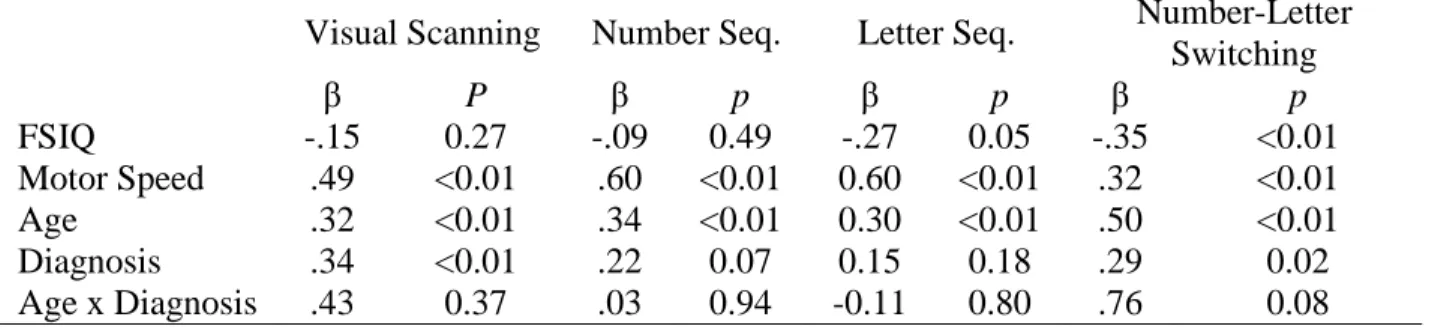
FSIQ-2, age, diagnosis, and age x diagnosis as predictors………..……….83 Table 4 Standardized beta coefficients and p-values from TMT subtests with
x
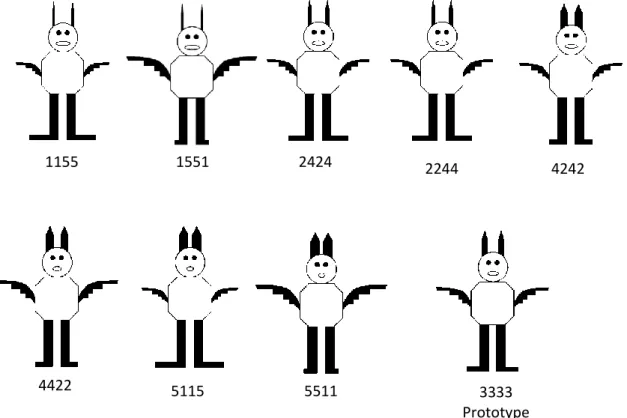
Figure 1 – Sample stimuli for the prototype task: eight familiarization stimuli and the
prototype for the “MIP” animal family...…...86
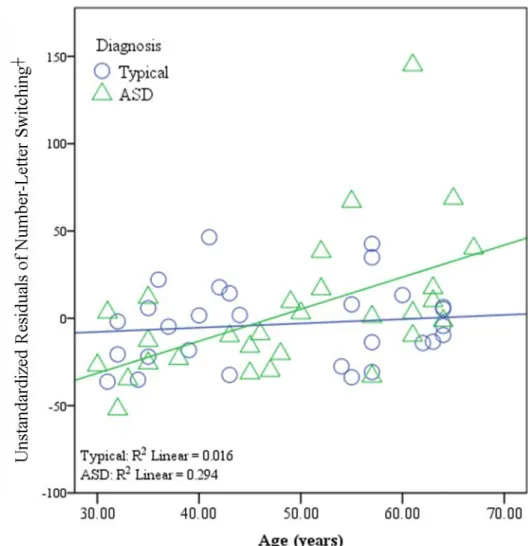
Figure 2 – Age-related differences in cognitive flexibility...…...87
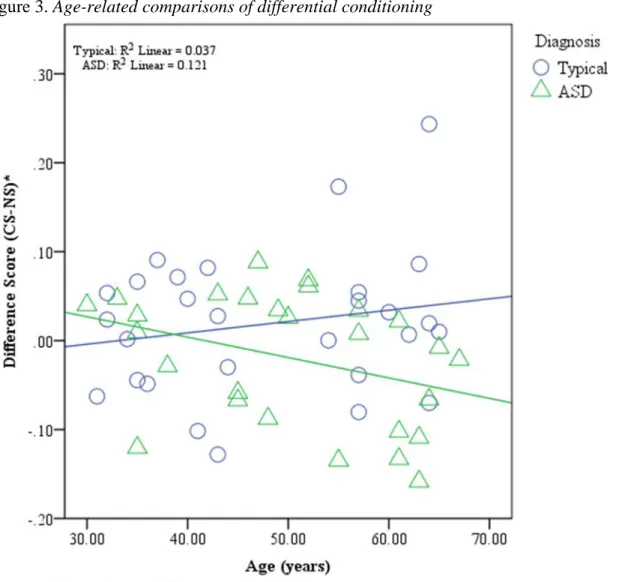
Figure 3 – Age-related comparisons of differential conditioning ...88
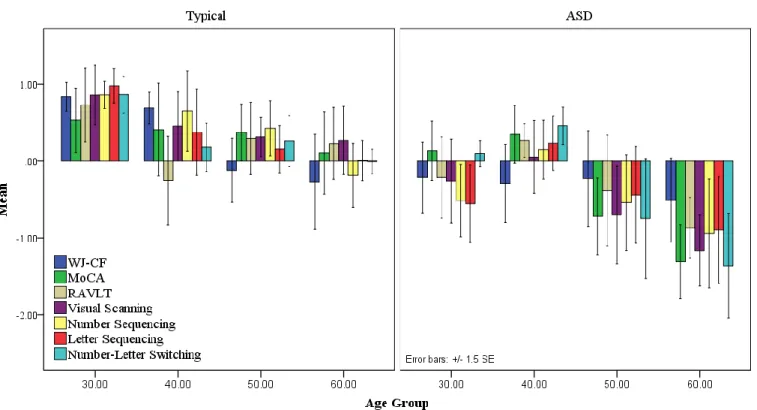
Figure 4 – Age-related comparisons of effortful processing...…...89
1
INTRODUCTION: COGNITIVE AGING IN AUTISM SPECTRUM DISORDER
Autism spectrum disorder (ASD) is a developmental disorder with core symptoms consisting of impairments in social communication and the presence of restrictive interests and repetitive behaviors (American Psychiatric Association, 2013). Often considered a disorder of childhood, researchers are now developing theoretical frameworks to understand the
developmental trajectory of individuals with ASD across the lifespan. Unfortunately, little is known about this developmental trajectory as individuals leave young adulthood. With recent prevalence rates of 1 in 68 (Christensen et al., 2016), there will be a significant increase in the population of older individuals with ASD in the near future. Thus, the study of how aging impacts individuals with ASD is in dire need of investigation.
Although it is well known that cognitive changes occur with normal aging, very few studies have investigated how aging influences individuals with ASD. Individuals with ASD
demonstrate a variety of cognitive impairments in childhood and young adulthood ranging from communication and social impairments to more fundamental cognitive impairments in executive functioning, working memory, and implicit and explicit forms of memory and learning
(Brunsdon et al., 2015; Brunsdon & Happé, 2014). Yet little is known about how these
2
fluency, while showing equivalent cognitive ability in processing speed, cognitive flexibility, and visual and verbal memory compared to older adults with typical development. Unfortunately, this study did not include samples of younger adults with ASD and typical development making it impossible to tell whether these differences in cognitive performance reflect global diagnostic differences or the interaction of aging and diagnosis (e.g., whether aging differentially impacts adults with ASD). Therefore, a subsequent study by Lever and Geurts (2015) examined
performance on various cognitive tasks in a larger cross-sectional sample of younger and older adults with ASD (n=118) and typical development (n=118; ages 20 – 79). This study found no evidence of greater or accelerated cognitive decline in older adults with ASD. Instead, age-related changes in ASD were either reduced or similar to those observed for individuals with typical development. Overall, Geurts’ research suggests that individuals with ASD may age similarly to those with typical development or may be partially protected against age-related declines in cognitive functioning. Although these findings are certainly strengthened by the large sample of adults with ASD included in this study, additional research is needed to confirm these results and to examine the impact of other moderating variables on these findings (e.g.,
3
Geurts’ results may have been impacted by intellectual functioning of the participants which may have limited the ability to detect diagnostic and age-related changes in adults with ASD. In light of this possibility, the purpose of the present study was to explore age-related changes in
cognitive ability across younger, middle-aged, and older adults with ASD compared to younger, middle-aged, and older adults with typical development while controlling for differences in intellectual functioning.
To begin this investigation of age-related cognitive changes in ASD, I will review what is known about changes in cognition in normal aging and discuss what is known about cognitive changes in older adults with other developmental disorders (DDs). This review should provide a theoretical framework to understand age-related cognitive changes in ASD and to develop predictions about these changes.
Normal Aging
4
require substantial awareness and cognitive effort) and measures of automatic processes (i.e., processes that are relatively unintentional, involuntary, effortless, or occur outside awareness; Reber, 1989). Therefore, the following sections briefly review studies of effortful and automatic processing in normal aging.
Effortful processing in normal aging. Measures of effortful processing typically
5
turn facilitates retrieval. Other studies have suggested that impaired free recall may be due to both a difficulty in retrieval as well as use of less effective encoding strategies. For instance, when free recall involves retrieval of semantically-related items, young adults often recall words from the same category, indicating that they used the categories to organize the information. However, older adults are less likely to spontaneously engage in this type of organizational strategy and instead tend to engage in more item-specific processing (i.e., remembering individual words) unless provided with an explicit strategy designed to highlight the semantic relationship between items. For instance, Woo and Schmitter-Edgecombe (2009) provided older adults (age range: 60-88 years) with semantic cues or no semantic cue (i.e., control group) followed by a free recall test. Results indicated that older adults provided with semantic cues at encoding demonstrated greater semantic clustering compared to participants who did not receive the semantic encoding cue. Therefore, when provided with an organizational strategy, older adults are more likely to engage greater relational processing (i.e., generating similarities among items). These findings, coupled with a general reduction in effortful processing resources, suggest that tasks requiring substantial cognitive effort (e.g., free recall) are often impaired in older adults
Automatic Processing in Normal Aging. In contrast, studies examining more automatic
6
& Karaluns, 2011; Weinert, 2009) and intelligence (Atwell, Conners, & Merrill, 2003). Presumably the relative preservation of automatic processing in normal aging occurs because these processes require less cognitive effort, and, therefore, rely less on older adults’ limited, declining pool of effortful cognitive resources. Experience is another way in which automatic processes may be maintained in older adults. For example, Salthouse (1984) compared typing speed between younger adults and older adults. Older adults with more years of experience demonstrated faster typing speed compared to less experienced older adults and comparable speed to younger adults. Similarly, Parbery-Clark, Strait, Anderson, Hittner, and Kraus (2011) found that older adults with extensive musical training maintained similar auditory perception as compared to younger adults. Interestingly, years of musical training also helped maintain
effortful processes such as auditory working memory, suggesting that experience not only maintains automatic processes, but may also mitigate declines in some effortful processes.
However, not all automatic processes are preserved in normal aging. For example, in some studies classical conditioning is seen to decline with age, such that older adults show weaker conditioned responses compared to younger adults (Bellebaum & Daum, 2004; Cheng, Faulkner, Disterhoft, & Desmond, 2010; Woodruff-Pak & Jaeger, 1998). This pattern of
7
Welsh-Bohmer (2004) which found that increased age was associated with poorer conditioning and poorer explicit awareness of the learning contingencies (i.e., the CS-UCS relationship). However, when awareness was taken into consideration, there were no effects of age on
conditioning. That is, older adults demonstrated comparable conditioning to younger adults when aware of the relationship between the CS and the UCR, but when older adults were unaware of this relationship, conditioning was impaired. Though classical conditioning is traditionally considered a non-declarative or automatic form of learning, these findings suggest that older adults may be capable of compensating for impairments in the automatic aspects of conditioned learning by using more effortful or explicit processes.
Theoretical Models of Cognitive Aging
Although several theoretical models have been proposed to account for patterns of age-related changes in cognition, the primary focus of the current study is to examine patterns of performance on effortful and automatic processing tasks in older adults with ASD. Therefore, the following section will discuss theories of effortful and automatic processing in older adults including Craik and colleagues’ extension of the Dual-process theory (Craik & Byrd, 1982; Craik, 1983; 1986; Craik & Rose, 2012; Light et al., 2000), and Salthouse and colleagues’ Processing Speed theory (Salthouse, 1996).
Processing resources. The Dual-process theory is a well-known theory in cognitive
psychology that suggests cognitive processes largely fall into two independent, distinct systems. One system consists of a limited pool of effortful or explicit processes that operate under
8
2000). That is, studies of automatic processing, such as implicit memory and learning, reveal minimal age effects, whereas studies of effortful processing, such as working memory or episodic memory, show substantial declines in older adults (Craik & Rose, 2012; Light et al., 2000). However, tests designed to assess effortful processes such as explicit memory are not “process pure” and, in fact, require varying amounts of effortful and automatic processes. For example, tests of free recall assess a participant’s ability to explicitly retrieve previously studied information. As a consequence, free recall heavily depends on self-initiated, controlled
processes. In contrast, recognition memory involves retrieval of specific details associated with previously studied information (i.e., recollection), as well as a subjective experience of having previously studied the information, but may often have an inability to recall specific details (i.e., familiarity). Thus, recognition can involve both effortful recollective processes, as well as the automatic processes associated with familiarity (Yonelinas, 2002). This idea led Craik and colleagues to propose the Processing Resources account of cognitive aging.
9
resources, then the pattern of memory performance in older adults may be mimicked in young adults whose available resources have been reduced by providing a secondary task to perform simultaneously with the primary memory task (Anderson, Craik, & Naveh-Benjamin, 1998; Craik & Rose, 2012). Anderson et al., (1998) provided support for this notion, showing that young adults whose attention was divided demonstrated behavioral results that replicated the pattern seen in older adults when performing a memory task with full attention. Finally, this account can explain the pattern of age-related changes in studies of classical conditioning. As previously mentioned, Labar et al. (2004) demonstrated a relationship between explicit
awareness and classical conditioning in older adults. This result is consistent with the claim that classical conditioning is not a pure measure of automatic processing, but, in fact, draws upon both automatic and effortful processes. If classical conditioning is only associated with automatic processes, then it should be relatively unaffected by neuro-degenerative diseases (e.g.,
Alzheimer’s) or medial temporal amnesia that specifically disrupt effortful processes such as explicit learning. However, studies of classical conditioning have indicated greater explicit learning is sometimes associated with stronger classical conditioning. Additionally, poorer performance in patients with Alzheimer’s Disease (Hoefer et al., 2008; Woodruff-Pak,
Finkbiner, & Sasse, 1990) and amnesia (Fortier et al., 2003; Meyers et al., 2001) compared to healthy older adults suggests that greater impairment in effortful processing is related to impairment in conditioning.
Processing speed. Another theory explaining age-related cognitive declines stems from
10
& Salthouse, 1997). This theory has received support from several meta-analyses indicating a substantial portion of age-related cognitive decline is accounted for by processing speed (Salthouse, 1996; Verhaeghen & Salthouse, 1997). For instance, through a meta-analysis of cross-sectional studies, Verhaeghen and Salthouse (1997) found that processing speed accounts for more than 70% of the age-related decline on tests of explicit memory. In contrast to the Processing Resource account, the Processing Speed theory suggests that declines in processing speed may represent a more fundamental cognitive change, and the impairment of effortful processes is simply a consequence of this change. To illustrate, processing speed corresponds to the speed of initial information processing such as early visual or auditory perception. Thus, declines in processing speed reflect slower initial processing. Information from these initial processes is simultaneously coordinated by more complex and effortful secondary processes such as working memory. Therefore, significant disruption occurs when secondary processes begin before slower initial processes are completed. In contrast, automatic tasks may require less information, and, therefore, less coordination among processes. This may explain why automatic processes are less disrupted by slower processing speed.
Age-related Changes in Cognition in Developmental Disabilities
11
Several studies of aging in developmental disorders such as Down syndrome (DS), Williams syndrome, and Fragile X have indicated that cognitive declines emerge much earlier in these DDs than in the general population (Devenny, Krinsky-McHale, Sersen, & Silverman, 2000; Krinsky-McHale, Kittler, Brown, Jenkins, & Devenny, 2005; Oliver, Crayton, Holland, Hall, & Bradbury, 1998; Woodruff-Pak, Papka, & Simon, 1994). For example, Oliver et al. (1998) conducted a prospective longitudinal study of adults with DS across four years. Their findings indicated that a pattern of decline in explicit memory and learning in young adulthood (20 to 39 year olds) preceded dementia-related symptoms of aphasia, agnosia, and apraxia. These authors argued that early declines in memory and learning may be related to the higher
prevalence of neuro-degenerative disease (e.g., Alzheimer’s disease) in adults with DS compared to the general population (Holland, Hon, Huppert, & Stevens, 2000; Lai & Williams, 1989; Wisniewski, Wisniewski, & Wen, 1985).
12
that the pattern of age-related cognitive decline in adults with DS found by Oliver et al. (1998) was largely attributed to declines in gF, whereas declines in gC were present in only the most cognitively impaired individuals who were likely exhibiting advanced signs of dementia.
The second important consideration is that not all individuals with DS develop neuro-degenerative disease (Devenny et al., 2000). Thus, it is unclear whether early cognitive decline is only demonstrated by those individuals who go on to develop a neuro-degenerative disease or whether it is a specific characteristic of the aging process in DS. To better understand which factors contribute to this pattern of decline, Crayton et al. (1998) examined data from Oliver et al. (1998) but excluded individuals with advanced dementia. Using these exclusion criteria, Crayton and colleagues examined performance on measures of gF including pattern recognition, spatial recognition, and matching-to-sample in older adults with DS (50 to 58 years old), middle-aged adults with DS (40 to 49 years old), and younger adults with DS (20 to 40 years old). Findings showed significantly worse performance in older adults with DS compared to younger adults with DS. In contrast, performance on measures of gC (e.g., picture vocabulary tests) did not differ between age groups, suggesting that early cognitive decline in DS was specific to declines in gF. Given the exclusion criteria, it is unlikely that performance in older adults with DS was due to the presence of dementia. Nevertheless, greater declines were seen in non-demented adults with DS in their 50’s suggesting that early cognitive decline may be an important characteristic of the aging process in DS.
13
intellectual disability (ID). Their findings showed that both adults with WS and adults with DS demonstrated a similar rate of age-related decline in free recall (e.g., a measure of explicit memory). However, this pattern was not observed in the sample of individuals with ID. The pattern of performance on repetition priming (e.g., a measure of implicit memory) revealed no diagnostic differences and no significant interaction between age and diagnostic group,
suggesting that this form of implicit memory may be unaffected by age in DS, WS, and ID. In contrast to these findings, studies investigating other forms of implicit or automatic learning, such as classical conditioning, have demonstrated poorer performance in older adults with DS compared to age and IQ-matched individuals with non-specific intellectual disability (ID). Classical conditioning paradigms are well suited for populations that have co-morbid intellectual disability because a little comprehension is required to perform the task. Woodruff-Pak, Papka, and Simon (1994) examined classical conditioning in samples of younger (less than 35 years old) and older adults (greater than 35 years old) with DS, Fragile X (FX), and age-matched controls with typical development. Participants were presented with a simple eye-blink classical conditioning paradigm (EBCC) wherein a tone (CS) was followed by an air puff (UCS). Results from this study revealed that regardless of age, individuals with DS and individuals with Fragile X showed significantly worse EBCC compared to individuals with typical development. Additionally, this study found a significant effect of age, such that older adults with DS and typical development performed significantly worse than younger adults. A subsequent analysis compared conditioning across younger and older adults with DS to both age-matched adults with typical development and older adults with probable Alzheimer’s Disease. Young adults with DS demonstrated significantly worse conditioning compared to young adults with typical
14
However, the worst conditioning was found in older adults with DS whose performance was not only significantly impaired, but was not significantly different from the comparison sample of 20 patients with probable Alzheimer’s Disease. The authors of this study interpreted these findings as a pattern of accelerated decline in individuals with DS. However, an alternative interpretation may be that individuals with DS may show an overall decrement in conditioning, but decline at a similar rate as typical adults. If there is poorer conditioning in 20 year-olds with DS, then typical age-related declines will likely result in significantly impaired conditioning by the time they reach mid-adulthood. This could also explain why the significant impairment in conditioning in 40 year-old adults with DS (mean age = 48 years) resembled that of patients with Alzheimer’s Disease.
15
greater volumetric reductions in the cerebellum with age in adults with FX compared to adults with typical development (Greco et al., 2011; Sabaratnam, 2000). Additionally, studies of individuals that carry the pre-mutation of FX, but are unaffected by FX, have identified a
subgroup of older adults in this population that develop a neurological syndrome (onset between 50 and 70 years) known as fragile X – associated tremor/ataxia syndrome. Fragile X – associated tremor/ataxia is associated with progressive increases in tremor and ataxia, including greater disturbances in postural instability (i.e., balance) and gait control (e.g., tandem walking). These disturbances have been linked to greater cell loss in the cerebellum (Jacquemont et al., 2004). Therefore, the age-related changes in EBCC in FX may be associated with the cerebellar impairments (e.g., volumetric reductions) that are associated with this disorder.
These results suggest that there may be a pattern of accelerated decline in these DDs, though more research is needed to confirm these findings. The presence of cognitive impairment in young adults with DS, WS, and FX suggests that the level of impairment in effortful and some automatic processes (e.g., classical conditioning) associated with normal aging may appear 20 to 30 years before individuals with typical development reach this level of impairment.
16 Cognitive Functioning in ASD
Cognitive performance on tests of effortful processing in ASD. There are few studies
that have examined effortful processing in older adults with ASD. However, studies of effortful processes in younger adults with ASD, such as working memory, executive function, and explicit memory, reveal an inconsistent pattern of both impaired and intact performance. One of the more consistent findings in young adults with ASD is a pattern of impairment in free recall when lists of semantically-related items are used. Bowler and colleagues have argued this impairment is present because young adults with ASD are more likely to engage in item-specific processing, rather than relational processing or semantic organizational strategies (i.e., grouping words together into similar semantic categories; Gaigg, Gardiner, & Bowler, 2008; Minshew & Goldstein, 2001). It is interesting how similar this pattern of poorer relational processing in young adults with ASD is to the pattern found in older adults with typical development (Craik & Rose, 2012; Hogan, Kelly, & Craik, 2006). For instance, both young adults with ASD and older adults with typical development tend to show poorer relational processing when tested by free recall but better performance when assessed by recognition. The similar pattern of performance between young adults with ASD and older adults with typical development highlights the
importance of investigating how explicit memory performance changes as individuals with ASD age. For instance, if declines in explicit memory processes in ASD follow a similar trajectory seen in normal aging, explicit memory performance in adults with ASD in middle-adulthood may mimic the performance of older adults with typical aging processes.
Cognitive performance on tests of automatic processing in ASD. In addition to
17
adolescents, and young adults with ASD have shown inconsistent patterns of both impaired and intact performance (for review see Eigsti & Mayo, 2011).
Studies of classical conditioning in ASD. Studies of classical fear conditioning in ASD have indicated patterns of both impaired learning (Gaigg & Bowler, 2007; South, Newton, & Chamberlain, 2012), intact learning (Bernier, Dawson, Panagiotides, & Webb, 2005; South, Larson, White, Dana, & Crowley, 2011), and, in one instance, more rapid learning compared to age and IQ-matched individuals with typical development (see Sears, Finn, & Steinmetz, 1994). However, several methodological differences seem to underlie the conflicting patterns of results. Studies finding intact or more rapid conditioning in ASD have measured eye-blink response to a single CS (Bernier et al., 2005; Sears et al., 1994), and is known to rely upon cerebellar and limbic system pathways (Steinmetz, Tracy, & Green, 2001); suggesting these pathways may be intact in ASD. Whereas studies of differential classical fear conditioning have measured
associative learning by comparing changes in the skin conductance response (SCR) to a CS relative to one or more neutral stimuli. This type of conditioning has been linked to amygdala, hippocampal, and prefrontal brain regions (Jarrell et al., 1987; LaBar, LeDoux, Spencer, & Phelps, 1995; Morris, Friston, & Dolan, 1997).
18
explicit awareness and conditioning in samples of younger adults with ASD (Powell et al., 2016), as well as older adults (Labar et al., 2004). In light of these findings, differential fear condition paradigms provide an opportunity to explore the relationship between age, explicit awareness, and conditioning in adults with ASD.
Studies of implicit category learning in ASD. Similar to studies of classical conditioning, studies of implicit category learning in ASD have indicated both impaired (Church et al., 2010; Gastgeb et al., 2009; 2011; 2012; Klinger and Dawson, 2001; Klinger, Klinger, & Pohlig, 2007; Schipul & Just, 2016; Valdusich, Olu-Lafe, Kim, Tager-Flusberg, & Grossberg, 2010) and intact (Molesworth, Bowler, & Hampton, 2005; 2008) learning in ASD. In contrast, studies of implicit category learning in older adults with typical development have largely indicated comparable performance between younger and older adults (Glass, Choibut, Pacheco, Schnyer, & Maddox, 2012; Hess & Slaughter, 1986a; 1986b). The prototype tasks used in these studies require participants to learn a category that has no explicit rules of membership. In this task, a typical example or prototype is thought to be created by averaging previously seen exemplars to form a “best” representation. Participants categorize new examples as a member of the category based on how closely the example matches the prototype. Studies of individuals with typical
19
independent of one another, individuals with ASD who engage in more explicit processing demonstrate better implicit task performance.
Theoretical Frameworks for Cognitive Aging in ASD
The Processing Resource theory is one model that accounts for the differential pattern of age-related declines in effortful processing, yet relatively preserved automatic processing in normal aging. In contrast, studies of older adults with developmental disabilities (e.g., DS, FX) show age-related declines in both effortful and automatic processing which appear to emerge in mid-adulthood (i.e., 30-40) and continue to worsen with advancing age (Krinskey-McHale et al., 2005; Tobias & Woodruff-Pak, 2009; Woodruff et al., 1994). Similarly, studies of young adults with ASD have shown when automatic processing is impaired, individuals with ASD may compensate by using more effortful processing (Klinger et al., 2007; Gastgeb et al., 2012). Collectively, these findings can provide a framework for making predictions about patterns of age-related decline in ASD. For instance, if automatic processes are more dependent on effortful processing in ASD than in typical development, then as effortful processes declines with age, automatic processes might also decline. As a result, cognitive functioning may be more adversely affected as individuals with ASD enter late-adulthood because both controlled and automatic processes will be impacted by aging.
20
to 42 years) finding pronounced processing speed impairments in adults with ASD, although the rate of age-related decline in processing speed was similar across groups (i.e., ASD vs. typical development). Given that slower processing speed is present in middle-aged adults with ASD, it is possible that any task dependent upon efficient information processing will likely be
significantly disrupted. For example, classical condition paradigms designed to assess automatic aspects of learning involve forming an association between two pieces of sensory information. However, because declines in processing cause initial sensory processes to operate more slowly, the ability to quickly associate these two pieces of sensory information may be significantly impaired (e.g., learning the association between a visual CS with an auditory UCS). Likewise, effortful processes such as explicit memory, which requires efficient encoding and retrieval of information, may be disrupted because slower processing speed also slows initial encoding. Thus, declines in processing speed may mediate performance on both effortful and automatic tasks. Finally, it is important to consider whether the presence of slower processing speed in mid-adulthood signals an earlier onset of cognitive decline in ASD. With respect to this finding and previous evidence indicating that accelerated cognitive decline is associated with severe cognitive impairments in older adults with DD, it is possible that significant cognitive impairment is present by the time individuals with ASD reach late-adulthood.
Current Study Predictions
21
processing across age in a sample of adults with ASD compared to age and IQ-matched adults with typical development.
Aim 1 – Effortful Processing in Adults with ASD
1. Previous evidence shows that by mid-adulthood individuals with DS and WS already demonstrate a pattern of decline in effortful processing tasks including tests of processing speed, block design, matrix reasoning, and concept formation. Research in younger adults with ASD suggests overall impairments in effortful processing tasks, particularly those that require coordination between several different cognitive processes. Thus, in the present study, is predicted that adults with ASD (ages 30 to 65) will demonstrate worse performance on measures of effortful processing compared to age and IQ-matched adults with typical development.
2. Based upon evidence of earlier decline in effortful processing in older adults with other DDs, it is predicted that adults with ASD will demonstrate a steeper age-related decline in effortful processing compared to age and IQ-matched adults with typical development (i.e., an age by diagnosis interaction is predicted), particularly when accounting for mediating variables such as IQ.
Aim 2 – Automatic Processing in Adults with ASD
1. Based upon previous evidence of impaired automatic processing in younger adults with ASD, it is predicted that adults with ASD will demonstrate poorer automatic processing compared to age and IQ-matched individuals with typical development.
22
in automatic processing compared to age and IQ-matched adults with typical development (i.e., an age by diagnosis interaction is predicted).
Method
Participants
Twenty-nine adults with ASD between 30 and 67 years old were recruited through the Autism & Neurodevelopmental Disorders Registry which is a recruitment tool available to UNC researchers through the NICHD-funded Intellectual and Developmental Disabilities Research Center at the Carolina Institute for Developmental Disabilities (CIDD) and through University of North Carolina TEACCH Autism Program. Individuals seen in UNC TEACCH clinics across the state are asked if they would be interested in participating in research on ASD. A diagnosis of ASD was confirmed by clinical interview using the Autism Diagnostic Observation Schedule– 2 (ADOS-2). The following exclusion criteria were applied: (a) evidence of pre-existing
developmental disability etiologically-similar to autism (e.g., Fragile X, Down syndrome); (b) history of traumatic brain injury (TBI); (c) did not meet the ADOS-2 score below diagnostic cut-off (i.e., 6)1 and Social Responsiveness Scale – 2 (SRS-2) diagnostic cut-off (i.e., 60)2; (d) intellectual functioning less than 85 (assessed by the Wechsler Abbreviated Scale of Intelligence).
Thirty adults with typical development were recruited through three sources: (1) UNC faculty and staff listserv which contains contact information of all UNC faculty and staff interested in research (4,000 plus contacts), (2) community fliers and newsletters, and (3)
1One participant with ASD did not meet ADOS-2 cut-off criteria (Total Score = 5), but did meet SRS-2 cut-off
(Total Score = 68). Eliminating this participant from the analyses did not alter the pattern of findings, therefore, this participant was included in the final sample.
2Five adults with ASD did not meet SRS-2 cut-off criteria, however they did meet ADOS-2 cut-off criteria and were
23
through the Cognitive Neuroscience of Memory Laboratory at the University of North Carolina at Chapel Hill database. This database included 212 healthy older adults (ages 60-80) with no history of neuro-degenerative disease and indicated interest in participating in cognitive
psychology and neuroimaging research. The following exclusion criteria were applied: (a) a prior clinical diagnosis of ASD or Attention Deficit Hyperactivity disorder (ADHD); (b) prior clinical diagnosis of ASD in a close family member (e.g., parents, children, siblings) (c) history of neurological disorders, traumatic brain injury (TBI), or schizophrenia; (d) a Social
Responsiveness Scale – 2 (SRS-2) total score of greater than 653; (e) intellectual functioning less than 85.
Finally, both samples of adults with ASD and adults with typical development were stratified across age groups (i.e., ages 30-39, 40-49, 50-65), with an approximately even distribution of participants across age groups. Participants were group matched on age, gender, and IQ (Table 1). All participants, reported normal or corrected to normal hearing and vision (e.g., contact lenses or eye glasses). Fifteen adults reported antidepressant/anti-anxiety
medication use (1 typical; 14 ASD)4. Although there were some differences in educational level, including 3 adults with ASD who only received a high school diploma, the large majority of participants received some type of post-secondary degree (e.g., associate’s degree, bachelors, masters, or Ph.D.).
3The cut-off criterion was set at 65 for adults with typical development because this would have indicated moderate
and clinically significant ASD symptomatology. All adults with typical development scored below 65.
4Preliminary analyses of cognitive performance on those with and without antidepressant/anti-anxiety medication
24 Measures
Demographic form. A demographic form gathered general information about
participants. This form included information about the participant’s age, gender, race, medication history, education level, employment history, and any current diagnoses (i.e., ASD, ADHD, learning disability, etc.).
Autism Diagnostic Observation Schedule – 2 (ADOS-2, Module 4; Lord et al., 2012).
The ADOS-2, Module 4, (35-40 minutes) is a semi-structured assessment of social interaction, communication administered to adolescents and adults. The ADOS-2 was administered to individuals with ASD to both confirm a previous diagnosis of ASD and measure current symptomatology (i.e., social skills, and communication). The ADOS-2, Module 4 has good reliability ratings with mean weighted kappa (Mkw = .66; see Lord et al., 2011). The ADOS has good sensitivity (.71) and specificity (.82) in adults with ASD (ages: 18 – 66), providing support for its use in adults with ASD.
The Social Responsiveness Scale- 2 (SRS-2; Constantino, 2012). The adult form of
SRS-2 is a 65-item self-report measure of ASD symptoms. This test has been validated for
clinical populations aged 2 to 89 years. The present study used the adult form self-report version
(normed for ages 18 -89). The adult form SRS-2 has very good test-retest reliability after four
months (r = .88). The SRS-2 was administered to both individuals with ASD and individuals
with typical development. This measure served as an additional measure of ASD symptom
severity in individuals with ASD and as a screening tool for autism characteristics in individuals
with typical development. No individuals with typical development scored higher than 65; a
25
Montreal Cognitive Assessment (MoCA; Nasreddine, Phillips, Bédirian, 2005). The
MoCA is a 10-minute, 30-point cognitive screening test designed to assess and screen for mild
cognitive impairment (MCI). The MoCA assesses short-term recall, delayed recall, visuospatial
abilities, working memory, and language, but has more emphasis on tasks of frontal functioning
and attention than other brief screeners for MCI or dementia such as the Mini Mental State
Examination (Folstein, Folestein, & McHugh, 1975). The MoCA has good specificity (90%) and
sensitivity (85%). The suggested cut-off point for MCI on the MoCA is 26, with scores below
indicating the presences of MCI. However, it is possible that some individuals with ASD may
demonstrate a level of impairment that is similar to MCI as a function of ASD rather than age,
thus a more liberal cut-off point of 21 was used to indicate the presence of substantial cognitive
impairment similar to that found in patients with dementia. No participant scored below 21, and
therefore, no additional participants were excluded from analyses.
Wechsler Abbreviated Scale of Intelligence 2-subtests (WASI; Wechsler, 1999). The
WASI is an abbreviated IQ measure appropriate for persons six to 89 years of age. This study administered the Vocabulary and Matrix Reasoning subtests to estimate IQ (2). The FSIQ-2 version takes approximately FSIQ-20 minutes to administer. The FSIQ-FSIQ-2 has good validity compared to full-scale IQ and test-retest reliability (reliability coefficients for adults range from .93 to .98).
Matrix reasoning (Wechsler, 1999). This subtest of the WASI was used as a measure of
fluid intelligence including visuospatial organization and abstract reasoning. Thirty-five
26
Woodcock-Johnson Concept Formation Test (WJ-III; Woodcock, Mather, &
McGrew, 2001). The WJ-III Concept Formation (WJ-CF) test served as a measure of effortful
category learning. This test is normed for individuals between 2 and 90 years of age. Participants were asked to look at colored shapes that vary on four dimensions (color, shape, size, and
number) and derive the rule why as to why some are shapes are placed in a category (i.e., inside a box). For instance, participants viewed a set of shapes on the left and a box on the right that contains different shapes. Participants then stated the rule that defined how the shapes in the box were similar to one another and different from those on the left. The Concept Formation subtest of the WJ-III has a strong test-retest reliability coefficient of .94.
Trail Making Test (TMT) Parts A & B (Delis et al., 2001). The version of the TMT
used in the present study was taken directly from the Delis-Kaplan Executive Function System (D-KEFS). This version of the TMT includes five subtests presented to participants in the
following order: visual scanning, number sequencing, letter sequencing, number-letter switching, and motor speed. The visual scan sub-test presents participants with an array of numbered
circles. Participants are asked to locate all the circles with the number ‘3’ and make a small slash through only this number. The number sequencing sub-test presents participants with an array of numbered circles (1-16) among distractor letters. Participants are asked to draw a line to connect the numbers in ascending order (i.e., 1, 2, 3….). This same procedure is used for the letter sequencing sub-test wherein participants are asked to connect the letters in ascending
27
switching subtest measures both processing speed and executive functioning (i.e., switching from numbers to letters). Finally, the motor speed sub-test was designed to assess participant’s
baseline motor drawing speed. In this sub-test participants are simply asked to trace over a dotted line that passes through 32 blank circles. The path outlined for participants is the exact same path participants follow to complete the number-letter sequencing subtest. Participants are timed during each sub-test. During the first four sub-tests participants are told to work as quickly and accurately as possible. In the motor speed sub-test participants are told to work as quickly as possible, and it was emphasized that neatness (i.e., perfectly tracing over the dotted line) was not important. Total time to complete all five sub-tests is approximately three to five minutes. The internal consistency of the TMT ranges from .60 to .81 (Stephens, 2014).
Rey Auditory Verbal Learning Test (RAVLT; Rey, 1964; see Lezak, 1983 for
English version). This brief memory test assessed episodic and recognition memory. During this
28
words). This task took approximately 5 minutes to complete. Recognition accuracy (%) was calculated by summing the number of hits (H) and correct rejections (CR) multiplied by 100, and divided by the total number of words.
Apparatus for conditioning task. Skin conductance response (SCR) was used as the
dependent measure for the conditioning task and was monitored by a MP35 four channel data acquisition unit (BIOPAC Systems, Goleta, CA). SCRs from the participant’s dominant hand using silver-silver chloride electrodes (Ag-AgCl) were attached to the top phalanges of the first and third digits by velcro straps. A saline-based gel (Signa Gel; BIOPAC Systems) was used as a conductive electrolyte and placed between the Ag-AgCl electrode and the participant’s skin. Consistent with previous literature, skin conductance was monitored using a constant voltage of 0.5 V at a sampling rate of 200 Hz (Labar, Cook, Torpey, & Welsh-Bohmer, 2004; Lykken & Venables, 1971).
Stimuli for prototype task. The prototype formation task consisted of black-and-white
29
number of overall features (i.e., a head, arms, legs, wings, nose, etc.), in order to equate visual complexity across categories.
Procedure
Participants with typical development were scheduled for a two-hour session. Participants with ASD were scheduled for a three-hour session due to the additional diagnostic evaluation. During this session, consent forms were signed, and participants were given an overview of the experiment (10 minutes). After the consent process, participants with ASD were administered the ADOS-2 followed by the automatic processing tasks. Because the ADOS-2 was not administered to participants with typical development, the two automatic processing tasks (i.e., classical conditioning and prototype formation) immediately followed the consent process. Competition time for across both of these two tasks was approximately 20-22 minutes. The order of
presentation for the classical conditioning task and the prototype formation task was
counterbalanced across participants in order to eliminate potential order effects. After completing both automatic processing tasks, participants were given a short break. Following the break, the participants were given the MoCA (10 minutes), the IQ assessment (WASI; approximately 20 minutes), and the WJ-III Concept Formation task (5-10 minutes). Following these tests participants were again offered a short break before completing the TMT and RAVLT to conclude the testing session. Each participant received $30 as compensation for their participation in this study.
Classical conditioning task. Prior to the classical conditioning task, electrodes were
30
was in no way painful to the participant, the experimenter adjusted the volume for each
participant to loudest tolerable level while at the same time ensuring that the UCS continued to elicit a startle response (e.g., an increase in SCR). Following this, the experimenter allowed the participant’s SCR to reach a stable baseline activity level before commencing with the
conditioning task.
For the conditioning task, participants were told that they were about to participate in an experiment where they would view a series of colored squares presented on the computer screen, and they were warned that they would occasionally hear the loud noise (UCS). Participants were asked to remain as motionless as possible to reduce the possibility of excessive movement confounding the SCR recording. Following this instruction, participants were told to play close attention because a brief memory test would follow the experiment. The experimenter was present during the conditioning task to monitor SCRs and excessive anxiety in response to the loud noise and to ensure that participants were focused on the task. The experimenter was positioned adjacent to the participant. Only a computer screen and the electrodes attached to the fingers were in the line of sight of the participant.
The classical fear conditioning paradigm used to assess associative learning consisted of three phases: habituation, acquisition, and extinction. The presentation of the habituation and acquisition phases was continuous so participants were not aware of the transition from one phase to the next. Two colored squares (e.g., red and blue) were used as the stimuli. During the habituation phase participants were randomly presented with these two colored squares, with each colored square presented four times (8 trials total). During the acquisition phase one colored square was randomly paired with a co-terminating loud noise UCS and designated as the
31
designated as the neutral stimulus (NS). Each colored square (CS and NS) was presented for five seconds. The UCS lasted for two seconds immediately following the presentation of the CS only (i.e., the CS-UCS trials lasted 7 seconds). The inter-stimulus interval between trials was set at 15 seconds and SCR was monitored to ensure that participant’s SCR had returned to baseline. This phase consisted of eight presentations of CS reinforced by the UCS and eight presentations of the NS (16 trials total).
Following the acquisition phase participants received an explicit awareness questionnaire to assess declarative knowledge of the CS-UCS contingencies. Based on previous work (Bechara et al., 1995; Gaigg & Bowler, 2007; LaBar et al., 2004), participants were asked to recall the number and type of colors previously seen, how many colors preceded the presentation of the loud noise, and finally what specific color(s) preceded the loud noise. Participants were only classified as aware if they were able to accurately report that the CS and only the CS predicted the presentation of the UCS. Following the explicit awareness questionnaire, participants received the extinction phase. The extinction phase consisted of four presentations of the CS without the UCS (non-reinforced) and four presentations of the NS to ensure full extinction had taken place (8 trials total).
Prototype formation task. The prototype task consisted of five blocks (i.e., five animal
32
before continuing on to the next animal presentation. For the first three blocks a recognition test followed the familiarization phase and included three stimulus types: (1) animals previously viewed in the familiarization phase (old), (2) animals not presented in the familiarization phase (novel), and (3) the novel prototype. There were a total of nine test trials including three old animals, three novel animals, and three prototypical animals. During the test phase, participants were presented with these three stimulus types (old, new, prototype) one at a time and asked to say “yes” if they previously saw the animal or “no” if they did not see the animal. The last two blocks included an additional confidence rating for each recognition response. After each recognition judgment, participants were asked, “How confident are you that you did/did not see this animal?” The confidence rating included a scale of 0 (not confident at all) to 100 (entirely confident). Evidence of prototype learning was demonstrated when participants falsely
recognized having seen the prototype more often than they falsely recognized novel animals. Results
Statistical analyses. Data analyses were completed using SPSS IBM 23 statistical
software. Means and standard deviations for each test of cognitive functioning are reported in Table 2. In order to compare diagnostic and age effects, separate regression analyses were conducted using MoCA, WJ-CF, RAVLT and TMT as the dependent variables. The predictor variables in these analyses included FSIQ-2, age, diagnosis, and the age by diagnosis interaction term. FSIQ-2 and age were used as continuous predictors and diagnosis was used as a categorical predictor. In order to prevent multi-collinearity between the predictor variables, age was mean-centered prior to analyses.
FSIQ-2 was treated as a covariate in these analyses for two reasons: (1) previous
33
variance in many measures of cognitive functioning, thus potentially masking age effects (Bolla, Lindgren, Bonaccorsy, & Bleecker, 1990; Schaie, 1983); (2) initial inspection of the current data revealed a significant correlation between age and FSIQ-2, r
(58) = .35,
p
< .01
. Therefore, including FSIQ-2 in the model provided an examination of the effect of age and diagnosis on measures of effortful processing above and beyond participants’ level of intellectual functioning.Using stepwise regression, FSIQ-2 was entered first. This was followed by age,
diagnosis, and the age by diagnosis interaction term each being entered sequentially to determine whether age affected each cognitive measure and whether ASD was associated with a different rate of age-related decline than seen in typical development. Curvilinear relations were also examined in these analyses. However, no significant curvilinear effects were observed, thus only linear relationships were included in the final regression models reported here. Finally, when a significant interaction was observed, separate regression analyses were conducted on each diagnostic group to further probe the nature of the interaction. Standardized beta coefficients with p-values are reported for each dependent variable in Table 3.
Analysis of Effortful Processing Tasks
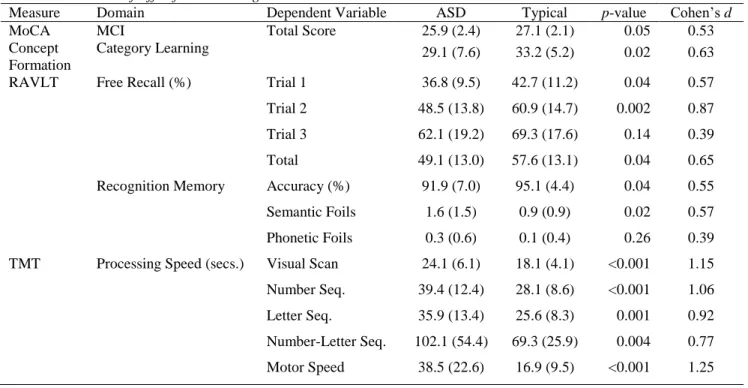
MoCA. Table 2 shows that performance on the MoCA was significantly lower in adults
34
As can be seen in Table 3, this analysis found FSIQ-2 to be positively related to MoCA performance, although this was not significant, explaining approximately 4% of the variance (FSIQ: R2change = 0.04, F(1,57) = 2.51, p = .12). In contrast, both age and diagnosis were negatively related to performance and accounted for 13% and 15% explained variance,
respectively (Age: R2change = 0.13, F(1,56) = 9.05, p = .004; Diagnosis: R2change = 0.15, F(1,55) = 11.85, p = .001). Of particular interest, was the significant increase in variance explained by the interaction term (R2change = 0.05, F(1,54) = 4.64, p = .04), suggesting that both age and diagnosis had a negatively combined impact on MoCA performance. To further examine this interaction, separate regressions were conducted for each diagnostic group. Only age was included as a predictor in this analysis given that FSIQ-2 was not a significant predictor in the overall analysis. Examination of MoCA performance in adults with typical development revealed that age
explained <1% of the variance in MoCA (R2change < 0.01, F(1,28) = 0.01, p = .91), whereas in adults with ASD, age explained 34% of the variance (R2change = 0.34, F(1,27) = 13.67, p = .001). These results suggest that age had a substantial and negative impact on MoCA performance in individuals with ASD but very little impact on performance in individuals with typical
development. However, the smaller impact of age on adults with typical development was somewhat expected considering that the MoCA was originally designed to detect early signs of mild cognitive impairment (MCI), and, therefore, may be less sensitive to normal age-related declines (Julayanont, Phillips, Chertkow, & Nasreddine, 2013).
WJ-III concept formation. Using the same stepwise regression procedure, performance
on the WJ-CF was examined5. Table 2 shows that adults with ASD scored lower on this measure (M = 29.1) compared to adults with typical development (M = 33.2). Regression analysis of these
35
scores demonstrated FSIQ-2, age, and diagnosis were significant predictors of performance (see Table 3). FSIQ-2 explained 19% of the variance, (R2change = 0.19, F(1,56) = 13.37, p = .001, whereas age and diagnosis uniquely contributed an additional 10% and 9% of the variance, respectively (Age: R2change = 0.10, F(1,55) = 7.68, p = .008; Diagnosis: R2change = 0.09, F(1,54) = 7.43, p = .009). These findings indicated that FSIQ-2 was positively related to WJ-CF
performance, with those with higher IQ performing better on the task. However, age and
diagnosis were negatively related to performance, with both those with ASD and those who were older performing worse on the task. The interaction between age and diagnosis was also
significant, explaining 5% of the variance, R2change = 0.05, F(1,53) = 4.95, p = .03 (see Table 3 for standardized regression coefficients).
To further examine this interaction separate regression analyses, using only FSIQ-2 and age as predictors, were conducted for each diagnostic group. Analyses of adults with typical development revealed FSIQ-2 was not a significant predictor of WJ-CF, explaining
approximately 4% of the variance (R2change = 0.04, F(1,28) = 1.03, p = .32), whereas age resulted in a 29% increase in explained variance (R2change = 0.28, F(1,27) = 11.54, p = .002), suggesting that performance declined with age in this group. This same analysis performed on individuals with ASD revealed FSIQ-2 accounted for 48% of explained variance (R2change = 0.48, F(1,26) = 24.10, p <.01). However, age was not a significant predictor, accounting for only a 1% increase (R2change = 0.01, F(1,25) = 0.62, p = .44). Therefore, the lack of an age effect in individuals with ASD was largely related to intellectual functioning, such that higher IQ resulted in better WJ-CF performance.
Free recall and recognition memory. In order to examine the relation between age and
36
memory. For the analysis of free recall, the total number of items recalled across all three trials was used as the dependent variable. As can be seen in Table 2, adults with ASD recalled fewer words (M = 49.1%) compared to adults with typical development (M = 57.6%). This was also reflected in the regression analysis, which found diagnosis to be negatively related to
performance, even after accounting for the positive relationship between FSIQ-2 and
performance. Both were significant predictors of performance [FSIQ-2: R2change = 0.10, F(1,57) = 6.57, p = .01; Diagnosis: R2change = 0.10, F(1,55) = 7.30, p < .01]. Age was also negatively
related to performance, yet age was only a marginally significant predictor in the model [Age: R2change = 0.05, F(1,56) = 3.08, p = .08]. There was no significant age by diagnosis interaction, R2change < 0.01, F(1,54) = 0.20, p = .65.
Considering that age was found to be a marginally significant predictor of immediate free recall, a multivariate regression analysis was conducted using all three immediate free recall tests as dependent variables and regressed on the same predictors described above (i.e., FSIQ-2, age, diagnosis, & age by diagnosis interaction term). Results from the multivariate tests showed FSIQ-2 and diagnosis were significant predictors of immediate free recall performance, Wilks’ Lambda = .850, F(3, 52) = 3.06, p = .04, ηp2 = .15; Wilks’ Lambda = .787, F(3, 52) = 4.69, p < .01, ηp2 = .21, respectively. As above, neither age nor the interaction between age and diagnosis were significant, Wilks’ Lambda = .897, F(3, 52) = 1.98, p = .13, ηp2
= .10; Wilks’ Lambda = .945, F(3, 52) = 1.01, p = .40, ηp2 = .06. However, further inspection of the univariate tests revealed that age was a significant predictor of performance on trial 1, F(1,54) = 5.93, p = .02, ηp2
37
Recognition memory. A similar regression analysis performed on recognition accuracy revealed that diagnosis was a significant predictor. Indicating that ASD was associated with relatively lower recognition accuracy (M = 92%) compared adults with typical development (M = 95%), R2change = 0.07, F(1,55) = 4.36, p = .04. According to Table 2, it is likely that the
relatively lower recognition accuracy in adults with ASD was due to the higher false recognition of semantically-related lures (M = 1.7) compared to adults with typical development (M = 0.9). There were no significant effects for FSIQ-2 (R2change = 0.04, F(1,57) = 2.05, p = .06), age (R2change < .01, F(1,56) = 0.18, p = .67), or age by diagnosis (R2change = 0.01, F(1,54) = 0.45, p = .51)
TMT. Regression analyses were performed on raw scores (i.e., seconds) from the visual,
number, letter, and number-letter switching subtests of the TMT. Table 2 shows that
performance on these subtests (including motor) was significantly slower in adults with ASD compared to adults with typical development (all p’s < .004). Due to the significantly slower baseline motor speed in adults with ASD, raw scores from this subtest were included in the model to control for baseline differences in motor ability. Similar to the above analyses motor speed and FSIQ-2 were entered in the first step followed by age, diagnosis, and the age by diagnosis interaction term. Results for these analyses can be found in Table 4. Across all four subtests, age was a significant predictor of performance such that increased age was associated with increasingly slower performance (i.e., time to complete). In contrast, diagnosis was
38
speed, and age. There were no significant interactions between age and diagnosis on any of these subtests (see Table 4, all p’s > .08).
Cognitive flexibility. Given that the number-letter switching subtest assesses both sequencing (i.e., connecting numbers and letters in ascending order) and cognitive flexibility (i.e., switching between numbers and letters), a follow-up regression analysis was conducted to examine the impact of age and diagnosis on cognitive flexibility apart from the underlying component of sequencing. In order to do so, the average completion time across both the number and letter sequencing subtests was used as a covariate in this analysis. Thus, the following predictors were entered sequentially into the model: FSIQ-2, sequencing, age, diagnosis, and the age by diagnosis interaction term. FSIQ-2, sequencing, and age were significant predictors of performance. FSIQ-2 explained 12% of the variance, (R2change = 0.12, F(1,56) = 7.74, p = .007, whereas sequencing and age uniquely contributed an additional 38% and 9% of the variance, respectively (Speed: R2change = 0.38, F(1,55) = 41.61, p < .001; Age: R2change = 0.09, F(1,54) = 11.40, p = .001), suggesting that slower sequencing speed and increased age were related to poorer cognitive flexibility. Diagnosis was not a significant predictor explaining roughly 2% of the variance, R2change = 0.02, F(1,53) = 2.73, p = .10. However, the interaction between age by diagnosis was significant, explaining 3% of the variance, R2change = 0.03, F(1,52) = 4.59, p = .03. To further examine this interaction, separate regression analyses were conducted for each
diagnostic group using FSIQ-2, sequencing, and age as predictors.
39
F(1,26) = 9.80, p < .01). This same analysis performed on adults with ASD revealed FSIQ-2, sequencing, and age were all significant predictors of cognitive flexibility. FSIQ-2 accounted for 23% of explained variance (R2change = 0.23, F(1,27) = 8.07, p <.01), sequencing accounted for 25% of explained variance (R2change = 0.25, F(1,26) = 12.62, p <.01), and age accounted for 19% of explained variance (R2change = 0.19, F(1,26) = 14.68, p <.01). Despite the substantial amount of variance explained by sequencing, age remained a significant predictor of performance in adults with ASD, suggesting that aging in ASD may be characterized by greater declines in cognitive flexibility.
Analysis of Automatic Learning Tasks6
Prototype learning. For the prototype task, prototype learning was assessed by
comparing the percentage of “yes” responses to the prototype versus the percentage of “yes” responses to the new stimulus. As can be seen in Table 5, on average, adults with ASD were 30% more likely to say “yes” to the prototype compared to the new stimuli, t(28) = 6.41, p < .01. Similarly, adults with typical development were 40% more likely to say “yes” to the prototype compared to the new stimuli, t(29) = 9.77, p < .01. Confidence ratings were also examined and revealed that both adults with ASD and adults with typical development were more confident that they had previously seen the prototype, M = 75%, compared to the new stimuli, M = 67% (Table 5). Because confidence ratings did not differ across diagnostic groups or age (p’s > .25), they are not discussed further in the following section.
Prior to the regression analysis d-prime (d’) was calculated by subtracting the standard scores (Z-score) from recognition of the prototype by recognition of the new stimuli (i.e.,
Zprototype – Znew). This index of prototype learning was then used as the dependent variable in
6Preliminary analyses indicated that FSIQ-2 was not related to conditioning or prototype learning (p’s> .41),
40
a hierarchical linear regression using a stepwise method. For this regression model, age was entered as the first predictor, followed by diagnosis, and the age by diagnosis interaction term. Results from this analysis revealed that age and diagnosis accounted for small, non-significant variance (Age: R2change = .01, p =.56; Diagnosis: R2change = .02, p =.27). Additionally, the age by diagnosis interaction term accounted for 4% of the variance, but it was also non-significant (R2change = .04, p = .14). These findings suggest that prototype learning was similar between adults with and without ASD, and unaffected by age.
Classical conditioning. To ensure that adults with ASD and adults with typical
development had equivalent baseline skin conductance levels (SCL) prior to the acquisition phase (sampled at 200Hz), SCL values were examined during the habituation phase. This analysis demonstrated statistically equivalent baseline SCL values between adults with ASD (M = 6.81µS, SD = 3.84) and adults with typical development (M = 6.50µS, SD = 2.90), t(29) = 0.35, p = .72. However, two participants with ASD and two participants with typical
development were excluded from analyses due to extremely low baseline SCL that prevented reliable recording of electrodermal activity (ASD n = 27; Typical n =28).
41
conductance (SC) value for each trial was taken within a 6 –second window prior to the UCR onset (typically occurring 7000ms after trial onset). This peak response was then subtracted by the SC value (valley) selected at trial onset (Pineles, Orr, & Orr, 2009; South et al., 2011).
Inspection of the SCR data revealed substantial positive skew. Thus, SCRs were square-root transformed to normalize distribution of the data (Gaigg & Bowler, 2007). Kolmogorov-Smirnov tests on the square-root transformed SCR scores indicated a normal distribution for both CS trials, D = .09, p = .20, and NS trials, D = .11, p = .10.
SCR amplitude to the UCS. Because participants were allowed to adjusted the volume of the UCS to be as loud as tolerable with a maximum allowed of 95 dB, we compared the adjusted decibel levels of the two diagnostic groups. The ASD group adjusted the intensity (dB level) of the UCS slightly, but significantly lower (M = 83.25dB, SD = 3.38) than individuals with typical development (M = 85.25dB, SD = 2.10), t(56) = 2.33, p = .02. Due to this difference we
compared the unconditioned response (UCR) elicited by the aversive sound across the diagnostic groups. This comparison was necessary to ensure that any group differences in conditioning were not affected by these differences in volume of the stimuli and differences in sensitivity to those volumes. Both diagnostic groups exhibited a strong UCR (Typical: M = 0.52√µS; SD = 0.26; ASD: M = 0.52√μS; SD = .21), and did not significantly differ between diagnostic groups, t(56) = 0.05, p =.96.