THE IMPACTS OF USING A COLLABORATIVE EVALUATION APPROACH IN HIGHER EDUCATION: A CASE STUDY OF LOCAL YMCAS PROVIDING
COLLEGE ACCESS SERVICES
Johnavae E. Campbell
A dissertation submitted to the faculty at the University of North Carolina at Chapel Hill in partial fulfillment of the requirements for the degree of Doctor of Philosophy in the School of
Education
Chapel Hill 2013
Approved by: Rita O’Sullivan
© 2013
Abstract
JOHNAVAE E. CAMPBELL: The impacts of using a collaborative evaluation approach in higher education: A case study of local YMCAs providing college access
services
(Under the direction of Dr. Rita O’Sullivan)
This dissertation offers a case study of the YMCA of the USA’s pilot Higher Education Service Project (YHESP) with 61 local YMCAs on how the collaborative
evaluation approach functioned to facilitate an organizational culture around evaluation and reinvention strategies of YMCAs as college access service providers. Multiple data collection sources were used following this two-year pilot project cycle. Analysis of survey data,
interviews, and archival information allowed significant themes to emerge and described YMCA participants’ experiences of key aspects of impact of this collaborative evaluation approach that compel (or inhibit) YMCA organizations to willingly change the course of their program planning and implementation. The survey analysis revealed strong influence by the collaborative evaluation approach to support capacity building, evaluation knowledge, evaluation use, and stakeholder engagement. Especially significant from interview analysis was finding agreement by YMCAs of varying size and initial capacity to the use of
collaborative evaluation as a tool to challenge dominant discourses of YMCAs as “swim and gym” facilities. Thus, program impact in this study was characterized by collaboration and
Acknowledgements
My favorite part of the writing process is sharing how I feel. That said, I am most grateful to so many for so much for supporting me through this process.
To my committee members, I am most appreciative of the dedication and support you have shown me over the years, particularly in challenging me to think critically about my work as a researcher and scholar.
To my dear advisor and committee chair, Dr. Rita O’Sullivan, I began this program
under your encouragement and have grown professionally and academically because of your invaluable guidance and support. It is truly an honor to have worked with you throughout these four years.
I cannot express my gratitude enough to all of my EvAP colleagues and friends, but each of you has contributed to my success as a student and scholar. Thank you for being a family and support system as we shared the experience together. You have offered so much encouragement both personally and academically that I can honestly say, I would not be here without you.
Table of Contents
List of Tables ...x
List of Figures ... xii
Position Statement ...1
Chapter 1: Introduction ...1
1.1 Background ...2
1.2 Context and Rationale ...5
1.3 Significance of the Research ...7
1.4 Research Questions ...9
Chapter 2: Literature Review ...10
2.1 Introduction ...10
2.2 An Historical Perspective on College Access ...13
2.2.1 College Access Beginnings ... 13
2.2.2 Funding Streams ... 16
2.2.3 Program Delivery ... 20
2.3. Program Evaluation ...22
2.3.1 Competing Evaluation Approaches ... 22
2.3.2 An Alternative Approach ... 29
Chapter 3: Research Methods ...42
3.1 Introduction ...42
3.2 Overall Research Design...44
3.3 Data Collection Plan ...45
3.3.1 Participant Selection ... 45
3.3.2 Survey Development ... 46
3.2.3 Case Interviews ... 48
3.2.4 Archival Documents ... 50
3.3 Background of the National YMCA of the USA Higher Education Service Project (HESP) ...52
3.3.1 Organizational Structure ... 52
3.3.2 Purpose of the Evaluation ... 54
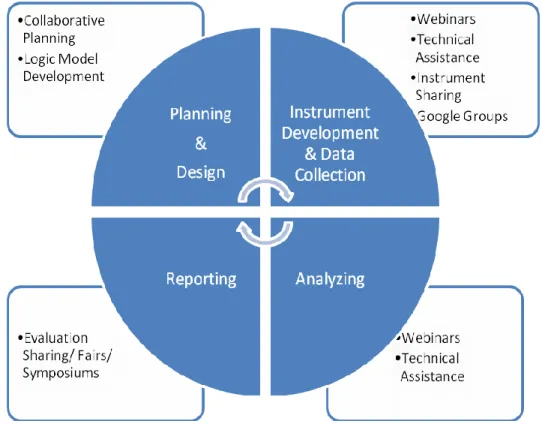
3.3.3 YMCA Evaluation Plan ... 54
Chapter 4: Results ...60
4.1 Introduction ...61
4.1.1 Online Survey ... 62
4.1.2 Survey Data Analysis ... 62
Embedded Interview Cases: ...64
4.1.3 Interview Data Analysis ... 64
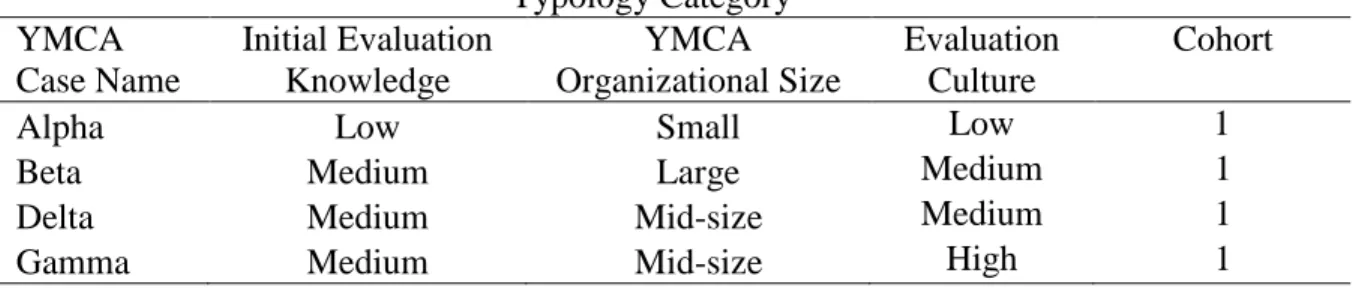
4.1.4 Embedded Cases General Description ... 65
4.2.1 Cohort/Year of Entry into the Program ... 70
4.2.2 Changes in National Program Coordination ... 71
4.2.3 Initial Evaluation Knowledge of Programs and Staff ... 73
4.2.4 Organizational Culture ... 75
4.3 Q1: Influence of Evaluation ...79
4.3.1 Usefulness of Evaluation to Program Planning ... 80
4.3.2 Change in Beliefs about Evaluation ... 86
4.3.3 Capacity Building ... 92
4.3.4 Conclusion ... 99
4.4 Q2: Evaluation Use ...100
4.4.1 Conclusion ... 103
4.5 Q3: The Role of Collaborative Evaluation ...104
4.5.1 Stakeholder Involvement ... 105
4.5.2 Evaluator Roles ... 115
4.5.3 Purpose of Evaluation ... 124
4.5.4 Project Staff Roles ... 128
4.5.5 Conclusion ... 131
Chapter 5. Conclusion ...134
5.1 Discussion ...134
5.1.1 Capacity ... 137
5.1.3 Networks ... 142
5.1.4 Competence/Quality ... 145
5.1.5 Conclusion ... 149
5.2 Limitations ...151
5.3 Final Thoughts ...152
Appendix A: Consent Page with Survey ...155
Appendix B: Logic Model Template ...163
Appendix C: National YMCA Program Staff Interview Questions—Draft ...164
List of Tables
Table 1. Comparison of Traditional and Collaborative Evaluation
Approaches ... 23
Table 2. Research Questions, Data Sources, Data Collection
Activities and Data Analysis Procedures ... 43 Table 3. Interview Cases ... 48 Table 4. Data Collection Process ... 51 Table 5. Number of YMCAs Indicating Outcomes in Five
Areas of Higher Education Services ... 58 Table 6.Table of Contents for Organization of Survey Results
by Research Question and Theme ... 61 Table 7. Total Respondent Titles by Cohort ... 63 Table 8. Descriptive Breakdown of Survey Respondents by Cohort ... 70 Table 9. Descriptive Breakdown of Survey Respondents by
YMCA Ranking... 74 Table 10. Evaluation Team Initial Ranking of YMCA by Cohort ... 75 Table 11. YMCA Members’ Agreement with Statements Regarding
Their Organization’s Culture ... 78 Table 12. Individual Mean Rating by Cohort ... 82 Table 13. YMCA Mean Rating by Cohort ... 82 Table 14. Usefulness of Evaluation Activities to Program
Planning by Initial Evaluation Knowledge ... 84 Table 15. Respondents’ Reported Impact of Collaborative
Evaluation (CE) on Program Elements ... 85 Table 16. Number of Respondents by Category and Theme ... 87 Table 17A. Percentage Frequency of Agreement Responses to the
Survey Question Asking about the Influence of the
Table 17B. Percentage Frequency of Agreement Responses to the Survey Question Asking about the Influence of the
Evaluation on Evaluation Skills ... 95 Table 17C. Percentage Frequency of Agreement Responses to the
Survey Question Asking about the Influence of the
Evaluation on the Organization ... 97 Table 18. Number of Respondents in Agreement about Frequency of
Evaluation Use by Item and Cohort ... 101 Table 19. Frequency of Respondents Indicating Logic Model Use
for Program Elements by Cohort ... 102 Table 20. Involvement in Evaluation Activity by Cohort ... 106 Table 21. Stakeholder Involvement by Cohort and Category (n=58) ... 109 Table 22. Involvement of Volunteers and Community Members by
Initial Evaluation Knowledge ... 111 Table 23. Involvement of YMCA CEOs Overall and by Initial
Evaluation Knowledge ... 112
List of Figures
Figure 1. Taken from O'Sullivan (2004) Collaborative
Evaluation Cycle ... 34
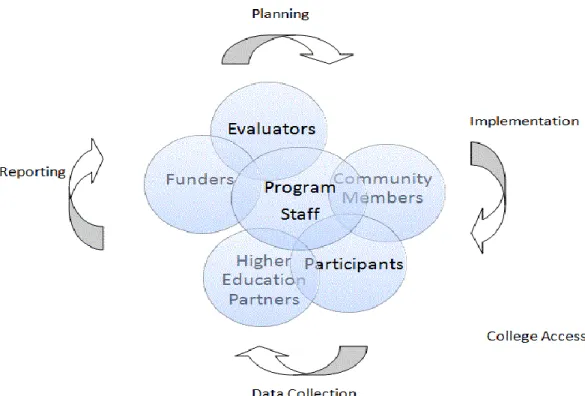
Figure 2. Collaborative evaluation approach for YMCAs ... 57 Figure 3. Collaborative evaluation of YMCAs in college
Position Statement
A longstanding history working with college access and educational opportunity programs acted as an impetus for this dissertation study. To start, in 2005 as a national liaison with educational opportunity programs, the researcher became intimately familiar with the aftermath of the national evaluation study on the effectiveness of Upward Bound programs conducted by Mathematica. In fact, the repercussions of such negative publicity and experiences with evaluation led many local constituents to resent evaluation and its uses. Fast forward two years later, as the Deputy Director for a national college access program, much of the evaluation work conducted for the national initiative was done through an external consultant who had several years’ experience working in research and higher education. The work alongside the evaluation consultant sparked the research and evaluation interest of the researcher. That said her evaluation methods were extremely relevant,
responsive, and inclusive of program staff as well as of the local constituents.
Since those initial evaluation experiences, the researcher has worked in an evaluation office under the leadership of a modern trailblazer in the field of responsive evaluation, Dr. Rita O’Sullivan who uses the collaborative evaluation approach and has done so for the past
15 years. Her work and training have supported the researcher as a graduate assistant through four years of doctoral studies. It is precisely this experience with responsive evaluation methods that has led the researcher to utilize these methods in her professional work as an external evaluator. The decision to conduct her dissertation research on evaluation was a way to understand the impact of Dr. O’Sullivan’s collaborative evaluation approach and methods on a multisite project coupled with the researcher’s ongoing interest in college
As lead research assistant during the evaluation work conducted with the YMCA Higher Education Service Project, the researcher had an internal, participant perspective with the evaluation conducted and thus the research being studied. Her supervisor, advisor, and mentor was Director of the external evaluation project and thus, also had a participant perspective with the project. Under her leadership the team used the collaborative evaluation approach that had been used previously on numerous projects.
Though it is clear that many other evaluation methods exist, in her own evaluation work, the researcher has chosen to use responsive evaluation methods. These methods
include cultural responsiveness, collaborative evaluation approaches, and evaluation capacity building strategies to assist programs and organizations in understanding the role and uses of evaluation to program development and implementation. Therefore, professional experiences with more traditional distanced methods are limited. This dissertation work is an attempt to engage her journey as an evaluator and to make sense of professional experiences in responsive evaluation frameworks and their impact on program constituents.
Chapter 1: Introduction
1.1 Background
Studying the effects of program evaluation on organizations is not a novel concept. It has been studied in the context of its utility as well as in its role in relation to capacity building from the perspective of organizational development (Patton, 2008; Weiss, 1997). For over 30 years evaluators have been addressing the desire for programs to make greater use of
evaluations, to increase program impact and expand their influence (Alkin & Taut, 2002; Henry & Mark, 2003; Kirkhart, 2000; Patton, 2008). Although there are several working definitions, Patton’s (2008) definition of program evaluation speaks to its role coupled with
its use:
Program evaluation is the systemic collection of information about activities, characteristics, and results of programs to make judgments about the program, improve or further develop program effectiveness, inform decisions about future programming, and/or increase understanding. (p. 39)
This definition focuses on collecting evaluation data that are intended for use in program improvement and decision making. This perspective of creating evaluation for the purpose of its use is the common thread for alternative approaches like utilization-focused, participatory, empowerment, and collaborative evaluation. According to Alkin’s Evaluation Theory Tree (2003), these four approaches are all considered smaller branches on the major branch focused on “Use” in evaluation. Where the origins of the tree typify the work of the government in terms of a focus on accountability and control, the alternative approaches, as they will be called here, focus on how and who will use the evaluation.
evaluators maintain control, have no goals of control, or resist control in the evaluation process (Cousins & Earl, 1995; Fetterman, 1997; O’Sullivan, 2004). There also seem to be subtle differences in the level and types of stakeholders engaged in the evaluation.
As such, the engagement of stakeholders in the evaluation process as a means of increasing evaluation use is key. Specifically, the collaborative evaluation approach strategically engages stakeholders throughout the process, where it is not just the
participation that matters but the facilitation of such collaboration in all aspects to the level the stakeholder is capable that drives the work (O’Sullivan, 2004). Collaborative evaluation is still growing in the field and as such benefits from studies that focus on its use in particular programmatic and organizational contexts (Rodriguez-Campos, 2012).
Because the researcher’s formal education and work experience are in higher
through this initiative has afforded them several other opportunities to obtain funding and expand their college access services on a national level. In addition, the role of evaluation in this program development process aligns with the tenets articulated in the collaborative evaluation concept.
Although a nationally organized effort with headquarters in Chicago, Illinois, local YMCAs are non-profit organizations funded by grants and membership fees and led by local executive boards. Each YMCA association varies in size, employees, and budget. Another factor separating YMCAs is whether they are traditional or non-traditional. Traditional YMCAs are gym-based centers with efforts to promote healthy living through activities, workshops, and trainings. Another strong area of focus includes youth development. For traditional YMCAs, children and youth are incorporated into the facility through childcare, camps, and swimming. Non-traditional YMCAs focus on student-centered activities that generally relate to self-esteem and leadership development. For example, university YMCAs are housed on college campuses with a specific objective to engage students in service leadership. Regardless of the projects, general oversight of YMCA program planning and evaluation is conducted through program staff under the supervision of CEOs and board members.
This study uses multiple sources for data collection to address the influence of
between evaluation and program processes, activities, and culture in community
organizations doing college access work. It also frames practical opportunities for pursuing program evaluation that focuses on program improvement in the broader college access community. The following sections detail the context and rationale under which this study operates.
1.2 Context and Rationale
Organizations conducting college access services have been around for over 40 years. For many of these organizations program evaluation has primarily been used for the purpose of obtaining and sustaining funding (Carmen, 2007). Thus, a focus on program evaluation as a way of improving program development and implementation is fairly new but necessary (National College Access Network [NCAN], 2012).
Essentially, this research seeks to explain how, if at all, collaborative evaluation influences participating community-based organizations to develop higher education
programs for students grades K-12. The researcher takes the collaborative evaluation concept popularized as a “stakeholder-centered” approach to program evaluation in the literature by O’Sullivan (2004; 2012) and uses it as the foundation upon which to develop a survey
transmission, and application drive program reflection and professional development and improvement (Patton, 2004). This claim should be further examined because knowledge management has been cited as a key to organizational development and change (Cummings & Worley, 2005). The use of collaborative evaluation embraces and supports human agency and the role of program staff in facilitating or hindering desired outcomes through their awareness, capacity, and interactions within their internal and external environment.
The researcher is interested in understanding how to enhance the influence of evaluation on programs doing college access work, especially given their cultural and
political history. Local community programs once held complete program control in terms of development, improvement, and evaluation where they were held accountable only to
community members and other stakeholders. Although positive on many fronts,
desegregation spun minorities (more specifically African Americans) into a perpetual cycle of mainstream-dominated perspectives of access (Shujaa, 1994; Symonette, 2004). Funding streams and oversight have allowed, and some may argue required, programs to marginalize these populations even further by minimizing and penalizing the role of stakeholder
engagement in programming and evaluation efforts (Johnson, Kirkhart, Madison, Noley, & Solano-Flores, 2008; O’Conner, 2010) and by using traditional evaluation methods
punitively (Scriven, 1990; Tyler, 1991).
considering the discourse of evaluation and program planning, the researcher seeks to bring program stakeholders’ ideas and voices to the field. To integrate participants into the evaluation plan for increased relevance and use, the study of collaborative evaluation hopes to expand options for programs to regain some control without sacrificing technical quality of their evaluation. Embedded case study profiles focusing on capacity, reflection, and improvement were analyzed in depth.
1.3 Significance of the Research
Implementing collaborative evaluation for college access programs and services involves understanding organizational culture, program structure, and community context. It involves engaging stakeholders from beginning to end of the evaluation process (Patton, 2008). It enhances evaluation use by maintaining open communication, building rapport, and ultimately considering the needs and perspectives of various parties involved in the program (O’Sullivan, 2004). From parents to policymakers, from staff to funders, stakeholders are key
to transformative program changes resulting in increased access, preparation, and capital for student participants. Alternative approaches to evaluation in college access work are shifting past understandings of the relationship between program implementation and evaluation. The collective work of evaluators and organizational development experts has yielded tangible change (Preskill, 1991; Preskill & Boyle, 2008; Flesher & Christie; 2009), and the field is ripe to create an even greater impact.
increase in dissertations, articles, presentations, and books highlighting the benefits of utilization-focused and stakeholder-engaged approaches, the real evidence is in the increased capacity and use of evaluations by program staff. Programs are becoming better equipped to understand and advocate for necessary program changes.
Such a transformation in program awareness and capacity to make decisions is based on the ability of stakeholders to reflect on their program through a lens of reality; Patton (1997) calls this “reality-testing.” Evaluation can facilitate a process of questioning and reflection on organization’s basic assumptions about itself and its culture, meanings, and structure (Preskill, 1991; Patton, 2004), which results in a stronger evaluation with more relevance to the program. The process itself of gathering and feeding back information can also impact individual and organizational behavior in other ways. This mere reflection inherent in the evaluation cycle has often been referred to as process use (Patton, 1997; Preskill, 1991; Weiss, 1997).
Conducting research on a multi-site collaborative evaluation study can provide the college access, not-for-profit, and evaluation fields with empirical data on the potential ways in which alternative evaluation might be beneficial or might fail to impact an organization in the implementation of program activities. Survey results from 61 YMCA organizations and interview data from five purposively selected local YMCA staff offers insight into effective strategies funders and organizations can promote to maximize the potential of evaluation use. In addition, by examining the impact of such a growing approach in the field, these data advance the understanding of stakeholder-engaged approaches in organizational contexts, particularly higher education access initiatives. Further, the insights gained can have
for changing how they currently operate. A possible outcome might be the increased value of alternative evaluation approaches as 1) evidence in measuring program outcomes, 2) building program capacity, and/or 3) improving program practices.
1.4 Research Questions
The overall purpose of this study is to explain how collaborative evaluation has influenced the YMCA during their program implementation of higher education service projects. The Higher Education Service Project is a pilot effort to incorporate college access work into existing YMCA program efforts. The study draws on a two-year evaluation commissioned by YMCA of the USA national program staff at the beginning of this pilot effort. To fulfill this purpose the following research questions have been identified:
1. How have the components of collaborative evaluation influenced program reflection, planning, and implementation on:
a. Program participants, activities, and outcomes.
b. Evaluation capacity of individuals within the organization. c. Organization culture (around evaluation?).
2. How are program stakeholders within the organization using evaluation? 3. What is the role of collaborative evaluation as implemented with 61 YMCAs in
Chapter 2: Literature Review 2.1 Introduction
College participation rates of the school-aged population in the United States reinforce the need for research that informs an understanding of college preparation for students and their families and ways in which it can be improved. Indeed, many students experience a lack of preparedness in terms of access to the necessary financial, academic, and social supports needed to enroll and persist through college, particularly underrepresented populations—which are predominately racial minorities, low-income, and first-generation students (Hooker & rand, 2009; Orr, Alc ntara, Frazier, Kalinka, & Kaplan, 2007).
These populations have been historically underserved in U.S. schools and as a result programs to promote college access have been funded from federal (HEA, 1965), state, institutional, and community sources to offer these services. College access encapsulates the programs and services provided by non-profits, community groups, foundations, and
institutions through which an individual gains the knowledge, skills, or support necessary for college aspiration, qualification, application, and enrollment (Cabrera, 2006). An increasing number of organizations are developing college access programs to reduce a 19.1% gap between students who participate in college from higher income families and those from low-income backgrounds and underrepresented populations (College Board, 2010; Mortenson, 2010; Nichols, 2010).
understanding effectiveness to improve program development (Bensimon, 2009). Traditional evaluations relied on to provide evidence of merit and worth are inadequate to truly reflect on programs doing college access services, subsequently students served, at their level of
implementation (Zulli & Frierson, 2004). Alternative evaluation approaches like collaborative (O’Sullivan, 2004), utilization-focused (Patton, 1997), empowerment (Fetterman, 2001), and participatory (Cousins & Earl,1995) offer program strategies to engage in the evaluation process that lead to an increased understanding of what does and does not work in their college access services. Few funders, however, require or even encourage this form of evaluation. Instead funders measure program effectiveness through required annual performance reports focused on monitoring data, including service statistics with total participant counts and budget reviews highlighting how the funds are being spent (GAO, 1998b). At times funders also might commission a third-party distanced evaluation to identify summative findings. When formative evaluations are included by programs to highlight how programs can improve on both process and immediate objective outcomes (Scriven, 1997; Shadish, Cook, & Leviton, 1991), they often lack local context. To conform to funders’ accountability requirements, programs will hire out evaluation services with limited reflection to its impact on program planning (Parrish, 2004).
Research demonstrates the increased challenges associated with program
Unfortunately for many college access programs, this level of reflection is difficult when it is an afterthought and staff is not a part of the evaluation process. To address this discrepancy in funder expectation and program feasibility, a presentation during the data and evaluation strand at the 2011 National College Access Network (Erisman, 2011).conference highlighted the following suggestions for funders:
Offer evaluation technical assistance as part of grant;
Consider grantees’ existing evaluation capacity in planning for assistance; Develop strategies to customize technical assistance to grantee need; Offer evaluation assistance early and often; and
Provide opportunities to share best practices with specific focus on evaluation.
These suggested efforts highlight the specific questions and concerns associated with college access work and its evaluation, which have not been clearly studied so far. First, due to its social and historical origins, evaluation of college access requires a particular cultural responsiveness to political and community agendas, so engagement of stakeholders is
essential. Second, college access services vary in format, content, and delivery; this variation poses a challenge to traditional evaluation methods that focus on preset common indicators. Third, program evaluation capacity has lots of variation, and part of working for program improvement is identifying the variation in readiness and meeting the individual needs of each program (O’Sullivan, 2004; Preskill & Boyle, 2008). This literature review addresses
Critical to the study of specific evaluative needs and challenges impacting programs offering college access services is understanding the social and historical contexts that evaluators and evaluation approaches must respond to in college access. Therefore this literature review will first define college access service and then provide context for how that translates into such wide variation in college access programming. Next, the literature review will discuss where evaluation currently fits with college access and those implications. Last, it examines how collaborative evaluation is situated as a feasible alternative to traditional approaches used for evaluating college access programs.
2.2 An Historical Perspective on College Access
This section offers both a social and historical context of programs providing college access services. The first part describes the beginnings of college access services in the field of higher education. In the second part, the author discusses the funding streams for these services, and the role of programs in delivery of those services is also addressed. This view of these services provides the context for how a collaborative evaluation approach may fit within college access implementation by understanding where the programs are situated in a larger paradigm.
2.2.1 College Access Beginnings
College access has its origins in academic preparation and workforce development. As a way to resolve issues related to poverty, war, globalization, technology, and
outsourcing, there has been increased effort to build a college-educated and skilled workforce (Parrish, 2004). Recent efforts in college access have focused largely on financial supports as tuition costs continue to rise and grant award amounts stagnate. Moreover, a review of
form of financial grants, social and cultural programs, college preparation services, marketing campaigns, and academic enrichment activities (Tierney, Corwin, & Colyar, 2005). Research shows that middle- and upper-income Caucasian families are participating in college at significantly higher rates than lower-income and minority populations (The
College Board, 2010). Capitalizing on opportunity costs, political and economic agendas began including funding efforts to support low-income, first-generation, and minority students to enroll in college. Consequently, organizational program efforts, undergone to increase access to postsecondary education, have targeted these marginalized populations.
College access services can be understood as the supports in place to eliminate or minimize specific barriers—financial resources, academic preparation, family involvement, college application, and cultural transition—to postsecondary enrollment for students. Provisions began nearly seven decades ago by institutions, agencies, and communities. During the post–World War II era enrollment in higher education surged due to the GI Bill and as separate educational facilities were deemed unequal. Thus, after declining slightly during the 1940s, the proportion of young adults with four-year college degrees grew dramatically in the 1950s, at an average annual rate of about 7.6%. Seeking ways to support states and workforce development, the federal government passed an Emergency Work Relief Act (Thelin, 2004). The grassroots effort by Minnesota to use federal funds intended for “work-relief” activity on a student program was one of the catalysts for the first program
to enrich student lives and provide greater access to higher education. The program soon became national and “aimed at keeping students off the labor market and had immediate
Although the past four decades show access efforts for underrepresented populations reflecting a mainstream agenda, historically those practitioners from within the targeted communities provided the implementation and development of these services (Arendale, 2002; Fullinwider & Lichtenberg, 2004; Thelin, 2004). For this reason, minority-serving institutions, community groups, and church leaders played a critical role in equalizing
educational opportunity in terms of access for poor people, minorities, and women (Brown & Bartee, 2007; Farmer-Hinton & Adams 2006). From within the community, there has always been a genuine interest in developing academically, socially, and financially responsible citizens who contributed to society via talent and skills (Howe, 1997). Moreover, program design, services, and implementation were based on the best interests of the community and its members. The community tied outcomes to reciprocity and thus in many ways program staff and community members were self-accountable in terms of evaluation. In fact, when universities did attempt college access services to boost enrollment at predominately white institutions, many failed due to lack of cultural responsiveness on the part of program developers (Thelin, 2004). This was a continuous struggle because the second Morril Act land grant allowed public funds for the establishment of higher education for Blacks when access for African Americans “lagged far behind that for whites” (Thelin, pg. 232).
The Civil Rights Act of 1964 had major implications on equal educational
opportunities, or the lack thereof, for blacks, minorities, women, and low-income families. Although there were many advocates for equal opportunity in education, spanning pre-K through college level, there were naysayers as well. Although many liberals saw
access to black schools and given proper social and cultural support to graduate. So though the 1960s experienced an influx in programs directed toward “at-risk” students, many
attempts to equalize educational attainment for these students failed due to its contentious beginnings, thereby reducing the pool of students eligible to attend college. These federally funded efforts of 1965 were the beginning of college access as known today.
2.2.2 Funding Streams
Federal support for compensatory education grew out of two legislative acts: the Elementary and Secondary Education Act of 1965 and the Economic Opportunity Act of 1964. The Elementary and Secondary Education Act established Title I programs, and the Economic Opportunity Act established the Upward Bound Program (as well as Head Start). Title I funding created what are now known as compensatory programs, supplemental instruction, or special education programs. Then, as now, these programs aimed to compensate for any existing or future deficits based on culture, income, language, or behavior problems (Hamovitch, 1997). Similarly, the Upward Bound (UB) program— trailblazer of TRIO programs (UB, Talent Search, and Student Support Services) and future college access programs—was created to alleviate the deficit among minority and low-income families in preparation for college, offering academic supports. The term “deficit” became disturbing to many blacks (and some whites) because it perpetuated a notion of intellectual, social, and cultural superiority by dominant whites in mainstream society. Now most programs claim the added value of cultural and social capital (Bourdieu, 1986) versus compensating for academic or cultural deficit.
own approaches to access and quickly rallied around the administration’s equal opportunity
efforts to expand access for all. These acts represented an attempt to address two major barriers to college for low-income students. The first of which, Heller (2002) stated, was “to ensure, at a minimum, that the decision of lower-income students to attend either a two-year or four-year public institution full time would not be unduly constrained by high unmet need and consequent necessity to work or to borrow excessively” (p. 8). The second is described
as an attempt to increase achievement levels and access to mainstream schools to address the perceived deficit in culture and academic preparation (Tierney et al., 2005). Today, these bills—economic- and educational opportunity–based—largely represent the conception of national college access programs and their services.
Grants were competitively awarded to state and local agencies that required them to partner with a local school, a community organization, and a university or college.
States like Florida and California created their own version of college access
programs, appropriating state monies to college access work. To show greater investment in issues of equity at the college enrollment level, Florida’s CROP (College Reach-Out
Program), Indiana’s 21st Century Scholars, and California’s CalSOAP (Student Opportunity
and Access Program) programs were supported by state and local legislators (Tierney et al., 2005) to increase access to colleges for students in their states. Private funders, however, also were investing in non-profit organizations to implement programs and services to expand access for low-income students and other underrepresented populations.
Other groups began distinguishing themselves from traditional access programs, working with students after class, on weekends, and/or in the summers. An example of this is Advancement Via Individual Determination (AVID). Initially created in the 1980s, it grew to more than 45 states in a span of 20 years. AVID’s role in access was unrelated to that of previously administered outreach programs. AVID wasn't a college outreach program. Its approach was to embed services and expectations within school culture and curriculum. The program’s approach to college access, which resembled more of a college preparatory
academy, still offered many of the same access services (i.e., financial aid and admissions counseling, tutoring, college visits) but required local- and district-level leadership and buy-in (About AVID, 2011).
low-income families, regardless of preparation, were still less likely to enroll in college and apprehensive about taking out student loans (Douthat, 2005). Those who did were largely thankful to college access staff for increased college and financial aid awareness, readiness, and preparation provided through their program (Engle et al., 2006). College Access
Programs were thriving—there was an exponential increase in the 1990s as student loan agencies were encouraged to provide educational services to underrepresented students. One of the largest state-led efforts was in Ohio with the Ohio College Access Network. The founders of the network expanded to Washington, DC, and incorporated a national
organization known as the National College Access Network (NCAN). Today, NCAN boasts a network of over 2500 college access programs, funded both privately and publicly, and has become a national coordinating body of organizations doing college access work. To be considered for entry as a college access program in their directory, programs must meet the following criteria:
Provide potential students with college access services beyond the listing and/or awarding of scholarships, grants or loans;
Provide students with advice about postsecondary admissions, financial aid, careers, etc.;
Serve more than 50 students each year;
Provide services on an ongoing basis (more than one or two days per year);
Offer services beyond those that are web-based;
Offer information about more than one institution of postsecondary education;
Provide basic services at no charge (nominal fees may be charged for such things as field trips, books and event tickets);
Have an annual budget of at least $50,000; and
Be classified by the Internal Revenue Service as exempt from taxes because the organization is a non-profit organization or a public entity. (Retrieved on March 15, 2012, from
Services provided to students vary from program to program, but most adhere to the stipulations described above. In spite of its controversial beginnings, there is consensus in higher education on the value of providing support services to increase college access (Goldstein, 2011). Most scholars even agree as to the spectrum of services that should be provided (Cabrera, A., Prabhu, R., Deil-Amen, R., Terenzini, P., Lee, C., & Franklin, R., 2003; Engle et al., 2002; Hayward, G.C., Brandes, B.G., Kirst, M.W., & Mazzeo, C., 1997; Pathways to College Network (PCN), 2004; Tierney, 2002; U.S. Department of Education, 1999). Yet, with the exception of protocols and mandates placed upon programs by funding agencies, how these services are delivered is determined by the program staff and/or
organization responsible. 2.2.3 Program Delivery
Several types of organizations conduct college access programming: federal initiatives, state education offices, universities and colleges, local community centers, schools, churches, loan affiliates, and foundations (Tierney, Corwin, & Colyar, 2005), often in partnership with one another. The variation in programming in large part is due to what and how college access services are delivered. Although among policy makers the term “access” has become synonymous with access to financial aid (Obama Speech, 2007),
program stakeholders still recognize the importance of comprehensive support services. Research on college access among low-income groups demonstrates that cost is one of the
greatest barriers but that life skills and academic skills are also critical, so many programs
offer supports in all three areas (McDonough & Gildersleeve, 2005; Swail, Redd, & Perna,
2003). Recent studies provide evidence that participants in programs that offer academic and
advanced courses, apply for financial aid, enroll in college, earn post- secondary degrees, and
find employment (Engle, ermeo, & O’ rien, 2006; Hooker & Brand, 2009). The delivery of
these services happens on many levels—a one-on-one format, group setting, and a hybrid of
both. Because the difference in program delivery influences costs, outcomes, and impacts,
funding agencies are increasingly interested in the value they get for their money.
Little research is available about how this variation in delivery is influenced by factors like staff choice, community, organizational structure, or mission (Zulli & Frierson, 2005). Instead, the focus has been on reporting services to participants and, to some extent, program outcomes. However, current research does highlight that underrepresented students respond positively to the degree of relationship they have with service providers, accuracy of information disseminated, and accessibility to academic resources (Engle et al., 2006).
One of the most problematic issues here is whether local program context and culture are reflected in the traditional evaluations done. The widespread variation surrounding who conducts these programs and how, considered as context in implementation, must be considered for any sound evaluation (Weiss, 1998). Program implementation is a dynamic process requiring a great deal of reflexivity and contextual understanding as plans are modified (Bisset, Daniel, & Potvin, 2009). The use of evaluation throughout this implementation process is the foundation for performance measurements and impact evaluation (Labin, 2011). Moreover, the use of impact evaluation without consideration of process and implementation accuracy is limited (Labin, 2011). By making evaluation more transparent and responsive, evaluators who use alternative approaches are trailblazers for the future in the new direction of client-centered evaluation (Labin, 2011). However,
is understandably challenging for most evaluators (Bisset, Daniel, & Potvin; 2011). Theoretical framework, methodological program knowledge, historical climate, socio-cultural factors, and, of course, political systems must be considered and accounted for to understand program processes, outcomes, and impact (SenGupta, Hopson, & Thompson-Robinson, 2004). Therefore, evaluators adopting a collaborative approach or similar
empowerment approaches that use ongoing open communication and strategic engagement in the evaluation cycle are better equipped to increase familiarity and framework for the
relationship of contextual variables to actual implementation strategies (Miller & Campbell, 2006). When embracing variation across multisite evaluations, knowing how context impacts program implementation, evaluation influence, and evaluation use throughout the process is not only beneficial but increases respondent validity (Labin, 2011; Lawrenz, King, & Ooms, 2011) and cultural validity (Kirkhart, 2000).
The next section will describe the role of program evaluation and, specifically, the
selection of collaborative evaluation for this national college access effort.
2.3. Program Evaluation 2.3.1 Competing Evaluation Approaches
There has been persistent tension among different evaluation approaches identified
with evaluation practices (Shadish, Cook, & Leviton, 1991), specifically among and between traditional and alternative evaluation approaches. Although traditional methodologists
suggest that for an evaluation to be sound, it should maintain a degree of distance, evaluators
using alternative approaches—utilization-focused, collaborative, participatory, and
empowerment methods—have noted that engaging the stakeholders is better to maximize use
Fitzpatrick, Sanders, & Worthen, 2004; Patton, 2008; O’Sullivan, 2004). Although similar in
their beliefs around increased stakeholder engagement, evaluation use, and capacity building,
alternative evaluation approaches vary by types and intensity of stakeholder involvement and
level of evaluator control and decision-making (Cousins & Whitmore, 1998; O’Sullivan,
2012). These differences manifest in the execution of the evaluation life cycle. In this study a
collaborative evaluation framework was studied.
Though many advances have been made in terms of interest, articles, and studies
using these collaborative methods (Rodriguez-Campos, 2011), much more research is
necessary, especially within college access, to capture the influence of evaluation findings
and techniques, specifically those using these alternative methods (King, 2006; NCES,
2001). Table 1, comparing the collaborative approach with a traditional approach, highlights
the stark difference in terms of methods and implementation.
Table 1.
Comparison of Traditional and Collaborative Evaluation Approaches
Traditional Collaborative
Stakeholder Involvement
Minimal participation; Maintain distance, engagement as needed
Collaboration throughout the entire evaluation process
Evaluation Design Priority placed on rigorous design and use of preset metrics
As rigorous as possible; dependent upon client needs and use
Evaluation Decision-Making
Always controlled by the evaluator; Adherence to funder bureaucracy and centralized structures
Negotiated; attempts to promote shared knowledge
Primary Claims Addresses the need for objective accountability and universal measures of effectiveness
Traditional or “distanced” evaluation approaches maintain distinct roles of control,
authority, and distance as it relates to evaluator, stakeholders, and evaluand. Traditional
evaluation has origins within an era of accountability. During this era, the role of evaluation
in identifying merit and worth were limited to quantitative measures focused on standardized
metrics without addressing issues of program context (Chouinard, 2013; Tyler, 1991). The
consideration of context was limited to planning decisions and based on the needs of funders
(Stufflebeam, 1971). In response to these shortcomings, responsive evaluation was initiated
as a means to address program needs and contexts by carefully engaging stakeholders in a
greater capacity (Stake, 1980). Collaborative evaluation is an offspring of responsive
evaluation in that it uses ongoing communication and stakeholder engagement in the
evaluation cycle including planning, data collection, instrument development, and reporting.
It does not claim to sacrifice rigor or the use of Guiding Principles for Evaluators (AEA,
2011) to do this but instead centers its design around program stakeholders and local context.
Regarding evaluation decision-making, collaborative evaluation negotiates evaluation
decisions with its stakeholders and attempts to promote an environment where authority and
power are minimized. In a different manner, traditional approaches determine that technical
expertise trumps participation and reinforce existing power structures (Chouinard, 2013). The
focus of traditional approaches to promote validity through standardized metrics and preset
indicators of success dictates why and how this approach is implemented. Alternatively,
collaborative evaluation focuses on the dynamic versus static nature of evaluation by
identifying program context and needs for evaluation in pre-activities, planning, and
capacity building, and evaluation use over time (O’Sullivan, 2012; Rodriguez-Campos,
2012).
Evaluations recognized as reputable scientific research within the realm of
educational programs are most often distanced evaluation approaches that focus on the use of
experimental designs (Chatterji, 2004) to evaluate program outcomes. A well-publicized example of such a distanced evaluation study was carried out by Mathematica (2004) on the Upward Bound Program. Upward Bound (UB), the first of six TRIO programs, provides high school students from low-income, first-generation family backgrounds with college access services through an extensive summer experience on a college campus over four years. The results of this expensive, multiyear investigation of the effectiveness of the oldest federally funded TRIO Program led to national debate and subsequent federal mandates that required Upward Bound programs to change their targeted population to focus more on students with below average grade point averages. The 1992–2004 commissioned national evaluation report of UB programs contracted by the U.S. Department of Education (DOE) came to a surprising and controversial conclusion that UB was ineffective. Understandably there was an outcry within the college access community about the findings and role of evaluation (Cahalan, 2009; Chaney, Muraskin, Cahalan, & Rak, 1997). The evaluation was criticized on numerous grounds including statistical measures, ethical procedures, and data collection practices (Meyers, Olsen, et al., 2004). One of the greatest concerns, relevant to
In the traditional vein, Mathematica evaluators and the DOE relied on a distanced
evaluation approach to minimize bias and maximize objectivity (Scriven, 1990) related to the
evaluation when they should have incorporated some aspects of program context (Meyers,
2004). Third-party distanced evaluations are common practice within the policy discourse of
grant-funded programs to ensure accountability of appropriated funds and advance political
agendas (e.g., No Child Left Behind). For example, throughout the HEA grant proposal for Upward ound accountability terms were used like “effectiveness,” “rigorous experimental
evaluation,” and “scientific research,” (HEA, 2008) and these terms align specifically with
those found in No Child Left Behind documents. However, the claims that evaluation is only
useful or valuable when done from a distance rests on the questionable assumption that there
is sufficient evaluation evidence available from a distance that ensures quality data and is
helpful for stakeholders. This is not supported by the previously mentioned Mathematica
study nor is it a proven tactic on school and community programs (Chatterji, 2004).
Moreover, fewer than half of non-profit program evaluations are conducted by third-party
evaluators (Fine, Thayer, & Coghlan, 2000) and many of those published with a focus on
college access services lack information on the use and involvement by clients in the
evaluation process (Constantine et al., 2006; Hollenbeck & Kimmel, 1996; Holton et al., 2006; Solageui, 2009; The Colorado Trust, 2004; Watt, Huerta, & Lozano, 2007).
A review of evaluation reports from national college access Web sites and portals—
JSTOR, ERIC, AERA, AEA, SIG, Program Planning and Evaluation and Education: Sage
Full Text Collection educational research databases—along with membership-based portals
and Web sites such as GEAR UP, Pathways to College Network, National College Access
well (Kane, 2004). Although evaluation studies exist that discuss the impact of collaboration
and cultural responsiveness in college access programs (Askew, Jay, & Greene, 2012; Zulli
& Frierson, 2005), publications on its program impact are still limited. More studies exist
that focus on the role of collaborative evaluation in program planning generally (Cousins,
Donohue, & Bloom, 1996; Jay, O’Sullivan & Costello, 2006; O’Sullivan, Skaga, &
Chernow, 2005). Hooker and Brand (2009) argued these limited results were justified
because rigorous evaluations (with quantitative measures) are more expensive due to their
greater quality and thus are not conducted often. Despite the controversial nature of such a
claim that rigor is based on experimental design, Chatterji (2004) demonstrated that to
capture the breadth and depth of information relevant to evaluation and program
implementation, there needs to be a greater effort to work with programs conducting these
evaluations.
Requirements by funders and policymakers on educational programs and
organizations with limited resources to commission or adhere to a third-party evaluation
service are taxing. First, evaluations are costly and programs (unconvinced of the benefit to
them) would rather use that money on services (Carman, 2007). Second, traditional
evaluation reports published seem punitive and less relevant to their program and are used to
measure effectiveness and impact rather than process and improvement. Fowler (2000)
discusses the need to use a mix of methods that encourage discussion and uncover
unexpected findings, Last, the focus of funders to support distanced evaluation as the “gold standard” for good evaluation leaves program staff to believe this is their only option if they
contract with an external evaluator where findings are sometimes controversial (Hooker &
A review of evaluation results by the American Youth Policy Forum (Hooker &
Brand, 2009) showed a strong level of program effectiveness measured as an increase in young people “who graduate from high school prepared to make informed decisions about
education and training and who are ready to succeed in college and careers” (p. v).
Alternately Thurston (2009) cited evaluation studies that showed minimal levels of increase
in participant outcomes compared to their control group counterparts. This discrepancy in
evaluation findings may have something to do with poor data quality and/or data collection
strategies as a result of minimal stakeholder involvement to validate contextual variables and
program fidelity.
Due to insufficient and inconsistent evaluation findings using traditional distanced
approaches, it is important to understand the factors that influence the likelihood of gathering
and using good evaluation data so that project outcomes are measured, processes are
improved on, and goals can be achieved. In the 1990s, program evaluators sought to
determine appropriate responses to these changing demands of accountability and to assess
program effectiveness with an increased need for quality data, flexibility, and usability
(Brandon, 1998). Unfortunately, limited research (although it’s growing) has been reported on the topic of the best methods for college access evaluations to achieve this. Rather,
funders must play more of a role in supporting the publication of evaluation efforts designed to minimize inequities and power systems (O’Connor, 2010).
To support efforts to reflect local program context and promote evaluation use,
researchers found that evaluations must engage stakeholders even within multisite
evaluations (Campbell & Mark, 2006). Specifically, evaluation studies of college access
improvement and greater staff reflection (Kirk & Day, 2011; Zulli & Frierson, 2004).
Multisite evaluations have a greater challenge to build evaluation engagement and capacity
within organizations (Lawrenz & Huffman, 2003). However, studies show the strategic use
of evaluation activities to create community and buy-in within the evaluation process—
technical assistance, use of technology, involvement of peer groups—is useful (Goodyear,
Lawrenz, King, & Ooms, 2011; Rogers, Ahmed, Hamdallah, & Little, 2010).
2.3.2 An Alternative Approach
Studies that reflect on and capture the development and actual experiences of college
access programs are scant (King, 2006). Even if there were somewhat of a consensus, the
variation in programs—community, capacity, funding, audience—would raise alarm for any
one-size-fits-all approach to evaluation. Flexibility is important within college access programs because the types and implementation of college access services vary greatly.
Therefore, YMCA programs, designed to address issues of access at various points in the
early and secondary years of student life, are at a lack for best practices. As the research
shows, the contention is not whether these services should exist but what variation lies in the
implementation of these services by program staff and how to evaluate such an effort so it
helps the program improve and holds them accountable to the necessary stakeholders.
Most not-for-profit organizations conduct program evaluation to measure the
funders to use evaluation to assist programs in assessing their outcomes for improvement in planning and implementation. This consideration on the role of evaluation in organizations doing college access allows programs to embrace aspects of evaluation that are necessary to identify what is working, what isn’t, and for whom. By highlighting only traditional
distanced approaches to evaluation, stakeholders were doing a disservice to the possibility of learning from programs about what evaluation can do for them aside from assessing their program outcomes.
By further examining the limited use and types of evaluation present in programs doing college access work, it’s suggested that alternative evaluation approaches like
collaborative evaluation offer programs an opportunity to exercise some program control by strategically engaging them in the evaluation process and building internal evaluation capacity (Baizerman, Compton, & Stockdill, 2002). This approach also boasts confidence in data quality and making the evaluation of greater use (O’Sullivan, 2004). Collaborative evaluation also lends itself to integrating contextually and culturally responsive practices (Fitzpatrick, Sanders & Worthen, 2004; Guba & Lincoln, 1985; Hopson, 2004). Despite critiques of uncertain objectivity and questionable advocacy agendas, if done correctly, its
palatability and strengthening of programs is irrefutable (Shadish & Cleminsky, 1997). These
types of claims coupled with the current political environment are the catalyst for increased
use of alternative approaches in evaluation of social programs (Brandon, 1998).
2.3.3 Collaborative Evaluation
Lawrenz, King, & Ooms, 2011). The emergence of approaches dependent on the participation of stakeholders—like collaborative, participatory, and empowerment
evaluation—was brought about by the largely unused nature of evaluations, those geared
toward the research community as audience instead of program staff and other decision
makers (Greene, 1986). Collaborative evaluation, as with other participant-oriented
approaches, was seen as one way to increase the use of evaluation results by engaging
stakeholders in the entire process (Patton, 1997). The evaluation literature has provided
various explanations as to what collaborative evaluation is and how it functions to enhance evaluation usefulness and data quality (O’Sullivan, 2004; Patton, 1997; Rodriguez-Campos,
2005). Although the details of the definition of collaborative evaluation differ from evaluator
to evaluator, there is a general consensus among them that collaborative evaluation
represents an approach to the evaluation process by which stakeholders are actively engaged (O’Sullivan, 2004). In addition, developmental elements through collaborative evaluation are
said to constitute a potentially viable means for building evaluation capacity and readiness
(Henry & Mark, 2003; Hoole & Patterson, 2008). The basic premise is that collaborative
evaluation is, in fact, developmental because it provides the necessary support and technical
assistance for programs to have a shared experience in the evaluation process at their level of readiness (O’Sullivan, 2012). Based on these ideas, we elaborate in the remainder of this
paper on the use of collaborative evaluation by outlining its roots and present uses.
Although having historically limited involvement in program activities, evaluation
can be both empowering and affect an entire system by incorporating new cultural attitudes,
organizational structures, decision-making models, and accountability methods (Fetterman,
expanded to include alternative evaluation approaches of participatory (Cousins &
Whitmore,1998), empowerment (Fetterman, 2001), collaborative (O’Sullivan, 2004;
Rodriguez-Campos, 2005), and utilization-focused evaluation. These recent additions to the
evaluation toolkit boast active participation by stakeholders, emancipating them by including
their voices in the evaluation process rather than suppressing them. To be clear, traditional
approaches may include participants at various points in the evaluation as well but these
particular approaches are explicit and systematic about when and how this participation is
taking place in an effort to increase use and usefulness to the program. Critics argue these
approaches are biased due to their engagement of stakeholders. However, it is becoming
widely accepted that although not always explicit, all evaluation is inherently political and
biased (Chleminsky, 1987).
Collaborative evaluation falls roughly in the middle of a continuum of alternative
evaluation approaches regarding evaluator control and flexibility in design in the evaluation
process. Empowerment orientation is the most often referred to as furthest left on the
continuum of evaluation participatory approaches, where full control of the evaluation is the
extreme participatory marker. With empowerment evaluation, the evaluators want to make
things better for vulnerable populations by “creat[ing] an environment conducive to the development of empowerment” (Fetterman, 2007, p. 182) by giving, if necessary, full control
of the evaluation back to its stakeholders. Alternatively, utilization-focused evaluation
(Patton, 1997) is the most practical participatory approach. Instead of requiring the
involvement of stakeholders to result in their gain in evaluation control, utilization-focused
evaluation considers the program being evaluated and factors such as the evaluation interests,
stakeholders. Participatory evaluation strategies, similar to collaborative evaluation, engage
stakeholders but may or may not do so in a less formal way.
Collaborative evaluation has a strong level of flexibility and adaptability to address
program variation. For example, similar to empowerment evaluation approaches,
collaborative evaluation can have a transformative aspect as part of its intended goal where it
aims to alter an injustice through its practice. Another option is for it to be primarily practical
in intention as is the case with utilization-focused evaluation. A primary difference is the
extent to which collaborative evaluation does not relinquish control of the evaluation but
instead relies on the shared experiences and knowledge base of program stakeholders to help
guide the methodology and intent.
Two unique conceptual models exist for evaluators seeking to understand and plan a
collaborative evaluation (O’Sullivan, 2004; Rodriguez-Campos, 2005). Rodriguez-Campos
(2005) created the Model for Collaborative Evaluation (MCE), which highlights the
necessary steps and strategies for actively engaging stakeholders throughout the evaluation.
Six elements comprise this comprehensive framework designed to give evaluators a guide for
interactive decision-making to promote a collaborative evaluation. Those components are:
(1) identify the situation, (2) clarify the expectations, (3) establish a shared commitment, (4)
ensure open communication, (5) encourage best practices, and (6) follow specific guidelines.
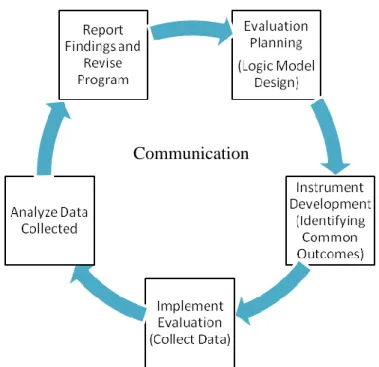
The next model, (shown in Figure 1), put forward by O’Sullivan (2004), described the
collaborative evaluation in terms of a four-stage cycle, connected and enhanced by the
communication back and forth with program stakeholders.
According to O’Sullivan (2004), the collaborative evaluation cycle is iterative and
evaluation experience (O’Sullivan & D’Agostino, 2002; O’Sulivan, Skaga, & Chernow,
2005) using this approach and a review of the evaluation literature O’Sullivan discovered
that though collaborative evaluators should facilitate this cycle, programs will vary in their
involvement at each stage based on their own organizational readiness and that evaluation of
the program should not suffer because of it.
Figure 1. Taken from O'Sullivan (2004) Collaborative Evaluation Cycle.
O’Sullivan (2004) and Rodriguez-Campos (2012) make the claims that by using a
collaborative evaluation approach, meaning systematically engaging stakeholders at each
step in the collaborative evaluation and adhering to basic evaluation principles, the
evaluation can lead to positive outcomes for program work: Increased evaluation competence
Increased use of evaluation in program work Increased program awareness
Increased data quality
Collaborative evaluation is considered both an approach and a developmental process
that can help programs respond to and assess internal and external changes in program
environments (Henry & Mark, 2002). Moreover, regardless of the evaluation approach taken,
excellence in evaluation should outline the extent to which outcomes are met, determine the
quality of service, and identify areas for improvement. Thus, maintaining communication and
transparency throughout the evaluation process for both evaluator and stakeholder, as
prioritized in collaborative approaches, helps ensure shared understandings and meanings
relevant to the program evaluation. For example, where traditional uses of evaluation in a
formative process is to make judgments based on prescribed goals and objectives and to
question how best to accomplish those goals, collaborative approaches allow the program to
develop their own goals and objectives based on local social and cultural program contexts
and focuses on formative information that will improve the program (Chouinard, 2013). In
essence, the strategic interaction throughout implementation makes collaborative evaluation
part of the program development process (Patton, 1997). As a result, the use and
development of tools, identification of sampling procedures, and analysis of findings reflect
the actual program practices and contexts, which increase data quality (O’Sullivan, 2004).
Cultural validity of data is also heightened by the engagement of stakeholders in the
evaluation process (Kirkhart, 2005). A shortcoming of distanced approaches, Collaborative
evaluation allows for the cultural responsiveness to manifest in the evaluation process
(Askew, Jay, & Greene, 2012), a shortcoming of most distanced approaches. Without
sacrificing evaluation data quality—technical and contextual—a good collaborative approach
builds rapport and offers necessary support to programs as they interpret and make sense of
funders, college access programs can draw on their past prior to desegregation and exercise a
level of self-accountability as well.
Where distanced evaluation approaches may seem useful for college access
policymakers and funders due to its focus on program effectiveness and summative findings,
empowerment evaluation is most useful to address the concerns of college access participants
and staff regarding the historical and social situatedness of power dynamics and control for
these the populations served. The program staff and other stakeholders become their own
evaluators in an effort to develop self-reflection and program improvement (Fetterman,
1996). However, funders may believe the evaluative information received through program
stakeholder control of the evaluation is less reliable or of poor quality. As a point of
agreement, collaborative and empowerment approaches share similar processes of engaging
stakeholders as data collectors, analyzers, interpreters, and reporters to build their evaluation capacity (O’Sullivan, 2012). In many ways a middle ground between distance and
empowerment, collaborative evaluation works to equalize the power dynamics in evaluation
and assist programs to gain awareness and understanding of their program, but it always
prioritizes evaluation quality by never relinquishing total control.
Prior evaluation of college access programs may argue that evaluations do not need to
be used to fulfill their purpose. Instead, they may be driven by other needs and desires of
accountability or knowledge rather than focused on program improvement and development
(Chelimsky & Shadish, 1997). It is true that collaborative evaluation solicits use where other
traditional approaches do not. However, it is a mistake to assume that ideas of accountability
and use are in any way mutually exclusive. It should be equally important to policy makers