Chapter 10
Interpersonal Skills
Chapter 10
Interpersonal Skills
•
Section 10.1
Personal Strengths and
Interpersonal Skills
•
Section 10.2
Working Together: Leadership
and Teamwork
•
Section 10.1
Personal Strengths and
Interpersonal Skills
•
Section 10.2
Working Together: Leadership
Personal Strengths and
Interpersonal Skills
Objectives
• Recognize the personal traits necessary for
ethical action in the workplace
• Identify important interpersonal skills
• Perform effectively in diverse environments • Manage conflict by using appropriate
negotiation skills Key Terms self-esteem initiative time management assertiveness flexibility ethics equity negotiation empathy
Marketing Planning
Graphic Organizer
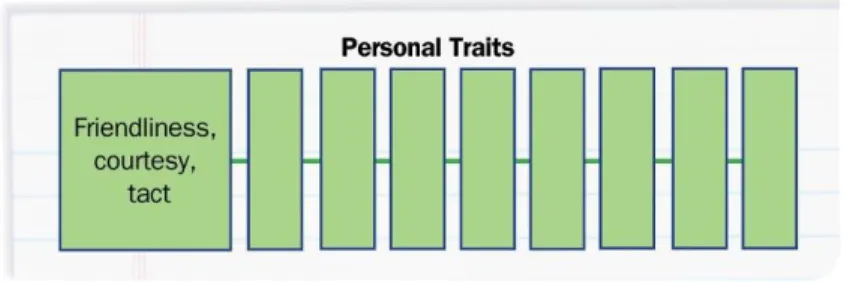
In a chart like this one, write down the personality traits and interpersonal skills that are important in good working relationships.
Building Personal Strengths for
Good Working Relationships
Successfully interacting with others depends on many factors, including:
• A positive self-image
• Understanding the rules of acceptable behavior • Awareness of the different socio-cultural
backgrounds of your coworkers
Self-Esteem and Self-Awareness
Self-awareness is how you perceive yourself. Self-esteem is how you perceive your worth or
value as a person. Having self-esteem is necessary because it allows you to believe in yourself and
improves your attitude at work.
Positive Attitude
Your attitude is your mental outlook, which shapes the way you view people and situations. People with a positive attitude welcome a difficult
assignment as a challenge.
Initiative and Responsibility
Initiative X means taking action and doing what
needs to be done without being asked. Accepting responsibility means being willing to be held
accountable for your actions. initiative
The process of taking action and doing what needs to be done
without being asked.
Self-Control
Self-control in the workplace allows you to stop and analyze a situation before reacting to it. People
who cannot control themselves tend to be perceived as:
• Overly emotional • Irresponsible
• Inattentive
Creativity
Creativity is the ability to use the imagination to invent. It is used in marketing to think of new
products and new ways to present products, as well as finding new ways to do your job.
Time Management
Time management X means budgeting your time
to accomplish tasks on a certain schedule. It involves:
• Establishing goals and setting deadlines • Allocating enough time for each task • Being realistic
time
management The process of budgeting time to accomplish tasks on a
certain schedule.
Time Management
To manage your time, follow these guidelines:
· Make a list of the tasks you need to complete.
· Determine which task is most important considering the time frame you have.
· Continue to rank the tasks.
· Create a schedule based on your list.
Stress Management
Stress is a mental or
physical reaction to outside pressure. Three main
elements may help prevent stress:
• Regular exercise • A balanced diet • Enough sleep
Assertiveness
Assertiveness X is standing up for what you
believe. You should be ready to support your ideas to people who disagree with you in the workplace, and you must do so in a professional and respectful way. Support your claims with valid evidence.
assertiveness
Standing up for what you
believe.
Flexibility
Flexibility X allows you to adapt to changing
circumstances. A flexible person can:
• Learn from others • Accept criticism • Grow
flexibility
Behavior that allows you to adapt to
changing
circumstances.
Ethics in the 21st Century
Workplace
Ethics are the basic values and moral principles that guide the behavior of individuals and groups. Ethical behavior includes:
• Honesty • Integrity
• A sense of fair play
Honesty
Honesty in the workplace includes:
• Telling the truth
• Maintaining confidentiality • Not spreading gossip
• Respect for company property • Making an effort to prevent theft
Respect
When speaking to business clients, customers, or coworkers, the number one rule is to show respect. You demonstrate respect by:
• Listening with an open mind.
• Addressing any differences of opinion with
courtesy and tact.
Fairness and Equity
Equity X means that everyone has equal rights and
opportunities. Equity is protected by both federal and state laws to prevent discrimination in such procedures as hiring and firing.
It is important to become aware of prejudices you may have and to eliminate them.
equity
The concept of equal rights and opportunities for everyone.
Managing Conflict
Conflict in the workplace can be productive or counterproductive. Managing conflict requires:
• Understanding • Skill
• Knowledge • Experience
Conflict and Negotiation
Negotiation X is the process of working with the
parties of a conflict to find a resolution. It requires a willingness to work together. There are four basic skills in the communication process:
• Listening and reading • Speaking and writing
negotiation
The process of working with different parties to find a
resolution to their conflict.
Conflict and Negotiation
The first step in negotiation is defining as clearly as possible the problem as each person sees it.
Listening is an active process in which all of your attention is focused on the speaker. Try to
empathize. Empathy X is an understanding of a
person’s situation or frame of mind. empathy
An understanding of a person’s
situation or frame of mind.
Conflict and Negotiation
Six simple techniques for negotiating conflict resolution can be helpful:
• Show respect and be reliable
• Recognize and define the problem • Seek a variety of solutions
• Collaborate and preserve the relationship
Conflict and Negotiation
The problem is solved only when both sides reach a common understanding and agreement about what actions are to be taken.
SECTION 10.1 REVIEW
-Working Together: Leadership and
Teamwork
Objectives
• Discuss how to receive and handle customer
complaints
• Identify skills needed to be a good team
member and provide leadership
• Name six aspects of successful teamwork
Key Terms teamwork cross-training consensus agreement
Working Together: Leadership and
Teamwork
Graphic Organizer
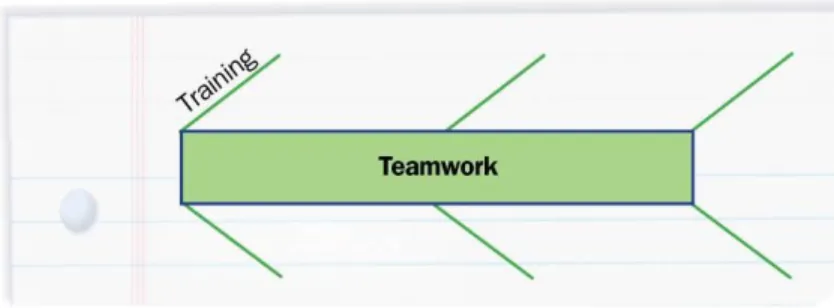
Draw the following chart. As you read this section, write in six aspects of good teamwork.
Interpersonal Skills in Marketing
Good working relationships between employees and customers or clients depend on the interpersonal skills of the employees. Become familiar with your company’s basic procedures for responding to
customer concerns.
Addressing Customers’ Concerns
To respond promptly and intelligently to customer concerns, you should know how to handle many situations:
• Requests and questions • Requests for directions
Addressing Customers’ Concerns
• Management’s role • Business policies
Addressing Customers’ Complaints
Complaints cover a range of issues. You can follow these basic guidelines when handling a complaint:
• Take the customer aside and listen • Repeat
• Get help
• Establish a plan
Teamwork
Teamwork X is work done to achieve a common
goal. Six aspects of teamwork are:
· Training and team planning
· Team goals and assigning roles
· Agreements
· Shared responsibility and shared leadership teamwork
Work done by a group of people to achieve a common goal.
Training
Cross-training X means preparing to do many
different activities so you can be flexible as an employee.
cross-training
A process that prepares a team member to do many different activities.
Team Planning
Team planning involves setting goals, assigning roles, and communication.
Team Goals
Common goals encourage commitment within a team, and members should reach a consensus X
about the goals. A consensus is a decision on which all team members agree.
consensus
A decision on which all
members of a team agree.
Assigning Roles
Team projects work more smoothly if a team leader who can coordinate the tasks is appointed.
Members are assigned roles based on skills and experience.
Agreements
An agreement X is a specific commitment that
each member makes to the group. A team’s agreements must be consistent with its goals. agreement
A specific
commitment that each member makes to the group.
Shared Responsibility and
Leadership
Shared responsibility and shared leadership mean that each member must feel responsible for the whole team’s efforts. If this is accomplished, each member will:
• Have a greater appreciation for management • Be more empowered
Leadership Skills
Good leaders need these skills:
• Problem-solving • Social judgment • Communication
Leadership Skills
Problem-solving skills include:
• Being able to define the problem • Gathering information
• Analyzing the problem
• Generating plans for a solution
• Setting long- and short-term goals
Leadership Skills
Good leaders must understand people from diverse backgrounds and help them work together to
resolve conflicts.
Leaders need communication skills to communicate their vision to others and be sensitive to their
motivations and needs.
Being a Valuable Team Member
Valuable attitudes and actions include:
• Make the team’s goals your top priority. • Listen actively and offer suggestions.
• Build positive group dynamics with team
members.
• Communicate with team members outside
meetings.
Being a Valuable Team Member
• Follow up on your assignments.
• Work to resolve conflicts among team members. • Respect the other members of your team.
• Try to inspire other employees to get involved.
SECTION 10.2 REVIEW
-Section 10.1
• Good interpersonal skills are necessary for
building effective working relationships with coworkers and clients.
• Personality traits such as assertiveness and
creativity help people work effectively with others.
Section 10.1
• Ethical behavior in today’s workplace involves
demonstrating respect for people of diverse backgrounds.
• Conflict negotiation requires good communication
skills.
Section 10.2
• Teamwork means a group of people work together
toward a goal.
• Understanding the team goals, the roles assigned
This chapter has helped prepare you to meet the following DECA performance indicators:
• Foster positive working relationships. • Participate as a team member.
• Demonstrate honesty and integrity. • Persuade others.