JOURNAL OF SOCIAL WORK &
SOCIAL DEVELOPMENT
DEPARTMENT OF SOCIAL WORK
Visva-BharatiSriniketan-731236, W.B Volume 10, Number 02, 2019
DEPARTMENT OF SOCIAL WORK
Visva-BharatiSriniketan-731236, W.B Volume 10, Number 02, 2019
JOURNAL OF SOCIAL WORK &
SOCIAL DEVELOPMENT
© Copyright 2019 by Department of Social Work, Visva-Bharati
The material printed in this journal should not be reproduced without the written permission of the Editor. The statements and opinions contained within this publication are solely those of the contributors and not of the Editor or Department of Social Work, Visva-Bharati.
For more information about subscription or publication, please contact: Professor Prasanta Kumar Ghosh
Department of Social Work Visva-Bharati
Sriniketan-731236 Birbhum, W.B., India.
Email: [email protected]
JSWSD is a bi-annual refereed journal to publish original ideas that will promote issues pertinent to social justice, well being of individuals or groups or communities and social policy as well as practice from development perspectives. It will encourage young researchers to contribute and well established academics to foster a pluralistic approach in the continuous efforts of social development. JSWSD is a UGC approved journal (Category: Social Science - all, SI. No. 1112, Journal Number - 47298).
Associate Professor, Visva-Bharati, Santiniketan Editorial Assistance:
Paramita Roy Editor
Prasanta Kumar Ghosh Professor, Visva-Bharati, Santiniketan Editorial Advisors:
Surinder Jaswal B. T. Lawani Sukladeb Kanango Sonaldi Desai
Professor, Tata Institute of Social Sciences, Mumbai Director, Bharati Vidyapeeth University, Pune Retired Professor, Visva-Bharati, Santiniketan Professor, University of Maryland, USA Editorial Board:
P. R. Balgopal Monohar Pawar Niaz Ahmed Khan D. Rajasekhar Rama V. Baru Swapan Garain Kumkum Bhattacharya Prof. Asok Kumar Sarkar Debotosh Sinha
Professor Emeritus, University of Illinois, USA Professor, Charles Stuart University, AU Professor, University of Dhaka, Bangladesh Professor, ISEC (Centre of Excellence), Bangalore Professor, JNU, New Delhi
Former Professor, TISS, Mumbai Professor, Visva-Bharati, Santiniketan Professor, Visva-Bharati, Santiniketan Professor, Visva-Bharati, Santiniketan
Composed & Design by:
The Journal of Social Work and Social Development is a multidisciplinary publication completing its tenth year of bi-annual issues. The Journal has been accorded recognition by the UGC and it is placed in the CARE list. Over the years we have been institutionalizing the system of blind review and as a result the quality of the publications has improved substantially. My sincere thanks to Prof. Asok Kumar Sarkar for his help and assistance in bringing out this issue. We are indebted to Prof. Kumkum Bhattacharya for her encouragement and association with this journal and her active part in this publication. I am thankful to the members of the editorial board, reviewers and my colleagues of the department for their support and encouragement in bringing out this volume 10; issues 2 (2019). As communicated in the last issue the major challenge in the present scenario is printing of hard copies of the journal due to the paucity of funds. We have completed the e-versions of the journals; all the past issues are available on www.jswsd. visva-bharati.ac.in. This Volume 10, Nos. 2 (December 2019) contains 8 articles and one book review. We are happy to report that most of the articles included in this volume are based on primary data and the topics dealt with contains critical look into development initiatives and concerns from different parts of the country including one from abroad titled Land Use and Infant Mortality: Evidence from Sub-Saharan Africa.
Dr. Joyce Shim and Dr. Jacob Lesniewski of the School of Social Work, Dominican University in Chicago in their article ‘Land Use and Infant Mortality: Evidence from Sub-Saharan Africa’ investigates the relationship between agricultural land use and infant mortality in nineteen Sub-Saharan African countries from 1990 to 2012. The findings reveal that an increase in land use is predicted to reduce infant mortality and the results are significant throughout all model specifications. In addition to several research challenges, this paper discusses policy implications that may help increase land productivity and reduce infant mortality.
The cross fertilization of social value creation and revenue generation is the essence of the construct of their business models with the aim of social development. The present paper draws upon a broader research based on a case study of one such entrepreneurial actor in Karnataka, India addressing issues of women empowerment and social exclusion through community development work.
Professor Balwinder Singh Tiwana and Gurmeet Singh in their article ‘Factors Affecting Rural-Urban Migration with reference to Punjab slums’ endeavour to identify the reasons of migration of rural peasants, landless labourers or the unemployed who land up in the slums of cities where they may earn a living but because of their lack of skills and education they are not able to substantially alter their living quarters or improve the poor standard of living.
Dr. Digbijoy Pukhan in his paper the fieldwork training in social work in Indian context explored the present model of social work education which emerged in United States of America in 1898 as experiential learning through field education achieved mainly through the placement of students in social work agencies for concurrent practice learning. This model has been adopted by most Social Work Educational Institutions (SWEI) in India. The paper delves into the process of initiating the field education component of social work education in a newly established SWEI. In addition to elaborating upon the three stages identified in the course of the study, the paper highlights the challenges associated with implementing this process in locales where few social workers are available in social work agencies for supervision of concurrent practice learning.
explores the challenges and directions posed by Rabindranath Tagore for Social Work Professionals’. This article interprets Tagore’s poem which has been an inspiration for fraternity and universal brotherhood to the millions of people across the world placing it in the context of internalizing the values enshrined in the poem, ‘Where the mind is without fear…’ in Social Work practice and philosophy. His writings have inspired individuals and communities, including the marginalized and downtrodden to come out of their miseries and taking a journey leading to a life of dignity and self-respect. This paper attempts to touch upon issues related to community development in terms of empowerment, patterns of discrimination and social divide, appropriate methods of social work, ethical and reflective practice, and culminates with suggestions for social capital formation and effective social work practice. This article can be considered to be a contribution to the creation of indigenous literature and knowledge in social work in India.
‘Work Related Risks Factors-effect on health of employees in a multinational company in India’ by Mohammad Ehteshamuddin, and Dr. Vijayendra Gupta is an attempt to understand how increasingly health related problems among working class population has significant relation with adverse work conditions which further lead to the origin of many diseases. Key findings of this study will help the policy makers, public and private organizations to revisit their organizational policies and develop employee friendly organizational facilities.
Dr. Minaketan Behera in his article
explores the Scheduled Caste
communities of Odisha representing the most backward and disadvantaged
group in the vastly stratified caste-ridden Indian society. The paper
analyses several parameters to explore the social mobility that has
occurred in the scheduled caste population in Odisha and as to how
socio-economic changes are taking place in these communities in
terms of population, poverty, occupation, education, health, and basic
amenities. The observations suggest that there are positive changes in
socioeconomic parameters but that changed is not up to the expected
mark. Therefore, there is a critical need to reorient and focus the
approach to support the lesser privileged by providing qualitative
education and infusing among them the individualistic and moralistic
qualities to bring these downtrodden into the national mainstream.
work and social science practice. What is repeatedly underscored in each of the presentations is the value attached to questions of ethics in practice and learning and the urgent need to conduct more studies on the ground realities to build up an indigenous body of knowledge from which we may derive appropriate discourse, techniques and tools to effect change and empower individuals, communities to grow into meaningful social capital.
Where the mind is without fear and the head is held high; Where knowledge is free;
Where the world has not been broken up into fragments by narrow domestic walls; Where words come out from the depth of truth;
Where tireless striving stretches its arms towards perfection;
Where the clear stream of reason has not lost its way into the dreary desert sand of dead habit;
Land Use and Infant Mortality: Evidence from Sub-Saharan Africa . . . 1 Joyce Shim
Jacob Lesniewski
Factors Affecting Rural-Urban Migration: A Special Reference to Punjab Slums . . . 19
Balwinder Singh Tiwana
Placement of Students in Social Work Agencies: Experiences from newly established Social Work Educational Institutions . . . 44
Digvijoy Phukan
Effects of Work-Related Risk Factors on Health of Employees in Multinational Companies in India . . . 60
Mohammad Ehteshamuddin, Vijayendra Gupta
Navigating the labour market from the margins: A case study of youth from city slums of Mumbai . . . 73
P Gopinath Nandita Mondal
Social Enterprises Providing Sustainable Livelihood for Rural Women: A Business Model Canvas . . . 94
Roshni Yeshawanth Uday Kumar
“Where the mind is without fear and the head is held high …”: The Challenge posed by Rabindranath Tagore for Social Work Professionals . . . 113
Rashmita Ray Asutosh Pradhan Sasmita Patel
Development Indicators of Scheduled Castes in Odisha and Way forward. . . 128 Minaketan Behera
Saharan Africa
Joyce Shim1
Jacob Lesniewski
Abstract
This study investigates the relationship between agricultural land use and infant mortality in nineteen Sub-Saharan African countries from 1990 to 2012. All data have been collected from the World Bank. The findings indicate that an increase in land use is predicted to reduce infant mortality; the results are significant throughout all model specifications. In addition to several research challenges, this paper discusses policy implications that may help increase land productivity and reduce infant mortality.
Keywords: Sub-Saharan Africa, land, agriculture, infant mortality, health
Introduction
This study investigates the relationship between agricultural land use (share of arable land area as the percentage of land used for agriculture) and infant mortality (deaths less than one year of age) in Sub-Saharan Africa from 1990 to 2012. The nineteen African countries included in the research are Angola, Burkina Faso, Burundi, Cameroon, Cote d’Ivoire, Ethiopia, Ghana, Kenya, Lesotho, Malawi, Mozambique, Niger, Nigeria, Rwanda, Senegal, Sierra Leon, Tanzania, Uganda, and Zambia. It is noted that the 19 countries are chosen mainly due to the availability of data from the World Bank.
Given that the agricultural economies contribute to from 14% to 17% of gross domestic product (GDP) in Sub-Saharan Africa compared to only 2% in high income countries (World Bank), it is an important question whether effective arable land use is linked to infant health. In addition, while Africa has witnessed significant economic development over the last decades (World Bank), little scholarly attention has been paid to the specific effects of arable land use on infant wellbeing.
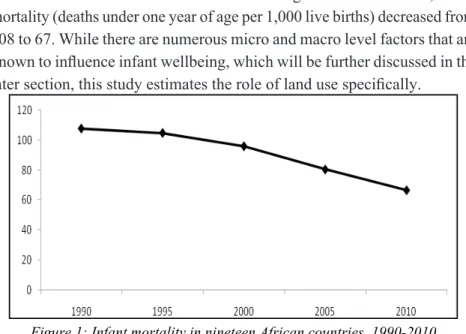
Figure 1 shows the dramatic decline in infant mortality in nineteen African countries over the last two decades. According to the World Bank, infant mortality (deaths under one year of age per 1,000 live births) decreased from 108 to 67. While there are numerous micro and macro level factors that are known to influence infant wellbeing, which will be further discussed in the later section, this study estimates the role of land use specifically.
Figure 1: Infant mortality in nineteen African countries, 1990-2010 Data Source: World Bank
Numbers are scaled per 1,000 live births
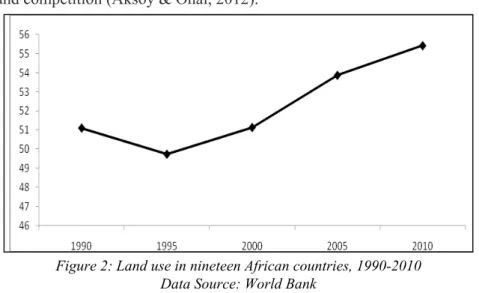
and competition (Aksoy & Onal, 2012).
Figure 2: Land use in nineteen African countries, 1990-2010 Data Source: World Bank
Numbers refer to the share of land area that is arable, under permanent crops, and under permanent pastures
Theory and Previous Research
Arable land is a productive asset of particular importance in developing nations where agriculture makes up a significant portion of economic activity. When that asset is used for activities that provide for basic needs for human lives, it is likely to improve infant mortality and other health indicators. The hypothesis, therefore, is that the more arable land is used for agricultural in the largely agricultural economies of the developing world, the lower the infant mortality rate is in those nations. This hypothesis stems from the fact that the agricultural economies take up from 14% to 17% of GDP in Africa, which is approximately eight times higher than those of developed countries as mentioned above (World Bank).
between land use and infant mortality, it is hard to explore more complex questions about relationships between land tenure, production technology, and types of agriculture product and infant mortality.
The lack of literature reveals limited discussion on the effects of land use on infant mortality or other measures of individual or public health. This is surprising, given the nature of agricultural production in the developing world on infant and maternal health in particular. The literature contains mostly mixed findings on the direct relationship between economic growth and reductions in infant mortality. For instance, Ferrarini and Norström (2010) indicated that while economic growth decreased infant mortality in the earlier part of the 20th century, the postwar period showed a zero or even a reversed correlation between economic development and child health in OECD countries. Pamuk, Fuchs, and Lutz (2011), on the other hand, found significant effects of both per capita gross national income (GNI) and secondary education completion at the country level on infant mortality in the underdeveloped world.
Direct cash transfers do reduce infant mortality in both OECD nations (Almond, Hoynes, & Schanzenbach, 2011) and nations in the developing world (Barnham, 2011; Rasella et al., 2013). Non-economic factors like water and sanitation access, indices of gender inequity, health infrastructure variables, changes in fertility patterns, and government programs like WIC (special supplemental nutrition program for women, infants, and children) in the US that directly support mothers and infants have been shown to have important roles in reducing infant mortality (Agha, 2000; Almond et al., 2011; Flegg, 1982; Morton-Ntenda et al., 2014; Trusell & Pebley, 1984). On the negative side of the ledger, economic crises such as droughts and famines are also important predictors of changes in infant mortality rates (Christian, 2010).
in infant mortality is largely due to policy and programmatic interventions on specific aspects of some of the factors mentioned above and that these interventions do not reduce the impact of more fundamental causes of infant mortality in the developing world.
The relationship between arable land use and infant mortality is important to explore empirically. How the productive asset of land is utilized and distributed is likely to have effects on a whole host of health, public health, and social welfare indicators in nations in the developing world. While it is beyond the scope of this project to examine the effects of land distribution on infant mortality, it is a worthwhile endeavor to understand how the percentage of land used for agriculture affects the health status and life chances of the most vulnerable members of any society.
Data and Method
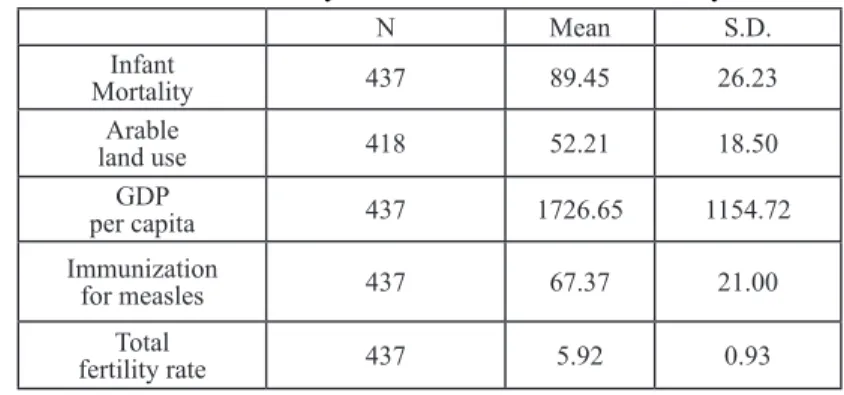
This study estimated the effects of arable land use on infant mortality in nineteen African countries from 1990 to 2012 using ordinary least squares (OLS) models. Table 1 provides the descriptive statistics for the variables used in this research. All data were retrieved from the World Development Indicators of the World Bank.2
Table 1: Summary of variables used in this analysis
N Mean S.D.
Infant
Mortality 437 89.45 26.23
Arable
land use 418 52.21 18.50
GDP
per capita 437 1726.65 1154.72
Immunization
for measles 437 67.37 21.00
Total
fertility rate 437 5.92 0.93
Female labor force
Participation 437 70.28 14.77
HIV
Prevalence 437 5.48 5.36
Undernourished
Prevalence 415 32.49 14.97
Anemia among
pregnant women 418 50.44 10.90
Food
Production 434 90.69 27.82
Data Source: World Bank.
- Agricultural land(independent variable): Agricultural land refers to the share of land area that is arable, under permanent crops, and under permanent pastures.3 All values are continuous.
- Infant mortality (outcome variable): Infant mortality rate is the number of infants dying before reaching one year of age, per 1,000 live births in a given year. All values are continuous and in the natural log (non-zero positively skewed).
This research analyzed the effects of arable land use on infant mortality including various control variables that can be closely related to the association between our independent and outcome variables (all variables are continuous): Real GDP per capita in thousands of purchasing power parity (PPP)-adjusted in 2011 international dollars. An international dollar has the same purchasing power over GDP as the U.S. dollar has in the United States;
Percent of immunization for measles for children under one year of age; Total fertility rate as the number of children that would be born to a woman if she were to live to the end of her childbearing years and bear children in accordance with current age-specific fertility rates;
Female labor force participation rate as the percentage of female population ages 15-64 that is economically active (defined by the International Labour Organization);
Prevalence of HIV as the percentage of people ages 15-49 who are infected with HIV;
Prevalence of undernourishment (also referred to as population below minimum level of dietary energy consumption) as the percentage of the population whose food intake is insufficient to meet dietary energy requirements; Prevalence of anemia among pregnant women as the percentage of pregnant women whose hemoglobin level is less than 110 grams per liter at sea level; Food production index which covers food crops that are considered edible and that contain nutrients; 4 and
Population density refers to population divided by land area in square kilometers. 5
GDP per capita is a universally used economic indicator for a country’s wealth, which may influence child wellbeing. As noted above, while some studies suggested that the direct effects of GDP per capita on infant mortality are unclear (Ruhm, 2004; Tapia Granados, 2005), others pointed out an association between increased GDP per capita and decreased infant mortality (Ferrarini & Sjoberg, 2010; Pritchett & Summers, 1996). Immunizations for measles can also be an important protective factor for a newborn, which may predict other child health outcomes (McCormick, 1985; Strully et al., 2010). Fertility rates were included because they are likely related to
4 Food production per capita index presents net food production (after deduction for feed and seed) of a country‘s agricultural sector per person relative to the base period 2004-2006. While edible, food with no nutritive value, such as coffee and tea are excluded (World Bank).
the number of deaths among newborns (Ruhm, 2000). Female labor force participation was taken into consideration because it can positively impact child wellbeing with an income, yet at the same time, it can prevent mothers from spending more time taking care of their infants (Tanaka, 2005).
Additional variables that are closely related to infant mortality were included, where data were available. For instance, factors such as HIV prevalence, undernourishment, as well as anemia prevalence among pregnant women were added. Next, the Food Production Index was incorporated as an additional control variable since it represents the overall agricultural productivity, which may have multiple implications (as a proxy) for the level of countries’ education and training in land use, land quality, technology and resource inputs (machinery, fertilizer, etc.), infrastructure (water system, transportation, etc.), and even weather and climate. Finally, the study incorporated population density given the correlation between population density and mortality rate especially for children under five; this is particularly relevant in the African context since population density influences the transmission of diseases such as diarrhea,measles, malaria, and acute lower respiratory infections (Root, 1997).
There are more variables to be included that impact infant health including early mortality rates. For instance, an expectant mother’s smoking and drinking can result in higher rates of early mortality rates and low birth weight (Chomitz, Cheung, & Lieberman, 1995; DiFranza, Aligne, & Weitzman, 2004; Frisbie et al., 1996; Lightwood, Phibbs, & Glantz, 1999). It is also reported that physically demanding work conditions for expecting mothers (e.g., long working hours and prolonged standing) can result in negative birth outcomes (Mozurkewich et al., 2000). Prenatal care (e.g., receiving advice on vitamin use and proper weight gain) as well as neonatal care in the early days of a newborn’s life are other factors that may influence infant mortality (Currie & Gruber, 1997; Kogan et al., 1994). Furthermore, breastfeeding greatly benefits child health (Chen & Rogan, 2004; Lawrence, 1997). The prevalence of HIV/AIDS among children under age one would also be an important variable to include in this research. However, sufficient data on these indicators are not available.
continuous) in 19 Sub-Saharan African countries from 1990 to 2012 using OLS models, including country fixed effects, year fixed effects, and country-time trend interactions to control for unobserved factors across countries and time periods.
Country fixed effects were incorporated in order to control for the specific fixed effects of each country over a time period. These country dummies were defined by dichotomous variables.
Year fixed effects were included in order to control for the specific fixed effects of each year for all countries. This set of year dummies was also defined by dichotomous variables for all years from 1990 to 2012.
Country-time trend interactions were added to control for country-specific time varying effect i.e., whether the effects of the country on the outcome depend on time, as well as whether the change of outcome with time depends on the particular country. For the country-time interaction variables, the researchers first tested for linear trends and compared the results to those of cubic models to see whether the time trend variations contributed to the effects of land use on the outcome.
Results and Conclusion
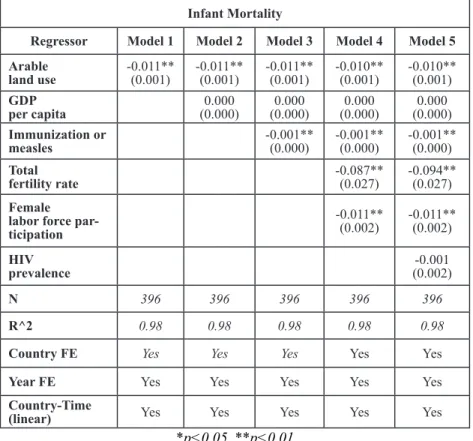
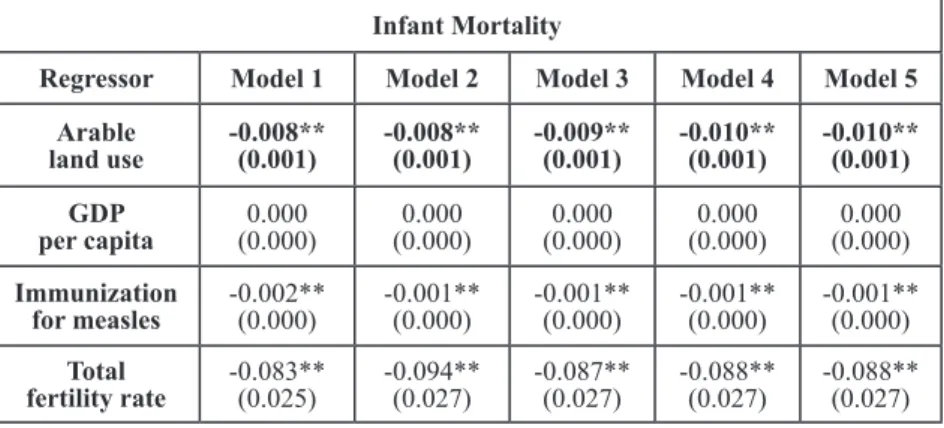
a slightly reduced 10% (p=0.000). Both fertility rate and female labor force participation have a negative association with infant mortality (p=0.001 and p=0.000, respectively). Finally, Model 5 with an additional health indicator, HIV prevalence, shows the same results as Model 4.
Table 2: Effects of land use on log of infant mortality in nineteen African countries, 1990-2012
Infant Mortality
Regressor Model 1 Model 2 Model 3 Model 4 Model 5 Arable
land use -0.011**(0.001) -0.011**(0.001) -0.011**(0.001) -0.010**(0.001) -0.010**(0.001) GDP
per capita (0.000)0.000 (0.000)0.000 (0.000)0.000 (0.000)0.000 Immunization or
measles -0.001**(0.000) -0.001**(0.000) -0.001**(0.000) Total
fertility rate -0.087**(0.027) -0.094**(0.027) Female
labor force par-ticipation
-0.011**
(0.002) -0.011**(0.002)
HIV
prevalence (0.002)-0.001
N 396 396 396 396 396
R^2 0.98 0.98 0.98 0.98 0.98
Country FE Yes Yes Yes Yes Yes
Year FE Yes Yes Yes Yes Yes
Country-Time
(linear) Yes Yes Yes Yes Yes
*p<0.05, **p<0.01
Numbers shown are coefficients (with standard errors in parentheses)
some of the sum of squares in general; however, the results are consistent in that there are positive effects of increased land use on reducing infant mortality. In both models, the prevalence of undernourishment is predicted to increase infant mortality by 4% (p=0.000.
In Model 3 with food production variables, the results indicate that a ten-percent increase in the share of arable land is predicted to reduce infant mortality by 9% (p=0.000). The prevalence of undernourishment again has a strong positive association with infant mortality; a ten-percent increase in undernourishment rate has significant effects on increasing infant mortality by 5% (p=0.000). In Model 4 with population density our results show that the effects of arable land are 10% reduction in infant mortality (p=0.000). Finally, Model 5 takes into consideration cubic time trends (for interactions for country and time) and compares the results to those from linear models to see whether the time trend variations contribute to the effects of land use on infant mortality. Our results still indicate that there are positive effects of land use on reducing infant mortality, and the effects are the same. A ten-percent increase in the share of arable land is predicted to reduce infant mortality by 10% (p=0.000). In conclusion, this research examines and confirms the positive effects of increased arable land use on reducing infant mortality in nineteen African countries from 1990 to 2012. While the effect sizes slightly vary across different model specifications, the overall results are consistent throughout all model specifications.
Table 3: Effects of land use on log of infant mortality in nineteen African countries including additional nutrition-related control variables, 1990-2012
Infant Mortality
Regressor Model 1 Model 2 Model 3 Model 4 Model 5 Arable
land use -0.008**(0.001) -0.008**(0.001) -0.009**(0.001) -0.010**(0.001) -0.010**(0.001) GDP
per capita (0.000)0.000 (0.000)0.000 (0.000)0.000 (0.000)0.000 (0.000)0.000 Immunization
for measles -0.002**(0.000) -0.001**(0.000) -0.001**(0.000) -0.001**(0.000) -0.001**(0.000) Total
Female labor force
partici-pation
-0.009**
(0.002) -0.008**(0.002) -0.009**(0.002) -0.009**(0.002) -0.009**(0.002)
HIV
prevalence (0.002)-0.001 (0.002)-0.001 (0.002)-0.001 (0.002)-0.001 (0.002)-0.001
Undernour-ished preva-lence
0.004**
(0.001) 0.004**(0.001) 0.005**(0.001) 0.005**(0.001) 0.005**(0.001) Anemia among
pregnant women
0.003
(0.003) (0.003)0.003 (0.003)0.004 (0.003)0.004 Food
produc-tion (0.000)0.000 (0.000)0.000 (0.000)0.000 Population
density (0.000)0.000 (0.000)0.000
N 396 396 396 396 396
R^2 0.98 0.98 0.98 0.98 0.98
Country FE Yes Yes Yes Yes Yes
Year FE Yes Yes Yes Yes Yes
Country-Time
(linear) Yes Yes Yes Yes Yes^
*p<0.05, **p<0.01
^Cubic time trends are used in Model 5.
Numbers shown are coefficients (with standard errors in parentheses)
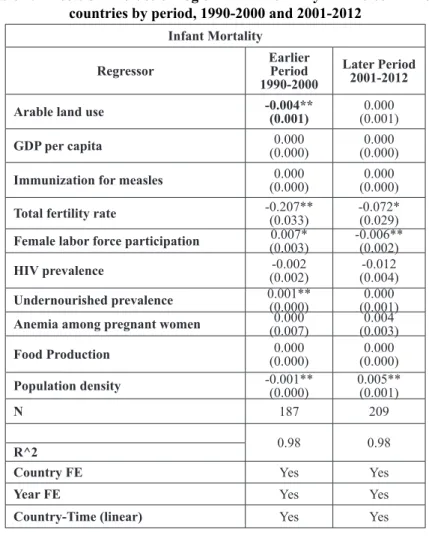
Table 4 presents the results showing the effects of land use on infant mortality by period - the earlier period (from 1990 to 2000) and the later period (from 2001 to 2012). This is to investigate whether the effects of land use differ between the two periods given that most Sub-Saharan countries implemented agricultural policy reforms in the late 1980s and the 1990s for higher levels of productivity and competition (Aksoy & Onal, 2012).
from 1990 to 2000. On the other hand, the results indicate that there are no significant effects of land use on infant mortality in the later period—from 2001 to 2012. This suggests that the larger effects of land use on reducing infant mortality are found in the earlier period.
Table 4: Effects of land use on log of infant mortality in nineteen African countries by period, 1990-2000 and 2001-2012
Infant Mortality
Regressor Earlier Period 1990-2000
Later Period 2001-2012
Arable land use -0.004**(0.001) (0.001)0.000
GDP per capita (0.000)0.000 (0.000)0.000
Immunization for measles (0.000)0.000 (0.000)0.000
Total fertility rate -0.207**(0.033) -0.072*(0.029) Female labor force participation (0.003)0.007* -0.006**(0.002)
HIV prevalence (0.002)-0.002 (0.004)-0.012 Undernourished prevalence 0.001**(0.000) (0.001)0.000 Anemia among pregnant women (0.007)0.000 (0.003)0.004
Food Production (0.000)0.000 (0.000)0.000
Population density -0.001**(0.000) 0.005**(0.001)
N 187 209
0.98 0.98
R^2
Country FE Yes Yes
Year FE Yes Yes
Country-Time (linear) Yes Yes
*p<0.05, **p<0.01
Numbers shown are coefficients (with standard errors in parentheses)
Research Challenges and Policy Implications
did not include all of them, mainly due to the lack of data. In addition, it is important to further explore how unexpected life-threatening events, both natural and man-made, such as epidemics/diseases, droughts/floods, civil wars, and genocides affect infant wellbeing in some of the African countries. For example, in 1994, during the Rwandan Genocide more than 67% of women who were raped were infected with HIV and AIDS, and survivors of rape often passed the infection on to their children (Amnesty International, 2004). In 2011, the lack of rain in East African countries, including Kenya and Ethiopia, led to the crop failure and livestock depletion, which increased prices of goods (Stigter & Ofori, 2014). Water pollution due to overcrowding and poor drainage and sewage disposal systems also threatens the livelihood of many families and children in East Africa (World Health Organization, 2004).
Despite some of the challenges mentioned, this study provides important policy implications. The findings indicate that increased agriculture land use overall has positive effects on reducing infant mortality. Therefore, if our goal is to reduce infant mortality in African countries, among many social, economic, and political factors, the research should also perhaps consider how to increase agricultural land use and possibly boost its arable productivity in both the short and long term. Agriculture-related investment in families and communities via education, training, and basic provision for resources to farm and harvest, may be further developed.
countries implemented numerous agricultural policy reforms to increase productivity and competition (Aksoy & Onal, 2012). This finding would seem to indicate an important role for national land use policy in reducing infant mortality. Effective reductions in infant mortality seem then to need the kind of policy and regulatory environment that supports well-ordered systems of land use and land tenancy, an insight that at least implicitly forms the basis of the United States Agency’s Land Tenure Project.6
The challenge of climate change makes the results of this study even more compelling. Our finding that agricultural land use is related to infant mortality rates becomes especially important in light of climate change and its effects on land fertility and land use. The option of simply opening more land to agricultural use in response to our findings is less and less realistic in an era of climate change and ecological decay. As farming on more and more marginal lands becomes even less of an ideal solution to issues of land use, questions of tenancy and technological inputs become even more important as policy issues. The researchers find that land use does affect infant mortality; since climate change and other ecological and environmental issues constrain states from simply opening more land to agricultural production, our findings should encourage further research on more practical policy responses that governments can implement, e.g., land productivity or food production. Finally, this study intends to motivate states, international agencies, and donors to address this topic through effective and transparent collaborations.
Acknowledgements
The authors greatly appreciate Dr. Felix Muchomba at Rutgers University School of Social Work and Dr. Prakash Gorroochurn at Columbia University Mailman School of Public Health for their kind and invaluable feedback.
Reference:
Akachi, Y., & Canning, D. (2010). Health trends in Sub-Saharan Africa: conflicting evidence from infant mortality rates and adult heights. Economics & Human Biology, 8(2), 273-288.
Aksoy, M. A., & Onal, A. (2012). Consensus, institutions, and supply response: The political economy of agricultural reforms in Africa. In M. Aksoy (Eds.), African agricultural reforms: The role of consensus and institutions. Washington, DC: World Bank.
Almond, D., Hoynes, H.W., & Schanzenbach, D.W. (2011). Inside the War on Poverty: The Impact of Food Stamps on Birth Outcomes. The Review of Economics and Statistics, 93(2), 387-403.
Amnesty International (2004). Rwanda: “Marked for Death”, rape survivors living with HIV/AIDS in Rwanda. Retrieved September 2014, from http://www.amnesty.org/ en/library/asset/AFR47/007/2004/en/53d74ceb-d5f7-11dd-bb24-1fb85fe8fa05/ afr470072004en.pdf.
Adewumi, B. (2008). Engineering education for agricultural and rural development in Africa. European Journal of Engineering Education, 33(3), 321-330.
Barnham, T. (2011). A healthier start: The effect of conditional cash transfers on neonatal and infant mortality in rural Mexico. Journal of Development Economics, 94(1), 74–85.
Bates, R., & Block, S. (2013). Revisiting African agriculture: institutional change and productivity growth. The Journal of Politics, 75(2), 372-384.
Bello-Bravo, J., Seufferheld, F., & Agunbiade, T. (2011). Gender and Farmer Field Schools in Agricultural Production Systems in West Africa. International Journal of Science in Society, 2(4), 1-11.
Chen, A., & Rogan, W.J. (2004). Breastfeeding and the risk of post-neonatal death in the United States. Pediatrics, 113(5), e435-e439.
Chomitz, V.R., Cheung, L.W.Y., & Lieberman, E. (1995). The role of lifestyle in preventing low birth weight. The Future of Children, 5(1), 121-138.
Christian, P. (2010). Impact of the economic crisis and increase in food prices on child mortality: exploring nutritional pathways. The Journal of Nutrition, 140(1), 177S-181S.
Currie, J & Gruber, J. (1997). Saving babies: The efficacy and cost of recent changes in the Medicaid eligibility of pregnant women. Journal of Political Economy, 104(6), 1263-1296.
DiFranza, J.R., Aligne, C.A., & Weitzman, M. (2004). Prenatal and postnatal
environmental tobacco smoke exposure and children’s health. Pediatrics, 113(3), 1007-1015.
Welfare, 19(s1), S89-S102.
Flegg, A. T. (1982). Inequality of income, illiteracy and medical care as determinants of infant mortality in underdeveloped countries. Population Studies, 36(3), 441-458.
Frisbie, R.G., Strobino, D.M., Salkever, D.S., & Jackson, C.A. (1996). Updates estimates of the impact of prenatal care on birth weight outcomes by race. Journal of Human Resources, 27(4), 629-642.
Kogan, M.D., Alexander, G.R, Kotelchuek, M., & Nagey, D.A. (1994). Relation of the content of prenatal care to the risk of low birth weight: Maternal reports of health behavior advice and initial prenatal care procedures. Obstetrical & Gynecological Survey, 49(10), 667-668.
Lawrence, R. A. (1997). A review of the medical benefits and contraindications to breastfeeding in the United States. Arlington, VA: National Center for Education in Maternal and Child Health.
Lightwood, J.M., Phibbs, C.S., & Glantz, S.A. (1999). Short-term Health and Economic Benefits of Smoking Cessation: Low Birth Weight. Pediatrics, 104(6), 1312-1320.
McCormick, M. C. (1985). The contribution of low birth weight to infant mortality and childhood morbidity. New England Journal of Medicine, 312(2), 82-90.
Morton-Ntenda, P. A. M., Chuang, K. Y., Tiruneh, F. N., & Chuang, Y. C. (2014). Factors Associated with Infant Mortality in Malawi. Journal of Experimental & Clinical Medicine, 6(4), 125-131.
Mozurkewich, E.L., Luke, B., Avni, Michal, & Wolf, F.M. (2000). Working conditions and adverse pregnancy outcome: A Meta-analysis. Obstetrics & Gynecology, 95(4), 623-635.
National Association of Social Workers. (2013). International Policy on Human Rights. Retrieved October 2014, from https://www.socialworkers.org/pressroom/ events/911/humanrights.asp.
Pamuk, E. R., Fuchs, R., & Lutz, W. (2011). Comparing relative effects of education and economic resources on infant mortality in developing countries. Population and Development Review, 37(4), 637-664.
Pritchett, L., & Summers, L.H. (1996). Wealthier is healthier. Journal of Human Resources, 31, 841–868.
Rasella, D., Aquino, R., Santos, C. A., Paes-Sousa, R., & Barreto, M. L. (2013). Effect of a conditional cash transfer programme on childhood mortality: A nationwide analysis of Brazilian municipalities. The Lancet, 382(9886), 57-64.
Root, G. (1997). Population density and spatial differentials in child mortality in Zimbabwe. Social Science & Medicine, 44(3), 413-421
Ruhm, C. (2004). Parental employment and child cognitive development. Journal of Human Resources, 39(1), 155-192.
Stigter, C. J., & Ofori, E. (2014). What climate change means for farmers in Africa: A triptych review left panel: Increasing climate variabilty and a response approach for African farmers. African Journal of Food, Agriculture, Nutrition and Development, 14(1), 8445-8458.
Strully, K., Rehkopf, D., & Xuan, Z. (2010). Effects of prenatal poverty in infant health: State earned income tax credits and birth weight. American Sociological Review, 75(4), 534-562.
Tanaka, S. (2005). Parental leave and child health across OECD countries. Economic Journal, 115, F7-F28.
Tapia Granados, J.A. (2005). Increasing mortality during the expansions of the US economy, 1900–1996. International Journal of Epidemiology. 34, 1194–1202
Trussell, J., & Pebley, A. R. (1984). The potential impact of changes in fertility on infant, child and maternal mortality. Studies in family Planning, 267-280.
World Health Organization. (2004). Water, sanitation and hygiene links to health, facts and figures. Geneva: WHO. Retrieved September 2014, from http://www.who. int/water_sanitation_health/en/factsfigures04.pdf?ua=1.
Reference to Punjab Slums
Balwinder Singh Tiwana1
Gurmeet Singh2
Abstract
The migrants originally belonged to the rural areas and were peasants, land less labourers or potential unemployed in villages. Although rural out migration has remained a continuous process since independence, it accelerated after the policies of liberalization in 1991. The main objectives of this paper are to analyze the factors affecting rural-urban migration, reasons and motivational factors behind migration, role of caste in migration and about the past occupations of migrants. The paper reveals that the majority of migrants migrate by the push factors of migration; 76.75 per cent migrants migrate due to rural poverty and unemployment. The social networking is a major motivational factor behind the decision of migration and caste structure also plays a major role in the process of migration of rural population into the city slums. The past occupation of 74.8 per cent of migrants was related to agriculture. They were mostly small and marginal farmers and landless peasants and agricultural labourers. Due to the unprofitability of agriculture for small and marginal farmers, they have no choice other than ending in slums. This paper is mainly concentrated on the primary data and has used the multistage sampling. We have selected total 14 slums comprising 4 slums from each Municipal Corporation namely Patiala, 5 from Ludhiana and 6 from Amritsar. A total of 364 slum households were surveyed.
Keywords: Migration, Caste, Slums, Agriculture, Poverty, Unemployment.
Introduction
population whose survival strategies were increasingly criminalized and one that would have little choice but to eventually flee into the cities in search of paid work It is perhaps not surprising that we find the first slums in the birthplace of capitalism where cities and the nascent manufacturing industries were unable to absorb the massive influx of the dispossessed rural population. Indeed by 1900, Britain was the most urbanized country in the world. The famines, civil wars, counter insurgencies, population growth and debt have contributed to growth and formation of slums (Mike Davis, 2006). The trend in rural-to-urban migration and the growth of the world urban population has intensified in our own era of neo-liberal globalization where creditors and investors are privileged over other social forces and groups.
need to find profitable terrains for capital surplus production and absorption (David Harvey 2008). A feature of contemporary capitalism is the large size of so called ‘informal employment’ with the workers employed in precarious conditions, and earning low and stagnant wages. This is evident in the less developed countries where the informal economy accounts are between one-half and three-quarters of all non-agriculture employment, with poor employment conditions involving lack of protection when wages are not paid, compulsory overtime, layoffs without notice and the absence of benefit such as pension and insurance (C.P Chandrasekhar, Ghosh, Patnaik 2017).
Migration
Migration is considered to be a function of labour reallocation in response to market demands, so that the demand and supply of labour are always in equilibrium. Labour mobility occurs in direct response to real wage differential between rural and urban areas (Harris and Todaro, 1970). It is also argued that if the wage differential between the rural and urban sectors is in excess of the equilibrium, the inter-sectoral transfers will continue until there is equality. Further, given higher wages in urban areas, people would be attracted from low income underdeveloped regions much more than the available employment opportunities on the chance of their getting into a job. One way out of this Todaro puzzle is to say that migrants may enter into informal sector. Migration is also considered as an investment in human capital involving cost-benefit analysis at different levels. At the individual level, it is argued that migration is based on careful calculations involving money and non-money (psychological) costs.
Theoretical Background of Migration
long as the reserve army of disguised unemployed labour persists, whose supply to the urban industrial sector is assumed to be elastic at the given urban wage rate. “It might continue indefinitely if the growth of population in the rural sector is higher or equal to the rate of labour out-migration, but would come to an end eventually, if the rate of expansion of the demand for labour outstrips the growth rate of population in the rural areas”.
Lee (1966) argues that, the decision to migrate is never completely rational, and hence, it follows that it is always possible to come across exceptions to any type of generalization about migration. According to him, migration is a permanent or semi-permanent change of living residence. All migrants do not move by their own decision. Some peoples move sequentially, like children following their parents and wives following their husbands. A section of economists (Schultz, 1961, Sjaastad, 1962) also analyzed migration on the lines of ‘cost-benefit’ approach and from the point of view of the individual migrant. Before migrating to a city, the probable cost involved in shifting the settlement from one place to another and the long term benefits after migration are calculated by the concerned migrants. Migration is also often viewed as a process, which largely depends on the differential level of economic development of different regions. Hence, the relative extent of migration from different rural areas is largely attributed to the relative backwardness of the concerned region in terms of lack of irrigation facilities, low fertility, low rainfall, and low productivity of land, incidence of failure of crops and household debt etc.
In the Indian context, caste also constitutes one of the important dimensions of the process of migration from rural areas. A review of Indian migration studies indicates that little attention has been given directly to the relationship between caste and migration. A detailed study of the character of migration during post independence period reveals that the economic dominance of the rich peasants led to caste conflict in the villages resulting in migration of mostly labourers belonging to lower castes (Grewal, S.S, and M.S Sidhu 1981; Gupta, A.K and A.K Bhakoo 1980; Breman, J, 1978).
studies are based on sample surveys. These show that the different castes have different types of inclination and modalities regarding their decision to migrate. Mukherjee (1975), for example, found a direct relationship between ascending caste hierarchy and the ascending purposes of the move. He also brought to light that the people of higher castes move out for higher education and for professional jobs, while lower castes move for jobs giving the barest subsistence.
Connel et al. (1976) reported from Gujarat villages that, most of the high castes showed a greater rate of individual migration than other villagers. In a study relating to Rajasthan villages, it was found that, 62 per cent, 14 per cent and 24 per cent of current migrants were from high, middle, and low caste households, respectively.
A study of migrants in Bangalore and Mysore cities by Gist (1955) indicate that, in both the cities, the Brahmins were highly migratory among the migrants as judged by the proportion born outside the city of residence. In a study of social change in rural India, it is observed that, the migrants are from two layers of village society: the lowest (lower caste); who have nothing to lose, and the top most (higher caste) which have much to gain. A study conducted in five villages of Uttar Pradesh reveals that a majority of rural migrants belong to the artisan castes followed by service castes. The main clue behind such migration process was found to be the decline of village handicrafts followed by customary payment being stopped to the service castes (Chauhan D.S, 1957). A good many studies also highlight the fact that persons belonging to the upper stratum of the society with higher educational levels and a balanced economic position tend to maintain a higher percentage of migration from rural to urban areas. These migrants are drawn by ‘pull factors’ of the place of destination by better opportunities for obtaining professional qualifications and for engaging in business.
placed in the same economic circumstances, some move and others do not. In India, slums, which are essentially viewed as a problem of urban poverty, are acquiring attention in recent years. Regarding the origin of urban poverty, the different schools in the available literature enable us to divide the scholars into two groups. Dandekar and Rath groups view “the urban poverty as a spillover effect of rural poverty”. According to them, rural poverty is carried to the city by the mechanism of ‘rural-urban migration’ (Dandekar and Rath 1971).
T. S. Papola (1988) explains that the rural-urban migration in itself need not be viewed as a ‘problem’ in the Indian context. Rural areas are characterized by a significant degree of surplus labour and out-migration from rural areas to urban areas have not likely to have any adverse effect on the productive capacity of the rural economy because the migratory labour is a very small proportion of the rural population. The overall extent of urbanization is still very low in India and less than one-fourth of the population live in the urban areas; and with economic development, an increase in its extent could inevitably be expected.
A good number of studies (Gupta T.R, 1961; Hebsur R. K, 1979) also show that people belonging to the upper stratum of the rural society tend to migrate to the urban areas for higher education and better economic position. However, though until now, there has been no common agreement on causality in this debate, by both groups, urban poverty has been essentially viewed as a process of migration into the city. Most of the studies that explored the reasons and consequences of migration found this problem to be mainly economic in nature.
to poor resources and inadequate earnings from migration, these migrants are caught in a vicious circle of distress conditions and unable to come out of this cycle. It seems that until and unless there is an improvement in their economic status and resources and cultivation becomes profitable and viable, migration to other regions will not end.
Tahera Akter (2010) talked about climate induced migration. According to him the migration to urban areas is a regular phenomenon but induced displacement due to climate and climate changes forced migration to cities over the recent years is increasingly becoming a matter of concern. Increased frequency and severity of natural disasters due to climate change over the past recent years are not only displacing people physically but also exposing them to enhanced poverty by threatening their livelihoods temporarily and permanently. Growing number of people rushing to slums in the cities creates urban crisis. Climate change threatens peoples’ access to food as they become socioeconomically vulnerable. Displaced people living in urban slums are in search of better and secure life. But urban slums located mostly in low lying environmentally hazardous areas coupled with inadequate facilities like food, shelter, sanitation, health care make their life even worse From the above brief discussion, we can reach the conclusion that the forces which stimulate or retard migration can be dichotomized into ‘push’ or ‘pull’ factors of migration. It has been hypothesized that some migrants are primarily ‘pushed’ by a combination of unfavorable forces, which make it undesirable on their part to continue their residence at place of origin; while there are other migrants who are induced to leave primarily because of the relatively more attractive conditions in other locations.
Objectives
Methdology
The paper is based on the primary as well as secondary data. Secondary data is taken from Slum Census of India, Census of Punjab, Government Reports and other published and unpublished works. The paper is mainly concentrating on empirical work and used the technique of multi stage sampling.
The sampling design is a multi stage sampling given as under: I. Selection of Municipal Corporations
II. Selection of Slums III. Selection of Households
Selection of Municipal Corporations
At first step, we have chosen Municipal Corporations, because the proper data of Municipal Corporations is available in the Census of Slums 2011. As per the Census of Slums 2011, there are five Municipal Corporations in Punjab. Municipal Corporation of Amritsar has approximately 2.39 lakh households. Out of which, 27.8 per cent of total households are residing in slums. It is the highest proportion among all the Municipal Corporations of Punjab. Municipal Corporation of Jalandhar has approximately 1.86 lakh households. Out of which, 16.2 per cent of households are residing in slums. Municipal Corporation of Ludhiana has approximately 3.44 lakh households. Out of which, 14.8 per cent of households are residing in slums. Municipal Corporation of Bathinda has approximately 60.3 thousand households. Out of which, 13.4 per cent of households are residing in slums and Municipal Corporation of Patiala has approximately 93.8 thousand households. Out of which, 1.4 per cent of households are residing in slums (Census of Slums, 2011).
Table 1.1: Total Municipal Corporations in Punjab as per Census of Slums,
Municipal
Cor-porations HouseholdsTotal Slum Total Urban Households Percentage
Amritsar 66444 239078 27.8
Jalandhar 30170 186174 16.2
Ludhiana 50857 344333 14.8
Bathinda 8099 60301 13.4
Patiala 1303 93805 1.4
Source: Primary Census Abstract Slums, 2011
Third step, all the Municipal Corporations of Punjab are divided into three categories, on the basis of proportion of slum households to the total households in respected Municipal Corporation. Three Municipal Corporations are selected on the basis of low, medium and high concentration of slum households to urban households.
Table 1.2: Selected Municipal Corporations
Municipal
Cor-porations HouseholdsTotal Slum Total Urban Households centage
Per-Amritsar 66444 239078 27.8
Ludhiana 50857 344333 14.8
Patiala 1303 93805 1.4
Source: Primary Census Abstract Slums, 2011
The selected Municipal Corporations are Patiala, Ludhiana and Amritsar. Municipal Corporation of Amritsar is selected in the category of high concentration of slum households to urban households i.e. 27.8 per cent of the total households residing in the Municipal Corporation of Amritsar slums. In the medium category, Municipal Corporation of Ludhiana is selected i.e. 14.8 per cent of the total households of Municipal Corporation of Ludhiana are staying in slums. In lower category, Municipal Corporation of Patiala is selected. In Municipal Corporation of Patiala, only 1.4 per cent of the total households are staying in slums.
Selection of Slums
Corporations of Amritsar, Ludhiana and Patiala. As per the list provided by Municipal Corporations of Amritsar, Ludhiana and Patiala, A visit as a pilot survey has been carried out. We randomly chose 6 slums from different locations of Municipal Corporation of Amritsar. The selected slums of Amritsar Municipal Corporation are Lohgarh Gate, Guru Arjan Dev Nagar, Lohiri Gate, Indira Colony on Majitha Road, Verka and Hari Pura. We adopted the same method of field work in the Municipal Corporation of Patiala and selected four slums from different locations of Municipal Corporation Patiala. The selected slums are namely Taflajpur colony near Railway Station, Gaaraj Basti in Kabaad Market, Parjapat Basti and Dana Mandi on Sanur Road. The same method of selection of slums is adopted in the case of Municipal Corporation of Ludhiana and we selected five slum areas from different locations of Municipal Corporation of Ludhiana. The selected slums of Municipal Corporation of Ludhiana are namely Rajiv Gandhi Colony, Sherpur, Jeevan Nagar, Dibi Road (Samarala Chowk) and Jugiana.
Selection of Households
Sampled households were selected randomly from each slum. Total 364 slum households are selected for the purpose of this study. 49 households were selected from selected slums of Municipal Corporation of Patiala, 133 households were selected from selected slums of Municipal Corporation of Ludhiana and 182 were selected from Municipal Corporation of Amritsar. The households were selected randomly from each slum. We took care that each and every corner of slum was covered. In this way the households were selected randomly from each and every corner of the slum.
Table 1.3: Selected Slums and Households
Municipal
Cor-porations Selected slums No of Selected Households Total
Patiala
1.Taflajpur Colony near Railway
Station 17
49 2. Gaaraj Basti in Kabaad Market 10
3. Parjapat Basti 13
Ludhiana
1. Rajiv Gandhi Colony 47
133
2. Sherpur 18
3. Jeevan Nagar 27
4. Debbi Road (Samarala Chowk). 27
5. Jugiana. 14
Amritsar
1.Lohgarh Gate 41
182
2. Guru Arjun Dev Nagar 28
3. Lohiri Gate 41
4. Indira Colony on Majitha Road 45
5. Verka 12
6. Hari Pura 15
Total 364
Source: Field Survey, 2018-19
Results and Discussion Past Occupation of Migrants
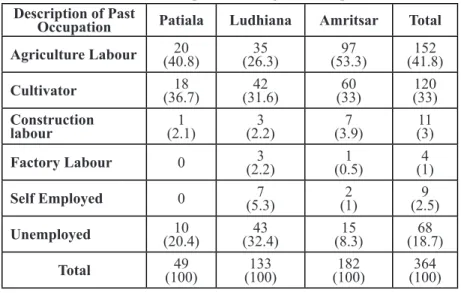
Table 1.4: Past Occupation of Migrated Respondents
Description of Past
Occupation Patiala Ludhiana Amritsar Total
Agriculture Labour (40.8)20 (26.3)35 (53.3)97 (41.8)152
Cultivator (36.7)18 (31.6)42 (33)60 (33)120
Construction
labour (2.1)1 (2.2)3 (3.9)7 (3)11
Factory Labour 0 (2.2)3 (0.5)1 (1)4
Self Employed 0 (5.3)7 (1)2 (2.5)9
Unemployed (20.4)10 (32.4)43 (8.3)15 (18.7)68
Total (100)49 (100)133 (100)182 (100)364
Source:Field Survey, 2018-19 Figures in the brackets indicate the percentage
labour from agriculture. There is only seasonal employment in agriculture for agricultural labourers, which is unsustainable for them to stay on in villages. This population would have little choice but to eventually flee into the cities in search of paid work; also the wage difference between rural and urban areas is also a cause for push for migration. There is a substantial share of migrants i.e. 18 per cent who are unemployed before migrating to the cities of Punjab, these unemployed are victims of job-less growth of the Indian economy due to under-employment and disguised unemployment in agriculture (Using A.K. Sen’s definition of the production approach, Disguised unemployment means that a withdrawal of a part of the labour force from the traditional filed of production would leave the total output unchanged). The other past occupations of migrants were construction labour, factory labour and self-employment and their share is 3 per cent, 1 per cent and 2.5 per cent, respectively. The past occupation is linked with the push factors of migration. The underemployment and disguised unemployment in agriculture are the main pushing factors of migration from rural to urban slums.
Causes of Migration
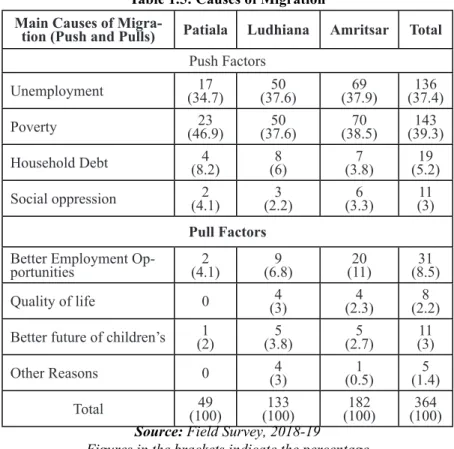
migrated due to social oppression of any type. In this way, the push factors of migration dominate the decisions of poor for migration. Their surplus product is transferred from rural areas to cities for work in an urban area at subsistence wage rate.
Table 1.5: Causes of Migration
Main Causes of
Migra-tion (Push and Pulls) Patiala Ludhiana Amritsar Total
Push Factors
Unemployment (34.7)17 (37.6)50 (37.9)69 (37.4)136
Poverty (46.9)23 (37.6)50 (38.5)70 (39.3)143
Household Debt (8.2)4 (6)8 (3.8)7 (5.2)19
Social oppression (4.1)2 (2.2)3 (3.3)6 (3)11
Pull Factors
Better Employment
Op-portunities (4.1)2 (6.8)9 (11)20 (8.5)31
Quality of life 0 (3)4 (2.3)4 (2.2)8
Better future of children’s (2)1 (3.8)5 (2.7)5 (3)11
Other Reasons 0 (3)4 (0.5)1 (1.4)5
Total (100)49 (100)133 (100)182 (100)364
Source: Field Survey, 2018-19 Figures in the brackets indicate the percentage
This leads to the “reserve army of labour”. This reserve of labour retains the wage rate at a subsistence level. The surplus-value of this labour is exploited by urban elites, with their services first at workplaces (factories, stores, malls, construction etc) and second with their householdservices. The slum women are working as maidservants in the houses of rich/elites at minimum (subsistence) wages, which is expropriation of their surplus product.
to getting better employment opportunities at the migrated place. These are mainly educated and semi-skilled labourers and they are getting work at factories. Only 2-3 per cent migrated in the expectation of an improved quality of life and a better future of their children.
Caste Structure & Migration
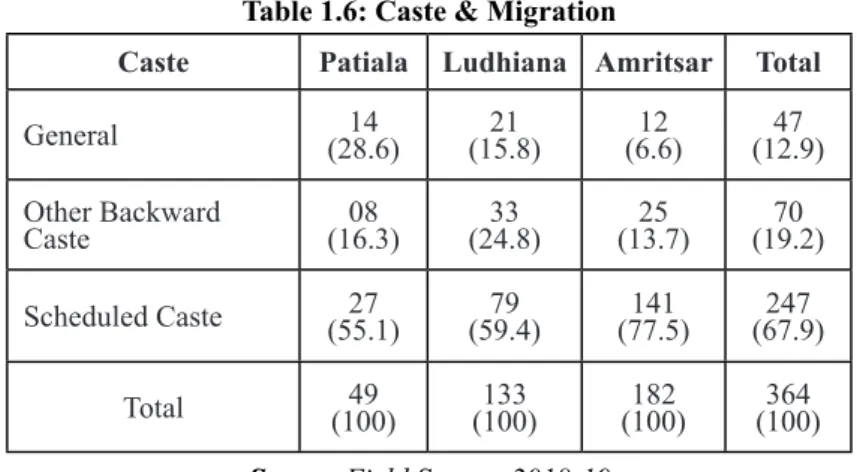
Caste also constitutes one of the important dimensions of the process of migration from rural areas. The caste structure plays a major role in the process of migration of rural population into cities and only a few studies as mentioned earlier are directly linked with migration and caste hierarchy and some are relating to push and pull factors of migration of caste. The caste structure of migrated respondents is shown in Table 1.6.
Table 1.6: Caste & Migration
Caste Patiala Ludhiana Amritsar Total
General (28.6)14 (15.8)21 (6.6)12 (12.9)47
Other Backward
Caste (16.3)08 (24.8)33 (13.7)25 (19.2)70
Scheduled Caste (55.1)27 (59.4)79 (77.5)141 (67.9)247
Total (100)49 (100)133 (100)182 (100)364
Source:Field Survey, 2018-19
Figures in the brackets indicate the percentage
production and private property are migrating to city slums. The economic dominance of the rich peasants led to caste conflict in the villages resulting in the migration of mostly labourers belonging to lower castes (Grewal, S.S, and M.S Sidhu 1981; Gupta, A.K and A.K Bhakoo 1980; Breman, J, 1978)
The motivational factor for Migration
Though there are several factors which underline the decision of the poor rural out-migration to enter into a city. A combination of factors rather than a single factor is responsible for the decision of migration. The better scope of work in Punjab is a major motivational factor behind migration from other states. Table 1.7 gives a detailed account of the motivational factors of migration. The choice of the city as a place of migration can be related to the perception of the availability of job opportunities. General knowledge of this kind was not considered sufficient for a person to decide to migrate. A potential migrant ought to seek more precise knowledge about job prospects; a place to stay; the chances of getting a job and the kind of social and financial support that could be expected at the place of destination. That kin, caste fellows, co-villagers and friends, who had earlier migrated to Punjab, generally provide these kinds of information as well as coming to know by hearsay. Around 44.4 per cent migrant respondents believe that they decide to migrate mainly because they had relatives, friends or co-villagers already residing there. The very strong social networking among slum dwellers is the major reason for more migration into slums. Another reason for this strong social networking is insecurity (due to minority at migrated places) which they are feeling at migrated places.
Table 1.7: Motivational Factor for Migration
Motivational
Fac-tors for Migration Patiala Ludhiana Amritsar Total
Near to place of
origin (4)2 (2.3)3 (2.1)4 (2.5)9
Friends are present (24.5)12 (24.1)32 (22)40 (23.0)84
Better Scope of
Work (20.4)10 (52.6)70 (33)60 (140)38.5
By Chance (22.5)11 (7.5)10 (17.6)32 14.6(53)
Total (100)49 (100)133 (100)182 (100)364
Source:Field Survey, 2018-19 Figures in the brackets indicate the percentage
Around 38.5 per cent of migrant’s migrated due to better scope of work in Punjab. About 14.6 per cent of migrants have chosen the place by chance. These are mostly those people who migrated long earlier. The family dispute is also one of the major reasons for this unplanned migration, where the place of migration is not planned. The decision of 2.5 per cent of respondents regarding the place is influenced by the short distance of the journey. They chose because this place is nearer to their place of origin. There are several motivational factors behind the decision for migration. It is a social network which has acted as a strong pushing factor behind this act.
Place of Migration
Examining the regional composition of the place of origin of migrants, it is found that Bihar is dominating the flow of migration into Punjab. The regional composition of the place of origin of migrant slum dwellers has been detailed in Table 1.8.
Table 1.8: Place of Migration
Place/State of
Migration Patiala Ludhiana Amritsar Total
Bihar 0 (52)69 (46.7)85 (42.3)154
Uttar Pradesh (57.1)28 (45.9)61 (11)20 (29.9)109
Rajasthan (10.2)5 (0.7)1 (3.3)6 (3.3)12
Maharashtra (22.5)11 0 0 (3)11
Tamil Naidu (10.2)5 0 0 (1.5)5
Assam 0 0 (1.6)3 (0.8)(3)
Madhya Pradesh 0 0 (1.1)2 (0.5)2
Delhi 0 (0.7)1 0 (0.3)1
Chandigarh 0 (0.7)1 0 (0.3)1
Total 49 133 182 (100)364
Source:Field Survey, 2018-19 Figures in the brackets indicate the percentage
Year of Migration
The year of migration is a very important question for the social scientist because it covers the structural changes in the country. That is why the year of migration is an important question and detailed about this is presented in Table 1.9
Table 1.9: Year of Migration
Year of Migration Patiala Ludhiana Amritsar Total
1950-59 (2.05)1 0 (0.5)1 (0.54)2
1960-69 (2.05)1 0 (2.8)5 (1.64)6
1970-79 (10.2)5 (3)4 (3.8)7 (4.40)16
1980-89 (28.6)14 (10.5)14 (15.4)28 (15.40)56
1990-99 (20.4)10 (26.3)35 (23.6)43 (24.45)89
2000-09 (20.4)10 (41.4)55 (47.3)86 (41.20)150
2010-17 (16.3)8 (18.8)25 (6.6)12 (12.37)45
Total (100)49 (100)133 (100)182 (100)364
Source: Field Survey, 2018-19 Figures in the brackets indicate the percentage
mechanization of agriculture have excluded the peasant and agriculture labour from agriculture. This population would have little choice but to eventually flee into the cities in the search of paid work. A low rate of infrastructural investment in the public sector for keeping the budgetary deficit low have adversely affected the agriculture and agro-industrial growth, resulting in high unemployment and reduction in agricultural production and income, which induced the rural-urban migration.
A large number of migrants from different parts of the country started entering Punjab with the hope of getting some job. Gradually these rural out-migrants settled down on some vacant lands inside the city, which in course of time got converted into slums with the increase in their population and due to the negligence of the city administration.3
Conclusion
From the above analysis, one can infer that migrants originally belong to rural areas. Basically, they are peasants, landless labourers or potential unemployed in the native villages. The period of migration in the case of maximum number of slum residents reveals that the deteriorating employment situation in the post-independence period for people from this particular class background (land less and land-poor/ class back growth) along with the prevalence of semi-feudal production relations in the light of mechanized agriculture and the transformation of the primary sector of employment acted as major push factors for them to leave their places of origin resulting in rural-to-urban migration in search of employment. It can be stated that, the out migration of peasants and agricultural labourers from the rural areas arises from a combination of prevalence of labour-surplus (in the sense of a surplus population facing acute unemployment and under-employment) and also from the introduction of labour-saving techniques with changes in the cropping patterns. Migration has existed for a very long time gaining