Climate change adaptation and
the rental sector
Final Report
Lesley Instone, Kathleen Mee, Jane Palmer,
Miriam Williams and Nicola Vaughan
CLIMATE CHANGE ADAPTATION AND THE
RENTAL SECTOR
Rental housing, climate change and adaptive
capacity: A case study of Newcastle, NSW
Centre for Urban and Regional Studies
University of Newcastle
AUTHORS
Lesley Instone
Kathleen Mee
Jane Palmer
Miriam Williams
Nicola Vaughan
Published by the National Climate Change Adaptation Research Facility 2013 ISBN: 978-1-925039-11-5 NCCARF Publication 40/13
Australian copyright law applies. For permission to reproduce any part of this document, please approach the authors.
Please cite this report as:
Instone, L, Mee, K, Palmer, J, Williams, M & Vaughan, N 2013, Climate change adaptation and the rental sector, National Climate Change Adaptation Research Facility, Gold Coast, 200 pp.
Acknowledgement
This work was carried out with financial support from the Australian Government (Department of Climate Change and Energy Efficiency) and the National Climate Change Adaptation Research Facility (NCCARF).
The role of NCCARF is to lead the research community in a national interdisciplinary effort to generate the information needed by decision-makers in government, business and in vulnerable sectors and communities to manage the risk of climate change impacts.
We wish to acknowledge the major contribution made to this research by those tenants and property managers who agreed to be interviewed and who participated in the Focus Groups and in the production of video clips for YouTube.
We also acknowledge the valuable contribution of the members of our project Steering Committee, who provided expert advice and guidance throughout the project:
• Mr Peter Dormand - Manager, Environment and Climate Change Services, Newcastle City Council, NSW
• Professor Robyn Dowling - Department of Environment and Geography, Faculty of Science, Macquarie University NSW
• Dr Geoff Evans - Environmental Security Coordinator, Sustainability Department, Lake Macquarie City Council, NSW
• Mr Ross Fallins - Assistant Manager, Asset Supply, Department of Finance and Services, Newcastle, NSW
• Mr Wayne Stewart - Past President, Real Estate Institute of NSW, Newcastle NSW. Disclaimer
The views expressed herein are not necessarily the views of the Commonwealth or NCCARF, and neither the Commonwealth nor NCCARF accept responsibility for information or advice contained herein.
Climate change adaptation and the rental sector i
TABLE OF CONTENTS
ABSTRACT ... 1EXECUTIVE SUMMARY ... 3
1 OBJECTIVES OF THE RESEARCH ... 6
1.1 Background: The reason for undertaking this research ... 6
1.2 The objectives of the research ... 6
2 LITERATURE REVIEW ... 8
2.1 Introduction: Themes of the literature review ... 8
2.2 Asset-Based Community Development... 8
2.3 Pro-poor Asset-based Climate Change Adaptation ... 10
2.4 Combining asset based and pro-poor approaches ... 11
2.5 Vulnerability, resilience and adaptation: A climate justice approach ... 12
2.5.1 Vulnerability, lack of assets ... 13
2.5.2 Kinds of resilience ... 15
2.5.3 Multistranded approaches: More-than-adaptation ... 15
2.6 The role of the housing manager ... 17
2.6.1 Overview of literature ... 17
2.6.2 The work of housing managers/ housing management ... 19
2.6.3 Managing and influencing tenants, landlords, and relationships ... 21
2.6.4 Managing buildings ... 23
2.7 Tenants and theories of everyday practice and homemaking ... 25
3 RESEARCH ACTIVITIES AND METHODS ... 27
3.1 Overview ... 27
3.2 Document collection and analysis ... 27
3.2.1 Types of documents analysed ... 27
3.2.2 Document review process ... 29
3.3 Interviews and focus groups ... 30
3.3.1 Interviews and focus groups methods ... 30
3.3.2 Case study selection ... 32
3.3.3 Recruitment methods ... 33
3.3.4 Recruitment ... 34
3.4 Conducting the interviews and focus groups ... 35
3.4.1 Interviews ... 35
3.4.2 Focus groups ... 36
ii Climate change adaptation and the rental sector
3.6 Enhancing adaptive capacities: Development of public resources ... 37
3.7 University Ethics Approval ... 38
4 RESULTS, DISCUSSION AND OUTPUTS... 40
4.1 Introduction ... 40
4.2 Discussion: Document analysis... 41
4.2.1 Media reporting on the rental sector... 41
4.2.2 Resources for renters ... 50
4.2.3 Policy and legislation ... 59
4.3 Housing NSW ... 79
4.3.1 Environmental Strategy ... 80
4.3.2 ‘Welcome to Your Home’ brochure ... 82
2.6.5 Conclusions ... 83
4.4 Climate change adaptation and rental housing in Newcastle: analysis of interviews and focus groups ... 83
4.4.1 Introduction ... 83
4.4.2 Summary of findings ... 84
4.4.3 Assets: Tenants’ understanding and commitment to sustainability and climate change adaptation ... 91
4.4.4 Assets: Property managers’ understanding and commitment to sustainability and climate change adaptation ... 94
4.4.5 Assets: Action by tenants on climate change and sustainability ... 95
4.4.6 Assets: Action on climate change and sustainability by property managers ... 98
4.4.7 Limits on tenants’ capacity to act ... 107
4.4.8 Limits on housing managers’ and landlords’ capacity to act ... 117
4.4.9 ‘Unmaking unsustainability’ in the rental sector: the roles of tenants, landlords, housing managers and government ... 127
4.5 Outputs ... 134
4.5.1 Outputs for community use ... 134
4.5.2 Outputs for government ... 136
4.5.3 Outputs for industry ... 137
4.5.4 Academic publications ... 137
5 RECOMMENDATIONS... 138
6 GAPS AND FUTURE RESEARCH DIRECTIONS ... 142
6.1 Gaps in existing research... 142
6.2 Future research directions ... 142
REFERENCES ... 143
Climate change adaptation and the rental sector iii
APPENDIX 2: LIST OF MEDIA DOCUMENTS ANALYSED ... 168
APPENDIX 3: LIST OF LEGISLATIVE AND POLICY DOCUMENTS ANALYSED .. 172
APPENDIX 4: PRIVATE HOUSING MANAGER INTERVIEW SCHEDULES ... 172
APPENDIX 5: PUBLIC HOUSING MANAGER INTERVIEW SCHEDULES ... 193
APPENDIX 6: TENANT INTERVIEW SCHEDULES ... 195
APPENDIX 7: FOCUS GROUP SCHEDULES ... 198
APPENDIX 8: LIST OF COMMUNITY GROUPS CONTACTED TO RECRUIT TENANTS... 200
LIST OF TABLES
Table 1: Document collection ... 29Table 2: Interview and Focus Group participants ... 35
Table 3: Sustainability Practices ... 47
Table 4: Suggested Tenant Practices ... 55
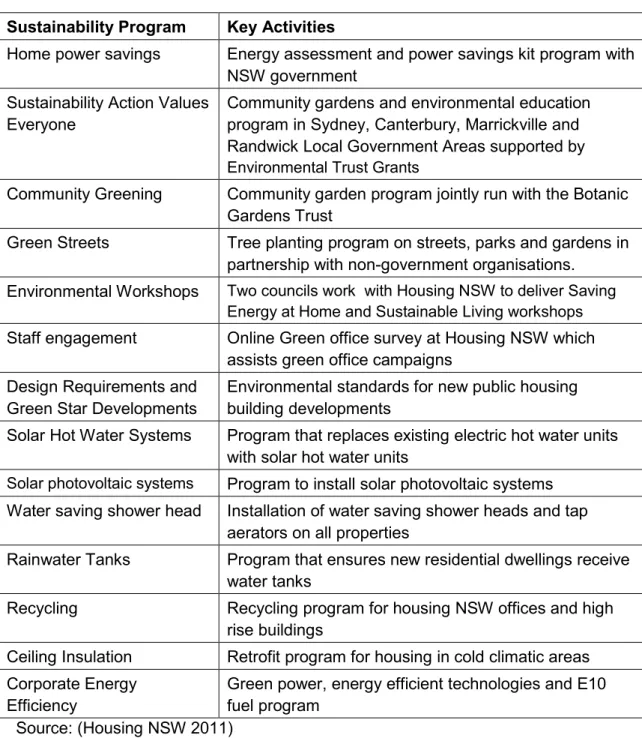
Table 5: Housing NSW Sustainability Programs... 81
Climate change adaptation and the rental sector 1
ABSTRACT
The research employed an asset-based approach to understanding the capacities, assets and skills which tenants, landlords and housing managers bring to climate change adaptation. The project also took a pro-poor approach focusing on the adaptive capacity of low-income renters in the public and private sectors, addressing the equity dimensions of vulnerability and adaptation.
In addition to analysing a range of secondary sources such as media articles, ‘green’ guides and policy documents, the research analysed primary data from interviews and focus groups, focusing on:
1. The assets of the rental sector in adaptation
2. Barriers which limit the capacity of individuals and organisations to exercise these assets
3. The relationships between the stakeholders – tenants, landlords and property managers – which underlie both assets and barriers to adaptation.
We found that the tenants we interviewed were motivated by concern about the impact of human activity on the environment, and exercised this concern through everyday sustainable household practices, as well as through engagement with community or political organisations. They believed however that their capacity to act in the home was inhibited by a lack of care from some landlords and property managers about the sustainability of rental housing.
Public housing managers who were interviewed positioned the public housing sector as policy leaders in sustainability and adaptation, but as constrained by a lack of
resources (human and financial) and the busy reactive nature of their work. Busyness and lack of resources was also seen as a constraint on private property managers’ capacity to advocate or arrange for sustainability modifications to the properties they managed. Property managers emerged as crucial ‘knowledge brokers’ mediating between landlords and tenants, but expressed a need for more information and training.
Both tenants and property managers acknowledged that the current shortage of rental housing in many areas was one of the most important constraints on tenants’ ability to influence the market through preference for more adaptive and sustainable housing. The interviews and focus groups with tenants and property managers mapped out a strong asset base in the rental sector including: tenants’ strong visions for the future; property managers’ understandings of the tenant/landlord/property manager
relationships, legislation, costing and procurement processes; organisational and community networks; and existing adaptive capacity already evident in the everyday practices.
The research report makes recommendations in the following areas:
• increased support for an enhanced role for property managers as advocates and knowledge brokers for sustainability and adaptation
2 Climate change adaptation and the rental sector
• incentives and education for landlords to see investment properties as ‘ethical investments’ to enable tenants to adapt to climate change
• increased overall supply of rental housing, particularly affordable rental housing
• increased assets for tenants to enable investments of time and money in a secure ‘home’
• changes to tenancy conditions and better communication with landlords
• government action on regulatory change to support the above changes, including action on housing supply and a review of rental building sustainability standards.
Climate change adaptation and the rental sector 3
EXECUTIVE SUMMARY
Housing tenants, especially low-income tenants, are often forgotten when it comes to strategies that seek to lessen the impact of climate change on households. Rental housing comprises 27% of housing in Australia, is currently poorly adapted to climate change, incorporates the lowest quality housing which is over represented by low-income earners and is the most vulnerable to climate change.
This research project sought to understand the adaptive capacity of rental housing, including potential adaptions by tenants, landlords and housing managers by asking:
• What adaptation strategies are tenants, housing managers and landlords currently undertaking?
• What assets do tenants, housing managers and landlords bring to adaptation?
• What are some of the barriers to adaptation?
• How might landlords, property managers, tenants, governments and NGOs work together to strengthen the adaptive capacity of rental housing in Australia? The project resulted in the development of widely accessible resources such as
YouTube clips, as well as a community implementation plan that included a best-practice guide that supports the rental sector in acting on climate change.
The project employed an asset-based approach to understanding the capacities, assets and skills which tenants, landlords and housing managers bring to climate change adaptation. The project also took a pro-poor approach focusing on the adaptive capacity of low-income renters in the public and private sectors, and addresses equity dimensions of vulnerability and adaptation.
The research involved literature review of asset-based and pro-poor approaches to adaptation, the role of property managers in the rental sector and the role of everyday household practices in adaptation. Data analysed included secondary sources such as recent media articles on sustainability in the rental sector, sustainability resources already available for tenants, and policy and legislation affecting adaptation in the rental sector. Primary data sources included interviews and focus groups conducted with tenants and housing managers in the public and private rental sectors. The analysis focused on the following aspects of adaptation:
1. The assets of the rental sector in adapting to climate change, including existing everyday practices by tenants and property managers, existing capacities and commitments of individuals and organisations to sustainability and climate change adaptation
2. Barriers which limit the capacity of individuals and organisations to exercise these assets, including quality, availability and affordability of housing stock, attitudes of stakeholders to climate change adaptation, lack of resources (particularly financial resources), public perceptions of tenancy, and regulatory constraints
3. The relationships between the stakeholders – tenants, landlords and property managers – which underlie both assets and barriers to adaptation.
4 Climate change adaptation and the rental sector
The tenants we interviewed were motivated by concern about the impact of human activity on the environment, and exercised this concern through everyday sustainable household practices, as well as through engagement with community or political organisations. They believed however that their capacity to act in the home was inhibited by a lack of care from some landlords and property managers about the sustainability of rental housing.
Public housing managers positioned the public housing sector as policy leaders in sustainability and adaptation, but as constrained by a lack of resources (human and financial) and the busy reactive nature of their work. Busyness and lack of resources was also seen as a constraint on private property managers’ capacity to advocate or arrange for sustainability modifications to the properties they managed. Property managers emerged as crucial ‘knowledge brokers’ mediating between landlords and tenants, but expressed a need for more information and training in order to be able to advocate effectively to landlords and influence tenant practices.
Both tenants and property managers acknowledged that the current shortage of rental housing in many areas, including the Newcastle area, was one of the most important constraints on tenants’ ability to influence the market through preference for more adaptive and sustainable housing. The research identified a desire for more
opportunities for tenants, housing managers and landlords to work together to address climate change in a way that would benefit all these groups and the environment. The interviews with tenants and property managers mapped out a strong asset base in the rental sector which could be used in the sector’s adaptation to climate change. These assets included:
• tenants’ strong visions of the future and understandings of what would make climate change adaptation more possible
• property managers’ deep understanding of the possibilities of the tenant/landlord/property manager relationship, tenancy legislation and contracts, costing and procurement processes for maintenance and improvements to houses
• existing capacity on the part of both tenants and property managers to act on adaptation through everyday practices, despite structural, material or resource limitations
• networks which could be mobilised to support climate change adaptation. For tenants these networks included neighbourhood, community and political networks. For property managers these networks included networks within their institutions, professional training and information networks, and their role as ‘knowledge brokers’ for both landlords and tenants.
The research report makes recommendations in the following areas:
• increased support for an enhanced role for property managers as advocates and knowledge brokers for sustainability and adaptation in the rental sector
• incentives and education for landlords to see investment properties as ‘ethical investments’ which provide opportunities for tenants to practice sustainability and adapt to climate change
Climate change adaptation and the rental sector 5
• increased overall supply of rental housing, particularly affordable rental housing. Low vacancy rates and the fear of eviction inhibit adaptation in the rental sector
• increased assets for tenants to enable investments of time and money in a secure ‘home’ through short-term lease of installations such as solar panels or water tanks
• changes to tenancy conditions and better communication with landlords to enable, rather than inhibit, adaptive modifications by tenants such as gardens and water tank
• government action on regulatory change to support the above changes;
• government consideration of the Housing Supply Bonds proposal recently released by AHURI (Lawson et al. 2012), and different more sustainable housing models
• government review of rental building sustainability standards
• such changes need to be implemented with care and consultation with
representatives of landlord, tenant and property manager groups. Investment in rental property sits alongside other potential investment strategies for landlords. When regulatory impositions appear too onerous landlords may choose to sell rental properties, and these may be lost to the sector. The loss of rental properties would inhibit adaptation in the rental sector.
6 Climate change adaptation and the rental sector
1 OBJECTIVES OF THE RESEARCH
1.1 Background: The reason for undertaking this research
Throughout the world, low-income groups are the most at risk from extreme weather events and other negative impacts of climate change (Moser 2011; Stanley 2009). In Australia, housing tenants, particularly low income tenants, are often forgotten when it comes to strategies that seek to lessen the impact of climate change on households. Rental housing comprises 27% of housing in Australia and is associated with low household income: “While in 2005–06 less than a quarter (23%) of high income households were renting, around one-half (49%) of households in the bottom quintile were renting” (Gabriel et al. 2010b: 22). The ‘non-house’ net worth of rental households in Australia is on average only one third that of homeowners (Gabriel et al. 2010a: 25, Table 5). Because of this wealth discrepancy, and the ‘split incentive’ which is an obstacle to landlord investment in upgrading buildings, rental housing is generally poorly adapted to climate change, incorporates the lowest quality housing and is the most vulnerable to climate change.
Rental housing therefore represents a high priority for intervention, but there are disincentives which impede climate change adaptation measures being adopted by landlords and advocated by property managers. The large and disparate nature of the sector and long lead times in making changes to housing stock and landlord-tenant cultures, mean that there is an urgent need for research to identify ways of overcoming barriers to adaptation in the rental sector.
This research project sought to understand the adaptive capacity of public and private tenants by asking:
• What adaptation strategies are tenants, housing managers and landlords currently undertaking?
• What assets do tenants, housing managers and landlords bring to adaptation?
• What are some of the barriers to adaptation?
• How might landlords, property managers, tenants, governments and NGOs work together to strengthen the adaptive capacity of rental housing in Australia? These questions frame public and private housing tenants, landlords and housing managers as active agents (Mee 2009) with the capacities, skills and assets that can assist in their ability to adapt to climate change. By including a focus on the adaptive capacity of tenants, the project reflects both an asset based and pro-poor approach to climate change adaptation.
1.2 The objectives of the research
The objectives of the research were:
1. To employ an asset-based approach to climate change resilience in the rental housing sector in Newcastle, NSW
Climate change adaptation and the rental sector 7
3. To identify the adaptive capacity of housing managers (private and public) and landlords to respond to the challenge of climate change in the rental housing sector 4. To link the capacities of tenants and housing managers/landlords to adapt to
climate change
5. To identify productive entry-points for interventions which enhance adaptation responses in the rental housing sector.
The project encompassed the development of resources such as YouTube clips, and best-practice guides to support people acting on climate change in the rental sector. This report will inform housing management practices across Australia in adapting to climate change, and will be helpful to advocacy organisations such as Shelter, ACOSS and peak tenancy organisations. It will also be a useful resource for peak property bodies, such as the Real Estate Institute of Australia, and for local government including Newcastle and Lake Macquarie City Council.
8 Climate change adaptation and the rental sector
2 LITERATURE REVIEW
2.1 Introduction: Themes of the literature review
This section reviews theoretical literatures used to frame research in the project. The review examines those factors which enhance or are barriers to adaptive capacity, and hence focuses on the following key areas of interest:
• Asset-based community development (section 2.2)
• Pro-poor development (section 2.3)
• Combining an asset-based and pro-poor approach (section 2.4)
• Theories of vulnerability, adaptation and resilience and climate justice (section 2.5)
• The role of property managers in adaptation in the rental sector (section 2.6)
• Everyday practices of residents and homemaking (section 2.7).
2.2 Asset-Based Community Development
A 2006 OECD paper on ‘Key Adaptation Concepts and Terms’ (Levina and Tirpak 2006) included a widely accepted definition of adaptive capacity as “[t]he ability of a system to adjust to climate change…, to moderate potential damages, to take advantage of opportunities, or to cope with the consequences”. It also defined ‘capacity’ as “[a] combination of all the strengths and resources available within a community, society or organisation that can reduce the level of risk, or the effects of a disaster” (2006: 8). The OECD paper pointed out that there is very little distinction in the literature between ‘adaptive capacity’ and ‘coping capacity’(Levina and Tirpak 2006: 12), and concludes with a statement that points to the potential circularities in defining adaptive capacity, vulnerability and resilience:
It is important to clearly define the relationship between ‘resilience’, ‘vulnerability’, ‘adaptive capacity’, ‘coping capacity’ and ‘coping range’. In the IPCC definition of resilience, this term seems to be closely related to ‘coping range’, since the emphasis of the definition is on the amount of change that the system can tolerate. Other definitions emphasise the ‘ability’ of a system,… [as] its ‘coping and/or adaptive capacity’ to tolerate change. ‘Vulnerability’ seems to largely[to] imply an inability to cope and ‘resilience’ seems to broadly imply an ability to cope. They may be viewed as two ends of a spectrum (Levina and Tirpak 2006: 15).
In an asset based approach to adaptive capacity, the focus is on ‘capacity’ – that “combination of all the strengths and resources available within a community” (Levina and Tirpak 2006: 8)– and supporting those community assets which enable adaptation, increase resilience and reduce vulnerability. It takes as a first principle that the more assets a community has, the greater its adaptive capacity and resilience, and the less vulnerable it is to the ill-effects of climate change (see Moser 2011).
Assets are the “natural, physical, social, financial and human capital” (Moser 2011: 6) that enable people to act and meet their needs. Assets grant people the “power to act
Climate change adaptation and the rental sector 9
and to reproduce, challenge or change the rules that govern the control, use and transformation of resources” (Bebbington 1999: 2022).
Asset-based Community Development (ABCD) is a community development theory, model and practice developed by Kretzmann and McKnight (1993) in the United States. ABCD aims to enable people to identify their own assets and envisage ways they can use them to meet their own needs and the needs of their community (Haines and Green 2012). ABCD facilitates the creation of new stories that help communities
recognise their strengths, challenging problematic constructions of places (or groups of people) as deficient (Ennis and West 2010; see also Bankoff 2001). ABCD is based on an understanding that “every single person has capacities, abilities and gifts”
(Kretzmann and McKnight 1993: 13). The key principles of ABCD are:
…change must come from within the community; development must build upon the capacities and assets which exist within the community; change should be relationship driven, and change should be oriented towards sustainable community growth (Ennis and West 2010: 405).
Often in community development there is a focus on finding help from outside experts (Gibson-Graham 2006; Kretzmann and McKnight 1993). This has the potential to create a cycle of dependency on these experts and further disadvantage communities (Kretzmann and McKnight 1993). It is particularly unhelpful when the process of seeking expert help reinforces the stereotype of particular places or groups as being needy or disadvantaged (Cameron and Gibson 2005). The ABCD model seeks to prevent people from becoming dependent, so that they seek help from experts as an (informed) second step rather than as an immediate course of action (Gibson-Graham 2006).
While ABCD is described by its founders as both an approach to community
development and a community development strategy (Kretzmann and McKnight 1996: 27), it is also used as a methodology. For example the Canadian NGO SOPAR
(Society for Partnership), in its ABCD Methodology Manual (SOPAR undated), describes the way in which the ABCD ‘approach’ can be used as a methodology in much the way we do in this project:
There is no “blueprint” for carrying out an ABCD approach, but the principle behind the methodology is that communities that recognize their assets and opportunities are more likely to be motivated to take initiative to mobilize and strengthen their asset base. Guided by this, the NGO has to decide which combination of tools and methods are appropriate for helping communities organize themselves to identify, link, and mobilize their assets (SOPAR undated: 27)
The SOPAR Manual outlines a number of tools and methods (such as asset mapping) to be used as part of the ABCD methodology (SOPAR undated: 27-28).
In a similar way, our project built on ABCD in order to explore the assets and capacities already present in the rental sector and provide ways for such assets to be enhanced. Rather than position the research team as experts, the research positions tenants and
10 Climate change adaptation and the rental sector
housing managers as experts on the current state of climate change adaptation and collected their stories of what is happening in the sector in the contemporary period and their visions for how the rental sector could become more sustainable. The interviews and focus groups conducted as part of this project were aimed at gaining this kind of inventory of assets from tenants, housing managers and landlords. This information was supplemented with a review of secondary sources, such as existing tenant resources to encourage climate change and media articles about green renting. For more details about the methods used in the project see Chapter 3 of this report. This report, and other project outputs such as YouTube clips and a best practice guide will become assets to adaptation in the rental sector in the future.
2.3 Pro-poor Asset-based Climate Change Adaptation
Pro-poor Asset-based Climate Change Adaptation (PACCA) has been applied most commonly in developing countries, but is applicable to any context where marginalised groups are encountering the challenges posed by climate change. Like ABCD, PACCA (Moser 2011; Prowse and Scott 2008; Moser and Satterthwaite 2008) focuses on people’s capacities: the assets of individuals and groups that can enable them to adapt to climate change.
The term pro-poor encapsulates the emphasis of this framework on those more vulnerable to climate change impacts. Vulnerability can be defined in Folke’s (2006) sense as lowered resilience, which in turn implies loss of adaptability. Poor socio-economic conditions, and social responses to gender, ethnicity or age, can lead to reduced resilience and hence reduced adaptive capacity (Moser and Satterthwaite 2008). A consequence of these conditions is a lack of assets:
One of the most important factors shaping the adaptive capacity of individuals, households and communities is their access to and control over natural, human, social, physical, and financial resources (CARE International 2009: 5, citing the IPCC Working Group 2, 2001. Third Assessment Report, Annex B: Glossary of Terms).
People who have minimal access to the resources they need to prevent, prepare for, and recover from severe weather events and rising costs associated with mitigation strategies are the most vulnerable. This is shown in the literature, highlighting past and future
challenges faced by low-income groups:
Studies of Hurricane Mitch in Honduras showed that the hurricane exacerbated asset inequalities as the poor lost a greater share of assets in the disaster and recovered at a slower rate than the non-poor (Heltberg et al. 2009: 90).
Particular barriers for low-income renters include lower quality housing, with less effective heating and cooling, disincentives for either landlords or tenants to make significant improvements to housing, and lack of insurance (Sullivan 2007: 1).
A PACCA framework involves understanding vulnerabilities as well as assets (Moser 2011). This is particularly important in contexts where institutions and governments are
Climate change adaptation and the rental sector 11
unwilling or unable to assist poor communities in their efforts to adapt (Prowse and Scott 2008). Thus the research investigated the ways in which tenants are vulnerable to climate change and how vulnerability limits their potential adaptations to climate change. This approach enabled the development of more nuanced recommendations for actions to address climate change.
PACCA is guided by the principle of climate justice, a principle explored in the next section.
2.4 Combining asset based and pro-poor approaches
ABCD has been criticised for not taking broad scale forms of injustice such as class, ethnicity, gender and age into account when seeking to mobilise assets and
understand reasons for local disadvantage (Ennis and West 2010). Ennis and West (2010) argue that ABCD fails to challenge structural or macro-level injustices and needs to address these broader structural issues in order to fully mobilise the strengths and assets of a community.
The argument for taking account not only the diversity of local responses to climate change adaptation but of broader policy intervention and possibilities, has been made by Kates and Wilbanks (2003):
…residents can alter the emissions emanating from their homes but only within a small range governed by who built the structure and how and when they did so…[R]enters in multifamily dwellings have little influence over such issues as insulation. On the other hand, even such external decisions as a distant utility office’s choice of location for an electricity generating plant may have been influenced by local desires for economic development or by local demand (Kates and Wilbanks 2003: 18).
It is important to acknowledge the context-specific and multiple ways injustice can occur, particularly when it comes to the implementation of government policy
frameworks, or the absence of frameworks that could potentially assist tenants or low-income groups meet their needs. The structural issues affecting low-low-income tenants, their assets and networks are context-specific, but affected by regional, state and national frameworks and connections. Utilising a pro-poor framework helps to identify the broader structural issues that cause climate injustice and inhibit the ability of tenants and managers to adapt to climate change. It also requires adaptation
responses which benefit rather than further disadvantage, low income tenants (Prowse and Scott 2008).
Both the pro-poor and ABCD frameworks highlight the importance of participation in decision-making as key to successful development. As Bankoff (2001) argues, integral to the process of identifying and resolving multistranded vulnerability is “the positive and intelligent participation of those most at risk” (Bankoff 2001: 30). It is those most at risk who are best able to describe multistranded disadvantage in their lives and
communities, “the outcomes we wish to avoid” (Ribot 2010: 60), and potential solutions. The limited literature on adaptive capacity in the rental sector tends to position tenants as passive, bound by the regulations of their tenancies and their
12 Climate change adaptation and the rental sector
meagre financial capacity (Toohey and Fritze 2009; Gurran et al. 2008). However renters can be repositioned as active (Mee 2009) rather than passive in adaptation. Housing managers also have critical roles to play in adaptation (Brown and Bhatti 2003, Priemus 2005). Thus it is crucial that any measures to adapt to climate change should involve key stakeholders and knowledge-brokers, such as tenants, housing managers and landlords from their development to implementation. For this reason our research explores the ways in which key stake-holders were involved in past attempts to enhance the sustainability of rental property to explore the lessons that can be learnt for future adaptive measures.
Adaptive capacity is thus viewed throughout this research project in terms of the assets that enable the rental sector to adapt to climate change, and the barriers that prevent adaptation responses. Combining the ABCD and PACCA frameworks allows us to address a broad spectrum of issues connected to these two aspects of adaptive capacity in the rental sector.
2.5 Vulnerability, resilience and adaptation: A climate justice
approach
Within the climate change adaptation literature, fairness is an important principle. Fairness is a component of the four climate change justice principles proposed by Adger et al (2006):
1. Avoiding dangerous climate change, that is, mitigation rather than adaptation 2. Forward looking responsibility, where those responsible for emissions compensate
others
3. Putting the most vulnerable first
4. Fair participation for all – participation by those most vulnerable to and affected by decision making about adaptation (see Hill 2008 for a discussion of these
principles).
A pro-poor approach to adaptation is founded on the principle that, as climate change is mostly the result of the actions of the rich, poor people should not be further
disadvantaged by climate change. Instead poor people ought to benefit more from climate adaptation practices and policies than the rich (Prowse and Scott 2008). As Ribot argues:
The inability to manage stresses does not fall from the sky. It is produced by on-the-ground social inequality; unequal access to resources; poverty; poor
infrastructure; lack of representation; and inadequate systems of social security, early warning, and planning. These factors translate climate vagaries into suffering and loss (Ribot 2010: 49).
More broadly, climate justice frameworks raise the question of who should be held responsible for compensating those at risk from the ill effects of climate change. Discussions of climate justice often focus on retrospective compensation
(Vanderheiden 2009). For example climate justice frameworks that focus on adaptation
address the question of who should compensate whom for the harm caused by climate change. How should the people who have played a minimal role in causing climate
Climate change adaptation and the rental sector 13
change be compensated for the harm they experience because of the actions of others (Vanderheiden 2009)? On the other hand, mitigation approaches focus more on how to distribute resources fairly and justly (Vanderheiden 2009).
Action on mitigation and adaptation originate in different arenas:
…mitigation can be driven as a national agenda, promoted by international agreement, whereas effective adaptation needs to be locally driven, in part because adaptation measures must be rooted in the particulars of each local economic, social, political and ecological context (Moser and Satterthwaite 2008: 5).
Focusing on equity means that reducing vulnerability and increasing resilience becomes a broader project than simply enabling recovery from an adverse event. It enables assessments of vulnerability to examine not only individual or household ‘susceptibility’ but broader structures and relationships which influence the outcomes for people confronting climate change.
2.5.1 Vulnerability, lack of assets
Vulnerability is a concept often criticised as disempowering and encouraging “a sense of societies and people as weak, passive and pathetic” (Bankoff 2001: 29). It is
therefore important to define it clearly for the purposes of this project. Vulnerability has an inverse relationship with a person’s ability to cope or ability to adapt to adverse events, and has been defined as “a function of exposure, sensitivity and adaptive capacity of a system” (Moser et al. 2010). CARE International, for example, defines vulnerability as:
The degree to which a system is susceptible to, or unable to cope with, adverse effects of climate change, including climate variability and extremes (CARE International 2009: 5, citing the IPCC Working Group 2, 2001. Third Assessment Report, Annex B: Glossary of Terms).
Vulnerability is influenced by conditions or ‘variables’ such as “age, class, occupation, gender, ethnicity and disability” (Morioka 2012: vi). However these conditions, like ‘adverse events’ or ‘natural hazards’, only produce adverse consequences when framed by larger social, economic, political and institutional structures which produce differential outcomes for different groups. Vulnerability, rather than endemic to a particular region, population or group (such as renters), is a product of these structures which manifest as poverty, marginalization and depleted resources in particular places or groups (Bankoff 2010; Howitt et al. 2010).
There is, as noted above, a link between vulnerability and a lack of assets. However identifying this link does not identify the deeper causes of a lack of assets and hence of vulnerability. Vulnerability arises at many levels and over time:
[V]ulnerability is signified by historical processes that deprive people of the means of coping with hazard[s] without incurring damaging losses that leave them physically weak, economically impoverished, socially dependent, humiliated
14 Climate change adaptation and the rental sector
and psychologically harmed… the simple identification of the poor as vulnerable fails to explain how people at the same income level do not suffer equally from disaster (Bankoff 2001: 25).
It is only in analysing the causes of poverty or marginalization at a deeper level that vulnerability can be properly described and addressed. Such analysis helps to resolve the deeper causes of vulnerability rather than trying to fix outcomes afterwards (Ribot 2010: 59). Assets required to enable action may be both tangible and intangible, including “the material resources of individuals, their social relations, the state of governance, the role of freedoms and choices, and the state of equity” (Millennium Ecosystem Assessment 2003: 156). Other adaptation theorists have noted the importance of difficult-to-measure qualities such as trust, social networks and social memory, leadership and vision (Folke 2006: 262). These assets of a community are rarely included in a “decision making calculus” (Adger et al. 2009: 348-349) but are critical to consider and nurture in response to climate change.
2.5.1.1 Assets and losses
The corollary of identifying causes of vulnerability or lack of assets is identifying those existing assets which are vulnerable (Moser and Satterthwaite 2008: 33). In some cases, asset losses need to be mapped. Historical, cultural and symbolic losses can reduce a community’s capacity to adapt (Adger et al. 2009: 349). For low-income housing tenants, marginalisation, long-term unemployment and economic or housing stress may contribute to what has been described as the “hidden limits to adaptation”
(Adger et al. 2009: 340).
An example of the consequences of a loss of social networks or good governance is the absence in particular communities of coordinated planning for future disaster. ActionAid reported on several such cities in which, for example, there has been a lack of community preparation to limit flooding:
Effective community-based pre-disaster measures to limit damage require levels of trust and cohesion – community social capital – that are often not present (Moser and Satterthwaite 2008: 11).
In addition to historical loss or increasing vulnerability of social and cultural assets, there may be a failure to recognise already available assets, such as the specialised knowledge of marginalised populations who are not invited to participate in planning and decision-making:
…problematic is the failure to recognize women’s individual and collective
capacities for recovery and reconstruction as community leaders, neighbourhood networkers, producers, gardeners, rainwater harvesters, and monitors of flood-prone rivers. This means that their resources, capacities, assets and hard-won knowledge about how to make life safer for their families and live with risk are all ignored (Moser and Satterthwaite 2008: 12).
Vulnerability is closely tied to the concept of resilience, and has been defined as a lack of resilience combined with “insecurity in …wellbeing” (Moser and Satterthwaite 2008:
Climate change adaptation and the rental sector 15
5-6). The issues of recognising and supporting assets in marginalised populations in order to increase resilience are discussed in the following section.
2.5.2 Kinds of resilience
Just as analysing ‘vulnerability’ requires critical analysis of a wide range of structures and influences, so too does analysis of its apparent obverse, resilience. Deborah Bird Rose (2004) distinguishes three kinds of human activities affecting resilience:
1. Anti-resilience activities such as dam-building which “actively oppose and seek to suppress Nature’s own resilience”
2. Engineered resilience activities such as preventing fires in national parks, which attempt to “force Nature to behave as humans would like nature to behave”
3. Resilience facilitation, which supports the conditions in which Nature’ resilience can flourish, which may sometimes mean doing nothing (Rose 2004: 48).
These distinctions can be mirrored in the kinds of actions which influence economic resilience (Roelvink and Gibson-Graham 2009), where anti-resilience actions might include the imposition of taxes on subsistence livelihoods or appropriation of land, engineered resilience might include the co-option of ‘social capital’ for micro-finance schemes, and resilience facilitation would support more community-based economic practices such as “gifting, sharing, reciprocity and cooperation” (Roelvink and Gibson-Graham 2009: 148).
As noted in 2.4 above, the asset-based approach to climate change adaptation which is used in this project is based on:
• identifying and mobilising existing assets to increase the adaptive capacity of a community
• a pro-poor approach that also takes a critical look at the wider structural factors which may weaken or ignore these existing assets in the service of policy or economic objectives.
2.5.3 Multistranded approaches: More-than-adaptation
Pro-poor and climate justice proponents argue that improving conditions for the disadvantaged should be a goal of adaptation strategies. Fundamental to this expanded approach to reducing vulnerability is the belief that, for many, “everyday conditions are unacceptable even in the absence of climate stress” (Ribot 2010: 50). Many such lives, suggests Bankoff, are already a “permanent emergency” (Bankoff 2001: 25). Climate justice proponents argue for adaptation approaches which go beyond resilience defined simply as asset protection or ‘recovery’ and, instead, seek to improve the long-term conditions of those who are most vulnerable (Prowse and Scott 2008: 43).
Climate justice advocates call for poverty alleviation and livelihood security as a right or
entitlement, where entitlements are “utilities…over which social actors have legitimate effective command and which are instrumental in achieving well-being” (Ribot 2010: 56). Within an entitlements framework, vulnerability to climate change is defined as “a
16 Climate change adaptation and the rental sector
lack of sufficient means to protect or sustain oneself in the face of climate events” (Ribot 2010: 53). Similarly, a rights-based approach focuses on the vulnerable as those who have yet to obtain “the minimum conditions for living with dignity (i.e. …their human rights)” (CARE International 2009: 8).
Entitlements and rights-based approaches thus seek adaptation strategies which address the causes of vulnerability. These causes contrast with a first response to reducing vulnerability to climate change and increasing resilience such as ‘fixing’ the physical capital of a community and developing preparedness by:
• installing protective infrastructure and complementary risk-reduction measures;
• supporting better-quality buildings
• assisting those who live in the most dangerous sites to move to safer sites (adapted from Moser and Satterthwaite 2008: 29-30).
Another example of a ‘first response’ is advice provided to coastal communities to maintain spaces for emergency access and shelter, to plan ahead for evacuation, develop transport and communication strategies, and ensure that infrastructure can withstand an emergency (Gurran et al. 2008: 32).
It has been claimed that Asset-based approaches without Pro-poor principles fail to challenge those structural and macro-level injustices (Ennis and West 2010) which not only increase vulnerability to the impacts of climate change but present obstacles to reducing more general disadvantage. Heltberg et al suggest instead that:
…addressing human vulnerability to risks associated with climate change may offer opportunities for development and poverty alleviation through no-regrets pro-poor adaptation interventions (2009: 89).
However even at the level of material assets, improvements can address multiple disadvantage:
For instance, better-quality housing, infrastructure and services greatly reduce a range of hazards – including exposure to many disease-causing agents
(pathogens)… (Moser and Satterthwaite 2008: 9).
In pro-poor adaptation strategies there is an opportunity to re-negotiate the conditions and entitlements of the vulnerable in a range of mutually reinforcing areas which produce more-than-adaptation. In adopting a pro-poor approach to climate change adaptation, this project examines the relationships between renters and other key actors, as well as regulatory and policy constraints, and develop proposals which, in supporting community assets and adaptive capacity, “go far beyond reducing risk with respect to climate events” (Ribot 2010: 64).
Bringing these strands together is what we term a “more-than-adaptation” approach. It involves thinking about climate-change assets and adaptive capacity in a range of ways, and positioning even vulnerable groups as capable of change, albeit in limited circumstances. A more-than-adaptation approach is consistent with Moser et al’s call for ‘asset accumulation’ rather than simply asset protection, and the interconnected
Climate change adaptation and the rental sector 17
citizen rights, institutional accountability and governance required to support such accumulation and strengthen resilience (Moser and Satterthwaite 2008: 8). It is also consistent with the idea of ‘facilitated resilience’ which supports and mobilises the existing assets of a community to enhance adaptive capacity.
2.6 The role of the housing manager
2.6.1 Overview of literature
In order to develop an understanding of ‘more-than-adaptation’ in the rental sector, we need to be attentive to the experiences of different actors. In particular, this approach recognises the important role of housing managers in working with tenants and landlords to strengthen the adaptive capacity of the rental sector. Priemus (2005) recognises that the “the environmental impacts of residential properties also depend on the behaviour of management agents, property owners, and occupants” (2005: 12). In this section, we outline how the role of the housing public and private housing manager has been understood in the literature and explore how the different roles,
responsibilities, challenges and areas of influence of housing managers have been positioned. We also review literature that examines the role of housing managers in enhancing sustainability more specifically, including literature on sustainable housing that incorporates references to housing managers, and work on property managers that engages with attempts to ‘green’ the commercial sector1.
This section reviews the assets and capacities which housing managers bring to adaptation, including the extent to which housing managers’ skills have been
harnessed in measures to render dwellings more sustainable. We also point to ‘gaps’ in existing research, identifying areas where our focus on the relationships between property managers, landlords, and tenants goes some way to address these gaps. It describes different spheres of influence on housing managers and considers the role of housing managers in managing residents, managing buildings and managing
relationships. We do this by briefly describing each of these spheres of management, and, where possible, noting how they are evident in research on sustainable housing. There has been little attention in academic work on conceptualising sustainable housing (Priemus 2005; Winston 2009) and even less on sustainable housing in the rental sector. Brown and Bhatti (2003), in their review of environmental issues in housing studies make reference to the role of housing practitioners (or managers) in connecting environmental concerns with housing, asserting that:
… the assumption during these heady ‘green’ times was that housing practitioners, policy makers and academics could simply incorporate environmental issues into traditional housing concerns, and there would be progress. From a policy and practice perspective this has been relatively successful (although more could be done); but from a theoretical perspective it has been a failure (Brown and Bhatti 2003: 507-508).
1While the term ‘housing manager’ is more common in Australia in the public housing sector, and the term
‘property manager’ is more commonly used in the private rental sector, throughout this report these two terms are used interchangeably.
18 Climate change adaptation and the rental sector
While policy and practice may exist around increasing sustainable housing for climate change in the rental sector, in the Australian context, housing practitioners, and housing managers in particular, have not experienced significant exposure to policies and practices that seek to enhance the adaptive capacity of the rental sector.
Unsurprisingly then, the role of housing managers in this area has also been under-theorised in housing studies literature.
Because of the limited research in this area in Australia, international research provides valuable context for exploring the capacities and assets that housing managers can bring to adaptation. There are, however, key empirical differences between
international research and our study that are important to note. Firstly, some work offers examinations of sustainable housing in a particular locale and in pursuit of untangling some of the murkiness of defining sustainable housing, such as Priemus’s (2005) consideration of the Dutch sustainable housing policy. Other work considers sustainable housing through the lens of particular urban processes, such as Winston’s consideration of sustainable housing in urban regeneration (Winston 2009), and Stenberg et al’s consideration of housing regeneration in Sweden (Stenberg et al. 2009). Much of the remainder of the literature emerges from two types of case studies: those which consider social housing, retrofitting and energy efficiency in European countries (Smid and Nieboer 2008; Femenías and van Hal 2009), and work which considers the role of housing managers in reducing energy consumption of apartment buildings in Helsinki (Kyrö et al. 2011; Kyrö et al. 2012).
Work which examines social housing (Smid and Nieboer 2008; Femenías and van Hal 2009) is based in countries with a markedly different social housing sector to Australia, both in terms of the proportion of rental stock constituted by social housing and in the way this is administered. In the Netherlands and Sweden, where there is a significant amount of research into retrofitting social housing, social housing constitutes a much larger proportion of rental stock than Australia. Furthermore, while social housing in Australia is administered through state agencies, housing associations and municipal housing companies are much more heavily involved in the provision and management of social housing throughout Europe.
Another point of distinction is the function of the ‘housing manager’. In Finland, housing companies can employ professional housing managers to act as CEOs of the housing companies they manage (Kyrö et al. 2012: 204). Housing companies themselves are constituted by the homeowners, who become share-holders in the housing company that manages and maintains the buildings. In this, they are not unlike strata
management in the Australian context.
Despite these differences, there are important synergies with our research that help us to further theorise the role of the housing manager. In particular, we note that research has pointed to the leadership role of housing associations and housing managers in facilitating environmental change in the housing sector. For example Femenias and van Hal (2009) focus on housing associations as “drivers for change” and note the importance of both “their behavioural predisposing ‘culture’ in the permanent organisation and … their behavioural response to innovation in a project situation” (Femenías and van Hal 2009, s.2.2), while Christudason recognises Singapore
Climate change adaptation and the rental sector 19
property managers as “catalyst[s] for change” (2002: 252). On the other hand, Kyrö et al (2011) suggest that “managers seem to lack the willingness to become forerunners in environmental and energy related practices” (2011: 509).
Nonetheless, common to both these views is a recognition of the important role of the housing manager and their capacity to influence adaptation. The remainder of this section reviews the work of housing managers, and areas that housing managers influence: tenants and landlords, relationships, and buildings.
2.6.2 The work of housing managers/ housing management
Housing managers draw on a diverse array of influences in their everyday practices, including policy directives and personal beliefs. Housing managers are not passive conduits through which policy, legislation, or directives pass between dwellings/ residents/ landlords, but are actively involved in translating, and sometimes, resisting institutional aims and programs, and negotiating contradictory and complex
organisations and environments. This section explores the work of housing managers. Research into the role of housing management in social housing has had a particularly strong focus on how policy changes influence the tasks of the housing manager. For instance, much research into neoliberal influences on housing management identify a (re)construction in the role of the social housing manager in their practical relationships with tenants (for example Manzi and Smith Bowers 2004). Broader policy changes potentially (re)shape the role of the housing manager. Our research also shows that policy and program changes at the federal, state, and organisational levels can influence the day to day activities of housing managers.
There is certainly evidence of policy directives in energy efficiency and sustainable housing influencing social housing management in an international context. Research into sustainability and housing management draws out the role of legislation in steering housing managers’ practice to incorporate specific environmental concerns and
features. Smid and Nieboer (2008) consider how energy efficiency can be incorporated into the asset management of Dutch social housing landlords in response to an EU Environmental Performance Building Directive (EPBD) policy directives. Broader legislative changes can therefore be considered as potential drivers in the way housing management incorporates issues surrounding sustainability and climate change in terms of how the physical stock is managed, and how this information is communicated to tenants. Smid and Nieboer note the importance of legislation in influencing the actions of landlords in this respect:
… professional landlords can significantly contribute to governmental policies by improving the energy performance of their housing stock…energy conservation should be integrated in all phases of the strategic asset management processes. With professional landlords facing tightening energy performance requirements, the EPBD legislation could be considered as an opportunity and, at the same time, a means for professional landlords to incorporate energy conservation in their strategic asset management (2008: 31).
20 Climate change adaptation and the rental sector
However housing managers can translate and enact policy and programs in diverse ways and cannot be thought of as passive receptors of policy. Saugeres (1999), in her work on social housing managers’ perceptions of tenants, emphasises the agency of managers, noting that:
… even though frontline staff have to operate within policies, procedures and definitions that limit their discretionary powers, they still interact with tenants and interpret their situations according to their own subjectivities... it is argued that staff are not passive recipients of organizational rules and socialization, but both reproduce and resist dominant ideologies through everyday discourse and practice (1999: 1403).
Elsewhere, research has framed housing managers in relation to shifts in organisational practices and cultures, and the housing management styles of practitioners. These observations therefore offer insights into housing managers’ individual practices and motivations for driving change, as well as the importance of sector and organisation wide capacities for driving change in relation to rendering housing more sustainable. We examine this research with an eye to how it enhances our understandings of the role of housing managers, the assets and capacities that they may draw on, and barriers to adaptation in the rental sector.
Research that theorises the role of social housing managers emphasises the importance of an individual practitioner’s subjectivities and perspectives in enacting change. This is also evident in research focused on the challenges of implementing sustainability into buildings and building management. Kyrö et al’s (2011; 2012) work on the role of housing managers in their buildings’ environmental performance paid particular attention to the style of housing management. They saw housing managers as well-placed to address energy performance of buildings because they have the financial information, consumption data, and professional expertise to reduce building energy consumption.
Kyrö et al (2011) categorised attitudes of housing managers as ‘caring’, and
‘professional’ and ‘uninformed’. The ‘caring’ category was used for housing managers who expressed a strong concern about the environmental impacts of buildings, their maintenance and management, and about the ability of managers to influence this impact through their own actions. The most common category in the study,
‘professional’, applied to housing managers who “generally felt environmental issues should be considered, but only to the extent financially and socially reasonable” (Kyrö et al. 2011: 206). The authors noted that these managers held perspectives such as believing that the payback time of improvements was too long, and felt constrained by finances and time (an attitude that also emerged in our interviewee responses as we discuss in the results section of the report). Finally, the ‘uninformed’ management style included ignorance and aversion to incorporating energy-efficiency improvements into buildings and management practices. The authors’ quantitative analysis of building performance suggested a positive relationship between the perspective of the housing manager and environmental performance. They argue that “the results suggest a combination of technical solutions and managerial practices is likely to lead to best results” (Kyrö et al. 2012: 209). Individual perspectives can influence the management
Climate change adaptation and the rental sector 21
style of housing managers, something that, the authors suggest, is important in mobilising environmentally friendly management practices.
Multiple aims, cultures, and practices co-exist within the one organisation, and must be actively negotiated by housing managers. Priemus (2005: 15) observes that housing associations, which may have both construction and management activities, can have contradictory goals and aims, another point that chimes with themes emerging from our research. Further, he points to contradictions within government policies that can impede or undermine sustainability in other ways.
Priemus cites the Dutch government’s co-existing aims to enhance the sustainability of housing while at the same time pushing up housing consumption through market led developments. He points to examples such as financial support for homeowners and tenants that can stimulate housing consumption while “considerably reduc[ing] the sustainability of housing” (2005: 12). While these contradictions may not directly be experienced by housing managers, they inform the environment they operate in. Moreover, our analysis suggests that the financial ‘bottom line’ was/is a major
constraint to adaptation in the rental sector, and in broad strokes, at least, we can see similarities here with the focus on a market economy and increased consumption competing against sustainability, a factor that Priemus sees as some of the key policy contradictions surrounding sustainability and housing.
2.6.3 Managing and influencing tenants, landlords, and relationships
Housing managers, particularly in social housing, are understood as managing tenants.
Indeed, literature on social housing management is one of the most prominent areas of housing research that explicitly explores the role of the housing manager (see for example Clapham et al. 2000; Priemus et al. 1999; Saugeres 2000; Saugeres 1999; Saugeres and Clapham 1999; Franklin 2000; Manzi and Smith Bowers 2004), and its influence, both directly and implicitly, on tenants. For this reason, this literature is one of the most useful sources for looking at how the housing manager has been conceived as an active agent in the housing sector. While this literature is most directly relevant to understanding the role of social housing managers in our research, many of the
themes may also be relevant to private housing managers.
The literature on the role of the social housing manager observes a consistent focus in on guiding and shaping the tenant. For instance, the Octavia Hill method of social housing management in early 20th Century Britain had a strong emphasis on
managing tenants to instil residents with middle class values and behaviours. Similarly, neoliberal housing management strategies have sought to make tenants ‘participative’, ‘work force ready’ and appropriate ‘neoliberal citizens’, which would occur in part through housing management (Ravetz 2001; Flint 2004; Grayson 1997). Efforts to explore the capacity of housing managers to work with tenants to improve the sustainability of the rental sector must take care to avoid using similar assumptions about housing managers as somehow ‘improving’ tenants.
There is remarkably little research on the role of the housing manager in the private rental sector, especially in terms of mediating and managing the relationship between landlords and tenants. It is particularly notable that most research on relationships in
22 Climate change adaptation and the rental sector
the private rental sector focuses directly on the landlord and tenant, or conflates landlords and property managers (see for example Lister 2004; Lister 2005; Bierre et al. 2010; Grineski and Hernández 2010). Nonetheless, this work is relevant to
understanding how tenants may experience housing managers and landlords. What is most striking about this work is the power the landlord is perceived to wield over tenants. Lister’s (2004; 2005) work examined the challenges faced by young people when first entering the rental sector, and their experiences of being ‘monitored’ by landlords as landlords seek to control both tenants and the property. Grineski and Hernández (2010) explored environmental injustices of the private rental sector in Arizona. They argued that the poor quality of housing stock, and the failure of landlords to improve it, contributed to the ongoing health problems of tenants; tenants were placed in an unequal relationship with their landlords and were ignored when they sought improvements to their dwellings. Such examples suggest the constraints on tenants and the potential for dire consequences as a result of landlord and housing manager inaction.
Nonetheless, both this research and other works note the potential for improvements and interventions for these relationships. In particular, personal connections are
fundamental in reshaping such relationships, so that landlords, and housing managers, can more positively interact with tenants:
Lister (2007) argued that acknowledgement of this personal relationship and the associated informal rules and understandings associated may hold the key to better outcomes for landlords and tenants (Bierre et al. 2010: 23).
Elsewhere, work in the private sector (for example Rasila 2010) observes the importance of trust and commitment in positive landlord-tenant relations in the
commercial sector. There is therefore scope for a greater recognition of emotional and informal relationships and connections to be drawn upon in improving the adaptive capacity of the rental sector.
There is limited literature on how housing managers have sought to engage with tenant practice to enhance the sustainability of dwellings. This is general recognition that technical changes through retrofit and renewal programs rely for their effectiveness at least in part on human interactions with technical systems, and on the relationships and communications between different actors. Stenberg et al’s (2009) work on the
enhanced sustainability of housing projects evaluated efforts made to change tenant practice. The authors point to waste as one area where housing companies have had (moderate) success in altering ‘behaviour patterns’, as some residents adapted to sorting recyclables. There needs to be a note of caution in considering the role that housing managers can play in relation to tenant practices; especially when framed, as in Stenberg et al’s paper, in terms of “inspir[ing] more people to change their
behaviour” (Stenberg et al. 2009: 550); such practices can risk echoing some of the more paternalistic themes evident in the Octavia Hill management style, where housing managers are tasked with improving the behaviours of tenants.
Another way in which housing managers are seen as having the capacity to encourage a change in tenant practice is via labelling systems that provide information about the energy efficiency of housing stock. Smid and Nieboer (2008) consider enrolling
Climate change adaptation and the rental sector 23
labelling in this capacity as part of their focus on integrating energy conservation into the maintenance and renovation practices of housing managers. They suggest this as part of an attempt to develop a methodology for Dutch Social Housing Landlords that draws on the Energy Performance of Buildings Directive (EPBD). The EPBD requires the use of energy certificates that outline the current energy performance of the building and possibilities for improving its energy performance, supplied at each transition when a building is new or sold (Smid and Nieboer 2008: 19). The
Netherlands requires these certificates be paired with an energy label that classifies the energy performance of a dwelling. Such certificates, the authors suggest, are a means for housing management to communicate “with its stakeholders and tenants about energy performance and conservation measures” (Smid and Nieboer 2008: 22) In this way housing managers could be positioned as critical knowledge brokers, supplying knowledge that could help tenants adapt to climate change. EPBD labels are a potential means of communicating a building’s energy credentials with prospective tenants which “can raise their awareness about energy consumption and influence their behaviour regarding energy consumption, but it does not improve the energy efficiency of housing stock” (Smid and Nieboer 2008: 32). The authors also note that in tight rental markets, properties are in demand regardless of energy efficiency.
It can be seen in these studies that both the housing manager and the tenant have the capacity to contribute to the energy performance of the building. Moreover, in both the examples discussed here, influencing tenant behaviour is not independent but is interconnected with legislative or technical changes.
2.6.4 Managing buildings
Finally, we can examine the role of housing managers in terms o