Household Livelihood
Security Assessments
A Toolkit for
Practitioners
July, 2002
Prepared by:
TANGO International Inc.
Tucson, Arizona
Prepared for:
CARE USA, PHLS Unit
This document was made possible in part through support provided by the Office of Food for Peace, US Agency for International Development under the terms of CARE’s Institutional Support Assistance Award FAO-A-00-98-00055-00. The opinions expressed herein are those of CARE and do not necessarily reflect the views of the US Agency for International Development. It may be reproduced, if credit is given to CARE.
Recommended citation:
CARE
Household Livelihood Security
Assessments: A Toolkit for Practitioners, Prepared for the PHLS Unit by: TANGO International Inc., Tucson, Arizona 2002
Authors:
Timothy R. Frankenberger, TANGO International Inc.
Kristina Luther, TANGO International Inc. James Becht, TANGO International Inc. M. Katherine McCaston, CARE USA
Copies of this document can be obtained from:
CARE USA, PHLS Unit, 151 Ellis Street, Atlanta, Georgia, 30303-2440 Tel: 404-979-9127
Fax: 404-589-2625 or
M. Katherine McCaston
Household Livelihood Security Coordinator, CARE USA, PHLS Unit, [email protected]
(electronic copies only)
Acknowledgments:
This document, compiled and drafted by TANGO International, is the result of the work of many CARE staff. Household Livelihood Security Assessment work has benefited and evolved over the years due to the experimentation, testing, and refinement of diagnostic methods by key individuals in CARE as well as CARE Country Offices. The PHLS Unit would particularly like to thank Tim Frankenberger and Michael Drinkwater for their efforts to develop HLS Assessment conceptual models, tools, and methods. We would also like to thank CARE COs and the various regional HLS and DME Advisors that have further tested and refined HLSA methods. Thus, this HLSA Toolkit is the result of the hard work and dedication of many. We thank you all. We would also like to thank Susan Rae Ross for allowing us to share some of her formatting ideas, as well as also share some photographs. We Thank Lise Schofoeld Hermawan of CARE Indonesia, CARE Boliva, CARE Bangladesh for sharing photographs of their HLSA work, some of which were used in this document. Photographs on cover page:
Top: Focus group interview. Rapid Assessment in Bolivia (2001). Bolivia/© CARE 2001
Middle: Focus Group Discussion. Sustainable Agricultural Livelihoods for Santen Area (SALSA) Project. East Kalimantan, Indonesia (2001). Indonesia/© CARE 2001
Acronyms CBO DFID FAO FEWS FG GI GIEWS HI HLS HLSA KI NGO PRA RBA RRA SWOT USAID VAM WFP WR
Community Based Organization
Department for International Development (UK) Food and Agriculture Organization (UN)
Famine Early Warning System Focus Group interview
Group interview
Global Information Early Warning System Household interview
Household Livelihood Security
Household Livelihood Security Assessment Key Informant interview
Non-governmental Organization Participatory Rural Appraisal Rights Based Approach Rapid Rural Appraisal
Strengths, Weaknesses, Opportunities and Threats United States Agency for International Development Vulnerability Analysis and Mapping Unit
World Food Program (UN) Wealth Ranking
Table of Contents
Acronyms... i
Glossary of Terms ... iv
I. Introduction to HLS Assessment/Diagnostic Issues... 1
A. Household Livelihood Security ... 1
B. Rights-Based Approach to Household Livelihood Security ... 1
C. HLS Assessment ... 2
D. Assessments Based Upon the Evolving HLS Framework ... 3
E. The Evolution of HLS: Incorporating Rights-Based Approaches into HLSAs ... 4
F. Relevance to Emergency Mitigation and Development... 4
G. Implications for Intervention Design ... 5
II. Pre-Assessment Activities... 5
A. Secondary Data Review ... 5
B. Institutional Profiles/Mapping ... 7
C. Stakeholders Identification and Participation... 8
D. Stakeholder Participation in the Design of the Assessment ... 9
III. Target Area Selection ... 9
IV. Creating Livelihood Security Profiles ... 10
A. Context, Conditions and Trends ... 12
B. Livelihood Resources... 12
C. Institutional Process and Organizational Structures ... 13
D. Livelihood Security Strategies... 13
E. Livelihood Security Outcomes ... 14
F. Rights Realization ... 14
V. Developing and Fine-Tuning Objectives ... 15
VI. Survey Sample Selection... 16
A. Purposive and Random Sampling... 16
B. Other Sampling Considerations ... 18
C. Sampling in Urban Areas ... 18
VII. Survey Team... 19
A. Survey Team Composition: A Way to Ensure Scaling Up & Scaling Down... 19
B. Key Training Techniques ... 20
VIII. Primary Data Gathering Methods... 20
A. Collection Techniques... 22
B. Types of Interviews... 22
C. Interactive Tools ... 24
D. Importance of Mixed Methods for Triangulation ... 26
E. Procedures for Carrying out Fieldwork... 27
IX. Data Analysis and Interpretation ... 29
A. Institutional Strengthening Through Interagency Workshops... 30
B. Suggested Analysis Instruments and Techniques ... 31
X. Program Recommendations ... 36
XI. Written Report... 38
Figures, Text Boxes, and Photographs
Figure 1: Important Areas of Descriptive Information ... 7
Figure 2: Example of a Venn Diagram ... 8
Figure 3: Household Livelihood Security: A Framework for Analysis ... 11
Figure 4: Map Produced by Local Community, Indonesia ... 24
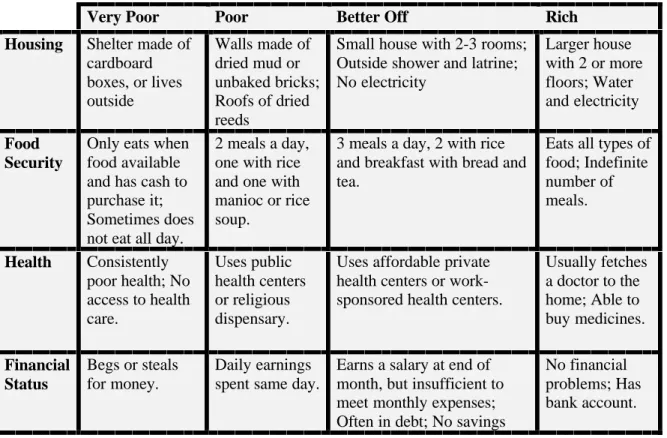
Figure 5: Sample Indicators for Wealth Ranking Exercise ... 26
Photograph 1: Community Members Developing a Seasonal Calendar, Indonesia ... 24
Photograph 2: Group Discussion, Bangladesh ... 26
Photograph 3: Key Informant Interview ... 27
Photograph 4: Interview Session, Southwest Sulawesi... 28
Photograph 5: Discussion of Field Notes, Madagascar... 29
Photograph 6: Women’s Group Interview ... 33
Text Box 1: A Definition of Livelihood... 1
Text Box 2: Rapid Rural Appraisals ... 3
Text Box 3: Pre-Assessment Check-List... 6
Text Box 4: Multi-Disciplinary Teams ... 19
Text Box 5: Analyzing Data Throughout the Assessment Process ... 30
Text Box 6: Report Outline ... 39
Annexes
Annex I CARE’s Livelihood Security Model
Annex II Sources of Risk to Household Livelihood Security Annex III Sample Scope of Work
Annex IV Diagnosis Decision Tree Annex V HLS Workshop Agenda Annex VI HLS Analysis Framework Annex VII Village Map
Annex VIII Transect
Annex IX Seasonal Calendar
Annex X Example of a Topical Outline Annex XI Example of Filled-In Matrices Annex XII HLS Assessment Checklist
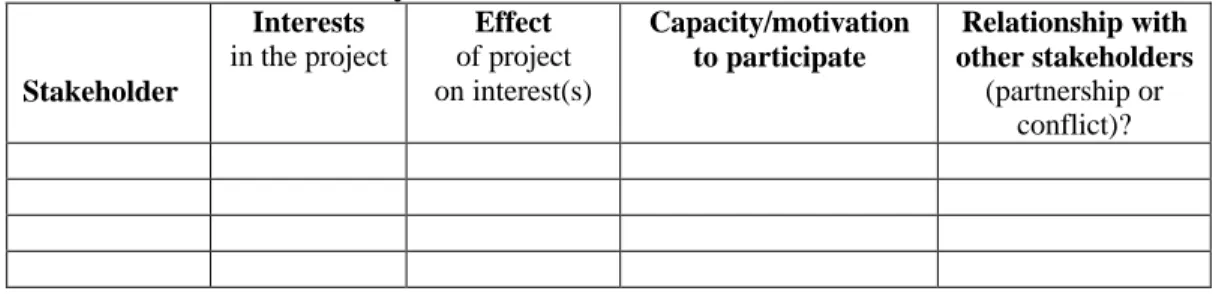
Annex XIII Rights and Responsibility Analysis Annex XIV Stakeholders Analysis
Glossary of Terms
Anthropometric Data: Measurements related to nutritional status for children between six and 60 months old (usually age, weight and height) as well as complementary household interviews that focus on diet diversity, immunizations, health, and wealth criteria, for the purpose of evaluating health and nutritional security.
Capital: Tangible or intangible assets that are held by a person or household for use or investment; wealth, in whatever form, capable of being used to produce more wealth; any source of benefit or assistance. Various forms of capital can be accumulated, exchanged, expended and lost, thereby affecting a household’s level of livelihood security, quality of life, and its options for coping strategies.
Financial Capital: The financial and liquid economic resources (e.g. savings, credit, remittances, pensions, etc.).
Physical Capital: Basic infrastructure (e.g. transport, shelter, energy,
communications, and water systems), production equipment, and other means that enable people to pursue their livelihoods.
Human Capital: The skills, knowledge, capacity of labor and good health, which are important to the pursuit of livelihood strategies.
Natural Capital: The natural resource stocks from which resource flows useful for livelihoods are derived (e.g. land, water, wildlife, biodiversity, and environmental resources).
Social Capital: The quantity and quality of social resources (e.g. networks, membership in groups, social relations, and access to wider institutions in society) upon which people draw in pursuit of livelihoods. The quality of the networks is determined by the level of trust and shared norms that exist between network members. People use these networks to reduce risks, access services, protect themselves from deprivation, and to acquire information to lower transaction costs. Political Capital: Political capital is defined broadly as the ability to use power to further political or economic positions, which in turn affects livelihood options and outcomes (Baumann and Sinha 2001). It refers to the legitimate distribution of rights and power, and how illicit operations of power can frustrate efforts of the poor to access and defend entitlements. Illicit use of political power by state officials and community elites can divert significant resources away from the poor.
Data Desegregation: The extent to which data or information is broken down. The further the data is desegregated, the more detail there is on individuals or unique
variables, for example: age, sex, level of education, income, occupation, agro-ecological or political area, etc. These data are generally more informative and useful than
Entitlement: Entitlements include the rights, privileges and assets that a household has, and its position in the legal, political, and social fabric of society. Sen’s (1981) theory on food entitlement states that these endowments are derived from a household’s own production, income, gathering of wild foods, community support (claims), assets, migration etc.
Food security: When all people at all times have both physical and economic access to sufficient food to meet their dietary needs for a productive and healthy life (USAID 1992). Food security takes into consideration the physiological needs of individuals, the complementaries and trade-offs among food and other basic necessities that households make, the dynamic nature of HH food security over time and the levels of vulnerability and response to risk (Barrett 1999).
Household Livelihood Security Assessment (HLSA): HLSA’s employ a set of data collection techniques and analytic tools adapted from social science interviews and survey methods. First used in farming systems research in the late 1970s and early 1980s and later in nutritional diagnostic work, HLSAs provide comprehensive sociocultural, economic, and ecological assessments of a given area for planning and project
implementation (Molnar 1989). They bridge the gap between formal surveys and non-structured interviewing.
Livelihood Security: The adequate and sustainable access to income and other resources to enable households to meet basic needs (Frankenberger, 1996). This includes adequate access to food, potable water, health facilities, educational opportunities, housing, and time for community participation and social integration.
Livelihoods Strategies: A livelihood comprises the capabilities, assets (stores, resources, claims and access), and activities required for a means of living (Chambers and Conway 1992). More specifically, livelihoods can be seen to consist of a range of on-farm and off-farm activities that together provide a variety of procurement strategies for food and cash.
Livelihood Systems: The activity(ies) that households engage in to earn/make a living. Livelihoods can consist of a range of on- and off-farm activities or procurement strategies that together provide food and/or cash. These strategies include assets and other resources the households possess, as well as the utilization of human capital and accessing of social capital (i.e. social networks or safety nets) in times of need. Livelihood systems of the poor are often quite diverse. Households often use their capabilities, skills, and know-how to diversify income sources and off-set risks.
Participatory Rural Appraisal (PRA): Participatory Rural Appraisals use the same methods as RRAs, however the emphasis is on community empowerment and not the acquisition of data within a short time-frame. The process involves intense community participation and assumes an open research agenda. Because PRAs tend to focus on one community rather than a region, they are best used in a complementary way to RRAs to further the design process once the RRA diagnosis is completed.
Rapid Rural Appraisal (RRA): The major objective of an RRA is to gain maximum knowledge of the target area with the minimum amount of time and resources (Eklund 1990). The major advantages of RRAs are that they are: (1) Rapid- Results are made available to decision makers quickly; (2) Interdisciplinary; (3) Eclectic in techniques aimed at capturing a holistic picture of the local situation; (4) Rely on more open-ended interview techniques that reduce non-sampling error; (5) Allow for valuable interaction between investigators and the target population (Molnar, 1989).
Rights-Based Approach (RBA) to Household Livelihood Security: The rights-based
approach to HLS recognizes that poor people and poor households live and interact within broader socioeconomic and sociopolitical systems that influence resource production and allocation decisions. The approach works to expose the roots of vulnerability and marginalization and expand the range of responses.
SWOT Analysis: A tool used in institutional assessments to capture and identify an organization’s geographic and programmatic scope of action, perceived effectiveness and level of acceptance and support by community members and local institutions. The analysis is broken down into Strengths, Weaknesses, Opportunitiesand Threats.
I. Introduction to HLS Assessment/Diagnostic Issues A. Household Livelihood Security
Household Livelihood Security (HLS) has become CARE’s basic framework for program analysis, design,
monitoring and evaluation. HLS grows out of a food security perspective, but is based on the observation that food is only one important basic need among several, and adequate food
consumption may be sacrificed for other important needs. Given that the causes of poverty are complex, HLS
provides a framework to analyze and understand the web of poverty and people’s mechanisms for dealing with it (See Annex I).
Household Livelihood Security1 is defined as adequate and sustainable access to income and resources to meet basic needs (including adequate access to food, potable water, health facilities, educational
opportunities, housing, and time for community participation and social integration). Livelihoods can be made up of a range of on-farm and off-farm activities that together provide a variety of procurement strategies for food and cash. Thus, each household can have several possible sources of entitlement which constitute its livelihood. Entitlements include the rights, privileges and assets that a household has, and its position in the legal, political, and social fabric of society.
The risk of livelihood failure determines the level of vulnerability of a household to income, food, health and nutritional insecurity (See Annex II). The greater the share of resources devoted to food and health service acquisition, the higher the vulnerability of the household to food and nutritional insecurity.
Therefore, livelihoods are secure when households have secure ownership of, or access to, resources (both tangible and intangible) and income earning activities, including reserves and assets, to off-set risks, ease shocks, and meet contingencies. Households have secure livelihoods when they are able to acquire, protect, develop, utilize, exchange, and benefit from assets and resources.
B. A Rights-Based Approach to Household Livelihood Security
Since the introduction of the HLS Framework in 1994, the basic concepts have been evolving based on both the lessons learned by the larger development community, as well as the lessons learned within CARE. As we learn, we are continually updating and improving the HLS Framework. The most recent evolution involved the incorporation of based approaches (RBA) into HLS. Incorporating rights-based approaches into the HLS Framework enriches the Framework and provides an important lens through which to develop new strategies to better reach CARE’s vision and mission. However, it is important to note that RBA does not replace HLS. The combination of a Rights Based Approach and the
1
For a complete discussion of the HLS Conceptual framework, see “Operationalizing Household Livelihood Security: A Holistic Approach for Addressing Poverty and Vulnerability” by Frankenberger, Drinkwater and Maxwell (2000).
A Definition of Livelihood
‘A livelihood comprises the capabilities, assets (stores, resources, claims and access) and activities required for a means of living: a livelihood is sustainable which can cope
with and recover from stress and shocks, maintain or enhance its capabilities and assets, and provide sustainable livelihood opportunities for the next generation:
and which contributes net benefits to other livelihoods at the local and global levels in the long and short term.’
Chambers and Conway, 1992 Text Box 1
HLS framework can be referred to as a rights-based approach to Household Livelihood Security (RBA to HLS).
Shifting to a rights-based approach to HLS requires a more systematic analysis in order to address the root causes of poverty. CARE is beginning to focus more on the analysis of policy-level issues, and to work increasingly at levels beyond the community. A rights-based approach to HLS requires CARE staff to focus on improving not only people’s conditions (needs) but also their social positions (rights). It will also require CARE to broaden its capacity to analyze household vulnerability to include desegregation based on levels of marginalization. A rights-based approach to sustainable livelihood security requires the analysis of rights and responsibilities, as well as the design of interventions that have an impact on people whose rights are being violated as well as on improving their capacity to exercise their obligations as citizens. CARE Country Offices will also need to make new strategic alliances, since rights realization is not something that CARE will be able to achieve on its own.
C. Household Livelihood Security Assessment
A Household Livelihood Security Assessment (HLSA) is a holistic and multi-disciplinary analysis which recognizes that poor families commonly suffer more than one problem at a time and often have to make significant sacrifices to meet their basic needs. HLS uses an integrated or systems approach to analysis, with recognition that poor people and poor households live and interact within broader socioeconomic and sociopolitical systems that influence resource production and allocation decisions. The HLS assessment process aims to enhance understanding about local livelihood systems – livelihoods, economic, socio-cultural and political systems and the constraints, vulnerabilities, marginalization, and risks of poor families living within this context – and important differences among types of households and among members within the household.
A Household Livelihood Security Assessment (HLSA) is a type of rapid rural appraisal (RRA) or participatory rural appraisal (PRA).In RRAs, the major objective is to gain maximum knowledge of the target area with the minimum amount of time and resources (Eklund 1990). The major distinguishing features of such approaches include the following:
• Interviews are conducted by researchers themselves, not by enumerators as in formal surveys. • Interviews are essentially semi-structured with emphasis on dialogue and probing for information. • Informal purposeful sampling procedures are used in conjunction with formal random sampling
from a sample frame.
• The data collection process is dynamic and interactive, where the researchers evaluate the data collected and reformulate data needs on a daily basis.
• RRAs are generally conducted over a period or one week to two months.
• In dealing with accuracy/timeliness trade-offs, a process of triangulation is used whereby diverse methods and information sources are used to improve accuracy.
• RRAs rely on multi-disciplinary teams to carry out surveys (Frankenberger 1992).
Despite the multiple advantages of RRAs, it is important to recognize that researchers cannot be certain that the households or groups interviewed in the survey are representative of most households in the region. Thus RRA techniques should be viewed as complementary to other research methodologies such as formal surveys and in-depth anthropological studies.
Participatory Learning and Action
PRA/RRA and Participatory Learning and Action are often thought to be the same2. There are differences however. Although the same methods tend to be used, the ultimate goal of PLA is community
empowerment. This involves intense community participation and assumes an open research agenda. This can hardly be done quickly. RRA methods by contrast are meant to provide researchers and local decision-makers with data quickly. PLAs also involve
multidisciplinary teams that gather information in a
systematic, yet semi-structured way. However, PLAs tend to
focus on one community rather than a region, and community participation is considerably more active. One drawback of PLAs is that the sample size is so small that scaling up generalizations to a broader geographic focus is both difficult and risky.
Thus, PLAs are best used in a complementary way to RRAs to further the design process once the RRA diagnosis is completed. These methods should not be viewed as substitutes for each other for they serve different purposes. PLA is intended to help a community mobilize its human and natural resources to define problems, consider successes, evaluate local capacities, prioritize opportunities, prepare a systematic and site specific plan of action, and means of facilitating community self-help initiatives. RRAs, on the other hand, tend to be geographically broader in scope and incorporate more participation of local institutions. Both RRA and PLA should strive to bring together the development needs as defined by the community with the resources and technical skills offered by the government, donor agencies and NGOs.
D. Assessments Based Upon the Evolving Household Livelihood Security Framework
Importantly, and one of the key strengths for allowing incorporation of rights-based analysis, is that the HLS framework requires a desegregation of data by ethnic groups, gender, economic status, social strata, age, etc. in order to analyze differences in:
§ The division of labor within the family and the community
§ Access to goods and services
§ Control over resources
§ The exercise of rights and obligations
§ The accumulation of capital (physical, natural, economic, human, social, political)
§ Vulnerability and marginalization issues
§ The distribution of political and economic power
The strength of the HLSA approach lies in its ability to obtain a holistic and multi-dimensional profile of a micro-level context -- food, nutrition, livelihood, and rights-realization -- with strong regional and national contextualization, allowing for the scaling-up of interventions. It sets the stage and defines the
2
From Bergeron, G. (1999) “Rapid Appraisal Methods for the Assessment, Design, and Evaluation of Food Security Rapid Rural Appraisals
The major advantages of RRAs are that they are:
(1) Rapid-Results are made available to decision makers quickly.
(2) Interdisciplinary.
(3) Eclectic in techniques aimed at capturing a holistic picture of the local situation.
(4) Rely on more open-ended interview techniques that reduce non-sampling error.
(5) Allow for valuable interaction between investigators and the target population.
Molnar, 1989 Text Box 2
parameters for further detailed inquiry, suggests broad directions for intervention (subject to more detailed, sector specific investigation), and identifies potential constraints to such interventions.
Importantly, HLSAs can serve as a conduit for scaling-up by creating a space through which communities can voice local concerns and more actively participate in the needs-identification process. Also by
working to increase the institutional capacity of local NGOs, HLSAs provide another potential means for scaling-up. Finally, encouraging the participation of national government representatives in the
assessment and needs identification process provides a mechanism for bringing key players from the central and provincial governments into the local development process and into communities, or scaling-down.
E. The Evolution of HLS: Incorporating Rights-Based Approaches into HLSAs
Because household livelihood assessments are holistic in their review and analysis of human conditions, they can easily be expanded to incorporate a comprehensive relational analysis of social positions and marginalization, the influence of power in the local context, and the degree of human rights realization. Assessments can take into account those basic conditions that prevent people from living life with dignity, such as limited personal security, limited freedom of movement and poor participation in public affairs. Therefore, in the pursuit of understanding livelihood security conditions, CARE staff will better
understand the sociopolitical obstacles facing communities and the inter-relationships among different, and possibly competing, rights and obligations.
A rights-based approach to HLS makes a concerted effort to identify the underlying and root causes of poverty, livelihood insecurity and the vulnerabilities of marginalized families. The HLSA, therefore, attempts to determine what, if any, rights are not being met, the parties not exercising their rights and obligations, and the actions that can be taken (by level of responsibility) to promote rights realization. Analysis of power dynamics among and between groups is also undertaken.
The HLS assessment takes into consideration the various formal and non-formal institutions that influence rights realization. Thus, institutional mapping is needed to identify how responsible actors or institutions advance or impede rights. This also involves understanding local perceptions of the legitimacy and values of local institutions.
F. Relevance to Emergency Mitigation and Development
CARE recognizes that poor households are not static in their ability to make a living. Poor people are constantly exposed to various risks and shocks that jeopardize their livelihood options (See Annex II). Livelihood assessments are relevant at capturing these risk factors and their consequences. Thus, they are appropriately carried out in emergency situations (especially slow-onset) as well as in development contexts and for dealing with transitions between the two. A range of intervention options needs to be made available for the various circumstances that face populations. The livelihood security of vulnerable populations that are exposed to natural and human-caused emergencies requires special consideration. This livelihood systems approach is based on the notion that relief, rehabilitation/mitigation and
development interventions are interrelated activities, often occurring simultaneously and are not separate and discrete initiatives. Likewise, the type and mix of HLS assessment tools and methods will vary according to the specific objectives, conditions and constraints of the emergency situation.
G. Implications for Intervention Design
To help households meet their basic needs and realize their rights, four types of interventions are given emphasis in livelihood assessments. These are:
• Interventions focusing on expanding the income and resource base of the poor (means).
• Interventions focusing on empowering households and communities to improve their access to services through expanded educational opportunities, community mobilization, and political advocacy.
• Interventions focusing on expanding the access of poor households to basic services. In addition to these micro-focused interventions, Country Offices and CARE headquarters are giving increasing attention to the role of advocacy and broader development initiatives in improving the opportunities of households in meeting their basic needs.
• Interventions that attack the root causes of poverty using a rights-based approach. This involves addressing areas previously considered to be assumptions in program design, particularly the policy dimensions of poverty. No fundamental cause or driver of livelihood insecurity should automatically be assumed too political, sensitive or complex for CARE to engage in. A good analysis of the risks of engagement will always precede any action taken. CARE staff should anticipate and avoid harms that may result from their interventions. Addressing the root causes and achieving rights standards will broaden the menu of responses within CARE programs. This will mean that CARE will intervene at multiple levels (macro-, meso- and micro-levels).
II. Pre-Assessment Activities
Before conducting the survey, some exploratory studies are required in order to have a broad
understanding of the region where the HLSA will be conducted. These activities will be carried out several months prior to the field collection exercise. Preliminary studies are based mainly on secondary information obtainable at the country/national, regional and local levels. A preliminary field visit may be required to collect data from government officials (GO) and local NGOs, or even reaching key informants at the community level if required, in order to complement the information collected indirectly.
In addition, a Stakeholders Identification and Institutional Assessment of other NGOs and government agencies working in the survey area are conducted, and documents such as the Terms of Reference for the assessment and Scope of Work are generated3.
A. Secondary Data Review
Secondary data consist of existing reports and documents compiled by other persons or organizations and/or for purposes other than those of the present exercise. Primary data is that which is collected first-hand and reported by the HLS assessment teams. Secondary data complements, but is not a substitute for the use of necessary primary data4.
3
See Annex III for an example of a Scope of Work document 4
Adapted by TANGO International, Inc. from McCaston, K. (ed.), HLS Manual, CARE USA, PHLS Unit (2000), for use in the CARE Bolivia, Title II program HLS assessment process, August 2001. Also see McCaston, K. 1998. Tips for Collecting,
Secondary data is collected and analyzed for the purpose of (1) clarifying the context of primary data research, (2) preventing the
collection and analysis of too much primary data, and (3) formulating appropriate research questions for the primary data surveys.
If secondary research and data analysis is undertaken with care and diligence, it can provide a cost-effective way of gaining a broader understanding of specific phenomena and/or conducting preliminary needs assessments. Secondary data are also helpful in designing subsequent primary research and, as well, can provide a baseline with which to compare your primary data collection results. Therefore, it is always wise to begin any research activity with a review of the secondary data (Novak 1996).
Some of the most common sources of secondary data include:
ü Government documents
ü Municipal development plans
ü Official statistics
ü Technical reports
ü Project reports
ü Baseline studies
ü Project evaluations
ü Professional and academic journals
ü Reference books
ü Research organizations
ü Public and private universities
ü Public and private libraries
ü Computerized data bases
ü Internet web sites
Secondary data analysis and review involves collecting and analyzing a vast array of information. To help you stay focused, your first step should be to develop a statement of purpose that provides a detailed definition of the reason for your research. The second step is to create a research design that provides a step-by-step plan to guide the data collection and analysis (See Annex IV).
Pre-Assessment Check-List
Ø Compile, process and analyze existing (secondary) information
o Prepare presentation graphics and area statistics
o Prepare preliminary HLS profiles
o Define geographic area and target populations
o Obtain/prepare maps
o Obtain/prepare demographic profiles
o Conduct reconnaissance visits
Ø Identify institutional partners
o Inventory local organizations
o Negotiate partner responsibilities
o Identify key agency participants for all assessment phases
Ø Negotiate Terms of Reference (TOR) for the overall assessment process
o Set objectives, roles, responsibilities and products
o Prepare detailed assessment timeline
o Prepare assessment budget and determine funding sources
Ø Organize work effort
o Designate NGO coordination/supervision team
o Designate secondary and primary data research teams
o Write Scopes of Work (SOW) for consultants and key NGO staff
o Determine logistics and administrative support requirements
Ø Contact participating organizations and government agencies
o Confirm timeline and participation of key individuals o Finalize logistics arrangements
T
Figure 1: Important Areas of Descriptive Information
Physical and Environmental
• Types and distribution of communities • Available services and infrastructure • History of natural disasters
• Historical trends and policies
• Agro-ecological conditions and seasonality • Historical “shocks” and “stresses”
• Demographic distributions
Social and Political
• Local leadership and authority • Ethnic groups
• Formal and informal social networks • Political systems
• Personal security
Economic Activities
• Major and minor livelihood strategies • Sources of income
• Farm and off-farm employment • Seasonal and permanent migration
Institutional Analysis
• Existing institutions (public, NGOs, CBOs, religious, trade and labor associations, industry, etc.)
• Nature of institutional programming and strategic plans • Interest in collaboration
• Comparative advantages, SWOT analysis • Relations with governments and communities
Outcome Indicators
• Health and disease • Nutritional status
• Access to water and sanitation • Literacy
• Access to infrastructure, public and productive
Social Differentiation
• Levels of wealth and poverty • Livelihood profiles and categories • Social mapping
B. Institutional Profiles/Mapping
Institutional profiles involve documenting the various government, NGO and Community-Based
Organizations (CBO) institutions that are operating in the target area. This usually involves three types of data collection. The first type is institutional mapping which usually is carried out prior to the assessment. It involves reviewing the background, objectives, main activities, working areas, staff capacities,
partnerships, donor funding and horizon, long-range strategies for the area, and the major strengths and weaknesses of the organization. Key questions often asked in an institutional mapping exercise are the following:
• Who are the organizations involved in addressing key issues and problems? • What do they do?
• Where do they work?
• How do they interact with the target population? • Where are the overlaps with other organizations?
• Where are the gaps in capacity?
• How might some organizations impede the work of others? • What are their long-range plans for working in the area? • What are the strengths and weaknesses of the institutions?
A second type of institutional analysis is carried out during the field exercise. Venn diagrams (see Figure 1) are used to collect information on the various organizations/institutions that carry out activities in the community5. The Venn diagram
approach enables the research team to determine how strong these institutional relationships are to the community based on the distance and size
of the circle from the center. Some key questions asked during the construction of the Venn diagram in communities include the following:
• How do program participants/target groups interact with organizations and institutions?
• How do the organizations work together?
• Identify subsets of organizations: o What is the relative
importance of these associations?
o How are these associations linked?
o What is their value and importance to the target population and their livelihoods?
o What is the level of access?
o What are the constraints to access and participation?
A third type of data collection involves constructing trends analysis and historical timelines during the field visits. These trends analysis and historical timelines try to capture the following types of
information:
• Who are the key groups or institutions that have influenced the issues, problems or opportunities over time?
• What are their relationships with the target population, and how have they changed over time?
C. Stakeholders Identification and Participation
The institutions that operate in the community context may influence livelihood outcomes, therefore, it is important to take the various stakeholders into account before carrying out any livelihood assessment. The assessment team needs to identify those entities–local and national government, CBOs, utility
organizations, international and national NGOs (including CARE), research institutions, private sector
Figure 2:Example of a Venn Diagram from an HLS Assessment in Bangladesh, 2002 Bangladesh/© CARE 2001
Govt. Family Health Clinic Thana Social Services Primary School & Cyclone Center World
Vision PrimaryGovt.
School Fisheries Department Village Market Kanai Nagar Village Thana Women Affiars Office Agriculture Department Proshika CARITAS PDBF CARE Village Doctor Venn Diagram Venn Diagram Kanainagar
(small and large), donor(s), and the target group itself–that may have something to gain or lose from the outcomes of the assessment. These entities are defined as stakeholders, individuals or institutions with interests in the process and outcomes of CARE-supported activities and the ability to significantly affect a project, positively or negatively. Stakeholders may be partners, recipients of project resources, private sector and/or organizations that have a vested interest in the outcome of the project (e.g., donors, local government, etc.)
There are three main steps for involving potential stakeholders in the assessment: 6 • Identify principal stakeholders.
• Investigate their interests, roles, relative power and capacity to participate.
• Identify relationships between stakeholders, noting potential for cooperation or conflict.
D. Stakeholder Participation in the Design of the Assessment
A workshop can be held to build awareness and consensus among local stakeholders on the key objectives of the assessment, the targeting of the data collection and how the information will be used. The
workshop primarily will concentrate on reviewing secondary data and the institutional mapping
information that has been gathered. This workshop is a beginning point for developing strategic alliances and partnerships for joint planning and implementation of development activities that will be derived from the information gathered. It is hoped that through this participation, these stakeholders will mobilize the necessary financial, technical and material resources to help carry out the assessment.
III. Target Area Selection
One of the first steps in carrying out a livelihoods assessment is to identify vulnerable groups within geographic boundaries. These boundaries are usually based on administrative divisions and
socioeconomic and/or agro-ecological characteristics. Administrative boundaries are determined by the structure of government and political borders. Socioeconomic areas are related to production or social systems (e.g. pastoralists, subsistence farming, urban). Agro-ecological zones relate to natural resource characteristics (e.g. flood deltas, arid lands, mountain zones). Appropriate geographic targeting is dependent upon reliable and accurate information at the national or sub-national level.
In countries where good background information already exists, such as national early warning systems or poverty profiles (e.g., crop forecasting, food balance sheets, nutrition surveillance, other background studies), information supplied by these sources can help identify the most vulnerable regions
(Frankenberger 1992). These vulnerability profiles should be based upon both food security and absolute poverty indicators as much as possible to avoid designating an area as vulnerable, which may not be. HLSA teams are not necessarily responsible for creating these profiles. For example, CARE contracted consultants to prepare poverty profiles for Honduras, Guatemala, and India as part of the pre-assessment activities.
Vulnerability information can also be obtained through the World Food Program’s (WFP) Vulnerability Analysis and Mapping Units (VAM), USAID-funded Famine Early Warning System (FEWS-Net) and the Food and Agriculture Organization’s (FAO) Global Information and Early Warning Systems (GIEWS). Information systems and targeting mechanisms need to be closely linked to be both cost effective and efficient.
6
The general vulnerability profiles can then be used for designating geographic areas where more location-specific household food and livelihood security information can be gathered. Important points to consider when choosing a target area are:
• It is important to clearly define the criteria used for determining vulnerability and
marginalization in the area. Vulnerability can be reflected by economic constraints (sources of income, assets, market conditions), physiological conditions (nutritional status, health status) and socio-political/marginalization characteristics (ethnic, religious or caste-affiliation,
refugees/displaced status).
• Donor selection constraints: Sometimes development agencies do not have complete freedom to choose the areas where they will work due to donor funding priorities and constraints. For
example, donors may decide that different NGOs will be allocated to different regions of the country in which to work. This may prevent the assessment team from going to the most
vulnerable areas in the country. Given this constraint, every effort should be made to choose areas to carry out the assessment that are the most vulnerable for that region.
IV. Creating Livelihood Security Profiles
Livelihood Profiles are derived for a region through a composite analysis of the following elements or clusters: contexts, conditions and trends; livelihood resources (economic, natural, physical, human, social and political capital); institutional processes and organizational structures (government, civil society and private sector); livelihood strategies (productive, exchange and coping activities); and livelihood
outcomes (e.g. nutritional security, food security, health security, habitat security, education security, income security, social network security, personal safety, and environmental security). (See Figure 3 Below). The livelihood profiles should focus on describing the conditions and status of the poorest and most vulnerable households in the designated area.
These profiles are generated from secondary information and the vulnerability information derived from the sources described above. These regional profiles are fine-tuned and developed for each community that is surveyed in the livelihood assessment.
Figure 3 Policy Social Economic Political Environmental Infrastructure Demography Historical Natural Capital Economic/Financial Capital Physical Capital Human Capital Social Capital Political Capital
State
Formal Civil
Society
Informal Civil
Society
Private Sector
Production and Income Activities Processing, Exchange and Marketing Activities Sacrifices and trade-offs Nutritional Security Food Security Income Security Education Security Health Security Habitat SecuritySocial Network Security Personal Safety
Environmental Security Life Skills Capacity CONTEXTS, CONDITIONS AND TRENDS LIVELIHOOD RESOURCES INSTITUTIONAL PROCESSES & ORGANIZATIONAL STRUCTURES LIVELIHOOD STRATEGIES SUSTAINABLE LIVELIHOOD OUTCOMES Contextual analysis of conditions and trends and
assessment of policy setting Analysis of livelihood resources; trade-offs, combinations, sequences, trends Analysis of institutional/organizational influences on access to livelihood resources and composition of livelihood
strategy portfolio
Analysis of livelihood strategy portfolios and
pathways
Analysis of outcomes, adjustments and
A. Context, Conditions and Trends
A holistic analysis of livelihood security begins with understanding the context for any given population. To understand the macro-level factors that influence the range of possibilities for livelihood systems, we must consider the social, economic, political, environmental, demographic, historical, and infrastructural information. It is this information that sets the parameters within which livelihood strategies operate. This information is primarily derived from secondary data to reduce costs.
The current status of livelihood security and the underlying causes of poverty are often conditioned by long-term cultural, social, economic and political trends. A history of colonialism, economic dependence, civil conflict or recurrent natural disasters will have an important influence on current social and political relationships, for example, and set the foundations for exclusion and discriminatory attitudes and practices. It is important to recognize that development projects, in a relatively short period of time, will probably not be able to significantly change entrenched cultural, social and political practices. In the best of cases, key leverage interventions may be able to support “positive” trends or impede or counteract certain “negative” trends. Thus, an analysis of trends is important to understand which underlying causes are most susceptible to program intervention. A review of secondary data can provide insight into important historical trends. This, in turn, will allow the HLS assessment team to formulate questions and design methods to determine relative effects and perceptions of historical and contextual conditions on current vulnerable populations through focus groups, key informant interviews, and institutional assessments.
B. Livelihood Resources
Households have access to both tangible and intangible assets that allow them to meet their needs. Natural Capital consists of natural resource stocks from which resource flows useful for livelihoods are derived (e.g. land, water, wildlife, biodiversity, and environmental resources). Financial Capital is cash and other liquid resources, (e.g. savings, credit, remittances, pensions, etc). Physical Capital includes basic
infrastructure (e.g. transport, shelter, energy, communications, and water systems), production equipment, and other material means that enable people to maintain and enhance their relative level of wealth. Human Capital consists of the skills, knowledge, ability to labor and good health, which are important to the pursuit of livelihood
strategies. Social Capital is the quantity and quality of social resources (e.g. networks, membership in groups, social relations, and access to wider institutions in society) upon which people draw in pursuit of livelihoods. The quality of the networks is determined by the level of trust and shared norms that exist between network members. People use these networks to reduce risks, access services, protect themselves from deprivation, and to acquire information to lower transaction costs. Political Capital consists of relationships of power and access to and influence on the political system and governmental processes at the local and higher levels.
In the analysis of these resources, it is important to take into account the combinations necessary for sustainable livelihoods, the trade-offs that exist between resources, the sequences that may exist between them (i.e. which resources are prerequisite to others), and the long-term trends in their use (adapted from Scoones 1998). Livelihood resources include the range of social, physical, economic and political conditions and prerogatives which determine the relative access that disenfranchised families have to quality services, e.g. health, education, markets, information, government, etc. The most vulnerable families, in other words, are those which lack access to the services and systems which have an effect on their livelihoods and which determine their ability to exercise their rights and obligations as equal citizens.
C. Institutional Process and Organizational Structures
A variety of institutions may operate in the community, or have jurisdiction over the community and directly influence the livelihood outcomes of the population. This
information is captured in the institutional mapping/profile and stakeholder identification process. These institutions can be of the State, civil society, or private sector. The State not only provides services, but also provides safety nets, changes policies, and can limit freedoms that can have positive or adverse effects on livelihood systems. Similarly, formal civil society organizations (NGOs, CBOs, parastatals, cooperatives, churches) can provide either enabling conditions or constrain opportunities for certain households. Informal civil society (e.g. informal community networks and social groups) consists of the web of associations within which individuals and households function or belong. These networks can have positive or negative influences on the livelihood strategies that people pursue. The private sector can also create or limit community and household opportunities through open, affirmative action policies or, to the contrary, discriminatory and exploitive business practices. It is important in any analysis to take these various institutions into account in the formulation of any sustainable interventions.
D. Livelihood Security Strategies
Households combine their livelihood resources within the limits of their context and utilize their institutional connections to pursue a number of different livelihood strategies. Strategies can include various types of production and income-generating activities (e.g. agricultural production, off-farm employment, informal sector employment, etc.) or, often, a complex combination of multiple activities. An HLS analysis should determine the livelihood strategy portfolios that different households or groups pursue and the historical pathways they have taken. Although some of the information on livelihood strategies will be derived from secondary sources, more detailed information will be obtained from the primary data collection during the assessment. Importantly, all livelihood strategy data should be desegregated by ethnic groups, gender, economic status, social strata, age, etc. to ensure proper analysis of sub-groups.
Some livelihood strategies of the poor are often associated with certain ethic or social groups. These can be traced to historic patterns of discrimination, exploitation and limited
access to social, financial, judicial and information services – for example, education, credit, land tenure, and market data respectively. In times of need, poor families, for example, often have to resort to child labor to make ends meet, or sacrifice productive resources to pay for food or medical treatment. Political affiliations also may determine who has access to jobs and services.
In the analysis of livelihood strategies, it is also important to capture the types of coping strategies people use when normal livelihood options are not adequate to meet household needs. It is important to distinguish network strategies that are non-sustainable
(divestment strategies) and coping strategies that are sustainable.
E. Livelihood Security Outcomes
To determine whether households are successful in pursuing their livelihood strategies, it is important to look at a number of outcome measures that capture need or well-being satisfaction. Nutritional status is often considered one of the best outcome indicators for overall livelihood security since it captures multiple dimensions such as access to food, healthcare and education. Other livelihood outcomes that should be measured include sustained access to food, education, health, habitat, social network participation, physical safety, environmental protection, as well as life skills capacities. Analysis of these outcomes should not only determine what needs are currently not being met, but also what trade-offs are there between needs. In addition, the analysis should help determine the synergistic relationships between these outcome measures. Much of this information can be derived from secondary sources (Demographic Health Surveys and government or research reports).
In addition to these standardized measures, attempts are made to derive from the
community the criteria they use for determining livelihood improvement. These measures are often location specific. Every effort is made to establish community-based monitoring systems to enable the community to track improvements themselves. This information on community criteria is usually derived from the assessments.
Currently, CARE is trying to establish these livelihood profiles during the Long Range Strategic Planning Process for each region in which they operate (e.g. Peru) or in
analytical work conducted as part of a program design exercise. This will allow CARE to take a more holistic perspective in any project design for that region even if they are given a very short time horizon to develop a proposal for a donor. These profiles would be periodically updated as new information comes in from projects. The HLS Framework provides a way to organize and apply the information.
F. Rights Realization
The extent to which individuals and families are able and willing to equitably exercise their rights and obligations as participating members of society is incorporated into each element or category of the HLS assessment. An analysis of underlying and root causes of the predominant problems affecting the poorest and most marginal families is essential to
determining where and how rights are being violated and opportunities are limited. The important thing for CARE staff is to understand the various manifestations and
implications of human, civil and political rights and to recognize that these constitute a legitimate and necessary area of analysis and intervention for CARE, either directly or indirectly through partners and strategic alliances with specialized organizations. The HLS assessment process offers many opportunities for CARE to promote multi-institutional participation in the analysis and interpretation of the HLS profiles and their determining factors. Likewise, analysis and interpretation can then systematically lead to joint action planning and policy analysis among government, civil society and private businesses within the program area. CARE will have more success as a relief and development organization when it works together with other local agencies towards common goals and compatible strategic directions. This is especially true concerning the realization of basic rights.
V. Developing and Fine-Tuning Your Objectives
Household livelihood security assessments can be undertaken to satisfy one or more important programming objectives. These may include:
1. Undertake an assessment of the conditions, systems, risks and opportunities related to the livelihood security and rights realization of the poorest and most vulnerable households or groups, in order to design (or validate and adjust) appropriate and effective program strategies and interventions.
2. Build awareness and consensus among local development organizations, the public and private sectors regarding the root and underlying causes and consequences of poverty and livelihood insecurity, support for appropriate poverty-reduction strategies, the mobilization of financial, technical and material resources, and the conditions needed to sustain and increase program impacts. 3. Develop strategic alliances and partnerships among key local organizations for the
joint planning and implementation of development activities at the municipal and local levels and to further social and economic conditions and opportunities within target corridors.
4. Train CARE and partner organization personnel in the understanding and application of HLS and RBA concepts and the methodologies of participatory holistic assessments.
5. Develop strategies and operational practices to improve cooperation and coordination of field activities among local NGOs, municipal governments, community-based organizations and State service agencies.
6. Develop strategies and operational practices to improve cooperation and coordination of field activities among CARE projects working in the area to develop a more coordinated program approach.
7. Determine thematic priorities and strategic approaches for policy advocacy. 8. Build capacity for improved institutional learning at all levels.
The most common objective of HLSA is to acquire information for the design of
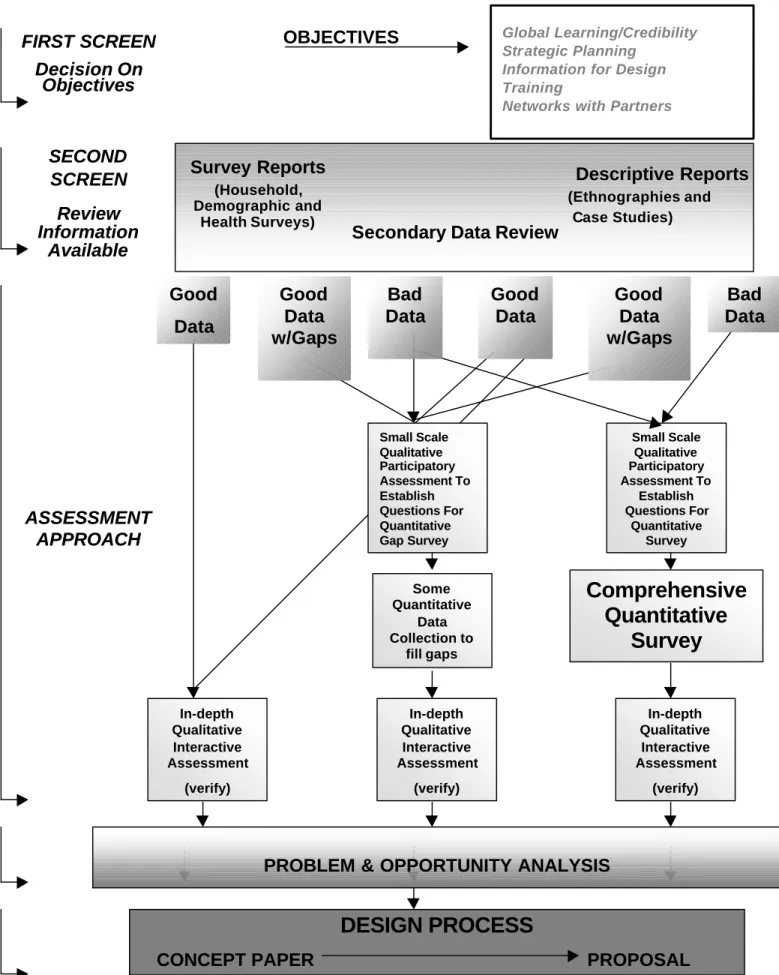
programs. However, most HLSAs have multiple objectives. The objective may be global learning to gain institutional credibility in an area where there is little or no previous experience, or to get information for strategic planning to improve the allocation of scarce program resources over multiple, competing demands. Building the analytical capacity of staff and partner organizations is often an objective, though rarely a primary objective. Building partnership relationships is also a common secondary objective. An important consideration in setting objectives is whether programs based on information gathered will be scaled up within the planning time horizon. How much primary information must be collected depends on the availability and quality of existing
information. In general, the principle is to collect only as much primary information as is required which cannot be gathered from secondary sources (See Annex IV).
An HLS assessment should not attempt to satisfy too many objectives since each will require specific strategies, methods and resource allocations to be effective. The HLSA team should carefully and explicitly determine the primary objectives and outcomes of the process, and how these will be achieved.
VI. Survey Sample Selection
A. Purposive and Random Sampling
Formal sampling is not normally used in the selection of sites for livelihood assessments because of the lack of time and labor intensity of the methods required7. This is why site selection is of critical importance in these livelihood assessments.
Before beginning the site selection process it is useful to consider what types of information can and cannot be gathered using participatory qualitative methods. For example, PRA/RRA methods cannot be used to make statistical inference in which the results of the study are generalized to a wider population. While participatory livelihood assessments cannot generalize specific findings, they can be extremely useful in pointing out significant issues that will need to be considered during project design and
implementation or for the advocacy of specific policies with other local organizations. In selecting sites, it is important to determine how many communities and agro-ecological areas or administrative jurisdictions the HLSA team can realistically cover given time, logistical and labor constraints. Coverage will be influenced by such factors as environmental uniformity, technological development, socioeconomic conditions,
7
Much of the information in this section is taken from Freudenberger, K. (1999) “Rapid Rural Appraisal and Participatory Rural Appraisal: A Manual for CRS Field Workers and Partners”. CRS.
infrastructure development, and access during the rainy season. The team should plan to spend more time in regions where the livelihood systems, agricultural systems, and/or ethnic mix are more diverse and variable than in regions where they are more uniform. If the region is quite homogenous with one ethnic group and one production system in the zone, only a few sites may be needed.
The number of sites that can be studied will depend upon the number of team members and the amount of time that can be spent in the field. The normal number of teams used ranges from two to four with six members on each team. If each team spends three days per site then only two sites can be covered in one week per team. Normally two weeks are allocated for field work and another week is allocated for data analysis. Therefore the number of communities that are normally surveyed range between six and sixteen. Once the number of sites has been determined, then the team can begin the process of selecting the sites. This is best accomplished by using a combination of purposive and random sampling. Purposive sampling is used to ensure certain characteristics are included in the sample. Random sampling is used to select one site among several sites that represent particular characteristics that you want to capture in the survey.
The purposive sampling ensures that the diversity of conditions present in the zone are captured in the sample. The random selection reduces the likelihood that someone (staff person or local agency) will introduce a bias in order to favor a specific agenda. Because the actual number of communities that the teams will be surveying will be small, you want to ensure that the sample is as representative as possible of the communities in the region. For this reason, it may be necessary to disqualify communities that are totally unique or very different. The best way to determine which are the outlying communities (i.e. the exceptions to the rule) is to discuss the situation with several individuals who are knowledgeable about the area.
Examples of criteria used for purposive sampling includes nearness to roads, access to markets, ethnic differences, livelihood strategy differences, agro-ecological differences, nearness to urban areas, etc. The purpose of the survey is to provide a picture of the range of situations that might influence livelihood outcomes.
Once the selection criteria have been developed, it is important to place a number of communities found in the region into categories that represent the criteria. Stratifying the communities along these criteria can ensure that certain characteristics will be found in the sample. Communities should be randomly chosen within each category. The number chosen will depend upon the constraints discussed above.
After the sites have been chosen, each site should be visited before the team begins the study to determine that the conditions are appropriate and that the community wants to participate. After these visits it may be necessary to exclude a site and choose an alternative. Once again a random process should be used to select a new site.
B. Other Sampling Considerations
There are other important considerations to take into account before choosing an appropriate sample. First, in some countries, such as those in South America, many communities are connected through intricate market networks that have been developed along river courses or along roads within valley areas. In order the scale up the impact of future interventions, these economic corridors need to be taken into account in the selection of communities and future recommendations.
Second, when quantitative techniques such as rapid nutritional assessments are combined with household livelihood security assessments, the sampling strategy will become more rigorous. For every distinct geographical area that is targeted, it is important to have at least six randomly chosen communities. This is because a minimum of 180 cases (using a cluster sample of 30 different mothers and one of their children from each community) is needed for nutritional status measures to be statistically representative of the families with children under five years of age within the target area. Based on experience, it is quite difficult to combine these quantitative and qualitative techniques and serious consideration should be given to carrying out these activities as separate field exercises. Once the sample has been chosen, it is important to draw up a schedule specifying the number of days to be spent in each area as well as the number of days for travel time, review, and write-up. This schedule should be flexible and time constraints may force the team to reduce the number of survey sites.
Before the team arrives in the region to be surveyed, it should first contact local officials to establish collaborative links and to elicit their help. These officials can help select potential communities to be surveyed. The information needs of regional administrators can also be elicited. However, caution must be taken to avoid any potential political, economical or ideological bias from interested parties.
C. Sampling in Urban Areas
Carrying out livelihood assessments in urban areas can pose unique challenges. First, distinct poor areas are often difficult to locate because the poor are sometimes mixed in with better-off households within neighborhoods. Second, livelihood opportunities are not necessarily neighborhood-based and may exist in other parts of the city. Thus it is difficult to select parts of the city for data collection based upon livelihood strategies. In an assessment conducted in Dar es Salaam, these problems were overcome using the following approach:
1) Administrative units were selected in the city with the assistance of key informants who are familiar with the city that reflect some of the poorer parts of the city. Six of these Administrative units were selected.
2) Within these administrative units, two sites were chosen out of a possible three-four sites that reflect the following criteria: squatter settlement vs. planned; central
vs. peri-urban; population density; indigenous vs. migrant; access to services; and some other distinguishing features (city dump, flood prone area, along rail line, isolated etc.). At least two administrative units reflected each possible criterion category to allow a large enough sample for minimal comparisons.
VII. Survey Team
The survey team can range in number from six to 35 individuals, coming from various disciplinary backgrounds and organizations (See text box below). With the evolution of the rights-based approach to HLS, it is important to include political and policy analysts into the mix of team disciplines, more so than was necessary in prior HLSAs. One to four teams are normally created, where male and female researchers are represented in equal numbers (if possible). Experience has shown that when other local organizations provide team members they will more likely accept and use the results of the assessment.
Each team visits a different community in the same area or agro-ecological zone in the same day. It takes two days per community to complete the data collection process. Each team has four to six people collecting group, focus group, and household data. Team members should not work with the same partner every day (Hildebrand 1981). Rotating team members daily gives each person an opportunity to work with and learn from the other team members. This facilitates the exchange of ideas and helps improve communication among team members.
A. Survey Team Composition: A Way to Ensure Scaling Up & Scaling Down
CARE has placed considerable emphasis on survey team diversity to encourage cross-disciplinary and cross-organizational sharing and learning. Local and national
government agencies as well as local and international NGOs are invited to participate in the HLSA. This approach encourages participation from a diverse group of knowledgeable and skilled individuals and institutions that work in the development field. For example, in an assessment conducted in Tanzania, 15 team members represented government ministries, four represented local NGOs, and one represented an international NGO. This approach enables communities to
Multi-Disciplinary Teams
Multi-disciplinary and gender-balanced teams strengthen the diagnostic process and encourage cross-fertilization of ideas, which is particularly advantageous during problem analysis. The multiple disciplines represented in HLSAs vary across surveys and might be shaped by the secondary data review when specific problem areas are identified.
In an HLSA conducted in Kenya, the following fields were represented: sociology, agronomy, nutrition, economics, business, health and population, nursing, forestry, anthropology, agricultural economics, civil engineering and community development.
meet and discuss their development needs directly with representatives from local and national government as well as local and international NGOs. This process allows
information from the community to be scaled up to the policy makers as well as allowing policy makers and decision makers to become more aware of local issues (scaling down).
B. Key Training Techniques
The skill of the field workers is critical to the success of the livelihood assessment. The general belief that rapid assessments are simple to apply is simply not true. The selection and training of field workers is much more critical than for conventional enumerators. The skills for carrying out an assessment are quite different than those required for formal surveys. First, the emphasis is on social skills: controlling dominant personalities in group settings while seeking the participation of silent participants. Second, assessment field workers have to collect, analyze and validate the data themselves. Hence, the need for a sound understanding of the research so they can change the instrumentation used if need be without losing sight of the final objectives (Bergeron, 1999).
Prior to going to the field, the team participates in a four to five day workshop (See Annex V). This workshop introduces the team members to the concepts that form the basis of the data collection procedure, as well as introduces them to the methodology they are about to implement. All team members participate in the review of data collection forms to ensure that appropriate topics are being addressed. The development of tools for the survey is an interactive process as well as a capacity building exercise for local
institutions. This process also helps solidify buy-in from various organizations participating in the survey.
In addition to CARE country office personnel, government ministries and local NGOs are also represented. For example, in the India HLSA, representatives from three CARE Country Offices (India, Nepal and Bangladesh), three Government Ministries and three local NGOs participated in the assessment. The training aspect of this workshop was just as important as the actual data collection effort. This helps insure that a number of people are able to carry out this type of research in the future without relying on external consultants. This training exercise is very participatory with the various people from all levels of society involved in influencing the data collection instruments.
VIII. Primary Data Gathering Methods
The main purposes of HLSAs are to understand the nature of livelihood strategies of different categories of households (social differentiation), their levels of livelihood security, and the principle constraints and opportunities to address through programming. This information is also desegregated by gender and generation, in addition to other important factors. Therefore, a good holistic analysis will develop an understanding of livelihoods that is contextual, differentiated and desegregated. Methods used often focus on visualizing information, with community members involved in documenting
information as much as possible. Outputs from such assessments should, at a minimum, include the identification of risk factors facing households or groups, key
location-specific criteria for differentiating wealth categories of households, and identification of key leverage points and opportunities to pursue in future programming.
The analytical framework generally defines the types of information required and includes qualitative descriptive information, quantitative descriptive information, and analytical (or causal) information (see Annex VI). The use of this framework has recently been applied in rural assessments in Malawi