Cyber-‐security in
Industrial Control Systems
Chris Foreman, PhD CSE Purdue University
These slides are supported by a giD from Intel CorporaEon to promote cyber-‐ security in industrial control systems. You are free to uElize and modify for the purposes of educaEon of cyber-‐security in industrial control systems, no other use is granted and under no circumstances may these slides be used for profit. You should credit both Intel CorporaEon and myself in the development of these slides. The photos used in these slides are either created as part of this work or capEoned with the source.
Overview of Modules
1. Discuss how Industrial Control Systems (ICS) are different the
general compuEng systems.
2. Explore the cyber-‐security challenges that are unique to ICS.
3. Explore the cyber-‐threats to ICS.
4. Explore the exisEng approaches to miEgaEng risk of cyber-‐
aVack.
5. A simple laboratory setup for experiments is also presented.
6. Miscellaneous pictures.
1. How are ICS different?
• A brief history of ICS
• ICS architecture
• Real-‐Eme process control and the industrial environment
Why do we have ICS?
Before computer-‐based control systems, relays were used to automate equipment on assembly lines. They were manually
assembled, thus they were costly, and any change in the program required labor-‐intensive rewiring.
hVps://en.wikipedia.org/wiki/Relay Individual relay as an
automaEc logic switch
Huge relay panel. Today this panel might only take a few lines of code to replicate.
Programmable Logic Controllers (PLC)
In 1968, GM sought a replacement for these costly relay systems. The winning proposal came from Bedford Associates, who
founded Modicon, which stood for MOdular DIgital CONtroller, to build the first PLC. This allowed cheap and rapid programming
changes to be made in minutes instead of days.
Small to large systems
• A PLC is oDen used to control relaEvely small processes, such as
one leg of an assembly line or other process with a few
components. From a few up to a few hundred Input/Output (I/O) points each.
• Supervisory Control And Data AcquisiEon (SCADA) refers to
mulEple PLCs networked together for control of mulEple small processes, oDen including small processes at remote sites.
• A Distributed Control System (DCS) is used for larger processes,
such as a power generaEon process or other centralized plant-‐ wide control, using Distributed Processing Units (DPU) on a
dedicated network with each DPU handling thousands of points of I/O.
Industrial Control Systems (ICS)
PLC, DPU, SCADA, and DCS all fall into the category of
ICS. The architecture of a PLC is theoreEcally similar to a
DPU, so we will look at PLCs more closely as a model.
Processor State memory Program memory In pu t r eg is te r O utp ut re gi ste r
The state memory is where variables are stored. Inputs from field
sensors or manual controls that direct process control.
The program memory is where the control logic is stored.
Outputs to field actuators such as indicator lights, motors, and valves that operate on the process equipment.
Industrial Control Systems (ICS)
Other components that round out a complete ICS.
• HMI – Human Machine Interface
• ENG – Engineering workstaEon
• HIST – Process data archive
The PLC collects the
process data, executes the control logic, and sends
commands to field devices The operator operates the process through the HMI workstaEon.
PLC
HMI
ENG
HIST
The engineer maintains the ICS through and engineering workstaEon.
A historian workstaEon collects process data in an archive for future analysis and troubleshooEng.
Typical ICS configuraEons
PLC HMI I/O Process pieceFor geographically distributed processes at remote sites, typical SCADA
PLC I/O Process piece PLC I/O Process piece HMI ENG Switch Radio Radio Modem Modem HIST Ethernet ISDN/POTS Serial Main supervisory site
Firewall
Historical Data
Server
Typical ICS configuraEons
DPU
HMI
I/O DPU I/O DPU I/O DPU I/O
HMI Firewall Process – Field Devices
For large, centralized processes, typical of DCS
2. Cyber-‐security challenges unique to ICS
• The operaEng environment of ICS
– The physical process and real-‐Eme control
– User and organizaEonal moEvaEons and consideraEons
The ICS operaEng environment
• The ICS and soDware control a physical process and thus,
operate in a real-‐Eme environment.
– Data can become useless (stale) in a fracEon to a few seconds, resulEng
in lost process efficiency, damage, or shut down.
– As a result, ICS reliability is crucial and must conEnue to operate even
during a cyber-‐aVack.
• ICS must funcEon in environments that are electrically noisy,
dirty, at temperature extremes, etc.
• Process inefficiencies and shut downs are oDen very expensive,
with tens of thousands of dollars an hour or much more for large processes.
• In criEcal infrastructure, loss of the ICS can have significant,
ICS users and cyber-‐security
• Historically, ICS were physically isolated or air-‐gapped from the
outside world. Now systems are linked into the corporate WAN and Internet to allow process monitoring and maintenance for off-‐site groups.
• Control engineers, technicians, operators typically are not
skilled in cyber-‐security. Conversely, IT professionals are not skilled in process control.
– They have different, and someEmes conflicEng, goals and management
in the corporate structure.
• It is difficult to make a business case for cyber-‐security, though
this is improving. The percepEon is no aVacks mean no problems.
ICS cyber-‐security
• The focus is on keeping the process running, not cyber-‐security.
Cyber-‐security can add a point of failure, disrupt the process, and make maintenance more difficult.
• In IT systems, the informaEon is the primary focus. In ICS the
informaEon is coupled with the physical process, but it’s the physical process that is the primary focus.
– The process data consists of temperatures, pressures, control
commands, etc., and is rarely considered confidenEal.
– However, the validity of the informaEon is criEcal. AuthenEcaEon is of
high importance.
• ICS are built on proprietary hardware and soDware.
– IncompaEble or unknown reacEon to cyber-‐security patches. ICS oDen
operate with out of date soDware.
– IT-‐based soluEons, such as firewalls are not familiar with ICS
Network media used in ICS
• Modern systems are mostly Ethernet, 10M – 1G baud
– While not real Eme or guaranteed access, this is fast enough to avoid
latency issues. The commercial availability of Ethernet reduces the cost of new control systems.
• Serial link, 9600 – 57k baud
– For point to point access
– RS232 / RS485 low-‐bandwidth direct cable links
– Modbus serial protocol, real Eme, guaranteed access
– SEll used for simple links to some instrumentaEon and legacy systems
• Proprietary, loop or daisy chain, 1 – 4M baud
– Typically token ring
– Time mulEplexed, real Eme, guaranteed access
Network protocols used in ICS
• Ethernet TCP/IP
– We already know this. It is used to gain the benefits of COTS components
and fast enough to emulate real-‐Eme access.
• Modbus, Modbus TCP
– Modbus is an early but common protocol used in serial communicaEons
developed by Modicon.
– A master/slave network. The master node sends commands or requests
data from a slave node and the slave responds. The slave node cannot iniEate communicaEons.
– Access is done by address only. No authenEcaEon, encrypEon, or other
security measures are incorporated in the standard.
– TCP refers to an updated version of Modbus over Ethernet, sEll without
security. Modbus communicaEons are encapsulated in Ethernet packets to allow use of high speed and commercially available Ethernet soluEons.
Network protocols – Modbus
TransacEon
idenEfier idenEfier Protocol Length field Modbus frame
Address FuncEon code Data Checksum
Modbus TCP
Modbus
Master Slave Slave Slave Slave
Other network protocols used in ICS
• Token passing networks, hVps://en.wikipedia.org/wiki/Token_ring
– Other protocols such as Siemens PROFIBUS, Allen Bradley Data Highway®,
WesEnghouse WDPF®, use some variaEon of a determinisEc network
approach by sharing and passing a virtual token to determine which node has right of way on the network.
– While similar to a master/slave configuraEon, each node passes a virtual
token around the network. Whoever holds the token is allowed to iniEate communicaEons. When that node’s Eme to hold the token has expired, it passes to the next node on a net list. This is designed to give every node a chance to communicate.
– As we said earlier, these are being replaced with Ethernet-‐based
protocols, such as Siemens SIMATIC NET, Allen Bradley Ethernet/IP, to
allow COTS Ethernet soluEons. The idea being that Ethernet is fast enough to allow every node to communicate whenever needed. SEll, there is a significant penetraEon of these network protocols and they are sEll deployed in some instances.
3. ICS cyber-‐threats
• Previous aVacks indirect and direct
• Stuxnet case study
• Discussion of criEcal infrastructure aVacks
AVacks are now more prevalent that Windows and other COTS systems are being used in ICS. AVacks may deny access or service, get sensiEve data, or even put false, malicious commands and
code into the ICS.
ICS network Computer MTU
PLC RTU
Denial of service PUT
False data and commands Viruses, worms, etc
GET
SensiEve data
Davis-‐Besse Nuclear Power Plant
• An indirect aVack meant for Windows that also compromised
an ICS.
• LocaEon: Ohio, USA, January 2003
• Target: Safety Monitoring System
• Culprit: Slammer worm
• Method:
– Entered the business network through unprotected T1 line “backdoor”
then spread to plant control network disabling SPDS (Safety Parameter Display System).
CSX Railroad
• Another indirect aVack meant for Windows that also
compromised an ICS.
• LocaEon: USA, August 2003
• Target: TelecommunicaEon network supporEng the signal
and dispatch system
• Culprit: Worm infecEon
• Method:
– Worm entered the network and infected signal and dispatch systems,
Olympic Pipe Line Company
• An example of why control engineers do not want to install
security patches on ICS systems. Some patches may not be compaEble with the custom/proprietary hardware and
soDware used in ICS.
• LocaEon: Bellingham, WA, USA, June 1999
• Target: Accidental
• ContribuEng factor: ICS failure, soDware update on live ICS
caused it to become unresponsive.
– Programming error?
– Patch applicaEon failure?
• Incident:
– Gasoline pipeline ruptured and ignited causing 3 deaths, 8 injuries,
Maroochy Shire Council Water Breach
• A direct aVack by taking advantage of a weak corporate security
policy. At this Eme, ICS cyber-‐security was not being taken seriously.
• LocaEon: Queensland, Australia, Feb-‐Apr 2000
• Target: ICS with radio controlled sewage equipment
• Culprit: Disgruntled ex-‐contractor
• Method:
– Issued a series of control commands to disable alarms at pumping
staEons and spill 800k liters of raw sewage at various points.
– Driving around control area with access to wireless ICS network using old
passwords.
Case study: The Stuxnet worm
• A direct aVack intended for ICS. This was a major turning point in
ICS aVacks where criEcal infrastructure became an interesEng target for terrorists.
• Very sophisEcated and specifically targeted. The design suggests
significant resources were allocated at the naEonal level.
• Benign on mainstream computers. Does not come alive unless
uElized on ICS network with certain Siemens PLCs.
• Performs specific acEons to fool operator into false impression
of process. Process data and process logic representaEons affected.
• You can patch PCs but not most PLCs. The ICS remains vulnerable
aDer the aVack is known.
The Stuxnet worm – Path to infecEon
White paper
White paper
The Stuxnet worm – Path to infecEon
The Stuxnet Worm
Stuxnet Invades the PLC
STUXNET
Start Cycle Timer Read Inputs to PII Overwrite PII Execute Logic Overwrite PIO Send PIO to OutputsHow
What Stuxnet Does to Its Victim
1.
Locates and infects STEP 7 programming stations
2.
Replaces STEP 7 DLL routines on stations
(so person viewing logic would not see any
changes that Stuxnet later makes to the PLC)
3.
Looks for specific models of Siemens PLCs
(6ES7-315-2 and 6ES7-417).
4.
Indentifies a victim PLC by looking for special
configurations and strings
5.
Injects one of three STEP 7 code “payloads” into
PLC to change process operations
Stuxnet Invades the PLC
STUXNET
Start Cycle Timer Read Inputs to PII Overwrite PII Execute Logic Overwrite PIO Send PIO to OutputsWhat Stuxnet Does to a PLC
•
PLC’s PROFIBUS driver is replaced
•
Main PLC program block (OB1) and the primary
watchdog block (OB35) are significantly modified
•
Between17 and 32 additional function blocks and
data blocks are injected into the PLC
•
Payloads ‘A’ and ‘B’ change the frequencies of
Variable Frequency Drives and thus motor speed
•
Payload “C’ designed to control a master system,
possibly a safety system
Stuxnet Invades the PLC
STUXNET
Start Cycle Timer Read Inputs to PII Overwrite PII Execute Logic Overwrite PIO Send PIO to OutputsStuxnet – Lessons learned
• Stuxnet demonstrated how completely a virus could gain control
of a PLC.
• No readily applicable patches for PLC logic.
• AVacks are becoming focused on specific locaEons by
professional level aVackers.
– AVackers are no longer going aDer the most common systems.
– Serves as a template for future aVacks.
– Again, ICS are used for criEcal infrastructure which causes much greater
harm to society than financial infrastructure aVacks.
– AVackers are no longer moEvated solely by money or fame. Most are
4. Approaches to miEgaEng risks
• New methods of authenEcaEon and protocols
• New policies, hardware, soDware, approaches
• New training and systems validaEon
ICS network Computer MTU
PLC RTU
IDS
Point of presence
Point to point
Bump in the wire, or Both ends of link
ICS with secure devices such as Intrusion DetecEon Systems (IDS), firewalls, etc. that reside on ICS components or on the network as either a point of presence or physical barrier to cross.
Secure soDware soluEons
+
• AuthenEcaEon in protocols, remember Modbus?
• For example, we could try to update Modbus to make it more
secure. However, this would no longer be compaEble with the Modbus standard. ExisEng systems would no longer funcEon.
• Remember that ICS are expected to have lifeEmes on the order of
twenty years. New technologies are oDen not compaEble with such vintage systems, and interoperability across generaEons is important.
AuthenEcaEon in ICS
Problems with exisEng protocols
Address FuncEon Data Checksum
Response Challenge
Master Slave Current
Updated? Step 1b Step 1a
Master
Step 1 Slave Step 2
Challenge/Response, or possibly one-‐ way cryptographic hash func<ons?
New network protocols for ICS
• DNP3, hVp://www.dnp.org/
– DNP3 is a comprehensive effort to achieve open, standards-‐
based interoperability between field computers: PLCs, RTUs, IEDs (Intelligent Electronic Devices) and control room
computers: HMI, ENG, Servers.
– Designed to be more robust, efficient, and self compaEble
than older protocols such as Modbus, at the cost of somewhat higher complexity. Includes security
Network protocols – DNP3
DNP3 Primer, Revision A, 20 March 2005 Page 4 Copyright, DNP Users Group, 2000, 2005
The middle row in Figure 2 shows a hierarchical type system where the device in the middle is an outstation to the master at the left and is a master with respect to the outstation on the right. The middle device is often termed a sub-master.
Both lines at the bottom of Figure 2 show data concentrator applications and protocol converters. A device may gather data from multiple outstations on the right side of the figure and store this data in its database where it is retrievable by a master station on the left side of the figure. This design is often seen in substations where the data concentrator collects information from local intelligent devices for transmission to the master station.
TCP/IP
Many vendors offer products that operate using TCP/IP to transport DNP3 messages in lieu of the media discussed above. Link layer frames, which we have not talked about yet, are embedded into TCP/IP packets. This approach has enabled DNP3 to take advantage of Internet technology and permitted economical data collection and control between widely separated devices.
More On Layering
Communication circuits between the devices are often imperfect. They are susceptible to noise and signal distortion. DNP3 software is layered to provide reliable data transmission and to effect an organized approach to the transmission of data and commands. Figure 3 shows the layering that was not shown in Figure 1.
Figure 3 Link Layer Responsibility
The link layer has the responsibility of making the physical link reliable. It does this by providing error detection and duplicate frame detection. The link layer sends and receives packets, which in DNP3 terminology, are called frames. Sometimes
transmission of more than one frame is necessary to transport all of the information from one device to another.
Analog Counter Control Output Analog Output DNP3 User's Code Analog Counter DNP3 User's Code 0 1 2 3 4 5 6 7 8 0 1 2 3 4 0 1 2 3 0 1 2 3 4 5 6 7 8 0 1 2 3 4 0 1 2 3 0 1 2 3 4 5 6 0 1 2 3 4 Binary Input Binary Input Physical Media User Responses User Requests DNP3 Link Layer DNP3 Application Layer DNP3 Application Layer DNP3 Link Layer
Pseudo Transport Layer Pseudo Transport Layer
Outstation Master
AuthenEcaEon in DNP3
1. IniEalizaEon: When a master staEon iniEates a DNP3 session
with an outstaEon, Secure DNP3 will authenEcate both the master staEon and outstaEon. A unique session key is
generated and exchanged using pre-‐shared keys during this iniEalizaEon.
2. Periodic: The master staEon and outstaEon will periodically re-‐
verify to prevent hijacking and other aVacks. A new session key is generated and exchanged during this periodic update.
3. CriEcal FuncEon Requests: CriEcal requests as defined by the
protocol and applicaEon.
4. ImplementaEon Specific: Vendors and end users can also
implement custom authenEcaEon requirements for other funcEons.
Network protocols – DNP3
• DNP3 now includes secure authenEcaEon, key management,
cryptography enhancements
New Network Protocol – OPC
• OPC – originally OLE for Process Control using MicrosoD’s OLE
COM/DCOM.
– Typically required a completely open DCOM configuraEon, allowing all.
Also problems with buffer overflows, etc. Windows only.
– The new specificaEon, Unified Architecture (OPC UA), is based on Web
Services for cross plaworm use and is enhanced for security and stability.
– Client/server model implemented over Ethernet.
See hVp://opcfoundaEon.org/ and
Network Protocols
OPC UA
Widely used in ICS with drivers for almost all vendors and components
today. Intended as an open standard.
Network Protocols – OPC UA
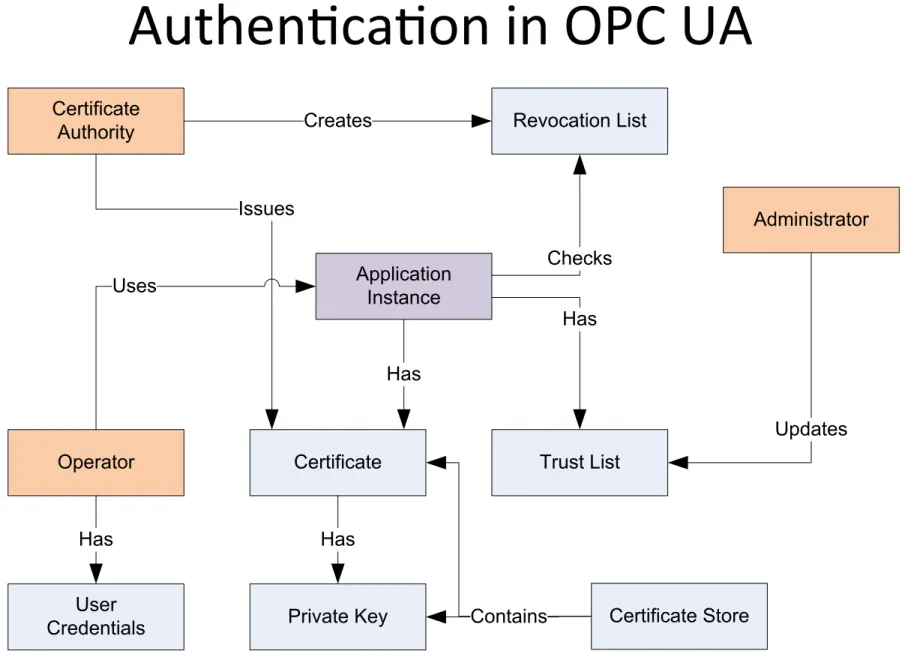
AuthenEcaEon in OPC UA
The OPC UA Security Model – 3 – Version 1.00 For Administrators Application Instance Certificate Has Private Key Has Trust List Certificate Store Certificate Authority Administrator Has Updates Contains Revocation List Creates Operator Has User Credentials Uses Checks Issues
Figure 1 Security Term and Interactions
Application Instance – An OPC UA Application installed on a single machine is called an Application
Instance. Each instance must have its own Certificate which it uses to identify itself when co nnecting to other applications. Each Application Instance has a globally unique URI which identifies it.
Administrator - An Application Instance must have an Administrator which manages the security
settings for the Application.
Operator – An Operator is person who uses the Application Instance. More than one Operator may
exist for any given application. An Operator may have User Credentials which are used to determine access rights and to track activities.
Certificate Authority (CA) - A Certificate Authority (CA) is an administrator or organization which is
responsible for creating Certificates. The Certificate Authority must verify that information placed in the Certificate is correct and add a digital signature to the Certificate that is used to verify t hat the information has not been changed. Each CA must have its own Certificate which is used to create the digital signatures.
Certificate - A Certificate is an electronic ID that can be held by an application. The ID includes
information that identifies the holder, the issuer and a unique key that is used to create and verify digital signatures. The syntax of these certificates conforms to the X509 specification, as a result,
these certificates are also called “X509 Certificates”. Certificates also have a Private Key associated with them.
User Credential – A User Credential is a generic term for an electronic ID which identifies an
Operator. It may be passed to a Server after the Application Certificate is used to create a secure channel. It is used to determine access rights and to track activities.
Private Key - A Private Key is a secret number known only to the holder of a Certificate. This secret
allows the holder to create digital signatures and decrypt data. If this secret is revealed to unauthoriz ed parties then the associated Certificate can no longer be trusted or used.
Certificate Store - A Certificate Store is a place where Certificates and Private Keys can be stored on
a file system. All Windows systems provide a registry based store called t he Windows Certificate Store. All systems support a directory containing the Certificates stored in a file which is also called an OpenSSL Certificate Store.
Policies developed for ICS cyber-‐security
• Government enEEes have created regulaEons and guidelines for implemenEng
ICS security.
– CriEcal Infrastructure ProtecEon (CIP) Reliability Standards by the North American Electric Reliability CorporaEon under FERC and DOE for the Power industry
– NaEonal InsEtute of Standards and Technology (NIST) SP 800-‐82 Guide to SCADA and Industrial Control Systems Security
– Department of Homeland Security Catalog of Control Systems Security: RecommendaEons for Standards Developers
• Industry has also created several guidelines for implemenEng ICS security.
– Report 12 by the American Gas AssociaEon
– Water Infrastructure Security Enhancements (WISE) by the American Water Works AssociaEon et al
– American Petroleum InsEtute API 1164 SCADA Security document
– InternaEonal Society of AutomaEon ISA-‐99: Manufacturing and Control Systems Security, part 1 “Security for Industrial AutomaEon and Control Systems: Concepts, Terminology and Models”
CriEcal Infrastructure ProtecEon Standards (CIP)
The North American Electric Reliability CorporaEon (NERC) was tasked by the Federal Energy Regulatory Commission (FERC)to develop these for the power sector.
• CIP-‐001 Sabotage ReporEng
• CIP-‐002 CriEcal Cyber Asset IdenEficaEon
• CIP-‐003 Security Management Controls
• CIP-‐004 Personnel & Training
• CIP-‐005 Electronic Security Perimeters
• CIP-‐006 Physical Security of CriEcal Cyber Assets
• CIP-‐007 Systems Security Management
• CIP-‐008 Incident ReporEng and Response Planning
• CIP-‐009 Recovery Plans for CriEcal Cyber Assets
Personnel Training CIP-004 Identification Management Responsibility CIP-002 CIP-003 Reporting CIP-001 CIP-008 Physical Security CIP-005 CIP-006 CIP-007 Recovery CIP-009 hVp://www.nerc.com/pa/Stand/Pages/CIPStandards.aspx
Industrial Defender,
hVp://id.lockheedmarEn.com/soluEons/cybersecurity
• Industrial Defender provides an AutomaEon Systems Manager™
soDware soluEon for ICS cyber-‐security. ConfiguraEons and capabiliEes are shown on the next slides.
• SoDware management approaches such as these provide
intelligent monitoring and simplified management while being specifically aware of the unique hardware and soDware
components uElized in ICS.
• AdopEon of these approaches have been slow at first, but are
becoming more prevalent as ICS cyber-‐aVacks increase.
• See this and other arEcles at,
hVp://id.lockheedmarEn.com/industrial-‐defender-‐introduces-‐the-‐first-‐soDware-‐
plaworm-‐for-‐a-‐unified-‐approach-‐to-‐security-‐compliance-‐and-‐change-‐management-‐in-‐ industrial-‐control-‐systems
Tofino Security’s Xenon™
hVps://www.tofinosecurity.com/products/tofino-‐xenon-‐security-‐appliance
• Xenon is an ICS Security Appliance (SA) designed to be plug-‐and-‐
play providing ICS-‐aware firewall and monitoring.
• Serves as a bump-‐in-‐the-‐wire secure point on Ethernet ICS
networks.
• Uses Loadable Security Modules (LSM) to provide dynamic
configuraEon of security.
– Including: Firewall, Event logger, NetConnect remote configuraEon,
Modbus TCP, OPC, and Ethernet/IP protocols.
• Includes the Tofino Configurator
– Device and event monitoring and reporEng
– ConfiguraEon and management of mulEple devices
– Passive scanning for dynamic asset
Tofino
Xenon™ SA
This is included in the laboratory setup in sec<on 5.
NaEonal SCADA test bed (NSTB)
• Idaho NaEonal Laboratory (INL), Sandia NaEonal Laboratory
(SNL), and others parEcipate to provide a naEonal resource for ICS cyber-‐security and resiliency tesEng.
• Industry partners may validate their ICS hardware and soDware
soluEons prior to commercial deployment.
• Research organizaEons may conduct experiments and training
with the test bed.
• Fact sheet,
hVp://energy.gov/sites/prod/files/oeprod/DocumentsandMedia/ NSTB_Fact_Sheet_FINAL_09-‐16-‐09.pdf
NSTB INL – short course topics
• SCADA Network CommunicaEons Overview
• Common VulnerabiliEes of Control Systems
• Inadequate Policies and Procedures
• Poorly Designed Control System Networks
• Misconfigured or Unpatched OperaEng Systems and Imbedded Devices
• Inappropriate use of Wireless CommunicaEon
• Inadequate AuthenEcaEon of Control System CommunicaEons
• Inadequate IdenEficaEon and Control of Access to Control System
• Lack of DetecEon and Logging of Intrusion
• Dual use of Control System Networks
• Lack of Security checking of Control System SoDware/ApplicaEons
• Lack of Change Management/Change Control Procedures and Agreements
• PotenEal MiEgaEon Strategies based on mulEple levels of implementaEon
NSTB INL mulE-‐day course topics
• General Security ObservaEons and Piwalls
• Control System Network CommunicaEons Overview
• PotenEal Control System Network Entry Points AND Defenses
• Control System Network Scanning and Vulnerability IdenEficaEon
• Network Monitoring and Simple Intrusion DetecEon
• DissecEng Control System Protocols
• Common Programming Piwalls
• Modern Hardware and OS MiEgaEon Strategies
• Incident Response EssenEals for the Control System Community
In Summary: Contrasts with IT systems
• In IT systems, the informaEon is the primary focus. In ICS, the
informaEon is coupled with the external industrial process, but this process is the primary focus.
– Real-‐Eme data for the control of physical process equipment. Physical
safety concerns as well.
• Proprietary hardware and soDware
– IncompaEble or unknown reacEon to cyber-‐security patches. ODen
running out of date.
– Unfamiliar protocols with respect to COTS security systems and firewalls.
• The need to fail open -‐ system must remain available during
In Summary: Contrasts with IT systems
• Very few users
– Typically a single operator at a Eme with all operators sharing a common
account. Always on 24/7.
– Technicians and engineers access only during troubleshooEng and
configuraEon.
– Corporate users access the database only, read only.
• Constant small data streams
– Large files almost never on network, instead there are conEnuous small
data transfers between all network nodes. Updates every second with a physical device relying on each update in order.
• AuthenEcaEon and reliability are criEcal. Secrecy is less
• Cyber-‐security is even more important in ICS as the process
impacts the physical world exposing personnel and communiEes to severe physical harm during aVacks.
• We depend on ICS to run much of our criEcal infrastructure,
such as electricity, water, telecommunicaEons, etc. See…
– PresidenEal Policy DirecEve 21: Cri<cal Infrastructure Security and
Resilience
– Homeland Security PresidenEal DirecEve 7: Cri<cal Infrastructure
Iden<fica<on, Priori<za<on, and Protec<on
• Cyber-‐security has been slow to achieve in ICS, but soluEons are
being developed.
• The groups responsible for IT and ICS cyber-‐security come from
different backgrounds and have different goals, but they need to work together.
Problems with cyber-‐security soluEons
• Several products exist for IT infrastructures that can be applied
to ICS, but very few ICS-‐specific.
• Hardware/soDware limitaEons, ICS do not readily allow complex
algorithms to be implemented.
– Legacy systems with limited processing power and small memory
footprints, obscure operaEng systems
– ODen requires an external server, moving security off the control devices
• CommunicaEons protocols do not include security.
• Training – control engineers do not know cyber security and IT
5. A simple laboratory setup
This is a block diagram of a two-‐PLC, Ethernet-‐based SCADA
system. Included is a Tofino security device to assist in network analysis. Such a system allows most aVacks and vulnerabiliEes to be analyzed and represents a very common implementaEon.
ControlLogix+
with+I/O+ MicroLogix+with+I/O+
Tofino+ Wireless+ router,+WiFi+ Windows+ VM,+HMI+ Windows+ VM,+ENG+ Ethernet+switch+ I O I O Process
simulaEon Process control
Operator interfaces
Laboratory parts list
• PLCs – The use of two PLCs allows communicaEons between PLCs to be
explored. One PLC can simulate a process and the second PLC can control that process through hardwire I/O. Allen Bradley ControlLogix® and
MicroLogix®.
• PCs – The Windows PCs can serve as the HMI, Engineering workstaEon,
historical data server, etc. These can be explored for vulnerabiliEes as well.
• Tofino Xenon® – This is a firewall and IDS device that is aware of ICS
protocols and hardware. It allows Snort-‐type rules for network anomaly detecEon and also allows more advanced network monitoring.
• Ethernet – This is an Ethernet switch as typical in an IT network. A managed
switch allows more monitoring opEons and funcEonality.
• Wireless access point – This allows students and researchers a wireless link
into the system to launch and monitor aVacks. A whole class can be given access to explore (hack) the system while the instructor monitors their progress. An Internet connecEon is not necessary for this system.
A simple laboratory setup -‐ Photos
A simple laboratory setup for experiments. Students access a live ICS through the WiFi access point and aVempt to hack/crack the system or play capture-‐the-‐flag games.
Hardwired I/O between PLCs for process simulaEon and control,
I/O wiring not shown.
HMI/ENG/HIST
Typical HMI screen
Manual panelboard controls
The HMI replaces these expensive manual controls and indicators with graphical user interfaces that can be easily modified and maintained.
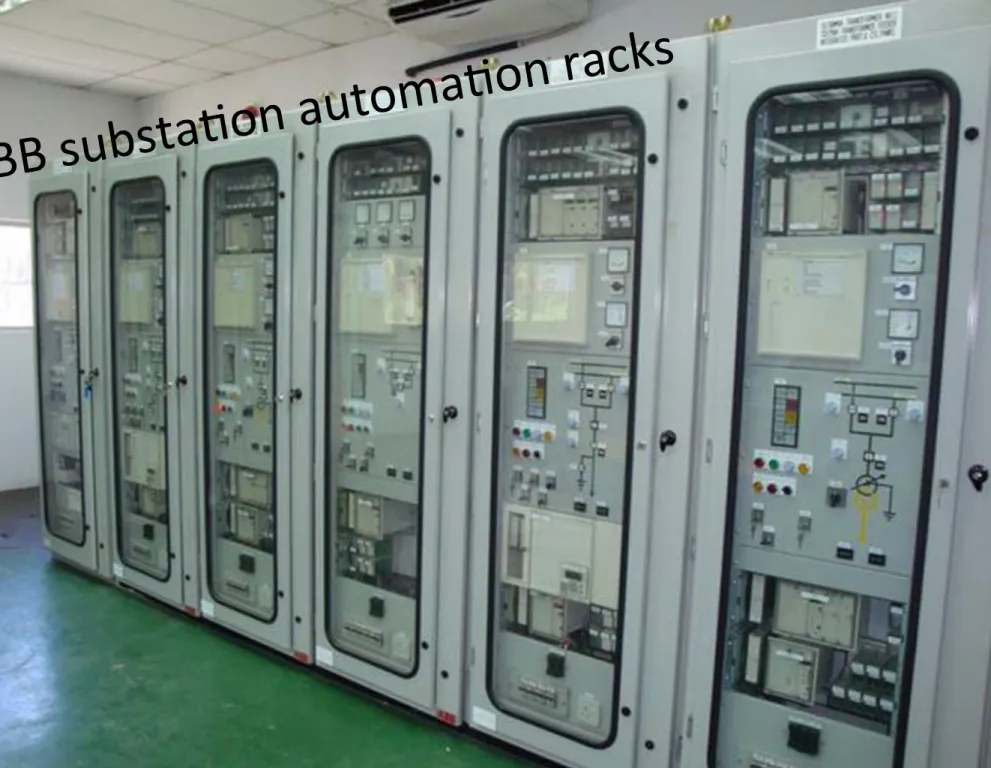
Distributed Control System (DCS)
Primary and backup DPUs
ABB subs
taEon au
A DCS has to live in a hosEle environment and
control a large and complex process.
SCADA oDen has to
spread out over
larger distances
and across many
network types.