Lima, Peru
13-16 October 2014
Twenty-first century
challenges for the
Americas:
full and productive employment
and decent work
Report of the Director-General
Lima, Perúu
Twenty-first century
challenges for the
Americas:
full and productive employment
and decent work
Report of the Director-General
Lima, Peru
13-16 October 2014
Twenty-first century
challenges for the
Americas:
full and productive employment
and decent work
First published 2014
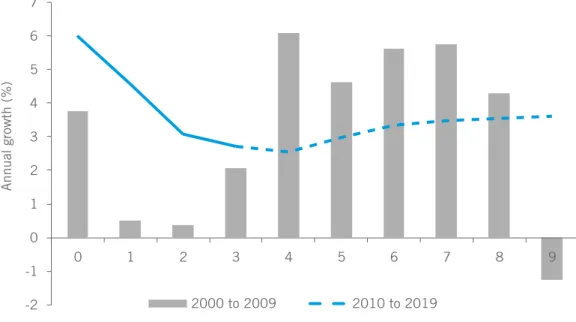
The designations employed in ILO publications, which are in conformity with United Nations practice, and the presentation of material therein do not imply the expression of any opinion whatsoever on the part of the International Labour Office concerning the legal status of any country, area or territory or of its authorities, or concerning the delimitation of its frontiers.
Reference to names of firms and commercial products and processes does not imply their endorsement by the International Labour Office, and any failure to mention a particular firm, commercial product or process is not a sign of disapproval.
ILO publications can be obtained through major booksellers or ILO local offices in many countries, or direct from ILO Publications, International Labour Office, CH-1211 Geneva 22, Switzerland. Catalogues or lists of new publications are available free of charge from the above address, or by email: pubvente@ilo. org or [email protected]
Visit our web site: www.ilo.org/publns or www.ilo.org/americas Printed in Peru
|
CONTENTS
ABBREVIATIONS 6
PART 1
7
Twenty-first century challenges for the Americas:
full and productive employment and decent work
1.1. Introduction ... 7
1.2. Economic growth and changes in the world of work ... 10
1.3. Our development goals: growth with social inclusion and formalization of
labour ... 20
1.4. Concluding remarks on social dialogue
and the role of the ILO ... 29
PART 2
33
ILO performance in Latin America
and the Caribbean (2010–2014)
2.1. Introduction ... 33
2.2. The structure and resources of the ILO in Latin America and the Caribbean 33
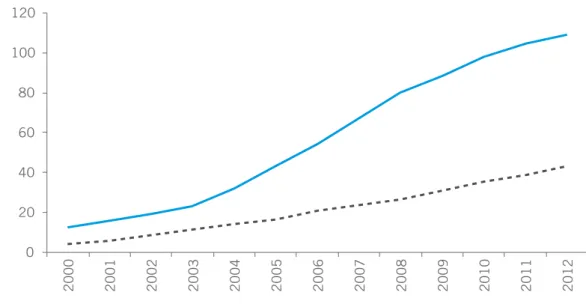
2.3. Main areas of progress and the ILO’s contribution ... 35
REFERENCES 51
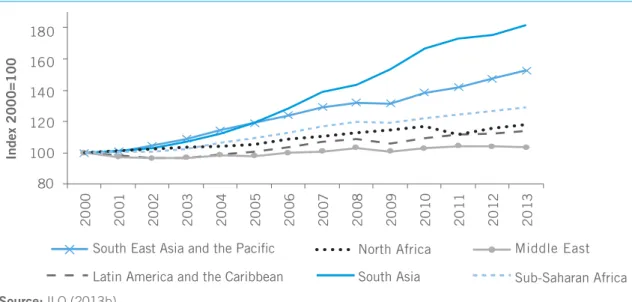
APPENDIX 55
|
ABBREVIATIONS
ACT/EMP Bureau for Employers’ Activities (ILO) ACTRAV Bureau for Workers’ Activities (ILO)
CARICOM Caribbean Community
CINTERFOR Inter-American Centre for Knowledge Development in Vocational Training (ILO) CSA-TUCA Confederación Sindical de Trabajadores y Trabajadoras de las Américas / Trade Union
Confederation of the Americas
ECLAC Economic Commission for Latin America and the Caribbean (UN) FAO Food and Agriculture Organization of the United Nations
FORLAC Programme for the Promotion of Formalization in Latin America and the Caribbean (ILO) GDP Gross Domestic Product
IDB Inter-American Development Bank
ICT Information and communication technologies
ILO International Labour Organization/International Labour Office
IMF International Monetary Fund
IOE International Organisation of Employers MSMEs Micro, small and medium-sized enterprises
OECD Organisation for Economic Co-operation and Development PAHO Pan American Health Organization
PISA Programme for International Student Assessment (OECD)
PSI Public Services International
SCORE Sustaining Competitive and Responsible Enterprises (ILO)
SEBRAE Serviço Brasileiro de Apoio às Micro e Pequenas Empresas (Brazilian Micro and Small Business Support Service)
SENA Servicio Nacional de Aprendizaje (National Learning Service of Colombia)
SENAI Serviço Nacional de Aprendizagem Industrial (National Service for Industrial Learning
of Brazil)
SIALC Labour Information and Analysis System for Latin America and the Caribbean (ILO) SIMAPRO Integrated System for Measurement and Improvement of Productivity (ILO) SMEs Small and medium-sized enterprises
UN United Nations
UNDP United Nations Development Programme
UNESCO United Nations Educational, Scientific and Cultural Organization
UN Women United Nations Entity for Gender Equality and the Empowerment of Women
VAT Value-added tax
7
|
PART 1
Twenty-first century challenges for the Americas:
full and productive employment and decent work
1.1. Introduction
1. At this first American Regional Meeting for me as ILO Director-General, it is my pleasure to present a report which recognizes the great importance of the Americas region for the Organization, highlights recent progress and draws attention to some areas of concern regarding the capacity of economic growth to create greater social inclusion and quality jobs on the American continent.
2. Have the economic models that have been tried and tested in the last 15 years, resulting in moderate but sustained growth, reached their limits? What are the chief obstacles to the creation of greater social inclusion and quality jobs faced by the region’s countries? What are the alternatives and what role should the ILO play in the promotion of substantive and sustainable change? These are the three main questions raised in this paper with the aim of stimulating an open debate and generating ideas to guide the ILO’s action in the immediate future.
3. We know that the Americas are a heterogeneous region, where some of the most advanced economies exist alongside emerging economies, a large bloc of middle-income countries and others which are still among the poorest in global terms. Nevertheless, despite their differences, all the countries have accepted and are actively promoting the principles of the Decent Work Agenda, which has been incorporated in discourse and action in the Americas as in no other part of the world. This is reflected in general support for the ILO’s work from governments, workers’ organizations and employers’ organizations, support which is reaffirmed in the form of recognition of its contributions and in constructive criticism which helps both the Organization and the Office to grow.
4. The 2014 American Regional Meeting is taking place at a time of global uncertainty. The slow recovery of the world economy, which has been uneven and volatile, is still not having a visibly positive impact on employment or on the welfare of the majority of the population. The countries of the Americas are no strangers to this situation, which has resulted in greater inequality in the United States and Canada and a slowdown in recent positive trends in emerging and developing countries. In Latin America and the Caribbean, the significant progress made in the last decade in reducing poverty, including extreme poverty, and unemployment might be reaching its limit, determined by both the international context and the characteristics of the region’s economies.
5. The progress made in recent years by the countries of Latin America and the Caribbean should be recognized and celebrated, as should the recent positive trend in the performance of the labour market in the United States and Canada. At the same time, vigilance is called for regarding the signs of a change in the economic cycle which is having diverse effects on the Americas, with a clear tendency towards a slowdown in the case of Latin America and the Caribbean, and also as regards the persistence of certain major problems affecting the development of the continent.
Inequality and the informal economy
6. One of the persistent problems in the region is income inequality and unequal access to goods, services and opportunities. This is a challenge that needs to be tackled as an immediate priority to ensure fairer and more socially sustainable globalization, in line with the ILO Declaration on Social Justice for a Fair Globalization, adopted in 2008.
7. Inequality has been a distinctive feature of the economies and societies of Latin America and the Caribbean for many decades. In the region significant gaps persist in access to health, quality education, formal employment and social protection. Inequality is also starting to be a concern in the countries of North America.1 Reducing inequality fosters the common welfare and
democratic governability.
8. In Latin America and the Caribbean inequality and the informal economy are two manifestations of the same reality, namely low productivity, which stems from the asymmetries in the region’s productive structure and has a direct impact on the labour market. This reality is visible in the form of the unregistered small enterprise which barely produces enough to survive and whose workers have no social security and a low level of income, sometimes earning less than the minimum wage. It is reflected in the children who are obliged to work whenever workers in this category fall ill or are dismissed. It can be seen in the countryside, in the small agricultural undertakings which cannot find either the necessary services to develop or markets for their products. It is seen in the faces of the itinerant food vendors working on their own account, of the young people who can only find precarious employment, the employers unable to unravel the bureaucratic tangle to establish their own enterprises, the domestic workers who have no rest day, the informal taxi drivers who are qualified engineers, the undocumented immigrants who lack any kind of protection, and the informally subcontracted workers who possess no rights.
9. Clearly, the region also boasts success in large and small urban and rural ventures, with public or private capital, which meet internationally competitive levels and standards of production. In general these cases have no connection with the situation in the less productive sectors. In fact, the lack of linkage between the most productive sectors of the economy, which are technologically advanced and the source of few jobs, and the least productive, where most employment is concentrated, is one of the main causes of inequality and the persistence of informal employment in Latin America and the Caribbean.
10. Chapter 1.2 of this Report gives a detailed explanation of recent economic developments with a special focus on the situation in Latin America and the Caribbean, highlighting how moderate but sustained growth, especially based on primary exports, has generated resources for combating poverty but has proved insufficient for reducing inequality or formalizing employment to the same extent. The social inclusion created by the policies that have enabled growth is therefore vulnerable. Available data show that new middle-income groups have emerged as a result of poverty reduction, social policies and the moderate increase in formal employment. However, many of them are still on the fringes of informality or have a foot in both the formal and informal worlds and are extremely vulnerable to any incidents or changes in personal, family or community circumstances. At the macro level, the drop in wages and remuneration as a percentage of GDP is a source of concern, since it endangers the social and economic sustainability of growth in affecting the distributive function of the labour market.
11. This ambivalence, the unstable coexistence of formality and informality, not only affects the quality of life of families living in this ambiguous and fragile situation, especially those who are permanently in informal employment, but also has an impact on growth itself 1. In the United States, inequality in the distribution of market income, measured by the Gini coefficient, increased by two percent-age points between 2008 and 2012, while inequality in disposable income rose by one percentpercent-age point. OECD (2014).
9
because of the economic distortions that it creates. The most successful experiences of dealingwith this situation have been those where the transition to formality has been promoted by an integrated set of policies tackling multiple dimensions of the problem, including the coherence of macroeconomic policies, the productivity of small enterprises, the situation of self-employed workers, the specific features of domestic work, registration and public scrutiny, and compliance with labour standards.
The transition to formality as a development strategy
12. Chapter 1.3 of the report sets out the challenges faced by the countries of Latin America and the Caribbean with regard to increasing the pace of formalization, taking special account of uneven productive structures and labour market policies and institutions in the region. The core argument is that an effective and stable formalization process will make it possible to achieve long-term goals of greater inclusion, equality and sustainability because it is a key ingredient of development policy. The issue of creating decent jobs –that is to say, productive and formal jobs with rights and social protection– lies at the heart of this proposal.
13. In the economic landscape, this would involve diversifying the structure of production and eliminating problems of access to technology, human capital formation and the global markets, in order to improve competitiveness, create value chains and overcome dependency on exports of primary commodities, thereby strengthening the real economy vis-à-vis the speculation-oriented financial economy. In the business sphere, one of the challenges is to improve the institutional, political and legal environment for promoting sustainable enterprises that create formal, quality jobs with full respect for fundamental rights at work. This entails designing appropriate regulatory frameworks and improving infrastructure and access to funding, in accordance with the situation in each country. The situation of micro-, small and medium-sized enterprises, where most jobs are concentrated in conditions of low productivity, informality and limited social protection, calls for special attention. These enterprises must be boosted to give them access to supply chains that actively help to integrate them in the new dynamics that need to be developed in the region. All these actions are mutually reinforcing and complementary.
14. Economic growth and productive development are prerequisites for increasing the pace of formalization but are insufficient in themselves. Targeted labour market policies and the strengthening of key institutions are needed.
15. In recent years the region’s countries have pursued numerous formalization initiatives, in terms of legislation and the application thereof, the formulation of incentives and the strengthening of institutions. These initiatives include the adoption of specific standards, simplification of procedures, tax incentives, training and other policies, which are valuable in themselves but would be more powerful if special attention was also given to the structure of production and the features thereof that give rise to informality. This would entail collaboration from various actors to ensure coherence and complementarity in accordance with each country’s needs.
16. In Latin America and the Caribbean informality has many facets. One of them, as emphasized in this chapter, is the millions of young people who start their working lives in informal jobs. Tackling this problem is a priority, since policies that focus on formal initial employment will certainly have a bigger and more lasting impact.
Effective social dialogue as the basis of a development strategy with decent work
17. Chapter 1.4 underlines the need for strengthening effective social dialogue in the region. 18. It is unquestionable that the active participation of strong and representative workers’ and employers’ organizations in the discussion and implementation of a development strategy
is essential for achieving lasting results. However, there are grounds for concern regarding the depth and effectiveness of social dialogue in the region. Even though the crisis brought the social partners and governments closer together in many countries in the search for consensus on counter-cyclical policies, conflict is more prevalent than agreement at present. Confidence is in short supply. Institutions for dialogue that function effectively and regularly as consultative or advisory bodies are few and far between. Acts of violence against trade union and business leaders and obstacles to the exercise of freedom of association and the right to collective bargaining persist with regrettable frequency in the region’s countries. All this affects the legitimacy and sustainability of policies, with negative consequences for democratic governance.
19. Equality with productivity, formalization and social dialogue are the three elements proposed in this Report for driving a style of development that is more inclusive and able to create productive and decent work. The ILO’s commitment in the Americas is apparent in its determination to contribute to the agendas for action emerging in many countries aimed at achieving growth with greater equality, better social protection, more and better jobs and more inclusive societies.
20. The promotion of decent work has been and continues to be the way to achieve these goals, as was indicated at the XVIII Inter-American Conference of Ministers of Labour (Medellín, October 2013). Of course this is also a recurrent theme for the ILO constituents. In 2006, at the 16th American Regional Meeting in Brasilia, the Report Decent work in the Americas: An agenda
for the Hemisphere, 2006-15 was under discussion. The Report was adopted as a programme for
the promotion of decent work, the progress of which was reviewed at the 17th American Regional Meeting (Santiago, 2010). The conclusions of this meeting emphasized the priority of promoting freedom of association, collective bargaining, sustainable enterprises and labour administration, in the context of social dialogue. Part 2 of the present Report includes an overview of the ILO’s recent performance in these spheres of action.
21. In order to give substantive and relevant support to the constituents, the international system, and especially the ILO, also needs to have the necessary capacity to support the processes of change in the economies and labour markets. The ILO headquarters reform and the review of field operations point in the same direction, with the purpose of making the Organization more flexible and efficient and bringing it closer to the constituents.
22. The region has laid foundations that give grounds for optimism concerning the future of the Americas beyond the uncertainty caused by the current economic situation. It is in the hands of the countries themselves and the actors at the national level to find the way to attain this shared objective, and along the way they will always have the effective and respectful support of the ILO.
1.2. Economic growth and changes in the world of work
The first decade of the twenty-first century will be remembered as a period of significant growth which resulted in substantive social, economic and labour progress in the countries of Latin America and the Caribbean. The challenge now is to make this progress sustainable: the region has reduced poverty, but inequality has only decreased slightly and at least 130 million people are working in conditions of informality.
23. In the twenty-first century, the Americas went through three major stages in terms of economic growth. The first (expansion) stage began after the recession in the developed countries and the crisis in Argentina in 2001 and 2002 and lasted until the international crisis of 2008. From
11
2004 to 2008, average GDP growth in the United States and Canada was 2.8 per cent, while inLatin America and the Caribbean it was 4.8 per cent (Figure 1), higher than the regional average in recent decades, namely 3 per cent. The second phase began in 2008 and its most notable effects were seen in 2009, when the GDP of the United States decreased by 2.8 per cent, the GDP of Canada also fell by 2.8 per cent and that of Latin America and the Caribbean dropped by 1.2 per cent, while the global decrease was 0.4 per cent. The third phase can be described as the recovery phase with a trend towards a slowdown. In 2010 the United States recorded GDP growth of 2.4 per cent, for Canada it was 3.2 per cent and for Latin America and the Caribbean 6 per cent, while in 2011 these figures dropped to 1.8 per cent, 2.5 per cent and 4.6 per cent, respectively. Since then the average annual growth rate of the countries of the Americas has been below 3 per cent, barring a few exceptions.
24. -2 -1 0 1 2 3 4 5 6 7 2000 2001 2002 2003 2004 2005 2006 2007 2008 2009 2010 2011 2012 2013 2014* 2015* 2016* 2017* 2018*
Annual variation in real GDP (%)
World Latin America and the Caribbean
Figure 1. Latin America and the Caribbean and World: Annual percentage variation in GDP
Note: (*) Estimations
Source: IMF (2013)
The current question under discussion is what can happen from 2014 onwards. It is expected –while bearing in mind the risky nature of forecasts in such a volatile environment– that the United States will improve its current trend and record growth of around 2.8 per cent (IMF). However, the global economy growth rate is expected to exceed that of Latin America and the Caribbean between 2014 and 2018 (3.7 per cent compared with 3.3 per cent, as an annual average). In fact, it is estimated that in the 2014-18 period the region will grow by an annual average of two percentage points less than in the 2004-08 expansion phase.
Latin America and the Caribbean: growth with social/
labour improvements and pending challenges
25. In the first few years of the twenty-first century, Latin America and the Caribbean enjoyed good prices for basic commodities and abundant financing. The effects of this period of growth and of the economic and social policies implemented by the governments of the region were notable.
26. One significant statistic is that household poverty was reduced from 43.8 per cent in 2002 to 29.6 per cent in 2011 and 27.9 per cent in 2013 (see Figure A1, Appendix). In addition,
after the growth of the 1990s, the inequality in personal income decreased in the first decade of the twenty-first century.
27. In the labour market, the ILO reported that employment rates increased from 52 per cent in 2002 to 56 per cent in 2012, while unemployment rates fell to an all-time low, from 11.1 per cent in 2002 to 6.2 per cent in 2013 (Figure 2). Even so, total urban unemployment comprised some 14.8 million women and men who were unable to find work.
28.
Figure 2. Latin America and the Caribbean: employment and unemployment rates (%)
10,2 11,2 11,1 10,3 9,0 8,6 7,9 7,3 8,1 7,3 6,7 6,4 6,2 6 7 8 9 10 11 12 45 48 51 54 57 60 2 0 0 1 2 0 0 2 2 0 0 3 2 0 0 4 2 0 0 5 2 0 0 6 2 0 0 7 2 0 0 8 2 0 0 9 2 0 1 0 2 0 1 1 2 0 1 2 2 0 1 3
Employment (left hand axis) Unemployment
Source: ILO (2013a).
Almost half the urban unemployed are young people and the youth unemployment rate is more than double the total unemployment rate. This amounts to some 6.6 million unemployed young people in the urban areas of the region. In addition, six out of ten young workers have informal jobs and 21.8 million young people neither study nor work. The global youth employment crisis affects millions of people who run the risk of falling into poverty, if they have not already done so.
29. The situation of women in the labour markets has shown improvements in recent decades, such as an increase in the labour force participation rate, which reached 50 per cent in 2013, even though there are still major gender equality challenges. The unemployment rate for women in Latin America and the Caribbean is still 1.35 times the rate for men. Young women account for 70 per cent of the youth population which neither studies nor works (some 15 million).
30. Real average wages in the region grew by 1.8 per cent annually between 2006 and 2011, more than in the developed economies and more than the global average, if China is omitted. However, a slowdown in wage growth has been observed since 2013. A similar trend was visible in minimum wages, which grew by 2.6 per cent in 2013 compared with 6.9 per cent in 2012. The slowdown in wage growth is both a result and a cause of the loss of economic momentum in the region.
31. Social security coverage also expanded. Between 2000 and 2012, coverage provided by health systems increased from 51.6 to 59.8 per cent of employed persons and coverage provided by pension schemes went up from 51.3 to 60.5 per cent. However, the proportion of the employed population without any form of protection remains very high: at least three out of ten workers have no health or pension coverage.
13
32. Informal employment decreased from more than 52 per cent in 2005 to 47.7 per centin 2011, a figure that was maintained in 2012. The rate of growth in formal employment has been less than for economic growth and poverty reduction; this means that many people who were no longer defined as poor in the past decade have informal jobs.
33. Various countries have seen the emergence of new middle-income groups with economic, social and cultural expectations that are often only partially satisfied. In many cases, these new population groups are in a highly precarious situation, as they often still work informally. In the event of a drop in growth or change in policy, these people may well regress socially and economically and even return to situations of poverty. This new middle class is not a consolidated social category, being subject to the vagaries of the region’s economy.
The global crisis: effects and lessons learned
34. In 2008, the major international crisis developed out of a housing bubble in the United States which then became a global financial crisis when the Lehman Brothers investment bank declared bankruptcy. Immediately afterwards, the financial crisis turned into an economic crisis.
— At the global level 32.2 million jobs were lost (Figure A2, Appendix).
— In the United States, the growth in GDP in 2009 was accompanied by a rise in unemployment, which reached almost 10 per cent in October of that year (Figure A3, Appendix). In Canada, unemployment rose from 6.1 per cent in 2008 to 8.3 per cent in 2009.
— The Eurozone also experienced the onset of an economic crisis, which subsequently developed into the debt crisis. Unemployment stood at 9.6 per cent in 2009 and reached a peak of 12.3 per cent in 2013.
— China was also affected by the crisis but the stimulus package that was adopted enabled the country to make up rapidly for the inadequacy in external demand.
35. Latin America and the Caribbean were not left unscathed by the international crisis. The mechanisms of transmission were: (a) trade channels, since the United States, the European Union and China are the region’s principal partners; (b) reductions in the prices of commodities, particularly copper and petroleum; and (c) capital flows which also shrank because of investors’ need for greater security. Certain data show the magnitude of the impact in Latin America and the Caribbean:
— Regional GDP fell by 1.22 per cent from 2008 to 2009;
— Investment as a percentage of GDP dropped from 23.7 per cent to 20.6 per cent in 2009 (IMF, 2013);
— Unemployment rose from 7.3 per cent in 2008 to 8.1 per cent in 2009 and the employment rate fell by 0.5 per cent.
36. The impact of the crisis on the labour markets of the region was not as strong as feared, owing to the implementation of employment-friendly public policies (ILO and ECLAC, 2010). The economy also made a significant recovery in 2010, even though a subsequent slowdown was an observable trend.
37. During this crisis, it was noteworthy that many Latin American and Caribbean countries did not turn to adjustment remedies that had a recessionary effect on economic growth, employment and labour rights, as had occurred in previous crises. On the contrary, consensus prevailed to promote counter-cyclical policies to stimulate growth and investment, which were possible in the region because of the macroeconomic stability that had been achieved, the relatively stable growth of those years and the fiscal space available. Labour market measures included the following:
— Public investment policies, emergency job schemes, internal consumption to replace exports, and work sharing with subsidies.
— Automatic stabilizers: unemployment insurance, automatic activation of emergency employment programmes.
— Extension of social protection: conditional and non-conditional transfer programmes, extension of non-contributory pensions.
— Active minimum wage policy.
38. Accordingly, one lesson to be drawn from the crisis is that well-designed labour market policies can perform a key counter-cyclical role, since they not only stimulate the economy but also protect employment and income at the same time. It is a challenge for countries to ensure that these measures are consolidated and institutionalized as stable labour market policies and do not merely remain as ad hoc anti-crisis strategies.
The external context and the region’s economies
39. Most future scenarios indicate that a slow global recovery is expected:
— In 2013 GDP growth in the United States was 1.6 per cent while projected growth for 2014 is 2.8 per cent, according to the IMF World Economic Outlook April 2014. The economy of the United States has been expanding at a faster rate and the moderate increase in employment in the country should strengthen consumption prospects, while good business results and more favourable financial conditions should have a positive impact on investment. This good performance will have a positive effect on the situation in Canada, which is expected to record growth of 2.3 per cent in 2014 and 2.4 per cent in 2015. — In the following years the trend towards moving out of the recession in Europe is expected to strengthen.
— China might stabilize at a lower level of growth. Its economic growth decreased to 7.7 per cent in 2013, one of the lowest rates since 1991 (Figure A4, Appendix). In addition, a major risk factor stems from the adjustment in investment in China, which may mean fewer policies for stimulating growth than in the recent past.
— A slowdown in the emerging economies is also expected. Even though the emerging and developing countries certainly present a more positive situation in terms of employment, the contagion effect from the advanced economies has caused employment growth to slow down in most countries and regions (ILO, 2013b).
40. What will be the impact in Latin America and the Caribbean? It is difficult to make predictions in the current uncertain times but some trends appear to have a firm basis:
— During the 2014–18 period, annual growth in the region is due to be nearly 2 percentage points less than in the 2004-08 period (Figure A5, Appendix). This is a relevant statistic to be taken into account: if this situation occurs, total unemployment (urban and rural) in the region is likely to exceed 20 million in 2015 (ILO, 2013c).
— Evidently, the global situation is not homogeneous and nor is the effect that it will have on the region. In particular, even in a period of lower prices for basic commodities, it is likely that the recovery in the United States will be more favourable to Mexico and the Central American and Caribbean countries on account of their economic ties. In some of these countries, there is also a visible trend towards more investment in mining and energy production.
— The changing situation regarding remittances –a relevant issue in Mexico, Central America and the Caribbean, and also in southern cone countries such as Peru and Colombia– is also determined by external factors, since it depends on the economic and labour situation prevailing in receiving countries for migration. Since 2009 the growth
15
rate for this indicator has slowed down, even becoming a negative value in the Caribbeancountries and Mexico in 2012.
41. The reduced momentum expected in the region is also due to a curb on, and a certain reversal of, the prices of basic export commodities, a process that began in 2012 and is expected to continue in 2014 (ILO, 2013a). More than one third of the growth of per capita gross national disposable income in the 2003-11 period was due to improved terms of trade in particular for South American countries (ECLAC, 2013a). Efforts are urgently needed to achieve a sustainable increase in the rate of productive investment, which is still low by international standards. Apart from this, the region’s financial markets also show a high degree of volatility.
42. Attention should also be given to the impact of the slowdown in growth on the labour markets and economies of Latin America and the Caribbean. Economic growth is key to improving the quantity and quality of jobs but is not sufficient in itself, especially in periods such as the present where there is a loss of momentum. What we are learning from the past decade is that public policies, at both macroeconomic and microeconomic levels, can make the difference.
Long-term trends
43. In addition to the above, the region is undergoing a transformation. Certain long-term trends will strengthen in the future, with significant effects on the labour market.
44. On the one hand, Latin America and the Caribbean continue to be in a favourable situation. This is because the dependency ratio –the number of dependants for each breadwinner– has improved. The number of breadwinners is expected to increase until 2025, after which the trend will begin to reverse (Figure A6, Appendix).
45. Linked to this is the subject of migration. International migration is a growing phenomenon in Latin America and the Caribbean. In recent years, the volume of migrants –taking only principal destinations into consideration– has risen from some 2 million to more than 21.5 million.2 More than 90 per cent of migrants move for labour-related reasons. The number of
migrants will continue to increase in the next few decades but it is possible that the composition of migration flows will change. Even though the trend in recent decades has been towards emigration and a negative migration balance, projections indicate that this will stabilize in the coming decades and by mid-century the current negative migration balance is even expected to decrease (Figure A7, Appendix). The fact that the intra-regional migration flow is constantly increasing should also be taken into account.
46. Another trend having a major impact on the labour market is access to information technologies. In 2000 there were 13 mobile phones per 100 population; in 2012 there were already more mobile phones than inhabitants, even though growth in coverage has been uneven among countries and, above all, among geographical areas within countries. Internet access has also increased, albeit at a slower pace. In 2000, a total of 4 per cent of the population used the Internet; in 2012 the figure was 43 per cent. If the trend continues, more than 70 per cent will have access to the Internet by the end of the decade (Figure A8, Appendix). This will have significant implications for the way in which the labour markets function, increasing labour productivity by enabling faster work performance and information-sharing (ECLAC, 2010).
Limitations on current growth in Latin America and the Caribbean
47. The growth observed in the past decade, which has been positive from all angles, also presents certain limitations which need to be identified to consolidate a process of inclusive development. Despite the progress achieved, the region has not managed to become integrated in 2. Estimates based on World Bank Global Bilateral Migration Database.
the global economy in a more sustained and solid form (Ffrench Davis, 2009). This underlines the importance of strengthening the real economy, facilitating greater diversification in production. It is also necessary to intensify regional integration processes that give rise to larger markets and enable diversification of the productive structure towards sustainable activities which are intensive in the use of knowledge and technologies and create added value and productivity. A more diversified product structure would reduce seasonal and cyclical fluctuations and provide more job opportunities for workers, thereby strengthening the creation of employment, the conditions for formalization and, ultimately, equality. It seems clear that progress must be increasingly geared to having an impact on the productive structure as a whole, seeking to create a new matrix that enables the stated goals to be achieved. If it is only the effects that are addressed, the possibility of formulating a new vision of development is likely to remain unfulfilled.
Low productivity growth
48. During the last few decades, economic growth in Latin America and the Caribbean has been moderate compared with other regions of the world, with an annual average fluctuating around 3 per cent (Ffrench-Davis, 2009), which is insufficient for achieving sustainable goals of social and labour inclusion. It highlights the low growth in productivity: output per worker increased by just 1.5 per cent annually in the first decade of this century (Figure A9, Appendix), a low rate compared with other emerging and developing regions (Figure 3). As a result, output per worker in the region will be overtaken by the global average in 2014 (ILO, 2013d). Governments and social actors would do well to heed this trend. Productivity growth is a necessary condition, albeit not the only one, for achieving sustainable increases in living standards.
49.
Figure 3. Trends in output per worker in emerging regions
Source: ILO (2013b). 80 100 120 140 160 180 2 0 0 0 2 0 0 1 2 0 0 2 2 0 0 3 2 0 0 4 2 0 0 5 2 0 0 6 2 0 0 7 2 0 0 8 2 0 0 9 2 0 1 0 2 0 1 1 2 0 1 2 2 0 1 3 Index 2000=100
South East Asia and the Pacific
South Asia Latin America and the Caribbean
Middle East North Africa
Sub-Saharan Africa
Some of the factors associated with low productivity growth in the region are lack of investment and credit, macroeconomic volatility, infrastructure deficits, limited technological innovation, lack of linkage between the education system and the labour market, and inadequate productive development policies. One of the causes that the ILO and other institutions have emphasized is the lack of productive diversification and the poor linkage between economic sectors. For example, Latin America and the Caribbean, compared with the rest of the world, has an export structure that relies heavily on minerals, fuels and agricultural products, with manufacturing contributing only a small share (Figure A10, Appendix). This form of integration in the world is associated with a particular productive structure, with sectors that are highly productive but create few jobs and are poorly linked with the rest (Figure 4).
17
Figure 4. Latin America and the Caribbean: output per worker and employment rates (2011)
Source: CEPALSTAT (ECLAC Database) & ILO- Labour Analysis and Information System for Latin America and the Caribbean
Commerce, hotels & restaurants
Community, social & personal services
Construction Manufacturing Transport, supplies & communications Mining Finance, property & insurance Electricity, gas & water
140 120 100 80 60 40 20 0% 20% 40% 60% 80% 100% 0
Output per worker
(constant dollars 2005)
Employment rate
Agriculture, stockbreeding
& fishing
50. This analysis is consistent with the results of other recent studies. Analysing productivity growth over time, these studies distinguish intra-sectoral productivity growth from productivity growth due to inter-sectoral resource transfers (inter-sectoral growth or growth from structural change). The results of McMillan and Rodrik (2011) (Figure A11, Appendix) are very similar to those of the IDB (2010) and show that, in the 1950-75 period, productivity in the region recorded an annual increase of 3.8 per cent, with the intra-sectoral component 1.8 per cent and the structural change component 2 per cent. In the 1990-2005 period, on the other hand, productivity increased by 1.6 per cent, the intra-sectoral component by 1.8 per cent and the structural change component by -0.2 per cent. These authors observe that, between the two periods, intra-sectoral productivity growth was identical, the fundamental difference being that in the 1990-2005 period the structural change component was negative. They add that this only occurs in economies with pronounced productivity gaps, such as those that exist in the region.
51. Structural change can affect thousands of workers. For that reason it is a process that requires careful handling by the State, taking into consideration the necessary combination of social protection and reskilling policies in the short term, with a view to fostering the positive effects in the long term, when the productivity gain is also transformed into more and better jobs (Salazar Xirinachs, 2013).
High inequality and informality
52. In Latin America and the Caribbean, another salient feature apart from high inequality is pronounced and persistent informality.3
53. Despite the fact that various countries in the region have made significant efforts to combat inequality –which decreased in the past decade by comparison with the 1990s– they have not managed to overcome the pattern of growth which results in the region being described as “the most unequal in the world”. Apart from inequality in the distribution of personal income, labour 3. At its 2014 session, ECLAC made a proposal for “compacts for equality”, emphasizing that the labour market is the cornerstone of equality. See ECLAC (2014).
share of GDP (functional distribution) decreased instead of increasing in most of the region’s countries (Figure 5).4
Figure 5. Latin America and the Caribbean: personal and functional income distribution 1990-2009 40 45 50 55 35 37 39 41 43 1990 1997 2002 2009
Note: The GINI coefficient measures income inequality in labour income (0 indicates complete equality and 100 indicates absolute inequality). Labour share of GDP is the ratio of compensation for each productive input (0 indicates total compensation for capital and 100 total compensation for labour).
Source: ILO (2012a).
Labour share (left hand axis)
GINI coefficient for labour income (right hand axis)
54. Sustaining recent social progress in the region requires an improvement in working conditions. This can only happen in a sustainable manner if an impact is achieved on the productive and economic matrix that produces informality, among other things. In the ILO’s opinion, most people enter the informal economy not by choice but out of a need to survive and to have access to basic income-generating activities (ILO, 2013e).
55. Informal employment is heterogeneous and diverse. It has a disproportionate impact on certain occupational categories: employees in SMEs, workers in domestic service, self-employed workers and auxiliary workers. Eighty per cent of informal employment in the region is accounted for by self-employed workers, domestic workers and employees in small enterprises of up to ten workers. It is in the informal economy that some of the most intolerable forms of labour exploitation and violations of fundamental principles and rights at work are found, such as child labour and forced labour. Informality also reflects patterns of discrimination on various grounds, including sex, age, race, skin colour and HIV status. In informal employment, women outnumber men and young people outnumber adults, and indigenous populations and those of African extraction are also heavily represented. Nor should it be forgotten that although available statistics largely refer to urban settings, informality also exists in rural areas. The consequences of informality are more acute in the rural setting because of the low profile of the State and the limited development of markets and institutions. Few countries have adopted specific measures for promoting effective observance of labour rights in the rural economy (in particular freedom of association and collective bargaining), creating a relative institutional void that contributes towards rural poverty (ILO, ECLAC and FAO, 2012). The rural sector is heterogeneous per se. On the one hand, modern agriculture forming part of the global economy contributes towards productive diversification and creates paid employment, even though it is sometimes criticized for failure to comply with fundamental rights at work. On the other hand, family-based and subsistence agriculture, which accounts for between 30 and 40 per cent of agricultural GDP in the region (FAO and IDB, 2007), is characterized by small volumes of production, limited productivity and low wages, with no means of expression or representation. It is this second type of agriculture that has the highest incidence of informal employment.
4. For a more detailed discussion of the theme of distribution in the labour market, see ILO (2014b). Some studies link the decrease in labour share to factors such as technological progress, trade globalization, greater influence of financial markets on the real econo-my, and the decline in workers’ trade union membership and bargaining power (Salazar-Xirinachs, 2013).
19
56. All the above clearly limits key variables for improving the quality of jobs, such as theextension of social protection or the proper application of legislation.
Limited innovation and workforce skills deficit
57. An economy in which productivity is concentrated in few sectors and does not generate value chains, with a high informality component, creates few incentives for innovation and improving workforce skills. Many Latin American and Caribbean countries are lagging behind in these areas, which jeopardizes the sustainability of their progress. If the competitiveness of nations is considered via the data of the World Economic Forum, for example, it can be seen that Latin America and the Caribbean show enormous gaps in innovation, education and workforce skills (Figure A12, Appendix). Even though the vast majority of countries have institutional machinery and vocational training policies, the economic and social dynamic calls for responses that create a better match between the demand for greater, more sophisticated skills and the available supply. In what may be considered a paradox in Latin America and the Caribbean, the supply of youth labour is significantly greater than in other regions of the world but education and training systems are unable to develop quickly enough the skills that are required in the information and knowledge society. In the region, the enrolment ratio in tertiary education (technical or university) is no more than 40 per cent, which is lower than for other, more advanced regions of the world (Figure 6). There is also a problem with the quality and relevance of education. The region’s countries therefore need to pursue the necessary policies to improve access to education (through action to promote both inclusion and funding), its quality (with measures such as teacher training, accreditation and assessment) and the relevance of training to work (through anticipation of the required skills).
58.
Figure 6. Latin America and the Caribbean, OECD, United States and South Korea: gross enrolment ratio in tertiary education
Source: own design based on UNESCO database.
0 20 40 60 80 100 1990 1995 2000 2005 2012
Gross enrolment ratio (%)
Latin America and the Caribbean OECD United States South Korea
The low quality of training also reflects deficits which are carried over from basic education. In this regard, the most recent PISA assessment results5 (Table A1, Appendix) show the
participating countries of the region in last place for mathematics, reading and science.
5. The OECD Programme for International Student Assessment (PISA) is applied to 15-year-old students in various countries of the region.
59. This is a major problem in the region since it limits the incorporation of changes linked to innovation. Every day new products appear on the markets. Changes in the way work is organized and managed, and the introduction of new technologies (in information and communications, and those directly connected to agriculture and industry), generate great demand for more sophisticated skills and for further development of the abilities that workers need to enter the labour market and progress in it.
60. The effect of technological change is that, while there is a shortage of highly-skilled workers in certain sectors and occupations, it becomes increasingly difficult for workers with fewer skills and those in predominantly manual occupations to find and maintain stable and productive employment. Prompt action is needed; the region and its workers cannot continue to lag behind.
1.3. Our development goals: growth with social inclusion
and formalization of labour
Inclusive and sustainable development requires economic growth to be managed in order to generate decent work, in other words productive, quality work that is formalized and socially protected, and which makes it possible to overcome poverty and inequality and open up opportunities for the region to progress.
61. Informal employment is not beneficial. For workers in the informal economy, it signifies lack of recognition or protection through labour legislation and social security, and also the impossibility of organization or representation for asserting rights. It is also detrimental to employers, above all those in the formal sector, because of the unfair competition that occurs at the ends of certain goods and services supply chains. For States, it limits public revenue, their fiscal margin and their capacity for extending social protection schemes or improving the quality of public services.
62. Consequently the promotion of changes to a productive structure whose design does not help with overcoming precarity and the implementation of proactive policies to ensure the effective transition to formality must be a central priority in the Americas and the rest of the world.
63. At the 103rd Session (2014) of the International Labour Conference, a standard-setting discussion was begun, to be completed in 2015, on facilitating transitions from the informal to the formal economy. During the discussion, the constituents unanimously agreed that formalization was the right way to tackle informality and that the member States need to take urgent and appropriate measures to facilitate the transition of workers and economic units from the informal to the formal economy.
64. The conclusions proposed at the Conference cover a wide range of policies and measures which can facilitate the transition to formality and take account of the pronounced heterogeneity and complexity of the informal economy, the multiple factors which cause it to persist and, at times, to expand, and also its highly diverse manifestations, both among countries and at different levels of economic and institutional development. It should be emphasized that this first discussion in 2014 yielded consensus that a standard-setting instrument was needed to guide action on the transition to formality, and that this instrument would take the form of a Recommendation. The discussion identified areas on which further in-depth discussion will be needed at the 2015 session of the Conference. The instrument that is finally adopted will serve as a guide for defining policies in this sphere.
21
65. At all events, the discussion due to take place at this American Regional Meeting canbe an occasion for the exchange of information on progress made by governments, workers and
employers in the area of formalization, since Latin America and the Caribbean is one of the regions with great experience in this field, including the fact that some countries have implemented
multi-dimensional approaches, something that merits particular emphasis.
66. In fact, there is an abundant range of responses which can be applied depending on
the national circumstances. The challenge is to find a balance that is appropriate and favourable for every economic situation. The report discussed at the Conference proposes that decent work
strategies for the informal economy should give priority to growth with quality employment,
improvements to the regulatory framework, promotion of social dialogue, organization and
representation, promoting equality and combating discrimination, support for entrepreneurship,
skills development, finance, extension of social protection and local economic development (ILO,
2013e).
67. A review of national experiences conducted in 2013 as part of the ILO Programme
for the Promotion of Formalization in Latin America and the Caribbean (FORLAC) has made it
possible to analyse what the region’s countries are doing (ILO, 2014a). On the one hand, there are actions for boosting economic growth and increasing the capacity of enterprises to comply with existing standards or regulations through improvements in productivity and, on the other hand, measures connected with the labour market and the strengthening of institutions. Special mention
should be made of initiatives designed to promote formalization for young people, adopted within
the general context of responses to the youth employment crisis.
Economic growth and productive development
68. In order to meet the challenge of overcoming situations that give rise to low productivity, quality employment needs to be made a priority of economic policy. A wide range of objectives
and instruments will be needed. In particular, industrial, fiscal, monetary and exchange policies
must be coordinated to produce appropriate incentives for investment and the composition thereof
(ILO and ECLAC, 2014). In Latin America and the Caribbean, given that the revenue share from
basic export commodities is likely to decline in the future, there will be a need to diversify the productive structure and foster new axes of growth that attract investment, even in a context of great international uncertainty. As a priority, it will be necessary to change the way in which
growth is achieved so that, at the same time as profits are created in priority enterprises and
economic sectors, the percentage of workers in low-productivity sectors is reduced, increasing the integration of production at the national and regional levels.6
69. On the other hand, in view of the prospects of weak growth in most of the region’s main trading partners, and considering the effects of the slowdown itself, the Latin American
and Caribbean countries could drive their development through a coherent strategy of regional
economic integration and the promotion of internal sources of growth. Integration should also play a part in improving the quality of trade in the region and vis-à-vis the rest of the world,
thereby contributing towards industrial development and diversification of the economic base,
which in many countries is still dominated by the exploitation of natural resources. This would be fundamental for gaining new niches in the global economy. The drive towards different forms of regional integration can help to expand the markets which are accessible for the national
economies, as well as favouring local specializations and supply chains that strengthen the
region’s capacity for creating products with greater added value and more potential for placement on the international market.
6. A detailed discussion of this point can be found in Islam and Kucera (2013) and Salazar-Xirinachs, Nübler and Kozul-Wright (2014).
70. Furthermore, progress must be made in consolidating an enabling environment for the development of sustainable enterprises, in order to stimulate capital formation, innovation, employment, formalization and social inclusion. Strengthening an inclusive financial system geared to production financing –above all directed at small enterprises– is key in this context. Priority areas for creating these enabling environments must be identified in each country, according to its conditions and characteristics. The adaptation of legal and institutional regulations and other necessary machinery must be in line with national development processes and form part of social dialogue.
71. At the same time, the countries of the region must continue to drive sustainable economies through incentives that promote “green jobs”. In the efforts to achieve inclusive development, multinational and “multi-Latin” enterprises can and must play a leading role on account of their capacity for encouraging –among other things– compliance with fundamental principles and rights at work and national labour legislation throughout the supply chain. Their capacity for innovation, not only in the technological sphere, can move social responsibility forward with a view to helping to promote equity and equality in the region. It is therefore important to continue to promote the ILO’s Tripartite Declaration of Principles concerning Multinational Enterprises and Social Policy in order to maximize the contribution of those enterprises to national development agendas.
72. As regards specific productive development policies, it is necessary to create the conditions in the public sector and within its interaction with private and social actors for achieving stable and programmatic mechanisms that can increase productivity. Chile is one of the few countries in Latin America and the Caribbean that possesses such mechanisms and it has experienced the greatest productivity growth in the last two decades (IDB, 2010). Mexico has an up-to-date online system for measuring labour productivity and wages and also a national skills system (CONOCER), in which standards are constructed with the participation of the social actors and linkage with productivity is based on the definition of skill content. Brazil has institutes that conduct research and monitor the performance of key economic sectors. Feedback to tripartite analytical councils at the national level helps with the orientation of programmes and the appropriation by the social actors of the tools that have been designed.
73. There are also productive development initiatives at the sectoral and territorial level. In the United States, the American Productivity and Quality Center, a non-profit organization founded in 1977, identifies best productive practices in the world and shares this knowledge through a network of enterprises. The centre has undertaken a standard classification of processes that enables enterprises to compare their productivity with others in the sector and identify opportunities for improvement. In Mexico a state procurement mechanism has been developed as an instrument to encourage formalization via which enterprises that wish to submit tenders for public works and services must register their staff with the Social Security Institute.
74. At the microeconomic or enterprise level, mention can be made of initiatives that are oriented towards developing the managerial and technological capacities of SMEs, such as those developed by SENA in Colombia or SENAI and SEBRAE in Brazil. The ILO System for Integrated Measurement and Improvement of Productivity (SIMAPRO) has demonstrated that there are significant opportunities for improving productivity and working conditions in SMEs, with active worker involvement. The impact of the multiple SIMAPRO applications can be summarized not only in terms of improvements to the labour climate, working conditions and costs but also in terms of the creation of formal jobs. Good experiences in other countries have been based on the application of the methodology for the development of sustainable enterprises (SCORE) in SMEs in the metallurgy, automotive parts, textiles, tourism and horticulture sectors (in countries such as India, China, Indonesia, Viet Nam, South Africa, Ghana and, in the Latin American region, Colombia). With the participation of the workers, middle and senior management, and
23
the application of tailor-made tools to improve processes and working conditions, the potentialthat exists in SMEs for increasing productivity has been demonstrated, on the basis of targeted knowledge and practical, low-cost plans of action.
Labour market and strengthening of institutions
75. The labour debate is often influenced by the singling out of institutions regulating the labour market as being behind poor economic performance. The view that for jobs to be created less labour regulation is needed fails to recognize the importance of labour market institutions in correcting market flaws and preventing the occurrence of excessive inequality (Polaski, 2013). Labour formalization, decent work, greater labour productivity and effective improvements in income distribution could not be achieved in a scenario of institutional weakness.
76. This reality is recognized in business circles in the region. The 2010 World Bank Enterprise Survey (Figure A13, Appendix) stated that the chief obstacles to business development in Latin America and the Caribbean were access to financing, the practices of the informal economy and a poorly educated workforce, in that order. Labour regulation was ranked tenth out of 15 factors considered by the study.
77. Labour market institutions, understood in the broad sense as including the rules of the game accepted by the political and social actors, such as the legislation and standards in force, play a central role in the formulation, implementation and supervision of these measures.
Labour legislation and its application
78. The countries of Latin America and the Caribbean have a great tradition of legislative development. The ratification rate for ILO Conventions is very high in the region. In general, labour legislation applies to all workers, even though there are some cases –which should be identified and remedied– in which specific groups are excluded, for example workers in the rural sector, auxiliary workers or self-employed workers, categories in which there is a high incidence of informal employment.
79. In many cases a specific diagnosis of gaps in the legislation which takes account of informality will be needed in order to revise and update the legislation on the basis of social dialogue.
80. One sector that requires special consideration is that of domestic workers, who are usually in informal employment and have no protection. Progress in this field has been considerable, since Latin America and the Caribbean is the leading region of the world as regards ratification of the Domestic Workers Convention, 2011 (No. 189), with nine out of the 14 registered ratifications. Several countries have adopted specific legislation and others are discussing draft legislation based on the Convention. It is estimated that the formalization of domestic work and auxiliary work would imply a significant reduction of 16.3 per cent in informal employment in the region.
81. In any case, the regional deficit has more to do with application than the legislation itself. One reason for this situation is the weakness in labour administration, in particular labour inspection. Detecting non-compliance and, in particular, preventing it is complex and requires capacity and resources for effective action.
82. In the experience of Latin America and the Caribbean, modernization and consolidation of labour inspection systems is one of the most common measures for promoting formalization in the context of broader strategies. In Argentina, for example, the National Plan for the Regularization of Labour, under the responsibility of the Ministry of Labour, Employment and Social Security and the Federal Administration of Public Revenue, deals with unregistered work on the basis
of inspections for enforcing labour and social security standards. The Ministry of Labour and Employment Promotion in Peru is formulating a national strategy for promoting formalization with a substantial inspection component, which is due to be adopted and implemented in 2014. Similar discussions are under way in the Dominican Republic.
83. A number of countries have launched processes for the institutional strengthening of labour inspection. This may take the form of increasing the number of inspectors and the technical and technological resources with which they operate. The Ministry of Labour Relations in Ecuador significantly increased the number of inspections by comparison with previous years and the Ecuadorian Social Security Institute consequently recorded an increase in the number of employers, from 140,759 in 2008 to 320,823 in 2011. Consequently, the number of persons affiliated to the general compulsory insurance scheme increased by 81.4 per cent between 2007 and July 2013. In Peru, the Planilla Electrónica (electronic register) was established in 2006, an instrument implemented by the Ministry of Labour and Employment Promotion in collaboration with the National Customs and Tax Administration Supervisory Authority, which enables the registration of labour information declared by employers with respect to their economic performance and their workers, service providers, trainees and seconded staff. The register is a useful tool for identifying priority sectors for guiding public policy concerning formalization and inspection. In Argentina, the National Register of Agricultural Workers and Employers was established, under the responsibility of the Ministry of Labour, Employment and Social Security, in which all agricultural employers and workers in the country must be entered.
84. Certain countries have adopted innovatory approaches to promoting the observance of labour standards, contributing to formalization. In Chile there is the programme for replacing fines with training for employers in micro- and small enterprises who have committed infringements. Employers who request it and are admitted to the programme participate in a course on labour legislation instead of paying a fine, with the aim of remedying the lack of knowledge of labour legislation which is identified as one of the reasons for non-compliance. In Colombia, “labour formalization agreements” are signed between one or more employers and the Ministry of Labour which include commitments from the enterprise or public institution to conclude permanent labour contracts with the workers. Honouring this commitment, which is supervised by the labour inspectorate, plays a part in reducing fines for non-compliance with labour legislation and may even result in the suspension of penalties. In Peru and Brazil, if an offence is reported or a fine is imposed for non-compliance with labour obligations, the regulatory framework in force allows the fine to be reduced subject to prompt payment being made to the competent authority. The object of the law is to promote knowledge of the regulations as an essential step for facilitating their observance in workplaces. It should be emphasized that inspection can have a swift impact on formalization but its scope is usually restricted to the formal sector. To have a wider scope, the economic and social causes of informality need to be tackled at the same time, through both economic policy and the establishment of stimuli or incentives for formalization.
Knowledge of standards and incentives with a view to compliance
85. Non-compliance with standards sometimes stems from a lack of knowledge. In practice, the meaning of the term “formal” is not always clear and neither employers nor workers are familiar with the legislation or procedures. For this reason various countries have devised information and awareness-raising campaigns. One example is the “Colombia engages in formal work” strategy. In Brazil, a system has been established whereby labour inspectors conduct “door-to-door” visits to private houses to provide information on the need to formalize domestic workers, without entering the homes in question. In Uruguay, dissemination of standards recognizing domestic workers’ rights and action by the labour inspectorate has helped to increase the number of social security contributors with a direct impact on labour formalization. The