FACTORS INFLUENCING EMPLOYEE
PERCEPTIONS OF A POST-MERGER WORKING
ENVIRONMENT
S.H. MORRISON
FACTORS INFLUENCING EMPLOYEE PERCEPTIONS OF A
POST- MERGER WORKING ENVIRONMENT
BY
Selwyn Hilary Morrison
Submitted in partial fulfilment of the requirement for the degree of
Masters in Business Administration at the Nelson Mandela
Metropolitan University
December 2011
i DECLARATION
I, Selwyn Hilary Morrison, hereby declare that:
The work in this research paper is my own original work except where otherwise stated.
Other sources used or referred to have been documented and acknowledged by complete referencing.
This research paper has not been previously submitted in full or partial fulfilment of the requirements for an equivalent or higher qualification at any other recognised education institution.
I hereby give consent for my dissertation, if accepted, to be available for photocopying and for interlibrary loan, and for the title and summary to be made available to outside organisations.
_________________________ _______________________
ii ACKNOWLEDGEMENTS
The successful completion of this study would not have been possible without the support, guidance, commitment and encouragement of others.
I would like to express my sincerest appreciation to the following people: To Almighty GOD, for his grace and wisdom.
My Supervisor, Dr Alan Weimann for his professionalism, humanity and guidance.
My loving Wife, Renee Morrison for her love, commitment, support,
encouragement, guidance, understanding and motivation and especially for enduring all my frustrations during this study.
My children, Marlon and Cabe Morrison for their precious and continuous love, assistance and understanding.
To my parents, Roderick and Rachel Morrison and Majorie McCloed, for the love, support and encouragement.
To my family and extended family, for their encouragements and understanding. To NMMU Staff, for all their assistance.
To my group members, Luvo Tutani and Thukela Mashologu for their advice, encouragement, support and team work.
To all the selected WSU employees and colleagues, for their support and assistance in completing the questionnaire.
My friends, for supporting and putting up with me during my study. To my work colleagues, for their support and encouragement. To Siya Klaas, for assisting me with his computer skills.
To all others not mentioned above and who have contributed in one way or another.
iii DEDICATION
This dissertation is dedicated to my loving wife Renee Morrison and my sons Marlon and Cabe Morrison.
iv EXECUTIVE SUMMARY
Higher Education in the late 1990’s experienced significant problems with capacity due to
many black students applying to enter previously white institutions (Jansen, 2002:159). The
main concern of the new ANC government was the status of historically black institutions. They were unstable due to the migration away from black to white universities and technikons. This reduced their financial status and viability. In addition, the anticipated huge increase in black enrolments in higher education had not materialised (Finweek Survey, February 2009). In order to overcome both of these problems, the then Minister of Education decided to press ahead with a merger programme aimed at reducing the number of higher education institutions from 36 to 21 (Jansen, 2002:6).
The primary objective of this research is to investigate the factors that influence employee perceptions of a post-merger Working Environment and Organisational Commitment: a case study of the administration staff in the Finance Department at Walter Sisulu University.
There seems to be a lack of efficiently and effectiveness in the he operations of the Finance Department of Walter Sisulu University which this research will investigate through finding solutions to factors of improving the relationship between employee perceptions of their post-merger Working Environment and their Organisational Commitment.
This exploratory study collected primary data through the distribution of questionnaires to 59 employees from the Finance Department at the Walter Susulu University, with a 69.12% response rate. The survey included closed questions that were analysed using statistical techniques.
The findings revealed overall low scores of 31% for employee perception of their post – merger Working Environment and 50.21% for Organisational Commitment, together with its sub-dimension Affective, Continuance and normative. These scores are disturbing and need to be urgently addressed by the management of the Institution.
The implication of the Finance staff’s low perception of their post – merger Working Environment and organisation Commitment is that the institution’s goals will be difficult to be fulfilled due to the low morale of the staff and the non-conducive working conditions.
The Institution’s Management should be more transparent, more trustworthy, and more supportive towards staff members and have a good overall communication strategy.
v TABLE OF CONTENTS DECLARATION ... i ACKNOWLEDGEMENTS ... ii DEDICATION ... iii EXECUTIVE SUMMARY ... iv TABLE OF CONTENTS... v LIST OF FIGURES ... x LIST OF TABLES ... xi CHAPTER ONE BACKGROUND FOR THE PROBLEM STATEMENT 1.1 INTRODUCTION ... 1
1.2 CHANGES IN THE ACADEMIC ENVIRONMENT ... 4
1.3 ACADEMIC MERGERS ... 8
1.3.1 Europe ... 8
1.3.2 South Africa ... 8
1.4 BACKGROUND TO WALTER SISULU UNIVERSITY (WSU) ... 9
1.5 SETTING ... 11
1.5.1 Finance Department... 11
1.6 PROBLEM STATEMENT ... 12
1.7 RESEARCH OBJECTIVES ... 13
1.7.1 Purpose of the research: ... 13
1.7.2 Variables ... 13
1.8 HYPOTHESIS... 13
1.9 SIGNIFICANCE OF THE STUDY ... 14
1.10 DELIMITATIONS OF THE STUDY ... 14
1.11 DEFINITION OF TERMS ... 14
1.11.1 Merge ... 14
1.11.2 Merger ... 14
1.11.3 Institutional Merger... 15
1.11.4 Transitional Management Team (TMT) ... 15
vi
1.13 CONCLUSION ... 17
CHAPTER TWO LITERATURE REVIEW 2.1 INTRODUCTION ... 18
2.2 POTENTIAL BARRIERS TO MERGERS ... 19
2.3 ACADEMIC MERGERS ... 20
2.4 OVERVIEW OF ACADEMIC MERGERS IN SOUTH AFRICA (SA) ... 22
2.5 REASONS FOR HIGHER EDUCATION MERGERS IN SOUTH AFRICA .... 25
2.6 RECOMMENDATIONS FOR ACADEMIC MERGERS IN SOUTH AFRICA .. 25
2.7 FACTORS FOR SUCCESSFUL MERGING ... 29
2.8 MANAGING CHANGE ... 30
2.8.1 What is Managing Change? ... 30
2.8.2 Factors significant in Managing Change ... 30
2.9 APPROACHES TO MANAGING CHANGE ... 33
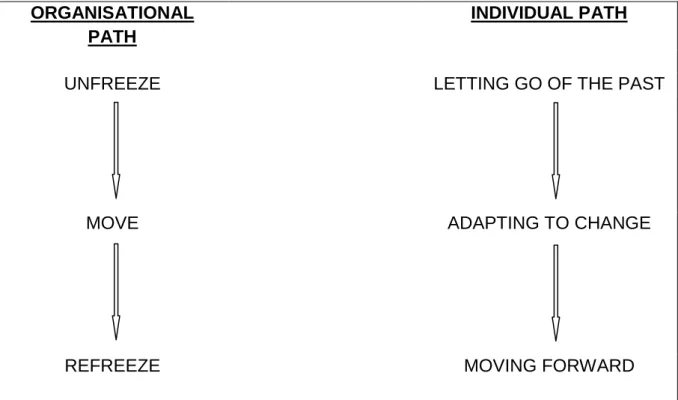
2.9.1 Lewin’s three step model ... 34
2.10 HUMAN CAPITAL ... 35
2.10.1 What is Human Capital? ... 35
2.10.2 Importance of Human Capital to an Organisation ... 36
2.11 LESSONS LEARNT AND FACTORS TO BE TAKEN INTO CONSIDERATION FROM MERGERS ... 37
2.12 ORGANISATIONAL CULTURE ... 39
2.12.1 What is Organisational Culture? ... 39
2.12.2 Types of Organisational Culture ... 40
2.13 POST MERGER PERCEPTIONS OF WORKING ENVIRONMENT ... 42
2.13.1 What is Perception? ... 42
2.13.2 What is Working Environment? ... 42
2.14 CONCEPT OF ORGANISATIONAL COMMITMENT ... 43
2.14.1 What is Organisational Commitment? ... 43
2.14.2 Allen and Meyer's three-component model of organisational commitment (1990:1-18) ... 44
vii
CHAPTER THREE RESEARCH METHODOLOGY
3.1 INTRODUCTION ... 47
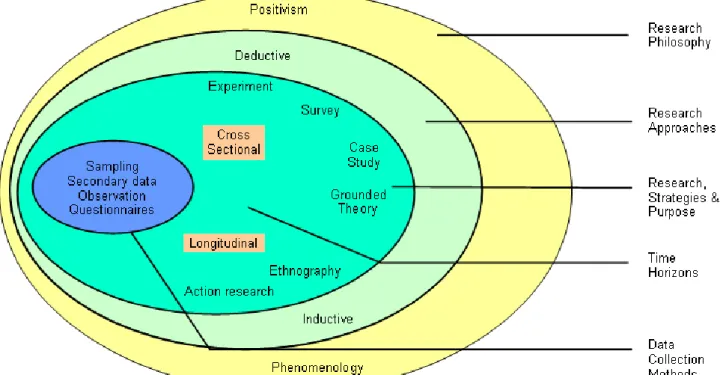
3.2 THE RESEARCH PROCESS ... 47
3.3 RESEARCH METHODOLOGY... 49 3.3.1 Research Paradigm ... 49 3.3.2 Positivistic Paradigm ... 49 3.3.3 Quantitative Paradigm ... 50 3.4 RESEARCH DESIGN ... 50 3.5 PILOT STUDY ... 51 3.6 DATA COLLECTION ... 52 3.6.1 Questionnaire ... 52 3.6.2 Cover Letter ... 54 3.7 SAMPLING ... 54 3.7.1 Sampling Techniques... 54 3.7.2 Sample Selection ... 55 3.8 SCALE ... 55
3.9 STATISTICAL DATA ANALYSIS AND TECHNIQUES ... 56
3.9.1 ANOVA Test ... 56 3.9.2 Independent T-Test ... 57 3.9.3 Correlation Test ... 57 3.10 TRUSTWORTHINESS ... 57 3.11 RESEARCH ETHICS ... 58 3.12 CONCLUSION ... 60 CHAPTER FOUR PRESENTATION AND INTERPRETATION OF STATISTICAL RESULTS 4.1 INTRODUCTION ... 61
4.2 RESPONSE RATE ... 61
4.3 THE CODING OF THE QUESTIONNAIRE ... 62
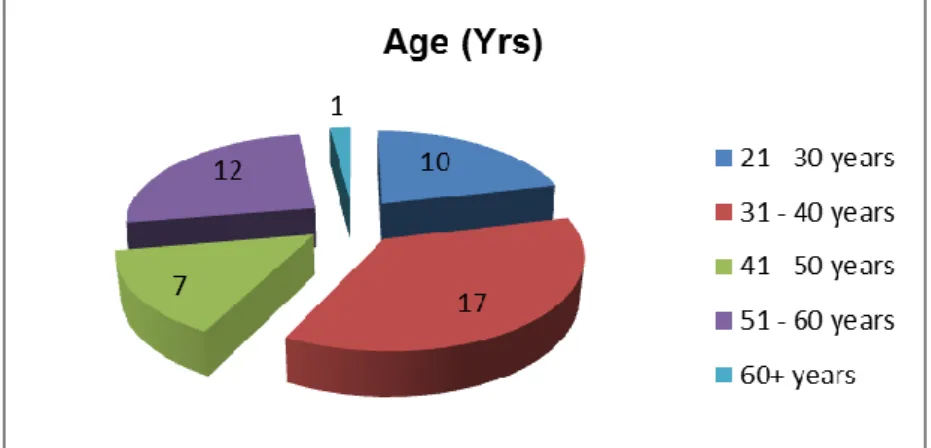
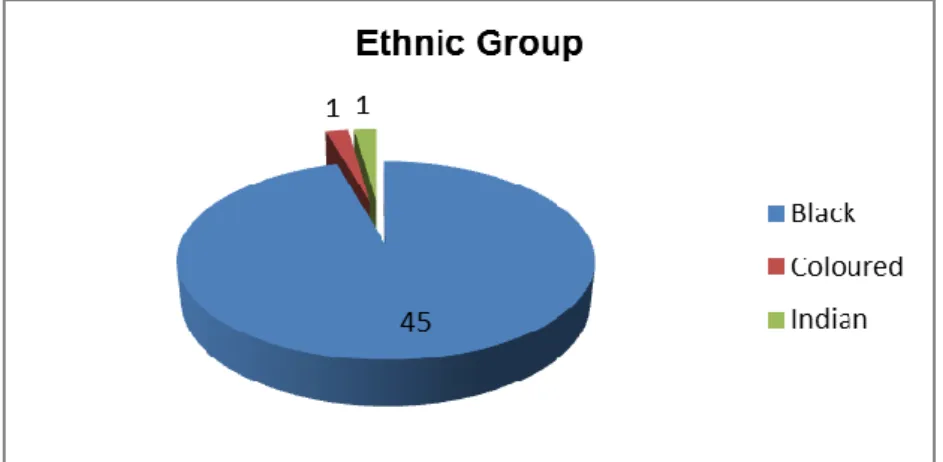
4.4 SECTION A: DEMOGRAPHIC ANALYSES ... 63
viii
4.6 SECTION B: EMPLOYEE PERCEPTION OF THEIR POST-MERGER
WORKING ENVIRONMENT ANALYSES ... 65
4.6.1 Descriptive Statistics within individual questions of employee perception of their Post-Merger Working Environment ... 66
4.6.2 Descriptive Statistics within the overall questions of employee perception of their Post-Merger Working Environment ... 71
4.7 SECTION C: DESCRIPTIVE STATISTICS WITHIN EACH COMPONENT OF ORGANISATIONAL COMMITMENT ... 72
4.7.1 C 1 Affective Commitment Scale ... 72
4.7.2 C2 Continuance Commitment Scale ... 74
4.7.3 C3 Normative Commitment Scale ... 75
4.8 DESCRIPTIVE STATISTICS WITHIN EMPLOYEE PERCEPTIONS OF THEIR POST-MERGER WORKING ENVIRONMENT AND ORGANISATIONAL COMMITMENT. ... 79
4.9 DESCRIPTIVE STATICTICS WITHIN EMPLOYEE PERCEPTION OF THEIR POST-MERGER WORKING ENVIRONMENT, ORGANISATIONAL COMMITMENT AND THE DEMOGRAPHIC VARIABLES ... 80
4.9.1 By Age ... 81 4.9.2 By Gender ... 82 4.9.3 By Qualification ... 83 4.9.4 By Work Experience... 84 4.10 CONCLUSION ... 85 CHAPTER FIVE CONCLUSIONS AND RECOMMENDATIONS 5.1 INTRODUCTION ... 87
5.2 FINDINGS ... 87
5.3 DISCUSSION OF RESEARCH FINDINGS ... 89
5.4 RECOMMENDATIONS FOR FUTURE RESEARCH ... 94
5.5 CONCLUSION ... 94
5.6 RECOMMENDATIONS FOR WALTER SISULU UNIVERSITY ... 97
ix
LIST OF REFERENCES ... 102 LIST OF APPENDICES
APPENDIX A: Section B: Individual question totals for perception of Post-Merger Working Environment in questionnaire order ... 110 APPENDIX B: Correlations across all the constructs reflected in the form of
Scatter plots ... 111 APPENDIX C: Covering letter and Questionnaire ... 112
x LIST OF FIGURES
Figure 2.1: The Dual Change Paths ... 35
Figure 3.1: A graphic presentation of the multiple tiers of the research process .... 48
Figure 4.1: Sample of Segmentation by Age. ... 63
Figure 4.2: Sample of Segmentation by Gender ... 63
Figure 4.3: Sample of Segmentation by Ethnic Group ... 64
Figure 4.4: Sample of Segmentation by Educational Qualification ... 64
xi LIST OF TABLES
Table 3.1: Lickert Scale ... 56 Table 4.1: Response Rate ... 62 Table 4.2: Overall scores of the total mean and standard deviation for
perception of their Post-Merger Working Environment ... 72 Table 4.3: Individual question analysis of the component Affective Commitment
in Allen & Meyer’s Model of Organisational Commitment ... 73 Table 4.4: Individual question analysis of the component Continuance
Commitment in Allen & Meyer’s Model of Organisational Commitment 75 Table 4.5: Individual question analysis of the component Normative Commitment
in Allen & Meyer’s Organisational Commitment ... 76 Table 4.6: Overall total mean and standard deviation scores for the three
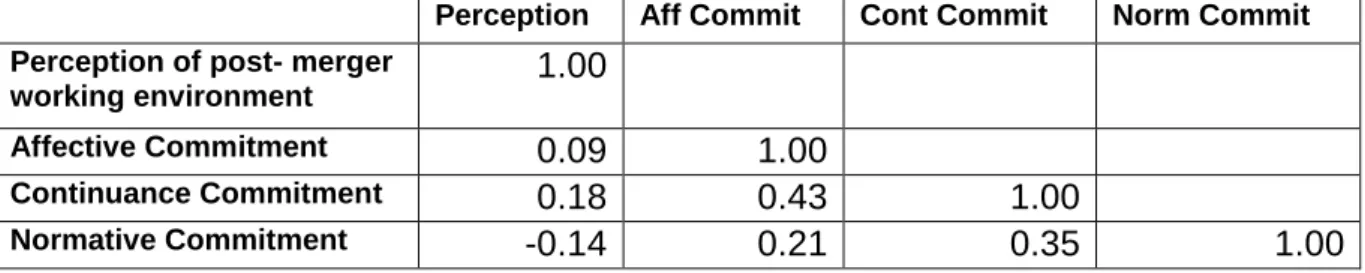
dimensions of Organisational Commitment ... 77 Table 4.7: Correlation matrix between the perceptions of their Post-Merger
Working Environment and Organisational Commitment ... 79 Table 4.8: Overall total means and standard deviation scores for Working
Environment and Organisational Commitment with all its sub-dimensions ... 80 Table 4.9: Employee perception of their Post-Merger Working Environment,
Organisational Commitment and the Age component of the
demographics ... 81 Table 4.10: Overall t-test comparing the two genders with employee perception
of their Post-Merger Working Environment and the Organisational
Commitment components ... 82 Table 4.11: Employee perception of their Post-Merger Working Environment,
Organisational Commitment and the Qualification component of the demographics ... 83 Table 4.12: Employee perception of their Post-Merger Working Environment,
Organisational Commitment and the Work Experience component of the demographics ... 84
1
CHAPTER 1
BACKGROUND FOR THE PROBLEM STATEMENT
1.1 INTRODUCTION
The rapid advancement of our global economy brought about a swift move from an Industrial age to an Information Age. This ‘wave of Change’ was predicted by (Toffler, 1984:23). This movement, which started at the end of 1970’s, has had significant effects on the way in which business operates.
Technological change, especially in the field of computerisation, has had significant impact, not only on communication but also on:
Automation – Replacing people with machines in order to improve productivity and decrease costs.
Globalisation – An increase in trade between countries, as a consequence not only of computerisation and its effects on communication, but also other technological change, such as containerisation, jet travel (which increased the ability of producers to move more goods more cheaply), and of decreasing trade barriers (which facilitated international trade) (Hill, 2008:15). As a consequence of globalisation, firms were able to trade with the world rather than a few, selected clients/countries.
While globalisation produced benefits, the increase in international trade led to rapid increases in competition. Thus, in order to survive, firms were forced to cut their costs. Amongst the options to do so the more popular methods included the following:
Reduce staff – given that wages and associated labour costs often represent the single largest item in the cost of production, this becomes an obvious area to examine for cost reduction purposes. This is achieved through downsizing, outsourcing, rationalising and automating (Hill, 2008:447).
2
Establish some form of closer association with another firm. This may take the form of joint-ventures, acquisitions or mergers. A merger is any situation in which two or more firms combine to become a single unit, thereafter operating under a different name (David, 2007:197).
Merging appears to provide many benefits, among them:
Economies of scale (and thus lower unit costs)
Increased capacity
Access to the other firm’s technology
The turning of a competitor into a collaborator, while at the same time benefiting from rationalisation. By merging, the new firm does not need two C.E.O.s, two Marketing Managers, and the like – all of which can result in considerable savings, especially in executive salary packages (Bruner, 2004:30).
While the firms struggle to become more cost effective, a change in the management-employee relationship also results. As firms are increasingly unwilling or unable to ‘carry’ excess staff should an employee’s skills become obsolete or redundant, there is little need or ability to retain them, whereas previously the individual would have been retained or transferred. ‘Job security is now a function of keeping your skills current and marketable’ (Robbins, 1997:22). It also means that in many cases, the concept of a ‘job for life’ is becoming increasingly rare.
While firms may refer to their staff as their ‘most valuable asset’, staff are increasingly regarded as just another factor of production, to be acquired or disposed of according to the needs of the firm. This means that a significant change has occurred between management and ‘the managed’. Previously, long - service staff tended to be loyal and committed to the firm. They had moved from a formal economic contract to the informal psychological contract, based on mutual trust (Stephen, 2010:4).
3
In many cases, the actions and motives of management are now being viewed with a pervasive distrust. They are perceived to have irrevocably broken the trust relationship – in which case, employees revert to the formal economic contract and are no longer loyal to the firm, but rather to their next pay cheque. As Robbins (1997:23) puts it, ‘the unwritten loyalty contract that previously existed between employers and employees has been irrevocably broken’.
Given that mergers almost invariably result in redundancies, it is almost inevitable that once the decision to merge with another firm is announced there is a deterioration in employee morale and an increase in stress and uncertainty. While staff may be able to understand on a rational level why the merger should occur, on an emotional level, there is always the fear of job loss, of reduced promotion potential and the like, all leading to increased cynicism and distrust (Hay & Fourie, 2002:121).
Robbins, states that ‘the landscape is littered with corporate marriages in which management failed to accurately assess the downside from culture clash’. In extreme cases, it is possible that the problems of integration are such that a mass staff exodus may occur, leaving only a shell of a company almost bereft of its intellectual capacity (1997:345.).
In modern strategic management thinking it is evident that mergers are ‘the way to go’ – a rapid way to grow the organisation, while at the same time decreasing overheads and thus increasing profits. However, this premise is often flawed.
According to systems theory, as explained by Stephen, each organisation is made up of a number of interrelated subsystems which interact synergistically to create organisational success. The total system that comprises the organisation includes, among others, management systems, technical and operational systems, financial systems and human systems. If the firm is to prosper and grow, all of these systems must interact positively. However, it appears that many senior managers concentrate on a few systems and tend to ignore or overlook others – notably the human systems. If managers choose to grow through mergers, frequently an objective is the reduction of costs through cutting staff. Thus, instead of the human subsystem
4
assisting in the growth, it actually hinders it by emotionally or physically withdrawing from the organisation (2010:5).
As the human system is thus, at least to a degree, disabled, it actually reduces the potential for success. Indeed, (Martin & Roodt, 2008:25) state that mergers have a negative impact leading to non-compliance in employees’ commitment to the organisation, turnover intentions and job satisfaction. This can be costly to the organisation. Thus a critical but overlooked factor in any merger must be to look after and develop the human subsystem. If staff are to maintain trust and commitment to the firm, they must be treated accordingly. ‘The way that people are managed has a powerful impact both on productivity and on profitability’ (Roos & van Eeden, 2008:54).
This inconsistent analytical thinking tends to make itself visible due to it focusing on growth rather than development or ‘bigger over better’. Mergers and acquisitions often enlarge firms, but often they do not develop them in the sense of improving their capability to improve on their particular needs and those of their customers. In order to overcome this, a paradigm shift is required. Managers need to stop thinking atomistically and start systems thinking. Any system is as strong as its weakest subsystem. Thus firms should not only record mistakes of commission, but also those of omission – things not done that ought to have been done in order to create a realisation of where the firm is failing (Economist, 3.11.2009).
While in South Africa the business sector has been following the trend towards mergers, mergers have not been confined to this area. World-wide, academic institutions have been forced into mergers in order to survive. Given the financial and other problems present in higher education in the late 1990’s, it was inevitable that the concept of the mergers of academic institutions would arise. An outline of this particular problem is presented in the next section.
1.2 CHANGES IN THE ACADEMIC ENVIRONMENT
By ignoring many of the tenets of industrial and organisational psychology, management and government changed a committed academic cadre into a generally
5
alienated one. Over the last dozen years, the environment of higher education – specifically as it refers to universities and technikons (or ‘universities of technology’ as they are now known) has undergone radical change. Given the magnitude and rapidity with which these changes have taken place, it has huge implications for the reactions of staff at these institutions (Stephen, 2010:7).
With the possible exception of the ‘charmed circle’ of universities who escaped the merger process – many academics now find themselves acting as little more than supervisors in a production department being required, in terms of government exhortations for massification and throughput, to churn out ever larger numbers of students (somewhat akin to producing sausages in a sausage machine). Many of these students are at best minimally qualified and are often barely competent (Stephen, 2010:8).
The magnitude of change and the actions of management have resulted in feelings of powerlessness and concern for future careers. People who are highly committed tend to be emotionally involved and invest themselves in their institution, resulting in high levels of motivation and performance (Kreitner & Kinicki, 1999). Unfortunately, this attitude tends to generate higher stress levels.
However, if the individual’s ability to perform is reduced, for example, through management interference, performance will be affected, leading to higher levels of stress, frustration and eventually aggression, fixation or withdrawal (Mullins, 2007:5). Stress levels rise due to the lack of fit between individual needs and management demands (Blix, Cruise, Mitchell & Blix, 1994:158).
Writing in the Daily News, Naidoo identified possible causes of lowered levels of motivation and commitment. These included:
1. Change of government policies
2. Decreases in financial aid – resulting in having to do much more with much less.
3. Demands for ‘massification’ and ‘throughput’, which lead to rapidly and radically increased class sizes.
6
4. Lack of respect
5. Decline in student quality 6. Poor salaries
7. High job stress (Naidoo, 15.01.2008:2)
These were seen to have resulted in an alienation of personnel. The impact of these changes could well have been ameliorated had management shown a degree of support and encouragement for the staff.
All of the above were precursors to the change in top management style from collegial to managerial and the final act – the merger programme. These were the final straws in the ‘death’ of commitment for many staff. Whenever mergers occur, environmental change is usually significant. Given the changes, the psychological contract is broken and commitment levels plummet as both parties move back to the economic contract. Commitment to the ‘old’ institution is gone – in some cases, the ‘old’ institution was simply absorbed into the ‘new’ institution. Thus, it is often similar to starting in a new organisation, on probation, while both parties assess their situations and decide whether or not to commit to the new institution. Both parties renegotiate their options as to whether they stay or leave the institution.
In such periods of often intense uncertainty, industrial psychology indicates that direct interventions to reassure and calm staff emotions should be applied: in reality, it appears that this factor was significantly absent (Stephen, 2010:11).
The implications of a merger are such that, (Martin & Roodt, 2008:23) even the mentioning of it is liable to result in widespread negative reactions and a drop in performance.
What is to be learned from all of the above?
Simply, that management (be it government or institutional) cannot simply unilaterally and autocratically change the rules without expecting significant negative responses. In terms of uncertainty, as in the case of merger situations, in order to maintain continuity while the process unfolds, the need for a loyal, committed, high
7
performing staff cannot be underestimated (Jansen, 2002:161). Yet it appears that in all the mergers, management acted to actually alienate staff.
As any student of industrial and organisational psychology will know from their knowledge of organisational behaviour, the attainment of organisational goals is a two-way street, best attained through cooperation rather than confrontation between the parties concerned. Mullins (2007:3) stated that organisational behaviour does not only entail the study of people inside an organisational setting ‘… (but also) includes the understanding, anticipating and control of human actions’. Although much of organisational behaviour pertains to improving performance through motivation and leadership, the subordinates must accept these concepts for them to be attainable.
The job of managers is to attain goals through the best use of human performance by making the work experience both challenging and enjoyable, by creating social units designed to achieve goals and to treat staff as a primary source of productivity gains in order that work performance may be achieved through increased levels of job satisfaction, motivation and commitment (Cascio, 1998:6; Greenberg & Baron, 2000: 183).
This implies working with – rather than being confrontational in – dealings with staff. When significant change occurs, the use of organisational development techniques to smooth the transition to the new systems and to reduce resistance and conflict cannot be underestimated. By blatantly ignoring the lessons to be learned from the disciplines of industrial and organisational psychology the negative outcomes of significant environmental change and especially of the mergers, which may have been mitigated, were simply allowed to occur and inevitably contributed to what is generally regarded as a failed exercise (Reddy, 2007:486) as in all cases it appears that the critical role of people and their reactions to the merger were simply ignored by management.
8
1.3 ACADEMIC MERGERS
1.3.1 Europe
Finland has seen a decline in the number of Universities, dropping from 20 to 15. Denmark has experienced a reduction of 25 universities and research institutions to eight universities and three research institutions since 2007. The largest university in France, the University of Strasbourg, was formed through a merger of three universities in 2009. Wales followed suit in 2010 by merging two universities. One of these two universities had already merged from two institutions in 2009 to form a new ‘super-university’, through the government’s decision to merge institutions to reduce the numbers (Persson, E. 2011).
In these and other countries, including Sweden, Belgium and Germany, universities of various size and reputational recognition have surrendered their institutional independence in exchange for the perceived benefits that come with being merged into a larger institution. In some instances, the drive for change was largely from the bottom up. Elsewhere the mergers were initiated through changes in national policy to modernise university funding and to focus in disciplinary expertise.
1.3.2 South Africa
In the late 1990’s, it became evident that significant problems pertaining to higher education were cause for concern (Jansen, 2002:159). The main concern of the new ANC government was the status of historically black institutions. They were unstable and many black students were applying to enter previously white institutions – in other words, there was a migration away from these black to white universities and technikons. This reduced their financial status and viability. In addition, the anticipated huge increase in black enrolments in higher education had not materialised (Finweek Survey, February 2009). In order to overcome both of these problems, the then Minister of Education decided to press ahead with a merger programme aimed at decreasing the number of higher education institutions from 36 to 21 (Jansen, 2002:6).
9
Despite contestation from many quarters, the merger programme was forced through. The aim was to increase accessibility of entrance to black students, to stop their migration, and to provide a common level of education. The aim was also to cut the enormous costs of running thirty-six institutions. Through mergers, it was hoped to cut costs through, among other things, the rationalisation of programmes, prevention of programme duplication, and the cutting of the wage cost to obtain the benefits of economies of scale.
As indicated earlier, when mergers occur, most emphasis is given to financial factors. Little, if any, effort is given to examining the ‘people issues’ side of a merger which could result in failure in merging (Botha, 2001:276).
1.4 BACKGROUND TO WALTER SISULU UNIVERSITY (WSU)
The Walter Sisulu University path started with the intention of merging three historically disadvantaged higher education institutions, namely, University of Transkei, Eastern Cape Technikon and Border Technikon, which were spread over a radius of approximately 360 km. Situated in Eastern Cape, the second poorest province in South Africa, the one was a traditional academic university, while the other two were technically- focused ‘technikons’ established in the previous ‘homelands’ during the 1980s. Together these institution provided education for around 24 000 thousand students. They also included a loyal staff of academics and administrators each with their own institutional culture. Phobia of change; anxiety over the unknown; concern with regard to retrenchment; the loss and protection of institutional interests were issues that were discussed during the merger discussion process. What was significant about the merger was the incorporation of three historical disadvantaged institutions. The idea was also to overcome the apartheid ideology through merging. In 2002, on the 9 December the Minister of Higher Education, Professor Kader Asmal MP, declared that University of Transkei, Eastern Cape Technikon and Border Technikon, were to merge to form a new all-inclusive university in the Eastern Cape (WSU Website, n. d.)
National Government provided a route map containing merger guidelines in order for the process to start. Three phases where identified. The first dealt with compliance
10
by all institutions with regards to legal requirements and the establishment of an interim Council for a period of six months. The second phase dealt with the official establishment of the new institution documented in the Government Gazette, its main activity being to appoint a management team to deal with operational issues, governance and a new substantive Council. Finally, the substantive Council took up office and instituted substantive management. This phase marks the integration of all units and processes of the merger (WSU Website, n. d.). After consultation with all relevant parties from the three Institutions, the comprehensive University became known as Walter Sisulu University. A merger that was scheduled for 1 January 2005 was postponed and on 1 July 2005 the merger was established (WSU Website, n. d.).
Due to this, WSU is uniquely positioned in the Eastern Cape to serve the under-developed areas of the province, with a clear rural and urban balance. WSU consists of four campuses in Mthatha, Buffalo City, Butterworth and Queenstown with several delivery sites in these areas. As such the university aims to integrate the research focus of a university with the technical career orientation of the technikons. As a comprehensive university, WSU offers students an extensive choice of education with articulation and mobility across the curriculum, from foundation programmes to post-graduate studies.
Higher Education institutions presently must confirm their viability and importance and serve the needs of their users, the government, commerce and industry and the communities in which they are positioned. The investment of taxpayers' funds into higher education demands a return in the form of graduates who are developed and equipped to pilot the economy. WSU’s core business is Teaching, Research and Community Engagement (WSU Website, n. d.).
The four faculties are:
1. Faculty of Health Sciences
2. Faculty of Science, Engineering and Technology 3. Faculty of Education
11
These faculties offer an extensive range of programmes and qualifications extending from certificates, diplomas and degrees to postgraduate studies. The following programme focus areas are considered as significant for development and restructuring: Health Science Engineering Business Management Information Technology
Art and Fashion
Education
Agriculture (a future focus and currently in the process of being established)
Hospitality Management and Tourism
Broadcasting and Journalism (WSU website, (n.d.)
1.5 SETTING
1.5.1 Finance Department
The heart of any organisation is its human resources. It needs a competent team of experts in various fields to sustain its existence and maintenance. In any organisation, the most important department is the Finance Department, as it assists in providing the financial and accounting information required to make various decisions. Walter Sisulu University is dependent on an effective Finance Department. The head office is in Mthatha at the Nelson Mandela Drive Site and another important office is based in East London at the Heritage Building, Cambridge Street (WSU Website, n. d.).
There are 68 permanent staff members in the Department. WSU Website, (n. d.) confirms that the Finance Staff perform the following functions:
12 Procurement Accounts payable Cost Allocation Payroll Student Debts Asset Management
Monitoring service and contract providers
Statutory reports
Internal Financial reports
External Financial reports
Since the merger in 2005 there has appeared to be a problem in the leadership of the Department since there has been a constant change in management. These changes have brought about uncertainty among the staff. Motivation levels and job satisfaction are constantly broken down. The working environment is also constantly changing as leadership changes and the staff commitment towards the University appears in all likelihood to be highly questionable.
1.6 PROBLEM STATEMENT
People issues are a very important contributing factor to the success of any merger. The management of the merger process is crucial to its success and to the future recovery of an organisation that in almost all cases would have gone through a fairly traumatic period. In a study of Higher Education mergers in Australia, (Harman, 2002:107) argued that unless managed effectively and efficiently and with 'super-sensitivity', the effect of a merger on staff morale and loyalty can be disturbing. Against the above backdrop, the problem statement derived for this study is:
'To investigate factors that influence employee perceptions of a post-merger working environment and organisational commitment and the relationship between these two variables within the permanent administration staff in the Finance Department at Walter Sisulu University’
13
1.7 RESEARCH OBJECTIVES
1.7.1 Purpose of the research:
The primary objective of this research is to investigate the factors that influence employee perceptions of a post-merger working environment and organisational commitment: a case study of the administration staff in the Finance Department at Walter Sisulu University.
To achieve the primary objective the following secondary objective will be investigated:
To investigate factors that influence employee perceptions of their post-merger working environment.
To investigate factors that influence employee perceptions of their post-merger organisational commitment.
To investigate the relationship between employee perceptions of their post-merger working environment and organisational commitment.
An outcome of the research will enable the writer to make recommendations towards improving the relationship between employee perceptions of their post-merger working environment and their organisational commitment
1.7.2 Variables
Independent Dependent
Factors that influence Employee perception Organisational Commitment of a post-merger working environment
1.8 HYPOTHESIS
In an attempt achieve the above objectives; the following theoretical correlation hypothesis is formulated:
14
H1: Employee perceptions of their post-merger working environment and organisational commitment scores together with all sub–dimensions will be low.
H2: Employees who have a negative perception towards their post-merger working environment are less committed to the merged organisation.
H3: Employees who enjoy their working environment will have a positive outlook on post-merger perceptions.
1.9 SIGNIFICANCE OF THE STUDY
It is anticipated that the relevant stakeholders at Walter Sisulu University will take cognisance of the research findings and if need be, take appropriate measures to overcome any shortcomings that would be revealed in this research report.
1.10 DELIMITATIONS OF THE STUDY
While the research will provide an overall historical view of the merger, the emphasis of staff reactions will be confined to employees within the Finance Department at WSU only. They were required to make the greatest degree of adjustment therefore they were selected for the study.
1.11 DEFINITION OF TERMS
1.11.1 Merge
The word ‘merge’ indicates to combine, mix, or bond steadily so as to shape the individuality or individual identity (Nichols, 2001:1203).
1.11.2 Merger
The current English pocket Oxford Dictionary defines the word ‘merger’ as the ‘joining or steadily combining of two formerly separate bodies’ (Thompson 1996:556).
15
1.11.3 Institutional Merger
In higher education, Harman (2002:94) states that an institutional merger is an amalgamation of two or more distinct institutions that submit their lawful and traditional independent identities in favour of a new combined identity under the administration of a single governing body. All assets, liabilities and tasks of the former institutions, including the human elements, are transferred to the single new institution.
1.11.4 Transitional Management Team (TMT)
A transitional Management Team is a team of people who assist with a transformation process. A transition is a transformation process ‘in which existing structures, institutions, culture and practices are broken down and new ones are established (Loorbach, 2007: 17).
1.12 STRUCTURE OF THE DISSERTATION
The dissertation is structured as follows:
Chapter One – Introduction and Background to the Study
This chapter provides the introduction to the study. Background information referring to the rise of mergers as a strategic option, the changes occurring in academic institutions and a comment on academic mergers is presented.
The study is contextualised in terms of its position with regard to industrial and organisational psychology.
Chapter Two – Literature Review
This chapter indicates the rationale for mergers. The aims and stages in the merger process are presented. The success potential and potential problem areas are discussed prior to presenting data with reference to academic mergers in South
16
Africa. This chapter also deals with the concepts of culture and perception and their impact on staff responses to mergers. The important aspects of cultural compatibility in mergers are presented, together with the outcomes of deculturation. Reference is also made to organisational climate. The effects of culture change in both Australia and South Africa are presented. Perceptions of mergers are then presented, both for Australia and local academic mergers.
Chapter Three – Research Methodology
This is the presentation of the research methodology. It indicates the research design and the methodology used. A quantitative approach using the questionnaire method was used for the collection of data. Post-merger perceptions of staff are presented and conclusions are drawn. Comments regarding the advantages and shortcomings of these approaches and the methods of data collection and analyses are presented.
Chapter Four – Findings / Results
This chapter presents the data collected. This will allow for conclusions to be reached on the factors that influence staff perceptions of their post-merger working environment and organisational commitment.
Chapter Five – Conclusions and Recommendations
In this chapter the researcher will be interpreting the findings in the light of the theoretical issues that are covered in the literature review.
The research problem and the hypothesis will be proved or disproved by means of the presentation and analysis of the results.
The relationship between the two variables within the permanent administration staff in the Finance Department at Walter Sisulu University which were surveyed and analysed will be revealed.
Recommendations are made for the relevant stakeholders and for further study on this topic.
17
1.13 CONCLUSION
Having provided an overview of the research, including the objectives, and a brief background overview, it is now appropriate that the topic of mergers be examined in greater detail. This will be done in Chapter Two.
18
CHAPTER 2
LITERATURE REVIEW
2.1 INTRODUCTION
Having provided a brief overview of the research topic in Chapter One, it is now appropriate to examine the topic of mergers in greater detail in order to understand the rationale behind the merger process. The aim of this section is to promote awareness of what mergers hope to achieve and potential problem areas which need to be addressed, with special reference to the staff involved (Stephen, 2010:19).
A merger is defined in higher education as a fusion of two or more different institutions under one governance where a single decision-making body manages all resources, liabilities and responsibilities from the previous institutions (Goedegebuure, 1992: 16).
Mergers amongst educational institutions are classified in terms of the academic outlook and activities that the merging institutions bring together. By drawing from private sector typologies, educational institutions have defined their own understanding of mergers and used the business terminology by replacing ‘line of business’ with ‘field of academic activity’ (teaching) and ‘type of product’ with ‘type of academic product’ (research). Four types of merger are defined by (Pritchard, 1993 as cited in Sewbaran, 2006:8-9) being:
1. A horizontal merger is a merger that takes place 'between institutions which
function in similar academic fields and are focused towards a similar type of product' (2006:8).
2. A vertical merger is 'between institutions which function in similar academic
fields and are focused towards a different type of product' (2006:8).
3. A diversification merger is 'between institutions which function in different academic fields and are focused towards a similar type of product' (2006:9).
19
4. A conglomerate merger is 'between institutions which function in different academic fields and are focused towards a different kind of product’ (Pritchard, 1993 as cited in Sewbaran, 2006:8-9).
WSU falls in the category of a vertical merger.
2.2 POTENTIAL BARRIERS TO MERGERS
According to Sewbaran (2006:9-10), there are many uncertainties that could hinder the process of merging, namely:
Forfeiture of assets
Uncertainties regarding standards and professed quality
Uncertainties regarding extra responsibilities and finances
Positions - e.g. existing post levels and staffing position, such as position status and power
Smaller institution loss of identity when merging with larger institutions (Sewbaran, 2006:10).
According to Strydom (1999:40), positive merging is based on:
A shared vision validated by active governance and administration.
Efficient communication strategies that will keep all stakeholders informed throughout and after the merger process.
A solid commitment by all stakeholders to merge.
A shared view of threat facing the current institutions and/or shared vision of the future potential benefits from merging.
Guarantees regarding employment security for employees.
Confirming continuance of courses for students.
Instilling loyalty and a common culture for the merged institution.
A business identity.
20
Adequate resources to stakeholders whose activities and interactions will change.
Providing professional training and development of staff.
2.3 ACADEMIC MERGERS
Mergers represent a worldwide phenomenon, from which academic institutions have not been spared. In other countries, mergers of academic institutions have taken place with various results (Stephen, 2010:33). In Germany this was unsuccessful, while in the Netherlands they appear to have been more successful (de Paravincini, 2004:1).
In Australia, mergers were fraught with problems as attempts to cobble together disparate institutions took little note of the impact of different cultures on the merged institutions. It is suggested that, like the Australian example, cultural incompatibility was a major negative factor in the merged institutions. Experience with overseas academic mergers helps to provide insights into outcomes of mergers in this country, as parallels with their experiences can be drawn (Mahony, 1995; Johnson, 1999, cited in Stephen, 2010:33).
As a case in point, (Kavanagh & Ashkanasy, 2006:88) undertook a six year longitudinal study of six Australian institutions of higher learning which were merged into three universities. They make the point that, like SA, mergers are prompted by the rationalisation of increased growth and the reduction of costs. Their research established that ‘unless mergers are controlled effectively … the reverse is likely to occur ’. They further state that mergers are highly complex events with a seemingly infinite number of factors that can lead to success or failure’ (Kavanagh & Ashkanasy, 2006:82). According to these authors, the following appear to be findings which are significant for success:
Most managers lack merger skills, leading to negative staff perceptions regarding not only their ability, but also the success of the merger.
21
Managers need to be accepted by staff – be competent and able to create an atmosphere of psychological safety for staff.
Communication is vital and should be on-going.
Given the degree of change, people’s reaction should be the primary focus of change – an ability to deal with ‘stressful destabilisation’ (2006:585), failing which, dysfunctional outcomes result.
The speed of the merger depends on the ability of staff to absorb change.
In order to push the pace of merging, top management ‘move to tighten control by imposing ... constraints ... and reducing freedom ... to make decisions’ (2006:85) resulting in a move to a power and role culture controlled by top management. This results in increased negative responses and increased resistance from staff.
Although each of the three Australian mergers, mentioned in Kavanagh & Ashkanasy, (2006:88) proceeded in a different manner, each had similar results. All respondents indicated the following:
All mentioned negative reactions to their merger.
All experienced a shift to higher levels of autocracy in top management.
All experienced significant culture change.
Of the three types of merger, (Kavanagh & Ashkanasy, 2006:99) categorised the mergers as follows:
Indifference – the merged institutions carried on much as before the merger. Only minor structural changes occurred, with both parties operating largely as separate entities.
Immediate – the institutions were closed, staff reassigned and integrated into major campuses. The merger was cemented and the new institution moved on.
Incremental – a phased in negotiated agreement which retained a degree of autonomy for each institution.
22
It was only the third option in which staff did not complain about being trivialised and where management culture shifted to a more open task - and person-support culture. Thus despite many perceived disadvantages, it may be viewed as the ‘most successful’.
2.4 OVERVIEW OF ACADEMIC MERGERS IN SOUTH AFRICA (SA)
The SA merger process was proclaimed as an effort to increase efficiency, overcome the effects of apartheid, and increase throughput, for purely economic reasons (C.H.E., 2000:36). Despite this, Wyngaard & Kapp suggest that there appears little doubt that the merger programme was simply a political experiment, pushed through, despite serious reservations as to the successful outcome of the programme, mainly in order to guarantee the existence of the previously black institutions and to push through increased numbers of black graduates even if it meant combining totally disparate institutions into a ‘one size fits all’ system (2004:200).
‘There is a strong concurrence … that proposals are less consistent with the stated goals of higher education transformation and more fundamentally of political pressures’ (MacFarlane, 2002:6). Other options, including the improvement of the school system to improve the quality of university entrants or the upgrading of the black institutions’ quality of academic programmes, were ignored. Thus the merger proposals were regarded as ‘potentially counter-productive to the goals of transformation/ or as a potentially costly mistake’ (MacFarlane, 2002:6), therefore, the suggestion that the Education Department ‘take a step back from mergers as its standard tool and to rethink transformation strategies’ (MacFarlane, 2002:6) was ignored.
Nor is this all. Schultz, felt that government had underestimated the complexity of higher education institutions ‘which manifested itself in the various mergers’. ‘Predictably, the public higher education system will, over the medium term, experience notable quality depreciations in service and movement on other transformational aims’. This prediction appears to have been accurate, as will be indicated later (2003:34).
23
From the above, it would appear that the government ignored warnings that the merger process would potentially create more problems that it solved. Despite widespread opposition, it became obvious that the mergers would be pushed through. A couple of examples below indicate the degree of negativity by the institutions concerned:
Rand Afrikaans University (R.A.U.): ‘deplore the decision .... Place both institutions at great risk’ (Groenewald & MacFarlane, 2004:8), RAU had ‘put forward a reasonable and well - motivated alternative proposal’ which was rejected without reasons given. There was ‘implacable opposition’, and ‘fears that the merger would wreck a very good university’ (Groenewald & MacFarlane, 2004:8).
Pretoria/Gauteng/North West: The staff was reported to be very despondent, especially as the merger had ‘effectively been a takeover’ (MacFarlane, September, 2006:8). It was not a really merger as Pretoria had swallowed the other two merger partners ... simply absorbing the other two (MacFarlane, 2006:8). The ‘one faculty, one campus’ total integration model used here was rejected by most staff.
University of Natal/University of Durban-Westville: Initially a federal system had been proposed but was pushed aside in favour of a totally merged unitary system. In addition to the public wrangling for the vice-chancellorship, claims of subtle racism, victimisation, distrust of management and sexual harassment (Naidoo, December 2006:6) together with fears of a drop in standards (Dismayed, 12.06.2006:16), the fact that ‘by all accounts, the University of Natal had been taken over by the University of Durban- Westville’, indicated the degree to which the merger was disliked.
Given this degree of opposition, there was little prospect of staff cooperation in the merger process. Indeed, (Jansen 2002:155) indicated that people do not always act rationally even if improved benefits are forthcoming, and that there was staff resistance even when the mergers were a fait accompli.
24
Mfusi (2004:109) indicated that no set of guidelines for merging were supplied by Government. Each institution used its own methods. Thus each merger evolved differently. Jansen, (2002:163-164) indicates four types of outcome:
1. Institution Obliteration
This entails the disappearance of one of the merging units. The Giyani Agricultural School, (part of the Giyani Agricultural School and the South African College for Teachers Education merger) ‘simply ceased’ to exist. Its respectable curriculum, ‘abundantly gifted with professional knowledge and broadly regarded as a centre of innovation’, was simply disregarded and its buildings were reclaimed by the Government (Jansen, 2002:163).
2. Protected Enclosure
A unit was allowed to continue a separate existence within the newly merged institution. This is the case of the Johannesburg College of Education, which enjoyed a separate dispensation regarding finance, promotions and campus statutes. It continued as an autonomous entity (Jansen, 2002:164).
3. Subsumed Integration
This involves the takeover of a smaller viable unit. In this case the University of Pretoria took over the MEDUNSA Veterinary Science Facility. The larger institution made only marginal changes to its structures and procedures. This resulted in a specialised small unit becoming part of a bigger institution (Jansen, 2002:164).
4. Equal Partnership
In the case of Eastern Cape Technikon, Border Technikon and University of Transkei, it seemed to combine three established units, their physical assets, students and staff. It was unlikely to lead to dissatisfaction from one of the three partners. (Jansen, 2002:164).
25
At a workshop, regarding mergers, which was organised by the Centre for Higher and Adult Education in November 2002 and which was attended by academic staff members from a wide range of further and higher education institutions in South Africa, thirty five respondents were requested to participate in a survey regarding mergers. One respondent summed it all up as follows: ‘I am not in favour of mergers of the kind I have experienced. There must be ways of effecting mergers that can be more user friendly’ (Wyngaard & Kaap, 2004:198-199). Despite all the negative responses, Wyngaard & Kapp, (2004:198) suggest that ‘the merger will be described as a success no matter what happens on the coal face of the staff and student realities’.
2.5 REASONS FOR HIGHER EDUCATION MERGERS IN SOUTH AFRICA
Some of the most common reasons are (Jansen, 2002:135-136):
Cost savings from the reduction of duplication and more effective operations
An increased level of skills and competencies of lecturers
Greater height and breath of educational offering
Maintenance of a higher overall quality of education
More opportunity to attract and retain students
Improved utilisation of resources
Greater opportunity to progress, develop new skills and achieve excellence
Increased opportunity and enhanced research output
A more powerful SRC body to attend to student needs
2.6 RECOMMENDATIONS FOR ACADEMIC MERGERS IN SOUTH AFRICA
Wyngaard & Kapp, (2004:200) indicated that most academic mergers in SA were hostile, financial and political. Botha (2001:276) suggests that before the mergers actually took place the following should be considered:
26
Choice of a merger partner – must be culturally compatible and able to develop a joint culture. Although not stated as such, a due diligence would be required.
Enabling legislation to facilitate the merger- establishing internal policy, mechanisms and procedures.
Timing the merger: noting that many institutions were not ‘historically and politically ready for merging.
A merger plan to transform for both merger and post - merger integration is drawn up. Care should be taken to avoid an ‘inappropriate pace of integration’.
Peoples’ issues are probably the most important aspect of the process. He warned against over-reliance on financial information and ignoring people and cultures ‘at their peril’ (Botha, 2001:276).
‘Mergers occur fairly regularly in higher education abroad, but are not a common phenomenon in South Africa ... (thus) very little documented research and academic discourse exists on the topic in our country’(Botha, 2001:274). Botha also stressed that in SA, all the academic mergers were forced. In all cases the merger partners were allocated.
At the workshop organised by the Centre for Higher and Adult Education, referred to above and attended by academic staff members from a wide range of further and higher education institutions in South Africa, the following emerged:
News of the merger was met with mixed feelings. Intellectually a positive reaction, but misgivings as to the outcomes. One respondent welcomed the merger, stating it was ‘preferable to the present losing organisation’ (Wyngaardt & Kapp, 2004:192).
Levels of communication differed. Most felt poorly informed. ‘Left in the dark – and a lack of connection’ (Wyngaard & Kapp, 2004:191).
27
Facilitation varied between institutions, but generally there appears to have been a lack of prior planning (Wyngaard & Kapp, 2004:199)
An on-going theme was the perceived lack of involvement of staff, which led to negative outcomes such as:
- low morale – ‘devastating’ (Wyngaard & Kaap, 2004:194). The majority were ‘demotivated, cynical, clinically depressed and could barely operate’ (Wyngaard & Kaap, 2004:198).
- Increased conflict between staff, lack of loyalty, feelings of betrayal, of disappointment and despair are quoted.
The majority of staff were severely affected by the merger. Many reacted negatively to the magnitude of change, with some having to ‘work with traumatised staff’ (Wyngaard & Kapp, 2004:198).
Hay & Fourie (2002:125 - 129) proposed a seven point framework for a merger. The components of this framework are as follows:
Conduct feasibility study.
Develop an initial proposal of intent.
Set up a consultative stakeholder process. This should include a shared vision not imposed by one institution and a mechanism for dealing with sensitive issues.
Set up team-building initiatives to forge a new institutional culture, share experiences and identify challenges.
Establish time frames in order to monitor progress.
Resolve technical issues, by establishing steering committees and subcommittees including a strategic plan, plans for finance, and plans for human resources.
Formulate ‘a merger proposal’ including a rationalisation plan; a strategic plan for the new institution including finance, organisational structures and time
28
scales. This stage should include due diligence and financial reports from the parties concerned.
Botha (2001:277) also suggested three options for merged structures:
1. The Confederal Structure:
A confederation is formalised and fairly permanent union in which the constituent elements retain full autonomy. Mutual consent to collaborate and cooperate on issues of mutual interest and a contract between the parties that describes the obligations and rights of each party regarding the collaboration, are characteristic of a confederal structure. No one party will be able to dictate to the other regarding matters outside the cooperation agreement.
2. The Federal Structure:
The federal structure can take a variety of forms, the two main variants being:
Centralised powers and functions are specified while the decentralised powers and functions (in other words, ‘the rest’) remain with the individual members of the federation.
Devolved powers and functions are specified while everything else is centralised.
3. The Unitary Structure:
The existing parties merge into a single body with one central administration. Certain functions and powers could be decentralised if necessary, but a single identity would be essential.
Each option has advantages and disadvantages while the confederal and federal structures are simpler, given that each entity retains a fair degree of cultural and administrative systems intact. It is significant that in almost all circumstances, it was the unitary model of complete integration that was chosen. This despite the fact that
29
it was the most difficult model to implement and in the case of WSU, because of the degree of cultural and administrative and academic change involved, the one most likely to be unsuccessful.
Botha (2001:280) concludes that although merging is a complex endeavour with much opportunity for failure, if properly planned and managed, it is possible to make a resounding success of the process. However, he adds the comment that ‘additional resources, guidance and assistance would be required, as the merging activity uses so much of the time and energy of those involved, that the quality of the core business would otherwise undoubtedly suffer’ (Botha, 2001:280). Thus it is essential that adequate resources, both human and financial, are mobilised to affect a positive outcome.
2.7 FACTORS FOR SUCCESSFUL MERGING
An important fact was established in Chapter One that people issues are the most significant factor in the success or failure of a merged institution. Price (1999:39) states that leaders involved in mergers ‘ disregard the people issues at their peril' and that issues of culture, effective communication and proper change management strategies need to be put in place and these must be well managed before, during and after a merger. Effective leadership and management are also critical to the success or failure of a merger.
Before discussing any of these factors for successful merging, it is important to make a distinction between leading and managing. Leadership and managing are not commonly exclusive but rather complementary (Napolitano & Henderson 1998:3). Today's realties require that the manager's ability to implement plans and accomplish results be integrated with the leader’s ability to set direction and inspire and engage others. The primary role of the leader - manager is to influence others’ performances by helping to shape an organisation in which people can realise and express their capabilities and in so doing contribute more fully.
30
2.8 MANAGING CHANGE
2.8.1 What is Managing Change?
‘Change can be described as the individual ability to have the freedom to think, feel, do something different without feeling threatened in an organisation’(Sewbaran, 2006:17). To manage change can be challenging. Most organisations appear to use a mechanistic model, first applied to managing physical work and superimposing it onto the new mental model of today's knowledge organisation. Change management can be broken up into small units and then managed. This is the bequest of Frederick Winslow Taylor to scientific management. The idea is to think innovatively and not increasingly reproduce physical labour. Strategic thinking involves the recognition of patterns and the foreseeing of problems and opportunities before they occur, that is the ultimately the goal (Sewbaran, 2006:17-18).
Change management should not be perceived as the correction of one problem at a time. Instead it should be seen as involving a balance between a number of activities in order to effect change. This is generally what happens in most organisations. An organisation may simultaneously be working on two completely different outcomes like Operational issues and Quality Assurance as part of their change mandate. The key to the activity is not perceiving these entities as separate but connecting and balancing them. Change management involves the management of communication between those who lead the change and the implementers of that change as well as managing the environment in which it will occur together with the emotions that involves an organisations makeover (Sewbaran, 2006:18).
2.8.2 Factors significant in Managing Change
Research indicates a need to fit management strategies into particular characteristics of the organisation and to holistically address all aspects when it is operational. Christensen & Overdorf, (2000:65) pinpoint the challenge presented in meeting the needs of the current organisation and the emerging organisation.