0
OCTOBER 2014
1
Established in 1998, Delta Institute is a Chicago-based nonprofit organization that works throughout the Great Lakes region to build a resilient environment and economy through sustainable, market-driven solutions. Since its founding, Delta has been a leader in facilitating stakeholder engagement around the redevelopment and reuse of brownfields, which are vacant or underutilized properties that are contaminated or perceived to be contaminated. Now, Delta provides its expertise to help clients and government and community partners implement redevelopment strategies that revitalize communities. In 2012, Delta Institute facilitated a stakeholder engagement process to determine the guiding principles for redevelopment of the shuttered Fisk and Crawford Coal Plants in Chicago. Delta brokered a consensus agreement among the community groups, the plant owner, the Aldermen, the trade union representative, and the local electric utility.
Beyond brownfield redevelopment and stakeholder facilitation, Delta works to develop innovative, market-driven solutions related to energy, ecosystems and waste in the Great Lakes region. Learn more about Delta Institute at www.delta-institute.org.
2
Due to a changing energy market and mounting regulatory and community pressure, coal-fired power plants are shutting down across the country. Aging coal plants are struggling to meet increased regulatory standards while still staying economically competitive with natural gas-burning facilities. Additionally, these older coal facilities pose a challenge for surrounding neighborhoods where local economies are often tied to the success of the plants, while at the same time environmental pollution is impacting respiratory, cardiovascular, and neurological development of community residents1.
Since 2002, the Sierra Club has been leading the charge for coal plant retirements with its Beyond Coal campaign. The program is pushing for the closure of all 523 coal-fired power plants in the U.S. by 2020, and already counts the closure or planned retirement announcements of 178 plants. The campaign continues to build momentum and push for closure of the remaining 345 plants.
As coal plants retire, it is not only important to look at what type of energy is generated to replace these sources, but also what happens to these former coal plant sites and the local
economies and communities that relied upon them. Coal plants are often significant employers and contributors to the local tax base, and that economic loss requires coordinated planning. Plant retirements also offer a great opportunity for the local community to come together and define a new vision for the site that meets their needs, whether those needs are jobs, residential housing, green space, or another industrial use.
Research conducted by Delta Institute on this topic confirmed that redevelopment of coal-fired power plants is a long and difficult process. Key challenges associated with coal plant
redevelopment include:
Scale – large and unconventional buildings
Time – average time from closure to planned completion of redevelopment is 27 years Remediation – can vary in cost according to end use
Financing – coal plants require extra effort and resources from private sector Models - Lack of demonstrated best practices
3
Beyond the significant barriers to coal plant redevelopment, there are a number of benefits2
that older plant sites often offer, including a large land use footprint, valuable waterfront access, historic relevance, high bandwidth/technological connectivity, and proximity to populated urban and residential areas.
To gain a better understanding of what has been learned about success factors for coal plant redevelopment efforts, Delta did a national scan of information available in the public domain. Delta identified and reviewed 25 active redevelopment efforts. All 25 sites reviewed are located in urban areas, as our national scan did not produce examples of coal plant redevelopment in rural areas. While there are fewer coal plants in rural areas, three other causes are possible for this lack: 1) rural redevelopment efforts may be at very early stage and not visible; 2) rural redevelopment efforts may have a lower profile than urban redevelopment efforts, or 3) the challenges of
redevelopment in rural areas may not have yielded examples. More research into transitions in rural coal plant communities is needed.
Reuse possibilities are diverse and site dependent. Sites are often converted to commercial or residential complexes, but they have also been redeveloped into museums, parks and open space, or alternative energy projects. Of the 25 sites identified, the range of end use options that are being considered include:
– Commercial 10 sites
– Residential 4 sites
– Manufacturing 0 sites
– Park, open space 5 sites
– Community space 6 sites
– Alternative energy 2 sites
– Unknown 3 sites
The fact that almost half of the sites (10) were redeveloped for commercial use means that permanent jobs will be created by the redevelopment. Although it should be noted that retail jobs are not at the pay scale of the utility jobs that were lost when the plants closed. Manufacturing was not an end use for any of these sites.
The coal plant redevelopment examples identified in Delta’s scan indicate an average of 27.3 years from the date of closure to the projected redevelopment completion date.
Years from Closure
to Sale/Transfer
Years from
Closure to
Redevelopment
Construction
Years from Closure
to Redevelopment
Completion or
Planned
Completion
Time from
Sale/Transfer to
Completion
Average
16.4
22.2
27.3
8.87
Median
12
20
26
7
2 These benefits are generally associated with urban power plants and may not be relevant for plants in rural areas.
4
The cost of remediation is driven by end use. Parks and residential uses require significant remediation to make them safe for normal use. Industrial reuse often requires capping land with contained pollution before building on the site, a more cost-effective method of remediation. Liability for the clean-up remains with the land owner, but if the pollution is contained onsite, regulatory agencies have few options to force clean up. This means that funding for cleanup is often folded into the financing for reuse.
Funding for remediation could come from the private sector new owner, the public sector or a combination. Available funding for brownfield planning and cleanup is small relative to the need for funds; the process for securing these funds is highly competitive. The involvement of local, state and federal government in the process is important. Sixteen of the sites identified in this scan utilized public-private partnerships for redevelopment.
Early community involvement appears to have a positive impact. Delta’s scan indicated that community involvement resulted in a decrease of 6 years in the average sale time; reducing time from retirement to sale to a new owner from an average of 18.9 years to an average of 12.9 years.
The national scan of coal plant redevelopment makes it clear that this is a new and emerging field of brownfield redevelopment. Examples and best practices are difficult to find, as there are few completed redevelopments documented. However, the redevelopment examples that follow are an indicator of the importance of stakeholder engagement to find creative solutions.
Based on our national scan and Delta’s on-the-ground experience with Chicago’s Fisk and Crawford coal-fired generation plants3, Delta has identified several strategies and tactics that
often result in a more streamlined redevelopment process and sustainable end use for the site. 1. Early Planning. While a number of activities, including economics or community or
regulatory pressure, can trigger the initial movement of an active coal plant towards retirement, it is critical that redevelopment planning be initiated as soon as movement towards closure begins.
2. Transparent Stakeholder Engagement Process. Early redevelopment planning should prioritize the organization of a robust and transparent stakeholder engagement process. This process should involve community, public and private stakeholders, including the plant owners. Foundations can play an important role in supporting predevelopment work and providing funding that enables community groups to engage in the process. Union involvement is also important.
3 Fisk and Crawford Reuse Task Force report, September 2012: http://delta-institute.org/delta/wp-content/uploads/Fisk_Crawford_Reuse_Task_Force_Sept-2012.pdf
5
3. Facilitation by Neutral Third Party. The productive engagement of a diverse, multi-sector stakeholder group requires professional facilitation by a neutral third party. In some
situations, community stakeholders will need to move from advocacy to partnership, and a third party can help facilitate that transition. A facilitator can level the information playing field by bringing in experts who can speak to the relevant economic and environmental facts. Grounding the discussion in facts helps to manage stakeholder expectations. 4. Clear, long-term vision for reuse. The purpose of the stakeholder engagement process is
to align diverse interests behind a common vision for site reuse that meets the
community’s needs. The common vision for reuse brings focus to site marketing efforts and streamlines outreach and engagement with prospective end users. In addition, remediation of sites can vary depending on end use.
5. Active local government support. Leadership from the local government can help to bring stakeholders to the table and keep them at the table. Government representatives can also help to identify potential sources of state and federal funding for remediation and
redevelopment work. Economic Pressure 1. Early planning 2. Transparent stakeholder engagement
3. Facilitation by neutral third party
4. Clear, long-term vision of reuse
5. Active local government support
Community leaders
Municipal governments
Power plant property owners
Private sector
Funders
Regulators/Environmental compliance specialists
Announcement
of closing EngagementStakeholder
Develop Reuse
Priorities Site Marketing
Site Redevelopment Environmental Pressure Community Pressure
6
Included below are some recent coal plant redevelopment case studies – in varying stages of completion. These examples illustrate a diversity of end uses and processes, and how
community engagement, or lack thereof in the case of the State Line Power Station, can impact the redevelopment process.
Homan Square Powerhouse – Chicago, IL
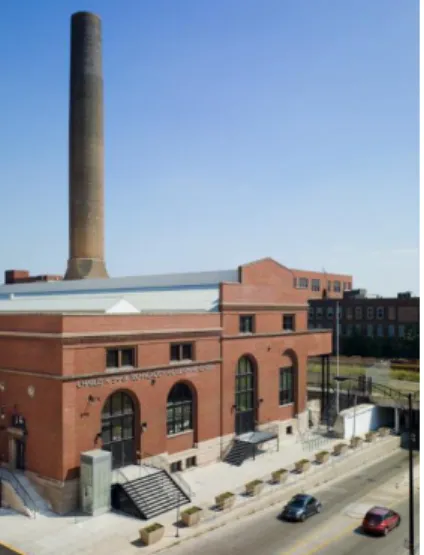
Homan Square Powerhouse was built by Sears, Roebuck, and Co. in 1905 as the onsite generation station for its 55-acre Sears complex. The power plant was fully active until 1973 and then minimally active until 2004 when it was decommissioned. The site was left deteriorating and vacant until a new vision for the building that would support the surrounding community of North Lawndale was proposed by developer Charlie Shaw, Sears chairman Edward Brennan, and retired Sears Vice President Charley Moran. The site plan was reviewed by City of Chicago officials, community leaders, and business representatives. The various parties decided that the redevelopment project needed to include low- and medium-income housing, commercial development, and community services. With both public and private financial support from the City of Chicago and Sears, as well as community approval of the new development plan, Shaw redeveloped the site between 2007 and 2009 for a total cost of $40 million.
The Homan Square Powerhouse earned LEED Platinum certification and is managed by the nonprofit Foundation for Homan Square. The final site includes mixed-use housing, a community center, and the Henry Ford Academy Charter School, affectionately known as “Power House High.” The Homan Square Power plant was transformed from a relic of an industrial past into an icon of effective mixed-use community redevelopment serving nearly 1000 pre-K to high school students daily. To find out more about the Homan Square Powerhouse visit the Foundation for Homan Square: http://www.homansquare.org/.
Elk River Generation Station – Elk River, MN
Elk River Station was built in 1950 as a coal and oil-fired facility by the Great River Energy Co-Op. After just nine years of operation, the plant was modified into a nuclear facility until 1968 when it was again converted back to a coal and oil-fired power plant. Finally, in 1989, it was once again converted to a refuse-derived fuel power plant utilizing municipal waste from approximately 25,000 homes in five counties. The 29 megawatt (MW) power plant has since been diverting approximately 300,000 tons of municipal solid waste from landfills each year.
Figure 1: Homan Power House today. Image Credit: Darris Lee Harris
7
Made up of 28 member cooperatives, Great River Energy is one of the largest customer-owned cooperative energy generators in the country and has a long history of taking
environmental stewardship into consideration. The refuse-derived fuel facility is considered a renewable source under Minnesota regulations and is helping Great River Energy meet the aggressive State Renewable Portfolio Standard of 25% by 2025. The plant is credited whith avoiding emissions of 140,000 tons of CO2e each year as compared to the original coal and
gas-powered facility. To find out more about the Elk River Generation Station visit http://www.greatriverenergy.com/makingelectricity/biomass/elkriverstation.html.
Moran Municipal Generation Station - Burlington, VT
The Moran Generation Station was a 30 MW plant decommissioned in 1986 after a series of attempts to renovate. Since then, Moran has been a blight on the City of Burlington, sitting vacant under ownership of the Burlington Electric Department. In 1990, that ownership was transferred to the City of Burlington where a series of mayors proposed and then failed to execute redevelopment plans. In 2012, two seniors at the University of Vermont changed the model for redevelopment planning by using a
crowdfunding platform, Kickstarter, to raise $16,346
from 134 residents to pay for initial planning. In March 2014, the developed plan gained momentum when 70% of voters approved a $6.3 million allocation of tax increment financing funds.
Redevelopment has now begun on a projected $34.5 million dollar showcase for renewable energy and agricultural innovations.
The New Moran development project is being led by a 501c3, New Moran, Inc., and when completed it will house a maker space, incubation center, community studio, restaurant and nano-brewery, rooftop garden, and educational and recreational spaces. The redevelopment focuses on transforming this blighted facility into a place for the community to gather, learn, and create while being projected to contribute $15 million annually to the local economy. The site is scheduled to be complete in 2017.To find out more, read the New Moran Development Plan Here:
http://newmoran.org/docs/new-moran.pdf.
State Line Power Station – Hammond, IN
During its 83-year lifespan, the 515 MW State Line Power Plant was known as one of the top polluters in the Chicagoland area. As a result of increased environmental regulations and
decreasing profits, its owner, Dominion Resources, decided to decommission the plant in 2010, completing the process in June of 2012. Dominion then sold the site to Texas-based demolition company BTU Solutions, while paying a $3.4 million civil penalty and offering $9.8 million for clean-up. Both Dominion and BTU were evasive on community engagement around the future uses of the site, even as organizations like the National Resources Defense Council and the Environmental Law
Figure 2: The Moran Generation Station. Image Credit: Lincoln Brown
8
and Policy Center were actively advocating for independent evaluations and community involvement.
While remediation was still underway, BTU Solutions sold a large portion of the site to Sam Townline Development, Inc., a development company whose owners also possess a petcoke storage facility in Indiana. Sam Townline has yet to announce a redevelopment plan for the site and community members are concerned that they may have traded one environmental polluter for another when State Line was decommissioned and sold.
Potomac River Generating Station – Alexandria, VA
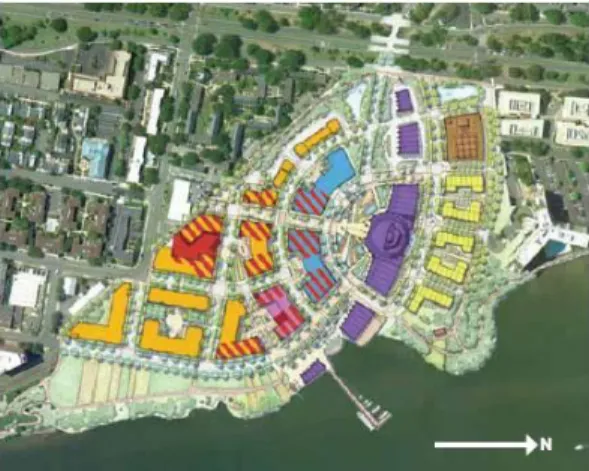
Potomac River Generating Station, a 514 MW coal-fired power plant owned by NRG (formerly Gen-On), closed in 2012 and will likely finish decommissioning by the end of 2014. The shutdown of the plant was largely a result of a community campaign known as “Gen-Off” which was led by Sierra Club, American Clean Skies Foundation, American Lung Association, and Greenpeace. In addition to the campaign, the City Council also established a community monitoring group to keep the public eye on plant operations. Since closing, the structures on the 25-acre site have been demolished to make way for a new development known as Potomac River Green.
Potomac River Green is a $450 million concept developed by the nonprofit American Clean Skies Foundation, in collaboration with the City of Alexandria, Alexandria community members, urban development consultants, and architects. The plan calls for a mixed-use development with riverfront green space,
residential housing, retail centers, and community spaces. The site is projected to create over 2,000 direct and indirect jobs in Alexandria while generating over $1.53 billion in new direct spending in the Washington, D.C. region. Redevelopment is scheduled to begin in 2015 after the City of Alexandria approves the rezoning plan for the site with construction expected to be
complete in 2018. To view the Potomac River Green plan visit: http://www.potomacrivergreen.org/our-plan
Seaholm Power Plant – Austin, TX
Closed in 1989, Austin Energy’s Seaholm Power Plant was once the main power supplier for the City of Austin. A local citizen’s activist group pressured the City of Austin to close the plant in 1989 over environmental concerns. After sitting vacant and unused for many years, the plant was decommissioned in 2006 when it received EPA’s first “Ready for Reuse” designation.
The City of Austin created the Seaholm Reuse Planning Committee to hold public meetings and publish reports on community input to the City Council. After this public engagement process,
9
the City moved forward with redevelopment plans that would preserve the architectural style of the building while providing a functional community space and mixed-use development. The City collaborated with Seaholm Power LLC, a development partnership of five local companies, and provided the developers with a $27.5 million loan. The private developers are covering the
remaining costs of redevelopment with the total price of the project estimated to be around $130 million.
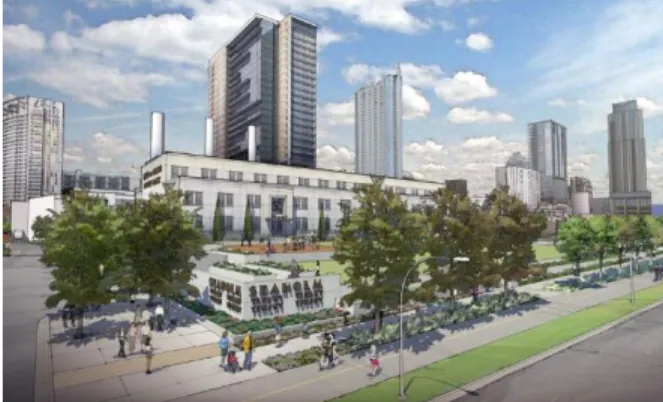
When construction is complete in 2015, the future site will include a 22-story residential and hotel structure, 60,000 square feet for retail and restaurants, over an acre of new green space, and two large public spaces for hosting
community gatherings and activities. The development project is projected to create 200 new full-time jobs and bring in $2 million in sales tax revenue. The public-private partnership between the City and Seaholm Power LLC has allowed this blighted site in the heart of Austin to be redeveloped into a revenue-generating, environmentally-friendly community asset. To find out more about Seaholm Power LLC, visit http://www.seaholm.info/.
Figure 4: Rendering of planned development. Source: The Austin Statesman.