0606342A
ARE DIVIDEND CHANGES AND SHARE REPURCHASES A GOOD PREDICTOR OF FUTURE CHANGES IN EARNINGS?
M.COMM (FINANCE)
in the
SCHOOL OF ECONOMIC AND BUSINESS SCIENCES
at the
UNIVERSITY OF THE WITWATERSRAND, JOHANNESBURG
By: Nompilo Mtshali
A research report submitted to the Faculty of Commerce, Law and Management, University of the Witwatersrand in partial fulfilment of the requirements for the
degree of Master of Commerce in Finance. Johannesburg, South Africa March 2016
i ABSTRACT
The study examined whether: share repurchase events and changes in dividends were good predictors of future changes in earnings. The research also investigated how the South African market reacted to share repurchase events in the short-run. Using INET BFA, data for 226 dividend paying companies and 55 share repurchasing companies, trading on the JSE during the period 2003 to 2013, was collected.
Dividend theory suggests that changes in dividends convey information content about the future earnings of the firm. After testing this theory, limited support was found for this notion. Firms that had increased dividends at (T0) showed significant earnings increases in that year. Nonetheless, some of the dividend increasing firms showed no subsequent unexpected earnings growth at (T1) and (T2). While the size of the dividend increase had a strong positive relationship with current earnings; it failed to predict future earnings with any consistency. Firms that had cut dividends at (T0) experienced a reduction in earnings in that year but showed increases in earnings at (T1). However, consistent with Lintner‘s (1956) model on dividend policy, firms that had increased their dividends were less likely to experience a reduction in earnings, as opposed to the no-change or dividend decrease groups.
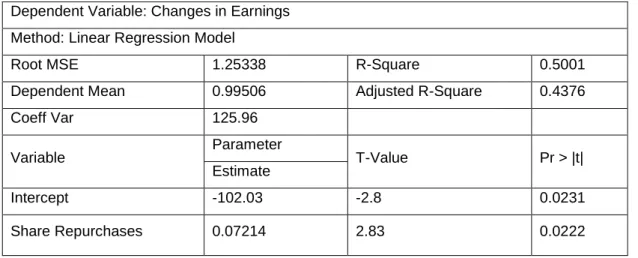
A linear regression model was employed in testing whether share repurchases were useful in predicting changes in future earnings. According to the results reported in the regression model, share repurchases are a good predictor of future changes in earnings. The study at hand then went on to explore how the South African market reacted to share repurchases. Through the utilisation of the Market Model-Event Study Methodology (with an event window of 41 days, 20 days prior and 20 days post the event), the findings of the report indicated that the South African market reacted positively to share repurchases. This was evidenced through positive: share price returns, abnormal returns and average abnormal returns, post the event. Nonetheless, cumulative average abnormal returns remained negative in the short-run. In addition, the results showed that firms engage in share repurchase activities
ii in order to signal that the stock is undervalued. There was an observable trend of declining share pricesbefore the share repurchase event.
A few recommendations were proposed following the results obtained. Dividends are unable to predict changes in earnings. Therefore, a dividend cut, is not an indication that a company‘s earnings will decrease in the future or that the managers of that company foresee a decline in future earnings. From a share repurchase point of view, managers of JSE listed companies should not only focus on the short-term benefits of share repurchase events. These benefits are generally short lived as shares do return to their falling state, however authors such as Wesson, Muller and Ward (2014) have shown that the benefits of share repurchase events can also be observed in the long- run, A further point to note for both investors and managers of JSE listed companies is that share repurchases are a good predictor of future earnings. Therefore, it is very confusing for investors when a company announces a share repurchase event but does not follow through with it.
iii SCHOOL OF ECONOMIC AND
BUSINESS SCIENCES Declaration Regarding Plagiarism
I (full names & surname):
Student number:
Declare the following:
1. I understand what plagiarism entails and am aware of the University‘s policy in this regard.
2. I declare that this assignment is my own, original work. Where someone else‘s work was used (whether from a printed source, the Internet or any other source) due acknowledgement was given and reference was made according to departmental requirements.
3. I did not copy and paste any information directly from an electronic source (e.g., a web page, electronic journal article or CD ROM) into this document. 4. I did not make use of another student‘s previous work and submitted it as my
own.
5. I did not allow and will not allow anyone to copy my work with the intention of presenting it as his/her own work.
iv
ACKNOWLEDGEMENTS
I wish to thank God and the following people for their immense support and reciprocal altruism:
My family and friends, for their constant love and never-ending support &
v
Table of Contents
Abstract ... i Declaration... iii Acknowledgements ... ..iv Table of Contents ... ..vList of Tables ... vii
List of Figures ... viii
Chapter 1 ... 1
1. Background to the Study ... 1
1.1 Problem Statement ... 3
1.2 Research Objectives ... 4
1.3 Delimitations ... 5
1.4 Importance and Benefits of the Proposed Research ... 5
Chapter 2 ... 7
2. Literature Review... 7
2.1 Miller and Modigliani Dividend Irrelevancy Theorem ... 9
2.2 Dividends are Relevant ... 11
2.3 Repurchases as an Element of Pay-out Policy ... 11
2.4 Why would Companies choose Share Repurchases over Dividends ... 17
2.5 Why and How Companies Decide on a Dividend Policy ... 20
2.6 Catering Theory of Dividends ... 18
2.7 Signaling Theory ... 23
2.7.1 Signaling Theory of Dividends ... 23
2.7.2 Signaling Theory of Share Repurchases ... 25
2.8 Tax Implications ... 27
2.8.1 The Tax Implications of Share Repurchases... 25
2.8.2 The Tax Implications of Dividends ... 28
2.9 The Behavioral Aspect of Corporate Dividend Policy ... 33
2.10 Bird-in-the-Hand Theory ... 35
2.11 Life-cycle Theory of Dividends ... 38
2.12 Agency Theory... 40
2.12.1 The Agency Theory of Dividends ... 40
2.12.2 The Agency Theory of Share Repurchases ... 41
vi
2.14 Share Repurchases: A Tool for Changing Capital Structure and Ownership
Concentration ... 46
2.15 Share Repurchases and Takeover Deterrence ... 48
2.16 A South African Perspective of Share Repurchases ... 53
2.17 A South African Perspective on Dividend Policy ... 57
2.18 Are Dividends Disappearing Globally ... 58
2.19 Dividends, Share Repurchases and the Substitution Hypothesis ... 62
2.20 Conclusion ... 67
Chapter 3 ... 71
3. Methodology (Research Design and Methods) ... 71
3.1 Sampling and Data Collection ... 71
3.2 Description of Overall Research Design ... 76
Chapter 4 ... 82
4. Results and Discussions ... 82
4.1 Summary Statistics for Changes in Dividends and Changes in Earnings ... 82
4.2 Earnings Changes following Dividend Changes ... 84
4.3 Test for Causality and Correlation ... 87
4.4 Summary Statistics for Share Price Returns-Share Repurchases Data ... 89
4.5 Abnormal Share Returns ... 91
4.6 Average Abnormal Share Returns ... 98
4.7 Cumulative Average Abnormal Share Returns ... 99
4.8 The Relationship between Share Repurchases and Changes in Earnings ... 102
4.9 Test for Correlation ... 104
Chapter 5 ... 106
5. Summary, Conclusions and Recommendations ... 106
5.1 Conclusion ... 106
5.2 Recommendations ... 111
vii
List of Tables
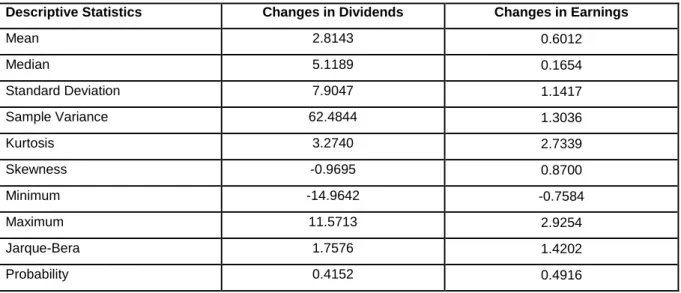
Table 1: Basic Statistical Measures ... 82
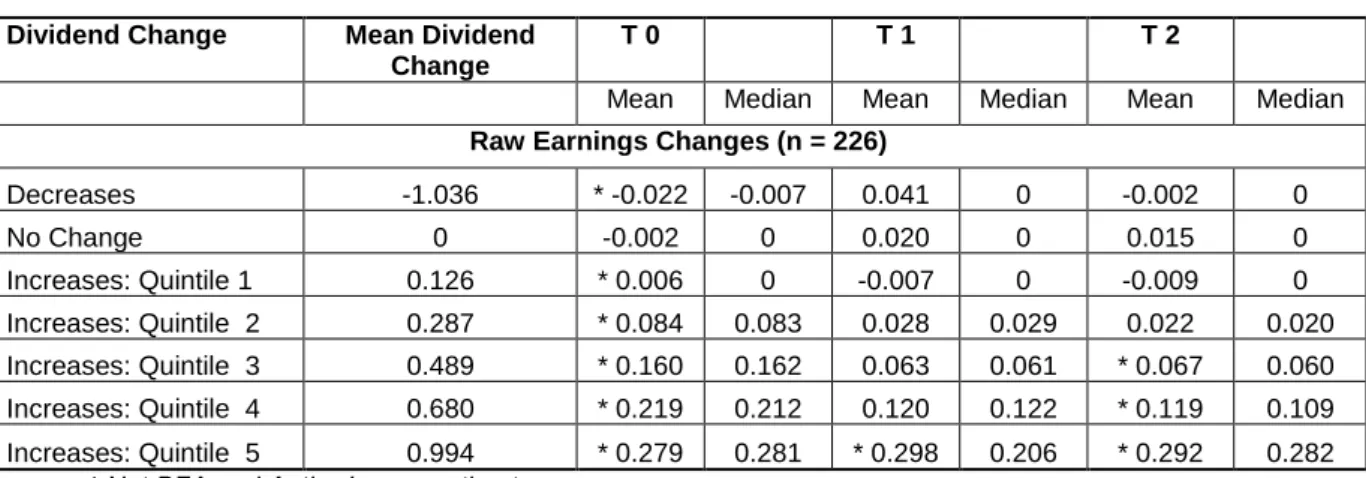
Table 2: Earnings Changes following Dividend Changes ... 85
Table 3: Granger Causality ... 88
Table 4: Correlation Matrix ... 88
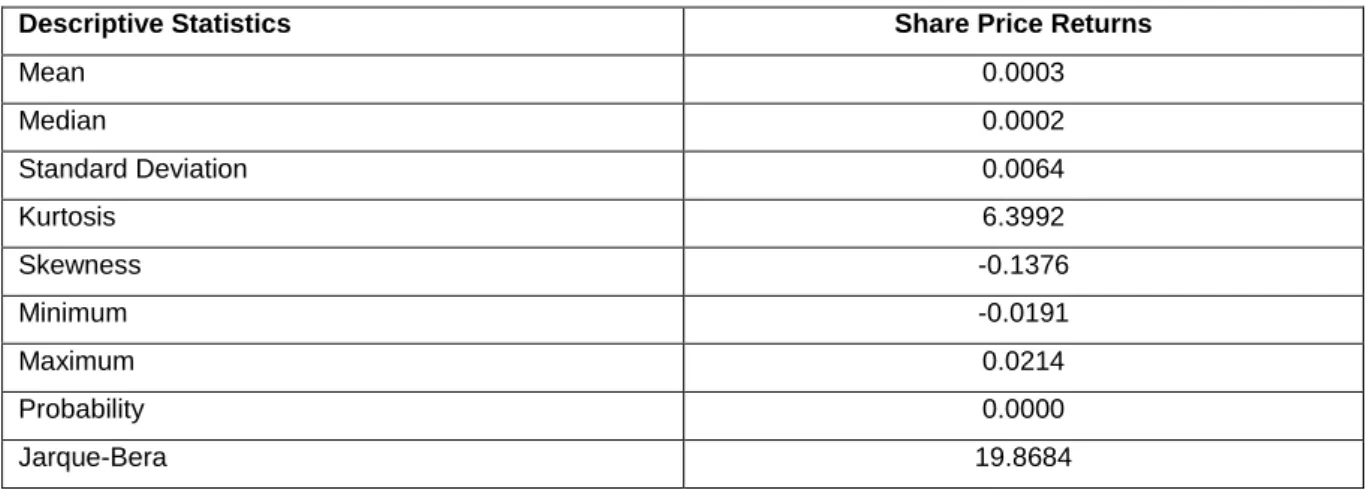
Table 5: Basic Statistical Measures ... 89
Table6: Abnormal Returns, Cumulative Abnormal Returns and T-Statistics for Event Window T-20 to T20 ... 93
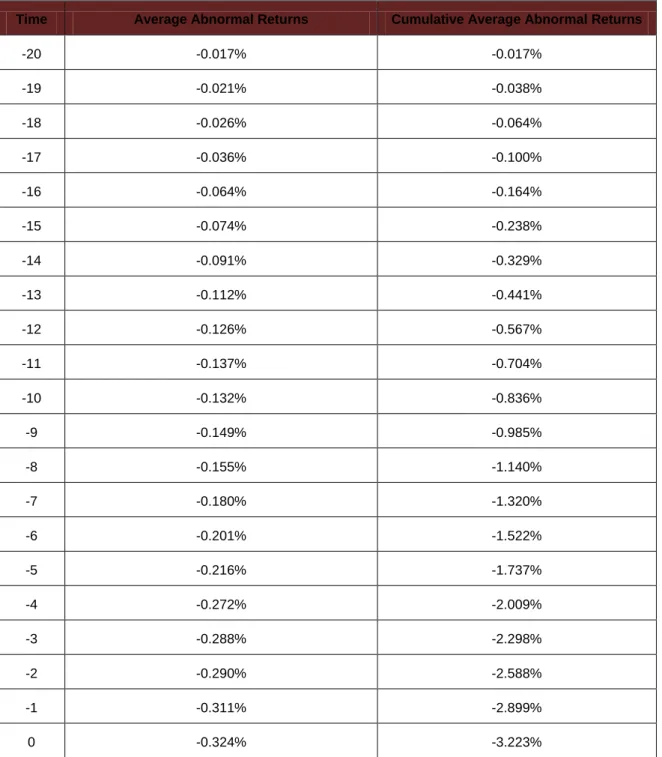
Table 7: Average Abnormal Returns, Cumulative Average Abnormal Returns and T-Statistics for Event Window T-20 to T20 ... 100
viii
List of Figures
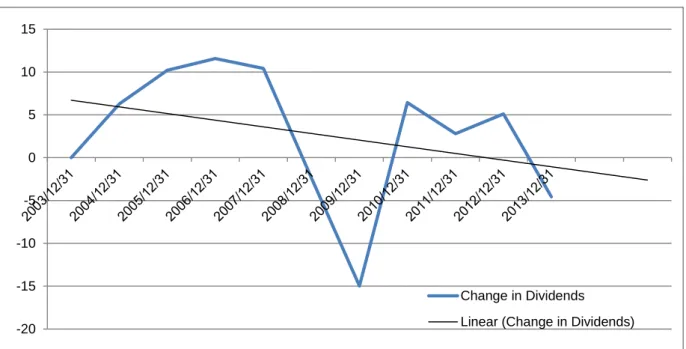
Figure 1: Changes in Dividends and the Linear Forecast Trendline ... 83
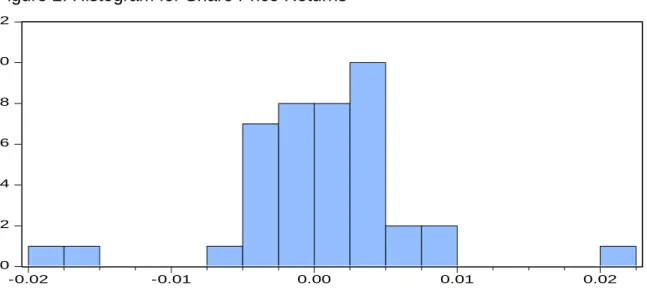
Figure 2: Histogram for Share Price Returns ... 90
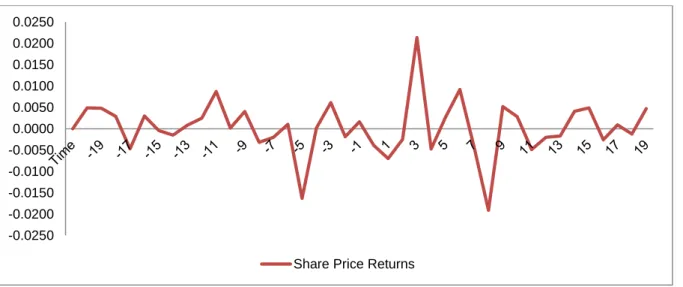
Figure 3: Daily Share Price Returns ... 91
Figure 4: Abnormal Share Price Returns ... 92
1
CHAPTER 1
1. BACKGROUND TO THE STUDY
Dividend policy has been studied extensively, over the past years. The seminal work of Miller and Modigliani (1961) gave birth to a broad body of literature dealing with and examining the pay-out policies of firms in the United States and elsewhere in the world. The term ‗dividend policy‘ refers to the practice that management follows in making dividend pay-out decisions, in other words, the size and pattern of cash distributions over time to shareholders (Lease, John, Kalay, Loewenstein & Sarig, 2000). Interestingly, dividend policy remains one of the most contested topics in finance. In particular, the question of whether dividend changes reveal information about future or past earnings and profitability has been described as one of the most controversial subjects in corporate finance (Grullon, Michaely, Benartzi & Thaler, 2005). Lintner (1956) holds that dividend increases convey information about future earnings. On the other hand Bernartzi, Michaely and Thaler (1997) and Wolff and Auret (2009) maintain that alterations in dividend policy are a reflection of past events. This question remains highly contested and unanswered.
In addition to the aforementioned, new research conducted by Viviers, Firer and Muller (2013), shows that the number of South African companies paying dividends has decreased substantially over the past few years. The findings of these authors are in line with that of Fama and French (2001), who provide evidence that the number of listed firms paying cash dividends in the United States has declined dramatically. These authors show that the proportion of firms paying cash dividends has fallen from 66.5% in 1978 to 20.8% in 1999. Although this decline is due in part to changes in the characteristics of firms that are publicly traded (i.e., more firms exhibit characteristics similar to those of non-dividend paying firms) the results show that, even after controlling for these characteristics there is a significant decline in the residual propensity to pay dividends. Several explanations have been offered as to the reason(s) for a declining propensity of firms to pay dividends. Most arguments have focused on the possibility that improved corporate governance has reduced the need for dividends as a mechanism to control the agency problems of free cash flows. Furthermore, the increasing occurrence of share repurchases, the decline in
2 the information content value of dividends, the observed lower transaction cost for consumption-initiated sale of shares owned and the catering theory, are among the other explanations that have been offered by researchers (Bildik & Fatemi, 2009). Grullon and Michaely (2002) suggest that there is evidence which indicates that share repurchases serve as substitutes for dividends.
One of the most significant trends in corporate finance during the 1900s was the increasing popularity of open market share repurchases. In the United States alone, the number of open market repurchases increased by 650%, between the year 1985 to 1996 (Jagannathan, Stephens & Weisbach, 2000). Before exploring this topic in greater detail, it is important to have an understanding of what share repurchases entail. In an ordinary share repurchase, the repurchasing firm distributes cash to some of its shareholders and in exchange acquires a fraction of its outstanding equity. Generally, a cash repurchase of ordinary shares: changes the structure of assets held by the firm, alters the firm‘s financing mix, revises the ownership proportions of each of its shareholders and distributes cash to shareholders by means of a transaction that is taxed differently than an equivalent dollar amount distributed as a dividend (Dann, 1981). According to Persons (1997), repurchases have an advantage over other signals like: dividends, corporate philanthropy or advertising. In addition to the aforementioned, literature provides a lengthy list of motivations as to why companies repurchase their own shares, these include: capital structure adjustments, takeover defence, signalling, excess cash distribution, substitution for cash dividends and wealth expropriation from bondholders. Nonetheless, the traditional signalling theory, which is motivated by asymmetric information between the market place and the firm‘s managers, emerges as one of the most prevalent explanations for share repurchases. When managers were asked why they repurchase shares on the open market, the most commonly cited reasons were ‗undervaluation‘ and that their shares represented a ‗good investment‘, two reasons which are seemingly consistent with the signalling theory (Ikenberry, Lakonishok & Vermaelen, 1995). The paper written by Lintner (1956) indicates that firms are reluctant to cut dividends and experience negative share market reaction when they do. Repurchases, on the other hand, are more flexible and involve no such commitment or risk. Firms will sometimes announce share buy-back programs
3 but fail to repurchase any shares. In most instances, the market will not punish firms that perform these acts (Fried, 2001).
1.1. Problem Statement
Dividend policy is one of the few areas in corporate finance to have been researched and analysed thoroughly, yet no consensus has been reached. According to Black (1976), the more one looks at the dividend picture the more it seems like a puzzle with pieces that just do not fit together. Academic literature is still not clear as to when and why companies pay out dividends. Furthermore in the instance when companies pay-out or cut dividends, what signal is being sent out about the future prospects of those companies?
For decades researchers have maintained that the decision to pay-out dividends is important due to its signalling effect (Deeptee & Roshan, 2009). Linter (1956) maintains that managers only increase dividends when they are confident about the future earnings of the company and believe that their decision will not be reversed in the future. Rock and Miller (1985) state that dividend increases are a signal of good news; nonetheless there are dissipative costs involved. On the contrary, there lies a strong argument against dividend increases as they have led to reductions in earnings (Grullon et al., 2002). Furthermore Watts (1973), DeAngelo, DeAngelo and Skinner (1996), and Bernartzi, Michaely and Thaler (1997) find no evidence that dividend changes predict abnormal increases in earnings. From a South African perspective, the limited research conducted on this topic shows that there is a strong concurrent relationship found between dividend changes and earnings changes. However, none of the regression analyses indicates any evidence that dividends convey information content about future earnings (Wolff & Auret, 2009). The aforementioned is the point of departure for the study at hand. Therefore, the problem to be addressed by this study is whether current changes in dividends are a good predictor of future earnings, within the South African context. This investigation is particularly important as it covers the period post the global financial crisis and is thus an update of the paper written by Wolff and Auret (2009). Moreover the changes in corporate policies and practices warrant an investigation to be conducted
4 on the trend of dividend pay-outs in the South African market. Therefore, the question to be addressed here is whether South African companies are reducing dividend pay-outs or increasing them.
Lintner (1956) concluded that dividends are sticky, tied to long-term sustainable earnings, paid by mature companies and smoothed from year to year. However, repurchases were virtually non-existent when Lintner (1956) and Miller and Modigliani (1961) wrote their papers. Over the past two decades, these corporate actions have grown in importance. In fact, several executives view share repurchases as being more flexible than dividends and use this flexibility in an attempt to time the market by accelerating repurchases when they believe their share price is low (Brav, Graham, Harvey & Michaely, 2005). From a South African perspective, companies were only allowed to repurchase their own shares as of the 1st of July 1999 (Bester, Wesson & Hamman, 2010). Initially share repurchases started off slow due to uncertainty regarding the treatment of repurchases under tax laws, nonetheless once the tax implications had been clarified and companies became familiar with this new distribution mechanism, repurchase programmes were initiated by many JSE listed companies (Daly, 2002). From the period 2000 to 2003, Bhana (2007) reported 117 open market repurchase events. In a later study conducted by Bester (2008) it was found that 121 companies, listed on the JSE, had made 312 repurchase events from the period July 1999 to June 2007. These growing numbers have raised some interesting questions on how the South African market reacts to actual share repurchase events from the period 2003 to 2013 and whether events of this nature are a good predictor of future earnings. In addressing these questions, this study seeks to contribute to the thin literature that is available on share repurchases in the South African market.
1.2. Research Objectives:
to determine the relationship between dividend changes and future earnings
to determine the impact of actual share repurchases on share price performance
5
to examine the South African market‘s reaction to actual share repurchase events
1.3. Delimitations
Due to time constraints, this study will only look at companies listed on the Johannesburg Securities Exchange (JSE).
The study is quantitative, as a result of this it lacks the human element provided by a qualitative study. Particularly with regard to investors‘ perceptions on dividend changes and share repurchases.
1.4. Importance and Benefits of the Proposed Research
Decisions concerning equity cash flows (that is: dividends, share repurchases, and equity issues) have long been the focus of controversy and confusion among academics and financial practitioners (Asquith & Mullins, 1983). Dividends and share repurchases have always been perceived as vehicles for communicating information to shareholders. Nonetheless, they have always been viewed in isolation. While extensive research may have been conducted on share repurchases in the developed markets, there is very minimal research on share repurchases in emerging economies. In addition, most studies on repurchases in developing or emerging markets are exploratory in nature, with little focus on how the market reacts to repurchases. This may be as a result of share repurchases being a fairly new phenomenon in developing markets. From a South African context, share repurchases were only introduced in the year 1999 and have always been regulated differently to repurchases in developed markets. Very few South African researchers such as: Bhana (2007), Chivaka, Siddle, Bayne, Cairney, and Shev (2009), Wesson et al. (2014), and Wesson, Bruwer and Hammen (2015), have conducted investigations on this topic. As a result, the study at hand carries a lot of value from a South African perspective. It can be argued however that a lot of literature already exists on dividend policy. It can also be argued that corporate policies and practices are dynamic furthermore; economies go through cycles which influence the pay-out policy adopted by companies. Therefore the effect that changes in dividends have on
6 earnings, the changes in the propensity to pay dividends as well as the growing trend in the use of share repurchases in South Africa, warrants further scrutiny.
The remainder of the research report will be structured as follows: Chapter 2 provides a detailed overview of the current literature on dividends theory and investors‘ perceptions on dividend transformations. This chapter also provides a wide-range of literature on share repurchases (from an international and South African perspective). Chapter 3 consists of the methodology used, while Chapter 4 discusses the results obtained. Lastly, Chapter 5 concludes the investigation.
7
CHAPTER 2
2. LITERATURE REVIEW
This section covers an extensive amount of literature on dividend pay-out policy. This includes an overview and synthesis of some important literature, chronicle changing perspectives and trends, stylized facts, practical implications, and suggestions for future research. Pieces of the dividend puzzle that have received empirical support are also identified and discussed. In addition to the aforementioned, the literature review takes an in-depth look at share repurchases. This includes the: reasons for share repurchases, the share price behaviour following share repurchase events, dividend and share buy-back decisions in the context of management pay-out decisions, financial benefits that share repurchases confer on corporates and shareholders, the impact of a change in the regulatory environment on share repurchases activity and the signalling effect of share repurchase events. While the information covered in the literature review may be inevitably incomplete, given the massive amount of literature available on dividends and share repurchases, there are detailed examinations of: theories and empirical evidence on individual studies. The distinctive contribution of this paper is that it synthesises the major conclusions based on theoretical and empirical findings from various authors.
2.1. Miller and Modigliani Dividend Irrelevancy Theorem
The Miller and Modigliani Theorem is the foundation of modern corporate finance. At the heart of this theorem is the belief that a firm‘s value is not affected by its financial decisions (Miller & Modigliani, 1961). In essence, the MM proposition is a collection of four assertions obtained from previous studies. According to this theorem a firm‘s market value is not affected by its debt-to-equity ratio, while a firm‘s leverage ratio has no effect on its weighted average cost of capital. Miller and Modigliani (1961) continue by stating that a firm‘s equity value is independent of its dividend policy and a firm‘s equity-holders are indifferent about the financial policy chosen. Nevertheless, it is important to note that the MM theorem requires a number of assumptions to be met before it can hold. These include the following: no taxes or brokerage fees, no capital market frictions, that is, no transaction costs, trade restrictions or bankruptcy
8 costs, symmetric access to credit markets and finally the idea that a firm‘s financial policy does not reveal any information .
The MM theorem, together with its stringent assumptions, has spurred a lot of debate in the academic sphere. Numerous attempts to overturn the theorem‘s controversial findings have been documented. According to Myers (2003), the presence of taxes alters the results of the MM theorem, since firms are able to make use of the debt tax shield. Therefore one may find companies accumulating more debt, instead of paying out dividends, so as to take advantage of the tax benefit. Miller and Modigliani (1961) further argue that investors are indifferent between dividends and share repurchases. However, if dividend taxes are higher relative to capital gains taxes, investors with high tax brackets will prefer shares with low dividend yields or share repurchases (Grullon et al., 2002). Thus, it can be stated that dividend policies are in fact affected by taxes. When shifting the focus to the costs of financial distress, which include: legal and administrative costs of bankruptcy, agency, moral hazard, monitoring and contracting costs, it becomes apparent that these overheads exists (Myers, 1984). If agency costs and moral hazard problems did not exist, there wouldn‘t be a reasonable explanation of debt covenants. A further argument posed against the MM theorem was presented by Donaldson (1961), who established that the majority of managers favoured the internal generation of funds as a source of new funds and when external funds were needed, issuing equity was rarely thought of. These results reaffirmed the pecking order hypothesis, which describes typical firm behaviour. According to this theory, firms initially prefer internal funding over external financing. Since dividends are sticky and cannot be changed in the short-run, dividend cuts are not used to finance capital expenditure. If a firm requires external funding, the safest security will be used first, which is, debt. As the need for external financing increases, the firm will issue equity as the very last option (Myers, 2001). The MM theorem (1961) supports the idea that dividends are irrelevant and have no effect on shareholder wealth. However this proposition seems to have a number of pitfalls, as some of the assumptions put forward do not hold in the real world.
9 2.2. Dividends are Relevant
Increasing dividend payments, ceteris paribus, may be associated with increases in the firm‘s share, which later translates to firm value. In fact there is a long standing belief that dividends affect shareholder wealth and this is reflected in the intrinsic value of a firm‘s share. This characterisation of dividends and intrinsic value is consistent with the prevailing conventional wisdom of the early twentieth century. Williams (1938) developed a discounted cash flow (DCF) model depicting the intrinsic value of a firm‘s share as the present value of a growing stream of dividends during an era when investors expected that dividends would provide the largest proportion of their total return. Years later, Gordon (1959) published an updated version of the same model. The DCF model gained wide popularity among both academics and practitioners. This model is still used today.
While the DCF model may be exceptional at depicting the intrinsic value of a firm‘s share, the question to ask here is why are increments in dividend payments associated with increases in the firm‘s share? In a world of uncertainty and imperfect information, dividends are valued differently to retained earnings (or capital gains). Since a higher current dividend reduces uncertainty about future cash flows, a high pay-out ratio will reduce the cost of capital, and hence increase share value (Malkawi, Rafferty & Pillai, 2010). According to Brigham, Gapenski and Ehrhardt (1999), the firm‘s optimum dividend policy must strike a balance between current dividends and future growth so as to maximise the share price. Empirical evidence shows that a dollar of dividends has, on average, four times the impact on share prices as a dollar of retained earnings (Graham & Dodd, 1934). Furthermore, the survey conducted Baker and Powell (1999) and Brav et al. (2005) confirms the results obtained in Lintner‘s (1956) paper managers believe dividends ought to be related to permanent rather than temporary increases in profits. This proposition is consistent with the notion that a fundamental relationship exists between dividends and firm value. In the study performed by Bulan and Hull (2013), it was observed that managers remained reluctant to cut dividends as this had severe consequences on the share price. Bulan (2010) even showed that for a given magnitude of the dividend cut, the three-day cumulative abnormal return around the dividend reduction was more negative for firms with less visible signs of poor performance
10 compared to those that have experienced a more prolonged period of poor performance. Therefore, if a firm cuts its dividend, investors will also discount the share price when there are no visible signs of financial distress that warrant the conservation of cash. Nevertheless, investors will be more forgiving of a dividend cut if they perceive that the cut is necessary for the firm‘s turnaround. DeAngelo, De Angelo and Skinner (1992) argue that a dividend reduction reflects a low level of current and expected future earnings of the firm, while Stepanyan (2009) states that dividend-cutting firms lack financial slack (excess cash or excess debt capacity). Given the evidence in the aforementioned, one can conclude that a dividend cut should not be much of a surprise to investors if managers cut the dividend as a last resort.
Having looked at the evidence highlighting the relevance of dividends, it is important to note that dividend payment patterns of firms may be influenced by customs, beliefs, regulations, public opinions, perceptions and hysteria, general economic conditions and several other factors, all in perpetual change, impacting different firms differently (Barman, 2007). If a firm has overdue liabilities or is insolvent or bankrupt, the law will prohibit this company from paying out cash dividends. Furthermore, restrictive provisions in loan agreements constrain the firm‘s ability to pay dividends. Generally, these constraints prohibit payment of the cash dividends until a certain level of earnings has been achieved or limit dividends to certain dollar amount or percentage of earnings. Additional constraints may arise internally, where a firm‘s ability to pay cash dividends is reliant on the amount of liquid assets (cash and marketable securities) available. A large mature firm may have adequate access to funds, whereas a rapidly growing firm may rely heavily on internal financing to support acceptable projects. Therefore, it can be said that dividend payment patterns do not always give a true representation of a firm‘s financial standing. Dividend pay-outs may be viewed as a factor affecting firm value; however investors should look at the broader picture. The reason behind a dividend cut is what matters. A firm‘s value should not be reduced because managers have decided to invest funds internally or in a project with a positive net present value, instead of increasing dividends. Companies may borrow funds, so as to increase dividends. This is not a true
11 reflection of the firm value and performance. Analysts need to examine dividend changes thoroughly and not assume that all dividend increases are good.
2.3. Repurchases as an Element of Pay-out Policy
Excess cash in a company may either be retained for on-going business operations, new investments, or paid out to shareholders in the form of dividends or share repurchases. In what way(s) is returning cash to shareholders via a share buy-back preferable to returning cash via a traditional dividend? Companies usually set a target dividend pay-out ratio (Baker and Smith, 2006; Baker, Veit and Powell, 2001; Marsh and Merton, 1986; Lintner, 1956), which is not changed unless a higher dividend can be sustained in future. Share repurchases on the other hand, are considered to be a much more flexible method of distributing excess cash to shareholders since they are financed from temporary cash flows (Bhargava, 2010; Brav et al., 2005). As a result, share repurchases are more susceptible to the current financial situation of a company and take place on an ad hoc basis. Where managers believe their companies are undervalued, they may use share repurchases to increase its share prices (Brav et al., 2005; Dittmar, 2000). Share repurchases are also used as a signalling instrument, to convey to the market that managers believe the company is undervalued (Wesson, 2015). It is not surprising that they have become an important financial tool for listed companies, globally. In the United States share repurchases by companies except financials and utilities listed on Compustat, equalled dividends for the first time in 1998, overtook dividends in 2005 and widened the margin significantly in 2006 (Dittmar, 2008). In Europe, share repurchases accounted for half of the total cash pay-outs in the year 2005 and show similar trends to those in the United States (Von Eije & Megginson, 2008). Bagwell and Shoven (1989) argue that the increase in repurchases indicates that firms have learned to substitute repurchases for dividends.
2.4. Why would Companies choose Share Repurchases over Dividends? Over the past few years, share repurchases have grown in popularity. According to the paper written by Skinner (2008), share repurchases exceed dividends in the periods 2000, 2004 and 2005. One of the key differentiating factors between
12 dividends and share repurchases is the potential flexibility offered by the latter. Repurchases preserve financial flexibility relative to dividends because they do not implicitly commit the firm to future pay-outs. Some reports even state that there is a trend among managers to utilise share repurchases as a substitute for dividends, because they provide more flexibility. In the study conducted by Ikenberry et al. (1995) it was held that a share buy-back is not only a substitution of cash dividend, but also a more flexible technique of cash distribution because it is not a commitment of a future payment. Compared to dividend pay-outs which represents on-going commitment and are used by firms with higher continuous operating cash flow, share repurchases are often used when firms have high temporary non-operating cash flow. In the survey conducted by Brav et al. (2005), two-thirds of the managers interviewed stated that they were fond of the flexibility of share repurchases and disliked the rigidity of dividends because once a firm initiates a dividend it is expected to continue to pay dividends in the forthcoming periods. As a result of this, firms shy away from dividend initiations. Fama and French (2001) raise an interesting viewpoint that the percentage of firms paying cash dividends has diminished drastically therefore there is a decrease in the propensity to pay dividends as managers have become more inclined to buy back shares. This argument is supported by Jagannathan et al. (2000), who state that share repurchases have increased in prominence when compared to dividends. Interestingly Grullon and Michaely (2002) raise a similar argument nonetheless their analysis is slightly different. They maintain that large established firms have not decreased their dividend pay-outs however there is a higher propensity to pay-out cash through share repurchases.
As mentioned in the earlier parts of this section, the flexibility inherent in repurchase programs is the main reason as to why they are utilised instead of dividends. Nonetheless, before one delves further into this topic, it is important to first understand the concept of financial flexibility (that is, the ability to avoid underinvestment as well as financial distress). There are two key components of financial flexibility the pay-out policy and risk management. The level and form of pay-out influence financial flexibility, therefore selecting lower pay-outs or more repurchases, relative to dividends, increases financial flexibility. Similarly, risk
13 management is fundamental to avoiding underinvestment and financial distress. Firms hedge to avoid raising costly external capital (Froot, Scharfstein & Stein 1993). In the paper written by Bonaime, Hankins and Harford (2013) it was established that both bank holding companies and nonfinancial firms recognize that pay-out policy and risk management both contribute to financial flexibility and are substitutes. However, hedging is costly, the direct cost being the price of the derivative instruments measuring and monitoring the underlying exposure and the indirect cost being the probability of forgoing some future cash flows in a good state economic environment. Therefore, if financial hedging and pay-out flexibility are substitutes and hedging is costly, firms should maintain full pay-out flexibility at all times unless doing so is also costly. Such pay-out flexibility implies that firms would need less active hedging and should not pay dividends.
Paying lower dividends and repurchasing fewer shares while retaining cash and liquid assets can provide flexibility to firms in less stable markets, allowing them to react more aggressively to competitive threats when they do materialize (Hoberg, Phillips & Prabhala, 2012). Rapp, Schmid and Urban (2012) put forward an interesting argument relating to financial flexibility. Under their view, firms assigning a high value to financial flexibility are expected to limit or even avoid pay-outs at all costs. The rationale behind this notion is that, ceteris paribus, pay-outs reduce internal financing opportunities and raising external capital comes along with substantial costs, as mentioned by the likes of Myers and Majluf (1984). Furthermore, it is expected that pay-out decisions follow a pecking order according to which firms with a high value of financial flexibility are expected to prefer share repurchases to dividends when they decide to distribute earnings to their shareholders. This is in line with the view that dividends are often considered as an on-going commitment, while share repurchases can be omitted or reduced more easily (Guay & Harford, 2000).
In the paper written by Iyer and Rao (2015), it was established that flexibility in a firm‘s pay-out policy can be organised into three types – operational, reactive, and timing. Operational flexibility refers to the ability of firms to decide whether to allocate
14 cash to shareholders or to keep it in the firm (e.g. for investments). Dividends and share repurchases may differ in their intrinsic operational flexibility. Introducing dividends may prohibit firms from investing in profitable ventures if reducing dividends are met with adverse market reaction. A firm that pays dividends is expected to pay (increase) the dividends in future or face hostile market reaction if it chooses to reduce dividends. Therefore, once a firm starts paying dividends it becomes constrained by its choice. This choice to pay dividends may prevent the firm from investing in profitable ventures or conserving cash for future needs. Fearing adverse market reaction the dividend paying firms might elect not to reduce dividends. Share repurchases may not suffer from this drawback. Reactive flexibility relates to the ability of repurchasers to evaluate the current and future environment, and alter an on-going open market share repurchase program based on the dynamic environment. A dividend once announced is rarely reversed. On the contrary, a share repurchase announcement is not a firm commitment. Firms can decide to delay or even suspend an on-going open market share repurchase program if the environment turns hostile.
The final type of flexibility of share repurchases is the timing flexibility, which relates to the market timing of the actual open market repurchases. After announcing an open market share repurchase program the firm can decide to wait till the time is appropriate to repurchase shares. The managers may use their superior information on the intrinsic value of the firm and buy the stated amount of shares (or dollar value) when the market value of the shares drop below the intrinsic value of the firm. Snajdr (2009) supports this argument by stating that share repurchases are more flexible when it comes to time. Dividends are typically paid on a quarterly or annual basis, nonetheless share repurchases can be made in any moment in time, they take only several weeks and they give firms a better ability to increase their value when it is necessary. From the aforementioned it can be concluded that dividends constrain managers, therefore favouring a more flexible pay-out structure increases financial flexibility, thus allowing managers to utilise excess capital effectively (John & Knyazeva, 2009).
15 While it may be true that share repurchases afford managers with an extensive amount of flexibility, they also afford managers with the freedom to set up share repurchasing programs, irrespective of whatever intention they might have. Therefore, firms can and do initiate programs of any size even if they have no immediate intention of buying back shares. In fact, Ikenberry and Vermaelen (1996) provide a theoretical framework which suggests that most firms should be expected to continually have share buyback agreements in place, given their low-cost and flexibility. In such a world, one would expect these announcements to lose their signalling power (Chan et al., 2007). Up till now, the study has focused on the flexibility of share repurchases as a whole. However, over the past decade the frequency and dollar volume of accelerated share repurchases (ASRs) has exceeded that of privately negotiated repurchases, fixed-price self-tender offers, Dutch-auction self-tender offers, and large special dividends. In ASRs, a firm enters into a contract with an intermediary, typically an investment bank, whereby the intermediary immediately delivers a specified number of the firm‘s shares in exchange for cash based on an agreed upon price per share (ordinarily the most recent closing price). The intermediary obtains the shares that it delivers to the repurchasing firm by borrowing them, typically from institutions. The intermediary then covers its short position by purchasing shares in the market over a specified time period, normally several months. ASRs are credible commitments by firms to repurchase shares immediately. Nonetheless, including an ASR in a repurchase program reduces the flexibility that firms have to alter an announced program in response to subsequent changes in the liquidity and price of its share, firm conditions and so on (Bargeron, Kulchania & Thomas, 2010). Therefore, not all share buy backs offer the firm an extensive amount of financial flexibility.
Jagannathan et al. (2000) find that firms with more volatile cash flows prefer more flexible share repurchases over dividends. This suggests that firms utilise share repurchases to distribute temporary profits and increase dividends only when they believe earnings have risen permanently. Therefore, despite the fact that share repurchases are more flexible than dividends, their future pay-outs are uncertain. In addition to the above mentioned, Teng and Hachiya (2011) raise an interesting argument that in contrast to large firms which can easily attract relatively more
16 attention from investors than the small firms, the small firms are more likely to buy back more outstanding shares as a means of attracting attention from the market. Therefore, companies are not suddenly gravitating towards share buybacks because they are more flexible, share repurchases are often used as a mechanism for attracting attention to smaller firms. Grullon and Michaely (2002) confirm this hypothesis by stating that at the aggregate level younger firms have become more inclined to pay out cash in the form of share repurchases. Dhanani and Roberts (2009) maintain that while share repurchases may be more flexible, they are unlikely to replace dividends.
Dividends still remain a major source of redistribution of cash flow and a primary pay-out vehicle. Fama and French (2001) show that generally, firms repurchasing shares are also dividend-paying firms. As a matter of fact, net share repurchases are larger and more prevalent among dividend payers. Therefore, share repurchases cannot substitute cash dividends. The findings obtained in the study conducted by Benhamouda and Watson (2010) supports the aforementioned. These results hold that British companies do not substitute dividends for share repurchases furthermore investors perceive cash dividends as being better than share repurchases. According to Ma (2012), investors generally accept dividend pay-outs as a credible signal, which indicates future profitability and stability. Managers pay attention to the dividend policy, dividends are not random over time and are far more frequent than share repurchases. In addition, investors also believe that managers intentionally choose a costly way of distributing surplus cash in order to convey favourable interior information. More importantly corporate managers and investors, who bestow a privilege upon dividend payments, hold the viewpoint that the disadvantage of the dividend can be offset by the increase in capital gains in signalling equilibrium.
The role of dividends has however led to a number of controversies that can be summarized in Black‘s (1976) famous dividend puzzle argument. The dividend puzzle questions why firms pay dividends and why investors are concerned with dividends if they are irrelevant, inflexible, costly and tax disadvantaged. Feldstein and Green (1983) raise a similar question of, why companies pay dividends on
17 condition that dividends are taxed more heavily than retained earnings. The transaction costs of selling shares cannot explain why dividends exist as companies can avoid such costs by buying back shares. Furthermore, dividend changes do not necessarily convey the forecasts of the company‘s prospect. For example, the dividend cut does not indicate that future performance will degenerate.
Allen et al. (2000) summarise the current consensus, when they conclude that: ―While a number of theories have been put forward in the literature to explain their pervasive presence, dividends remain one of the thorniest puzzles in corporate finance‖. Dividends still amount to more than double the total value of share repurchases (Jagannathan et al., 2000). As puzzling as this may be, it can be concluded that dividends and share repurchases can coexist. Some firms may prefer dividends while others only share repurchases. Furthermore, firms can change their method of cash redistribution depending on the current situation.
2.5. Why and How Companies Decide on a Dividend Policy
The duty of maximizing shareholders‘ wealth often encourages the management of a firm to treat the dividend strategy as a critical matter (Ma, 2012). A firm‘s dividend policy decision is so crucial that the manner in which managers go about making dividend policy decisions and whether or not they follow a precise set of procedures or specific strategies to make these decisions, has a huge impact on the value of the firm (Deeptee & Roshan, 2009). Lintner (1956) conducted research on how top level managers formulated dividend policy decisions. He formulated a model consisting of the following variables: earnings stability, plant and equipment expenditures, willingness to use external financing, firm size, ownership by control groups and use of share dividends. In his findings, Lintner (1956) established that: corporate dividend decisions were made conservatively, managers targeted the dividend pay-out ratio, the current year‘s dividend pay-pay-out was not influenced by the profitability level of the same period (T) but had an impact on the profitability level of the next period (T+1), finally shares were repurchased when firms had accumulated a large amount of unwanted cash or had a desire to modify the capital structure. In later studies conducted on dividend policy, it was established that dividend increases (or
18 decreases) are usually followed by positive (or negative) abnormal returns (Pettit, 1972; Asquith and Mullins, 1983; Grullon et al., 2002). Therefore, corporate dividend policy plays an essential role in the survival and progress of listed firms.
In a later study conducted by Brav et al. (2005) it was asked whether pay-out decisions were still made conservatively. Ninety-four percent of dividend payers, who took part in this survey, strongly agreed that they were hesitant when it came to reducing dividends therefore; managers seek to maintain the existing level of dividends and avoid having to cut dividends except in extreme circumstances. DeAngelo, DeAngelo and Skinner (2008) documented further evidence demonstrating a strong reluctance of managers to cut their regular cash dividend. Daniel, Denis and Naveen (2010) expanded on this question and showed that dividend cuts occurred infrequently and when they did occur, they were generally preceded by a period of poor operating performance. Interestingly, a dividend cut seems more credible when investors observe the firm experiencing operating and financial difficulties however, in spite of the visible signs of poor performance investors still react negatively to their dividend cut announcements (DeAngelo & DeAngelo, 2006). Jensen, Lundstrum and Miller (2010) argued that a dividend cut signals a retrenchment within the firm. Cost-cutting measures from retrenchment policies result in firms allowing some of their growth options to expire therefore, investors end up having a negative sentiment towards dividend cuts.
On the contrary, it has been said that the survival of any company is dependent on the continuous investment in facilities and the employment of internal financing, through the use of retained earnings (Uwuigbe, Jafaru & Ajayi, 2012). From time to time, firms need to cut back on dividends and reinvest funds into the company. In countries like Nigeria, government tends to put restrictions on the amount of dividends a company may pay. This forces companies to plough back part of their realized profits and ensures that funds are available for continuous investment in assets, so that the company continues to operate on the going concern principle. The aforementioned may be the reason why the propensity of firms to pay dividends has shown a global decline. The study conducted by Black (2013), indicates that the
19 percentage of firms paying dividends globally has dropped from 71% in 1991 to 61% in 2012, with declines occurring in both the United States and international markets. Even so, the popular view remains that dividend policy is important, as evidenced by the large amount of money involved and the attention that firms, security analysts, and investors give to dividends. Firms tend to follow a managed dividend policy rather than a residual dividend policy, which involves paying dividends from earnings left over after meeting investment needs (Baker & Weigand, 2015).
Lintner (1956) indicated that one of the most important aspects of dividend policy (after the firm had determined its earnings) was choosing a pay-out ratio. While this outcome may have been obtained many years ago, authors such as Kapoor (2006) still find that companies generally prefer a stable dividend pay-out ratio because the shareholders expect it and reveal a preference for it. In the study conducted by Arnott and Asness (2003), it was found that higher aggregate dividend pay-out ratios were associated with higher future earnings growth. Zhou and Ruland (2006) supported these findings when they examined the possible impact of dividend pay-outs on future earnings growth. In the investigation conducted by Amidu and Abor (2006) it was held that pay-out ratios were positively related to: profitability, cash flow and tax but were negatively related risk and growth. On the contrary, the study conducted by Brav et al. (2005) revealed that nearly 40% of the survey respondents stated that they target dividends per share, 28% said that they target dividend pay-out, 27% target growth in dividends per share, 13% target dividend yield and 6% claim to not target dividends at all. The firms that were identified as cash cows primarily targeted the growth in dividends per share because they felt pressure to return capital to investors when earnings growth was robust. According to Brunzell, Liljeblom, Loflund and Vaihekoski (2014), a specific pay-out ratio which would always be followed would leave no information value for the dividend, in excess of that already conveyed through the disclosure of current earnings. The most famous statement about the relationship between dividend policy and corporate value claimed that, in the presence of perfect markets, given a firm's investment policy, the dividend pay-out policy it chooses to follow will affect neither the current price of its shares nor the total return to its shareholders. However, market imperfections such as differential tax rates, information asymmetries between insiders and outsiders,
20 conflicts of interest between managers and shareholders, transaction costs, flotation costs, and irrational investor behaviour, make the dividend decision relevant (Kapoor, 2009).
2.6. Catering Theory of Dividends
Miller and Modigliani (1961) proved that dividend policy was irrelevant to share value in perfect and efficient capital markets. After this theory was published many researchers criticized it, using various approaches. The catering theory of dividends was developed by Baker and Wurgler (2004a). In this theory, the assumption of perfect markets and efficient markets was relaxed and three basic ingredients were suggested. First, for either psychological or institutional reasons, some investors have an uninformed and perhaps time-varying demand for dividend-paying shares. Second, arbitrage fails to prevent this demand from driving apart the prices of payers and nonpayers. Third, managers rationally cater to investor demand—they pay dividends when investors put higher prices on payers, and they do not pay when investors prefer nonpayers. The essence of the catering theory was that managers give investors what they currently want. In the case of dividends, catering implies that managers tend to initiate dividend pay-outs when investors put a relatively high share price on dividend payers, and tend to omit dividends when investors prefer nonpayers. Baker and Wurgler (2004a) then inquired about the source of investor demand for dividends. They did not find evidence of it springing from traditional dividend clienteles. Instead, sentiment appeared to be a key factor. However, once dividends were initiated, increases and decreases appeared to be governed more by firm-level profitability than by the relative valuations of payers and nonpayers. Therefore, the catering theory explains the number of payers but not the total pay-outs by existing payers.
The results obtained in the study conducted by Neves (2009) are consistent with previous arguments that: investors‘ sentiments can be significant when determining dividend pay-outs. This research reveals that investor sentiment significantly affects the propensity to pay dividends across firms in the Eurozone and, as expected, this effect is positive after controlling for traditional determinants of dividends, such as:
21 the free cash flow, leverage, earnings, tangible fixed assets and size. The findings of the study provide empirical support for the catering model previously documented in the United States firms.
The paper written by Ramadan (2015) aimed to investigate the validity of the catering theory of dividends in the Jordanian market. Utilizing an unbalanced, pooled cross-sectional time series Ordinary Least Squares regression model (for all companies listed on the Amman Stock Exchange excluding the financial sector firms and non-consistent dividends-paying firms), it was found that the dividend premium which is a proxy for the catering theory, is affected by explanatory variables. Therefore, companies listed on the Amman Stock Exchange take investors‘ demand for dividends into account and react to this preference in their dividend policy. This confirms the validity of the catering theory of dividends in the Jordanian market. The study conducted by Abdulkadir, Abdullah and Wong (2014) examined the implication of catering theory of dividend in the Nigerian market. The study concentrated on the financial sector due to its exclusion in previous studies on dividend pay-out policies. The findings indicate that the dividend premium exerts a positive influence on the dividend pay-outs of the sampled firms. Therefore, financial firms listed on the Nigerian Stock Exchange consider investors demand for dividends and respond to this demand when making dividend pay-out decisions. Nonetheless, the study also concludes that catering to investors‘ demand for dividends by the sampled firms is limited to normal economic conditions and does not extend to crisis period. The paper written by Kim and Byun (2013) investigated the international presence of the dividend catering theory in different legal regimes from the period 1996 to 2010. Using a modified dividend premium, the authors find evidence of dividend catering among firms in common law countries, but not for those in civil law countries. Catering in common law countries persists even after controlling for the effect of fundamental variables like: profitability, size, and growth opportunities. In civil law countries, cash dividends are less responsive to the value premiums of dividend-paying firms. These results suggest that when investors are well protected and negative sentiment is present, they force dividends from managers by placing a high value on dividend-paying firms. The aim of the research conducted by Handary, Lukviarman and Febrianto (2006) was to investigate the association between market
22 reaction around the dividend announcement and investor demand for dividends, by using dividend catering theory to be tested within Indonesian firms listed on the Jakarta Stock Exchange. In the study, results showed that there is a positive, statistically significant correlation between the dividend yield variable and share returns. This means that the share returns will be high if the ratio of dividend yields is also high. Nevertheless, most announcement windows show that share returns become lower when investor sentiment for dividends is higher. The reason for the negative relationship between the dividend premium and share return may be explained on the research conducted by Denis and Osobov (2005). In their study they concluded that the dividend premium is a proxy for the relative growth opportunity of dividend payers rather than a measure of investor sentiment.
While there may have been a large number of studies that supported the catering theory, there were some studies that disagreed with notion. In the study conducted by Rashid, Nor and Ibrahim (2013) it was held that the dividend catering incentive creates disequilibrium in the market because it leads to the conclusion that companies pay dividends not because they have a reserve of income but because investors want dividends as a tangible income. Furthermore, this theory goes against the life-cycle theory which states that firms pay-out dividends when they reach a certain level of maturity in their lifecycle. In addition to the aforementioned, the paper written by Tsuji (2010) revealed that the dividend initiation decision of Japanese electrical appliances industry firms has no predictive power for relative future negative returns of payers over nonpayers. This evidence is inconsistent with the suggestions of catering theory of dividends by Baker and Wurgler (2004a). More precisely, the excess returns of payers over nonpayers is statistically significantly negative in the United States, while future excess returns of payers over nonpayers are positive in the Japanese electrical appliances industry firms.
Having looked at the various arguments for and against this theory, it is important to acknowledge that there is more to the story than dividend catering. While the dividend premium may have significant explanatory power, so do individual firm characteristics. There are both internal and external factors affecting decisions to
23 change dividends and the capital market‘s reaction to such decisions. The role of other non-catering factors is especially apparent in the negative share market reaction to dividend decreases, which the dividend catering theory cannot explain by itself.
2.7. Signalling Theory
2.7.1. Signalling Theory of Dividends
Baker (2009) states that: certain sources of company information (accounting data and future prospect reports) are not completely reliable. These kinds of information do not always present a company‘s profitable business opportunities and may be influenced by management. Given that outside investors have imperfect information regarding the firm‘s profit opportunities, the company has to find other ways in order to convince outside investors about future cash flows and profits. Dividend pay-outs are perceived as a tool for communicating information to the market (Bernartzi et al., 1997). According to signalling theory, corporate managers use dividend pay-outs to signal information to the markets (Baker & Kapoor, 2015). Unlike most events, dividend declarations are backed by cash therefore, they are more credible (Asquith & Mullins, 1983). Under the title of signalling or information content of dividends, a number of studies have examined the reaction of the share market to dividend announcements. Modigliani–Miller (1959) and Miller–Modigliani (1961) put forward an argument which stated that dividend reductions convey information that future earnings prospects are poor. Lintner (1956) indicated that dividends provide a signalling device and the market uses dividend announcements to value firm's share. Shareholders may not be interested dividends however they may look at changes in a company‘s dividend policy. Changes in dividend pay-outs are perceived as being a signal of the company‘s prospects, where increased dividend pay-outs are viewed as good news and the market reacts positively to them (Naser, Nuseibeh & Rashed, 2013). Despite the fact that dividends have a higher tax rate compared to capital gains, investors are willing to pay a higher tax rate for dividends in exchange for the positive signal dividends send regarding the future prospects of the firm. Lintner‘s (1956) investigation found that dividend increases were actually an indication of permanent increases in earnings while dividend decreases were a sign of continuous declines in earnings. At a later stage, Bhattacharya (1979), Miller and Rock (1985)
24 and John and Williams (1985) found supporting evidence for Linter‘s (1956) investigation. According to these theorists, dividend policy changes were in fact a signal of a firm‘s future expectations and it was normal for managers to anticipate increased: profitability, earnings and growth rates. Essentially what this supposition meant was that there was a positive relationship between changes in dividends and the subsequent share price reaction (Sharma, 2001). If a firm had experienced a dividend cut, the firm would also experience a decline in average earnings per share (Howatt et al., 2009). This was not surprising, as the study conducted by Aharony and Swary (1980) showed that when dividends decreased, the average share price decrease was –3.76% and when they rose, the share price increased +0.72%. Both results were statistically significant. The share price reaction to dividend increases or decreases suggests that investors perceive these changes as positive or negative news about a firm (Grullon et al., 2002). Nevertheless, what is particularly interesting is that some studies find the share price changes to be temporary. As soon as investors discover that the dividend changes were not based on the estimated future earnings of the firm, the temporary share price increase disappears (Black & Scholes, 1974).
While most theorists believe that dividends signal information to investors, there have been many studies which have rejected Linter‘s (1956) hypothesis of dividends being a signal of a firm‘s future prospects. The study conducted by Watts (1973), found that unexpected dividend changes contained little information on the future earnings of a firm. Furthermore, there were no irregularities in share returns, during the two month period surrounding the dividend announcements. According to the findings by Sharma (2001), firm profitability decreased after dividend initiations while Bernartzi et al. (1997) established that there was limited evidence supporting the view that dividend changes had some sort of information content about future prospects. In fact there was a robust link between past earnings and dividend changes and a strong suggestion that dividend cuts were a signal of increases in future earnings. More recently, the move to deliver cash back to Apple shareholders was viewed as the company admitting that it had reached a certain level of maturity and growth prospects would be difficult to come by in the future. Therefore, dividends do not directly reveal the future prospects of a firm.
25 The majority of firms still pay dividends, even though dividends are costly in so many ways (Bernartzi et al., 1997). This is due to the fact that most of these firms have paid dividends for many years and are obligated to continue with these practices (Skinner, 2008). Since Lintner‘s (1956) paper, mangers have been hesitant to cut dividends even if they prefer not to pay them at all they are forced to do so by the firm‘s history (Skinner, 2008). Essentially, the aforementioned states that even though dividends do not have any signalling information, managers will declare dividends and initiate dividend policy changes because of the firm‘s history. For this reason, it becomes extremely difficult to draw information from dividend changes.
2.7.2. Signalling Theory of Share Repurchases
Textbook discussions on pay-out policy generally suggest that dividends and share repurchases are more or less equivalent ways of paying out cash flows (Brealey & Myers, 1996). In practise, dividends and repurchases are used at different places in the business cycle by different types of firms. In contrast to dividends, which grow smoothly, aggregate share repurchases are volatile and vary considerably with the business cycle. Companies increase their repurchases disproportionately relative to dividends, during boom times and reduce them more during recessions (Jagannathan et al., 2000). As a result, several executives perceive share repurchases as being more flexible than dividends, and they use this flexibility in an attempt to time the market by accelerating repurchases when they believe their share price is low (Brav et al., 2005). According to Ikenberry et al. (1995), firms with high book-to-market ratios (or value shares) are more likely to have undervaluation as their primary motivation for repurchasing shares. At the other extreme, it is more probable for firms with low book-to-market ratios to repurchase shares for reasons other than undervaluation.
The explanation most commonly offered in literature for the repurchase of shares is that corporate managers use this action to 'signal' to the market. The company's management is better informed about the company's true value than outside shareholders. This information asymmetry can lead to shares being priced below