Master's Theses (2009 -) Dissertations, Theses, and Professional Projects
How and Where to Respond? Testing the
Effectiveness of the Base Crisis Response in the
Different Media Contexts
Erika Jen Schneider Marquette University
Recommended Citation
Schneider, Erika Jen, "How and Where to Respond? Testing the Effectiveness of the Base Crisis Response in the Different Media Contexts" (2018).Master's Theses (2009 -). 474.
HOW AND WHERE TO RESPOND? TESTING THE EFFECTIVENESS OF THE BASE CRISIS RESPONSE IN THE
DIFFERENT MEDIA CONTEXTS
by
Erika Jen Schneider, B.A.
A Thesis submitted to the Faculty of the Graduate School, Marquette University,
in Partial Fulfillment of the Requirements for the Degree of Master of Communication
Milwaukee, Wisconsin August 2018
ABSTRACT
HOW AND WHERE TO RESPOND? TESTING THE EFFECTIVENESS OF THE BASE CRISIS RESPONSE IN THE
DIFFERENT MEDIA CONTEXTS
Erika Jen Schneider, B.A. Marquette University, 2018
Crisis response strategies require preparation. In order to equip organizations with the most effective crisis response strategy, this research aims to understand the most appropriate message and media context to utilize when responding to a crisis. This study applies factors driven from theoretical groundings to evaluate the impact on practical outcomes. Applied to realistic crises in two crisis-prone industries, results capture how crisis response strategies are perceived by stakeholders when an organization becomes the subject of an accidental and preventable crisis. This experimental study found preventable crises causing the most detrimental reputational damage, evaluated with corporate reputation and supportive behavioral intentions. Findings indicate that the combined base crisis response strategy, which includes instructing and then adjusting information, can produce effective communication that promotes stakeholder
reassurance. Since crisis communication has the capability to shape the crisis outcome, understanding the most effective crisis response strategy is critical.
ACKNOWLEDGEMENT
Erika Jen Schneider, B.A.
I would like to express my sincere gratitude to my committee, Dr. Sumana
Chattopadhyay, Dr. Kati Tusinski Berg, and Dr. Scott C. D’Urso, for guiding me through this learning process. Through their expertise, patience, and untiring support, they have been wonderful professional role models. I would also like to express great gratitude to my chair, Dr. Scott C. D’Urso. This accomplishment would not have been possible without his invaluable mentorship over the past two years. He has taught me intellectual rigor and the power of curiosity that has allowed me to grow as a researcher.
TABLE OF CONTENTS ACKNOWLEDGMENTS………....i LIST OF TABLES………..iv LIST OF FIGURES……….v CHAPTER I. INTRODUCTION………..………1
II. LITERATURE REVIEW………...….…………....4
A. Crisis and Crisis Communication………...4
B. Corporate Reputation………...6
C. Behavioral Intentions……….….7
D. Crisis Types………...8
E. Crisis Response Strategies……….10
F. The Role of Media Context in Crisis Communication………..15
G. Hypotheses and Research Questions……….18
III. METHODOLOGY A. Methodology…….………....23 B. Participants………....26 C. Procedure………...31 D. Manipulation Checks………....………33 E. Measures………....……36 F. Independent Variables………...……37
G. Dependent Variables………...……40
IV. RESULTS………...………....……42
V. DISCUSSION AND IMPLICATIONS……….………....……48
A. Limitations and Future Direction………...55
B. Conclusion………...59
BIBLIOGRAPHY………...61
APPENDICES A. PRETEST RESULTS………...………..…...72
LIST OF TABLES
Table 1. Part I Manipulation Check Results ……….………….…...……...34
Table 2. Part II Manipulation Check Results ……….………...…..….35
Table 3. Prior Reputation and OPR Results………..…....42
LIST OF FIGURES
Figure 1. Map of participant location……….……….…….…….…………28
Figure 2. Participant gender……….……….…….………..…….28
Figure 3. Participant level of income……….……….…….………….……29
Figure 4. Participant level of education……….……….…….…….………29
CHAPTER ONE: INTRODUCTION
The purpose of this research study is to determine how organizations should respond when they experience a crisis. The aim is to understand what their first message should be and on what media platform. As the first priority after any crisis is to protect the public, this study will use three different message strategies to determine which will lead to the best outcome. The best outcome is a positive perception of the organization, such as the organization maintains a positive reputation and that the public is willing to have supportive behavioral intentions (e.g., to pursue behaviors that support the
organization).
Who is at fault when an organization experiences a crisis? This is determined by the public and their belief of how responsible the organization is for the event occurring and also depends on how controllable the crises are to the organization. It can range from the organization being a victim, to an accidental crisis, and, the more intentional, a preventable crisis. Depending on how the crisis is framed and how the public interprets the message, this varying level of responsibility requires research to identify how crisis communication strategies should adjust and cater to each circumstance.
This research also tests the media contexts, which will show if the message will be best received when the crisis is communicated on traditional and nontraditional platforms. The message strategy involving traditional media takes the form of an online news article and the nontraditional is a message on social media. Comparing how participants perceive the message will help contribute to our understanding of what constitutes an effective crisis communication message strategy and equip organizations
with the tools to provide an optimal crisis response to the public. This is measured through supportive behavioral intentions and corporate reputation. To fully understand how the message is perceived in each context, we will gauge how participants understand the organization’s prior reputation and their relationship with the organization. The credibility of each message and the organization itself will also be taken into account to ensure each strategy is measured accurately. With the goal of creating sound results that are generalizable for practitioners’ use, the experiment was developed utilizing
organizations in the food and automotive industry, which two of the most crisis-prone industries in the United States, as well as a dominating social media platform and online news outlet.
Crises provoke an emotional response that can potentially generate motivation to behave, whether it be in a supportive or opposing action (Coombs & Holladay, 2004). While taking into account this emotion, results can interpret how each strategy elicits a response. Findings distinguish attributes of crisis communication response strategies between those that provoke positive outcomes and repercussions, such as a consumer actually feeling pleased that something bad happened to the organization because they felt the organization deserved it. Emotion proves to be a powerful factor in analyzing crisis response strategies. In Coombs and Holladay’s (2005) analysis of stakeholder emotions, they found that when the organization was perceived as the victim of the crisis, the emotion of sympathy was elicited but when the crisis was preventable, or more intentional, it was anger. Schadenfreude, or the feeling of pleasure when seeing an organization suffer during a crisis, was also provoked when an organization was perceived as responsible for the crisis.
This additionally has theoretical implications, since it incorporates fundamental elements of existing theories, yet it also addresses the research gap that confronts this critical messaging. As existing crisis communication research predominantly focuses on reputation management contents (e.g., apology or denial), it neglects the most critical messaging that serves to protect stakeholders physically and psychologically from the crisis (Holladay, 2009; Sturges, 1994; Winn, MacDonald, & Zietsma, 2008; Roberts & Dowling, 2002; Helm, 2007). The literature review will discuss the specific
measurements tested and how it will contribute to the field of crisis communication. The findings aim to optimize organizational assets, such as positive corporate reputation and supportive behavioral intentions, and incorporates the most susceptible industries, the food and automotive industries, to bridge practice with implications for theory
CHAPTER TWO: LITERATURE REVIEW
This research identifies aspects of crisis response messaging to ultimately determine how strategies are perceived. Contributing to our knowledge of crisis communication, this study considers many dimensions of crises and stakeholder perception that contribute positive and negative responses to messaging. Scholarship within each dimension will be respectively acknowledged to address the significance of further investigation and the quest for understanding how to optimize effectiveness of this communication.
Crisis and Crisis Communication
Crisis events occur every day and become part of our television’s top stories, breaking news RSS alerts, newspaper headlines, and appear continuously on social media newsfeeds. Crisis situations have been increasingly studied over the years and the
growing literature has developed to assess relationship management, threats to organizational assets, the impact of crisis framing, and the outcomes of reputation response strategies (Sohn & Lariscy, 2014; Sweetser & Metzgar, 2007; Barton, 2001; Coombs, 2011; Alsop, 2004; Fombrun & Van Riel, 2004). This literature has rapidly revolved around the concept of reputation management, or how stakeholders perceive an organization (Klein, 1999; Nakra, 2000). While this has helped redefine and improve theoretical application to adjust to current, relevant circumstances, further research on this evolutionary concept will optimize utility.
Fundamental to understanding crisis communication, a crisis is defined as an unpredictable event that can disrupt operations and threaten corporate reputation (Coombs & Holladay, 2002). This broad scope may include natural disasters such as floods and droughts, product recalls such as food contaminations, manufacturer defects, and endless other plights both small and large in extent and severity. Crisis
communication is a concept that must be translated from theoretical groundings in academia to guide practitioners. Practical relevance has been a concern as the
differentiation of worldviews between academics and practitioners show an incongruence in interpretations (Nicolai, Schultz, & Göbel, 2011). To bridge this gap, this research is motivated by instrumentality, regarding practitioners as key constituents.
As crises are unpredictable, it is the organization’s responsibility to optimize what they have the ability to control; their response strategies to the crisis. As crises jeopardize organizational assets, effective crisis communication becomes critical in its ability to shape and influence public perception of the crisis (Stephens & Malone, 2009). Fearn-Banks (2017) defines crisis communication as the dialog between the organization and its publics designed to minimize damage to the organization. When used effectively, this communication not only has the power to alleviate the impact of the crisis, but even potentially produce a more positive reputation than it had prior to the crisis. These response strategies determine how the public will understand the situation through the way messages are presented and how the message is narrated to maintain corporate reputation (Coombs, 2007b).
Corporate Reputation
As crises threaten corporate reputation, an organization must recognize what is at stake and the severity of implications. Corporate reputation, or how stakeholders perceive an organization, is a central asset with links to outcomes such as stock and recruitment and retention of employees (Fombrun & Van Riel, 2004). Prior research has developed definitions that encompass reputation as an intangible asset (Miles & Covin, 2000; Drobis, 2000), value judgment (Larkin, 2003), assessment based on perceptions
(Dukerich & Carter, 2000), assessment of a firm’s performance (Fombrun & Van Riel, 1997), and perceptions of how stakeholders think and feel about a firm (Ferguson, Deephouse, & Ferguson, 2000).
As prior research has been shown to extensively evaluate the value of reputation, it has been proven to be a dimension that needs to be preserved and protected. When a crisis influences reputation, it can alter stakeholder beliefs and interactions either positively or negatively. When impacted in an organization’s favor, it can produce outcomes including heightened financial performance and positive government influence (Fombrun, 1996; Klein, 1999; Nakra, 2000). As successful communication strategies have the ability to protect corporate reputation, understanding the best strategy to utilize is central to a crisis response. As consistently found throughout research, a positive reputation links to favorable outcomes such as financial performance, employment success, and government influence (Fombrun, 1996; Klein, 1999; Nakra, 2000). Above reputational concerns, the organization must address public safety by providing
information on how they can protect themselves (Coombs, 2011; Coombs & Holladay, 2001; Sturges, 1994).
Historically, crisis communication research has predominantly focused on reputation management contents (e.g., apology or denial strategies) and neglected to recognize the impact of base response strategies, which are the foundation for every crisis response (Coombs, 2015; Kim & Sung, 2014). To fill the research gap, this study will examine the base response strategies (i.e., instructing information and adjusting
information), as they serve to protect stakeholders physically and psychologically from the crisis (Holladay, 2009; Sturges, 1994).
Behavioral Intentions
When a crisis induces negative perceptions of an organization, the organization’s reputation might not only be tarnished but it can also affect behavioral intentions.
Supportive behavioral intentions could halt as publics stop buying the organization’s products and no longer show support for the organization (Helm & Tolsdorf, 2013). Unfavorable perceptions catapult negative behavioral intentions such as a loss of confidence that can severely hurt the organization (Simon, 2009). Contrarily, when an organization utilizes effective crisis communication, positive behavioral intentions accompany the crisis response (Coombs & Holladay, 2008).
Within the current study, behavioral intention refers to an intention’s intensity and the personal intention to do the target behavior (Ajzen & Fishbein, 1980). Since crises can serve to motivate publics both positively and negatively, the public evaluates their perception of the crisis based on how it is framed and the attribution of responsibility (Weiner, 1995). Positive behavioral intentions occur when an organization is perceived as not responsible for the crisis and sympathy is evoked. Adversely, when an organization is
deemed as responsible for the crisis and anger is evoked, negative behavioral intentions are elicited. This demonstrates how attributions of crisis responsibility generate emotion towards an organization. Negative behavior associated with this can include anger causing a public to engage in negative word-of-mouth (WOM) (Coombs & Holladay, 2004). A behavioral intention that accompanies this could be a customer no longer having support for an organization or no longer purchasing products or services from the
organization. Behavioral intentions, such as purchasing intentions and support for an organization, are important to address because the ramifications extend to employment and financial loss. Organizations should strive for communication that initiates
supportive behavioral intentions; however, these intentions are largely impacted by how responsibility is assigned.
Crisis Types
Building on Weiner’s (1995) attribution theory, which states that people need to assign responsibility when negative or unexpected events such as crises occur, the situational crisis communication theory (SCCT) describes three clusters that a crisis relates to based on attributions of crisis responsibility (Coombs, 2007a). This also makes the assumption that people seek information and causal explanations for events, as Weiner (1986) argues that negative, unexpected events cause people to engage in causal attribution processing. The crisis type is determined by the attribution, or who is
responsible for the crisis. When the public perceives the crisis with external attributions, they perceive the organization as less responsible (Weiner, 1995). For instance,
varying attribution. When the participants were exposed to information containing internal attribution, such as a lack of pilot training, they perceived the organization responsible and negative emotions were generated. Conversely, Weiner (1986) found that when attributions are perceived as external, they are viewed less controllable and
emotions such as pity are evoked. The crisis type and consequent response strategy are thus contingent on stakeholders’ perception of how much the organization is responsible for the crisis. With the varying amount of responsibility, an organization navigates with the assumption that their crisis falls within a cluster of crisis type classification, which includes victim, accidental, and the preventable cluster.
These three clusters reflect the categorized crisis types. The victim cluster has the least amount of crisis responsibility attributed to the organization (Coombs, 2006). This is illustrated in crises such as natural disasters or acts of nature like an earthquake, rumors circulating damaging information, or an external agent involved in product tampering. The accidental cluster has low attributions of crisis responsibility and are unintentional, or caused by the circumstance rather than the organization. Accidental crises can include technical accidents or equipment failures causing product recalls. The final cluster, the preventable cluster, is the most damaging to an organization’s reputation because it evokes a high level of attribution to an organization and is perceived as a crisis that could have been prevented. This cluster can include crises involving inappropriate actions and law violations such as a human error causing an industrial accident or product recall, organizational misdeed, or intentional management misconduct.
Perceptions of attribution are essential to assess because recognizing the level of attribution determines the extent of damage to an organization’s reputation (Coombs &
Schmidt, 2000; Coombs & Holladay, 2001, 2002). Regardless of the crisis type, it is the organization’s responsibility to develop a crisis response strategy that adheres to how the crisis type has framed the event.
Crisis Response Strategies
Depending on the type of crisis, an organization can adjust their strategy to protect themselves from reputational damage. Coombs’ (2007b) SCCT provides an empirical method for responding to crises with provided crises response strategies that range from an organization denying responsibility to apologizing and accepting the responsibility. These response strategies cater to the type of crisis with the goal of protecting reputation (Coombs, 2010; Coombs, 2007b). Crisis response strategies have also been categorized on a continuum from defensive to accommodative (Jin, 2010). In Jin’s (2010) study, defensive strategies led to the use of denying responsibility, producing excuses, and justifying the crisis. On the accommodative end, strategies included the utilization of apologies and corrective action. More recently, crisis response strategies have emphasized the use of bolstering as a way to mitigate organizational attribution and found this strategy to be the most employed among crisis response strategies (Kim, Avery, & Lariscy, 2009; Brown & White, 2011).
Brown and White’s (2011) study on bolstering indicates that although it may lower the attribution of the organization’s responsibility to the crisis, it does not enhance other critical organizational assets such as corporate reputation and supportive behavioral intentions. Research has extensively investigated crisis types and response strategies; however, it has yet to evaluate the first response that an organization is ethically
responsible to release (Richards, Wilson, Boyle, & Mower, 2017; Bentley, Oostman, & Ali Shah, 2017; Sisco, Collins, & Zoch, 2010). Although prior research recognizes the influence that the crisis type has on crisis responsibility and crisis response strategy, few consider the relationship with the most fundamental response after a crisis; the base crisis response (Claesys & Cauberghe, 2014; Coombs & Holladay, 2001).
SCCT applies a systematic procedure designed to evaluate the crisis type occurring, deliver the base crisis response, and then match the crisis type with a crisis response strategy (Coombs, 2007b). Ample research has examined the impact of crisis response strategies; however, little research identifies strategies pertaining to the most critical aspect of crisis responses that value the ethical responsibility of the organization (Bradford & Garrett, 1995; Jorgensen, 1996). This research satisfies the need to
understand what base crisis response strategy will best encourage public safety and address the psychological needs of the public. More recently, Park’s (2016) research extends this idea by comparing the effectiveness of the bolstering strategy and base crisis responses. With this, it was found that bolstering should only be used supplemental to other crisis response strategies rather than to use bolstering alone. When crisis message does adjust to this strategy, the organization is at risk of suffering reputational decline and lose the trust of stakeholders.
SCCT also acknowledges intensifiers, prior crisis history and prior relationship history, which have the potential to amplify reputational damage (Coombs, 2006). The crisis history brings to light any similar crises that the organization experienced prior and the relationship history recognizes the quality of the interactions the organization has with its stakeholders (Coombs & Holladay, 2001). If the organization has historically
performed poorly, such as having had similar crises in the past or unfavorable and poor quality of communication with stakeholders, the intensifiers result in greater reputational damage. Theory-driven research has consistently recognized that an organization’s response strategy, along with the intensifiers, have the potential to significantly affect corporate reputation (Benoit, 1995; Coombs, 2011, 2006).
Several factors are considered when understanding the type of relationship stakeholders have with an organization including trust, control mutuality, satisfaction, and commitment (Hon & Grunig, 1999). Additionally, the type of relationship is
considered with scales of exchange relationship and communal relationship. Trust refers to the level of confidence in the other party and is also captured in terms such as integrity, dependability, and competence. Control mutuality explores the control that publics have over the organization, and vice versa. A high score in satisfaction can be achieved when the public has positive expectations about the relationship with the organization and the benefits appear to outweigh the costs. Lastly, commitment is determined by the extent the public believes their relationship with the organization is worth using energy to maintain and promote. The two types of relationships, exchange and communal relationships, illustrate how the public associate with the organization. Communal relationships are earned by providing a mutually beneficial service with stakeholders. Although not entirely altruistic, communal relationships provide benefits to both parties because they are “concerned for the welfare of the other -- even when they get nothing in return” (p. 3). Most organizations aim to achieve this rather than develop exchange relationships, which is when a party that receives benefits incurs an obligation or debt to return the favor. It is recognized that many organizations develop from exchange relationships into
communal by building their reputation. A communal relationship also indicates that the organization will encounter less opposition and more stability in support.
Matching the crisis type with the crisis response strategy is an important
alignment, as it can determine the crisis outcome. For instance, SCCT offers guidance to navigate through crises by choosing appropriate responses like utilizing denial if a no real crisis exists (Coombs, 2007b). When a crisis lands in the preventable cluster, meaning there are strong attributions of responsibility towards the organization, the organization must acknowledge the damaging threat to reputation that is capable and work toward rebuilding reputation.
The base crisis response is the foremost information an organization needs to provide the public and stakeholders in the event of a crisis (Coombs, 2007b). Past research surrounding crisis communication has gravitated towards crisis response
messages that focus on organizational outcomes, such as how exercising a denial strategy can reduce the perception that the organization is to blame for the crisis (Liu & Fraustino, 2014). Although important to recognize in order to repair reputation, this neglects the most critical messaging required. The necessity of base crisis response is unparalleled since this messaging can be lifesaving (Holladay, 2009; Sturges, 1994). Disseminating instructing information, or information that directs publics what to do, should be the first priority of the organization as it relays essential information and additionally posits that the organization values public safety over organizational assets (Coombs, 2015). In succession, adjusting information is provided to the public so they understand how to cope psychologically with the crisis.
Instructing and adjusting information are crucial to the crisis response strategy as they provide vital, time-sensitive information to protect the safety of stakeholders and aid in the psychological understanding of the crisis (Coombs, 2007b). As instructing and adjusting information are the foundation for any crisis response, they are referred to as the base crisis response because such information should be released before other types of messages to repair reputation; however, little research investigates the base crisis response (Kim, Avery, & Lariscy, 2011; Kim & Sung, 2014).
Instructing information is created by providing information about the details regarding the crisis, or known information about the crisis event and tells the public what they can do to protect themselves (Bergman, 1994; Coombs, 2011; Sturges, 1994). This essential information helps stakeholders understand measures they should take to prevent harm. On the organization’s end, this could include providing the make and model of vehicles that are subject to an airbag recall or production dates on contaminated food products. As this information has the potential to be life-saving, it is not only
recommended that it is utilized but demanded and must be provided (Coombs, 2007b). As instructing information is essential to giving the public information on how to take action, the organization also needs to provide adjusting information to meet the psychological needs of the public.
After providing instructing, adjusting information needs to be communicated, which helps people cope with the psychological impact of the crisis (Coombs, 2007b). As opposed to providing action-based messaging, adjusting information evokes emotion. It can include “expressions of sympathy or concern, reports of actions to prevent a repeat of the crisis, and information about the cause of the crisis” (Carroll, 2013, p. 256). The
information provided during this phase is secondary information, or less important but more specific information about the crisis. For instance, information regarding how the crisis is being addressed and prevented from happening in the future is not as necessary as information needed to protect oneself immediately. Combined in succession,
instructing and adjusting information are necessary and should be provided before any other crisis response strategy that focuses on organizational-focused reputation
management (Coombs, 2007b; Huang, Lin, & Su, 2005). While these crisis response strategies have historically relied on traditional press coverage, social media has emerged to become an outlet for organizations to express their story on their terms. The
dissemination of these messages on varying media contexts requires further research, as stakeholder media preferences urge organizations to adapt.
The Role of Media Context in Crisis Communication
As this study addresses comparisons in media contexts, it will explore the impact of a traditional platform (i.e., online news article) versus a non-traditional platform (i.e., social media post). Social media, as defined by Lui, Jin, and Austin (2013), is generally explained as various digital tools and applications that facilitate interactive
communication and content exchange among publics and organizations online. As social media has become an outlet for organizations to present their information, most
companies utilize it to create responses to criticisms (Na, 2017). Social media has presented new opportunities for crisis communication by enabling messages to be disseminated quickly and connecting with stakeholders directly. To recognize prior research regarding the impact of emerging social media platforms, the social-mediated
crisis communication (SMCC) model and surrounding research is acknowledged (Jin & Liu, 2010). As there is a lack of application to emerging platforms, comparing responses to the two contexts (i.e., traditional and nontraditional platforms) will support the
recommendations for practitioners. Since SCCT does not explicitly refer to mediums used to communicate during crises, this addresses social media’s integral role of communicating crisis responses, while extant research acknowledges the value of proactive stakeholder engagement on social media (Veil & Yang, 2012; Utz, Schultz, & Glocka, 2013; Cheng, 2016).
The media contexts function as an integral role, as research has demonstrated how the medium can be considered an important element to the message itself in a crisis response (Jin & Liu, 2010; Schultz, Utz, & Goritz, 2011). Liu, Jin, and Austin’s (2013) social-mediated crisis communication (SMCC) produces insight to show how
organizations can proactively engage with publics, which encourages positive
communication, finding that organizations do not have to rely on traditional media in their crisis communication. As SCCT does not address how form, such as the medium being traditional or social media, can impact the perception of crisis communication, this study integrates this to determine how the media type impacts the publics’ acceptance of crisis responses and behaviors (Coombs, 2015). It is, however, known that during crises, social media is used more often, and the coverage can be perceived as more credible than traditional media coverage (Pew Internet & American Life, 2006; Procopio & Procopio, 2007; Sweetser & Metzgar, 2007). Yang, Kang, and Johnson (2010) echo this by adding that when interactive mediums are utilized during crises, it encourages publics to have a more positive attitude about the organization. When a crisis interrupts an organization,
their online presence becomes salient as perceptions of corporate reputation and behavioral intentions are influenced (Van der Meer & Verhoeven, 2013). If handled effectively, communicating crisis messages on social media can strengthen relationships with stakeholders and improve reputation (North, Li, Liu, & Ji, 2017).
With the relationship between the crisis type and base response in mind, this research will illuminate the role and impact of the medium. As traditional mediums have historically been heavily relied upon and perceived as credible, technological advances warrant further examination of the potential social media produces as it continues to transform crisis communication (Veil, Buehner, & Palenchar, 2011; Littlefield &
Quenette, 2007). To satisfy the context of traditional media, a news article was developed as the second media context. As social media continues to gain attention in academia, existing research primarily focuses on the promotion of utilizing it as a platform. Without incorporating it into a theoretical framework or comparing the effectiveness, our
knowledge of the impact is not fully understood. As social media platforms often provide free memberships and accessible information, they also provide more opportunities for organizations to reach stakeholders with crisis communication (Wright & Hinson, 2009). In the current study, the platform of Facebook was chosen, as it is the most popular social media and continues to grow by a steady rate of 20 million active users every month (Kallas, 2017). Although Twitter, YouTube, and Instagram are among other popular social networking sites, Facebook surpasses them and dominates social media. Relevant studies analyzing the use of social media in crisis communication have additionally reported using Facebook more than any other platform (Austin, Fisher Liu, & Jin, 2012).
Overall, these results will bridge the gap in research within the crisis
communication field, specifically in the area’s dominating theory of SCCT. With the identification of the crisis type and the emphasis on the base crisis response strategies, this study will produce findings significant to enhancing both theoretical understandings and practical application. Additionally, the involvement of the SMCC model within this study will indicate the significance of social media’s proliferating role in crisis
communication. This study will experiment using the instructing information, adjusting information, and combining both base response strategies on media context, extending existing theories to consider the different media contexts (i.e., Facebook post vs. online news article) as each medium generates different effects on corporate reputation and behavioral intentions (Utz, Schultz, & Glocka, 2013).
Hypotheses and Research Questions
As research has primarily sought to identify the influence the crisis type has on crisis responsibility, little has considered the relationship on actual crisis outcomes (Claesys & Cauberghe, 2014; Coombs & Holladay, 2001). Kim’s (2016) study on crisis framing identifies how measuring crisis outcomes, such as reputation and behavioral intention based on the publics’ perception would be the most realistic approach to analyze how the variables affect crisis outcomes.
Reputation has proven to be an asset to protect and is threatened when a crisis occurs (Gaultier-Gaillard & Louisot, 2006; Jacques, 2014). Additionally, behavioral intentions, such as positive word-of-mouth and support for an organization, are also at risk during a crisis, as studies have indicated that crises cause less supportive behavioral
intentions (Coombs & Holladay, 2001, 2007; Siomkos & Kurzbard, 1994). Studies also suggest that strategies should not be used in isolation or solely focused on providing just instructing information because a lack of adjusting information may cause distress (Coombs, 2007b; Kim, Avery, & Lariscy, 2009; Kim & Liu, 2012).
As the combined base crisis response (i.e., instructing and adjusting information combined) provides the most information to satisfy stakeholder needs, it is predicted to produce more positive crisis outcomes (i.e., positive reputation and supportive behavioral intentions) than using any other base crisis response strategy. Adjusting information is often neglected and this can reflect poorly on the organization because “victims expect an organization to express concern for them” (Kim & Liu, 2012, p. 136), which is what adjusting information satisfies. Combined information includes both instructing and adjusting information in the message. With these past findings taken into consideration, the following hypotheses were posed to test the impact on the dependent variables:
H1: Combined information (i.e., both instructing information and adjusting information)
will have a significant effect on corporate reputation when used in a crisis response.
H2: Combined information (i.e., both instructing information and adjusting information)
will have a significant effect on supportive behavioral intentions when used in a crisis
response.
Past research has recognized that crisis types that fall in the preventable cluster cause very high attributions of responsibility, as they are “violations of societal norms and so the crisis manager needs to use the deal response options” (Coombs, 2006, p. 249). With this in mind, the following hypotheses are posed:
have the largest effect size of all other relationships between crisis type and corporate
reputation.
H4: The relationship between supportive behavioral intentions and the preventable crisis
type will have the largest effect size of all other relationships between crisis type and
supportive behavioral intentions.
As studies have yet to identify the relationship between base crisis response strategies and crisis types, the following research question was openly asked. The treatment affects all groups of participants, but this research question was developed to identify which group would be more affected than the others.
RQ1: Is the combined base crisis response strategy (i.e., both instructing information and
adjusting information) more effective on the preventable crisis type, accidental crisis
type, or no frame?
RQ2: How will the crisis type and base crisis response affect corporate reputation?
RQ3: How will the crisis type and base crisis response affect supportive behavioral
intentions?
The second half of the experiment identifies these outcomes on different media platforms. Previous studies indicate that the medium does have an effect on stakeholder perception (Schultz, Utz, & Göritz, 2011; Utz, Schultz, & Glocka, 2013; Coombs & Holladay, 2009; Yates & Paquette, 2011). A theory-driven strategy is needed to guide scholars and practitioners to utilize the best medium when disseminating the first crisis message.
Message form is the channel in which the message is on, such as a Facebook post or online news article. Research does not provide an understanding as to which message
form is most effective when using the base crisis response. Past studies have identified the Internet as a communication tool with the capacity to sustain geographic community during crises (Procopio & Procopio, 2007) and that organizations are advised to
continually strive for open communication practices in crises and consider computer-mediated communication to disseminate messages (Sweetser & Metzgar, 2007).
The SMCC model recognizes the source to be either the organization, which is the organization experiencing the crisis, or a third party, which are external groups or
individuals such as media. As Austin, Fisher Liu, and Jin (2012) discovered that both traditional media and social media have merit, social media satisfies an immediate need for information. The following hypotheses and research questions were posed:
RQ4: How will corporate reputation be affected when the crisis response is on a social
media post (i.e., Facebook post)?
RQ5: How will supportive behavioral intentions be affected when the crisis response is
on a social media post (i.e., Facebook post)?
RQ6: How will corporate reputation be affected when the crisis response is on
traditional media (i.e., an online news article)?
RQ7: How will supportive behavioral intentions be affected when the crisis response is
on traditional media (i.e., an online news article)?
H5: Combined information (i.e., both instructing information and adjusting information)
will have a significant effect size on corporate reputation than the relationships of a
singular base crisis response in both media contexts.
H6: Combined information (i.e., both instructing information and adjusting information)
relationships of a singular base crisis response in both media contexts.
As previously noted, when a crisis falls within the preventable crisis type, organizations are attributed with more crisis responsibility. With this taken into consideration, the following two hypotheses are posed:
H7: The relationship between corporate reputation and the preventable crisis type will
have a more significant effect size of all other negative relationships between crisis type
and corporate reputation in both media contexts (i.e., Facebook post and online news
article).
H8: The relationship between supportive behavioral intentions and the preventable crisis
type will have a more significant effect size of all other negative relationships between
crisis type and supportive behavioral intentions in both media contexts (i.e., social media
CHAPTER THREE: METHODOLOGY
This two-part study includes a 1 x 3 x 3 and 2 x 3 x 3 experimental design. The first half of the experiment used a 1 (industry: automotive industry) x 3 (the base crisis response: instructing, adjusting, or combined information) x 3 (framed crisis type:
accidental, preventable, or no framed crisis) mixed experimental design. The independent variables are between-subject factors; that is, nine conditions. Dependent variables include corporate reputation and supportive behavioral intentions toward the
organization. With regard to the frame, the crises were framed as either preventable, accidental, or no frame. They also either provided instructing information, adjusting information, or a combination of both.
The second half of the questionnaire tested the base crisis and crisis type on two media contexts. This half utilized a 2 (media context: Facebook post or online news article) x 3 (base crisis response: instructing, adjusting, or combined information) x 3 (framed crisis type: accidental, preventable, or no framed crisis). The crisis message form takes shape in an organization’s Facebook post and a third-party’s online news article. SMCC categorizes information source as either the organization or a third-party outlet (Jin & Liu, 2010). In the first case, the information source is a Facebook post from the organization itself. In the second, the third party is an online news article USA Today. Choosing the organization to represent the third party requires close examination of source credibility. Ensuring that the source of information has established trust and credibility produces outcomes that affect message acceptance (Callison, 2001). The source USA Today was selected for this study, as it is one of the leading daily newspapers in the nation and has gained respect for the increase in quality of the newspaper
(Malcolm, 2014; McCartney, 1997). Along with high circulation, it is considered
representative of the U.S. mainstream media, having the ability to influence other media due to their reputation, and centrist in its reporting (Xu, 2013).
These two channels command particular interest because they are common platforms utilized today, making these findings applicable to integrate in practice (Jin & Liu, 2010). Of the social media platforms utilized today, Facebook dominates with users and continues to be on the rise with user engagement (Anderson & Caumont, 2014; Duggan, 2015). Anderson and Caumont’s (2014) Pew Research study reports that the majority of Americans, 58%, are using Facebook, while 70% are engaging daily. It is referred to as a “home base” that users consistently update and revisit. Across the globe, Facebook reports 1.45 billion daily active users on average and 2.20 billion monthly users as of March 2018 (Facebook, 2018). This reach creates more opportunities for organizations to interact with their stakeholders and release news updates.
To test the base crisis response, three messages were produced to include instructing information, adjusting information, and a combined message with both
messages. The instructing information included information to guide the participants with instructions. An example of instructing information without a frame used in the
experiment reads:
Ford has issued a recall today on airbags in Ford vehicles. If the airbag in the vehicle is deployed, a ruptured inflator can send parts toward the vehicle occupants, resulting in injury or death. Please visit Ford’s website to find out which Ford models are being recalled. You can also schedule an appointment to have your vehicle repaired. For additional information and assistance in locating your nearest Ford dealer, please visit the website and contact customer service. More information will be released pending an investigation.
Another example within the study was explaining which production dates were impacted in a food contamination and how to proceed. Both insinuate measures of efficacy and directs stakeholders to take measures to protect themselves. Adjusting messages show the empathetic expression of the organization. They also include a statement to recognize that steps have been taken to prevent the crisis from happening in the future. An example of adjusting information without a frame reads:
Ford has issued a recall today on airbags in Ford vehicles. Ford remains deeply concerned about their customers and regrets this defect. They are working to support customers and make necessary changes to minimize the risk of this happening again. Ford has created a special quality task force to address the problem to focus on the issues arising from the incident and to ensure that all appropriate actions are taken. For additional information and assistance, please visit Ford’s website. More information will be released pending an investigation. As you can see, this guides the public with coping and managing how they process the crisis information. The combined message simply includes both instructing information and adjusting information, respectively.
The messages also include three crisis types, or levels of crisis responsibility. The crisis types include preventable, accidental, and no crisis type frame. In the preventable message, it was stated that a Ford Motor Company employee failed to check the quality of the airbags in the Ford vehicles. This message was accompanied with details on the product errors and the damage it could cause. This satisfies the preventable cluster because a factory worker caused a recall that placed stakeholders at risk and this cluster includes human error causing a product recall (Coombs, 2006). This puts high attribution of responsibility on the organization, The Ford Motor Company. While still having some attribution of responsibility, the accidental crisis type frames the crisis as unintentional. The accidental crisis type states, “An accidental equipment failure at a factory has caused
a recall on airbags in Ford vehicles.” Although in this cluster, stakeholders may claim that the organization is operating in an inappropriate manner, it states the accidental nature of the crisis. This appropriately satisfies the accidental category as equipment failures causing a product recall is an explicit example of a crisis in the accidental cluster. To ensure the crisis types were appropriately represented, four elected students from a graduate crisis communication course evaluated the messages and coded them, showing the preventable and accidental crisis types were successfully portrayed. The final crisis type in this study, the crisis without a frame, simply states the information without any recognition of attribution. The messages that were provided to participants, both
Facebook posts and online news articles, can be found in the questionnaire in Appendix B.
Participants
Participants were recruited through Amazon.com’s Mechanical Turk (MTurk). MTurk is an online platform with a representative pool of subjects of over 400,000 panel members (Bartneck et al., 2015; Berinsky et al., 2012). The restrictions were set to only allow those within the United States to complete the survey. The efficiency of the data collection proves to be an effective option for recruitment by saving time and money (Buhrmester, Kwang, & Gosling, 2011; Casler, Bickel, & Hackett, 2013). After obtaining IRB approval, 905 participants (n=905) were recruited on a voluntary basis. The
participants were introduced to the study, were provided a consent form, and asked if they agreed to the terms of the study. The questionnaire took approximately fifteen minutes for participants to complete, with an average duration time of 15.99 minutes.
Once completed, participants ended with several debriefing statements, such as: “I understand that the crises I just read were false and will be used for academic research purposes only,” which reiterated that the crises were fictitious and to ensure they understood they were not in danger. It also confirmed that participants understood the companies used in the study had not experienced the crises presented.
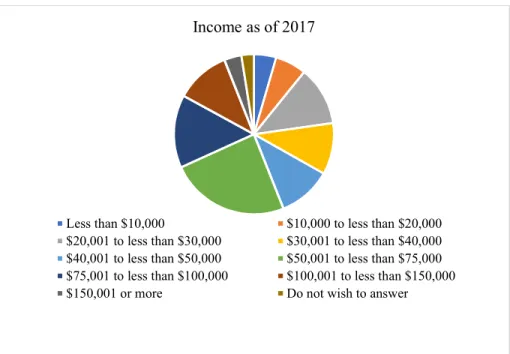
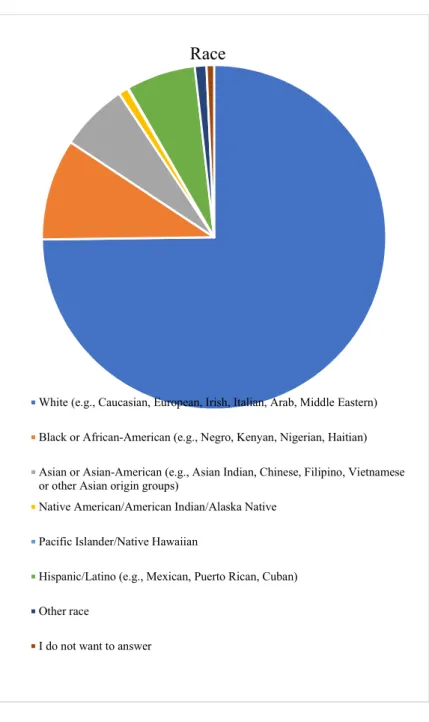
Of the participants, 46.5% (n=421) were male and 53.5% (n=484) were female. The average age was 37.96 years old, the median was 35, and the range was 81.3 years. Almost all participants had completed high school, while 21.8% had some college with no degree, 13% had a two-year associate degree from a college or university, 36% had a degree from a four-year college or university degree, and 14.9% had a postgraduate or professional degree, including master’s, doctorate, medical or law degree. Regarding race, the majority, 74.8% considered themselves white, 9.5% Black or African-American, 6.5% Hispanic/Latino, and 6.4% Asian or Asian-American. Taking family income into account, 11.9% made $20,000 to less than $30,000, 10.4% made $30,001 to less than $40,000, 10.8% made $40,001 to less than $50,000, 24.2% made $50,001 to less than $75,000, 14.7% made $75,001 to less than $100,000, and 11% made $100,001 to less than $150,000. Visual representations of the participant demographics and a map of participant locations within the United States can be found in Figures 1-5.
Figure 1. Map of participant location
Figure 2. Participant gender 46.50% 53.50%
Gender
Figure 3. Participant level of income
Figure 4. Participant level of education
Income as of 2017
Less than $10,000 $10,000 to less than $20,000 $20,001 to less than $30,000 $30,001 to less than $40,000 $40,001 to less than $50,000 $50,001 to less than $75,000 $75,001 to less than $100,000 $100,001 to less than $150,000
$150,001 or more Do not wish to answer
Level of Education
Less than high school (Grades 1-8 or no formal schooling)
High school incomplete (Grades 9-11 or Grade 12 with NO diploma) High school graduate (Grade 12 with diploma or GED certificate) Some college, no degree (includes community college)
Two year associate degree from a college or university
Four year college or university degree/Bachelor’s degree (e.g., BS, BA, AB) Some postgraduate or professional schooling, no postgraduate degree
Postgraduate or professional degree, including master’s, doctorate, medical or law degree (e.g., MA, MS, PhD, MD, JD)
Figure 5. Participant race Race
White (e.g., Caucasian, European, Irish, Italian, Arab, Middle Eastern)
Black or African-American (e.g., Negro, Kenyan, Nigerian, Haitian)
Asian or Asian-American (e.g., Asian Indian, Chinese, Filipino, Vietnamese or other Asian origin groups)
Native American/American Indian/Alaska Native
Pacific Islander/Native Hawaiian
Hispanic/Latino (e.g., Mexican, Puerto Rican, Cuban)
Other race
Procedure
Before the main experiment, two pretests were conducted. The first was to select the organization that would be experiencing a crisis from the automotive industry to be used in the experiment. While any organization is susceptible to a crisis, select industries may be more inclined to experience one. The automotive industry was chosen for the study as they have made the list of top five most crisis-prone industries for three
consecutive years (ICM, 2017). The automotive industry set a record of 53 million recalls in 2016, while recalls in 2015 were more than 51 million vehicles, and 52 million in 2014. Among recent recalls, General Motors admitted to a mishandling of defective ignition switches linked to 124 deaths and resulting in a $900 million fine. In 2017, over four million Fiat Chrysler’s were recalled, 3.3 million Honda’s, and 1.1 million Ford’s (ICM, 2018). These statistics illustrate a few examples of the extent of damage this industry has faced in the past.
To determine which automotive company that would be experiencing a crisis in the study, a 2017 list of Forbes most reputable companies and Fortune 500 companies was consolidated to become a part of a pretest. The companies were presented in a pretest (n=95) and measured using a 7-point bipolar scale derived from Kim and Park (2017) ranging from “(1) = not familiar at all” to “(7) = extremely familiar” measured familiarity with the questions such as, “How would you rate your familiarity with this company?” Callison’s (2001) measure of credibility also used items such as, “On a scale of (1) Strongly disagree to (7) Strongly agree, under most circumstances, I would be likely to believe what the company says.” From this pretest, it was determined that The Ford Motor Company would be the automotive company. The Ford Motor Company scored a
6.28 average, (SD=.93), proving to be a company that participants were extremely familiar with. Along with familiarity, The Ford Motor Company scored the highest combined score of fairness, unbiased, “tells the whole story”, accurate, and “can be trusted.”
After it was determined that The Ford Motor Company would represent the automotive company experiencing a crisis, stimuli were created and a second pretest was conducted to test the main experiment, including stimuli and the manipulations checks. The pretest participants (N=50) were recruited through a snowball sample and it was ensured that these participants would not be participating in the main experiment. The pretest enhanced the quality of the study by determining the most realistic circumstances surrounding the crisis and several questions that were flagged for concern for participants were altered and rephrased. After the pretests, the main experiment was conducted. The participants (N=905), recruited by MTurk, began the survey after reading and agreeing to the informed consent document. The survey, hosted by Qualtrics consisted of a
questionnaire estimated to take 15 minutes to complete. The participants were asked to answer questions regarding their perception of the organization, and then randomly assigned one of nine crisis response strategies. Since a real organization was used, prior reputation and history were taken into account and controlled for.
After reading the crisis information, they were asked to answer questions about their perception of the organization, including their emotions and behaviors toward the organization. They repeated this process with a second fictitious crisis situation. The second half included a scenario involving a fictitious organization experiencing a food contamination. Prior reputation and history was not taken into account for the second
scenario since the organization was fictitious. The organization was within the food industry, since this industry also lingers near the top of ICM’s Annual Crisis Report as millions of pounds of food products were recalled in 2016 due to contamination (ICM, 2017). The food industry crisis was developed from the analysis of real press releases based on actual crises, while changing the name of the organization. In doing so, the information preserved a realistic scenario equivalent to an existing crisis. After
participants complete the survey, they were exposed to a debriefing statement to insure they understand that the crises were fictitious and there was no real threat. The complete questionnaire is listed under Appendix B.
Manipulation Checks
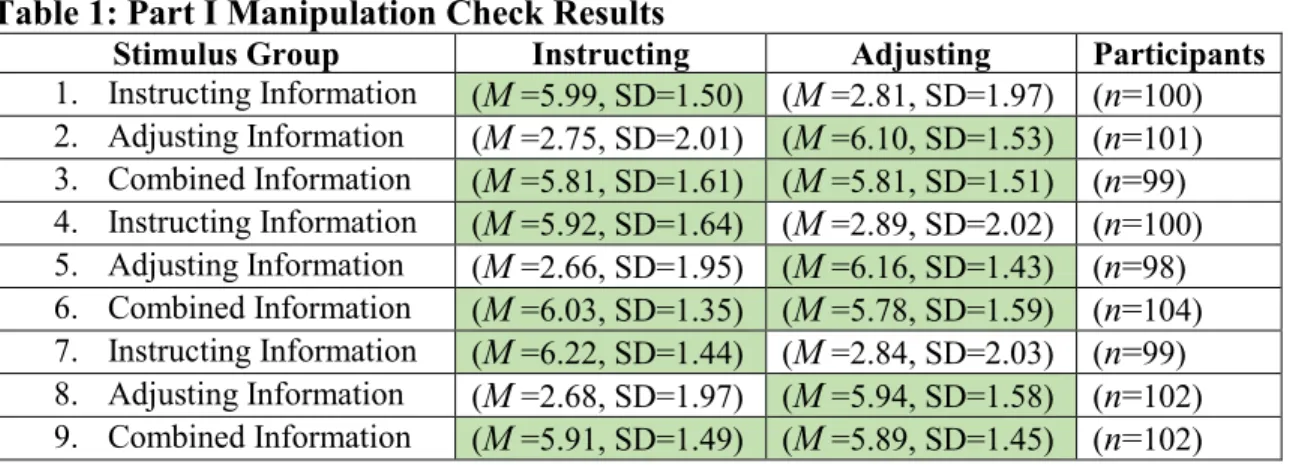
Five manipulation checks were developed, three for the first half of the study and two for the second half. The first three were directed at the crisis type and base crisis response and were asked after the participant was exposed to the stimuli. Two questions from the manipulation check that aim at instructing and adjusting information include, “The information includes that you can schedule an appointment to have your vehicle repaired” and “The information says that the company has created a special quality task force.” The participants were successful at identifying the different variables. As there were nine conditions in the first half the experiment, three included instructing messages, three included adjusting messages, and three were combined instructing and adjusting messages. The first stimulus (n=100) correctly perceived the message to include instructing information (M=5.99, SD=1.5) and not adjusting or combined information (M=2.81, SD=1.97). The second set of participants (n=101) perceived the message to
include adjusting information (M=6.1, SD=1.53) and not instructing or combined information (M=2.75, SD=2.01). The third group (n=99), perceived the message to include instructing and adjusting information, or the combined response (M=5.81, SD=1.56). The fourth set (n=100) was exposed to instructing information and perceived it as such (M=5.92, SD=1.04). Fifth, participants found the message to include adjusting information (M=6.16, SD=1.43). The sixth stimuli included combined information (M=6.03, SD=1.35, M=5.78, SD=1.59). The seventh group correctly found the information to be instructing (M=6.22, SD=1.44), the eighth group was adjusting
(M=5.94, SD=1.58), and the ninth was combined (M=5.82, SD=1.54). A table depicting a visual representation of the results of the manipulation check can be found Table 1.
Table 1: Part I Manipulation Check Results
Stimulus Group Instructing Adjusting Participants
1. Instructing Information (M =5.99, SD=1.50) (M =2.81, SD=1.97) (n=100) 2. Adjusting Information (M =2.75, SD=2.01) (M =6.10, SD=1.53) (n=101) 3. Combined Information (M =5.81, SD=1.61) (M =5.81, SD=1.51) (n=99) 4. Instructing Information (M =5.92, SD=1.64) (M =2.89, SD=2.02) (n=100) 5. Adjusting Information (M =2.66, SD=1.95) (M =6.16, SD=1.43) (n=98) 6. Combined Information (M =6.03, SD=1.35) (M =5.78, SD=1.59) (n=104) 7. Instructing Information (M =6.22, SD=1.44) (M =2.84, SD=2.03) (n=99) 8. Adjusting Information (M =2.68, SD=1.97) (M =5.94, SD=1.58) (n=102) 9. Combined Information (M =5.91, SD=1.49) (M =5.89, SD=1.45) (n=102)
The second half of the study had two additional manipulation checks aiming at similar questions. To ensure participants recognized the platforms each message was one, a multiple-choice question asked them to select which media the information was
presented on: A Facebook Post, an online news article, a Twitter Post, or a YouTube video. This manipulation showed that the media context was accurately interpreted and
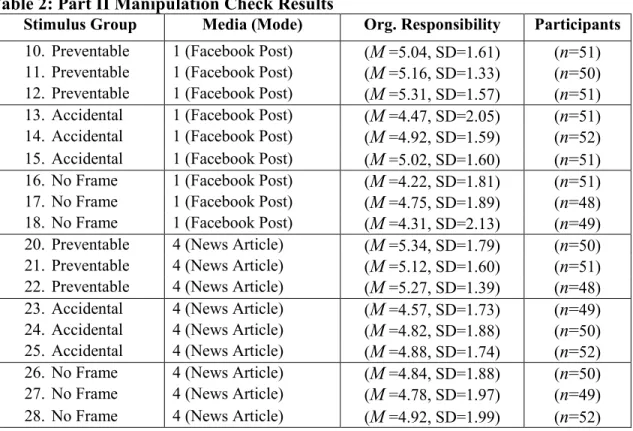
that the crisis types of preventable and accidental were appropriately categorized. To assess crisis responsibility, the following question asked, “On a scale from very unlikely to very likely, how likely do you believe that the organization caused the crisis?” The messages in the preventable scored a total average landing in “likely” to “very likely” (M=5.21, SD=1.55). The participants viewed the messages in the accidental cluster to be “somewhat likely” to “likely” (M =4.78, SD=1.76). There was a distinction between the preventable and accidental categories, as even the highest average (M=5.02) in the accidental cluster did not surpass the lowest average in the preventable cluster (M =5.04) and the stimuli without a frame showed the lowest attribution (M =4.62, SD=1.94). The participants successfully checked the manipulation and the results can be viewed in Table 2.
Table 2: Part II Manipulation Check Results
Stimulus Group Media (Mode) Org. Responsibility Participants
10. Preventable 1 (Facebook Post) (M =5.04, SD=1.61) (n=51) 11. Preventable 1 (Facebook Post) (M =5.16, SD=1.33) (n=50) 12. Preventable 1 (Facebook Post) (M =5.31, SD=1.57) (n=51) 13. Accidental 1 (Facebook Post) (M =4.47, SD=2.05) (n=51) 14. Accidental 1 (Facebook Post) (M =4.92, SD=1.59) (n=52) 15. Accidental 1 (Facebook Post) (M =5.02, SD=1.60) (n=51) 16. No Frame 1 (Facebook Post) (M =4.22, SD=1.81) (n=51) 17. No Frame 1 (Facebook Post) (M =4.75, SD=1.89) (n=48) 18. No Frame 1 (Facebook Post) (M =4.31, SD=2.13) (n=49) 20. Preventable 4 (News Article) (M =5.34, SD=1.79) (n=50) 21. Preventable 4 (News Article) (M =5.12, SD=1.60) (n=51) 22. Preventable 4 (News Article) (M =5.27, SD=1.39) (n=48) 23. Accidental 4 (News Article) (M =4.57, SD=1.73) (n=49) 24. Accidental 4 (News Article) (M =4.82, SD=1.88) (n=50) 25. Accidental 4 (News Article) (M =4.88, SD=1.74) (n=52) 26. No Frame 4 (News Article) (M =4.84, SD=1.88) (n=50) 27. No Frame 4 (News Article) (M =4.78, SD=1.97) (n=49) 28. No Frame 4 (News Article) (M =4.92, SD=1.99) (n=52)
Measures
With organization in place, respondents were first asked about how they perceive The Ford Motor Company in terms of reputation and measuring OPRs (Fombrun, Ponzi, & Newbury, 2015; Hon & Grunig, 1999). This composed of the first 50 questions and respondents were asked to rate each item on a 7-point Likert scale with responses that ranged from “(1) Strongly Disagree” to “(7) Strongly Agree. Hon and Grunig’s (1999) measure of relationships included items on control mutuality, trust, commitment, satisfaction, and measured the type of relationship that the participant had with the organization. An item within the exchange relationship included, “On a scale of (1) Strongly disagree to (7) Strongly agree, whenever this organization gives or offers something to people like me, it generally expects something in return.” A communal relationship question asked, “I feel that this organization will not take advantage of people who are vulnerable.”
After presented with the stimulus and manipulation checks, content and source credibility was measured. Content credibility was measured message credibility with a semantic differential-type scale with five items including believability, accuracy, and completeness (Eastin, 2001; Meyer, 1988; Gaziano & McGrath, 1986; Hu & Sundar, 2009). Source credibility, or the company employing the information source, was measured with four items, such as participant’s perception of honestly, intentions, and truthfulness (Callison, 2001; Kim & Park, 2017). Emotion was taken into account using measures from Coombs and Holladay’s (2005) study with statements such as “The event makes me feel angry toward the organization” and “I actually feel a little happy that something bad happened to the organization, the organization deserves it” on a 7-point
Likert scale. The dependent variables, corporate reputation and supportive behavioral intentions, were then measured using a 7-point Likert scale (Coombs, 1998; Coombs & Holladay, 1996). Participants were asked how trustworthy they perceived the
organization and behavioral intentions such as saying nice things to others (WOM) and attend a rally to show public support for the organization. By measuring these two dependent variables, results will illustrate how the manipulation, different forms of crisis response strategies, affects the organization’s outlook.
Independent Variables
The first half of the experiment uses a 1 x 3 x 3 factorial design to determine how the base crisis response and crisis type affects crisis outcomes within a crisis situation. The first independent variable is the organization represented in the crisis situation, which was determined through a pretest to be The Ford Motor Company. The industry was selected from ICM’s list of most crisis-prone industries (ICM, 2017) and a pretest determined the organization from within this industry by measuring familiarity and credibility (Kim & Park, 2017; Callison, 2001).
The second independent variable is the base crisis response strategy. The base crisis response includes: 1. Instructing information; 2. Adjusting information; or 3. Combined information (Instructing and Adjusting information). This was derived from Coombs’ (2006) breakdown of how the base crisis response is defined. The instructing and adjusting messages include the critical details Coombs includes emphasizes, such as the crisis basics on “the basic information about what happened in the crisis event” and
protection explaining, “what stakeholders need to do to protect themselves from harm” (p. 246).
The third variable is the crisis type, which is defined by Coombs (2011) as the “frame that is used to interpret the crisis” (p. 157). The three crisis types in this variable are categorized as preventable, accidental, and no frame. The creation of this
manipulation was guided by Coombs’ (2006) examples of crisis types illustrated in his “Table 1. Crisis Clusters” (p. 244) in “The Protective Powers of Crisis Response Strategies: Managing Reputational Assets during a Crisis.” A human breakdown recall was used in the preventable crisis messaging and a technical breakdown recall was used in the accidental crisis messaging. The message without a frame did not include any details regarding the responsibility of the crisis, only the information.
The second end of the experiment tests the media context in a 2 (media context: Facebook post or online news article) x 3 (base crisis response: instructing, adjusting, or combined information) x 3 (framed crisis type: accidental, preventable, or no framed crisis) experimental design. This introduces the media context as an independent variable. The media contexts utilized in this experiment include one traditional and one
nontraditional media platform. A Pew Research study published in 2017 found that the most common pathways to online news was when online news consumers reported getting the information directly from online news websites 36% of the time they got news (Bialik & Matsa, 2017). Direct visits to an online news organization's website are “the most common pathways to online news” (p. 8), which demonstrates the saliency of the functions and uses of this media context. Traditional media have the ability to shape the reputation of organizations experiencing crises, as the public still values and relies on it
(Capelos & Wurzer, 2009). In addition to traditional news, nontraditional platforms, such as social media, have evolved to become relied on during a crisis.
While social media has generated a platform for information gathering and sharing, it has been regarded to “complement” offline news sources, rather than replace them (Vyas, Singh, & Bhabhra, 2007). In the past, researchers examined media
consumption during crisis events in the context of social media to determine how organizations disseminate their messages (Cooley & Jones, 2013), sharing trends in political movements (Zhou, Bandari, Kong, Qian, & Roychowdhury, 2010), and a tool for spreading information and news about crises (Comunello & Anzera, 2012; Mayfield, 2011). Kostkova, Szomszor, and St Louis (2014) add in their study of crises events that social media, through social networking, “presents a unique opportunity to gather information on large numbers of individuals as well as offering the opportunity to enhance early warning outbreak detection systems” (p. 82).
As crises evokes uncertainty in stakeholders, social media offers reassurance by providing a platform to communicate with stakeholders in a timely manner and build relationships with stakeholders (Coombs, 2007b; Jo & Kim, 2003). It creates benefits for both the organization and its stakeholders, such as meeting stakeholder needs,
expectations, and providing transparency (Waters, Burnett, Lamm, & Lucas, 2009). Particularly in crisis events, social media offers necessary outlets for information, updates and news dissemination, and the ability to evaluate public opinion (Vis, 2013). Features of social media benefit the user by allowing interaction such as commenting, sharing, or liking an organization’s post. The expedient quality that social media affords allows organizations to release information instantaneously and without the barriers traditional