
Difficulties encountered by mathematical literacy grade 11 learners when solving problems on the surface areas of rectangular prisms
193
0
0
Full text
(2) DIFFICULTIES ENCOUNTERED BY MATHEMATICAL LITERACY GRADE 11 LEARNERS WHEN SOLVING PROBLEMS ON THE SURFACE AREAS OF RECTANGULAR PRISMS BY MOPULE ABRAM MORAPELI MINOR-DISSERTATION Submitted in partial fulfillment of the Requirements for the degree MASTERS IN EDUCATION In MATHEMATICS AND SCIENCE EDUCATION In the FACULTY OF EDUCATION Of the UNIVERSITY OF JOHANNESBURG SUPERVISOR: PROF. KAKOMA LUNETA JANUARY 2017 I.
(3) DECLARATION I, Mopule Abram Morapeli declare that: . To the best of my knowledge and belief, this is my own work, all sources have been acknowledged and it contains no plagiarism.. . I have not previously submitted this work or any version of it for assessment to the University of Johannesburg.. . I did not under any circumstances fabricate nor falsify any data.. . I have adhered to the highest possible technical and ethical standards.. Lastly, I wish to confirm the originality of this research.. II.
(4) ACKNOWLEDGEMENTS. I give thanks to the omnipotent, omnipresent, and omniscient God for giving me wisdom, perseverance, and guidance to complete this study, and also like to acknowledge with sincere gratitude the following people and institutions. . . . . . Prof. Kakoma Luneta, supervisor, university of Johannesburg, for the continuous support, encouragement, and guidance provided throughout my study. Prof. Juliet Perumal, Med and PhD 2012 Research workshop coordinator, University of Johannesburg for arranging all the workshops through which I gained invaluable insight into the study. My family, Dr. Mummy Setshedi (wife) for her selfless, unwavering support during my study, Marake (son), without whose support I wouldn’t have made it to submit my work on time; Ntheti and Pontsho (daughters) for their sterling job on the technical side of this research as I was born before modern technology; parents late Emma Ntlemeng for whom I dedicate this research to, Michael Marake for paying fees, donating lap-top and his unmistaken passion and encouragement to all his children, grand-children, relatives and the black child. House helper Grace Mqolo for making sure I am well-nourished and looking presentable at all times and her son Khangelani ever-ready to assist with replacing printing cartridge and to support with school work. Mathematics colleagues, Mokhele and Ngwenyene; English teacher Ndiweni and friends Godfrey and Patience Matereure. Learners who participated whole heartily in the study. Victor Netshiheni for assisting with editing the research and checking on my progress.. III.
(5) DEDICATION. This study is dedicated in memory of my beloved mother, Emma Ntlemeng Morapeli (Nee Mohomane).. She was supportive; taught us that everything is possible if you put your mind to it. She used to say hard work never killed anybody. She taught us to never take anything for granted, to appreciate and be ready for all challenges in life. A mover and a shaker, she was not easily fazed. She put her trust in God and I soon followed in her footsteps. She was my pillar of strength and she made sure that I received a good education as this would open doors for the rest of my life.. My wonderful memories of your love will always remain etched forever in me.. Son, Mopule Abram Morapeli. IV.
(6) ABSTRACT. Since the dawn of democracy in 1994, the South African National Department of Education made several policy and curriculum changes to address the poor performance in Mathematics especially in Township schools and Government-run Institutions. Despite all efforts to introduce Mathematical Literacy for those learners who are weak in the FET Band (grade 10-12) Mathematics, many learners still demonstrate a lack of conceptual and procedural knowledge when solving Mathematical Literacy problems on measurements. Hence, the study is aimed at investigating the difficulties encountered by Grade 11 Mathematical Literacy learners when solving problems on surface areas of rectangular prisms. The majority of schools in the Townships, peri-urban, and Rural areas are attended by learners from low socio-economic groups due to low income of the parents. The country is faced with a chronic shortage of qualified Mathematics teachers and as a result, most schools resort to using unqualified or under-qualified Mathematics teachers. The research undertaken is a descriptive phenomenological case study involving 30 Grade 11 learners at a peri-urban school South of Johannesburg. Learners are transported to and from school by buses and are also given two hot meals per day as in most cases it is the only meal they will have for the day. The study used the qualitative method to collect and analyze data. An in-depth semistructured focus interviews, as well as documents content analysis were conducted. The study found that learners struggle with measurements in general and to calculate the surface areas of rectangular prisms in particular. They encounter difficulties when solving problems in this strand of Mathematics which results in learners committing errors and misconceptions due to a lack of both the conceptual and procedural knowledge. This problem emanates from “gaps” in their mathematical knowledge brought about by none-congruency between intended and the implemented mathematics curriculum. Effective teaching and intervention strategies are required starting from lower grades to grade 12 in order to reduce difficulties encountered by learners in Mathematics in higher classes. Teachers need to reflect on their daily teaching with the aim to discover the root source of learners’ errors and misconceptions with a view to V.
(7) effectively address them. The Department of Education must prioritize the teaching of Mathematics in lower grades by employing qualified, competent teachers who are well vested in the pedagogical content knowledge of Mathematics. The study should make a meaningful contribution to the body of knowledge in Mathematics teaching and learning. Above all, it should enhance the teaching and learning of the surface area of prisms, especially in the disadvantaged schools. For the country’s economy to improve, good Mathematics performance should be given the number one priority.. VI.
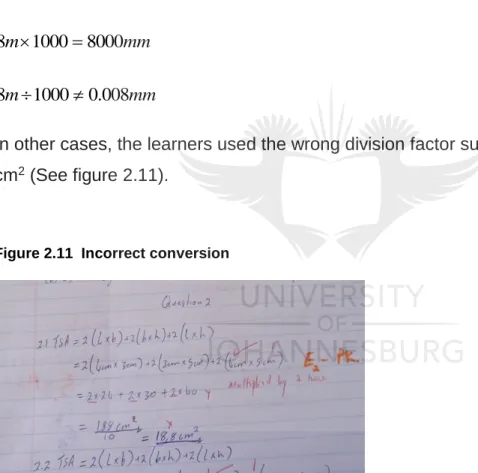
(8) TABLE OF CONTENT CHAPTER ONE. 1. CONTEXTUAL BACKGROUND OF THE STUDY. 1. 1.1. INTRODUCTION. 1. 1.2. BACKGROUND OF THE STUDY. 1. 1.3. RATIONALE FOR THE STUDY. 3. 1.4. RESEARCH PROBLEM. 7. 1.5. RESEARCH QUESTION. 7. 1.6. AIM OF THE STUDY. 7. 1.7. OBJECTIVES. 8. 1.8. RESEARCH LIMITATIONS AND DELIMITATIONS. 8. 1.9. SIGNIFICANCE OF THE STUDY. 9. 1.10. RESEARCH DESIGN AND METHODOLOGY. 9. 1.10.1. RESEARCH METHODOLOGY. 10. 1.10.2. INSTRUMENTS. 11. 1.11. VALIDITY AND TRUSTWORTHINESS/RELIABILITY. 12. 1.12. STRUCTURE AND OUTLINE OF THE REPORT. 13. 1.12.1. CHAPTER 1: INTRODUCTION AND ORIENTATION.. 13. 1.12.2. CHAPTER 2: LITERATURE REVIEW. 13. 1.12.3. CHAPTER 3: RESEARCH DESIGN AND METHODOLOGY. 13. 1.12.4. CHAPTER 4: DATA PRESENTATION AND ANALYSIS.. 14. 1.12.5. CHAPTER 5: SUMMARY, FINDINGS, RECOMMENDATIONS AND CONCLUSION.. 14. CHAPTER TWO. 15. LITERATURE REVIEW. 15. 2.1. INTRODUCTION. 15. 2.2. THEORETICAL FRAMEWORK. 15. 2.3. LITERATURE STUDY. 16. 2.3.1.1. WHAT IS MATHEMATICAL LITERACY?. 16. 2.3.1.2. THE NATURE OF MATHEMATICAL LITERACY. 20. 2.3.2. DEFINITIONS. 23. 2.3.3. DIFFERENT FORMATS OF PRISMS. 26. 2.3.4. CALCULATING SURFACE AREA OF A RECTANGULAR PRISM. 27. 2.3.5. APPLICATION OF RECTANGULAR PRISMS IN BUILDING AND CONSTRUCTION. 30. 2.4. ERRORS AND MISCONCEPTIONS. 32. 2.4.1. CLASSIFICATION OF ERRORS. 32. 2.4.2 ERRORS AND MISCONCEPTIONS CAUSED BY TRANSFER OF KNOWLEDGE TO LEARNERS. 36. 2.5. DIFFICULTIES OF TEACHING MATHEMATICAL LITERACY. 38. 2.5.1. LACK OF KNOWLEDGE BASES FOR TEACHING MATHEMATICAL LITERACY. 38. VII.
(9) 2.5.2. TEACHING MATHEMATICAL LITERARY IN SECOND LANGUAGE. 39. 2.5.3. INADEQUATE SCHOOL RESOURCES AND POOR MANAGEMENT. 40. 2.6. DIFFICULTIES OF LEARNING MATHEMATICAL LITERACY. 42. 2.6.1. LEARNING THEORIES. 42. 2.6.2. CONSTRUCTIVISM. 42. 2.6.3. MEDIATED LEARNING THROUGH DIAGRAMS. 43. 2.6.4. LEARNERS MUST POSSESS SPATIAL SENSE AND VISUAL ABILITY. 44. 2.7. DIFFICULTIES OF TEACHING MEASUREMENTS. 44. 2.7.1. THE DIAGNOSTIC ANALYSIS REPORT ON NOVEMBER 2014 ML EXAMINATION. 44. 2.7.2. COMMON ERRORS AND MISCONCEPTIONS. 45. 2.7.3 RECOMMENDATIONS OF THE DIAGNOSTIC ANALYSIS REPORT OF 2014 NOVEMBER EXAMINATIONS 46 2.8. DIFFICULTIES IN LEARNING MEASUREMENTS. 47. 2.8.1. LACK OF PRIOR KNOWLEDGE IN MEASUREMENTS. 47. 2.9. DIFFICULTIES OF PROBLEM-SOLVING IN MATHEMATICAL LITERACY. 49. 2.9.1. DIFFICULTIES OF SOLVING PROBLEMS OF MEASUREMENTS. 50. 2.9.2. ERRORS AND MISCONCEPTIONS IN MEASUREMENTS. 51. 2.10. CONCLUSION. 53. CHAPTER THREE. 54. RESEARCH DESIGN AND METHODOLOGY. 54. 3.1. INTRODUCTION. 54. 3.2. THE RESEARCH DESIGN. 54. 3.3. RESEARCH METHODS. 55. 3.4. THE RESEARCH SAMPLE AND SITE. 57. 3.5. DATA COLLECTION METHODS. 58. 3.5.1. LEARNERS’ DOCUMENTS. 58. 3.5.1.1. CLASS ACTIVITIES. 58. 3.5.1.2. SCHOOL BASED ASSESSMENT (SBA). 59. 3.5.1.3. CLASS TEST. 60. 3.5.2. 60. INTERVIEWS. 3.5.2.1. INTERVIEW WITH LEARNERS WHO PERFORMED BELOW THE AVERAGE (BA). 61. 3.5.2.2. INTERVIEWS WITH LEARNERS WHO ACHIEVED AVERAGE (AA). 64. 3.5.2.3. INTERVIEWS WITH LEARNERS WHO ACHIEVED ABOVE AVERAGE (AAA). 65. 3.5.3. INSTRUMENT FOR CLASSIFYING ERRORS AND MISCONCEPTIONS. 67. 3.6. TRIANGULATION. 68. 3.7. VALIDITY OF INSTRUMENTS. 68. 3.8. RELIABILITY OF INSTRUMENTS. 69. 3.9. ETHICAL ISSUES. 70. 3.10. CONCLUSION. 71. VIII.
(10) CHAPTER FOUR. 72. DATA PRESENTATION AND ANALYSIS. 72. 4.1. INTRODUCTION. 72. 4.2. DATA ANALYSIS. 72. 4.2.1. LEARNERS’ INTERVIEWS. 73. 4.2.2. DATA ANALYSIS FROM CONTENT DOCUMENTS OF LEARNERS. 78. 4.3. CATEGORIES. 90. 4.4. THEMES DEVELOPED FROM THE CATEGORIES. 91. 4.4.1. CONCEPTUAL KNOWLEDGE (DISCUSSED IN 4.5.1). 91. 4.4.2. ACQUIRED EXPERIENCE (DISCUSSED IN 4.5.2). 91. 4.4.3. MATHEMATICAL LANGUAGE GAP (DISCUSSED IN 4.5.3). 92. 4.4.4. DIFFICULTIES OF PROBLEM SOLVING IN MEASUREMENTS (DISCUSSED IN 4.5.4). 92. 4.4.5 MATHEMATICAL DIFFICULTIES WHEN SOLVING SURFACE AREA PRISMS (DISCUSSED IN 4.5.5). 92. 4.4.6. DIAGNOSIS AND INTERVENTION STRATEGIES (DISCUSSED IN 4.5.6). 92. 4.5. THEME DISCUSSIONS. 92. 4.5.1. CONCEPTUAL KNOWLEDGE. 92. 4.5.1.1 MOST COMMON ERRORS IN SOLVING SURFACE AREAS OF RECTANGULAR PRISMS 94 4.5.1.2 LEAST COMMON ERRORS IN SOLVING SURFACE AREA OF A RECTANGULAR PRISM 95 4.5.2. ACQUIRED EXPERIENCE. 95. 4.5.3. MATHEMATICAL LANGUAGE GAP. 96. 4.5.4. DIFFICULTIES OF PROBLEM SOLVING IN MEASUREMENTS. 98. 4.4.5. MATHEMATICAL DIFFICULTIES WHEN SOLVING SURFACE AREA OF PRISMS. 99. 4.5.6. MATHEMATICAL DIAGNOSIS AND INTERVENTION STRATEGIES. 103. 4.6. CONCLUSION. 104. CHAPTER FIVE. 105. SUMMARY OF FINDINGS, RECOMMENDATIONS AND CONCLUSIONS. 105. 5.1. INTRODUCTION. 105. 5.2. SUMMARY OF FINDINGS. 105. 5.2.1 WHAT ARE THE DIFFICULTIES ENCOUNTERED BY GRADE 11 LEARNERS WHEN SOLVING PROBLEMS OF THE SURFACE AREAS OF PRISMS?. 105. 5.3. RECOMMENDATIONS. 106. 5.5. LIMITATIONS OF THE STUDY. 109. 5.6. CONCLUSION. 109. 6.. 111. REFERENCES. APPENDIX A. 125. INTERVIEW TRANSCRIPT WITH THE ABOVE AVERAGE LEARNERS. 125. APPENDIX B. 130. IX.
(11) INTERVIEW TRANSCRIPT WITH THE AVERAGE LEARNERS. 130. APPENDIX C. 137. INTERVIEW TRANSCRIPT WITH THE BELOW AVERAGE LEARNERS. 137. APPENDIX D. 144. SBA QUESTIONS ON THE CONSTRUCTION OF A RECTANGULAR PRISM. 144. APPENDIX E. 146. SBA QUESTIONS ON THE CONSTRUCTION OF A CYLINDER. 146. APPENDIX F. 147. SBA QUESTIONS ON THE SURFACE AREA OF A RECTANGULAR PRISM AND A CYLINDER 147 APPENDIX G. 148. SBA MEMORANDUM FOR THE SURFACE AREA CALCULATIONS. 148. APPENDIX H. 149. CLASS ACTIVITY GIVEN TO LEARNERS. 149. APPENDIX I. 149. REMEDIAL WORK ON THE CLASS ACTIVITY. 150. APPENDIX J. 151. CLASS TEST GIVEN TO THE LEARNERS. 151. APPENDIX K. 155. FLOOR PLAN OF MR VERMEULEN HOUSE – ANNEXURE FOR THE CLASS TEST. 155. APPENDIX M: NATIONAL SENIOR CERTIFICATE DIAGNOSTIC ANALYSIS REPORT FOR 2014 ML PAPER 1 161 162. APPENDIX N. NATIONAL SENIOR CERTIFICATE DIAGNOSTIC ANALYSIS REPORT FOR 2014 ML PAPER 1 EXAMINATION 162 APPENDIX O. 163. INTERVIEW QUESTIONS. 163. APPENDIX P. 164. NSC NOVEMBER 2014 PAPER 1 MEMORANDUM. 164. APPENDIX Q: NSC NOVEMBER 2014 PAPER 1 MEMORANDUM. 165. APPENDIX R. 166. NSC NOVEMBER 2014 PAPER 1 QUESTION 2. 166. APPENDIX S. 167. NSC NOVEMBER 2014 PAPER 1 QUESTION 2. 167. APPENDIX T. 168. NSC NOVEMBER 2014 PAPER 1 QUESTION 2. 168. APPENDIX U. 169. NSC NOVEMBER PAPER 2 2015 QUESTION 3. 169. APPENDIX V. 170. INSTRUMENT FOR ANALYSING DOCUMENTS. 170. APPENDIX W. 173. X.
(12) SCANNED DOCUMENTS. 173. APPENDIX X. 176. ACKNOWLEDGEMENT OF LANGUAGE EDITING. 176. 7 ADDITIONAL INFORMATION 7.1 List of figures. Figure 1.1 Examples of prisms .................................................................................. 5 Figure 1.2 Examples of pyramids .............................................................................. 5 Figure 1.3 Surface area of rectangular prism ............................................................ 6 Figure 1.4 Surface area of a triangular prism ............................................................ 6 Figure 2.1 Weighting of various topics in mathematical literacy .............................. 20 Figure 2.2 Examples of prisms ................................................................................ 23 Figure 2.3 Basic unit of a wall is a brick .................................................................. 23 Figure 2.4 Classroom walls consists of bricks ......................................................... 24 Figure 2.5 3-D Three dimensional diagram ............................................................. 26 Figure 2.6 Net diagram............................................................................................ 26 Figure 2.7 3-D block diagram .................................................................................. 27 Figure 2.8 Diagram to illustrate deconstruction of 3-D to 2-D.................................. 29 Figure 2.9 Diagram of a house ................................................................................. 30 Figure 2.10 Floor plan of a house ........................................................................... 31 Figure 2.11 Incorrect conversion ............................................................................. 34 Figure 2.12 Incorrect conversions of inches to cm2 ................................................ 35 Figure 2.13 The dissemination of knowledge from the teachers to the learners. (Adapted from Luneta (2013:12)) ............................................................................. 37 Figure 2.14 Incense tower ........................................................................................ 50 Figure 3.1 Incorrect writing of dimensions ................................................................ 62 Figure 3.2 Incorrect calculation of surface area of four walls ................................... 63 Figure 3.3 Paper models of both rectangular prisms and cylinders .......................... 64 Figure 3.4 Incorrect substitutions of measurements ................................................ 65 Figure 3.5 Correct measurements and substitution of the four walls ........................ 66 Figure 3.6 Incorrect rounding off .............................................................................. 67 7.2 Table of Tables. Table 1 Coding and Analysis of the Learners' Interviews ......................................... 73 Table 2 Types of Errors Shown by Learners during the test and percentages of the frequency of the errors ............................................................................................. 79 Table 3 Types of errors shown by learners during class activity and the percentages of the frequency of the errors ................................................................................... 84 Table 4 Types of errors shown by learners during SBA and the percentages of the frequency of the errors ............................................................................................. 84 7.3 List of Abbreviations. 2-D: Two Dimensions 3-D: Three Dimensions XI.
(13) AAA: Above Average Achievers AA: Average Achievers AAAS: American Association for the Advancement of Science BA: Below Average C1-9: Clarity seeking explanations by learners. CAPS: Curriculum Assessment Policy Statement CK: Conceptual Knowledge CK1-9: Lack of conceptual knowledge. CPD: Continuous Professional Development CSAA: Solving a problem consisting of both a rectangular prism and a cylinder by the average achievers. CSAAA: Solving a problem consisting of both a rectangular prism and a cylinder by above average achievers CSBA: Solving a problem consisting of both a rectangular prism and a cylinder by the below average achievers. CU: Conceptual Understanding DAR: Diagnostic Analysis Report DBE: Department of Basic Education DFAA: Finding the difference between a net-diagram and a 3-D diagram by average achievers DFAAA: Finding the difference between a net-diagram and a 3-D diagram by above average achievers DFBA: Finding the difference between a net-diagram and a 3-D diagram by the below average achievers. DMAA: Solving a problem when given dimensions only by average achievers DMAAA: Solving a problem when given dimensions only by above average achievers. DMBA: Solving a problem when given dimensions only by below average learners. DOE: Department of Education DRAA: Stating the difference between a rectangular prism and a cylinder by the average achievers. DRAAA: Stating the difference between a rectangular prism and a cylinder by the above average achievers. XII.
(14) DRBA: Stating the difference between a rectangular prism and a cylinder by the below average achievers. E1: simple error (a slip, a mistake, an omission, writing wrong numbers, or a careless error where the mistake is realized during the review of the work. E2: procedural error (failure to a known formula or rule) E3: conceptual error (error resulting from lack of understanding of a concept). E4: application error (error resulting from lack of application due to lack of understanding) (Hodes & Nolting, 1998) E5: Unsystematic error (error not repeated)(Luneta, 2013; Luneta & Makonye, 2010) E6: Systematic error (repeated error)(Smith, DiSessa & Roschelle, 1993; Luneta, 2013; Luneta & Makonye, 2010). FEAA: Explanation of the formula by average achievers. FEAAA: Explanation of the formula by the above average achievers. FEBA: Explanation of the formula by below average achievers. FPAA: Learners using a floor plan to calculate the surface area of the four walls in focus group average achievers. FPAAA: Learners using a floor plan to calculate the surface area of the four walls in focus group above average achievers. GET: General Education and Training HPAA: Learners seeking help from their parents in focus group average achievers. HPAAA: Learners seeking help from their parents in focus group above average achievers. HPBA: Learners seeking help from their parents in focus group below average achievers. IDAA: Identifying a rectangular prism by average achievers. IDAAA: Identifying a rectangular prism by above average achievers. IDBA: Identifying a rectangular prism by below average achievers. LOT: Language of Teaching LXAA: Learners lacking application knowledge by average achievers. LXAAA: Learners lacking application knowledge by above average achievers. LXBA: Learners lacking application knowledge by below average achievers. M1: The first method of writing the formula for total surface area. M2: The second method of writing the formula for total surface area.. XIII.
(15) ML: Mathematical Literary MPAA: Learners experiencing mathematical problems in average achievers. MPAAA: Learners experiencing mathematical problems in above average achievers. MPBA: Learners experiencing mathematical problems in below average learners. NCS: National Curriculum Statement, NOP: Not Observed Problem NRC: National Research Council NSC: National senior NSWDET: New South Wales Department of Education and Training OP: Observed Problem P1-9: Probing questions by the researcher PCK: Pedagogical Content Knowledge PK: Pedagogical Knowledge PK1-9: Lack of procedural knowledge. PU: Procedural Understanding QEAA: Learners understanding of mathematical questions in English by average achievers. QEAAA: Learners understanding of mathematical questions in English by above average achievers. QEBA: Learners understanding of mathematical questions in English by the below average achievers. SAMML: Script Analysis of Mathematics and Mathematical Literacy SAP: Surface Area of Prisms SBA: School Based Assessment SBAA: Question assessing application between a rectangular prism and a cylinder. SBAAA: Question assessing application between a rectangular prism and a cylinder by above average achievers. SBBA: Question assessing application between a rectangular prism and a cylinder. SCT: Socio-cultural Theory SUAA: Solving an unknown length given the total surface area by average achievers.. XIV.
(16) SUAAA: Solving an unknown length given total surface area by above average achievers. SUBA: Solving an unknown length given the total surface area by below average achievers. TSAA: Calculation of the total surface area by Average Achievers TSAAA: Calculation of the total surface area by Above Average Achievers TSBA: Calculation of the total surface area by Below Average Achievers. XV.
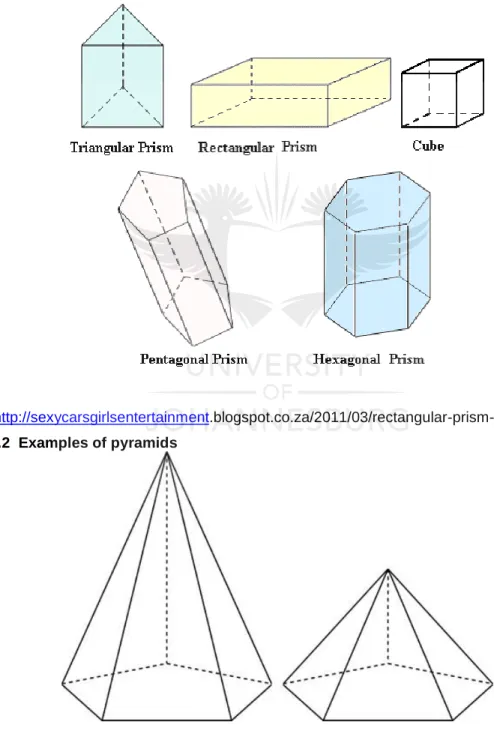
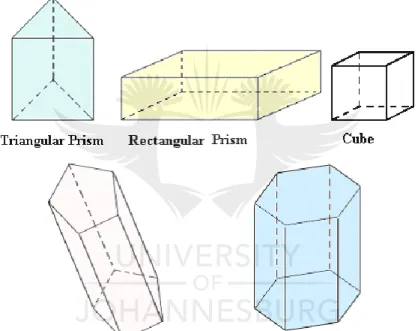
(17) CHAPTER ONE Contextual Background of the Study 1.1. Introduction. This introductory chapter served to contextualise and orientate the research. It firstly, provided an overview of the background to the study followed by the problem statement. Next, the research question was formulated and from this the aim and objectives of the study were derived. Next, I provided a brief description of the theoretical framework which underpinned the research. The research methodologies used in this research have been briefly explained and ethical considerations that lay the foundation of trustworthiness have been discussed. The chapter concludes with a brief overview of the structures and sequence of the study.. 1.2. Background of the study. The modern world makes specific demands to most of its people to have some knowledge of mathematics and its application in their daily lives. Mathematics plays an integral role in various careers including tertiary studies such as technology, medicine, engineering and agriculture. The introduction of Mathematical Literacy (ML) into the new curriculum (National Curriculum Statement) in South Africa in 2006 for grade 10 learners, afforded approximately 40% of the learners an opportunity to study some form of mathematics in the Further Education and Training (FET) Band (Perry, 2004). In the National Curriculum Statement (CAPS 2011, p.13), the teaching and learning of Mathematics aims to develop the acquisition of specific knowledge and skills necessary for the application of Mathematics to physical, social and mathematical problems. The National Curriculum Statement (grades 10 -12) concurs with the role of ML stated as to enable learners to develop the ability and confidence to think numerically and spatially in order to interpret and critically analyse everyday situations and solve problems (DoE, 2003a:9).. 1.
(18) Developments in the Programme for International Student Assessment (PISA) and Trends in International Mathematics and Science Study (TIMSS, 2002) have heightened international awareness of the value and significance of ML. It is not only at the international but also at national level that there is a growing concern about learners’ ML skills (DoE, 2003a). The purpose of PISA is to measure how well students can apply their knowledge and skills to problems within real-life contexts while the purpose of TIMSS is to measure the mathematics and science knowledge and skills broadly aligned with the curricula of participating countries (National Centre for Education Statistics, 2008). At the national level also, there is a growing concern about the learners’ mathematical literacy skills (DoE, 2003a).. The Constitution of the Republic of South Africa speaks of human rights and social justice, and provides a basis for transformation and development in South Africa (DoE, 2003a). Mathematics as a discipline, with its inherent potential to develop critical thinking, is a significant role player in the realization of this DoE’s (2003a) vision to create internationally competitive and creative learners and thinkers. Guided by these statements the DoE’s (2003a) purpose with ML was to introduce a subject that would bring mathematics to all people and to ensure that citizens of the future are highly numerate consumers of mathematics (p. 9). The emphasis is on the knowledge needed to be a self-managing person, a contributing worker and a participating citizen. It is clear from the role of ML that the focus is on the applicability of mathematics in everyday life situations. However, drawing on the sociological ideas of (Bourdieu, 1972, 1984, 1990) on social justice, the envisaged transformation and development through ML would be hard to realise on all levels of society. Bourdieu (1972) maintains that poor learners will suffer through “symbolic violence” as they are expected to perform like learners in affluent schools. According to him (1990), the education system continues to favour people of higher socio-economic status through current policies that still favour privileged communities. Parents from such communities assist their children through both explicit and implicit practices, formal and informal methods by drawing from their own sets of dispositions, habits and preferences. He defines these dispositions as the “habitus” (Bourdieu, 1984) - a collection of informal skills and knowledge which participants have constructed over time. Consequently, learners involved in an activity such as learning mathematics 2.
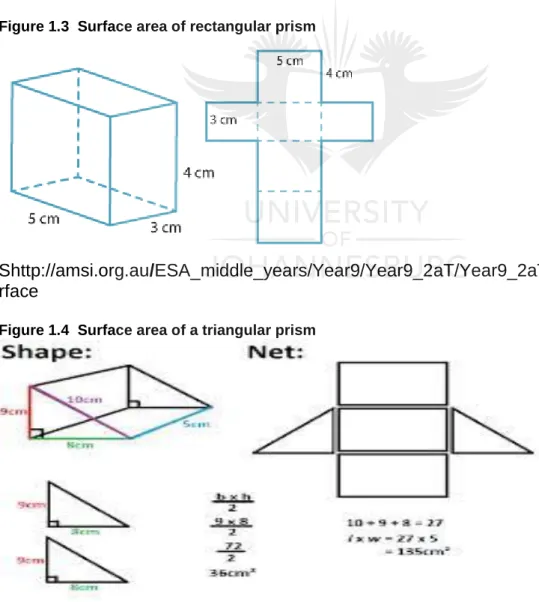
(19) with a habitus that already exists through early socialisation within the family, home and immediate environment will follow such acts and their interpretation of the world. Finally, if learners are to be successful, it is the duty of the school to align the individual habitus with the field, bringing their dispositions in line with those of the ideal learners (Bourdieu & Wacquant, 1992). This means that children equipped with the right habitus are able to gain advantage in school and can exchange their dispositions for other rewards such as grades, certificates and merit awards. However, the same cannot be said about the groups from lower socio-economic classes.. ML requires a different teaching approach to that of Mathematics as the nature of ML is contextualised and de-compartmentalised (De Villiers, 2007; North, 2005; Venkatakrishnan & Graven, 2007) Researchers are concerned about teachers’ knowledge and competency to use and apply an approach based on mathematical modelling (Brown & Schäfer, 2006). The focus in research on the issue of teachers’ knowledge and competency in ML should therefore be on teacher education. ML learners should experience practically what it means to develop an understanding of mathematics in context through, for example, an activity and investigation-based approach (Brown & Schäfer, 2006; Vithal & Bishop, 2006). Brown & Schäfer (2006) regard teacher professional development as an important constituent of curriculum reform and draw attention to issues that need to be spoken such as teachers’ beliefs, self-efficacy and knowledge. They refer to subject knowledge, pedagogical content knowledge (PCK) and curriculum knowledge that need to be enhanced.. 1.3. Rationale for the study. A rationale firstly addresses how the researcher developed an interest in the topic and secondly why the study is worth undertaking (Vithal & Jansen, 1997). As far as my personal interest is concerned, I teach ML, Grades 10 to 12, at a school South of Johannesburg. The main focus is the use of numbers with the intent to comprehend and solve real-life problems in various situations including the social, personal and financial settings (DoE, 2003a: 10). Over the years, I have observed the Grade 11 learners struggling to solve problems on measurements in general and particularly in the calculations of area, resulting in the achievement of low marks in ML. I have 3.
(20) wondered whether something could be done to improve this situation on their errors and misconceptions of area. This research study focuses mainly on the topic of measurements. I have abstracted prisms as my focal point with special emphasis on their surface area. Definitions of five key terms in this study are provided here, namely: difficult, difficult in learning, measurement, prism and surface area.. Difficult refers to something not easy; needing effort or skill to do or understand, according to the Oxford Advance Learners Dictionary (Hornby, 2006).. Difficulty in learning is often the result of failure on the part of the learner to understand the concepts on which procedures are based (Resnick, 1987). Thus, it is important for teachers to develop insights into learners thinking in order to identify their difficulties and errors in understanding measurements and geometry. However, this difficulty in learning is not synonymous with terms such as hard, challenging, taxing or demanding but rather for this research, it is used to refer to failure to understand or appropriate mathematical concepts, images, definitions, formulas and procedures important to actualise the learning of mathematics. Measurement is the process that requires understanding the idea of units and a need to select a unit appropriate to the attribute being measured, knowing the standard (empirical and metric) systems of units, understanding that measurements are approximate and that different units affect precision, being able to compare units and convert measurements from one unit to another (Bright, 1985).. Prism is a polyhedron with two parallel faces, called bases, and parallelograms for its other faces (Wheater, 2007). If the non-parallel faces are rectangles, and are perpendicular to the base, it is called a right rectangular prism (Wheater, 2007). According to Smeltzer & Smeltzer, (1980), a prism is a solid whose two end faces are equal in area and shape, and are in a parallel plane and also the side faces that connect them are parallelograms. This research came with a definition that combines the two above definition and added the word ‘three dimensional shapes’. Hence, in all places that the word is used, its definition must be in this context of a three dimensional shape whose cross-section cuts are parallel to an end face and are the 4.
(21) same shape as the end faces. It normally finds its name from the shape of its base for example a prism with a triangular base is called triangular prism (See figure 1.1). From the above given definition of a prism, the same cannot be said about pyramids (See figure 1.2) below. Pyramids differ from prisms because they lack the second base congruent to the first one.. Figure 1.1 Examples of prisms. http://sexycarsgirlsentertainment.blogspot.co.za/2011/03/rectangular-prism-net.html Figure 1.2 Examples of pyramids. https://www.superteachertools.net/5acoma5i/uploads/20140501/pentagonal%20pyramid.jpg. 5.
(22) Surface Area of a polyhedron is the total of the areas of the polygons that form its faces (Wheater, 2007). For example, a hexahedron (right rectangular prism) area consists of two rectangle bases and four parallelograms. The total outer space of the faces (polygon) of the polyhedron constitutes its total surface area. It is also regarded as all the surfaces that make up a 3-dimensional (3D) shape as shown in figure 1.3 and figure 1.4 below. Just as polygons are named according to the number of their sides, they also take their names from the number of faces they have. A tetrahedron has four faces, a hexahedron has six, and octahedron has eight faces (Wheater, 2007). The research focused only on the hexahedron which is commonly called a rectangular prism. It is characterized by twelve edges, six faces and eight vertices (corners).. Figure 1.3 Surface area of rectangular prism. Shttp://amsi.org.au/ESA_middle_years/Year9/Year9_2aT/Year9_2aT_R1_pg1.htmlu rface Figure 1.4 Surface area of a triangular prism. https://o.quizlet.com/ctjq2ZzqhfkMw5Y.PyuM1Q_m.png. 6.
(23) 1.4. Research problem. This research study describes difficulties learners encounter during learning of problem-solving on measurements in general and particularly on the aspect of the Surface Areas of Prisms (SAP) in ML, FET band. Furthermore, the study attempts to identify the errors and misconceptions associated with the calculations of areas with special attention to the SAP. It was also done with a view to increase the body of knowledge in problem solving. When learners give incorrect answers, often teachers use a cross to indicate where the mistake occurs. This seems to suggest that the incorrect answers are a result of unwanted sets of knowledge or inconsistent conceptions that have to be ignored. But ‘conceptions that lead to erroneous conclusions in one context can be quite useful in others’ (Smith, diSessa, & Roschelle, 1993, p152). Thus this study attempted to identify errors and misconceptions that grade 11 mathematical literacy learners made when solving problems on area. However, it must be acknowledged that the diagnosis of learners’ errors is very complex as errors are not only an indication of learners’ difficulties but challenges that may include: the teacher, the curriculum, the environment, pedagogical knowledge (PK), and pedagogical content knowledge (PCK) (Shulman, 1986; Radatz, 1979). It is precisely the reason for this study to be focussed mainly on the difficulties that learners experience when solving problems on SAP.. 1.5. Research Question. What are the difficulties encountered by the Grade 11 Mathematical Literacy learners when solving problems on the surface areas of prisms?. 1.6 Aim of the study The aim of this study was therefore to identify the difficulties encountered by Grade 11 Mathematical Literacy learners when solving problems on the surface areas of prisms. 7.
(24) 1.7 . Objectives The difficulties encountered by learners when learning how to solve problems of the surface areas of rectangular prisms.. . The errors and misconceptions that learners committed when solving problems of the surface areas of rectangular prisms.. . The diagnosis and intervention strategies that can reverse such errors and misconceptions.. 1.8 . Research limitations and delimitations This study focused on a particular semi-urban school south of Johannesburg where participants are learners and the researcher is their teacher.. . The participants were grade 11 Mathematical Literacy learners purposefully sampled.. . The conclusion and recommendations of this study were aimed at addressing the problem for this institution and other institutions in the Johannesburg South District experiencing the same difficulties when solving problems on the surface area of prisms, hence the conclusion and recommendations reached might not be of a general nature for all institutions in Gauteng, let alone in South Africa as a whole.. . The participants as learners might not have been comfortable to be interviewed and have their documents analysed by the researcher, and thus might, knowingly or unknowingly, have withheld critical and important information that could have added valuable knowledge to the study; or might even have given inaccurate feedback that may not lead to the in-depth understanding of their experienced difficulties.. . The school is in a low socio-economic area and classified as Quantile 2(no fee-paying school) with learners bussed to and from school, and served porridge and hot meals every day.. 8.
(25) 1.9. Significance of the study. It was envisaged that the study would contribute to the body knowledge in Mathematics education research with regard to difficulties encountered by learners: when solving problems on the surface areas of prisms; errors and misconceptions committed by them; and how such learning barriers could be overcome. The underpinning assumption here was that the understanding of measurements contributes remarkably towards the understanding of Mathematical Literary topics such as scale and maps, models construction, carpentry, welding, boiler making, and entry requirements for Technical and Further Education and Training (FET) Colleges among others. As even of today, South Africa is in dire shortage of skilled workers who can contribute in the development of the country’s economy.. 1.10 Research design and methodology The research undertaken was an empirical study using qualitative methods to examine participating learners’ and teacher’ difficulties encountered when solving problems on the surface areas of prisms. A case study was appropriate for this research because detailed information on sampled participants’ difficulties encountered when solving problems on the surface areas of prisms was available already (Creswell, 2009:9). Available also were thick descriptions and interpretations of pertinent data as a form of analysis (Luneta, 2011: 81). Creswell (2009:9) defines a case study as “a strategy of inquiry in which the researcher explores in the depth a program or a process on one or more individuals”, while Saunders, Lewis & Thornhill (2009:145) indicate a case study to be “a strategy for doing research which involves an empirical investigation of a particular contemporary phenomenon within its real life context using multiple sources of evidence”. The authors maintain it has the ability to answer questions such as “why?”, “what?”, and “how”?. A Case study design was chosen for this study since it entailed the collection of very extensive data in order to produce an in-depth understanding of the entity being 9.
(26) studied (An, Kuhm & Wu, 2004; Yin, 2009). It investigated contemporary phenomenon within a real life context using multiple strategies in order to produce a case description and a case-based theme (Creswell, 2009). The multiple case studies appeared to be suitable because they focus on contextual meaning-making rather than generalized rules. Documents such as class activities, school-based assessments and tests were the source of data for this research.. 1.10.1. Research Methodology. The qualitative research methodology was used in this study (McMillan & Schumacher, 1993; McMillan & Schumacher, 2010). The phenomenological research key words are “explore and describe”. The aim of the study was to explore and describe the phenomenon under study. In this instance, the difficulties experienced by the Grade 11 learners when solving problems on the surface area was the phenomenon. According to Welman & Kruger (1999), the phenomenologists are concerned with understanding the social and psychological phenomenon from the perspectives of people involved (Groenewald, 2004). Since this study aimed to explore the experiences of the Grade 11 learners when they encounter problemsolving on the surface areas of prisms, I found that the qualitative methodology was more appropriate for the study’s research design.. Within the qualitative research methodology there are a number of paradigms, the interpretative paradigm being one of them was chosen for this study (Guba, 1990). This paradigm is a way of looking at a world, taking account of the assumptions people have about what is important and what makes the world work (Coleman, Graham-Jolly & Middlewood, 2003). In this instance the paradigm enabled me to understand the learners’ perspectives from their standpoints.. The qualitative research methodology in this study was employed using the “inductive content analysis” approach (Kohlbacher, 2006). Bryman (2004, p392) states that the qualitative content analysis is “probably the most prevalent approach to the qualitative analysis of documents” and that it “comprises a searching-out of underlying themes in the materials being studied”. In contrast to this Mayring (2002) 10.
(27) regards qualitative content analysis as not only an approach to analysing documents but also a complex and solid method at the same time. According to Babbie (2001), content analysis is the study of recorded dialogue amongst people. Basically, is a coding method in which raw data is transformed into a standardized form? Text units are coded, categorized and themes emerge. The researcher describes beforehand codes of interest and confirms them in the documents as well as discovering new ones (Ryan & Bernard, 2000). This method is thought to be appropriate in case studies that rigorously analyse data. This study analysed and interpreted data using the texts from interview transcripts and documents such as learners’ exercise books, test scripts and home work (Kohlbacher, 2006). Furthermore, this type of content analysis, when integrated properly, may as well add to the validity and trustworthiness of this research.. 1.10.2. INSTRUMENTS. A variety of qualitative data collection techniques were utilized in the research process. This research used documents content analysis such as the learners’ class activity books, school-based assessment, and a test as primary sources together with open-ended, semi structured focus interviews as a secondary source to breed credibility and reduce biasness. As a research method, document analysis is particularly applicable to qualitative case studies which are a type of intensive studies that produce a rich description of a single phenomenon, event, organisation, or program (Stakes, 1995; Yin, 1994). Document analysis is a systematic procedure for reviewing or evaluating documents which are written or printed or electronic or in any combination. Learners’ documents were examined and interpreted in order to elicit meaning, gain understanding behind their difficulties in Mathematics and develop an empirical knowledge (Corbin & Strauss, 2008; Rapley, 2007). Furthermore, this research made use of focus group interviews to obtain an in-depth understanding of the learners’ experiences, perceptions, opinions, feelings, and knowledge as to why and how errors and misconceptions were committed (Patton, 2002). Focus groups needed to be carefully designed so as to not compromise the quality of data received through formation of smaller groups ( three to five per group) 11.
(28) (Patton, 2002). Questions were singular, open-ended, and neutral to the views of the researcher or potentially not insulting to the learners. To capture their views, the researcher used a tape recorder to save time and focus on the interviewee, probing further questions for clarity and understanding of what was said by the learner (Charma, 1991).. Only one class was sampled though a purposive convenient. sampling strategy to serve as multi–case for this study. The researcher chose 30 Grade 11 learners from his class as it was very convenient and time saving. According to Yin (2004) a case study design may have multiple case studies.. 1.11 Validity and trustworthiness/reliability. Validity which is the intent to measure how truthful the research results are (Kirk & Miller, 1986) and reliability which is the consequence of validity according to Lincoln & Guba (1985) were considered when their postulates which are discussed below had been accounted for. To ensure credibility I presented a true and comprehensive picture of the results. I asked another mathematical literacy teacher to look at the learners’ documents and comment about my analysis. I also gave the transcript of my interviews to the participants to check if I had represented their views accurately (Groenewald, 2004). To allow transferability of the results I provided a detailed description of the context of the study, the sampled school and gave a detailed explanation of how data was collected. This was done to enable those who would like to use the results to transfer them to their contexts. I also included my data collection tools as appendices of reference.. To achieve conformability, I ensured that findings are not just my own speculation or fabrication but a true representation of what the participants have said and or done as I have observed them during data collection. 12.
(29) 1.12 Structure and outline of the report 1.12.1. Chapter 1: Introduction and orientation.. The background and rational overview of the research are introduced; this is then followed by the research problem, research question, aim and objectives, limitations and delimitations, significance, and literature review on errors and misconceptions done by learners when solving problems on surface area.. 1.12.2. Chapter 2: Literature Review. In this chapter I described literature pertinent to this study. First, I discussed the theoretical framework that informs this research study. I then explained. the. mathematical difficulties encountered by learners in general, and then followed this by more implicit and explicit discussion on the teachers’ and learners’ challenges in the subject. This review in literature also describes the common errors and misconceptions in mathematics with emphasis on the types of errors learners commit. The nature of learners’ errors and misconceptions are discussed using the primary and secondary sources as the theoretical foundation of the study. This was followed by a profound analysis of the difficulties encountered by learners when solving problems on the surface area of prisms. The focus was primarily on a specific Technical Secondary School south of Johannesburg.. 1.12.3. Chapter 3: Research design and Methodology. A detailed description of the chosen research methods and strategies are given together with explanation on the instruments used to collect, analysis and present data.. 13.
(30) 1.12.4. Chapter 4: Data presentation and analysis.. The research data obtained through documents analysis and interviews from learners are presented in this chapter.. 1.12.5. Chapter 5: Summary, findings, recommendations and. conclusion.. This chapter concluded the research study report with all findings shown. Recommendations to learners, teachers and all interested parties in education are given with the aim to improve the quality of teaching and learning of surface area problem-solving.. 14.
(31) CHAPTER TWO Literature Review. 2.1. Introduction. In this chapter described the literature pertinent to this study. Firstly, I explained the theoretical framework that informs this study. Second, I discussed the literature study pertinent to the research topic. Third, nature of Mathematical Literature, definitions, formats, calculations of the surface area and including errors, misconceptions and their classification. Fourth, I explained. mathematical difficulties encountered by. learners in general, followed by more implicit and explicit discussions on the teachers’ and learners’ challenges in the subject. This was followed by difficulties in: measurements; area, surface area; and surface area of prisms. This chapter concluded by pointing out the difficulties that emanate from insufficient congruency or a lack thereof between the teaching and learning of Mathematics. The theory discussed informed the basis on which data is analyzed and interpreted in chapter 4. 2.2. Theoretical Framework. The theoretical framework is the stand taken by the researcher when studying, reflecting, postulating, analysing, criticising or adding to a body of knowledge. Such a stand taken by the researcher becomes his theoretical lens through which he views the phenomenon under study. The research looked at mathematical learning of rectangular prisms by grade 11 learners from a social constructivist perspective that was motivated by an interest in identifying their difficulties on this aspect of mathematics. The point of departure was to analyse the errors and misconceptions committed by learners as a vehicle towards understanding the what, when, where, who and how such errors and misconceptions emanated (Luneta & Makonye, 2010). Against this background the theoretical framework which supported this research influenced the empirical research strongly. Although my theoretical framework was an integration of various theories, I used the social constructivist theory (Vygotsky, 1978) as a basis for my qualitative theoretical framework. This theoretical framework 15.
(32) suggests that all humans are continually engaged in the construction and reconstruction of meaning (Engelbrecht & Green, 2001); it also offers a supporting view in understanding the social construction of knowledge and looks at how learners struggle to calculate the Total Surface Area (TSA) of a rectangular prism. The process of cognitive development is seen as occurring through the process of social interaction (Donald, Lazarus & Lolwana, 2002). Whereas Piaget claimed that all learners follow the same developmental stages independently of context, Vygotsky believed that cognitive development relates more to the culture in which it discloses. Sierpinska & Kilpatrick (1998:498) suggest that all learning should be regarded as a process of active construction whereby the child’s culture, the role of language and social interaction are emphasized - a position shared by me in this research. However, within a qualitative-reasoning perspective, the focus was not much on ways of external influence or a method of learners’ assessment, but more on aspects of mathematics that both learners and teachers could improve on.. 2.3. Literature Study. 2.3.1.1. What is Mathematical Literacy?. In the National Curriculum Statement (CAPS 2011, p.13) the following detailed exposition was given to explain what ML is all about The competencies developed through Mathematical Literacy allow individuals to make sense of, participate in and contribute to the twenty-first century world — a world characterised by numbers, numerically based arguments and data represented and misrepresented in a number of different ways. Such competencies include the ability to reason, make decisions, solve problems, manage resources, interpret information, schedule events and use and apply technology. Learners must be exposed to both mathematical content and real-life contexts to develop these competencies. Mathematical content is needed to make sense of real-life contexts; on the other hand, contexts determine the content that is needed. The subject Mathematical Literacy should enable the learner to become a self-managing person, a contributing worker and a participating citizen in a developing democracy. The teaching and learning of Mathematical Literacy should thus provide opportunities to analyse problems and devise ways to work mathematically in solving such problems. Opportunities to engage mathematically in. 16.
(33) this way will also assist learners to become astute consumers of the mathematics reflected in the media.. There are five key elements of Mathematical Literacy provided by Brombacher, (2006): . Mathematical Literacy involves the use of elementary mathematical content.. The mathematical content of Mathematical Literacy is limited to those elementary mathematical concepts and skills that are relevant to making sense of numerically and statistically based scenarios faced in the everyday lives of individuals (selfmanaging individuals) and the workplace (contributing workers), and to participating as critical citizens in social and political discussions, e.g. counting money to check if you received the right change after buying goods. In general, the focus is not on abstract mathematical concepts. As a rule of thumb, if the required calculations cannot be performed using a basic four-function calculator, then the calculation is in all likelihood not appropriate for Mathematical Literacy. Furthermore, since the focus in Mathematical Literacy is on making sense of real-life contexts and scenarios, in the Mathematical Literacy classroom mathematical content should not be taught in the absence of context.. . Mathematical Literacy involves authentic real-life contexts.. In exploring and solving real-world problems, it is essential that the contexts learners are exposed to in this subject are authentic (i.e. are drawn from genuine and realistic situations) and relevant, and relate to daily life, the workplace and the wider social, political and global environments. Wherever possible, learners must be able to work with actual real-life problems and resources, rather than with problems developed around constructed, semi-real, contrived and/or fictitious scenarios. As a matter of necessity, therefore, learners must be exposed to real accounts containing complex and “messy” figures rather than contrived and constructed replicas containing only clean and rounded figures.. 17.
(34) Alongside using mathematical knowledge and skills to explore and solve problems related to authentic real-life contexts, learners should also be expected to draw on non-mathematical skills and considerations in making sense of those contexts. Essentially, although calculations may reveal that a 10 kg bag of maize meal is the most cost-effective, consideration of the context may dictate that the 5 kg bag will have to be bought because the 10 kg bag cannot fit inside the taxi and/or the buyer does not have enough money to buy the 10 kg bag and/or the buyer has no use for the 10 kg, etc. In other words, mathematical content is simply one of many tools that learners must draw on in order to explore and make sense of appropriate contexts. . Mathematical Literacy involves solving familiar and unfamiliar problems.. It is unrealistic to expect that in the teaching of Mathematical Literacy learners will always be exposed to contexts that are specifically relevant to their lives, and that they will be exposed to all of the contexts that they will one day encounter in the world. Rather, the purpose of this subject is to equip learners with the necessary knowledge and skills to be able to solve problems in any context that they may encounter in daily life and in the workplace, irrespective of whether the context is specifically relevant to their lives or whether the context is familiar. Learners who are mathematically literate should have the capacity and confidence to interpret any reallife context that they encounter, and be able to identify and perform the techniques, calculations and/or other considerations needed to make sense of the context. In this sense Mathematical Literacy develops a general set of skills needed to deal with a particular range of problems. If Mathematical Literacy is seen in this way, then the primary aim in this subject is to equip learners with a set of skills that transcends both the mathematical content used in solving problems and the context in which the problem is situated. In other words, both the mathematical content and the context are simply tools: the mathematical content provides learners with a means through which to explore contexts, and the contexts add meaning to the mathematical content. But what is more important is that learners develop the ability to devise and apply both mathematical and non-mathematical techniques and considerations in order to explore and make sense of any context, whether the context is familiar or not, as in using a 2-D knowledge to understand a 3-D structure of a rectangular prism. 18.
(35) . Mathematical Literacy involves decision-making and communication.. A mathematically literate individual is able to weigh up options by comparing solutions, make decisions regarding the most appropriate choice for a given set of conditions, and communicate decisions using terminology, for example, by choosing between using tiles or carpets to cover the surface area of the floor. . Mathematical Literacy involves the use of integrated content and/or skills in solving problems.. The content, skills and contexts in this document are organised and categorised according to topics. However, problems encountered in everyday contexts are never structured according to individual content topics. Rather, the solving of real-life problems commonly involves the use of content and/or skills drawn from a range of topics, and so, being able to solve problems based on real-life contexts requires the ability to identify and use a wide variety of techniques and skills; for example the integration of finance and measurements in determining cost in rand per square metre.. ML grade 11 CAPS documents outline the following overview and weightings of topics. The topics have been further separated in terms of Basic Skills and Application Topics.. ‘Basic Skills’ comprises of numbers and calculations with. numbers and patterns, relationships and representation whereas ‘Application Topics’ on the other hand consists of: finance, measurements, maps, plans, data handling, and probability.. Basic Skills Topics are constituted by basic mathematical content and skills that learners have already acquired from lower grades. The Application Topics contain the context-related scenarios involving daily life, work place and the business environment, and wider social issues that learners are expected to master. However, it is also expected that learners will integrate the two topics in order to make sense of the contexts underpinned by them. This research study mainly focused on the topic of measurements. The overview and weightings of ML follows. ND ASSESSMENT POLICY STATEMENT (CAPS). 19.
(36) Figure 2.1 Weighting of various topics in mathematical literacy. The overview and weighting of. the topic on measurements at 20% (+_5%) is. approximately a quarter of the entire syllabus of ML in the FET phase. Therefore its significance cannot be overimphasized in this research. What follows is the discussion on the nature of ML.. 2.3.1.2. The Nature of Mathematical Literacy. Mathematical Literacy (ML) was introduced as a new learning area in the Further Education and Training (FET) phase in January 2006, and was structured as an alternative option to Mathematics. Since January 2006 all learners entering the FET phase have to take either Mathematics or ML. Venkatakrishnan & Graven (2008) assert that ML can be described as a subject that is related to mathematics and yet different from it in terms of its nature and its aims, and is defined in the following terms in the ML curriculum statement: 20.
(37) “Mathematical Literacy provides learners with an awareness and understanding of the role that mathematics plays in the modern world. Mathematical Literacy is a subject driven by life-related applications of mathematics. It enables learners to develop the ability and confidence to think numerically and spatially in order to interpret and critically analyses everyday situations and to solve problems.” (Venkatakrishnan & Graven, 2008). Venkatakrishnan and Graven further posit that this definition emphasizes notions of ML developing quantitative ways of. ‘seeing’ the world. (‘awareness and. understanding’), and participating in and interpreting its activities. ML is therefore predicated on the notion of developing the kinds of mathematical thinking needed for solving life-related problems. The advice and activities suggested in the Teacher’s Guide for Mathematical Literacy (DoE, 2006) support this sense of real-world involvement in the provision of exemplar units drawing from a range of everyday situations – utility bills, baking cookies, dam levels data, amongst others.. Feedback from a range of teachers across a variety of school types in Gauteng suggests that in the vast majority of cases ML is not offered as an open choice to learners (Graven & Venkatakrishnan, 2006). Weak and failing Mathematics learners at the end of the General Education and Training (GET – Grade 9) phase are strongly advised to take ML, while those passing mathematics are strongly advised to take Mathematics. This was largely the case in their focal schools, although a small number of learners with good mathematical performance at the end of Grade 9 had insisted upon taking ML against their educators’ advice. ML in this school overall though, as in a number of other schools that the teachers were aware of, was being enacted with learners with a significantly weaker profile of prior mathematical attainment than the Mathematics classes in the same Grade – an important point to bear in mind in terms of the background to their data on learners’ perceptions.. A further point Graven & Venkatakrishnan (2006) noted is that the Revised National Curriculum Statement for Mathematics in the GET band (DoE, 2002) does highlight the sense that the purpose of mathematics is to develop mathematical literacy:. 21.
(38) Being mathematically literate enables persons to contribute to and participate with confidence in society. Access to Mathematics is, therefore, a human right in itself.. Graven & Venkatakrishnan (2006) highlighted this to emphasis that while the experience of ML-focused activities should be an aspect of continuity for FET ML learners, their responses suggested a significant disjuncture. This sense of a break with past experiences in Mathematics classrooms is central to the argument they proposed in their paper – namely that their evidence suggested that negative prior experiences of learning mathematics can be turned around to positive perceptions, and turned around relatively quickly, but that this requires shifts in the classroom activities that break with past formulations. Diezmann (2005:288) states that a transformation is needed in the teaching of the pre-service teachers in order to address the mismatch between the knowledge and beliefs of the prospective teachers and the aim of the teachers’ education programs. Diezmann further suggested that instruction using more conceptually oriented teaching approaches did not translate into a changed teaching practice for in-service teachers whose own experiences in learning mathematics were procedural. However, Graven & Venkatakrishnan (2006) still noticed the joy experienced by ML. learners in comparison to their prior experiences in mathematics. Key aspects they mentioned relating to what learners described in terms of contrast related to: . shifts in the nature of classroom tasks. . Shifts in the nature of classroom interaction in ML.. . Both these shifts provided openings for learners to communicate and participate in classroom activities in addition to gaining understandings and make sense of the mathematics being used. Importantly, all of these features appeared to have become strikingly closed to these learners within their prior experiences in Mathematics classrooms. This study therefore goes on to focus on the difficulties faced by Mathematical Literacy teachers.. 22.
(39) 2.3.2 Definitions Prisms are a certain kind of shape, but what makes them stand out as unique and different from other shapes?. Definition 1: A prism is a polyhedron with two parallel faces, called bases, and parallelograms for its other faces (Wheater, 2007). If the non-parallel faces are rectangles, and are perpendicular to the base, it is called a right rectangular prism (Wheater, 2007). For example, a box is a prism because it consists of two squares of rectangles joined together to make the enclosed three-dimensional figure. Figure 2.2 Examples of prisms. http://image.wistatutor.com/content/feed/u2192/Prism1_0.gif. Definition 2: According to Smeltzer & Smeltzer, (1980) a prism is a solid whose two end faces are equal in area and shape, and are in a parallel plane and also the side faces that connect them are parallelograms, for example a brick or a shoebox (See figure 2.3 and 2.4 below). This research focused on one such prism called the rectangular prism. The name of this particular prism is derived from the base which is a rectangle. The basic unit of a wall is a brick and most buildings are made of walls such as classrooms in which learners are taught Figure 2.3 Basic unit of a wall is a brick. 23.
(40) http://mobileimages.lowes.com/product/converted/693092/693092000005.jpg Figure 2.4 Classroom walls consists of bricks. http://www.clipartkid.com/images/734/brick-wall-brick-wall-texture-brick-wall-bricks-bricks-texture8N5zJc-clipart.jpg. Definition 3: This research came with a definition that combines the two above definition and added the word three dimensional shapes. Hence, in all places that the word was used, its definition must be in this context of a three dimensional shape whose cross-section cuts parallel to an end face, are the same shape as the end faces. It normally finds its name from the shape of its base; for example a prism with a triangular base is called triangular prism (See figure 1.1). From the above given definition of a prism, the same cannot be said about pyramids (See figure 1.2). 24.
(41) A Cuboid is a special type of rectangular prism with top and bottom sections equal, two equal opposite sides and front and back sections also equal. Inside the rectangular classroom walls, learners observed the ceiling on top, floor as the bottom, two opposite walls, front and back walls. Therefore, for the sake of this research the interior of the classroom was regarded as a rectangular prism that could be seen by learners for their better understanding. The class activities, schoolbased assessment and the test reflected this scenario which was intended to consolidate their knowledge and understanding of rectangular prisms.. Definition 4: Surface Area is the area of the outer or top part or layer of a mathematical object; e.g. the surface layers of a rectangular prism or the outer covering of a cylinder (Good, 2008: Cambridge Advanced Learners’ Dictionary). The six sides of the classroom including their faces constituted the surface area of the rectangular prism which was the point of focus for this research.. Difficulties in learning are often the result of failure to understand the concepts on which procedures are based (Resnick, 1987). Thus, it is important for teachers to develop insights into learners’ thinking in order to identify their difficulties and errors in understanding prisms, measurements and geometry. The first step towards addressing the difficulties faced by the learners in understanding these concepts, strands and mathematics topics is to look at the different formats of prisms.. Measurement is the process that requires understanding the idea of units and a need to select a unit appropriate to the attribute being measured, knowing the standard (empirical and metric) systems of units, understanding that measurements are approximate and that different units affect precision, and being able to compare units and convert measurements from one unit to another (Bright, 1985).. Error: Errors are seen as signals that something has gone awry in the learning process and that remediation is needed (Borasi, 1987). Constructivists view errors as systematic wrong answers because they are applied regularly in the same situation and are symptoms of the underlying conceptual structures (Olivier, 1989: 3). 25.
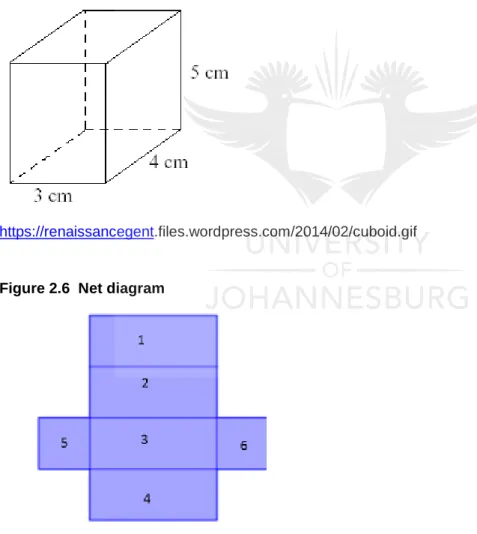
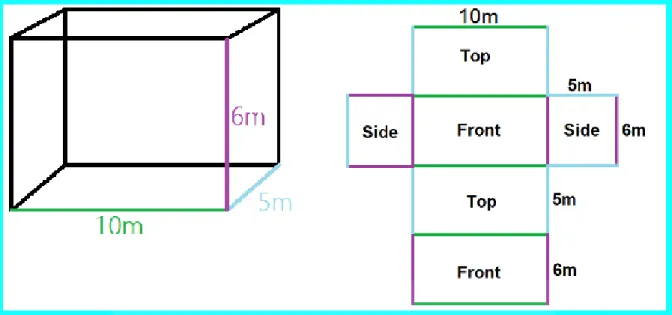
(42) Misconception: Mathematics learning is cumulative, and gaps arising from inability of the learners to “assimilate” and “accommodate” new knowledge to their prior knowledge leads to misconception (Sarwadi & Shahrill, 2014). 2.3.3. Different Formats of Prisms. This research required learners to calculate the total surface of different formats such as 3-Diagram (see figure 2.5), net diagram (see figure 2.6), 3-D blocks (see figure 2.7) and measurement in dimensional format such as 7mx6mx4m in preparation for the application in building and construction. Figure 2.5 3-D Three dimensional diagram. https://renaissancegent.files.wordpress.com/2014/02/cuboid.gif. Figure 2.6 Net diagram. http://www.moomoomath.com/rectangular_prism_7-min.PNG. 26.
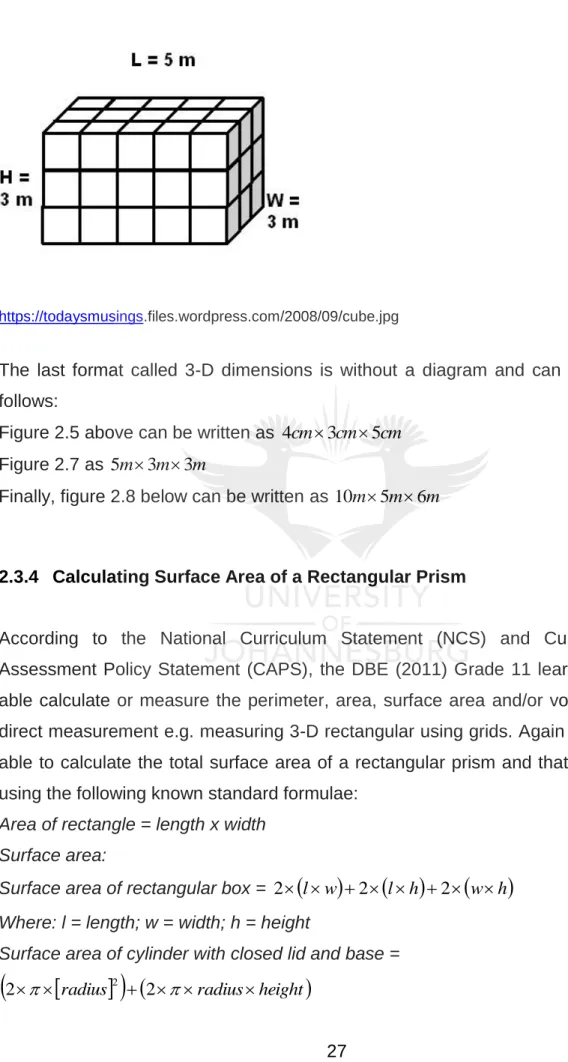
(43) Figure 2.7 3-D block diagram. https://todaysmusings.files.wordpress.com/2008/09/cube.jpg. The last format called 3-D dimensions is without a diagram and can be written as follows: Figure 2.5 above can be written as 4cm 3cm 5cm Figure 2.7 as 5m 3m 3m Finally, figure 2.8 below can be written as 10m 5m 6m. 2.3.4 Calculating Surface Area of a Rectangular Prism According to the National Curriculum Statement (NCS) and Curriculum and Assessment Policy Statement (CAPS), the DBE (2011) Grade 11 learners must be able calculate or measure the perimeter, area, surface area and/or volume through direct measurement e.g. measuring 3-D rectangular using grids. Again they must be able to calculate the total surface area of a rectangular prism and that of a cylinder using the following known standard formulae: Area of rectangle = length x width Surface area: Surface area of rectangular box = 2 l w 2 l h 2 w h Where: l = length; w = width; h = height Surface area of cylinder with closed lid and base =. 2 radius 2 radius height 2. 27.
(44) Teachers often assumed that calculating a rectangular area was a simple activity for learners as it required multiplying length and width (Lehrer, 2003). However, researchers noted that finding area and volume was much more complex than it was initially thought. Learners must be exposed to various hands–on tasks in order to develop a complete understanding of the content (Stephans & Clements, 2003).. CAPS further pointed out that learners must be able to convert various units of measurements in larger projects such as households, school and in the wider community, e.g. painting the walls of a bedroom (See Appendix U- November 2015 Paper 2 Question 3) or classroom. Learners must also be able to express the units appropriate to the context. Most learners’ initial exposure to area is often abstract and procedural (basically using formulae) with little or no understanding (Strutchens, Martins, & Kenny, 2003). Measurements cannot be taught in isolation from other mathematical strands and should rather be in conjunction with sections on Maps, Finance and Models. Learners must be able to determine the quantity of paint needed to paint a bedroom or a classroom; make and use 3-D models of packaging containers; 3-D scale models made from 2-D diagrams or plans in order that they be able to visualize objects better and decompose 3-D to 2-D net diagrams (DBE, 2011). A study reported how learners working with visual objects developed their spatial proportional reasoning essential for finding. the surface of a three-. dimensional solid (Obara, 2009). Diagrams alone were found inadequate; learners require activities that use materials for finding areas and volumes (Outhred & McPhail, 2000). The surface area of a rectangular prism was calculated using two different notations as follows:. A 2l b b h l h Where l represented length, b represented breadth and h represented height. OR. AT 2l b 2b h 2l h Where -. A1 2l b Represented surface area of top and bottom. A2 2b h Represented surface area of the two opposite sides.. A3 2l h Represented surface area of front and back.. 28.
(45) Figure 2.8 Diagram to illustrate deconstruction of 3-D to 2-D. https://www.google.co.za/url?sa=i&rct=j&q=&esrc=s&source=images&cd=&ved=0ahUKEwiY7YTI08vPAhWCMBoKHQzDATgQ jBwIBA&url=http%3A%2F%2Fclassrooms.tacoma.k12.wa.us%2Ftms%2Fbyers6%2Fimages%2Frectangular%2520prism%252 0net.png&bvm=bv.135258522,d.ZGg&psig=AFQjCNF8Ur4dYyV_4KQGMRDVcPHvJuf9rw&ust=1476031275682992. The application of the above formulae was illustrated as follows: Method 1. A 2l b b h l h A 210m 5m 5m 6m 10m 6m. A 2150m2 30m2 60m2 A 2240m2 A 480m2. OR. Method 2. AT 2l b 2b h 2l h AT A1 A2 A3. AT 300m2 60m2 120m2. AT 480m2 The difference between the two methods was in their applications. Method 1(M1) was appropriate when learners had to calculate the entire surface area of a 29.
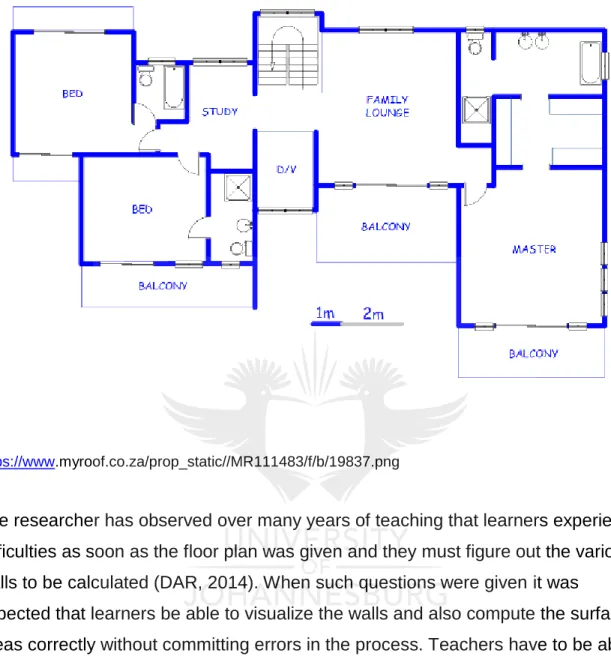
(46) rectangular prism whereas Method 2 (M2) was suitable when it came to specific surface areas within the same prism. For example, A2 A3 were used when the top and the bottom were to be excluded from the calculations. In the case of painting the four walls and not the ceiling and the floor, M2 was the most appropriate method. Hence, it was paramount for learners to conceptualize the application of the two methods and use the correct one as the situation demanded. Learners were not only expected to understand the concepts of rectangular prisms but also expected to be able to apply them in new situations such as in buildings and in constructions as stipulated in the CAPS documents.. 2.3.5 Application of Rectangular Prisms in Building and Construction Mathematical Literacy emphasizes the application of new knowledge by learners in everyday situations and problems. In order to realize this important attribute of learning, the learners were expected to visualize and orientate the floor plan of a house to answer questions based on the walls and also calculate both the surface area of the house and the amount of paint required. Furthermore, they were also required to determine the most cost effective combination of purchasing the paint. Figure 2.9 Diagram of a house. http://imganuncios.mitula.net/big_bargin_3690106446758585733.jpg. 30.
(47) Figure 2.10 Floor plan of a house. https://www.myroof.co.za/prop_static//MR111483/f/b/19837.png. The researcher has observed over many years of teaching that learners experienced difficulties as soon as the floor plan was given and they must figure out the various walls to be calculated (DAR, 2014). When such questions were given it was expected that learners be able to visualize the walls and also compute the surface areas correctly without committing errors in the process. Teachers have to be able to foster visual reasoning which is complementary to, but differs from linguistic reasoning (Barwise & Etche Mendy, 1991). On the contrary, learners performed badly on the questions that required them to make use of floor plans to calculate the surface area of the walls. If learners were taught through using abstract formulas before incorporating conceptual understanding, difficulties were reported when learners were helped to construct conceptual understanding of volume once they had been exposed to the volume formula (Tekin-Sitrava & Isiksal-Boston, 2014) This research in particular identified errors and misconceptions done by learners during their class activities, school-based assessment and class tests. How did learners. 31.
Figure

+7

Outline
This research came with a definition that combines the two above definition and added the word three dimensional shapes Hence, in all places that
Difficulties of Teaching Mathematical Literacy
Difficulties in Learning Measurements
Difficulties of Problem-Solving in Mathematical Literacy
Learners’ Interviews
Codes Used in Describing Identified Types of Errors
Mathematical Difficulties When Solving Surface Area of Prisms
Recommendations
Interview transcript with the above average learners
Interview transcript with the below average learners
Related documents
