National Louis University National Louis University
Digital Commons@NLU
Digital Commons@NLU
Dissertations12-2019
Perceptions and Experiences of Online Learning and Synchronous
Perceptions and Experiences of Online Learning and Synchronous
Communication
Communication
Michelle FryFollow this and additional works at: https://digitalcommons.nl.edu/diss
Part of the Adult and Continuing Education Commons, Curriculum and Instruction Commons, Educational Assessment, Evaluation, and Research Commons, Educational Leadership Commons, Educational Methods Commons, Educational Technology Commons, Higher Education Commons, Instructional Media Design Commons, Language and Literacy Education Commons, and the Online and Distance Education Commons
Recommended Citation Recommended Citation
Fry, Michelle, "Perceptions and Experiences of Online Learning and Synchronous Communication" (2019). Dissertations. 426.
https://digitalcommons.nl.edu/diss/426
This Dissertation - Public Access is brought to you for free and open access by Digital Commons@NLU. It has been accepted for inclusion in Dissertations by an authorized administrator of Digital Commons@NLU. For more information, please contact [email protected].
National Louis University National Louis University
Digital Commons@NLU
Digital Commons@NLU
Dissertations12-2019
Perceptions and Experiences of Online Learning and Synchronous
Perceptions and Experiences of Online Learning and Synchronous
Communication
Communication
Michelle FryFollow this and additional works at: https://digitalcommons.nl.edu/diss
Part of the Adult and Continuing Education Commons, Curriculum and Instruction Commons, Educational Assessment, Evaluation, and Research Commons, Educational Leadership Commons, Educational Methods Commons, Educational Technology Commons, Higher Education Commons, Instructional Media Design Commons, Language and Literacy Education Commons, and the Online and Distance Education Commons
Copyright by Michelle Fry, 2019 All Rights Reserved
i Abstract
High-quality and effective online education is essential to the continuous growth of higher education. As online higher education grows in professional programs, it is especially pertinent to investigate learning designs for their effectiveness in supporting the acquisition of professional skills. Drawing upon the Community of Inquiry (CoI) and the Practice-Based Teaching (PBT) frameworks, this research investigated the effectiveness of one online graduate program designed for practicing teachers to learn new skills (i.e., diagnostic assessment and differentiated
instruction) in teaching reading to elementary students. The learning design introduced a new component of virtual presence (i.e., synchronous communication) at strategic points in the online learning process during a three-course clinical sequence in which the teacher participants
engaged in field learning experiences. The study used a case study approach to investigate teacher participants’ perceptions of the factors that enabled their online learning during the clinical course sequence. Findings indicated that the teacher participants perceived their online learning environment to be generally high in the CoI factor. They also appreciated that the learning environment incorporated opportunities for authentic, hands-on and practice-centered learning through the use of multiple representations of artifacts, encouraged engagement and clearly identified critical features that can be practiced and applied, with the opportunity to enact these practices learned while in the field. Teacher participants further indicated the critical importance of synchronous communication (virtual presence) component in supporting their learning of the teaching practices in field settings. Implications of these findings are discussed for the expansion of online higher education and applications to other professional learning environments.
ii
Acknowledgments
To my extraordinarily supportive family- my husband Nathan, my girls Isabella and Gabrielle and my sons Colin and Cameron: thank you for your continuous support and
unconditional love. My doctoral journey would not have been possible without all of you in my life. To my parents, Mary and Bill, thank you for believing in me and knowing I could do it even when I was ready to give up. There were many ups and downs during this time and would not have been able to accomplish my goal without all of you and I am truly blessed for your
assistance and reassurance that I was on the right path and encouraging me to always persevere. A special thank you to my committee, Sophie Degener, Ryan McCarty, and Nathaniel Cradit and especially my committee chair, Diane Salmon. Your experience and dedication to help me convey the importance of my passion, online learning, was truly inspiring. I could not have completed my dissertation without your guidance and continuous support.
Lastly, another special thank you to my colleague, Dr. Mary Hoch. Your educational insight and continual support were truly motivating, and much appreciated. Thank you for your honesty and willingness to mentor me throughout my journey, I will be forever grateful for your encouragement.
iii Dedication
This research is dedicated to my beloved family, my husband Nathan and my children Isabella, Gabrielle, Colin and Cameron with the encouragement to plant the seed of lifelong learning. Sometimes in life our educational journey may seem impossible to reach but with love and support from family that journey is within our grasp.
iv
TABLE OF CONTENTS
Abstract ... i
Acknowledgments ... ii
Dedication ... iii
List of Figures ... vii
List of Tables ... viii
CHAPTER ONE: INTRODUCTION ... 1
Background of the Study ... 1
Statement of the Problem ... 1
Purpose of the Study ... 2
Research Questions ... 3
Relevant Research and Significance ... 4
Theoretical Perspective ... 7
Theoretical Frameworks ... 8
National College of Education Practice-Based Teaching ... 12
Summary ... 16
CHAPTER TWO: LITERATURE REVIEW... 17
Introduction ... 17
Community of Inquiry ... 18
Community of Inquiry Framework in Action... 20
Practice-Based Teaching and Teacher Education ... 34
Practice-Based Teaching Framework in Action ... 38
Online Reading Practicum ... 42
Personal Reflections and Literature Synthesis ... 44
Conclusions ... 46
CHAPTER THREE: METHODOLOGY ... 49
Research Design Overview ... 49
Research Questions ... 52
Methodology ... 52
Context of the Study ... 52
v
Data Sources ... 56
Data Collection Procedures ... 62
Data Analysis ... 63
RQ1. How did the reading teacher candidates perceive the online clinical course sequence? ... 64
RQ2. How Did the Reading Teacher Candidates and Instructors Utilize and Perceive Virtual Presence During the Clinical Course Sequence? ... 65
Limitations of the Study ... 67
Researcher Positionality ... 68
Summary ... 69
CHAPTER FOUR: FINDINGS ... 71
Background on Reading Teacher Participants ... 72
RQ1: How Did the Reading Teacher Candidates Perceive the Online Clinical Course Sequence? ... 75
Teacher Reflections on Online Learning Experience ... 87
RQ2: Perceptions on Synchronous Communication or Virtual Presence ... 89
SRQ 2: How Well Did the Reading Teacher Candidates Enact and Learn Core Practices? . 94 Instructor Case Studies ... 99
Mary... 99
Jana ... 103
Michelle (Researcher) ... 106
Virtual Presence as Support ... 110
Reading Teacher Candidate Case Studies ... 111
Bella ... 112
Gabrielle ... 118
Colin ... 125
Cross-Case Analysis ... 132
CHAPTER FIVE: DISCUSSION ... 137
Summary of Findings ... 137
RQ1: How Did Reading Teacher Candidates Perceive the Online Clinical Course Sequence? ... 138
vi
RQ2: How Did Reading Teacher Candidates and Instructors Utilize and Perceive Virtual
Presence During the Clinical Course Sequence? ... 141
Community of Inquiry and Practice-Based Teaching in the Online Environment ... 145
Teacher Presence Using Representations, Decompositions, and Enactments ... 146
Social Presence Using Representations, Decompositions, and Enactments ... 147
Cognitive Presence Using Representations, Decompositions, and Enactments ... 148
Virtual Presence Using Representations, Decompositions, and Enactments ... 150
Recommendations ... 154
Suggestions for Further Research ... 158
Conclusion ... 160
References ... 164
Appendix ACommunity of Inquiry Survey Instrument ... 171
Appendix BPractice-Based Community of Inquiry Tool (PB CoI) ... 173
Appendix CInstructor Interview Questions ... 176
Appendix DRLR 592 Observation Rubric ... 177
vii
List of Figures
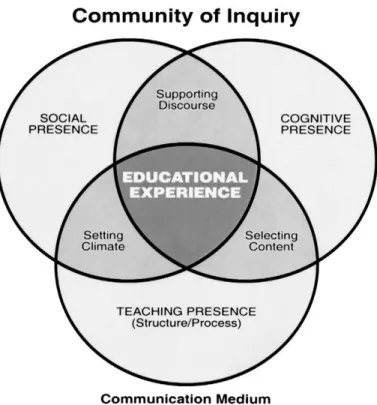
Figure 1. Original community of inquiry framework. ... 20
Figure 2. The community of inquiry framework. (Armellini & De Stefani, 2016) ... 22
Figure 3. Community of inquiry 2018. ... 24
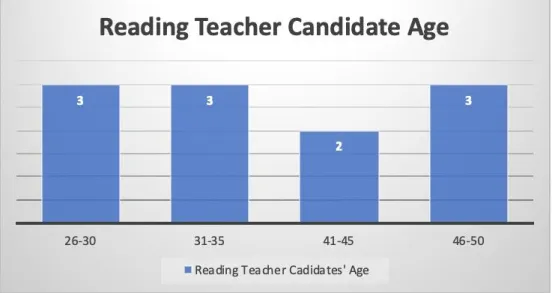
Figure 4. Age range of reading teacher candidates. ... 73
Figure 5. Grade levels taught. ... 73
Figure 6. Reading teaching candidates who have taken an online course and those who have not. ... 74
Figure 7. Reading teacher candidates’ responses for each section of the CoI survey... 76
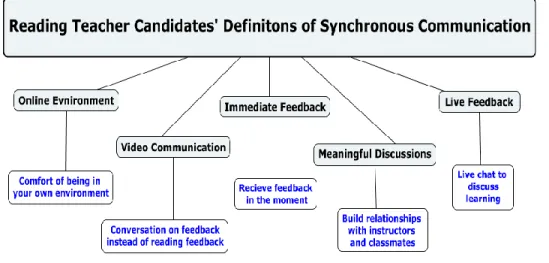
Figure 8. Reading teachers’ definitions of synchronous communication ... 91
Figure 9. Overall themes of synchronous communication. ... 92
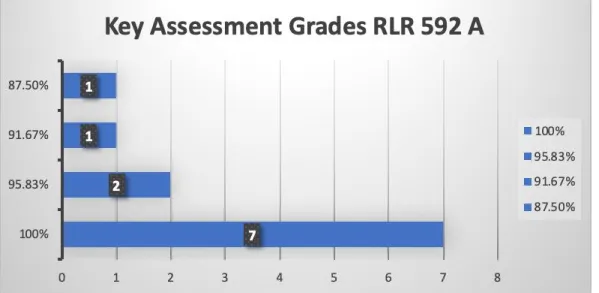
Figure 10. Key assessment grades for younger practicum student. ... 95
Figure 11. Key assessment grades for older practicum student. ... 96
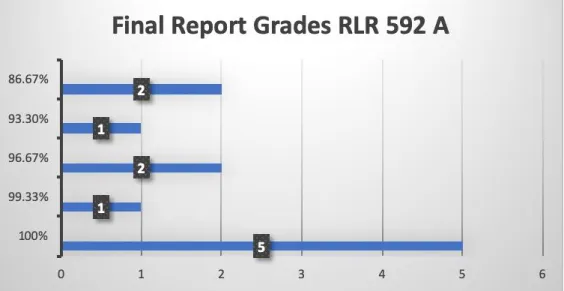
Figure 12. Final Reports for the practicum course with the younger student. ... 97
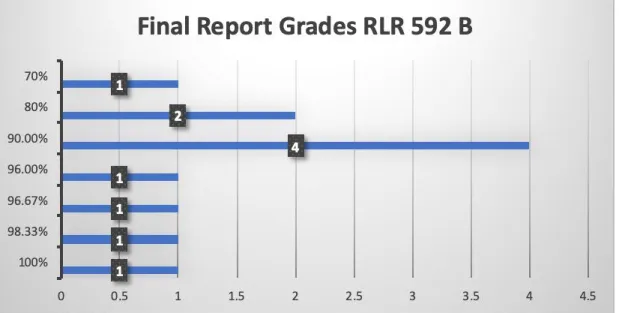
Figure 13. Final reports for the practicum course with the older student. ... 98
viii List of Tables
Table 1 Overview of Research Questions, Data Sources, and Procedures ... 62
Table 2 CoI Statements on Teaching Presence: Design and Organization ... 77
Table 3 CoI Statements on Teaching Presence: Facilitation ... 78
Table 4 CoI Statements on Teaching Presence: Direct Instruction ... 79
Table 5 CoI Statements on Social Presence: Affective Expression ... 81
Table 6 CoI statements on Social Presence: Open Communication ... 82
Table 7 CoI statement on Social Presence: Group Cohesion ... 83
Table 8 CoI Statements on Cognitive Presence: Triggering Event ... 84
Table 9 CoI Statements on Cognitive Presence: Exploration ... 85
Table 10 CoI Statements on Cognitive Presence: Integration ... 86
Table 11 CoI Statements on Cognitive Presence: Resolution ... 86
Table 12 Bella’s Observation Rubrics ... 117
Table 13 Gabrielle’s Observation Rubrics ... 124
Table 14 Colin’s Observation Rubrics ... 131
ix
Perceptions and Experiences of Online Learning and Synchronous Communication
Michelle Fry
Submitted in partial fulfillment of the requirements of
Doctor of Education Higher Education Leadership
College of Professional Studies and Advancement National Louis University
1 CHAPTER ONE: INTRODUCTION
Background of the Study
The demand for online learning has required all higher education institutions to examine not only offering online programs but to develop a comprehensive, high-quality online
curriculum. According to Lederman (2017), university and college enrollments would decline without online education. He further shared that the Education Department’s National Center for Education Statistics found a 5.7% growth, which was 350,000, of students who took at least some of their courses online. He further stated the proportion of students that exclusively took online courses increased from 14.7% in 2016 to 15.4% in 2017. This equates to about one in six students who choose to solely take online courses. Some institutions have decided to take advantage of this demand by offering “quick” degree programs that typically lack the quality of education required for students to succeed in their career path. The need for rigorous quality assurance oversight is an ultimate priority for a truly successful online learning format at any higher education institution.
Statement of the Problem
Growth in the number of online learning higher education institutions has multiplied. These institutions have developed online programs that are more easily accessed by potential students. Graduate programs for practicing teachers have been around for decades, but a key challenge for the graduate reading program is the practicum experience required by the state of Illinois and could be difficult to replicate in the online environment. The practicum experience requires reading program teacher candidates to work with students, which includes observation of the reading teach candidate interacting with their students by a field supervisor. National
2 Louis University (NLU) recently took on this challenge and created an online clinical sequence that offers its first online practicum sequence.
Knowing the on-campus program has been successful for numerous years, the online developer was challenged with the following: (a) creating a clinical sequence that mimics the on-campus courses to ensure the same level of quality and (b) effectively assessing skill
development of program candidates. One solution was to use digital technology to enhance the student experience with the same level of quality as the on-campus program that would provide the opportunity for instructors to assess program candidates. Both programs are measured using the same program outcomes and key assessments. NLU’s new clinical course sequence for reading endorsement has allowed students to take two clinical courses online as well as the final practicum course where program candidates tutor younger and older students at a location of their choice rather than in a controlled setting. The use of digital technology allowed program candidates to record tutoring sessions, which improved the practicum experience by
incorporating a human contact component. Live video conferencing allowed course instructors to watch both asynchronously and synchronously, thereby creating a virtual presence during the tutoring sessions. This research used a case study approach to investigate how perceptions and experiences of candidates in the reading teacher program, specifically the online clinical course sequence called the Diagnosis and Assessment of Literacy, Instructional Strategies for Literacy Assessment and Practicum: Literacy Interventions for Elementary and Secondary Students.
Purpose of the Study
In today’s technological age, we are in the midst of constant change in the field of education due to constant innovation that changes this environment. Online learning is the wave of the future; it is important we incorporate digital technology to enhance the online environment
3 and ensure students are enrolled in effective and quality assured online courses. According to the Online Learning Consortium (2017), about 5.8 million students were enrolled in online courses in 2016 equating to a 263% increase since 2004. With the plethora of programs and platforms available, it is critical that we understand how reading teacher candidates and instructors view the online environment and whether synchronous communication is beneficial to persistently engage, motivate, and support students. According to the Online Learning Consortium, “90% of the students surveyed felt online learning is either the same or better than the traditional learning experience” (p. 1). Unfortunately, that doesn’t mean online learning is suited for every student to expect if there was a virtual way to support these students.
This research used a qualitative intrinsic case study to frame the study, analyze the research questions, and examine assertions. Stake (1995) defined an intrinsic case study as research that is completed by the researcher due to a genuine interest in the case. The purpose of the qualitative intrinsic case study was to examine the perceptions of reading teacher candidates and instructors regarding the online clinical course sequence offered at NLYU, particularly the use of synchronous communication in the practicum sequence. Understanding the perceptions of reading teacher candidates and instructors and their experiences with the use of synchronous communication could give insight into the effectiveness of the online clinical course sequence within the reading program at NLU.
Research Questions
The research studied the case of reading teacher candidates’ and instructors’ perceptions and experiences with online learning in order to understand the effect of synchronous
4 individual case studies to improve validity. The study addressed the following research
questions:
1. How did the reading teacher candidates perceive the online clinical course sequence? 2. How did the reading teacher candidates and instructors utilize and perceive virtual
presence during the clinical course sequence? How did the virtual presence experiences support candidates to enact and learn reading core practices?
Relevant Research and Significance
The creation of online learning programs has made higher education available to a larger population over the past two decades. According to Online Learning Consortium (2017), the Internet was created in 1969 by the Department of Defense and was available to the rest of the world in 1991 as the World Wide Web. With the development of “the Web,” the world was presented to the possibility of distance education. Distance education was first presented through mail correspondence courses that evolved into online learning in the mid-1990s. In 2002, over 1.6 million higher education students were enrolled in at least one online course, and by 2008 this number nearly tripled (Online Learning Consortium, 2017). The U.S. Department of Education’s National Center for Education Statistics found in the fall of 2017, 6.7 million students were enrolled in at least one distance education course. This number represents 33% of the total student population and is an increase from 31% since 2016 (IES: National Center for Education Statistics, n.d.). Online learning allows students from all over the world to attend a higher education institution.
Students take online courses for a variety of reasons including flexibility, location and reduced travel time (Dutton, Ryznar, & Long, 2019). A majority of the students perceive online learning as a positive and were satisfied with their learning experience. For students to succeed
5 in their online courses, they need to be self-motivated and the study found that 71% of students who were unsatisfied were so because of lack of communication (Perry & Pilati, 2011).
According to Chen, Ko, Kinshuk, and Lin (2005), “The trend of online learning is towards a blended model combining asynchronous and synchronous delivery, which increases flexibility” (p. 1). Faculty members are more reluctant to adopt a new way of learning and fewer than one-third of the faculty surveyed saw the value and legitimacy of online learning (Perry & Pilati 2011).
Online learning requires more work than simply posting notes and a major concern of faculty members is that online learning does not achieve the same learning outcomes as on-campus courses. According to Chen et al. (2005), as cited in Hwang, Shadiev, Kuo, and Chen, (2012), synchronous instruction can outperform traditional face-to-face and asynchronous education. Hwang et al. claimed “real” synchronous communication provides the teacher an opportunity to give “live” feedback for evaluation. The online learning environment is unique and involves the instructors to engage with students remotely encompassing the necessity to implement distinctive teaching tools (Dutton et al., 2019).
Utilizing synchronous communication creates an opportunity for students to build relationships with their instructors and classmates. Data shows students value online courses, which includes a reality component, and they succeed when an instructor delivers high-quality instruction in conjunction with an authentic learning experience (Dutton et al., 2019). It is important that the instructor creates an online environment that is engaging, organized, and furnishes opportunities for students to practice real-world skills and provides an assessment of their learning through feedback on their activities (Dutton et al., 2019).
6 NLU is highly reputable for providing a quality education program and according to Tsai (2013), it is crucial that teachers adapt to innovative teaching methods and make sure their online courses are designed to help develop student knowledge and skills. This relates to the other research by demonstrating the importance of having an instructor who designs online courses that are engaging; the instructor encourages an environment of motivation and course usage increases student performance (Tsai, 2013). This research demonstrated the importance of educating faculty members on online learning through professional development.
Online teaching is not always the first choice for many veteran professors, and this may be due to misinterpretations of the implementation of online learning. Veteran professors were concerned students would not learn as well in the online environment because there is no face-to-face instruction between student and instructor. Instruction in a face-to-face-to-face-to-face environment allows both the instructor and student to ask questions and have conversations in real-time. These visual interactions provide assurance of student understanding of the material being taught. Veteran professors fear this visual assurance could be lost in an online classroom.
One of the most important components of an instructor’s job is to ensure they have developed an effective online environment that is conducive to student success. According to Nguyen (2015), the online learning classroom can be just as effective as the traditional face-to-face classroom. To verify the quality of each program, this study demonstrated how essential it is that the online classroom mirror the on-campus classroom. Nguyen’s experimental study
documented the numerous benefits of online learning, which included the importance of educating students and offering professional development––both of which can be accessed by anyone with internet access and the desire to learn at a potentially lower cost. The outcome of this study exhibited that students had positive learning outcomes based on the measurement of
7 test scores, student engagement, and perception of the online learning environment. The students shared they felt a stronger sense of community in the online classroom and fewer students failed or withdrew from the course. Based on Nguyen’s findings, he was able to conclude that 92% of online learning education was just as effective, and in some cases better, than the traditional face-to-face courses. The study recognized the issue of selection bias and lack of rigorous methodology of the previous studies may have obscured the data. Thus, more rigorous research is needed.
Theoretical Perspective
To closely examine data, a case study methodology was used and allowed the researcher to study real life phenomenon through whole group and individual case studies. Yin (2018) defined the method of case study research as an empirical method that, “investigates a contemporary phenomenon (the “case”) in depth and within its real-world context especially when the boundaries between phenomenon and context may not be clearly evident” (p. 14). This case study relied on multiple sources of data for evidence therefore the data was triangulated to increase validity.
This qualitative case study made subjective meanings based on perceptions and experiences of instructors and reading teacher candidates in a graduate reading program. The intent was to interpret these findings and to make meaning from those perceptions on an online clinical course sequence and the importance of virtual presence in an online environment. This intrinsic case study used multiple data sources to construct assertions from the experiences, perceptions, and observations of the participants. According to Yin (2018) the use of multiple cases strengthens the overall findings through pattern-matching, which increases the validity of
8 the research. According to Creswell and Poth (2018), the goal of collective case study was to generate a pattern of meaning to see if there are overall themes of the participant responses. Theoretical Frameworks
The two frameworks that guided my research were the community of inquiry (CoI) and practice-based teaching models. Online learning environments parallel with a constructivist pedagogy to promote learning and teaching processes (Maidment, 2006). According to
Maidment, (2006), “Constructivism provides a framework to develop curriculum and inform the process of student learning on-line” (p. 2). The constructivist theory allowed the researcher to use Bruner’s theoretical framework to look at the participants as active learners who construct new ideas constructed on their past experiences (Culatta, 2019).
According to Creswell and Poth (2018) “The Constructivist Grounded Theory incorporates the researcher’s views; uncovers experiences with embedded, hidden networks, situations, and relationships” (p. 316). Applying this theory and combing the two frameworks, CoI and practice-based teaching shaped an understanding of what an effective online teaching program consists of and allowed me to create a tool to evaluate components of the online environment to confirm quality and student success. CoI helped me determine what essential components were necessary to promote student success in the online environment, which were social, teacher, and cognitive presence. The practice-based teaching framework revealed the importance of identifying a set of core practices and teaching those practices using carefully scaffolded and authentic learning experiences.
The CoI model is a framework that has influenced online instructors for the past 20 years. According to Garrison, Anderson, and Archer (2000), “An educational community of inquiry is a group of individuals who collaboratively engage in purposeful critical discourse and reflection to
9 construct personal meaning and confirm mutual understanding” (p.1). The foundation for the CoI is to embed cognitive presence, teaching presence and social presence through teacher and student collaboration. Teaching presence integrates how the course is facilitated through the guidance of the instructor as well as through course design. Cognitive presence includes how students construct meaning from continual reflection and how they interpret discourse. Social presence merges the encouragement of communication by the individuals within the community or course of study to enhance interpersonal relationships (Garrison, Anderson & Archer, 2000).
According to Redstone, Stefaniak, and Luo (2018), a systematic review of the CoI model and the use of the CoI survey was conducted through a 24-peer-reviewed study from 2008-2017 and was analyzed for validity and reliability. The purpose of the study was to examine the ways the CoI survey has been utilized for online and blended teaching and learning and how the model contributed to the design and implementation of courses. The study evaluated four areas of the survey, which were (a) validity and reliability, (b) measurement of CoI presence in multiple environments, (c) relationships between the elements, and (d) potential revisions. According to Redstone et al. (2018), “The reviewed studies suggested viewing the three presences in CoI framework as three interrelated and interdependent constructs rooted in collaborative
constructivist learning to guide and better inform practices in online and blended learning” (p. 6 as cited in Amemado & Manca, 2017; Armellini & De Stefani, 2016).
The practice-based learning framework was proposed by Grossman, Compton, Igra, Ronfeldt, Shahan, and Williamson (2009) to improve the relationship between clinical preparation and higher education. These arguments were the groundwork that led to the improvement regarding how we educate our future students who are preparing to be
10 and time to participate in actual practices of the profession (Rose, 1999). The practice-based learning framework assimilates these suggestions and promotes preparation in authentic settings. The goals of the framework include teaching how to talk, make decisions, support, guide, and assess like a professional through hands-on practice, whether it is with classmates or in the field. This framework has provoked higher education institutions to reevaluate their programs to embrace or improve the professional practice-centered model.
Grossman et al. (2009) established the need to instruct all teacher candidates on essential components to ensure they are mastering the critical skills of teaching. These components are learned through authentic practice on how to respond to certain situations that arise in a classroom setting by reflecting, providing feedback and learning how to create a productive classroom environment (Grossman, Hammerness, & McDonald, 2012). The core practice-based approach to instructing teachers outlines four crucial components: representations,
decompositions, approximations, and enactments. Representations provide a model of the practice to be learned as a whole, decompositions comprise identifying the practice into its essential features, approximations allow the student to practice or rehearse the skill under conditions of reduced complexity, and enactments involve opportunities for reading teacher candidates to implement the practice with learners in the field and include guidance and targeted feedback.
Practice-centered approaches are increasingly endorsed in teacher education that focuses on teaching high-leverage practices. High-leverage core practices are a set of core fundamental capabilities that teachers must be educated in to develop into a responsible teacher and are the basic skills necessary for teaching. These core practices are critical to understanding because they are used constantly throughout the school day and help students identify and learn important
11 content. The high-leverage core practices can be used across content areas, grade levels, and contexts. These practices help teachers learn how to support a student's emotional and social development. According to the goals of the program, the core practices necessary to learn in the reading program are (a) diagnosing a student’s literacy level and (b) differentiating instruction to match the needs of students. According to Cabello and Topping (2018), the simulation of
relevant teaching practices and the application of constructive feedback improve the preparedness to teach. The study concluded the importance of increasing student-centered teaching approaches in teacher preparation programs, which includes implementing high-leverage teaching practices.
High-leverage core practices were designed to help shape, inform, and initiate a dialogue about the necessary skills needed for educator development, which prompted teacher preparation programs to realize skills cannot be developed in isolation (Sayeski, 2018). According to Sayeski (2018), “Ample practice is essential for skill acquisition, generalization, and long-term adoption” (p. 1). Providing opportunities for practice high-leverage core practices of literacy is an
important component of the online clinical course sequence. It is important to provide modeling and feedback on the enactment of the high-leverage core practices (Sayeski, 2018).
Empirical research lends support to qualities highlighted in both the CoI and practice-based teaching frameworks. According to Shea, Gozza-Cohen, Uzuner, Mehta, Valtcheva, Hayes, and Vickers (2011), online learning is experiencing a period of rapid growth inspiring many higher education institutions to implement online programs that (a) offer a quality
curriculum, (b) are effective, and (c) encourage a collaborative learning environment. The study compared two online courses based on their learning processes and the number of collaborative learning outcomes. The research was conducted over a 1-year timeframe. The first online course
12 purposely had a lower teaching presence within the discussion forum and the other course had a higher teaching presence. At the end of the duration of the courses, data was collected and compared based on the importance of teacher presence within the online discussion forum. This research concluded the necessity for quality feedback from the instructor, as well as the
guidance, to master the skills presented within the course. The delivery of teacher presence can be visible in multiple ways such as video conferences, emails, course announcements assignment feedback, and in-course video presentations. According to Dutton et al. (2019), “Students equate a quality course with on that engages students with course content” (p. 497); for example
YouTube videos, concise engaging lectures, or other social media. Students also equated quality with instructor feedback or teacher presence (Dutton et al., 2019).
National College of Education Practice-Based Teaching
Out of the four colleges that comprise NLU, the National College of Education (NCE) is the largest and oldest of the four colleges. The NCE has been in operation for over 130 years and continues to be proactive and promote innovation in all programs offered. The NCE is extremely diverse and has partnerships and collaborations with schools, nonprofits, and agencies around Illinois. According to Best Schools, NCE’s programs were ranked in the top 15% of education schools in the United States (NLU, n.d.). The NCE offers flexible programs to meet the needs of the students that need to balance their work and family life by offering evening, weekend, online and on-campus courses. The programs are intended to fit the needs of all potential students with an end goal for students to be career-ready upon graduation.
With NLU’s rich history in education, the NCE is considered a pioneer in teacher preparation and is thought to be one of the oldest colleges that offered a formal education program in the country. Founded by Elizabeth Harris in 1886, the NCE was among the first
4-13 year institutions preparing teachers at the time. The NCE is one of the most innovative colleges and continually asserts that research supports the most effective teaching methodologies. Teacher preparation programs have been under redevelopment since the field of teacher education is undergoing an immense shift from focusing on teaching important theories, foundations, and methods classes without application to focusing on teaching novice teachers how to apply high-leverage core practices during instruction (Core Practice Consortium, n.d.).
The NCE began to incorporate its own approach to practice-based teacher education based on research and theory. Faculty members identified the need for methods instruction to focus in-depth on a set of core practices and noted the need to provide multiple opportunities for reading teacher candidates to engage in these core practices and to receive explicit feedback on performance. In 2014, through design-based research, an NCE faculty team experimented with a practice-based teaching model using video coaching to improve the way teachers were prepared and to ensure they were able to meet the unique needs of all learners. Drawing from the research on practice-based teaching, the faculty team designing the model identified a set of discipline-specific instructional practices (e.g., word study, math problem solving) and cross-discipline practices (e.g., instructional discourse) that could be developed through cycles of (a) lesson planning, (b) lesson implementation, (c) lesson analysis, and (d) synthesis of assessment data and observer feedback. This process was intended to help familiarize each reading teacher candidate with multiple types of lessons, reflect, and then refine their teaching skills accordingly (National College of Education, n.d.). This practice-based teaching approach, known as the adaptive cycles of teaching (ACT) curriculum model, was designed for undergraduate elementary education. The ACT model highlights the importance of learning through teaching and is centered around
14 teaching skills with the use of digital technology, and analyzing their instruction and their
student’s learning through the reflection of the cycle (Hiebert, Morris, Berk, & Jensen, 2007). The implementation of the ACT program resulted in a 95% first attempt pass rate on the edTPA exam, which is required to obtain a professional educator’s license. Recent research by the NCE showed that the cooperating teacher’s perceptions of their student teachers are what they would expect for first-year teacher’s performance. This proven success can help the NCE’s newest endeavor––the online practicum experience––become another quality program offered at NLU.
The NCE’s graduate reading program is designed for teachers who already hold a professional education license and have a desire to improve or further develop their literacy knowledge in teaching or are looking to become a reading teacher. The reading sequence follows the state of Illinois guidelines for the preparation of reading teachers. The program offers a graduate degree and is not a stand-alone endorsement. To be accepted into the program, the candidate must pass the test of academic proficiency. The reading program consists of 32
semester hours and students who receive more than one “C” are dropped from the program. Each course is 11 weeks in length and the online program is just starting its second year. The average number of students is 16 and with two instructors in both RLR 510 (Diagnosis and Assessment of Literacy) and RLR 511 (Instructional Strategies for Literacy Interventions)due to the newness of the program. The RLR 592 (Practicum: Literary Interventions for Elementary and Secondary Students) needed three instructors as each program candidate tutors two students per state guidelines.
The courses in the clinical sequence are RLR 510 (Diagnosis and Assessment of Reading), RLR 511 (Instructional Strategies for Literacy), and RLR 592 (Practicum: Literary
15 Interventions for Elementary and Secondary Students). Course RLR 510 introduced the reading teacher candidates to essential diagnostic assessments and provided opportunities for authentic interaction with students of their choice and involved writing a formal report of their selected student’s results. Course RLR 511 furthered the program candidates’ diagnostic skills, which involved choosing the students they worked with during their practicum experience. Course RLR 592 was the course the reading teacher candidates conduct their practicum.
I used a qualitative approach through intrinsic case study methodology introduced by Robert Yin to investigate how reading teacher candidates and instructors perceive the online clinical course sequence and the implementation of synchronous communication (virtual
presence). I concentrated on the graduate reading program offered through the NCE. The reading program at NLU is designed for educators who already hold a professional educator license and are interested in expanding their knowledge in literacy or becoming a reading teacher. The curriculum sequence follows the Illinois state guidelines for the reading teacher endorsement. In this study, I collected data to compile, analyze, and triangulate the data from six sources: (a) reading teacher candidate interviews and (b) surveys, (c) instructor interviews, (d) course assignment (final report), (e) key assessments, and (f) my field notes. Yin (2018) recommended collecting at least six different data sources for purposeful sampling. The data was holistically analyzed and pertinent assertions that focus on a few key points regarding online learning and synchronous communication within the data were identified. Then I performed a thematic analysis. Finally, I developed naturalistic generalizations and processes to gain insight through the reflection of the descriptions and details presented in the case, including analyzing the data to allow transferability of the findings related to online learning and the implementation of virtual presence in online courses (Creswell & Poth, 2018).
16 Summary
The purpose of this research was to examine the experiences of reading teacher candidates in an online clinical course sequence in the reading program. Using a qualitative intrinsic case study approach, the goal was to better understand how the perceptions of online learning and synchronous communication or virtual presence in support reading teacher candidates to learn the core instructional practices, differentiation, and student diagnoses.
17 CHAPTER TWO: LITERATURE REVIEW
Introduction
According to the Sloan Consortium Report in 2011, over 65% of higher education facilities offer online learning for their students. This suggests that an increasing number of college and graduate school students are opting for online learning options. What makes these learning environments effective? How does online learning promote deep learning? The purpose of this literature review was to study the question of how we can conceptualize and recognize high quality online learning for the preparation of future professionals, especially teachers. We need to know if and how accredited online programs are successfully providing educators with the necessary tools, techniques, and understanding of the core practices for teaching that are needed to be effective classroom teachers.
Higher education institutions are moving toward online learning because the programs can be more efficient and tuition costs can be lower for students than attending an on-campus program. One major concern in online learning is whether or not the program offers the same high-quality curriculum and learning as a face-to-face course. (Dutton et al., 2019). This concern is growing due to the creation of new online higher education institutions and the fear of these institutions being diploma mills, an institution or organization that grants an education degree without high-quality education (Dictionary.com, n.d.). In addition, we need to understand how learners develop proficiency with career-ready skills in online environments, which is an issue that is particularly critical in online professional education programs for in-service and pre-service teachers.
This literature review examined two theoretical frameworks that could inform learning design and instruction in online environments. The CoI model is a well-researched framework
18 that has provided guidance to online instructors for almost 20 years. The practice-based teaching model emerged more recently and is a framework to guide design and instruction in professional preparation programs. Together these frameworks provide a theoretical lens for the critical analysis of empirical research on effective online instruction.
For the past decade, higher institutions have been placed in the spotlight due to the growing concern that a college degree is not worth the price. This concern has forced colleges and universities to redefine their degree programs to fit the needs of the current economic environment. In order to develop programs that are relevant, higher education institutions must first explore and define what theoretical frameworks could help guide the curriculum to meet the professional needs of the degree programs. Two current theoretical frameworks are particularly relevant to the focus of this research: the CoI framework in online higher education research and the practice-based learning framework in the field of teacher education.
Community of Inquiry
The continued advancement in technology joined with the collaborative-constructive theories made the creation of distance education possible (Garrison et al., 2000). Higher
education institutions have seen a transformational shift due to the development and progression in the field of distance education (Garrison et al., 2000). Technology has allowed asynchronous and synchronous education possible to a community of collaborative distance learners since as early as the 1980s. As technology continues to advance, so do the enhancements in online learning environments (Garrison & Akyol, 2013). With the advancement in online learning, a new theoretical framework emerged called the CoI.
A CoI is defined as “a group of individuals who collaboratively engage in purposeful critical discourse and reflection to construct personal meaning and confirm mutual
19 understanding” (Garrison et al., 2000, p. 1). The CoI framework includes three essential
qualities, which are social presence, teaching presence, and cognitive presence, through the process of creating a collaborative learning experience (Garrison et al., 2000). Social presence encourages individuals to identify with the community or course of study through
communication in a trusted environment to help advance inter-personal relationships. Cognitive presence refers to how students construct meaning through the constant reflection and
understanding of discourse. Teaching presence leverages the social and cognitive presences in the course design and how it is facilitated to help students personally recognize and see the meaning and education behind the learning outcomes (Garrison et al., 2000).
Research was conducted regarding online learning and how cognitive elements were promoted to support higher-order thinking (Garrison & Akyol., 2013). Another key element examined in the 1990s was the role the instructor played in the learning process. Roxanne Hiltz was one of the first to promote “virtual classrooms” around the same time Paulsen and Rekkedal introduced the idea of implementing new technology to generate more efficient learning
circumstances and did not think replicating the traditional classroom would be beneficial (Garrison & Akyol, 2013). Another early researcher was Kaye who incorporated collaborative learning that goes beyond information exchanging but encouraged the possibility of computer conferencing or discussions. Kaye argued to adopt constructivist learning approaches to include collaboration and though that online education represented a unique interaction (Garrison & Akyol 2013).
In 1992, Henri began to provide a framework that included the elements of social and cognitive dimensions (Garrison & Akyol 2013). Feenberg, Gunawardena, Kaye, and Fabro and Garrison created the core of the CoI framework form the three essential elements of social,
20 cognitive, and teaching (Garrison & Akyol 2013). According to Garrison and Akyol (2013), “Garrison, Anderson, and Archer (2000), constructed a comprehensive conceptual framework designed to capture the educational dynamic and guide the study of online learning effectiveness in higher education” (p. 3). The development of the CoI framework ensured online learning was effective and through this study, I continued use of this framework as a guide by utilizing the CoI survey to gain insight into reading teacher candidate perceptions of the online learning
environment. Figure 1 illustrates the original CoI model.
Community of Inquiry Framework in Action
According to Shea et al. (2011), online education is in a period of rapid growth and acceptance within the higher education world and investigated teaching and learning in online courses by employing both the CoI and the structure of observed learning outcomes (SOLO) taxonomy. Two online courses were evaluated to see the quality of collaborative learning outcomes and learning processes. The study measured learning outcomes and inputs through analyzing quantitative content on the CoI framework as well as the quality of student learning Figure 1. Original community of inquiry framework.
21 and the instructor-assigned grades. The research was conducted over a 1-year span and one of the online courses had a lower level of teaching presence in the discussion forums and was
compared to the second course, which had higher levels of teaching presence in the discussion forums.
The study concluded that the majority of teaching presence was seen outside of the discussion forums and found in instructor feedback on assessments of student work. Even though one instructor was nearly absent from one of the courses, the cognitive presence of the two courses was still similar suggesting further research into this concept. One reason behind this might be students were still cognitively present through the stimulation of what their peers had posted which correlates with social presence in the online environment. Further research was suggested on social presence. The study also noted that the instructor-assigned grades can be predicted through collaborative learning processes which can be seen in CoI and SOLO concepts.
According to Armellini and De Stefani (2016), teaching and cognitive presence have become social and based on the identified patterns of this study, it was suggested to adjust the CoI framework to express how social presence was more prominent within cognitive and
teaching presence than originally proposed. To be successful in the online environment Garrison and Anderson (2003) identified three key components––social, cognitive, and teaching presence– – needed to be successful in the online environment (Armellini & De Stefani, 2016). After reviewing this study, it was evident there is a correlation between teaching presence and cognitive presence because of the communication piece between participants within the online environment. Figure 2 represents the CoI framework where the three presences overlap.
22
Consistent with the digital age, this overlap indicates that online courses can still offer social presence in the educational experience and suggests that the learners can find themselves taking on the instructor role at times (Armellini & De Stefani, 2016). When we think of teaching, we know that instructors who are facilitating classrooms are experts in the area they are
instructing. The best way to demonstrate understanding is to teach the concept to someone else, which is why teachers have students complete group work and presentations. In the online environment, learners are asked to participate in discussion questions and the results from the study show that students benefit from observing the practices of their peers and can take on the role of discussion leaders. This interaction promotes higher order thinking and allows the instructor to see who has mastered the material presented. Armellini and De Stefani (2016)
23 stated, “Some studies have suggested that social presence is not a separate construct, but a core element within the teaching dimension” (p. 1205).
The qualitative study was conducted in Uruguay from 2007 to 2010. The goal was to construct the role of cognitive, social and teaching presence in the area of professional development of English language teachers. The study had 40-English language teachers, two men and 38 women, who voluntarily enrolled in a professional development program. None of the teachers had formal teaching training or any online experience. The learning platform used was Moodle, which offered three key functions, space for the participants to experiment, exchange ideas and resources for English language teaching (Armellini & De Stefani, 2016).
The conclusions of the study were that social presence did not operate alone and was, in fact, part of cognitive and teaching presence. Figure 3 illustrates a suggested new version of the CoI framework. This figure depicts the three presences overlapping and student learning is at the heart of cognitive, social, and teaching presence. Teaching and cognitive presence both have become social and ensures the student’s learning experience is the center for their diverse online experience. This new model is constructed of six areas: (a) interactions for learning, (b)
socialization of content, (c) community of development, (d) course design, (e) self-study, and (f) learning experience, all of which intertwine with social, cognitive, and teaching presence. The study suggested further research around the six areas identified (Armellini & De Stefani, 2016).
24
A recent study reviewed the recommendation of the integration of the three presences in the CoI framework, proposed by Amemado and Manca (2017) and Armellini and De Stefani (2016), as interdependent concepts that are embedded in collaborative constructivist learning, which could better guide the online environment. The study suggested incorporating innovative tools to enhance the online environment to assist teaching and social presence and noted the correlation of the integration of the three presences. According to Redstone et al. (2018), the research supported the significance of incorporating synchronous communication to online courses to increase social presence.
Instructor presence. Online teaching has been around for the past two decades and, when it was first introduced, had a negative connotation (Ferrer, 2019). Adjuncts were typically used to teach courses that were pre-developed by faculty members. The problem with this was the adjuncts may not have received much online training and may not necessarily be experts in their field. Higher education institutions are using more and more adjuncts to teach and adjuncts
25 who teach face-to-face may not have the capability of teaching online due to the lack of
professional competency in the online environment (Smith, 2019). There are numerous teaching platforms available for colleges and universities to choose from and ensuring all faculty and adjunct members can successfully navigate and utilize all the tools within a platform is important. With online learning on the rise, increased professional development of the online environment will be essential.
The ability to teach in the online environment at a higher education institution is not always the first choice for many veteran teachers. Sheffield, McSweeney, and Panych (2015) discussed what teachers think about online learning. This article depicted what teachers’ thoughts are regarding online learning since they are the ones facilitating the classes. One
concern of veteran higher education professors is how much information the students are actually learning online. The article had graduate students enrolled in an online course and complete both pre- and post-course questionnaires. The questions were directly focused on the students’
attitudes, awareness and competence in online learning. The research showed the students could recognize how beneficial online teaching can be for our future teachers, but they did prefer the face-to-face environment (Sheffield, McSweeney, & Panych, 2015).
The research was conducted with 42 students enrolled in a non-credit 12-week course entitled Teaching and Learning in Higher Education. The course was designed by Dalhousie University’s Centre for Learning and Teaching because more students were seeking online courses. The course content specifically sought to address topics such as, “Online teaching also includes increasing workloads, lack of resources, compensation and intellectual property issues, inadequate technological skills and training, anxiety about or lack of confidence with technology, and pedagogical concerns for the effectiveness of student development” (Sheffield et al., 2015, p.
26 3). The conclusions were challenging because most of the students still preferred face-to-face learning, but with the continued work on creating positive attitudes towards online learning and teaching within our future instructors the researcher hopes to “see this kind of teaching as an integral part of their lives as teachers in the future” (Sheffield et al., 2015, p. 11).
Student perception in online learning is important for any higher education program to be effective. Armstrong (2011) conducted a qualitative study on students’ perceptions of online learning and the instructional tools available in the course. This study was relevant to my research because the purpose of the study was to investigate students’ perceptions of the instructor and their experience of online learning. Data was collected through interviews, observations and online focus groups (Armstrong, 2011). The article discussed how online learning had significantly increased over the past decade; specifically, the number of online students between 2002 and 2007 increased 145% from 1,602,970 to 3,938,111. The focus of the study was to examine how student perceptions influence their actions in the online environment. The article highlighted the decrease in higher education funding and the increase in colleges and universities allowing students more choice, resulting in soaring competition between higher education institutions. It is imperative to ensure that the programs at the universities and colleges are providing high-level learning environments for their respective students.
One downfall of the study was that it only consisted of 16 undergraduate students that were enrolled at one of two religiously affiliated universities. Most of the students were in their mid-20s and 10 were women and 11 were men. Another downfall was that all the students did not participate in all three data-collection methods, which reduced the validity of the study. All the participants stated their main reason for taking an online course was for the flexibility and self-control they had in this type of learning environment. The convenience of taking an online
27 class was expressed, but they did note that they lost direction and communication from the instructor. This is why teacher presence is a crucial part of student success. The instructors need to follow up with students, promote discussion, and be present in the online environment to help the students stay on track with assignments and course readings. Supplying checklists, course maps, and digital communications helps students visually see what is expected from them week to week.
According to Moreillon (2015), developing “hands-on” experiences for students in the online environment through the implementation of digital communication tools help learners become more engaged in the course and materials presented. The study implemented the ApprenNet tool, which provides students with a four-part unique learning experience. The first part was an instructor video and the students responded with a video. The second part was peer reviews from classmates. The third part was to review their feedback from their instructor. Finally, students were able to read feedback from their peers and view the top five videos. Sixty-five percent of the students said they liked this type of video discussion, but 75% felt using the ApprenNet tool was more difficult than the learning management system. The study concluded that there is a correlation with the social constructivist learning theory and encouraging students to interact with the teacher to make meaning with the course content. New digital tools increase the amount of interaction, or teacher presence, can increase student focus, interactivity, and motivation (Moreillon, 2015). Although employing new digital communication tools to enhance teacher presence can be beneficial, it is important for the students to be comfortable using them.
Social presence. A recent study conducted by Goldman, Goldboy, and Weber (2016), affirmed that students need intrinsic motivation to succeed in learning. The study concluded that “personalized education can fulfill students’ psychological needs and encourage their intrinsic
28 motivation to learn” (Goldman, Goldboy, & Weber, 2016, p. 186). To develop a personalized education plan for online students, instructors are going to have to take the time to get to know their students. Some ways faculty members can get to know their students include having
students provide introductory videos that outline their personal and educational goals, instructors posting videos to show who they are, and offering Zoom or Skype meetings to discuss current topics or answer questions in real-time.
According to Lim and Kim (2003), the learner must be motivated to be successful in the online classroom. This study aimed to identify the types of motivation and characteristics that undergraduate students apply when taking an online course. The study used qualitative and quantitative approaches, which helped strengthen the overall results of the study. When an online classroom encourages social presence, students are intrinsically motivated to be visibly present in the course through discussions, teamwork and social cafes.
Lim and Kim (2003) noted that online learning is like that in traditional classrooms. A lack of understanding in what motivates students and how their learning characteristics can impact their application of what is being taught can diminish the effectiveness of learning online. The study was an important initial effort in this area. The author had previous research studies to help authenticate the effect of motivation and learner characteristics based on traditional learning environments and at the time there were few studies done to examine online learning
environments. However, more current research is needed to further examine the question. Lim and Kim (2003) concluded that female students learned better than males in an online environment, which suggested that gender does play a role in a learner’s motivation. In terms of employment, those who were unemployed, full-time students struggled with learner application, demonstrating that work experiences may enhance a student’s ability to apply their
29 work-related knowledge to their schoolwork. A final finding was students were more motivated by the course they were taking online if the course was relevant to their employment or future employment. This finding argued for an expanded notion to utilize the knowledge and skill they acquire in the course. This expanded on the notion that social presence is important because it helps the student transfer knowledge and skills learned to their profession.
Social presence can be evident in numerous forms, quizzes, discussions, and
communication methods. According to Dutton et al. (2019), professors can deliver live lectures and call on students the same as in a face-to-face classroom. Another form of social presence through online quizzes or the use of webcams to monitor testing sessions (Dutton et al., 2019). The study shared the benefits of synchronous online courses allow students to participate in a course from multiple geographical locations and increasing the opportunity to interact with peers. Students from the study shared advantages of (a) synchronous courses, (b) immediate feedback, (c) the feeling of being in a classroom, and (d) feeling involved in real-time. Dutton et al. (2019) shared the challenges of this type of course as (a) the chat feature enabled students to ask unlimited questions, which required the teacher to answer these questions while talking, (b) the webcam did not allow the teacher call on a specific student, especially if there were too many students in the course, (c) technical challenges, and (d) lack of flexibility.
Nye (2015) found that students in the online learning environment want to have the same interaction with the higher education institutional community as the on-campus students,
validating the original conception of the CoI’s concept of social presence. Students from the study wanted to see the creation of an online space for undergraduate students to utilize to help them connect with the higher education institutions as a community. The “Lounge” was designed to mimic on-campus locations like the lunch area, common area, hallways, and student lounges.
30 Nye stated, “to encourage disciplinary discussions, threads were created with metaphorical titles-alluding to lounge furniture and a specific discipline” (p. 118). The idea of creating a “Lounge” might encourage students to be more involved in their classroom and improve student usage in the online environment as well as improve student success. NLU has a Cyber Café in each course, the number of times it is used may be fewer than expected, which may be because students do not realize the purpose of the link and how it can be beneficial to the students. Faculty members should encourage students to use the Cyber Café to help create a connection to the online classroom.
Cognitive presence. Creating an effective classroom in the online environment is
essential to the students’ success. In order to accomplish this, the instructor must be competent in the nuances of online learning. Nguyen (2015)looked at the effectiveness of online learning to examine how effective online learning was when compared to the traditional face-to-face classroom. The study stated the importance of having online programs mirror the on-campus programs to ensure the quality of each program. The study looked at both online classes, hybrid courses, and courses that met face-to-face.
One example Nguyen (2015) used in his article was a student who needed to fulfill a general science requirement and dropped out of the face-to-face course because he did not perform well. The student took a hybrid course, which allowed him to work and process the material at his own pace. The materials found in the online classroom were more engaging and improved student perception of learning. This article supported the conclusion on the importance of implementing cognitive presence in all types of online learning. This important aspect of cognitive presence must be evident in a flexible manner to allow students to work at their pace while understanding the clear expectations of learning outcomes and deadlines.
31 One way to know if a student is comprehending material presented in an online
classroom is to administer a formative assessment. These assessments demonstrate competency for a learning course curriculum, in essence providing cognitive presence. A key factor of cognitive presence is to understand if a student is able to read or watch course curriculum and successful complete an online assessment. A recent study by Ogange, Agak, Okelo, and Kiprotich (2018) investigated student perceptions regarding how effective different types of formative assessments were in the online environment. A 31-closed-ended questionnaire was sent out to gather the opinions of 100 students, and 72 students responded. The students were undergraduate students between 20 and 24 years of age. The first set of data revealed that a majority of students favored multiple-choice and true and false questions over matching quizzes and fill-in-the-blank assessments. The second set of data revealed that students had positive opinions on discussion forums and peer-assessed assignments over formative assessments. One interesting finding was that the students felt more positively about computer-marked
assessments, assessments that prompted immediate feedback, and peer-marked assessments over teacher-marked assessments, which validated the CoI’s cognitive presence. The students
indicated that the teacher-marked assessments were less likely to have feedback from the
instructor. Students preferred getting timely feedback they could use in their learning. This study clearly indicated students like to enroll in online courses where there are discussion forums, peer-assessed assignments, and immediate feedback. The study concluded that students overall had a positive perception of online learning. (Ogange, Agak, Okelo, & Kiprotich, 2018). Student perception of online learning aligns with the increasing number of students taking online courses.
Students choose online learning for flexibility, reduced travel time, and the ability to move at their own individual pace. One study conducted by Squires (2014) discussed the
32 advantage of mobile technology and how students can use virtually any mobile device to
complete their online courses. The use of multiple modalities increases the amount of learning or cognitive presence. This study introduced the idea of using augmented reality and computer-generated images to increase student engagement. According to Squires, “One of the biggest questions what educators and instructors face is how to engage learners in the digital age as technology evolves” (p. 6). With the creation of new technology, students could be more inclined to complete all the course content available (Squires, 2014). The findings showed that future development for mobile learning looked promising and interactive design was a key factor. Another finding was mobile connectivity would help connect students with ideas and learning solutions through interaction and implementation of applications to be utilized in the real world as well as the online learning environments. This could help students connect with one another validating the importance of social presence.
Problem-based learning mirrors practice-based learning by providing students the opportunity to learn through investigation and authentic scenarios (Garrison et al., 2001). Cognitive presence encourages students to construct meaning through practical approaches. Chen (2016) examined a course that incorporated problem-based learning and reviewed how problem-based learning was conducted in an online format. This study looked at the student perspective of Practice Based Learning (PBL) in an online environment and was interpreted by the use of the cognitive load theory. One limitation was the use of the online platform,
Blackboard, and technological proficiencies. PBL is one of the numerous delivery models of online education leading to the purpose of the study, which was to gain an understating of student insight of using PBL online. The students were undergraduates in their senior year of