University of Wollongong Thesis Collection
2017+ University of Wollongong Thesis Collections
2017
A Multi-Perspective Framework for Modelling and Analysing the
A Multi-Perspective Framework for Modelling and Analysing the
Determinants of Cloud Computing Adoption among SMEs in Australia
Determinants of Cloud Computing Adoption among SMEs in Australia
Salim Zahir Al Isma'ili
University of Wollongong
Follow this and additional works at: https://ro.uow.edu.au/theses1 University of Wollongong University of Wollongong
Copyright Warning Copyright Warning
You may print or download ONE copy of this document for the purpose of your own research or study. The University does not authorise you to copy, communicate or otherwise make available electronically to any other person any
copyright material contained on this site.
You are reminded of the following: This work is copyright. Apart from any use permitted under the Copyright Act 1968, no part of this work may be reproduced by any process, nor may any other exclusive right be exercised, without the permission of the author. Copyright owners are entitled to take legal action against persons who infringe
their copyright. A reproduction of material that is protected by copyright may be a copyright infringement. A court may impose penalties and award damages in relation to offences and infringements relating to copyright material.
Higher penalties may apply, and higher damages may be awarded, for offences and infringements involving the conversion of material into digital or electronic form.
Unless otherwise indicated, the views expressed in this thesis are those of the author and do not necessarily Unless otherwise indicated, the views expressed in this thesis are those of the author and do not necessarily represent the views of the University of Wollongong.
represent the views of the University of Wollongong.
Recommended Citation Recommended Citation
Al Isma'ili, Salim Zahir, A Multi-Perspective Framework for Modelling and Analysing the Determinants of Cloud Computing Adoption among SMEs in Australia, Doctor of Philosophy thesis, School of Computing and Information Technology, University of Wollongong, 2017. https://ro.uow.edu.au/theses1/67
Research Online is the open access institutional repository for the University of Wollongong. For further information contact the UOW Library: [email protected]
A Multi-Perspective Framework for Modelling and Analysing the
Determinants of Cloud Computing Adoption among SMEs in
Australia
A Thesis Submitted in Fulfilment of the Requirements for the Award of the Degree of
DOCTOR OF PHILOSOPHY
from
UNIVERSITY OF WOLLONGONG
By
Salim Zahir Al Isma'ili
MCompSc & BCom (the University of Wollongong, awarded with Distinction), Certified E-commerce Consultant™ (CEC), Master Project Manager™ (MPM),
Occupational Health & Safety Lead Auditor, Certified Supply Chain Designer (SCD), Enterprise Resource Planning Consultant (ERPC)
School of Computing & Information Technology Faculty of Engineering & Information Sciences
i “Knowledge is better than wealth because it protects you while you have to guard wealth. It decreases if you keep on spending it but the more you make use of knowledge, the more it increases. What you get through wealth disappears as soon as wealth disappears but what you achieve through knowledge will remain even after you.”
ii
CERTIFICATION
I, Salim Al Isma'ili, declare that this thesis, submitted in fulfilment of the requirements for the degree of Doctor of Philosophy, in the School of Computing & Information Technology, Faculty of Engineering & Information Sciences, University of Wollongong, is wholly my own work unless otherwise referenced or acknowledged. This document has not been submitted for qualifications at any other academic institution.
Salim Al Isma'ili 2017
iii ABSTRACT
Cloud Computing (CC) is an emerging technology that can potentially revolutionise the application and delivery of IT. There has been little research, however, into the use of CC in Small and Medium-Sized Enterprises (SMEs). With all the promised benefits of cloud computing for cost-cutting, and its perceived advantages to businesses in focusing on their core business activities by outsourcing their IT capabilities to the cloud, the indicators show that CC has been adopted very slowly. Migration to CC has various challenges which go beyond the technology itself. There is also a significant research gap in the investigation of the adoption of this innovation in SMEs. This investigation is imperative because SMEs are the backbone of the economies of many nations in the world and cloud computing can potentially leverage their competitiveness. The business sector, with its characteristics of limited resources, is particularly interesting as cloud solutions can be implemented on a demand basis with no need for initial investment.
In the past few years, rapid advancements and developments in CC have encouraged many organisations in different industries to accept and use it as a beneficial technology. Studies have indicated that CC, enabled through virtualization technologies, has become a useful computing paradigm for businesses. However, CC poses critical issues such as privacy and security, standards, legislations, performance, and servicing costs. The socio-technical context has a strong influence on CC adoption. The heterogeneity of the cloud services is one of the major characteristics of CC.
In Australia, cloud computing is increasingly becoming important, especially with the new accessibility provided by the development of the National Broadband Network (NBN). This infrastructure will give SMEs opportunities of affordable access to computing resources. However, academic studies investigating the socio-technical issues that might be influencing the adoption of CC are scant where the consideration of Australian SMEs are concerned. To fill the void, a research model was developed based on the diffusion of innovation theory (DOI), the technology-organization-environment (TOE) framework, and a review of the relevant literature. Data were collected using mixed methods. The first study was a qualitative study and
iv The second study was a nationwide empirical study with 203 Australian SMEs across the country.
The third study of this research, presents a model to support the decision-making process, using a multi-criteria decision method known as PAPRIKA, for assessing the socio-technical aspects influencing cloud adoption decisions made by SMEs. Due to the multifaceted nature of the CC adoption process, the evaluation of various cloud services and deployment models has become a major challenge. This study presents a systematic approach for evaluating CC services and deployment models. Subsequently, the researcher conducted conjoint analysis activities with five SME decision-makers as part of the distribution process of this decision modelling, based on pre-determined criteria. With the help of the proposed model, cloud services and deployment models can be ranked and selected.
The main contributions of this research are threefold. First, they extend the existing knowledge of CC adoption by Australian SMEs. Second, they provide SMEs, cloud service providers, and policy makers with insights into the determinants of CC adoption, which are useful for planning and making decisions in the adoption of CC. Third, the research provides a practical decision model that can be used commercially to assist SMEs with a more knowledgeable framework for making their decisions in the adoption of CC.
Keywords: Cloud computing, Adoption, Diffusion of Innovation Theory (DOI), Technology-Organisation-Environment framework (TOE Model), Australia, Potentially All Pairwise RanKings of all possible Alternatives (PAPRIKA),, Software prototype, Multi-criteria decision making, Software-as-a-Service (SaaS), Platform-as-a-Service (PaaS), Infrastructure-as-a-Service (IaaS), Small & Medium Enterprises(SMEs), Partial Least Squares Structural Equation Modelling (PLS-SEM).
v LIST OF PUBLICATIONS
Some of the material contained in this thesis can be found in the following publications.
Refereed Journal Articles
(1) Al Isma’ili, S., Li, M., He, Q. & Shen, J. 2016 Cloud computing adoption decision modelling for SMEs: A conjoint analysis. International Journal of Web and Grid Services, 12(3): 296-327.
(2) Al Isma’ili, S., Li, M., He, Q. & Shen, J. 2016 Organisational-Level Assessment of Cloud Computing Adoption: Evidence from the Australian SMEs. ACM Transactions on Management Information Systems [ERA rank list A] (Under Review).
Refereed Conference Papers
(3) Al-Isma'ili, S., Li, M., Shen, J. & He, Q. A multi-perspective approach for understanding the determinants of cloud computing adoption among Australian SMEs. 26th Australasian Conference on Information Systems (ACIS), 2015 Adelaide, Australia. arXiv preprint arXiv:1606.00745. [ERA rank list A].
(4) Al-Isma’ili, S., Li, M., Shen, J & He, Q. Cloud Computing Adoption Determinants: An analysis of Australian SMEs. The 20th Pacific Asia Conference on Information Systems (PACIS 2016), Chiayi, Taiwan. Proceedings 209. http://aisel.aisnet.org/pacis2016/209. [ERA rank list A].
(5) Al-Isma’ili, S., Li, M., Shen, J & He, Q. Cloud Computing Services in Australian SMEs: A Firm-level Investigation. The 20th Pacific Asia Conference on Information Systems (PACIS 2016), Chiayi, Taiwan. Proceedings. 8. http://aisel.aisnet.org/pacis2016/8 [ERA rank list A].
(6) Al-Isma’ili, S., Li, M., Shen, J. & He, Q. A Consumer-Oriented Decision-Making Approach for Selecting the Cloud Storage Service: From PAPRIKA Perspective. 15th Workshop on e-Business (WeB), Pre-ICIS Workshop. 2010.,
vi adoption of cloud computing in Australian SMEs. Proceedings of the Twenty-First DIGIT Workshop, 2016 Dublin, Ireland. [ERA rank list A].
(8) Sun, Z., Jin, H., Yong, J., Al-Ismaili, S., Li, C. and Shen, J., 2016, May. A high availability application service platform for nuclear power enterprises. The 20th International Conference onComputer Supported Cooperative Work in Design (CSCWD), 2016 IEEE (pp. 613-618). IEEE. [ERA rank list B].
(9) Al-Isma'ili, S., Li, M., Shen, J. & He, Q. Challenges in the IoT-enabled African societal transformation. Twenty-First Pacific-Asia Conference on Information Systems, Langkawi 2017. [ERA rank list A]. (Submitted).
Refereed Book Chapter
(10)Al Isma’ili, S., Li, M. & Shen, J. 2015. Cloud computing adoption decision modelling for SMEs: From the PAPRIKA perspective. International Conference on Frontier Computing, published by Lecture Notes in Electrical Engineering (LNEE 375). Singapore: Springer, ISBN 526-541, DOI 10.1007/978-981-10-0539-8.
Awards
(1) 2014, International PhD Scholarship, Oman National Program for Postgraduate Studies.
(2) 2017, International Postgraduate Tuition Award (IPTA) from the University of Wollongong.
vii The completion of this research would not have been possible without the generous help and valuable advice from many individuals. I would like to express my sincere gratitude and appreciation to all of them.
I would like to express my deepest gratitude to my supervisor, Associate Professor Jun Shen, for providing me with dedicated supervision, invaluable guidance, consistent encouragement and support throughout my doctoral research journey. I am also grateful to my co-supervisor, Dr Mengxiang Li, for providing me with valuable advice and support in various stages of my research. I would like to express my deep appreciation to my second co-supervisor Dr Qiang He, for guiding me with his valuable knowledge and experience in cloud computing. The constant encouragement and support from all were always sources of inspiration for me to advance my research thinking.
Special thanks to Dr Madeleine Cincotta, Dr Heather Jamieson, Mrs Donna Wright, Mrs Rhondalee Cambareri, Mrs Yuan Tian, Dr Mark Freeman, and all the academic and administrative staff who supported and guided me. My heartfelt thanks to my colleagues in the school: Uuf Brajawidagda, Dedi Iskandar Inan and Wisam Al-Zubaidi for their companionship. Thanks for the encouragement, productive discussions, and the time we spent together. I gratefully thank the Government of Oman for providing me with the scholarship for conducting this research. My deep appreciation is also extended to the School of Computing and Information Technology, the University of Wollongong for providing me with the necessary financial support to cover my expenses for attending conferences. I also highly acknowledge the University for providing me with the International Postgraduate Tuition Award (IPTA).
Finally, my profound gratitude and feeling, which cannot be expressed in words, go to my parents Zahir (God give peace to his soul) & Asia. This doctoral research journey would not have been completed without their unwavering love and inspiration. My sincerest appreciations go to my wife Zuwaina and my children Hussain, Asia, and Zainab for their patience and for providing me with moral support, encouragement and companionship. Extended gratefulness and appreciation
viii my moments of both joy and sadness.
Salim Al Isma'ili
Wollongong, Australia, 2017.
9 TABLE OF CONTENTS CERTIFICATION ... II ABSTRACT ...III LIST OF PUBLICATIONS ... V ACKNOWLEDGEMENTS ... VII TABLE OF CONTENTS ... 9 LIST OF FIGURES ... 15 LIST OF TABLES... 17 LIST OF ABBREVIATION ... 19 GLOSSARY ... 20 1 INTRODUCTION ... 23 1.1 RESEARCH OBJECTIVE ... 26
1.2 BASIC CONCEPTS AND RELATED WORK... 27
1.3 BACKGROUND OF THE PROBLEM ... 29
1.4 RESEARCH RATIONALITY AND MOTIVATION ... 31
1.5 RESEARCH QUESTION ... 35
1.6 SCOPE AND LIMITATION OF THIS STUDY ... 35
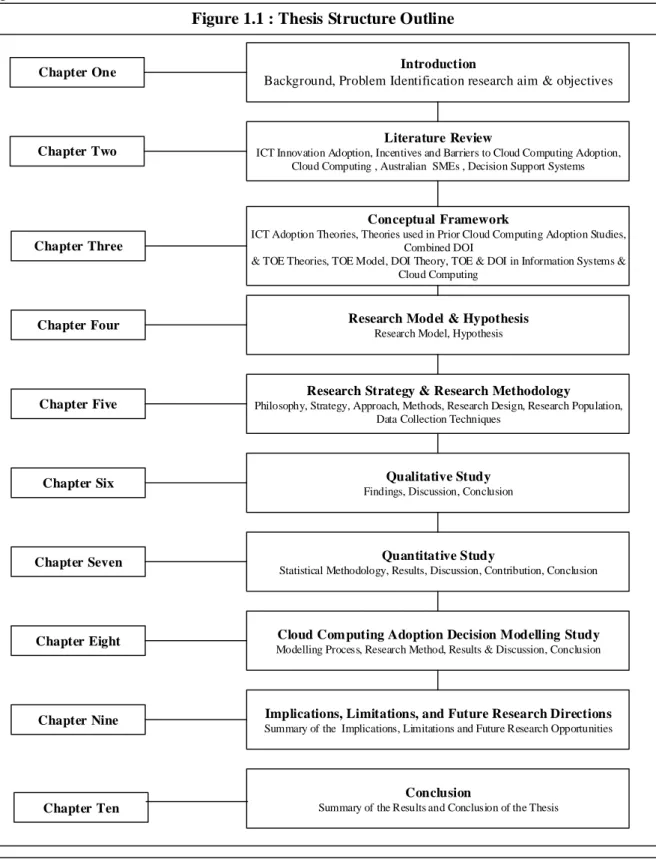
1.7 THESIS OUTLINES... 37
1.8 SUMMARY ... 39
2 LITERATURE REVIEW ... 42
2.1 INFORMATION SYSTEMS INNOVATION ADOPTION ... 42
2.2 INCENTIVES AND BARRIERS TO INFORMATION SYSTEMS INNOVATION ADOPTION AMONG SMES ... 44
2.3 CLOUD COMPUTING ... 45
2.3.1 What is Cloud Computing? ... 45
2.3.2 Background to Cloud Computing ... 50
2.3.3 The Main Stakeholders of Cloud Computing ... 51
2.3.4 Cloud Computing Deployment Models ... 52
2.3.5 Cloud Computing Service Models ... 52
2.3.6 Potential Cloud Computing Benefits ... 53
2.3.7 Cloud Computing Obstacles ... 55
2.3.8 Strategic Choice ... 58
2.4 CLOUD COMPUTING &SMES ... 58
10
2.7 CLOUD COMPUTING ADOPTION FROM THE AUSTRALIAN PERSPECTIVE ... 67
2.8 AUSTRALIAN SMALL &MEDIUM ENTERPRISES ... 68
2.8.1 Identifying the SME ... 69
2.8.2 Main Drivers and Inhibitors of Cloud Computing Adoption in SMEs ... 70
2.8.3 Background of Australian SMEs ... 70
2.8.4 Competitive Advantage ... 74
2.8.5 Australian SMEs and the Adoption of ICT Innovation ... 74
2.8.6 Cloud Computing Opportunities and Impact ... 75
2.8.7 Cloud Computing as a Booster for SME Growth... 77
2.8.8 Cloud Computing Adoption Obstacles ... 78
2.9 DECISION SUPPORT SYSTEMS ... 79
2.9.1 MCDA and PAPRIKA ... 80
2.9.2 Rationality of using PAPRIKA Method. ... 81
2.9.3 Summary ... 87
3 CONCEPTUAL FRAMEWORK ... 90
3.1 IS/ITADOPTION THEORIES ... 90
3.2 THEORIES OVERVIEW... 94
3.3 THE THEORIES THAT HAVE BEEN USED IN PREVIOUS CLOUD COMPUTING ADOPTION STUDIES... 97
3.4 DIFFUSION OF INNOVATION ... 98
3.5 TECHNOLOGY-ORGANISATION-ENVIRONMENT FRAMEWORK (TOE) ... 100
3.6 PREVIOUS STUDIES THAT COMBINED DOI AND TOE ... 104
3.7 SUMMARY ... 106
4 RESEARCH MODEL AND HYPOTHESES ... 108
4.1 RESEARCH MODEL ... 108
4.2 HYPOTHESES OF THE SURVEY STUDY ... 115
4.2.1 Hypothesis of the Technological Factors (H1) ... 116
4.2.2 Hypothesis of the Risk Factors (H2) ... 117
4.2.3 Hypothesis of the Organisational Factors (H3)... 118
4.2.4 Hypothesis of the Environmental Factors (H4) ... 118
4.3 SUMMARY OF THE CHAPTER ... 119
5 RESEARCH STRATEGY AND GENERAL RESEARCH METHODOLOGY ... 121
5.1 RESEARCH DESIGN &RESEARCH STAGES ... 121
5.2 METHOD OF APPROACH ... 122
5.3 RESEARCH PARADIGM ... 123
11
5.5.1 Inductive and deductive approaches ... 127
5.5.2 Qualitative Approach ... 128
5.5.3 Quantitative Approach ... 129
5.6 RESEARCH STRATEGY ... 129
5.7 THE UNIT OF ANALYSIS ... 131
5.8 THE RESEARCH POPULATION AND THE RESEARCH INSTRUMENT USED ... 131
5.8.1 Interview study ... 131
5.8.2 Survey study ... 132
5.8.3 Decision Modelling Study ... 133
5.9 DATA COLLECTION TECHNIQUE ... 133
5.9.1 Interview Study ... 133
5.9.1.1 Interview Questions Design ... 133
5.9.1.2 Interview Data Collection and Analysis ... 134
5.9.2 Survey Development Process ... 134
5.9.3 Questionnaire Coding ... 135
5.9.4 Data ... 135
5.10 VALIDITY AND RELIABILITY ... 136
5.11 INSTRUMENT DEVELOPMENT (FOR THE SURVEY STUDY) ... 137
5.12 PRE-TEST AND PILOT STUDY OF THE QUESTIONNAIRE ... 142
5.12.1 Administration and Distribution of the Questionnaire ... 142
5.13 DATA ANALYSIS TECHNIQUES ... 143
5.14 LIMITATIONS OF THE RESEARCH DESIGN ... 143
5.15 ETHICAL CONCERNS ... 144
5.16 LOCATION ... 144
5.17 SUMMARY OF THE RESEARCH METHODOLOGY ... 144
6 QUALITATIVE RESEARCH ... 147 6.1 INTRODUCTION ... 147 6.2 THE INTERVIEW PARTICIPANTS ... 147 6.3 FINDINGS ... 149 6.3.1 Technological Context ... 149 6.3.1.1 Security Concerns ... 149 6.3.1.2 Cost Savings ... 151 6.3.1.3 Relative Advantage ... 151 6.3.1.4 Uncertainty ... 152 6.3.1.5 Compatibility ... 152 6.3.1.6 Complexity ... 153 6.3.1.7 Trialability ... 154
12
6.3.2 Organisational Context ... 155
6.3.2.1 Firm Size ... 155
6.3.2.2 Top Management Support ... 155
6.3.2.3 Innovativeness of the Firms ... 155
6.3.2.4 Prior Similar IT Experience ... 156
6.3.3 Environmental Context ... 156
6.3.3.1 Market Scope ... 156
6.3.3.2 External Computing Support ... 157
6.3.3.3 Competitive Pressure ... 157 6.3.3.4 Industry ... 157 6.4 DISCUSSION ... 158 6.4.1 Technological Dimensions ... 159 6.4.2 Organisational Dimensions ... 163 6.4.3 Environmental Dimensions ... 164
6.5 RESEARCH FRAMEWORK AND SMES ADOPTION OF CLOUD COMPUTING ... 167
6.6 CONCLUSION OF THE QUALITATIVE STUDY ... 167
7 QUANTITATIVE RESEARCH ... 170
7.1 INTRODUCTION ... 170
7.2 REFINED RESEARCH MODEL ... 171
7.3 STATISTICAL METHODOLOGY ... 172
7.3.1 Choice of Method ... 174
7.3.2 Data Coding & Data Examination ... 178
7.3.3 Selection of Endogenous and Exogenous Indicators ... 178
7.3.4 Selection of Reflective and Formative Indicators. ... 179
7.3.5 Evaluation of Measurement Model ... 181
7.3.6 Evaluation of Structural Model ... 181
7.3.7 Characteristics of the Respondents ... 182
7.3.8 Descriptive Analysis ... 182
7.4 RESULTS ... 183
7.4.1 Characteristics of Respondents ... 183
7.4.2 Descriptive Analysis ... 187
7.4.3 Descriptive Analysis of the Participant Profile and Cloud Computing Adoption ... 192
7.4.3.1 Firm Size and Cloud Services Adopted ... 192
7.4.3.2 Firm Size Effect in the Adoption of Information Systems and Cloud Services ... 194
7.4.3.3 Firm Size and Cloud Type Adopted ... 195
7.4.3.4 Industry and Cloud Type Adopted ... 196
13
7.4.3.7 Market Scope and Type of Cloud Adopted ... 199
7.4.3.8 Business Experience and Adoption Stage ... 200
7.4.3.9 Firm Structure and Adoption Stage ... 201
7.4.3.10 Current Cloud Adoption Engagement and the Future Expectation ... 202
7.4.3.11 Adoption Stage and Turnover ... 202
7.4.3.12 Cloud Services Used in each Cloud Type ... 203
7.4.4 The Adoption Drivers in Each Industry ... 204
7.4.5 Evaluation of the Measurement Model ... 207
7.4.5.1 Construct Validity ... 207
7.4.5.2 Convergent Validity. ... 207
7.4.5.3 Discriminant Validity ... 208
7.4.5.4 Internal Consistency Reliability ... 211
7.4.6 Evaluation of the Structural Model ... 212
7.5 DISCUSSION ... 216 7.5.1 Technological Factors (H1) ... 216 7.5.2 Risk Factors (H2) ... 218 7.5.3 Organisational Factors (H3) ... 219 7.5.4 Environmental Factors (H4) ... 220 7.6 CONTRIBUTIONS ... 221
7.7 CONCLUSION OF THE QUANTITATIVE STUDY ... 221
8 CLOUD COMPUTING ADOPTION DECISION MODELLING: A CONJOINT ANALYSIS ... 223
8.1 INTRODUCTION ... 223
8.2 MODELLING THE CLOUD ADOPTION PROCESS ... 225
8.2.1 Model Design ... 225
8.3 RESEARCH METHOD ... 228
8.3.1 Survey ... 230
8.3.2 Respondents ... 231
8.3.3 Cloud Computing Services & Deployments Choice Modelling ... 232
8.3.4 Choice Model Activity Steps ... 233
8.3.5 Distributed Process... 233
8.4 RESULTS &DISCUSSION ... 233
8.4.1 Part-Worth Utilities and Attributes Rankings ... 234
8.4.2 Explanation of Utility Values ... 237
8.4.3 Ranking of Concepts ... 242
8.4.4 Decision model ... 243
8.4.5 Selection (Value For Money Model) ... 246
14 250
9.1 REVISITING THE RESEARCH QUESTIONS &RESEARCH OBJECTIVES ... 250
9.1.1 Question one: What are the determinants that influence the decision to adopt CC by SMEs? .. 251
9.1.2 Question two: How can SMEs make better/informed CC adoption decisions? ... 253
9.2 QUALITATIVE &QUANTITATIVE STUDY IMPLICATIONS (STUDY ONE &TWO -CHAPTERS 6&7) ... 255
9.2.1 Theoretical Implications ... 256
9.2.2 Practical Implications... 258
9.2.2.1 Managerial Implications ... 258
9.2.2.2 Implications for Cloud Vendors and Cloud Consultants ... 260
9.2.2.3 Implications for Government and Policy-Makers ... 263
9.3 DECISION MODELLING IMPLICATIONS (STUDY THREE –CHAPTER 8) ... 264
9.4 LIMITATIONS AND FUTURE RESEARCH DIRECTIONS ... 264
9.4.1 Qualitative Study ... 264
9.4.2 Large-Scale Quantitative Study ... 265
9.4.3 Decision Modelling Study ... 265
10 CONCLUSION ... 269
10.1 SUMMARY OF THE RESULTS ... 269
10.1.1 Qualitative Study ... 269
10.1.2 Quantitative Study ... 270
10.1.3 Decision Modelling Study ... 270
10.2 CONCLUSION ... 271
APPENDIX A: INTERVIEW CONSENT FORM FOR PARTICIPANTS ... 273
APPENDIX B: INTERVIEW REQUEST LETTER ... 275
APPENDIX C: INTERVIEW PARTICIPANT INFORMATION SHEET ... 277
APPENDIX D: ONLINE SURVEY REQUEST LETTER ... 279
APPENDIX E: ONLINE SURVEY PARTICIPANT INFORMATION SHEET... 280
APPENDIX F: SEMI-STRUCTURED INTERVIEW ... 283
APPENDIX G: ONLINE SURVEY ... 285
15
Figure 1 Thesis Structure ... 39
Figure 2 The NIST Definition of Cloud Computing (2012) ... 47
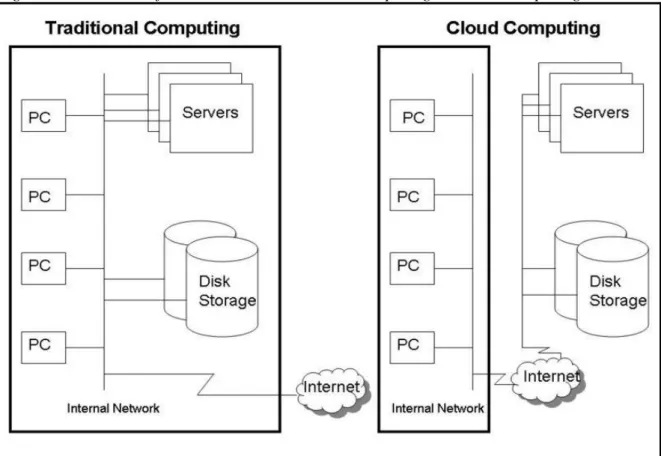
Figure 3 Illustration of Traditional On-Premises Computing v. Cloud Computing. ... 51
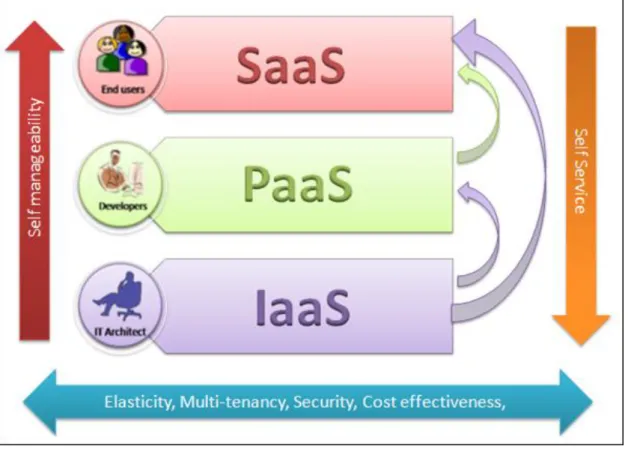
Figure 4 Cloud Delivery Models ... 53
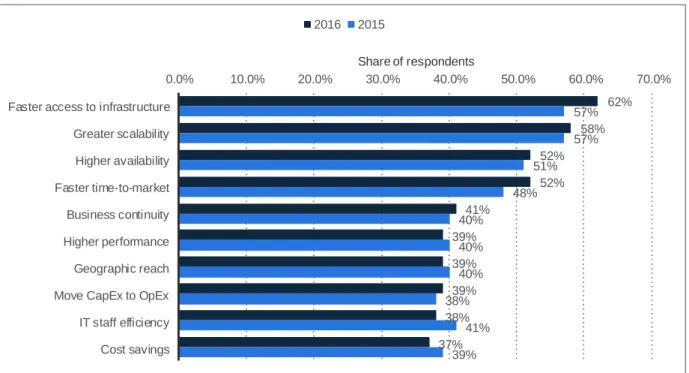
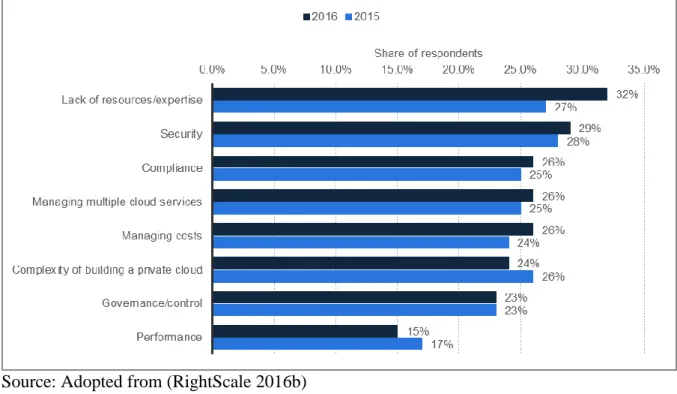
Figure 5 Cloud Computing Main Benefits Globally in 2015 and 2016 ... 55
Figure 6 The Main Challenges of Cloud Computing... 57
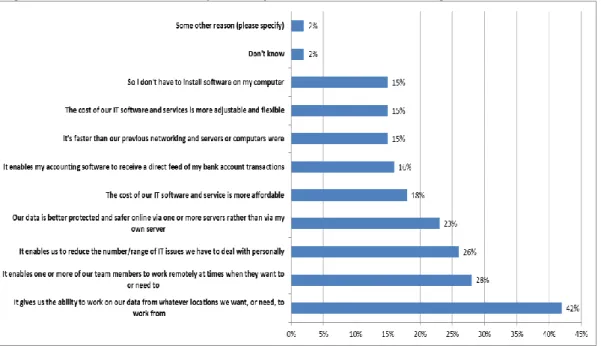
Figure 7 Reasons Revealed by SMEs for their Interest in using the Cloud ... 77
Figure 8 Diffusion of Innovation-Organisational Innovativeness (Rogers 2003b, p.441). ... 99
Figure 9 Technology-Organisation-Environment Framework (Tornatzky et al. 1990, p. 154). ... 101
Figure 10 Conceptual Model ... 109
Figure 11 Preliminary Research Model: An Integrated Model for Adoption of Cloud Computing by SMEs ... 110
Figure 12 Treemap – *Nodes Compared by a Number of Items Coded. ... 160
Figure 13 Rogers Adoption/ Innovation Curve (Rogers 2003c). ... 163
Figure 14 Nodes – Coding by Organisation’s Adoption Stages ... 166
Figure 15 Research Model ... 172
Figure 16 Path Diagram of PLS-SEM Model Drawn By SmartPLS ... 177
Figure 17 Firm Size (No. Of Employees) / Cloud Services Adopted ... 193
Figure 18 Firm Size vs. IS and Cloud Services Adopted ... 194
Figure 19 Firm Size and Cloud Type Adopted ... 195
Figure 20 Industry and Cloud Type Adopted ... 196
Figure 21 Industry and Cloud Services Adopted ... 197
Figure 22 Market Scope and Cloud Services Adopted ... 198
Figure 23 Market Scope and Cloud Type Adopted ... 199
Figure 24 Adoption Stage Considering Business Experience ... 200
Figure 25 Firm Structure And Adoption Stage ... 201
Figure 26 Cloud Adoption Engagement with Reflection on Future Expectations ... 202
Figure 27 Adoption Stage and Turnover ... 203
Figure 28 Cloud Services used per Cloud Type ... 204
Figure 29 Cloud Adoption Variables per Industry ... 206
16 Figure 32 Significance of Path Coefficients in the PLS-SEM Model (T-Test Statistics)
Computed By SmartPLS ... 215
Figure 33 Constructed Decision Model ... 227
Figure 34 Example of a Pair-Wise-Ranking Trade-Off Question for Scoring the Value Model Presented in Graphical User Interface ... 229
Figure 35 Radar Chart of Attribute Weights ... 239
Figure 36 Attribute Value Functions (Mean Utility Values) ... 240
Figure 37 Participants Rankings of the 11 Alternatives ... 242
Figure 38 Example of Value For Money Model ... 247
Figure 39 Preliminary Research Model: An Integrated Model for Adoption of Cloud Computing by SMEs ... 251
Figure 40 Research Model ... 253
17
Table 1-1 Previous Studies in CC Adoption ... 31
Table 1-2 Theories appeared in the 20 Frequently Cited Articles and Books on ICT System Implementation and Adoption ... 36
Table 2-1 ICT Innovation Adoption Incentives and Barriers ... 44
Table 2-2 Barriers and Challenges to IT Adoption ... 44
Table 2-3 Cloud Computing Stakeholders ... 51
Table 2-4 Seminal CC Studies Published in Peer Reviewed Journals... 63
Table 2-5 Main Drivers and Inhibitors of Cloud Computing Adoption in SMEs ... 72
Table 2-6 Sample of SMEs Definitions in the Asia-Pacific Region ... 73
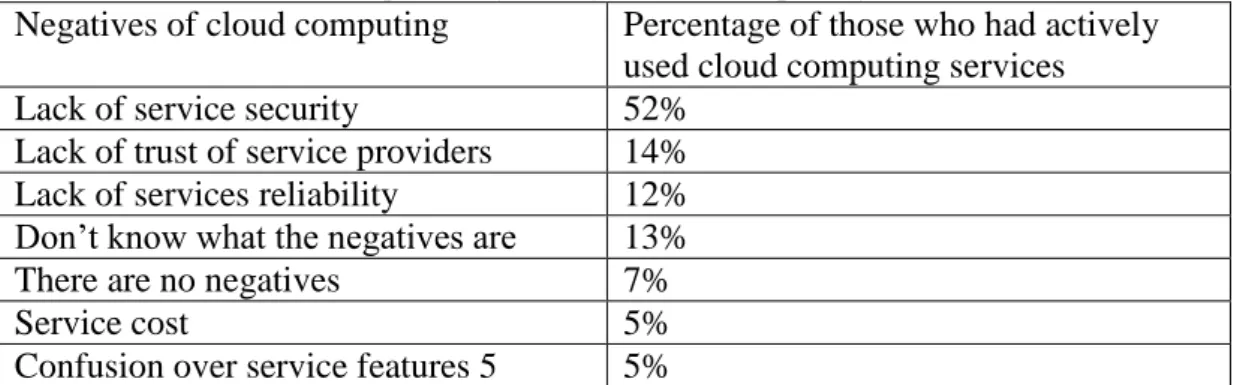
Table 2-7 Consumer Perceptions of Using Cloud Computing Services, May 2013. ... 79
Table 2-8 Decision Analysis Software ... 84
Table 2-9 Comparison of Scoring Methods ... 85
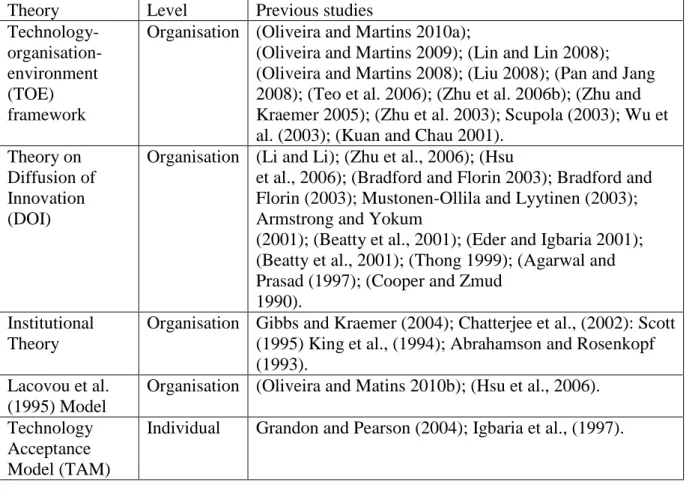
Table 3-1 Theoretical Models ... 91
Table 3-2 Some Studies Based on DOI Theory (Rogers Everett, 1995). ... 100
Table 3-3 Seminal Studies based on TOE Theory. ... 102
Table 3-4 Seminal Studies that Combined TOE with the DOI Model ... 105
Table 4-1 Definition of Variables, their Related Theories, their Definition Based on Cloud Computing Perspective, and their Effect on Decision Makers. ... 112
Table 5-1 Research Philosophy Paradigms... 125
Table 5-2 Main Differences between the Deductive and Inductive Approaches. ... 128
Table 5-3 Qualitative Approach - Strengths and Weaknesses ... 128
Table 5-4 Qualitative Approach vs. Quantitative Approach. ... 129
Table 5-5 Research Strategies ... 129
Table 5-6 Cloud Computing Adoption Constructs Items, Operational Measures, and Sources ... 139
Table 5-7 Research Methodology Selections ... 145
Table 6-1 An Overview of the Interview Participants ... 148
Table 6-2 Overview of Findings ... 158
Table 6-3 Nodes Compared by Number of Items Coded ... 161
Table 7-1 Items used to Identify Factors Determining the Adoption of Cloud Computing .. 172
Table 7-2 Personal Information (N = 203 respondents) ... 183
18
Table 7-5 Factor Analysis and Reliability Analysis of Indicators. ... 188
Table 7-6 Descriptive Statistics (N = 203) ... 191
Table 7-7 Convergent Validity of Reflective Variables (Copy of SmartPLS Output) ... 208
Table 7-8 Cross Loadings (Copy of SmartPLS Output) ... 210
Table 7-9 Internal Consistency Reliability of Reflective Variables (Copy of SmartPLS Output) ... 211
Table 7-10 Test for Multicollinearity between Indicators ... 212
Table 7-11 Testing of Hypotheses ... 213
Table 8-1 Conceptual Attributes of the Decision Model ... 226
Table 8-2 Decision model attributes and their closer equivalents ... 226
Table 8-3 Alternative Solutions ... 227
Table 8-4 Participants’ Progress ... 231
Table 8-5 The Five Participant's Details ... 232
Table 8-6 Utility Values (Preference Values) ... 235
Table 8-7 Relative Importance of Attributes (Mean Weights) ... 238
Table 8-8 Attribute Rankings... 238
Table 8-9 Normalised Criterion Weights and Single Criterion Scores (Means) ... 240
Table 8-10 Rankings (Mid-Ranks) of the 11 Concepts ... 243
Table 8-11 The Achieved Decision Model (Ranked Concepts) ... 244
Table 8-12 Conceptual Attributes of the Decision Model ... 253
19
ABS Australian Bureau of Statistics
ACMA The Australia Communications and Media Authority
ASP Application Service Provision
AVE Average Variance Extracted
CBM-SEM Covariance Based-Structural Equation Modelling
CC Cloud Computing
CRM Customer Relationship Management
CSPs Cloud Service Providers
DOI Diffusion of Innovation Theory
ERP Enterprise Resource Programs
GoF Goodness of Fit
H Hypothesis
IaaS Infrastructure-as-a-service
ICT Information and Communication Technology
MCDA Multi-Criteria Decision Analysis
PaaS Platform-as-a-Service
PAPRIKA Potentially All Pairwise RanKings of all possible Alternatives PLS-SEM Partial Least Squares-Structural Equation Modelling
SaaS Software-as-as-Service
SME Small & Medium Enterprises
SPSS Statistics Package for Social Science
TOE Technology-Organisation-Environment Framework
TPB Theory of Planned Behaviour
20 Below is a glossary of some of the key terms used throughout the thesis.
Small to Medium-sized Enterprises (SME)
Defined as either sole proprietorships or businesses employing up to 199 staff (ABS 2001).
Software-as-as-Service (SaaS)
Access to application software and databases via web services provided by services providers on renting basis rather than installing them on user’s premises ( an example of services includes Salesforce.com and Goggle Apps). It uses two concepts of on-demand software and pay-per-use basis.
Platform-as-a-Service (PaaS)
Platform with all required computing resources including programming languages, database, and web server provided by service providers to software developers. This service reduces the cost complexity requirement for software development and management of the underlying hardware and software capabilities ( an example of these include Microsoft Azure and Google App Engine).
Infrastructure-as-a-Service (IaaS)
Renting access to physical computing resources or usually virtual machines, data centres, and other resource over a network. The services are scalable through a large number of virtual machines and offered on-demand basis to users.
Private Cloud
Is exclusively used by the single organisation, management can be internally or by a third party, and hosting can be in-house or externally (NIST 2014). This infrastructure is capital intensive, however, more secure (CloudAndCompute.com 2014).
Public Cloud
In this infrastructure, the services are rendered over the network to the public, and it is offered as free or on a tenancy-pricing model (Subashini and Kavitha 2011). Security was one of the main concerns when the services are offered over a non-trusted network
21 include Amazon EC2 and Goggle Apps) (Armbrust et al. 2010).
Community Cloud
Shared cloud platforms for common business-oriented organisations. The management of the cloud can be either internally or externally, and the cost is spread among the users help in establishing mutual benefits and cost savings (Mell and Grance 2011a).
Hybrid Cloud
Is when a single organisation adopts two or more clouds (private, community or public) and grasp the benefits offered by multiple cloud resources (Mell and Grance 2011a).
Criterion/Criteria
A criterion is a characteristic, factor, or attribute on which a decision can be based.
Decision Survey
An online choice-based survey - implemented through 1000Minds software (Ombler and Hansen 2012) and the PAPRIKA scoring method (Hansen and Ombler 2008) is used to estimate the rating, ranking, and preferences of the SMEs on the 16 criteria. Respondents are presented with a series of hypothetical choices, each of which involves two options which differ in only two characteristics. Each choice requires a respondent to trade-off one criterion for another.
Multi-Criteria Decision Analysis (MCDA)
MCDA approaches are used to help individuals and/or groups in making complex decisions, involving multiple criteria, using a transparent and direct approach. An MCDA approach specifies the associated criteria to be considered and determines the influence that these multiple criteria have in the decision-making process.
Potentially All Pairwise RanKings of all possible Alternatives (PAPRIKA)
In this research, the PAPRIKA scoring method is used to understand the relative importance of the criteria.
22 “Research is what I'm doing when I don't know what I'm doing.”
23
1
Introduction
Cloud computing (CC) reputation is growing among businesses since its inception in 2006 (El-Gazzar 2014; Zhang et al. 2010). Moreover, the decision to adopt CC is a very strategic decision. Decision making in adopting any technology can be a complicated process, even with its promises for various advantages and enhancements of business processes. The CC paradigm itself can have similar complications. Zhang et al. (2010) found that CC offers outstanding benefits as well as challenges that can hinder adoption. To make an informed decision, prior studies have advocated that decision making regarding the adoption of Information and Communications Technology (ICT) usually involves a range of dimensions including technological factors, organizational factors, and environmental factors (Soto-Acosta et al. 2015; Aboelmaged 2014; Awa et al. 2015; Palacios-Marqués et al. 2015). This is because the most comprehensive understanding required to develop a better and more accurate decision comes from analysing it from different angles, and therefore more positive benefits, outcomes, and results are likely to be obtained (El-Gazzar 2014). In particular, the unique characteristics of the context of Australian Small and Medium-sized Enterprises (SMEs) CC adoption makes it even more important that the research investigation of the determinants that influence the decision to adopt CC by SMEs in Australia include an analysis of complementary prior studies on organisational level CC adoption.
In Australian SMEs, the acceptance of CC has been slow (Minifie 2014). Many possible factors influence the adoption of this innovation (Gangwar et al. 2015; Doherty et al. 2015). From the technological factor perspective, Australian SMEs have a great deal of sensitive data that they need to protect including quotations to their customers, financial details and company databases (Misra and Mondal 2011). Catteddu and Hogben (2009) found that CC adoption is hindered by some technology-driven issues, such as privacy issues, security concerns, and data confidentiality. There are various obstacles to CC adoption in Australian SMEs because of the high sensitivity of data (Jain and Bhardwaj 2010; Misra and Mondal 2011). Koehler et al. (2010) suggested that the reliability of technology and security are barriers to CC adoption as well.
From the organisational factor perspective, Australian SMEs are essential to the country’s economy. SMEs have been defined as companies that have less than 200 employees (ABS
24 2001)1. They constitute 99.75 of the business economy and recruit 70% of the country’s workers (ABS 2013). However, Australian SMEs are not eager to adopt information technologies for their businesses. 59% of Australian SMEs are regarded as having low rates of adoption and usage of information technologies (Economics 2011)2. Many Australian SMEs are not aware of what the term CC means and its benefits. In another survey, 23% of cloud services users stated that one of the reasons they use it because it is more secure than their servers (MYOB 2012a)3. In an earlier survey in 2011, Optus found that 59% of
Australian SMEs were not aware or sure of what CC actually was (Optus 2011a)4. According
to (Minifie 2014), many Australian SMEs do not have an awareness of the advantages of cloud services or the knowledge to use them.
From the environmental factor perspective, The spread of the National Broadband Network (NBN) is valuable for Australia due to its provision of high-speed services for the Internet and telephone (NBNCO 2015). It also could be attractive to Australian SMEs because of the new accessibility to ICT resources it provides (NBNCO 2015). However, In light of the low rate of CC adoption by SMEs, and despite the promising benefits, the adoption pace is still relatively slow in Australia compared to other nations in Asia (ACCA 2012b)5. The Australian Communication and Media Authority stated that less than 50% of SMEs are using CC (ACMA 2014b)6.
CC technology has been an innovative technology that promises to provide various benefits to organisations, such as lower initial investment cost, lower demand upon resources, services scalability, and operational cost savings (Avram 2014). Despite the advantages offered by this technology, the pace towards its adoption is not matching the speed of its technological advancement. Various reasons for this have been suggested such as:
1 Australian Bureau of Statistics.
2 Economics, Deloitte Access: Report prepared for Google Australia 2011.
3 MYOB is a provider of business management solutions in Australia and New Zealand
[https://www.myob.com/au/about].
4 Optus is a telecommunication company based in Australia, and it is considered to be its 2nd largest operator in
business size [http://www.optus.com.au/].
5 ACCA: Asian Cloud Computing Association [http://www.asiacloudcomputing.org/].
6 Australian Communications and Media Authority (ACMA) is a public authority associated with media,
25 (1) The technology is still in its early advancement stages, with some firms not yet convinced
of its benefits and waiting to see actual success to take serious action. (2) Some companies have limited budget allocations for technology. (3) There is limited technical knowledge within the firms.
(4) There is hesitation about migrating to new technologies.
On the other hand, some scholars (Carcary et al. 2013b; Ross and Blumenstein 2015; Dillon and Vossen 2015; Sultan 2010) have indicated that SMEs can take advantage of the benefits offered by CC by using its services to be more productive and competitive. However, the decision-making process in adopting these services is not always straightforward, and there are several factors the firms usually take into consideration before they make their decision. Previous studies have discussed some of these determinants (Gajbhiye and Shrivastva 2014; Goscinski and Brock 2010; Ercan 2010). According to (Saedi and Iahad 2013; El-Gazzar 2014), any investigation of CC must consider context because different contexts might have specific determinants.
Prior studies investigated CC adoption in SMEs from perspectives such as the benefit-driven perspective (e.g. reduced operation cost) (Saya et al. 2010), risk-driven perspective (e.g. security concern) (Wu et al. 2013a; Daniel et al. 2014) and the constraint-driven perspective (e.g. scalability) (Saya et al. 2010). However, the decision process also requires consideration from several other perspectives (Leimeister et al. 2010). A review of the literature indicates that most of the previous studies used a single theoretical perspective approach in analysing CC adoption (Hsu et al. 2014; Borgman et al. 2013; Nkhoma et al. 2013; Kshetri 2013). However, this single approach is not sufficient to achieve the objective of the present study. It has been found that the lack of integration of adoption and diffusion theories has hindered understanding of innovation characteristics (Saedi and Iahad 2013). Technological factors are not the only key determinants; there are other factors such as organisational and environmental factors that might have a substantial impact on the decision process, but they have not been integrated into most of the adoption theories (Low et al. 2011; Feuerlicht 2010). Therefore, a multi-perspective theoretical framework could be a solution for investigating the CC service adoption by SMEs (Harvie and Lee 2002).
26 This research briefly examined the existing theories on the adoption of ICT and then recommended the most suitable theory for this study. In recent years, there has been demand for more investigation in evaluating the ICT adoption using a holistic approach, which combines more than one theoretical framework to understand the phenomena from different perspectives (Wu et al. 2013b; Oliveira and Martins 2011; Fichman 2004). My research contributes to the theoretical knowledge of CC adoption and practical technological implementation experience in the SME sector. The results will be useful for government policy makers, SMEs decision makers, and cloud vendors regarding technological adoption investment considerations.
This chapter is structured as follows: (1) Section (1.1): Research objective.
(2) Section (1.2): Basic concepts and related work. (3) Section (1.3): Background of the problem.
(4) Section (1.4): Research rationality and motivation. (5) Section (1.5): Research question.
(6) Section (1.6): Scope and limitation of the research. (7) Section (1.7): Thesis outlines.
(8) Section (1.8): Summary.
1.1 Research Objective
The purpose of this research is to undertake an analysis of CC services status among SMEs and the providers of CC solutions. The research also aims to design a decision modelling of the CC services and deployment models to help SMEs in making more informed decisions. Considering the characteristics of Australian SMEs, this research aims to identify the critical factors involved in making an adoption decision of CC by Australian SMEs. To achieve this objective, the researcher adopted the Technology-Organization-Environment (TOE) framework and the Diffusion of Innovations (DOI) theory as the theoretical foundations and applied a mixed-method research approach to investigate the determinants. Two studies are to be conducted sequentially to refine the research model and validate the hypotheses. The first phase will be a qualitative study in which data from in-depth interviews will be collected from several Australian SMEs and service providers. The outcomes of the qualitative study could help us to refine the research model. Then, the second study is to be conducted by using a nationwide survey in Australia. The survey data analysis is intended to validate the
27 hypotheses and identify the critical factors involved in the adoption of CC by Australian SMEs. Finally, the research is intending to model the decision-making process and provide a practical tool to help SMEs in the CC adoption decision.
In summary, the main targeted deliverables of the research will be:
• Providing an integrated theoretical framework for adopting and leveraging the CC services for the SMEs to bring benefits and advantages in innovation and enhancing business processes.
• Developing a conceptual framework to address the research questions.
• Ensuring the validity of the theoretical framework empirically.
• Determining the influential factors behind CC adoption by SMEs through testing the developed conceptual framework empirically with an appropriate sampling size.
• Discussing the CC adoption decision from the perspective of SMEs and providing practical implications for researchers, company managers, and CC services providers.
• Providing a practical methodology using a multi-criteria decision approach (MCDA) in designing a decision model that can be utilised by decision-makers to assist them in their decision-making process concerning the adoption of CC services.
This study will produce several practical and academic implications. Academically, it will contribute to the ICT adoption literature in general and the CC literature related to SMEs specifically. The study is proposing an integrative theoretical model that holistically considers the CC adoption concept from various influential dimensions including technological, organisational and environmental, to understand the CC adoption decision. From the practical perspective, the study will provide both SMEs and cloud services providers with insights for better strategic planning in CC adoption.
1.2 Basic Concepts and Related Work
All around the world, SMEs play a vital role in the economic development of countries (Abor and Quartey 2010). SMEs are perceived as sources of earnings, employment, social prosperity, regional development, and the exportation of products. The OECD (2006)7 reported that SMEs constitute the largest percentage of the private sector in the world.
7 The Organisation for Economic Co-operation and Development (OECD) is an organisation that consists of 35
member countries and its objective is to accelerate economic development and international trade [http://www.oecd.org/about/].
28 Therefore, it is evident that technological innovation is well placed to equip SMEs with the necessary capabilities to enhance the global economy. Technology has significantly influenced various aspects of modern life and has changed the way business is conducted. Remarkably, SMEs are not immune from this innovation wave, and they are trending gradually towards the adoption of ICT (Houghton and Winklhofer 2004). Cloud computing has been referred to as the computer technology of the century, and there are high expectations that it will solve the business challenges that are faced by SMEs (Rio-Belver et al. 2012).
In Australia, SMEs are the skeleton of the country’s economy (ACMA 2014b). For facilitating changes in any industry, three crucial components need to be considered: processes, people, and technology (Chen and Popovich 2003). Efficient business processes are the key to success, and it is an ongoing effort to improve the quality of products, services, or processes. Cloud Service Providers (CSPs) promote the CC services in offering efficient, robust, and cutting-edge Information Systems (IS) requirements to businesses. These technological solutions are promising to provide scalable, elastic, and cost-effective solutions delivered over the Internet on a pay-as-you-go pricing model (Mell and Grance 2011a). These services are available to any business. SMEs are inherently characterised by limited resources, poor planning, and ineffective risk assessment in acquiring the right technological products and solutions (Cohn and Lindberg 1972; Saini et al. 2012). Cloud computing can leverage these limitations and drawbacks of SMEs by providing solutions that can enhance the performance and competitiveness of SMEs. Hadidi (2010) stated that CC has the potential to empower SMEs IT resources. CC can provide new opportunities to SMEs that were earlier only accessible to large wealthy organisations (Michael et al. 2013).
Other important aspects of IT are security and privacy, negative issues which are regularly addressed in the adoption process; fortunately, economies of scale allow CSPs to provide better security and privacy measures to their clients at lower cost. Furthermore, cloud services could be the solution for enterprises that lack the financial capability to acquire in-house ICT solutions (Hancock and Hutley 2012). These services, in turn, can lead to an increase in growth for the small organisation through accessing advanced IT solutions that in the past were perhaps far beyond their budgets. Furthermore, replacing the requirement of upfront capital investment by an on-going subscription for cloud products can enable smaller organisations to enter and compete in new markets. This affordable investment option will
29 eventually increase productivity and innovation. The diffusion of CC has made a considerable contribution to the GDP growth (estimated at a rate of between 0.05% to 0.3%) and has created around one million new jobs in Europe (Hancock and Hutley 2012). From a different angle, (Pike Research 2010) reported that implementing cloud solutions could reduce the associated carbon footprint per user for large organisations by up to 30% and by about 90% for smaller businesses.
Resources such as skills, time, and employees are not the major issues in large businesses, whereas they can create significant disadvantages in small businesses (Cohn and Lindberg 1972). This implies that SMEs have different capabilities, needs, and resources. Organisational theories and practices that apply to large businesses are not necessarily suitable for small businesses (Cohn and Lindberg 1972; Welsh and White 1981; Dandridge 1979). More details about the decision of CC adoption, SMEs, and the theoretical review are to be presented in the following two chapters (i.e., literature review and conceptual framework).
1.3 Background of the Problem
Market forces suggest that CC could be a tool for providing flexible and efficient business models (Chang et al. 2010). This suggests that organisations can grasp the benefits offered by CC very easily. However, in practice, indicators have shown that there was a slow adoption of CC services (Khajeh-Hosseini et al. 2010). Security issues are one of the main hindrances to the adoption of this technology (Kim et al. 2009). Security is not only a concern for large organisations, but it is also a concern for all organisation types and sizes including SMEs (Kim et al. 2009). SMEs have much sensitive data that they need to protect such as quotations to their customers, financial details, company databases, trade secrets, email accounts, research findings, confidential research and feasibility studies (Misra and Mondal 2011). A study conducted by Catteddu and Hogben (2009) found that the main obstacles to CC adoption are unwillingness to make capital expenditure, privacy, security risks, availability and integrity of service and data, and data confidentiality. As a result, there are several barriers to the adoption of CC among SMEs due to the high sensitivity of data (Jain and Bhardwaj 2010; Misra and Mondal 2011). A study by Koehler et al. (2010) revealed that in addition to security, reliability is one of the main obstacles to CC adoption. Technological aspects of CC are not the only issue to consider; it is crucial that the whole ecosystem be understood, from the provision of CC services to its final implementation and use (Greeger
30 2010). A detailed risk-benefits analysis in the context of understanding all the dimensions that affect the adoption is a useful approach for decision makers in different organisations, including SMEs (Khajeh-Hosseini et al. 2010).
Decision making in adopting any technology is not an easy task, even with its promises for various advantages and enhancements of business processes. CC is not immune from such decision making. Making decisions involves a range of dimensions including technological factors, organisational factors, and environmental factors. The decision-making situation is complex in this regard. The more comprehensively a decision process is understood from different angles, the better. This greater knowledge can produce more accurate results for decision makers and therefore, more positive beneficial outcomes can be obtained. On the other hand, studies have indicated that the growth of CC has not been as it was expected (Jelonek and Wysłocka 2014; GoGrid 2012; Yeboah-Boateng and Essandoh 2014; Mohlameane and Ruxwana 2014)8. The same situation also persists for Australian SMEs, and the adoption rate has been found to be slower in SMEs, compared to that in large firms (Minifie 2014). Furthermore, academic studies investigating the socio-technical issues that might be influencing this drawback have been limited, especially with SMEs. The existence of the problem is very clear and, therefore, this is the main motivation of this research. The researcher seeks to cover the research vacuum in this regard. The findings will help in providing a better understanding of the CC adoption decision and assist organisations in establishing a more informed decision. It is essential to note that, based on the researcher’s literature review, there have been limited investigations addressing the effect of the various contextual factors in the adoption of CC by Australian SMEs.
According to previous studies, it can be observed that there has been limited systematic investigation into the CC adoption process and the factors influencing the decision to adopt this innovation. For instance, some studies discussed the costs and benefits of CC (De Assunção et al. 2009), other applications of CC (Liu and Orban 2008), and the architecture of this innovation (Rochwerger et al. 2009). Also, few investigations have been conducted to address the adoption of CC from the organisational context (see Table 1-1). The studies have mainly addressed the direct influence of technological innovation attributes or other contextual elements (Martins et al. 2014). Therefore, it is evident that the technological (such
31 as security, privacy, and technology compatibility) and other non-technological related factors (such as organisational management support, the size of the firm, and business competition environment) in the adoption of cloud computing need more attention.
Table 1-1 Previous Studies in CC Adoption Dependent
variables focus
Independent variables researched / Context Sources
Cloud computing
Barriers and benefits/survey of 94 SMEs in Spain (Trigueros-Preciado et al. 2013)
Cloud computing
Relative advantage, compatibility, complexity, trialability, observability / 19 IT professionals, Taiwan
(Lin and Chen 2012)
Cloud computing
Business process complexity, entrepreneurial culture, compatibility, application functionality/ survey on manufacturing and retail firms
(Wu et al. 2013b)
Cloud computing
Technology (compatibility, complexity, relative advantage), organisation (top management support, technology readiness, firm size) and environment (trading partner pressure, competitive pressure)/ survey of 111 IT professionals from high-tech industry
(Low et al. 2011)
Cloud computing
perceived benefits, perceived environment barriers, perceived technology barriers/ used secondary data
(Nkhoma and Dang, 2013)
Cloud computing
Technology (relative advantage, complexity, compatibility), organisation (top management support, technology readiness, firm size), and environment (trading partner pressure,
competitive pressure)/ conceptual model
(Abdollahzadegan et al. 2013)
Therefore, The aim of this study is to investigate the process of CC adoption in Australian SMEs, address the reasons why Australian companies are slow to adopt CC and, therefore, provide some recommendations for different stakeholders and propose a practical solution for this problem.
1.4 Research Rationality and Motivation
There are various rationalities and motivations for this research, which are listed below: (1) This study is important not only because of SMEs significant contribution to the
country’s economy and social development, but also because of SME’s perceived characteristics regarding creativity, innovation, and adaptation competencies (Ritchie and Brindley 2005). On the other hand, technologies play a vital role in providing opportunities for the advancement of SMEs (Dibrell et al. 2008). In this era, CC
32 technology is promising various benefits to its adopters through providing scalable computing services to its clients (Leimeister et al. 2010). This can allow SMEs to focus on their core businesses and be more efficient and competitive with the use of new capabilities from cloud computing. However, like any other innovation, this technology still has some concerns and challenges, such as security, privacy, trust, availability, and ‘lock-in’ ability (Daniel et al. 2014; Pearson and Benameur 2010; Habib et al. 2010). Furthermore, CC is not a new technology and it goes back to IT outsourcing origination; however, the application of CC as an innovative technology as it is seen today in the business world is relatively new. This demands more research in aspects such as adoption and implementation, in particular when it is related to SMEs.
(2) SMEs have unique characteristics in technology adoption (Stefanou 2014; Chwelos et al. 2001). For instance, SMEs have been found to be more subject to risk in technology adoption (Stefanou 2014) and also have a higher failure rate for technology adoption projects (Cochran 1981). Additionally, improper document management systems within SMEs make it more complicated for strategic planning to achieve business objectives (Tetteh and Burn 2001). Below are some distinctive SME’s characteristics in technology adoption:
• Inadequate technical knowledge (Barry and Milner 2002).
• Low financial capabilities and poor organisational planning (Raymond 2001).
• Informal strategies in the decision-making process and lack of operating standard procedures (Dibrell et al. 2008; Thong et al. 1996).
These distinctive characteristics of SMEs reflect a need for a comprehensive framework for investigating the adoption of innovation from various aspects including technological factors, organisational factors, and environmental factors (Fink 1998). Therefore, in this research, the researcher intends to use the ‘TOE’ framework as one of the theoretical foundations for studying the adoption of cloud computing- the major IT innovation of our time (For more details, see Chapter Three: conceptual framework).
(3) The investigative context for CC adoption by SMEs is limited. Technological innovation in SMEs has been researched from perspectives different from the perspectives employed to examine large businesses. Small companies have unique characteristics, which is why their presented problems and research gaps are different (Beaver and Prince 2004). Some of these unique features include their heterogeneous nature (Beaver and Prince 2004), their straightforward and centralised structure (Thong et al. 1996), the use of specific
33 research theories that are not used for large enterprises (Thong 1999), their lower reliance on technology for formal communication than big businesses have (Ramdani 2008), and their dynamism and innovation (Nolan and O'Donnell 1991). All these features have an impact and make the decision to adopt CC in SMEs different from those decisions of large organisations. Less awareness and knowledge about ICT is another of the several reasons causing the delay in adoption decision-making by SMEs (Lumpkin and Dess 2004). This is the rationality for studying ICT innovation adoption and CC adoption in SMEs.
(4) In the Australian context, a study by MYOB in 2012 found that almost 80% of SMEs are not using cloud services (MYOB 2012a). The Department of Broadband, Communication and the Digital Economy in the Australian Government stated that the country SMEs are behind their counterparts in other OECD countries in the implementation of online technology (Australian Government 2013). This leads to an unfavourable competitive position, which could be solved and leveraged through the use of CC services (Fakieh et al. 2014).
(5) CC has provided numerous advantages to its clients all over the world, and it brings very promising solutions in three main dimensions including SaaS, PaaS, and IaaS. The remarkable effect can be noticed in different economies and across various industries. The solutions and the advantages provided by CC have become one of the principal topics in the Information Technology world. The technology can produce sufficient financial and non-financial benefits to its clients and maximise Australia’s competitive advantages in the SME sector by lifting productivity and boosting economic growth.
(6) There is sufficient motivation to investigate the factors which influence SMEs in Australia to adopt CC, which has seen rapid development recently. However, the acceptance of this innovation by SMEs is slower and not matching the same pace of the technology advancement. For this reason, there is an increasing interest in understanding the incentives, barriers, and other key influential forces acting on this issue.
(7) A very recent systematic literature review on CC adoption found that enterprises are facing serious issues before deciding to adopt cloud services. Various legal, ethical, technical, and managerial issues have been identified. This subject is found to be under investigation specifically in the area of CC adoption factors and processes. Therefore, this paper calls for further theoretical, methodological, and empirical research in this field
(El-34 Gazzar 2014). This thesis is trying to respond to the calls for more research by focusing on the adoption side of the problem.
(8) The ICT innovation adoption research focused mainly on investigating the relationship between individual characteristics and its relationship with acceptance or rejection of technologies, which has led to relatively limited studies from the organisational perspective (Lucas Jr et al. 2008). This could be the reason behind the overwhelming use of the “TAM” model which focuses on the individual level with its related constructs of “perceived ease of use” and “perceived usefulness” (Williams et al. 2009). This could affect the field of technology adoption research negatively as it can cause a general homogeneity; this suggests the needs for another suitable theoretical framework and the consideration of various other dimensions, such as investigating the adoption situation from an organisational level and/or any other influential and potential levels. Therefore, this study suggests that understanding of the adoption and diffusion process as an “ecosystem” is essential.
(9) The motivation for this research is to explore a comprehensive, integrated theoretical framework for investigating the adoption of CC by SMEs. According to the current literature, theories of adoption in the ICT discipline are focused on analysing the extent of adoption of innovation on the individual and organisational levels (Choudrie and Dwivedi 2005). However, the adoption theories are lacking integration by researchers in a manner that allows examining other factors besides the technological factors. The literature shows that organisational and environmental factors have significant roles in influencing innovation adoption and they are not integrated into most of the adoption/diffusion theories (Saedi and Iahad 2013). Therefore, these theories cannot provide a comprehensive framework that could satisfy the objectives of understanding CC adoption decision and factors that influence it (Saedi and Iahad 2013). Also, the deployment of CC occurs in a heterogeneous environment which is affected by various attributes that collectively have vital importance in the success of innovation adoption projects (Tatnall and Burgess 2002). Therefore, this research is proposing to integrate two theories TOE and DOI as mentioned earlier. The rationality about the application of these theories and the discussion of previous studies that used these theories on an individual basis or in a combination of them will be discussed in Chapter 3.
35 1.5 Research Question
The central research question is focusing on investigating the CC adoption factors that influence the adoption decision-making in the case of SMEs in Australia. More precisely, the purpose is to examine the adoption paradigm from various dimensions and understand the major influential factors. It is also to examine the extent of this influence in different industries within the SME sector, and determine why different industries adopt cloud solutions at different rates. This topic has not received enough attention from researchers. Investigation of the factors that influence the adoption of CC is an essential area of research, as has been mentioned earlier. The topic has not received enough attention from researchers. This research seeks to address this topic, and the main identified research questions are:
• What are the determinants that influence the decision to adopt CC by SMEs?
• How can SMEs make better/informed CC adoption decisions?
Furthermore, understanding these factors will assist in predicting the rate of adoption of CC. This can be achieved by studying both organisations who do and do not, adopt CC services. Then, the advantageous (positive) and disadvantageous (negative) factors behind the adoption of CC can be categorised. To address the mentioned questions, this research explores literature on CC adoption and the theoretical foundation, based on TOE and DOI, to develop a research model. An integrated framework combining these theories will be adopted to examine the factors that affect CC adoption among SMEs. This thesis will empirically test the proposed model.
1.6 Scope and Limitation of this Study
Operationalisation of the extent of CC adoption could be leveraged to achieve more meaningful results if the amount of CC investment were measured. This study has investigated a group of attributes found to be critical in the technological innovation literature and are more related to the context of SMEs. Other variables that may have potential influence in CC adoption have not been investigated in this study as a result of the scope, time, and the limitation of the survey itself. To have a holistic understanding of the relationship between CC services and SMEs, the impact of CC on the performance of SMEs can be examined. The research is conducted in the SME sector in Australia, which may limit the generalisability of the findings.