University of Windsor University of Windsor
Scholarship at UWindsor
Scholarship at UWindsor
Electronic Theses and Dissertations Theses, Dissertations, and Major Papers
10-5-2017
Mindfulness as a Protective Factor Against Body Dissatisfaction:
Mindfulness as a Protective Factor Against Body Dissatisfaction:
Mechanism of Action
Mechanism of Action
Jessica Barrington University of Windsor
Follow this and additional works at: https://scholar.uwindsor.ca/etd
Recommended Citation Recommended Citation
Barrington, Jessica, "Mindfulness as a Protective Factor Against Body Dissatisfaction: Mechanism of Action" (2017). Electronic Theses and Dissertations. 7237.
https://scholar.uwindsor.ca/etd/7237
This online database contains the full-text of PhD dissertations and Masters’ theses of University of Windsor students from 1954 forward. These documents are made available for personal study and research purposes only, in accordance with the Canadian Copyright Act and the Creative Commons license—CC BY-NC-ND (Attribution, Non-Commercial, No Derivative Works). Under this license, works must always be attributed to the copyright holder (original author), cannot be used for any commercial purposes, and may not be altered. Any other use would require the permission of the copyright holder. Students may inquire about withdrawing their dissertation and/or thesis from this database. For additional inquiries, please contact the repository administrator via email
MINDFULNESS AS A PROTECTIVE FACTOR AGAINST BODY DISSATISFACTION: MECHANISM OF ACTION
by
Jessica Barrington
A Thesis
Submitted to the Faculty of Graduate Studies through the Department of Psychology in Partial Fulfilment of the Requirements
for the Degree of Master of Arts at the University of Windsor
Windsor, Ontario, Canada
MINDFULNESS AS A PROTECTIVE FACTOR AGAINST BODY DISSATISFACTION:
MECHANISM OF ACTION
by
Jessica Barrington
APPROVED BY:
___________________________________
C. McGowan Department of Kinesiology
___________________________________
C. Miller
Department of Psychology
______________________________
J. Jarry, Advisor Department of Psychology
MINDFULNESS, THOUGHT SUPPRESSION, AND BODY SATISFACTION iii
AUTHOR’S DECLARATION OF ORIGINALITY
I hereby certify that I am the sole author of this thesis proposal and that no part of this thesis
proposal has been published or submitted for publication.
I certify that, to the best of my knowledge, my thesis proposal does not infringe upon
anyone’s copyright nor violate any proprietary rights and that any ideas, techniques, quotations,
or any other material from the work of other people included in my thesis proposal, published or
otherwise, are fully acknowledged in accordance with the standard referencing practices.
Furthermore, to the extent that I have included copyrighted material that surpasses the bounds of
fair dealing within the meaning of the Canada Copyright Act, I certify that I have obtained a
written permission from the copyright owner(s) to include such material(s) in my thesis proposal
and have included copies of such copyright clearances to my appendix.
I declare that this is a true copy of my thesis proposal, including any final revisions, as
approved by my thesis committee and the Graduate Studies office, and that this thesis proposal
MINDFULNESS, THOUGHT SUPPRESSION, AND BODY SATISFACTION iv
ABSTRACT
Mindfulness is the tendency to pay attention, on purpose and in an open and non-judgmental
way, to experiences. An association between higher dispositional mindfulness and body
satisfaction has been demonstrated, but the mechanism of this association remains unclear. In the
present study, thought suppression was tested as a mediator of the association between
mindfulness and body satisfaction, and mindfulness was tested as a protective factor against
lowered body satisfaction. In Study 1, participants (N = 234) completed online measures of
mindfulness, thought suppression, and body satisfaction. After controlling for depression,
self-esteem, and BMI, describing, acting with awareness, and non-judgement were related to higher
body satisfaction. When controlling only for BMI, lower thought suppression mediated the
relations between higher describing, acting with awareness, and non-reactivity and higher body
satisfaction. Observing was neither directly nor indirectly related to body satisfaction. In Study 2,
participants (N = 69) wrote about a disliked body part or disliked weather, and then completed
either a mindfulness or relaxation induction. They then completed measures of state mindfulness
and body satisfaction. The mindfulness induction did not result in higher body satisfaction
compared to the relaxation induction. Our results suggest that thought suppression mediates the
association between body satisfaction and facets of mindfulness involving a metacognitive
component. However, self-administered mindfulness inductions do not appear to result in higher
state body satisfaction than relaxation inductions. Furthermore, it does not appear that a writing
MINDFULNESS, THOUGHT SUPPRESSION, AND BODY SATISFACTION v M
TABLE OF CONTENTS
AUTHOR’S DECLARATION OF ORIGINALITY iii
ABSTRACT iv
LIST OF TABLES viii
LIST OF FIGURES ix
LIST OF APPENDICES x
1. INTRODUCTION 1
1.1. Mindfulness 2
1.1.1. How Does Mindfulness Work? 4
1.2. Mindfulness and Body Dissatisfaction 5
1.3. Thought Suppression: A Possible Mechanism 9
1.3.1. Thought Suppression and Body Dissatisfaction 10
1.3.2. Thought Suppression and Mindfulness 11
1.4. The Proposed Research 12
1.4.1. Study 1 12
1.4.2. Study 2 15
1.4.3. Research Questions 17
1.4.4. Research Hypotheses 17
2. METHODS 21
2.1. Design 21 2.2. Participants 21 2.2.1 Power Analysis 21
MINDFULNESS, THOUGHT SUPPRESSION, AND BODY SATISFACTION vi
2.2.3. Study 2 23
2.3. Procedure 23
2.4. Measures 28
2.4.1. Demographic Questionnaire 28
2.4.2. Independent Variable Measures 29
2.4.3. Mediating Variable Measure 29
2.4.4. Dependent Variable Measure 30
2.4.5. Covariate Measures 33
2.4.6. Distraction Measures 34
2.4.7. Post- Manipulation Affect Check 35
3. RESULTS 35
3.1. Data Inspection 35
3.1.1. Invalid Responses 35
3.1.2. Missing Data 36
3.1.3. MRA Assumptions 36
3.1.4. ANOVA Assumptions 37
3.2. Descriptive Statistics 38
3.3. Study 1 38
3.3.1. Main Analyses 38
3.3.2. Supplementary Analyses 41
3.4. Study 2 44
3.4.1. Post-Manipulation Between Group Affect Equivalence 44
MINDFULNESS, THOUGHT SUPPRESSION, AND BODY SATISFACTION vii
3.4.3. Main Analyses 45
4. DISCUSSION 48
4.1 Summary of Findings 48
4.2 General Discussion 48
4.2.1. Hypothesis 1a 48
4.2.2. Hypothesis 1b 50
4.2.3. Hypothesis 2a 52
4.2.4. Hypothesis 2b 52
4.2.5. Hypothesis 3 52
4.2.6. Hypothesis 4 53
4.2.7. Hypothesis 5 54
4.3. Strengths and Limitations of the Present Research 54
4.3.1. Research Strengths 54
4.3.2. Research Limitations 55
4.4. Implications and Future Directions 56
REFERENCES 57
APPENDICES 64
MINDFULNESS, THOUGHT SUPPRESSION, AND BODY SATISFACTION viii
LIST OF TABLES
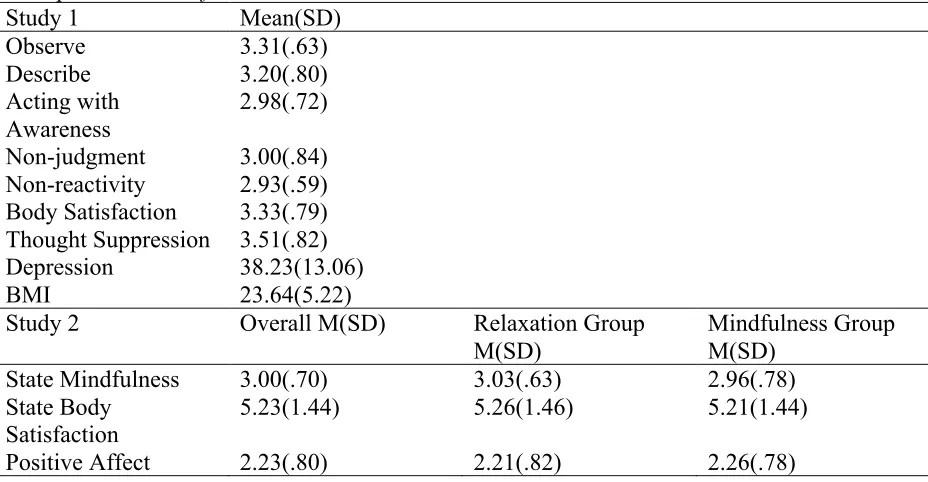
Table 1. Descriptive Statistics for Included Measures. 37
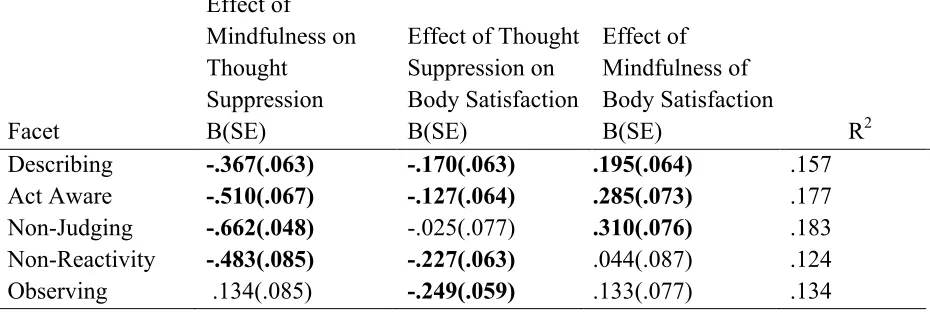
Table 2. Path Estimates and Effect Sizes for the Direct and Indirect Effects of Mindfulness
on Body Satisfaction. 41
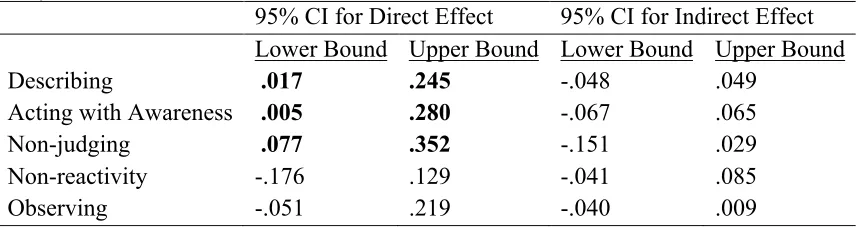
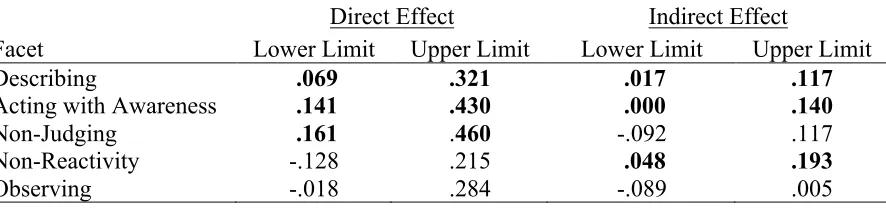
Table 3. 95% Confidence Intervals for the Direct and Indirect Effects of Mindfulness on
Body Satisfaction. 41
Table 4. Path Estimates and Effect Sizes for the Direct and Indirect Effects of Mindfulness on Body Satisfaction (Supplementary Analyses). 43
Table 5. 95% Confidence Intervals for the Direct and Indirect Effects of Mindfulness on
Body Satisfaction (Supplementary Analyses). 44
Table 6. Group Means for State Mindfulness and State Body Satisfaction. 45
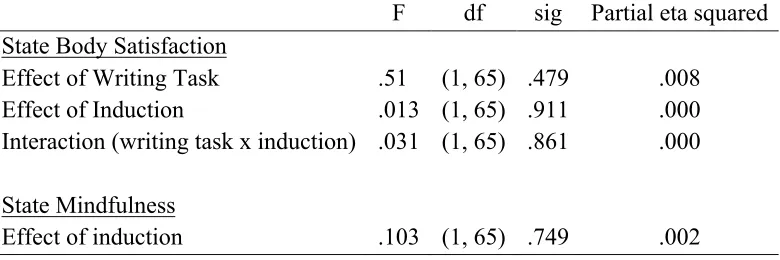
Table 7. 2x2 ANOVAs for the Effects of a Writing Task and Induction on State Body
MINDFULNESS, THOUGHT SUPPRESSION, AND BODY SATISFACTION ix
LIST OF FIGURES
Figure 1. The proposed mediation model between mindfulness, thought suppression, and
body satisfaction. 17
Figure 2. The proposed mediation model between non-judgement, thought suppression, and
body satisfaction. 18
Figure 3. The proposed mediation model between non-reactivity, thought suppression, and
body satisfaction. 19
MINDFULNESS, THOUGHT SUPPRESSION, AND BODY SATISFACTION x M
LIST OF APPENDICES
Appendix A. Demographics Questionnaire 64
Appendix B. Five Facet Mindfulness Questionnaire 66
Appendix C. White Bear Suppression Inventory 69
Appendix D. Multidimensional Body Self Relations Questionnaire – Body Areas Satisfaction Scale 70
Appendix E. Multidimensional Body Self Relations Questionnaire – Appearance Evaluation Scale 71
Appendix F. Body Image States Scale 72
Appendix G. Toronto Mindfulness Scale 76
Appendix H. State Thought Suppression 78
Appendix I. Rosenberg Self-Esteem Scale 79
Appendix J. Beck Depression Inventory-II 80
Appendix K. Body Mass Index 82
Appendix L. Toronto Alexithymia Scale-20 83
Appendix M. Satisfaction with Life Scale 85
Appendix N. Positive and Negative Affect Scale 86
Appendix O. Participant Pool Advertisement 87
Appendix P. Consent Form 88
Appendix Q. Body-focus Prompts 90
Appendix R. Weather-focus Prompts 91
Appendix S. Mindfulness Script 92
Appendix T. Control Script 93
MINDFULNESS, THOUGHT SUPPRESSION, AND BODY SATISFACTION xi
MINDFULNESS, THOUGHT SUPPRESSION, AND BODY SATISFACTION 1 M
Mindfulness as a Protective Factor Against Body Dissatisfaction: Mechanism of Action
1. INTRODUCTION
Low body satisfaction is a prevalent current social concern; up to 90% of college women
are not satisfied with their body (Neighbors & Sobal, 2007). Several negative psychological
factors are related to low body satisfaction such as depression, anxiety, social phobia, and low
self-esteem (Rodgers, Salès, & Chabrol, 2010). Low body satisfaction also is associated with
negative behaviours such as dietary restriction, bingeing, and purging (Ward & Hay, 2015).
There are several, common, everyday influences that can reduce body satisfaction. For
example, viewing thin peers, compared to over-sized peers, has been found to result in lower
body satisfaction (Lin & Kulik, 2002). Additionally, Jansen and colleagues (2016) found that
focussing on a disliked body part for fifteen minutes decreased state body satisfaction and
increased feelings of unattractiveness. These participants also reported increases in state
depression, anxiety, and stress, indicating that even brief changes in appearance satisfaction may
influence psychological well-being. Given the high rate of body dissatisfaction, the negative
outcomes associated with it, and how easily it can be triggered, there is a need for interventions
that effectively protect body satisfaction.
Several interventions have been shown to effectively increase body satisfaction. A
meta-analysis by Jarry and Ip (2005) found that cognitive-behavioural therapy significantly improved
body satisfaction and that therapist-assisted interventions were the most effective. Another
meta-analysis by Alleva, Sheeran, Webb, Martijn, and Miles (2015) revealed that certain types of
cognitive-behavioural therapies, such as changing negative language used to discuss the body
and teaching individuals to monitor and restructure their appearance-related cognitions, were
stress-MINDFULNESS, THOUGHT SUPPRESSION, AND BODY SATISFACTION 2 M
reduction techniques, guided imagery, and exposure exercises, also increase body satisfaction
(Alleva et al., 2015). Alleva and colleagues (2015) further found that interventions were most
effective when they were administered in a group format, and when there was a facilitator
present, leading the intervention. After controlling for publication bias and small-sample bias,
the effects of the interventions were found to be small, but reliable.
Mindfulness interventions may be another way of improving body image. Mindfulness
interventions may be preferable to CBT because they act more globally to decrease psychosocial
impairment and negative affect, along with improving body satisfaction (Atkinson & Wade,
2014). Mindfulness practice promotes a detached awareness of thoughts and emotions, thereby
preventing them from becoming overwhelming (Kabat-Zinn, 2003). Given the negative thoughts
that characterize low body satisfaction, mindfulness-based interventions may successfully
improve body image. Mindfulness interventions are easy to implement and have no known
negative consequences. Furthermore, mindfulness-based therapies can be administered in a
group format with a therapist or facilitator leading the practice. As previous meta-analyses show
(Jarry & Ip, 2005; Alleva et al., 2015), these are the most effective conditions for body image
interventions. Therefore, mindfulness-based therapies have two of the characteristics
demonstrated to aid interventions for individuals with low body satisfaction.
1.1. Mindfulness
Mindfulness is a concept that originates from ancient Buddhist philosophy (Le,
Ngnoumen, & Langer, 2014). In Eastern philosophies, mindfulness is described as observing
one’s self and experiences, and being aware of surroundings without reacting to them. Western
philosophies tend to regard mindfulness as a disposition, meaning that individuals may possess
MINDFULNESS, THOUGHT SUPPRESSION, AND BODY SATISFACTION 3 M
merge. For example, researchers such as John Kabat-Zinn state that all individuals naturally have
some degree of mindfulness, that is their “dispositional” mindfulness, but it can be enhanced
through meditative practices such as breathing exercises and Hatha yoga (Le et al., 2014).
Kabat-Zinn also described mindfulness as the “awareness that emerges through paying attention on
purpose, in the present moment, and nonjudgmentally to the unfolding of experience moment by
moment” (Kabat-Zinn, 2003, p.145).
In the psychology literature, researchers generally tend to agree with Kabat-Zinn’s
description of mindfulness (e.g. Bishop et al., 2004; Le et al., 2014), but the exact components
thought to constitute mindfulness have evolved as research progresses. In research, the various
measures used to assess mindfulness seem to arise from different conceptualizations of the
components of mindfulness; that is, different operational definitions arise from different theories
about the elements of mindfulness. For example, Bishop and colleagues (2004) conceptualize
mindfulness as having two different dimensions: attention towards present-moment experiences
and an open, curious, and accepting awareness of what arises in the present moment. These
elements of mindfulness are measured by the “Mindful Attention Awareness Scale” (Brown &
Ryan, 2003).
Another conceptualization of mindfulness by Baer, Smith, Hopkins, Krietemeyer, and
Toney (2006) outlines five facets of mindfulness: observing, describing, acting with awareness,
non-judging, and non-reactivity. Observing refers to noticing thoughts, feelings, sensations and
perceptions. Describing refers to labeling internal experiences, such as thoughts and feelings,
with words. Acting with awareness refers to attending to present moment experiences and
engaging in activities in a deliberate manner, rather than acting automatically. Non-judging
MINDFULNESS, THOUGHT SUPPRESSION, AND BODY SATISFACTION 4 M
non-reactivity consists of allowing thoughts to come and go, without becoming overwhelmed by
them, reacting to them, or trying to control, change, or suppress them. These facets of
mindfulness are assessed by the “Five Facet Mindfulness Questionnaire” (Baer et al., 2006).
How mindfulness is conceptualized and measured can have important implications for
researchers. For example, using the two-dimensional awareness and attention conceptualization
of mindfulness, Brown and Ryan (2003) found that higher mindfulness is associated with lower
depression. However, Baer and colleagues (2006) found that while higher levels of the
describing, non-reactivity, non-judgment, and acting with awareness facets were associated with
lower thought suppression, high observing was related to high thought suppression. This
demonstrates that the facets of mindfulness relate differently to other psychological variables
meaning that mindfulness is not a unidimensional construct. Thus, for psychological research, it
may be more informative to conceptualize mindfulness as having five distinct components and
examine each facet separately when exploring their relations with other psychological variables.
1.1.2. How Does Mindfulness Work?
Individuals have different baseline levels of mindfulness, but these levels can be
enhanced through practices such as mindfulness meditation (Malinowski, 2008). Mindfulness
meditation involves being aware and observant of one’s surroundings, without trying to attain
some higher goal (Valentine & Sweet, 1999). Mindfulness practices vary, but all generally
involve focusing on an “anchor,” such as the sensation of breathing. When attention drifts
towards other sensations, thoughts, or emotions, the practitioner acknowledges where the mind
has wandered and gently brings it back to the anchor. Simply put, the goal of mindfulness
practice is to promote an observing and detached state of mind. When thoughts and emotions
MINDFULNESS, THOUGHT SUPPRESSION, AND BODY SATISFACTION 5 M
The psychological benefits of mindfulness are presumed to come from the
non-judgmental, non-reactive, awareness of thoughts and emotions (Malinowski, 2008). It is assumed
that by recognizing negative thoughts and emotions, but not judging nor reacting to them, one
can prevent the cycle of negative responses to inner experiences that cause emotional distress,
such as when a negative thought leads to an emotional reaction, which leads to emotional
distress. Thus, cultivating mindfulness through a practice such as mindfulness meditation
presumably should lead to better psychological health.
1.2. Mindfulness and Body Satisfaction
Individuals higher in dispositional mindfulness have better psychological health than
those low in dispositional mindfulness, as evidenced by lower levels of depression, anxiety, and
binge eating (Courbsasson, Nishikawa, & Shapira, 2011; Vøllestad, Nielsen, & Nielsen, 2012).
Researchers also have determined that mindfulness serves as a protective factor against
developing depression when there are co-occurring risk factors, such as discrimination or
previous depressive episodes (Brown-Iannuzzi, Adair, Payne, Richman, & Fredrickson, 2014;
Radford et al., 2014). The associations between higher mindfulness and positive psychological
outcomes also has been found for body image.
Research on the relation between mindfulness and body satisfaction is very recent.
However, the few existing studies have shown that higher mindfulness is related to higher body
satisfaction (Dijkstra & Barelds, 2011; Dekeyser, Raes, Leijssen, Lysen, & Dewulf, 2008;
Prowse et al., 2013). In particular, correlational findings show that higher body satisfaction is
related to lower observing, but higher describing, acting with awareness, and accept without
judgment (Dijkstra & Barelds, 2011; Prowse et al., 2013). One study found that after controlling
MINDFULNESS, THOUGHT SUPPRESSION, AND BODY SATISFACTION 6 M
are predictive of body satisfaction (Prowse et al., 2013). Thus, it seems that the association
between mindfulness and body satisfaction is somewhat more complex than higher global
mindfulness being associated with higher body satisfaction and that all five facets of mindfulness
must be considered for a full understanding of this relation.
Despite demonstrated correlations between mindfulness and body satisfaction, there is
limited evidence showing that mindfulness interventions can effectively improve body
satisfaction. Although three intervention studies have been conducted, their results are mixed.
For example, Alberts, Thewissen, and Raes (2012) found that an eight-week mindfulness-based
cognitive therapy program significantly reduced food cravings, eating for reasons other than
hunger, and concerns about body image. Additionally, another study found that a
mindfulness-based intervention compared to a control group reduced weight and shape concern, as well as
eating pathology (Atkinson & Wade, 2014). Yet, Luethcke, McDaniel, and Becker (2011) found
that a mindfulness-based intervention improved weight and shape concern as well as eating
disorder pathology, but did not increase body parts satisfaction. However, the implications of this
study’s results may be limited as mindfulness was not described to participants with the standard
method. Specifically, participants only were told to focus on non-judging and awareness of
present moment, but given no instruction on observing, describing, or non-reactivity. As
observing is related to higher pathology in inexperienced meditators (Baer et al., 2006), it is
important to provide direction on this facet. The findings from Alberts et al. (2012) may be
somewhat more reliable, as their mindfulness-based intervention was more inclusive than the
intervention employed by Luethcke et al. (2011). They instructed participants on three facets:
acting with awareness, non-judgment, and observing. The intervention used by Atkinson and
MINDFULNESS, THOUGHT SUPPRESSION, AND BODY SATISFACTION 7 M
describing thoughts and feelings, non-judgment of thoughts and feelings, and acknowledging and
accepting negative thoughts about their body.
Based on the evidence thus far, it seems that mindfulness interventions can improve body
image significantly. However, there are very few studies supporting this conclusion, and one
study (Luethcke et al., 2011) had somewhat contradictory findings. In order to try to develop
more effective interventions, it is important to consider how mindfulness may be related to body
satisfaction: what is the mechanism, or mechanisms, by which mindfulness leads to improved
body satisfaction?
Dijkstra & Barelds (2011) found that non-judgment is a central feature of mindfulness,
and that it also is related to body image; thus, it seems that being mindful is associated with body
satisfaction simply through low judgment. However, there may be more to the association than
proposed. Non-judgment as a facet of mindfulness refers to the non-judgment of thoughts and
experiences, and does not necessarily mean that there is no judgment of the object of thoughts, in
this case appearance. Thus, non-judgment may consist of not judging negative appearance
thoughts which themselves may vary in intensity or frequency.
Three other facets of mindfulness, observing, describing, and acting with awareness, also
are associated with body satisfaction (Prowse et al., 2013). Describing involves labelling
thoughts and feelings with words (Baer et al., 2006). Describing may be related to higher body
satisfaction because if one is trying to describe how their negative appearance-related thoughts
make them feel, then they are confronting such thoughts instead of avoiding them. Confronting
negative appearance thoughts may decrease the distress associated with them, through a
MINDFULNESS, THOUGHT SUPPRESSION, AND BODY SATISFACTION 8 M
Acting with awareness involves focussing attention on present moment experiences, such
as thoughts and feelings (Baer et al., 2006). It precludes automatic responses to experiences;
instead it promotes considering fully each experience as it occurs. Acting with awareness may be
related to higher body satisfaction because it may prevent automatic negative thoughts about
appearance, as it involves attending to experiences, rather than reacting automatically.
Furthermore, when negative appearance thoughts do occur, focussing on them may result in less
distress associated with such thoughts through a habituation effect. This notion is similar to the
theory posited by Jansen and colleagues (2016): repeated mirror exposure decreased body
dissatisfaction because individuals became habituated to the parts of their body that they
disliked.
Observing involves noticing present moment experiences, such as thoughts, feelings,
sensations, or perceptions (Baer et al., 2006). It is the only facet that involves the awareness of
external stimuli, such as sights and sounds, as well as internal stimuli. Thus, observing may be
applied to appearance itself, or to negative thoughts and feelings about appearance. Observing
may be related to lower body satisfaction because there is an increased focus on disliked aspects
of appearance or on the negative thoughts about appearance. If these observations occur without
a detached, objective stance afforded by the other mindfulness facets, then this may result in
increased distress about appearance. Generally, those with little meditation experience are unable
to observe their internal and external experiences in an impartial way (Baer et al., 2006), so
higher observing likely would be related to lower body satisfaction in women without
mindfulness training. Indeed, this is supported by Prowse and colleagues (2013), who found that
MINDFULNESS, THOUGHT SUPPRESSION, AND BODY SATISFACTION 9 M
et al. (2013), who propose that in order for observing to promote psychological health it must be
combined with other aspects of mindfulness, such as non-judgment and non-reactivity.
Mindfulness also may relate to body satisfaction through the facet of non-reactivity,
which entails acknowledging thoughts and experiences without becoming overwhelmed by, or
reacting to them (Baer et al., 2006). Though there is no published research investigating the
association between non-reactivity and body satisfaction, non-reactivity is positively associated
with psychological well-being and negatively associated with indices of lower mental health
(Baer et al., 2006, 2008). Therefore, non-reactivity may be positively associated with body
satisfaction, such that if individuals experience negative thoughts about appearance, but do not
react to them, these thoughts may become less distressing, through a habituation effect, thus
improving body satisfaction.
The connections between the facets of mindfulness and body image still does not explain
why body satisfaction is higher in more mindful individuals; that is, what is the specific
mechanism by which higher mindfulness is related to higher body satisfaction? Some
mechanisms have been explored for the association between mindfulness and other
psychological outcomes; for example, environmental mastery, purpose in life, and self-regulation
significantly mediate the relation between non-judgment and depressive symptoms and stress
(Brown, Bravo, Roos, & Pearson, 2015). However, mediators of the relation between
mindfulness and body satisfaction have yet to be explored.
1.3. Thought Suppression: A Possible Mechanism
Thought suppression is the tendency to avoid cognitions that one views as intrusive or
unwanted, because they are depressive, anxiety-producing, traumatic, or socially inappropriate
MINDFULNESS, THOUGHT SUPPRESSION, AND BODY SATISFACTION 10
emotional distress, and some individuals are predisposed to using this strategy more than others.
Engaging in thought suppression results in an increased frequency of the unwanted thoughts
(Muris, Merckelbach, & Horselenberg, 1996). Furthermore, when thoughts are not suppressed,
they naturally decay on their own; it is the very act of trying to suppress negative thoughts that
prevents them from decreasing in frequency, because suppression requires maintained attention
on the thoughts.
Thought suppression can increase the frequency of any thought, regardless of its content
(Muris et al., 1996). However, individuals only tend to suppress thoughts that evoke emotional
distress (Wegner & Zanakos, 1994). Paradoxically, this attempt at suppression increases distress
because of the increased frequency of the unwanted thoughts. It thus follows that accepting
negative thoughts without judgement, the antithesis of thought suppression, would reduce their
frequency and therefore, their associated distress. Furthermore, not attempting to control or
change one’s thoughts directly precludes thought suppression, which again would lower the
frequency of the thoughts, and ultimately result in less distress. Both of these processes suggest a
relation between thought suppression and mindfulness.
1.3.1. Thought Suppression and Body Satisfaction
Thought suppression is related to a variety of negative psychological outcomes, such as
depression and anxiety (Wegner & Zanakos, 1994). Little research has focused directly on the
effects of thought suppression on body satisfaction, though evidence documents the usual effect
of thought suppression on body satisfaction. Harnden, McNally, and Jimerson (1997) found that
telling women to suppress thoughts about weight, rather than instructing them to express such
thoughts, resulted in an increase in verbalization of weight-related thoughts. Additionally, the
MINDFULNESS, THOUGHT SUPPRESSION, AND BODY SATISFACTION 11
cognitions and symptoms, such as body dissatisfaction, bingeing, and compensatory behaviours
such as purging and excessive exercise (Lavender, Jardin, & Anderson, 2009).
1.3.2. Thought Suppression and Mindfulness
Two studies have demonstrated that high dispositional mindfulness is related to low
general thought suppression (Baer, et al., 2006; Garland & Roberts-Lewis, 2013). Additionally,
researchers have determined that increasing levels of mindfulness through meditation decreases
the tendency to suppress thoughts (Bowen, Witkiewitz, Dillworth, & Marlatt, 2007).
1.3.3. Mindfulness, Thought Suppression, and Body Satisfaction
In sum, low mindfulness is related to lower body satisfaction. Additionally, low
mindfulness is associated with high thought suppression and high thought suppression is related
to high verbalization of weight-related thoughts and bulimic symptoms. Thus, it is reasonable to
assume that thought suppression is related to body satisfaction. Extending this assumption, it is
possible that thought suppression may work in conjunction with dispositional mindfulness to
predict body satisfaction. Specifically, it is possible that thought suppression mediates the
relation between mindfulness and body satisfaction. Logically, the tendency to be mindful
towards negative appearance thoughts should lead to fewer attempts to suppress these thoughts,
as mindfulness involves acceptance and a lack of reactivity or judgement towards thoughts. Such
acceptance precludes trying to control or change thoughts and reduces emotional distress,
thereby decreasing the likelihood of engaging in thought suppression. Fewer suppression
attempts should result in natural thought decaying and thus, fewer negative thoughts about
appearance and ultimately, more body satisfaction, simply because of lower exposure to negative
appearance thoughts. If this proposition was true, thought suppression would be one mechanism
MINDFULNESS, THOUGHT SUPPRESSION, AND BODY SATISFACTION 12
Aside from thought suppression and mindfulness, several other variables are related to
body satisfaction. As mentioned previously, depression is inversely correlated with body
satisfaction (Rodgers et al., 2010). Additionally, self-esteem consistently has demonstrated
strong positive correlations with body satisfaction. Finally, body mass index (BMI) also is
related to body satisfaction, such that individuals with lower BMI tend to report higher body
satisfaction (Neighbors & Sobal, 2007). Therefore, it is important to assess the effects of
depression, self-esteem, and BMI, in order to isolate the effect of mindfulness on body
satisfaction.
1.4. The Proposed Research
The aim of the proposed research is to expand on the current literature by investigating
whether mindfulness serves as a protective factor against low body satisfaction and by exploring
a possible mechanism for this relation. The research consisted of two studies. In the first study,
thought suppression was tested as a mediator between dispositional mindfulness and body
satisfaction. In the second study, mindfulness was investigated as a protective factor against low
body satisfaction after focussing on a disliked part of the body; as mentioned previously,
focussing on one’s body lowers body satisfaction (Jansen et al., 2016). Additionally, the
mediation model from Study 1 was expanded in Study 2 by testing the effects of a brief
mindfulness induction on thought suppression and body satisfaction after focussing on a disliked
body part. Thus, the results from Study 2 may strengthen any conclusions drawn from Study 1.
1.4.1. Study 1 Overview
Previous research has shown that mindfulness is associated with increased body
satisfaction (Prowse et al., 2013), and the current study was designed to test the theory that
MINDFULNESS, THOUGHT SUPPRESSION, AND BODY SATISFACTION 13
individuals are, the less likely they should be to attempt to suppress negative thoughts about
body image, which should result in reduced frequency of the thoughts, and ultimately, higher
body satisfaction.
In Study 1 each facet of mindfulness was tested in a different mediation model. Given
that the facets of mindfulness differentially relate to body image (Prowse, Bore, & Dyer, 2013), I
proposed that the facets describing, acting with awareness, non-judgment, and non-reactivity
would be related to higher body satisfaction via lower thought suppression, whereas higher
observing would be related to lower body satisfaction via higher thought suppression .
Furthermore, explored indirect relations between the facets of mindfulness and body satisfaction
via thought suppression.
Based on previous research (e.g. Prowse et al., 2013) and the theory of mindfulness as a
construct, all facets of mindfulness were expected to relate to body satisfaction through thought
suppression. However, two facets were expected to be most predictive of body satisfaction:
non-judgment and non-reactivity. This is because both non-non-judgment and non-reactivity are
considered to be operationalisations of acceptance (Baer et al., 2006). As body satisfaction in
women generally is an acceptance of weight and shape (Sanftner, Ryan, & Pierce, 2009), it
follows that non-judgment and non-reactivity would predict the most variance in body
satisfaction.
Non-judgement, thought suppression, and body satisfaction. The first model tested
was between non-judgement and body satisfaction, with thought suppression as a mediator. It
was expected that by not labelling negative thoughts about appearances as “bad,” individuals
may be less likely to attempt to suppress such thoughts. If the thoughts are not suppressed, they
MINDFULNESS, THOUGHT SUPPRESSION, AND BODY SATISFACTION 14
Lower exposure to negative self-appearance thoughts were expected to result in higher body
satisfaction.
Non-reactivity, thought suppression, and body satisfaction. The second model tested
the association between non-reactivity and body satisfaction, with thought suppression as a
mediator. It was theorized that by not becoming overwhelmed by, or reacting to, negative
thoughts about appearance, individuals would be less likely to try to suppress such thoughts.
Thus, negative thoughts about appearance were thought to occur less often, resulting in higher
body satisfaction.
Describing, thought suppression, and body satisfaction. The third model tested the
association between describing and body satisfaction, with thought suppression as a mediator. It
was expected that by trying to describe how appearance-related thoughts are making them feel,
individuals may be less likely to attempt to suppress such thoughts because they are confronting
them rather than trying to avoid them. As a result, it was anticipated that negative thoughts about
appearance should eventually decrease with a corresponding increase in body satisfaction.
Acting with awareness, thought suppression, and body satisfaction. The fourth model
tested the association between acting with awareness and body satisfaction, with thought
suppression as a mediator. Acting with awareness precludes automatic negative appearance
thoughts. However, when these thoughts do occur, it was theorized that by deliberately focussing
attention on negative appearance thoughts, and not engaging in automatic behaviours that would
detract from focusing on the thoughts, individuals will become habituated to such thoughts. As a
result, they will be less likely to try and avoid negative thoughts about their appearance, because
the thoughts are less distressing. It was anticipated that this would result in fewer negative
MINDFULNESS, THOUGHT SUPPRESSION, AND BODY SATISFACTION 15
Observing, thought suppression, and body satisfaction. The fifth model tested the
association between observing and body satisfaction, with thought suppression as a mediator.
Based on the inverse relation between observing and positive psychological outcomes, it was
theorized that by noticing negative thoughts about appearance, individuals would be more likely
to attempt to suppress such thoughts, because they are distressing. As a result, negative thoughts
about appearance were thought to occur more often, which would decrease body satisfaction.
Additionally, observing applies not only to thoughts, but to the object of the thoughts, such as a
disliked body part. Thus, it was proposed that by noticing the sensations and perceptions
associated with disliked body parts, individuals may be more likely to try to suppress negative
observations about their body. As a result, individuals would be more likely to attend to parts of
their body they do not like, which would decrease body satisfaction.
1.4.2. Study 2 Overview
In Study 2, the effects of a brief mindfulness induction on state thought suppression and
body satisfaction after focussing on a disliked body part was tested. Previous research has
demonstrated that briefly focussing on a disliked body part increases body dissatisfaction and
feelings of unattractiveness (Jansen et al., 2016). The mindfulness induction was a brief
mindfulness instruction developed by Adams et al. (2013), based on the work of Kabat-Zinn
(1994, 2002) and Baer and colleagues (2006). This mindfulness induction has demonstrated a
medium effect size in increasing body satisfaction in female college students (Adams et al.,
2013).
Although previous research has established that more mindful individuals report higher
levels of body satisfaction, it is unclear if a brief mindfulness induction can prevent acute
MINDFULNESS, THOUGHT SUPPRESSION, AND BODY SATISFACTION 16
been investigated before (Luethcke et al., 2011; Alberts et al., 2012; Atkinson & Wade, 2014). It
was anticipated that a brief mindfulness induction, compared to a relaxation control condition,
would result in higher state body satisfaction after focussing on a disliked body part.
Furthermore, it was expected that individuals in the mindfulness condition would report less
thought suppression after this task; this would further support the notion that thought suppression
is a mechanism of association between mindfulness and state body satisfaction. The relaxation
task is designed to increase physical relaxation by systematically releasing tension in different
muscle groups (Vinci et al., 2014). It has been found to decrease negative affect and increase
physical relaxation, with limited changes in state mindfulness; thus, a relaxation induction is a
suitable control for a mindfulness induction.
Additionally, the protective effect of mindfulness against decreases in body satisfaction
was tested in Study 2. Levels of body satisfaction were compared between those who write about
a disliked body part to those who write about weather that they do not like. It was anticipated
that writing about a disliked body part would result in lower body satisfaction than writing about
disliked weather, and that a relaxation induction would have a minimal effect on this.
Additionally, it was expected that a mindfulness induction would be effective at increasing the
lowered body satisfaction resulting from writing about a disliked body part, which would
demonstrate that mindfulness serves as a protective factor against lowered body satisfaction.
Focussing on disliked weather was intended to induce negative feelings, just as focussing on
disliked body parts does (Jansen et al., 2016), thus it was an appropriate control for the body
MINDFULNESS, THOUGHT SUPPRESSION, AND BODY SATISFACTION 17
1.4.3. Research Questions
The proposed research was designed to answer four questions: First, are the relations
between facets of mindfulness and body satisfaction mediated by thought suppression? Second,
do either of the non-judgement or non-reactivity facets explain more variance in thought
suppression, and therefore body satisfaction, compared to the other facets of mindfulness?
Third, does a brief mindfulness induction result in higher state mindfulness and lower state
thought suppression than a relaxation induction? Fourth, does a writing about a disliked body
part result in lower body satisfaction compared to writing about disliked weather? Finally, does a
brief mindfulness induction prevent decreases in state body satisfaction after focussing on a
disliked body part?
1.4.4. Research Hypotheses
Based on the review of the literature presented above, the following hypotheses were
formulated:
Hypothesis 1a. Higher levels of describing, acting with awareness, non-reactivity, and
non-judgment will be associated with higher levels of body satisfaction, and these relations will
be mediated by lower levels of thought suppression.
Thought Suppression
Body Satisfaction Mindfulness
MINDFULNESS, THOUGHT SUPPRESSION, AND BODY SATISFACTION 18
Figure 1. The proposed mediation model between mindfulness1, thought suppression, and body
satisfaction.
Hypothesis 1b. Higher observing will be associated with lower body satisfaction, and
this relation will be mediated by higher thought suppression.
Hypothesis 2a. The first mediation model involving non-judgement will explain more
variance in body satisfaction compared to the three models involving the facets observing,
describing, and acting with awareness.
Figure 2. The proposed mediation model between non-judgement, thought suppression, and body
satisfaction.
1 A separate mediation model is being proposed for each facet of mindfulness.
Thought Supression
Body Satisfaction
MINDFULNESS, THOUGHT SUPPRESSION, AND BODY SATISFACTION 19
Hypothesis 2b. The second mediation model involving non-reactivity will explain more
variance in body satisfaction compared to the three models involving the facets observing,
describing, and acting with awareness.
Figure 3. The proposed mediation model between non-reactivity, thought suppression, and body
satisfaction.
Hypothesis 3. Compared to a relaxation control induction, a brief mindfulness induction
will result in higher state mindfulness and lower state thought suppression.
Hypothesis 4. Overall, writing about a disliked body part, compared to writing about
unpleasant weather, will result in lower state body satisfaction.
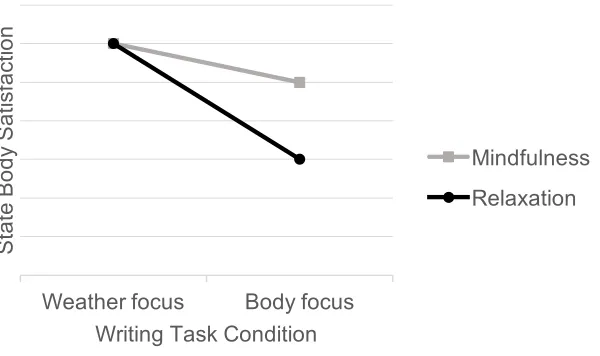
Hypothesis 5. There will be an interaction between writing task and induction, such that
there will be no differences in the participants’ body satisfaction in the unpleasant weather
condition whether they receive the mindfulness induction or relaxation induction. However, in
the disliked body part condition, those who receive the mindfulness induction will report
significantly higher body satisfaction that those who receive the relaxation induction. Thought
Supression
Body Satisfaction
MINDFULNESS, THOUGHT SUPPRESSION, AND BODY SATISFACTION 20
Figure 4. The proposed interaction between writing task condition and induction condition.
Weather focus Body focus
S
ta
te
B
o
d
y
S
a
tisf
a
ct
io
n
Writing Task Condition
Mindfulness
MINDFULNESS, THOUGHT SUPPRESSION, AND BODY SATISFACTION 21
2. METHODS
2.1. Design
2.1.1. Study 1
This was a correlational study with bootstrapping analyses to determine if thought
suppression (mediating variable) explains the relation between facets of mindfulness (predictor
variables) and body satisfaction (outcome variable). Body mass index, trait self-esteem, and
depression were tested as covariates.
2.1.2. Study 2
The second study was a controlled experiment and employed three separate 2x2 between
group ANOVAs to test the third, fourth, and fifth hypotheses. The first independent variable is
the writing task, either a body-focus or a weather-focus task. The latter was the control task. The
second independent variable is the induction condition, either a mindfulness induction or a
relaxation induction. The latter was the control condition. Thus, there were four separate groups
in Study 2: Body focus/Mindfulness, Body focus /Relaxation, Weather focus/Mindfulness, and
Weather focus/Relaxation. The dependent variables were state mindfulness and attempted
thought suppression for hypothesis three, and state body satisfaction for hypotheses four and
five.
2.2. Participants
2.2.1. Power analysis. In order to determine the required sample size for the present
research, a power analysis was conducted using G*power. The required sample size for the
laboratory portion was determined, as attrition from the online to laboratory component was
expected to be approximately 60%. Effect sizes from past literature were used; a mindfulness
MINDFULNESS, THOUGHT SUPPRESSION, AND BODY SATISFACTION 22
CI = 0.04, 1.68), when compared to a control group (Atkinson & Wade, 2014). In the same
study, the mindfulness intervention had a moderate effect on body image acceptance when
compared to a dissonance group (d = 0.50, p < .05, 95% CI = -.37, 1.37). In another study, a
single-session mindfulness intervention had a medium effect on body dissatisfaction (partial 𝜂" =
.12; p < .05, 95% CI = .0076, .278; Adams et al., 2013). Thus, in order to remain conservative, a
moderate effect size was assumed. Using a moderate effect size, it was determined that 85
participants would be needed in the experiment to detect statistically significant effects. This
number was rounded to 100 participants in case of missing or unusable data, or the withdrawal of
consent. Based on a 60% attrition rate, this means that 250 participants were recruited for the
proposed research.
2.2.2. Study 1
Participants for Study 1 were 248 women undergraduate students from the University of
Windsor. Only women were included because body satisfaction for women and men manifests
differently. Low body satisfaction for women typically stems from a desire to be thinner and
more beautiful, but men are generally dissatisfied with their body because they are not as lean
and muscular as the men portrayed in the media (Sanftner et al., 2009). Inclusion criteria were
female sex and no past or current diagnosis of an eating disorder. These questions are part of the
Participant Pool screening procedures, and those who indicated they were men or had a past or
current eating disorder diagnosis were unable to see the study. Participants signed up for the
study through the online participant pool and received course credit for their participation. The
majority of participants were Caucasian (61%), reported no prior meditation experience (63%),
MINDFULNESS, THOUGHT SUPPRESSION, AND BODY SATISFACTION 23
2.2.3. Study 2
Participants for Study 2 were 76 women undergraduate students who had participated in
Study 1. Although participants signed up for both studies at once, most participants cancelled
their timeslots for Study 2, upon completion of Study 1. Furthermore, several participants who
retained their timeslot for Study 2 did not attend, and were considered “no-shows.”
2.3. Procedure
Eligible students were invited to take part in the studies via an advertisement posted on
the Participant Pool website (see Appendix O). The studies were advertised as one study
consisting of two parts, so that the same students participated in both parts. The studies were
visible only to female undergraduates without a past or current diagnosis of an eating disorder.
Participants signed up for both studies at once. The first study was conducted online and
took approximately 60 minutes, after which, 1.0 bonus points was awarded. The second study
then was conducted in the laboratory and took approximately 1 hour, after which the participants
were awarded another 1.0 bonus points.
In order to minimize demand characteristics, participants were told that they were
participating in research about personality and how people think about themselves. They also
were told that in order to fully assess how personality influences self-perception, both online and
laboratory sessions are necessary to give a better understanding of how these factors interact.
The study also was advertised as teaching breathing techniques for stress reduction. As past
research from this laboratory demonstrated difficulty for recruitment of in-lab experiments, this
description was included to attract more participants.
Before any questionnaires were administered, participants selected a time slot for their
MINDFULNESS, THOUGHT SUPPRESSION, AND BODY SATISFACTION 24
participants could sign up for each timeslot. These sessions took place 1 to 2 weeks after the
online survey. The time slots were randomized ahead of time so that participants were in one of
the four conditions: Weather focus/Mindfulness, Weather focus/Relaxation, Body
focus/Mindfulness, or Body focus/Relaxation.
2.3.1. Procedure Study 1
After selecting their time slots, participants were guided to the online survey. The first
page was the Consent to Participate in Online Research form (Appendix P), which contained the
purpose and procedures of the study, as well as any known risks and benefits. Participants
indicated informed consent by selecting “I agree” at the bottom of the web page. After providing
consent, participants continued the survey, which consisted of the following questionnaires:
demographics, the Five Facet Mindfulness Questionnaire (FFMQ), the White Bear Suppression
Inventory (WBSI), the Body Areas Satisfaction Scale (BASS) of the Multidimensional Body
Self-Relations Questionnaire (MBSRQ), the Rosenberg Self-Esteem Scale (RSES), and the Beck
Depression Inventory-II (BDI-II). To prevent order effects, the last six questionnaires were
randomized in the online survey. For the online portion of the study, BMI was assessed as a
separate question at the end of the study.
2.3.2. Procedure Study 2
In order to prevent attrition, participants were sent an e-mail or text reminding them of
their timeslot two days before their lab session. When participants came into the laboratory, each
individual was guided to a separate room equipped with a computer. Participants individually
completed Study 2 to ensure that their answers were independent of one another, as this is an
assumption of the statistical test used to analyse the data from Study 2 (Field, 2009). With the
MINDFULNESS, THOUGHT SUPPRESSION, AND BODY SATISFACTION 25
on the laboratory computers. This was to ensure that the instructions and experimental
manipulations were administered in a standardized manner.
The first page of the survey was the consent form, which participants were instructed to
re-read, in order to establish ongoing consent. Next, they completed the Toronto Alexithymia
Scale-20 and the Satisfaction with Life Scale as distraction measures, in order to prevent
hypotheses guessing. To prevent order effects the sequence of these two questionnaires was
counterbalanced. The survey program (FluidSurveys) was configured so that participants were
randomly assigned to given either the body-focus group or the weather-focus group. Participants
in the body-focus group were asked to type on the laboratory computer about a part (or parts) of
their body that they dislike for five minutes. Prompts were given to help the participants write as
much as they could about the disliked body part. Prompts included items such as “why don’t you
like the body part?” and “what is it about the body part that you dislike?” (see Appendix Q for
complete list of prompts). Participants in the weather-focus group were asked to type on the
laboratory computer about weather that they do not like. Prompts were given to help the
participant write as much as they could about the weather. Prompts included items such as “why
don’t you like that weather?” and “what is it about that weather that you dislike?” (see Appendix
R for full list of prompts). This was the manipulation of the first independent variable, type of
writing task.
Once more, the survey software was used to randomly assign participants to either the
mindfulness or relaxation induction groups. The participants were guided to a separate page that
had an audio recording made by the experimenter. Participants were told that they are going to
engage in a focussed breathing task. They were instructed on how to sit for the duration of the
MINDFULNESS, THOUGHT SUPPRESSION, AND BODY SATISFACTION 26
S), in which participants were instructed to direct their attention to their breathing, without trying
to change or control it. They also were told that if they have any other thoughts, they should
acknowledge these thoughts without judgment or any attempts to control or change the thoughts;
they should just gently bring their focus back to their breathing.
Those in the relaxation condition were given a relaxation induction (see Appendix T).
They were told to take deep breaths and progressively relax their muscles. Participants were
instructed to relax the muscles in their rights hand and arm, working their way over to their left
arm and to their face. They continued relaxing muscles throughout their body, eventually ending
by relaxing the muscles in their feet. No instruction on mindfulness attention were given. This
was the manipulation of the second independent variable, type of induction. Both the
mindfulness induction and the relaxation induction have been used in previous studies and have
had significant effects on state mindfulness and state relaxation, respectively (Adams et al.,
2013; Vinci et al., 2014). Additionally, in a study by Vinci and colleagues (2014), the
mindfulness induction resulted in higher state mindfulness than the relaxation induction.
After the manipulation, participants were given a state measure of mindfulness (TMS).
They also were given a measure of affect (PANAS) to determine if the manipulations resulted in
participants reporting similar affect. Then they were given a state measure of body satisfaction
(BISS) and asked how many times they thought about the disliked body part or weather and how
hard they tried to suppress these thoughts, on a scale of one to 10. The order of the PANAS and
BISS was counterbalanced to prevent order effects.
Once the participants completed the final measures, a post-study information letter was
provided (see Appendix U), which was used to explain the purpose of both parts of the study.
MINDFULNESS, THOUGHT SUPPRESSION, AND BODY SATISFACTION 27
After this, participants were told that obtaining their height and weight is an important part of the
study. Those who agreed were given an additional consent form (see Appendix V), and their
height and weight was measured in the lab to provide a precise BMI. This was to prevent
inaccuracy associated with self-reporting of height and weight for the experimental portion of the
study. Participants were asked to remove their shoes and outdoor clothing prior to measuring
their height and weight. Measurements were taken in the winter, in the morning or afternoon.
2.3.3. Pilot Testing
To determine the feasibility of Study 2, the procedure was piloted approximately one
month before the study was available to students in the Participant Pool. This was done to ensure
that the body-focussed writing task reduced body satisfaction. The pilot test also assessed
whether the mindfulness manipulation resulted in higher state mindfulness than the relaxation
instruction. Finally, the pilot test was used to determine if participants understood and could
respond to the questions assessing state thought suppression, as these exact questions were not
used in previous research. Twenty students from the Pool were recruited for the pilot testing.
The procedures for the pilot testing were the same as outlined above for Study 2, with a
few exceptions. After receiving the post-study information letter, participants in the pilot test
were asked about the writing task and induction. Specifically, those in the body-focus group
were asked whether the writing task was easy to complete and made them think about disliked
aspects of their body. Several participants reported that the task was not very effective, as they
wrote only one or two words; thus, participants in Study 2 explicitly were instructed to write for
the entire five minutes provided, and that it was important to write as much as possible.
MINDFULNESS, THOUGHT SUPPRESSION, AND BODY SATISFACTION 28
too long/too short and easy to follow. All participants reported that they were satisfied with the
induction, thus, no modifications were made for Study 2.
2.4. Measures
See Table 1 in the Results for descriptive statistics for all measures.
2.4.1. Demographics Questionnaire
Participants completed a brief demographics questionnaire (see Appendix A) to
determine age, ethnicity, and previous diagnosis of an eating disorder. Questions about previous
meditation experience or other types of meditative practices, such as yoga, were included to
ensure that the participants in the four experimental conditions had equivalent meditation
experience.
Past meditation experience. Past meditation experience was assessed using the
following the questions: “Have you ever practiced meditation before?”, “Have you ever engaged
in meditative-type practices before, such as yoga?”, “Have you ever engaged in
contemplative-type practices before, such as prayer, rosary, or misbaha?”, and “Have you ever received
dialectical behavioural therapy (DBT) before?” These questions were included, as these practices
have been associated with increases in mindfulness (de Castro, 2015; Perroud, Nicastro,
Jermann, & Huguelet, 2012). Thus, participants who reported engaging in these practices may
have had higher mindfulness than those who did not. Participants who answered “yes” to any of
these questions were coded as 1, and those who answer “no” to all of these questions were coded
as 0. An ANOVA was used to ensure these groups did not score statistically different on the
MINDFULNESS, THOUGHT SUPPRESSION, AND BODY SATISFACTION 29
2.4.2. Independent Variable Measure
Five Facet Mindfulness Questionnaire (FFMQ). The FFMQ evaluates five different
aspects of mindfulness: observing (noticing) internal and external experiences, describing
(labelling) internal experiences such as thoughts and feelings, acting with awareness in
present-moment activities, non-judging of internal experiences, and non-reactivity to inner experiences
(Baer et al., 2006; see Appendix B).
The FFMQ consists of 39 items such as “I’m good at finding words to describe my
feelings” and “I find it difficult to stay focused on what’s happening in the present moment.” All
items are answered on a scale, ranging from 1 (never or very rarely true) to 5 (very often or
always true). Half of the items are scored such that low scores indicate higher mindfulness; these
items are reverse-scored before obtaining total mindfulness scores. The other half of items are
scored such that high scores indicate high mindfulness.
The FFMQ has good convergent validity, demonstrated by the negative correlation
between the facets describing, non-judging, acting with awareness, and non-reactivity, and
thought suppression and neuroticism (rs ranging from -.23 to -.56). Additionally, there are
positive correlations between all facets of the FFMQ and self-compassion and emotional
intelligence (rs ranging from .14 to .60; Baer et al., 2006). In the present study, the FFMQ
demonstrated good internal consistency, with Cronbach’s alpha coefficients ranging from .74 to
.91 for the different facets.
2.4.3. Mediating Variable Measure
White Bear Suppression Inventory (WBSI). The WBSI is a trait measure assessing the
tendency to suppress thoughts (Wegner & Zanakos, 1994; see Appendix C). There are 15 items
MINDFULNESS, THOUGHT SUPPRESSION, AND BODY SATISFACTION 30
disagree) to 5 (strongly agree). Scores are summed to yield a total score between 15 and 75, with
higher scores indicating a stronger tendency to suppress thoughts.
Scores on the WBSI are stable over time (rs ranging from .69 to .92), indicating good
test-retest reliability. Scores on the WBSI are positively correlated with scores of obsessive
thinking, anxiety, and depression (rs ranging from .38 to .58), thereby demonstrating convergent
validity (Wegner & Zanakos, 1994). In the present study, the WBSI demonstrated high internal
consistency with a Cronbach’s alpha of .93.
2.4.4. Dependent Variable Measures
Multi-dimensional Body Self Relations Questionnaire; Body Appearance
Satisfaction Scale (BASS). The BASS is a 9-item scale designed to assess satisfaction with
specific body parts or attributes, such as face, legs, waist, and weight (Cash, 2000; see Appendix
D). Items are scored on a scale ranging from 1 (very dissatisfied) to 5 (very satisfied). Scores are
summed to yield a total, and higher scores indicate higher body satisfaction. The BASS also has
a one-month test-retest reliability of r = .74 in college females, indicating that scores tend to
remain stable over time (Cash, 2000). In the present study, the BASS had good internal
consistency with a Cronbach’s alpha of .85.
Multi-dimensional Body Self Relations Questionnaire; Appearance Evaluation Scale
(AES). The AES assesses satisfaction with global appearance using seven items, such as “I like
my looks just the way they are” (Cash, 2000; see Appendix E). Items are scored on a scale
ranging from 1 (definitely disagree) to 5 (definitely agree); scores are summed to yield a total
and higher scores indicate more satisfaction with appearance. The AES also has a one-month
MINDFULNESS, THOUGHT SUPPRESSION, AND BODY SATISFACTION 31
(Cash, 2000). In the present study, the AES demonstrated good internal consistency, with a
Cronbach’s alpha of .90.
Body Image States Scale (BISS). The BISS is a self-report measure designed to assess
state body image satisfaction, including perceived attractiveness, appearance compared to others,
body shape and size, and body weight (Cash, Fleming, Alindogan, Steadman, & Whitehead,
2002; see Appendix F). There are 6 items, scored on a 9-point scale. Higher scores indicate
higher state body satisfaction. Additionally, the BISS demonstrates acceptable two or three-week
test-retest reliability of r = .69 in university women. Convergent validity was demonstrated by a
positive correlation between scores on the BISS and a trait measure body satisfaction (r = .78),
and negative correlations between BISS and measures of body dissatisfaction and BMI (rs
ranging from -.28 to -.56; Cash et al., 2000). In the present study, the BISS had good internal
consistency, with Cronbach’s alpha of .81.
Toronto Mindfulness Scale (TMS). The TMS is a self-report measure of state
mindfulness with two subscales: curiosity towards present moment experiences and decentering,
which involves being aware of experiences without being overwhelmed by them (Lau et al.,
2006; see Appendix G). The TMS consists of 13 questions that are answered on a scale ranging
from 0 (not at all) to 4 (very much). Items are statements such as “I noticed thoughts come and
go.” Higher scores indicate higher state mindfulness.
The TMS has convergent validity, as demonstrated by positive correlations between
scores on the TMS and scores with another state measure of mindfulness, the State Mindfulness
Scale (rs ranging from .31 to .43; Tanay & Bernstein, 2013). In the present study, the TMS
MINDFULNESS, THOUGHT SUPPRESSION, AND BODY SATISFACTION 32
The TMS does not assess the same components of mindfulness as the FFMQ and is a
state measure of mindfulness, whereas the FFMQ is a trait measure. Thus, these two scales were
used for different purposes in the present research.
State Thought Suppression (Experimenter Designed). State thought suppression, or
how often the participants try to suppress negative thoughts during a ten-minute period, was
assessed using two questions (see Appendix H). The first assessed the frequency of negative
thoughts: “How many times during the breathing exercise did you think about the body part you
disliked, or about parts of your body you dislike in general?” The second question assessed how
hard the participants tried to suppress such thoughts: “On a scale of 1 to 10, with 1 being not at
all and 10 being as hard as you could, how much did you try to avoid or suppress negative
thoughts about your body image during the breathing exercise?” Higher scores on this question
indicate a greater attempt to suppress negative body image thoughts. For those in the
weather-focus groups, these questions will be re-worded to ask about weather-related thoughts (see
Appendix H).
Although these questions have not been validated as a way to assess state thought
suppression, Schmidt and Gendolla (2008) assessed the frequency of target thoughts by asking
participants either to verbalize when they had the thought, record on a hand-held counter when
they had the thought, or mark a tick on a piece of paper when they had the thought. In the present
study, participants were asked to retrospectively report the number of target thoughts, rather than
prospectively, so that they could devote their full attention to the induction. Furthermore, Beck,
Gudmundsdottir, Palyo, Miller, and Grant (2006) used a similar question to Item 2 in a study
assessing thought suppression in individuals who had posttraumatic stress disorder as a result of