Scholarship at UWindsor
Scholarship at UWindsor
Electronic Theses and Dissertations Theses, Dissertations, and Major Papers
2011
Gene Subset Selection Approaches Based on Linear Separability
Gene Subset Selection Approaches Based on Linear Separability
Amirali Jafarian
University of Windsor
Follow this and additional works at: https://scholar.uwindsor.ca/etd
Recommended Citation Recommended Citation
Jafarian, Amirali, "Gene Subset Selection Approaches Based on Linear Separability" (2011). Electronic Theses and Dissertations. 7908.
https://scholar.uwindsor.ca/etd/7908
by
Amirali Jafarian
A Thesis
Submitted to the Faculty of Graduate Studies
through Computer Science
in Partial Fulfillment of the Requirements for
the Degree of Master of Science at the
University of Windsor
Windsor, Ontario, Canada
2011
1*1
Published Heritage Branch
395 Wellington Street OttawaONK1A0N4 Canada
Direction du
Patrimoine de I'edition
395, rue Wellington OttawaONK1A0N4 Canada
Your file Votre reference ISBN: 978-0-494-81742-1 Our file Notre r6f6rence ISBN: 978-0-494-81742-1
NOTICE: AVIS:
The author has granted a
non-exclusive license allowing Library and Archives Canada to reproduce, publish, archive, preserve, conserve, communicate to the public by
telecommunication or on the Internet, loan, distribute and sell theses
worldwide, for commercial or non-commercial purposes, in microform, paper, electronic and/or any other formats.
L'auteur a accorde une licence non exclusive permettant a la Bibliotheque et Archives Canada de reproduire, publier, archiver, sauvegarder, conserver, transmettre au public par telecommunication ou par I'lnternet, preter, distribuer et vendre des theses partout dans le monde, a des fins commerciales ou autres, sur support microforme, papier, electronique et/ou autres formats.
The author retains copyright ownership and moral rights in this thesis. Neither the thesis nor substantial extracts from it may be printed or otherwise reproduced without the author's permission.
L'auteur conserve la propriete du droit d'auteur et des droits moraux qui protege cette these. Ni la these ni des extraits substantiels de celle-ci ne doivent etre imprimes ou autrement
reproduits sans son autorisation.
In compliance with the Canadian Privacy Act some supporting forms may have been removed from this thesis.
Conformement a la loi canadienne sur la protection de la vie privee, quelques
formulaires secondaires ont ete enleves de cette these.
While these forms may be included in the document page count, their removal does not represent any loss of content from the thesis.
Bien que ces formulaires aient inclus dans la pagination, il n'y aura aucun contenu manquant.
1+1
I. Co-Authorship Declaration
I hereby declare that this thesis incorporates material that is result of joint research, as
follows:
This thesis also incorporates the outcome of a joint research undertaken in collaboration
under the supervision of Professor Dr. Alioune Ngom. The collaboration is covered in
Chapter 3 and 4 of the thesis. In all cases, the key ideas, primary contributions,
experimental designs, data analysis and interpretation, were performed by the author, and
the contribution of co-authors was primarily through the provision of advice when
needed.
I am aware of the University of Windsor Senate Policy on Authorship and I
certify that I have properly acknowledged the contribution of other researchers to my
thesis, and have obtained written permission from each of the co-authors to include the
above materials in my thesis.
I certify that, with the above qualification, this thesis, and the research to which it
refers, is the product of my own work.
II. Declaration of Previous Publication
This thesis includes 3 original papers that have been previously published/submitted for
publication in peer reviewed conferences, as follows:
3 and 4
3 and 4
3 and 4
A New Gene Subset Selection Approach Based on Linear Separating Gene Pairs, IEEE International Conference on Computational Advances in Bio and medical Sciences (ICCABS 2011), Orlando FL, Feb 3-5, 2011,pp.l05-110.
A Novel Recursive Feature Subset Selection Algorithm, 11th IEEE International Conference on Bioinformatics & Bioengineering, Taichung, Taiwan, October 24-26 2011
New Gene Subset Selection Approaches Based on Linearly Separating Genes and Gene-Pairs, the 6th International Conference on Pattern recognition in Bioinformatics, Delft, Netherlands, November 2-4 2011
published
submitted
submitted
1 certify that I have obtained a written permission from the copyright owners to
include the above published materials in my thesis. I certify that the above material
describes work completed during my registration as graduate student at the University of
Windsor.
1 declare that, to the best of my knowledge, my thesis does not infringe upon
anyone's copyright nor violate any proprietary rights and that any ideas, techniques,
quotations, or any other material from the work of other people included in my thesis,
published or otherwise, are fully acknowledged in accordance with the standard
referencing practices. Furthermore, to the extent that I have included copyrighted
owners to include such materials in my thesis.
1 declare that this is a true copy of my thesis, including any final revisions, as
approved by my thesis committee and the Graduate Studies office, and that this thesis has
not been submitted for a higher degree to any other University or Institution.
We address the concept of linear separability of gene expression data sets with
respect to two classes, which has been recently studied in the literature. The problem is to
efficiently find all pairs of genes which induce a linear separation of the data. We study
the Containment Angle (CA) defined on the unit circle for a linearly separating gene-pair
(LS-pair) as an alternative to the paired t-test ranking function for gene selection. Using
the CA we also show empirically that a given classifier's error is related to the degree of
linear separability of a given data set. Finally we propose gene subset selection methods
based on the CA ranking function for LS-pairs and a ranking function for linearly
separation genes (LS-genes), and which select only among LS-genes and LS-pairs.
Overall, our proposed methods give better results in terms of subset sizes and
classification accuracy when compared to well-performing methods, on many gene
To my beloved mother
for all your love, support and faith
I love you
First of all, I would like to convey my sincere gratitude to my supervisor, Dr.
Alioune Ngom for his excellent supervision, advice and guidance throughout this thesis.
Without his help and guidance this thesis would not have been completed. Also, he
provided me unflinching encouragement and support in various ways.
Besides, I would also like to thank my internal reader, Dr. Luis Rueda, who has
contributed in our research and gave us precious ideas to improve the quality of this
research. Also, I would like to thank members of my master committee, Dr. Kemal Tepe,
Department of Electrical and Computer Engineering, Dr. Luis Rueda, School of
Computer Science, and Dr. Jianguo Lu, the chair of the committee for their constructive
DECLARATION OF CO-AUTHORSHIO AND PREVIOUS PUBLICATION iii
ABSTRACT vi
DEDICATION vii
ACKNOWLEDGEMENTS viii
LIST OF TABLES xii
LIST OF FIGURES xv
CHAPTER
I. INTRODUCTION
1. Problem Statement 3
2. Outline 5
II. REVIEW OF LITERATURE
1. Filter Methods 6 1.1. Univariate methods 7
\.\.\.t-test 7
1.1.2. Fisher Criterion 8 1.1.3. Signal to noise statistics 8
1.1.4.x2 Statistics 8 1.1.5. Relief Algorithm 9 1.1.6.T-NOM 10 1.2. Multivariate methods 10
1.2.1. Minimum Redundancy and Maximum Relevancy
(mRMR) 11 1.2.2. Pair based method based with /-test [2] 12
2. Wrapper Methods 12 2.1. Forward Selection and Backward Selections 13
2.2. Floating Search 14 2.3. TAFS Algorithm 15 3. Embedded methods 15
3.1. SVM-RFE 16 4. Linearly Separability of Gene Expression Datasets 16
4.1. Algorithm of Linear Separability [1]: 20
Separating Genes and Pairs of Genes 21
1.1. LS-Pair Ranking Criterion 21 1.2. LS-Genes Ranking Criterion 25 1.3. Search strategies for selecting LS genes and LS pairs.25
1.3.1.LS Approach 27 1.3.2. LSGP Approach 28 1.3.3. Graph-Based Methods 29 2. Recursive Feature Subset selection 33
2.1. LS samples vs. non-LS samples 35 2.2. Recursive Feature Selection Algorithm 36
2.2.1. Ranking criteria 38
IV. COMPUTATIONAL EXPERIMENTS
1. Comparison of the pair based algorithms with the
greedy pair method of [2] 39 2. Comparison of the pair based algorithm with mRMR [6]43
3. Comparison between our pair based approaches 46
4. Comparison of the Recursive Algorithm with baselines
and mRMR [6] 47 5. Train and Test Procedure 50
5.1. Reporting a single subset of genes 54
5.1.1. Frequent Genes Reporting 54 5.1.2. Best Subset Report 58
6. Summary 62 7. Comparison of running time 63
V. DATASETS AND MATERIALS
1. Datasets 65 2. Pre-Processing Steps 65
VI. CONCLUSIONS AND FUTURE W O R K
1. Conclusion and Discussion 68
2. Future Work 69
APPENDICES
Gene Report 70
TABLE 1. DEGREE OF SEPARABILITY OF DATASETS 19
TABLE 2. AVERAGE OF CLASSIFIERS' PERFORANCES ON BOTTOM 10 (B) AND TOP 10 (T) LS
PAIRS 23
TABLE 3. ACCURACY ON THE TOP THREE LS-PAIRS VERSUS ACCURACY 24
TABLE 4. ACCURACY ON THE BOTTOM 3 LS PAIRS VERSUS ACCURACY 24
TABLE
5. [XX]-LSGP
VERSUSMIQ [6]
ON SUBSETSS 44
TABLE
6. [XX]-LSGP
VERSUSMIQ [6]
ON BEST-S45
TABLE
7. [XX]-LSGP
VERSUSLS [11]
ON BEST-S'S46
TABLE 8. COMPARISON OF RECURSIVE ALGORITHM IMPLEMENTED BY F-TEST WITH
BASELINES BASED ON SUBSETS S 48
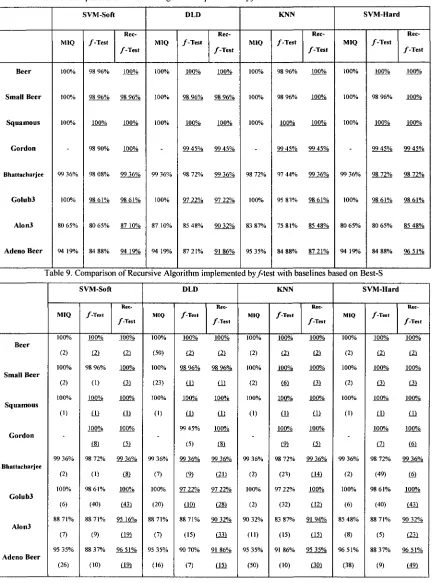
TABLE 9. COMPARISON OF RECURSIVE ALGORITHM IMPLEMENTED BY F-TEST WITH
BASELINES BASED ON BEST-S 48
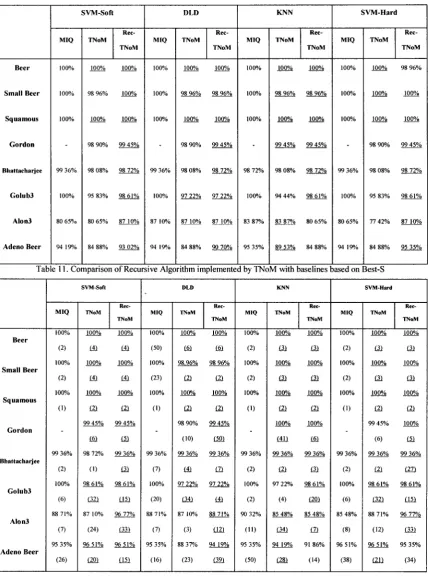
TABLE 10. COMPARISON OF RECURSIVE ALGORITHM IMPLEMENTED BY T N O M WITH
BASELINES BASED ON SUBSETS S 49
TABLE 11. COMPARISON OF RECURSIVE ALGORITHM IMPLEMENTED BY T N O M WITH
BASELINES BASED ON BEST-S 49
TABLE
12.
ACCURACY OFS
FOR[XX]-LSGP,
WITH RANKING AND SELECTION ON TRAINPWGSETS 51
TABLE
13.
ACCURACY OF BEST-S FOR[XX]-LSGP,
WITH RANKING AND SELECTION ONBASELINES, WITH RANKING AND SELECTION ON TRAINING SETS 53
TABLE 15. PERFORMANCE OF SUBSETS BEST-S WITH RECURSIVE ALGORITHMS AND THEIR
BASELINES, WITH RANKING AND SELECTION ON TRAINING SETS 5 3
TABLE
16.
PERFORMANCE OF FREQUENT SUBSETS OF GENES OFLSGP
APPROACH55
TABLE
17
PERFORMANCE OF FREQUENT SUBSETS OF GENES OFDF-LSGP
APPROACH56
TABLE
18
PERFORMANCE OF FREQUENT SUBSETS OF GENES OFBF-LSGP
APPROACH56
TABLE 19 PERFORMANCE OF THE FREQUENT SUBSETS OF GENES WITH T N O M VS.
REC-TNoM 57
TABLE 20. PERFORMANCE OF THE FREQUENT SUBSETS OF GENES WITH F-TESTVS.
REC-F-TEST 57
TABLE
21
PERFORMANCE OF BEST SUBSETS OF GENES OFLSGP
APPROACH59
TABLE
22
PERFORMANCE OF BEST SUBSETS OF GENES OFDF-LSGP
APPROACH59
TABLE
23
PERFORMANCE OF BEST SUBSETS OF GENES OFBF-LSGP
APPROACH60
TABLE 24PERFORMANCE OF THE BEST SUBSETS OF GENES WITH F-TEST VS. REC- F-TEST..60
TABLE 25 PERFORMANCE OF THE BEST SUBSETS OF GENES WITH T N O M VS REC-TNOM...61
TABLE 26. SUMMARY OF ATTRIBUTES OF ALGORITHMS 62
TABLE 27. SUMMARY OF THE BEST ACCURACIES ACHIEVED WITH DIFFERENT INTRODUCED
APPROACHES 63
TABLE 28. COMPARISON OF RUNNING TIMES OF PAIR SELECTION AND THE RECURSIVE
LAGORITHM 6 4
TABLE 29. GENE EXPRESSION DATASETS USED 65
TABLE
30.
TOP50
FREQUENT GENES FOR GOLUB DATASET USINGBF-LSGP
APPROACH..70
TABLE 32. TOP 50 FREQUENT GENES FOR GOLUB DATASET USING REC-F-TEST APPROACH72
TABLE 33. TOP 50 FREQUENT GENES FOR ALON DATASET USING REC-F-TEST APPROACH..73
TABLE
34.
TOP50
BEST GENES WITH SVM-SOFT FOR GOLUB DATASET USINGDF-LSGP
APPROACH 74
TABLE
35.
TOP50
BEST GENES FOR ALON WITH SVM-SOFT DATASET USINGDF-LSGP
APPROACH 75
TABLE 36. TOP 50 BEST GENES WITH SVM-SOFT FOR GOLUB DATASET USING REC-TNOM
APPROACH 76
TABLE 37. TOP 50 BEST GENES WITH SVM-SOFT FOR ALON DATASET USING REC-TNOM
FIGURE 1. AN LS PAIR TAKEN FROM GOLUB (LEUKEMIA) DATASET 17
FIGURE 2. ANON-LS PAIR TAKEN FROM GOLUB (LEUKEMIA) DATASET 17
FIGURE 3. A SET OF FOUR NON-SEPARABLE POINTS, (A) THE CONSTRUCTION OF THE
VECTORS, (B) THEIR PROJECTION ONTO THE UNIT CIRCLE [1] 18
FIGURE 4. A SET OF FOUR SEPARABLE POINTS PRODUCING VECTORS ON THE UNIT CIRCLE
THAT ARE CONTAINED IN A SECTOR OF ANGLE B < 180° [1] 18
FIGURE 5. A SET OF POINTS CAUSING LINEAR SEPARABILITY (LEFT PANEL) VS. NON
LPWEAR SEPARABILITY (RIGHT PANEL) 25
FIGURE 6. THE PROJECTION OF VECTORS OF LS POINTS IN THE ZERO-SPHERE (LEFT PANEL)
Vs. NON LINEAR SEPARABILITY (RIGHT PANEL) 25
FIGURE 7. RANKING CRITERION FOR LS GENES 25
FIGURE 8. EXAMPLES OF LS-SAMPLES VS. NON-LS SAMPLES 34
FIG 9. PERFORMANCE OF SVM-HARD ON GOLUB2 41
FIGURE 10. PERFORMANCE OF SVM-SOFT ON GOLUB2 41
FIGURE 11. PERFORMANCE OF KNN ON GOLUB2 41
FIGURE 12. PERFORMANCE OF DLD ON GOLUB2 41
FIGURE 13. PERFORMANCE OF QDA ON GOLUB2 41
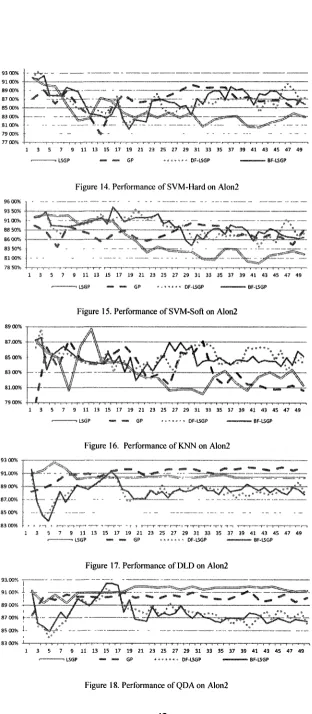
FIGURE 14. PERFORMANCE OF SVM-HARD ON ALON2 42
FIGURE 15. PERFORMANCE OF SVM-SOFT ON ALON2 42
FIGURE 16. PERFORMANCE OF KNN ON ALON2 42
FIGURE 17. PERFORMANCE OF DLD ON ALON2 42
INTRODUCTION
DNA microarrays give the expression levels for thousands of genes in parallel either for a
single tissue, condition, or time point. In the former the snapshot of the expression of
genes for different samples is taken, whereas the latter shows the expression for a period
of time. Microarray data sets are also usually noisy with a low sample size given the large
number of measured genes. Such data sets present many difficult challenges for sample
classification algorithms. Since many genes are irrelevant to the target classes,
considering them would not only introduce noise and degrade the classification
performance, but also increase the computational time. Furthermore, with this huge
number of genes, we have the problem of curse of dimensionality and the classification
algorithms trained upon the data would be prone to the problem of over-fitting. The small
number of samples makes it even worse. Hence in order to avoid the problems of
over-fitting and curse of dimensionality, feature selection algorithms are applied to reduce the
dimension of data to have at least faster and satisfactory classification accuracy with far
less numbers of features selected. In addition, with filtering irrelevant genes, the
biological information which was already hidden will be manifested. The feature subset
selection problem is to find a smallest subset of genes, whose expression values allow
sample classification with the highest possible accuracy; however Chen et al. [17]
showed that finding the smallest feature subset selection is an NP-hard problem and some
heuristic algorithms are needed to search for the optimal subset of genes. Feature subset
selection methods have received considerable attention in recent years as better
dimensionality reduction methods than feature extraction methods, which yield features
that are difficult to interpret. Many approaches have been proposed in the literature to
solve this problem. A simple and common method is the filter approach, which first
ranks single genes according to how well they each separate the classes and then selects
the top r ranked genes as the gene subset to be used; where r is the smallest integer,
which yields the best classification accuracy when using the subset. Also many feature
ranking criteria are proposed based on different (or a combination of) principles,
including redundancy and relevancy [2], [6]. Filter methods are simple and fast, but they
do not necessarily produce the best gene subsets. Filter methods often deal with each
gene separately and when each gene is considered individually, features' dependencies
may be ignored, which may lead to unsatisfactory classification performance. Hence, in
order to overcome this problem, a few multivariate filter techniques and wrapper
methods have been introduced; multivariate filtering approaches can distinguish the
target function better and model features' dependencies. Other methods introduced in
literature are the wrapper approaches, which evaluate subsets of genes irrespective of
any possible ranking over the genes. Such methods are based on heuristics which directly
search the space of gene subsets and are guided by a classifier's performance on the
selected gene subsets [9]. The best methods combine both gene ranking and wrapper
approaches but they are computationally intensive.
Beside gene subset selection, in the context of microarray data many other analyses
have been intensively studied, one of which is clustering; the problem in clustering is to
find genes, which share similar patterns; the motivation of finding these genes is that they
1. Problem Statement
As already mentioned better approaches in filter methods are multivariate methods,
modeling features' dependencies. However there are still only a few works for
multivariate filtering approaches (eg., Selection of pairs of genes, triplets of genes or
even group of genes) and most of the filtering approaches are categorized as univariate
filtering approaches, where genes are ranked separately and the dependencies are
ignored; therefore we believe gene subset selection, more specifically multivariate
filtering approaches deserve more consideration.
In this thesis first we present gene subset selection methods based on the concept of
linear separability of gene expression data sets as introduced recently in [1]. We use their
geometric notion oi linear separation by pairs of genes (where samples belong to one of
two distinct classes termed red and blue samples in [1]) to define a simple criterion for
selecting (best subsets of) genes for the purpose of sample classification. It has been
suggested that an underlying molecular mechanism relates together the two genes of a
separating pair to the phenotype under study, such as a specific cancer. Recently, some
authors have considered pairs of genes as features to be used in filtering methods rather
using than single genes. The motivation for using gene-pairs instead of single genes is
that two single genes considered together may distinguish the classes much better than
when they are considered individually; this is true even if one or both of the genes have
low ranks from a ranking function defined for single genes. In other words, when we
select only top-ranked single genes using such ranking function, some subsets of genes,
which have greater class distinguishing capability (than the subset of top-ranked genes),
will not be selected due to the presence of low-ranked single genes. The authors of [2]
devised the first gene selection method based on using pairs of genes as features. Given a
gene-pair, they used diagonal linear discriminant (DLD) and compute the projected
coordinate of each sample data on the DLD axis using only the two genes, and then take
the two-sample ^-statistic on these projected samples as the pair's score. The authors then
devised two filter methods for gene subset selection based on the pair ^-scores. Our
approach in this thesis is to use both linearly separating single genes (LS-genes) and
linearly separating gene-pairs (LS-pairs) as features for the purpose of finding the best
gene subsets. We propose ranking criteria for both LS-genes and LS-pairs in order to
evaluate how well such features separate the classes then devise methods that select
among top-ranked LS-genes and LS-pairs.
Also as already mentioned univariate filter methods, which rank single genes
according to how well they each separate the classes, are widely used for gene ranking in
the field of microarray analysis of gene expression datasets. These methods rank all of
the genes by considering all of the samples; however some of these samples may never
be classified correctly by adding new genes and these methods keep adding redundant
genes covering only some parts of the space and finally the returned subset of genes may
never cover the space perfectly. In this thesis we also introduce a new gene subset
selection approach which aims to add genes covering the space which has not been
2. Outline
The rest of this document is organized as follows. Chapter 2 provides a literature review
in the field of gene selection approaches. The fundamental part of this document is
chapter 3, where our approaches for gene subset selection are described. Chapter 4
discusses the computational results obtained with our approaches and different
experiments conducted to test the performance of our proposed approaches. Chapter 5
presents the details of datasets and pre-processing steps used in this thesis. Finally in
chapter 6 we conclude and cite some possibilities for future works.
REVIEW OF LITERATURE
The main aim of this chapter is to provide the reader with a literature review of the
previous important works done in the field of gene selection. Currently three major types
of feature selection techniques, depending on how the feature selection search combines
with the construction of the classification model, have been intensively employed in the
field of gene selection and dimension reduction in microarray datasets. They are filter
methods, wrappers methods, and embedded methods [18]. The three first sections of this
chapter are categorized based on these three types of gene selection techniques
mentioned, while the last part gives an overview of the recent work of Unger and Chor
[1], who introduced the concept of linear separability of gene expression datasets.
1. Filter Methods
Filter methods attempt to select features based on intrinsic nature of the data. In these
methods the gene selection process and classification process are separated; that is, first
features' scores are calculated and then low-scoring features are filtered out, finally the
remaining top ranked features will be used as input to machine learning classification
algorithms. This kind of selection is faster, simpler and the selected genes give better
generalization to unseen samples' classification [12]. Filter methods often treat mostly
each gene separately and when each gene is considered individually, features'
performance [12]. Hence, in order to cope with this problem, a number of multivariate
filter techniques and wrapper methods have been introduced; in the latter one (discussed
in section 2 of this chapter) gene selection is directed by a classifier's performance in
order to obtain the optimal subset of gene [9]. In this section, we discuss some univariate
filter methods, followed by multivariate filter methods.
1.1. Univariate methods
As already mentioned univariate methods consider each gene separately and due to high
dimension of microarray datasets, fast univariate techniques of filter methods have
attracted the attention of many researchers.
1.1.1. t-test
One of the most used statistical filter methods is t-test. For a dataset 5* consisting of n
features and m samples, the label of which is either +1 or -1 (2 class problem), the t-test
criterion is calculated by the eq.l, in which for each gene the mean [i* (resp., jutr) and the
standard deviation a* (resp., oj~) of samples of positive class (resp., negative class) are
used [22].
T(xi)-.
W-^ (Eq.l)
-J
n+ n
-Also, in the eq.l, n+ (resp., «-) is the number of samples labeled as +1 (resp., -1).
1.1.2. Fisher Criterion
Similarly, Fisher's criterion [26] evaluates the degree of separation between two classes,
being defined as follows:
Jigd = H^r (
Ec
i-
2
)
ai +al
Hedenfalk et al. [26] used /-test and Fisher Criteria in gene expression profiles of
breast cancer. The experimental results showed 51 genes as the best that differentiated the
three classes of tumours, returned by the Fisher criterion.
1.1.3. Signal to noise statistics
Golub et al. [4] introduced the modified ranking criterion called Signal-to-noise
statistics (also called "MITcorrelation"). Their modified ranking criterion is as follows:
MIT(x0
JAztI\ (Eqj)
1.1.4. x
2Statistics
Another example of statistical method used in microarray gene expression analysis is the
work of Liu et al. [28]. In their work each gene is evaluated by measuring the
* (Aij-Ejj)
2Where m is the number of intervals; number of classes is shown by k; A^ is the
number of observations in the ith interval, jt h class; the expected frequency Etj is
calculated by:
*«*£* (
E
q-
5
)
Where Rt is the number of observations in the ith interval, C,- the number of
observations in theyt/tclass and iVthe total number of observations.
Liu et al. [22] used this method for ranking genes. Experimental results with several
statistics, included the t-test, indicate that this heuristics yields sometimes the most
discriminatory features.
1.1.5. Relief Algorithm
Another univariate method to select relevant features is Relief algorithm, which does not
depend on heuristics. The algorithm is very simple; that is, for each sample, the closest
sample of a different class, called {nearest miss) and the closest sample of the same class,
{nearest hit) are selected. Then the score of each feature is calculated as the average over
all samples of magnitude of the difference between the distance to the nearest hit and the
distance to the nearest miss, in the projection on the respective feature. Finally, Relief
selects those features, whose scores, "relevance level", are above the given threshold T
[23].
Relief algorithm has been explored in gene selection by Wang and Makedon [27];
experimental results do not show outstanding results, although the performance of the
algorithm is comparable with other algorithms.
1.1.6. T-NOM
TNOM [15] is an example of a simple univariate method introduced by Ben-Dor et
al.(2000); they believe that informative genes have quite different values in the two
classes (normal Vs. tumour), and by defining a threshold these two classes should be
separated. Thus they set a threshold minimizing the number of training sample
misclassification and define the number of errors, made based on the threshold, as quality
of that gene and call it "p-value". Finally genes are sorted according to their p-values and
the highest ranked (with less number of errors) genes are selected. The idea of TNoM,
also, was inspired by Sinha [24], who chose a classifier to find discriminative genes.
1.2. Multivariate methods
As already discussed, multivariate methods, which model feature dependencies, may
distinguish the classes much better than univariate filter methods, where genes are
considered individually; in other words, when we select only top-ranked single genes
using a ranking function, some subsets of genes which have greater class distinguishing
capability (than the subset of top-ranked genes) will be lost due to the presence of
univariate methods but still much faster than wrapper methods. In this part we review
some multivariate filter methods.
1.2.1. Minimum Redundancy and Maximum Relevancy (mRMR)
Most of the approaches in feature selection rank top genes according to their power of
distinguishing between classes and select the top-ranked genes one by one at a time;
however these techniques can bring along certain redundancy; Ding and Peng [6] believe
while genes have high correlation to the target, they can be mutually far away from each
other; hence, they proposed a very efficient feature selection method based on the
minimum redundancy and maximum relevancy optimization approach; "Genes selected
via mRMR provide a more balanced coverage of the space and capture broader
characteristics of phenotypes" [6].
Let S be a subset of features or genes we are looking for. The minimum redundancy
condition is given by:
min
sw
s,w
s= ^^gjesKShdj) (Eq.6)
Where gi and gj denote two genes. This expression tries to select all genes that are
not correlated with each other, removing unnecessary genes, whose information could be
expressed by other genes. Furthermore, to measure discriminative power of genes with
respect to the target class, the following expression is used:
max
sW
sc, W
sc= ^Zg&Iigo Q (Eq.7)
Where / (g
t; C) is the MI between g
tand label or target class. Genes (features) are
incrementally selected in order to optimize both (Eq.6) and (Eq.7) simultaneously.
They did extensive experiments on six different gene expression datasets and high
accuracies were achieved based on their method, but all of their experiments were based
on whole dataset not train and test procedure; that is, they select their genes on whole
dataset and applied Leave-One-Out-Cross-Validation on whole of the dataset with only
selected genes; however this set of experiment may inflate the results.
1.2.2. Pair based method based with Hest [2]
B0 and Jonassen in [2] proved that genes in pairs can present some useful information
which is not discovered when genes are considered individually. They proposed two
different methods for feature selection; in their fast method, first they select the
top-ranked gene g, and then find gene g, such that the pair g,y has maximal pair /-score on the
DLD axis. In addition, they proposed another search strategy, which is more
computationally expensive, but yielding better performance, which iteratively selects top
disjointed ranked pairs. They experimented on two most used gene expression datasets
Golub [4] and Alon [5] and got their highest accuracies by selecting only 15-30 genes.
2. Wrapper Methods
Different and better, but more computational expensive, methods are wrapper methods,
drawback of filter methods, which is the fact that they do not take into account the effect
of the selected feature subset on the posterior performance of the classifier, has been
solved by introducing wrapper methods. Hence in these methods a search algorithm is
"wrapped" around the classification model. However it should be noted that wrapper
approaches have been criticized for having a high risk of over-fitting [12]; in other words,
the classifier performance is the only criterion in these methods and the gene selection is
directed by the classifier's performance blindly on training data, which may give poor
estimation and generalization on unseen data [12]. In addition, the computational time of
wrapper methods is another reason why filter methods have been mostly favoured in
microarray gene expression datasets; in other words, for each subset examined, a
classifier is trained m times in a m-fold cross validation or B times in a 5-bootstrap
approach, which makes the wrapper methods very computational expensive.
Since the space of feature subsets grows exponentially with the number of genes
increasing, heuristic search methods are exploited to guide the search for an optimal
subset. Classical wrapper methods include forward selection and backward selection.
Also, recently evolutionary based algorithms such as Genetic Algorithms (GA) have been
introduced in microarray datasets as a better alternative than forward selection and
backward selection algorithms.
2.1. Forward Selection and Backward Selections
In these strategies usually the greedy hill-climbing method is utilized to generate the
subset of features. In Forward Sequential Selection, the search is started with an empty
subset of features (resp., in backward Sequential Search with all features selected) and
add (resp., remove) one feature at a time (guided by the performance of a classifier) [20];
hence these algorithms avoid checking all possible subset of features to speed up the
procedure but they do not find the optimal subset of genes. Instead of starting from an
empty subset of features in Forward Selection or full subset of features in backward
selection, the search can also be started with a randomly selected subset, and then
forward search or backward search can be employed. Another approach is
"plus-/-Minus-r" search strategy which adds (Resp,. removes) n features at a time instead of adding
(Resp,. removing) one feature at a time [21].
2.2. Floating Search
As already mentioned classical wrapper methods, including sequenctial backward
selection (SBS) and sequenctial forward selection (SFS) suffer from the so-called "nested
effect"; consequently plus-/-Minus-r search strategy was introduced to overcome the
problem of "nested effect" [21]; "plus-/-Minus-r" procedure consists of applying after
each / forward steps r backward steps and then again / forward steps. The plus-/-Minus-r
method needs the parameters "/" and "r" to be specified, whereas Sequential Floating
Search identifies the number of forward steps (resp., backward steps) dynamically during
the method's run by considering conditional inclusion and exclusion of features. That is,
in the sequential Floating Forward Selection (SFFS), after each forward step a number of
backward steps is considered, as long as the resulting subsets are better than previously
2.3. TAFS Algorithm
Thermodynamic Annealing Feature Selection (TAFS) is a new algorithm for Feature
Selection proposed by Gonzalez et al. [29]. Given a suitable objective function, the
algorithm uses simulated annealing technique to find a good subset of features
maximizing the objective function. One of the advantageous of TAFS is its probabilistic
capability to accept momentarily worse solution, which at the end may result in better
hypotheses. In TAFS the notation of an £ -improvement was introduced; that is, a feature
is accepted if it has a higher value of the objective function or a value not worse than £%;
this mechanism is taken into account for the noise in the evaluation of the objective
function. Hence as well as the initial and final temperatures the value of £ should be set.
Gonzalez [29] also compared the performance of TAFS algorithm with the
Sequential Forward Floating Search (SFFS) introduced by pudil et al. [25]; they showed
that although TAFS selects more features, it achieves better performance. In addition,
SFFS needs the desired subset size to be specified, which is difficult to estimate in many
practical situations.
3. Embedded methods
The third category of feature selection is embedded techniques, in which the search for
finding optimal subset of genes is embedded into the classifier construction. Hence,
embedded techniques take advantage of: 1) including the interaction with a classifier to
find a subset with better performance, and 2) being less computational expensive than
wrapper methods.
3.1. SVM-RFE
Guyon [14] introduced a new subset selection method, SVM Recursive Feature
Elimination (SVM-RFE) for the purpose of gene selection, using the weights of the
features in the SVM formulation to discard features with small weights. From the time of
introducing SVM-RFE on, variant methods of this popular method have been proposed;
one of these methods is the work of Mundra and Rajapakse [13], which is based on the
concept of Support Vectors; they defined training samples as relevant (Support Vectors)
and irrelevant data points (Non-Support Vectors) and they proved by considering only
relevant data points they can get better results; although the SVM-RFE approach is very
accurate and high classification accuracy is achieved in the experimental results of [14], it
is quiet slow.
4. Linearly Separability of Gene Expression Datasets
Recently, [1] proposed a geometric notion of linear separation by gene pairs, in the
context of gene expression data sets, in which samples belong to one of two distinct
classes, termed red and blue classes. The authors then introduced a novel highly efficient
algorithm for finding all gene-pairs that induce a linear separation of the two-class
blue. A gene-pair g
v= (g„ g
;) is a linearly separating pair (LS-pair) if there exists a
separating line L in the two-dimensional (2D) plane produced by the projection of the m
samples according to the pair g,/, that is, such that all the ni\ red samples are in one side
of L and the remaining mi blue samples are in the other side of L, and no sample lies on L
itself. Figures 1 and 2 show examples of LS and non-LS gene pairs, respectively.
3 25
2
16 1
as
o
•05
1
-/
+ +
GohA Oaiaset j p m i s M W
+
+
o
o
+
+ ,
•t- + /
/ 0
» 0
o o 0 ° O
43at ami
/
0
o o
o
ootif o ° ° ° o <%P
X96/35at
O
O
O
o
o
-o .
0 f 1& 2 2 5
Exprassiuo Vatoss o$ Getw D42M3st
Figure 1. An LS pair taken from Golub (Leukemia) dataset.
G o t o DaiasM, genes D63135aS and HG4938-HW8Sitt
2 5
2
1 8
-1
0 5
0
-05
1 5 1 -05 0 0 5 1 Estpresston Vslu«s ©f Gsns D63135at
T 1 t '1 1' •*""
o+ + °
O c, f
•?*-*» ,+ +
+ 0 o o +%
o o +
+
o +
-Figure 2. A non-LS pair taken from Golub (Leukemia) dataset.
(a) <P)
Figure 3. A set of four non-separable points, (a) The construction of the vectors, (b) Their projection onto the unit circle [1].
(a) (b)
Figure 4. A set of four separable points producing vectors on the unit circle that are contained in a sector of angle P < 180° [1].
In order to formulate a condition for linear separability, [1] first views the 2D points
in a geometric manner. That is, each point of an arbitrarily chosen class, say red class, is
connected by an arrow (directed vector) to every blue point. See Figures 3a and 4a, for
example. Then the resulting m\rri2 vectors are projected onto the unit circle, as in figures
3b and 4b, retaining their directions but not their lengths. The authors then proceed with a
theorem proving that: a gene pair gy = (g„ gj) is an LS pair if and only if its associated
unit circle has a sector of angle /? < 180°, which contains all the m\m2 vectors. Figures 3
Table 1. Degree of separability of Datasets
Dataset
Name
Small Beer
Squamous
Gordon
Bhattacharjee
Beer
Golub
Alon
Adeno Beer
Degree
of Separability
Very High
Very High
Very High
Very High
High
High
Border Line
No
gij one only needs to find the vector with the smallest angle and the vector with the largest
angle and check whether the two vectors form a sector of angle /? < 180° containing all
m\m2 vectors.
Using the theorem above, [1] proposed a very efficient algorithm for finding all
LS-pairs of a data set. Next, they derived a theoretical upper bound on the expected number
of LS- pairs in a randomly labeled data set. They also derived, for a given data set, an
empirical upper bound resulting from shuffling the labels of the data at random. The
degree to which an actual gene expression is linearly separable, (in term of the actual
number of LS-pairs in the data) is then derived by comparing with the theoretical and
empirical upper bounds. Seven out of the ten data sets, they have examined, were highly
separable and very few were not (see Table 1).
4.1. Algorithm of Linear Separability [1]:
The complete algorithm to find LS-Pairs is as follows:
Initialize the min and max of right and left part of the unit circle as follows:
• Min right part of Unit Circle= INFINITY
• Min right part of Unit Circle= INFINITY
• Max right part of Unit Circle= -INFINITY
• Max right part of Unit Circle= -INFINITY
For each such pair of points (plx,ply) and (p2x,p2y): 1. Calculate deltaX (p2x — plx) and deltaY (p2y — ply).
2. Test whether they have the same X value (that is whether deltaX==0), and if so
-handle this case:
2.a) If deltaY=0 - two points of both groups have exactly the same coordinates - no separation.
2.b) If deltaY > 0 - set max refering to the right part of the unit circle, to INFINITY
2.c) If deltaY < 0 - set min refering to the right part of the unit circle, to -INFINITY
3. Otherwise - calculate the slope of the line containing the vector. Please note that this
is safe ONLY if deltaX != 0, thus 'step 2' above was needed.
4. Handle 2 cases separately
-1) deltaX < 0 - maintain min and max for a line representing the LEFT part of the unit circle.
2) deltaX > 0 - maintain min and max for a line representing the RIGHT part of the unit circle.
5. Finally, and most importantly - test whether all the vectors so far can still be grouped
into a <180 degrees wedge. If so - continue, otherwise - declare the pair of groups as
non-separable. That is - if both maxima are at least as large as the minima of the other side of
PROPOSED METHODS
This chapter is intended to introduce our proposed methods in the field of gene subset
selection. In the first part of this chapter we introduce our proposed methods for selecting
subset of LS-genes and LS-pairs of genes and in the second part we propose our recursive
feature subset selection algorithm, the aim of which is to cover the space which has not
been covered by already selected genes.
1. Gene Subset Selection approaches based on Linearly Separating Genes and Pairs of Genes
In this method we use LS-genes and LS-pairs as features to select from, and for the
purpose of finding a minimal number of such features such that their combined
expression levels allow a given classifier to separate the two classes as much as possible.
Our approach is to first obtain all the LS-genes and LS-pairs of a given data set, rank
these features according to some ranking criteria, and then apply a filtering algorithm in
order to determine the best subsets of genes.
1.1. LS-Pair Ranking Criterion
The LS pairs for given data sets were used as classifiers in [1], using a standard
training-test process with cross-validation. The authors compared the performance of these new
classifiers with that of an SVM classifier applied to the original data sets without gene
selection steps. They found that highly separable data sets exhibit low SVM classification
errors, while low to non-separable data sets exhibit high SVM classification errors.
However, no theoretical proof exists showing the relation between SVM performance and
the degree of separability of a data set.
In this section, we study the relationship between the performance of a classifier
applied to an LS pair of a given data set and the angle of the /?-sector, discussed in
chapter II (e.g, Fig. 4b). We call /?, the Containment Angle. Intuitively, the smaller is /?
for an LS pair then the higher will be the accuracy of a classifier using the LS pair as
input. That is, for LS pairs the generalization ability of the classifier decreases when/? is
close to 180°, since some samples from the two classes are very close to the separating
line.
First, we used the algorithm of [1] to find all the LS pairs of a given data set. Second,
we ranked the LS pairs in increasing order of their angles ft; that is from small to large
angles. For a data set D, we considered the top 10 LS pairs (i.e., smallest angles) and the
bottom 10 LS pairs (i.e., largest angles), and then proceeded as follows. For each LS pair
gij = (g„ gj) ofD, we applied a classifier with 10 runs of 10-fold cross-validation on D but
using only gj and gj as features. We applied this to the separable data sets examined in
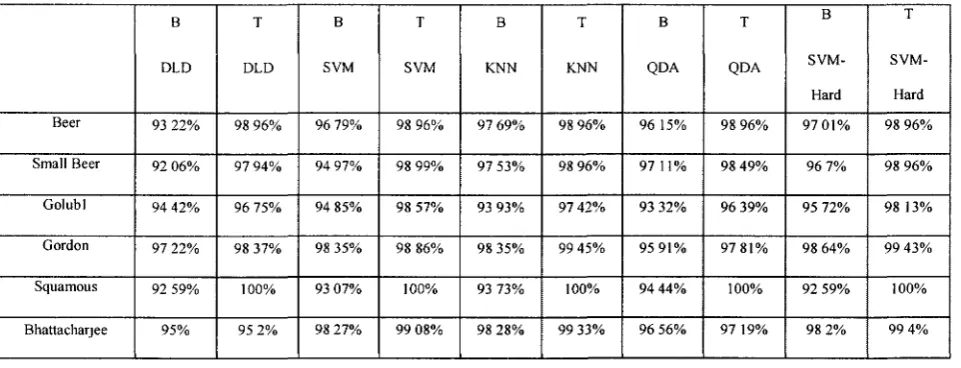
[1]. The data were pre-processed in exactly the same manner as in [1]. Table 2 shows the
results for 5 classifiers, Diagonal Linear Discriminant (DLD), Support Vector Machine,
k-Nearest Neighbour, Quadratic Diagonal Linear Discriminant (QDA) and SVM-Hard
Margin. An entry in columns B (resp., T) is the average of the classification accuracies
than those in columns T. This enforces our intuition above while suggesting that one can
use the Containment Angle as a measure of the quality of an LS pair.
Table 3 (resp., Table 4) shows the performance of SVM used on each of the top 3
(resp., bottom 3) LS pairs for each data set, and compares with SVM used on all genes of
the data sets (last column). In Table 3, we can see that applying SVM on the best LS pairs
yields at least better performance than on the full gene set, in majority of cases. Table 4
shows that LS pairs with largest containment angles /? indeed yield worse classification
performance than pairs, having smallest angles. Also, the accuracies increase (almost)
monotonously in general from bottom to top LS pairs. There are few examples in Table
3, where there is a decrease of accuracy, say, from the second best pair to the best pair
(see last row, for instance). These experiments also show that using LS pairs is a better
alternative than using the full set of genes for sample classification purpose, since
classifying using pairs is much faster than using the gene set while still giving
satisfactory performances.
Table 2. Average of classifiers' perforances on bottom 10 (B) and top 10 (T) LS pairs.
Beer Small Beer Golubl Gordon Squamous Bhattacharjee B DLD 93 22% 92 06%
94 4 2 %
97 22%
92 59%
9 5 %
T DLD 98 96% 97 94% 96 75% 98 37% 100% 95 2% B SVM 96 79% 94 97% 94 85% 98 35% 93 07% 98 27% T SVM 98 96% 98 99% 98 57% 98 86% 100% 99 08% B KNN 97 69%
97 5 3 %
93 9 3 %
98 3 5 %
93 7 3 %
98 2 8 % T
KNN
98 96%
98 96%
97 42%
99 4 5 %
100%
99 3 3 % B
QDA
96 15%
97 11%
93 32%
95 9 1 %
94 44%
96 56% T
QDA
98 96%
98 4 9 %
96 39%
97 8 1 %
100%
97 19% B
SVM-Hard
97 0 1 %
96 7%
95 72%
98 64%
92 5 9 %
98 2 % T SVM-Hard 98 96% 98 96% 98 13%
99 4 3 %
100%
99 4%
Table 3. Accuracy on the top three LS-pairs versus accuracy on the full gene set, using SVM with hard margin.
Small Beer
Beer
Squamous
Bhattacharjee
Gordon
Golubl
TP1
98 96%
98 96%
100%
99 23%
99 83%
95 42%
TP2
98 96%
98 96%
100%
100%
99 56%
100%
TP3
98 96%
98 96%
100%
99 74%
99.94%
100%
Full Data 100%
99.06%
100%
98 08%
99 28%
98 61%
Table 4. Accuracy on the bottom 3 LS pairs versus accuracy on the full gene set, using SVM with hard margin.
Small Beer
Beer
Squamous
Bhattacharjee
Gordon
Golubl
BP1
96 88%
96 46%
93 17%%
98.21%
98 78%
96 39%
BP2
96 98%
96 77%
92 93%
98 01%
98 56%
96 11%
BP3
96 15%
97 08%
92 68%
98 14%
98 45%
95 28%
Full Data
100%
99.06%
100%
98 08%
99.28%
<
A A O O O A O
< - * " <
A B
Figure 5. A set of points causing Linear Separability (Left Panel) Vs. Non Linear Separability (Right Panel)
^ o ) $S o 3 ^
A B
Figure 6. The projection of vectors of LS Points in the Zero-Sphere (Left Panel) Vs. Non Linear Separability (Right Panel)
1.2. LS-Genes Ranking Criterion
In mathematics, an n-sphere is a generalization of the surface of an ordinary sphere to an
arbitrary dimension. For a natural number, n, an n-sphere is defined as the set of points in
(n+l)-dimensional Euclidean space. As an illustration, a 0-sphere is a pair of points on a
line, a 1-sphere is a circle in the plane, and 2-sphere is an ordinary sphere in
three-dimensional space [30]. A single gene is an LS-gene if and only if all the m\ni2 vectors in
the corresponding 0-sphere point are in the same direction (See Fig. 5 and 6 for a non
LS-gene, a LS-gene and their projections in the 0-sphere). We use a simple ranking criterion
illustrated in Fig. 7: for each LS-gene, we compute the quantities A and B and use the
ratio AIB as the score of the LS-gene.
1.3. Search strategies for selecting LS genes and LS pairs
Gene subset selection approaches based on gene pairs have been proposed in [2]. For a
given gene pair, the authors used a two-sample ^-statistic on projected data samples as the
A
Rar*=A/B A A A A . _ Q O Q Q_
Figure 7. Ranking Criterion for LS Genes
score of pairs (pair /-score), and then pairs are ranked according to their /-scores for the
purpose of subset selection. They devised two subset selection algorithms, which differ in
the way gene pairs are selected for inclusion in a current subset. In their fastest method,
they iteratively select the top-ranked gene g, from the current list of genes, then find a
gene g, such that the /-score of the pair g,y = (g„ gj) is the maximum given all pairs g« =
(g„ gk), and then remove any other gene-pairs, containing either gt or g,; this continues
until r genes are selected. In their best, but very slow method, they generate and rank all
the possible gene pairs, and then select the top r ranked gene-pairs. The gene-pairs in [2]
are not necessarily LS-pairs.
In this section, we propose gene subset selection approaches based on selecting only
LS-genes and LS-pairs. The problem with this is that, initially, a data set may have a low
degree of linear separability, and hence, not enough LS-Pairs to select from. To overcome
this problem, we first apply SVM with soft margin on the initial given data set before
performing any gene selection method, and then sort the support vector (SV) samples in
decreasing order of their lagrange coefficients, obtained by training SVM; lagrange
coefficients are non-zero for support vector samples, which are farthest from the
separating maximum margin hyperplane and are probably misclassified. When there are
no more LS-features to select from during the process of gene selection, we then
iteratively remove the current SV sample having the largest Lagrange coefficient, until
the resulting data set contains LS-features; we devised three filtering methods to be
1.3.1. LS Approach
Our first gene subset selection method [11] proceeds by iteratively selecting disjoint
LS-pairs until a subset S of r genes is obtained. The LS-LS-pairs are ranked according to the
ranking criterion, which is already discussed. Given a gene expression data set D, our
first method is as follows:
LS; LS-Pair Selection on D;
1. S+-{}
2. r*— desired number of genes to select
3. d^-0
4. IfJ<rThen
a. P <— set of LS-pairs of D
b. P^P-igyS.t.g^SorgjcS}
c. Repeati. S <— S + {gy <— top-ranked LS-pair in P} ii. Apply a classifier on S and update Best-S iii. P *- P - {giJ s.t. g, e S or & e S}
iv. d *— d + 2
Unti\d>rorP= {}
5. IfJ<rThen
a. Repeat
i. D <— D- {SV sample with largest Lagrange coefficient} Until D contains LS-features
b. Repeat from 4 with the resulting D 6. Return S, Best-S, and their performances
In the LS algorithm, S is the subset to be found, r is the desired size of S, and P is the
sets of LS-pairs. In line 4.c.ii, we apply classifiers to the currently selected subset S to
keep track of the best subset Best-S of size < r. We use ten runs of ten-fold
cross-validation on S, and the algorithm returns subsets S and Best-S and their performances.
SV samples with largest Lagrange coefficients are iteratively removed from data set D, in
line 5.a.i, whenever there are not enough LS-pairs in the current D.
1.3.2. LSGP Approach
In the LS approach we only considered LS-pair, whereas our second gene subset
selection method proceeds by iteratively, selecting in this order, from the set of LS-genes
and then from the set of LS-pairs until a subset S of r genes is obtained. The LS-genes are
ranked according to the ranking criteria discussed above. Given a gene expression data
set D, our LSGP method is as follows:
LSGP: LS-Gene and LS-Pair Selection on D:
1. S « - { }
2. r <— desired number of genes to select
3. d+-0
4. G <— set of LS-genes of D
5. G<— G - {g, s.t. g, £ S}; ' - ' = set-difference 6. Repeat
a. S <— S + {g, *— top-ranked LS-gene in G} ; ' + ' = union
b. Apply a classifier on S and update Best-S c. G<-G-{g,}
d. d<-d+l
Until d=r or G={} 7. If d<r Then
a. P *— set of LS-pairs of D
b. P+-P-{g,Js.t.g,£SoTgleS}
c. Repeat
i. 5 <— 5 + {g,, <— top-ranked LS-pair in P} ii. Apply a classifier on 5 and update Best-S
iii. / > « - P - {gw s.t.g,eS or g,cS}
iv. d <— d + 2
Until <sf > r or P = { } 8. If<5?<rThen
a. Repeat
i. D <— Z> - {SV sample with largest Lagrange coefficient} Until D contains LS-features
b. Repeat from 4 with the resulting D
The difference between LS algorithm and LSGP algorithm is in lines 4 up to 7, in
which LSGP selects LS-genes. Moreover when a LS-gene g, (resp., LS-pair gab) is
selected, we also remove all LS-pairs containing g„ (resp., ga or gb); see lines 7.b and
7.c.iii. This deletion is in order to minimize the redundancy. That is, when LS-gene g, is
selected then any LS-pair containing g, will be redundant.
1.3.3. Graph-Based Methods
In [2] the authors first select the top-ranked gene g, and then find a gene g, such that the
pair g,j has maximal pair /-score. Also in their slow approach (which yields better
performance than their fast method) they iteratively select the top-ranked pairs in such a
way that the selected pairs are mutually disjoint from each other. That is, they delete all
of those pairs which intersect the currently selected subset of genes. Assume a LS-pair
gab = (ga, gb) is selected and assume LS-pair gbc - (gb, gc) £ P not yet selected. If we
remove gbc, then the possible LS-triplet g0*c = (ga, gb, gc), which may yield a better subset
S or a shorter subset Best-S, will be lost. Hence, we devised a third selection method for
selecting LS-features.
Let G be the set of genes, we generalize the definition of linear separation to apply to
any /-tuple gi , = (g,i, ga, • • •, gn) of genes where 1 < t < \G\, 1 <j < t, and i} e {1, ..., |G|},
and say that: g\ , is a linearly separating /-tuple (LS-tuple) if there exists a separating
(/-1 )-dimensional hyperplane H in the /-dimensional sub-space defined by the genes in g\ ,.
It remains open to generalize the theorem of [1] to /-tuples of genes, / > 1, by considering
projecting the m\Tti2 vectors obtained from the /-dimensional points onto a unit
sphere, and then determine a test for linearly separability of a Muple from the ( M )
-sphere. Clearly, the theorem is true for t=\: since a 0-sphere is a pair of points delimiting
a line segment of diameter 2, and that the m\m2 vectors point in the same direction (i.e.,
they form a sector of angle 0) if and only the single gene is linearly separable. Therefore
in our third method we consider the intersection graph N = (P, E) where, the vertex set is
the set of LS-pairs, P, in D and edges (v„ v,) £ E if v, and v, have a gene in common. We
then perform a graph traversal algorithm on N, which selects LS-pairs as the graph is
DF-LSGP: Graph-Based LSGP Selection on D
1. S ^ { }
2. r <— desired number of genes to select 3. rf<-0
4. G <— set of LS-genes of D
5. G*— G — {g, s.t. g, E 5}; ' - ' = set-difference ; remove already selected LS-genes 6. Repeat
a. S" <— 5 + {g, <— top-ranked LS-gene in G] ; '+ ' = union
b. Apply a classifier on 5 and update Best-S c. G*-G-{g,}
d. d<-d+\ Until rf = /• or G= {} 7. Ifrf<rThen
a. P <— set of LS-pairs of D
b. /,^ /,- { g , s . t .S£ G o r&e G }
; remove LS-pairs containing LS-genes c. />«-/>-{g„s.t.geSandgjeS}
; remove already selected LS-pairs d. Construct intersection graph N=(P,E) e. For each vertex gy: set visited [g,y] <— false
f. While there are un-visited vertices and d < r Do: i. Stack <-{}
ii. gy <— top-ranked vertex in TV
iii. Push g,j onto StocA:
iv. While Stack ± {} and d < r Do: 1. Pop g,y from Stack 2. If gy is un-visited Then
a. w's;ted[gy] <— true
b. rf^|S+{g„}| c. S^S+{glJ}
d. If S has changed Then
i. Apply a classifier on S and update Best-S e. P<- P - {g,6 s.t.g, eSandg*eS}
; cfe/e/e already selected vertices from N
f. Push all un-visited neighbors of gy onto Stack starting from the least-ranked ones.
8. Ifrf<rThen a. Repeat
i. D <— D- {SV sample with largest Lagrange coefficient} Until the resulting D contains LS-features
b. Repeat from 4 with the resulting D 9. Return S, Best-S, and their performances
2. r <— desired number of genes to select 3. d*-0
4. G <— set of LS-genes of£>
5. G<— G - {g, s.t. g, E 5}; ' - ' = set-difference
; remove already selected LS-genes
6. Repeat
e. S <— S+ {g, *— top-ranked LS-gene in G} ; '+ ' = union
f. Apply a classifier on S and update Best-S g. G - G - { » >
h. rf<-rf+1 Until rf = r or G={} 7. Ifrf<rThen
a. P <— set of LS-pairs of D b. i> < - P - {gy s.t. g, EGorg, t G j
; remove LS-pairs containing LS-genes c. / > « - / > - { g , s . t .ae . S and g,eS}
; remove already selected LS-pairs d. Construct intersection graph N = (P,E) e. For each vertex g,y. set visited [g,J <— false f. While there are un-visited vertices and d < r Do:
i. queue *— {}
ii. g,! <— top-ranked vertex in N iii. En-queue g,y onto ^«e«e
i v. While queue # {} and d<rT>o: 1. De-queue gv from queue 2. If gy is un-visited Then
a. rfHS+{g„}| b. S^S+t&j) c. If 5 has changed Then
i. Apply a classifier on 5 and update Best-S d. P <-P-{ga (, s.t. g.eS'and gj £S }
; cfetoe already selected vertices from N
e. En-queue all un-visited neighbors of g,y onto queue starting from the high-ranked
ones and change visited[gv] <— true
8. Ifrf<rThen c. Repeat
ii. D *— D- {SV sample with largest Lagrange coefficient} Until the resulting D contains LS-features
d. Repeat from 4 with the resulting D
The differences between our LSGP method and LSGP are in lines 7. In
DF-LSGP, the LS-genes are selected first as in the LSGP method. Then we iteratively select
the best LS-pair vertex and its un-selected neighbors in a depth-first manner; see line 7.f
and thereafter. This continues until the desired number of genes, r, is obtained. We have
also implemented a breadth-first traversal of the graph, BF-LSGP, where the neighbors of
a selected LS-pair are sent to a queue starting from the top-ranked ones. In practice, we
do not create an intersection graph N (line 7.d) given that P may be very large for some
data sets; we simply push or enqueue the top-ranked LS-pair from the initial P onto the
stack or queue (line 7.f.iii) then simulate the graph-traversal algorithm.
2. Recursive Feature Subset selection
Univariate filter methods, which rank single genes according to how well they each
separate the classes, are widely used for gene ranking in the field of microarray analysis
of gene expression datasets. These methods rank all of the genes by considering all of the
samples; however some of these samples may never be classified correctly by adding
new genes and these methods keep adding redundant genes covering only some parts of
the sample space and the returned subset of genes may never cover the sample space
perfectly. In this section we introduce a gene subset selection approach which aims to add
genes covering the sample space which has not been covered by already selected genes in
a recursive fashion.
_ A 4 A M A 4 _ _ o g Q Q 0 2 £ £ .
A. Samples of an LS Gene
Non-LS Samples
O O O O O O O C
A A A A A A A
B. Samples of a Non-LS Gene
Non-LS S a m p l e s
< < \ • *
0 2 0 0 , , , O Q O O Q Q p o
Mm C 1
. - A
ttaxCI
C. Samples of a Non-LS Gene
N o n - L S S a m p l e s
poooooooo oo o o oo
t\Z\ ZI\Zi
Win C ? Max C 2
Min C 1 M W C 1
D. Samples of a Non-LS Gene
Our algorithm, first selects gene gt which can be selected by any gene ranking criteria
and then partition samples to those causing non-linear separablility and those causing
linear separablility based on the selected gene gt; then the algorithm recursively selects
gene gj causing good degree of separation based only on non-LS samples. The
motivation is that when some samples are linearly separable with gene #;, they will still
remain linearly separable by adding any other genes to gene gt. Hence our algorithm
focuses on those non-LS samples to find good degree of separation by adding gene gj.
Here first we introduce the definition of linear and non-linear separable samples and then
we propose our recursive algorithm.
2.1. LS samples vs. non-LS samples
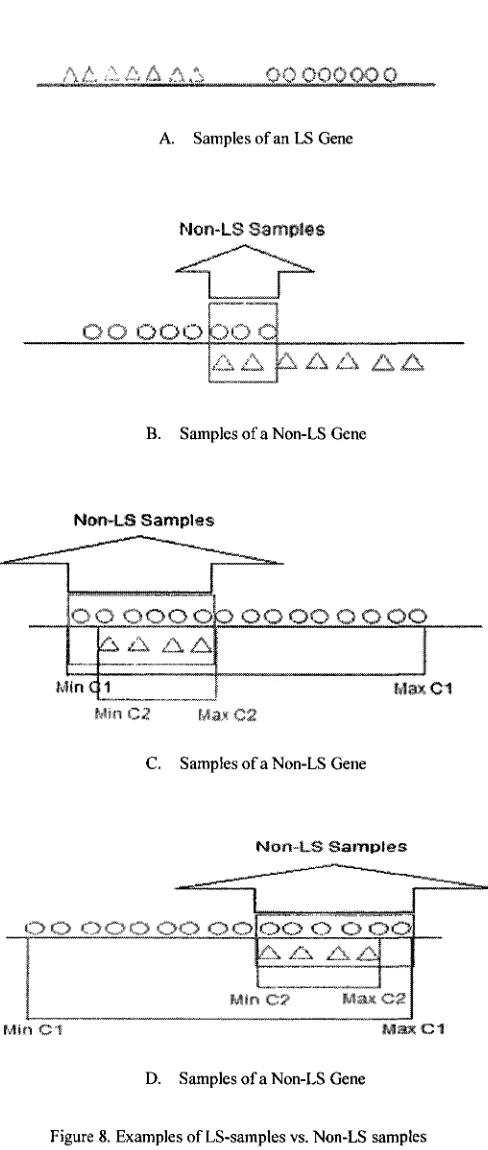
As said earlier we apply the ranking criterion on non-LS samples in a recursive fashion.
We partition the samples to LS samples and non-LS samples as shown in figure 8; the
intersection of classes is considered as non-LS samples (see fig 8.B for instance);
however when the intersection of two classes' samples is one of the classes (see fig 8.C
and 8.D for example), in this case, the non-LS samples are defined as follows:
If (Max (C2)- Min (CI)) < (Max (CI) - Mln(C2))
non-LS Points= Min (CI) <samples< Max (C2)
Else
non-LS Points= Min (C2) <samples< Max (CI)
End

![Figure 4. A set of four separable points producing vectors on the unit circle that are contained in a sector of angle P < 180° [1]](https://thumb-us.123doks.com/thumbv2/123dok_us/1444098.1176927/35.597.230.447.91.218/figure-separable-points-producing-vectors-circle-contained-sector.webp)

![Table 5. [XX]-LSGP versus MIQ [6] on subsets S](https://thumb-us.123doks.com/thumbv2/123dok_us/1444098.1176927/61.597.43.561.403.669/table-xx-lsgp-versus-miq-subsets.webp)
![Table 6. [XX]-LSGP versus MIQ [6] on Best-S](https://thumb-us.123doks.com/thumbv2/123dok_us/1444098.1176927/62.598.48.567.351.673/table-xx-lsgp-versus-miq-on-best-s.webp)