ABSTRACT
CAUDLE, SOPHIA DORTON. Ethos: An Original Moral Dilemma Computer Game and the Testing of its Content Validity. (Under the direction of Dr. Stanley B. Baker).
Juvenile delinquency continues to plague American society. There are several established and effective counseling interventions which address the psychological and behavioral origins of adolescents‟ dysfunctional beliefs and behavior choices. Moral dilemma
discussions groups have been shown to be an effective intervention in improving the levels of moral development for adolescent offenders. At times, moral dilemma discussion groups have not only increased the levels of moral reasoning for group participants, but also assisted in the improvement of their overall behavior. In addition, computer-based instruction has been proven through repeated rigorous analyses as an effective teaching method. Interactive simulated gaming has also recently been utilized to expand the field of computer-based learning. This research tests the content validity of an original computer-based behavioral intervention, Ethos, which is intended to serve as a simulated moral dilemma with the future purpose of increasing game players‟ levels of moral reasoning. A panel of four experts reviewed Ethos and unanimously determined that it has the necessary qualities to be
Ethos: An Original Moral Dilemma Computer Game and the Testing of its Content Validity
by
Sophia Dorton Caudle
A dissertation submitted to the Graduate Faculty of North Carolina State University
in partial fulfillment of the requirements for the degree of
Doctor of Philosophy
Counselor Education
Raleigh, North Carolina 2011
APPROVED BY:
______________________________ ___________________________
Dr. Stanley B. Baker Dr. Edwin Gerler
Committee Chair Committee Member
______________________________ ___________________________ Dr. Angela Carmella Smith Dr. Lance Fusarelli
DEDICATION
BIOGRAPHY
Sophia Dorton Caudle is a licensed professional counselor, consultant, and school counselor in North Carolina. Dr. Caudle primarily works with children, adolescents, and their families. She also consults with school systems to develop effective programs and efficient
management systems for the benefit of all students. Her areas of expertise include, but are not limited to, moral development, social skills, anger management, gang issues, anxiety, depression, substance abuse, abuse/neglect, trauma, crisis management. She is published under her former last name, Claypoole, in the Journal for the Specialists in Group Work and has also been awarded Best Article in Group Work from the American Counseling
ACKNOWLEDGMENTS
First, I must thank the excellent professors in the Counselor Education department at North Carolina State University. You have each taught me how to be a more effective counselor educator. I would also like to thank my advisor, Dr. Stanley Baker, as well as my committee members: Dr. Edwin Gerler, Dr. Lance Fusarelli, Dr. Raymond Ting, and Dr. Angela Smith. Dr. Baker, you have always provided me with the most exceptional guidance and support. I truly value our time together and all I have learned from you. Dr. Gerler, you influenced me to find my path in technology and counseling. Drs. Fusarelli, Smith, and Ting you have each provided me with relevant and helpful feedback to conduct and report research more
effectively. I would also like to express my gratitude to all the support staff at NCSU, especially Pauline Ellefson and Anne Petters.
I would also like to thank my Mother for always being my greatest teacher and support. You are a wonderful mother and friend as well as the most hard-working and self-sacrificing school counselor I have ever seen.
A HUGE thank you to my husband, Gordon, for your love and support as well as your unyielding belief in my abilities to complete this project. Thank you for teaching me how to turn my dreams into reality and for making me „rich with girls‟.
TABLE OF CONTENTS
LIST OF TABLES ... vi
ETHOS: AN ORIGINAL MORAL DILEMMA COMPUTER GAME AND THE TESTING OF ITS CONTENT VALIDITY CHAPTER 1 Introduction...1
Trends in Juvenile Crime ...1
Statement of the Problem ...3
Purpose of the Research ...3
Significance of the Study ...4
The Research Questions ...6
Definition of Terms...7
CHAPTER 2 Literature Review ...9
Introduction ...9
Problems of Juvenile Offenders ...9
Purpose of the Research ...10
Moral Development ...10
Effectiveness of Moral Reasoning Training for Adolescent Offenders...13
Effectiveness of Computer-based Instruction and Gaming ...15
Exploration of Computer-based Behavior Interventions ...19
CHAPTER 3 Method ...23
Participants ...23
Instrumentation ...23
Procedure ...25
CHAPTER 4 Results...28
Analysis of Survey Data ...28
Common Themes from Qualitative Analysis ...37
CHAPTER 5 Discussion ...41
The Purpose of the Study and the Discussion ...41
Research Design Analysis and Research Limitations ...42
Summary of Results and Other Limitations...44
Recommendations for Future Research ...45
REFERENCES ...47
LIST OF TABLES
Table 1 JD‟s Offer has the Qualities Necessary to Serve as Effective Moral
Dilemma ...30 Table 2 Choice Options with Immediate Feedback Provide Effective Simulated
Experience to Help Gamer Improve Behavior Choices in Life ...31 Table 3 The Things to Consider Sections are an Effective Simulated Game
Experience that Can Teach the Gamer to Consider Choices in Real-
Life ...32 Table 4 The Things to Consider, Timelines, and Game Outcomes Provide an
Effective Simulated Experience for the Gamer to Consider the Law and Others in Society While Making Life Choices ...33 Table 5 Ethos will be an Effective Moral Reasoning Intervention Upon its
Completion ...34 Table 6 Number of Comprehensive Moral Dilemmas to be an Effective ...34 Table 7 Same Comprehensive Moral Dilemmas Should be Played X Number
of Times ...35 Table 8 Amount of Time Should Spend Playing Effective Computer-based
CHAPTER 1
Introduction
Trends in Juvenile Crime
The social problem of juvenile delinquency continues to afflict American society. An overwhelming portion of our nation‟s young people choose to behave within a subculture of violence which reflects an overall lack of respect for society and its norms.
Although minors comprise approximately 12% of the Unites States population; they commit an overrepresented 22% of the total crime index in America as well as 14% of all violent crimes (National Youth Violence Prevention Resource Center, 2007). In addition, young people are much more likely to be arrested for property crimes than violent crimes (National Academies Press, 2001). For instance, over the past 30 years, between one quarter and one third of all juvenile arrest rates were for index property crimes including burglary, larceny, theft, motor vehicle theft, and arson (National Academies Press, 2001). However, juvenile arrest rates for offenses where a weapon was involved doubled between 1985 and 1993 (National Academies Press, 2001).
Additionally, in 2000, American students aged 12-18 were victims of approximately 1.9 million acts of violence or thefts at school (National Youth Violence Prevention Resource Center, 2007). Students in this same age range were also victims of 128,000 violent crimes at school such as rape, sexual assault, robbery, and aggravated assault (National Youth
840,500 youth gang members active in the United States (National Youth Violence Prevention Resource Center, 2007).
While males continue to commit most juvenile offenses, females are increasingly more involved in adolescent crimes (Claypoole, Moody, & Peace, 2000). Girls account for more than one-quarter of all youth arrest rates (National Youth Violence Prevention
Resource Center, 2007). Further, females‟ arrest rates for both property crimes and violent crimes have been steadily increasing over the past two decades (National Youth Violence Prevention Resource Center, 2007). Typically, girls have been arrested for larceny and running away from home (National Youth Violence Prevention Resource Center, 2007). However, the arrest rates for adolescent females for violent crimes have increased more than the rates for adolescent males for violent crimes; 120% between 1981 and 1994 as compared with 60% for males (Perrone, & Chesney-Lind, 1997; Snyder & Sickmund, 1999).
Statement of the Problem
It is obvious that juvenile delinquency is a serious problem in American society. Research on adolescent offenders has proven that they are immature in their development of moral judgment. According to Kohlberg (1984) there is a direct association between an individual‟s stage in moral development and their moral behavior in society. Moral dilemma discussion groups have been found to be effective in increasing juveniles‟ levels of moral reasoning with the intention of improving their overall behavior (Arbuthnot & Gordon, 1986; Claypoole, Moody & Peace, 2000; Kohlberg, 1969). However, an effective moral dilemma discussion group intervention is a very time consuming process in terms of each group session‟s length as well as for the intervention‟s duration. For instance, an ideal moral
dilemma group intervention may meet one to two times per week for 60-90 minutes over a 10 to 12 week period. Because an effective research design for a moral dilemma discussion group intervention requires a significant time commitment for both the researcher and the participants, this type of intervention can only be completed in an institutional setting where scheduling and regular group participation are not issues. For these reasons, moral dilemma discussion groups are very difficult to conduct in the school or private setting which, in turn, is the ideal location to utilize the moral reasoning training as a preventive intervention for adolescents‟ overall behavior improvement.
Purpose of the Research
dilemma situation to test for content validity at this time. Results of this investigation will be utilized in the creation of Ethos‟ future dilemmas. It is hoped that Ethos will ultimately be appropriate for use in public or private settings in order to stimulate moral reasoning training in an effective, implementation via a friendly and affordable manner.
Significance of the Study
According to Kohlberg‟s (1969) theory of moral development, an individual‟s moral development progresses in a progressive, invariant sequence with each moral stage more complete and refined than the previous stage (Copeland & Parrish, 1979). An individual‟s moral reasoning stage is a conceptual schema for interpreting social relationships and personal responsibilities (Rest, Cooper, Coder, Masanz, & Anderson, 1974). Further,
Gilligan (1974) and Ratvich (1973) found that inmates in correctional institutions are delayed in development of their moral reasoning. It has also been revealed that delinquent youth are arrested in levels of moral development (Fodor, 1972; Jurkovik, 1980; Kohlberg, 1978; Niles, 1986).
It is believed that one‟s moral-cognitive stage is related to his or her overall behavior in society (Blasi, 1980; Moody, 1994). Blasi conducted a meta-analysis of over 74 studies and found that 78% of the studies found a relationship between individuals‟ moral reasoning scores and their socio-moral behavior.
significant differences between the two groups‟ levels of moral development in the expected direction.
Moral dilemma discussion groups have been found to be effective for increasing the moral reasoning levels of some of the participants (Arbuthnot & Gordon, 1986; Claypoole et al, 2000; Fleetwood & Parish, 1976). However, moral reasoning groups are very time consuming and therefore conducted most often in institutional settings as an intervention after the fact. Ideally, moral reasoning groups should be utilized in the school or private settings as a preventive intervention prior to adolescents committing crimes. Due to the significant time commitment necessary to conduct an effective moral reasoning group, it is not likely that schools will allow their students to miss the amount of instructional time required for this type of intervention. It is also difficult to ensure regular group participation of an intervention with such a significant time commitment in a private practice setting. However, schools have found much value in computer-based academic instruction and encourage students to spend large amounts of time on computers because it is both an effective and enjoyable learning tool.
While computer use for academic purposes has become more prevalent in American schools during recent years, it is essential to understand the effectiveness of computer-based instruction (CBI). According to Kulik (1983), early research regarding computer-based instruction in the elementary school setting indicated that it is effective for increasing student achievement, especially when used in conjunction with traditional classroom teaching
standard deviations with computer-based tutorials and .34 standard deviations with computer-based drill and practice (1981).
In addition to the widespread computer use among American children there is also the common observable fact that children spend a significant amount of their time playing
computer games, also called gaming. According to current research data, more than one third of children in the United States spend more time gaming than they did two years previously (NPD, 2007). Additionally, among all child gamers, approximately half game five hours per week or less and the other half game six to 16 hours per week (NPD, 2007). The gaming life cycle begins with child oriented games, usually transitions to computer games, and then as a game-interested child matures he/she may transition to a gaming system such as Nintendo, wii, or Play station (NPD, 2007).
The purpose of the present study is to create phase one and test the content validity of an original computer-based moral development intervention game called Ethos. This research will begin the testing process to determine if computer-based Ethos can serve as an effective moral reasoning intervention for adolescents to improve their overall behavior. This research will also expand knowledge in the field of computer-based behavioral interventions.
The Research Questions
behavior prior to making a choice in real-life? (d) Do the “Things to Consider”, Timelines, and game outcomes provide an effective simulated experience for the gamer that can teach him or her to consider the law and others in society while making his or her own choices in real-life? (e) Does the expert panel believe Ethos will be an effective moral reasoning intervention upon its completion?
Definition of Terms
For the purposes of this study a list of pertinent terminology is provided to facilitate better understanding of the research as well as contribute to the field of computer-based behavior interventions.
Computer-based instruction. Instruction that is administered and conducted on a computer rather than through traditional teaching methods such as whole group, classroom, or individual person to person instruction.
Computer gaming or gaming. The act of playing games either for recreation or education on a computer.
Content validity. Explainsthe degree to which the content accurately matches the domain.
Ethos. Literally, the Greek word meaning „character‟. Also, the original computer-based behavioral intervention game this research is computer-based upon. The purpose of the computer game Ethos is to serve as a moral reasoning behavioral intervention.
Gamer. One who plays computer-based or electronic games.
conceptualizing social interrelationships and personal responsibilities. The definition for moral development is synonymous with moral reasoning and moral judgment.
CHAPTER 2 Literature Review Introduction
The information for this review of the literature was obtained from the author‟s previous research in the field of moral development and a current search in this area as well as an extensive exploration into the effectiveness of educational gaming. Sources were obtained through online search engines and databases at North Carolina State University, Duke University, and the University of North Carolina at Chapel Hill. The following
database search engines were used to obtain the information; NC Live, EBSCO, ERIC, Psych Lit, and MEDLINE. In this chapter the following will be discussed; (a) problems of juvenile offenders, (b) purpose of the research, (c) Moral development, (d) effectiveness of moral reasoning training for adolescent offenders, (e) effectiveness of computer-based instruction and gaming (f) exploration of computer-based behavior interventions.
Problems of Juvenile Offenders
aggravated assault (National Youth Violence Prevention Resource Center, 2007). Also, homicides committed by minors under 18 years of age accounted for 10.1% of all homicides reported in 1999 (National Youth Violence Prevention Resource Center, 2007). Furthermore, in 2009, there was an estimated 400,000 youth gang members active in the United States (National Gang Intelligence Center, 2009).
Purpose of the Research
The purpose of this research is to test the content validity of phase one of an original computer-based moral dilemma intervention called, Ethos. Ethos is a moral dilemma
computer game with the intention of serving as an intervention to increase game players‟ levels of moral reasoning. As Ethos is in its first stage of development, there is only one comprehensive dilemma situation for the expert panel to test for content validity at this time. Results of this research will be utilized in the creation of Ethos‟ future dilemmas towards the completion of the game intervention. Ethos will ultimately be appropriate for use in any public or private setting in order to stimulate moral reasoning training in an effective, timely, and affordable manner.
Moral Development
Jean Piaget‟s (1932) cognitive development theory presented a framework for
understanding the morality of children. Piaget stated that the moral development of a child is an age related sequence where mature moral ideologies transpire from premoral concepts (Prentice, 1972). Piaget claimed that the cognitive schemas and structures of moral development are innate, invariant, hierarchical, and culturally universal.
than Piaget‟s sample (Rich & DeVitis, 1985). Kohlberg‟s theory of moral development is based on the concepts of justice, whereas Piaget‟s theory centered on cooperation and equity (Prentice, 1972). Kohlberg (1969, 1978, 1984) provided a hierarchy consisting of six stages specifically related to an individual‟s moral development.
A moral stage is a cognitive framework, which directly relates to a person‟s behavior in society (Gibbs, Arnold, Ahlborn, & Chessman, 1984). Kohlberg‟s stages of moral
judgment identify the characteristics of morality that change with a person‟s development. As people progress through the stages of development, how they perceive social relationships and their responsibilities to their communities also change (Rest, Cooper, Coder, Masanz, & Anderson, 1974).
In Kohlberg‟s (1969, 1981, 1984) theory of moral development, the first component is the preconventional level, which consists of stage one and stage two. At this level, socio-moral rules and values are perceived as “do‟s” and “don‟ts” for behaviors which are
associated with punishment (Moody, 1994). Children aged 9-11 as well as juvenile offenders are commonly characterized as being included in level one (Jennings, Kilkenny, & Kohlberg, 1983).
Stage one is called the obedience and punishment orientation where the individual obeys rules in order to avoid punishment. Stage two is the naively egoistic orientation where the individual changes his or her behavior in order to receive rewards. More specifically, the right action is whatever successfully satisfies one‟s own needs and may or may not
Level two is the conventional level, which consists of stages three and four.
Typically, most adults and adolescents function at level 2. The individual understands and attempts to uphold the values and rules of society while adhering to authority (Kohlberg, 1984).
Stage three is called the “good boy” or “good girl” orientation where the individual concentrates on gaining approval from his or her immediate peer group. The individual also changes his or her behavior in order to avoid disapproval from others.
Stage four is called the law and order orientation where correct behavior consists of doing one‟s duty and showing respect for authority and following the social order. There is also a high regard for earned expectations of others (Kohlberg, 1984).
The last level of Kohlberg‟s theory of moral development is the post conventional level, which consists of stages five and six. In this level, the individual examines the rules and values of society in relation to universal well being (Kohlberg, 1984).
Most often, moral reasoning develops in a successive, invariant sequence of stages where each subsequent stage is more complete and superior to the previous stage (Gibbs et al., 1984). According to Kohlberg (1969), a moral stage can only be entered into after the previous stage has been successfully mastered. Finally, Kohlberg regarded the theory as both psychological and philosophical in nature, therefore moral education should be designed to stimulate moral development rather than teach fixed moral rules.
Effectiveness of Moral Reasoning Training for Adolescent Offenders
Kohlberg assessed levels of moral development through the administration of hypothetical moral dilemmas. Dilemmas typically involve choice conflicts between
something which would be beneficial for self rather than other (Jurkovic, 1980). Dilemmas such as this are designed to stimulate reasoning which focuses on life, rules, authority, duty, contract, and ethical universality (Kohlberg, 1969). Participation in moral dilemma
discussion groups has been found to increase the ability of participants to utilize higher level moral reasoning skills (Kohlberg, 1969, 1981, 1984).
Gilligan (1974) and Ratvitch (1973) have suggested that inmates of correctional institutions are inferior in their levels of moral development. Also, according to McDavid and Schroeder (1956), juvenile delinquents are severely lacking in their abilities to
Also, it is believed that children who do not experience adequate role taking opportunities will have difficulty developing their own sense of moral judgment. This can result in a difficulty handling situations where there is a conflict of interest between themselves and others (Gibbs et al., 1984). Moral dilemma discussion groups can assist adolescents to experience different roles in a safe environment with the intention of improving their overall behavior (Claypoole, Moody, & Peace, 2000).
There are studies which demonstrate that participation in moral dilemma discussion groups can increase youth offenders‟ levels of moral reasoning as well as improve overall behavior (Claypoole et al., 2000; Bailey, 1995). Research conducted by Arbuthnot and Gordon (1986) established that high risk behavior disordered youth demonstrated increases in their levels of moral reasoning as well as behavior improvements such as a decrease in behavior referrals, tardiness, court contacts, and an increase in academic performance due to their participation in moral dilemma discussion groups. The 48 participants, consisting of 35 males and 13 females, were identified by their teachers as ideal for the intervention based on their school behavior and performance needs. Participants attended moral dilemma
discussion groups that lasted 45 minutes and continued for 16-20 weeks. The mean scores for both the treatment and control groups were analyzed by analysis of covariance on the outcome data. Stage of moral reasoning for the experimental group increased almost half of a stage to 249.94, and the control group declined in stage to 206.78. Also, group
police contacts between the two groups were considerably different with the experimental group declining to an average of .04 and the control group increasing to .45. Arbuthnot and Gordon (1986) concluded that at-risk adolescents can improve both their levels of moral reasoning and behavior by participating in moral dilemma discussion groups.
Niles (1986) examined the effect of moral reasoning groups on delinquent and
predelinquent males. Niles‟ (1986) sample consisted of 59 males. Twenty-seven participants were in an institution and 32 were at a special education day program. Niles utilized
treatment, control, and placebo groups. The treatment and placebo group groups met twice a week for 16 weeks. Both groups participated in moral dilemma discussion groups, however, only the experimental group received consensus values clarification while the placebo group only heard a values explanation. The control group received no treatment at all. The results indicated that six out of the seven participants in the experimental group moved from stage one to stage two, and all experimental group participants who were already at stage two remained at stage two. The participants in the control and placebo groups did not move to stage two; some participants even decreased to stage one if they were on the cusp of the two stages. The results indicated that moral discussion groups can stimulate the moral
development of its participants. Niles also stated that the improvement of the participants‟ moral development may also improve their socio-moral choices and behavior in society. Effectiveness of Computer-based Instruction and Gaming
effectiveness for cognitive learning between traditional teaching methods and computer gaming and interactive simulations. Two effect sizes were collected for the overall results. First, Vogel et al examined a sample size of 8549 (z = 6.051, p < .0001), and observed that significantly higher cognitive gains were recorded with participants utilizing interactive games as opposed to traditional teaching methods. The second main effect observed attitude (z = 13.74, p = .0001, N = 2378), which indicated that attitudes towards learning were significantly more positive when utilizing computers than through other traditional teaching methods. Vogel et al. also included several additional variables to examine such as gender, age, and type of activity, in order to determine which teaching method was most effective. Consistently, the analyses demonstrated that, for all of these indicators, computer-based gaming influenced significant cognitive growth in the participants as opposed to traditional teaching methods.
Needless to say, the overall meta-analysis indicated that those participants who utilized computer-based simulated gaming reported higher cognitive gains as well as more positive attitudes towards learning than those participating in traditional teaching methods (Vogel et al., 2006). Additionally, these results also coincide with the consensus that increased student interest and motivation influences increased academic achievement.
In another study, Gee (2005) examined why video games are effective for learning at the beginning of the simulated educational computer gaming era. First, Gee (2005)
educational games are customarily at the lower end of the sophistication spectrum and
normally used to teach basic academic skills. Consequently, once students have mastered the fundamentals, there does not appear to be continued interest to play the games. Additionally, most educational games are not capable of changing and evolving as the students grow smarter and master the basics (Gee, 2005).
Gee (2005) stated that games which incorporate simulated „virtual worlds‟ are not only interesting but also effective instructional tools because the players must learn to adapt and problem solve inside the game which includes ever-changing variables. In essence, Gee stated that the player‟s surrogate, which is inside the game, controls the virtual world. Then, the player identifies goals within the game and utilizes his/her surrogate to problem solve by utilizing the rules of the virtual world. Gee further explained that the player must distinguish between what is right and wrong in the context of the game in order to achieve the goals, and ultimately, achieving the goals is the same as a „winning‟ the game.
Moreover, Gee (2005) stated that there are several factors that contributed to simulated video games being beneficial learning tools. Most importantly to the fields of counseling and psychology, the world of virtual realities offers humans an opportunity to feel empathy in a complex simulated system. However, even though Gee clarified that simulated video games are not the same as reality, he still asserted that in the appropriate circumstances games can foster empathetic attitudes.
game prior to real-life circumstances. Effective problem solving can also be attempted and mastered in a video game simulation prior to an actual experience. Finally, behavior
generalizations are then formed and they can become a natural learning tool for the gamer to transfer to his or her real-life.
Smart tools are another aspect of video gaming that Gee (2005) asserted is beneficial to increase learning. Smart tools help video game players behave successfully inside the virtual world. Expanding, smart tools encourage player persistence and participation within the rule structure as a method to gain competence through trail, error, and feedback in order to win the game.
Another positive asset of gaming is the fact that the cross functional affiliation of gaming teams simulates society‟s teams in the workplace and other situations where people must work together (Gee, 2005). Gee believes that certain games such as City of Heroes simulate learning communities and help players develop group skills for knowledge acquisition and communication.
A final reason Gee (2005) considers video games to be helpful learning tools is that sophisticated video games embody language to be placed in different dialogues, contexts, experiences, images, and actions. Additionally, this language characteristic is an optimal opportunity to increase vocabulary as well as knowledge about a life experience. In the end, it has been demonstrated through research in the specific area of reading comprehension that the combined language acquisition gaming process is more effective than a student simply reading text.
sophisticated and interactive expansion of computer-based instruction which also seems to provide a significant motivation factor that encourages students to want to continue to play the game and therefore continue learning (Gee, 2005).
Exploration of Computer-based Behavior Interventions
There is a plethora of research supporting the effectiveness of computer-based instruction, however the field of sophisticated simulated gaming as educational or behavioral interventions is quite new and there is limited research available.
In spite of the fact that behavioral intervention gaming is still in the early stages of development and validity evaluations, the military has proven to be quite innovative in their use of interactive gaming for various training purposes (Curtis, Thomas, & Ritter, 2008). For instance, the Army, Navy and Air Force are constantly creating and using various simulated games in order to reduce training time and costs as well as increase mission preparedness for future actual events. Curtis et al. identify Falcon 4.0 as one such game that the Air Force utilizes for pilots to practice their flying skills during deployments. However, as educational sophisticated gaming is still in its early stages, thorough evaluation findings tend to be limited. Currently, the military is just now beginning to conduct repeated empirical
quantitative data analyses for the simulated training games that have been implemented. In the recent past, the majority of the data that the military has generated to measure the effectiveness of its simulated training games was qualitative interview responses. It remains to be seen at what level of rigor the military‟s future data analyses will be in regards to its simulated training games.
Not! and Carmen‟s Bright Ideas. However, similar to the military‟s simulated game training program evaluation results, thorough empirical evaluation data are somewhat limited for these gaming interventions as well (Aylett, Louchart, Dias, Paiva & Vala, 2005; Marsella, Johnson, & Labore, 2003).
For instance, Fear Not! appears to be a quality virtual game that attempts to reduce the frequency and continuation of bullying in the schools (Aylett et al., 2005). Fear Not! professes to foster empathy and generate coping skills for the victims of bullying to use in the school setting. However, even though there have been numerous studies examining Fear Not, the results regarding learning gains tend to be speculative.
Likewise, Carmen‟s Bright IDEAS is a worthwhile and well-intentioned game that endeavors to teach health intervention skills to mothers of pediatric cancer patients (Marsella et al., 2003). Gamers control Carmen‟s decisions as she learns to problem solve the many issues related to parenting a sick child. Similar to Fear Not!, Carmen‟s Bright IDEAS has been the focus of clinical trials, but results have been limited to a large degree as well.
Another computer-based behavioral intervention entitled S. S. Grin Interactive Social Training System by 3-C Institute for Social Development is currently in its first phase of development (3-CISD). However, there are no data available at this time.
In contrast, there are several educational gaming projects currently being developed at various universities such as Harvard‟s River City, University of Indiana‟s Quest Atlantis, and North Carolina State University‟s Crystal Island that are receiving rigorous and regular monitoring and assessment (Barab, Thomas, Dodge, Carteaux, & Tuzan, 2005; McQuiggan, Rowe, Lee, & Lester, 2008). Crystal Island is a good example in of the level of rigor
available which specifically applies to Crystal Island (McQuiggan et al.). Crystal Island is a narrative-centered learning environment (NLE) targeted to increase eighth grade science achievement. A NLE is an educational game that combines story contexts and academic support strategies to instruct specific course content in an effective and interesting manner.
One of Crystal Island‟s first effectiveness analyses investigated the influence of the NLE on the learning outcomes and experiences of eighth grade public school students based on the expectations of the North Carolina Standard Course of Study science curriculum (McQiggan et al., 2008). The sample of 179 male and female eighth grade students was divided into four randomly assigned groups with three varying treatment groups and one control group. One week prior to the students playing the Crystal Island game intervention, the entire sample was administered science self-efficacy and aptitude assessments as well as several specially designed Crystal Island assessments intended to measure specific
instructional methods of the NLE. The 50 minute treatment consisted of three equal groups within the sample playing three versions of the Crystal Island game; the control group received no intervention. Immediately after the intervention, a post-test of all assessments were administered to the sample.
participants scored an additional 1.3 problems correct than females on post-test results (McQuiggan et al., 2008).
Another significant theme that McQuiggan et al. (2008) uncovered in the data analysis was the outcome of presence. Presence depicts a gamer‟s feeling of genuine participation in the game itself. For example, the more narrative version of Crystal Island correlated with significantly higher presence reports. There was also a significant correlation of higher interest and higher reports of presence. Likewise, students with higher self-efficacy also reported higher levels of presence than their counterparts.
Overall, the initial evaluation of the Crystal Island simulated gaming intervention and NLE established that narrative-based interactive and sophisticated gaming is an effective instructional method and it will benefit future game creators to have additional current research based on this project.
The implications for the future of computer-based behavioral interventions are obvious; it may very well be the case that research-based behavioral computer games could be as or more effective than time consuming person to person counseling for the
Chapter 3 Method Participants
The participants for the present study were a panel of experts consisting of a
combination of counselors, psychologists, and researchers. It was necessary that all experts have extensive experience in at least one of the following areas: child and/or adolescent development, adolescent psychotherapy, moral development, moral dilemma discussion groups, or ethical decision making. Expert eligibility was determined from professional referrals and local university web sites for related areas of focus. The panel was also to have access to a personal computer, be computer literate, and be located near the researcher in the event that technical support was needed. This study has been approved by the Internal Review Board (IRB) at North Carolina State University (see Appendix A).
Instrumentation
Ethos. At this time, Ethos consists of one comprehensive moral dilemma. Ethos was created for the purpose of serving as a dissertation research project for a doctoral student, who will be referred to as the researcher, in the Counselor Education program at North Carolina State University. In order for Ethos to be created, it was necessary for the researcher to hire a team of computer scientists. The team consisted of one doctoral and three
also from the same computer science department; they provided the game‟s programming, graphic art, and music.
Prior to the beginning of the project, the researcher and project consultant met in order to determine if the game concept was possible with the budget the researcher had available. After the researcher and consultant determined the scope of Ethos that was possible to create within the budget, the researcher advertized in the computer science department to find programmers. Soon, the programmer was interviewed and hired, and, as a result of the programmer‟s networking, the graphic and music artists were located,
interviewed by the researcher and then hired.
Development of Ethos survey. The Ethos survey was developed for the panel to complete at the end of game play. The survey was created by researcher in an attempt to measure Ethos‟ content validity. The researcher identified the main qualities of previously utilized and accepted dilemmas in order to develop specific questions for the Ethos survey.
Ethos survey for expert panel. An Ethos survey was created in order to measure the moral development content validity of phase one (see Appendix B). The Ethos survey has 19 questions which are a combination of yes-no and open-ended responses. The survey was completed by the expert panel after they have played Ethos for the standard time of two weeks. The Ethos survey allowed panelists to assess how well they believe Ethos could serve as an effective moral dilemma upon its completion. The specific qualities of Ethos the panel assessed on the survey are as follows: consideration of behavior choices, consideration of behavior consequences, consideration of others in society, and consideration of the law in society.
Procedure
Data collection. The first step in the data collection process was to recruit panelists (see Appendix C). Ten prospective panelists were contacted. Three people did not respond back at all and three people said they would participate and then decided not to. In the end, this study had four expert panelists. The initial contact email introduced the primary researcher, explained the purpose of the study, and provided a general description of what was required to serve on the panel. If a prospective panelist was interested in participating on the panel, then he or she was instructed to open the letter of informed consent, read,
The second step in the data collection process focused on the game itself. Instructions were for the panel to install Ethos. The Ethos game installation instructions were available from the Ethos web site (see Appendix E). See Appendix F for a screen shot of Ethos. Ethos was created to be played only on a Windows personal computer, not a Mac. After the Ethos installation link was emailed to panelists, one of the panelists attempted installation and his computer was unable to display the graphics. Also, the three other panelists who agreed to participate did not attempt installation even though they all stated they would soon try. Due to the fact that installation was proving to be a challenge and time was passing, the researcher purchased three inexpensive computers to install with Ethos and take turns giving to panelists over a three week period. Once the panelists had their computers with Ethos, game play could begin and the experts could then provide their expert opinion at the end of the two week period. There were standard game instructions for the study. Standard instructions were to play Ethos for at least four, 30 minute sessions, during a two week period. Participants were welcome to play more than two hours if they chose. At the end of the two week time period, participants completed the survey. The researcher created the standard instructions so the panelists would have ample time to play several complete games and form their opinions without having the experience be too time consuming.
The third phase of data collection was the administration, completion, and submission of the Ethos survey. The Ethos survey was both emailed to panelists as well as hand
delivered when computers were delivered. The panel had the option of completing the survey either via online or by hand. The researcher communicated both written and verbal
survey (see Appendix B). The Ethos survey contains 19 questions. At the completion of the survey, panelists were to either email the survey back to the researcher or store the completed survey with the computer for pick up by the researcher.
CHAPTER 4 Results
The purpose of the present study was to create Ethos, an original computer-based moral dilemma intervention and test its content validity. Ethos is a moral dilemma computer game that is intended to serve as an intervention to increase the levels of moral reasoning for those who play the game. The researcher surveyed a panel of experts to determine the content validity of Ethos. The proposed research questions for this study were as follows: (a) Did „JD‟s Offer‟, the dilemma in Ethos, have the qualities necessary to serve as an effective moral dilemma? (b) Did the dilemma‟s choice options, with accompanying feedback
throughout game play, provide an effective simulated experience for the gamer that could teach him or her to make better choices in real-life? (c) Did the items in the „Things to Consider” sections provide an effective simulated experience for the gamer that could teach him or her to consider the consequences of his or her behavior prior to making a choice in real-life? (d) Did the “Things to Consider”, Timelines, and game outcomes provide an effective simulated experience for the gamer that could teach him or her to consider the law and others in society while making his or her own choices in real-life? (e) Did the expert panel believe Ethos would be an effective moral reasoning intervention upon its completion? Analysis of Survey Data
Panelists.
The panelists for this study consisted of four experts in the fields of moral
settings. Panelist number two was also a Caucasian female, aged 43, and a professor at a local university who has conducted extensive research in moral development with
adolescents. Panelist number three was a Caucasian male, aged 43, also a professor at a local university who has conducted extensive research with adolescents in moral development. Finally, panelist number four was an African-American male, aged 40, who has only worked in the private setting as a licensed professional psychotherapist with children and adolescents as a large portion of his practice‟s focus. Panelists number four is also a gamer.
Survey Results.
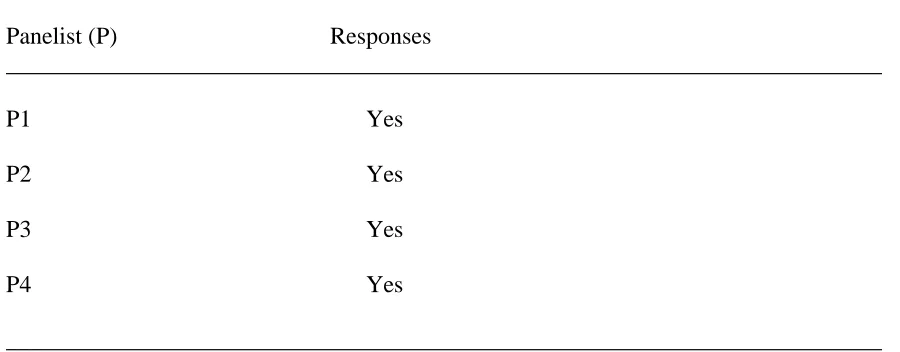
Overall survey results indicated that all four expert panelists believed JD‟s Offer demonstrated the content validity necessary to be an effective moral dilemma. The panel also reported that Ethos had the necessary qualities to be an effective moral dilemma game
intervention upon its completion. All four expert panelists responded the same answer, „yes‟ for each of the five closed-ended questions on the Ethos survey pertaining to aspects of effective moral dilemma content validity. The mean, median, and mode responses were all „yes‟. There was no standard deviation or range since all panelists‟ responses were „yes‟.
Table 1
JD’s Offer has Qualities Necessary to Serve as Effective Moral Dilemma
_________________________________________________________________________ Panelist (P) Responses
_________________________________________________________________________
P1 Yes
P2 Yes
P3 Yes
P4 Yes
_________________________________________________________________________
Panelist number two reported “I believe it has all of the traits for a solid moral dilemma…..a moral/ethical conflict where one has to critically think and exercise some value related judgment.” JD‟s Offer is a dilemma similar to other previously accepted and utilized
dilemmas where the dilemma requires the gamer to consider his or her personal values within the context of social laws and norms while making an important decision usually having both short and long-term consequences.
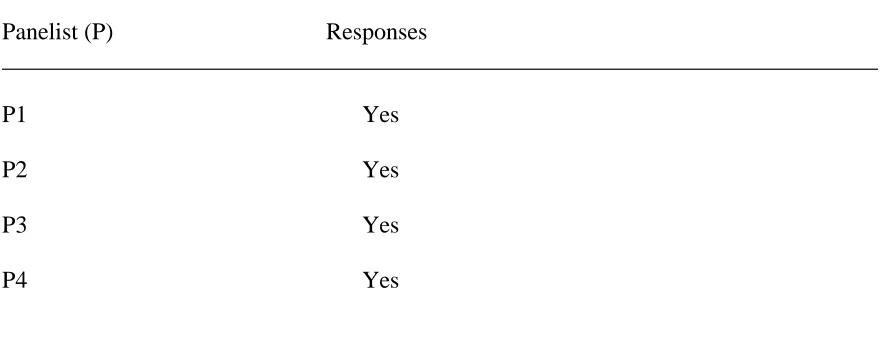
number one stated, “the simulated experiences helped gamers learn how to predict the consequences of their future actions.” See Table 2 for a summary.
Table 2
Choice Options with Immediate Feedback Provide Effective Simulated Experience to Help Gamer Improve Behavior Choices in Life
_________________________________________________________________________ Panelist (P) Responses
_________________________________________________________________________
P1 Yes
P2 Yes
P3 Yes
P4 Yes
_________________________________________________________________________
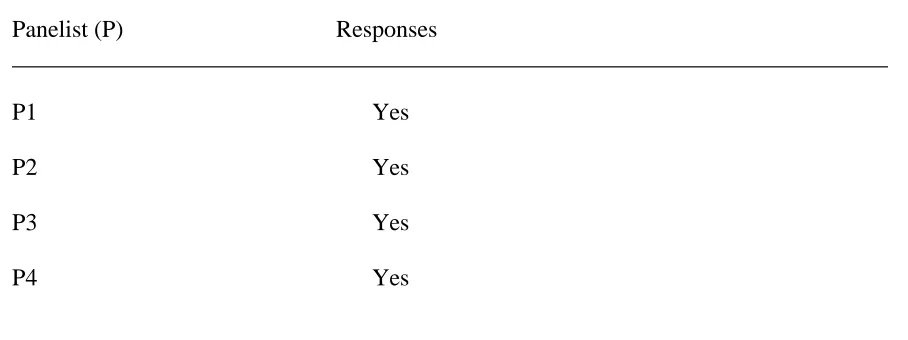
Table 3
The Things to Consider Sections are an Effective Simulated Game Experience that Can Teach the Gamer to Consider Choices in Real-Life
_________________________________________________________________________ Panelist (P) Responses
_________________________________________________________________________
P1 Yes
P2 Yes
P3 Yes
P4 Yes
_________________________________________________________________________
Table 4
The Things to Consider, Timelines, and Game Outcomes Provide an Effective Simulated Experience for the Gamer to Consider the Law and Others in Society While Making Life Choices
_________________________________________________________________________ Panelist (P) Responses
_________________________________________________________________________
P1 Yes
P2 Yes
P3 Yes
P4 Yes
_________________________________________________________________________
The final closed-ended question on the Ethos survey asked panelists if they believed Ethos would be an effective moral reasoning intervention upon its completion. This question was perhaps most important for the expert panel determining the content validity of Ethos, because if the majority of the panel believed Ethos could serve as an effective moral
Table 5
Ethos will be an Effective Moral Reasoning Intervention Upon its Completion
_________________________________________________________________________ Panelist (P) Responses
_________________________________________________________________________
P1 Yes
P2 Yes
P3 Yes
P4 Yes
_________________________________________________________________________
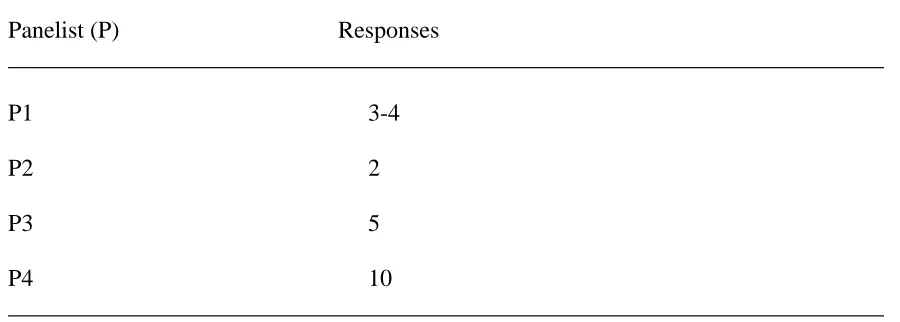
There were also several open-ended questions on the Ethos survey, so panelists would have the opportunity to elaborate further regarding their opinions of Ethos. The first open-ended question asked panelists how many comprehensive dilemmas they believed should be included in a completed Ethos. The experts‟ responses varied. Panelists‟ responses are in Table 6.
Table 6
Number of Comprehensive Moral Dilemmas to be an Effective Intervention
_________________________________________________________________________ Panelist (P) Responses
_________________________________________________________________________
P1 3-4
P2 2
P3 5
P4 10
It is possible that the panelists‟ responses ranged from two to 10 moral dilemmas due to the panelists differing professional counselor expertise. The panelists who reported the highest number of dilemmas worked in the private practice setting only.
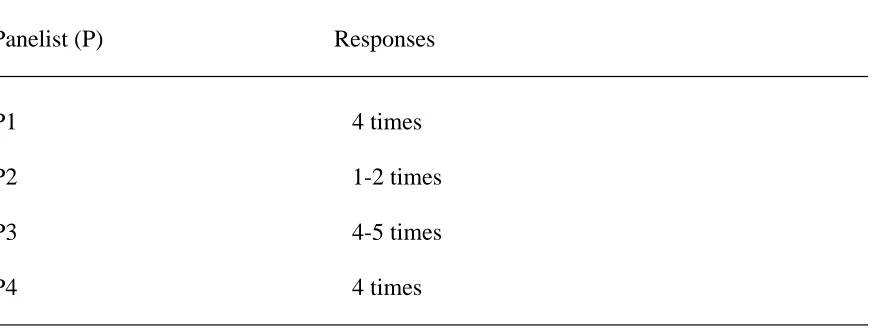
The second open-ended question on the Ethos survey asked the panelists how many times they believed each dilemma should be played in order for it to serve as an effective moral reasoning intervention. Panelists‟ responses are in Table 7.
Table 7
Same Comprehensive Moral Dilemmas Should be Played X Number of Times _________________________________________________________________________ Panelist (P) Responses
_________________________________________________________________________
P1 4 times
P2 1-2 times
P3 4-5 times
P4 4 times
_________________________________________________________________________
Table 8
Amount of Time Should Spend Playing Effective Computer-based Behavior Interventions _________________________________________________________________________ Panelist (P) Responses
_________________________________________________________________________
P1 30-60 Minutes for 2-3 Days per Week
P2 30-60 Minutes for 2 Days per Week
P3 60 Minutes for 3 Days per Week
P4 30-45 Minutes for 3 Days per Week
_________________________________________________________________________
The next open-ended question on the Ethos survey asked panelists if they believed Ethos could serve as a standalone moral reasoning intervention. All panelists replied in the affirmative, however if accompanied with counseling or processing. Table 9 provides a summary.
Table 9
Can Ethos, if Completed, be a Stand-alone Intervention
_________________________________________________________________________ Panelist (P) Responses
_________________________________________________________________________
P1 Yes, with Therapy
P2 Yes, with Counseling
P3 Yes, with Counseling
P4 Yes, with discussion or processing
It seems that the expert panel appreciated the possibilities of Ethos being effective, but each panelist was in favor of some type of processing as part of the intervention.
The last open-ended question on the Ethos survey asked panelists in what settings they believed Ethos would be appropriate. The panelists‟ answers are in Table 10.
Table 10
Ethos Can be an Effective Intervention in the Following Settings
_________________________________________________________________________ Panelist (P) Responses
_________________________________________________________________________ P1 Home, School, Therapeutic, Juvenile Justice
P2 Home, School, Therapeutic, Juvenile Justice P3 Home, School, Therapeutic, Juvenile Justice
P4 School
_________________________________________________________________________
It is interesting that three panelists believed Ethos would be appropriate for most settings and P4, who only worked with clients in a private practice setting, believed Ethos would be appropriate only in the school setting.
Common Themes from Qualitative Analysis
resulted in a more meaningful research study, however, experts in the fields of moral development, child development, ethical decision making, and adolescent psychotherapy who were also willing to participate in this study were not abundant in this geographical area.
There were several common themes found among all four panelists‟ responses which demonstrated their unanimous opinion that Ethos has sufficient content validity to be an effective moral dilemma. The first theme the panelists wrote about most often in the Ethos survey was that the dilemma, JD’s Offer, was very realistic. The panel reported that it was
believable for many adolescents either to have the ability or know someone who has the ability to hack into school computers and this was a scenario that most gamers could relate to. All panelists agreed that the realistic nature of this dilemma is the main quality that makes it effective for adolescent gamers so they will be able to participate fully in the game learning experience. Panelist number one stated that, “the dilemma represents a realistic scenario an adolescent would encounter and asks the individual to make choices about things an adolescent would encounter regularly in real life.”
The second most common theme among panelists’ responses was that, as with previously accepted effective moral dilemmas, JD’s Offer gives game players a clear choice
reported “I believe it has all of the traits for a solid moral dilemma…..a moral/ethical conflict where one has to critically think and exercise some value related judgment.”
Another main theme all panelists specifically wrote about in the survey was that the game atmosphere encouraged game players to choose and experience various consequences in a safe environment without the harm of real-life choice exploration. The panel also stated that a single player video game was non-threatening and gamers could try various choice options without others judging them as opposed to a moral dilemma discussion group setting where judgmental behavior among group members has the possibility of occurring.
Another theme the panelists believed added to Ethos’ effectiveness as a moral
dilemma intervention was the ability of the game to provide immediate choice feedback. In Ethos, each time a gamer makes a choice; he or she receives visual feedback for various life categories such as grades, behavior, popularity, and money. Each panelist specifically wrote how the immediate feedback of each choice in Ethos was an effective tool to communicate consequences both present and long-term to the gamer. In moral dilemma discussion groups, the future consequences of choice options are discussed in the group setting and this was a crucial component to be included in Ethos‟ game simulation. Panelist number three wrote that, “perhaps the gamer is able to see how one bad choice leads to another and increasingly more severe consequences.” And, panelist number four stated, “the game predictions about the gamers‟ future based on the responses allow the gamer to consider choices more closely.”
Another theme each panelist recorded as an effective aspect of Ethos was the ‘Things to Consider” (TTC). The TTC section provided important choice considerations for the
intended to be discussion points that may occur in a moral dilemma discussion group as the group discusses to a final consensus.
CHAPTER 5 Discussion The Purpose of the Study and Summary
The purpose of this research was to develop Ethos, an original computer-based moral dilemma intervention and test its content validity. Ethos is a moral dilemma game that is intended to serve as an intervention to increase the levels of moral reasoning for those who play the game. Ethos has only one comprehensive dilemma situation to test for content validity at this time. Results of this investigation will be utilized if future dilemmas are created for Ethos. Ideally, Ethos may ultimately be appropriate for use in public or private settings in order to stimulate moral reasoning training in an effective, implementation via a friendly and affordable manner.
First, a team of fellow students from the computer science department at North Carolina State University were hired to assist the investigator in transforming her knowledge from conducting research in the area of moral development into a computer-based moral development intervention; what is now known as Ethos. The team consisted of a
Once Ethos was complete, 10 prospective expert panelists were contacted to participate in the research study. In the end, there were four experts panelists who
participated in the research. Two panelists were professors of counselor education at local universities and had conducted extensive research in moral development. The other two panelists were locally-based licensed professional psychotherapists who had adolescents as a large portion of their clientele. The content validity of Ethos was tested by having the expert panel play Ethos for a minimum of two hours as well as complete a survey. Follow up interviews were also conducted to further clarify the survey.
Research Design Analysis and Research Limitations
It is clear that this panel of experts believed that Ethos had the potential to serve as an effective behavioral intervention. All four panelists responded positively throughout the survey regarding Ethos‟ content validity and potential to serve as an effective moral
reasoning intervention. The research design was sufficient, but it may not have been the best option for a small panel. There was no variation in the panelists‟ responses to the yes-no questions on the Ethos survey. The present study may have been more informative if the expert panel was larger. It is also possible that the Ethos survey could be improved in order to obtain more detailed feedback from the panelists.
The researcher believed it was important she be located nearby panelists in the event that technical support was needed. It was much more difficult to obtain expert panelists than the researcher anticipated prior to the study. First, there were not many local experts in the field of moral development. Second, there were also not a large number of nearby
study. If a more affordable and reliable download process for Ethos was available,
prospective panelists could have been recruited from around the country and thus the panel would have been larger. Testing computer-based programs will be more efficient if a broader range of panelist candidates can be contacted even if they are not located nearby the
researcher.
A second limitation to this research design was that all four panelists were unable to successfully download Ethos and the researcher had to purchase three laptops in order to conduct the study. Of the four panelists, one attempted to download Ethos and his computer was not capable of running it. The other three panelists agreed to participate in the study, but were unable to take the first step in downloading Ethos. During the follow up interview, none of those three panelists could give a reason for being unable to attempt the Ethos download. As soon as it was known that the panelists were all unable to download Ethos successfully, and too much time was passing, three inexpensive computers were purchased to install Ethos and then distribute to the panelists. The panelists were all very appreciative to receive computers with Ethos already installed on it. P2 and P3 even apologized for not being able to successfully download Ethos. As soon as the panelists received their computers, they began to play Ethos and reported playing the game frequently. It was beneficial for the completion of this study that the researcher was located near the panelists in order to provide technical support. The study would have cost less if the programmer had been paid to build a more user-friendly download for Ethos.
created for this study, this was the first time it was used and it is not known if the survey is the best measure of Ethos‟ content validity.
Summary of Results and Other Limitations
Overall, the expert panel reported very positive results about Ethos. The panel unanimously stated that Ethos demonstrated strong content validity. Each panelist also believed that JD‟s Offer had the necessary qualities to serve as an effective moral dilemma. Each panelist also indicated that if completed, they believed that Ethos could serve as an effective moral development game. This is very promising information for Ethos as well as the future of computer-based behavioral interventions.
Even though the expert panel reported positive affirmations about Ethos, the field of computer-based behavioral interventions is very new and this is also one of its greatest limitations. Behavioral gaming is not in wide practice yet, but rather, still in its early stages of research and development, and very little is known about it among most mental health professionals. It was very difficult at times to explain the concept of computer-based behavioral interventions to colleagues when it is still such a foreign topic. The lack of previous awareness of behavior gaming was a limitation to successfully enlisting more panelists.
Additionally, some mental health professionals resisted the notion of computer-based behavioral interventions and this was obviously a limitation when requesting prospective panelists. It appeared to be difficult for some mental health professionals to appreciate the value in computer-based behavioral interventions when our field is based on human interaction rather than humans interacting with computers. A few professionals even
changing human behaviors as other humans even though there is a plethora of published and well-known research confirming the effectives of computer-based instruction. Further research would allow mental health professionals to understand that behavioral gaming can be another tool to utilize with clients rather than be threatened at its existence.
Another limitation to this study was that the expert panel did not consist of typical gamers. Further relevant information regarding the playability of Ethos may have been discovered if average gamers were asked to play Ethos and respond to the survey.
A final limitation to this study was the expense involved. The project was funded entirely by the researcher. Funding for computer-based research is typically awarded for projects much larger than Ethos. If behavioral gaming can break into the field of counseling, then possibly more research can be conducted on a smaller scale in order to benefit new innovations in mental health practice. Even though the creation of behavioral software requires one initial investment, one behavioral game can assist far more clients than one counselor conducting individual or group counseling.
Recommendations for Future Research
It also seems logical to completely understand existing research in computer-based instruction for the purposes of creating effective behavior games. There is already a great deal of research that explains the necessary qualities of effective academic games and it would be useful for mental health professionals to be aware of this knowledge.
Finally, it is crucial that counselors and computer scientists spread the news of the potential for computer-based behavior interventions, via professional publications and conferences, so further research can be conducted and ultimately utilized to create effective behavioral intervention games. Effective behavioral gaming can be a useful tool to improve lives and benefit society. As it has always been the intention of counselors to „meet clients where they are‟, computer-based behavioral interventions and gaming are the next innovative method of serving our clients in the medium we all operate within on a daily basis:
REFERENCES
Arbuthnot, J., & Gordon, D. A. (1986). Behavioral and cognitive effects of a moral reasoning development intervention for high-risk behavior-disordered adolescents. Journal of
Consulting and Clinical Psychology, 54, 208-216.
Aylett, R., Louchart, S., Dias, J., Paiva, A., & Vala, M. (2005). Fear Not! – An experiment in emergent narrative. In Proceedings of IVA 2005, 305-316, Greece.
Bailey, S. (1995). Young offenders, serious crimes. British Journal of Psychiatry, 167, 5-7. Barab, S., Thomas, M., Dodge, T., Carteaux, R., & Tuzan, H. (2005). Making learning fun: Quest atlantis, a game without guns. Educational Technology Research and Development, 53 (1), 86-107.
Blasi, A. (1980). Bridging moral cognition and moral action: A critical review of the literature. Psychological Bulletin, 88, 1-45.
Burns, P. K. & Bozeman, W. C. (1981). Computer assisted instruction and mathematics: Is there a relationship? Education Technology, 21/10, 32-39.
Claypoole, S. D., Moody, E. E. Jr., & Peace, S. D. (2000). Moral dilemma discussions: An effective group intervention for juvenile offenders. Journal for Specialists in Group Work, 25 (4), 394 - 411.
Copeland, T. F. & Parrish, T. S. (1979). An attempt to enhance the moral judgment of offenders. Psychological Reports, 45, 831-834.
Curtis, C. K., Thomas, K. M., & Ritter, J. (2008). Interactive gaming technologies and air force technical training. Journal of Interactive Instructional Development, 20, (2), 8-14.
scores of juvenile delinquents and their inclusion in a moral dilemma discussion group. Psychological Reports, 39, 1075-1080.
Fodor, E. M. (1972). Delinquency and susceptibility to social influence among adolescents as a function level of moral development. The Journal of Social Psychology, 86, 257- 260.
Gee, P. J. (2005). Why are video games good for learning? Unpublished manuscript, University of Wisconsin-Madison.
Gibbs, J. C., Arnold, K. D., Ahlhorn, H. H., & Chessman, F. L. (1984). Facilitation of sociomoral reasoning in delinquents. Journal of Consultation and Clinical Psychology, 52, 37-45.
Gilligan, C. (1974). Fostering moral development in children. Educational Development Center News, 4, 7-10.
Goldstein, A. P., & Glick, B. (1987). Aggression replacement training: A comprehensive intervention for aggressive youth. Champaign, Illinois: Research Press.
Jennings, W. S., Kilkenny, R., & Kholberg, L. (1983). Moral development theory and practice for youthful and adult offenders. In W. S. Laufer & J. M. Day (Eds). Personality, theory, moral development, and criminal behavior. Toronto, Canada: Lexington Books.
Jurkovic, G. J. (1980). The juvenile delinquent as a moral philosopher: A structural-developmental perspective. Psychological Bulletin, 88, 709-727.
Kiili, K. (2007). Foundation for problem-based gaming. British Journal of Educational Technology, 38, (3), 394-404.
Kohlberg, L. (1969). Stage and sequence: The cognitive developmental approach to
socialization. In D. Gosling (Ed.), Handbook of Socialization Theory and Research. New York: Rand McNally.
Kohlberg, L. (1978). The cognitive-developmental approach to behavior disorders: A study of the development of moral reasoning in delinquents. In G. Serban (Ed), Cognitive Defects in the Development of Mental Illness (pp. 199-220). New York: Brunner-Mazel.
Kohlberg, L. (1984). The Psychology of Moral Development. New York, NY: Harper & Roe, Publishers, Inc.
Kulik, J. (1983). Synthesis of research of computer-based instruction, Educational Leadership, 19-21.
Marsella, S., Johnson, W. L., & LaBore, C. (2003). Interactive pedagogical drama for health interventions. Proceedings of the 11th International Conference on Artificial
Intelligence in Education, Australia.
McDavid, J. & Schroeder, H. M. (1956). The interpretation of approval and disapproval by delinquent and non-delinquent adolescents. Journal of Personality, 25, 539-549. McQuiggan, S. W., Rowe, J. P., Lee, S., & Lester, J. C. (2008). Story-based learning:
The impact of narrative on learning experiences and outcomes. North Carolina State University, Department of Computer Science.
(Doctoral Dissertation, North Carolina State University 1994). Dissertation Abstracts International, 56 (01), University Microfilms No. AAAC95-17670)
National Gang Intelligence Center. (2009). National Gang Threat Assessment, 2009. Available from National Gang Intelligence Web site,
http://www.justice.gov/ndic/pubs32/32146/gangs.htm
National Youth Violence Prevention Resource Center. (2007). Youth Violence Statistics Fact Sheet, 2007 [Data file]. Available from Safe Youth Web site,
http://www.safeyouth.org?scripts/facts/statistics.asp
Niles, W. J. (1986). Effects of a moral development discussion group on delinquent and predelinquent boys. Journal of Counseling Psychology, 33, 45-51.
NPD Group. (2007, October, 16). Amount of Time Kids Spend Playing Video Games is on the Rise. Retrieved January 8, 2009, from
http://.npd.com/press/releases/press_071016a.html
3-C Institute for Social Development. (n.d.) Social Skills Training Using Interactive
Technology Retrieved February 20, 2009 from http://www.3cisd.com/interventions/ Panel on Juvenile Crime: Prevention, Treatment, and Control, Committee on Law and
Justice, and Board on Children, Youth, and Families, National Research Council, and Institute of Medicine. (2001). Juvenile Crime, Juvenile Justice. Washington, D.C. Perrone, P. & Chesney-Lind, M. (1997). Representations of gangs and delinquency: Wild in
the streets? Social Justice, 24, 4, 96-116.