Western University Western University
Scholarship@Western
Scholarship@Western
Electronic Thesis and Dissertation Repository
4-17-2014 12:00 AM
Investigating Genotype-Phenotype relationship extraction from
Investigating Genotype-Phenotype relationship extraction from
biomedical text
biomedical text
Maryam Khordad
The University of Western Ontario Supervisor
Robert E. mercer
The University of Western Ontario Graduate Program in Computer Science
A thesis submitted in partial fulfillment of the requirements for the degree in Doctor of Philosophy
© Maryam Khordad 2014
Follow this and additional works at: https://ir.lib.uwo.ca/etd
Part of the Artificial Intelligence and Robotics Commons
Recommended Citation Recommended Citation
Khordad, Maryam, "Investigating Genotype-Phenotype relationship extraction from biomedical text" (2014). Electronic Thesis and Dissertation Repository. 1971.
https://ir.lib.uwo.ca/etd/1971
This Dissertation/Thesis is brought to you for free and open access by Scholarship@Western. It has been accepted for inclusion in Electronic Thesis and Dissertation Repository by an authorized administrator of
INVESTIGATING GENOTYPE-PHENOTYPE RELATIONSHIP
EXTRACTION FROM BIOMEDICAL TEXT
(Thesis format: Monograph)
by
Maryam Khordad
Graduate Program in Computer Science
A thesis submitted in partial fulfillment
of the requirements for the degree of
Doctor of Philosophy
The School of Graduate and Postdoctoral Studies
The University of Western Ontario
London, Ontario, Canada
c
Abstract
During the last decade biomedicine has developed at a tremendous pace. Every day a lot of
biomedical papers are published and a large amount of new information is produced. To help
enable automated and human interaction in the multitude of applications of this biomedical
data, the need for Natural Language Processing systems to process the vast amount of new
in-formation is increasing. Our main purpose in this research project is to extract the relationships
between genotypes and phenotypes mentioned in the biomedical publications. Such a system
provides important and up-to-date data for database construction and updating, and even text
summarization.
To achieve this goal we had to solve three main problems: finding genotype names, finding
phenotype names, and finally extracting phenotype–genotype interactions. We consider all
these required modules in a comprehensive system and propose a promising solution for each
of them taking into account available tools and resources.
Banner, an open source biomedical named entity recognition system, which has achieved
good results in detecting genotypes, has been used for the genotype name recognition task.
We were the first group to start working on phenotype name recognition. We have
devel-oped two different systems (rule-based and machine-learning based) for extracting phenotype
names from text. These systems incorporated the available knowledge from the Unified
Medi-cal Language System metathesaurus and the Human Phenotype Onotolgy (HPO). As there was
no available annotated corpus for phenotype names, we created a valuable corpus with
anno-tated phenotype names using information available in HPO and a self-training method which
can be used for future research.
To solve the final problem of this project i.e. , phenotype–genotype relationship extraction,
a machine learning method has been proposed. As there was no corpus available for this task
and it was not possible for us to annotate a sufficiently large corpus manually, a semi-automatic
approach has been used to annotate a small corpus and a self-training method has been
pro-posed to annotate more sentences and enlarge this corpus. A test set was manually annotated by
an expert. In addition to having phenotype-genotype relationships annotated, the test set
tains important comments about the nature of these relationships. The evaluation results related
to each system demonstrate the significantly good performance of all the proposed methods.
Keywords: Relation Extraction, Named Entity Recognition, Phenotype, Genotype,
Semi-supervised learning
Acknowlegements
I would like to express my special appreciation and thanks to my supervisor Professor Mercer
you have been a tremendous mentor for me. Your support and advice on my research was
priceless. It was an honor for me to work under your supervision and I really believe I was
lucky for that.
I would like to express the deepest appreciation to Professor Rogan, who suggested my
thesis topic. Without his guidance and persistent help this project would not have been possible.
I would also like to thank my labmates Shifta Ansari and Rushdi Shams for all their help
and support. In addition, a thank you to Syeed Ibn Faiz who provided me with his tools.
I would like to thank the University of Western Ontario, the Faculty of Science and the
Computer Science Department for providing me financial support as a Teaching Assistant and
a Research Assistant.
A special thanks to my family. Words cannot express how grateful I am to my mother,
father, and brothers for all of the sacrifices that you have made on my behalf. At the end I
would like express appreciation to my beloved husband Reza who was always my support in
the moments when there was no one to answer my queries.
Contents
Abstract ii
Acknowlegements iv
List of Figures ix
List of Tables xi
1 Introduction 1
2 A General Relation Extraction System 4
2.1 Tokenizer . . . 5
2.2 Named entity recognition . . . 5
2.2.1 Dictionary-based techniques . . . 6
2.2.2 Rule-based techniques . . . 9
2.2.3 Machine learning techniques . . . 9
2.3 Relation extraction . . . 10
2.3.1 Computational linguistics-based methods . . . 10
Shallow parsing approaches . . . 11
Deep parsing approaches . . . 12
2.3.2 Rule-based methods . . . 13
Ibn Faiz’s rule-based approach [34] . . . 17
2.3.3 Machine learning and statistical methods . . . 18
Ibn Faiz’s machine learning-based approach [34] . . . 19
2.4 Conclusion . . . 19
3 Semi–Supervised Machine Learning 21 3.1 Co-training . . . 24
3.2 Self-training . . . 26
4 Conditional Random Fields 28 5 Natural Language Processing Tools 31 5.1 MetaMap . . . 31
5.2 Mallet . . . 33
5.3 BLLIP reranking parser . . . 34
5.4 BioText . . . 34
5.5 PostMed . . . 34
5.6 Stanford dependency parser . . . 35
6 Genotype Name Recognition 36 7 Rule–Based Phenotype Name Recognition 39 7.1 The proposed method . . . 40
7.1.1 Disorder recognizer . . . 42
7.2 Evaluation . . . 45
7.3 Summary . . . 47
8 Machine Learning–Based Phenotype Name Recognition 50 8.0.1 Incorporating the rules . . . 51
8.0.2 Adding features . . . 53
8.0.3 Corpus . . . 55
Collecting the papers . . . 55
Annotating the corpus . . . 55
8.1 Evaluation . . . 57
8.2 Discussion . . . 58
9 Improving Phenotype Name Recognition 63 9.1 Proposed method . . . 65
9.1.1 Empty heads . . . 66
9.1.2 NP boundary . . . 68
9.2 Implementation . . . 69
9.3 Results and discussion . . . 71
10 Phenotype–Genotype Relation Extraction 77 10.1 Curating the data . . . 78
10.1.1 Training set . . . 80
10.1.2 Test set . . . 82
10.1.3 Unlabelled data . . . 83
10.2 Training a model . . . 83
10.2.1 Machine learning method . . . 84
10.2.2 Self-training algorithm . . . 85
10.3 Results and discussion . . . 89
11 Conclusions and Future Work 93 11.1 Future work . . . 95
Bibliography 98
A A partial list of UMLS semantic types and semantic groups 113
B List of special modifiers 115
C List of relation verbs demonstrating relationships between genotypes and
phe-notypes [88] 121
D Relational terms used by Ibn Faiz’s rule-based system [34] 123
E Relational terms annotated by our annotator 127
F List of abbreviations 132
Curriculum Vitae 134
List of Figures
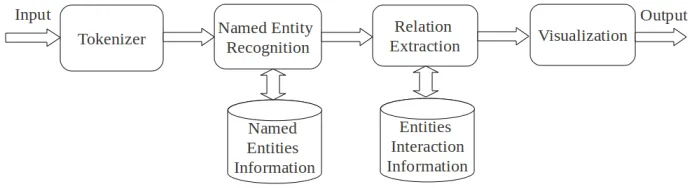
2.1 General block diagram for finding relationships between entities . . . 4
2.2 Conversion Table . . . 8
2.3 Example . . . 9
2.4 Upper panel: Dependency parse tree in RelEx. Lower panel: Corresponding chunk dependency tree . . . 15
3.1 How semi-supervised learning works. . . 22
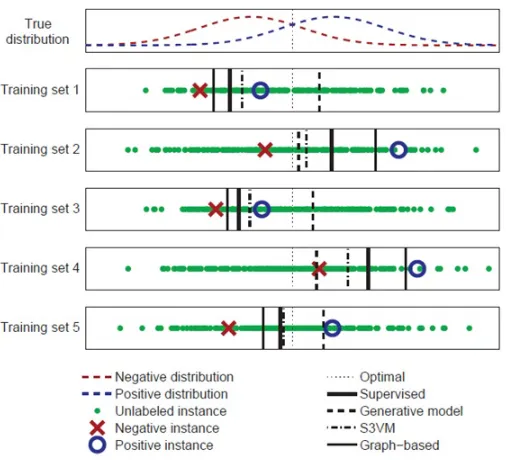
3.2 Two classes drawn from overlapping Gaussian distributions (top panel). Deci-sion boundaries learned by several algorithms are shown for five random sam-ples of labelled and unlabelled training samsam-ples. . . 23
3.3 Self-training algorithm . . . 26
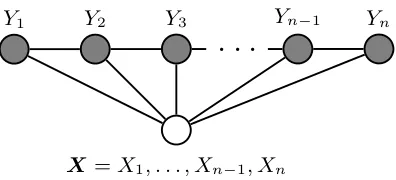
4.1 Graphical structure of a chain-structured CRF for sequences. . . 29
5.1 MetaMap output for “the Fanconi anemia” . . . 32
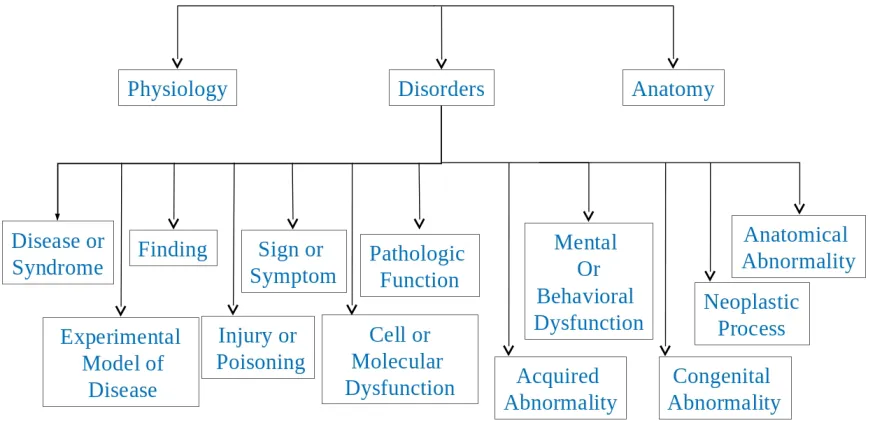
5.2 A part of UMLS semantic types and semantic groups hierarchy. . . 33
6.1 BANNER Architecture . . . 37
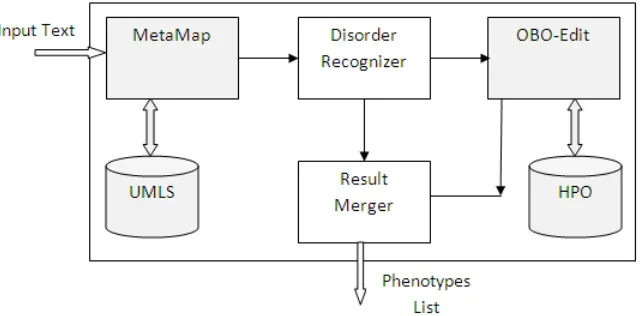
7.1 System block diagram. . . 42
7.2 An example of Rule 1 . . . 46
8.1 System Block Diagram . . . 51
8.2 Analyzer Example . . . 53
8.3 Process of corpus annotation . . . 56
9.1 MetaMap output for“an autosomal disorder” . . . 64
9.2 MetaMap output for“Diamond-Blackfan anemia patients”in the sentence“In
40 to 50% of Diamond-Blackfan anemia patients, congenital abnormalities
mostly in the cephalic area and in thumbs and upper limbs have been described.” 65
9.3 MetaMap output for“learning disabilities”in the sentence“One of them (GUE)
presented learning disabilities while this information was unavailable for N2603
and OLI who were 4 and 3 years old at the examination time, respectively.” . . 66
9.4 Block diagram of the pre-processing step. . . 71
10.1 An example of an annotated sentence. . . 83
10.2 Dependency tree related to the sentence “The association of Genotype1 with
Phenotype2 is confirmed.” . . . 85
10.3 The self training process described in Section 10.2.2 . . . 88
List of Tables
2.1 Ibn Faiz’s rule-based PPI method performance. . . 18
2.2 Ibn Faiz’s machine learning-based PPI method performance. . . 19
6.1 Set of features in BANNER . . . 37
6.2 BANNER evaluation results . . . 38
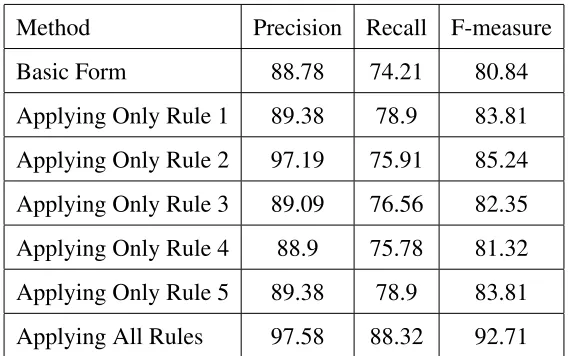
7.1 Results of evaluating the system on the original corpus. . . 47
7.2 Results of evaluating the system on a separate test set. . . 47
7.3 Three sources of errors . . . 49
8.1 System Evaluation Results . . . 58
8.2 Comparing the system with the Rule-Based Method . . . 58
8.3 Contribution of each additional feature . . . 59
8.4 Contribution of each feature . . . 60
8.5 Number of TPs and FNs in each method . . . 61
8.6 Analysis of NPs . . . 61
9.1 Examples showing the effectiveness of ignoring empty heads. . . 68
9.2 Experimental results showing the effectiveness of bracketing the MetaMap in-put to affect its NP boundary detection. . . 70
9.3 Strict and loose evaluation results for our base phenotype name recognition system. . . 72
9.4 The contribution of each solution in the loose evaluation results to the results provided by the base system using MetaMap 2013. . . 73
9.5 The contribution of each solution in the strict evaluation results to the results
provided by the base system using MetaMap 2013. . . 73
9.6 Examples of the phenotypes found in the base system but after ignoring the empty heads, system could not extract them. . . 74
10.1 List of dependency features . . . 86
10.2 List of syntactic and surface features . . . 87
10.3 Distribution of data in our different sets. . . 89
10.4 Evaluation results . . . 90
10.5 Results after deletingPhenominersentences from the test set. . . 91
Chapter 1
Introduction
During the last decade biomedicine has developed at a tremendous pace. Every day a
tremen-dous number of biomedical papers are published and a large amount of new information is
pro-duced. To help enable automated and human interaction in the multitude of applications of this
biomedical data, the need for Natural Language Processing (NLP) systems to process the vast
amount of new information is increasing. Current NLP systems try to extract from the
biomedi-cal literature different knowledge such as: protein–protein interactions [13, 38, 45, 63, 76, 117],
new hypotheses [47, 48, 105], relations between drugs, genes, and cells [36, 89, 106], relations
between genes and diseases [25, 88], protein structure [39, 51], and protein function [6, 109].
One of the important pieces of information contained in biomedical literature is the newly
discovered relationships between phenotypes and genotypes. The genotype refers to the entire
set of genes in a cell, an organism, or an individual. Phenotypes are the observable
characteris-tics of a cell or organism, including the result of any test that is not a direct test of the genotype
[103]. A phenotype of an organism is determined by the interaction of its genetic constitution
and the environment. Skin colour, height, and behaviour are some examples of phenotypes. It
is worth noting that throughout this thesis we do not take into account the phenotypes at the
cellular level (inside the cell).
A lot of research experiments are being performed to discover the role of DNA sequence
variants in human health and disease. The results of these experiments are published in the
Chapter1. Introduction 2
biomedical literature. Experts want to know if a disease is caused by a genotype or a special
genotype determines certain characteristics in people. This information is very valuable for
biologists, physicians, and patients. There are some resources which collect this information
and visualize it for people who are interested. Because of the large quantity of information, a
reliable automatic system to extract this information for future organization is desirable. Such
a system provides important and up-to-date data for database construction and updating, and
even text summarization.
Our purpose in this research project is to make an automatic system which extracts the
relationships between phenotypes and genotypes from biomedical papers. Assume that we
have the following sentence in a research paper:
• Mutations of the MECP2 gene at Xq28 are associated with Rett syndrome in females
and with syndromic and nonsyndromic forms of mental retardation in males.
Our final system should be able to extract the following information from this sentence.
1. Mutations of the MECP2 gene at Xq28is a genotype.
2. Mental retardationandRett syndromeare phenotypes.
3. According to this sentence there are two relationships in this sentence between the
men-tioned genotype and two phenotypes.
Therefore our system must have the ability to accomplish three different tasks: recognizing
phenotype names, recognizing genotype names and finally detecting the relationships between
them according to the sentences. Throughout this thesis we will explain our proposed methods
for each of these fundamental tasks.
Phenotype name recognition is a very difficult and complicated task. According to our
knowledge we are the first group to start working on this topic. We proposed a rule-based
system [55] and a machine learning-based system [56] to solve this problem and a method for
improving the results in the machine-learning based system. So far, we are aware of only one
Chapter1. Introduction 3
Recognizing gene and protein names in biomedical literature is a well-studied problem.
In the previous years the BioCreAtIvE challenge evaluation1 [1] had several competitions in
this area. Many groups participated in these competitions and some very good systems were
proposed. We decided to use one of the available systems named Banner [62] in our own
system to extract genotype names from biomedical text.
Extracting relationships between phenotypes and genotypes is the last step in this project.
We are not aware of any other work on this topic. We proposed a machine learning based
approach to attack this problem. As there was no available corpus for training our machine
learning model we generated a corpus semi-automatically and using a semi-supervised learning
method we improved our final results.
The text from which the relations are extracted has been drawn from the full-text
arti-cles from PubMed (2009) and BioMedCentral (2004), the abstracts obtained from querying
PubMed [3], and abstracts from Phenominer [21].
The remainder of the thesis is organized as follows: Chapter 2 describes a general
rela-tion extracrela-tion system, its modules and previous works related to each module. Chapter 3
explains the idea behind semi-supervised learning and its algorithms. Chapter 4 gives a brief
introduction to Conditional Random Fields (CRF), a machine learning algorithm for labelling
sequence data. Chapter 5 gives a short description of NLP tools that have been used in this
project. Chapter 6 is devoted to Banner, the tool we applied to the genotype recognition task.
Chapter 7 describes a rule-based method we proposed for phenotype name recognition.
Chap-ters 8 and 9 explain a machine learning-based method for phenotype name recognition and a
suggestion for improving it. Our phenotype-genotype relation extraction system is described
in Chapter 10 . Finally we conclude the work presented in this thesis in Chapter 11 and discuss
directions for possible future work.
1BioCreAtIvE (Critical Assessment of Information Extraction systems in Biology) challenge is an effort for
Chapter 2
A General Relation Extraction System
The ultimate goal of this thesis is to extract phenotype-genotype relations from biomedical text.
Many systems have been developed to find the relationships between different entities from
biomedical text. Some of these systems extract the relationships between homogeneous entities
like protein-protein interactions [13, 38, 45, 63, 76, 117] and some others suggest methods to
extract relations between heterogeneous entities like relations between drugs, genes, and cells
[36, 89, 106], or relations between genes and diseases [25, 88]. Figure 2.1 [118] illustrates a
general block diagram for a system which finds the relationship between biomedical entities.
This system is composed of different modules. The remainder of this chapter provides a general
discussion of each of these modules with some details related to the focus of this thesis.
Figure 2.1: General block diagram for finding relationships between entities
Chapter2. A GeneralRelationExtractionSystem 5
2.1
Tokenizer
The first module is the tokenizer. Tokenization is the process of breaking the text up into
its constituent units or its tokens. Tokens may vary in granularity depending on the
particu-lar application. Consequently, chapters, sections, paragraphs, sentences, words, syllables, or
phonemes can be used as tokens. Many different algorithms exist for breaking up the text into
any level of tokenization.
Ding et al. [31] applied different levels of tokenization such as phrases, sentences, and
abstracts from MEDLINE to find their effectiveness in the application of mining interactions
between biochemical entities based on co-occurrences. Experimental results showed that
ab-stracts, sentences, and phrases can produce comparable extraction results, with sentences being
more effective than phrases and being as effective as abstracts. In this work we have tokenized
full-text articles and abstracts at the sentence and word level.
In breaking up a text into sentences, the most challenging part is distinguishing between
a period that shows an end of sentence and a period that is a part of a previous token like the
abbreviations ”Mr.”, ”Dr.”, etc. This is a well-studied problem. MedPost [100] is one of the
excellent performing and freely available software solutions that deal with biomedical text.
MedPost was originally designed for Medlineabstracts. A modified version was developed in
Dr. Mercer’s Cognitive Engineering Laboratory to work with full-text articles and was named
PostMed to distinguish it from the original.
2.2
Named entity recognition
Named entities are phrases that contain the names of people, companies, cities, etc., and
specifi-cally in biomedical text entities such as genes, proteins, diseases, drugs, or organisms. Consider
the following sentence as an example:
• The RPS19 gene is involved in Diamond-Blackfan anemia.
Chapter2. A GeneralRelationExtractionSystem 6
Named Entity Recognition (NER) is the task of finding references to known entities in
natural language text. An NER technique may consist of some natural language processing
methods like part-of-speech (POS) tagging and parsing.
An NER system has to deal with three different problems: the recognition of a named entity
in text, assigning the named entity to a predefined class (gene, protein, drug, etc), and finding
the most suitable name for the entity if there are some synonyms for naming the entity [65].
The latter is especially important if the recognized entities are to be combined with information
from other resources, such as databases and ontologies.
Over the past years it has turned out that finding the names of biomedical objects in
litera-ture is a difficult task. Some problematic factors are: the existence of millions of entity names,
a constantly growing number of entity names, the lack of naming agreement, an extreme use of
abbreviations, the use of numerous synonyms and homonyms, and the fact that some biological
names are complex names that consist of many words, like “increased erythrocyte adenosine
deaminase activity”. Even biologists do not agree on the boundary of the names [65].
Named Entity Recognition in the biomedical domain has been extensively studied and, as a
consequence, many methods have been proposed. Some methods like MetaMap [7] and mgrep
[28] are generic methods and find all kinds of entities in the text. Some methods, however,
are specialized to recognize particular types of entities like gene or protein names [39, 58],
diseases and drugs [89, 94, 114], mutations [46] or properties of protein structures [39].
NER techniques are usually classified into three categories [65]. Dictionary-based
tech-niques are used by, for example, Krauthammer et al. [58] to match phrases from the text against
some existing dictionaries. Rule-based techniques used by, for example, Fukuda et al. [37]
make use of some rules to find entity names in the text. Machine learning techniques as, for
example, used by Nobata et al. [79] transform the NER task into a classification problem.
2.2.1
Dictionary-based techniques
Dictionaries are large collections of entity names. Exactly matching words and phrases in
Chapter2. A GeneralRelationExtractionSystem 7
all named entities and yields low recall 1 [65]. To improve this method some researchers
use inexact matching techniques, or try to generate typical spelling variants for each name
and add them to the available dictionary. Then they use this new dictionary to find exact
matches against text words. Swiss–Prot [9] is a biological database of protein sequences which
is widely used for protein NER. Flybase [40], the Unified Medical Language System (UMLS)
[50], the Pharmacogenetics Knowledge Base (PharmGKB) [57], and the Online Mendelian
Inheritance in Man (OMIM) [73] are examples of other biomedical databases. Coulet et al.
[25] use PharmGKB [57] to extract genes, drugs, and phenotypes in the literature.
The Human Phenotype Ontology (HPO) [90] is an ontology that tries to provide a
stan-dardized vocabulary of phenotypic abnormalities encountered in human disease. The HPO
was constructed using information initially obtained from the Online Mendelian Inheritance
in Man (OMIM) [73] after which synonym terms were merged and the hierarchical structure
was created between terms according to their semantics. The hierarchical structure in the HPO
represents the subclass relationship. The HPO currently contains over 9500 terms describing
phenotypic features.
The Human Genome Nomenclature (HUGO) [110] contains a list of approved human gene
names and symbols. In addition this list contains some symbols and names that are used before
approval. The HUGO Gene Nomenclature Committee assigns a unique symbol for each gene.
It has approved over 29,000 human gene symbols and names. The committee tries to facilitate
communication and electronic information retrieval of human genes avoiding any conflicts
among gene symbols.
The Gene Ontology (GO) [8] contains defined terms representing gene product properties.
This ontology covers three domains: cellular component, molecular function, and biological
process. This ontology consists of many databases, including several of the world’s major
repositories for plant, animal, and microbial genomes.
The GENIA corpus [80] is a collection of 2000 Medline abstracts which were collected
1Recall is the percentage of correct entity names found compared to all correct entity names in the corpus and
Chapter2. A GeneralRelationExtractionSystem 8
Figure 2.2: Conversion Table [59]
using the three MeSH2terms, “human”, “blood cells”, and “transcription factors”. This corpus
has been annotated for biological terms and can be used to train entity extraction algorithms.
Krauthammer et al. [59] use BLAST as an inexact matching algorithm. The BLAST
[5] programs are capable of searching similarities between sequences in protein and DNA
databases. In this approach, they translate a list of gene and protein names extracted from
GenBank3[2] into an alphabet of DNA sequences using a conversion table (Figure 2.2). Each
character of the name is substituted with a unique nucleotide string. As an example, the gene
name zgap1 would be translated into: AGATAAGCAAACACCCAGCG. Then they translate
the scientific papers into a continuous string of nucleotides using the same table. For
exam-ple, the sentence “For instance ErbB, Ras and Raf all lie on the ERK MAP kinase (MAPK)
pathway.” would be represented by Figure 2.3. Finally they search the whole paper string to
find similarities between nucleotide strings of gene and protein names in the standard BLAST
library and translated papers. A BLAST output file contains the list of these similarities and
their corresponding protein and gene names [59].
2Medical Subject Headings (MeSH) is a comprehensive controlled vocabulary for the purpose of indexing
journal articles and books in the life sciences; which is used by the MEDLINE/PubMed article database.
3The GenBank sequence database is an open access, annotated collection of all publicly available nucleotide
Chapter2. A GeneralRelationExtractionSystem 9
Figure 2.3: Example
2.2.2
Rule-based techniques
Rule-based approaches (e.g. , [37, 55, 88]) make use of lexical and linguistic rules to find entity
names in the text. In early systems, rules were created manually using human experts. These
rules specify the characteristics of named entities and their context, for example, surface clues
(capital letters, symbols, digits). Using these rules, some candidate entity names are chosen
and then these candidates can be expanded using some syntactic rules. For example, some
functional terms surrounding a candidate are included in the protein name (such as kinaseor
receptor). A part-of-speech (POS) tagger may be used to provide grammatical data for further
expansion rules. For instance, if a part of a nominal phrase is identified as a named entity the
whole nominal phrase can be recognized as a named entity.
One problem in rule-based systems is that they are not robust enough to recognize
previ-ously unseen names. In addition, the process of writing rules manually is too time-consuming
and labourious. The precision4 and recall5 in these systems depend on how specific the rules
are. Usually the rules cover special situations and systems achieve high precision and low
recall.
2.2.3
Machine learning techniques
In this approach the NER task is transformed to a classification problem. Dictionary matches,
word occurrence, context, and word morphology are used as features. Here, Support
Vec-4Precision is the percentage of correct entity names as determined by a human in all entity names found and
can be seen as a measure of soundness.
5Recall is the percentage of correct entity names as determined by a human found compared to all correct
Chapter2. A GeneralRelationExtractionSystem 10
tor Machines (SVM) [75], Hidden Markov Models [86], Conditional Random Fields [61] and
na¨ıve Bayes [75] are broadly and successfully applied. ABGene [107], BANNER [62],
AB-NER [96] and LingPipe [15] are some examples of machine learning-based AB-NER methods in
the biomedical domain.
2.3
Relation extraction
The extraction of relations between biomedical objects has attracted much attention and several
different approaches have been proposed. Generally, current approaches can be divided into
three categories [118]: Computational linguistics-based, rule-based, and machine learning and
statistical methods. Furthermore some systems ([13, 38, 88], for instance) have combined these
approaches and have proposed hybrid methods.
2.3.1
Computational linguistics-based methods
These methods define grammars to describe the syntax of sentences and make use of parsers
to find the grammatical structure of sentences and dependency relations among words. In the
first step of these methods the corpus is parsed to find the structure of each sentence and find
the relationships between different phrases in a sentence. Using this information is very useful
to extract relations between protein and gene names. However, efficient and accurate parsing
of unrestricted text (like biomedical texts) is beyond the capability of current techniques. It is
not applicable to use standard parsing algorithms because they are too expensive to use on very
large corpora and they are not robust enough [98]. For example the BLLIP parser [17] spends
about 1 minute to parse a sentence and its F-score6is reported to be 91.02 [17] on section 23 of
the Penn Treebank [68]. An alternative way is to use shallow parsers [53]. In shallow parsing
techniques, the sentence is not parsed completely. Instead, the sentence is broken up into
non-overlapping word sequences or phrases, such that syntactically related words are grouped
together.
Chapter2. A GeneralRelationExtractionSystem 11
Shallow parsing approaches
Shallow parsers decompose each sentence partially into some phrases and find the local
de-pendencies between phrases. Each phrase is tagged using a set of predefined grammatical tags
such as: Noun Phrase, Verb Phrase, Prepositional Phrase, Adverb Phrase, Subordinate Clause,
Adjective Phrase, Conjunction Phrase, and List Marker.
Leroy et al. [64] develop a shallow parser to extract relations between entities from
ab-stracts. The type of these entities has not been restricted. They start from a syntactic
perspec-tive and extract relations between all noun phrases regardless of their type. Their parser looks
for certain patterns in the text based on English closed-class words, e.g. , conjunctions and
prepositions. Closed-class words do not change over time. By using them, the resulting
tem-plates are general and do not depend on a pre-specified biomedical vocabulary. The parser is
composed of four cascaded finite state automata (FSA) to capture the content of paper abstracts
and then find the structure of the content: the FSA for Basic Sentences, the FSA for the
prepo-sitionof, the FSA for the preposition byand the FSA for the preposition in. The recognized
patterns in each FSA contain the binary relations between two noun phrases. Each relation can
contain up to five elements and requires a minimum of two elements.
Interacting proteins usually have similar biological functions. He and DiMarco [45] base
their method on this characteristic of protein-protein relationships. In this paper the idea of
lexical chaining has been used. While looking for a protein-protein interaction they focus on
finding some biological terms about the common functions of two interacting proteins in the
context surrounding the protein-protein interaction. If such terms are found, there is strong
evidence that the interaction is a valid biological interaction.
SemGen [88] identifies and extracts causal interaction of genes and diseases from
MED-LINE citations. Texts are parsed using MetaMap. The semantic type of each noun phrase
tagged by MetaMap is the basis of this method. Twenty verbs (and their nominalizations)
plus two prepositions,inand for, are recognized as indicators of a relation between a genetic
phenomenon and a disorder.
fre-Chapter2. A GeneralRelationExtractionSystem 12
quently seen verbs in the collection of abstracts are believed to express the relations between
genes and gene products. Based on these noun phrases and frequently seen verbs, the subject
and object of the interaction are recognized.
Obviously, shallow parsers extract simple binary relationships successfully but when there
are more complex relations among more than two entities they usually have erroneous results.
Deep parsers yield better and more precise results but they are expensive to use in terms of
time.
Deep parsing approaches
Systems based on deep parsing determine the complete syntactic structure of a sentence or
a string of symbols in a language and therefore are potentially more accurate. Deep parsing
approaches are divided into two main types according to the way of constructing grammars:
rationalist methods and empiricist methods. Rationalist methods define grammars manually,
while empiricist methods generate the grammar automatically using some observations.
Coulet et al. [25] propose a method to capture pharmacogenomics (PGx) relationships and
build a semantic network based on relations. They use lexicons of PGx key entities (drugs,
genes, and phenotypes) from PharmGKB[57] to find sentences mentioning pairs of key entities.
Using the Stanford parser [30] these sentences are parsed and their dependency graphs7 are
produced. According to the dependency graphs and two patterns, the subject, object, and the
relationship between them are extracted.
RelEx[38] makes dependency parse trees from the text and applies a small number of
sim-ple rules to these trees to extract protein–protein interactions. We will explain RelEx later in
Section 2.3.2 because it is a rule-based method too. Temkin and Gilder [108] use a lexical
an-alyzer and a context free grammar to make an efficient parser to capture interactions between
proteins, genes, and small molecules.
Yakushiji et al. [115] propose a method based on full parsing with a large-scale,
general-purpose grammar. A parser converts the various sentences that describe the same event into a
Chapter2. A GeneralRelationExtractionSystem 13
canonical structure (argument structure) regarding the verb representing the event and its
ar-guments such as the (semantic) subject and object. Interaction extraction is done using pattern
matching on the canonical structure.
Deep parsing approaches analyze the whole sentence structure to achieve higher accuracy.
However dealing with the whole sentence is time-consuming and expensive. Furthermore these
approaches cannot process all kinds of sentences and they usually cannot find the correct
struc-ture of complex sentences.
2.3.2
Rule-based methods
In rule-based approaches a set of rules is used. These rules express the format of the text
containing relations between entity names. These rules can be defined over words or
part-of-speech (POS) tags. The rule-based methods and computational linguistics-based methods are
different. Rule-based methods have explicit rules and these rules can be non-linguistic. The
BioNLP module [76] is a rule-based module which finds protein names in text and extracts
protein-protein interactions using pattern matching. The following five rules are some
exam-ples of pattern matching rules in BioNLP. In these rules the symbols A, B refer to protein names
andfnrefers to the interaction verb or its nominalized form.
• A... fn... B: This rule models basic sentences like “A inhibits B, C, and D”;
• A... fnof ... B: This rule models sentences such as “A, an activator of B, is found to be
lacking in the patient population”.;
• A... fnby ... B: This rule describes sentences in the passive voice, such as “A is inhibited
by the activities of B.”;
• A ..., which ... fn ... B, ...: This rule models sentences such as “A, which inhibits the
activities of B, is found to be lacking in the patient population”;
Chapter2. A GeneralRelationExtractionSystem 14
Obviously, such simple rules cannot produce good results. Many people have used some rules
that they produced manually. Using predefined rules can generate nice results but it is
time-consuming and if you want to move to another domain, significant manual work is required
to change the rules appropriate for the new domain. So, some people tried to automatically
construct the entity interaction patterns.
Huang et al. [49] propose a method based on dynamic programming [24] to discover
pat-terns to extract protein interactions. As a first step, part-of-speech tagging is used. Then using
dynamic programming by processing and aligning sentences, similar parts in the sentences
could be extracted as patterns. They use a thresholddin the algorithm. A pattern is discarded
if it appears fewer thandtimes. Using these patterns, protein–protein interactions can be
iden-tified.
Fundel et al. [38] describe a system called RelEx. RelEx generates dependency parse trees
using the Stanford Lexicalized Parser8. It extracts protein–protein interactions in three steps:
preprocessing, extracting and post processing. In the preprocessing step, the sentences are POS
tagged and then noun-phrase chunks are identified by fnTBL39. The POS-tagged sentences are
submitted to the Stanford Lexicalized Parser in order to get a dependency parse tree (Figure 2.4,
upper panel) for each sentence and assign word positions to each word. Gene and protein names
are identified by ProMiner [44] based on matching to a synonym dictionary. A dependency
chunk tree is produced. In this tree, for each chunk, the corresponding nodes in the dependency
tree are combined into a chunk-node (Figure 2.4, lower panel).
In the extracting phase, the candidate relations are extracted from dependency parse trees.
To find these relations, some paths that connect two protein names are recognized. These
paths should contain relevant terms signalling the relation between two proteins. Currently
they use three rules to describe protein-protein relations: effector–relation–effectee, relation–
of–effectee-by-effector, and relation-between-effector–and–effectee.
8http://nlp.stanford.edu/software/lex-parser.shtml
9fnTBL is a customizable, portable and free source machine-learning toolkit primarily oriented towards
Chapter2. A GeneralRelationExtractionSystem 15
Figure 2.4: Upper panel: Dependency parse tree in RelEx, showing words along with their
positions, dependencies, dependency types and the head of the sentence (Root). Lower panel:
Chapter2. A GeneralRelationExtractionSystem 16
For example in the first rule, if a chunk is recognized as the subject it is marked as the start
point and RelEx will search for a relation and a protein or gene name as the end point. If the
dependency tree does not contain any subject each protein or gene name can be a start point or
an end point and the path between each two names can be their relation.
In the post-processing step candidate relations are filtered. Negative relations are omitted,
because they show that there is no relation between proteins. If a node or one of its child
nodes contains negative words such as no, not, nor, neither, without, lack, fail(s,ed), unable(s),
abrogate(s,d), absen(ce,t), the relation is considered negative.
Effector–effectee position may change. Usually the first name in a sentence is the effector
and the second one is considered the effectee. But in some situations like passive sentences,
the effector and effectee places are interchanged.
This approach supports enumeration. This can be detected from the dependency tree. If
noun phrase chunks are connected by the relationsand,or, nn10, det11 ordep12, each chunk
is analyzed separately and for each of them a separate relation is created.
A list of terms is created. This list shows more important relation words and contains
interaction verbs and derived nouns and adjectives. Involved terms in candidate relations are
checked against this list.
SemGen [88] uses a mechanism for interpreting semantic relationships based on
depen-dency grammar rules to identify and extract semantic propositions on the causal interactions of
genes and diseases from biomedical literature.
It has been found that the ability of rule-based approaches to recognize interactions is
lim-ited. Rules are not complete enough to cover all situations. Rule-based approaches can only
process short and straightforward statements correctly. However biomedical texts are usually
complex. Furthermore, they cannot recognize some important features of sentence construction
such as mood, modality, and sometimes negation, which can change the meaning of sentences
10A noun compound modifier of an NP is any noun that serves to modify the head noun. 11A determiner is the relation between the head of an NP and its determiner.
12A dependency is labeled asdepwhen the system is unable to determine a more precise dependency relation
Chapter2. A GeneralRelationExtractionSystem 17
[118].
Ibn Faiz’s rule-based approach [34]
Ibn Faiz [34] proposed a rule-based method for extracting protein-protein interactions. This
approach is an extension of RelEx [38]. In this method the dependency tree of each sentence is
made. The tree is traversed according to a set of rules and various candidate dependency paths
are extracted. Each candidate path undergoes a filtering stage. The author prepared a list of
interaction terms by combining relation lists used in previous works by [13] and [38], which
indicate the occurrence of a relationship in a sentence. If a candidate path does not contain any
relation term then this path is removed from further consideration.
This method is able to find relationships with the following patterns:
• Protein1 Relation Protein2
• Relations in which the entities are connected by one or more prepositions:
– Protein1Relation (of|by|to|on|for|in|through|with)Protein2; e.g. Protein1
binding byProtein2is blocked by MAb.
– (PREP|REL|N)+(PREP)(REL|PREP|N)*Protein1(REL|N|PREP|PROT)+
Protein2; where PREP is any preposition, REL is any relation term, N is any noun,
and PROT is any protein instance. e.g.Activation of Protein1byProtein2in NIH
3T3 cells and in vitro.
– Relation (of|by|to|on|for|in|through|with|between)Protein1 and Protein2,
e.g.A direct interaction betweenProtein1subunits andProtein2.
• Protein1 (/ | \ | −) Protein2; for extracting relations of the form “Protein1/Protein2”
binding or “Protein1-Protein2” compound.
This method has been evaluated on the unified PPI corpora [84] and the results are
Chapter2. A GeneralRelationExtractionSystem 18
Corpus AIMed BioInfer HPRD50 IEPA LLL
Precision 44.85 55.82 72.0 68.02 78.40
Recall 60.9 39.15 66.26 69.85 77.44
F-score 51.65 44.97 69.01 68.92 77.91
Table 2.1: Ibn Faiz’s rule-based PPI method performance.
of RelEx [84] on the corpora used in the evaluation and this system achieved better results on
AIMed and BioInfer.
2.3.3
Machine learning and statistical methods
A number of different machine learning (ML) methods have been proposed ranging from
sim-ple methods such as deducing a relationship between two terms based on their co-occurrence
in suitable text fragments to more complex methods which employ NLP technologies.
Katrenko and Adriaans [54] propose a representation based on dependency trees which
takes into account the syntactic information and allows for using different machine learning
methods.
Craven [26] describes two learning methods (Na¨ıve Bayes and relational learning) to find
the relations between proteins and sub-cellular structures in which they are found. The na¨ıve
Bayes method is based on statistics of co-occurrence of words. To apply the relational learning
algorithm, text is first parsed using a shallow parser.
Marcotte et al. [67] describe a Bayesian approach to classify articles based on 80
discrimi-nating words, and to sort them according to their relevance to protein-protein interactions.
Bui et al. [13] propose a hybrid method for extracting protein-protein interactions. This
method uses a set of rules to filter out some PPI pairs. Then the remaining pairs go through a
SVM classifier.
Stephens et al. [102], Stapley and Benoit [101], and Jenssen et al. [52] discuss extracting
Chapter2. A GeneralRelationExtractionSystem 19
Corpus AIMed BioInfer HPRD50 IEPA LLL
Precision 73.69 82.35 79.33 79.39 98.0
Recall 59.61 73.90 77.34 75.75 87.66
F-score 65.85 77.86 77.52 77.27 88.12
Table 2.2: Ibn Faiz’s machine learning-based PPI method performance.
Ibn Faiz’s machine learning-based approach [34]
Ibn Faiz [34] proposed a machine learning approach to extract protein-protein interactions.
This method considers this problem as a binary classification task. Ibn Faiz uses a maximum
entropy classifier. The Stanford dependency parser produces a dependency tree for each
sen-tence. For each pair of proteins in a sentence the dependency path between them, the parse tree
of the sentence and other features are extracted. These features include: dependency features
coming from the dependency representation of each sentence, syntactic features and surface
features derived directly from the raw text (the relation terms and their relative position).
The extracted features along with the existence of a relationship between protein pairs in a
sentence make a feature vector. A machine learning model is trained based on these positive
(interacting) and negative (non-interacting) pairs of proteins. To avoid sparsity and overfitting
problems, feature selection has been done by Mallet (see Chapter 5).
Table 2.3.3 represents the 10-fold cross validation results obtained by testing this system
on the unified PPI corpus [84]. These results are competitive with results reported by a hybrid
protein-protein interaction method [13].
2.4
Conclusion
In this chapter we discussed a general relation extraction system and the necessary modules for
implementing such a system. Each module was explained separately and the available methods
Chapter2. A GeneralRelationExtractionSystem 20
[32] which provides a friendly interface for users to acceess the extracted information and it is
Chapter 3
Semi–Supervised Machine Learning
Training classifiers using supervised machine learning requires a large number of feature values—
class label pairs. Obtaining this labelled data for training machine learning classifiers is not
always easy. Annotating the data is a time-consuming task. For applications in some specific
domains, annotation must be done by experts and it can be expensive. As well, sometimes
special devices are needed for annotating the data. However, in most cases it is easier and
cheaper to obtain unlabelled data than labelled data. Semi-supervised learning is a
bootstrap-ping method which incorporates a large amount of unlabelled data to improve the performance
of the supervised learning methods which lack sufficient labelled data.
At first it might seem impossible that unlabelled data can help to improve machine learning
systems. Summarizing the explanation given in [119], we try to illustrate the idea behind
semi-supervised learning methods. Let each instance be represented by a one-dimensional feature
x∈R. Assume that we have only two annotated instances, each from a different class: positive
and negative. Now we want to find the best boundary between these classes. Figure 3.1 is
used to visualize what we now describe. If we only consider the two tagged instances, like
what we have in supervised learning, the best estimate of the decision boundary would be x=0.
On other hand, if we consider the unlabelled instances shown in green, we observe that they
form two separate groups. Assuming that the instances in each class belong to one coherent
group (p(x|y) is a Gaussian distribution) the best decision boundary between these two classes
Chapter3. Semi–SupervisedMachineLearning 22
Figure 3.1: How semi-supervised learning works. This Figure is taken from [119].
seems to bex≈0.4.
As we saw in this example the assumption we take about the relationship between x and
p(x | y) has an important role in the success of the semi-supervised learning method that
we choose. There are different types of semi-supervised learning methods; co-training,
self-training, generative models, graph-based learning and so on. The difference between these
semi-supervised learning methods lies in the difference between the assumptions they make
about the relationship between xand p(x|y). Making a wrong assumption leads us to choose
a wrong method and ends up generating worse results than using only the labelled data. Figure
3.2 represents an example to clarify this point.
Assume that we have a classification task with two different classes. The top panel of Figure
3.2 shows two Gaussian distributions corresponding to these two classes. These distributions
heavily overlap. The dotted line in the middle of the two distributions is the real decision
boundary. The other panels in the figure show the decision boundaries found by four different
algorithms having five different sets of labelled and unlabelled data.
A supervised learning algorithm only considers the labelled instances and ignores the
un-labelled instances. It draws a decision boundary at the mid-point between the negative un-labelled
instance and the positive labelled instance. Whenever we change the labelled instances this
de-cision boundary changes and it is always offa little bit. Supervised learning decision boundary
Chapter3. Semi–SupervisedMachineLearning 23
Figure 3.2: Two classes drawn from overlapping Gaussian distributions (top panel). Decision
boundaries learned by several algorithms are shown for five random samples of labelled and
Chapter3. Semi–SupervisedMachineLearning 24
A generative model is a semi-supervised learning model which assumes two classes have
two Gaussian models and finds these distributions using the expectationmaximization (EM)
algorithm [75]. This method makes the correct assumptions so its decision boundaries are
close to the correct decision boundary and also close to one another i.e. , this method has low
variance.
S3VM is a semi-supervised Support Vector Machine, which assumes that the decision
boundary should not pass through dense unlabelled data regions. This is not always a
cor-rect assumption especially in the instances shown here. However the result decision boundary
does not seem so bad because this approach has also used the fact that the two classes have
approximately the same number of instances.
Graph-based semi-supervised learning has a special way of generating the graph. In this
graph any two instances of labelled and unlabelled data are connected by an edge. The edge
weight depends on how close (large weight) or far away (small weight) the two instances are.
The model assumption is that the instances connected with large weight edges have the same
label. However in this particular example where two distributions overlap, instances from two
different classes can be quite close yet be connected with large weight edges. So the model
prediction is not close to the correct distributions of the classes and this model performs even
worse than the supervised learning method.
As the above example shows, making a correct assumption is very important in
semi-supervised learning. It is important to choose a suitable semi-semi-supervised algorithm for the
problem. But how to choose this algorithm still is an open question.
In the remainder of this chapter we will discuss two important semi-supervised learning
algorithms: co-training and self-training algorithms.
3.1
Co-training
Co-training [10] is a kind of semi-supervised learning. In co-training we have two (or more)
Chapter3. Semi–SupervisedMachineLearning 25
with the labelled data, the classifier learns from each view separately. Then, using the two
learned models, the unlabelled data gets annotated and the most confident predictions from
each model are added to the labelled data. This process continues for a number of iterations.
As each classifier is providing extra, informative labelled data for the other classifier(s) the
training should progress.
In the original definition of co-training, Blum and Mitchell [10] made two important
as-sumptions about the effectiveness and applicability of co-training: (1) each of the two views is
sufficient to classify the data; (2) the two views are conditionally independent given the class
label. When these two assumptions hold, Blum and Mitchell [10], derive PAC-like1guarantees
on learning. However, Abney [4] argues that the Blum and Mitchell independence assumption
is too restrictive and typically violated in the data, and shows a weaker independence
assump-tion suffices. He also proposes a greedy algorithm to maximize agreement on unlabelled data
between classifiers, which produces good results in a co-training experiment for named entity
classification.
Moreover, Clark et al. [19] investigate the use of co-training in POS tagging. They use two
types of co-training. In the first one (agreement-based co-training), theoretical arguments of
Abney [4] that directly maximize the agreement rates between the two classifiers are used. In
the second one a na¨ıve co-training process which simply retrains classifiers on all the newly
labelled data is tested. The results show that the na¨ıve co-training process leads to similar
performance, at a much lower computational cost.
Later research by Nigam and Ghani [78] shows that when the feature set is naturally divided
into independent and redundant splits, co-training algorithms outperform other algorithms
us-ing unlabelled data.
In natural language processing, co-training has been used for word sense disambiguation
[74], statistical parsing [92], reference resolution [77], part-of-speech tagging [19], etc. and
has achieved good results when lacking an annotated corpus.
Chapter3. Semi–SupervisedMachineLearning 26
Figure 3.3: Self-training algorithm
3.2
Self-training
Self-training is another type of semi-supervised learning. While there is a common agreement
about the co-training definition, different definitions have been proposed for self-training.
Ng and Cardie [77] define self-training as “a single-view weakly supervised learning
al-gorithm” and show that it outperforms the multi-view algorithms when there are not obvious
independent and redundant feature splits. They used bagging [12] and majority voting [66] in
their implementation. A set of classifiers get trained on the labelled data then they classify the
unlabelled data independently. Only those predictions which have the same label by all
classi-fiers are added to the training set and the classiclassi-fiers get trained again. This process continues
until a stop condition is met.
Clark et al. [19] define self-training differently. In self-training “a tagger is simply
re-trained on its own labelled cache at each round”. This definition is in agreement with Nigam
and Ghani’s [78] definition. We adopt this definition in our work. Figure 3.3 illustrates the
self-training algorithm according to this definition. Based on this definition there is only one
classifier which is trained on labelled data, then the resulting model is used to train the
un-labelled data, the most confident predictions are added to the training set and the classifier is
Chapter3. Semi–SupervisedMachineLearning 27
Self-training assumes that its own predictions, at least the high confidence ones, are correct.
This is a correct assumption if the classes are well-separated clusters.
It is understandable that early mistakes in the first iterations of the algorithm can reinforce
themselves through the next iterations by generating incorrect labels. So re-training with this
data can cause worse models in each iteration. Various heuristics have been proposed to solve
this problem.
The major advantage of the self-training algorithm is that it is a wrapper method and it is
very simple to apply. If given very complicated learning algorithm, it can be used within the
self-training framework as a black-box, without needing to know its details.
Yarowsky [116] applied self-training learning for word sense disambiguation. He used the
“one sense per collocation” and the “one sense per discourse” properties of human languages
for word sense disambiguation. From observation, words tend to exhibit only one sense in
most given discourse and in a given collocation.
Self-training has been applied for learning subjective nouns [87], spam filtering [23] and
Chapter 4
Conditional Random Fields
Segmenting and labelling sequences is fundamental in many different applications in several
scientific fields including bioinformatics, computational linguistics and speech recognition [33,
69, 85]. Part-of-speech tagging is one simple example of such an application.
Hidden Markov Models (HMMs) [86] are commonly used techniques in labelling sequence
data. HMMs are a form of generative model that define the joint probability ofp(X,Y) whereX
is a random variable over observation sequences andYis a random variable over corresponding
label sequences.
p(X,Y)= p(X)p(Y|X) (4.1)
For example, in part of speech tagging, X ranges over tokens in a sentence andY ranges
over the POS tags. According to HMMs independence assumption the current observation
is statistically independent of the previous observations. To find the joint probability over
observation and label sequences a generative model has to enumerate all possible observation
sequences which is not possible unless observation elements are represented as isolated units
such as words or nucleotides, independent from the other elements in an observation sequence.
Practically the dimensionality of observations (X) can be very large and the features may also
have complex dependencies, so making a probability distribution over them is difficult and the
inference problem for such models is intractable [61].
Chapter4. ConditionalRandomFields 29
Figure 4.1: Graphical structure of a chain-structured CRF for sequences. This is taken from
[111].
An alternative representation method is the Conditional model. A conditional model
spec-ifies the conditional probability p(Y | X) directly. Therefore there is no need to model the
observation and also to make the independence assumption between features.
Conditional Random Fields (CRF) is a non-generative probabilistic framework for labelling
and segmenting sequential data based on conditional models. The conditional nature of CRF
relaxes the independence assumptions required in HMMs, resulting in enriched features and
improved performance.
A conditional random field can be considered as an undirected graph or Markov random
fields [20], conditioned onX. LetG = (V,E) be an undirected graph such that there is a node
v∈Vfor eachYv ∈Y. ThenG= (V,E) is a conditional random field if each random variableYv
obeys the Markov property1 with respect to the graph. Theoretically the structure of graph G
may be arbitrary but the simplest and most common graph structure in CRF is shown in Figure
4.1 in which the elements corresponding to elements ofY form a first-order chain.
According to the fundamental theorem of random fields [43], we can factor the joint
distri-bution over the label sequenceY givenXbased on the cliques in G [61].
p(Y|X)=exp(X j
λjtj(yi−1,yi,x,i)+ X
k
µksk(yi,x,i)) (4.2)
wheretj(yi−1,yi,x,i) is a transition feature function of the entire observation sequence and the
1A stochastic process has the Markov property if the conditional probability distribution of future states of the
Chapter4. ConditionalRandomFields 30
labels at positions i andi−1 in the label sequence;sk(yi,x,i)) is a state feature function of the
label at position i and the observation sequence; andλj andµk are parameters to be estimated
from training data.
We assume that feature functions tj and sk are given and fixed. For example a boolean
featuresk is true if the wordXi is uppercase and tagYi is “proper noun”.
The parameter estimation problem is to determine the parametersλj andµk from training
data. Lafferty et al. [61] proposed two iterative scaling algorithms to find the parameters that
maximize the log-likelihood of the training data.
CRFs have been used successfully in many applications. In the NLP domain CRFs have
been applied for named entity recognition (NER) [56, 62, 97], shallow parsing [97, 104],
seg-menting addresses in Web pages [27], information integration [112], finding semantic roles
in text [91], identifying the sources of opinions [18], word alignment in machine translation
[11], citation extraction from research papers [82], extraction of information from tables in text
documents [83], Chinese word segmentation [81], Japanese morphological analysis [60], and
many others.
Banner[62] is a biomedical NER system which is based on CRF. This system has been used
in this research project for extracting genotype names. As CRF id the best method for sequence
tagging, we proposed a CRF-based machine learning method for extracting phenotype names
Chapter 5
Natural Language Processing Tools
We used several available NLP tools to implement our proposed methods. This Chapter gives
a short description for each tool that has been used in this thesis.
5.1
MetaMap
MetaMap, a program developed by the National Library of Medicine (NLM) [7], provides a
link between biomedical text and the structured knowledge in the Unified Medical Language
System (UMLS) Metathesaurus. To map phrases in the text to concepts in the UMLS
Metathe-saurus, MetaMap analyzes the input text lexically and semantically. First, MetaMap tokenizes
the input text. In the tokenization process the input text is broken into meaningful elements,
like words. After part-of-speech tagging and shallow parsing using the SPECIALIST
Lex-icon 1, the text has been broken into phrases. Phrases then undergo further analysis: Each
phrase is mapped to a set of candidate UMLS concepts, each candidate being given a score
that represents how well the phrase matches the candidates. An optional last step is word sense
disambiguation (WSD) which chooses the best candidate sense with respect to the surrounding
text [7].
1The SPECIALIST Lexicon contains information about common English vocabulary, biomedical terms, terms
found in MEDLINE and terms found in the UMLS Metathesaurus.
Chapter5. NaturalLanguageProcessingTools 32
Figure 5.1: MetaMap output for “the Fanconi anemia”
MetaMap is configurable with options for vocabularies and data models in use, output
format and algorithmic computations. An example of the human-readable output format for
the text “Fanconi anemia” from the sentence “Fanconi anemia is a genetic disease with an
incidence of 1 per 350,000 births.” is shown in Figure 5.1. MetaMap finds 4 candidates for this
phrase and after WSD it maps the phrase to the “Disease or Syndrome” concept.
In UMLS each Metathesaurus concept is assigned to at least one semantic type. In Figure
5.1 the semantic type of each concept is given in the square brackets. Semantic types are
categorized into groups, called Semantic Groups (SG), that are sub-domains of biomedicine
such as Anatomy, Living Beings and Disorders[72]. Each semantic type belongs to exactly
one SG.
Figure 5.2 illustrates a part of this hierarchy. In this Figure Physiology, Disorders and
Anatomyare semantic groups and the other ones are all semantic types under SGDisorders. A
Chapter5. NaturalLanguageProcessingTools 33
Figure 5.2: A part of UMLS semantic types and semantic groups hierarchy.
5.2
Mallet
MAchine Learning for LanguagE Toolkit (Mallet) [70] is an open source, java-based package
for natural language processing, document classification, clustering, topic modelling,
infor-mation extraction, and other machine learning applications on text. This software has been
written by Andrew McCallum with contributions of several graduate students and staffat the
University of Massachusetts Amherst. Mallet includes efficient routines for converting text
to “features”, a wide variety of algorithms (including Naive Bayes, Maximum Entropy, and
Decision Trees), and code for evaluating classifier performance using several commonly used
metrics. In addition Mallet includes tools for sequence tagging which is useful in a variety
of NLP applications such as Named Entity Recognition. Algorithms include Hidden Markov
Models, Maximum Entropy Markov Models, and Conditional Random Fields. Mallet is
capa-ble of converting the text into a numerical representation for efficient processing. In this project
the Maximum Entropy algorithm in Mallet has been used for finding the relationships between
Chapter5. NaturalLanguageProcessingTools 34
5.3
BLLIP reranking parser
The BLLIP reranking parser [17] (also known as the Charniak-Johnson parser, the Charniak
parser and the Brown reranking parser) is a statistical parser developed by Charniak and
John-son. This parser is composed of the Charniak parser followed by a reranker. The parser uses
a dynamic programmingn-best parsing algorithm that utilizes a heuristic coarse-to-fine
refine-ment of parses. Then2best parses produced by this algorithm go through a Maximum Entropy
discriminative reranker. The reranker selects the best parse among the input parses using a
wide variety of features. The original model in BLLIP was trained on the Wall Street Journal
articles in Penn TreeBank corpus [68] but McClosky and Charniak [71] used a self-training
method to produce a biomedical model.
5.4
BioText
BioText [93] is an open source tool based on a simple algorithm for finding abbreviations
and their full forms from biomedical text. Although the algorithm is very simple, it is really
effective and reliable. Furthermore it is very fast, which makes it suitable for many NLP tasks.
5.5
PostMed
PostMed is a local modification of MedPost [100] done by Art Bugorski. MedPost is a high
accuracy part-of-speech-tagger for biomedical text. MedPost only works on abstracts but its
modified version, PostMed, works on full articles. During the process of POS tagging the text
is segmented to sentences. In this project we use PostMed to segment the text into sentences
because our experiments showed that it is the best for biomedical text.
![Figure 2.2: Conversion Table [59]](https://thumb-us.123doks.com/thumbv2/123dok_us/7775204.1281876/21.612.134.463.72.172/figure-conversion-table.webp)
![Figure 3.1: How semi-supervised learning works. This Figure is taken from [119].](https://thumb-us.123doks.com/thumbv2/123dok_us/7775204.1281876/35.612.148.450.78.212/figure-semi-supervised-learning-works-figure-taken.webp)

![Table 6.1: Set of features in BANNER [62]](https://thumb-us.123doks.com/thumbv2/123dok_us/7775204.1281876/50.612.98.500.85.648/table-set-of-features-in-banner.webp)