A Sequential Truncation Parsing
Algorithm based on the Score Function
Keh-Ylh Su*, Jong-Nae Wang", Mei-Hul Su" and Jing-Shin Chang"'
'D epartm ent of Electrical Engineering
National Tslng Hua University, Hslnchu, Taiwan, R.O.C.
“ BTC R&D Center 28 R&D Road II, 2F
Science-Based Industrial Park, Hslnchu, Taiwan, R.O.C.
'“ Institute of Com puter Science and Inform ation Engineering National Chlao Tung University, Hslnchu, Taiwan, R.O.C.
Key Words: Machine Translation, Parsing Strategy, Score Function,
Sequential Truncation Parsing Algorithm
ABSTRACT
In a natural language processing system, a large amount o f ambiguity and a large branching factor are hindering factors in obtaining the desired analysis for a given sentence in a short time. In this paper, we are proposing a sequential truncation parsing algorithm to reduce the searching space and thus lowering the parsing time. The algorithm is based on a score function which takes the advantages o f probabilistic characteristics o f syntactic information in the sentences. A preliminary test on this algorithm was conducted with a special version o f our machine translation system, the ARCHTRAN, and an encouraging result was observed.
Motivation
In a natural language processing system, the number o f possible analyses associated with a given sentence is usually large due to the ambiguous nature o f natural languages. But, it is desirable that only the best one or two analyses are translated and passed to the post-editor in order to reduce the load o f the post-editor. Therefore, in a practical machine translation system, it is important to obtain the best (in probabilistic sense) syntax tree having the best semantic interpretation within a reasonably short time. This is only possible with an intelligent parsing algorithm that can truncate undesirable analyses as early as possible.
There are several methods to accelerate the parsing process [Su
88
b], one o f which isto decrease the size o f the searching space. This can be accom plished with a scored parsing algorithm that truncates unlikely paths as early as possible [Su 87a, 87b] and hence decreases the parsing time.
As for the searching strategy for the scored parsing algorithm, it may be either parallel or sequential. But in our system , a time limit is used to stop the parsing process when a sentence is taking too long to parse because its length or because it has a very com plicated structure. Therefore, the sequential searching strategy is better for us than the parallel approach because
The syntax score o f the tree in Fig. 1 can be formulated as the following conditional probability equation, where li and r* are the left and right contexts of the reducing symbols:
S C O R E s y n ( S y n A )
= P . L 2 \ L \ )
= P ( Ls\ L 7 . . L 2 , L \ ) * P ( L j \ L s . . . L \ ) * . . . * P ( L 2 \ L \ ) ^
~ ^ ( { ^ } | { h , B , C , rj } ) * P ({ C } | { l e , F , G , r 6 } ) * . . . * P ( { £ > } | { ’/ l i u ; l f r 1 } )
Eq. 2 can be further reduced to the follow ing equation if only one left and one right context
symbol are considered where “
0
” is the null symbol.S C O R E S y n ( S y n A )
« P ( { ^ } | { 0 , B , C , 0 } ) * P ( { C } | { B , F , G , 0 } ) * . . . * P ( { D } | { 0 , u , 1 , U ; 2 } ) ( 3 )
If we want to calculate the score at the point where a word is just being fetched (compact multiple reductions and one shift into one step), the S C O R E ^ n f S y r i A ) can also be approximated into the follow ing equation.
S C O R E 3 y n ( S y n A )
= P ( L s L 7 . . L 2 \ Li)
= ^ ( ^
8,£
7,£
61^
5,£
4...£
1) *
P
(£
5 1^
4,£
3...£
1) *
P (LitLz\L2,L\)
*
P(Ij2\Li)
(
4)
*
P ( L s L
7L
6\L5) * P ( L s\L<) * P ( L < L z\L
2) * P ( L
2\L1)
* P ( L s\ L 5 ) * P ( L s\ L < ) * P ( L < \ L 2 ) * P ( L 2I I I )
Two assumptions were made in formulating Eq. 2 -4 . First, it is assumed that the forming o f phrase level i is only dependent on its immediate low er phrase level, since m ost information percolated from other lower levels is contained in that level. And second, a reduction is only locally context sensitive to its left or right context at each phrase level. This assumption is also supported in other system s as w ell [Marc 80, Gars 87].
A simulation based solely on this syntactic score was conducted and reported in [Su
88
a]with a full-path searching algorithm. The result shows that the correct syntactic structures o f over 85% o f the test sentences were successfully picked when a total o f three local left and right context sym bols were consulted.
The effectiveness o f the sequential truncation algorithm depends on the distribution o f scores o f the database and the input sentences. As we can see, for each syntax tree can be expressed as the product o f a sequence o f conditional probability as shown in Eq. 4. Each term in the product corresponds to a transition between two ’’shift" actions and is evaluated im m ediately after a ’’shift". Taking the logarithm on both sides o f Eq. 4, w e get the follow ing equation where X* denotes a sequence o f phrase levels at i-th step and L is the length o f the sentence.
L
log ( S C O R E s)l„ ( S y n ) ) = J ^ l o g P { X , (5)
1=1
j
If we define y j = ^ log P ( X i \ X i - \ ) , then yj denotes the accumulated logarithmic score
i= l
up to the j-th word which is also the j-th shift o f the sentence.
Suppose w e have M sentences with their correct parse trees in the database. For each parse tree, we can evaluate yj by using the logarithmic score function defined before. So for
the k-th sentence in the database, we obtain a sequence y*, y *, , where y*denotes
the accumulated logarithmic score o f the k-th sentence and L* denotes the length o f the k-th sentence.
If wc regard each parse tree in the database as a sample point in a probability outcome By using this sequential truncation method, the searching space w ould then be approximately
reduced to
( 1
- f t ) , which is a small portion o f the original searching space generated by abecause once they are computed, they will not be changed during the sentence parsing. However, if we arrive at a com plete parse tree with much higher final accumulated running score than the final accumulated running threshold, then even if a path can pass all the accumulated running thresholds it might still be discarded when it is being compared with the final accumulated running score. So, the running threshold should be adjusted to reflect a high final accumulated running score. Therefore, it would be better if the running threshold is changed to C '(a i)= C (a i)+ A C (a j), where A C (a i) is set to
7
* (y* — C ( a ,) ) , where0
<7 < 1
and y* is the accumulated logarithmic score o f the current best parse tree at the i-th step,
and
7
is a tunning constant pre-selected by the system designer. C '(aj) is then the “dynamicrunning threshold”. Using the dynamic running threshold, the efficiency o f parsing would be further improved.
If it so happen that all the pathes are blocked before any com plete parse tree is formed, we can find the deepest path (let us assuming it to be at the j-th step) among the blocked ones and continue it with a lowered running threshold o f C '(aj )=y'] , where y' is the score o f this path at the j-th step. Since the procedure to lower the running threshold is quite com plicated and uses up memory space in run time, it might be better just invoke the fail-soft mechanism for sentences w hose paths are all blocked.
Testing
We com pleted two preliminary testings o f truncation algorithm with special versions of our English-Chinese MT system and a database o f 1430 sentences.
In the first experiment, the sentence parsing time needed by a charted parser that uses bottom-up parsing with top-down filtering is compared with the time needed by the same charted parser with truncation mechanism. From the test, we found that the average sentence parsing time by the charted parser with truncation is improved by a factor o f four. For som e sentences, the improvement can go as high as a factor o f twenty. This result is encouraging because m inim izing parsing *time is critical to a practical MT system.
Lj R2 c a t ext
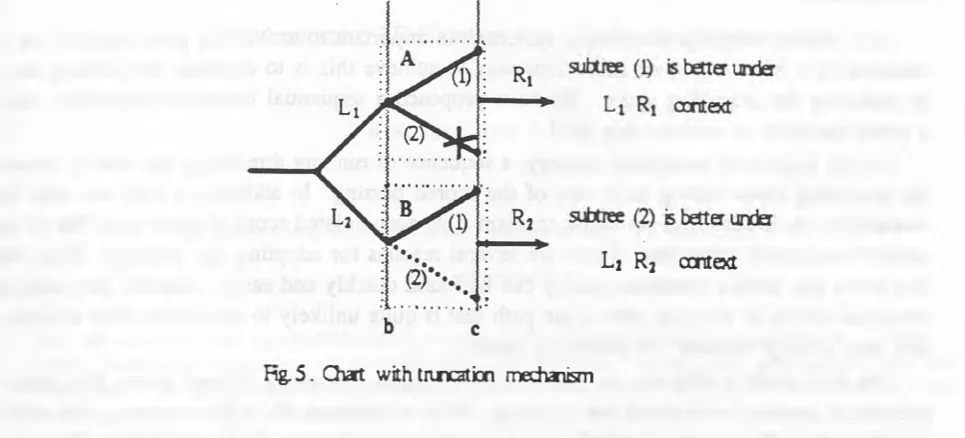
Fig. 5 . Chart with truncation mechanism
In Fig. 5, one o f the subtrees is discarded and the other is stored into the chart. There are two reasons why a subtree may be discarded. First, it might be caused by a natural language’s constraints on the context dependency. Second, a subtree might be discarded because o f its small running accumulated score (and thus truncated by the truncation m echanism.) Either w ill leave us a chart with incomplete subchart. So, this w ill result in the best possible tree being m issing as a side-effect o f using this chart. For instance, in Fig. 5, the best tree might be the second subtree with the left context o f L
2
and with the right context o f R2
(i.e., its probability is the highest.) But, since the path expansion starting from the left context o f Li has the second subtree discarded because its probability under the context o f Li and Ri is small, the best tree w ill never be formed. Therefore, with a chart having incomplete subcharts, the possibility o f obtaining the best tree is determined by the pathes traversed before.One solution to this incompatibility problem is to mark the sections o f the chart that are com plete. Hence, if an incom plete subchart is encountered again, it w ill be reparsed. On the other hand, if a com plete set o f chart is encountered, the subtrees can be copied directly from the chart. Another solution is to suspend the truncation mechanism when a set is being tried the first time. And if subtrees are copied directly from the chart, the truncation mechanism resumes its normal function. In this way, it is guaranteed that every subchart in the chart is com plete. Both o f these solutions increase our sentence parsing time as the overhead. This com prom ise, however, is unavoidable if the advantages o f using chart are to be maintained.
In the second experiment, we converted the charted parser for the first experiment into one with sequential searching strategy and without the use o f the chart. Similar sentence parsing test is conducted for this chartless parser but with a smaller analyses grammar. The result shows that the total parsing time for this parser with truncation mechanism added is better than the same parser without truncation by the factor o f three.
From the positive results o f the above two experiments, we have shown the inclusion o f the sequential truncation algorithm is advantageous for a MT system . In addition, w e have also shown the feasibility o f harmonize the use o f chart and the truncation algorithm. Currently, w e are in the process o f resolving the incompatibility problem between the chart and the truncation mechanism and constructing a working system with this solution.
Conclusion
In a natural language processing system, it is important to arrive at a good analysis for a sentence in a relatively short time. One way to achieve this is to decrease the parsing time by reducing the searching space. We have proposed a sequential truncation algorithm with
a score function to achieve this goal. a chartless parser that adopts sequential parsing strategy. The result shows an improvement in parsing time by a factor o f three for the inclusion o f the truncation mechanism. These encouraging results demonstrate a great promise for the sequential truncation strategy.
As our current research topic, we shall resolve the incompatibility problem between the
[Gars 87] Garside, Roger, Geoffrey Leech and Geoffrey Sampson (eds.), The Computational Analysis
o f English : A Corpus-Based Approach, Longman , New York, 1987.
[Marc 80] Marcus, M.P., A Theory o f Syntactic Recognition for Natural Language, MIT Press, Cambridge, MA, 1980.
[Robi 82] Robinson, J.J., "DIAGRAM : A Grammar for Dialogues," CACM, vol. 25, No. 1, pp. 27-47, ACM, Jan. 1982.
[Su 87a] Su, K.-Y., J.-S. Chang, and H.-H. Hsu, "A Powerful Language Processing System for English-Chinese Machine Translation," Proc. of 1987 Int. Conf. on English-Chinese and Oriental Language
Computing, pp.260-264, Chicago, Dl, USA, 1987.
[Su 87b] Su, K.-Y., J.-N. Wang, W.-H. Li, and J.-S. Chang, "A New Parsing Strategy in Natural Language Processing Based on the Truncation Algorithm", Proc. of Natl. Computer Symposium
(NCS), pp. 580-586, Taipei, Taiwan. 1987.
[Wino 83] Wmograd, Terry, Language as a Cognitive Process, Addison-Wesley, Reading, MA., USA, 1983.