Title: Development of a Generic Working Definition of ‘Supportive Care’ Authors: Fiona Cramp1, Michael I. Bennett2
1. Fiona Cramp PhD, MCSP, BSc Hons; Associate Professor in Musculoskeletal Health, Faculty of Health & Life Sciences, University of the West of England, Glenside Campus, Blackberry Hill, Bristol, BS16 1DD. Email:
2. Michael I. Bennett MB ChB MD FRCP FFPMRCA; Professor of Palliative Medicine, International Observatory on End of Life Care, School of Health and Medicine, Bowland Tower East, Lancaster University, Lancaster, LA1 4YT
3. Corresponding Author: Dr Fiona Cramp, Department of Allied Health
Professions, University of the West of England, Glenside Campus, Blackberry Hill, Bristol, BS16 1DD. Email: [email protected] Telephone: 0044 (0)117 3288501
Key words: supportive care; definition, Delphi
Abstract Context:
The term ‘supportive care’, despite its everyday and widespread use, remains an ambiguous concept that lacks clarity. A generic definition would underpin the development of services and provide a basis for disease specific approaches to care.
Objectives:
To develop a generic working definition of supportive care that could be applied to a range of diseases and chronic illnesses.
Methods:
An in-depth review of the literature was carried out to identify existing generic and disease specific definitions and descriptions of supportive care. Following the literature review a modified two-phase Delphi study was performed. Participants included experts in the area of supportive care identified during the literature review in addition to charities or their representatives. A draft definition was developed based upon the outcome of the Delphi study.
Results:
The literature review identified one brief generic definition of supportive care with no explanation of its origin. A further 17 disease specific definitions were identified all relating to cancer. The literature review lead to the development of 100 statements for inclusion in phase I of the modified Delphi study. Twenty-six responses were received to phase I of the Delphi study and 17 responses to phase II. General agreement was received during the second stage of the Delphi process and a final draft definition subsequently developed.
Conclusion:
The definition of supportive care provides a basis for service development and could be further developed to provide disease specific contexts. It would benefit from broader consultation to determine its acceptability amongst a wider range of health professionals and service users.
Introduction
was only intended to relate to cancer services. It was suggested that the
development of a definition of supportive care that would encompass all disease and patient groups would require wider consultation.
In 2004 the National Institute for Clinical Excellence (NICE) produced a
comprehensive manual on ‘Improving Supportive and Palliative Care for Adults with Cancer’.[6] The guidance provided a clear overview of supportive care specific to cancer and drew upon the NCHSPCS definition for cancer. Subsequent to this NICE produced a guidance document on ‘Supportive and Palliative Care for Advanced Heart Failure’.[7] It was clearly acknowledged within the executive summary that supportive care for heart failure had not been clearly defined and this had in part contributed to the poor provision of services and co-ordination of care for this patient group. Despite a lack of a clear definition of supportive care a number of National Service Framework (NSF) documents have also referred to this concept, including the NSFs for older people, Coronary Heart Disease, Renal Services Long Term Conditions.
The term ‘supportive care’, despite its everyday and wide use, remains an
ambiguous concept that lacks clarity. The term overreaches several disciplines and conditions with the meaning often varying. An agreed supportive care definition may help to reduce variations in patient care pathways by identifying those individuals who need support and ensuring they receive high quality, holistic care, regardless of their diagnosis. The purpose of this research was therefore to develop an
acceptable working definition of supportive care that could be applied to a range of diseases and chronic illness.
Methodology
The research was undertaken in two stages, stage I was an in-depth review of the literature and stage II was a modified Delphi study.
Stage I: In-depth literature review
To inform the second stage of the process a literature search was undertaken to identify existing definitions, key concepts and themes related to the term ‘Supportive Care’. The search was restricted to the healthcare literature as it was likely that supportive care would have a different meaning in relation to social care. The search covered peer reviewed publications, textbooks and websites.
A secondary purpose of the literature review was to identify key experts in the area of ‘supportive care’. An expert was defined as ‘an individual who has demonstrated knowledge about a subject and an ability to articulate a broad perspective on an issue’. Only those individuals able to communicate effectively in English were selected for the subsequent Delphi panel. This was due to potential alterations in meaning during translation.
Search Strategy
to Nursing and Allied Health Literature (CINAHL); British Nursing Index; Allied and Complementary Medicine Database (AMED); Health Management Information Consortium; PsycINFO.
Selected fields for the search were Title, Abstract and Subject headings. The purpose of this restriction was in attempt to identify papers with a main focus on supportive care.
The keywords ‘support$’ adj ‘care’ were used to search for relevant literature. Limits that were applied to the search included English language publications only and humans not animals. The reason for excluding non-English language papers was due to potential alterations in meaning during translation. The search was restricted by date to ensure that the findings were relevant to current healthcare policy.
The titles and where available abstracts were screened for relevance to supportive care. Initially papers were selected that focused on descriptions of supportive care, developing supportive care criteria or definitions of supportive care. In addition studies exploring patient and professionals views of supportive care as well as studies investigating the effects or benefits of supportive care were selected. Papers that focused upon ‘developmental supportive care’ or ‘best supportive care’ were excluded as during initial screening of papers these terms tended to only include condition specific descriptions of care with no conceptual description. Only papers that added to the conceptual understanding of supportive care were ultimately retained for data extraction purposes.
The World Wide Web was also searched in English using the keyword ‘supportive care’, which yielded several hundred ’hits’. A rapid on-screen review of initial sources was undertaken to exclude those that did not define supportive care or contribute to its conceptual understanding. By the 11th page (hits 101-110) no new information was retrieved. Journals incorporating the term ‘supportive care’ within their title were identified through the web search. Editors and/or publishers of these journals were contacted to request an outline of their scope and any definition that they used in relation to supportive care. Additional sources such as publications by the World Health Organisation, the National Council for Palliative Care, National Cancer Institute and the Department of Health were included to gain further perspective of the concept.
Data analysis
The sources obtained were examined and the content reviewed using the following key headings: supportive care generic definition, condition/disease specific definition of supportive care, supportive care descriptors/frameworks, reference to other
potential sources of relevant information, and relevant experts for inclusion in Phase II.
Stage II: Modified Delphi Technique
A variation of the Delphi method was used to meet the study objective. Ethical approval for this stage of the research was obtained from the Faculty Research Ethics Sub-Committee for Health and Life Sciences at the University of the West of England.
In the absence of an agreed definition of supportive care a number of different methods could have been used to reach consensus. The Delphi method is a mixed qualitative-quantitative research tool that enables a panel of experts from a variety of settings to formulate a list of ideas, followed by the development of group consensus concerning the relative importance of those ideas.[8,9] Delphi is one of the methods more commonly used in medical research to reach consensus and facilitates
participation by experts and lay representatives (Jones & Hunter 1995; Mullen, 2003).[10,11]
The objective of assembling the Delphi panel for this study was to include individuals representing a diversity of experiences and backgrounds to contribute to the
development of a supportive care definition. Care was taken to ensure that a wide range of health professionals was included within the expert panel representing broad disease/condition profiles as well as professional backgrounds. Experts from a wide international geographical spread were also included. Initially experts were identified through relevant publications that were included in phase I of the research. Contact information was initially obtained from journal publications as well as via internet searches. Support groups and charities were also identified for inclusion through the internet search.
The panel was invited to contribute to the study to gain consensus in relation to the development of the working definition of supportive care. A snowballing technique was also employed where panel members were asked to identify other experts that they felt were qualified to contribute to the development of the definition. All
communication between the researcher and participants took place via email. Discussion outside the Delphi process was discouraged and participants were not disclosed to each other as all emails were sent as ‘blind carbon copy’. An email was sent to the participants at the start of each phase. Two weeks later a reminder email was sent to non-responders.
In the first round members of the panel were asked to provide background
information relating to their area of expertise. They were subsequently asked to rate their agreement with each of the supportive care statements developed in phase I using a five point Likert scale (1=strongly disagree to 5=strongly agree). All
references to the source of the statement were removed to avoid any bias. Next to each statement there was also an optional free text box for participants to provide any explanation for their selected score. A free text box was also provided following the final statement to enable participants to add any information that they felt was missing in relation to supportive care. Finally, participants were given the
Following round one, the mean score for each statement was calculated. Where data were missing for a statement the mean score was calculated from the existing responses. Any statement with a mean score of less than four (agree) was removed from the second round of the Delphi study. Scores for statements that were
considered to be very similar were compared, the statement with the higher mean score was subsequently retained and the other statements discarded. Free text responses were also collated and where appropriate additional statements developed for inclusion in Phase II.
A report was subsequently developed that summarised the statements that were not proposed for inclusion in the final definition of supportive care. The retained and new statements were then arranged to form a proposed definition of supportive care. This document was then sent to all participants (including those who did not respond in round one). The participants were asked to identify any items that they felt should not have been left out of the definition. They were also asked to comment on the definition and identify any additional items that they thought should have been included within the definition. Free text responses were then collated and used to inform the final draft definition.
Results
Stage I: In-depth Literature Review
The keyword search resulted in 5867 hits (duplicates removed). This was initially reduced to 596 following review of titles and further reduced to 290 full text papers following a review of the titles and abstracts. The majority of excluded studies were randomised controlled trials describing a control arm as ‘best supportive care’. Prior to the review commencing it was repeatedly observed that these types of studies did not define what was meant by ‘best supportive care’ other than a description of current routine care. From the 290 full text articles retrieved only 53 were found to contain a definition or description of supportive care. Table 1 indicates the patient populations to which the articles related. Further to this, six of the 53 studies considered paediatric populations with the remaining studies focused upon adults.
Table 1: Patient populations of included studies
Patient Population Number of
Studies
Cancer 39
Palliative (not restricted to cancer) 3
Neurology 2
Cardiac 2
Renal 2
Frail elderly 1
Generic 4
Total 53
from 15 different original sources suggesting that even within cancer there is no consensus regarding an accepted definition of supportive care.
Additional information relating to descriptions but not definitions of supportive care was obtained from 45 of the 53 papers. The definitions and additional information were subsequently used to inform 90 statements relating to supportive care. Some statements were deliberately very similar to determine whether there was a
preference for wording.
The web search revealed a further two definitions of supportive care relating to people with cancer. In addition two sources of a generic definition of supportive care were identified, each providing the following definition:
‘Supportive care is treatment given to prevent, control, or relieve
complications and side effects and to improve the patient’s comfort and quality of life.’[12,13]
No details were provided regarding the source of this definition. The information obtained from the website search provided an additional ten statements relating to supportive care. The final 100 statements were carried forward to stage II of the study (see Table 2).
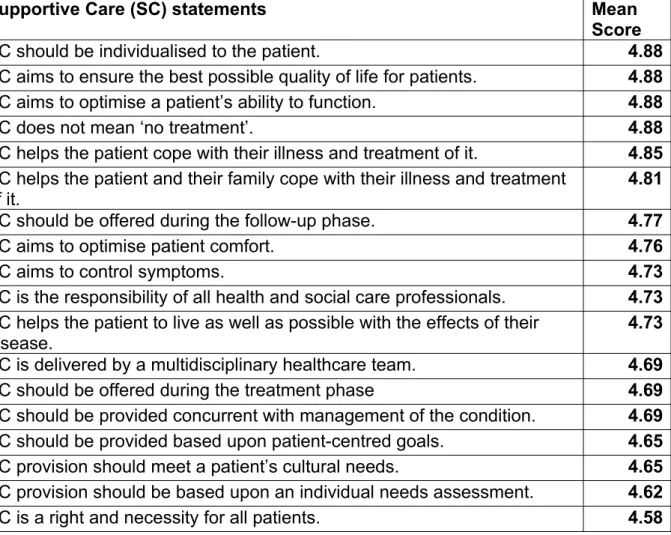
Table 2: SC statements and mean scores (presented in descending order)
Supportive Care (SC) statements Mean
Score
SC should be individualised to the patient. 4.88
SC aims to ensure the best possible quality of life for patients. 4.88 SC aims to optimise a patient’s ability to function. 4.88
SC does not mean ‘no treatment’. 4.88
SC helps the patient cope with their illness and treatment of it. 4.85 SC helps the patient and their family cope with their illness and treatment
of it.
4.81
SC should be offered during the follow-up phase. 4.77
SC aims to optimise patient comfort. 4.76
SC aims to control symptoms. 4.73
SC is the responsibility of all health and social care professionals. 4.73 SC helps the patient to live as well as possible with the effects of their
disease.
4.73 SC is delivered by a multidisciplinary healthcare team. 4.69
SC should be offered during the treatment phase 4.69
SC should be provided concurrent with management of the condition. 4.69 SC should be provided based upon patient-centred goals. 4.65 SC provision should meet a patient’s cultural needs. 4.65 SC provision should be based upon an individual needs assessment. 4.62
Elements of SC and palliative care overlap. 4.58
SC should aim to reduce the impact of disability. 4.58
The ultimate goal of SC is to ensure the best possible quality of life for patients, their families and their caregivers.
4.56
SC includes nutritional support. 4.54
SC should empower the patient. 4.54
SC does not aim to be curative. 4.54
SC may include pharmacological and non-pharmacological interventions. 4.54 SC should ease the physical burden of the condition. 4.54 SC should ease the emotional burden of the condition. 4.54 SC is an adjunct to the management of patients at all stages of their
illness. 4.54
SC includes non-medical services such as home care. 4.52 SC should be given equal priority alongside diagnosis and treatment. 4.5 SC aims to prevent complications that occur due to treatment of the
condition. 4.5
SC does not mean simply conservative care. 4.5
SC eases emotional burden of patients and care givers. 4.5
SC should enable coping. 4.46
SC helps the patient to maximize the benefits of treatment. 4.46
SC encompasses issues of palliation. 4.46
SC is a whole-person approach taking into account the patient’s past life experience and current situation.
4.46
SC includes practical help and benefits advice. 4.46
SC aims to meet a patient’s psychosocial needs. 4.46
SC includes rehabilitation. 4.42
SC aims to meet a patient’s physical needs. 4.38
SC aims to meet a patient’s social needs. 4.38
SC should help patients to understand their illness. 4.38 SC aims to control symptoms that may occur as a direct result of the
condition. 4.38
SC encompasses both the patient and those that matter to the patient. 4.38
SC aims to meet a patient’s practical needs. 4.35
SC should be provided to carers. 4.35
SC should optimise patient understanding. 4.35
SC helps survivors with psychological problems. 4.35
SC should enhance health professional-patient communication. 4.31 SC aims to control symptoms that occur due to treatment of the condition. 4.31
SC extends to all chronic diseases. 4.31
SC alleviates symptoms and complications of disease. 4.31 SC extends to all chronic diseases and serious illness. 4.31
SC should be offered where possible from pre-diagnosis, through the process of diagnosis and treatment, to cure, continuing illness or death into bereavement.
4.27
SC aims to prevent complications that occur as a result of a condition. 4.23
SC is not the same as end of life care. 4.23
SC includes issues of bereavement 4.23
SC should inform patient decision making. 4.23
SC should be provided to family members. 4.23
SC should help patients to understand their treatment. 4.23 SC is the comprehensive medical, nursing and psychosocial help that the
patients need besides specific therapy for their illness.
4.23
SC is intended to ease discomfort. 4.23
SC aims to meet a patient’s information needs. 4.2
SC allows patients to tolerate and benefit from active therapy more easily. 4.19
SC includes professional counselling. 4.19
SC should be offered during the diagnostic phase. 4.15
SC aims to prevent complications. 4.15
SC should empower the patient’s family. 4.15
SC aims to enhance rehabilitation. 4.15
SC includes self help. 4.15
SC aims to reduce morbidity and the toxicity of the disease and its therapy.
4.15 SC aims to improve general physical and mental health. 4.15
SC should be family-focussed. 4.12
SC includes support groups. 4.12
SC is intended to enable an individual to draw upon their own strengths. 4.11
SC includes issues of survivorship. 4.08
SC encompasses user involvement. 4.08
SC is the prevention and management of the adverse effects of disease and its treatment.
4.08
SC should enable adaptation. 4.04
SC encompasses complementary therapies. 4.04
SC should ease the social burden of the condition. 4.04
SC aims to meet a patient’s spiritual needs. 4
SC aims to treat the symptoms, not the condition. 3.85
SC aims to enhance survivorship. 3.85
SC includes financial support. 3.73
SC is a broad general concept bringing together all aspects of patient
management that are not aimed at control of the illness. 3.69 SC is an umbrella term referring to interventions which supplement
medical attempts to control or eradicate disease.
3.69
SC is not a distinct speciality. 3.65
SC should be available to patients during the pre-diagnostic phase. 3.58
SC validates the illness experience. 3.56
SC includes all aspects of patient and family care needs other than the process of diagnosis and treatments that have curative aims.
3.5
SC enhances secondary disease prevention. 3.27
SC is the active total care of patients whose condition is not responsive to curative treatment.
3
SC is the same as palliative care. 2.27
SC is the same as comfort care. 2.24
SC is the same as symptom management. 2.15
SC may be defined as non-medical care. 1.88
The website search also identified three journals incorporating the term ‘supportive care’ within their title. The journals were:
Supportive Care in Cancer Palliative and Supportive Care
Supportive and Palliative Cancer Care
None of the journal websites provided a clear definition or description of supportive care and despite several attempts to contact the editors and publishers to obtain this information no details were obtained.
Email contact details were identified for 37 experts in the area of supportive care. The experts were categorised as specialists in the following areas: 18 oncology, 6 nephrology/urology, 4 neurology, 3 cardiology, 2 respiratory, 2 rheumatology, and 2 palliative care. In addition, 96 charities were identified for inclusion in stage II representing a wide range of diseases and chronic illnesses.
Stage II: Modified Delphi Technique
Phase I
The 100 statements developed during Stage I were presented in a random order although following initial randomisation the list was checked to ensure that similar statements were not positioned adjacent to one another. The statements were then sent to the 37 experts and 96 charities for scoring and additional comment.
The 96 charities contacted resulted in 25 responses. However, 19 of the 25 reported that they were unable to provide a response to the survey. The remaining 71
charities failed to respond despite an email reminder being sent.
contacts subsequently responded to the survey. Eighty one charity contacts remained for phase II.
Eighteen (48.6%) of the 37 experts contacted provided valid responses to the survey. An additional respondent indicated that they were unable to respond at the time and provided contact details for suitable alternatives. In total seven additional contacts were identified through snowballing and two of the seven subsequently responded. The final number of completed responses to phase I was 20 experts and six charities (n=26). Two respondents indicated that they specifically worked with paediatric populations. The clinical speciality areas and the professions represented by the 20 experts are presented in Figures 1 and 2 respectively.
The mean scores for each statement are presented in Table 2. One statement had a mean score of less than two (disagree) indicating that supportive care should not be described as ‘non-medical care’. Three statements scored between two
(disagree) and three (unsure) indicating that the majority of respondents did not view supportive care to be the same as palliative care, comfort care or symptom
management. A further 12 statements scored between three (unsure) and four (agree) suggesting that although some of the respondents agreed with the statement there was not strong agreement. The remaining 84 statements scored four or above suggesting that the majority of respondents were in agreement or strong agreement with the statements. It should be noted that this includes agreement to strong agreement with some negative statements indicating that respondents did not view supportive care to be the same as ‘no treatment’, conservative care or end of life care. However, additional comments indicated that end of life care may be a component of supportive care. There was also fairly strong agreement amongst respondents that supportive care does not aim to be curative. Additional comments indicated that some terminology did not provide clear meaning. For example the statements ‘SC validates the illness experience’ and ‘SC should enable adaptation’ lead to several queries relating to meaning. Several comments relating to financial support indicated that advice relating to financial planning should be provided as a component of supportive care but not monetary support.
Phase II (see Appendix for full details)
Thirteen respondents agreed with the items that were proposed for exclusion from the final definition of supportive care. The remaining four respondents reported that complementary therapies should be included within the definition. One of the four suggested that non-pharmacological therapies included complementary therapies, implying that they would not need to be specifically mentioned. A further respondent suggested that they should be listed under the final section of ‘may include as needed’. The remaining two respondents did not provide any suggestion as to where complementary therapies should be included.
Thirteen respondents indicated that they agreed with the definition of supportive care. The remaining four agreed in general but suggested minor changes. One individual suggested that spiritual issues were not relevant to healthcare.
Interestingly this was an issue that had been highlighted by several respondents in phase one as having high importance and was therefore retained. Another
respondent suggested that psychotherapy should be added alongside professional counselling; this was subsequently added. A third respondent suggested that sexuality should be added to the definition, this was subsequently added. This respondent also suggested a change in wording, indicating that it may be impossible to meet patient’s needs but to ‘assess and optimise needs’ would be more realistic. However, the stem for this statement is ‘Supportive care aims to…’ indicating that the aim is to meet patients needs even if they cannot always be met in full. The original wording was therefore retained. The final respondent agreed with the definition but queried the appropriateness of giving supportive care equal priority to diagnosis and treatment. They suggested that patients would not trade treatment against supportive care. This latter issue requires further input from service users before a definitive decision can be made.
suggested that supportive care should be provided throughout the course of life limiting or life threatening illness. However, this was already covered by the following statement: ‘Supportive care should be offered throughout the course of the condition concurrent to condition management’. One of the three remaining respondents suggested that the final section ‘may include as needed’ should be removed from the definition. However, this information had been identified as important during phase I and therefore it was decided to retain this section. One individual raised a concern that the definition could lead to conflict, such as different advice given to patients from support groups and professional counsellors. It was beyond the scope of this work to establish the likelihood of the definition causing conflict for patients. The final respondent identified research in supportive care relating to non-malignant conditions as a priority.
Based upon the research to date and the responses to the modified Delphi study the following was recommended as a generic working definition of supportive care:
‘Supportive Care should:
o Extend to all malignant and non-malignant chronic diseases and serious illness as a right and necessity for all patients;
o Be offered throughout the course of the condition concurrent to condition management;
o Inform patient decision making;
o Be provided to the patient, their family members, carers and those that matter to them;
o Be given equal priority alongside diagnosis and treatment;
o Be individualised using a whole-person approach that takes into account the patient’s past life experience, their current situation and personal goals;
o Be delivered by an interdisciplinary healthcare team and is the responsibility of all health and social care professionals involved in the patient’s care.
Supportive care aims to:
o Ensure the best possible quality of life for patients, their families and their caregivers enabling the patient to live as well as possible with the effects of their condition;
o Control the symptoms that occur as a result of the condition or its treatment and prevent complications thus allowing the individual to tolerate and benefit from active therapy more easily;
o Meet a patient’s spiritual, practical, physical, social, psychological, sexual and cultural needs;
o Optimise patient understanding in relation to the illness and its treatment;
o Enhance health professional-patient communication;
o Improve general physical and mental health;
o Optimise patient comfort and ease the physical burden of the condition thus in turn improving the ability to function and reducing the impact of disability;
o Empower the patient and their family as well as promoting self-help and user involvement thus enabling the individual to draw upon their own strengths.
Supportive care may include the following, as needed:
o Issues of survivorship, palliation and bereavement;
o Support groups;
o Professional counselling and psychotherapy;
o Rehabilitation;
o Practical help;
o Benefits advice;
o Pharmacological and non-pharmacological interventions; and o Nutritional support.’
Discussion
This study has lead to the development of a generic working definition of supportive care that is applicable to a wide range of chronic diseases and severe illnesses. There was general agreement with the definition and following some minor
amendments the definition now needs to be subject to further consultation prior to final acceptance.
The majority of research to date in the area of supportive care has been in the area of oncology. This was highlighted by the high proportion of papers relating to oncology that were retrieved for this study as well as the range of supportive care definitions identified specific to cancer. It is clearly not appropriate to draw upon philosophical perspectives of supportive care in cancer and apply them directly to other patient groups. There is therefore a need for further research to establish the supportive care needs of individuals with non-malignant disease and chronic illness. It is important to also determine what patients and their carers understand by the term supportive care and what their supportive care needs may be in relation to their specific disease.
It was interesting to note that the majority of respondents did not view supportive care to be the same as ‘palliative care’ ‘terminal care’, ‘conservative management’ or ‘end of life care’. These terms have previously been used interchangeably in the literature, (e.g. 14) which is likely to have lead to confusion amongst researchers, healthcare professionals and service users. [4] Further work is recommended to ensure that the differences between these concepts are clearly articulated to inform the future design of services and the adequate provision of holistic care.
There were a lot of similarities between the new definition and the cancer specific definition developed by NCHSPCS [5] such as the holistic approach to patient care and the equal priority that SC should receive alongside diagnosis and treatment. The key differences were the lack of emphasis on cancer in the new definition as well as some broader perspectives such as the individualisation of SC and
including the holistic approach to care that extends to the patients family. The main differences between the palliative care definition and the new SC definition was the lack of emphasis on the dying process.
Consistency in the definition of supportive care is essential to facilitate further development of clinical services and interventions. It will also allow comparison of research findings and facilitate the generalisation of results to different populations. An agreed definition is also necessary for the development of psychometrically sound patient reported outcome measures. Consideration should be given to disease and condition specific definitions of supportive care based upon this generic definition.
There are several limitations of the study that should be acknowledged including the sampling method for the literature review. The exclusion of papers not published in English may have resulted in important work published in another language being missed. Other limitations include the low response rates to the modified Delphi study, particularly the low response from charities and their representatives. The charities that provided reasons for non-response did not appear to understand the purpose of the research. Low response rates and high attrition is recognised as a potential risk of bias when using Delphi methods.[11] In hindsight a telephone call to explain the research prior to sending the email may have enhanced the response rate from the charities. There was also a bias towards responses from individuals working in the clinical areas of oncology and nephrology. Further to this the majority of respondents were medical or nursing professionals. Therefore, the final definition of supportive care should be sent for wider consultation amongst a broad range of health care professionals working with a range of patient groups.
In summary, this research has provided clarity regarding the meaning and general understanding of supportive care which could be used as the basis for the
development of disease specific definitions. It is recommended that the proposed definition is also subject to further consultation with a broad range of service users, healthcare professionals and publishers prior to international acceptance.
Acknowledgements
Funding for this work was provided by The Cochrane Pain, Palliative and Supportive Care Review Group
Philip O’Shaughnessy, Librarian, University of the West of England assisted with the retrieval of full text publications; and
Shan Aguilar-Stone proof read the questionnaires prior to distribution.
Conflicts of Interest: None References
2. Seymour J, Witherspoon R, Gott M, Ross H, Payne S. End-of-Life Care: Promoting Comfort, Choice and Well-Being for Older People. The Policy Press in Association with Help the Aged, Bristol, 2005.
3. Skilbeck J. End of life care: a discursive analysis of specialist palliative care nursing. J Adv Nurs 2005; 51(4): 324–325.
4. Noble H, Kelly D, Rawlings-Anderson K, Meyer J. A concept analysis of renal supportive care: the changing world of nephrology. J Adv Nurs 2007; 59(6): 644-653.
5. National Council for Hospice and Specialist Palliative Care Services.
Definitions of Supportive and Palliative Care. Briefing Number 11; September 2002.
6. National Institute for Clinical Excellence. Improving Supportive and Palliative Care for Adults with Cancer. National Institute for Clinical Excellence, London, March 2004.
7. NHS Modernisation Agency - Coronary Heart Disease Collaborative. Palliative and Supportive Care in Heart Failure. NHS Modernisation Agency,
Department of Health, December 2004
8. Delbecq AL, Gustafson D H, Van de Ven A H. Group Techniques for Program Planning: A guide to nominal group and Delphi processes. Management Application Series. Glenview, Illinois: Scott Foresman, 1975
9. Royse D, Thyer BA, Padgett DK, Logan TK. Program evaluation: A introduction. 4th ed. Belmont, California: Thomson Higher Education, 2006 10.Jones J, Hunter D. Consensus methods for medical and health services
research. BMJ 1995;311 (7001): 376-380
11.Mullen PM. Delphi: myths and reality. J Health Organ Manag 2003; 17(1) 37-52.
12.MedicineNet.com. Definition of Supportive Care. Available from: http://www.medterms.com [Accessed: 2nd September 2009] 13.Mondofacto Dictionary. Supportive Care. 1998 Available from:
http://www.mondofacto.com [Accessed: 2nd September 2009]