Measuring Maternal Mortality: A systematic review of methods
used to obtain estimates of the Maternal Mortality Ratio
(MMR) in low- and middle-income countries
Florence Mgawadere*, Terry Kana, Nynke van den Broek
*Corresponding Author: Florence Mgawadere
Centre for Maternal and Newborn Health Liverpool School of Tropical Medicine Pembroke Place
Liverpool L3 5QA
Tel: +44 (0)151 702 9315
Email: [email protected]
Affiliation
Centre for Maternal and Newborn Health Liverpool School of Tropical Medicine
Pembroke Place Liverpool L3 5QA Tel: 44 (0) 151 705 2501
Abstract Background
The new global target for Maternal Mortality (MMR) is a Ratio below 70 maternal deaths per
100 000 live births by 2030.We undertook a systematic review of methods used to measure
MMR in low- and middle-income countries.
Sources of data
Systematic review of the literature; 59 studies included.
Areas of agreement
Civil registration (5 studies), census (5) and surveys (16), Reproductive-Age Mortality Studies (RAMOS) (4) and the sisterhood methods (11) have been used to measure MMR in a variety of settings.
Areas of controversy
Middle-income countries have used civil registration data for estimating MMR but it has been a challenge to obtain reliable data from low-income countries with many only using health facility data (18 studies).
Growing points and areas for further research
Based on the strengths and feasibility of application, RAMOS may provide reliable and contemporaneous estimates of MMR while civil registration systems are being introduced. It will be important to build capacity for this and ensure implementation research to understand what works where and how.
Introduction
Reducing maternal mortality is one of the priority goals on the international agenda – the
new global target is to reduce the Maternal Mortality Ratio (MMR) to less than 70 maternal
deaths per 100 000 live births and country should reduce their maternal mortality ratio
(MMR) by at least two thirds from the 2010 baseline and no country should have a MMR
higher than 140 deaths per 100 000 live births by 2030.1,2 A cross-cutting priority for the
post-2015 agenda is to move towards counting every birth, maternal death and perinatal
death through the establishment of effective national registration and vital statistics systems
in every country, as stated within the recommendations of the Commission for Information
and Accountability.3
Reliable data are needed so that adequate resources can be allocated to maternal health
programmes for countries (or regions in countries) that are not yet accelerating the annual
reduction in maternal deaths. These data are also needed to monitor progress towards the
targets set for the new Sustainable Development Goals (SDG). Assessing progress has been a
challenge because less than 40% of countries currently have complete civil registration
systems in place or other methods to provide accurate and contemporaneous MMR data.
Similarly, although Maternal Death Surveillance and Review is promoted and being
implemented in many settings, attribution and reporting of cause of maternal death is not
yet systematically in place.4,5 Only two of the 49 least developed countries have more than
50% coverage with regard to death registration.1
The World Health Organization (WHO) publishes global estimates ofMMR based on United
these estimates are subject to greater or lesser degrees of uncertainty and this is a
recognised limitation. There are, in addition to modelling, a variety of methods available to
measure MMR including via censuses, household surveys, Reproductive Age Mortality
Surveys (RAMOS) and using the Sisterhood methods. Each method has strengths and
weaknesses. This may include cost of application of method, lack of in-country capacity to
use the method and requirement for large sample sizes to be able to estimate MMR with
reasonable accuracy. Although some of these methods have been used in a number of
developing countries, there is a lack of knowledge and guidance regarding which method(s)
are the be most appropriate and feasible to use in which settings (e.g. large or small
population, national or sub-national application and type of data required to estimate
MMR).
We, therefore, conducted a systematic review of the literature to identify which methods
have been used to estimate MMR and reviewed their use and applicability to low- and
middle-income countries. The specific research questions included: what are the type of
data and data sources required, what are the strengths and weaknesses of each method;
and which method(s) would be useful and applicable in low-and middle-income settings and
able to provide reasonably accurate and contemporaneous data.
Methods
We used the following databases SCOPUS, PUBMED and Institute for Scientific Information
(ISI) and MEDLINE to search for studies which measured MMR in low- and middle-income
countries. Publications of organisations and programmes such as the United Nations
the Initiative for Maternal Mortality Programme Assessment (IMMPACT) were included.
Internet searches using the Google search engine were conducted to identify relevant
literature not published in peer-reviewed journals and the references of all identified,
relevant papers were hand-searched.
Search terms used
Medical Subject Headings (MeSH) were searched to identify all relevant terms used to
describe maternal mortality and measuring. Boolean operators such as “OR” were used to
join keywords and MeSH terms defining the same concepts and different concepts were
searched with “AND” to arrive at the final result. We used the search terms “maternal
mortality OR maternal death OR pregnancy death OR motherhood death OR women deaths”
in combination with “measure OR estimate” OR “estimation”. These were then combined
using the Boolean operator “AND” with the following search terms: civil registration data,
Census, Surveys, health facility data, sisterhood methods, RAMOS and low- and
middle-income countries. Star truncation (*) was used where multiple endings of terms were
possible.
Inclusion and exclusion criteria
We included papers published between 2000 and October 2016 from low- and
middle-income countries as defined by the World Bank middle-income categorisation.7 This time period was
selected as many countries undertook to assess the MMR to evaluate the burden of
maternal mortality and effect of implementation of interventions to achieve MDG5 at this
Studies were included for estimates of MMR obtained either at national or sub-national level
regardless of method used. We excluded studies assessing impact of one or more
interventions on MMR; demographic health surveys (DHS) as they are included in the direct
sisterhood methods and global estimates by WHO, UNICEF, UNFPA and the World Bank
(published by the WHO and not countries which use statistical models that may have errors,
use unreliable data sources and, in some cases, countries do not use them). We also
excluded reviews, posters, editorials and discussion papers which did not include
methodologies and estimates of MMR. DHS were excluded as these use the direct
sisterhood method which is already included in the review. Global estimates were excluded
when they employed statistical modelling.
Data extraction
Two reviewers independently screened all titles and abstracts. When the information
provided by title and abstract was insufficient to decide on inclusion or exclusion, full-text
versions were retrieved and evaluated. All included papers were reviewed in full. Any
discrepancies were resolved through discussion with a third researcher. A summary table
was developed and agreed by all authors before full-text review was conducted and all
included studies were then summarised. (Supplementary Table S1: Summary Table of
included studies)
Results
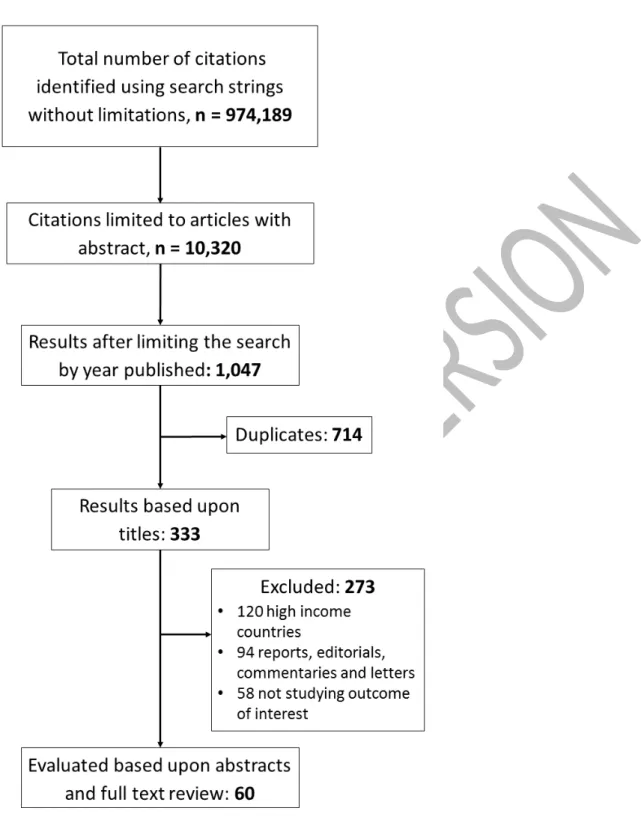
In total, 60 studies meet the inclusion criteria (Figure 1). Six methods by which MMR or
relevant data are obtained in low- and middle-income countries were identified. These
include use of existing opportunities which include: 1) civil registration data (5 studies), 2)
included: 4) population or household surveys (16 studies)), 5) direct and indirect sisterhood
Figure 1. PRISMA Diagram
1) Civil Registration and vital statistics data
Civil registration (CR) is defined as the continuous, permanent, compulsory and universal
recording of the occurrence and characteristics of vital events pertaining to the population
country.9 The data retrieved from CR systems are referred to as vital registration (VR) data.
Complete coverage, accuracy and timeliness of civil registration are essential for quality vital
statistics and are the ideal data to count maternal deaths. Civil registration is carried out
primarily for the purpose of establishing the legal documents provided by the law.
Additionally, registration of births and deaths generates information that has substantial
policy utility, especially when the age of the mother giving birth, age and sex of the decedent
and underlying cause of death are correctly specified.10 Ideally, civil registration systems with
high coverage and good attribution of cause of death provide accurate data on the level of
MM and the causes of maternal deaths. The drawback, however, relates primarily to the
availability, reliability, completeness and coverage of the civil registration data.11 The
number of maternal deaths and number of live births recorded are used to calculate MMR
(number of MD per 100 000 live births).
Five papers reported using civil registration data to estimate maternal mortality. These
studies were conducted in China, the Dominican Republic, Brazil, Egypt and Guatemala, all
middle income countries.12-16 There were no studies from low-income countries using this
method.12-16 In Guatemala, vital registration data were supplemented with additional
information from medical charts and from public healthcare centres which improved the
quality of data obtained. The study detected three times the number of maternal deaths
compared to using the civil registry data only.15 However, to establish if the death of a
woman of reproductive age (WRA) is a maternal death, information on pregnancy status at
time of death is required. It was noted that information on pregnancy status was often
either missing or unclear on the death certificates for studies conducted in China, the
and possibly an underestimation of the number of maternal deaths.12,13,14,16 Deaths among
women living in villages accessible only by foot were not registered in the study in the
Dominican Republic.14
2) Health facility surveys
Health facility data remain the main, routine source of data on MM for many developing
countries. Currently, health facility data are not used by academics and by agencies for
compiling global mortality estimates, but they are widely used in many countries as they are
locally generated and continuously available. Data sources include routinely reported
records in health facilities or sentinel sites, reports from healthcare providers and health
facility surveys.
Eighteen papers reviewed used health facility data to estimate MMR.17-34 Most studies were
conducted in low- and middle-income African countries such as Nigeria, Cameroon, Malawi
and Zambia. However, middle-income countries such as India, Pakistan and Turkey also
estimated MMR using health facility data.18,23,27 It was noted that 15 studies were conducted
in tertiary or teaching hospitals which are expected to have a significant proportion of
high-risk obstetric cases although this proportion was not reported.17,19-23,27-29,31-34 Maternal deaths
were identified from maternity ward records in 16 out of 18 facilities. Only two studies
identified cases from other wards including the female or gynaecology ward and from
operating theatre registers.21,31 Case notes for women who had died were noted to have
been missing in some facilities and there were considerable inaccuracies in routine registers
noted in most retrospective studies.20,25
3) Population Census
Greater interest has been shown in using data from population censuses to measure
questions, can be used to obtain estimates of maternal mortality.35 This is a result of the
endorsement of this method by the United Nations Principles and Recommendations for
Population and Housing Censuses.36 The UN principles recommend two follow-up questions
in cases where the household being interviewed reports a death during the past 12 months.
After ascertaining the name, age and sex of the deceased person and date of death, the
interviewer should inquire:
1) Was the death due to an accident, violence, homicide or suicide?
2) If the deceased was a woman aged 15 to 49, did the death occur while she was pregnant,
during childbirth or during the six weeks after the end of pregnancy?
As a result, in the 1990s several countries included questions intended to ascertain if any
WRA had died during pregnancy or within a defined period post-partum, usually 6 weeks. In
principle, a census allows the identification of deaths in a household in a relatively short
reference period (1–2 years) and thereby provides estimates of recent maternal mortality.
Population census data was used to estimate maternal mortality in five studies.37-41
Questions regarding the time of circumstance of death among women of reproductive age
who died during pregnancy, labour and in the post-partum period (usually 6 weeks after
delivery) were included during census data collection. The studies were conducted in Latin
America (Honduras, Nicaragua and Paraguay), South Africa, Burkina Faso, Honduras (only)
and Indonesia. A study conducted in Burkina Faso used this approach and obtained an
estimate of the MMR, the results of which were similar to a previous study which had used
the direct sisterhood method.41 In Latin America, there was a greater number of reported
household survey which was conducted at the same time.39 Similarly, in the Republic of
South Africa, an increase in maternal death was observed.40 Narrow confidence intervals
were obtained: MMR: 519 per 100 000 (95% CI: 454, 584)] in Damage and MMR: 353 per
100 000 (95% CI: 295, 411) in Orangey in Burkina Faso.41 Similarly, there was a greater
number of reported pregnancy-related deaths using census data than obtained via sample
surveys in Latin America.
4) Population or Household Surveys
Population or household surveys are one of the most important data capturing methods for
maternal deaths in settings where routine information systems are weak or non-existent.
These surveys are administered at the household level to collect information about maternal
deaths. Names and residences are cross-checked to avoid double counting. Sometimes they
are complemented with verbal autopsies where the family members or other people with
knowledge about the death could be asked to describe the situation surrounding the death
relatives. The WHO has devised a standard verbal autopsy tool to collect information on
signs, symptoms, medical history and circumstances preceding death42 which countries can
adapt according to their situation. In both population or household surveys and verbal
autopsies, names and residences are cross-checked to avoid double counting. These
methods are only appropriate for settings in which the sampling unit is a complete village
and the geographical scope of the study is quite limited. Surveys, however, require a
relatively large sample size to obtain statistically significant findings for occurrences that are
relatively rare such as maternal deaths.35 Sixteen studies included in this review estimated
the number of maternal deaths using population and/or household surveys.38,43-57 Out of the
16 studies, only five were conducted in Africa (Ethiopia, Kenya, Malawi, Senegal and
Indonesia, Jamaica and Pakistan).38,43,48,50,51,53 For cultural reasons, family members and birth
attendants in Cambodia were reported to have felt ashamed of deaths that had occurred
and, therefore, did not report all deaths. There were sampling problems in some of the
studies and very wide confidence intervals were obtained for the MMR estimates.55,57 For
example, in India, only a small area was covered because it was considered too expensive to
conduct a household survey covering a bigger, geographical area.
5) Direct and indirect sisterhood methods
In sisterhood surveys, adult respondents report on the aggregate numbers of surviving
sisters and of sisters who have died.58 There are two types of sisterhood methods, the
indirect and the direct method. The original (indirect) sisterhood method was developed in
the late 1980s by Graham et al.58In the indirect sisterhood method, adult respondents are
asked four questions pertaining to the survival (or not) of all their adult sisters born to the
same mother. By inquiring about female siblings in a high fertility setting, one effectively
expands the sample size with very little additional cost. The method also reduces the need
for large sample sizes because there may be more than one respondent per household and
more than one sister per respondent. The questions for which responses are required in the
indirect sisterhood method are listed in the box below.
Source: World Health Organization, 1997. The Sisterhood method for estimating maternal mortality: guidance potential users. Available on http://apps.who.int/iris/bitstream/10665/64007/1/WHO_RHT_97.28.pdf. Accessed on 21st
November 2016.
Indirect Sisterhood Questions
1. How many sisters (born to the same mother) have you ever had who reached age 15 (who were ever-married) including those who are now dead?
2. How many of these ever-married sisters are alive now? 3. How many of these are dead?
As this method identifies any death which occurs during pregnancy, childbirth or the
postpartum period; the indirect sisterhood approach identifies pregnancy-related deaths
rather than true maternal deaths. Overestimation of maternal mortality due to the inclusion
of deaths that are coincidental and/or non-maternal deaths is likely. Conversely,
abortion-related maternal deaths are often not captured. It has been suggested that the omission of
induced abortions a compensate for the inclusion of non-maternal deaths. However, the
extent of the compensation is unknown. Finally, estimates obtained using the indirect
sisterhood method relate to the previous 10-12 years and are, therefore, not
contemporaneous and cannot be used for evaluating the effectiveness or impact of an
intervention programme.
Rutenburg and Sullivan proposed the direct sisterhood method,59 which has been widely
used in DHS programmes. This is a variant of the indirect sisterhood method based on a
detailed sibling history obtained from each respondent. The four questions listed above for
the original indirect sisterhood method are expanded to 11 questions. In addition, the
formulation of the original questions was altered. For example, the fourth question on
timing of death in relation to pregnancy, childbirth and the postpartum period was changed
to include three separate questions.
Direct Sisterhood Questions
1. How many children did your mother give birth to?
2. How many of these births did your mother have before you were born? 3. What was the name given to your oldest (next oldest) brother or sister? 4. Is (NAME) male or female?
5. Is (NAME) still alive? 6. How old is (NAME)?
7. In what year did (NAME) die? OR how many years ago did (NAME) die? 8. How old was (NAME) when she died?
For dead sisters only:
Source: World Health Organization, 1997. The Sisterhood method for estimating maternal mortality: guidance potential users. Available on http://apps.who.int/iris/bitstream/10665/64007/1/WHO_RHT_97.28.pdf. Accessed on 21st November 2016.
The data requirements for the direct sisterhood method are considerably more demanding
than those for the indirect approach. In the direct approach, a respondent is asked to
provide the birth history of her mother, including the current age of all living siblings and the
age at death and years since death for all deceased siblings. These data allow deaths and
births to be placed in calendar time and, therefore, permit the calculation of sex and
age-specific death rates for reference periods. 59 Unlike the indirect sisterhood method, the
direct sisterhood method targets a more limited reference period for sister deaths: the
previous 0-6 years compared to the previous 10-12 years for the indirect sisterhood method.
Point estimates for maternal mortality are obtainable. The approach also allows for the
calculation of rates/ratios for the reference period of interest and monitor trends. The direct
sisterhood method is currently used during DHS. This method requires larger sample sizes
than the indirect method. It also requires an additional 8-10 minutes per interview on
average and additional training and supervision in the field.
Both methods measure the ICD-10 concept of pregnancy-related mortality rather than
maternal mortality on the grounds that respondents would not be easily able to distinguish
between maternal and pregnancy-related deaths.39 We did not find any peer-reviewed
studies which use the direct sisterhood method apart from the DHS. An analysis of the
quality of maternal health indicators for DHS studies is not part of this review and has been
described elsewhere.60 Eleven included studies used the indirect sisterhood method to
estimate MMR. Ten studies were conducted in Africa ((Liberia, Nigeria (2 studies), Mali,
In Ghana and Uganda, the MMR estimates identified through the indirect sisterhood method
were higher than those obtained as national estimates (modelling, UN global estimates)
conducted at the same time.68,69 All studies registered pregnancy-related deaths and include
death due to accidental or incidental causes (i.e. not maternal deaths). Cause of death is not
determined and data collected refers to the previous 10-12 years.
6) Reproductive Age Mortality Studies (RAMOS)
A RAMOS has been identified as a relatively robust method which uses both active and
passive data collection methods to estimate the MMR in countries without vital registration
data and are often considered to be the gold standard.35 The approach involves retrospective
or prospective identification and investigating the causes of all deaths of WRA in a defined
area/population by using multiple sources of data such as existing records (civil registration
and health facility data), census, surveys and surveillance. RAMOS are conducted in two
phases. The first phase, involves identification of all deaths among WRA in a population. In
the second phase, all deaths are investigated (using verbal autopsy, health facility reports or
medical record reviews death certificates with medical cause and interview with household
members and relatives) to ascertain if they are pregnancy-related or maternal deaths.71
Four studies conducted in Malawi, Sudan, Jordan and Ghana estimated MMR using the
RAMOS method.72-75 Three studies were prospective and one study retrospective.73 A list of
all deaths of WRA was collected using data collated at health facilities (e.g. admission and
discharge books, death certificate books, death registers and mortuary logbooks) and
individual case notes when necessary, available census data or any other relevant data e.g.
the number of births from the most recent DHS and from the Health Management
Information System (HMIS). Deaths that occurred in the community were identified by local
the existing health staff (nurses, doctors, medical assistants and community health workers
known as health surveillance assistants) at both health facility and community level to
identify and report all deaths of women of reproductive age. One study in Pakistan included
interviews with graveyard caretakers as an additional source of data. In most studies, verbal
autopsies where family members or other people with knowledge about the death were
interviewed to describe the situation surrounding the death.
All RAMOS studies highlight that this method identifies more maternal deaths than obtained
via any one of the existing reporting mechanisms alone (e.g. HMIS, facility death reports,
etc.). Underreporting of maternal deaths (by 44% and 43%) documented via survey and civil
registration was reported in Ghana and Malawi respectively.72,75 In Sudan and Jordan, the
RAMOS study was conducted at state level, while in Malawi and Ghana the studies were
conducted at district and city level, respectively.73,74 In Malawi, verbal autopsy was only done
for deaths that were identified as maternal deaths. Maternal deaths were identified using
the ICD-10 version 10 definition of MD.76
Discussion
Accurate levels of maternal mortality are difficult to measure in a population for it is
challenging to identify maternal deaths precisely, particularly in settings where routine
recording of deaths is not complete within civil registration systems.6 The woman’s
pregnancy status is usually missed even if such a death were recorded and may not be
reported as a maternal death even if the woman were pregnant. Even in countries where
routine registration of deaths is in place, maternal deaths may be unidentified due to
may require special investigations into the causes of deaths.59,77 This review shows that even
in high-middle income countries such mechanisms are only now in process of being fully
developed. A variety of other methods are used in low- and middle-income settings. Very
often the only contemporaneous data available are health facility-based MMR estimates
which do not apply to the whole population or estimates obtained via the sisterhood
method which are not contemporaneous and report pregnancy-related rather than maternal
deaths per se.
Birth and death registration
For birth and death registration systems to provide data on the number of maternal deaths
among all deaths of women of reproductive age (WRA), it is important that pregnancy status
is known. Although a tick box has been included on the death notification from,
underreporting of the number of maternal deaths and misreporting (misclassification of
death of a WRA as a maternal death or not) has been identified as a problem of civil
registration data.78,79 In this review, information on pregnancy status was often either
missing or unclear in the identified deaths.12-16 Although countries such as Sweden, the
Netherlands, the United Kingdom and United States of America, which have documented
reduction in MMR over several decades, have relied on adequate civil registration systems,
misclassification and underreporting exists.4,79 Revision of the death certificate to include
information on pregnancy status improves the quality of data and helps to reduce
misclassification of maternal deaths. Civil registration data can be compared with data
obtained via other systems specific to the evaluation or audit of maternal deaths; countries
such as the United Kingdom and South Africa have used the Confidential Enquiry into
Maternal Deaths (CEMD) to ensure any death missed by the civil registration system are
Health facility data
Valuable information can be obtained when maternal deaths that occur in a health facility
are reviewed specifically to identify where the health system needs to improve.22,83 However,
in low- and middle-income countries unless more than 95% of women give birth in a health
facility (as opposed to at home), findings from hospital-based studies cannot be generalised
to the entire population. However, the majority of the studies from developing country
settings reported hospital-based MMR. These only apply to the hospital itself and reflects
the type of services provided; large referral hospitals with a large proportion of referred and
complicated cases (rather than uncomplicated deliveries) can expect the MMR to be higher
than for lower level hospitals (from where patients who are severely ill will be referred out).
Thus, facility-based MMR can only be used at the facility level to monitor trends over time
and if the proportion of women with potentially life threatening obstetric complications is
taken into consideration. It is also crucial that all deaths of WRA are identified and an
assessment is made to classify them as maternal deaths or not. Unless a country has a
healthcare system like Saudi Arabia, where almost all maternal deaths take place in the
hospital or where all women are brought into hospital soon after death outside the facility,
hospital-based data cannot be used to provide accurate estimates of MMR for the
population.84
Census and population or household surveys
The United Nations recommends the use of a population censuses for estimating MMR,
without considering this a substitute for vital registration.85 Use of census data to calculate
MMR is cost-effective as the data can be obtained as part of an already agreed country
census. Census data should provide a complete picture of the whole population and results
However, a census is usually only conducted every ten years and cannot be used for routine
monitoring. Furthermore, they identify pregnancy-related deaths (not maternal deaths).
Early pregnancy deaths may remain under-reported if pregnancy status was not known and
maternal mortality can be over-estimated where death was incidental and not due to the
pregnancy. This is illustrated in a study conducted in the Republic of South Africa where an
increase in maternal deaths was identified when census data were used as compared to a
previous MMR estimate which was obtained using a survey method.40 Despite these
limitations, census data still offer the opportunity to measure pregnancy-related mortality as
a proxy for maternal mortality in countries with poor or no death registration systems in
place.
When specific, planned surveys are used, capturing deaths and births is more complete than
with routinely gathered statistics. However, survey methods require prohibitively large
sample sizes to obtain statistically significant findings. Such surveys could, however, be used
to estimate MMR in resource-limited countries in smaller subsets of populations where the
other data sources are not available and/or RAMOS cannot be conducted.
Sisterhood methods
The sisterhood method is cost-effective and easier to perform than prospective
population-based methods. Specifically, with the indirect sisterhood method, the number of households
that need to be visited in order to obtain information on large numbers of women who have
reached reproductive age is relatively small.58 Given that questions are asked about the
deaths of adult sisters, both methods actually measure pregnancy-related deaths rather
than maternal deaths, on the grounds that respondents (sisters) would not easily be able to
cause of death with certainty. Both methods provide estimates of maternal mortality in
orders of magnitude rather than precise ratios since both can have wide margins of error
(wide confidence intervals). Neither method provides a current estimate for the year of the
survey. For these reasons, sisterhood studies cannot be used to monitor changes in maternal
mortality or to assess the impact of safe motherhood programmes in the short term. The
sisterhood method has been recommended by the WHO for countries without other reliable
source of data and this method is frequently used as part of the 5-year DHS in low- and
middle-income countries.
Reproductive Age Mortality Surveys (RAMOS)
In the absence of a civil registration system with/without additional data collection
mechanisms such as a CEMD, the RAMOS approach probably provides the most complete
and contemporaneous estimation of MMR because information regarding the number of
maternal deaths is obtained from a variety of sources and each death among WRA is
evaluated to assess whether the death is a maternal death or not. However, the RAMOS
approach is difficult in the absence of a reasonably complete initial list of deaths. Inadequate
identification of all deaths among WRA results in an underestimation of maternal mortality
levels. For example, Surinam had a reliable registration system for deaths which made
identification of deaths of WRA relatively easy.86 Similarly, during the prospective RAMOS in
Pakistan, good population-based systems were in place for tracking deaths.48 This meant that
the number of maternal death among deaths of WRA could be assessed. RAMOS studies can
be expensive and time consuming when conducted on a larger scale.14 A RAMOS may,
Conclusion
To end preventable maternal deaths, it is crucial that countries develop systems and
processes to ensure the ability to count every maternal death and identify the cause of
death and contributing conditions. This will help identify where and how the availability or
coverage as well as quality of care need to be improved. Ideally, MMR estimates should be
obtained from civil registration data which provides both numerator and denominator data.
This would also assist in monitoring any trends in MMR over time. Many low- and
middle-income countries are in the process of introducing civil registration systems for births and
deaths. For countries without reliable systems in place, a RAMOS can be an effective method
that can be used to obtain recent data and provides better estimates of MMR.
A RAMOS approach can also help illustrate what is needed to support the introduction of a
full-scale Maternal Death Surveillance and Response (MDSR) process. The MDSR builds on
the principles of public health surveillance and response by collecting accurate information
on cause of maternal deaths so lessons can be learnt and actions taken to prevent similar
deaths in the future and to improve quality of care.
Conflicts of interest
The authors are unaware of any potential conflicts of interest.
References
1. WHO. Strategies towards Ending Preventable Maternal Mortality (EPMM). Geneva:
World Health Organization; 2015. Available from:
http://who.int/reproductivehealth/topics/maternal-perinatal/epmm/en/
2. United Nations. Sustainable Development Goals. Geneva: World Health Organization;
2015. Available from:
http://www.un.org/sustainabledevelopment/sustainable-development-goals/
3. WHO. Commission on Information and Accountability for Women’s and Children’s
http://www.who.int/topics/millennium_development_goals/accountability_commission /Commission_Report_advance_copy.pdf?ua=1
4. WHO. Maternal Death Surveillance and Response. Geneva: World Health Organization;
2016 Available at:
http://www.who.int/maternal_child_adolescent/epidemiology/maternal-death-surveillance/en/
5. Ameh CA, Adegoke A, Pattinson R, van den Broek N. Using the new ICD-MM
classification system for attribution of cause of maternal death-a pilot study. Brit J Obstet Gynaecol 2014; 121: 32-40
6. WHO, UNICEF, UNFPA, World Bank, United Nations Population Division. Trends in
Maternal Mortality 1990 to 2015: Estimates by the WHO, UNICEF, UNFPA, The World Bank and the United Nations Population Division. Geneva: World Health Organization;
2015. Available from: http://www.who.int/reproductivehealth/publications/monitoring/
maternal-mortality-2015/en/
7. World Bank. New Country Classifications. Washington DC: World Bank; 2015. Available
from: http://data.worldbank.org/news/new-country-classifications-2015
8. United Nations. United Nations Millennium Declaration. UN Chronicle 2000; 37: 38
9. Phillips DE, AbouZahr C, Lopez AD, Mikkelsen L, de Savigny D, Lozano R, Wilmoth J, Setel
PW. Counting births and deaths: Are well functioning civil registration and vital statistics
systems associated with better health outcomes? Lancet 2015; 386: 1386-94
10. Setel PW, MacFarlane SB, Szreter S, Mikkelsen L, Jha P, Stout S. A scandal of invisibility:
making everyone count by counting everyone. Lancet 2007; 370: 1569–77.
11. Graham WJ, Ahmed S, Stanton C, Abou-Zahr CL, Campbell OR. Measuring maternal mortality: an overview of opportunities and options for developing countries. BMC Med 2008; 6: 12
12. Zhu L, Qin M, Du L, et al. Comparison of maternal mortality between migrating population and permanent residents in Shanghai, China, 1996-2005. Brit J Obstet
Gynaec2009; 116: 401-7
13. Alves SV. Maternal Mortality in Pernambuco, Brazil: What Has Changed in Ten Years?
Reprod Health Matter2007; 15: 134-44
14. Westoff W, Calcagno E, McDermott R, Trudnak T, Lopez G. (2009) 'Estimating Maternal Mortality in Monseñor Nouel Province, Dominican Republic'. Matern Child Healt J 2009; 13: 707-714
15. Kestler E, Ramírez L. Pregnancy-related mortality in Guatemala, 1993-1996. Rev Panam
Salud Publ2000; 7: 41-6
16. Hamza S. The Maternal Mortality. Egyptian National Maternal Mortality Study 2005; 2: 306
17. Agan TU, Archibong EI, Ekabua JE. Trends in maternal mortality at the University of
18. Aggarwal AR, Pandey A, Kar R. Estimates of maternal mortality ratio and the associated medical causes in Orissa and Rajasthan states - A cross sectional study. Ind J Comm Health 2015; 27: 18-24
19. Omo-Aghoja LO, Aisien OA, Akuse JT, Okonofua FE. Maternal mortality and emergency
obstetric care in Benin City, South-south Nigeria. J Chinese Clin Med 2010; 5: 164-7
20. Bergsjø P, Vangen S, Lie RT, et al. Recording of maternal deaths in an East African
university hospital. Acta Obstet Gyn Scan2010; 89: 789-93
21. Malik FR, Swati AA, Akhter S, et al. Retrospective Analysis of Maternal Mortality at a
Tertiary Care Hospital of Peshawar, Pakistan. Khyber Med UnivJ 2015; 7: 25-9
22. Gumanga SK, Kolbila DZ, Gandau BBN. Trends in Maternal Mortality in Tamale Teaching Hospital, Ghana. Ghana Med J 2011; 45: 105-10
23. Iftikhar R. A study of maternal mortality. J Surg Pakistan2009; 14: 177
24. Igwegbe AO, Eleje GU, Ugboaja JO, Ofiaeli RO. Improving maternal mortality at a university teaching hospital in Nnewi, Nigeria. Int J Gynecol Obstet 2012; 116: 197-200 25. Lema VM, Changole J, Kanyighe C, Malunga EV. Maternal mortality at the Queen
Elizabeth Central Teaching Hospital, Blantyre, Malawi. East Afr Med J2005; 82: 3-9
26. Li N, Matchi E, Spiegelman D, et al. Maternal mortality among HIV-infected pregnant women in Tanzania. Acta Obstet Gyn Scan 2014; 93: 463-8
27. Malatyalioglu E, Kokcu A, Cetinkaya MB, Alper T, Tosun M. Maternal mortality rates in the last eight years: A university hospital-based study from Turkey. J Matern-Fetal Neo
Med2006; 19: 353-6
28. Mundkur A, Rai L. Prepare and prevent rather than repair and repent: Study of maternal mortality in tertiary care hospital. Int J Med Public Health 2013; 3: 163-7
29. Okeh UM. Statistical analysis of the maternal death rate at the Ebonyi State University Teaching Hospital, Abakaliki for the year ending 31 December 2007. Afr J Prim Health Care Fam Med 2009; 1: 118-20
30. Olopade FE, Lawoyin TO. Maternal Mortality in a Nigerian Maternity Hospital. Afr J
Biomed Res2010; 11: 267-73
31. Onakewhor JUE, Gharoro EP. Changing trends in maternal mortality in a developing
country. Nigerian J Clin Pract2008;11: 111-20
32. Rulisa S, Umuziranenge I, Small M, van Roosmalen J. Maternal near miss and mortality in a tertiary care hospital in Rwanda. BMC Pregn Childb 2015; 15: 203
33. Sule-Odu AO. Maternal deaths in Sagamu, Nigeria. Int J Gynaec Obstet2000; 69: 47
34. Tebeu PM, Ngassa P, Kouam L, Major AL, Fomulu JN. Maternal mortality in Maroua
Provincial Hospital, Cameroon (2003-2005). W Indian Med J2007; 56: 502-7
35. WHO. WHO guidance for measuring maternal mortality from census data. New York: World Health Organization; 2013. Available from:
http://apps.who.int/iris/bitstream/10665/87982/1/9789241506113_eng.pdf
37. Queiroz BL. Estimating maternal mortality differentials using census data: experience in Honduras. J Pop Research 2011; 28: 75-87
38. Qomariyah SN, Braunholtz D, Achadi EL, et al. An option for measuring maternal mortality in developing countries: a survey using community informants. BMC Pregn Childb 2010; 10: 74-81
39. Hill K, Queiroz BL, Wong L, et al. Estimating pregnancy-related mortality from census
data: experience in Latin America. B World Health Organ2009; 87: 288-95
40. Garenne M, McCaa R, Nacro K. Maternal mortality in South Africa in 2001: From
demographic census to epidemiological investigation. Popul Health Metr2008; 6: 1-13
41. Bell JS, Byass P, Fitzmaurice AE, et al. The epidemiology of pregnancy outcomes in rural
Burkina Faso. Trop Med Int Health2008; 13: 31-43
42. World Health Organization
.
Verbal autopsy standards: The 2012 WHO verbal autopsyinstrument Geneva: WHO; 2012.
43. Agampodi S, Wickramage K, Agampodi T, et al. Maternal mortality revisited: the application of the new ICD-MM classification system in reference to maternal deaths in Sri Lanka. Reprod Health 2014; 11: 17
44. Ba MG, Kodio B, Etard JF. [Verbal autopsy to measure maternal mortality in rural Senegal]. J Gynecol Obstet Biol Reprod (Paris) 2003; 32: 728-35
45. Barnett S, Nair N, Tripathy P, et al. A prospective key informant surveillance system to measure maternal mortality – findings from indigenous populations in Jharkhand and Orissa, India BMC Pregnan Childb 2008; 8: 6
46. Chandy H, Heng YV, Samol H, Husum H. Comparing two survey methods for estimating maternal and perinatal mortality in rural Cambodia. Women Birth 2008; 21: 9-12
47. Farooq N, Jadoon H, Masood TI et al. An assessment study of maternal mortality ratio databank in five districts of North Western Frontier Province Pakistan. J Ayub Med Co Abbottabad 2006; 18: 64-8
48. Jafarey RN, Rizvi T, Koblinsky M, Kureshy N. Verbal autopsy of maternal deaths in two districts of Pakistan – filling information gaps. J Health Popul Nutr 2009; 27: 170-83 49. Karabulut A, Çalişkan A, Özcan. Maternal mortality in Denizli region: Three years’
evaluation. Turkiye Klinikleri Jinekoloji Obstetrik 2010; 20: 29-34
50. McCaw-Binns A, Lindo JL, Lewis-Bell KN, Ashley DE. Maternal mortality surveillance in Jamaica. Int J Gynaecol Obstet 2008; 100: 31-6
51. Mohammed AA, Elnour MH, Mohammed EE, Ahmed SA, Abdelfattah AI. Maternal mortality in Kassala State - Eastern Sudan: community-based study using reproductive age mortality survey (RAMOS). BMC Pregn Childb 2011; 11: 102
52. Olsen BE, Hinderaker SG. Estimates of maternal mortality by the sisterhood method in rural northern Tanzania: a household sample and an antenatal clinic sample. Brit J
Obstet Gynaec2000; 107: 1290-7
54. Saleem S, McClure EM, Goudar SS, et al. A prospective study of maternal, fetal and neonatal deaths in low- and middle-income countries. Bull World Health Organ 2014; 92: 605-12
55. Singh P, Pandey A, Aggarwal A. House-to-house survey vs. snowball technique for capturing maternal death in India: a search for a cost-effective method. Indian J Med Res 2007; 125: 550-6
56. van den Broek NR, White SA, Ntonya C, et al. Reproductive health in rural Malawi a population-based survey. Brit J Obstet Gynaecol 2003; 110: 902-8
57. Ziraba AK, Madise N, Mills S, Kyobutungi C, Ezrh A. Maternal mortality in the informal settlements of Nairobi city: what do we know? Reprod Health 2009; 22: 6
58. Graham W, Brass W, Snow RW. Estimating maternal mortality: the sisterhood method.
Stud Family Plann1989; 20: 125-35
59. Rutenberg, N. & Sullivan, J. (1991) Direct and indirect estimates of maternal mortality from the sisterhood method, Proceedings of the Demographic and Health Surveys World Conference, 5-7 August 1991, Washington, DC, USA. Vol. 3 Institute for Resource 60. Stanton C, Abderrahim N, Hill K, Macro International. Institute for Resource
Development D, Health S. DHS maternal mortality indicators: an assessment of data quality and implications for data use. Calverton, MD: Demographic and Health Surveys,
Macro International, Inc.; 1997. Available from:
https://dhsprogram.com/pubs/pdf/AR4/AR4.pdf
61. Moseson H, Massaquoi M, Bawo L, et al. Estimation of maternal and neonatal mortality at the subnational level in Liberia. Int J Gynecol Obstet 2014; 127: 194-200
62. Adegoke AA, Campbell M, Thomson AM, Ogundeji MO, Lawoyin TO. Community study of maternal mortality in south west Nigeria: How applicable is the sisterhood method? Matern Child Hlth J 2013; 17: 319-29
63. Oye-Adeniran BA, Odeyemi KA, Gbadegesin A, et al. The use of the sisterhood method for estimating maternal mortality ratio in Lagos state, Nigeria. J Obstet Gynaecol 2011; 31: 315-9
64. Aa I, Grove MA, Haugsjå AH, Hinderaker SG. High maternal mortality estimated by the sisterhood method in a rural area of Mali. BMC Pregn Childb 2011; 11: 56
65. Mbaruku G, Vork F, Vyagusa D, Mwakipiti R, van Roosmalen J. Estimates of maternal
mortality in western Tanzania by the sisterhood method. Afr J Reprod Health 2003; 7:
84-91
66. Font F, Alonso González M, Nathan R, et al. Maternal mortality in a rural district of south
Eastern Tanzania: An application of the sisterhood method. Int J Epidemiol 2000; 29:
107-12
67. Lech MM, Zwane A. Survey on maternal mortality in Swaziland using the sisterhood
method. Paediatr Perinat Ep2002; 16: 101-7
68. Orach CG. Maternal mortality estimated using the Sisterhood method in Gulu district,
69. Smith JB, Fortney JA, Wong E, et al. Estimates of the maternal mortality ratio in two
districts of the Brong-Ahafo region, Ghana. Bull World Health Organ2001; 79: 400-8
70. Bhat PNM. Maternal mortality in India: an update. Stud Family Plann 2002; 33: 227-36
71. AbouZahr C. Global burden of maternal death and disability. Brit Med Bull 2003; 67:
1-11
72. Mgawadere F, Unkels R, Adegoke A, van den Broek N. Measuring maternal mortality using a Reproductive Age Mortality Study (RAMOS). BMC Pregn Childb 2016; 16: 291 73. Mohammed AA, Elnour MH, Mohammed EE, Ahmed SA, Abdelfattah AI. Maternal
mortality in Kassala State - Eastern Sudan: community-based study using Reproductive age mortality survey (RAMOS). BMC Pregn Childb 2011; 16: 102
74. Amarin Z, Khader Y, Okour A, Jaddou H, Al-Qutob R. National maternal mortality ratio for Jordan, 2007-2008. Int J Gynecol Obstet 2010; 111: 152-56
75. Zakariah AY, Alexander S, van Roosmalen J, et al. Reproductive age mortality survey
(RAMOS) in Accra, Ghana. Reprod Health2009; 6: 7
76. WHO. ICD-10, the ICD-10 classification of mental and behavioural disorders: clinical descriptions and diagnostic guidelines. Geneva: World Health Organization; 1992
77. Hogan MC, et al. Maternal mortality for 181 countries, 1980–2008: a systematic analysis of progress towards Millennium Development Goal 5. Lancet 2010; 375: 1609-1623 78. Deneux-Tharaux C, Berg C, Bouvier-Colle MH, et al. Underreporting of pregnancy-related
mortality in the United States and Europe. Obstet Gynecol2005; 106: 684-92
79. Hoyert DL, Danel I, Tully P. Maternal mortality, United States and Canada, 1982-1997.
Birth2000; 27: 4-11
80. MBRRACE-UK. Saving Lives, Improving Mothers’ Care Surveillance of maternal deaths in the UK 2011-13 and lessons learned to inform maternity care from the UK and Ireland Confidential Enquiries into Maternal Deaths and Morbidity 2009-13. Oxford: National
Perinatal Epidemiology Unit; 2015. Available from:
https://www.npeu.ox.ac.uk/downloads/files/mbrrace-uk/reports/MBRRACE-UK %20Maternal%20Report%202015.pdf
81. Moodley J, Pattinson RC, Fawcus S, Schoon MG, Moran N, Shweni PM, et al. The Confidential Enquiry into Maternal Deaths in South Africa: a case study. Brit J Obstet Gynaec 2014; 121: S53-60
82. World Health Organisation: Beyond the Numbers: reviewing maternal deaths and complications to make pregnancy safer. 2004, Geneva: Department of Reproductive Health and Research, WHO
83. Yego F, D'Este C, Byles J, Williams JS, Nyongesa P. Risk factors for maternal mortality in a Tertiary Hospital in Kenya: A case control study. BMC Pregn Childb 2014; 14: 38
84. al-Meshari A, Chattopadhyay SK, Younes B, Hassonah M. Trends in maternal mortality in
Saudi Arabia. Int J Gynecol Obstet1996; 52: 25-32
86. Mungra A, Van Bokhoven SC, Florie J. Reproductive age mortality survey to study
Supplementary Table 1: Summary Table for studies included in the systematic review
N
o
Setting Author Year Title Methodology Major findings Comments
1. Estimates of MMR using Civil registration systems
1 China Zhu et al. 2009 Comparison of maternal mortality between migrating population and permanent residents in Shanghai, China, 1996-2005
All cases of maternal deaths identified from a central death register were reviewed by the Maternal Death Review Committee.
MMR in residents of Shanghai declined from 22.47/ 100 000 in 1996 to 1.64/100 000 live births in 2005 (p<0.01), while the MMR in the migrating population reduced moderately from 54.68/100 000 live births to 48.46/100 000 (p>0.05).
Migrating population were included with the permanent residents if they had resident permits. Therefore, the results do not show the real difference in deaths between the two groups. Information on pregnancy status was missing in some death registers.
2 Dominican Republic
Westhoff et al. 2009 Estimating maternal mortality in Monseñor Nouel Province, Dominican Republic
Estimated the MMR combining two methods of data collection - sample survey method and via vital registration.
The results showed a MMR significantly higher than other national estimates (348/100 000 live births versus 72-50/100 000).
Reported MMR did not portray the true magnitude because death certificates did not provide adequate data. There was lack of data from women living in villages accessible only by foot because their deaths were not registered. Another limitation was a small target population for the survey considering that maternal mortality is rare.
3 Brazil Alves 2007 Maternal Mortality in Pernambuco, Brazil: What Has Changed in Ten Years
Used death certificates of women of child bearing age registered in the local information system, hospital records, autopsy services, in-depth interviews with relatives of the deceased and health workers from June 2003-September 2004.
Of the 1258 female deaths investigated, 54 maternal deaths were identified, corresponding to a MMR of 77/100 000 live births. Underreporting of 46% compared to previous studies was identified.
The study utilised reliable data from multiple sources to identify deaths. However, some records could not be located and others were incomplete which may have biased the results. Relatives could not identify or report abortion-related deaths.
4 Egypt Hamza 2005 The Egyptian National Maternal Mortality Study
Used civil registration data. The study estimates a dramatic drop of 52% in maternal deaths between the 1992-1993 and 2000 study. MMR estimate of 84/100 000.
Some registers incomplete and pregnancy status not indicated.
5 Guatemala Kestler and Ramirez
2000 Pregnancy-related mortality in Guatemala, 1993-1996
All death certificates of women of childbearing age (10-49 years old) issued from January 1, 1993 through 31 December 1996 were reviewed, medical charts and other information from public and private hospitals and from primary healthcare centres. Data for verbal autopsies were collected by interviewing traditional birth attendants and family members. Autopsy reports that had been prepared by hospitals and by the national coroner’s offices were also reviewed.
The MMR was 156.2/100 000 live births. Women 35 years of age and older had a higher risk of maternal death than younger women. Women between the ages of 35 and 39 years had a maternal death risk almost three times as high as women aged between 20 and 24. For women who were 40 or older, the risk was more than double that of women 20-24 years old.
Using multiple sources of information improved the quality of information. This study detected as many as three times the number of maternal deaths as via the national vital statistics registry only. The absence of detailed hospital data for all cases limited the ability to assign cause of death.
2. Estimates of MMR using Census data
1 Honduras Queiroz 2011 Estimating maternal mortality differentials using census data: experience in Honduras
Using national population censuses tomeasurematernal mortalityand studyregional differentials inHonduras.
Adjusted pregnancy-related maternal mortality was 224/100 000 live births ranging from 200 in Region A to 274 in Region B.
N
o
Setting Author Year Title Methodology Major findings Comments
2 Indonesia Qomariyah et al. 2010 An option for measuring maternal mortality in developing countries: a survey using community informants
Heads of neighbourhood units (RTs) and health volunteers (Kaders) were instructed to the list deaths of women of reproductive age; comparison of the two lists.
The RT network identified a higher proportion of pregnancy-related deaths (PRD) than the Kaders (estimated 0.85 vs. 0.71), but the latter was easier and cheaper to access. Assigned PRD status amongst identified deaths in women of reproductive age was more accurate for the Kader network, and seemingly for more recent deaths and deaths from rural areas.
Recent MMR estimates were obtained quickly and relatively cheaply using two independent informant networks. However, there could be recall bias as this method relies on informants’ memory and knowledge to record deaths.
3 Latin America Hill et al. 2009 Estimating pregnancy-related mortality from census data: Experience in Latin America
Data was from more than one census in the same country. Honduras 1988 & 2001
Nicaragua 1995 & 2005 Paraguay 1992 & 2002
Evaluation of the data for Nicaragua and Paraguay showed over-reporting of adult deaths and downward adjustment of 20% to 30% was required. In Honduras, the number of adult female deaths required substantial upward adjustment. The number of live births needed minimal adjustment. The adjusted pregnancy-related maternal mortality estimates were consistent with existing estimates of maternal mortality from various data sources, though the comparison varied by source.
The advantage of using census data was that there was a greater number of reported pregnancy-related deaths than in sample surveys. Census data provide the necessary information for evaluating coverage. Census data can be used to measure pregnancy-related mortality as a proxy for maternal mortality in countries with reasonable registration systems in place and where literacy is high.
4 South Africa Garenne et al. 2008 Maternal mortality in South Africa in 2001: from demographic census to epidemiological investigation
To estimate maternal mortality levels and identify the main sources of differentials through univariate and multivariate analysis. In the multivariate analysis, cases (maternal deaths) were compared with controls, defined as women who were present at the census and who delivered in the past 12 months.
MMR in 2001 was 542/100 000 live births. This level was much higher than previous estimates pre-HIV/AIDS. Higher risks in provinces were not necessarily associated with lower income, lower education or a higher proportion of home delivery but correlated primarily with the prevalence of HIV/AIDS.
The census data provided a complete picture of the whole population and therefore avoided issues of representativeness which often hampers estimates based on hospital data. The census also offered large numbers and small confidence intervals, in contrast to demographic surveys with a small sample size. However, only pregnancy-related deaths not maternal deaths were identified.
5 Burkina Faso Bell et al. 2008 The epidemiology of pregnancy outcomes in rural Burkina Faso
A census was conducted in the two study districts, recording deaths among women aged 12-49 years in the household from 2001 to 2006. Questions on pregnancy outcome in the last five years for resident women of reproductive age were included and an additional method, direct sisterhood was added in part of the area. Adult female deaths were followed-up with verbal autopsy with household members.
The MMR was 441/100 000 live births (95% CI: 397-485) significantly higher in Diapaga [519/100 000 (95% CI: 454, 584)] than Ouargaye [353/100 000 (95% CI: 295, 411)].
Narrow confidence intervals were obtained suggesting precise results. This study clearly explained the methodology used and can easily be replicated. However, the low literacy levels in this population may have affected the accuracy of reported timings of events such as births and deaths. For the MMR calculation, data on live births were only collected from women who were resident at the time of the survey and the number of births in the household could be under- or over-estimated.
3. Estimates of MMR using Population or Household Surveys
1 Pakistan Mohammad et al.
2015 Using Community Informants to Estimate Maternal Mortality in a Rural District in Pakistan: A Feasibility Study
Used 4 community networks to identify deaths in women of reproductive age in the past two years in Chakwal district, Pakistan. The deaths recorded by the informants were followed up using verbal autopsy.
This study identified 2001 deaths in women of reproductive age. 1424 deaths were followed up with verbal autopsies conducted with the relatives of the deceased. 169 pregnancy-related deaths were identified from all reported deaths. Maternal mortalityin Chakwal district was estimated at 309/100 000 live births.
N
o
Setting Author Year Title Methodology Major findings Comments
2 Sri Lanka Agampodi et al. 2014 Maternalmortality revisited: the application of the new ICD-MM classification system in reference to maternal deaths in Sri Lanka
Extracted and analysed data from the maternaldeath surveillance system in Sri Lanka for the period of 2005 to 2011, in order to identify the implications of this new classification on maternalmortality estimates. Causes of deathswere extracted and coded using ICD-10 reclassified according to new ICD-MM for maternaldeaths.
Of the 118 deaths, 53 (44.9%) were maternal deaths. The estimated MMR in the study area based on the new classification during the years 2009, 2010 and 2011 was 115, 103 and 88/100 000 live births, respectively. These 53 included one deathdue to suicide, out of 21(17.8%) suicide deaths among 118 reported deaths.
Application of the new ICD-MM allowed inclusion of suicide deaths, this resulted in a 56.6% increase in number of maternaldeaths in the province.
3 Argentina, Guatemala, India, Kenya, Pakistan and Zambia
Saleem et al. 2014 A prospective study of maternal, fetal and neonatal deaths in low- and middle-income countries
A prospective study of pregnancy outcomes was performed in 106 communities at seven sites in Argentina, Guatemala, India, Kenya, Pakistan and Zambia. Pregnant women were enrolled and followed to six weeks postpartum.
Between 2010 and 2012, 214 070 of the 220 235 enrolled women (97.2%) completed follow-up. The MMRwas 168/100 000 live births, ranging from 69/100 000 in Argentina to 316/100 000 in Pakistan. Overall, 29% (98/336) of maternal deaths occurred around the time of delivery: most were attributed to haemorrhage (86/336), pre-eclampsia or eclampsia (55/336) or sepsis (39/336).
Enrolment began at 16 weeks’ gestation. Some maternal deaths may have been missed that occurred early in gestation before the pregnancy had been recognised.
4 Ethiopia Prata et al. 2012 An innovative approach to measuringmaternal mortality at the community level in low-resource settings using mid-level providers: a feasibility study in Tigray, Ethiopia
Community-based sentinel surveillance in which priests, traditional birth attendants and community-based reproductive health agents were responsible for locating and reporting all births and deaths in their designated areas.
MMR of 467/100 000 live births. These data were compared the most recent maternal mortality ratio for Ethiopia (2008), estimated by WHO, was 450/100 000 live births.
One limitation of the study was the small sample size (four maternal deaths). This did not allow for statistically meaningful assessment.
5 Indonesia Qomariyah et al. 2010 Mortality in developing countries: a survey using community informants: An option for measuring maternal morality
Community surveywhich used village informantnetworks to capture deaths of women. Two village informant networks were used; heads of neighbourhood units (RTs) and health volunteers (Kaders).
Reports pregnancy-related deaths (PRD)The RT network identified a higher proportion of PRDs than the Kaders (estimated 0.85 vs. 0.71), but the latter was easier and cheaper to access. Assigned PRD status amongst identified deaths in women of reproductive age was more accurate for the Kader network, and seemingly for more recent deaths and deaths from rural areas. Assuming information on live births from an existing source to calculate the MMR, the survey cost only US$0.10 per women-year risk of exposure, substantially cheaper than alternatives.
Assigned PRD status amongst identified deaths among women of reproductive age was more accurate for the Kader network, and seemingly for more recent deaths and for deaths from rural areas.
6 Pakistan Jafarey et al. 2009 Verbal Autopsy of Maternal Deaths in two Districts of Pakistan - Filling Information Gaps
Examination of different sources of data during the study year, 2007 (prospective) and the previous two years, 2005 and 2006 (retrospective) to identify gaps in information and analyse maternal deaths that occurred at the community or health facility levels in two districts in Pakistan. A verbal autopsy questionnaire was administered to households where a maternal death had occurred.
No single source had complete data on maternal deaths. Risk factors identified among 128 deceased women were: low socioeconomic status, illiteracy, low-earning jobs, parity and bad obstetric history. These were similar to the findings of earlier studies.
No additional maternal deaths were identified by caretakers of graveyards. The caretakers of the majority of graveyards were not educated and, thus, could not document or keep records Although records of female deaths were available at the union councils, there was no information as to whether the deaths were maternal or not.
7 Turkey Karabulut et al. 2010 Maternal Mortality in Denizli Region: Three Years Evaluation
From January 2006, maternal deaths were evaluated by a board formed within the Directorate of Health. Information was gathered from primary healthcare
The MMR was 22.8/100 000 live births lower than the national estimates. Thirty-three percent of patients died of postpartum haemorrhage, 33.3%
N
o
Setting Author Year Title Methodology Major findings Comments
centres, hospital and from the family. This was evaluated by the commission and cause of death was recorded.
due to amniotic fluid embolism, 22.2% due to pulmonary emboli and 11.1% died of complications secondary to hypertension. The most frequent cause for indirect maternal deaths was cardiac problems.
the study. However, it was expensive due to the follow-ups which were done. No confidence intervals were presented.
8 Kenya Ziraba et al. 2009 Maternal mortality in informal settlements of Nairobi City:What do we know
Data from verbal autopsies conducted on nearly all female deaths aged 15-49 years between January 1, 2003 and December 31, 2005. Data from a healthcare facility survey conducted in 2006 to assess maternal health experiences as captured by the health management information system (HMIS) in healthcare facilities during 2004-2005 was also included. The healthcare facilities were identified from reports provided by women who participated in the household survey component of the project.
The MMR for the two Nairobi slums was higher than the national estimates. MMR was 706/100 000 live births. There were 22 late maternal deaths (maternal deaths between 42 days and one year of pregnancy termination) most of which were due to HIV/AIDS and anaemia.
The verbal autopsy tool seems to have captured more abortion-related deaths compared to healthcare facility records. Up to 14% of all female deaths did not have a verbal autopsy and about 47% of the healthcare facility medical records were incomplete. This could have potentially introduced bias in the estimates. Due to incomplete healthcare facility records and lack of a defined catchment population (and hence denominator), the healthcare facility survey data could not be used to inform the estimate of MMR.
9 Cambodia Chandy et al. 2008 Comparing two survey methods for estimating maternal and perinatal mortality in rural Cambodia
Two survey methods were applied in two separate sectors: a community-based survey gathering data from public sources and a household survey gathering data direct from primary sources.
The community-based survey registered a total of 4482 deliveries in 2004. Of these, 20 mothers died during delivery or within 42 days after termination of the pregnancy giving a MMR of 446/100 000 live births (95% CI: 0.25%-0.64%). The household survey reported 14 dead mothers in a total of 3152 deliveries, a MMR of 444/100 000 (95% CI: 0.24%-0.74%).
For cultural reasons, family members and birth attendants felt ashamed of the fatalities and did not tell their stories to outsiders. Comparing the two survey methods was inaccurate because the surveys were conducted in different populations. The authors note that surveys can be used but they require large sample sizes.
10 India Singh et al. 2007 House-to-house survey for capturing maternal deaths in India: A search for a cost-effective method
House-to-house survey was conducted to enumerate live births and maternal deaths. Snowball sampling was adopted for capturing maternal deaths in addition to the house-to-house survey.
94 maternal deaths were captured through snowball technique compared to 83 through house-to-house survey. The estimate of MMR for the five states combined was 356/100 000 live births, as compared to the national estimate of 400/100 000 live births for the country as a whole. The relative standard error for the estimate was 10%.
The methodology used was appropriate for the study. However, the study covered only a small area and the results could not be generalised.
11 Jamaica McCaw-Binns et al.
2008 Maternal mortality surveillance in Jamaica
Continuous maternal mortality surveillance was introduced in 2003. The number of deaths notified was compared with the number of independently identified deaths for each period and region studied and key informants reported on their experience of the surveillance process.
A decline in total hospital mortality, from 115 to 95/100 000 live births (p=0.047), but a significant reduction in direct mortality, from 99 to 66/100 000 live births. This reduction was due to fewer cases of gestational hypertension, haemorrhage and puerperal infection.