Volume 2006, Article ID 14694, Pages1–10 DOI 10.1155/ASP/2006/14694
Unbalanced Quantized Multiple State Video Coding
Sila Ekmekci Flierl,1Thomas Sikora,2and Pascal Frossard1
1Ecole Polytechnique F´ed´erale de Lausanne (EPFL), Signal Processing Institute, 1015 Lausanne, Switzerland´
2Institute for Telecommunications, Technical University Berlin, 10587 Berlin, Germany
Received 18 March 2005; Revised 24 August 2005; Accepted 12 September 2005
Multiple state video coding (MSVC) is a multiple description scheme based on frame-wise splitting of the video sequence into two or more subsequences. Each subsequence is encoded separately to generate descriptions which can be decoded independently. Due to subsequence splitting, the prediction gain decreases. But since reconstruction capabilities improve, error resilience of the system increases. Our focus is on multiple state video coding with unbalanced quantized descriptions, which is particularly interesting for video streaming applications over heterogeneous networks where path diversity is used and transmission channels have varying transmission characteristics. The total bitrate is kept constant, while the subsequences are quantized with different stepsizes de-pending on the sequence as well as on the transmission conditions. Our goal is to figure out under which transmission conditions unbalanced bitstreams lead to good system performance in terms of the average reconstructed PSNR. Besides, we investigate the effects of intra-coding on the error resilience of the system and show that the sequence characteristics, and in particular the degree of motion in the sequence, have an important impact on the decoding performance. Finally, we propose a distortion model that is the core of an optimized rate allocation strategy, which is dependent on the network characteristics and status as well as on the video sequence characteristics.
Copyright © 2006 Hindawi Publishing Corporation. All rights reserved.
1. INTRODUCTION
Multimedia communication over the Internet has conflict-ing requirements on high compression and high error silience. Multiple description coding (MDC) is an error re-silient source coding method, where two or more descrip-tions of the source are sent to the receiver over different chan-nels. If only one descriptioniis received, the signal is recon-structed with distortionDi. If all descriptions are available, we achieve a lower distortionD0. Multiple state video coding
(MSVC) is a special multiple description scheme where the video sequence is splitted into the subsequences of even and
odd numbered frames [1]. An MSVC system has two main
components: multiple state encoding/decoding and a path diversity transmission system. The generated subsequences are coded into multiple independently decodable streams each with its own prediction process and state. The advan-tages are that the streams are decodable independently and that the correctly received stream can enable state recov-ery for the corrupted stream using bidirectional information from past and future frames.
With the increasing heterogeneity in network infrastruc-tures, it becomes interesting to build descriptions with dif-ferent coding rates adaptable to the streaming conditions.
Unfortunately, unbalanced multiple description video cod-ing has not been widely explored. Unbalanced descriptions can be generated based on the adaptation of the quantization temporal or the spatial resolution of the frame-wise splitted video signal. In [2], we investigated the unbalanced quan-tized multiple state video coding. We also proposed to use the state recovery property, not only to recover from errors [1], but also to substitute the coarsely quantized frames by in-terpolation of the received past and future frames whenever it is possible to achieve a higher frame PSNR [2]. We apply the substitution by interpolation only if the error propaga-tion on the next frame due to interpolapropaga-tion is below a given threshold.
Our goal in this paper is to build on our previous work, in order to figure out under which conditions unbalanced bit-streams lead to efficient system performance in terms of the
average reconstructed frame PSNR. We differentiate between
low and high motion sequences. The sequences are
recon-structed with the extended MSVC approach at different loss
Original video
Process/ separate
Encode Encode
Communication
Decode Decode
State
recovery Merge/process
Reconstructed video
Figure1: Block diagram of the MSVC system.
we propose a distortion model that is the core of an op-timized rate allocation strategy, dependent on the network characteristics and status.
Section 2gives background information for MDC and
MSVC.Section 3analyzes the system performance of a
one-dimensional AR(1) source as a simplified model for video to understand the effect of unbalanced rates on the average distortion. In Section 4, an end-to-end distortion model is proposed for MSVC dependent on the network status, and sequence characteristics. Next an optimized rate allocation scheme for unbalanced quantized MSVC is discussed based
on this model.Section 5provides a performance analysis at
different streaming conditions, whereasSection 6concludes the paper.
2. BACKGROUND
Multiple description coding is applied to some major cod-ing techniques such as scalar quantization, vector quanti-zation, correlating transforms, or quantized frame expan-sions. A summary of the state-of-the-art system designs can
be found in [3]. MDC techniques are also investigated and
applied for video coding. Some of them are MD protection of the most significant DCT coefficients [4], MDC of motion vectors [5], altering of prediction loops [6], scalar quantizers [7], matching pursuit [8], or forward error correction [9], respectively. High rates, low latency requirements, and error drift are however the main problems encountered in MDC schemes for video streaming due to possible desynchroniza-tion of encoders and decoders.
The idea of channel splitting has a longer history. It be-came first popular with speech coders and information the-orists in Bell Laboratories in 1978 and 1979. Gersho pro-posed the use of modulo PCM encoding for channel split-ting [10], followed by Jayant who proposed the separation of
odd and even samples for speech coding [11,12]. A more
recent technique combines prediction with simple separa-tion for speech coding [13]. Reudink dealt also with scalar quantization for channel splitting. He was the first to propose channel splitting techniques that do not significantly increase the total rate and do not rely entirely on the inherent redun-dancy in the source sequence [14]. Multiple state video
cod-ing (MSVC) approach [1], which is the MDC technique
sub-ject to this work, is inspired by the idea of frame-wise split-ting of the video signal as in video redundancy coding [15].
The block diagram of MSVC is given in Figure 1and state
recovery method inFigure 2.Figure 2shows that the packet carrying the coded data for frame #5 is lost and interpolated using the reconstructed frames #4 and #6 whose data were coded in the second stream. Coding gain (bitrate reduction)
· · ·
· · ·
Stream 1
Stream 2
3 5 7
4 6 8· · ·
Figure2: Error concealment in MSVC.
in MSVC is smaller than that for single description coding due to the larger temporal distance between adjacent frames in each subsequence. In other words, coding gain is traded offwith the resilience to transmission errors.
Unbalanced multiple description video coding, where the descriptions are coded with different bitrates, has not yet been widely explored. One of the works investigating
unbal-anced MD video coding is [16], where the system produces
two descriptions with different resolutions of transform co-efficients. The video data is encoded into a high-resolution video stream using an encoder that produces an H.263 com-pliant stream. In addition, a low-resolution video stream is also generated by duplicating the most important informa-tion from the high-resoluinforma-tion video stream such as head-ers, motion vectors, and some of the discrete cosine
trans-form (DCT) coefficients. The scheme is especially designed
for packet loss rates below 10%. The number of duplicated coefficients are determined for a given packet loss probability and rate budget by minimization of the expected distortion. The main disadvantage of the work is that error propaga-tion is not considered in the expected distorpropaga-tion formulapropaga-tion.
Another work on unbalanced video coding is given in [17],
where MSVC is extended to an unbalanced system based on frame rate adaptation. The video is coded into two distinct streams producing unbalanced frame rates of 2 : 1. But for high motion sequences, due to the increased temporal dis-tance, the recovery of the high-rate stream does not work well causing a decrease in the average reconstruction qual-ity. Unbalanced quantized MSVC is the topic of this paper which investigates the unbalanced extension of MSVC based on quantization adaptation.
3. ANALYSIS: ODD/EVEN SEPARATION FOR AN AR(1) SOURCE
Dhalf Dfull
0 0.1 0.2 0.3 0.4 0.5 0.6 0.7 0.8 0.9 1 a1
0 0.5 1 1.5
D
ist
or
ti
on,
(mean-squar
e
er
ror)
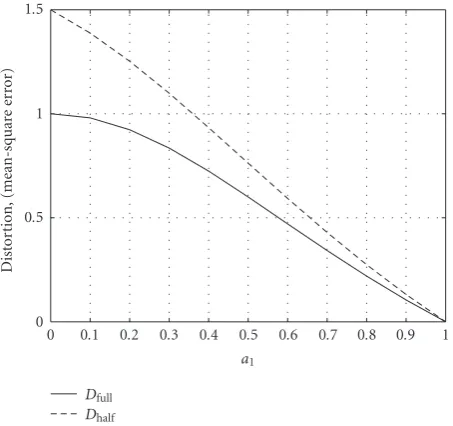
Figure3: Comparison ofDfull(R) toDhalf(R) atR=log2(1 +a2).
pixels along time [18]. In this section, we will analyze the effects of channel splitting on one-dimensional autoregres-sive sources of first order, AR(1). The insights we gain from the analysis of one-dimensional sources will give us some hints about the error-prone transmission of video signals. Odd/even sample separation makes use of the correlation between consecutive samples. Consider a discrete time first-order autoregressive, AR(1), source model given as
x[k]=ax[k−1] +z[k], (1)
wherek ∈ Zandz[k] is a sequence of independent,
zero-mean Gaussian random variables andais the correlation
co-efficient between consecutive samples.x[k] is normalized to have unit power if the variance ofz[k] is set to 1−a2. The
distortion rate function for an AR(1) source is given as [19]
D(R)=1−a22−2R, forR≥log
2(1 +a). (2)
The subsequences of odd and even samples are AR(1) se-quences each with the correlation coefficienta2and have the
distortion rate expression
Dfull(R)=
1−a42−2R, forR≥log 2
1 +a2. (3)
If we assume that the even samples are received and the odd samples are reconstructed by interpolation (half-rate de-coder), the average distortion over all samples is given as
Dhalf(R)=
1 2
(1−a)2+1 2
1−a2+3
4Dfull(R) (4)
if the quantization error is uncorrelated. The distortion of the even samples does not change, whereas the distor-tion term on the interpolated samples depends on two fac-tors: (1) interpolation distortion and (2) quantization dis-tortion of the odd samples. At high rates, the component
Half-rate decoder,a=0.9 Full-rate decoder,a=0.9
2 2.2 2.4 2.6 2.8 3 3.2 3.4 3.6 3.8 4 R1(bit/sample)
7 8 9 10 11 12 13 14 15 16 17
PSNR
av
g
(dB)
Figure4: PSNRavgoverR1, comparison of full-rate to the half-rate decoder in the high-rate region.
ofDhalf(R) dependent on quantization becomes almost zero
andDhalf(R) approaches asymptotically to interpolation
dis-tortion 1/2[(1−a)2+ 1/2(1−a2)]. At high rate,D
half(R)
ex-ceedsDfull(R). At rateR=log2(1 +a2), we have
Dfull(R)=
1−a2
1 +a2,
Dhalf(R)=a
4−4a3+a2−4a+ 6
41 +a2 .
(5)
Figure 3depicts the performance comparison of both de-coders for 1> a >0 stating thatDfull(R)≤Dhalf(R).
However in the low-rate region, whereR <log2(1 +a2),
half-rate decoder yields competitive and at times smaller av-erage distortion than the full-rate decoder [3]. The above equations forDfullandDhalfare however not valid in the
low-rate region [19].
Next, we test the unbalanced quantized operation in the high-rate region, where R > log2(1 +a2), R
i > log2(1 + a2), for alli∈[1, 2],R=R
avg=(R1+R2)/2=2 bit/sample,
anda=0.9.Figure 4shows the comparison of the full-rate decoder to the half-rate decoder. We see that at balanced op-eration, full-rate coder performs best, but whenR1becomes
larger, (i.e., the unbalance increases), half-rate decoder per-forms better.
Based on these insights, we investigated what happens when the transmission is lossy, that is, samples are lost with given probabilities. The results are obtained via simulations, where 100 samples are transmitted and 20 000 iterations are used. Increasing the number of iterations beyond did not change the experimental results. The transmission rate is 0.2 bit/sample averaged over both subsequences, that is, lower than the threshold rate, log2(1 +a2). The loss probabilities
AR(1),a=0.9, 0%−0% AR(1),a=0.9, 0%−10% AR(1),a=0.9, 10%−10%
0.2 0.22 0.24 0.26 0.28 0.3 0.32 0.34 0.36 0.38 0.4 R1(bits/sample)
5.5 6 6.5 7 7.5 8
PSNR
av
g
(dB)
Figure5: PSNRavgoverR1,a=0.9,Ravg=0.2 bit/sample.
Average PSNR over the rate of the first subsequenceR1is
plotted fora = 0.9 inFigure 5. Since the total average rate is constant, asR1increasesR2decreases. The curves depicted
are generated by comparing the full rate and the half-rate de-coders at each unbalance rate and picking the larger value. As
R1increases andR2decreases, after some point, half-rate
de-coder exceeds the full-rate dede-coder since the distortion due to error propagation and coarse quantization exceed the in-terpolation distortion.
InFigure 5, when no loss occurs andR1>0.27 bit/
sam-ple, half-rate decoder performs better than the full-rate one. When the first channel is lossless but the second channel is lossy, the threshold rate where half-rate coder exceeds the full-rate coder is smaller. If the loss probabilities are moder-ate and rmoder-ate unbalance is high, using half-rmoder-ate coder increases average PSNR.
The same comparisons are depicted fora = 0.5 in
Fig-ure 6. Due to the decreased correlation between consecu-tive samples, half-rate coder cannot perform as good as the full-rate coder. Only when both channels are lossless and
R1>0.37 bit/sample, half-rate decoder outperforms the
full-rate decoder. Moreover, we see that the highest average PSNR is achieved at balanced rate allocations. The optimal rate al-location is reached at unbalance only when the second loss probability is larger than 10%. When the loss probabilities are balanced, full-rate decoder at balanced operation is pre-ferred.
To sum up, correlation coefficient matters. This
corre-sponds to the correlation of corresponding blocks in video
sequences as discussed in Section 5. If the correlation is
low, the error due to interpolation is large. In this case, when the quantization error is not large enough (i.e., high coding rate), the half-rate decoder cannot outperform full-rate coder. Similarly, for low motion sequences, since the
AR(1),a=0.5, 0%−0% AR(1),a=0.9, 5%−10% AR(1),a=0.9, 10%−10%
0.2 0.22 0.24 0.26 0.28 0.3 0.32 0.34 0.36 0.38 0.4 R1(bits/sample)
1.8 1.9 2 2.1 2.2 2.3 2.4 2.5 2.6 2.7 2.8
PSNR
av
g
(dB)
Figure6: PSNRavgoverR1,a=0.5,Ravg=0.2 bit/sample.
correlation between corresponding blocks is high, we expect the half-rate to yield good results. In contrary, for high mo-tion sequences, the correlamo-tion is low, and therefore there is a penalty associated with the half-rate decoder. Basically, as we will see in the next section, activity in the sequence di-rectly drives the interpolation efficiency and thus the coding strategy.
4. RATE ALLOCATION FOR UNBALANCED QUANTIZED MSVC
Based on a distortion estimation model for unbalanced quantized multiple state video coding system [20], we will present a simplified, nearly optimal solution to the rate allo-cation problem to guide our optimized coding strategy. Sum-mary of the distortion model is given inSection 4.1and the model-based rate allocation inSection 4.2.
4.1. Distortion model
(i) Blocksx(n) andx(n−2) are both received:
D1(n)=α
D(n−2)−σ2
q2
+σq22. (6)
(ii) Blockx(n) is received but blockx(n−2) is lost:
D2(n)=α
D(n−2) +σq22
+σq22. (7)
(iii) Blockx(n) is lost but blockx(n+ 1) is received:
D3(n)=
1 +√α2
4 D(n−1) +
1 +α
4 σ
2 q1
−
1 +√α√α
2 σ
2 q11−p1
+σ2 interp.
(8)
(iv) Blocksx(n) andx(n+ 1) are both lost:
D4(n)=D(n−1) +σrep2 , (9)
wherex(n) is the current block on the first thread,x(n−2) the corresponding block on the previous frame on the same thread,x(n+ 1) the corresponding block in the next frame,
and x(n−1) on the previous frame of the other thread;
whereasD(n), D(n−2), D(n+ 1), and D(n−1) are their corresponding distortion terms, respectively.σinterp2 denotes the interpolation distortion and σ2
rep the repetition
distor-tion if interpoladistor-tion is impossible and the lost block is to be replaced by its corresponding block on the previous frame.
σ2
q1andσq22 are the average quantization distortions for both
streams corresponding toR1andR2, respectively. The model
is applicable to inter-coded as well as to intra-coded blocks so that intra-updates can also be considered.αis a variable which depends on the scene activity of the video sequence and should be determined adaptively. All parameters used in the model are estimated at the encoder and are obviously se-quence dependent. To predictα, we can match the simulation results to the real distortion values on a frame basis and min-imize the gap for a given loss rate. The predictedαvalue can then be used for the distortion estimation at other loss rates. The formulas for a block on the other thread is symmetric to the given one, where the subscripts “1” and “2” are to be exchanged.
The block distortion values for each case are weighted by their respective probabilities to yield the overall block distor-tion:
D(n)=1−p2
1−p2
D1(n) +
1−p2
p2D2(n)
+p2
1−p1
D3(n) +p2p1D4(n).
(10)
The individual frame distortions are calculated from the block distortions, whereas the frame PSNR values from the frame distortions. The average PSNR values for specific rate allocations are calculated by averaging the frame PSNR esti-mations over the whole sequence. To get the optimal coding rates, the distortion should be minimized while the rate con-straints of the channels are respected.
4.2. Optimized rate allocation
In this section, a nearly optimal rate allocation will be de-scribed based on the average distortion estimation. For our model, we will use anαvalue averaged over all frames, blocks
and streams as an approximation. To be exact,αis slightly
dependent on the coding rate, therefore differentα values
are associated with differently quantized streams. The
aver-age quantization distortions of the two substreams are σ2
q1
andσ2
q2, respectively. Similarly, the sum of the average
dis-tortion terms of the corresponding blocks along the odd and even video subsequence are denoted byDOandDE. Our goal is minimizing the total distortion min{DE+DO}subject to
f(σ2
q1,σq22)≤C, that is,R1+R2≤RT, for a given constantC. DOcan be expressed as
DO =
N−1
n=1:2
D(n)
=σ2 q1+
N−1
n=3:2
1−p1 2D
1(n) +
1−p1
p1D2(n)
+p1
1−p2
D3(n) +p1p2D4(n)
, (11)
using the distortion model.Nis the number of frames
con-sidered. A symmetric formula can also be written for DE
by summing only the even numbered frame distortions by exchanging the subscripts. After expanding the summation terms we obtain forDO
DO=1−11−p
1
α ×
σq11 +1−p1
2N−2
2 (1−α)
+1−p1
p1N−2
2 (1 +α)
+σq21−p2
p1N−
2 2
(1 +α) 4
−1−p2 2
p1N−
2 2
N−2
2
(1 +√α) 2
√
α
+D(N−1)2p1−1
+D(N)
−1−p2
p1(1 +
√α )2
4 −p1p2
+σinterp2 1−p2
p1N−
2 2
+σ2 rep
p1p2N−2
2
+DE1−p2
p1(1 +
√α )
4 +p1p2
,
(12)
where the averaged values for α, σ2
interp, and σrep2 over all
blocks of the whole sequence are used to simplify the
equa-tion. A similar equation can also be written forDE by
ex-changing the subscripts. Next, the equations forDEandDO can be combined and formulated in the following way:
DE=K1σq12 +K2σq22 +K3D(N−1) +K4D(N) +K5,
DO=K6σq12 +K7σq22 +K8D(N−1) +K9D(N) +K10,
whereKi,i ∈ [1, 10], are given by the system and depen-dent onp1,p2,α,N,σinterp, andσrep. For largeN,D(N−1)
andD(N) can be neglected in comparison to the remaining
terms. Adding the equations forDEandDOtogether, we ob-tain
DE+DO=K1+K6
σ2
1+
K2+K7
σ2
2+
K5+K10
, (14)
which is an equation with two variablesσq1andσq2which are dependent on the quantizersQ1 andQ2. The constraint for
the optimization isR1(Q1) +R2(Q2)≤R.
5. PERFORMANCE ANALYSIS FOR UNBALANCED QUANTIZED MSVC
5.1. Preliminaries
In balanced MSVC, each subsequence is quantized with the same step size after splitting the original sequence into odd and even frames. The resulting descriptions require the same bitrate, have the same frame rate, and yield the same aver-age PSNR if no loss occurs. On the other hand, unbalanced descriptions could be advantageous if we have transmission paths with different characteristics, such as different band-widths and loss probabilities. We investigate here unbalanced
quantized MSVC [2], where the subsequences are quantized
with different stepsizes depending on the sequence as well as on the transmission conditions. In our work, MSVC is mod-ified to recover the streams not only from state losses, but also from error propagation, and more importantly to im-prove the low quality stream which is coarsely quantized to increase the average reconstructed PSNR. The extended re-covery method chooses the best frame PSNR reconstruction method from all available alternatives at every stage. This in-formation can be sent to the decoder as side inin-formation. Us-ing this, the decoder reconstructs the best possible sequence depending on the received video packets.
If the current packet is lost, there is only one reconstruc-tion method available: interpolating the previous and next frames from the other description. If it is received, on the other hand, two alternatives are present: (1) using the re-ceived packet and (2) interpolating as if the packet was lost. If the interpolation using the finely quantized frames yields a higher frame PSNR than the coarsely quantized and the reconstructed one, the second alternative should be chosen. An important point is that due to prediction in hybrid cod-ing, the interpolation error on the reconstructed frame prop-agates to the following frames in the same subsequence. The severity of error propagation depends on the scene activity
and the interpolation method. To take this effect into
ac-count, we employ the second alternative only if the PSNR degradation of the future frame (after the current one) is below a certain threshold. The threshold can be preset de-pendent on the content as well as on the application. The comparison based on PSNR cannot be performed directly at the decoder since the original sequence is not present. But the encoder can predetermine the rate allocation be-tween given paths so that the average reconstructed frame
PSNR, PSNRavg, is maximized. Our goal is to allocate a given
total bitrate RT optimally between two streams by setting
their quantization stepsizes, as well as intra-group of blocks (GOB) or frame coding periods based on a comprehensive end-to-end distortion model which takes the scene content, loss probabilities, and coding rates into account. Alterna-tively, the encoder can detect the motion activity of the se-quence or part of the sese-quence and adapt the rate unbalance according to the precalculated and prestored tables.
5.2. System setup
We modified the H.264 codec (version 9.0) to support the
MSVC structure, and two parallel decoders are implemented which help each other to recover from losses as explained here above. The reliability values can be determined recur-sively. The optimal reconstruction method depends on both the loss history and the scene activity. Side information is sent by the encoder to help choosing the best reconstruc-tion strategy. The side informareconstruc-tion can be some hint speci-fying the motion activity for each particular frame (or frame block), that is, representing the difficulty of interpolating it using the adjacent frames. The hint track can for example be generated offline at the encoder. An alternative scenario that we do not consider here consists in estimating sequence ac-tivity directly at the receiver to choose the best reconstruction method.
Finally, we assume that each frame (I or P) is transmitted in a single packet [1]. Moreover, we assume that the very first frame in each sequence is never lost (e.g., retransmission). If the packet is lost (I or P), all information is lost for the cor-responding frame including the motion vectors for P frames. The reconstruction method for the lost I and P frames is the same.
5.3. Performance analysis
We now analyze the performance of unbalanced MSVC for
different sequences and different streaming conditions. A
careful analysis will provide us with important insights for the design of efficient coding strategies. The results are given for two sequences here: Foreman and Akiyo representing the high motion and low motion sequences, respectively. For each coding option (non-intra, with intra-GOB updates, and with intra-frame updates), four operating points (P.1, P.2, P.3, and P.4) are considered. Operating points correspond to different settings of quantization stepsizes of both streams. The first operating point denotes the balanced rate alloca-tion, whereas the fourth one represents the most unbalanced one. Tables1,2, and3list the bitrates and the correspond-ing QP’s for the two streams chosen for codcorrespond-ing the sequences Foreman and Akiyo without and with intra-coding of GOB’s and frames. The total rateRTis set to 140 kbit/s for Foreman and 19 kbit/s for Akiyo which is to be split betweenR1 and R2. For Foreman, every 9th frame and for Akiyo, every 36th
Table1: Unbalanced quantized MSVC, quantization stepsizes, and the corresponding bitrates for the two subsequences: Foreman and Akiyo.
QP1 R1(kbits/s) QP2 R2(kbits/s) P.1 14/18 111.88/13.92 26/27 27.48/5.03 P.2 15/19 95.94/12.16 21/24 43.01/6.75 P.3 16/20 83.16/10.64 19/22 54.91/8.41 P.4 17/21 71.38/9.41 17/21 71.04/9.41
Table2: Unbalanced quantized MSVC, quantization stepsizes, and the corresponding bitrates for the two subsequences: Foreman and Akiyo with GOB-intra-updates.
QP1 R1(kbits/s) QP2 R2(kbits/s) P.1 17/22 106.38/13.22 27/30 34.02/5.97 P.2 18/23 94.55/11.67 24/28 46.98/7.14 P.3 19/24 83.27/10.59 22/26 59.14/8.72 P.4 20/25 73.83/9.64 21/25 65.68/9.64
Table3: Unbalanced quantized MSVC, quantization stepsizes, and the corresponding bitrates for the two subsequences: Foreman and Akiyo with frame-intra-updates.
QP1 R1(kbits/s) QP2 R2(kbits/s) P.1 20/23 83.90/11.26 29/30 55.68/7.97 P.2 21/24 78.23/10.56 26/28 61.36/8.61 P.3 22/25 74.04/9.95 24/27 66.73/8.97 P.4 23/26 70.24/9.45 23/26 70.24/9.45
intra-GOB updates. The vertical location of the intra-coded GOB is shifted downwards periodicaly every frame. A total of 200 frames are considered from each sequence. To investi-gate the system performance, 100 different random loss pat-terns for each loss probability pair are generated with a uni-formly distributed independent loss model. Although some of the loss patterns generated contain bursty errors (espe-cially if the loss probability is high), bursty loss models will be investigated in the future work. Encoded subsequences are decoded and reconstructed using the extended recovery ap-proach. Block-based motion controlled interpolation is em-ployed for extended state recovery.
Figures 7, 8, and 9 show for Foreman the average
re-constructed frame PSNR over the rate allocated to the first stream for balanced and unbalanced loss probability pairs in case the subsequences are coded without intra-coding, with GOB-intra-updates, and with frame updates, respec-tively. The same comparison is depicted for Akiyo in Figures 10,11, and12. PSNRavgis given on the y-axis, whereasR1,
the rate allocated to the first stream, is given on thex-axis. The left corner of thex-axis corresponds to balanced rate al-location, whereas the right corner represents the most un-balanced one. Observations for the three categories of loss probability pairs are listed below.
(a) First stream is lossless and second stream is lossy.
(i) For Foreman, whether the periodic intra-GOB coding is applied or not, the unbalanced opera-tion is preferred. The optimal rateR1is smaller with
p1=0%,p2=20% p1=0%,p2=0%
p1=5%,p2=20% p1=5%,p2=5% 70 75 80 85 90 95 100 105 110 115
R1(kbit/s) 29
30 31 32 33 34 35 36
PSNR
av
g
(dB)
Average PSNR overR1, Foreman, 30 fps, 200 frames
Figure7: PSNRavgoverR1, Foreman.
p1=0%,p2=20% p1=0%,p2=0%
p1=5%,p2=20% p1=5%,p2=5%
70 75 80 85 90 95 100 105 110
R1(kbit/s) 30.5
31 31.5 32 32.5 33 33.5
PSNR
av
g
(dB)
Average PSNR overR1, Foreman, 30 fps, 200 frames
Figure8: PSNRavgoverR1, Foreman with GOB-intra-updates.
the intra-GOB coding than with no-intra-coding. With intra-frame coding, unbalanced rates are
fa-vorable only whenp2increases beyond 5%.
(ii) For Akiyo, however, interpolation yields very good results due to low motion. The optimal operating point for Akiyo is therefore the most unbalanced one whatever intra-coding option is used.
p1=0%,p2=20% p1=0%,p2=0%
p1=5%,p2=20% p1=5%,p2=5%
70 72 74 76 78 80 82 84
R1(kbit/s) 32.2
32.4 32.6 32.8 33 33.2 33.4 33.6
PSNR
av
g
(dB)
Average PSNR overR1, Foreman, 30 fps, 200 frames
Figure9: PSNRavgoverR1, Foreman with frame-intra-updates.
p1=0%,p2=20% p1=0%,p2=0%
p1=5%,p2=20% p1=5%,p2=5% 9 9.5 10 10.5 11 11.5 12 12.5 13 13.5 14
R1(kbit/s) 33.5
34 34.5 35 35.5 36 36.5
PSNR
av
g
(dB)
Average PSNR overR1, Akiyo, 30 fps, 200 frames
Figure10: PSNRavgoverR1, Akiyo.
quantized images, can be incorporated to enhance the reconstruction further, we expect the optimal rateR1to increase, favoring unbalanced operation
even more. Using coarsely quantized images as side information is discussed in [21] in the context of the Wyner-Ziv coding.
(iv) For Foreman, if both streams are lossless, PSNRavg
decreases slightly, first asR1increases, followed by a
slight increase. The slight decrease in performance is due to the conservative (suboptimal) threshold setting in the simulations.
p1=0%,p2=20% p1=0%,p2=0%
p1=5%,p2=20% p1=5%,p2=5% 9.5 10 10.5 11 11.5 12 12.5 13 13.5
R1(kbit/s) 32
32.2 32.4 32.6 32.8 33 33.2 33.4 33.6 33.8 34
PSNR
av
g
(dB)
Average PSNR overR1, Akiyo, 30 fps, 200 frames
Figure11: PSNRavgoverR1, Akiyo with GOB-intra-updates.
p1=0%,p2=20% p1=0%,p2=0%
p1=5%,p2=20% p1=5%,p2=5% 9.4 9.6 9.8 10 10.2 10.4 10.6 10.8 11 11.2 11.4
R1(kbit/s) 33.6
33.7 33.8 33.9 34 34.1 34.2 34.3 33.4 34.5
PSNR
av
g
(dB)
Average PSNR overR1, Akiyo, 30 fps, 200 frames
Figure12: PSNRavgoverR1, Akiyo with frame-intra-updates.
(b) Both streams are lossy.
(i) Balanced loss probabilities call for balanced rate al-locations whether periodic intra-coding is applied or not and whether the sequence has high motion content or not.
Sequence or part of the sequence
Categorization
High motion Low motion
Balanced losses Unbalanced losses Balanced losses Unbalanced losses
Balanced coding rates & intra-updates
Unbalanced coding rates only if unbalanced loss rates & intra-updates are high
Balanced coding rates & intra-updates only if loss rates are high
Unbalanced coding rates & no intra-updates
Figure13: Heuristics for coding decisions.
(iii) The low-rate stream is not fully used in the cur-rent work. Since the higher-rate stream is also lossy, the low-rate stream is to be used to recover the high-rate stream. If the sequence length until the next refreshment is long, the overall quality can de-crease due to the coarse quantization of the second description.
(iv) As noted before, the results can be improved in fa-vor of unbalanced operation by incorporating the received but discarded packets into the reconstruc-tion.
(v) Performance differences between operating points
are smaller when intra-updates, especially frame updates are used.
Heuristics and results we obtained from the here-above analysis and experiments are summarized inFigure 13. First, we have to distinguish between high and low motion se-quences. Second, we should check whether the loss proba-bilities of the channels are balanced or not. For high mo-tion sequences, if we have balanced loss probabilities, bal-anced coding rates with intra-updates are optimal. But if the loss probabilities are highly unbalanced, unbalanced rates in combination with intra-updates are to be preferred. For low motion sequences, on the other hand, at balanced loss rates, balanced rates are favorable and the frame updates are to be used only if the loss rates are high (more than 10%). For unbalanced loss probabilities, however, no intra-updates are necessary and unbalanced rates are the best strategy.
6. CONCLUSIONS
Unbalanced descriptions are particularly interesting for video streaming applications over heterogeneous networks using path diversity, where transmission channels have vary-ing transmission characteristics. By usvary-ing flexible and adap-tive rate allocation over available transmission paths, the re-constructed signal quality at the receiver can be improved. In this work, unbalanced descriptions of the video signal are
generated using the multiple state video coding approach. The total bitrate is kept constant while the subsequences are quantized with different stepsizes adaptive to the sequence as well as to the transmission conditions. Besides, the state re-covery approach of MSVC is extended to enhance the quality of the coarsely quantized stream. The system performance in terms of average PSNR is investigated for different loss rates, rate allocations, coding options, and sequences. To deter-mine the optimal coding parameters, we distinguish between high and low motion sequences as well as between balanced and unbalanced transmission conditions (bandwidth or loss probabilities). For high motion sequences and for balanced loss probabilities, balanced coding rates with intra-updates are optimal. But if the loss probabilities are highly unbal-anced, unbalanced rates in combination with intra-updates are to be preferred. For low motion sequences and balanced loss rates, balanced rates are favorable and the frame updates are to be used only if the loss rates are high (more than 10%). If the loss probabilities are unbalanced, no intra-updates are necessary and unbalanced rates are optimal. Another result is that extended state recovery reduces the penalty in the av-erage system performance due to unbalancing. At last, we introduce a distortion model to guide the optimized coding strategy. Additionally, we present a nearly optimal rate allo-cation method based on this distortion model. Future work will focus on the improvement of the results in unbalanced operation using the coarsely quantized images as side infor-mation at the interpolation process.
ACKNOWLEDGMENTS
This work was supported in part by the Technical University Berlin and the Swiss National Science Foundation.
REFERENCES
diversity,” in Visual Communications and Image Processing (VCIP ’01), vol. 4310 ofProceedings of SPIE, pp. 392–409, San Jose, Calif, USA, January 2001.
[2] S. Ekmekci and T. Sikora, “Unbalanced quantized multiple description video transmission using path diversity,” in Im-age and Video Communications and Processing (IVCP ’03), vol. 5022 ofProceedings of SPIE, pp. 301–311, Santa Clara, Calif, USA, January 2003.
[3] V. K. Goyal, “Multiple description coding: compression meets the network,”IEEE Signal Processing Magazine, vol. 18, no. 5, pp. 74–93, 2001.
[4] W. S. Lee, M. R. Pickering, M. R. Frater, and J. F. Arnold, “A robust codec for transmission of very low bit-rate video over channels with bursty errors,”IEEE Transactions on Circuits and Systems for Video Technology, vol. 10, no. 8, pp. 1403–1412, 2000.
[5] C.-S. Kim and S.-U. Lee, “Multiple description motion cod-ing algorithm for robust video transmission,” inProceedings of IEEE International Symposium on Circuits and Systems (IS-CAS ’00), vol. 4, pp. 717–720, Geneva, Switzerland, May 2000. [6] A. R. Reibman, H. Jafarkhani, Y. Wang, M. T. Orchard, and R. Puri, “Multiple-description video coding using motion-compensated temporal prediction,”IEEE Transactions on Cir-cuits and Systems for Video Technology, vol. 12, no. 3, pp. 193– 204, 2002.
[7] V. A. Vaishampayan and J. Domaszewicz, “Design of entropy-constrained multiple-description scalar quantizers,” IEEE Transactions on Information Theory, vol. 40, no. 1, pp. 245– 250, 1994.
[8] X. Tang and A. Zakhor, “Matching pursuits multiple descrip-tion coding for wireless video,”IEEE Transactions on Circuits and Systems for Video Technology, vol. 12, no. 6, pp. 566–575, 2002.
[9] R. Puri, K. Ramchandran, K. W. Lee, and V. Bharghavan, “For-ward error correction (FEC) codes based multiple descrip-tion coding for Internet video streaming and multicast,”Signal Processing: Image Communication, vol. 16, no. 8, pp. 745–762, 2001.
[10] A. Gersho, “The channel splitting problem and Modulo-PCM coding,” Bell Labs Memo for Record (not archived), October 1979.
[11] N. S. Jayant, “Subsampling of a DPCM speech channel to pro-vide two self-contained half-rate channels,”Bell System Tech-nical Journal, vol. 60, no. 4, pp. 501–509, 1981.
[12] N. S. Jayant and S. W. Christensen, “Effects of packet losses in waveform coded speech and improvements due to an odd-even sample-interpolation procedure,”IEEE Transactions on Communications, vol. 29, no. 2, pp. 101–109, 1981.
[13] A. Ingle and V. A. Vaishampayan, “DPCM system design for diversity systems with applications to packetized speech,”IEEE Transactions on Speech and Audio Processing, vol. 3, no. 1, pp. 48–58, 1995.
[14] D. O. Reudink, “The channel splitting problem with interpola-tive coders,” Tech. Rep. TM80-134-1, Bell Labs, Murray Hill, NJ, USA, October 1980.
[15] S. Wenger, G. D. Knorr, J. Ott, and F. Kossentini, “Error re-silience support in H.263+,”IEEE Transactions on Circuits and Systems for Video Technology, vol. 8, no. 7, pp. 867–877, 1998. [16] D. Comas, R. Singh, A. Ortega, and F. Marques,
“Unbal-anced multiple-description video coding with rate-distortion optimization,”EURASIP Journal on Applied Signal Processing, vol. 2003, no. 1, pp. 81–90, 2003.
[17] J. G. Apostolopoulos and S. J. Wee, “Unbalanced multiple description video communication using path diversity,” in
Proceedings of IEEE International Conference on Image Process-ing (ICIP ’01), vol. 1, pp. 966–969, Thessaloniki, Greece, Oc-tober 2001.
[18] C. Chen,Motion-compensated hybrid coders in video commu-nications, Ph.D. thesis, Monash University, Victoria, Australia, 1992.
[19] T. Berger, Rate-Distortion Theory: A Mathematical Basis for Data Compression, Prentice-Hall, Englewood Cliffs, NJ, USA, 1971.
[20] S. Ekmekci and T. Sikora, “Model-based unbalanced multiple description video transmission using path diversity,” inVisual Communications and Image Processing (VCIP ’03), vol. 5150 of Proceedings of SPIE, pp. 1023–1034, Lugano, Switzerland, July 2003.
[21] A. Aaron, R. Zhang, and B. Girod, “Wyner-Ziv coding of mo-tion video,” inConference Record of the 36th Asilomar Confer-ence on Signals, Systems and Computers (ACSSC ’02), vol. 1, pp. 240–244, Pacific Grove, Calif, USA, November 2002.
Sila Ekmekci Flierl received the B.S. de-grees in electrical engineering and in com-puter engineering from Bogazici Univer-sity, Turkey, in 1996 and the M.S. and the Ph.D. degrees from the Technical University Berlin, Germany, in 1998 and 2004, respec-tively. She joined the Signal Processing In-stitute of the Swiss InIn-stitute of Technology in 2004 as a Senior Researcher.
Thomas Sikorais a Professor and the Direc-tor of the Communication Systems Depart-ment at Technical University Berlin, Ger-many, since 2002. He received the Dipl.-Ing. degree and Dr.-Dipl.-Ing. degree in electrical engineering from Bremen University, Ger-many, in 1985 and 1989, respectively.
Pascal Frossardreceived the M.S. and Ph.D. degrees, both in electrical engineering, from the Swiss Federal Institute of Technology (EPFL), Lausanne, Switzerland, in 1997 and 2000, respectively. From 1998 to 2000, he worked with the Signal Processing Labora-tory, EPFL, as a Research and Teaching As-sistant under a grant from Hewlett-Packard. From 2001 to 2003, he was a Member of the research staffat the IBM TJ Watson