48 | P a g e
SUBJECTIVE SUMMARIZATION FOR
UNSUPERVISED SENTIMENT ANALYSIS
Sharmila Zope
1, Nilesh Alone
2 1,2Computer Science, GESCOE Nashik, (India)
ABSTRACT
Dual sentimental analysis is an essential momentum research territory. The sentiment found inside of remarks,
criticism or comments give helpful markers frame from any distinctive purposes. These notions can be ordered
either into two classifications: positive or negative; or into n - point scale. In this regard, a sentimental
examination can be deciphered as an order where every classification speaks to a particular sentiment. We
address unsupervised opinion order by making switched surveys for every testing illustration, coordinate the
double forecast standard using subjective summarization into a term checking strategies and make a joint
expectation in view of two sides of one comment. Dual Sentiment investigation gives organizations a way to
figure around the degree of item acknowledgement and to decide rules to enhance item quality. It additionally
encourages strategy producers or lawmakers to Analyze open assessments as for methodologies, social
administrations or political issues.
Keywords:
Natural language processing, n-point scale, opinion mining, public service, sentimental
analysis.
I. INTRODUCTION
In current era, with the developing volume of online audits accessible on the Internet, feeling investigation and survey mining, is a unique content digging undertaking for deciding the subjective state of mind (i.e., opinion) expressed by the content, is turning into a hotspot in the field of information mining [5],[12], [13], [21], [22]. Sentiment categorization is a chore job in supposition examination, with it‟s intend to group the assessment (e.g., positive or negative) of a given content. The general practice in sentiment classification takes after the methods in traditional topic-based content classification, where the bag of-words (BOW) model is commonly utilized for content representation. In this model, survey content is represented by a vector of autonomous words. Despite the fact that the BOW model is exceptionally direct and entirely proficient in subject based content grouping, it is really not extremely suitable for sentiment categorization since it disturbs the word request, breaks the syntactic structures and cast-offs some semantic data. Consequently, an expansive number of inquires about in assumption examination expected to improve BOW Model [6], [9], [14], [19]. One of the most well-known difficulties is the flipping of polarity in reviews.
49 | P a g e dependency on outer assets. Viable approach to handle this is a straightforward yet capable model, called dual sentiment analysis (DSA), to manage the extremity shift issue in opinion classification. By utilizing the property that conclusion characterization has two inverse class names (i.e., positive and negative), at first an information expansion technique utilized for making opinion switched comments. A coordinated correspondence built in the original and switched comments.
In this paper we propose a basic yet successful idea of term counting utilizing subjective summarization. We address unsupervised sentiment classification by making switched surveys for every testing case, coordinate the dual prediction principle into a term checking strategies and make a joint prediction in view of two sides of one audit.
The points of interest of this paper are as given. Section 2 related work. In segment 3, we show the current information mining method and natural language processing. In area 4, we see subtle elements of dual sentiment analysis structure. In segment 5 we present our propose idea of subjective summarization in point of interest. Segment 6 gives experimental investigation of our propose framework. In segment 7 contain conclusions and future work of our work.
II. RELATED WORK
At first condense the work of sentiment examination and extremity shift then survey the procedure of information expansion.
2.1 Sentiment Analysis
A data mining way to deal with sentiment examination change over an unstructured text issue to one that makes expectations on organized, quantitative information. The methodology gets various procedures from computational phonetics and data retrieval groups [13]. For sentiment characterization, there are two fundamental sorts of techniques: First term checking strategies, the general introduction of contents are acquired by summing up the perspective scores of substance words in the content [17], [18]. In machine learning strategies, a text is described by a bag-of-words; the supervised machine learning calculations are connected as classifier [15].
2.2 Polarity Shift
The best way to deal with handle extremity movement is to straightforwardly invert the opinion of extremity moved words in comment, and assessment score is then summed up word by word [8], [9], [16]. Another approach to model extremity shift for instance, Na et al. [14] proposed to model negation by searching for particular part-of-speech label designs. Kennedy and Inkpen [9] proposed to utilize syntactic parsing to catch three sorts of valence shifters (negative, intensifiers, and diminishes). There were a few strategies without complex linguistic analysis and additional annotations to sort the shifted and unshifted content in light of preparing a binary detector. Classification models are then prepared taking into account each of the two sections [10], [11].
2.3 Techniques of Sentiment Analysis
50 | P a g e sentiment from Text. However, event recurrence was not considered. The concept of Dual Training and Dual Prediction for Polarity Classification is introduced by R. Xia et al. [20] In this the focus was on the polarity shift problem and to deal with it. Inherent and extraneous space importance (IEDR) model for identifying features form text which uses the way that word assignment qualities change crosswise over various sorts of corpora. However neutral sentiments are prohibited [22].
III. EXISTING SYSTEM
In this section contain brief overview on Data Mining Approaches and Natural language processing concept.
3.1 Data Mining Approach
A data mining approach gets a few procedures from computational syntactical and information recuperation groups to mean the content numerically and afterword applies conventional information mining strategies, for example, vector representation to this numeric representation. At last, an objective variable is distinguished and a pattern is found from the training data for anticipating sentiment extremity. This model can then be utilized to predict new perceptions [13]. Yet the vector based representation of a reviews, does not keep up information that is possibly vital to sentiment categorization which is required for opinion mining strategies [2].
3.2 Natural Language Processing
The rule-based Natural Language Processing (NLP) strategies utilize certain elements and syntactic examples in the content to understand its significance. Sentiment Analysis gives every one of the tools expected to taking care of disambiguation. For this present it‟s expected to utilize a composite of language dictionaries, semantic constructs like parts of speech, and noun phrases alongside a scope of operators [3]. Rule-based strategies are totally unsupervised; they don‟t include any training information. This is a major point of preference for applications where training information is lacking. Rule-based strategies require a lot of human inclusion in adding to the rules thus sets aside more time for well-assembled model [4].
IV. DUAL SENTIMENT ANALYSIS
In this segment, we should consider DSA system in point of interest. Fig. 1 represents the procedure of a DSA algorithm [1]. It contains two fundamental stages: 1) dual training and 2) dual prediction.
Fig.1. Process of dual sentiment analysis.
51 | P a g e forecasts.
In DT, the classifier is learnt by boosting a consolidation of probabilities of the original and switched training data set. In DP, forecasts are made by considering two sides of one comment. This strategy for investigation is utilized for supervised opinion examination. In the dual training method in which the greater part of the training comments are utilized as a part of information expansion. However, in many cases, not all the part of the comments has such particular sentiment extremity. So here utilize a specific information development strategy to choose a piece of training reviews for data expansion [1].
Table 1 Example of Training Review
Review Text Class
Original Review I don‟t like this movie. It is boring. Negative Reversed Review I like this movie. It is interesting. Positive
Consider the illustration in Table 1 to clarify why dual prediction works in tending to the polarity shift issue. In DP, because of the evacuation of negation in the reversed review, “like” assumes a positive part. In this way, the likelihood that the reversed review being grouped into Positive must be high. Additionally a weighted mix of two part predictions is utilized as the dual prediction outcome. In such way, the prediction mistake of the original test can likewise be remunerated by the expectation of the reversed test sample. So this can support to minimize blunders because of extremity movement [1].
V. PROPOSED APPROACH
5.1 Methodology
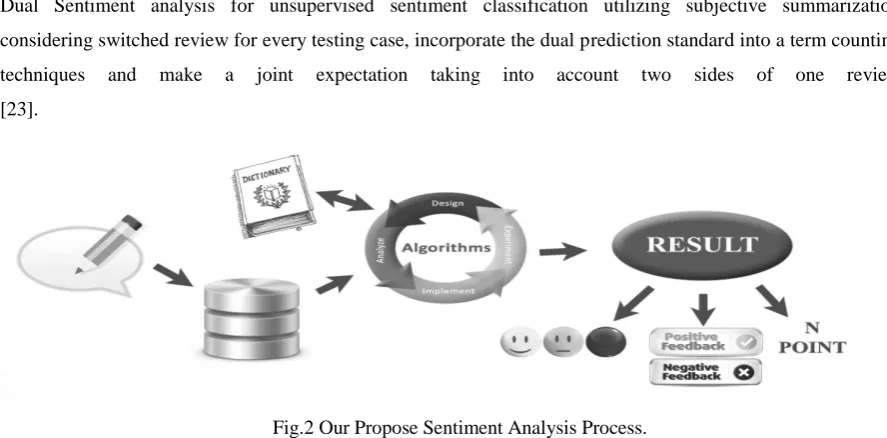
Dual Sentiment analysis for unsupervised sentiment classification utilizing subjective summarization considering switched review for every testing case, incorporate the dual prediction standard into a term counting techniques and make a joint expectation taking into account two sides of one review [23].
Fig.2 Our Propose Sentiment Analysis Process. 5.2 Subjective Summarization Algorithm
This algorithm works as follows 1. Initialization.
2. Fetch review gave by customer for processing.
52 | P a g e 5. Apply strong negative sentiment patterns to the information input with respect to the item.
6. If not discovered have to searching for weak negative patterns.
7. Search for positive sentiment patterns in the reviews with respect to the item.
8. If positive sentiment pattern is discovered ensure that it doesn‟t have negative example going before it. On the off chance that discovered simply flip the extremity of the sentiment to negative.
Pseudo Code of Subjective Summarization Algorithm
W ← Extract tokens from Comment(Verb, noun, Adverb, determiner, Conjunction, Hot list of words) for each c ∈ C
do Check[Verb, noun, Adverb, determiner, Conjunction, Hot list of words] do Check[Negative Words] --> Neg Dictionary
do Check[Positive Words] --> Pos Dictionary do Check[Hot list of words] --> Defined
do Check Polarity [PostiveWords]--> if negative word comes before positive word. do score[c] ← log prior[c]
for each t ∈ W
Where T1 = Total analysis of positive words, T2 = Total analysis of Negative words,
TT = Total Analysis
return (arg max c) ∈ C score[c]
5.3 Examples
i. Apple iphone 4 is not made me happy at all.
- Here we need to flip the polarity, as positive pattern is preceded by a negative one. ii. Samsung Ace is indeed a smart phone.
- Here the term „Smart‟ indicates that the sentiment is positive for Samsung Ace. 5.4 Features
Analyse user reviews on different products in market.
Helps any Organization for improving their products.
Analyse thousands of feedbacks and provide generalized opinion for the product.
53 | P a g e
VI. EXPERIMENTAL STUDY
We efficiently assess our methodology on two tasks including term checking technique and
positive-negative-neutral sentiment characterization crosswise over four sentiment datasets, arrangement calculation Dual
Sentiment Classification utilizing Subjective Summarization [23].
English datasets contain item reviews taken from Amazon.com including four distinct areas: Book, DVD,
Electronics and Kitchen. Each of the four datasets contains 1,000 positive and 1,000 negative reviews these
reviews are utilized as test samples for our calculation [24].
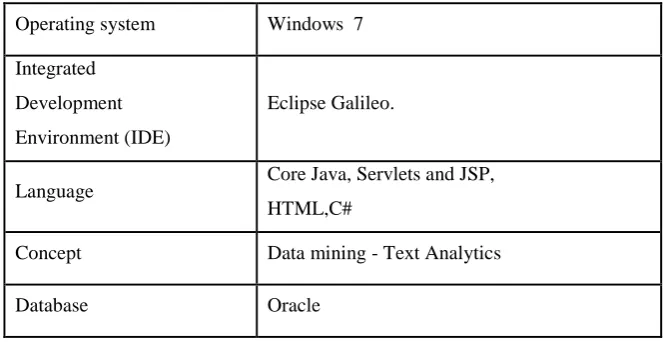
Table 2 Software and Technical Requirements
Operating system Windows 7
Integrated Development Environment (IDE)
Eclipse Galileo.
Language Core Java, Servlets and JSP,
HTML,C#
Concept Data mining - Text Analytics
Database Oracle
6.1 Functions Used
6.1.1 Text Classification
Text categorization groups content into predefined category. The procedure can be just as equally well applied at the document, sentence or token level. In subjective summarization we are categorizing words as positive and negative.
6.1.2 Entity Extraction
Entity and event recognition are two of the principle parts of Information Extraction (IE) framework. IE is about the programmed disclosure of new, previously unknown information, by mechanically extricating information, for example, entities and events from various textual assets. A key component is the connecting together of this extricated data to shape new actualities or to permit new theories to be researched further.
For instance, entities and events can be utilized to discover sentiments communicated in the content about articles or things that have happened.
6.1.3 Sentiment Extraction
54 | P a g e Fig.3. Output of Subjective Summarization for sentiment analysis
Consider one example above in Fig.3. : “I bought an iPhone 2 days ago. It was such a nice phone. The touch screen was really cool. The voice quality was clear. However, my mother was mad with me as I did not tell her before I bought it. She also thought the phone was too expensive, and wanted me to return it to the shop.” As the outline calculation gives Negation Offset, Sentence Offset. It demonstrates score for invalidation word with “-” sign and positive word with “+” sign and summation of every single such word in comment as conclusive score. Likewise it gives us list of positive and negative words in given comment.
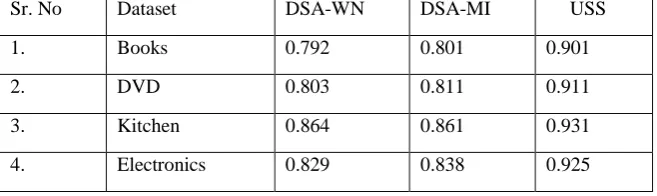
Table 3 Result Analysis of previous system with proposed system
Sr. No Dataset DSA-WN DSA-MI USS
1. Books 0.792 0.801 0.901
2. DVD 0.803 0.811 0.911
3. Kitchen 0.864 0.861 0.931
4. Electronics 0.829 0.838 0.925
55 | P a g e DSA-MI and 0.109 present improved over DSA-WN. Processing advantages of our USS is here we consider “and” and “but” clause also we consider impact of negative comment for effective result analysis.
VII. CONCLUSION AND FUTURE WORK
In this paper, we concentrate on subjective summarization for unsupervised sentiment classification. Initially we process on comments to categorize each word into different classes then summarized scores for given comment is generated using subjective summarization algorithm. From result table we conclude that our USS system performance is more efficient than other systems like DSA-MI and DSA-WN. Processing advantages of our USS is that we handled “and” and “but” clause also we consider impact of negative comment for effective result analysis. Likewise, all things considered, applications, to give a totally automated arrangement are no place in sight. Be that as it may, it is conceivable to devise productive semi automated arrangements.
The key is to fully understand the whole range of issues and pitfalls, skillfully manage them, and determine what portions can be done automatically and what portions need human assistance. In the continuum between the fully manual solution and fully automated solution, we can push more and more toward automation.
VIII. ACKNOWLEDGEMENT
We want to express our gratefulness and on account of PG Department Computer Engineering, GESRHSCOEMSR, Nashik.
REFERENCES
[1] R. Xia, F. Xu, C. Zong, Q. Li, Y. Qi and T. Li, “Dual sentiment analysis: Considering two sides of one review”, in IEEE Trans. Knowl. Data Eng., vol. 27, no. 8, pp. 2120-2133, Aug. 2015.
[2] B. Pang and L. Lee, “Opinion Mining and Sentiment Analysis.” Foundations and Trends in Information Retrieval2 (1-2), pp. 1–135, 2008.
[3] J. Wiebe, T. Wilson, R. Bruce, M. Bell, and M. Martin, “Learning Subjective Language,” Computational Linguistics, vol. 30, pp. 277–308, September 2004.
[4] M. Hu and B. Liu, “Mining and Summarizing Customer Reviews,” Proceedings of the ACM SIGKDD Conference on Knowledge Discovery and Data Mining (KDD), pp. 168–177, 2004.
[5] A. Abbasi, S. France, Z. Zhang, and H. Chen, “Selecting attributes for sentiment classification using feature relation networks,” IEEE Trans. Knowl. Data Eng., vol. 23, no. 3, pp. 447–462, Mar. 2011.
[6] M. Gamon, “Sentiment classification on customer feedback data: Noisy data, large feature vectors, and the role of linguistic analy-sis,” in Proc. Int. Conf. Comput. Linguistics, 2004, pp. 841–847.
[7] D. Ikeda, H. Takamura, L. Ratinov, and M. Okumura, “Learning to shift the polarity of words for sentiment classification,” in Proc. Int. Joint Conf. Natural Language Process., 2008.
[8] S. Kim and E. Hovy, “Determining the sentiment of opinions,” in Proc. Int. Conf. Comput. Linguistic, 2004, pp. 1367–1373.
56 | P a g e [10] S. Li and C. Huang, “Sentiment classification considering negation and contrast transition,” in Proc. Pacific
Asia Conf. Lang., Inf. Com-put., 2009, pp. 307–316.
[11] S. Li, S. Lee, Y. Chen, C. Huang and G. Zhou, “Sentiment classifi-cation and polarity shifting,” in Proc. Int. Conf. Comput. Linguistics, 2010, pp. 635–643.
[12] C. Lin, Y. He, R. Everson, and S. Ruger, “Weakly supervised joint sentiment-topic detection from text,” IEEE Trans. Knowl. Data Eng., vol. 24, no. 6, pp. 1134–1145, Jun. 2012.
[13] B. Liu, “Sentiment analysis and opinion mining,” in Synthesis Lec-tures on Human Language Technologies, vol. 5, no. 1. San Rafael, CA, USA: Morgan & Claypool, 2012, pp. 1–165.
[14] J. Na, H. Sui, C. Khoo, S. Chan, and Y. Zhou, “Effectiveness of simple linguistic processing in automatic sentiment classification of product reviews,” in Proc. Conf. Int. Soc. Knowl. Org., 2004, pp.49–54.
[15] B. Pang, L. Lee, and S. Vaithyanathan, “Thumbs up?: Sentiment classification using machine learning techniques,” in Proc. Conf. Empirical Methods Natural Language Process., 2002, pp. 79–86.
[16] L. Polanyi and A. Zaenen, “Contextual lexical valence shifters,” in Proc. AAAI Spring Symp. Exploring Attitude Affect Text, 2004, pp 1–10.
[17] P. Turney, “Thumbs up or thumbs down? Semantic orientation applied to unsupervised classification of reviews,” Proc. Annu. Meeting Assoc. Comput. Linguistics, 2002, pp. 417–424.
[18] P. Turney and M. L. Littman, “Measuring praise and criticism: Inference of semantic orientation from association,” ACM Trans. Inf. Syst., vol. 21, no. 4, pp. 315–346, 2003.
[19] R. Xia, C. Zong, and S. Li, “Ensemble of feature sets and classifica-tion algorithms for sentiment classification,” Inf. Sci., vol. 181, no. 6, pp. 1138–1152, 2011.
[20] R. Xia, T. Wang, X. Hu, S. Li, and C. Zong, “Dual training and dual prediction for polarity classification,” in Proc. Annu. Meeting Assoc. Comput. Linguistics, 2013, pp. 521–525.
[21] X. Yu, Y. Liu, X. Huang, and A. An, “Mining online reviews for predicting sales performance: A case study in the movie domain,” IEEE Trans. Knowl. Data Eng., vol. 24, no. 4, pp. 720–734, Apr. 2012. [22] Z. Hai, K. Chang, J. Kim, and C. C. Yang, “Identifying features in opinion mining via intrinsic and extrinsic
domain relevance,” IEEE Trans. Knowl. Data Eng., vol. 26, no. 3, pp. 447–462, Mar. 2014.
[23] Sharmila Zope, Dual Sentiment Analysis with Term Counting and Joint Prediction, IJATES conference at Delhi, vol. no. 3, issue 11, pp. 152-161, Nov. 2015.