Two-Factor Authentication with End-to-End
Password Security
Stanislaw Jarecki1, Hugo Krawczyk2, Maliheh Shirvanian3, and Nitesh Saxena3 1 University of California Irvine. [email protected]
2 IBM Research. [email protected]
3 University of Alabama at Birmingham. maliheh,[email protected]
Abstract. We present a secure two-factor authentication (TFA) scheme based on the possession by the user of a password and a crypto-capable device. Security is end-to-end" in the sense that the attacker can attack all parts of the system, including all communication links and any subset of parties (servers, devices, client terminals), can learn users' passwords, and perform active and passive attacks, online and oine. In all cases the scheme provides the highest attainable security bounds given the set of compromised components. Our solution builds a TFA scheme using any Device-Enhanced PAKE, dened by Jarecki et al., and any Short Authenticated String (SAS) Message Authentication, dened by Vau-denay. We show an ecient instantiation of this modular construction which utilizes any password-based client-server authentication method, with or without reliance on public-key infrastructure. The security of the proposed scheme is proven in a formal model that we formulate as an extension of the traditional PAKE model.
We also report on a prototype implementation of our schemes, including TLS-based and PKI-free variants, as well as several instantiations of the SAS mechanism, all demonstrating the practicality of our approach.
1 Introduction
Passwords provide the dominant mechanism for electronic authentication, pro-tecting a plethora of sensitive information. However, passwords are vulnerable to both online and oine attacks.4A network adversary can test password guesses in online interactions with the server while an attacker who compromises the au-thentication data stored by the server (i.e., a database of salted password hashes) can mount an oine dictionary attack by testing each user's authentication infor-mation against a dictionary of likely password choices. Oine dictionary attacks are a major threat, routinely experienced by commercial vendors, and they lead to the compromise of billions of user accounts [7, 6, 15, 20, 17, 12]. Moreover, be-cause users often re-use their passwords across multiple services, compromising one service typically also compromises user accounts at other services.
Two-factor password authentication (TFA), where user U authenticates to
serverSby proving possession of an auxiliary personal deviceD(e.g. a
smart-phone or a USB token) in addition to knowing her password, forms a common
defense against online password attacks as well as a second line of defense in case of password leakage. A TFA scheme which uses a device that is not directly connected toU's client terminalCtypically works as follows:Ddisplays a short
one-time secret PIN, either received fromS(e.g. using an SMS message) or
com-puted byDbased on a key shared withS, and the user manually types the PIN
into clientCin addition to her password. Examples of systems that are based on
such one-time PINs include SMS-based PINs, TOTP [10], HOTP [14], Google Authenticator [4], FIDO U2F [2], and schemes in the literature such as [48]. Vulnerabilities of traditional TFA schemes. Existing TFA schemes, both PIN-based and those that do not rely on PINs, e.g. [8, 1], combine password authentication and 2nd-factor authentication as separate authentication mech-anisms leading to several limitations. Chief among these is that such TFA solu-tions remain vulnerable to oine dictionary attacks upon server compromise in the same way as non-TFA password authentication schemes (i.e. via exposure of users' salted hashes), thus perpetuating the main source of password leakage. Moreover, existing TFA's have several vulnerabilities against online attacks: (1) The read-and-copy PIN-transfer is subject to a variety of eavesdropping attacks, including SMS hijacking5, shoulder-surng, PIN recording, client-side or device-side attacks via keyloggers or screen scrapers, e.g. [43], and PIN phishing [16]. (2) The read-and-copy PIN-transfer allows only limited PIN entropy and while, say, a 6-digit PIN is hard to guess, PIN guessing can be used in a large-scale online attack against accounts whose passwords the attacker already collected, e.g. [15, 20, 17, 12]. For example, if the attacker obtains password information for a large set of accounts, PINs are 6-digit long, and the attacker can try 10 PIN guesses per account, one expects a successful impersonation per 100,000 users. (3) Current PIN-based TFAs perform sequential authentication using the password and the PIN, i.e. C sends the password to S (over TLS), S conrms
whether pwd is correct, and only thenC sends toS the PIN retrieved from D.
This enables online password attacks without requiring PIN guessing or inter-action with a device, thus voiding the eects of PIN on password-guessing or password-conrmation online attacks.
Our Contributions. In this paper we aim to address the vulnerabilities of the currently deployed TFA schemes by (1) introducing a precise security model for TFA schemes capturing well-dened maximally-attainable security bounds, (2) exhibiting a practical TFA scheme which we prove to achieve the strong secu-rity guaranteed by our formal model, and (3) prototyping several methods for validating user's possession of the secondary authentication factor. We expand on each of these aspects next.
TFA Security Model with End-to-End Security. We introduce a Two-Factor Authenticated Key Exchange (TFA-KE) model in which a user authenti-cates to serverSby (1) entering a password into client terminalCand (2) proving 5 E.g., SIM card swap attacks [18] and SMS re-direction where PINs are diverted to
possession of a personal device Dwhich forms the second authenticator factor.
In the TFA-KE model, possession of Dis proved by the user conrming in the
device equality of at-bit checksum displayed byDwith a checksum displayed by C. Following [51] (see below), this implements at-bitC-to-Duser-authenticated
channel, which conrms that the same person is in control of clientCand device D. This channel authentication requirement is weaker than the private channel
required by current PIN-based TFAs and, as we show, it allows TFA schemes to be both more secure and easier to use.
The TFA-KE model, that we dene as an extension of the standard Password-Authenticated Key Exchange (PAKE) [24] and the Device-Enhanced PAKE (DE-PAKE) [37] models, captures what we call end-to-end security by allow-ing the adversary to control all communication channels and compromise any protocol party. For each subset of compromised parties, the model species best-possible security bounds, leaving inevitable (but costly) exhaustive online guess-ing attacks as the only feasible attack option. In particular, in the common case thatDandSare uncorrupted, the only feasible attack is an active simultaneous
online attack against bothSandDthat also requires guessing the password and
the t-bit checksum. Compromising server S allows the attacker to impersonate S, but does not help in impersonating the user to S, and in particular does not
enable an oine-dictionary attack against the user's password. Compromising deviceDmakes the authentication eectively password-only, hence oering best
possible bounds in the PAKE model (in particular, the oine dictionary attack is possible only ifDandS are both compromised). Finally, compromising client Cleaks the password, but even then impersonating the user to the server requires
an active attack onD. We prove our protocols in this strong security model.
Practical TFA with End-to-End Security. Our main result is a TFA scheme,
GenTFAthat achieves end-to-end security as formalized in our TFA-KE model
and is based on two general tools. The rst is a Device-Enhanced Password Au-thenticated Key Exchange (DE-PAKE) scheme as introduced by Jarecki et. al [37]. Such a scheme assumes the availability of a user's auxiliary device, as in our setting, and utilizes the device to protect against oine dictionary attacks in case of server compromise. However, DE-PAKE schemes provide no protec-tion in case that the client machine C is compromised and, moreover, security
completely breaks down if the user's password is leaked. Thus, our approach for achieving TFA-KE security is to start with a DE-PAKE scheme and ar-mor it against client compromise (and password leakage) using our second tool, namely, a SAS-MA (Short-Authentication-String Message Authentication) as dened by Vaudenay [51]. In our application, a SAS-MA scheme utilizes at-bit user-authenticated channel, called a SAS channel, to authenticate data sent from
C to D. More specically, the SAS channel is implemented by having the user
verify and conrm the equality of two t-bit strings, called checksums, displayed by bothCand D. It follows from [51] that if the displayed checksums coincide
then the information received byDfromCis correct except for a2−tprobability
TFA-KE security, hence provably avoiding the shortcomings of PIN-based schemes. Moreover, the use of the SAS channel relaxes the required user's actions from a read-and-copy action in traditional schemes to a simpler compare-and-conrm which also serves as a proof of physical possession of the device by the user (see more below).
We show a concrete practical instantiation of our general scheme GenTFA,
namedOpTFA, that inherits fromGenTFAits TFA-KE security. ProtocolOpTFA
is modular with respect to the (asymmetric) password protocol run between client and server, thus it can utilize protocols that assume PKI as the traditional password-over-TLS, or those that do not require any form of secure channels, as in the (PKI-free) asymmetric PAKE schemes [25, 32]. In the PKI case, OpTFA
can run over TLS, oering a ready replacement of current TFA schemes in the PKI setting. In the PKI-free case one gets the advantages of the TFA-KE setting without relying on PKI, thus obtaining a strict strengthening of (password-only) PAKE security [24, 45] as dened by the TFA-KE model.
The cost of OpTFA is two communication rounds between D and C, with
4 exponentiations by Cand 3 byD, plus the cost of a password authentication
protocol betweenCandS. In the PKI setting the latter is the cost of establishing
a server-authenticated TLS channel, while in the PKI-free case one can use an asymmetric PAKE (e.g., [27, 36]) with cost (some of it computable oine) of 3 exponentiations for C, 2 for S, and one multi-exponentiation for each.
Implementation and SAS Channel Designs. We prototyped protocol
OpTFA, in both the PKI and PKI-free versions, with the client implemented
as a Chrome browser extension, the device as an Android app, and D-C
com-munication implemented using Google Cloud Messaging. We also designed and implemented several instantiations of the human-assisted C-to-D SAS channel
required by our TFA-KE solution and model. Recall that a SAS channel re-places the user's read-and-copy action of a PIN-based TFA with the compare-and-conrm action used to validate the checksums displayed byC and D. The
security of a SAS-model TFA-KE depends on the checksum entropy t, called the SAS channel capacity, hence the two important characteristics of a physical design of a SAS channel are its capacity t and the ease of the compare-and-conrm action required of the user. In Section 6 we show several SAS designs that present dierent options in terms of channel capacity and user-friendliness. Our base-line implementation of a SAS channel encodes20-bit checksums as 6-digit decimal PINs, which the user compares when displayed byCandD(no
copying involved). However, we also propose two novel and higher-capacity SAS channels. In the rst design, the deviceDis assumed to have a camera and the
checksum calculated by the client is encoded as a QR code and displayed byC.
The user prompts D to capture this QR code which D decodes and compares
against its own computed checksum. The second design is based on an audio channel implemented using a human speech transcription software. If device D
byCintoD's microphone6, andDdecodes the audio using the transcriber tool
and compares it to its checksum.
Related Works. We discuss related works in greater detail in Section 7. The main observations are: First, multiple methods have been proposed in the crypto literature for strengthening password authentication against oine dictionary attacks in case of server compromise by introducing an additional party in the protocol (e.g., password-hardened or device-enhanced authentication [31, 27, 23, 37] and Threshold-PAKE or 2-PAKE, e.g. [44, 28, 40]), but these schemes of-fer no security against an active attacker in case of password leakage or client compromise, hence they are not TFAs. Second, many TFA schemes oer alter-natives to PIN-based TFAs, but none of them oer protection against oine attacks upon server compromise except for the scheme of [48] (see Section 7). Moreover, if these schemes consider Das an independent entity (rather than a
local component of clientC) then they either have on-line security
vulnerabili-ties or they require a pre-set secure full-bandwidthC-Dchannel. In our case, we
do with just a SAS channel that as we show in Section 6 has several practical implementations. Third, we are not aware of any attempt to model security of TFA schemes where DandCare not co-located, nor do we know any PKI-free
TFA schemes proposed for this setting.
Road-Map In Section 2 we present TFA-KE security model. In Section 3 we describe our protocol building blocks, including the SAS-MA protocol of [51]. In Section 4 we present a practical TFA-KE protocol OpTFA, and we provide
informal rationale for its design choices. In Section 5 we show a more general TFA-KE protocol GenTFA, of which OpTFA is an instance, together with its
formal security proof. In Section 6 we report on the implementation and testing of protocol OpTFA, and we describe several SAS channel designs. In Section 7
we include a more detailed discussion of related works.
2 TFA-KE Security
We introduce the Two-Factor Authenticated Key Exchange (TFA-KE) security model that denes the assumed environment and participants in our protocols as well as the attacker's capabilities and the model's security guarantees. Our starting point is the Device-Enhanced PAKE (DE-PAKE) model, introduced in [37], which extends the well-known two-party Password-Authenticated Key Exchange (PAKE) model [24] to a multi-party setting that includes users U,
communicating from client machines C, servers S to which users log in, and
auxiliary devices D, e.g. a smartphone. A DE-PAKE scheme has the security
properties of a two-server PAKE (2-PAKE) [28, 40] whereDplays the role of the
2nd server. Namely, a compromise of eitherSorD(but not both) essentially does
not help the attacker, and in particular leaks no information about the user's password. However, whereas 2-PAKE might be insecure in case of a compromise
6 Note that thanks to the full resistance of our TFA-KE schemes to eavesdropping,
of both SandD, in a DE-PAKE the adversary who compromisesS andDmust
stage an oine dictionary attack to learn anything about the password. We recall the standard PAKE model of [24] and its Device-Enhanced PAKE (DE-PAKE) extension of [37] in Appendix A.
The TFA-KE model considers the same set of parties as in the DE-PAKE model and all the same adversarial capabilities, including controlling all com-munication links, the ability to mount online active attacks, oine dictionary attacks, and to compromise devices and servers. However, the DE-PAKE model does not consider client corruption or password leakage. Indeed, in case of pass-word leakage an active adversary can authenticate to S by impersonating the
legitimate user in a single DE-PAKE session withDandS. Since a TFA scheme
is supposed to protect against the client corruption and password leakage attacks, our TFA-KE model enhances the DE-PAKE model by adding these capabilities to the adversary while preserving all the other strict security requirements of DE-PAKE. In general, DE-PAKE requirements were such that the only allowable attacks on the system, under a given set of corrupted parties, are the unavoidable exhaustive online guessing attacks for that setting; the same holds for TFA-KE but with additional best resilience to client compromise and password leakage.
Note, however, that ifC,D,S communicate only over insecure links then an
attacker who learns the user's password will always be able to authenticate toS
as in the case of DE-PAKE, by impersonating the user toDandS. Consequently,
to allow deviceDto become a true second factor and maintain security in case
the password leaks, one has to assume some form of authentication in the Cto Dcommunication which would allow the user to validate thatDcommunicates
with the user's own client terminalCand not with the attacker who performs a
man-in-the-middle attack and impersonates this user to D.
To that end our TFA-KE model augments the communication model by an authentication abstraction on the client-to-device channel, but it does so without requiring the client to store any long-term keys (other than the user's password). Namely, we assume a uni-directionalC-to-DShort Authenticated String (SAS)
channel, introduced by Vaudenay [51], which allows C to communicate t bits to D that cannot be changed by the attacker. The t-bit C-to-D SAS channel
abstraction comes down to a requirement that the user compares at-bit checksum displayed by bothCandD, and approves (or denies) their equality by choosing
the corresponding option on deviceD.
As is standard, we quantify security by attacker's resources that include the computation time and the number of instances of each protocol party the adver-sary interacts with. We denote these asqD, qS, qC, q0C, where the rst two count
the number of active sessions between the attacker and D and S, resp., while
qC (resp.q0C) counts the number of sessions where the attacker poses toCas S
(resp. asD). Security is further quantied by the password entropyd(we assume the password is chosen from a dictionary of size2d known to the attacker), and
betweenDandC, except for the2−tprobability of error [51], which explains2−t
factors in the TFA-KE security bounds stated below.
TFA Security Denition. We consider a communication model of open chan-nels plus thet-bit SAS-channel between CandD, and a man-in-the-middle
ad-versary that interacts withqD, qS, qC, qC0 sessions ofD,S,C, as described above.
The adversary can also corrupt any party,S,D, orC, learning its stored secrets
and the internal state as that party executes its protocol, which in the case of
Cimplies learning the user's password. All other adversarial capabilities as well
as the test session experiment dening the adversary's goal are as in DE-PAKE (and PAKE) models see Appendix A. In particular, the adversary's advantage is, as in DE-PAKE and PAKE, an advantage in distinguishing between a random string and a key computed bySorCon a test session.
The security requirements set by Denition 1 below are the strictest one can hope for given the communication and party corruption model. That is, wher-ever we require the attacker's advantage to be no more than a given bound with a set of corrupted parties, then there is an (unavoidable) attack - in the form of exhaustive guessing attack - that achieves this bound under the given compro-mised parties. Importantly, and in contrast to typical two-factor authentication solutions, the TFA-KE model requires that the second authentication factor D
not only provides security in case of client and/or password compromise, but that it also strengthens online and oine security (by 2tfactors) even when the
password has not been learned by the attacker.
Denition 1. A TFA-KE protocol TFA is(T, )-secure if for any password
dic-tionary Dict of size 2d, any t-bit SAS channel, and any attackerA bounded by
time T, A's advantage AdvTFAA in distinguishing the tested session key output
by the protocol from random is bounded as follows, for qS, qC, q0C, qD as dened
above:
1. IfS,D, andCare all uncorrupted:
AdvTFAA ≤min{qC+qS/2t, qC0 +qD/2t}/2d+
2. If only Dis corrupted: AdvTFAA ≤(qC+qS)/2d+
3. If only Sis corrupted: AdvTFAA ≤(qC0 +qD/2t)/2d+
4. If only C is corrupted (or the user's password leaks by any other means): AdvTFAA ≤min(qS, qD)/2t+
5. If both D and S are corrupted (but not C), and qS and qD count A's
oine operations performed based on resp. S's and D's state: AdvTFAA ≤ min{qS, qD}/2d
Denition 3 in Appendix A. Here we explain the meaning of some of these bounds. In the default case of no corruptions, the adversary's probability of at-tack is at most min(qC+qS/2t, qC0 +qD/2t)/2d improving on DE-PAKE bound
min(qC+qS, q0C+qD)/2d and on the PAKE bound (qC+qS)/2d. For simplicity,
assume thatqC=q0C= 0 (e.g., in the PKI setting whereCtalks toSover TLS
and the communication fromDto Cis authenticated), in which case the bound
reduces tomin(qS, qD)/2t+d. The interpretation of this bound, and similarly for
the other bounds in this model, is that in order to have a probability q/2t+d
to impersonate the user, the attacker needs to run qonline sessions withS and also q online sessions with D. (In each such session the attacker can test one password out of a dictionary of2d passwords, and can do so successfully only if
its communication withDis accepted over the SAS channel, which happens with
probability2−t.) This is the optimal security bound in the TFA-KE setting since
an adversary who guesses both the user's password and the t-bit SAS-channel checksum can successfully authenticate as the user to the server.
In case of client corruption (and password leakage), the adversary's proba-bility of impersonating the user to the server is at most min(qS, qD)/2t, which
is the best possible bound when the attacker holds the user's password. In case of device corruption, the adversary's advantage is at most (qC+qS)/2d, which
matches the optimal PAKE probability, namely, when a device is not available. Finally, upon server corruption, the adversary's probability of success in imper-sonating the user to any uncorrupted server session is (assuming qC0 = 0 for
simplicity) at most qD/2t+d. In other words, learning server's private
informa-tion necessarily allows the adversary to authenticate as the server to the client, but it does not help to impersonate as the client to the server. In contrast, widely deployed PIN-based TFA schemes that transmit passwords and PINs over a TLS channel are subject to an oine dictionary attack in this case.
Extension: The Case ofCand S Corruption. Note that whenCandDare
corrupted, there is no security to be oered because the attacker has possession of all authenticator factors, the password and the auxiliary device. However, in the case that both Cand Sare corrupted one can hope that the attacker could
not authenticate to sessions in S that the attacker does not actively control.
Indeed, the above model can be extended to include this case with a bound of qD/2t. Our protocols as described in Figures 3 and 4 do not achieve this bound,
but it can be easily achieved for example by the following small modication (refer to the gures):S is initialized with a public key ofDand before sending
the valuezidtoD(viaC),Sencrypts it underD's public key.
3 Building Blocks
We recall several of the building blocks used in our TFA-KE protocol.
that allows the transmission of messages of arbitrary length and is controlled by an active man-in-the-middle, and another that allows sending up to t bits that cannot be changed by the attacker (neither channel is assumed to provide secrecy). We refer to these as the open channel and the SAS channel, respec-tively, and call the parametertthe SAS channel capacity. A SAS-MA scheme is called secure if the probability that the receiver accepts a message modied by a (computationally bounded) attacker on the open channel is no more than2−t
(plus a negligible fraction). In Figure 1 we show a secure SAS-MA implementa-tion of [51] for a senderCand a receiverD. The SAS channel is abstracted as a
comparison of two t-bit stringschecksumC andchecksumDcomputed by sender
and receiver, respectively. As shown in [51], the probability that an active man-in-the-middle attacker betweenDandCsucceeds in changing messageMCwhile D and C compute the same checksum is at most 2−t. Note that this level of
security is achieved without any keying material (secret or public) pre-shared between the parties. Also, importantly, there is no requirement for checksums to be secret. (In Section 5 we present a formal SAS-MA security denition.)
Thus, the SAS-MA protocol reduces integrity verication of a received mes-sage MC to verifying the equality of two strings (checksums) assumed to be
transmitted out-of-band", namely, away from adversarial control. In our appli-cation, the checksums will be values displayed by device Dand client Cwhose
equality the user veries and conrms via a physical action, e.g. a click, a QR snapshot, or an audio read-out (see Section 6). In the TFA-KE application this user-conrmation of checksum equality serves as evidence for the physical con-trol of the terminal C and device D by the same user, and a conrmation of
user's possession of the 2nd authentication factor implemented as deviceD.
Input: SenderCholds messageMC; ReceiverDholdsMC0.
Output: ReceiverDaccepts ifMC=MC0and rejects otherwise.
Assumptions:C-to-DSAS channel with capacityt; security parameterκ; hash
func-tionHcomonto{0,1}κ.
SAS-MA Protocol:
1. CsendsCom=Hcom(MC, RC, d)toDfor randomRC, ds.t.|RC|=tand|d|=κ;
2. Dsends toCa random stringRDof lengtht;
3. Csends(RC, d)toDand enterschecksumC=RC⊕RDintoC-to-DSAS channel;
4. DsetschecksumD=RC⊕RDand it accepts if and only ifCom=Hcom(MC0, RC, d)
andchecksumC received on the SAS channel equalschecksumD.
Fig. 1: SAS Message Authentication (SAS-MA) [51]
SAS-SMT. One can use a SAS-MA mechanism from C to D to bootstrap a
condential channel from D to C. The transformation is standard: To send a
D's PTR response, see below),Cpicks a CCA-secure public key encryption key
pair (sk,pk) (e.g., pair (x, gx)) for an encryption scheme (KG,Enc,Dec), sends
pk to D, and then Cand D execute the SAS-MA protocol on MC = pk. If D
accepts, it sends m encrypted under pk to C, who decrypts it using sk. The
security of SAS-MA and the public-key encryption imply that an attacker can interceptm(or modify it to some related message) only by supplying its own key
pk0 instead of C's key, and causing D to accept in the SAS-MA authentication
of pk0 which by SAS-MA security can happen with probability at most 2−t.
The resulting protocol has 4 messages, and the cost of a plain Die-Hellman exchange if implemented using ECIES [22] encryption. We refer to this scheme as SAS-SMT (SMT for secure message transmission").
aPAKE. Informally, an aPAKE (for asymmetric or augmented PAKE) is a password protocol secure against server compromise [25, 32], namely, one where the server stores a one-way function of the user's password so that an attacker who breaks into the server can only learn information on the password through an exhaustive oine dictionary attack. While the aPAKE terminology is typically used in the context of password-only protocols that do not rely on public keys, we extend it here (following [37]) to the standard PKI-based password-over-TLS protocol. This enables the use of our techniques in the context of password-over-TLS, a major benet of our TFA schemes. Note that this standard protocol, while secure against server compromise is not strictly an aPAKE as it allows an attacker to learn plaintext passwords (decrypted by TLS) for users that authenticate while the attacker is in control of the server. As shown in [37], dealing with this property requires a tweak in the DE-PAKE protocol (C needs to authenticate
the valueb sent byDin the PTR protocol described below - see also Sec. 6).
DE-PAKE. A Device-Enhanced PAKE (DE-PAKE) [37] is an extension of the asymmetric PAKE model by an auxiliary device, which strengthens aPAKE protocols by eliminating oine dictionary attacks upon server compromise. We discuss DE-PAKE in more detail in Section 2 and recall its formal model in Appendix A. We use DE-PAKE protocols as a main module in our general con-struction of TFA-KE, and our practical instantiation of this concon-struction, pro-tocolOpTFA, uses the DE-PAKE scheme of [37] which combines an asymmetric
aPAKE with a password hardening procedure PTR described next.
Password-to-Random Scheme PTR. A PTR is a password hardening proce-dure that allows clientCto translate with the help of device D(which stores a
keyk) a user's master passwordpwdinto independent pseudorandom passwords
(denoted rwd) for each user account. The PTR instantiation from [37] is based
on the Ford-Kaliski's Blind Hashed Die-Hellman technique [31]: Let G be a group of prime orderq, letH0andH be hash functions which map onto, respec-tively, elements ofGand κ-bit strings, whereκis a security parameter. Dene Fk(x) =H(x,(H0(x))k), where the keykis chosen at random inZq. In PTR this
function is computed jointly betweenCandDwhereDinputs keykandCinputs
x=pwd as the argument, and the output, denoted rwd=Fk(pwd), is learned
byConly. The protocol is simple:Csendsa= (H0(pwd))r forrrandom in
k, Kz
PTR (k , pwd) rwd
σ(rwd), Kz
checksumD
z = RKz(zid)
zid uKE
KCS KCS
Insecure Channel
SAS-MA (Mc)
Encrypted and Authenticated Channel under KCS
z
Encrypted under pk, with C’s messages authenticated by SAS-MA along with Mc Step 1:
uKE + zid
Step 3: aPAKE Step 2:
SAS-MA + PTR
aPAKE
(rwd ,σ) K pwd
User validates checksum
K
checksumC
C picks (pk, sk)
Encrypted and Authenticated Channel under both KCSand one-time key z
Mc = (pk, zid)
z = RKz(zid)
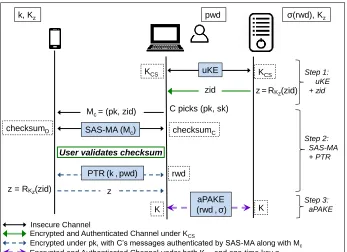
Fig. 2: Schematic Representation of ProtocolOpTFAof Fig. 3
D responds with b = ak, and C computes rwd = H(x, b1/r). Under the
One-More (Gap) Die-Hellman (OM-DH) assumption in the Random Oracle Model (ROM), this scheme realizes a universally composable oblivious PRF (OPRF) [36], which in particular implies thatx=pwd is hidden from all observers and
functionFk(·)remains pseudorandom on all inputs which are not queried toD.
4
OpTFA
: A Practical Secure TFA-KE Protocol
In Section 5 we present and prove a general design, GenTFA, of a TFA-KE
protocol based on two generic components, namely, a SAS-MA and DE-PAKE protocols. But rst, in this section, we show a practical instantiation ofGenTFA
using the specic building blocks presented in Section 3, namely, the SAS-MA scheme from Fig. 1 and the DE-PAKE scheme from [37] (that uses the DH-based PTR scheme described in that section composed with any asymmetric PAKE). This concrete instantiation serves as the basis of our implementation work (Section 6) and helps explaining the rationale of our general construction.
OpTFAis presented in Figure 3. A schematic representation is shown in Figure 2.
Enhanced TFA via SAS. Before going into the specics of OpTFA, we
Components: In addition to the SAS-MA, PTR and aPAKE tools introduced in Sec. 3,OpTFAuses an unauthenticated KE (uKE) protocol, a PRFR, a CCA-secure public key encryption scheme(KG,Enc,Dec), and a MAC function.
Initialization:
1. On input the user's passwordpwd, pick randomkinZq and setrwd=Fk(pwd) = H(pwd,(H0(pwd))k);
2. Initialize the asymmetric PAKE scheme aPAKE on inputrwdand letσdenote the
user's state at the server.
3. Choose random keyKz for PRFR, and setzidSetto the empty set; 4. Give(k, Kz,zidSet)toDand(σ, Kz)toS.
Login step I (C-S uKE+ zidgeneration):
1. SandCrun a (unauthenticated) key exchangeuKEwhich establishes session key
KCS between them;
2. Sgenerates randomκ-bit noncezid, computesz ←R(Kz, zid), and sendszidto
Cauthenticated under keyKCS.
Login step II (C-D SAS-MA + PTR):
1. Cgenerates PKE key pair (sk,pk) ←KG,t-bit random value RC, κ-bit random
valued, and randomrinZq.Cthen computesa←H0(pwd)r,MC←(pk, zid, a),
Com←Hcom(MC, RC, d), and sends(MC,Com)toD;
2. Don((pk, zid, a),Com), aborts ifzid∈zidSet, otherwise it addszidtozidSetand sends randomt-bit valueRDtoC.
3. CreceivesRD, computeschecksumC ←RC⊕RD, sends (RC, d)to D, and inputs
checksumC into theC-to-DSAS channel.
4. DcomputeschecksumD←RC⊕RDand upon receiving checksumC on theC-to-D
SAS channel, it checks ifchecksumC = checksumD and Com =Hcom(MC, RC, d)
and aborts if not. OtherwiseDcomputesb←ak andz ←R(Kz, zid), and sends eD←Enc(pk,(z, b))toC.
5. Ccomputes(z, b)←Dec(sk, eD)andrwd←H(pwd, b1/r) [=Fk(pwd)], and aborts
ifDecoutputs⊥.
Login step III (C-SaPAKE over Authenticated Link):
1. Cand Srun protocol aPAKE on resp. inputsrwdandσ with all aPAKE messages
authenticated by keysz and KCS (each key is used to compute a MAC on each
aPAKE message).
Each party aborts and sets local output to⊥if any of the MAC verications fails. 2. The nal output ofCandSequals their outputs in the aPAKE instance: either a
session keyKor a rejection sign⊥.
traditional TFA schemes, a PIN is displayed to the user who copies it into a login screen to prove access to that PIN. As discussed in the introduction, this mecha-nism suers of signicant weaknesses mainly due to the low entropy of PINs (and inconvenience of copying them). We suggest automating the transmission of the PIN over a condential channel from device Dto client C. To implement such
channel, we use the SAS-SMT scheme from Sec. 3 where security boils down to having D and C display t-bit strings (checksums) that the user checks for equality. In this way, low-entropy PINs can be replaced with full-entropy values (we refer to them as one-time keys (OTK)) that are immune to eavesdropping and bound active attacks to a success probability of 2−t. These active attacks
are impractical even fort= 20(more a denial-of-service than an impersonation
threat) and with largert's as illustrated in Sec. 6 they are just infeasible. Note that this approach works with any form of generation of OTK's, e.g., time-based mechanisms, challenge-response between device and server, etc.
4.1 OpTFA Explained
Protocol OpTFA(Fig. 3) requires several mechanisms that are necessary to
ob-tain the strong security bounds of the TFA-KE model. To provide rationale for the need of these mechanisms we show how the protocol is built bottom-up to de-liver the required security properties. We stress that while the design is involved the resultant protocol is ecient and practical. The presentation and discussion of security properties here is informal but the intuition can be formalized as we do via the TFA-KE model (Sec. 2), the generic protocolGenTFAin next section
and the proof of Theorem 1.
In general terms,OpTFAcan be seen as a DE-PAKE protocol using the PTR
scheme from Sec. 3 and enhanced with fresh OTKs transmitted from D to C
via the above SAS-SMT mechanism. The OTK is generated by the device and server for each session and then included in the aPAKE interaction betweenC
andS. We note thatOpTFAtreats aPAKE generically, so any such scheme can
be used. In particular, we start by illustrating howOpTFAworks with the
stan-dard password-over-TLS aPAKE, and then generalize to the use of any aPAKE, including PKI-free ones.
• OpTFA0.0. This is standard password-over-TLS where the user's password is
transmitted fromCto Sunder the protection of TLS.
• OpTFA 0.1. We enhance password-over-TLS with the OTK-over-SAS
mecha-nism described above. First,Ctransmits the user's password toSover TLS and
if the password veries atS,Ssends a noncezidtoCwho relays it toD. On the
basis ofzid(which also acts as session identier in our analysis),Dcomputes a
OTK z =RKz(zid) where Ris a PRF and Kz a key shared betweenD andS. D transmitsz to Cover the SAS-SMT channel and Crelays it to S over TLS.
The user is authenticated only if the received value z is the same as the one computed byS.
advantage of an active attacker to a probability of 2−t for SAS checksums of
lengtht. However, the scheme is open to online password attacks (as in current commonly deployed schemes) because the attacker can try online guesses without having to deal with the transmission of OTKz. In addition, it oers no security against oine dictionary attacks upon server compromise.
• OpTFA 0.2. We change OpTFA 0.1 so that the user's password pwd is only
transmitted to S at the end of the protocol together with the OTK z (it is important that if z does not verify as the correct OTK, that the server does not reveal if pwd is correct or not). This change protects the protocol against
online guessing attacks and reduces the probability of the successful testing of a candidate password to2−(d+t) rather than2−d in version 0.1.
• OpTFA 0.3. We add defense against oine dictionary attacks upon server
compromise by resorting to the DE-PAKE construction of [37] and, in particular, to the password-to-random hardening procedure PTR from Sec. 3. For this, we now assume that the user has a master password pwd that PTR converts into
randomized passwordsrwdfor each user account. By registeringrwdwith server S and using PTR for the conversion, DE-PAKE security ensures that oine
dictionary attacks are infeasible even if the server is compromised (case (3) in Def. 1). Note that the PTR procedure runs between D and C following the
establishment of the SAS-SMT channel.
• OpTFA 0.4. We change the run of PTR between D and C so that the value
a computed by C as part of PTR is transmitted over the SAS-authenticated
channel from Cto D. Without this authentication the strict bound of case (3)
in Def. 1 (simplied for qC0 = 0), namely, AdvTFAA ≤ qD/2d+t+ upon server
compromise, would not be met. Indeed, when the attacker compromises server
S, it learns the keyKz used to compute the OTKz so the defense provided by
OTK is lost. So, how can we still ensure the2tdenominator in the above bound
expression? The answer is that by authenticating the PTR value aunder SAS-MA, the attacker is forced to run (expected) 2t sessions to be able to inject its
own valueaover that channel. Such injection is necessary for testing a password guess even when Kz is known. When considering a password dictionary of size
2d this ensures the denominator2d+tin the security bound.
• OpTFA 0.5. We add the following mechanism to OpTFA: Upon initialization
of an authentication session (for a given user),Cand Srun an unauthenticated
(a.k.a. anonymous) key exchangeuKE(e.g., a plain Die-Hellman protocol) to
establish a shared keyKCSthat they use as a MAC key applied to all subsequent
OpTFA messages. To see the need foruKEassume it is omitted. For simplicity,
consider the case where attackerAknows the user's password. In this case, allA
needs for impersonating the user is to learn one value ofzwhich it can attempt by acting as a man-in-the-middle on theC-Dchannel. AfterqDsuch attempts,A
has probability ofqD/2tto learnzwhich together with the user's password allows
Ato authenticate toS. In contrast, the bound required by Def. 1 in this case is
the strictermin{qS, qD}/2t. This requires that for each attempt at learningzin
theC-Dchannel, not onlyAneeds to try to break SAS-MA authentication but
channel. It ensures that a responsezto a valuezidsent bySover auKEsession
will only be accepted byS if this response comes back on the sameuKEsession
(i.e., authenticated with the same keys used byS to send the challengezid). It means that both zidandz are exchanged with the same party. If zidwas sent to the legitimate user then the attacker, even if it learns the corresponding z, cannot use it to authenticate back to S. We note that uKE is also needed in
the case that the attacker does not know the password. Without it, the success probability for this case is about a factor2d/q
Shigher than acceptable by Def. 1.
Note. When all communication betweenCandSgoes over TLS, there is no need
to establish a dedicateduKEchannel; TLS serves as such.
• OpTFA 0.6. We stipulate that D never responds twice to the samezidvalue (for this,Dkeeps a stash of recently seen zid's; older values become useless to the attacker once they time out at the server). Without this mechanism the attacker gets multiple attempts at learningzfor a single challengezid. However, this would violate bound (1) (for the caseqC=q0C= 0)min{qS, qD}/2d+twhich
requires that each guess attempt at z be bound to the establishment of a new session of the attacker withS.
•OpTFA0.7. Finally, we generalizeOpTFAso that the password protocol run as
the last stage ofOpTFA(after PTR generatesrwd) can be implemented with any
asymmetric aPAKE protocol, with or without assuming PKI, using the server-specic user's passwordrwd. As shown in [37], running any aPAKE protocol on
a passwordrwdproduced by PTR results in a DE-PAKE scheme, a property that
we use in an essential way in our analysis.
We need one last mechanism forCto prove knowledge ofz toS, namely, we
specify that bothCandSusezas a MAC key to authenticate the messages sent by protocol aPAKE (this is in addition to the authentication of these messages with key KCS). Without this, an attack is possible where in case that OpTFA
fails the attacker learns if the reason for it was an aPAKE failure or a wrongz. This allows the attacker to mount an online attack on the password without the attacker having to learn the OTK. (When the aPAKE is password-over-TLS the above MAC mechanism is not needed, the same authentication eect is achieved by encryptingrwdandz under the same CCA-secure ciphertext [33].)
• OpTFA. Version 0.7 constitutes the full specication of theOpTFA protocol,
described in Fig. 3, with generic aPAKE.
Performance: The number of exponentiations inOpTFAis reported in the
intro-duction; implementation and performance information is presented in Section 6.
OpTFA Security. Security of OpTFA follows from that of protocol GenTFA
becauseOpTFAis its instantiation. See Theorem 1 in Section 5 and Corollary 1.
5 The Generic
GenTFA
Protocol
In Figure 4 we show protocolGenTFAwhich is a generalization of protocolOpTFA
secure DE-PAKE and SAS-MA schemes into a secure TFA-KE. It uses the same uKE and CCA-PKE tools as protocolOpTFA, but it also generalizes two other
mechanisms used in OpTFA as, resp. a generic symmetric Key Encapsulation
Mechanism (KEM) scheme and an Authenticated Channel (AC) scheme. A Key Encapsulation Mechanism, denoted(KemE,KemD)(see e.g. [49]),
al-lows for encrypting a random session key given a (long-term) symmetric keyKz,
i.e., if(zid, z)←KemE(Kz)thenz←KemD(Kz, zid). A KEM is secure if keyz
corresponding to zid6∈ {zid1, ..., zidq} is pseudorandom even given the keys zi
corresponding to allzidi's. In protocolOpTFAof Figure 3, KEM is implemented
using PRFR:zidis a randomκ-bit string andz=R(Kz, zid). We also generalize
the usage of the MAC function inOpTFAas an Authenticated Channel, dened
by a pair ACSend,ACRec, which implements bi-directional authenticated
com-munication between two parties sharing a symmetric keyK [29, 34]. Algorithm
ACSend takes inputs keyK and message mand outputsmwith authentication tag computed with key K, while the receiver procedure,ACRec(K,·), outputs
either a message or the rejection symbol ⊥. We assume that the AC scheme is stateful and provides authenticity and protection against replay.
The security of GenTFAis stated in the following theorem:
Theorem 1. Assuming security of the building blocks DE-PAKE, SAS, uKE, PKE, KEM, and AC, protocolGenTFAis a (T, )-secure TFA-KE scheme for upper bounded by
DEPAKE+n·(SAS+uKE+PKE+KEM+ 6AC) +n2/2κ
forn=qHbC+ max(qS, qD, qC, q0C)where qHbC denotes the number ofGenTFA
protocol sessions in which the adversary is only eavesdropping, and each quantity of the form P is a bound on the advantage of an attacker that works in time
≈T against the protocol building block P.
As a corollary we obtain a proof of TFA-KE security for protocol OpTFA
from Fig. 3 which uses specic secure instantiations of GenTFA components.
The corollary follows by applying the result of Vaudenay [51], which implies in particular that the SAS-MA scheme used inOpTFA is secure in ROM, and the
result of [37], which implies that the DE-PAKE used in OpTFAis secure under
the OM-DH assumption if the underlying aPAKE is a secure asymmetric PAKE. We note that protocolOpTFAoptimizesGenTFAinstantiated with the
DE-PAKE of [37] by piggybacking theC-Dround of communication in that protocol,
a=H0(pwd)r and b=ak, onto resp. C's message MC and the plaintext in D's
ciphertexteD. The security proof extends to this round-optimized case because
SAS-MA authentication ofMC and CCA-security of PKE bind DE-PAKE
mes-sages a, b to this session just as the ACSend(KCD,·) mechanism does in
(non-optimized) protocolGenTFA.
Corollary 1. Assuming that aPAKE is a secure asymmetric PAKE,uKE is
se-cure Key Exchange, (KG,Enc,Dec)is a CCA-secure PKE, Ris a secure PRF,
and MAC is a secure message authentication code, protocol OpTFA is a secure
Initialization: Given the user's passwordpwd, we initialize the DE-PAKE scheme onpwd. Letkandσbe the resulting user-specic states stored at resp.DandS. LetKz be a random KEM key. LetzidSet be an empty set.Dis initialized with (k, Kz,zidSet)andSis initialized with(σ, Kz).
Login step I (C-SKE + KEM generation):
1. SandCcreate shared keyKCSusing a (non-authenticated) key exchangeuKE. 2. Sgenerates(zid, z)←KemE(Kz), setseS←ACSend(KCS, zid), and sendseS
toC, who computeszid←ACRec(KCS, eS), or aborts if decryption fails.
Login step II (C-DSAS-MA + KEM decryption):
1. Cgenerates a PKE key pair(sk,pk)←KG, sendsMC= (pk, zid)toD, andC
andDrun SAS-MA to authenticateMCusing thet-bitC-to-DSAS channel.
2. D aborts if zid ∈ zidSet or if the SAS scheme fails. Otherwise, D adds zid
to zidSet, computes z ← KemD(Kz, zid), picks a random MAC key KCD,
computeseD←Enc(pk,(z, KCD))and sendseD toC.
3. Ccomputes(z, KCD)←Dec(sk, eD)(aborts if⊥).
Login step III (DE-PAKE over Authenticated Links):
C,D, andSrun DE-PAKE on resp. inputspwd,k, andσ, modied as follows:
(a) All communication betweenDandSis routed throughC.
(b) Communication between Cand Dgoes over a channel authenticated by key
KCD, i.e. it is sent via ACSend(KCD,·) and received via ACRec(KCD,·), Either party aborts if itsACRecever outputs⊥.
(c) Communication betweenCandSgoes over a channel authenticated by keyz
and then the result of that is sent over a channel authenticated by keyKCS, i.e. it
is sent viaACSend(KCS,ACSend(z,·))and received viaACRec(KCS,ACRec(z,·)). Each party aborts and sets local output to⊥if itsACRecinstance ever outputs⊥. The nal outputs ofCandSare their respective outputs in this DE-PAKE instance, either session keyKor a rejection⊥.
Fig. 4: Generic TFA-KE Scheme: ProtocolGenTFA
Security denition of SAS authentication. For the purpose of the proof be-low we state the security property assumed of a SAS-MA scheme which was infor-mally described in Section 3. While [51] denes the security of SAS-MA using a game-based formulation, here we do it via the following (universally composable) functionalityFSAS[t]: On input a message[SAS.SEND,sid, P0, m]from an honest
partyP, functionality FSAS[t] sends[SAS.SEND,sid, P, P0, m] to A, and then, if
ρ= 1thenFSAS[t] sendssucctoAand[SAS.SEND,sid, P, m0]toP0, and ifρ= 0 thenFSAS[t] sendsfailtoAand[SAS.SEND,sid, P,⊥]toP0.
In our main instantiation of the generic protocolGenTFAof Figure 4, i.e. in
protocolOpTFAof Figure 3, we instantiate SAS-MA with the scheme of [51], but
even though the original security argument given for it in [51] used the game-based security notion, it is straightforward to adopt this argument to see that this scheme securely realizes the above (universally composable) functionality. Proof of Theorem 1. Let A be an adversary limited by time T playing the TFA-KE security game, which we will denoteG0, instantiated with the TFA-KE
schemeGenTFA. Let the security advantage dened in Denition 1 for adversary A satisfyAdvTFAA =. Let ΠS
i, ΠjC, ΠlD refer to respectively thei-th, j-th, and
l-th instances ofS,C, andDentities whichAstarts up. Lettbe the SAS channel capacity, κthe security parameter, qS, qD, qC, q0C the limits on the numbers of
rogue sessions ofS,D,Cwhen communicating withS, andCwhen
communicat-ing withD, and let qHbC be the number of GenTFAprotocol sessions in which
Aplays only a passive eavesdropper role except that we allowAto abort any of
these protocol executions at any step. Let nS =qS+qHbC, nD =qD+qHbC,
nC =qC+qC0 +qHbC, and note that these are the ranges of indexes i, j, l for
instancesΠiS,ΠjC, and ΠlD. We will use[n]to denote range{1, ..., n}.
The security proof goes by cases depending on the type ofcorrupt queries A makes. In all cases the proof starts from the security-experiment game G0 and proceeds via a series of game changes,G1,G2, etc, until a modied gameGi
allows us to reduce an attack on the DE-PAKE with the same corruption pattern (except in the case of corrupt client C) to the attack onGi. In the case of the
corrupt client the argument is dierent because it does not rely on the underlying DE-PAKE (note that DE-PAKE does not provide any security properties in the case of client corruption). In some game changes we will consider a modied adversary algorithm, for example an algorithm constructed from the original adversaryAinteracting with a simulator of some higher-level procedure, e.g. the
SAS-MA simulator. Wlog, we useAi for an adversary algorithm in gameGi.
We will use pi to denote the probability that Ai interacting with game Gi
outputsb0 s.t.b0 =b whereb is the bit chosen by the game on the test session. Recall that whenAmakes the test session querytest(P, i), forP ∈ {S,C}, then, assuming that instance ΠP
i produced a session key sk, game G0 outputs that session key if b = 1or produces a random string of equal size if b = 0(and if
sessionΠP
i did not produce the key thenG0outputs⊥regardless of bitb). Note that by assumptionAdvTFAA =we have thatp0= 1/2 + 1/2·AdvTFAA = 1/2 +/2.
Case 1: No party is compromised. This is the case whenAmakes nocorrupt
queries, i.e. it's the default network adversary case. Below we describe only the game changes in the proof, and we state what we claim about the eects of that game change and what assumption we use. The full details of the proof are included in Appendix B.
GameG1: LetZbe a random function which maps ontoκ-bit strings. If(zidi, zi)
dentes the KEM (ciphertext,key) pair generated by ΠS
Z(zidi) instead of using KemE, and we abort if there is ever a collision in zi
values. Security of KEM implies thatp1≤p0+KEM(nS) +n2S/2κ.
GameG2: Here we replace the SAS-MA procedure with the simulator SIMSAS
implied by the UC security of the SAS-MA scheme of [51]. In other words, when-ever ΠC
j and ΠlD execute the SAS-MA sub-protocol, we replace this execution
with a simulatorSIMSASinteracting withAand the ideal SAS-MA functionality FSAS[t]. For example,ΠjC, instead of sendingMC= (pk, zid)toA1and starting a SAS-MA instance to authenticate MC to D, will send [SAS.SEND,sid, ΠlD,MC]
to FSAS[t], which triggers SIMSAS to start simulating to Athe SAS-MA protocol
on input MC betweenΠjC andΠlD. The rules ofFSAS[t] imply thatAcan make this connection either succeed, abort, or, if it attacks it thenΠD
l will abort with
probability 1−2−t, but with probability 2−t it will accept A's message MC∗
instead ofMC. Security of SAS-MA implies thatp2≤p1+ min(nC, nD)·SAS.
GameG3: Here we re-name entities involved in game G2. Note that adversary A2 interacts with G2 which internally runs algorithms SIMSAS and FSAS[t], and
thatSIMSASinteracts only withFSAS[t] on one end andA2 on the other. We can therefore draw the boundaries between the adversarial algorithm and the se-curity game slightly dierently, by considering an adversaryA3 which executes the steps of A2 and SIMSAS, and a security game G3 which executes the rest of game G2, including the operation of functionalityFSAS[t]. In other words,G3 interacts with A3 using theFSAS[t] interface toSIMSAS, i.e. G3sends to A3 mes-sages of the type [SAS.SEND,sid, ΠC
j, ΠlD,MC], andA3's response must be one
of [SAS.CONNECT,sid], [SAS.ABORT,sid], and[SAS.ATTACK,sid,MC∗]. Since
we are only re-drawing the boundaries between the adversarial algorithm and the security game, we have that p3=p2.
GameG4: Here we change gameG3s.t. ifAsends[SAS.CONNECT,sid]to let the SAS-MA instance go through betweenΠC
j andΠlDwithMCcontainingΠjC's key
pk, then we replace the ciphertexteDsubsequently sent byΠlD by encrypting a
constant string instead ofEnc(pk,(z, KCD)), and ifApasses thiseDtoΠjC then
it decrypts it as (z, KCD)generated by ΠlD. In other words, we replace the
en-cryption under SAS-authenticated keypkby a magic delivery of the encrypted
plaintext. The CCA security of PKE implies thatp4≤p3+ min(nC, nD)·PKE.
GameG5: Here we abort if, assuming that key pk and ciphertext eD were
ex-changed between ΠC
j and ΠlD correctly, any party accepts wrong messages in
the subsequent DE-PAKE execution authenticated byKCD created byΠlD. The
authentic channel security implies thatp5≤p4+ min(nC, nD)·AC.
GameG6: We perform some necessary cleaning-up, and abort if the SAS-MA
instance betweenΠC
j andΠlD)sent MC correctly, but adversary did not deliver
ΠlD's responseeDback toΠjCand yetΠ
D
l did not abort in subsequent DE-PAKE.
Since this wayΠjChas no information about keyKCDwe getp6≤p5+qD·AC.
GameG7: We replace the keys created byuKE for everyΠS
i-ΠjC session in step
I.1 on which A was only an eavesdropper, with random keys. Security of uKE
At this point the game has the following properties: IfA is passive on the C-Skey exchange in step I thenAis forced to be passive on theC-Slink in the
DE-PAKE in step III. Also, if Adoes not attack the SAS-MA and deliversD's
response to Cthen Ais forced to be passive on the C-Dlink in the DE-PAKE
in step III (and ifAdoes not deliverD's response toCthen thisDinstance will
abort too). The remaining cases are either (1) active attacks on the key exchange in step I or (2) when Aattacks the SAS-MA sub-protocol and getsDto accept MC∗ 6=MCor (3)Asendse∗D6=eD toC. In handling these cases the crucial issue
is whatAdoes with the zidcreated byS. Consider anySinstanceΠiS in which the adversary interferes with the key exchange protocol in step I.1. Without loss of generality assume that the adversary learns key KCS output by ΠiS in this
step. Note thatDkeeps a variablezidSetin which it stores allzidvalues it ever receives, and that D aborts if it sees any zid more than once. Therefore each game execution denes a 1-1 functionL: [nS]→[nD]∪ {⊥}s.t. ifL(i)6=⊥then
L(i)is the unique index in[nD]s.t.ΠLD(i)receivesMC= (pk, zidi)in step II.1 for
some pk, andL(i) =⊥if and only if no Dsession receives zidi. IfL(i)6=⊥then
we consider two cases: First, if MC = (pk, zidi) which contains zidi originates
with some sessionΠC
j, and second ifMC= (pk, zidi)is created by the adversary.
GameG9: LetΠS
i andΠjC be rogue sessions s.t.A sendszidi to ΠjC in step I.2,
but then stop ΠC
j from getting the correspondingzi by either attacking
SAS-MA or misdelivering D's response eD. In that case neitherΠjC norA have any
information about zi, and therefore ΠiS should reject. Namely, if in G9 we set ΠS
i's output to⊥in such cases thenp9≤p8+qS·AC.
GameG10: LetΠiS and ΠjC be rogue sessions andA send zidi toΠjC as above,
but now consider the case thatAlets ΠjC learnzi butAdoes not learnzi itself,
i.e. A lets SAS-MA and eD go through. In this case we will abort if in
DE-PAKE communication in Step III between ΠiS and ΠjC either party accepts a message not sent by the other party. Since A has no information aboutzi the
authenticated channel security implies that p10≤p9+ min(qC, qS)·AC.
Note that at this point if A interferes with the KE in step I.1 with
ses-sion ΠiS, sends zidi to someΠjC and does not send it to some Π
D
l by sending
[SAS.ATTACK,sid,(pk∗, zidi)] for any l then Ais forced to be a passive
eaves-dropper on the DE-PAKE protocol in step III. Note that this holds whenL(i) =l s.t. the game issues[SAS.SEND,sid, ΠC
j, ΠlD,(pk, zidi)]for somepk, i.e. if some
ΠlD receives valuezidi, it receives it as part of a messageMC sent by someΠjC.
GameG11: Finally consider the case when A itself sends zidi to D, i.e. when
L(i) = l s.t. A sends [SAS.ATTACK,sid,MC∗ = (pk∗, zidi)] in response to
[SAS.SEND,sid, ΠjC, ΠlD,MC], but theFSAS[t] coin-toss comes out ρl = 0, i.e. A
fails in this SAS-MA attack. In that case we can letΠS
i abort in step III because
ifρl= 0thenAhas no information aboutzi =Z(zidi), hencep11≤p10+qS·AC.
After these game changes, we nally make a reduction from an attack on underlying DE-PAKE to an attack on TFA-KE. Namely, we constructA∗which
toCon its connection withD, whereq∗S=q∗D=q∗whereq∗is a random variable equal to the sum ofq= min(qS, qD)coin tosses which come out1with probability
2−tand0with probability1−2−t. Recall thatAdvTFA
A = 2·(p0−1/2)and that by the game changes above we have that|p11−p0|is a negligible quantity, and henceAdvDEPAKEA∗ is negligibly close toAdv
TFA
A .
The reduction goes through because after the above game-changes A can
either essentially let a DE-PAKE instance go through undisturbed, or it can attempt to actively attack the underlying DE-PAKE instance either via a rogue
Csession or via rogue sessions with deviceSand serverD. However, each rogue Dsession is bound to a unique rogueSsession, because of the uKE and(zid, z)
mechanism, and for each such D,S session pair, the probability that an active
attack is not aborted is only 2−t. This implies that the(qS, qD, qC)parameters
characterizing the TFA-KE attackerAscale-down to(qS/2t, qD/2t, qC)
parame-ters for the resulting DE-PAKE attackerA∗, which leads to the claimed security
bounds by the security of DE-PAKE. The details of construction forA∗and the
above argument are included in Appendix B
Case 2: Party corruptions. In the forthcoming revision of this paper we will include formal security proofs for the cases of client corruption and of device and/or server corruption, showing that our scheme achieves all the bounds from Denition 1. Here we just comment on how these bounds are derived. For the case of device corruption, the valuezis learned by the attacker hence it is equivalent to setting t = 0. Also, rogue queries to Dare free for the attacker hence qD is
virtually unbounded (can think of it as "innity"). Setting these values in the bound of Case 1, one obtains the claimed bound (qC+qS)/2d for the case of
device corruption. Similarly, in case of server corruption one setsqSto "innity".
In addition, and in spite of the attacker learning z in this case, one obtains a bound involving 2−t thanks to the fact that we run the PTR protocol over the
SAS channel, hence reducing the probability of the attacker successfully testing a candidate password pwd0 by2−t. In the case of client compromise where the
attacker learns the user's password pwd, we set d= 0 (a dictionary of size 1)
and set qC =qC0 = 0 sinceCis corrupted and the attacker cannot choose a test
session at C. Finally, when both D and S (but not C) are corrupted one gets
the same security as plain DE-PAKE, namely, requiring a full oine dictionary attack to recoverpwd.
6 System Development & Testing
Here we report on an experimental prototype of protocolOpTFAfrom Figure 3
on page 12 and present novel designs for the SAS channel implementation. We ex-periment withOpTFAusing two dierent instantiations of the password protocol
betweenCandS. One is PKI-based that runsOpTFAover a server-authenticated
TLS connection; in particular, it uses this connection in lieu of the uKEin step
I and implements step III by simply transmitting the concatenation of password
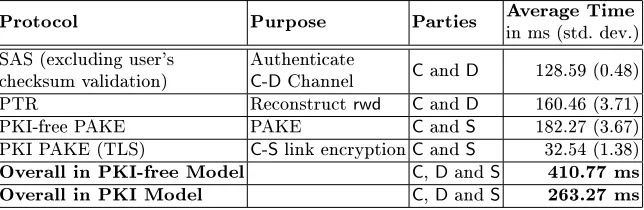
Table 1: Average execution time ofOpTFAand its components (10,000 iterations)
Protocol Purpose Parties Average Timein ms (std. dev.) SAS (excluding user's
checksum validation) AuthenticateC-DChannel CandD 128.59 (0.48)
PTR Reconstructrwd CandD 160.46 (3.71)
PKI-free PAKE PAKE CandS 182.27 (3.67)
PKI PAKE (TLS) C-Slink encryptionCandS 32.54 (1.38)
Overall in PKI-free Model C,DandS 410.77 ms
Overall in PKI Model C,DandS 263.27 ms
27]. Roughly, it runs the same PTR protocol as described in Section 3 but this time betweenCandS.C's input isrwdand the resultFk(rwd)serves as a user's
private key for the execution of an authenticated key-exchange betweenCandS.
We implement the latter with HMQV [41] (as an optimization, the DH exchange used to implementuKEin step I ofOpTFA is reused" in HMQV).
In Table 1 we provide execution times for the various protocol components, including times for the TLS-based protocol and the PKI-free one with some elements borrowed from the implementation work from [37]. We build on the following platform. The webserver S is a Virtual Machine running Debian 8.0
with 2 Intel Xeon 3.20GHz and 3.87GB of memory. Client terminalCis a
Mac-Book Air with 1.3GHz Intel Core i5 and 4GB of memory. DeviceDis a Samsung
Galaxy S5 smartphone running Android 6.0.1.CandDare connected to the same
WiFi network with the speed of 100Mbps andShas Internet connection speed of
1Gbps. The server side code is implemented in HTML5, PHP and JavaScipt. On the client terminal, the protocol is implemented in JavaScript as an extension for the Chrome browser and the smartphone app in Java for Android phones.
All DH-based operations (PTR, key exchange and SAS-SMT encryption) use elliptic curve NIST P-256, and hashing and PRF use HMAC-SHA256. Hashing into the curve is implemented with simple iterated hashing till an abscissa x on the curve is found (it will be replaced with a secure mechanism such as [26]).
Communication betweenCandSuses a regular internet connection between
the browserCand web server S. Communication between CandD (except for
checksum comparison) goes over the internet using a bidirectional Google Cloud Messaging (GCM) [5], in which D acts as the GCM server and C acts as the
GCM client. GCM involves a registration phase during which GCM client (here
C) registers with the GCM generated client ID to the GCM server (hereD), to
assure that D only responds to the registered clients. In case that the PAKE
protocol in OpTFA is implemented with password-over-TLS, [37] species the
need for Dto authenticate the PTR valueb sent toC(see Sec. 3). In this case,
6.1 Checksum Validation Design
An essential component in our approach and solutions (in particular in protocol
OpTFA) is the use of a SAS channel implemented via the user-assisted
equal-ity verication of checksums displayed by both Cand D (denoted hereafter as checksumC andchecksumD, resp.). Here we discuss dierent implementations of
such user-assisted verication which we have designed and experimented with. Manual Checksum Validation. In the simplest approach, the user compares the checksums displayed on D and C and taps the Conrm button on D in
case the two match [50]. Although, this type of code comparison has recently been deployed in TFA systems, e.g., [8], it carries the danger of neglectful users pressing the conrm button without comparing the checksum strings. Another common solution for checksum validation is Copy-Conrm [50] where the user types the checksum displayed onCintoD, and only if this matchesD's checksum
doesDproceeds with the protocol. We implemented this scheme using a 6 digit
number. We stress that in spite of the similarity between this mechanism and PIN copying in traditional TFA schemes, there is an essential security dierence: Stealing the PIN in traditional schemes suces to authenticate instead of the user (for an attacker that holds the user's password) while stealing the checksum value entered by the user inOpTFA is worthless to the attacker (the checksum
is a validation code, not the OTK value needed for authentication).
The above methods using human visual examination and/or copying limit the SAS channel capacity (typically to 4-6 digits) and may degrade usability [47]. As an alternative we consider the following designs (however one may fallback to the manual schemes when the more secure schemes below cannot be used, e.g., missing camera or noisy environments).
QR Code Checksum Validation. In this checksum validation model, we en-code the full, 256-bit checksum computed in protocol OpTFA into a hexstring
and show it as a 230×230 pixel QR Code on the web-page. We used ZXing
library to encode the QR code and display it on the web page and read and de-code itD. To send the checksum toD, the user opens the app onDand captures
the QR code. D decodes the QR code and compares checksums, and proceeds
with the protocol if the match happens. In this setting, the user does not need to enter the checksum but only needs to hold her phone and capture a picture of the browser's screen. With the larger checksum (t = 256) active attacks on
SAS-SMT turn infeasible and the expressions2−tin Denition 1) negligible.
Voice-based Checksum Validation. We implement a voice-based checksum validation approach that assumes a microphone-equipped device (typically a smartphone) where the user speaks a numerical checksum displayed by the client into the device. The deviceD receives this audio, recognizes and transcribes it
using a speech recognition tool, and then compares the result with the checksum computed byDitself. The client side uses a Chrome extension as in the manual
The transcriber application in D recognizes the speech and convert it to text
that is then compared toD's checksum. To further improve the usability of this
approach one can incorporate a text-to-speech tool that would speak the check-sum automatically (i.e., replacing the user). The transcription approach would perhaps be easy for the users to employ compared to the QR-based approach, but would only be suitable if the user is in an environment that is non-noisy and allows her to speak out-loud. We note that the QR-code and audio-based approaches do not require a browser plugin or add-on and can be deployed on any browser with HTML5 support.
Performance Evaluation. As preliminary information, we report on 30 check-sum validation iterations performed by one experimenter. The time taken by manual checksum validation was 8.50s on average (standard deviation 2.84s). The time taken by QR-Coded validation was 4.87s on average for capturing the code (standard deviation 1.32s) and 0.02s on average for decoding the code (standard deviation 0.00s). The time taken by audio-based validation was 4.08s on average for speaking the checksum (standard deviation 0.34s) and 1.18s on average for transcribing the spoken checksum (standard deviation 0.42s). The average time for these tasks may vary between dierent users. The time taken by the device to perform the checksum comparison is negligible. Our preliminary testing of these two channels shows virtually-0 error rate.
7 Discussion of Related Work
Device-enhanced password-authentication with security against oine dictionary attacks (ODA). There are several proposals in cryptographic lit-erature for password authentication schemes that utilize an auxiliary computing component to protect against ODA in case of server compromise. This was a context of the Password Hardening proposal of Ford-Kaliski [31], which was generalized as Hidden Credential Retrieval by Boyen [27], and then formalized as (Cloud) Single Password Authentication (SPA) by Acar et al. [23] and as a Device-Enhanced PAKE (DE-PAKE) by Jarecki et al. [37]. These schemes are functionally similar to a TFA scheme if the role of the auxiliary component is played by the user's deviceD, but they are insecure in case of password leakage
e.g. via client compromise.7The threat of an ODA attack on compromise of an authentication server also motivated the notion of Threshold Password Authenti-cated Key Exchange (T-PAKE) [44], i.e. a PAKE in which the password-holding server is replaced bynservers so that a corruption of up to t < nof them leaks no information about the password. In addition to general T-PAKE's, several
7 We note that [23] also show a Mobile Device SPA, which provides client-compromise