ISSN 2348 – 7968
Finding the Optimal Path Using MODBC
Mr.E.GurumoorthyP#1
P
, Ms.C.Jothi LakshmyP
*2
P
, Ms.S.RajiP *3
P
#
PAssistant Professor, Sri Manakula Vinayagar Engineering College, Madagadipet, Pondicherry India,
MCA, Sri Manakula Vinayagar Engineering College, Madagadipet, Pondicherry India
P 1 P [email protected] P * P
MCA, Sri Manakula Vinayagar Engineering College, Madagadipet, Pondicherry India
P 2 P [email protected] P 3 P [email protected] 29T
Abstract29T
—
In this paper, a multi-objective directed bee colonyoptimization algorithm (MODBC) is comprehensively developed and successfully applied for solving a multi-objective problem to optimize the economic to minimum cost with both equality and inequality constraints is showcased. Classical optimization techniques like direct search and gradient methods fail to give the global optimum solution. The proposed algorithm is an integration of the deterministic search, the multi-agent system (MAS) environment and the bee decision-making process. Thus making use of deterministic search, multi-agent environment and bee swarms, the MODBC realizes the purpose of optimization. The hybridization makes MODBC to obtain a unique and fast solution and hence generate a better pare to front for multi-objective problems. The previously used optimization algorithm are also discussed in this paper. The proposed algorithm is mainly used for decision making and it contains two methods. The decision making includes the food source is less than the number of bees or not. It shows the efficiency of bees using decision making. The various application are developed by using the Bee colony optimization are also discussed.
29T
Keywords29T
—
Swarm Intelligence (SI), Artificial Bee ColonyAlgorithm (ABC),Multi-Objective Directed Bee Colony Algorithm(MODBC),Particle Swarm Optimization Algorithm(PSO),Ant Colony Optimization(ACO).
1. INTRODUCTION
The Swarm Intelligence (SI) is the collective behaviour of self-organized systems in natural or artificial. The SI consists of a population of simple agents interacting locally with one another and with their environment. The agents follow very simple rules, and although there is no centralized control structure dictating how individual agents should behave, local and to certain degree random, interactions between such agents lead to the emergence of intelligent global behaviour, unknown to the individual agents. The example of SI includes Ant colonies, Bee colonies, Bird flocking, Animal herding, Bacterial growth and Fish Schooling. The definition of swarm
intelligence is still not quite clear. In principle, it should be a multi-agent system that has self-organized behaviour that shows some intelligent behaviour.
Particle Swarm Optimization (PSO) is a global optimization algorithm for dealing with problems in which a best solution can be represented as a point or surface in an n-dimensional space. Hypotheses are plotted in this space and seeded with an initial velocity, as well as a communication channel between the particles. The particles then move through the solution space and are evaluated according to some fitness criterion after each time step. Over time, particles are accelerated towards those particles within their communication grouping which have better fitness values. The main advantage of such an approach over other global minimization strategies such as simulated annealing is that the large numbers of members that make up the particle swarm make the technique impressive to the problem of local minima.
Ant Colony Optimization (ACO) is a class of optimization algorithms modelled on the actions of an ant colony. ACO is a probabilistic technique useful in problems that deal with finding better paths through graphs. Artificial ants locate optimal solutions by moving through a parameter space representing all possible solutions. Natural ants lay down pheromones directing each other to resources while exploring their environment. The simulated ants similarly record their positions and the quality of their solutions, so that in later simulation iterations more ants locate better solutions.
Artificial Bee Colony Algorithm (ABC) is a meta-heuristic algorithm and it simulates the foraging behaviour of honey bees. The ABC algorithm has three phases: Employed bee, Onlooker bee and Scout bee. In the employed bee and the onlooker bee phases, bees exploit the sources by local searches in the neighbourhood of the solutions selected based on deterministic selection in the employed bee phase and the probabilistic selection in the onlooker bee phase. In the scout bee phase which is an analogy of abandoning exhausted food sources in the foraging process, solutions that are not beneficial anymore for search progress are abandoned, and new solutions are inserted instead of them to explore new
regions in the search space. The algorithm is a well-balanced exploration and exploitation ability.
Bat Algorithm (BA) is a swarm-intelligence based algorithm, inspired by the echo location behaviour of micro bats. The BA uses a frequency-tuning and automatic balance of exploration and exploitation by controlling loudness and pulse emission rates.
Gravitational Search Algorithm (GSA) is based on the law of gravity and the notion of mass interactions. The GSA algorithm uses the theory of Newtonian physics and its searcher agents are the collection of masses. In GSA, there is an isolated system of masses. Using the gravitational force, every mass in the system can see the situation of other masses. In GSA, agents are considered as objects and their performance is measured by their masses. All these objects attract each other by a gravity force, and this force causes a movement of all objects globally towards the objects with heavier masses. The heavy masses correspond to good solutions of the problem.
2. HONEY BEE SWARMING
A new honey bee colony is formed when the queen bee leaves the colony with a large group of worker bees, a process called swarming. In the prime swarm, about 60% of the worker bees leave the original hive location with the old queen. Sometimes a beehive will swarm in succession until it is almost totally depleted of workers.
Swarming is the natural means of reproduction of honey bee colonies. Worker bees create queen cups throughout the year. When the hive gets ready to swarm the queen lays eggs into the queen cups. New queens are raised and the hive may swarm as soon as the queen cells are capped and before the new virgin queens emerge from their queen cells. A laying queen is too heavy to fly long distances. Therefore, the workers will stop feeding her before the anticipated swarm date and the queen will stop laying eggs.
When a honey bee swarm emerges from a hive they do not fly far at first. They may gather in a tree or on a branch only a few metres from the hive. It is from this temporary location that the cluster will determine the final nest site based on the level of excitement of the dances of the scout bees. Weak bee colonies can be the result of low food supply, disease such as Foulbrood Disease, or from a queen that produces low quantities of eggs.
2.1 Nest site selection
The scout bees are the most experienced foragers in the cluster. An individual scout returning to the cluster promotes a location she has found. She uses a dance similar to the waggle
dance to indicate direction and distance to others in the cluster. If she can convince other scouts to check out the location she found, they may take off, check out the proposed site and promote the site further upon their return. A swarm may fly a kilometre or more to the scouted location. This collective decision making process is remarkably successful in identifying the most suitable new nest site and keeping the swarm intact. A good nest site has to be large enough to accommodate the swarm, has to be well protected from the elements, receive a certain amount of warmth from the sun and not be infested with ants.
2.2 Bee’s Swarm Management
During the first year of a queen’s life the colony has little incentive to swarm, unless the hive is very crowded. Without beekeeper “Swarm Management” in the second year, the hive will cast a “prime swarm” and may cast one to five “after swarm”. The old queen will go with the prime swarm, and other swarms will be accompanied by virgin queens. It is considered good practice in beekeeping to reduce swarming as much as possible using several techniques. Allowing this form of reproduction often results in the loss of the more vigorous division. The remaining colony may be so depleted and set back due to the brood cycle interruption that it is unproductive for the season. Beekeepers control swarming prior to the natural swarm time. They may remove frames of brood comb making nucs (nucleus or starter colonies) or by shaking package bees (usually for sale) from hives.
3. BEES IN NATURE
A colony of honey bees can extend itself over long distances in multiple directions (more than 10 km). Flower patches with plentiful amounts of nectar or pollen that can be collected with less effort should be visited by more bees, whereas patches with less nectar or pollen should receive fewer bees.
The Scout bees search randomly from one patch to another. The bees who return to the hive, evaluate the different patches depending on certain quality threshold (measured as a combination).
ISSN 2348 – 7968
Fig 1: FINDING BEST FOOD SOURCE
They deposit their nectar or pollen go to the “dance floor” to perform a “waggle dance”. Bees communicate through this waggle dance which contains the following information: The direction of flower patches (angle between the sun and the patch). The distance from the hive (duration of the dance).The quality rating (fitness) (frequency of the dance).These information helps the colony to send its bees precisely.
Fig 2: WAGGLE DANCE
The Follower bees go after the dancer bee to the patch. The same patch will be advertised in the waggle dance again when returning to the hive is it still good enough as a food source (depending on the food level) and more bees will be recruited to that source. More bees visit flower patches with plentiful amounts of nectar or pollen.
3.1 Bee’s Decision Making Method
There are two methods are used by bee decision making for finding out the best nest site. They are quorum and consensus. The quorum sensing is a system of stimulus and response correlated to population density. Many species of bacteria use
quorum sensing to coordinate gene expression according to the density of their local population.
Some social insects use quorum sensing to determine where to nest. The quorum process in honey bees is similar to the method used by Temnothorax ants in several ways. It consists of the number of bees providing an optimized solution. The quorum threshold value is less than the optimal solution then that bee contains the best food site. The flowchart of the algorithm is shown in Fig 3, which briefly outlines all the steps involved in the proposed algorithm.
The consensus method is one of the decision making method for finding the best nest site optimal solution. The group decision-making process that seeks the consent of all participants. Consensus may be defined professionally as an acceptable resolution, one that can be supported, even if not the favourite of individual. In this method, each bee have the optimal solution then we can find the minimum global optimal solution. These also clearly explain in the flow chart as shown in fig 3.
4. Proposed MODBC optimization algorithm
The MODBC Algorithm is an optimisation algorithm inspired by the natural foraging behaviour of honey bees to find the optimal solution. The MODBC algorithm is given below:
The algorithm: MODBC food search algorithm:
1. Input: n: no of Colony Size 2. Input: xlb: Lower Bound 3. Input: xub: upper Bound 4. Input: bees: no of bees 5. Input: qmtd: quorum method 6. Input: cmtd: consensus method 7. Output: x: the best solution found 8. If(method==cmtd) then
9. //consensus method
10. Optimal solution = solution of all bees 11. Communicate solution through waggle dance. 12. Global optimal solution = Min ( Solution of all bees). 13. Goto step 25.
14. //Quorum method 15. Else
16. If i < bees then 17. Goto step 9 18. Else
19. Obtain optimum solution for each bee. 20. Communicate solution through waggle dance 21. If bee[i] < Quorum Threshold then
22. Global optimum solution = solution of iP th
P
bee 23. Else
24. Goto step 16 25. Stop
4.1 MODBC Algorithm Definition
The Number of colony size, Lower Bound, Upper Bound and the number of bees are assigned to that variables. The half of the colony size is assigned to Number of food source. If the Consensus decision making method is used then the employee bee phase execute for searching food source. The onlooker bees are wait for employee bees communication. Then the onlooker bees and the scout bees are going to search the food source. Each bee obtain the optimal solution. Finallay the minimum solution of all bees is assigned to the Global optimal solution.
If Quorum decision making method is used then, if the colony size is less than food source then the consensus method will execute to search the Global optimal solution. Otherwise the employee bees are send for finding the food source. The onlooker bees and scout bees are search after the exployee bee phase stopped. Each bee have obtain optimal solution. If the iP
th
P
bee solution is less than quorum threshold then the solution of iP
th
P
bee is assigned to Global optimal solution. If the iP th
P
bee solution is not less than quorum threshold then it starts from the quorum method.
4.2 Decision Making using MODBC
The Decision Making process used in MODBC algorithm has two methods.
4.2.1 Consensus
Each bee has some optimal solution, then they communication their solution through waggle dance. Then we find global optimal solution using minimum solution of all bees, finally we get the best optimal solution of all bees.
4.2.2 Quorum:
If the lower bound limit is less than the total number of bees than each bee then. Each bee has some optimal solution, then they communication their solution through waggle dance. Then we find global optimal solution using minimum solution of all bees, finally we get the best optimal solution of all bees. Otherwise, all the bees obtain the optimal solution then they communication their solution through waggle dance. If the current bee’s solution is less than Quorum threshold value then the optimal solution is current bees solution and it is the best and optimal solution of all bees.
If the optimal solution of current bees solution is not less than the Quorum Threshold value. Then it execute again starts from quorums method. Finally find the best and optimal solution from the global optimal solution.
4.3 Goals of MODBC
:
• The new optimization achieved by studying nature of bee behavior, then simplify to obtain general purpose optimization algorithm is one goal.
• The another one goal is, the experimental proof of the choice of parameters used in this algorithm are analyzed and reported. Two decision making methods are conducted in this algorithm.
• The decision making includes the food source is less than the number of bees or not. It shows the efficiency of bees using decision making.
The following figure shows the MODBC system in its simplest form.
ISSN 2348 – 7968
Fig 3: MODBC System
4.4 Impact of bee decision making on the
performance of MODBC
In quorum method, optimization is carried out at different values of quorum threshold. The algorithm has been tested for minimization of Rosen brock banana function. The number of bees used in exploration is chosen as 30 for each dimension. Initially consensus method is used which is then compared with different values of quorum threshold and results.
The result and performance of MODBC can be increased by switching between quorum and consensus method. One can choose any of the two methods for finding out the optimum solution. Choice of parameters includes quorum threshold and number of bees sent for exploration. MODBC gives two choices of parameters firstly, the number of bees sent for exploration.
More the number of bees more are the computational time taken for processing but with increased accuracy towards the
optimal result. Similar finding was obtained in experiments done by Yanfei and Passino. Secondly, the quorum threshold has a substantial effect over the speed of MODBC. The variation of quorum method shown in fig 4.
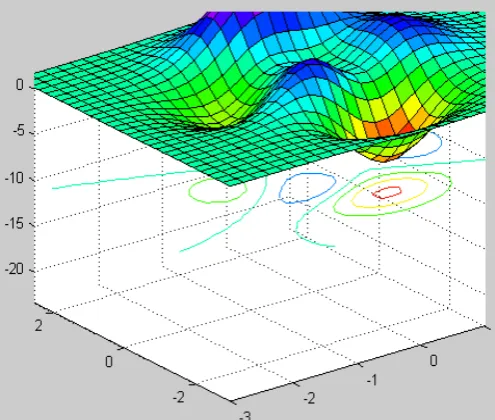
Fig 4: Variation in solution of Rosen brock banana
function for quorum method.
With low quorum value, local optimal values are being obtained which are not necessarily the global solution but with less computational time. With increase in quorum value, the solution value approaches towards the value obtained by the consensus method. Low quorum yields relatively rapid but often inaccurate results and similarly a high quorum produces slower but more accurate decisions. If an individual wants a swift decision, then it will be prone to trapping for a poor decision as has been proved by the above results. Results indicate that for better speed one should use quorum method, whereas for accurate results one should go for consensus method.
The variations in optimal solution of Rosen brock banana function w.r.t. change in quorum threshold value on y-axis and w.r.t. time in z-axes. If the increment in the quorum threshold above a certain value is made then the best solution is not achieved by bees and hence consensus method is used for finding optimum solution. The experimental results show that while solving an optimization problem, quorum threshold should vary linearly with number of bees which go for exploration and should be in fraction of it. The exact result of MODBC Algorithm is shown in Fig 5.
Fig 5: Result of MODBC Algorithm
5. APPLICATIONS USED IN BEE COLONY
ALGORITHM:
The Bees Algorithm has found many applications in engineering, such as:
1. Clustering systems 2. Bioengineering
3. Multi-objective optimization 4. Travelling Salesman Problem(TSP) 5. Job Shop Scheduling
6. Solving Sudoku Puzzles
These are the some applications are developed using the Bee colony optimization algorithm. The bee’s algorithm is mainly used for swarm intelligence and evolutionary computation and we can also calculate the minimum optimal solution from the given optimized solution.
6. CONCLUSION
The research paper has proposed a new algorithm for MODBC and it is based on two decision making methods. The project first analyses the nature inspired algorithms and discusses their known problems of consistency in solution and of premature phenomenon. A new optimization algorithm MODBC has been proposed and described. The upshot of the proposed algorithm is that it generates better optimal solutions as compared to its counterparts. The algorithm is based on natural swarm group decision method by bees to find next site. One has to select between consensus or quorum method for fast results. One has to go for quorum whereas for more
accurate results consensus method is much better. It is also concluded that by increasing the quorum threshold one can easily get more accurate and optimal results. Experimental results prove the robustness and accuracy of MODBC over other search based approaches. Hence it gives a better option to optimize real-time and on-line optimization problems. If the number of bees increased then the efficiency is decreased and will be agenda for future research.
REFERENCES
[1]. Rajesh Kumar, Directed Bee Colony Optimization Algorithm, Malaviya National Institute of Technology, India, 2013.
[2] M. Eslami, H. Shareef, M. Khajehzadeh, A. Mohamed, A survey of the state of the art in Particle Swarm optimization, Res. J. Appl. Sci., Eng. Technol. 4 (9) (2012) 1181–1197. [3] G. Dudek, Tournament feature selection with directed mutations, in: Proceedings of the International Conference on Swarm and Evolutionary Computation SIDE'12, 2012, pp. 190–198
[4] S. Das, A. Mukhopadhyay, A. Roy, A. Abraham, B.K. Panigrahi, Exploratory power of the Harmony Search Algorithm: analysis and improvements for Global Numerical Optimization, IEEE Trans. Syst., Man, Cybern., Part B: Cybernet. 41 (1) (2011) 89–106.
[5] S. Das, P.N. Suganthan, Differential evolution: a survey of the state-of-the-art, IEEE Trans. Evol. Comput. 15 (1) (2011) 4–31.
[6] Abraham Ajith, Hassanien Aboul-Ella, Siarry Patrick, Engelbrecht Andries, Foundations of Computational Intelligence Volume 3: Global Optimization, Springer, 2009. [7] S. García, D. Molina, M. Lozano, F. Herrera, A study on the use of nonparametric tests for analyzing the evolutionary algorithms' behaviour: a case study on the CEC'2005 Special Session on Real Parameter Optimization, J. Heuristics 15 (6) (2009) 617–644.
[8] D. Karaboga, B. Basturk, On the performance of Artificial Bee Colony (ABC) Algorithm, Appl. Soft Comput. 8 (1) (2008) 687–697.
[9] D. Karaboga, B. Basturk, A powerful and efficient algorithm for numerical function optimization: Artificial Bee Colony (ABC) Algorithm, J. Glob. Optim. 39 (3) (2007) (459-471).
[10] B. Basturk, Dervis Karaboga, An Artificial Bee Colony (ABC) Algorithm for numeric function optimization, in: Proceedings of IEEE Swarm Intelligence Symposium, Indianapolis, Indiana, USA, 2006.
[11] M.D. Cox, M.R. Myerscough, A flexible model of foraging by a honey bee colony: the effects of individual behaviour on foraging success, J. Theor. Biol. 223 (2) (2003) 179–197.
[12] K. Deb, Multi-objective Optimization Using Evolutionary Algorithms, John Wiley and Sons, 2002.
ISSN 2348 – 7968
[13] R. Eberhart, Y. Shi, J. Kennedy, Swarm Intelligence, Morgan Kaufmann, 2001.
[14] Z.W. Geem, J.H. Kim, G.V. Loganathan, A new heuristic optimization algorithm: Harmony Search, Simulation 76 (2) (2001) 60–68.
[15] R. Eberhart, J. Kennedy, A new optimizer using particle swarm theory, in: Proceedings of the Sixth International Symposium on Micro Machine and Human Science, MHS '95, Nagoya, Japan, 1995, pp. 39–43.