Scholar Commons
Theses and Dissertations
1-1-2013
Response to Intervention: An Interpretive Case
Study of Educators' Perspectives On the Roles of
School Culture, Personal Beliefs, and Program
Knowledge On Implementation.
Beverly Adhiambo Ochieng-Sande
University of South Carolina
Follow this and additional works at:https://scholarcommons.sc.edu/etd Part of theEducation Commons
This Open Access Dissertation is brought to you by Scholar Commons. It has been accepted for inclusion in Theses and Dissertations by an authorized administrator of Scholar Commons. For more information, please [email protected].
Recommended Citation
RESPONSE TO INTERVENTION: AN INTERPRETIVE CASE STUDY OF EDUCATORS’ PERSPECTIVES ON THE ROLES OF SCHOOL CULTURE, PERSONAL BELIEFS, AND PROGRAM KNOWLEDGE ON IMPLEMENTATION.
by
Beverly Ochieng-Sande
Bachelor of Arts Egerton University, 1998
Master of Science Elon University, 2007
________________________________________________________________________ Submitted in Partial Fulfillment of the Requirements
For the Degree of Doctor of Philosophy in
Special Education
College of Education
University of South Carolina
2013
Accepted by:
Kathleen Marshall, Major Professor
Erik Drasgow, Committee Member
Mitchell Yell, Committee Member
Thomas Hebert, Committee Member
Peter Moyi, Committee Member
DEDICATION
This work is dedicated to my brother Derrick Rota whom I love and miss dearly.
My work is also dedicated to my family and friends who gave me courage and support in
my endeavor to complete my doctoral program. I would like to thank my husband, Joseph
Sande, for his continued support, my daughters Emmy Sande and Cheyenne Sande, for
their patience, and my parents George and Elizabeth Rota, especially my mother, for her
constant encouragement. I would also like to dedicate this work to my siblings Clara
ACKNOWLEDGEMENT
I would like to acknowledge the individuals who made the completion of my
doctoral program and dissertation possible. First, I acknowledge my family for being
there for me during the endless nights that I had to complete course work, projects,
research papers, and my dissertation. I am grateful for my daughters who had to make
sacrifices for mommy to be able to complete her program.
I also acknowledge Dr. Kathleen Marshall, who worked tirelessly to provide
feedback and guidance throughout my study and dissertation writing. I would like to
thank Dr. Thomas Hebert, who stepped in at a crucial time to help with my qualitative
study. I appreciate Dr. Mitchell Yell and Dr. Erik Drasgow who assisted me throughout
my doctoral program providing guidance along the way. The professors in the special
education department are truly a wonderful and exceptional group of individuals.
Finally, I would like to recognize my friends and colleagues from Lee Central
High School, Ninth Grade Academy. My gratitude goes to Zenobia Johnson-McKnight
and Mark Griggs for being such great friends. Most of all, I am thankful for all my
ABSTRACT
In education today there is a heightened emphasis on teacher accountability for
improving student outcomes. The law requires that in order for a student to qualify as a
student with a disability, the child’s IEP team must ensure that the child’s problem is not
due to poor instructional programming. Therefore, the general education teacher is
encouraged to use research-based interventions and a systematic method of data
collection and progress monitoring, so he or she can determine whether a child qualifies
for the referral stage of the special education identification process. Response to
intervention (RTI) is a systematic multi-tiered process of instruction, intervention,
monitoring and identification used to ensure that all learners are receiving appropriate
education and that struggling learners are identified and assisted early before they fail.
The purpose of this study was to explore and gain information about teachers’ and
administrators’ perceptions of RTI and the roles that school culture, personal beliefs, and
knowledge of RTI may play in its implementation. I conducted a multi-site interpretive
case study in order to examine some of the underlying factors that shape or influence how
general educators and administrators implement RTI, including fidelity of
implementation of the core curriculum and supplemental programs chosen for Tier 1 of
the RTI process. Through individual interviews, observations and document review, I
was able to capture teachers’ and administrators’ pedagogical beliefs and interpret how
the school implements programs for the general population of students. The findings
illustrate how these three areas affect implementation efforts. The theories that guided
this study included cultural theory (Deal & Peterson, 2009), conflict theory (LeCompte &
Preissle, 1993), and structural-functionalism (Kingsbury & Scanzoni, 1993). Through the
use of open coding and axialcoding (Strauss & Corbin, 1990), thematic and narrative
analysis (Hess-Biber & Leavy 2004), thirteen themes were developed from an interpretation
of the participants’ responses. Participants also shared other factors that impact
implementation such as classroom sizes, scheduling, time and personnel. Funding and
professional development was cited as a necessary for effective implementation.
TABLE OF CONTENTS
Dedication………...iii
Acknowledgement………..iv
Abstract………v
List of Tables……….xii
List of Figures………...xiii
CHAPTER ONE: INTRODUCTION ……….……….1
Introduction……….……….1
Background Information………..3
Statement of the Problem……….6
Research Questions………...……….………..9
Significance of Study………...……….………….10
Definition of Terms………...……….………11
CHAPTER TWO: LITERATURE REVIEW .……….…..14
Response to Intervention………19
Factors Influencing Implementation of Educational Reforms……….……….33
Conceptual Framework…………...………...51
Summary………...……….57
CHAPTER THREE: DESIGN AND METHODOLOGY………...…………..62
Research Question, Design and Rationale……….………...……….62
Research Methods and Procedure………...………...………66
Data Collection Methods………..………...……..75
Data Analysis Procedure………...………...…..86
Ethical Issues……...………...90
Trustworthiness and Member Checking………...………..………...92
Positionality………..……….95
CHAPTER FOUR: FINDINGS………...………..98
Review of the Research Questions……….………...………98
The RTI Vision for the District………...…………...…………99
Description of the RTI Model at this District……….…………...…...100
Reasons for Implementing RTI at each School………...…...…..105
Emerging Themes…………...………..…...…....108
Summary of Responses to each Research Question………...….….167
Summary of Findings………...………...…...178
CHAPTER FIVE: DISCUSSION OF FINDINGS………...………..…….180
Summary and Discussion of Findings………..………...……..……..181
Conclusion and Implications………..………...…….……..204
Limitations………..………….……208
Recommendations for Future Research………..………..……...210
Summary………..………....214
REFERENCES………..………..216
APPENDIX A: Confidentiality Agreement Letter…….………...………..…243
APPENDIX B: Invitation Letter to Research Study……….………..……...…..244
APPENDIX C: Participants Biographies……….…....……246
APPENDIX D: Data Source………...………..…...……251
APPENDIX E: Individual Interview Prompts..………...………..…..……252
APPENDIX G: Classroom Observation Protocol………...……….……256
APPENDIX H: Document Review………...………...…..…..257
APPENDIX I: Data Collection and Analysis.…………..………..…...……..258
APPENDIX J: Preliminary Codes using Open Coding………….…………...………259
APPENDIX K: Axial Coding Strategy………...……….………260
APPENDIX L: Selective Coding for Theme Development………...……..261
APPENDIX M: Coding Process.………...……..……262
APPENDIX N: Tier I Universal Instruction for All students: RTI Fidelity Procedure...264
APPENDIX O: Tier II Small Group Intervention/Instruction: RTI Fidelity Procedure...266
APPENDIX P: Tier III Student Assistance Team checklist………268
APPENDIX Q: Academic Programs used at Schools………..……….…..269
APPENDIX R: RTI Perception Models………...………..……..…...270
LIST OF TABLES
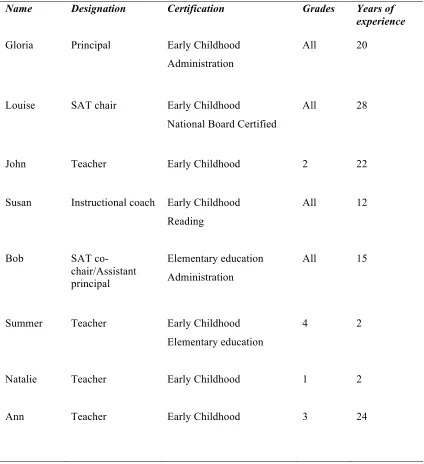
Table 3.1:Teacher Profiles- Barnes Elementary………...……..………….…………..…72
LIST OF FIGURES
Figure 1.1: Conceptual Model for implementing
School-wide Education Reform………..………...…...8
CHAPTER ONE
INTRODUCTION
Response to intervention (RTI) is a systematic decision-making process that has
gained widespread popularity as a problem-solving framework for organizing hierarchies
of evidence-based interventions in the context of ongoing progress monitoring (Fox,
Carta, Strain, Dunlap, & Hemmeter, 2010). It is a process for evaluating whether students
respond to scientifically validated instruction, and a process in which procedural
knowledge, role differentiation, fidelity to a set of practices, and local context interact
(Artiles & Bal, 2008). RTI is part of a larger complex of systems, influences, and
practices that encompasses both special education and general education (Klingner et al.,
2005). This multi-tiered intervention approach is used to meet the needs of all students
including students with disabilities (Burns, Appleton, &Stehouwer, 2005; Fuchs & Fuchs,
2006; Fuchs, Mock, Morgan, & Young, 2003; Mellard, Bryd, Johnson, Tollefson, &
Boesche, 2004). In schools today, various RTI versions or models exist, yet “ . . . it is
better to think of RTI as a process and not a single model . . .” (Fletcher, Lyon, Fuchs, &
Barnes, 2007, p. 51).
RTI was introduced to special education over a decade ago in response to
concerns about the over identification of children with learning disabilities (Fuchs &
serious problems including the static nature of assessment that guided classification
decisions and the lack of demonstrated technical adequacy (reliability and validity of
decisions) of measures used for making classification decisions (Barnett, Lentz, &
Macmann, 2000). The report of the President’s Commission on Excellence in Special
Education (OSERS, 2002) made important recommendations for change. First, the report
recommended the abandonment of the traditional classification process in favor of a
decision-making process based on response to instruction for LD identification (Fuchs &
Fuchs, 1998). Second, scientifically validated interventions and continuous progress
monitoring (Fuchs & Fuchs, 1986) were strongly encouraged for making instructional
decisions that lead to effective special services. Third, the commission recommended that
new models of interventions should not be based on “waiting for children to fail” before
organized interventions are attempted (O’Shaughnessy, Lane, Gresham, &
Beebe-Frankenberger, 2003). Finally, the President’s Commission recommended the adoption of
a dynamic progress monitoring method for making decisions about continuing services
reevaluations.
It is for these reasons that RTI was developed and subsequently gained acceptance
as a process that could be used to identify students with LD. The premise behind RTI is
that practitioners identify students as potentially having a learning disability only when
their response to research-validated intervention is dramatically inferior to that of peers
(Fuchs & Fuchs, 2007). RTI is typically a three-tier system (beginning in general
education and ending in special education) that, in principle, should reduce the number of
Background Information
RTI is based on a public health prevention model (Caplan, 1964) as adopted in the
school psychology literature (e.g., Klingman, 1986; Klingman & Ben Eli, 1981). The
tiered model of RTI is similar to the public health model, which has three to four tiers of
treatment interventions. Each of the tiers may be considered treatment phases. The public
health model begins at the primary stage where general medication is provided to treat an
identified symptom. When the initial treatment is not successful, more intense treatment
is provided. The intensity of the treatment using stronger doses of medication continues
until success is achieved. Similarly, RTI has phases or tiers. Within these tiers, students
who are struggling receive academic and or behavioral interventions. The first tier is
called the primary tier (Tier I). Here, intervention is provided within the general
education classroom. When a student begins to struggle in the primary tier, the student is
moved to the secondary tier (Tier II) to receive more intense support in addition to the
primary intervention. If the student is still unable to attain academic or behavior success,
then the student moves to the tertiary intervention stage (Tier III), which for many
models is more individualized and may be special education services (Fuchs & Fuchs,
2005).
The adoption of a tiered model requires an infrastructure of systems and supports
to ensure that practitioners can implement the model with fidelity and that the model
becomes fully integrated into the instructional program (Hemmeter & Fox, 2009;
Hemmeter, Ostrosky, & Fox, 2006). Infrastructure features that support the
procedural aspect of implementing RTI. The features, as described below, include
universal screening, progress monitoring, use of evidence-based interventions, relevant
professional development, and fidelity of implementation (Fuchs & Fuchs, 2005).
When first implementing RTI, each school develops clear procedures for
screening, progress monitoring, and the delivery of more intensive tiers of intervention to
children. Screening involves testing all students using a criterion-referenced measure
(Fuchs & Fuchs, 2006). Students performing below a specific benchmark, for example
the 25th percentile, are selected to receive intervention. Progress monitoring, a form of
dynamic assessment using a formative evaluation process (Fuchs & Fuchs, 2006), is a
way to monitor how a student is progressing in general education after receiving a more
intensive intervention either within the classroom or outside the classroom. Frequently
used instruments for progress monitoring include curriculum-based measurements
(CBM) (VanDerHeyden & Jimerson, 2005).
RTI also requires ongoing training and support of teachers for implementation
fidelity. Fidelity of implementation is the faithful, prescriptive presentation of the core
curriculum or supplementary curriculum (intervention), as was intended by the program
developer. A successful RTI system should include access to expertise in the design and
implementation of Tier II and Tier III interventions. These experts should provide
relevant training and support to ensure the successful implementation of an RTI process.
Finally, there should be procedures for efficient and meaningful data collection and
Although many practitioners embrace RTI as an alternative method for
identifying students with a specific learning disability (SLD), there has recently been a
shift in emphasis from the identification to the instructional component of RTI (Kavale,
Kauffman, Bachmeier, & LeFever, 2008). Recently, the National Association of School
Psychologists (Klotz & Canter, 2006) emphasized RTI as a process of scientific
research-based instruction and intervention in general education. RTI was also described as
providing an improved process and structure for school teams in designing,
implementing, and evaluating educational interventions that may be part of the evaluation
procedures for special education eligibility. The National Association of State Directors
of Special Education (NASDSE, 2006) was even more direct in describing the nature of
RTI by stating, “Special education eligibility decisions can be a product of these efforts,
but is not the primary goal” (p. 1). Thus, the aim of RTI appears to have shifted in
emphasis from identification to instruction and this shift is viewed as a consequential
advantage so that RTI’s primary goal of providing outstanding instruction becomes the
focus. With this new focus, RTI has gained widespread popularity as a problem-solving
framework for organizing hierarchies of evidence-based interventions in the context of
ongoing progress monitoring (Fox, Carta, Strain, Dunlap, & Hemmeter, 2010).
Even though a majority of descriptions and discussions of RTI are currently found
in the special education and school psychology literature, the multi-tier RTI model is
implemented primarily in general education. Efforts to implement RTI should be in the
larger context of educational practices and reforms, to ensure practitioners understand the
broad focus of the initiative (Kavale, et. al, 2008). In other words, RTI should not have a
special needs. It should be clear to participants that RTI encompasses an educational
reform agenda targeting the use of evidence-based interventions for all learners,
especially struggling learners, implemented by both general educators and special
educators. The multiple tiers of evidence-based interventions are used as preventative
interventions for students with academic difficulties when in the general education
classroom. The primary notion behind RTI, when it is used in this manner, is that it rules
out poor instruction as an explanation for failure. This instruction begins within general
education. Therefore, my focus is on issues of implementing RTI within a school,
emphasizing instruction at the primary tier.
Statement of the Problem
One intent of NCLB was to use “ . . . evidence-based and scientifically validated
instructional practices designed to improve learning outcomes for all students”
(Brown-Chidsey & Steege, 2005, p. 14-15). In addition, the increase in the number of students
identified with learning disabilities resulted in IDEA’s emphasis on improving instruction
and reducing students identified for special services. RTI was introduced as a possible
solution to both improving instruction and reducing the number of students identified
with a learning disability (Kovalesky, 2007). The first tier is quality general education,
which addresses the majority of students whose curricula should be carefully selected and
implemented.
It is surprising that most schools' curricular choices, a central aspect of schooling
that entails the "what" that students are expected to learn, had not been systematically
school's scope and sequence of knowledge and skills to be learned, and is determined by
the materials and methods used to deliver that content (Kovalesky, 2007). Core
curriculum in a general education class using the RTI model, must be high quality,
research-based, and field-tested (Fuchs & Fuchs, 2005; 2006; 2007; Fuchs & Deshler,
2007). Such curriculum is to be delivered by highly qualified teachers sufficiently trained
to deliver the selected instruction as intended, that is, with fidelity (Kovalesky, 2007) and
resources such as ‘What Works Clearing House’ can guide stakeholders in the selection
of research-validated programs.
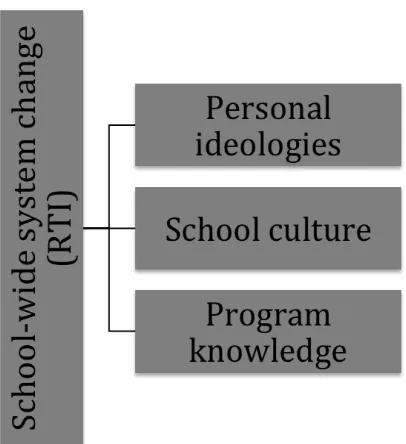
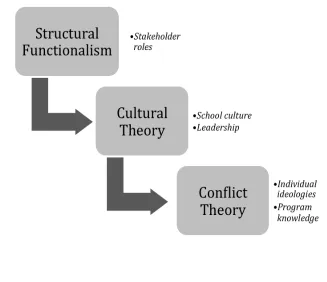
The proposed study is grounded on the theory that for a program to be
implemented with fidelity, the culture of the school, the ideologies of individual teachers
and the practitioners’ knowledge of the program are vital ingredients. The importance of
these three components is supported by Structural-Functionalism theory (LeCompte &
Preissle, 1993), Cultural theory (Deal & Peterson, 2009) and Conflict theory (LeCompte
& Preissle, 1993). Figure 1.1 is a conceptual model for implementation of a school-wide
education reform.
Based on the broad perspective of structural-functionalism, society is seen as a
structure with interrelated parts that function as whole. Research supports the notion that
teacher leaders and other members of the school must be involved in creating and
supporting a culture of a school including any form of cultural shift, if the shift is to take
__________________________________________________________________
Figure 1.1: Conceptual Model for school-wide reforms.
In addition, individual teachers have unique roles in shaping any system-wide
change. Teachers, administrators, and staff develop the building blocks of effective
system-wide change. Shared vision, values, goals, beliefs and faith in school are
components of school culture (Deal & Peterson, 2009; Fullan, 2005; Stolp, 1994; Stolp,
&Smith, 1995). School personnel generally seek a school culture that supports work and
high student achievement, (Brown, 2004; Gold, 2002).
Conflict theory helps us understand the dynamics of social change (LeCompte &
Preissle, 1993). Bryk, Lee and Holland (1993) found that a sense of community or culture
an unstable school culture without any established values may result in teachers and
students working independently and doing different things.
Research Questions
The purpose of this investigation was to conduct a multi-site interpretive case
study in order to examine some of the underlying factors that may shape or influence
implementation of RTI, including fidelity of implementation, of the core curriculum and
supplemental programs chosen for Tier I of the RTI process. In this study, investigations
of some of the underlying factors that inform how general educators and administrators
implement RTI were conducted, through individual interviews, observations and personal
journals. My purpose was to capture teachers’ and administrators’ pedagogical beliefs
and interpret how these influence what general educators and administrators thought
about RTI and how their schools implemented programs for the general population of
students.
My major research focus was to investigate how school culture, personal beliefs
and knowledge of RTI may have affected the successful implementation of RTI in
specific schools. Through this study I attempted to answer the following questions.
1. What are administrators and teachers’ understanding of RTI and how RTI is being
implemented in their classrooms?
2. What do teachers and administrators perceive as the role of school culture in the
implementation of RTI in their school?
3. What do teachers and administrators report as their personal pedagogical beliefs
4. What do teachers and administrators report as basic knowledge that they need to
have to implement RTI in their schools?
5. What are some other school related factors that teachers and administrators report
as influencing how they implement RTI?
This was an interpretive case study that looked at individual experiences when
implementing RTI in the general education classroom and addressed some of the
underlying factors that influence implementation. This research involved the use of
interviews, observations, and documents. This study involved in-depth interviews of
general education teachers teaching in schools implementing RTI. I delved into how
teachers formulated their own teaching philosophies, how they incorporated their
ideologies into their teaching and how these elements influenced their acceptance and
delivery of a novel program.
Significance of Study
Much of the current research on RTI focuses on applied studies of particular
interventions, implementation processes, and the identification of best practices in RTI
sites (Bender, 2008; Cochrane & Laux 2007; Foorman, 2007; Hughes & Dexter, 2008;
Hughes & Dexter, 2011). Furthermore, there are studies at the macro level about the
large-scale implementation of RTI nationwide (Berkeley, Bender, Peaster, & Saunders,
2009; Burns, Appleton & Stohower, 2005; Campell & Ankettel, 2007; Dexter, Hughes, &
Farmer, 2008). This study aims to contribute to the current research by providing the
perspective of administrators and general education teachers on what RTI is and how
perspectives of RTI from the general educators’ point of view and how their knowledge,
beliefs and practices have influenced how they implement it. I will also look at the role of
school culture in the implementation of novel programs. These results should include
information that can inform policy makers of some of the underlying infrastructural
requirements that can help make the introduction and implementation of a system-wide
change successful.
Definition of Terms
Core Curriculum: The core curriculum is the course of study deemed critical and
usually made mandatory for all students of a school or school system. It consists of a
school's scope and sequence of knowledge and skills to be learned, and the materials and
methods used to deliver that content (RTI Action Network, August 11, 2012).
Interpretive case study: Interpretive case studies are research studies where the
researcher attempts to understand phenomena through accessing the meaning that
participants assign to them (Orlikowski & Baroudi, 1991) and focuses on their cultural
and historical context.
Evidence-based Practices: Evidence-based practices are educational practices and
instructional strategies that are supported by scientific research studies (Coleman,
Buysse, & Neitzel, 2006; RTI Action Network, August 11, 2012).
Fidelity of Implementation: Fidelity of implementation is the delivery of
instruction in the way in which it was designed and intended for delivery (Gresham,
consistent provision or delivery of instruction in the manner in which it was designed or
prescribed according to research findings and/or developers’ specifications (RTI Action
Network, August 11, 2012).
Response to Intervention: RTI is a tiered system (beginning in general education
and ending in special education) that serves the early intervention and disability
identification objectives (Fuchs & Fuchs, 2005). In this multi-tiered system, students
receive more intensive interventions as they move up the tiers.
Progress Monitoring: Progress monitoring is used to assess students’ academic
performance, to quantify a student rate of improvement or responsiveness to instruction,
and to evaluate the effectiveness of instruction. Progress monitoring can be implemented
with individual students or an entire class (RTI Action Network, August 11, 2012;
Stecker, Fuchs, & Fuchs, 2008).
Pyramid Model: Pyramid models have their origin from the public health
literature. It is a system based on three tiers of prevention, primary, secondary and
tertiary (RTI Action Network, December 5, 2012).
School Culture: Culture is the underground stream of norms, values, beliefs,
traditions, and rituals that have built up over time as people work together, solve
problems, and confront challenges (Deal & Peterson, 1998).
Teachers Attitudes and Beliefs: Attitudes and beliefs are a subset of a group of
constructs that name, define, and describe the structure and content of mental states that
Teacher Self-Efficacy Beliefs: Self-Efficacy beliefs is a high internal locus of
control and positive attitude toward overcoming difficult situations (Ashton, Webb &
CHAPTER TWO
LITERATURE REVIEW
All teachers face challenges because of the mandates of the Individuals with
Disability Education Act (IDEA, 20 U.S.C § 1400, 2004) and No Child Left Behind
(NCLB, 20 U.S.C. 70 § 6301, 2002). Both general education and special education
teachers have to ensure that all students have access to grade level standards. General
education teachers are also accountable for ensuring that students are prepared for
standardized testing while special education teachers are charged with developing
Individualized Educational Programs (IEPs), and ensuring students meet IEP goals and
objectives.
The demand for high quality instruction puts the general education teacher in the
position of ensuring quality education for all students. It is only after the general
education teacher has used research-based interventions and a systematic method of data
collection and progress monitoring, that a child should qualify for the referral stage of the
special education identification process. RTI is a systematic process of instruction,
intervention, monitoring, and identification to ensure that all learners are receiving
appropriate education and that struggling learners are identified and assisted early before
they fail. RTI is one of the most recent educational reforms and it is important to
Educational Legislation and Reform
Over the last 35 years, policymakers have called for school reforms that improve
the practices of teachers and other professionals and increase student achievement
(Elmore, 1995; Fullan & Stiegelbauer, 1991; Goodman, 1995; IDEA, 20 U.S.C § 1400,
2004; National Commission on Excellence in Education, 1983; NCLB, 20 U.S.C. 70 §
6301, 2002;The Education of All Handicapped Children Act, PL 94-142, 1975). Laws
targeting both general education and special education have added responsibility and
accountability to teachers for the academic and behavioral success of each student in the
school system. Special education has been the focus of almost 40 years of educational
reform. Prior to 1975, only approximately 20% of students with disabilities were
educated in public schools (Idol, 1987) and various education reforms have made it
possible to increase these percentages.
In 1975, the Education for All Handicapped Children Act (EAHCA) P.L 94-142
was passed into law. This law granted children with disabilities a right to free and
appropriate public education (FAPE), the right to IEPs, and a right to be educated in the
least restrictive environment (LRE) (IDEA 20 U.S.C.§ 1400). To meet LRE requirements
meant that schools had to use a continuum of alternative placements beginning with
general education setting and ending in residential facilities (Katsiyannis, Yell, &
Bradley 2001; Yell, 2006). Nevertheless, special education and general education
remained separate entities. The majority of students with special education services were
only included in nonacademic classes such as Art, Music, Physical Education and
In the 1980s, there were continued demands for schools to adopt higher academic
standards and for educators to be accountable for all students’ achievement. It was also
during this time that those who advocated for students with special needs wanted services
to be provided to meet these students individual needs (Yell, 2006). Proponents of the
Regular Education Initiative (REI) proposed the inclusion of children with mild
disabilities in the general education setting (Carnine & Granzin, 2001). Many general
education teachers indicated that they did not have the time, training or the resources to
be able to provide instruction to students with disabilities (Carnine & Granzin, 2001).
Nevertheless, students with mild disabilities began to receive increasingly more of their
education in general education classes.
The Education for All Handicapped Children Act (EAHCA) was passed into law
in 1975. This law was reauthorized several times and in 1990 became known as IDEA
(IDEA 20 U.S.C.§ 1400). In 1997, IDEA’s reauthorization made it possible for students
with special needs to gain access to the general education curriculum and graduate with
diplomas like their non-disabled peers (Yell, 2006). Changes needed to be made in the
general education curriculum to accommodate the greater number of students with
special needs now served primarily in the general education classroom.
Since reauthorization of Elementary and Secondary Education Act in 2001, titled
the NCLB (NCLB, 20 U.S.C § 1411(e) (2) (C) (xi)), the issue of “adequate yearly
progress” (AYP) began to dominate education policy debate (Canine & Granzin, 2001).
AYP is determined in part by a year-end state standardized test of grade-level content in
2011). Districts and schools are accountable for students meeting state standards on these
tests, and CBM assessments are often used to help predict student proficiency and
identify students at risk for not passing these high-stakes tests (Nese, Park, Alonzo, &
Tindal, 2011). Accountability in NCLB began with the requirement of high stakes
standardized achievement tests where student scores were aggregated to determine
whether schools or districts met state standards. These standards were required in math,
science, reading, and social studies. There were practitioners who saw AYP as the means
by which the federal government would finally foster quality education in schools and
provide the necessary funds for this endeavor (Canine & Granzin, 2001; McDonnell,
2005). To meet the demands of AYP, schools were required to employ highly qualified
teachers and use research-based programs and interventions to ensure that no child was
left behind (Canine & Granzin, 2001). Criteria for highly qualified status may vary from
state to state. According to the South Carolina state requirements, a highly qualified
teacher is one who has earned at least a bachelor's degree, demonstrated content
knowledge in each core content area he/she teaches, and has a full state certification
(scteachers.org, May 21, 2012).
Typically, the general purpose of educational reforms is to enhance educational
services and ultimately improve student outcome. The purpose of the current reform
movement -NCLB- is to increase student achievement for all students, especially high
poverty students, at-risk students, and special education students (Borman, Hewes,
Overman, & Brown, 2003; Sterbinsky, Ross, & Redfield, 2006). Since NCLB and
comprehensive school reform have the important goal of improving student learning, the
has prompted the creation of RTI, a popular initiative for targeting and enhancing the
achievement of at-risk students (Desimone, 2002). The focus of this research will be on
the RTI initiative with an emphasis on its implementation in the general education
classroom.
This literature review is divided into three sections. In the first section, the literature
includes a general overview of RTI including its features and attributes. The purpose for
this review is to give a glimpse of the structure of an RTI framework, including the
various components that are important in its composition. This will be followed by an
examination of the standard protocol approach versus the problem-solving approach in an
RTI model mainly to highlight their differences and reveal how various researchers
interpret their characteristics and importance in the instruction of students. Furthermore,
this section of the literature review will examine large-scale and small-scale models of
RTI. Finally, I will discuss RTI as an instructional process as well as a means of
identifying children with learning disabilities and the on-going debate about the true
purpose of RTI.
The second part of this review will focus on comprehensive school reforms (CSR)
and some of the factors that researchers have identified as affecting their development
and eventual sustainability. I will then continue with a review of research on core
curriculum instruction and the importance of an evidence-based core curriculum in a
successful RTI model. I will review research on fidelity of implementation highlighting
its importance in a well-structured RTI model. Following this will be a review of
guided this study which explain the lens through which I base my interpretation of data.
This will be followed by a summary of the chapter.
Response to Intervention
RTI can be defined as a process aimed at evaluating and addressing the
educational needs of all students and identifying students needing intervention beyond
what the teacher provides during typical classroom instruction (Shapiro & Clemens,
2009). The premise behind RTI is that we identify students as potentially having a
learning disability (LD), when their response to research-validated intervention is
dramatically inferior to that of peers (Fuchs & Fuchs, 2007). Furthermore, RTI
encourages the use of evidence-based instruction across tiers, which, in principle, should
reduce the number of students incorrectly identified as having a disability. RTI is a
multi-tier system (beginning in general education and ending in special education) that is
considered an early intervention and disability identification process (Fuchs & Fuchs,
2005). Broad overarching goals, such as improving overall student achievement and
improving the process of identifying and placing students into special education, are
central outcomes of an RTI process (Shapiro &Clemens, 2009).
Nevertheless, to some, RTI can best be viewed as an instructional model, not an
identification model, and consequently, should not be the basis for LD identification
(Kavale, et al., 2008). With its rigorous and systematic procedures, RTI can enhance the
pre-referral process and achieve the aim of reducing the number of unnecessary referrals
(Kavale, et al., 2008). In fact, RTI is only one part of a viable identification procedure, as
McDonnell, 2005). Conversely, some view it as the best identification model and seem to
suggest that RTI may be the basis for redefining learning disabilities (Vaughn & Fuchs,
2003).
According to The National Center for Response to Intervention, RTI integrates
assessment and intervention within a multi-level prevention system to maximize student
achievement and to reduce behavioral problems (NCRTI, August 2012). With RTI,
schools use data to identify students at risk for poor learning outcomes, monitor student
progress, provide evidence-based interventions, adjust the intensity and nature of those
interventions depending on a student’s responsiveness, and identify students with
learning disabilities or other disabilities. In essence, RTI is both a systematic approach to
instruction and an identification process for struggling learners.
Researchers envisioned the RTI system to be systematic and grounded in a
problem-solving framework that included universal screening, use of research-based
interventions, progress monitoring on an established schedule, and data-based decisions
related to the child’s possible need for special education services (Dexter, Hughes,
&Farmer, 2008). Once the RTI process was developed, researchers debated the best way
to measure its effectiveness – improved outcomes, fewer referrals for special education
evaluation, or improved classroom instruction (Kovalesky, 2007). Vaughn and Fuchs
(2006) noted that a decrease in the number of students in special education is not an
appropriate outcome for evaluating the effectiveness of RTI. Similarly, Kovaleski and
Glew (2006) noted that although stemming the rapid rise of students identified with
various "regular education initiatives" in the 1990s, the passage of the NCLB (2001)
legislation created a new societal goal—increasing the percentage of students who pass
state proficiency tests, with a terminal goal of 100% proficiency for all students by
2013-2014. The use of RTI enables educators to facilitate the implementation of high quality
instruction and data-based decision making (Mellard et al., 2004; Mellard & Johnson,
2008).
The RTI process
Practitioners and researchers usually refer to classroom instruction as Tier I and
many describe the importance of classroom teachers using scientifically validated
instruction (Fuchs & Deshler, 2007). When students do not respond to scientifically valid
instruction in Tier I, these students are moved to Tier II (Fuchs & Deshler, 2007). Tier II
is small group, more intensive instruction using scientifically based intervention. While
Tier II instruction is delivered, practitioners evaluate student responsiveness. More
specifically, performance must be categorized as responsive or nonresponsive (Fuchs &
Deshler, 2007). Students who are still nonresponsive then move to Tier III, which is even
more intensive and has a smaller teacher-student ratio. In some RTI models, Tier III is
special education, while for some RTI models it is another tier of intensive intervention
before students become eligible for special education services.
RTI implementation usually begins with screening of all students. All children in
a class, school, or district are tested by a single test administration or by repeated
measurement in a circumscribed period, and the “at-risk” students are then identified for
Fuchs, 2005). RTI requires that students are tested throughout the intervention period,
and those who do not respond may receive a multi-disciplinary team evaluation for
possible disability certification and special education placement (Fuchs & Fuchs, 2005).
In practice, RTI can look quite different from school to school. Many authors
(e.g., Gersten & Dimino, 2006; Mastropieri & Scruggs, 2005; Scruggs & Mastropieri,
2002; Werts, Lambert, & Carpenter, 2009) have noted that there is a lack of uniformity
across the research community concerning the process, purpose and structure of RTI
models. Nevertheless, several key components are deemed necessary for a successful RTI
program (Bender & Shores, 2007c; Fuchs & Fuchs, 2005).
The first component of RTI is universal screening.Students are generally
screened early in the school year to determine if they may have educational difficulties,
and to help their teachers figure out what extra lessons they may need (Glover, &
DiPerna, 2007). Screening tests, also known as benchmark assessments, are used to
measure the achievement of all students to ensure they continue to meet expectations
throughout the year and also to identify students who need additional monitoring and
intervention (Mellard, 2003).A second key feature is the use of high quality,
research-based core instruction in general education.Core instruction should use a research-based
curriculum to meet the educational needs of a majority of students (Fuchs & Dechler,
2007; Fuchs& Fuchs, 2005; Vaughn & Fuchs, 2003).
The third component is evidence-based interventions. Children with learning
where they need help. The interventions must be scientifically based and given with
fidelity. NCLB describes scientifically based research as,
Research that involves the application of rigorous, systematic, and
objective procedures to obtain reliable and valid knowledge relevant to education
activities and programs; ensures that experimental studies are presented in
sufficient detail and clarity to allow for replication or, at a minimum, offer the
opportunity to build systematically on their findings; and, has been published by a
peer-reviewed journal or approved by a panel of independent experts through a
comparably rigorous, objective, and scientific review. (NCLB, 2001, 20 U.S.C. §
1411(e) (2) (C) (xi))
Progress monitoring is the fourth component of RTI. Progress monitoring is the
continuous assessment and evaluation of student performance on the various
interventions being implemented. Perhaps the best-known and most applied systematic
assessment of students’ performance is curriculum-based measurement (CBM), an
evidence-based approach used to measure students’ academic status and progress and to
evaluate the effectiveness of instruction (Deno, Fuchs, Marston, & Shin, 2001; Deno,
Marston, & Tindal, 1985; Fuchs, 2004; Good & Jefferson, 1998; Kranzler, Brownell, &
Miller, 1998; Shinn, Good, Knutson, Tilly, & Collins, 1992; Tucker, 1987). CBM
provides a method to measure student achievement using both screening and progress-
monitoring assessments and also helps guide teachers’ instruction by identifying
students’ specific academic deficits. Progress monitoring continues for students in Tier II
who show poor response to this second and more intense form of intervention are
considered to have demonstrated unexpected failure to the validated intervention
(Hollenbeck, Fuchs &Fuchs, 2007). Then, if a student still has not responded to several
different interventions, he or she may need further evaluation, or special education
services. The expectation among some proponents of RTI is that by providing intensive
instruction as soon as a problem is noted, children can steer away from special education
(Fuchs & Deshler, 2007). CBM represents an empirically supported system of progress
monitoring that has produced demonstrated effects on student achievement, particularly
in reading (Fuchs, Deno, & Mirkin, 1984; Fuchs, Fuchs, & Hamlett, 1989; Good &
Jefferson1998; Jones & Krause, 1988).
A fifth important feature is Tiered model of intervention.RTI is a multi-tiered
system where students receive intensive interventions as they move up the Tiers (Fuchs
& Deshler, 2007). Intensity of interventions and frequency of progress monitoring
increases as students move up in Tiers. Movement across Tiers should be fluid and
change based on results of progress monitoring and decisions made by problem-solving
teams. Most models include three or four Tiers of service delivery.
The formation of problem-solving teams also is considered an essential feature of
RTI.A problem-solving team should consist of general and special education teacher,
school psychologists, parents, administrators and any other specialist such as social
workers or speech and language pathologists (Fuchs & Fuchs, 2005; Nellis, 2012). The
function of the team is to analyze data from the universal screening as well as the
The seventh crucial feature of RTI is data-based decision making.The RTI
system uses a multi-disciplinary team to evaluate student progress. Through various
progress monitoring methods, the multi-disciplinary team makes data-driven decisions on
how best to serve students not responding to intervention. Data-driven decision-making
involves the collection of data such as student grades or scores and using the data in
making determination of where student should be placed or moved (Mellard & Johnson,
2008).
Finally, fidelity of implementation is crucial to the success of RTI.Fidelity refers
to the accurate and consistent provision or delivery of instruction in the manner in which
it was designed or prescribed according to research findings and/or developers’
specifications (RTI Action Network, August, 2012). This component of RTI poses a
challenge to many schools. All interventions and core instruction should be implemented
with integrity. As will be discussed later, different schools use different models of
implementation. With such variation, it is difficult to come up with a common universal
tool to assess implementation fidelity. Nevertheless, to ensure fidelity of implementation,
fidelity checks need to be in place that have been developed by the school district and
should include items such as observations protocols or checklists.
All these components form part of the critical features of RTI necessary for
effective implementation (Fuchs & Deshler, 2007). In addition, general education
teachers should have high-quality professional development selected and designed based
accelerate learning for students demonstrating learning difficulties (Fuchs & Deshler,
2007).
RTI Approaches: Standard Treatment Protocol and Problem-solving Protocol
Statewide and district-wide models use two main approaches to the RTI process.
These are the Standard Treatment Protocol (Standard Protocol) and Problem-solving
approaches (Bender & Shores, 2007a, 2007b; Fuchs, Fuchs &Compton, 2004; Fuchs et
al., 2003; McNamara & Hollinger, 2003). In the problem-solving approach, individually
tailored interventions designed to address student’s needs are developed through a
decision-making process conducted by problem-solving teams. These teams typically
consist of the classroom teacher, special education teacher, school principal, school
psychologist, and other school personnel as needed. One purpose of a problem-solving
approach is to first determine whether the general education classroom can be
transformed into a productive learning environment for at-risk students (Fuchs, Fuchs
&Compton, 2004). Students who are unresponsive to Tier I or Tier II instruction continue
to receive individual adaptations. The assumption is that if the individualized adaptations
do not produce growth for the at risk students, some inherent deficit or disability is
probably making it difficult for them to benefit and they may be referred for special
education evaluation (Fuchs, Fuchs, &Compton, 2004). This part of the problem-solving
approach is sometimes referred to as pre-referral intervention (Fuchs et al., 2003;
McNamara & Hollinger, 2003).
Fuchs and Fuchs (2005) described a standard protocol model as one in which
instruction. A typical example would be, students at risk for reading disability are
assessed and provided 8- 10 weeks of the same supplemental, small-group reading
instruction. Afterwards, all who meet a preset criterion are no longer included in the
supplemental instruction. The remaining students are regrouped and provided another
8-10 weeks of instruction. This continues for about 30 weeks. Then the subsets of students
who still have not met criteria for dismissal from supplemental instruction may be
considered for special education.
Both RTI approaches have proven successful for different states as well as school
districts. Even though differences exist between the two approaches, both require
research-based interventions and ongoing process monitoring (Bender & Shores, 2007a;
2007b). There are several other modifications of these two approaches (Dexter, Hughes
&Farmer, 2008). There are also hybrid models (Reschley, 2005), which incorporate
aspects from both the problem-solving model and the standard protocol model.
Furthermore, the implementation of these models can either be on a large scale or a small
scale.
Large-scale and small-scale implementations
RTI is typically implemented one of two ways. The first way is considered
large-scale implementation and includes models implemented at the state or district level.
District or state personnel develop the district/state-implementation programs. Dexter,
Hughes, and Farmer, (2008) indicate that large-scale programs incorporate large numbers
Researchers describe the second type as smaller scale RTI programs developed
primarily by university-based researchers. Small-scale implementations incorporate fewer
students across a smaller number of schools and university researchers typically
conducted the tiered interventions.
Dexter, Hughes, and Farmer (2008) describe examples of some of the models
considered large-scale or field-based models. These include Heartland Agency Model
(Instructional Decision making-IDM process) in Iowa, Intervention-Based Assessment in
Ohio, and Instructional Support Team (IST) in Pennsylvania. These also include the
Flexible Service Delivery Model (FSDM) in Illinois, Problem-Solving Model (MPSM) in
Minneapolis (Minnesota), Screening to Enhance Equitable Placement (STEEP) model in
Mississippi, Louisiana, and Arizona, and Results Based Model (RBM) in Idaho. In
addition, the authors highlight some other common model titles such as Standard
Protocol Mathematics Model (SPMM), Tiers of Reading Intervention (TRI) and Exit
Group Model. Other states that use large-scale models include Delaware, Florida,
Georgia, Kansas, Oregon, Washington and West Virginia.
States are currently in the process of deciding not only how to interpret the new
federal law in their own regulations but also how to put RTI in place (Berkeley, Bender,
Peaster, & Saunders, 2009). Most are still in a transition state regarding RTI
implementation. Research revealed that 22 states had RTI models in schools, while 10
states were providing guidance to begin implementation. States that provided guidance
and were in the process of providing professional development before implementation of
RTI.
At the time of this research only three states were not currently providing
guidance or even developing a model. Many of the states implementing RTI had either
created their own model or modified models from research literature (Berkeley et al.,
2009). The majority of schools using the problem-solving approach used a three or four
Tier process, however, some schools included more Tiers.
Research on effectiveness of RTI
Due to the variations of RTI models and the different levels of RTI development of
many schools, it is relatively difficult to assess overall effectiveness of RTI
implementation. Moreover, overall effectiveness is often measured by students’
outcomes, which may be influenced by extraneous factors beyond the steps of
implementing RTI such as the characteristics of the teacher, availability of additional
technology and so on. Nevertheless, individual studies have attempted to show
effectiveness of implementing RTI. Measures of effectiveness included improved
student outcomes, reduction in student referral for special education services, reduction in
spending on special education services, positive perception of the RTI process, and
improvement on instruction delivery (Burns et al., 2005; Burns & Ysseldyke, 2005;
VanDerHeyden, Witt & Gilbertson, 2007)
Burns et al. (2005) conducted a meta-analysis of large-scale RTI implementation
models including the four field-based models (Heartland Agency Model, IBA, IST, and
effects for the effectiveness of models implemented at a large scale, including improved
student outcomes, and a positive systemic outcome. Although both field and
research-based RTI programs had strong effects, field-research-based RTI models, including Heartland
Agency Model, IBA, IST, and PSM, consistently had stronger unbiased estimates of
effects than models implemented by researchers.
Furthermore, independent researchers reviewed the large-scale models, providing
an unbiased estimate of effectiveness. Burns et al. (2005) argued that due to the longer
implementation of interventions used in practice for the district or state-implemented
programs, these RTI programs showed stronger effects than the researcher-based
programs which may not have had ongoing support to ensure continued implementation.
The strong effect size, .80, in the meta-analysis suggests that systemic and student
outcomes improved using the RTI large-scale field-based models (Burns et al., 2005).
According to Burns and Ysseldyke (2005), the four large-scale models
demonstrated large effects for improving student learning and systemic variables such as
reducing the number of children referred to and placed into special education. However,
more research was needed in the area of leadership because the need for leadership is not
restricted to initial implementation of RTI, but is perhaps more important for sustaining
RTI practices, (Burns & Ysseldyke, 2005; Hilton, 2007).
VanDerHeyden, Witt, and Gilbertson (2007) examined the effects of implementing
a systematic RTI model STEEP (Witt, 2007) on the identification and evaluation of
children for special education. Using a multiple baseline design, a systematic model of
schools in a district. The researchers examined the effects of the RTI model on the
number of evaluations conducted, percentage of evaluated children who qualified for
services, and proportion of identified children by sex and ethnicity before and after
implementation of the model. They found that the cost analyses indicated that resources
devoted to traditional assessment were reduced and replaced by direct assessment,
intervention, and consultation services in classrooms. The data showed that fewer
children were evaluated because the decision-making team discussed fewer children
needing evaluation based on the STEEP data. The researchers stated that one finding that
may have important practical implications of RTI effectiveness in applied settings was
the degree to which the team followed the available STEEP data. Because RTI relies on
data-based decisions to improve outcomes, investigations of extraneous factors
influencing team decisions are important lines of future research (VanderHeyden, Witt &
Gilbertson. 2007).
In an RTI research summary, Hughes and Dexter (2011) found 13 field studies of
large-scale RTI programs. They reviewed studies that (a) were published in a
peer-reviewed journal or edited textbooks, (b) employed instruction or intervention in at least
two Tiers of an RTI program for students experiencing academic or behavioral
difficulties, and (c) provided quantifiable measures of student academic/behavioral
outcomes and/or systemic outcomes (e.g., special education referrals).
The 13 RTI programs included in their review included seven problem-solving
and five standard protocol forms of RTI - one used a combination of both. All of the
Grade 8 or above. Nine of the 13 studies measured variables related to academic
achievement: four studies measured reading outcomes, three studies reported math
outcomes, one study focused on academically related behaviors (e.g., time on task, task
completion, task comprehension), and one study focused on general academic
performance (e.g., level and rate on statewide achievement test). Six of the 13 studies
included variables related to special education referral and placement rates. They also
examined the type and quality of the research designs used, which included single-case
(i.e., A-B design), historical control, quasi-experimental, and descriptive.
The researchers found that studies examining the impact of RTI on academic
achievement or performance reported some level of improvement. However, the research
conducted on these studies mainly compared pre and post student outcomes before
implementing and after implementing RTI, rather than using control groups.
Furthermore, with regard to impact of RTI programs on special education referral and
placement rates, it appears that overall rates remained fairly constant, with few studies
showing slight decreases. The researchers indicated that firm conclusions about
referral/placement rates were difficult to make because many studies did not clearly
describe how they identified nonresponders. Several supporting factors appeared
necessary for improving implementation of RTI programs. These factors, constant in
most of the studies, included: extensive and ongoing professional development,
administrative support, teacher buy-in, and adequate meeting time for coordination.
In summary, many of these researchers characterize the research base for
research is needed, as well as an examination of the factors necessary for developing and
sustaining RTI. This research base establishes that more schools and districts are
embracing and are implementing RTI. There is also evidence of a reduction in the
number of students identified as needing special education services, though some of this
is attributed to the length of time it takes multidisciplinary teams to make decisions and
also the process of going through the various tiered interventions (Burns, 2007; Burns &
Ysseldyke, 2005; Burns et al., 2005; Fuchs et al., 2003; Hughes & Dexter, 2011;
VanDerHeyden, Witt, & Gilbertson, 2007).
Finally, there is evidence of effectiveness based on improved student outcomes
attributed to the implementation of an RTI process. However, for each of these analyses,
there is not a clear discussion of extraneous factors that may or may not be influencing
implementation efforts. The discussions are focused on the process or procedural aspects
of RTI but little information is provided about the substantive aspects of RTI such as
fidelity of implementing the RTI approach as a whole. When trying to understand the
substantive aspects of RTI, we can look at factors that may influence implementation
effort.
Factors that Influence Implementation of Education Reform
After nearly 20 years of large-scale reform, it is clear that implementing multiple
kinds of innovations requires systemic reform (Kozleski & Huber, 2010). Sustaining
performance requires building capacity at all levels of the system so that the organization
facilitates individual and collective learning and feedback (Kozleski & Huber, 2010).
For instance, Hollenbeck (2007) suggests that resources and training are necessary for
RTI implementation while, Teddlie and Reynolds (2000) indicates that leadership is vital
to support RTI implementation. Fuchs and Deshler (2007) also propose that professional
development, administrative support, district support, and time are important factors to
consider when implementing RTI. However, to understand these factors with respect to
RTI, we need to look a bit more closely at studies of comprehensive school reform (CSR)
to get a fuller sense of how factors influence implementation.
Borman, Hewes, Overman and Brown (2003) conducted the most extensive
examination of CSRs. They conducted a meta-analysis of 29 widely implemented CSR
models. They looked at more than 800 studies and identified a subset of 232 that assessed
models’ effects on students’ test performance. The effectiveness of the CSR was based on
quality of the evidence, quantity of the evidence, and statistically significant and positive
results. They found that effects of CSR such as Direct Instruction, School Development
Program, High Schools That Work, and Success for All were statistically significant,
meaningful, and appear to be greater than the effects of other interventions, such as Title
1 funded pull-out programs designed to serve similar purposes and populations. In other
words, implementing a system-wide change results in more overall and sustained student
improvement than implementing a few interventions.
Several reform efforts have been initiated to improve American education since the
1980s (Borman et al., 2003; Datnow, et al., 2005; Desimone, 2002). RTI emphasizes a
scientifically based whole school reform model (Borman et al., 2003; Datnow, 2000;
2000). Borman et al., (2003) state that the purpose of a reform is to “ . . . reorganize and
revitalize entire schools rather than on implementing a number of specialized, and
potentially uncoordinated, school improvement initiatives” (p. 126). Whole school
improvement involves reforming instruction, assessment, classroom management,
professional development, parental involvement, school management, and curriculum
(Desimone, 2002; Sterbinsky Ross, & Redfield, 2006).
A great deal has been written about the factors that affect the implementation of
whole school reform initiatives, in particular the comprehensive school reform (CSR)
models such as RTI. The CSR movement represents one of the most rigorous efforts at
broad-scale school improvement in American educational history (May & Supovitz,
2006). Following the theory that coherence among programs and policies is more
effective than individual programmatic reforms (Smith & O’Day, 1991), CSR providers
offer a comprehensive set of instructional expertise, school reorganization techniques,
curriculum materials, and improvement strategies that are designed to build school
capacity and improve student learning (Supovitz & Taylor, 2005). Since we have
literature on CSR, we can use those findings, as a guide for what factors might be
important in implementation of RTI.
Researchers have studied implementation factors of the different CSR models in
order to determine how to effectively implement and sustain reform efforts. The essential
factors that enhance reform implementation are: teacher buy-in, leadership, school
culture, professional development and teacher knowledge, accountability mandates,
Castellano, 2001; Datnow et al., 2005; Desimone, 2000, 2002; Kirby, Berends, & Naftel,
2001; Smith, Maxwell, Lowther, Hacker, Bol, & Nunnery, 1997; Teddlie & Reynolds,
2000). My research will focus on the practitioner level of RTI implementation because
these areas address my research questions. There are some other factors that affect
implementation of reform efforts, such as funding, but these are not under direct
manipulation by educators and go beyond the scope of this research.
Teacher buy-in
Teachers’ beliefs, attitudes and priorities (teacher buy-in) are linked very closely to
their classroom behavior. Richardson (1996) states that, “Attitudes and beliefs are a
subset of a group of constructs that name, define and describe the structure and content of
mental states that are thought to drive a person’s actions” (p.102). Teacher buy-in and
commitment impacts reform implementation (Datnow, 2000; Datnow et al., 2005;
Datnow & Stringfield, 2000; Desimone, 2000; Sterbinsky et al., 2006; Vernez, Karam,
Mariano, & DeMartini, 2006). For teachers to become substantially engaged in
implementation, they must first buy into the general premise of the reform (Datnow &
Castellano, 2000). In a study by Berends (2000) on teacher-reported effects on New
American Schools Design, he found that teacher support and engagement in whole school
designs was critical for its success. In this study, he examined teacher background
characteristics, school demographic characteristics, schools’ implementation factors and
teachers’ reports about their support of the design. He examined four dependent
variables: teacher support for NAS design, implementation of critical design components,