International Conference RANLP 2009 - Borovets, Bulgaria, pages 246–250
Large vocabulary continuous speech recognition for
Bulgarian
Petar Mitankin
Institute for Parallel Processing
Bulgarian Academy of Sciences
[email protected]
Stoyan Mihov
Institute for Parallel Processing
Bulgarian Academy of Sciences
[email protected]
Tinko Tinchev
Faculty of Mathematics and Informatics
Soa University
[email protected]
Abstract
The paper presents the results of a project com-pleted by the authors for realizing a contin-uous speech recognition system for Bulgarian. The state-of-the-art speech recognition technol-ogy used in the system is discussed. Special attention is given to the problems with some specics of the Bulgarian language namely the large vocabulary (450000 wordforms). Some im-plementation details of the language module are given. At the end the paper provides evaluation of the accuracy of recognition.
Keywords
Speech recognition, language model
1 Introduction
Speech is a preferable medium for enabling comfort-able and eective human-computer interface. This ex-plains the wide interest in speech technology. There are a number of implementations of computer speech synthesis systems, which deliver intelligible and nat-urally sounding voices. For Bulgarian the SpeechLab system [1] is widely used by the visually impaired peo-ple.
Speech recognition is a considerably more dicult problem especially in the case of continuous speech and large vocabulary. There exist sophisticated implemen-tations for English and some other major European and Asian languages. There are no reports for a large vocabulary continuous speech recognition (LVCSR) systems for Bulgarian. This paper will present the result of a project for realizing a LVCSR system for Bulgarian, which has been executed by the authors.
After some background information given in the next section we will describe the basic modules of our system. Section 3 and Section 4 will provide tech-nical details of the Bulgarian acoustic and language models correspondingly. The recognition process is discussed in Section 5. In Section 6 we present the implementation details of the language model and Sec-tion 7 shows our accuracy evaluaSec-tion. The conclusion
presents some general discussions and further develop-ment directions.
2 Background
The problem of speech recognition can be considered as the task to nd the set of possible word sequences which sound close to the observed speech signal and are admissible according to a given language model. The recognition of isolated words is signicantly sim-pler. This task can be solved using various techniques with modest computational eorts. The computa-tional complexity might be linear in regards of number of words in the vocabulary and no language model is required. A LVCSR system has to recognize a sequence of words from a large vocabulary without information of the word boundaries. A naive method would re-quire an exponential number of word permutations to be considered.
The state-of-the-art approach to this problem is the Hidden Markov Model (HMM) framework. An HMM represent a statistical process, where the elements of a sequence of observed variables are regarded as emis-sions of the state variables in a Markov chain. The observed variables in our case represent the character-istics of a short slice (frame) of the speech signal. The states in the Markov chain represent the phases of the phonemes, which we assume to be pronounced.
3 Acoustic model
Our implementation of the acoustic model consists of two parts. The rst part is the digital signal process-ing (DSP) module, which extracts a vector of features for each frame of the speech signal. The second part consists of the phoneme models.
The audio input is sampled at 16 KHz. First an em-phasis lter is applied for emphasizing the higher fre-quencies. Afterwards, the signal is sliced into frames using a 30 ms Hamming window in 10 ms steps rolling. The next step is extracting the most characteristic, in respect to the human perception, features of the sig-nal. For that purpose we extract the Mel-frequency
! et
!2 et ct[n]
! ct[n]
!2 ct[n]
Feature extraction Gaussian mixtures densities
f ( )
a
b
w
…
Probability of a state in the phoneme model
Probability of a word sequence in the language model Bigram probabilities
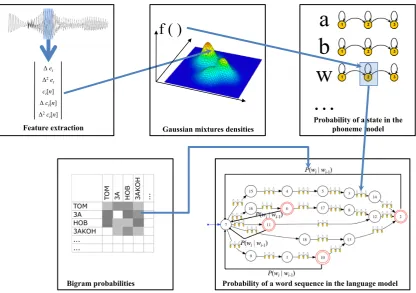
Fig. 5: General scheme of the speech recognition process.
!"#"$%&'
("$')'*+,'
("$%-')'*./' (0$')'*/1'
$&')'*.+' 2-30')'*/.'
%-30')'*+,'
%-30$&)*+4'
%-305&)*//'
30$&')'*+.'
305&')'*/6' 5&')'*/,'
("$%-7)'*8/'
!"#$%&'#()
Fig. 6: Word lattice.
6 Implementation details of the
Language model
Consider the sequence of n words v1, v2, . . . , vn. Its
probability is approximated as P(v1)·Qni=1−1P(vi+1 | vi). A bigram language model can be considered as a
data structure used for solving the following problem: given a bigram (pair of words)w1w2, ndP(w2|w1). We use a corpus of legal texts to evaluate a bigram language model. The corpus consists of200·106words.
90% of the sentences in the corpus are used for the computation of the bigrams, while the other10%are used for the calculation and minimization of the cross-entropy. The number of the words (monograms) in
our dictionary is442,501. In our implementation we use a bigram cut-o threshold: we take into account only the bigrams with at least two occurrences in the corpus. The number of these bigrams is 4,108,409. To smooth the monogram and bigram probabilities, we apply the absolute discounting algorithm, [9], in backing-o variant.
In [3] Jan Daciuk and Gertjan van Noord present a technique for very compact representation of language models. However their method requires binary search in sorted arrays. Since the time complexity is cru-cial for a good speech recognition system, we choose an approach that requires constant time for a bigram probability evaluation. The constant is small and does not depend on the number of the monograms and bi-grams.
Every word is represented as a 32-bit integer. Its value is the position of the word in the lexicograph-ical order of all words. Every byte of this 32-bit in-teger is considered as a separate symbol. Thus every word has exactly four symbols and every bigram is a string of eight symbols. The number of all sym-bols is 256. We keep all such eight-symbol strings in a perfect hash. The perfect hash is represented as a minimal acyclic deterministic nite state automaton
A=hΣ, Q, i, δ, σ, fiover alphabetΣ, where|Σ|= 256,
Q is the set of states,|Q|= 631,501,δ :Q×Σ→Q
is a partial transition function, the number of the transitions is 4,264,244, i is the initial state and f
Active states 1000 1500 2000 2500 3000 Juridical texts
1-LER 93.72% 95.32% 96.05% 96.16% 96.51%
1-WER 81.46% 84.85% 87.10% 87.41% 88.08%
Speed (x RT) 0.32 0.55 0.82 1.21 1.67
Memory (MB) 100.73 108.3 111.54 116.0 137.21
Common texts
1-LER 94.13% 94.83% 95.30% 95.50% 95.64%
1-WER 80.41% 82.37% 83.53% 84.07% 84.42%
Speed (x RT) 0.3 0.52 0.77 1.13 1.55
Memory (MB) 103.94 110.59 119.17 120.6 139.31
Table 2: Evaluation table.
function σ : Q×Σ → N. A has the property that if the bigram b = b1b2. . . b8 is accepted by A, then
P8
k=1σ(δ∗(i, b1b2. . . bk−1), bk) is the position of the
bigrambin the lexicographical order of all4,108,409
bigrams. Here δ∗is the extended transition function.
The functionδinduces a sparse transition matrix and we use Tarjan's table, [11], to represent this matrix. The table has 4,895,828 entries. Every entry repre-sents a transition. The size of one entry is12bytes: 4
bytes encode a symbol,4- a value ofσ and4- a des-tination state. We have achieved 87,1%utilization of the Tarjan's table leaving12,9%empty entries. Using this table, given a statesand a symbola∈Σ, we can compute in constant timeδ(s, a)andσ(s, a). We have another tableP rof4,108,409four-byte oating-point numbers. InP r we keep the−logprobabilities of the bigrams. Let us explain how our language model solves the following problem: given a bigramb=b1b2. . . b8, nd P(b). We start a traversal of Awith b. Ifb is accepted by Athen P(b) = P r[σ∗(i, b)], where σ∗ is
the extended version of σ. If the traversal fails af-ter b4 then we use the smoothing formulae and the monogram model to compute P(b). If the traversal fails beforeb4thenP(b) =P(b5b6b7b8)and we use the monogram model to compute it. The representation of the monogram model is trivial: it is a table of442,501
four-byte oating-point numbers - one number for ev-ery word.
The size of the whole language model is82,3MB. The computation of a bigram probability P(w2|w1)
requires constant time.
7 Evaluation
We performed our experiments on a notebook with a Mobile AMD Sempron 3400+ processor and 2 GB RAM. The acoustic model was trained by adapting a speaker independent model with one hour of speaker's speech data. The vocabulary consists of about 450000 wordforms.
The test set consists of 63 utterances from juridi-cal texts and 1276 utterances from common texts. We have evaluated the letter accuracy dened as
1−letter error rate (1-LER) and the word accuracy dened as 1−word error rate (1-WER). The speed indications are in respect to the real time. Table 2 summarizes the evaluation results.
A manual review of the recognition results revealed some specic classes of mistakes. As expected the com-plex clitics grammar in Bulgarian resulted in many cases of wrong word boundary segmentation e.g.:
äà ëè↔ äàëè, áè ëè↔áèëè, çà êîí è↔ çàêîíè. The full form of the denite article inection in mas-culine nouns was another major source of recognition errors. Since the ò in the full form article inections úò, ÿò is often pronounced without an explosion the system confused it often with the wordform with the non-full form of the denite article e.g.:
êîíÿò↔êîíÿ, ìúæúò↔ìúæà.
The single most frequent source of errors are the proposition â and ñ. Their unvoiced phonetizations are the phonemes f and s, which are very easily con-fused with any noise like speaker's aspiration especially at the utterance start. Since those are between the most frequent words in Bulgarian this resulted some times in the wrong insertion of an additional propo-sition in front of the utterance, especially in case of more noisy environment.
8 Conclusion
This paper presented the result of the project for building a LVCSR system for Bulgarian. Sophisti-cated techniques were applied to cope with the very large Bulgarian vocabulary. The evaluation results showed less than 4% letter error rate and 13% word error rate on speech recognition of juridical texts us-ing real time processus-ing speed on a modest notebook computer. The system has been packaged as a soft-ware product implementing the Microsoft Speech API 5.1.
An informal user feasibility test has been conducted in a company specialized in providing law information services. This test proved that although a user adap-tation period is required, the system is already in a state permitting daily use for text dictation.
References
[1] M. Andreeva, I. Marinov, and S. Mihov. Speechlab 2.0 a high-quality text-to-speech system for bulgarian. In Proceedings of the RANLP 2005, pages 52 58, Borovets, 2005.
[2] J. Daciuk, S. Mihov, B. Watson, and R. Watson. Incremental construction of minimal acyclic nite state automata. Compu-tational Linguistics, 26(1), 2000.
[3] J. Daciuk and G. van Noord. Finite automata for compact representation of tuple dictionaries. Theor. Comput. Sci., 313(1):4556, 2004.
[4] H. Ganchev, S. Mihov, and K. U. Schulz. One-letter automata: How to reduce k tapes to one. In F. Hamm and S. Kepser, ed-itors, Logics for Linguistic Structures, number 201 in Trends in Linguistics, pages 3556. Mouton de Gruyter, Hillsdale, New Jersey, 2008.
[5] X. Huang, A. Acero, and H.-W. Hon. Spoken Language Pro-cessing. Prentice-Hall, 2001.
[6] R. M. Kaplan and M. T. Kay. Regular models of phonological rule systems. Computational Linguistics, 20(3):331378, 1994. [7] S. E. Levinson. Mathematical models for speech technology.
Wiley, 2005.
[8] R. Mosur. Ecient Algorithms for Speech Recognition. PhD thesis, Carnegie Mellon University, 1996.
[9] Ney, Hermann, U. Essen, and R. Kneser. On structuring prob-abilistic dependences in stochastic language modeling. Com-puter Speech and Language, 8:138, June 1994.
[10] L. Rabiner. A tutorial on hidden markov models and selected applications in speech recognition. Proc. IEEE, 77, 1989. [11] R. E. Tarjan and A. C. Yao. Sorting a sparse table.
Commu-nications of the ACM, 22(11):606611, November 1979.