Scholarship@Western
Scholarship@Western
Electronic Thesis and Dissertation Repository
9-24-2018 12:30 PM
Transitions in Medical Education
Transitions in Medical Education
Britta Laslo
The University of Western Ontario
Supervisor Brown, Judith B.
The University of Western Ontario Co-Supervisor Freeman, Thomas R.
The University of Western Ontario Graduate Program in Family Medicine
A thesis submitted in partial fulfillment of the requirements for the degree in Master of Clinical Science
© Britta Laslo 2018
Follow this and additional works at: https://ir.lib.uwo.ca/etd
Part of the Medical Education Commons
Recommended Citation Recommended Citation
Laslo, Britta, "Transitions in Medical Education" (2018). Electronic Thesis and Dissertation Repository. 5755.
https://ir.lib.uwo.ca/etd/5755
This Dissertation/Thesis is brought to you for free and open access by Scholarship@Western. It has been accepted for inclusion in Electronic Thesis and Dissertation Repository by an authorized administrator of
i
Transitions in medical education have been shown to increase unprofessional behaviours in
learners but little is known about the experiences of first year Canadian Family Medicine
residents or their preceptors. This qualitative descriptive study explored the experiences and
feelings of Family Medicine preceptors and first year Family Medicine residents (FMRs)
surrounding the transition to residency. Semi-structured interviews were conducted with 10
preceptors and 9 FMRs. The findings highlighted the complex but predominantly positive
experiences during this transition in addition to competing and often evolving feelings
experienced by both groups. Both studies noted the lack of support for preceptors and FMRs
during transitional times and the importance of a learner-centered approach to transitions
with an emphasis on peer and early, meaningful Family Medicine connections. These
findings generate learner-centered recommendations that may help to decrease the
development of unprofessional behaviours and may improve patient safety and care.
Keywords
Medical education, transitions, Family Medicine preceptors, Family Medicine residents,
ii
Co-Authorship Statement
The thesis was conceived, planned, conducted and reported by the author.
The following contributions were made:
Drs. Judith Belle Brown and Thomas R. Freeman supervised the thesis project, guided the
development and revision of the research question and methodology, participated in data
iii
Acknowledgments
I would like to thank Dr. Eric Wong who sparked and kindled my interest in medical
education during my postgraduate Family Medicine training. Dr. Wong’s passion for
teaching is inspirational and his learner-centered approach in medical education is one that I
continue to emulate and aspire towards.
I would also like to thank my thesis Supervisors Drs. Judith Belle Brown and Thomas R.
Freeman who stuck with me through the journey of the thesis and pulled me back on track
when I repeatedly lacked a muse for months! All of your support, guidance, mentorship and
enthusiasm has been remarkable and greatly appreciated. Thank you for guiding me in this,
slightly longer than expected, journey of qualitative discovery!
Lastly I would like to thank Ms. Liz McInnis for her administrative support. Liz, your
perseverance with logging my supervisor meeting dates, reminding me to pay my tuition fees
(!) and technological support did not go unnoticed. Thank you for keeping me in line over the
iv
Table of Contents
Abstract ... i
Co-Authorship Statement... ii
Acknowledgments... iii
List of Tables ... viii
List of Appendices ... ix
Chapter 1 ... 1
1 Introduction ... 1
1.1 Thesis Purpose ... 2
1.2 Thesis Design ... 2
1.3 Thesis Structure ... 3
Chapter 2 ... 5
2 Literature Review ... 5
2.1 What are Transitions? ... 5
2.1.1 Transitions in the Social Sciences Literature ... 5
2.1.2 Erik Erikson’s Theory of Psychosocial Development ... 5
2.1.3 Nigel Nicholson’s Theory of Work Role Transitions ... 6
2.1.4 Elizabeth Wolfe Morrison’s Proactive Newcomer Socialization ... 8
2.2 Transitions Throughout the Medical Education Continuum ... 9
2.2.1 Definition of Transition in the Medical Education Literature ... 9
2.2.2 Types of Transitions in Medical Education ... 10
2.3 Learner & Preceptor Research on Transitions in Medical Education ... 11
2.3.1 Non-Clinical to Clinical Medical Student... 11
2.3.2 Medical Student to Resident ... 12
2.3.3 Resident Perspective ... 13
v
2.4 Residency to Independent Practice ... 14
2.5 Gaps in the Literature on Transition from Final Year Medical Student to First Year Family Medicine Resident ... 16
Chapter 3 ... 18
3 Methodology Study One and Study Two ... 18
3.1 Purpose ... 18
3.2 Study Design Study One and Study Two ... 18
3.3 Sampling and Recruitment ... 19
3.3.1 Study One – Clinical Preceptor Participants ... 19
3.3.2 Study Two – Family Medicine Resident Participants... 19
3.4 Data Collection Study One and Study Two ... 20
3.5 Data Analysis Study One and Study Two... 20
3.6 Credibility and Trustworthiness Study One and Study Two ... 22
Chapter 4 ... 24
4 Study One Findings and Discussion ... 24
4.1 Final Sample and Demographics ... 24
4.2 Findings from Data Analysis ... 24
4.2.1 Overview of Findings ... 24
4.2.2 Preceptor Experiences ... 24
4.2.3 Preceptor Experiences: the Learner-Preceptor Relationship ... 24
4.2.4 Preceptor Experiences: The Importance of Collegial Relationships and Mentorship ... 28
4.2.5 Preceptors Experiences: The Value of One’s Own Experiences With Transition ... 29
4.2.6 Preceptors Feelings ... 31
4.3 The Evolving Learner ... 33
vi
4.3.2 The Evolving Learner: Adapting to Technology ... 35
4.3.3 The Evolving Learner: Assessing and Managing the Learner in Transition in Difficulty ... 36
4.3.4 The Evolving Learner: Institutional Gaps in Medical Education and Transition ... 37
4.4 Discussion ... 38
4.5 Strengths of this Study ... 42
4.6 Limitations of this Study ... 43
4.7 Future Research and Knowledge Translation ... 43
4.8 Conclusion ... 44
Chapter 5 ... 46
5 Study Two Findings and Discussion ... 46
5.1 Findings Overview ... 46
5.1.1 The Positive and Complex Experience of Transition from Final Year Medical Student to First Year FMR... 46
5.1.2 Evolving and Competing Feelings During the Transition from Final Year Medical Student to First Year FMR... 49
5.1.3 The Transition to Professional ... 51
5.1.4 Intrinsic and Extrinsic Factors Influencing the Transition from Final Year Medical Student to First Year FMR... 53
5.1.5 Lack of Connection to Family Medicine ... 55
5.2 Discussion ... 57
5.3 Strengths of this Study ... 60
5.4 Limitations of this Study ... 61
5.5 Future Research and Knowledge Translation ... 62
5.6 Conclusion ... 63
Chapter 6 ... 64
vii
6.1 Integration Overview ... 64
6.1.1 Competing Feelings of Excitement and Fear ... 64
6.1.2 Prior Experiences with Transition and the Impact on Learning and Teaching ... 65
6.1.3 Professional Relationships in Family Medicine ... 66
6.1.4 The Evolving Learner and Need for Formalized Preceptor Training ... 67
6.1.5 Developing a Department of Post Graduate Family Medicine Community of Support... 67
Bibliography ... 70
Appendices ... 75
viii
List of Tables
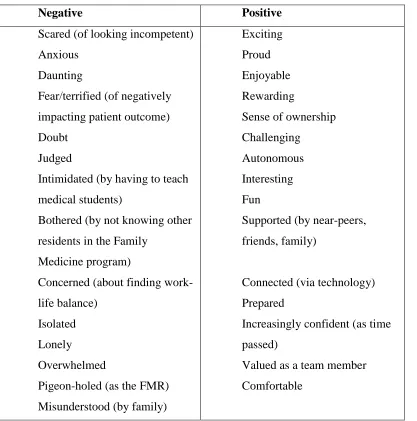
Table 1: Feelings described by participants about the transition ... 49
ix
List of Appendices
Appendix 1: Recruitment Email Invitation ... 75
Appendix 2: Letter of Information & Consent ... 76
Appendix 3: Interview Guide Study 1 ... 80
Chapter 1
1
Introduction
Transitions in medical education have been a renewed source of interest for researchers
over the past decade. The definition of a transition remains contested even amongst
experts in the field; however, for the purpose of this study, the “dynamic movement
across different expectations, tasks and responsibilities” (pg. 12) (1) will be used to best
describe “transition” in the continuum of medical education. The continuum of medical
education provides many transition periods for students and residents (2). These
transition periods have been shown to be associated with personal negative consequences
such as a sense of poor preparedness (3) confusion, uncertainty, demotivation and stress
(2). In addition, the literature has also shown that transition periods in medical education
are associated with poor patient care (4). These areas include a focus on work efficacy
over patient-centeredness, lying about or withholding relevant patient information from
preceptors, and increased “turfing” behaviour where learners work to avoid necessary
admission to their service or attempt to block admission to the hospital (4).
Given the significant negative personal and patient outcomes associated with transitions
in medical education, there has been a push to re-examine previously accepted norms of
training. The long-time accepted transition based approach to medical education,
originally described by Flexner in 1910 (5), focused on service-based, teacher-centered
rotations with a clear focus on process and structure. This model had been considered the
norm in the landscape of medical education despite lack of evidence to support its basic
tenets and principles. In recent decades, researchers have begun to question the
Flexnerian approach to medical education due to emerging evidence around transitions
hidden agendas in medical education are two areas which contribute to poor patient care
and are under critical review. Firstly, the use of frequent rotation changes, where learners
change service and/or work location every 2-6 weeks, across undergraduate and
postgraduate education (1,4) focuses more on providing a service to the hospital to ensure
smooth operation instead of providing healthy educational opportunities appropriately
suited for learners. Hidden agendas such as learned unprofessional behavior are reflected
in turfing or blocking admission to hospital encouraged by senior learners or supervising
staff (4). These behaviours are common in the socialization of medical trainees and
encourage poor patient care (4). Despite movement to redesign and better understand the
hidden agenda of medical curricula (1), the in-depth experiences of residents and their
primary preceptors as the active players in transitions have not been explored in much
detail. Gaining a greater understanding of the experiences of residents and their clinical
preceptors will help curriculum planners in designing curricula that may promote
learning, the development of professional behaviours, and may improve patient care.
1.1
Thesis Purpose
The transition from final year medical student to first year resident is arguably one of the
most significant transitions in the medical education trajectory and thus has been chosen
as the transition in question for this study. The experiences of this transition in the
shortest post-graduate medical training program in Canada will provide unique insights to
increase our understanding of this experience.
1.2
Thesis Design
This research project is comprised of two studies as part of a qualitative thesis exploring
transitions in medical education. Research was conducted in two phases with Study One
informing Study Two. Study One consisted of participants who are clinical Family
Medicine preceptors at Western University in London, Ontario. Study Two consisted of
1.3
Thesis Structure
This thesis explored the feelings and experiences of first year FMRs and clinical
preceptors who actively supervise FMRs during the transition from final year medical
student to first year FMR.
This chapter provides a background of transitions in medical education and outlines some
of the negative effects, on learners and patients, associated with such transitions.
Furthermore a brief introduction to the purpose of the thesis and its design are detailed.
Chapter two will review the literature on transitions including sentinel ideas on
transitions in industrial and organizational psychology and the literature on transitions in
medical education. The medical education literature provides insight into the following
transitions: from non-clinical to clinical medical student, from final year medical student
to first year resident trainee (commonly referred to as “junior doctor” in the United
Kingdom), and from resident trainee to independent practitioner (also referred to as
consultant).
Chapter three will detail the study methodology used in both descriptive qualitative
studies.
Chapter four will report the findings from Study One, whose purpose was to explore the
experiences and feelings surrounding the transition from final year medical student to
first year FMR from the perspective of Family Medicine clinical preceptors. Three key
themes emerged in the data analysis: 1) preceptor experiences with transition (which
included three subthemes: the learner-preceptor relationship (LPR), the importance of
colleagues and peer mentorship and preceptors’ own experiences with transitions), 2)
preceptor feelings during transition and 3) the evolving learner.
Chapter five will report the findings from Study Two, whose purpose was to explore the
experiences and feelings surrounding the transition from final year medical student to
first year FMR from the perspective of first year FMRs. The findings discovered that
also described having evolving, but often competing, positive and negative feelings
during this transition in addition to navigating an important professional transition that
occurs as a first year FMR. Importantly participants expressed experiences and feelings
about their lack of connection to the Family Medicine postgraduate program and the
Postgraduate Program at large. They provided suggestions to improve this transition for
future FMRs.
Chapter six will integrate the findings from chapters four and five and discuss similar
themes as well as differences that emerged between the two studies. Moreover,
recommendations for curriculum developers, postgraduate department chairs and clinical
preceptors will be outlined as potential ways to facilitate and better support FMRs going
Chapter 2
2
Literature Review
2.1
What are Transitions?
2.1.1 Transitions in the Social Sciences Literature
Literature exploring transitions in the social sciences has provided important insights into
personal transitions over the second half of the 20th century while industrial and
organizational (I/O) psychology research has provided influential ideas in workplace and
professional transitions. Both the social sciences and I/O psychology literature have
informed research around transitions in medical education. Given the robust amount of
psychological literature available for review, three theorists have been chosen for further
review for the purpose of this thesis on transitions in medical education.
Seminal theories and ideas include Erik Erikson’s Theory of Psychosocial Development,
Nigel Nicholson’s Theory of Work Role Transitions in the 1980s, and Elizabeth Wolfe Morrison’s insights from organizational psychology in the 1990s.
2.1.2 Erik Erikson’s Theory of Psychosocial Development
Erik Erikson’s groundbreaking work provides an initial framework for understanding
psychosocial development. Psychosocial development is arguably the basis of identity
formation that shapes personal and occupational transitions throughout an individual’s
life. Erikson’s work described eight stages of ego growth (6,7). These stages occur
chronologically and each involves a psychosocial crisis where the individual must work
through crisis and evolve within their own social milieu (7). His work heavily emphasizes
the relationship between the individual and society in contrast to work by other pioneers
in the field of identity formation (6,7).
In late adolescence Erikson describes the psychosocial crisis of identity versus identity
where individuals have to confront the crisis of adult tasks such as choosing an
occupation and preparing for marriage while being able to integrate childhood
experiences and personal identifications into their view of themselves as a part of adult
society (7). By the end of the late adolescent crisis Erikson believes that adolescents
should have overcome the crisis of choosing an occupation and forming a personally and
socially relevant ideology (8). Forming an ideology, according to Erikson, is achieved by
integrating significant identifications and consistent roles. This is further clarified in the
methods Erikson suggests are used to form such an ideology (8). Psychologists Kroger
and Marcia have further described and interpreted Erikson’s work exploring identity
formation in late adolescence (9). They highlight that in this stage of Erikson’s Identity
Construct, choosing an occupation requires opportunities of trial and error and reflection
where individuals try out various roles “whereby past patterns are examined, some
discarded, and others integrated into a new identity configuration” (pg. 33) (9). Erikson
states that after this period of trial and error and reflection there is a final identity:
The final identity, then, as fixed at the end of adolescence is
superordinated to any single identification with individuals of the past: it includes all significant identifications, but it also alters them in order to make a unique and reasonably coherent whole of them (pg. 67-68) (8).
Erikson’s work influenced a multitude of psychologists who further explored social
identity formation as well as industrial and organizational psychologists in the second
half of the 20th century.
2.1.3 Nigel Nicholson’s Theory of Work Role Transitions
Nigel Nicholson’s work from Cornell University in the United States in the early 1980’s
provides a theory of work role transitions (10). Nicholson’s theory describes the
social-organizational process when individuals transition to a new work role.
He describes four interrelated relationships in his theory including three predictor
variables: 1) prior occupational socialization and motivation orientation (“the character
of the person’s past socialization into previous work roles” (pg. 172) (10) and the
psychological disposition and motives of the person; 2) organizational
practices that shape the person’s adjustment to the new role” (pg. 173) (10); and 3) role
requirements (the requirements or responsibilities of the new role) (10). These three
predictor variables affect the four modes of adjustment: replication, absorption,
determination and exploration. These modes of adjustment ultimately provide feedback
to the first three variables (10). Nicholson’s theory further relates the modes of
adjustment to two outcomes of individual adjustment: 1) personal development to absorb
new demands and 2) role development (10). To further explain the interconnectedness of
his theory Nicholson explores the four modes of adjustment (replication, absorption,
determination and exploration) resulting in personal and role development (10).
Replication occurs when the new worker makes very few or no adjustments to his or her
identity or behaviour to fit into one’s new role (10). An example of a labourer who works
on an assembly line who gets transferred to another assembly line where work is similar
would likely make very few adjustments to the new work role.
Absorption occurs when transitions require a high degree of learning from the new
individual. The worker must assimilate new skills, social behaviours and frames of
reference to the organizational context. Social psychologists have explored the
socialization of priests and medical students and the important absorption of skills, values
and social behaviours in their respective professional fields (10).
Determination is a mode of adjustment where the individual’s personal identity affects
and shapes their new role. Political ministerial portfolios where an individual succeeds or
is transferred into a new role within the government could be an example where the
individual’s unique identity and skills impact and alters the new role (10).
Exploration is represented in transitions where there is simultaneous change in both the
individual’s personal qualities and the new role. This transition can be seen in large
corporations undergoing restructuring where an individual may be recruited for a certain
role given certain expertise sought by the organization. This individual would then
simultaneously choose to develop certain professional skills to better fit the expectations
Nicholson’s theory of work role transitions would further influence other theorists in the
late 20th- century exploring newcomer and organizational socialization.
2.1.4
Elizabeth Wolfe Morrison’s Proactive Newcomer Socialization
Elizabeth Wolfe Morrison’s (11) work on newcomer socialization offers further insight
into organizational socialization theories as she explores the newcomer as a reactive
agent when assuming a new role in an organization. Previous ideas in socialization
explored newcomers as non-reactive participants (12,13). Researchers subscribing to this
previous school of thought believed that a socialization process would “yield predictable
outcomes regardless of variation in raw materials [different types of people]” (pg. 173)
(11).
A new perspective in the social sciences was introduced in the late 20th century where
researchers acknowledged the more proactive role of a newcomer and produced research
on adjustment, coping, communication and feedback seeking (14–18). These researchers,
as summarized by Wolfe Morrison, further described four key tasks of the socialization
process. These tasks include: “a) task mastery, learning how to perform the component of one’s job; b) role clarification, developing an understanding of one’s role in the organization; c) acculturation, learning about and adjusting to the organization’s culture;
and d) social integration, developing relationship with co-workers” (pg. 174) (11).
Wolfe Morrison’s work further expands on these ideas while exploring proactive
information seeking as a way to reduce uncertainty about a new role, to better understand
the new role and work towards role mastery (11). Information seeking includes seeking
clarification and feedback from both peers and supervisors both in written and verbal
forms (11). Wolfe Morrison’s work reveals that proactive newcomer information seeking
had an effect on three out of the four tasks of the organizational socialization process:
task mastery, role clarity and social integration (11). Acculturation was not affected by
information seeking and Wolfe Morrison hypothesizes that various organizational-led
initiatives such as formal orientation programs, mentoring and the development of
While the I/O transition literature is robust and has been expanding since the mid 20th
century, the literature on transitions in medical education has only been building over the
past 10-15 years. Researchers in Denmark, the Netherlands and the United Kingdom have
provided important new research, reviews and critiques of the transitional landscape in
medical education and will be reviewed in detail in the next section.
2.2
Transitions Throughout the Medical Education
Continuum
2.2.1 Definition of Transition in the Medical Education Literature
The literature on transitions in medical education provides various definitions of
“transition.” A widely accepted definition is “the dynamic movement across different
expectations, tasks and responsibilities” (pg. 12) as described by Ringsted (1). Others
have described this event as “a period of change in which medical students or medical
doctors experience some form of discontinuity in their professional life space, forcing
them to respond by developing new behaviors or changing their professional life space in
order to cope with the new situation” (pg. 374) (19). Teunissen and Westerman (2) have
further defined transition as “not a moment, but rather a dynamic process in which the
individual moves from one set of circumstances to another” (pg. 52) (2). Such
circumstances could include changes in tasks or responsibilities and then require coping
strategies to be able to “function competently in a new environment” (pg. 52) (2).
Researchers have consistently referred to the origins of transitions in medical education
to the Flexner report, written by Abraham Flexner in 1910 (5), on the state of medical
education in Canada and the United States (5). Flexner’s report was written as the
scientific method was being adopted into modern medicine and the biomedical model
was being expanded. Flexner suggested that students should be properly trained in
“formal analytic reasoning” during a pre-clinical stage and then training should be
followed by a clinical phase of training in teaching hospitals (5). According to Flexner,
students would learn how to collect and interpret clinical data from patients under the
supervision of clinicians (5). Flexner also had the foresight to see that as the biomedical
additional need and demand for training in subspecialties of medicine (2). This led to the
creation of multiple transitions in postgraduate medical training.
2.2.2 Types of Transitions in Medical Education
A literature review compiled by Teunissen and Westerman in 2011 (2) revealed three
distinct medical transitions within the continuum of medical education. These include
the transition from non-clinical to clinical medical student, 2) from medical student to
resident (commonly referred to as “house officer” or “junior doctor” in the United
Kingdom), and, 3) resident to independent medical practitioner (commonly referred to as
“certified specialist” in the United Kingdom and Europe).
The transition from non-clinical to clinical medical student typically occurs in the third
year of undergraduate medical training in most traditional medical schools in North
America. Medical students are often referred to as “clinical clerks” and complete core
rotations in the various medical disciplines (i.e.: Pediatrics, Family Medicine, General
Surgery, Obstetrics and Gynecology, Emergency Medicine, and Internal Medicine) as
well as clinical elective rotations. Core rotations are typically four to six weeks in length
and electives are typically two to four weeks in length. The medical school predetermines
learning objectives for core rotations while objectives for elective rotations are mutually
agreed upon between the student and supervising physician.
The transition from medical student to “house officer” or “resident”, in the United
Kingdom or North America respectively, signals the transition from undergraduate
medical education to postgraduate medical education. Residents have completed the
required examinations and rotations and have been awarded their degree as a “Medical
Doctor”. Residents are able to write independent medical orders and prescriptions under
an educational license once they fulfill the necessary requirements for their area of
practice (20). For example, in Ontario, residents would have to have passed their
undergraduate medical school requirements and be selected through a written application
Ontario medical schools. Additionally, residents are required to have passed their
Licentiate of the Medical Council of Canada (LMCC) part 1 examination through the
Medical Council of Canada (21)(20).
The transition from resident to independent practitioner occurs when the resident
completes the necessary clinical training requirements and examinations for their
specialty of medical practice (20). In Canada, depending on the specialty, residents
complete two to seven years in a post-graduate training program. Licensing to
successfully enter independent practice requires that all residents complete part 2 of the
LMCC examination that is clinical in its focus and is implemented as ten clinical scenario
stations better known as “OSCEs” - Objective Standardized Clinical Examinations (20).
Residents must then pass further examinations specific to their discipline (20). For
example, Family Physicians in Canada, regardless of province of practice, must pass both
a written examination as well as the Simulated Office Oral Examination developed,
standardized, implemented and graded by the College of Family Physicians of Canada –
the professional governing body for the practice of Family Medicine in Canada (21).
2.3
Learner & Preceptor Research on Transitions in
Medical Education
2.3.1 Non-Clinical to Clinical Medical Student
Studies exploring the transition from non-clinical to clinical medical student have
primarily focused on the learners’ perspectives. Learners described various tasks that
provoke anxiety such as the need to speak with senior staff while on rounds or ordering
bloodwork and often described this transition as abrupt (22), confusing or daunting
(23,24). Other research has revealed how learners transitioning from classroom to
clinical learning experience difficulties as they seek to understand roles and expectations
as well as adjusting to clinical cultures. Consequently, learners have described feeling
overwhelmed and frustrated (25). Studies examining what factors either support or
challenge transitions have found that gender (24), age of the learner (26), and type of
A qualitative study completed in the United States conducted in-depth interviews with
female medical students of various medical backgrounds, ages and race to better
understand the experience of how female gender may affect the transition to clinical
clerkship (24). Their findings confirmed that participants viewed their gender as affecting
their clerkship and described experiences of difficulty when learning their role within the
medical team as compared to their male colleagues and also reverted back to
gender-stereotyped roles (24). For example, women learners felt there was a greater need to
prove their competence when working with patients and for this reason the authors
concluded that transitions might be more difficult for women (24). Conversely, in the
same study, Babaria and colleagues also found that some female participants described
their transition to clerkship to have been positively affected by gender-stereotyped
qualities. For example, some participants explained that qualities they possessed such as
being “nurturing” or “caring” were perceived as helpful by allied health providers (24).
In addition to gender, age also influenced learner’s experiences during their transition to
clerkship. Shacklady and colleagues (26) found that older age was a protective or
positive influencing factor on this transition as more mature students (median age 22
versus median age of 18 in the study) were less likely to feel daunted, confused or
overwhelmed (26).
Research has also explored the impact of pre-clerkship curricular formats on learners’
experiences entering clerkship. Problem-based learning (PBL) curricula have been found
to decrease anxiety and increase confidence for learners during this transition (27). Some
overall positive aspects experienced by learners during the transition from non-clinical to
clinical work include increased motivational learning derived from a clinical work
environment and the value of learning from a real clinical setting (27).
2.3.3 Resident Perspective
The literature reveals that the transition from medical student to junior doctor (common
nomenclature used to describe a post-graduate year one trainee in the United Kingdom) is
experienced with more competing positive and negative emotions. On one hand, junior
doctors have revealed the positive learning opportunities of having more responsibilities
and tasks and thus developed coping strategies to work professionally with patients (28).
On the other hand such increased responsibilities created a sense of uncertainty for junior
doctors and often they perceived a lack of support from staff and more senior trainees
(29). Similarly in relation to the protective factors described previously, junior doctors
who had also trained in a PBL curriculum felt better prepared and were more comfortable
when dealing with uncertainty (30–33). Beyond a PBL curriculum, research from the
United Kingdom revealed that the experience both in pre-residency as well as residency
training of working in a multidisciplinary team helped to better support trainees with the
extremely negative stress associated with residency training (34). These researchers also
emphasized that more meaningful learning must occur with real patients instead of
simulated patients to truly prepare students for the responsibilities and stresses of
post-graduate training.
In addition to these extrinsic factors such as the type of undergraduate medical
curriculum and experience working with multidisciplinary teams, research has also
introduced intrinsic factors that affect this transition. A study by Cave and colleagues (3)
revealed that newly qualified doctors aimed to detect whether certain personality traits
(agreeableness, contentiousness, neuroticism, extroversion, openness) were associated
with self-reported feelings of preparedness in their new role. There was a small, but
statistically significant, positive correlation for those who scored highly on agreeableness,
extroversion and conscientiousness to feel better prepared and a negative correlation for
those who scored highly on the trait of neuroticism (i.e.: feeling less prepared) (3). The
authors reported no correlation between the trait of openness and sense of preparedness
2.3.4 Clinical Supervisor Perspective
Research has also revealed how clinical supervisors (also referred to in the literature as
clinical consultants) experience concerns about the ability of trainees to transfer
knowledge from medical school to post-graduate training (34,35). One study explored the
hypothesis that short and frequent rotations, along with overnight on-call commitments,
pulled learners away from clinical experience/learning and led to a slower acquisition of
necessary skills (35). Moreover, research has revealed that supervisors perceived that
junior doctors in the United Kingdom in their general first year of postgraduate training
(house officer role in the United Kingdom) had difficulty managing complex patients
with multimorbidities and lacked confidence working with this population (29).
Additionally, supervisors perceived a lack of competence in performing certain
procedural skills and attributed this lack of competence as a consequence, at least in part,
of the expanding role of other health care professionals such as nurses, nurse practitioners
and physician assistants (29).
Evidently, a perceived lack of preparedness and concerns about the ability of trainees to
transfer knowledge from medical school to residency experienced by clinical supervisors
are documented in the literature. The hypothesized contributing factors to the lack of
perceived preparedness and knowledge transfer highlights potential sources of further
research.
2.4
Residency to Independent Practice
The literature on the transition from resident to independent practitioner also reveals
significant stress and negative emotions associated with this transition. While the
literature examines how new consultant physicians, including General Practitioners,
Psychiatrists, Pediatricians and Internists in the United Kingdom and the Netherlands,
often feel confident in specific clinical skills required for practice in their field (36,37)
but they do not feel prepared in terms of general competencies, teaching, managerial or
financing skills (36–39). Westerman and colleagues (40) further explored correlations
consultants. They found that unpreparedness in general competencies was correlated with
higher burnout and emotional exhaustion scores among new consultants in the
Netherlands (40). Higher levels of burnout were also correlated with increased levels of
depersonalization during this transition and this finding was more evident in female
consultants (40). On a positive note, this research found that social support provided to
consultants was correlated with lower emotional exhaustion scales and facilitated
progression through the initial transition phase (40).
One study examined how new consultants (across all 27 recognized specialties) in
Denmark and the Netherlands adapt to their supervisory role (39). Three important
overarching influencing factors were described: 1) personal preparedness (i.e.: how
consultants were prepared by their own training), 2) personal characteristics (i.e.:
personal coping strategies) and, 3) contextual characteristics (i.e.: how to access support
from colleagues, departmental procedures) (39). While these three factors were all
essential in order to provide supervision to learners the researchers found that contextual
characteristics were of utmost importance (39). The researchers concluded that it was
necessary for a new consultant to have a formal orientation for their supervisory task in
order to facilitate a smooth transition (39). Although perhaps not entirely transferable, the
importance of formal orientations for new physicians is likely significant in the Canadian
Family Medicine context.
There is some Canadian research available that explores practice choice of residents
entering their first year of independent Family Medicine practice. A theory of planned
behaviour study from McMaster University in Hamilton Ontario revealed the important
impact of peers in the choice of practice type. Grierson and colleagues (41) found that the
subjective norms of peers had the strongest impact on the intentions of participants to
practice comprehensive care upon graduation. Although this study only explored
intentions, the importance of the peer influence on career choice and potential behaviour
2.5
Gaps in the Literature on Transition from Final Year
Medical Student to First Year Family Medicine
Resident
There is a paucity of research that explores the transition from final year medical student
to first year FMR. The literature focuses largely on assessment of skills and potential
impact of pre-residency training courses but does not focus on the resident experience.
Some research from the United States explored whether a “boot-camp” pre-residency
training intensive course for final year medical students who were to enter their Pediatric
and Family Medicine residency programs would increase self-perceived levels of
preparedness (42). While participants did show some increased self-perceived level of
preparedness in certain clinical and communication skills, the study highlighted the small
sample size and evaluation deficiencies and limitations of self-report (42).
Canadian primary care researchers Garcia-Rodriguez and colleagues from the University
of Alberta in Edmonton completed a survey for incoming FMRs to assess baseline levels
of self-reported confidence in certain procedural skills as well as self-reported intent to
use skills upon entering independent practice (43). Beyond this self-reported data, this
study did not comment on the overall experiences or feelings of FMRs during this
transition.
A study by Law and colleagues (44), from Toronto, Canada conducted a constructivist
grounded theory approach to explore the impact of residency demands on residents’
personal relationships and how changes in those relationships could impact their wellness
(44). The sample included 16 Canadian residents from various specialties including four
Family Medicine residents in first and second years of Family Medicine residency
training (44). Noteworthy findings about the personal experience of residents and the
effects of residency training on personal relationships were found in this study.
Importantly, the findings suggested that the burdens of residency training (time and
scheduling pressures, emotional angst) influenced professional identity development,
created role conflict between professional and personal roles and responsibilities, and in
of a poor sense of wellbeing that occurs during role conflicts that has been previously
described in the literature by Schaufeli et al. (45) as they noted a connection between
burnout and role conflict (44). Burnout was further noted to affect patient safety as
trainees who felt burnt out responded to patients in more cynical and callous ways and
noted a sense of depersonalization (45).
While studies in Europe and North America have provided context and insights into the
various transitions in medical education and the study by Law and colleagues (44)
highlights some of the personal experiences of residents adapting to the impact of their
postgraduate training there remains a gap in understanding the unique experiences and
feelings of first year FMRs and clinical preceptors who supervise FMRs during their
transition. The two studies explored in this thesis will address these two gaps in the
Chapter 3
3
Methodology Study One and Study Two
3.1
Purpose
The purpose of these two studies was to explore the experiences and feelings surrounding
the transition from final year medical student to first year Family Medicine Resident
(FMR) from the perspective of:
• Study 1: Family Medicine clinical preceptors
• Study 2: First year FMRs
3.2
Study Design Study One and Study Two
In keeping with the objectives of the two studies, a qualitative descriptive design was
used to explore the feelings and experiences of both Family Medicine preceptors who
supervise first year FMRs during the transition from final year medical student to first
year FMR, and the feelings and experiences of FMRs during this transition. Qualitative
descriptive design has been described by Sandelowski (46,47) to allow for the clear
description of phenomena. It is important to note that qualitative description requires data
analysis and interpretation and it is not merely sufficient to describe data without
interpretation (47). Intense immersion in the data was used, in keeping with a qualitative
descriptive design, to allow for identification, analysis and rich description of themes
(48).
Study One and Study Two were completed consecutively to allow one study to partially
inform the interview guide for the second study. This was both a purposeful and practical
decision to allow for a dual-perspective on important themes identified while ensuring
that concurrent analysis of the two data sets would not, unintentionally, affect one
3.3
Sampling and Recruitment
3.3.1 Study One – Clinical Preceptor Participants
Family Medicine preceptors from urban, regional and rural teaching sites affiliated with
Western University’s Postgraduate Department of Family Medicine were contacted by
email by the research team to participate in the interview (Appendix A) along with a
letter of information and consent (Appendix B). Three follow-up recruitment emails were
sent at 2,4 and 6 weeks after the initial recruitment email. A potential list of participants
was generated to ensure breadth of experience in clinical practice as well as variety
among the three geographical teaching sites. This was a purposive sampling strategy.
The following inclusion criterion were set for participation in the study: 1) be affiliated
with the Postgraduate Department of Family Medicine and 2) have had at least one year
of experience supervising first year FMRs.
Ethics approval was obtained through the non-medical Health Sciences Research Ethics
Board of Western University (file approval number 105652).
3.3.2 Study Two – Family Medicine Resident Participants
All first year FMRs were contacted by email by the research team with an invitation to
participate in the interview (Appendix A) along with a letter of information and consent
(Appendix B). Three follow-up recruitment emails were sent at 2,4 and 6 weeks after the
initial recruitment email. The following inclusion criteria were set for participation in the
study: 1) participants must be actively registered in their first year of Family Medicine
(FM) residency at the Schulich School of Medicine and Dentistry and, 2) participants
must have completed their undergraduate medical degree in Canada.
Ethics approval was obtained through the non-medical Health Sciences Research Ethics
3.4
Data Collection Study One and Study Two
Using a semi-structured interview guide (Appendix C & D), in-depth, one-on-one
interviews were conducted by one investigator, BL, between 2014-2016. Interviews were
completed either by telephone or in person at the Centre for Studies in Family Medicine
in London, Ontario. Phone or in-person interviews were determined by participant
preference and convenience. Interviews lasted 25-45 minutes, were audio-taped and
transcribed verbatim by an independent transcribing service and by the investigator, BL,
when audio quality was unclear by the independent transcriber service. Free form field
notes were recorded in journal entry format throughout the interviews to capture body
language of the participant (when interviews were conducted in person) as well as
thoughts, feelings and questions from the perspective of the interviewer (for in-person
and telephone interviews). All data was securely stored in a locked filing cabinet at the
Centre for Studies in Family Medicine in London, Ontario. All electronic data was kept
under password-protected files on a secured server through Western University.
3.5
Data Analysis Study One and Study Two
The analysis process employed iterative, interpretative analysis techniques where data
was analyzed concurrently with data collection. Data collection and analysis occurred
concurrently to allow exploration of emerging themes in future interviews. Once the
interviews had been transcribed, the investigators read the transcripts first independently
and then as a team looking for key words and emerging themes. Field notes were also
continually generated throughout the collection and analysis process to allow the
investigator to highlight emphasis, body language, and ideas to be reviewed with future
participants. The transcripts, audiotapes and field notes were reviewed multiple times in
order to become immersed in the data and to look for emerging themes and patterns.
This resulted in a final analysis template that allowed researchers to organize the data
accordingly and assure that data sufficiency had been achieved. Sufficiency of data and
themes was reached by interview seven and eight, in Study One and Two respectively,
Three investigators (BL, JBB, TF) completed immersion and crystallization of the data
where relationships were explored, and consensus achieved on findings.
Immersion and crystallization consists of cycles where the analyst “immerses him-or
herself into and experiences the text, emerging after concerned reflection with intuitive
crystallizations, until reportable interpretations are reached” (pg. 179) (48). The specific
requirements of immersion and crystallization include data – both primary knowledge
and the researcher’s experience creating the study objectives and collecting the data; a
personality type that has the ability to contemplate and listen to the data; time and
patience; reflexivity – where the researcher is able to reflect back on their role in the
study and how it influences data collection and analysis; and a mentor or some past
experience with the immersion and crystallization process (48). After being repeatedly
immersed in the data, immersion and crystallization encourages both contemplation of
data and a process-oriented organization of the data as patterns and connections arise.
This has been described as using both right and left-brain processes (48). Furthermore,
beyond the process-oriented organization of this analysis, other pioneers in the field of
immersion and crystallization, such as Howard Stein, emphasized the spiritual and
philosophical components that may also be present in the analysis process (48). Stein has
additionally described the importance of use of self to move beyond the apparent
messages towards deeper understanding and interpretation of the data as a core
component of the immersion and crystallization process (48).
These studies were congruent with the recommended requirements of immersion and
crystallization for data analysis as described above. The primary data was audio-taped
and transcribed and the collecting researcher (BL) took time to create memos, write field
notes, and then reflect after each interview. The researchers all had experience with the
immersion and crystallization process and were well suited to truly listen to the data. The
studies required significant time in terms of input and occurred over an extended period
of several months that allowed insights to organically arise rather than be forced through
the analytical process. Reflexivity was undertaken during data collection of both studies
would have monthly or bimonthly meetings throughout the data collection and analysis
process to reflect on the interview questions, emerging themes and other general
reflections on the data. This was completed in an intentional and transparent process
where such questioning further informed data collection and analysis. Lastly, two of the
researchers (JBB & TF) have considerable expertise in immersion and crystallization and
acted as mentors through this process.
3.6
Credibility and Trustworthiness Study One and Study
Two
Credibility and trustworthiness of the data were enhanced by a multitude of means. The
researcher (BL) developed and refined a research question and chose a methodology with
best congruence to explore the study phenomenon. The research question, data collection
tool, data collection and analysis techniques were piloted and presented to a group of
peers and seasoned clinician-researchers for feedback. A purposive sampling strategy of
participants, with maximum variation sampling, was chosen to ensure that participants
possessed the information required for the study and who were willing to reflect on their
experiences (49). This produced rich data for analysis.
Furthermore, rigour in data collection was enhanced through in-depth, semi-structured
interviews which were audio-taped and transcribed verbatim to ensure accuracy of the
data. Three researchers (BL, JBB, TF) read and analyzed the data independently before
meeting together for team analysis. Team analysis was concurrent with data collection to
allow for exploration of emerging themes with future interview participants. BL tracked
coding changes using memos as new categories and themes emerged. They were verified
as interviews continued. This flexibility in the data collection and analysis processes
allowed the researchers to ensure saturation of themes and rich understanding of the data
to ensure credibility of results. Questioning the data for context and accuracy in its
relevance to the original research question about transitions, reviewing codes and
revisiting previous transcripts was completed when each new transcript was analyzed.
processes using field notes, which were made to supplement accuracy of data analysis
and discussion. Reflexivity, as described by Borkan (48), requires “the ability to reflect
on one’s role and involvement and how it influences the data and the process of analysis”
(pg. 284). Being together as a team to analyze the data allowed researchers the
opportunity to share their thoughts, personal and professional perspectives as well as
Chapter 4
4
Study One Findings and Discussion
4.1
Final Sample and Demographics
The final sample included ten Family Medicine preceptors. There was a maximum
variation in the total number years teaching, gender, and practice location (urban,
regional, rural). There were three participants with five or less years experience
supervising first year FMRs, four participants with 6-15 years experience supervising
first year FMRs, and three participants with greater than 15 years experience supervising
FMRs. Seven participants described their primary clinical location as urban and three as
regional or rural. There was an equal gender split among participants.
4.2
Findings from Data Analysis
4.2.1 Overview of Findings
Participants were eager to discuss their feelings and experiences supervising first year
FMRs during the transition period. The main findings were grouped into 3 distinct
themes. The first theme discovered in the analysis was ‘preceptor experiences with transition’ and included three subthemes: 1) the learner-preceptor relationship (LPR), 2)
the importance of colleagues and peer mentorship and, 3) preceptors’ own experiences
with transitions. The last two findings were: preceptor feelings during transition and the
evolving learner. Together, these three themes provide the composite background of the
feelings and experiences of family medicine preceptors who supervise FMRs during the
transition from final year medical student to first year resident.
4.2.2 Preceptor Experiences
4.2.3 Preceptor Experiences: the Learner-Preceptor Relationship
The learner-preceptor relationship (LPR) was identified as a dominant theme when
their transition period. This relationship was complex, dynamic and unique to each
resident and preceptor dyad. Identified subthemes characterizing the core of this
relationship included: understanding the resident as a whole person, altering preceptor
expectations of residents, developing clinical knowledge and balancing constructive
feedback with a nurturing stance to help the resident to develop confidence and
competence.
Participants described the importance of understanding the resident both from the
perspective of understanding their educational needs as well as understanding the
residents’ own personal journey as a person. Participants highlighted how understanding
the resident promoted a strengthening of the LPR, which was particularly important
during the transition period in overcoming the initial uncertainty and building trust on the
part of the preceptor. One seasoned participant explored the following evolution of his
supervising methods and how this impacted the LPR:
Over the years, I think basically working with [residents] you get a better understanding of them, and it becomes less instructive, more make them solve a problem. So sort of encourage them to solve the problem...and encourage them to be more independent…and then recognizing them more as individuals and being a bit more free with how much I would expect from them depending on their personalities and their knowledge.
Another participant highlighted the early uncertainty of both the personal and
professional aspects of the LPR: “It’s definitely more of a challenge. I think
there’s…sort of fear on both parts; so fear for the residents in that they don’t know who we are. We don’t know who they are.” The same participant explored the evolution of the
LPR through understanding the resident as a person: “You know it’s not all about service.
We need to really consider the whole person, the whole resident as they are sort of
moving into this new job which is huge.” Another participant echoed similar feelings and
I realized that just as you evolve in clinical practice with your patients and you feel more comfortable over time…getting to know who they
[residents] are as people and understanding what’s important in their lives, I realized that that also is parallel with the learners. And that being a little less rigid in my approach to the academic tools, and a little bit more real personhood with that learner actually goes a lot further.
Participants highlighted a variety of intrinsic characteristics and extrinsic factors that can
further affect the LPR and should be considered to better understand the resident as a
person. These learner characteristics and other extrinsic influencers include, but are not
limited to, past professional experiences, past personal experiences, skill sets, strengths,
weaknesses, personality traits, insight in one’s struggles and strengths as a learner, as
well as geographical, institutional, and curricular considerations such as when and what
rotation a learner begins their transition into residency.
Many participants also described the need to alter their expectations of residents and
becoming more flexible in their supervision style. The majority of these participants also
noted the variability of the skill set of each resident and how this can also affect the LPR
as well as the preceptors’ “coaching” techniques.
Everyone experiences the transition to residency in a different way and it’s certainly not the same for everyone. So I have to keep that in mind and tailor my mentoring and coaching style to the individual residents’ needs in those kind of situations is important.
This participant also further explored the idea of flexibility and ‘checking-in’ with the
resident early in their transition period: “For most residents you have a general
expectation of how they will progress but I don’t think that every resident fits that
mold…I need to check in with residents to m.ake sure they aren’t too overwhelmed before progressing with them.”
Participants articulated the importance of balancing feedback to residents while nurturing
as vital in helping residents increase their competence and confidence in addition to
highlighting discrepancies in confidence and competence and to help change behaviour.
These ideas are explored in the following quote:
I’ve started to point it out and make it explicit to learners to say, ‘Listen, you did this right so if you see this again this what you’re doing and you’re doing it right.’ I’m getting them to reflect on why they were asking me those questions… [giving] deliberate feedback, positive feedback to residents who had low confidence but had competence…making it explicit.
Another participant highlighted the idea of directly observing residents and providing
judgment-free feedback during the transition time. Participants also highlighted the
difficulty of supporting learners and the inability to provide feedback when they start on
off-service rotations.
Talking with residents, saying, ‘Are you comfortable now moving to half an hour appointments? Then giving a lot more directed feedback during that first month is critical…and trying to do it in a sort of non-judgmental way… A lot of residents are scared to let you know what their weaknesses are. So it’s creating that safe environment where they’re comfortable in letting you in to know what that is so you can help them and work through it.
An interesting finding described combining both feedback from the preceptor and
enhancing the resident’s insight in order to effectively help the resident. This process also
impacted the LPR. The following excerpt illustrates this finding: “The ability of the
resident to provide feedback and the level of their insight into their performance and
willingness to be open about discussing their performance are really critical in affecting
how I may end up approaching transition issues.”
The theme of confidence and competence, as already briefly described, was also explored
in the context of allowing residents the opportunity to grow and develop over time.
Participants noted the evolution of residents’ comfort with making independent decisions
who lacked confidence but were very competent in their knowledge and skills when
assessed; however, when allowing time for growth they were able to progress to clinical
independence with both confidence and competence.
They were very hesitant to start off where they wanted to talk to me about each and every patient they saw and really to make sure that they were doing the right thing…They actually performed well and clinically there weren’t any problems that were identified. When they came back as second year residents I was just amazed at how much confidence, ownership and efficiency was present in their work. That’s how I
developed this theory that these were the people who were competent, but they didn’t know that they were competent.
The LPR was an important finding discovered through this study. The complex and
unique LPR was further influenced by the relationship that preceptors had with their
colleagues.
4.2.4 Preceptor Experiences: The Importance of Collegial
Relationships and Mentorship
Participants explored various professional supports that influenced their experience
supervising first year FMRs during their transition. The main support highlighted by all
participants was their close clinical colleagues (i.e.: other Family Medicine preceptors
and allied health colleagues such as nurses and social workers who work in the same
clinical practice location). Additionally, participants noted the influence of formal
mentorship within their larger academic Department of Family Medicine, and some noted
the role of formal training.
Participants identified relationships with clinic colleagues as an invaluable source of
informal support that provided them with peer mentorship when supervising residents
during transition. Peer and seasoned colleagues alike provided mentorship to
participants. One participant described the special relationship with his clinic colleagues
who shared supportive experiences supervising residents during transition as illustrated in
We’ve been able to grow our practices together; grow our teaching together; grow our experiences of managing brand new R1s together… we’ll have a lot of informal discussions around how things are going, or how we might want to do things differently or better, or how to help out Resident X versus Resident Y in a different way.
Other participants also noted the important role that clinic colleagues play in influencing
their experiences supervising residents during transition. The sense of community that
preceptors have with their clinic colleagues was highlighted as a source of support: “It
[regular meetings with colleagues] serves as a forum to brain storm and clarify ideas
about…teaching…that little community is really important to me as it influences how I do things.”
Findings related to the influence of more formal mentorship were variable among
participants. While some noted that formal mentors and specialized training which had
positively shaped their experiences supervising residents during transitions, more often
the majority highlighted the lack of professional development and training opportunities.
One participant did share the very important role that previous training had on her
experience supervising FMRs during transition and even articulated how this training
then translated into peer mentorship and peer support.
Early on [in my clinical teaching experience] I did my Master’s of Clinical Science and one of the first courses is ‘Teaching and Learning’. So there was sort of more formal teaching skills and a number of those people through those courses became mentors through the program.
While the minority of participants had formalized mentorship or teacher training,
the majority of participants explored the important impact on one’s prior
experiences with transition.
4.2.5
Preceptors Experiences: The Value of One’s Own
Experiences With Transition
Participants identified their own personal experiences with transition, both within and
outside of medicine, as influential when supervising residents during the transition period
The majority of participants acknowledged the significance of previous experiences with
transition in their own medical education and stated they would often try to emulate prior
mentors as highlighted in the following quote: “He [my core Family Medicine preceptor]
made it such a positive experience that I think I try to emulate and do the same with my
own learners to make it as smooth and as positive of a transition as possible.”
Another participant highlighted a peer physician as a key mentor:
My brother is a Family Physician as well that I worked with. And he has influenced me because I know the way he precepts. The students and residents really like being with him because of his teaching style. I’ve lightened up a bit and try to make a real fun environment for them because when you’re having a lot of fun they tend to give you the best effort and feel more comfortable and he’s the King of that type of approach!
Some participants explored the importance of personal experiences with transition
outside of medicine such as having a prior professional career or the experience of
immigration. These participants noted that such significant life events influenced their
approach to supervising residents throughout the transition period. These, albeit very
different but significant, life transitions helped the two participants to develop empathy
for the residents they supervised in their transition period. One participant shared the
experience of transitioning into medical school after working in a professional setting for
three years:
It took a little while for me to get into a comfort zone…getting back into having to study on a regular schedule and juggle [commitments]. You know that was an experience that I had been through once before when I got back into an academic setting. So for me, personally, that was something that it didn’t make it necessarily easier but … I think that’s something that probably influenced a lot of what we’ve talked about already [having empathy for residents throughout their transition].
The experience of immigration further illuminated how different life events had
contributed to the preceptors’ awareness of transitional issues or challenges.