ABSTRACT
RAHMAN, AKOND ASHFAQUE UR. Anti-patterns in Infrastructure as Code. (Under the direction of Laurie Williams).
In continuous deployment, infrastructure as code (IaC) scripts are used by practitioners to create and manage an automated deployment pipeline that enables information technology (IT)
organizations to release their software changes rapidly at scale. Low quality IaC scripts can have
serious consequences, potentially leading to wide-spread system outages and service discrepancies. By systematically identifying which characteristics are correlated with low quality IaC scripts, we
can identify anti-patterns i.e. recurring practices with negative consequences, which may help
practitioners to take informed actions in creating and maintaining defect-free IaC scripts.The goal
of this thesis is to help practitioners in increasing quality of IaC scripts by identifying development and security anti-patterns in the development of infrastructure as code scripts.Using open source repositories, we conduct five research studies and identify (i) defect categories in IaC scripts; (ii) operations that characterize defective IaC scripts; (iii) code properties that correlate with defective
IaC scripts; (iv) development anti-patterns for IaC scripts; and (v) security anti-patterns in IaC
scripts that are indicative of security weaknesses.
From our conducted empirical studies, we observe defect category distribution of IaC scripts
are different to that of general purpose programming languages. We observe three operations that
characterize defective IaC scripts, namely file system operations, infrastructure provisioning, and user account management. We identify 10 source code properties that correlate with defective
scripts, of which size and hard-coded strings as configuration values show the strongest correlation
with defective scripts. We identify 13 development anti-patterns that are development activities, which correlate with defective scripts. We also identify 9 security anti-patterns i.e. coding patterns
that are indicative of security weaknesses. We hope outcomes of the thesis i.e. findings, tools, and
© Copyright 2019 by Akond Ashfaque Ur Rahman
Anti-patterns in Infrastructure as Code
by
Akond Ashfaque Ur Rahman
A dissertation submitted to the Graduate Faculty of North Carolina State University
in partial fulfillment of the requirements for the Degree of
Doctor of Philosophy
Computer Science
Raleigh, North Carolina
2019
APPROVED BY:
Tim Menzies Chris Parnin
Jonathan Stallings Laurie Williams
DEDICATION
ACKNOWLEDGEMENTS
First of all I thank the Almighty. Next, I thank my parents especially my mother Dr. Parveen Akhter for her endless sacrifices. I thank my brothers Partho and Babu, and my wife Effat for their support
and inspiration. I want to thank my adviser, Laurie Williams, one of the nicest human beings I have
met in my life. Special thanks to my dissertation committee members: Chris Parnin, Tim Menzies, and Jonathan Stallings. In particular, my research and technical skills expanded significantly after I
worked with Tim and Chris on multiple research projects. I thank my colleagues from the RealSearch, Alt-Code, RAISE, WSPR, and DLF research group members at North Carolina State University from
whom I learned a lot. I want to thank my Bangladeshi friends from Bangladesh University of
Engi-neering and Technology, University of Connecticut, and North Carolina State University for their support. Special thanks to Tauhidur Rahman of University of Alabama Huntsville, who guided me
throughout my PhD career as an unofficial mentor and a brother. I also thank my colleagues at
ABB Corporate Research, RedHat, IBM, and IBM Research who helped me learn about industry
perspectives of software engineering research. During my PhD tenure I authored/co-authored 23
publications, with 23 co-authors. I thank all my co-authors whose feedback made my research better.
The National Security Agency (NSA)’s Science of Security Lablet at North Carolina State University funded my PhD research.
Parts of this dissertation were published as a technical report and as papers at the Journal of
Information and Software Technology (IST) 2018[Rah18a](Chapter 2); International Conference
on Software Testing, Verification, and Validation (ICST) 2018[RW18](Chapter 5); IST 2019[RW19]
(Chapter 6); International Conference on Software Testing (ICSE) 2019[Rah19b](Chapter 8).
Chap-ter 7 is currently under review at the Empirical Software Engineering journal. Part of ChapChap-ter 8 is currently under review at the IEEE Transactions on Software Engineering journal. I would like
to thank all the anonymous reviewers for their valuable feedback on my papers, which made the
dissertation better. At last but not the least, I express my deepest gratitude to the ACM SIGSOFT Community for honoring me with the ACM SIGSOFT Doctoral Dissertation Award at ICSE 2018 and
TABLE OF CONTENTS
LIST OF TABLES . . . vii
LIST OF FIGURES. . . ix
Chapter 1 Introduction. . . 1
Chapter 2 Background and Related Work in the Domain of IaC . . . 5
2.1 Infrastructure as Code Scripts . . . 5
2.2 Prediction Models . . . 7
2.2.1 Feature Selection . . . 7
2.2.2 Statistical Learners . . . 8
2.2.3 Automated Parameter Tuning for Learners . . . 9
2.2.4 Evaluation Method . . . 10
2.3 Related Work in the Domain of IaC . . . 11
Chapter 3 Defect Dataset . . . 15
3.1 Methodology for Dataset Construction . . . 15
3.1.1 Filtering for Repository Collection . . . 15
3.1.2 Results of Applying Filtering Criteria for Repository Collection . . . 16
3.1.3 Commit Message Processing . . . 16
3.1.4 Determining Defect-related Commits . . . 17
3.1.5 Results of Applying Qualitative Rating for Dataset construction . . . 18
3.2 Summary of Constructed Datasets . . . 20
Chapter 4 Defect categories and frequencies. . . 22
4.1 Related Work in Non-IaC Domain . . . 23
4.2 Methodology . . . 24
4.2.1 RQ1: How frequently do defects occur in infrastructure as code scripts? . . . . 25
4.2.2 RQ2: What is the distribution of defect category occurrences in infrastructure as code scripts, using orthogonal defect classification (ODC)? . . . 25
4.2.3 RQ3: How do defect categories relate with size of infrastructure as code scripts? 26 4.2.4 RQ4: How does the distribution of defect categories in infrastructure as code (IaC) scripts compare with other non-IaC software systems, as published in the literature? . . . 26
4.3 Results . . . 27
4.3.1 RQ1: How frequently do defects occur in infrastructure as code scripts? . . . . 28
4.3.2 RQ2: What is the distribution of defect category occurrences in infrastructure as code scripts, using orthogonal defect classification (ODC)? . . . 29
Chapter 5 Operations that characterize defective infrastructure as code scripts . . . 36
5.1 Related Work in Non-IaC Domain . . . 36
5.2 Methodology . . . 37
5.2.1 Text Preprocessing . . . 37
5.2.2 Text Feature Extraction . . . 38
5.2.3 Feature Selection . . . 39
5.2.4 RQ1: What are the characteristics of defective infrastructure as code scripts? How frequently do the identified characteristics appear? . . . 40
5.2.5 RQ2: How can we build prediction models for defective infrastructure as code scripts using text features? . . . 41
5.3 Results . . . 42
5.3.1 RQ1: What are the characteristics of defective infrastructure as code scripts? How frequently do the identified characteristics appear? . . . 42
5.3.2 RQ2: How can we build prediction models for defective infrastructure as code scripts using text features? . . . 45
Chapter 6 Source code properties that correlate with defective infrastructure as code scripts . . . 58
6.1 Related Work in Non-IaC Domain . . . 58
6.2 Methodology . . . 59
6.2.1 RQ1: What source code properties characterize defective infrastructure as code scripts? . . . 59
6.2.2 RQ2: Do practitioners agree with the identified source code properties? . . . . 62
6.2.3 RQ3: How can we construct defect prediction models for infrastructure as code scripts using the identified source code properties? . . . 62
6.3 Results . . . 63
6.3.1 RQ1: What source code properties characterize defective infrastructure as code scripts? . . . 63
6.3.2 RQ2: Do practitioners agree with the identified source code properties? . . . . 65
6.3.3 RQ3: How can we construct defect prediction models for infrastructure as code scripts using the identified source code properties? . . . 69
Chapter 7 Development anti-patterns in infrastructure as code scripts . . . 73
7.1 Related Work in Non-IaC Domain . . . 73
7.2 Methodology . . . 74
7.2.1 RQ1: What are the development activity metrics that relate with defective infrastructure as code scripts? . . . 74
7.2.2 RQ2: To what extent practitioners agree with the identified relationships between development activity metrics and defective infrastructure as code scripts? Why do they agree and disagree? . . . 77
7.2.3 RQ3: What development activities do practitioners suggest that relate with defective infrastructure as code scripts? . . . 79
7.3 Results . . . 79
7.3.2 RQ2: To what extent do practitioners agree with the identified relationships between development activity metrics and defective infrastructure as code
scripts? Why do they agree and disagree? . . . 81
7.3.3 RQ3: What development activities do practitioners suggest that relate with defective infrastructure as code scripts? . . . 84
Chapter 8 Security anti-patterns. . . 88
8.1 Related Work in Non-IaC Domain . . . 88
8.2 Methodology . . . 89
8.2.1 RQ1: What security anti-patterns occur in infrastructure as code scripts? . . . 89
8.2.2 Description of SLIC . . . 91
8.2.3 Evaluation of SLIC . . . 93
8.2.4 RQ2: How frequently do security anti-patterns occur? . . . 96
8.2.5 RQ3: How do practitioners perceive the identified security anti-patterns? . . . 99
8.3 Results . . . 99
8.3.1 RQ1: What security smells occur in infrastructure as code scripts? . . . 99
8.3.2 RQ2: How frequently do security anti-patterns occur? . . . 102
8.3.3 RQ3: How do practitioners perceive the identified security anti-patterns? . . . 104
Chapter 9 Discussion . . . .109
9.1 Defect Categories in Infrastructure as Code Scripts . . . 109
9.2 Operations that Characterize Defective Scripts . . . 110
9.3 Source Code Properties of Defective Scripts . . . 111
9.4 Security Anti-patterns . . . 112
9.5 Threats to validity . . . 113
Chapter 10 Future Work and Conclusion . . . .116
10.1 Future Work . . . 116
10.2 Conclusion . . . 117
LIST OF TABLES
Table 2.1 Mapping Between Each Topic and Publication . . . 11
Table 3.1 Filtering criteria to construct defect datasets . . . 16
Table 3.2 Statistics of Four Datasets . . . 21
Table 4.1 Criteria for Determining Categories . . . 24
Table 4.2 Defect Density of the Three Infrastructure as Code (IaC) Systems . . . 28
Table 4.3 Distribution of defect categories. . . 30
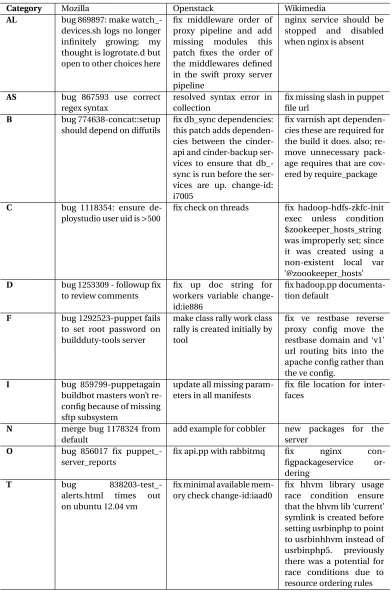
Table 4.4 Examples of Extended Commit Messages (XCMs) for Defect Categories . . . 34
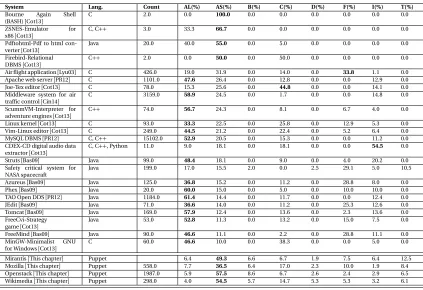
Table 4.5 Defect Categories of Previously Studied Software Systems and IaC Systems . . . 35
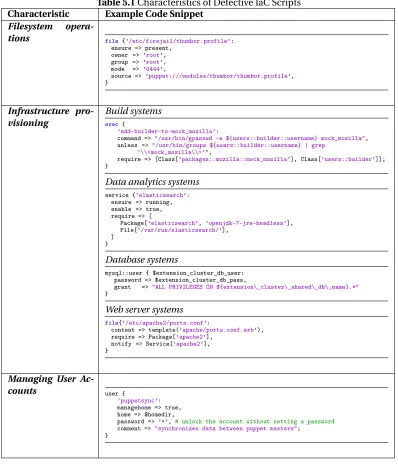
Table 5.1 Characteristics of Defective IaC Scripts . . . 44
Table 5.2 Frequency of Identified Operations Based on Keyword Search and Manual Examination . . . 45
Table 5.3 Parameters Selected for Tuning . . . 46
Table 5.4 Median AUC for two model building techniques: BOW and TF-IDF. . . 46
Table 5.5 Median precision for two model building techniques: BOW and TF-IDF. . . 46
Table 5.6 Median recall for two model building techniques: BOW and TF-IDF. . . 47
Table 5.7 Median F-measure for two model building techniques: BOW and TF-IDF. . . 47
Table 5.8 Median accuracy for two model building techniques: BOW and TF-IDF. . . 47
Table 5.9 Median G-mean for two model building techniques: BOW and TF-IDF. . . 47
Table 5.10 The technique for which we observe the highest median prediction perfor-mance for each dataset. . . 53
Table 6.1 Source Code Properties that Characterize Defective IaC Scripts . . . 64
Table 6.2 Distribution of source code property values. Each tuple expresses the average and maximum count for each property for scripts. . . 64
Table 6.3 Median values of 12 source code properties for both defective and neutral scripts. . . 66
Table 6.4 Validation of identified source code properties. Highlighted cells in grey indi-cate properties for which p-value<0.05 for all four datasets. . . 66
Table 6.5 Ranked order of the 12 source code properties that show highest correlation according to feature importance analysis. The ‘Practitioner Agreement’ column presents the percentage of practitioners who agreed or strongly agreed with the property. . . 67
Table 6.6 Survey responses from practitioners. Of the 12 properties majority of the prac-titioners agreed with include. . . 68
Table 6.7 Reported practitioner experience in Puppet script development . . . 68
Table 6.8 Number of Principle components used for prediction models . . . 70
Table 6.9 AUC for each model building technique. The highlighted cell in grey indicates the best technique, as determined by the Scott Knot Test. . . 70
Table 6.11 Recall for each model building technique. The highlighted cell in grey indicates
the best technique, as determined by the Scott Knot Test. . . 70
Table 6.12 F-measure for each model building technique. The highlighted cell in grey indicates the best technique, as determined by the Scott Knot Test. . . 70
Table 6.13 AUC for property-based models and size-only models. The highlighted cell in grey indicates the best technique, as determined by the Scott Knot Test. . . 71
Table 6.14 Precision for property-based models and size-only models. The highlighted cell in grey indicates the best technique, as determined by the Scott Knot Test. 71 Table 6.15 Recall for property-based models and size-only models. The highlighted cell in grey indicates the best technique, as determined by the Scott Knot Test. . . . 71
Table 6.16 F-measure for property-based models and size-only models. The highlighted cell in grey indicates the best technique, as determined by the Scott Knot Test. 71 Table 7.1 Relationship between development activity metrics and defective IaC scripts . 81 Table 8.1 An Example of Using Puppet Code Snippets To Determine Rule for ‘Hard-coded secret’ . . . 93
Table 8.2 An Example of Using Chef Code Snippets To Determine Rule for ‘Use of HTTP Without TLS’ . . . 93
Table 8.3 Rules to Detect Security Smells for Puppet Scripts . . . 94
Table 8.4 Rules to Detect Security Smells for Ansible Scripts . . . 94
Table 8.5 Rules to Detect Security Smells for Chef Scripts . . . 94
Table 8.6 String Patterns Used for Functions in Rules . . . 95
Table 8.7 SLIC’s Accuracy for the Puppet Oracle Dataset . . . 96
Table 8.8 SLIC’s Accuracy for the Ansible Oracle Dataset . . . 96
Table 8.9 SLIC’s Accuracy for the Chef Oracle Dataset . . . 97
Table 8.10 Puppet Repositories Satisfying Criteria . . . 98
Table 8.11 Summary Attributes of the Puppet Datasets . . . 98
Table 8.12 Ansible and Chef Repositories Satisfying Criteria (Sect. 8.2.4) . . . 99
Table 8.13 Summary Attributes of the Datasets . . . 99
Table 8.14 Smell Occurrences, Smell Density, and Proportion of Scripts for the Four Datasets of Puppet Scripts . . . 103
LIST OF FIGURES
Figure 1.1 Example of a defect included in the ‘825a073’ commit, which is 460 lines long. 3
Figure 1.2 An example IaC script with hard-coded password. . . 4
Figure 2.1 Example of a Puppet script with annotations. . . 6
Figure 2.2 Annotation of an example Ansible script. . . 7
Figure 2.3 Annotation of an example Chef script. . . 7
Figure 4.1 The Scott-Knott (SK) ranks for each defect category and each dataset. Except for Mirantis, the same rank across all defect categories states that with respect to size, there is no significant difference between the defect categories. . . 31
Figure 4.2 Distribution of script size for each defect category. . . 32
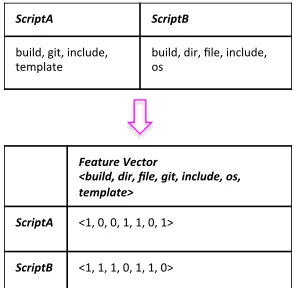
Figure 5.1 A hypothetical example to illustrate the BOW technique discussed in Sec-tion 5.2.2. . . 38
Figure 5.2 A hypothetical example to illustrate out feature vectorization technique using TF-IDF. Figure 5.2a presents the pre-processed tokens of two scripts:S c r i p t A andS c r i p t B. Figure 5.2b presents the TF values for both scripts. Figure 5.2c presents the IDF scores for the unique seven tokens. Finally, TF-IDF scores for each script and token is presented in Figure 5.2d. . . 39
Figure 5.3 An example of how we use Strauss-Corbin Grounded Theory (SGT) to charac-terize defective IaC scripts. . . 41
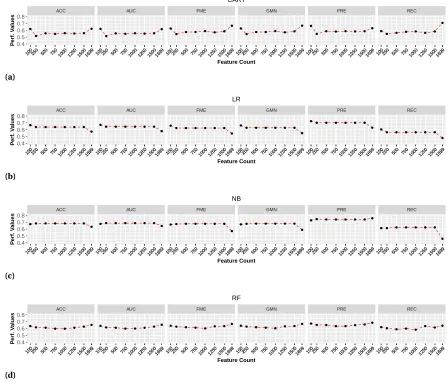
Figure 5.4 The impact of tuning text feature matrix on prediction performance for Miran-tis when we use bag-of-words. Figures 5.4a, 5.4b, 5.4c, and 5.4d respectively presents the impact of tuning text feature matrix for CART, LR, NB, and RF. Each subfigure presents the performance measures for the six prediction performance measures. . . 49
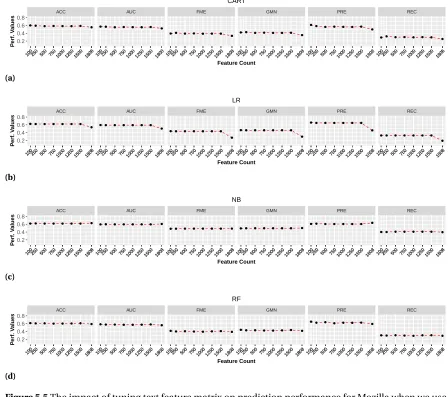
Figure 5.5 The impact of tuning text feature matrix on prediction performance for Mozilla when we use bag-of-words. Figures 5.5a, 5.5b, 5.5c, and 5.5d respec-tively presents the impact of tuning text feature matrix for CART, LR, NB, and RF. Each subfigure presents the performance measures for the six prediction performance measures. . . 50
Figure 5.6 The impact of tuning text feature matrix on prediction performance for Open-stack when we use bag-of-words. Figures 5.6a, 5.6b, 5.6c, and 5.6d respectively presents the impact of tuning text feature matrix for CART, LR, NB, and RF. Each subfigure presents the performance measures for the six prediction performance measures. . . 51
Figure 5.8 The impact of tuning text feature matrix on prediction performance for Mi-rantis when we use TF-IDF. Figures 5.8a, 5.8b, 5.8c, and 5.8d respectively presents the impact of tuning text feature matrix for CART, LR, NB, and RF. Each subfigure presents the performance measures for the six prediction performance measures. . . 54
Figure 5.9 The impact of tuning text feature matrix on prediction performance for
Mozilla when we use TF-IDF. Figures 5.9a, 5.9b, 5.9c, and 5.9d respectively presents the impact of tuning text feature matrix for CART, LR, NB, and RF. Each subfigure presents the performance measures for the six prediction performance measures. . . 55 Figure 5.10 The impact of tuning text feature matrix on prediction performance for
Open-stack when we use TF-IDF. Figures 5.10a, 5.10b, 5.10c, and 5.10d respectively presents the impact of tuning text feature matrix for CART, LR, NB, and RF. Each subfigure presents the performance measures for the six prediction performance measures. . . 56 Figure 5.11 The impact of tuning text feature matrix on prediction performance for
Wiki-media when we use TF-IDF. Figures 5.11a, 5.11b, 5.11c, and 5.11d respectively presents the impact of tuning text feature matrix for CART, LR, NB, and RF. Each subfigure presents the performance measures for the six prediction performance measures. . . 57
Figure 6.1 Methodology: Figures 6.1a and 6.1b respectively summarizes the
methodol-ogy for RQ1 and RQ3. . . 60
Figure 6.2 An example of how we identify source code properties using constructivist
grounded theory. . . 61
Figure 6.3 Distribution of property values for each dataset. . . 65
Figure 7.1 A hypothetical example to demonstrate our calculation of disjointness
be-tween developers. . . 75
Figure 7.2 A hypothetical example to demonstrate our calculation of unfocused
contri-bution. . . 77
Figure 7.3 Example of how we use qualitative analysis to determine reasons that attribute
to practitioner perception. . . 78
Figure 7.4 Count of developers modifying scripts. Neutral scripts are modified by no
more than 11 developers. . . 80
Figure 7.5 Count of minor contributors modifying scripts. Neutral scripts are modified
by no more than seven minor contributors. . . 80
Figure 7.6 Survey findings that illustrate to what extent practitioners agree with the
seven metrics and their relationships with defective scripts. . . 81
Figure 8.1 An example of how we use qualitative analysis to determine security smells
in Puppet scripts. . . 90
Figure 8.2 Output of the ‘Parser’ component in SLIC for Ansible. Figure 8.4a presents an
Figure 8.3 Output of the ‘Parser’ component in SLIC for Chef. Figure 8.4a presents an example Chef script fed to Parser. Figure 8.4b presents the output of Parser for the example Chef script. . . 91
Figure 8.4 Output of the ‘Parser’ component in SLIC for Puppet. Figure 8.4a presents an
example Puppet script fed to Parser. Figure 8.4b presents the output of Parser for the example Puppet script. . . 93
Figure 8.5 An annotated script with all seven security smells for Puppet. The name of
each security smell is highlighted on the right. . . 106
Figure 8.6 An annotated Ansible script with six security smells. The name of each security
smell is highlighted on the right. . . 107
Figure 8.7 An annotated Chef script with eight security smells. The name of each security
smell is highlighted on the right. . . 107
Figure 8.8 Feedback for 29 smell occurrences for Ansible. Practitioners agreed with 82.7%
of the selected smell occurrences. . . 108
Figure 8.9 Feedback for the 54 smell occurrences for Chef. Practitioners agreed with
55.5% of the selected smell occurrences. . . 108 Figure 8.10 Feedback for the 212 smell occurrences. Practitioners agreed with 69.8% of
CHAPTER
1
INTRODUCTION
Continuous deployment is the process of rapidly deploying software or services automatically to
end-users[Rah15]. The practice of infrastructure as code (IaC) scripts is essential to implement
an automated deployment pipeline, which facilitates continuous deployment[HF10]. Information
technology (IT) organizations, such as Netflix1, Ambit Energy2, and Wikimedia Commons3, use IaC
scripts to automatically manage their software dependencies, and construct automated deployment
pipelines[HF10] [Par17]. Commercial IaC tools, such as Ansible4, Chef!5, and Puppet6, provide
multiple utilities to construct automated deployment pipelines. Use of IaC scripts has helped IT
organizations to increase their deployment frequency. For example, Ambit Energy, uses IaC scripts
to increase their deployment frequency by a factor of 1,2007.
IaC is the practice of specifying computing and software deployment infrastructure using code.
Practitioners also use these scripts to deploy software services, such as database, data analytics and monitoring, on cloud instances, and to control which groups of users will get access to those
services[Lab17] [MJ11]. Use of these scripts facilitate rapid deployment, as repetitive, manual
system administration work is replaced by automation. The prefix ‘as code’ in IaC corresponds
1https://www.netflix.com/
2https://www.ambitenergy.com/
3https://commons.wikimedia.org/wiki/Main_Page
4https://www.ansible.com/
5https://www.chef.io/
6https://puppet.com/
to the practice of treating IaC scripts as software source code[HF10] [JA15]. Practitioners apply the traditional software engineering practices, such as code review and version control, for IaC
scripts[Par17][HF10]. Treating IaC scripts as software source code can provide multiple benefits for
IT organizations, for example, achieving the capability to make frequent changes and improvements
to the infrastructure at scale, and increased visibility within the organization as both development
and operations teams can access these scripts[HF10] [Par17].
However, similar to software source code, IaC scripts can experience frequent churn, making
these scripts susceptible to quality issues, such as defects[JA15] [Par17]. Figure 1.1 provides an
example defect in an IaC script where a wrong package name is specified. Defects in IaC scripts can
have serious consequences, as these scripts are associated in setting up and managing cloud-based
infrastructure, and ensuring availability of software services.
Any defect in a script can propagate at scale, leading to service discrepancies. For example
on January 2017, execution of a defective IaC script erased home directories of around 270 users
in cloud instances maintained by Wikimedia8. The above-mentioned evidence demonstrated in
real-world, and research studies motivate us to systematically study quality issues of IaC scripts in
the form of anti-patterns. Anti-patterns in software engineering correspond to practices that may
have negative consequences[Bro98a].
One strategy to mitigate defects is to identify source code properties and operations that relate
with defective scripts. Practitioners can use the identified operations and properties for prioritizing inspection efforts in IaC scripts.
Another strategy is to identify anti-patterns applicable for IaC. Practitioners might be
inadver-tently implementing practices with negative consequences due to lack of knowledge, lack of
experi-ence, or applying a perceived good practice in the wrong context[Bro98a]. In prior work[Moh10] [Arn16],
researchers have proposed and quantified a plethora of anti-patterns for software written in general
purpose languages (GPLs) such as C, C++, and Java. For example, Brown proposed 14
implementa-tion, 13 architecture, and 14 management anti-patterns for software source code. Fowler[Fow99]
proposed a set of 22 code smells and structural smells in source code for object-oriented
program-ming (OOP) languages. Moha et al.[Moh10]proposed and evaluated an anti-pattern detection
tool called DETEX, and used DETEX to detect 15 latent code anti-patterns. In another work, Moha
et al.[Moh06], proposed detection algorithms to detect design anti-patterns. However, these
pro-posed anti-patterns may not be well-suited for IaC scripts, as IaC scripts use domain specific
languages[Sha16a]. By identifying anti-patterns, we can provide actionable recommendations to
practitioners and pinpoint characteristics that correlate with defects and violates security and
pri-vacy objectives. We take motivation from the above-mentioned literature and identify development and security anti-patterns.
In this thesis a development anti-pattern is a recurring development activity that relates with
{
require => [
Package['libmysql-java'],
File['/var/lib/gerrit/review_site/lib'], Package['gerrit'],
],
notify => Service['gerrit'], }
Defect: wrong package
1
Figure 1.1Example of a defect included in the ‘825a073’ commit, which is 460 lines long.
defective scripts, as determined by empirical analysis. We can identify development activities that
relate with defective IaC scripts by mining open source software (OSS) repositories[AM16]. Let us
consider Figure 1.1, which provides a code snippet from an actual 460-line long commit (‘825a073’)9
that includes a defect. Reviewing large-sized commits, such as ‘825a073’, is challenging[Mac18]. As
a result, defects existent in large commits may not be detected during inspection. This anecdotal
example suggests a relationship that may exist between the activity of submitting large commits and defects that appear in IaC scripts. By mining metrics from OSS repositories, we can identify recurring
development activities, such as submitting large-sized commits, and investigate their relationship
with defective IaC scripts. Our investigation can also reveal if not using ‘as code’ activities are related with defective IaC scripts.
Along with defects, IaC scripts can be susceptible to security anti-patterns. Security anti-patterns
are recurring coding patterns that are indicative of security weakness. A security anti-pattern does not always lead to a security breach, but deserves attention and inspection. Let us consider Figure 1.2.
In Figure 1.2, we present a Puppet code snippet extracted from the ‘aeolus-configure’ open source
software (OSS) repository10. In this code snippet, we observe a hard-coded password using the
‘password’ attribute. A hard-coded string ‘v23zj59an’ is assigned as password for user ‘aeolus’.
Hard-coded passwords in software artifacts is considered as a software security weakness (‘CWE-798:
Use of Hard-coded Credentials’) by Common Weakness Enumerator (CWE)[MIT18]. According to
CWE[MIT18], “If hard-coded passwords are used, it is almost certain that malicious users will gain
access to the account in question".
Existence and persistence of these security anti-patterns in IaC scripts leave the possibility of another programmer using these scripts with security anti-patterns, potentially propagating use of
insecure coding practices. We hypothesize through systematic empirical analysis, we can identify security anti-patterns and the prevalence of the identified security anti-patterns.
The goal of this thesis is to help practitioners in increasing quality of IaC scripts by identifying development and security anti-patterns in the development of infrastructure as code scripts.
9https://github.com/Mirantis/puppet-manifests
1 postgres::user{"aeolus":
2 password => "v23zj59an",
3 roles => "CREATEDB",
4 require => Service["postgresql"] }
Hard-coded password
1
Figure 1.2An example IaC script with hard-coded password.
Thesis Statement: Through systematic investigation, we can help practitioners in mitigating quality
concerns for infrastructure as code (IaC) scripts by identifying IaC-related anti-patterns that (i) correlate with defects; and (ii) are indicative of security weakness.
In this thesis we make the following contributions:
• Datasets11where scripts are labeled as defective (Chapter 3);
• A set of operations that characterize defective IaC scripts (Chapter 5);
• A set of source code properties that relate with defective IaC scripts (Chapter 6);
• Defect prediction models built using code properties and text features of IaC scripts (Chap-ters 5 and 6);
• A set of development anti-patterns (Chapter 7);
• A set of security anti-patterns for IaC scripts (Chapter 8); and
• A static analysis tool to automatically identify security anti-patterns from IaC scripts (Chap-ter 8);
We organize rest of the thesis as following: in Chapter 2 we provide necessary background
and discuss prior work in the area of IaC. We provide the distribution of defect categories and frequency of defects in Chapter 4. In Chapter 5 we describe the methodology and findings on how
we apply text mining and identify operations that characterize defective IaC scripts. We identify
source code properties in that are related with defective scripts as described in Chapter 6. In the pursuit of obtaining actionable feedback for practitioners we identify development anti-patterns for
IaC scripts in Chapter 7. We focus on security-specific anti-patterns in Chapter 8 and describe our methodology of identifying security anti-patterns in Chapter 8. We discuss our findings in Chapter 9.
Finally, we conclude the thesis in Section 10.2.
CHAPTER
2
BACKGROUND AND RELATED WORK IN
THE DOMAIN OF IAC
We provide necessary background and discuss related academic work in this section. First, we
provide a brief background on Puppet, a popular tool to implement IaC. Then we provide background
information on building prediction models. We end this section by describing related academic research.
2.1
Infrastructure as Code Scripts
Practitioners attribute the concept of infrastructure as code to Chad Fowler, within his blog
pub-lished in 20131. IaC scripts use domain specific language (DSL)[Sha16a]. CD organizations widely
use commercial systems, such as Puppet, to implement IaC[HF10] [JA15] [Sha16a]. We provide
background on Ansible, Chef, and Puppet scripts, as we use Ansible, Chef, and Puppet scripts to
evaluate our methodology. Puppet is an IaC system that is used to manage configurations and
automate infrastructure[Lab17]. Puppet uses a domain specific language (DSL)[Sha16a]. Typical
entities of Puppet include modules, manifests, and resources[Lab17]. A module is a collection of
manifests. Puppet users can create their own module or download existing modules from online
repositories, such as PuppetForge. A manifest is composed of resources and declarations of resource
1
#This is an example Puppet script
2
class
(`example
'
3
){
4
token => ‘XXXYYYZZZ’
5
6
$os_name = ‘Windows’
7
8
case $os_name
{
9
'
Solaris
': { auth_protocol => `http'
}
10
'CentOS'
: { auth_protocol => getAuth() }
11
default: { auth_protocol => `https
' }
12
}
13
}
Comment
Attribute ‘token’
Variable ‘
$
os
_
name
’
Case conditional
Calling function
‘getAuth()’
Figure 2.1Example of a Puppet script with annotations.
types. Manifests are written as scripts that use a .pp extension. In a single manifest script, multiple
declarations of resources are possible. A resource in Puppet has a type, a title, and a mapping of attributes. The resource type determines how the mapping of attributes will be used. For example,
a resource of type ‘user’ can have an attribute called ‘uid’ to uniquely identify a user. As another
example, a resource of type ‘file’ can have an attribute ‘mode’ to specify the permissions of the script. In a single manifest script, multiple declarations of resources are possible. Using the ‘define’
syntax, Puppet users also can create their own resource types with or without using the built-in
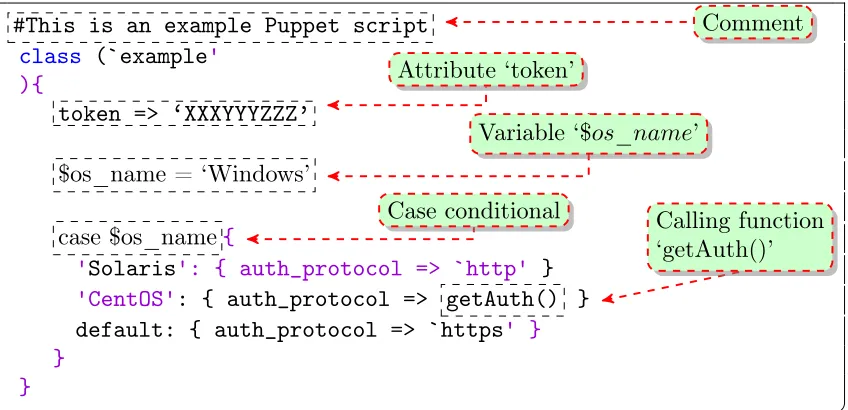
resources provided by Puppet. Parameters can also be passed to these defined resource types. For better understanding, we provide a sample Puppet code with annotations in Figure 2.1.
We provide a brief background on Ansible and Chef scripts, which is relevant to conduct our
empirical study. Both, Ansible and Chef provided multiple libraries to manage infrastructure and system configurations. In the case of Ansible, developers can manage configurations using
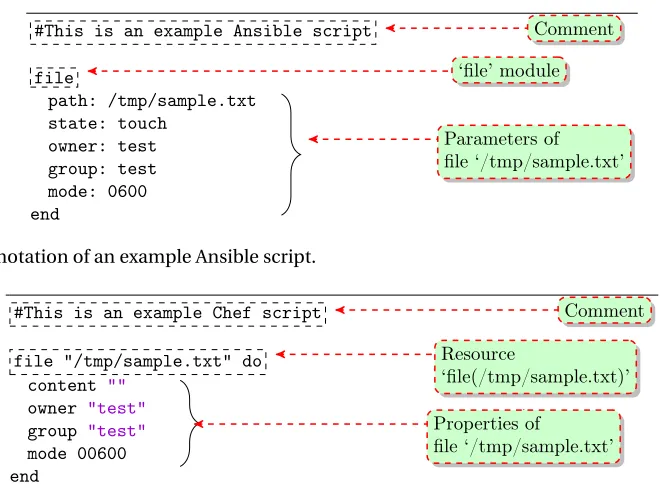
‘play-books’, which uses YAML files to manage configurations. For example, as shown in Figure 2.2, an
empty file ‘/tmp/sample.txt’ is created using the ‘file’ module provided by Ansible. The properties of
the file such as, path, owner, and group can also be specified. The ‘state’ property provides options
to create an empty file using the ‘touch’ value, which creates an empty file.
In the case of Chef, configurations as specified using ‘recipes’, which are domain-specific Ruby
scripts. Dedicated libraries are also available to maintain certain configurations. As shown in
Fig-ure 2.3, using the ‘file’ resource, an empty file ‘/var/sample.txt’ is created. The ‘content’ property is
used to specify the content of the file is empty.
1 #This is an example Ansible script
2 3 file
4 path: /tmp/sample.txt
5 state: touch
6 owner: test
7 group: test
8 mode: 0600
9 end
Comment
‘file’ module
Parameters of file ‘/tmp/sample.txt’
1
Figure 2.2Annotation of an example Ansible script.
1 #This is an example Chef script
2
3 file "/tmp/sample.txt" do
4 content ""
5 owner "test"
6 group "test"
7 mode 00600
8 end
Comment
Resource
‘file(/tmp/sample.txt)’
Properties of
file ‘/tmp/sample.txt’
Figure 2.3Annotation of an example Chef script.
2.2
Prediction Models
In Chapters 5 and 6 we respectively, use text features and source code properties to construct defect
prediction models for IaC. In this section we provide necessary background on the technical concepts
such as feature selection, parameter tuning of statistical learners, which are used to construct defect prediction models.
2.2.1 Feature Selection
Feature selection is the process of selecting features that have more influence on prediction
per-formance[GE03] [Tan05]. We use the concept of feature selection to identify the metrics that can
be effectively used in defect prediction. We use principal component analysis (PCA)[Tan05]for
feature selection, because PCA accounts for multi-collinearity amongst features[Tan05], identifies
the strongest patterns in the data[Tan05], and has been extensively used in the domain of defect
prediction[Nag06] [Gho17] [Nag08]. PCA creates independent linear combinations of the features
that account for most of the co-variation of the features. PCA also provides a list of components
and the amount of variance explained by each component. These principal components are inde-pendent and do not correlate or confound each other. For feature selection, we compute the total
the total variance, as input to statistical learners. We also record the rank (determined by PCA) of
each metric to identify which metric has more influence than others.
2.2.2 Statistical Learners
Researchers use statistical learners to build prediction models that learn from historic data and make
prediction decisions on unseen data. Previously, researchers used a wide range of statistical learners
to build defect prediction models, such as logistic regression and random forest[Les08] [Gho15]. We
use three statistical learners that we briefly describe, and reasons for selecting these learners, as
following. We use the Scikit Learn API[Ped11]to implement these statistical learners.
• Classification and Regression Tree (CART): CART generates a tree based on the impurity
measure, and uses that tree to provide decisions based on input features[Bre84]. We select
CART because this learner does not make any assumption on the distribution of features, and
is robust to model over-fitting[Tan05] [Bre84].
• Logistic Regression (LR): LR estimates the probability that a data point belongs to a certain
class, given the values of features[Fre05]. LR provides good performance for classification
if the features are roughly linear[Fre05]. We select LR because this learner performs well for
classification problems[Fre05], such as defect prediction[RD13]and fault prediction[Hal12].
• Naive Bayes (NB): The Naive Bayes (NB) classification technique computes the posterior probability of each class to make prediction decisions. We select NB because this learner
performs well for classification problems[Fre05], such as defect prediction[RD13]and fault
prediction[Hal12].
• Random Forests (RF): RF is an ensemble technique that creates multiple classification trees,
each of which are generated by taking random subsets of the training data[Bre01] [Tan05].
Unlike LR, RF does not expect features to be linear for good classification performance.
Re-searchers[Gho15]recommended the use of statistical learners that uses ensemble techniques
to build defect prediction models.
Prediction performance measures: We use two measures to evaluate prediction performance of the constructed models:
• Precision: Precision measures the proportion of IaC scripts that are actually defective given that the model predicts as defective. We use Equation 2.1 to calculate precision.
P r e c i s i o n= T P
• Recall: Recall measures the proportion of defective IaC scripts that are correctly predicted by
the prediction model. We use Equation 2.2 to calculate recall.
R e c a l l = T P
T P+F N (2.2)
• Area Under the Receiver Operating Characteristic Curve (AUC): AUC uses the receiver
op-erating characteristic (ROC). ROC is a two-dimensional curve that plots the true positive rates against false positive rates. An ideal prediction model’s ROC curve has an area of 1.0. A random
prediction’s ROC curve has an area of 0.5. We refer to theareaunder the ROCcurve as AUC
throughout the paper. We consider AUC as this measure is threshold independent unlike
precision and recall[Gho15], and recommended by prior research[Les08].
• F-Measure: F-Measure is the harmonic mean of precision and recall. Increase in precision,
often decreases recall, and vice-versa[Men07b]. F-Measure provides a composite score of
precision and recall, and is high when both precision and recall is high.
• Accuracy: We calculate accuracy using Equation 2.3:
Ac c u r a c y =T P+T N
P +N (2.3)
• G-Mean: G-mean is the harmonic mean of precision and recall.
2.2.3 Automated Parameter Tuning for Learners
From prior work[Fu16] [Tan16], we observe empirical evidence on how prediction performance
can be improved by tuning parameters of statistical learners. Taking motivation from these studies,
we tune parameters by executing two tasks: first we identify the parameters of statistical learners
needed for tuning. Next, we use an automated technique to tune the identified parameters.
Identifying parameters to tune: To accomplish the first task, we review existing literature in the
following manner:
• Step-1: We identify the publications that used parameters of statistical learners for defect
predic-tion models. We search the ACM Digital Library, IEEEXplore, ScienceDirect, and Springer using keywords ‘parameter tuning’, ‘defect prediction’, and ‘software engineering’.
• Step-2: Next, we read the collected publication from Step-1 to identify if the publication (i) reported
the use of a statistical learner; and (ii) reported which parameters were tuned to report variation
• Step-3: We read the publications collected from Step-2, to determine if they used CART, LR, or RF.
If so, from these publications we determine which parameter of each statistical learner needs to be tuned, and the ranges of values we can select.
Automated technique to tune parameters: We use differential evolution (DE)[SP97], a search-based algorithm, to automatically tune the parameters of the statistical learners. We select DE
because using DE as a parameter tuning technique, researchers have observed improved prediction
performance for software defects[Fu16]. For a given measure of quality and a set of input parameters
that needs to be tuned, DE iteratively identifies the combination of parameter values for which the
given measure of quality is optimal. Each combination of parameter value is referred as a ‘candidate solution’ in DE. DE achieves optimization by generating a population of candidate solutions and
creating new candidate solutions by combining existing ones. Four attributes of DE can be set to
control the generation of populations:G E N E R AT I O N,P O P U L AT I O N, cross-over probability
(C R), and mutation constant (F).
In our case, parameters of each statistical learner is the set of input parameters that need to be
tuned. The given measure of quality is the prediction performance measure. We setG E N E R AT I O N,
P O P U L AT I O N,C R, andF to respectively, 50, 10, 0.50, and 0.50. We apply DE-based parameter tuning for the evaluation methods used in the paper.
As we use two prediction performance measures, AUC and F-Measure, we repeat the above-mentioned process separately for AUC and F-Measure. When AUC is set as the given measure of
quality, as output DE provides the best AUC it was able to achieve. In case of F-Measure, DE provides
the best F-Measure it was able to achieve as output.
Comparing prediction performance: To determine if parameter tuning statistically improves
performance, we use a variant of theScottKnott (SK) test[Tan17]. This variant of SK does not assume
input to be normal and accounts for negligible effect size[Tan17]. SK uses hierarchical clustering
analysis to partition the input data into significantly (α=0.05) distinct ranks[Tan17]. According
to SK, a learner for which parameter tuning is applied ranks higher if prediction performance is
significantly higher. For example, if tuned CART ranks higher than that of non-tuned CART, then we can state that parameter tuning significantly increases prediction performance. We use SK to
compare if parameter tuning significantly increases AUC and F-Measure for all three statistical learners, and for the evaluation methods used.
2.2.4 Evaluation Method
We use 10×10-fold cross validation to evaluate the constructed prediction models. We use the
10t i m e s10-Fold cross validation evaluation approach by randomly partitioning the dataset into 10
equal sized subsamples or folds[Tan05]. The performance of the constructed prediction models
Table 2.1Mapping Between Each Topic and Publication
Topic Publication
Framework/Tool S6, S10, S12, S13, S15, S18, S19, S20, S21, S22, S24, S25, S26, S29,
S30, S31
Adoption of IaC S1, S3, S7, S9, S14, S16, S17, S18, S23, S27, S28, S32
Empirical Study S2, S4, S5, S8, S10, S11, S23
Testing S4, S5, S6, S11
to prior research[Gho15], we repeat the 10-fold cross validation 10 times to assess the statistical
learner’s prediction stability. We report the median prediction performance score of the 10 runs.
2.3
Related Work in the Domain of IaC
Our thesis is closely related to research studies that have investigated IaC scripts, which we briefly describe below.
Following Petersen et al.[Pet08]’s guidelines, we conduct a systematic mapping study on IaC
re-search in software engineering[Rah18a]starting with 9,387 publications from five scholar databases:
ACM Digital Library, IEEE Xplore, Springer, ScienceDirect, and Wiley Online. After applying an
inclu-sion and excluinclu-sion criteria, we identify a set of 32 publications which we use to conduct a systematic
mapping study. Each of the publications’ names are listed in Table A2 of the Appendix. We index each publications as ‘S#’, for example the index ‘S1’ refers to the publication ‘Cloud WorkBench:
Benchmarking IaaS Providers Based on Infrastructure-as-Code’.
We identify the topics that have been researched in the area of IaC by applying qualitative analysis on the content of the 32 publications. Through our qualitative analysis, we identify four topics. A
publication can belong to multiple topics implying that the identified topics are not orthogonal
to each other. The topics are: (1) Framework/Tool for infrastructure as code (Framework/Tool); (2)
Adoption of infrastructure as code (Adoption of IaC); (3) Empirical study related to infrastructure as
code (Empirical); and (4) Testing in infrastructure as code (Testing).
A complete mapping between each of the 32 publications and their corresponding topic is available in Table 2.1. We describe each topic, along with the count of publications for each topic as
following:
• Framework/Tool for infrastructure as code (16): The most frequently studied topic in IaC-related
publications is related to framework or tools. In these publications, authors propose a framework
or a tool either to implement the practice of IaC or to extend a functionality of IaC. We describe a
few publications related to ‘Framework/Tool for IaC’ briefly:
and Puppet modules, are shared, but these artifacts are usually bound to specific tools. The authors
proposed a novel framework that generates standard Topology and Orchestration Specification
for Cloud Applications2(TOSCA)-based DevOps artifacts to consolidate DevOps artifacts from
different sources. Later, the authors of S12 extend their work in S19, where they constructed a
run-time framework using a open source tool-chain to support integration for a variety of DevOps artifacts. In S22, the authors propose a the hidden master framework to assess the survivability
of IaC scripts, when tested under simulated attacks. In S24, the authors proposes a tool called
ConfigValidator that validates IaC artifacts, such as Docker images, by a writing rules to detect configurations. In S10, the authors propose and evaluate Tortoise, which fixes configurations in
Puppet scripts automatically. In S20, ‘Charon’ is proposed to implement the practice of IaC. We
divide the 16 publications into three sub-categories:
– Tools (S12, S13, S15, S18, S19, S20, S21, S24, S25, S26, S29, S30, S31): Publications belonging to
this category propose tools to extend a functionality of IaC. Existing tools can be limiting, which
may be motivating researchers to propose framework or tools that mitigate these limitations.
– Program repair (S10): Publications belonging to this category are related to repairing of IaC
scripts.
– Reliability (S6, S22): Publications belonging to this category are related to the reliability of IaC
scripts.
• Adoption of infrastructure as code (12): Publications that relate to this topic discuss how IaC
can be used in different domains of software engineering, such as monitoring of system and
automated deployment of enterprise applications. We describe the publications that related to this topic briefly as following:
S1 uses IaC to build a benchmark tool to assess the performance of cloud applications. Authors
in S3 and S14 discusses how IaC can be used to implement DevOps. S7 focuses on how Ansible can be used to automatically provision an enterprise application. In S9, authors investigated
the feasibility of using Puppet modules to deploy a software-as-a-service (SaaS) application.
They observed that Puppet modules are adequate for provisioning SaaS applications, but comes with an extra layer of complexity. In S17, the authors propose ‘DevOpsLang’ that uses Chef to
automatically deploy a chat application. Authors in S18 propose the ABS Modeling Language that
uses IaC to deploy an e-commerce application. In S23, authors interview practitioners from 10 companies on the use of IaC in continuous deployment. The authors reported that IaC scripts
have fundamentally changed how IT organizations are managing their servers using IaC. They also
reported that, similar to the software code base, IaC code bases change frequently. Authors in S27 proposes Omnia that uses IaC to create a monitoring framework to monitor DevOps operations.
We further group the 12 publications into following sub-categories:
– Automated provisioning (S7, S9, S14, S18): Publications belonging to this category are related
to automated provisioning of software and services using IaC.
– Benchmark (S1, S32): Publications belonging to this category are related to benchmark creation
of cloud applications.
– Continuous deployment (S23): Publications belonging to this category are related to use of IaC
to implement continuous deployment.
– DevOps (S3, S17, S27, S28): Publications belonging to this category are related to use of IaC to
implement DevOps.
– Microservices (S16): Publications belonging to this category are related to use of IaC to
imple-ment microservices.
Our analysis suggests that the use of IaC is not only limited to implement automated deployment
and DevOps, but also to create monitoring applications for software systems. One possible expla-nation can be the ability to express system configurations in a programmatic manner using IaC
scripts.
• Empirical study related to infrastructure as code (7): We identify seven publications that belong
to this category, which apply empirical analysis such as qualitative and quantitative analysis to investigate research questions related to IaC. Of the seven publications that belong to this group,
three are focused on testing, and four publications are focused on non-testing issues. The four
publications that have conducted empirical analysis, but are not focused on testing are S2, S8, S10, and S23. Publications that have conducted empirical studies related to IaC can be divided
into following groups:
– Testing (S4, S5, S11): Publications belonging to this category are related to testing of IaC scripts.
– Co-evolution (S2): Publications belonging to this category are related to studying the
co-evolution of IaC scripts with other software artifacts, such as Makefiles.
– Code quality (S8, S10): Publications belonging to this category are related to code quality of IaC
scripts.
– Practitioner Survey (S23): Publications belonging to this category are related to surveying
practitioners.
• Testing in infrastructure as code (4): We identify four publications that addresses the topic of
in IaC. Their approach used a state transition-based modeling approach to generate test cases to
test idempotence for Chef scripts. In S4, the authors reported that the approach suggested in S5 generates too many test cases, and proposed an approach to reduce the amount of test cases to
generate the test cases needed for testing of idempotence. The approach proposed in S4 combined
testing and static verification approaches to generate test cases needed to test idempotence. We group the four publications into following sub-categories:
– Idempotence (S5): The Publication belonging to this category is related to idempotence. In
IaC, it is expected that the deployed system converge into the desired state. Whether or not the
deployed system has reached the desired state is called idempotence[Hum13]
– Test Case Reduction (S4): The publication belonging to this category is related to test case
reduction.
– Framework (S6, S11): Publications belonging to this category are related to creation of a testing
framework.
Based on the above-discussion we identify the following research avenues, which motivated us
to conduct the five empirical studies presented in this thesis dissertation:
• Anti-patterns: Anti-patterns are recurring practices in software engineering that can have
poten-tial negative consequences[Bro98b]. Researchers can explore anti-patterns that may exist for IaC,
for example, process anti-patterns, system architecture anti-patterns, security anti-patterns, and
project management anti-patterns.
• Defect Analysis: Defects in IaC scripts can have serious consequences, for example a defect in
an IaC script caused a wide-scale outage for GitHub3. Based on our analysis, we do not observe
existing IaC-related publications to study defects. We encourage researchers to investigate which
characteristics of IaC correlate with defects, and how such defects can be mitigated.
• Security: As IaC scripts are used to configure software systems and cloud instances at scale, an
error that violates security objectives[Kis11], can compromise the entire system. In our set of
32 publications, we did not find any publication that focus on security issues. Researchers can
systematically study which security flaws are exhibited in IaC scripts, what are the consequences
of such security flaws, and provide guidelines on how such flaws can be mitigated. One approach to identify security flaws in IaC scripts is to apply qualitative analysis and leverage the weaknesses
listed in the Common Weakness Enumeration (CWE) database4.
In this thesis, we identify operations and source code properties that correlate with defective IaC scripts. We also identify security and development anti-patterns that appear for IaC scripts.
3https://github.com/blog/1759-dns-outage-post-mortem
CHAPTER
3
DEFECT DATASET
In this chapter, we describe the methodology and summary for the defect datasets that we used in
Chapters 4, 5, 6, and 7. The defect datasets are not used in Chapter 8.
3.1
Methodology for Dataset Construction
We describe the methodology to construct our datasets as following:
3.1.1 Filtering for Repository Collection
We construct IaC-specific datasets to evaluate our methodology and build prediction models. For
our datasets, we use OSS repositories maintained by four organizations: Mirantis1, Mozilla2,
Open-stack3, and Wikimedia Commons4. For Mirantis, Mozilla, Openstack, and Wikimedia we,
respec-tively, collect 26, 1594, 1253, and 1638 repositories. We apply the following selection criteria to
construct our datasets:
• Criteria-1: The repository must be available for download.
1https://github.com/Mirantis
2https://hg.mozilla.org/
3https://git.openstack.org/cgit
Table 3.1Filtering criteria to construct defect datasets
Criteria Dataset
Mirantis Mozilla Openstack Wikimedia
Criteria-1 26 1,594 1,253 1,638
Criteria-2 20 2 61 11
Criteria-3 20 2 61 11
Final 20 2 61 11
• Criteria-2: At least 11% of the files belonging to the repository must be IaC scripts. Jiang and
Adams[JA15]reported that in OSS repositories, IaC scripts co-exist with other types of files, such
as Makefiles and source code files. They observed a median of 11% of the files to be IaC scripts. By
using a cutoff of 11%, we assume to collect a set of repositories that contain sufficient amount of IaC scripts for analysis.
• Criteria-3: The repository must have at least two commits per month. Munaiah et al.[Mun17] used the threshold of at least two commits per month to determine which repositories have
enough development activity for software organizations.
3.1.2 Results of Applying Filtering Criteria for Repository Collection
We apply the three selection criteria presented in Section 3.1.1 to identify the repositories that we
use for analysis. We describe how many of the repositories satisfied each of the three criteria in Table 3.1. Each row corresponds to the count of repositories that satisfy each criteria. For example,
26 repositories satisfy Criteria-1, for Mirantis. We obtain 94 repositories to extract Puppet scripts
from the four datasets.
3.1.3 Commit Message Processing
Prior research[Ray16] [Zha16] [Zha17]leveraged OSS repositories that use version control systems
(VCS) for defect prediction studies. We use two artifacts from the VCS of the selected repositories
from Section 3.1.1, to construct our datasets: (i) commits that indicate modification of IaC scripts; and (ii) issue reports that are linked with the commits. We use commits because commits contain
information on how and why a file was changed. Commits can also include links to issue reports.
We use issue report summaries because they can give us more insights on why IaC scripts were changed in addition to what is found in commit messages. We collect commits and other relevant
information in the following manner:
• First, we extract commits that were used to modify at least one IaC script. A commit lists the
• Second, we extract the message of the commit identified from the previous step. A commit
includes a message, commonly referred as a commit message. The commit messages indicate
why the changes were made to the corresponding files[Ala08].
• Third, if the commit message included a unique identifier that maps the commit to an issue
in the issue tracking system, we extract the identifier and use that identifier to extract the
summary of the issue. We use regular expression to extract the issue identifier. We use the corresponding issue tracking API to extract the summary of the issue; and
• Fourth, we combine the commit message with any existing issue summary to construct the message for analysis. We refer to the combined message as ‘extended commit message
(XCM)’ throughout the rest of the dissertation. We use the extracted XCMs to separate the
defect-related commits from the non-defect-related commits i.e. commits that are marked not to be defect-related by the rater, and indicative of feature implementation, as described
in Section 3.1.4.
3.1.4 Determining Defect-related Commits
We use defect-related commits to identify the defective IaC scripts and the source code properties
that characterizes defective IaC scripts. We apply qualitative analysis to determine which commits
were defect-related commits. We perform qualitative analysis using the following three steps:
Categorization Phase: At least two raters with software engineering experience determine which of
the collected commits are defect-related. We adopt this approach to mitigate the subjectivity
introduced by a single rater. Each rater determines an XCM as defect-related if it represents a
quality concern in an IaC script. We provide raters with a Puppet documentation guide[Lab17]
so that raters can obtain background on Puppet. We also provide the raters the IEEE publication
on anomaly classification[IEE10]to help raters to gather background of defect in software
engineering. The number of XCMs to which we observe agreements amongst the raters are
recorded and the Cohen’s Kappa[Coh60]score is computed.
Resolution Phase: Raters can disagree if a commit is defect-related. In these cases, we use an
additional rater’s opinion to resolve such disagreements. We refer to the additional rater as the ‘resolver’.
Practitioner Agreement: To evaluate the ratings of the raters in the categorization and the
res-olution phase, we randomly select 50 XCMs for each dataset and contact practitioners. We
performed. The percentage of XCMs to which practitioners agreed upon is recorded and the
Cohen’s Kappa score is computed.
Upon completion of these three steps, we can classify which commits and XCMs are
defect-related. We use the defect-related XCMs to identify the source code properties needed to answer the
research questions. From the defect-related commits, we determine which IaC scripts are defective,
similar to prior work[Zha16]. Defect-related commits list which IaC scripts were changed, and
from this list we determine which IaC scripts are defective. A defective script can be included in
one or multiple related commits, whereas for neutral scripts are not included in any defect-related commit. The results of applying the presented methodology in this section is presented in
Section 3.1.5.
3.1.5 Results of Applying Qualitative Rating for Dataset construction
We construct four datasets by collecting repositories from Mirantis, Mozilla, Openstack, and
Wiki-media Commons. We apply the following phases using 89 raters:
• Categorization Phase:
– Mirantis: We recruit students in a graduate course related to software engineering via e-mail. The number of students in the class was 58, and 32 students agreed to participate.
We follow Internal Review Board protocol (IRB), IRB#12130, in recruitment of students
and assignment of defect categorization tasks. We randomly distribute the 1,021 XCMs amongst the students such that each XCM is rated by at least two students. The average
professional experience of the 32 students in software engineering is 1.9 years. On average,
each student took 2.1 hours.
– Mozilla: One second year PhD student and one fourth year PhD student separately apply
qualitative analysis on 3,074 XCMs. The fourth and second year PhD student, respectively,
have a professional experience of three and two years in software engineering. The fourth and second year PhD student, respectively, took 37.0 and 51.2 hours to complete the
categorization.
– Openstack: One second year PhD student and one first year PhD student separately, apply qualitative analysis on 7,808 XCMs from Openstack repositories. The second and
first year PhD student, respectively, have a professional experience of two and one years in software engineering. The second and first year PhD student completed the
categorization of the 7,808 XCMs, respectively, in 80.0 and 130.0 hours.
is rated by at least two students. According to our distribution, 140 XCMs are assigned
to each student. The average professional experience of the 54 students in software engineering is 2.3 years. On average, each student took 2.1 hours to categorize the 140
XCMs. The IRB protocol was IRB#9521.
• Resolution Phase:
– Mirantis: Of the 1,021 XCMs, we observe agreement for 509 XCMs and disagreement
for 512 XCMs, with a Cohen’s Kappa score of 0.21. Based on Cohen’s Kappa score, the
agreement level is ‘fair’[LK77].
– Mozilla: Of the 3,074 XCMs, we observe agreement for 1,308 XCMs and disagreement
for 1,766 XCMs, with a Cohen’s Kappa score of 0.22. Based on Cohen’s Kappa score, the
agreement level is ‘fair’[LK77].
– Openstack: Of the 7,808 XCMs, we observe agreement for 3,188 XCMs, and disagreements
for 4,620 XCMs. The Cohen’s Kappa score was 0.21. Based on Cohen’s Kappa score, the
agreement level is ‘fair’[LK77].
– Wikimedia: Of the 972 XCMs, we observe agreement for 415 XCMs, and disagreements
for 557 XCMs, with a Cohen’s Kappa score of 0.23. Based on Cohen’s Kappa score, the
agreement level is ‘fair’[LK77].
The author of this dissertation was the resolver and resolved disagreements for all four datasets.
In case of disagreements, the resolver’s categorization is considered as final.
We observe that the raters’ agreement level to be ‘fair’ for all four datasets. One possible
explanation can be that the raters agreed on whether an XCM is defect-related but disagreed
on which category of the defect is related to. For defect categorization, fair or poor agreement
amongst raters however, is not uncommon. Henningsson et al.[HW04]also reported a low
agreement amongst raters.
Practitioner Agreement: We report the agreement level between the raters’ and the practi-tioners’ categorization for randomly-selected 50 XCMs as following:
– Mirantis: We contact three practitioners and all of them respond. We observe an 89.0%
agreement with a Cohen’s Kappa score of 0.8. Based on Cohen’s Kappa score, the
agree-ment level is ‘substantial’[LK77].
– Mozilla: We contact six practitioners and all of them respond. We observe a 94.0%
agree-ment with a Cohen’s Kappa score of 0.9. Based on Cohen’s Kappa score, the agreeagree-ment
– Openstack: We contact 10 practitioners and all of them respond. We observe a 92.0%
agreement with a Cohen’s Kappa score of 0.8. Based on Cohen’s Kappa score, the
agree-ment level is ‘substantial’[LK77].
– Wikimedia: We contact seven practitioners and all of them respond. We observe a 98.0%
agreement with a Cohen’s Kappa score of 0.9. Based on Cohen’s Kappa score, the
agree-ment level is ‘almost perfect’[LK77].
We observe that the agreement between ours and the practitioners’ categorization varies from
0.8 to 0.9, which is higher than that of the agreement between the raters in the Categorization Phase. One possible explanation can be related to how the resolver resolved the disagreements. The author
of this dissertation has industry experience in writing IaC scripts, which may help to determine
categorizations that are consistent with practitioners. Another possible explanation can be related to the sample provided to the practitioners. The provided sample, even though randomly selected,
may include commit messages whose categorization are relatively easy to agree upon.
3.2
Summary of Constructed Datasets
We construct datasets using Puppet scripts from OSS repositories maintained by four organizations:
Mirantis, Mozilla, Openstack, and Wikimedia Commons. We select Puppet because it is considered as
one of the most popular tools to implement IaC[JA15] [Sha16a], and has been used by organizations
since 2005[MJ11]. Mirantis is an organization that focuses on the development and support of
cloud services such as OpenStack5. Mozilla is an OSS community that develops, uses, and supports
Mozilla products such as Mozilla Firefox6. Openstack foundation is an OSS platform for cloud
computing where virtual servers and other resources are made available to customers7. Wikimedia
Foundation is a non-profit organization that develops and distributes free educational content8.
We report summary statistics on the collected repositories in Table 3.2. According to Table 3.2,
for Mirantis we collect 180 Puppet scripts that map to 1,021 commits. The constructed datasets
used for empirical analysis are available online9.
5https://www.mirantis.com/
6https://www.mozilla.org/en-US/
7https://www.openstack.org/
8https://wikimediafoundation.org/
Table 3.2Statistics of Four Datasets
Attributes Mirantis Mozilla Openstack Wikimedia
Puppet Scripts 180 299 1,363 296
Commits with Puppet
Scripts
1,021 3,074 7,808 972
Commits with Report IDs 82 of 1021,
8.0%
2764 of 3074, 89.9%
2252 of 7808, 28.8%
210 of 972,
21.6%
Defect-related Commits 344 of 1021,
33.7%
558 of 3074, 18.1%
1987 of 7808, 25.4%
298 of 972,
30.6%
Defective Puppet Scripts 96 of 180,
53.3%
137 of 299,
45.8%
793 of 1363, 58.2%
160 of 296,
CHAPTER
4
DEFECT CATEGORIES AND
FREQUENCIES
Categorization of defects can guide organizations on how to improve their development process.
Chillarege et al.[Chi92]proposed the orthogonal defect classification (ODC) technique which
included a set of defect categories. According to Chillarege et al.[Chi92], each of these defect
categories map to a certain activity of the development process which can be improved. Since the
introduction of ODC in 1992, companies such as IBM[But02], Cisco1, and Comverse[LC03]have
successfully used ODC to categorize defects. Such categorization of defects help