ABSTRACT
FARRAR, BRANDY DENEEN. The Role of the Self and Self-concept in Mobility Processes. (Under the direction of Michael Schwalbe).
Scholars are increasingly acknowledging that to understand job mobility, both structural and individual factors and the interrelationships among them must be examined. Existing attempts to meet this objective, however, are shortsighted. Dual theories of mobility fail to incorporate important insights from a well-established body of theory on the interplay of individuals and social structure: self and self-concept theory. The purpose of this dissertation is to build upon emerging theory regarding the dual role of individual and structural factors in shaping mobility. I add to existing research by infusing existing conceptual frameworks with important insights from sociological social psychology related to the self and self-concept. Using qualitative (interviews and focus groups) and quantitative (surveys) data gathered from frontline health care workers who participated in a workforce development program, I
The Role of the Self and Self-concept in Mobility Processes
by
Brandy Deneen Farrar
A dissertation submitted to the Graduate Faculty of North Carolina State University
in partial fulfillment of the requirements for the degree of
Doctor of Philosophy
Sociology
Raleigh, North Carolina 2014
APPROVED BY:
___________________________________ ________________________________
Michael Schwalbe Steve McDonald
Committee Chair
BIOGRAPHY
ACKNOWLEDGMENTS
TABLE OF CONTENTS
LIST OF TABLES ... viii
LIST OF FIGURES ... ix
Chapter 1: Introduction ... 1
Job Mobility ... 2
The relationship between structural processes and mobility opportunities ... 2
Job shifts as a way of maximizing work rewards ... 3
Individual capacity to take advantage of mobility opportunities ... 4
Personality as an indicator of willingness to engage in job shifts ... 6
Dual theories of mobility ... 7
Summary and statement of the problem... 9
The Jobs to Careers Initiative ... 10
Jobs to Careers work-based learning model ... 13
Jobs to Careers program evaluation ... 18
Methods ... 20
A Social Psychological Framework ... 24
Overview of the Dissertation ... 28
Chapter 2: Identity work and mobility ... 33
INTRODUCTION ... 33
Work, Identity, and Self-worth ... 34
DATA AND METHODS ... 39
Care Work as Dignified ... 40
Delegitimizing Professional Training ... 45
Emphasizing Intrinsic Motivation ... 51
Managing Client Relationships... 55
Unintended Consequences ... 59
DISCUSSION ... 69
Chapter 3: The influence of individual, job, workplace, and community factors on frontline worker career self-efficacy ... 74
INTRODUCTION ... 74
Frontline Workers’ Career Self-Efficacy ... 75
Antecedents of Career Self-Efficacy ... 80
Summary and Hypotheses ... 86
DATA AND METHODS ... 88
Measures ... 89
Analysis ... 95
RESULTS... 96
Descriptive Statistics ... 96
Multi-level Models ... 97
DISCUSSSION ... 100
INTRODUCTION ... 114
Employer labor strategies ... 115
Employees’ willingness to participate in employer-sponsored career development ... 118
DATA AND METHODS ... 122
RESULTS... 124
J2C employers’ rationale for FLW development ... 124
FLWs’ perspectives on employee-sponsored career development ... 136
DISCUSSION ... 151
Chapter 5: Conclusion ... 159
Integrating self and self-concept theory into the study of mobility processes ... 159
IMPLICATIONS ... 169
LIMITATIONS ... 175
LIST OF TABLES
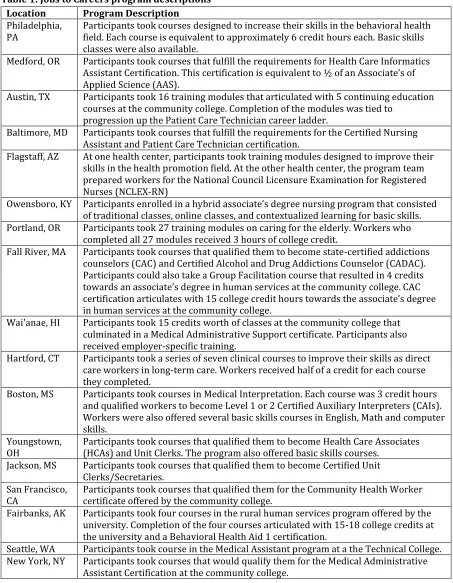
Table 1: Jobs to Careers program descriptions ...15
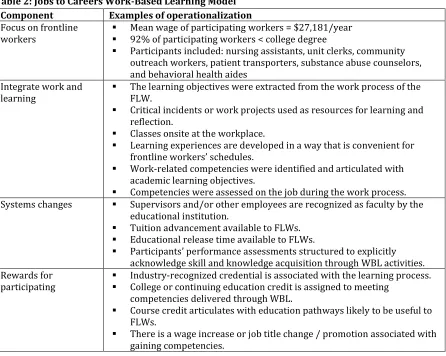
Table 2: Jobs to Careers Work-Based Learning Mode ... l16
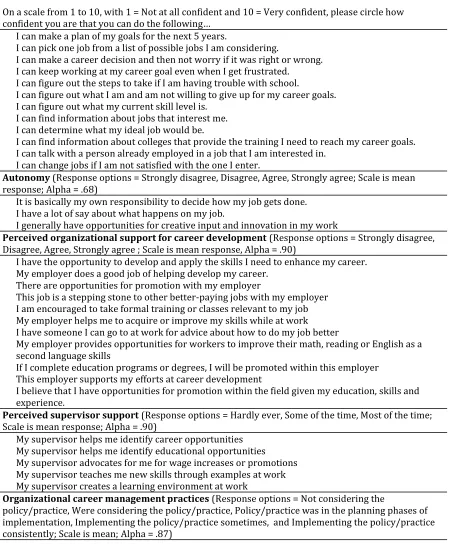
Table 3: Scale Measures ... 110
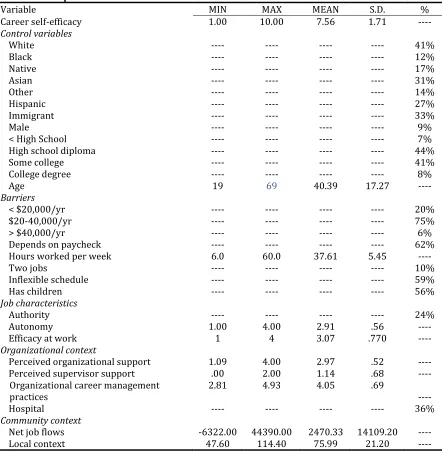
Table 4: Descriptive Statistics ... 112
LIST OF FIGURES
Chapter 1: Introduction
Studying how and why people move from job to job, and with what
consequences is a longstanding research tradition in sociology. The consensus is that people make career-relevant choices within a context of institutional constraints and opportunities. These choices amount to more or less successful mobility strategies. Despite this theoretical consensus, little empirical exploration exists into how individual and structural factors work together to shape mobility. Exploring how structural and individual processes intersect to influence mobility requires multiple levels of analysis. That is, one must empirically take into account people’s perspectives, interests, and resources, as well as the structure and processes of jobs, workplaces, occupations, and industries, and also the larger economic context. Datasets that allow this kind of multi-level analysis are rare.
Job Mobility
Research on job mobility typically takes one of five forms. Scholars study how: (1) structural processes enable or constrain mobility opportunities; (2) people seek to maximize status, income, and satisfaction with work via job shifts; (3) individual-level resources influence the capacity to capitalize on mobility opportunities; (4) personality influences people’s willingness to engage in job shifts; and (5) structural and individual processes combine to shape job mobility. Despite widespread consensus that the fifth line of inquiry provides the most accurate rendering of mobility processes, little empirical investigation into the intersections between structural and individual processes exists. After reviewing these bodies of research in turn, I identify the
challenges associated with empirically studying dual theories of mobility and how this study addresses these challenges.
The relationship between structural processes and mobility opportunities
Scholars studying structural processes focus on how features of the economy, industry, occupation, and firms contribute to the availability of jobs and how people move between them. Examples of influential structural processes include the
organization of educational systems (Erikson and Goldthorpe 1992), access to
vocational training, discrimination in the labor market (Kerckhoff 1995) and the way education and employment are linked (Kurz and Müller 1987; Heinz 2003),
policies that influence job security (Diprete et al. 1997). These processes are relevant at both the local and national levels and establish if and what type of mobility is likely to occur (Kerckhoff 1995: 342).
Industry, occupation, and firm vacancy chains also enable or constrain
opportunities for mobility. These vacancy chains are often influenced by economic and market conditions, industry and firm growth and contraction, and technological
innovation (Heinz 2003; Shin 2007; Haveman and Cohen 1994; DiPrete and
Nonnemaker 1997; DiPrete 1993). Personnel policies that specify who is best suited to fill vacant positions and retention versus replacement human resource strategies are among the firm-specific processes that influence mobility (Hachen 1992; Anderson, Milkovich, and Tsui 1981). Size of firm also matters. Larger firms tend to provide more opportunities for upward mobility than smaller firms (Althauser and Kalleberg 1990).
Job shifts as a way of maximizing work rewards
and Kinicki 2001). Further, several industry, job and firm-level characteristics influence job mobility via job satisfaction. For example, Bockerman (2009) found that deleterious work conditions decreased job satisfaction, and that this job dissatisfaction intensified job search among the workers in the study (Böckerman and Ilmakunnas 2009).
Similarly, poor financial prospects and working conditions and unpleasant job duties are correlated with quit intentions because of their impact on job satisfaction
(Delfgaauw 2007; Cottini, Kato, and Westergaard-Nielsen 2011).
Individual capacity to take advantage of mobility opportunities
human capital (Dolton and Kidd 1998). These individuals are more likely to move between firms or occupations (Dolton and Kidd 1998).
In light of recent shifts in the structure of work, researchers have begun to consider career management skills in addition to job or occupational specific skills as additional individual factors that influence mobility potential. Evidence suggests that employers are investing less in the career stability or development of their employees, and that the skill needs of industry are constantly evolving (Beck and Camiller 2000; Berg and Kalleberg 2001). In this labor market context, researchers argue, people who possess a strong ability to find and use information about jobs, education, and training are also more upwardly mobile (Bridgstock 2009).
Lastly, because people who hire and promote others prefer those similar to them, individuals who are able to demonstrate such similarity through possession of the right cultural capital have an advantage in the labor market (Brown 1995). Studies based on this perspective usually examine the link between social class origins and status attainment, focusing on how parents transmit high-value cultural capital to their children by giving them access to the best schools, social networks, and leisure
activities (Bourdieu 1984; Bourdieu 1998; Brown 1995). Indeed, a wealth of research documents significant relationships between social class origins, income, and
occupational prestige (Hansen 2001a; Hansen 2001b; Mastekaasa 2004; Torche 2011; Triventi 2013)(Hansen 2001; Mastekaasa 2004; Torche 2011; Triventi 2013).
Personality as an indicator of willingness to engage in job shifts
extraversion, openness to experience, and conscientiousness-related traits and frequency of organization changes (Vinson, Connelly, and Ones 2007). Woo and Allen (2013) documented a significant relationship between proactive personality and people’s perspectives on staying in their jobs (Woo and Allen 2014).
Dual theories of mobility
In addition to studies that focus specifically on either structural or individual influences on mobility, dual theories of mobility seek to integrate both when attempting to predict or explain job mobility. General statements about the need to consider how structural and individual processes work together to influence people’s career paths are common throughout the literature. Recently, researchers have begun to develop more formal and detailed frameworks to describe this relationship. For example, Forrier, Sels and Stynen (2009) and Ng, Sorensen, Eby, and Feldman (2007) have each developed conceptual models that seek to counteract the increasingly popular
argument that career success is predominantly controlled by individuals in the modern world of work. The authors agree that individuals’ capacities (e.g., education, skills), personality and preferences (e.g., values, interests) influence their job mobility (T. W. H. Ng et al. 2007; Forrier, Sels, and Stynen 2009). However, they also argue that structural arrangements continue to play an influential role as well. Economic conditions,
characteristics, from these authors’ perspectives, are predispositions that influence the types of work roles a person is qualified to do, best suited for, and prefers.
Whether or not and what kind of mobility occurs depends on additional considerations. Ng et al. (2007) argue that when faced with a specific mobility opportunity, people consider whether society sees the opportunity as appropriate, common, or desirable, whether or not they see it as desirable, and if they think they can be successful in pursuing the opportunity. Based on these considerations, people
develop intentions. These intentions subsequently influence behavior.
Summary and statement of the problem
In summary, mobility researchers consider a variety of different structural and individual processes, either independently or in combination, when attempting to understand mobility processes. Theory suggests that structural processes that create or limit opportunity, biographical factors that shape individual abilities and preferences, and choice processes that occur in response to particular circumstances combine to affect mobility. Consideration of processes that occur at multiple levels of analysis is a strong approach to studying mobility, given its complexity. Yet, little empirical research exploring the propositions of these complex multi-level conceptual models of mobility exists.
workers, provides an opportunity to empirically study mobility at all three levels of analysis simultaneously. In the sections that follow, I describe the Jobs to Careers Initiative and why it makes for a good empirical case study of dual mobility processes.
The Jobs to Careers Initiative1
The Jobs to Careers Initiative (hereafter referred to as J2C) is a workforce development program designed to create education and career advancement for FLWs that was funded by the Robert Wood Johnson Foundation, the Hitachi Foundation, and the Department of Labor. Frontline healthcare occupations are diverse and include various health services and health care delivery roles such as nursing assistants,
respiratory therapy technicians, social and human service assistants, home health aides, mental health counselors, and medical transcriptionists. They provide their patients
1 The National Evaluation of the Jobs to Careers: Transforming the Front Lines of Health
and clients with preventive and early intervention services, chronic illness management strategies, and long-term and post-hospitalization rehabilitative care.
The J2C Initiative’s focus on frontline healthcare workers is two-fold. First, FLWs are in high demand and short supply. Over the next decade, frontline health care jobs are projected to increase substantially. Among service occupations, the largest number of new jobs is expected to arise in healthcare support occupations (Lacey 2009). In fact, personal home care aides and home health aides are projected to be the two fastest growing occupations in the United States (Bureau of Labor Statistics 2012). The growth in frontline health care jobs is driven by an aging population and longer life
expectancies, as well as new treatments and technologies (Lacy 2009).
Second, despite the fact that these workers are in demand and an integral part of the health care work force, frontline health care jobs have many ‘bad job’ characteristics as defined by Kalleberg, Reskin and Hudson (2000) (Kalleberg, Reskin, and Hudson 2000; Robert Wood Johnson Foundation 2006). Society does not value caregiving, nor see it as an activity requiring skill, because of its association with the natural talents that women allegedly possess (England 2005). Gender ideology renders women’s work as less valuable compared to men’s work (Kilbourne, Farkas, Beron, Weir, et al. 1994; Steinberg 1990). This cultural perspective sets the stage for the low wages, lack of respect and the generally poor working conditions that care workers face (Palmer and Eveline 2012). Frontline workers (hereafter referred to as FLWs) typically lack
through trial-and-error experience (RWJF 2006). These jobs also lack clear standards and competencies, and offer little by way of skill development and career advancement.
Further, frontline workers receive low wages and few benefits. For example, as of May 2011, nursing aides, orderlies and attendants, the highest paid direct care occupational category, earn a median hourly wage of $11.63 (Bureau of Labor Statistics 2011). One third of female direct care workers live in families whose income is at or below 150 percent of the poverty level (Potter, Churilla, and Smith 2006). Frontline workers are almost 4 times more likely to be uninsured than doctors and nurses and their un-insurance rates exceed the national average, despite the fact that health care workers overall have much lower rates of un-insurance than the average American (Chou et al. 2009).
priority for public policy experts, care work advocates, and researchers alike (Harris-Kojetin et al. 2004; Fitzgerald 2006; Ribas, Dill, and Cohen 2012; Dwyer 2013).
The J2C funders sought to address many of the problems of frontline work. Specifically, the overarching goal of the initiative was to create better working conditions and family sustaining wages for low-wage health care workers, while improving their skills and knowledge such that they deliver higher quality care. To achieve this goal, the J2C funders developed a grant program to which organizations could apply for funds to develop and implement programs that pursue these objectives. In receiving the J2C funding, grantee organizations not only committed to developing and implementing programs that would achieve the goals of the initiative, they also committed to meeting those goals in a particular way. The grantees were instructed to develop and implement programs consistent with the J2C model of work-based
learning.
Jobs to Careers work-based learning model
The Jobs to Careers Initiative built on the concept of work-based learning developed by knowledge theorists. The work-based learning model begins from the perspective that in order for practitioners (in any domain) to become expert, they must develop both explicit and tacit knowledge (Raelin 1997). Explicit knowledge is
difficult to communicate to others. It is acquired through observation, imitation, and practice rather than through textbooks (Dienes and Perner 1999). As a way of
distinguishing, one might think of explicit knowledge as “knowing-what” (connect the pieces in the box to complete the puzzle) and tacit knowledge as “knowing-how” (ability to produce a completed puzzle).
Acquiring explicit and tacit knowledge requires both codified instruction and experiential learning. Concurrent integration of the two is what is known as work-based learning (Raelin 1997). Medical and nursing education has a long history of making use of this model. Students learn medical or nursing theory, test these theories out in real-world situations and contexts, and through this process begin to acquire the tacit knowledge required for skilled decision-making in their work. In the Jobs to Careers Initiative, the sponsoring organizations instructed grantees to develop similar types of programs (i.e., programs that explicitly integrated practice and theory) for low-wage workers in health care. The J2C funders also instructed grantees to
institutionalize the programs such that they could be sustained after funding ended, and to reward workers who participated in the process. Together, the Jobs to Careers work-based learning model involved four components: (1) focus on frontline health care workers; (2) formal integration of work and learning; (3) systems changes to support the learning model; and (4) rewards for completion.
less than $40,000 a year, have less than a bachelor’s degree, and who work in jobs that require limited formal training and lack standards and competencies. The J2C grantees targeted a diverse group of frontline workers, including medical assistants, substance abuse counselors, nursing assistants, patient care technicians, transporters,
housekeepers, community outreach workers, and unit clerks.
Second, the grantees were instructed to develop programs that formally
integrated work and learning. Each partnership had to include both an employer and an educational institution. These organizations worked together to provide participants with the skills and knowledge they needed to enter and successfully perform work roles most in demand. Examples of how the J2C grantees integrated work and learning
include supervisors and community college instructors collaboratively identifying competencies and learning and assessment opportunities that happen during the work day, outside of class time.
Third, J2C grantees were directed to make structural changes to their
Table 1: Jobs to Careers program descriptions Location Program Description
Philadelphia,
PA Participants took courses designed to increase their skills in the behavioral health field. Each course is equivalent to approximately 6 credit hours each. Basic skills classes were also available.
Medford, OR Participants took courses that fulfill the requirements for Health Care Informatics Assistant Certification. This certification is equivalent to ½ of an Associate’s of Applied Science (AAS).
Austin, TX Participants took 16 training modules that articulated with 5 continuing education courses at the community college. Completion of the modules was tied to
progression up the Patient Care Technician career ladder.
Baltimore, MD Participants took courses that fulfill the requirements for the Certified Nursing Assistant and Patient Care Technician certification.
Flagstaff, AZ At one health center, participants took training modules designed to improve their skills in the health promotion field. At the other health center, the program team prepared workers for the National Council Licensure Examination for Registered Nurses (NCLEX-RN)
Owensboro, KY Participants enrolled in a hybrid associate’s degree nursing program that consisted of traditional classes, online classes, and contextualized learning for basic skills. Portland, OR Participants took 27 training modules on caring for the elderly. Workers who
completed all 27 modules received 3 hours of college credit.
Fall River, MA Participants took courses that qualified them to become state-certified addictions counselors (CAC) and Certified Alcohol and Drug Addictions Counselor (CADAC). Participants could also take a Group Facilitation course that resulted in 4 credits towards an associate’s degree in human services at the community college. CAC certification articulates with 15 college credit hours towards the associate’s degree in human services at the community college.
Wai'anae, HI Participants took 15 credits worth of classes at the community college that culminated in a Medical Administrative Support certificate. Participants also received employer-specific training.
Hartford, CT Participants took a series of seven clinical courses to improve their skills as direct care workers in long-term care. Workers received half of a credit for each course they completed.
Boston, MS Participants took courses in Medical Interpretation. Each course was 3 credit hours and qualified workers to become Level 1 or 2 Certified Auxiliary Interpreters (CAIs). Workers were also offered several basic skills courses in English, Math and computer skills.
Youngstown,
OH Participants took courses that qualified them to become Health Care Associates (HCAs) and Unit Clerks. The program also offered basic skills courses. Jackson, MS Participants took courses that qualified them to become Certified Unit
Clerks/Secretaries. San Francisco,
CA Participants took courses that qualified them for the Community Health Worker certificate offered by the community college. Fairbanks, AK Participants took four courses in the rural human services program offered by the
university. Completion of the four courses articulated with 15-18 college credits at the university and a Behavioral Health Aid 1 certification.
Seattle, WA Participants took course in the Medical Assistant program at a the Technical College. New York, NY Participants took courses that would qualify them for the Medical Administrative
Table 2: Jobs to Careers Work-Based Learning Model Component Examples of operationalization
Focus on frontline workers
Mean wage of participating workers = $27,181/year 92% of participating workers < college degree
Participants included: nursing assistants, unit clerks, community outreach workers, patient transporters, substance abuse counselors, and behavioral health aides
Integrate work and learning
The learning objectives were extracted from the work process of the FLW.
Critical incidents or work projects used as resources for learning and reflection.
Classes onsite at the workplace.
Learning experiences are developed in a way that is convenient for frontline workers’ schedules.
Work-related competencies were identified and articulated with academic learning objectives.
Competencies were assessed on the job during the work process. Systems changes Supervisors and/or other employees are recognized as faculty by the
educational institution.
Tuition advancement available to FLWs. Educational release time available to FLWs.
Participants’ performance assessments structured to explicitly acknowledge skill and knowledge acquisition through WBL activities. Rewards for
participating
Industry-recognized credential is associated with the learning process. College or continuing education credit is assigned to meeting
competencies delivered through WBL.
Course credit articulates with education pathways likely to be useful to FLWs.
There is a wage increase or job title change / promotion associated with gaining competencies.
Jobs to Careers program evaluation
Extensive data was gathered about the J2C Initiative as part of the program evaluation. The team2 charged with evaluating the Jobs to Careers pilot programs
gathered qualitative and quantitative data to provide both formative and summative feedback to grantee organizations and the national program office. The evaluation team
2 I was a member of the Jobs to Careers evaluation team. My primary responsibilities
conducted two-person site visits with every grantee each year of funding (three visits per grantee). These site visits involved semi-structured interviews with key informants (e.g., CEOs, HR personnel, deans, instructors and project staff), focus groups and
interviews with frontline workers, focus groups with frontline supervisors, and
administration of organizational surveys. Extensive information regarding the details of the intervention (e.g., type of education/training offered, enrollment, attrition),
organizational characteristics (e.g., size, sector, complexity, HR policies), and worker outcomes (e.g., raise, promotion, certification, college credit, etc.) was collected at each site. Project staff also reviewed the grantees’ proposals for information about why they were motivated to create the programs for their FLWs and collected data concerning the economic contexts of the grantee projects. This economic context data was extracted from the Census Bureau’s American Community Survey (2005-2009
estimates) and Quarterly Workforce Indicators, and includes median income, poverty rates, educational attainment, unemployment rates, and net job flows. Lastly, the evaluation team conducted baseline and follow-up surveys with participating and non-participating workers. This short survey assessed job quality, job satisfaction,
organizational commitment, career commitment, career self-efficacy, financial rewards, career rewards and supervisor support.
kinds of challenges, best practices, and systems changes were associated with program implementation, and what kinds of results occurred for FLWs. The evaluation effort linked individual-level data about workers’ perspectives on their jobs, workplaces, and careers to data on their job and firm characteristics, as well as to industry-, occupation-, and community-level data. The scope and content of the program evaluation data thus offer a unique opportunity to examine dual mobility processes. While the original purposes of data collection were entirely “applied,” here I use the data to address a larger theoretical question: How do structural and individual processes work together to shape mobility? The results of this study will contribute to the evidence base for dual theories of mobility.
Methods
This study unfolded inductively. Open coding of the baseline focus-group data led to identification of themes related to the research question noted above.
began inductively, though the process as a whole included a mix of inductive and deductive analyses, as described in more detail below.
I began by coding the focus groups that were conducted with frontline workers at the beginning of the evaluation’s grant period (hereafter referred to as Time 1 FLW focus groups). These focus groups were conducted with workers the J2C employers were targeting for participation in the workforce development programs and took place before any educational and training opportunities were offered. Twenty-eight baseline focus groups were conducted across the 17 J2C programs. Moderators asked workers to describe their jobs, their workplaces, their career goals, and their hopes for the J2C initiative. Each focus group lasted one hour, was audio recorded and transcribed verbatim.
what the speakers are doing, under what conditions, and with what consequences. My final step was to assess how the patterns in the data help to answer the overarching research question guiding this study.
Moving from descriptive (open) codes to more conceptual (axial) codes involves a process of analytic interpretation of the data. Here is an example. A focus group moderator asked workers during a Time 1 FLW focus group to describe the skills necessary to do their jobs well. One person responded:
You have to be, like, a people person. You have to be willing to help. You have to be caring. If you’re not any of these things you don’t need to be doing this. Because I see a lot of people that don’t need to be here, because they don’t care about the people.
oppositional identity work had relevance, if at all3, to the research questions under
study. The presence of coding clusters, or patterns in the coding where several codes are often seen together, involving the oppositional identity work codes and codes related to commitment to direct care and unwillingness to pursue non-direct care jobs led me to conclude that oppositional identity work had a negative influence on FLWs’ willingness to take advantage of mobility opportunities. This is one of the findings I report in Chapter 2.
In addition to qualitative data from interviews and focus groups, the evaluation project also collected survey data using self-administered questionnaires. I approached this quantitative data in a more deductive fashion, testing hypotheses about
relationships between psychological, job, organization, and community variables (see Chapter 3). These hypotheses derived in part from the inductive analysis described above, and in part from a review of social psychological literature on the self and self-concept. As a social psychologist, I was familiar with this literature, but then returned to it in a more focused way as its utility for making sense of my initial findings became clear.
The social psychological literature on the self and self-concept also provides a conceptual framework for unifying my findings and drawing out their implications for understanding mobility processes. Given that my findings and analyses were largely
3 Many themes and patterns emergent in the focus group and interview data did not
arrived at inductively, I employ this conceptual framework most fully at the end of the dissertation. This approach allows me to use the literature for interpretive purposes without being unduly constrained by it (Jessor, Colby, and Shweder 1996; Charmaz 2006). I can also thereby bring my interpretations to bear on prior theories of mobility processes, the result being a new conceptual model of how these processes operate (see Chapter 5). In the section that follows, I briefly review theories of the self and self-concept and discuss how these theories can enhance our understandings of job mobility.
A Social Psychological Framework
During the open coding of the baseline focus groups it became clear that workers’ self-conceptions played an integral role in how they navigated their jobs, workplaces, and careers, and that these self-conceptions were intimately connected with the nature of their jobs and workplaces. These early insights suggested that theories of the self and self-concept would be useful to making sense of themes in the data. Theories of the self and self- concept help to explain how people’s self-conceptions are both a cause and consequence of the social systems in which they live. After
providing a brief overview of self and self-concept theories, I demonstrate how these theories may help to answer the research question guiding this study.
is, individuals simultaneously shape and are shaped by social life. We learn who we are or should aspire to be through interacting with others. At the same time, because social structure is best understood as patterned interactions (Stryker and Vryan 2006), what we do creates social structure.
Self researchers typically hold interactionist or structural views of the self-concept. From the interactionist perspective, we perform who we want others to believe us to be (Goffman 1959). What we say, do, and wear – and other impression management strategies – are efforts to communicate to others who we are. Social situations provide the rhetorical resources that individuals use to project self-images. Self-presentations are important because they signal to others how they should interact with us (Stryker and Vryan 2006).
From the structural perspective, the self-concept is comprised of multiple identities (Stryker 1980). Each identity corresponds to a social role that an individual fulfills. These social roles correspond to positions in the social structure. Thus, the self-concept reflects a society’s social structure. Individuals organize and activate these identities according to how attached they are to them and to how strongly their cherished relationships with others rest on the ability to perform these roles successfully.
Both the constructionist and structural perspectives emphasize the importance of social structure. In the former case, structure supplies the tools for identity
as one’s own. Another shared belief across perspectives is that the content of people’s identities serves as a guide for behavior. From the constructionist viewpoint, self-meanings are an important part of the definition of the situation that guides behavior in interactions (Blumer 1986). From the structural viewpoint, people act in order to meet expectations associated with the social roles they occupy (Stryker 1980).
The motivational aspect of the self is one key to understanding how identity helps to explain behavior. People act purposively to achieve self goals. These goals are positive self-evaluations and authentic identities. In other words, we are motivated to experience ourselves as competent and virtuous, and to have the content of our identities seem coherent and consistent across situations and over time (Gecas 1982). These motives guide behavior. While the conceptualization of behavior as motivated by self goals applies to routine and non-routine situations, self-motives become most apparent during life transitions and in novel situations when people have to make choices about a course of action (Hitlin and Elder 2007).
meanings associated with social categories. Rather, the desire to demonstrate a credible social identity or to avoid social sanction has a powerful influence on behavior.
In addition to studying how the self-concept is formed and maintained,
researchers also study how it is evaluated. The term self-esteem is used to describe this evaluative component of the self. Self-esteem, or how we feel about ourselves, derives from two sources: our perceived competence (self-efficacy) and virtue (self-worth) (Gecas 1989). Like identity, perceptions of efficacy and worth are shaped by social structure. For example, the most important contribution to self-efficacy is experience of efficacious action (Bandura 1997). Institutional processes constrain or enable people’s ability to have these experiences, and thus efficacy beliefs. Perceptions of self-worth rest heavily on the views of people we interact with. Structural processes (e.g., the organization of workplaces, housing discrimination) influence which kinds of people we are likely to interact with. To the extent that these interactions are with significant others, these people’s view of us influences how we feel about ourselves (Cooley 1964).
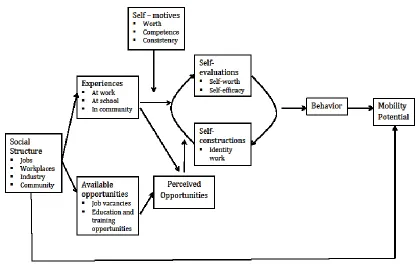
Taken together, theories of the self and self-concept help to explain the reciprocal interplay between individual psychology, individual behavior, and social structure. More specifically, I use these theories to explain how structural,
organizational, and psychological processes combine to affect prospects for job
theoretically coherent answer to the guiding question of this study: How do structural and individual processes work together to affect mobility? The answer this study offers, as I hope to show, constitutes a contribution to sociological understandings of mobility and to social psychological understandings of how individuals are shaped by social structures.
Overview of the Dissertation
One pattern that emerged early in the process of coding the Time 1 FLW focus group data was that workers’ self-constructions figured prominently in discussions of their past and current work experiences. In Chapter 2, I analyze these patterns by drawing on theory and research on the identity work of low-status workers as well as general theory about the role of the self in regulating human behavior. I argue that the frontline workers in the study constructed self and work meanings to bolster their self-worth in an organizational context that threatened their dignity. They used the
discursive resources embedded in their industry, occupations, institutions, and work experiences to do esteem-enhancing identity work. Unfortunately, the content of workers’ identity constructions undermined their mobility potential because it discouraged behavior that would facilitate upward mobility and sustained the ideological beliefs that marginalize women and minorities.
Considerable empirical evidence demonstrates that career-related self-efficacy has a strong influence on career interests, choices, and behaviors (Betz 2000; Rottinghaus, Larson, and Borgen 2003; Kanfer, Wanberg, and Kantrowitz 2001).
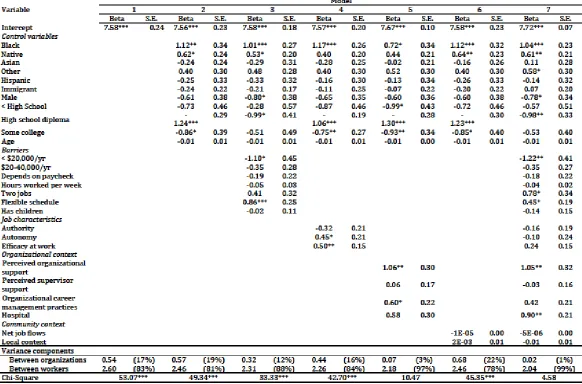
Given the strong association between career self-efficacy and career-related activities, in Chapter 3 I explore how FLWs’ career self-efficacy shaped their willingness to pursue education and career advancement, as well as what influenced FLWs’ career self-efficacy. Based on the information gleaned through the baseline focus groups and the theory on career self-efficacy and general self-efficacy, I hypothesized that aspects of workers’ jobs, workplaces, and community lowered workers’ career self-efficacy, thereby undermining their mobility potential. To test these hypotheses, I used data from a survey administered to FLWs participating in the J2C programs (N=576) at the end of the grant period (hereafter referred to as FLW follow-up survey), a survey administered at the end of the grant period to human resource administrators (N=27) on staff at the employer organizations in the J2C partnerships (hereafter referred to as the HR Checklist), and the Census.4
Using hierarchical linear modeling, I tested the relationship between job conditions, employer policies related to career development, and local economic context, and career self-efficacy. The findings demonstrate that job-related resources such as time and money, along with employer support for career development,
4 Details of the data and methods associated with this analysis are reported in Chapter
significantly influenced the workers’ confidence in their ability to succeed in career-related tasks. Given the association between career self-efficacy and career outcomes, these findings suggest that the nature of frontline work and workplaces influences FLWs’ willingness to engage in mobility opportunities by constraining or enabling perspectives on chances for success.
The role of frontline work and workplaces in shaping FLWs’ willingness to pursue mobility opportunities is explored further in Chapter 4. Research suggests that many employers seek to shift the risk and responsibility for career management to employees; however, a few choose high-road strategies and invested in their employees’ career development (Capelli 1999; Scully-Russ 2005; Kalleberg 2012). Various explanations are offered for why some employers choose these high-road strategies, but little empirical evidence exists to validate these theories. Likewise, little empirical evidence explores how employees respond to specific development
The purpose of Chapter 4 is to explore what made the employers funded by the J2C initiative interested in creating mobility opportunities for their workers and how FLWs responded to these opportunities. Four sources of data are used to achieve this goal: (1) Time 1 FLW focus groups; (2) one-on-one interviews conducted with FLWs midway during their participation in the grant programs (T2 FLW interviews); (3) follow-up focus groups conducted with FLWs at the close of the programs’ grant periods (Time 3 FLW focus groups); and (4) the grant proposals submitted by the funded partnerships. These data sources were coded using the grounded theory method described above.
Several industry, community, and organization factors, such as technological changes, skill demands, care demands, and workforce instability, compelled the J2C employers to invest in their FLWs. Workers engaged the programs based on the implications of the programs for their self-conceptions. Previous experiences in their workplaces and with education, specific Jobs to Careers programmatic elements, and cultural discourses of mobility shaped what workers perceived these implications to be.
navigated their jobs, workplaces, and careers, and thus affected their mobility potential. Moreover, the structure and processes of their workplaces shaped these
self-conceptions.
Chapter 2: Identity work and mobility INTRODUCTION
Frontline healthcare jobs are hard. They are characterized by low pay and few benefits, heavy workloads, and low status (Robert Wood Johnson Foundation 2006). Yet, the FLWs in this study insisted that they loved their jobs because they were
challenging, rewarding, and valuable to the organization and society at large. Research suggest that workers’ valorization of frontline work may be an attempt to counteract the psychological impact of working in bad jobs (Hodson 2001). These
characterizations, then, may provide some psychic benefit to these workers. However, early coding of the focus groups also suggested that FLWs’ valorization of frontline work posed problems for their mobility potential in that it kept them from wanting to pursue better jobs.
The purpose of this chapter is twofold. First, I seek to understand how FLWs dealt with the badness of their jobs such that they still managed positive occupational characterizations. Second, I seek to understand how these characterizations may have implications for FLWs’ willingness to pursue better jobs. Based on an analysis of Time 1 FLW focus group data, I find that workers constructed self-understandings and work meanings in ways that buffered the psychological impact of oppressive work conditions. While these strategies allowed workers to recoup dignity and respect they were
In short, FLWs’ efforts to maintain self-worth undermined their movement into better jobs and reinforced the ideologies that justify the devaluation of their current jobs.
After reviewing the relevant theory and research related to how workers maintain self-worth in the face of dehumanizing work conditions and the unintended consequences that often result from these efforts, I describe these findings in detail. The concluding sections underscore the importance of understanding the role of identity work in mobility processes as well as the necessity of conceptualizing this meaning-making as a cause and consequence of the social situations in which people find themselves.
Work, Identity, and Self-worth
Theory and research on identity work and meaning-making explore the challenges associated with maintaining self-worth under oppressive conditions.
Identity work refers to the range of activities people use to create, present, and sustain personal identities that are congruent with and supportive of self-concept (Snow and Anderson 1987). The desire to maximize positive self-evaluations motivates identity work (Tajfel 1982). Positive evaluations are accomplished through strategic self-presentations (Goffman 1959). Through the clothes we wear, the way we talk, who we associate with, and where we live (and many other ways), we communicate to others who we want to be (Schwalbe and Mason-Schrock 1996).
The occupations we choose also signal to others how we understand ourselves (Gottfredson and Brown 2002). Images of occupations include beliefs about the types of people who are likely to be in those jobs (Gottfredson and Brown 2002). Such beliefs may be about social group membership (e.g., gender, race), personality characteristics, and ability. Occupational membership, then, conveys identity-relevant information. By choosing occupations that affirm our cherished self-images, we tell others what kind of people we are, or imagine ourselves to be (Gottfredson and Lapan 1997).
Empirical research shows that occupational choices are patterned along race and gender lines. Although progress has been made over the last fifty years, the
represented in the humanities and social sciences departments of colleges and universities (National Education Statistics 2005). These patterns reflect individuals’ negotiations of racialized and gender expectations about the types of work women and Blacks are capable of and suited for (Correll 2001; Buchanan and Selmon 2008).5
In addition to choosing jobs that signify appropriate social identities, we continue to “craft” our social, physical, and ideological environments so that desired self- and social meanings are preserved at work (Wrzesniewski and Dutton 2001). For example,
women and men routinely “do gender” at work to communicate their gendered self-understandings (Martin 2003; Martin 2006). This gendered identity work often
involves embracing or resisting traditional gendered ideology in ways that people find psychically or professionally rewarding (Hatmaker 2013; Priola 2007; Simpson 2004; Guerrier and Adib 2004). Similar patterns regarding racial ideology and identity work at work are evident for racial/ethnic minorities as well (Slay and Smith 2011; Adib and Guerrier 2003).
Creating meaning through work is not only about aligning personal and social identities, however; it also allows workers in bad jobs to buffer the negative impact of
5 Other well-documented factors that contribute to occupational segregation include:
women and minorities’ lack of necessary skills, education, and experience and
poor working conditions on their self-conceptions. Low-wages and unchallenging work often combine with insecure employment, demeaning treatment, and little input into organizational processes to create conditions that deny dignity at work for many workers (Berg and Frost 2005). Other sources of dignity threats at work include bad management, work overload, and limited autonomy (Hodson 2001). Ethnographic research suggests that to reclaim dignity workers may: (1) actively resist; (2) over-perform; (3) create alternate sources of meaning; or (4) cultivate social relationships (Hodson 2001). These strategies allow workers agency and control in the face of dignity threats.
People performing “dirty work” face an added threat to their dignity. Dirty work refers to tasks and occupations that are physically, socially, or morally tainted (Hughes 1962). Because what we do figures prominently in how others view us (and therefore how we view ourselves), achieving positive self-concept is problematic for people who do dirty work. Yet, research shows that dirty workers engage in practices that buffer, redefine, or refocus negative perceptions of the work they do, and thus themselves (Ashforth and Kreiner 1999).
dirty workers avoided contact with polluting substances (e.g., feces, urine, drool, etc.) when possible, used their ability to stomach such contact as signs of strength, used humor to lessen the severity of disgusting incidents, and cast their work in a more positive light to counteract the challenges involved in dealing with incontinent residents (Jervis 2001). The miners in Lucas’ (2011) study appealed to larger discourses of morality, virtue, and dignity to redefine the work that they did as important, valuable, and dignified (Lucas 2011).
These workers’ efforts at counteracting the stigma associated with dirty work mirror many workers’ efforts to find dignity at work in the face of increasingly
dehumanizing working conditions. Self-worth is at risk for all people who occupy social locations characterized by stigmatized or exploitive work arrangements. However, people are not passive acceptors of the social conditions that frame their lives. Rather, we actively construct our environments such that positive self-meanings are possible even in the most constraining, dehumanizing contexts. The low social status of the mostly female, minority, and poor FLWs in this study combined with the poor working conditions of frontline healthcare jobs suggest that the workers in this study would be compelled to engage in this oppositional sense-making (Schwalbe and Mason-Schrock 1996). Thus, one question guiding the first core chapter is: What strategies do the FLWs use to maintain self-worth?
conducted by Willis (1977) showed how working class kids created a subculture in response to the marginalization they experienced in school and how this identity work ultimately solidified their working class status by directing them to certain kinds of work – namely low status manual jobs (Willis 1977). Similarly, Gray and Kish-Gephart (2013) showed that class-related identity work in organizations often reinforces the logics that undergird class inequality because these strategies commonly involve “Othering” processes that enhance, rather than diminish, the notion that there are fundamental differences between classes (Gray and Kish-Gephart 2013). Oppositional identity work can also create more stress and anxiety for those who engage in it by creating conflict between insiders and outsiders (Petriglieri 2011). Identity work, then, sometimes produces negative consequences in addition to boosting self-worth. Thus, I pursue a second question in this chapter: How do the strategies that FLWs use to maintain self-worth matter when it comes to their potential for upward mobility?
DATA AND METHODS
hour, was audio recorded, transcribed verbatim and analysed using the grounded theory methods described in Chapter 1.
RESULTS
When interviewers asked FLWs what they disliked about their jobs, FLWs had plenty to say. However, workers typically added positive comments about their jobs even when discussing what they disliked. To explore this pattern further, I categorized both the negative and positive comments. Focused coding revealed four distressing job features: (1) lack of appreciation and disrespect from supervisors and professional staff; (2) lack of legitimacy and control in client care; (3) difficult clients; and (4) low wages. When FLWs spoke about the positive aspects of their jobs, four themes emerged: (1) the dignified nature of care work; (2) the value of innate qualities and insider
knowledge; (3) the intrinsic rewards of care work; and (4) the enjoyment of interacting with clients. Together these eight codes organize the data for the analysis presented below.
Care Work as Dignified
the work as dignified. Specifically, workers described care work as superior to other types of low-wage work, an expression of religious virtue, and vital to sustaining communities of vulnerable populations.
Comparisons of health care work to other low-wage jobs workers have held were common in focus group discussions. These comparisons often came up in the context of workers discussing what they liked about their jobs. Previous jobs served as the reference against which current jobs were judged. In some cases, the point of comparison was benefits. For example, the following worker talks about the difference in health insurance she received in retail versus in her current job as a nursing
assistant.
I mean, I’ve worked a lot of, like, your dead-end kind of jobs. I’ve worked WalMart, Target. I’ve worked every retail in [city] just about. And finally I have health insurance that I know I can count on. I can go to the doctor and there’s not gonna be any, ‘Well, we have to send this back through,’ or any nonsense like that. My bill will be paid. So to me it’s much better.
Scholars routinely cite the limited benefits provided by frontline health care jobs as evidence of their “badness” (Potter, Churilla, and Smith 2006). From this worker’s perspective, however, the benefits she receives are good. She arrives at this evaluation based on her experience with previous jobs that provided insufficient health insurance.
below judges the hospital to be quite supportive in comparison to her last job. Well, I worked at a preschool before this. And there you did pretty much what they told you to do and then you were stuck there. There’s no advancement at all, which is why I left. Because I really enjoyed working with kids and everything. When you work with someone and you become a part of their life, I enjoy that. But there wasn’t a longevity there. There was no moving up. There’s no doing anything else, even taking on responsibilities and projects, which I wanted to. I didn’t have the opportunity to. So it’s great that they really give you responsibility if you want it here.
Consistent with others in this focus group, the worker believes that her current job as a medical assistant in a hospital provides more opportunity to move up and take on more responsibility compared to her last job as a daycare worker. Many other FLWs held the same belief. The heavily credentialed nature of healthcare, however, makes it quite difficult for frontline workers to advance. The extent to which upward movement actually occurred at the organizations where these FLWs are employed varied,
depending on the organization; nevertheless, workers believed that this was an option, one that made the healthcare industry better than retail or childcare.
Worker: I definitely learned a lot from my hands-on. And, yeah, this is my first job in a medical setting. So I was like, wow, you know?
Moderator: What did you do before coming here?
Worker: Oh, I did production garment. It was completely different. I didn’t like it. And then I did a couple of part-time jobs. But then decided [that] probably [what] I like most about this job is that I get to interact with patients. And just feel a sense of accomplishment, or, you know, just feeling like you helped them. So that’s what I like about it mostly.
The central difference between this worker’s current job and her past jobs is the ability to interact with and help patients. This aspect of care work allowed her to feel
competent. In turn, these feelings of competence contribute to why she likes her job. The pleasure that comes from working with clients that this and many other FLWs discuss figures prominently in literature on why people find care work appealing (England 2005). The benefits and promotional opportunities available do not. In fact, when scholars characterize frontline healthcare jobs as bad jobs, they often point to these negative aspects of the work. Compared to other low-wage jobs FLWs have held or have access to, however, frontline healthcare jobs fare at least somewhat better. Thus workers used these lower-status jobs as reference points in their constructions of care work as dignified.
And the story – every Good Samaritan – he said when he first walked in during orientation. The Good Samaritan on the – got on his way and rode the chariot to take his – ah, what is it? To try to provide for his family and you know, [he was] beat up. And everybody passed by except for just a regular plain person to help this person, you know? He was being the Good Samaritan when everybody else rode by. When the man got beat up on the side of the road. It doesn’t hurt to help someone and say, “What is it? Is there anything I can do to help you? I have the time.” That’s what he wants anybody to present at this hospital.
By using religious teachings to describe what it means to be a care worker, the CEO, and subsequently this worker, imbued the work with virtue. Like the Good Samaritan, nursing assistants are distinguished by their uncommon dedication to helping others. Care work, from this perspective, is not just a job but also a vocation.
FLWs in community health centers were even more vocal in defining care work as important. The community health centers are located in poverty-stricken racial and ethnic enclaves. In these settings, care work takes on an added dimension of
importance because of its association with moral obligation and reciprocity in
community networks. These public health workers and community outreach workers understood their jobs not only as a way of helping clients, but also as a way of helping friends, family members, and community residents who desperately needed the services their organizations offer:
community. But being able to bring back all my experiences, skills, bring it back to the community, and like she said, give back is what I really like. Being able to share you know a lot of what I learned and bringing it back to the community.
Discussions throughout this and other focus groups with the community health workers centered on understandings of care work that involve giving back to communities that consist of vital support networks and vulnerable populations. These discussions established community health workers’ jobs as valuable work not only to clients, but the community as a whole. As such, FLWs could take pride in their work despite the challenges they faced in performing the work.
To summarize, FLWs replaced characterizations of paid care work as low-status, insignificant work with occupational and organizational rhetorics of dignity, morality and virtue. From FLWs’ perspective, care work is better than many low-wage jobs, embodies moral ideals, and is central to sustaining marginalized communities. Together these characterizations depicted work that is desirable and valuable, and thus elevated its social and moral status. By framing care work in this way, FLWs were able to take pride in their work despite its low regard in the culture at large.
Delegitimizing Professional Training
In addition to cultural perceptions of care work as both undesirable and
healthcare is based largely on formal education and training (Freidson 1988).6 Titles
and credentials signify this training (Brown 2001). They indicate not only skill and technical knowledge, but also status and power within the organization (Brown 2001).
Frontline healthcare workers lack formal education and training (Potter, Churilla, and Smith 2006). Therefore, in a field where credentials afford authority and legitimacy, FLWs are at a disadvantage in asserting claims of value and competence. The workers in this study, however, appealed to other sources of legitimacy to assert their value. Specifically, they appealed to innate qualities, insider knowledge, and “real world” experience.
The most commonly cited source of workers’ ability was innate personality characteristics. Workers believed that they possessed qualities that allowed them to navigate the demanding aspects of their jobs while providing good care. Direct-care jobs are hard, as many FLWs noted in focus-group discussions. Working with high-needs clients, particularly those in decline, was cited as a source of emotional distress. FLWs also cited the strain of juggling multiple demands from challenging clients. Physical threats were occasionally an issue, as was dealing with the emotional strain associated with client deaths.
FLWs used these negative aspects of their jobs as “rallying points” (Ashforth and Kreiner 1999) on which to stake claims of toughness. For example, after a lengthy
6 Other sources of status in healthcare include autonomy in decision-making,
discussion about the emotionally and physically demanding nature of their day-to-day work lives, one FLW noted:
Worker 1: Everyone doesn’t have the heart for it. Some people go into it for the money and not the caring for the patient.
Worker 4: I wouldn’t be here if it was for the money. Worker 1: Right.
Worker 5: And also, you have to be a nurturing individual. If you have children, first of all, you know how to give quality care.
Worker 1: So you just have to be a nurturing type of person. A loving type of person. It takes guts to take care of somebody, you know.
Worker 4: Yeah, it do.
Traditional ideas about the importance of nurturant qualities in care work are clear in this exchange; however, these workers also emphasize strength and courage. Declaring that only people who have “heart” and “guts” are suited for care work contradicts the idea that anyone can perform care-work tasks. Highlighting the culturally valued qualities of strength and courage as essential to good caregiving reflects a
characterization of caregivers that is more socially desirable than popular perceptions. In place of a woman simply performing tasks that come second nature, the preceding discussion conjures images of a resilient person persevering despite many challenges.
I swear I think a lot of it has to do with people’s personalities. I think I could have all the training in the world and it won’t matter. It’s like – it’s my personality.
This worker expresses a common perspective of the FLWs in the study: personality is the wellspring of good caregiving, not formal education and training. Such assertions delegitimize the utility of expert knowledge and elevate the value of FLWs’ unique qualities.
These claims also represent FLWs’ attempts to identify insiders (good
caregivers) from outsiders (bad caregivers). The distinction between workers who have the raw talent necessary to be good caregivers and those who do not is clear in the following quotes:
Worker 1: I don’t think you can teach it. I think that’s something that… Worker 2: It has to come from within.
Worker 1: Yeah. Right. I don’t think that everybody has that. All: No.
Worker 1: You – some of the people that I’ve seen that are here that shouldn’t be here.
Worker 7: Right. And they don’t have that – it’s just something they’re… Worker 5: They don’t need to be here with us.
natural caregivers as superior to people who lack these innate qualities. This
superiority is not trumped by formal training, because formal training cannot create a caregiving personality.
Workers at sites embedded in highly impoverished or racial and ethnic communities also emphasized skills that cannot be easily taught. In these cases, personality was not the source of the unique skill. Rather, workers cited insider knowledge and experience with minority populations. When asked what skills were necessary to do his job well, one community health worker said:
Well, I would say… they need more street knowledge. You need to have street knowledge. Not just college, but street knowledge, because our clients feed off of fear and weakness.
Here again, the juxtaposition of FLWs’ knowledge against formal education and training is evident. The difference here, however, is that FLWs privilege the knowledge of
cultural insiders as opposed to personality types.
At the center where the previously quoted worker is employed, FLWs were responsible for making sure that community members attended to their health needs. This task was challenging because clients were race and sexual minorities (i.e., lesbian, gay, transgender, bisexual), homeless, addicted, had violent criminal backgrounds, and often suffered from mental illness. In this context, the FLWs’ experience with these problems helped them connect with and manage clients. Administrators often
highlight the importance of their insider knowledge and its unique contribution to client services.
In addition to emphasizing personality, experience, and cultural insight as important contributors to good caregiving, FLWs also critiqued nurses’ skills. In the healthcare field, nurses claim professional status based on formal education. FLWs often discussed the professional training that nurses receive, downplaying its utility for success on the job.
And a lot of times, like I’ve seen it. But the tech actually has to train the nurse, which I find hilarious. Especially these new nurses that’s just coming out of school and they have a mind state that, “Okay, in school they told us, this is your job and this is my job.” But in the real world, it doesn’t work like that. I just wish a lot of nurses actually had worked in hospital settings before they went to school. Because a lot of times they come here…like even when I was doing transport, they just…I don’t want to say they act stupid. But they act stupid.
The nurse characterized in this quote is naïve and possesses useless credentials. Frontline staff are the ones who are really knowledgeable, as implied by the claim that patient techs often train new nurses. This knowledge comes from the “real world” experience that nurses lack.
and authority. However, they do not accept this inferior status. Instead, they appeal to other sources of legitimacy (innate qualities and insider knowledge) and delegitimize formal training. These strategies allow workers to affirm an image of themselves as capable and valuable. Workers could thus bolster feelings of self-worth otherwise diminished by strict status hierarchies.
Emphasizing Intrinsic Motivation
Kalleberg (1977) identifies six types of rewards that provide job satisfaction: (1) intrinsic; (2) convenience; (3) financial; (4) relationships with co-workers; (5) career; and (6) resource adequacy (Kalleberg 1977). Frontline healthcare jobs are
characterized by inflexible schedules, heavy workloads, low wages, limited benefits, antagonistic relationships with supervisors, limited promotion potential and low resources (Hewitt et al. 2008). Thus, frontline healthcare jobs rank low on most of Kalleberg’s (1977) dimensions of valuable work rewards. It is not surprising, then, that workers place considerable value on the intrinsic rewards for the work. Citing intrinsic rewards provides a plausible account for why workers choose care work, given its negative aspects.
According to FLWs, there are right and wrong reasons to be in direct care jobs. People who choose this type of work because they enjoy helping others are in it for the right reasons. People who enter these jobs for the money are in it for the wrong
Worker 1: Everyone doesn’t have the heart for it. Some people go into it for the money and not the caring for the patient.
Worker 4: I wouldn’t be here if it was for the money. Worker 2: Right.
According to this worker, she does care work because she cares about patients – not for monetary reward. This claim is consistent with cultural perceptions of care workers as motivated by a desire to help others (England 2005). By citing her caring nature as the source of her desire to do care work, the worker provides a reasonable account for why she likes her job. She also acknowledges that pay is not the lure of care work.
Other workers made similar comments discounting the importance of financial rewards. The exchange below follows a lengthy focus group discussion about
co-workers who do not perform their jobs up to par. The low pay associated with the work is given as an explanation for why some workers’ job performance is so poor and as evidence supporting workers’ claims that they love their jobs.
Worker 4: I would, and this is kind of a bash at myself but, the treatment assistants are like right on the front line. They have probably quite possibly the most contact with the clients out of anybody that works here. And they pay you what they pay at McDonald’s or Dunkin’ Doughnuts. Guess what you get when you hire people – and this is totally bashing myself but – guess what you get when you hire people and pay them the same as what you pay at Dunkin Doughnuts?
Worker 2: You pay peanuts, you’re gonna get monkeys.
Worker 6: That’s why I said you’d have to like what you do to get the amount of pay that you get.
Worker 4: I love what I do.