ABSTRACT
McCONNELL, MALLORY MEAGAN. Sustainability Insights. (Under the direction of Dr. Trevor Little.)
The purpose of this research study was to determine sustainability indicators which may form
the basis of textile and apparel products and firms being promoted and marketed as sustainable. This
research also aimed to help prioritize sustainable efforts in order to ensure effective progress towards
sustainable development of the firm.
Sustainability is commonly defined as ―development which meets the needs of the present
without compromising the ability of future generations to meet their own needs‖ (World Commission
on Environment and Development, 1987). Sustainability is a growing interest in the textile and
apparel industry, being driven forward by both external and internal stakeholder. There are a variety
of ways in which organizations can integrate sustainable activities into their business, and this
research concentrated on product driven initiatives.
The study was an exploratory study aimed at understanding industry experts‘ opinions on the
ease and implementation of various sustainable indicators. This study used a modified Delphi
methodology with a non-random judgment sample of experts in the field of textile and apparel
sustainability was used in order to gain insight into product and organizational sustainability.
Participants were asked to complete a web-based survey which was composed of seven dimensions:
materials, processing and manufacturing, packaging and distribution, aftercare and use, end-of-life,
and social responsibility. Each dimension consisted of numerous sustainability indicators which
respondents were asked to rate based on overall importance and ease of implementation. Respondents
were also asked to choose the top three most important indicators from each dimension. Results were
analyzed to make recommendations for the foundation of a basis on which textile and apparel
identifiable material components, measuring water use at facilities, measuring energy use at facility,
communicating end-of-life options to consumers, and paying employees a living wage. Overall there
was very little agreement from respondents on which indicators were important. Of the 61 total
indicators rated, only 17 received average ratings above 5.0 in terms of overall importance (with 7.0
representing very important). Nine of these indicators were processing and manufacturing indicators,
which often have direct impacts on economics as well. Of the 61 total indicators, only eight were
Sustainability Insights
by
Mallory Meagan McConnell
A thesis submitted to the Graduate Faculty of North Carolina State University
in partial fulfillment of the requirements for the degree of
Master of Science
Textiles
Raleigh, North Carolina
2011
APPROVED BY:
_______________________________ ______________________________ Dr. Trevor Little Dr. Lisa Parrillo-Chapman
Committee Chair Committee Member
______________________________ Dr. Timothy Clapp
BIOGRAPHY
Mallory Meagan McConnell was born in Boynton Beach, Florida, and raised in Asheville,
North Carolina. Mallory is the daughter of George Witter McConnell and Sherry Jean McConnell,
and the younger sister to Lindsay Brooke McConnell and George Morgan McConnell. Mallory
graduated from Asheville High School in the spring of 2005. In the fall of 2005, Mallory relocated to
Raleigh, North Carolina to pursue an education at North Carolina State University. In 2009 Mallory
graduated Cum Laude from the College of Textiles at North Carolina State University with a
Bachelor in Science degree in Textile and Apparel Management. While an undergraduate at North
Carolina State University, Mallory participated in the National Student Exchange, and studied for a
year at the University of Hawaii-Manoa.
In the fall of 2009, Mallory began her Master of Science in Textiles at North Carolina State
University. While completing her studies, Mallory had the opportunity to work with a variety of
faculty and students, and found her passion in the area of sustainable design and development of
textile and apparel products. Mallory would like to pursue a career in sustainable development for the
ACKNOWLEDGMENTS
I would like to acknowledge and express my appreciation for my advisory committee: Dr.
Trevor Little, Dr. Lisa Parrillo-Chapman, and Dr. Timothy Clapp. Without their insights,
encouragement, and direction this work would not have been possible. I am especially thankful for
the opportunities provided by my committee to develop not only my research, but also my career. I
would also like to thank my research partners and friends, Caroline Cockerham, Mor Aframian, and
Garry Atkinson for all of their support and significant contribution to both my research and sanity. I
would like to thank the entire College of Textiles faculty for their genuine passion for education and
commitment to providing an unmatched support system for students. I would like to thank all of the
industry members who contributed their time to my research and provided a better understanding of
sustainability.
I would also like to thank my friends who provided me with much needed motivation and
inspiration. My relationships formed through the last six years here at NC State are unmatched. I
would like to thank Claire Stanhope, Windrose Stanback, Becky Vanselow, Ashley Knighten, and
Meta Bowers-Racine for years of friendship without which I would not be the person I am today. I
am especially thankful to Mr. Jeffrey Debonzo for providing me with unwavering love and support in
every way possible.
Most importantly, I would like to thank my family for their unconditional love and blind
support of my endeavors. I would not be where I am without them, and words cannot adequately
express my appreciation and gratitude. I would like to thank my father, for always providing me with
TABLE OF CONTENTS
LIST OF FIGURES ... vii
Introduction ... 1
Relevance ... 2
Objective of Research... 3
Need for Sustainable Development ... 3
CHAPTER II ... 5
Literature Review ... 5
Textile industry and its effects ... 5
Water ... 7
Chemicals ... 11
Materials ... 17
Waste ... 26
Textile Waste ... 26
Diversion Methods ... 28
Waste Strategies ... 32
Recycling, reuse, and repurposing ... 32
Recycling ... 36
Reuse ... 40
Repurposing ... 43
Marginal Value of Time (MVT) ... 44
Reacquiring Consumer Textiles ... 46
Perceived Value of Consumer Products ... 48
Product Lifespan ... 51
Sustainability and the new product development process ... 54
Opportunities ... 54
Design ... 57
Life Cycle Analysis Methodology ... 66
CHAPTER III ... 72
Methodology ... 72
Processing and manufacturing ... 75
Packaging and distribution ... 76
Materials ... 77
Aftercare and Use ... 78
Social Issues ... 78
Process ... 79
Sample Population ... 80
Survey Methodology ... 81
CHAPTER IV ... 83
RESULTS ... 83
Company/Activities Overview ... 83
End-of-life ... 84
Processing and manufacturing ... 91
Packaging and distribution ... 97
Materials ... 103
Use and aftercare ... 109
Social Responsibility ... 114
Chapter V ... 120
Discussion, Limitations, and Recommendations ... 120
Discussion ... 120
Company overview and activities ... 120
End-of-life ... 120
Processing and manufacturing ... 122
Packaging and distribution ... 123
Materials ... 124
Aftercare and use ... 125
Social Responsibility ... 125
Limitations ... 126
Recommendations ... 127
REFERENCES ... 127
Appendix A: Survey Materials ... 133
Appendix A1: Invitation Letter ... 133
Appendix A2: Reminder Letter ... 134
LIST OF FIGURES
Figure 1: Societal Responses to the Issue of Environment, Vellinga & Wieczorek, 2001 ... 6
Figure 2: Textile Fiber Types, Fletcher, 2008 ... 19
Figure 3: Fiber growth rates 2000-2009, Oerlikon, 2010 ... 20
Figure 4: Classification of textile waste, El-Nouby, 2008 ... 26
Figure 5: Cradle to grave chart with three recycling options, Bartle, 2008 ... 28
Figure 6: Post-consumer Textile Waste Map, Hawley, 2006 ... 29
Figure 7: Diversion of discarded clothing from landfill, Fraser, 2009 ... 30
Figure 8: Product life spans and sustainable consumption, Cooper, 2005 ... 52
Figure 9: 'Green' initiatives, RSR Research, 2010 ... 57
Figure 10: Environmental Impact Assessment Methods, Belletire, St. Pierre, & White, 2007 ... 67
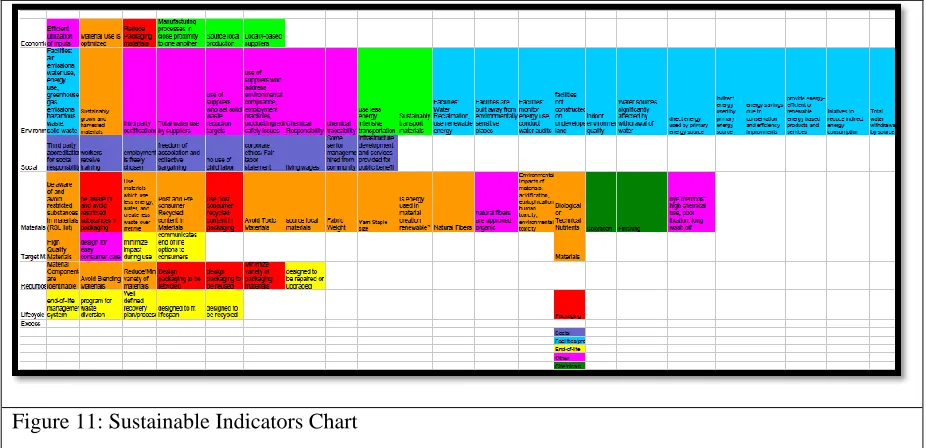
Figure 11: Sustainable Indicators Chart ... 80
Figure 12:Characteristics of sustainable, green, eco-friendly, environmentally friendly products ... 84
Figure 13: End-of-life experience ... 85
Figure 14: Self-identified issues of concern relating to product end-of-life ... 86
Figure 15: End-of-life indicators overall importance ... 88
Figure 16: Forced ranked end-of-life indicators ... 89
Figure 17: End-of-life indicators ease of implementation ... 90
Figure 18: Processing and manufacturing experience ... 91
Figure 19: Self-identified issues of concern relating to processing and manufacturing ... 92
Figure 20: Processing and manufacturing indicators overall importance ... 94
Figure 21: Forced ranked processing and manufacturing indicators ... 95
Figure 22: Processing and manufacturing indicators ease of implementation ... 97
Figure 23: Packaging and distribution experience ... 98
Figure 24: Self-identified issues of concern relating to packaging and distribution ... 99
Figure 25: Packaging and distribution indicators overall importance ... 100
Figure 26: Forced ranked packaging and distribution indicators ... 101
Figure 27: Packaging and distribution indicators ease of implementation ... 102
Figure 28: Materials experience ... 103
Figure 29: Self-identified issues of concern relating to materials ... 104
Figure 30: Materials indicators overall importance ... 106
Figure 31: Forced ranked material indicators ... 107
Figure 32: Material indicators ease of implementation ... 109
Figure 33: Aftercare and use experience ... 110
Figure 34: Self-identified issues of concern relating to aftercare and use ... 111
Figure 35: Aftercare and use indicators overall importance ... 112
Figure 36: Forced ranked aftercare and use indicators ... 113
Figure 37: Aftercare and use indicators ease of implementation ... 114
Figure 38: Social responsibility experience... 115
CHAPTER 1 Introduction
There is a trend of consumers pushing for more sustainable designs. Technology and
advancements in production have made possible eco-friendly and less wasteful design. Recycled
materials can be used as raw materials for production. Waste can be significantly diminished and
often reused. Natural fibers can be grown organically, without the use of harmful toxins and
pesticides. Apparel and textiles can be and are, recycled (Hawley, 2006; Gulich, 2006). Consumer to
consumer sales and donations to charitable organizations has decreased the amount of textiles ending
up in the landfill (Hawley, 2006). Small boutique designers are using post-consumer materials to
remanufacture fashionable, up-to-date styles. Eco-efficient washers and dryers are saving energy on
the consumer end, which results in savings of natural resources. Yet, the textile and apparel industry
is still producing large amounts of waste, using large amounts natural resources, and polluting the air,
land, and water stream.
Some researchers have indicated that the majority of environmental and societal impacts can
be determined in the design stage (Niinimaki, 2009; Van der Ryn & Cowan, 1996; McDonough &
Braungart, 2002). There are a variety of sustainable design programs, including design for
recyclability, design for remanufacturing, design for durability and extended life span, design for
reuse, design for the environment, design for eco-efficiency and design for end of life. Decisions
made in the design stage may have great impact on the economy, environment, and human
population. Although designers already have a variety of tools and techniques to gather information
and assist decision making, many of these tools have boundaries which limit them from wide spread
Relevance
Several organizations have begun to track their sustainable development in terms of
indicators. A widely adopted 1987 model divides sustainability measures into three broad concepts:
environmental stewardship, social responsibility, and economic prosperity (Martins et. al., 2007).
Depending upon role in the supply chain, indicators may be further segmented into categories such as
water, energy, labor, transportation, and chemical responsibility (Sherburne, 2009). Retailers,
government agencies, and certification organizations may develop their own set of sustainable
indicators which encompass key policies and related issues for their concepts of sustainability.
Currently there is very little regulation concerning a firm‘s measurement and reporting methodology
for sustainability. Moore and Wentz (2009) found that this lack of unification in standards for
sustainability complicates sustainable development as a whole, and makes measurement difficult.
Sustainable development is often measured by sustainable indicators (Krajnc & Glavic, 2005;
Ledoux, Mertens & Wolff, 2005). Indicators may be quantifiable or qualitative. Quantifiable
sustainability indicators allow for measurement of progress towards sustainability, and also identify
specific areas which need improvement. The Eco-Index, a project initiated by the Outdoor Industry
Association (OIA) and the European Outdoor Group, define indicators as ―environmental
performance parameters or attributes that demonstrate environmental impact or improvement‖
(Eco-Index, n.d.). The indicators of interest for the Eco-Index are environmentally based, but indicators
may also be socially based or economically based. Many firms measure sustainability on many
different indicators. Some indicators may be impacted by the design of a product, such as end-of-life
options and material health. Indicators may also include many issues and principles which are not
―commonly used by designers or found in the language of design‖ (Fletcher, 2002). Creating a set of
sustainable indicators which can be used and influenced by design, and delivering these indicators in
sustainability of the firm. Currently, companies are integrating sustainable efforts into their business
practice and products in a variety of ways, and often there is not a uniform understanding of
sustainability as a cohesive practice (Fletcher, 2009). Prioritizing sustainable indicators will allow for
meaningful advancement toward sustainable development for the textile and apparel industry.
Objective of Research
The goal of this research is to determine sustainability indicators which may form the basis of
textile and apparel products and firms being promoted and marketed as sustainable.
This research also aims to help prioritize sustainable efforts in order to ensure effective
progress towards sustainable development of the firm.
Need for Sustainable Development
Rising consumption levels, rapid population growth, and diminishing natural resources all act
as initiators for large scale sustainable development. Consumption of consumer goods, particularly
textiles and apparel, is rising annually. In 2010, US$190.9 billion dollars was spent in the apparel
industry and a total of 19.1 billion items were purchased by consumers (AAFA, 2010). This translates
to approximately 61 garments for every person in the USA. Excessive consumption of apparel and
footwear is well known in the USA. The USA has the largest per capita footwear consumption in the
world, with 6.9 pairs of shoes per person annually (Rahimifard, Staikos, Coates, 2007). Imports of
clothing has become extremely common, making up ―91 percent in 31 of the 39 individual apparel
categories for which the U.S. Department of Commerce‘s Office of Textiles and Apparel (OTEXA)
publishes data‖ (AAFA, 2007). Cost reducing negotiations by large brands and retail firms often limit
the progress that can be made by overseas manufacturing firms. In addition, unscrupulous
entrepreneurs are known to ignore many social regulations. Steady increases in consumption may also
apparel products from the waste stream may receive increased attention from government bodies and
municipalities. It is estimated that in the UK alone, post-consumer waste arising from textile and
footwear is 1,165,000 tons annually (Rahimifard, Staikos, & Coats, 2007). Aside from increases in
textile and apparel waste, limited raw materials also provide an incentive for sustainability in the
textile and apparel industry. Many fibers require natural resources to produce, such as crude oil in the
production of polyester and other synthetics, or large amounts of water needed to grow cotton. In the
carpet industry, research has found that it takes five barrels of oil per hundred square meters to
produce new carpet (Resource Recovery Forum, 2006). Natural resources are consumed in the
harvesting and processing of fibers and also in their total lifetime use, care, and eventual disposal.
According to the Centre for Remanufacturing and Reuse (CRR) key issues associated with clothing
are resource consumption, greenhouse gas emission, land use, toxic production processes, landfill
space, effects of globalization, workers‘ rights, health and safety, cultivation techniques, and animal
welfare (Centre for Remanufacturing and Reuse, n.d.). New product design and development may
offer creative solutions for many problems associated with current production, processing, use and
disposal practices for the textile and apparel industry. In order to have significant impacts on issues
associated with the design and development of textile and apparel products, a designer requires a
usable information source and tool that provides a holistic view of the impacts of their design
decisions. Benchmarking a bottom line for sustainable products also allows the entire industry to
CHAPTER II Literature Review Textile industry and its effects
No textile manufacturing processes are absent from environmental impacts. ―Several stages
in the fiber-to-fabric process are environmentally problematic. Fiber production, dyeing, finishing,
and other wet processes, drying, and shipping all impact air, water, and land quality‖ (Orzada &
Moore, 2008). Even more impacts can occur in the use and aftercare stages, during laundering, care,
and eventual disposal of consumer products. Consumer good production requires raw materials,
energy, equipment, capital and labor. The processes and eventual consumption of these products
produce effluents, emissions, solid waste, and other social, economic, and environmental impacts.
Most of the environmental impact of a product is determined and locked in during design and product
development (Orzada & Moore, 2008).
Much research has been done on segments of sustainable development; little has captured
sustainability as cohesive practice. There may be different degrees, or levels of improvements
towards sustainable development. Sustainable development at the global level is very large, and
design of products may not have a significant impact. Design may have a larger impact at the firm or
product level. There is also a need for sustainability at the consumer level, which requires educating
consumers about their role in sustainability. Integrating sustainability into a firm‘s actions can also
happen at different levels. In his 2007 book, ―Capitalism at the Crossroads‖, Stuart Hart describes
four levels of integrating sustainability into a firms strategic direction. The first stage is pollution
prevention, where a firm works towards eliminating or minimizing waste before it is created. The
second stage Hart describes is product stewardship, where the firm focuses on minimizing pollution
and all environmental impacts for the entire life cycle of a product. The third stage is clean
according to Hart is a sustainability vision, where firms work to create a framework to give direction
for evolving products and services and competencies to meet these goals (Hart, 2007). Other
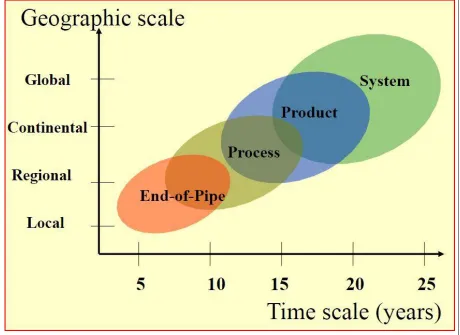
researchers have defined these levels of sustainable integration as end-of-pipe changes, process
changes, product changes, and system changes (Vellinga & Wieczorek, 2001). These levels of
integration may be dependent upon their reach, whether they are aimed at local changes or global
changes, and may also be a function of time, as global level systems change can take significant time,
up to 25 years (See figure 1).
In 2007 with the support of the Eastman Chemical Corporation, Whirlpool Corporation and
the IDSA/EPA Partnership, the Industrial Designer Society of American (IDSA) developed and
published an ecological design guide authored by Philip White, Louise St. Pierre and Steve Belletire.
This guide is intended for designers and design students to provide an introduction into ecological and
sustainable design practices. The guide provides Lifecycle Impact Assessment (LCIA) methodology,
impact and global climate change value factors for 240 materials and processes, design guidelines for
disassembly and recycling, as well as explorations into environmental ethics and bio-mimicry. The
ecological design guideline outlines what they consider to be leading environmental impact categories
affected by consumer products. Three broad categories were defined as ecological damage, human
health damage, and resource depletion (2007). Ecological damage includes global warming, ozone
depletion, acid rain, water eutrophication, habitat alteration, and eco-toxicity. Human health damage
includes photochemical smog and air pollutants, health damaging substances, and carcinogens.
Resource depletions include the depletion of fossil fuels, fresh water, minerals, and topsoil (Belletire,
Pierre, & White, 2007).
Water
A 2004 study of the textile and apparel industry in the UK found that the industry used 90
million tons of water, representing 0.5% of the total UK water consumption (Allwood, 2006). Rising
cost and possible water shortages provide incentives for dye-houses, chemical manufacturers,
processing facilities and other consumers of large amounts of water to consider ways to reuse and
reduce overall use. Although the motivation for water reduction and reuse may be attributed to the
desire to maintain production throughout water shortages, and not out of general concern for the
environment (Grizzle, 2003), the practice can lead to both cost savings and reduction of
environmental impacts. Some textile facilities range from 20-50 gallons per pound of production,
Reductions of up to 20% of overall water consumption have been reported due to process
modifications (Grizzle, 2003). Although process improvements which result in water savings are
important contributions towards sustainability, these incremental improvements may not be sufficient
if production and consumption continue to rise at current levels.
Total water consumption during the manufacture, processing, and use of a product is difficult
to estimate. Research has been conducted on measuring water use in different stages of a products
lifecycle. Some reports or studies of water consumption may only concentrate on either cultivation of
a fiber or the processing of a product. These limited reports do not actually take into account the total
water consumption of a product over its entire lifetime, including laundering and aftercare. In 2002,
Hoekstra and Hung developed a measurement which they called a ‗water footprint‘. A ‗water
footprint‘ is intended to measures the impact of society on the global water supply. They define a
nation‘s water footprint as ―the total volume of freshwater that is used to produce the goods and
services consumed by the inhabitants of the nation‖ (Hoekstra & Hung, 2002). It differs from other
water metrics, as it relates water footprint to the consumption of a nation, rather than to the
production of a nation (Chapagain, Hoekstra, Savenije, & Gautam, 2005). In the textile and apparel
industry, different fibers may require different amounts of water in both the cultivation or
manufacture of the fiber, as well as the processing of the product. Natural fibers in particular require
substantial amount of water during cultivation and processing. Many reports focus on the water
consumption of cotton in particular, as it takes substantial amounts of water to both grow and process.
In a 2010 report produced by the Swiss-based textile and technology conglomerate OC Oerlikon,
cotton production was estimated to be close to 22.3 million tons (Oerlikon, 2010). Almost half of all
the cotton grown in the US is rain fed, while the other half is irrigated (Fletcher, 2008). In 2005 a
report on the water footprint of cotton by Chapagain, Hoekstra, Savenije & Gautam differentiated the
whereas ‗blue water‘ refers to irrigated water (Chapagain, Hoekstra, Savenije & Gautam, 2005).
Much irrigated cotton is grown largely in warmer climatic regions where water may already be in
short supply, such as Egypt, Uzbekistan, and Pakistan (Chapagain, Hoekstra, Savenije, & Gautam,
2005). Water needed to irrigate cotton crops can range depending upon the climate. In Sudan in takes
29,000 liters per kg of cotton, and in Israel it takes 7000 liters per kg (Lauren and Hansen, 1997, as
cited by Fletcher, 2008). Often, in under developed nations the infrastructure to get water to the plant
is inefficient. ―In Central Asia, perhaps the area of most inefficient irrigated cotton, 60% of the water
is lost before reaching the fields‖ (Fletcher, 2008). Water use in the manufacturing of synthetic and
cellulosic fibers may require less initial water, although overall water consumption can be fairly
intensive in the production of acrylic and viscose as well (Fletcher, 2008). Polyester, however, uses
significantly less water to manufacture. ―Water use in polyester production is less than 0.1 percent of
the amount of water required to grow cotton‖ (Kalliala & Nousiainen, 1999 as cited by Orzada &
Moore, 2008).Water consumption studies are often difficult to compare, as measurements may be
collected differently, or capture different phases of manufacture and processing. In 2010 a study on
the environmental impacts of manmade fibers was performed by Berichte, and it was found from
‗cradle to gate‘, that Lenzing Modal (acrylic) required 43,000 liters of process water, and 428,000
liters of cooling water to produce one metric ton of fiber (Berichte, 2010). The study found that water
was mainly used as cooling water, accounting for 90-95% of total water use, while only 5-10% of
water was used as process water (Berichte, 2010). ―Process water‖ refers to water which is used and
then contaminated and unfit for reuse. Water which is able to be reused or recycled is often referred to
as ―cooling water‖ (Grizzle, 2003).
Water is not only prevalent in the cultivation of fibers, but also needed in the coloration and
wet processing of fabric and fibers. Wet pretreatments, dyeing and finishing, as well as laundering
water which may have harmful impacts on marine life (Allwood, 2006). Most natural fibers require
extensive preparation before they are ready for dyeing, finishing, and processing. The initial washing
with water or detergent, particularly of natural fibers, may create contamination of wastewater from
pesticides or other chemicals applied during cultivation (Orzada & Moore, 2008). Cotton, silk, and
wool in particular may require additional cleaning processes, such as scouring and bleaching, which
also uses excess water as well as chemicals of high concern. Rayon has been found to be particularly
problematic in terms of processing pollution. ―Cuprammonium rayon has not been manufactured in
the United States since 1975 because it requires dissolving cellulose in a copper ammonium solution
before fiber extrusion into a water-bath. The wastewater from the cuprammonium process
contaminates the water. Copper and other chemicals must be removed for the water to meet US
standards for clean water, which is an expensive process‖ (Orzada & Moore, 2008). Dyeing and
finishing require usage of large amounts of water, and often present the most problematic
environmental impacts. Chemicals from dyeing which are not fully fixed onto the fabric may find
their way into the water stream.
There are technological advancements in processing which have lowered overall water
consumption. Waterless dyes, foam dyes, and other dyeing and finishing techniques have
dramatically reduced water usage, and also significantly limit energy needed for processing.
―Low-wet pickup finishing techniques use less water than traditional finish application methods, thus
reducing drying costs as well as water usage‖ (Orzada & Moore, 2008). Foam application dye
methods were found to use 80% less water, lower energy use, as well as lower chemical costs
(Wallace, 2010).
Well-known companies are promoting products marketed for their minimal use of water in
manufacturing and processing. Levi‘s has developed a line of jeans branded ‗WaterLess jeans‘, which
The average pair of jeans uses 42 liters of water in the finishing process, and can undergo between
three and ten washing cycles (EcoTextile News, 2010). By combining multiple wet cycle processes
and eliminating the water from the stone washing process, Levis is able to reduce its water footprint.
Levi‘s has also advised their consumers to wash their jeans rarely in order to save water during the
use and aftercare phase of their life cycle.
Aside from conservation efforts, recycling water is also a key component of sustainable
development for the textile and apparel industry. In a UK study conducted on input and outputs for
the clothing and textile industry in 2004, it was found that the UK based industry produces 70 million
tons of wastewater (Allwood, 2006). Limiting wastewater and subsequent effluents has advantages
such as lower overall water use, lower pollution discharged, lower wastewater treatment costs,
reduction in chemical use, and energy savings (Ergas, Therriault, & Reckhow, 2006). Water treatment
can be an expensive process, where just decolorizing technology can range from $10 to $115 per
thousand gallons of water (Ergas, Therriault, & Reckhow, 2006). The technology is available to
recycle at least half of the existing plant effluent wastewater back into processing systems (Thiry,
2005).
Chemicals
Aside from excessive use of water, use of chemicals during production and processing is also
a prominent issue facing the sustainability and environmental impacts of textile and apparel products.
Textile and apparel products use a variety of chemicals in production, such as large amounts of
pesticides and herbicides in the growth of cotton, as well as in various processing steps, such as
cleaning, dyeing and finishing. As with water consumption, different fibers require different levels of
chemical processing. Natural fibers generally require more chemicals in cleaning and preparation than
synthetics. Wool, for example, must go through a cleaning process called scouring before it is ready
in the cleaning process. Sodium hydroxide and other Alkali are common chemicals added to the
process, and are often associated with environmental contamination (Orzada & Moore, 2008).
Research has found that almost one fourth of the United States consumption of pesticides is used to
grow cotton (Allen, 2007 as cited by Baugh, 2008). Before cotton is harvested, defoliants are sprayed
from planes, which cause the leaves of the plant to drop away and allow for easier cleaning. The
chemicals used in the defoliants cause pollution to both the air and the water (Orzada & Moore,
2008). Before the dyeing process, many fibers, both natural and synthetic, are bleached to allow for
more efficient color application. Bleaching traditionally is done with chlorine, which creates
dangerous by-products, and can damage protein fibers. Hydrogen peroxide has been successfully
substituted for chlorine although it is highly unstable (Orzada & Moore, 2008).
Dyeing and finishing activities have often been associated as the most polluting segments of
textile production and processing. A variety of chemicals and auxiliaries make textile dyeing possible.
According to the 2003 publication by the European Commission main chemicals and auxiliaries
applied during the dyeing process include reducing agents, alkalis, salt, dispersing agents, complexing
agents, and oxidizing agents (Reference Document on Best Available Techniques for the Textiles
Industry). The European Commission reports on environmental issues caused by dyeing both
resulting from the substances used, as well as the dyeing method employed. Substance issues may
derive from the dyes, auxiliaries, basic chemicals, and other chemicals which remained on the
substrate prior to dyeing (European Commission, 2003). Dye methods also present environmental
issues. Batch dyeing requires significant amounts of water and energy, and continuous and
semi-continuous dye methods require high concentrations of dyestuff (European Commission, 2003).
Printing, although not very water intensive, adds pollution to the water from paste residue and
cleaning (European Commission, 2003). Aside from negative impacts to the environment, dyeing has
only toxic, but known to be, or highly suspected to be, carcinogenic (Orzada & Moore, 2008). Some
governments have gone as far as to outlaw certain dye families which are known to be particularly
toxic. Europe has banned the use of 22 azo dyes which contain chemicals of concern, and has
furthered the work to find alternative and safer chemicals to be used in dyes (Fletcher, 2008). Natural
dyes have been noted as better for the environment, with lower energy and water consumption,
although the need for consistency and quality hinder it from wide use (Slater, 2005 as cited by Orzada
& Moore, 2008). Finishing activities also use large amounts of water, energy, and chemicals. Some
finishing chemicals contain toxics, specifically heavy metals such as copper, chromium, and cobalt,
as well as dioxins, and formaldehyde, all of which are known or suspected carcinogens (Fletcher,
2008).
Chemicals are also used to allow fibers and yarns to be spun, knit, or woven to add strength
and avoid breaking. Lubricants used in spinning, oils used in knitting, and size used in weaving, must
be washed out, and can be difficult to treat and slow to biodegrade (Fletcher, 2008). Sizing agents are
of particular concern, as the process to remove size, the desizing step, is done with large quantities of
water, and processes chemicals. The desizing step produces effluents which are especially polluting
(European Commission, 2003). Sizing agents can be reclaimed and reused if high quality size agents
are used, but often, cheaper starches are used which are difficult to recover and must be treated before
released (Fletcher, 2008). Cotton fibers may contain other harmful chemicals, such as
pentachlorophenols (PCPs), which act as a rot-proofing agent to protect it in storage and transport,
and are also washed out in desizing. Certain governments, such as the United States as well and the
European Union, have outlawed these substances for their effects of human health and carcinogenic
properties (Fletcher, 2008).
A large issue associated with the use of toxic chemicals in the production and processing of
from a carbon-based chemical feedstock persist and accumulate in the environment because
microorganisms lack the enzymes necessary to break the fiber down‖ (Fletcher, 2008). Along with
chemicals used in the actual production of textiles, many chemicals of concern are present in
treatments and processing, such as dyes, finishes, and other processing steps. Almost all consumer
textile products have been treated with some sort of finishing treatment (Orzada & Moore, 2008).
―Unless chemical treatments (such as dyes and finishes) are carefully selected, they can persist in the
soil after degradation, contaminating land and water with toxins released from multiple, tiny
dispersed particles‖ (Fletcher, 2008).
Many advances in technology and best practices have been developed to help limit the
negative environmental and human health issues associated with chemical use in textile production
and processing. Organic agriculture practices have been developed to grow cotton without the use of
petroleum-based, and often toxic, chemicals such as fertilizers and pesticides (Organic Exchange,
n.d.). Dyeing and finishing technology has also been advanced to use less water, energy, chemicals.
Recycling and reclamation technology reduces waste and pollution, as well as overall cost. Dye
companies have worked to develop more sustainable dyes. Huntsman Pte Ltd, a dye and chemical
manufacturer, offers a chrome-free range of dyes for wool, as well as metal-free reactive dyes (Thiry,
2010). Cationic dyes are also receiving renewed attention as being more environmentally friendly, as
it requires no salt, no alkali, and can be done at relatively lower temperatures (Thiry, 2010). Shanghai
Newtech Textile Co. has also developed technology which allows for transfer printing to be done at
room temperature.
A variety of governmental, non-governmental, and industry standards and groups have been
developed to address the issue of toxic chemicals in consumer products. Oeko-Tex®, based in
Switzerland, provides global information on the environmental friendliness of textile products to
Union has also taken steps to address toxic chemicals present in consumer products. The European
Union has taken a proactive approach to regulating the use of chemicals in consumer products. Before
2003, pollution regulations were largely concentrated on end-of-pipe issues, but more recently the
European Union has developed more regulations aimed at upstream partners (Fletcher, 2008). In
2007, the European Union has enacted legislation applying to chemicals made, used, sold, and
imported into the European Union. The Registration, Evaluation and Authorization of Chemicals,
commonly known as REACh, requires a European Union importer to register chemicals present in the
imported product (Patterson, 2011). Under the REACh legislation, most harmful chemicals are known
as Substances of Very High Concern (SVHC). SVHC are defined as ―substances that have hazards
with serious consequences, e.g., they cause cancer, or they have other hazardous properties and/or
remain in the environment for a long time with their amounts in animals gradually building up‖
(REACH UK Competent Authority, 2009). Although REACh is not designed as a Restricted
Substance List, it does provide a list of chemicals found to be of very high concern, and any chemical
which appears on this list present in quantities higher than 0.1%, has special rules which apply
(Patterson, 2011).
Oeko-Tex® developed two standards to address the issue of unsafe substances in textile
products: the Oeko-Tex 100 and the Oeko-Tex 1000. The Oeko-Tex 100 was introduced in 1992, and
tests for harmful substances in textile raw materials, as well as intermediate and end products.
Harmful substances tested for include substances that are banned or controlled by law, as well as
substances that are suspected to be harmful, but not yet banned or regulated (Orzada & Moore, 2008).
The Oeko-Tex 1000 covers production procedures as well as disposal acts, and is a supplement to the
Oeko-Tex 100 standard. An organization is not eligible for the Oeko-Tex 1000 certification without
globally accepted certifications, and ensure all international government requirements have been met
(Orzada & Moore, 2008).
The American Apparel and Footwear Association also works to educate industry on restricted
substances by the development of a Restricted Substance List (RSL) as well as chemical management
systems which provide information on best practices (Orzada & Moore, 2008). The American
Apparel and Footwear Associations RSL was created by their environmental task force, and is
intended to ‗provide apparel and footwear companies with information related to regulations and laws
that restrict or ban certain chemicals and substances in finished home textiles, apparel, and footwear
products around the world‘ (American Apparel and Footwear Association, n.d.). Many companies
have developed their own internal RSL, such as Nike Inc., and the Timberland Company, which
outline chemicals of concern for their products. Eventually it may be beneficial to collaborate and
integrate these numerous RSL‘s to ensure consistency within the industry. Incorporating RSLs into
one database will ensure that all chemicals of concern are identified, and can allow investigation into
discrepancies between RSLs.
Globalization of markets has resulted in products made from numerous sub-parts sourced
from a variety of places. Because products can have so many diverse components sourced from a
variety of places, it may be impossible and costly to identify every chemical contained (Braungart,
McDonough, Bollinger, 2007). Similar to substances of very high concern (SVHC), there are some
chemicals, which Michael Braungart and William McDonough of the McDonough Braungart Design
Chemistry, identify as X-chemicals, which are known or suspected to be highly toxic, and which
should be replaced and phased out of use (Braungart, McDonough, Bollinger, 2007). Firms can
develop lists, similar to RSLs, pertaining to their particular industry of common ‗X-chemicals‘ used,
and replace them accordingly. Substituting known toxic chemicals with healthier alternatives is an
the quality of the outputs, rather than minimize them (Braungart, McDonough, Bollinger, 2007).
Eco-Intelligent polyester, which is produced by Victor Innovatex, is leading the way towards effective
closed loop systems in the apparel and textile industry. Working with MBDC and EPEA, Victor
Innovatex was able to produce polyester in which the chemical inputs were reduced from 57 to 15,
and more were replaced with safer alternatives (McDonough & Braungart, 2002). Traditional
processing and dyeing of polyester uses a known carcinogen, antimony. When subjected to high
temperatures, antimony produces antimony trioxide, which pollutes wastewater and poses serious
health concerns (McDonough & Braungart, 2002). Most current recycling processes for polyester also
require high temperatures. Victor Innovatex, MBDC, and EPEA worked together to eliminate waste
and toxic byproducts at the design stage, reevaluating and substituting raw materials in the molecular
state. Eliminating or replacing toxic chemicals or other chemicals of concern during the design stage
produces products which are healthier for both the human population as well as the environment.
Eliminating a number of chemicals also may save money in raw material costs. Victor Innovatex was
able to replace antimony with titanium and silica based catalysts, which have no known harmful
effects (McDonough & Braungart, 2002). Victor Innovatex was able to do this without compromising
existing traditional design requirements, such as color choice and weave design potential.
Materials
Products are generally made of more than one material, and the sustainability of that product
is based on economic, environmental, and social impacts of that material through various life stages,
including material extraction, manufacturing, packaging, transportation, consumer use, and disposal
(Ljungberg, 2005). Researchers have outlined basic tenants for the selection of sustainable materials.
Often they include selecting materials which reduce emissions and negative environmental impacts
over their entire lifetime, are sourced from renewable resources, and contain recycled materials. Other
fibers with documented traceable feedstock sources, among many others (Eco Index, 2010;
Ljungberg, 2005).
The basic components of textile and apparel products are fibers, so it is feasible that
sustainable fiber choices and materials are the first step to sustainable products (Baugh, 2008; Thiry,
2007). Fiber content for apparel has primarily been related to consumer value and aesthetic choices
(Baugh, 2008). Aside from consumer demands and aesthetics, price, availability, and timely delivery
are also of high consideration for product developers and retailers (Baugh, 2008). The goal of
minimizing environmental impacts of fibers must be achieved while also meeting the needs and wants
of consumers (Thiry, 2007). Without providing these consumer benefits, products will not be
successful at market, and therefore, not sustainable. Because sustainability is not a large consideration
during initial materials considerations, sustainable practices have often been left to processing and
end-of-pipe activities (Baugh, 2008; O‘Neil, 2010).
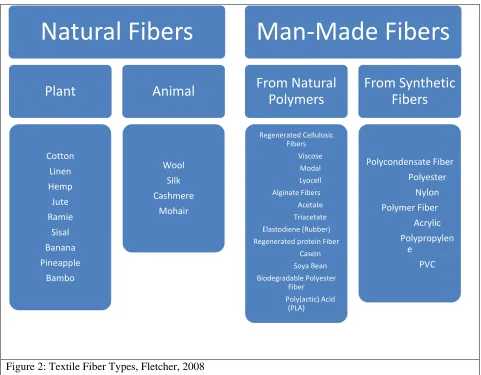
In general, most fibers fall into one of two categories: natural or man-made. Natural fibers are
divided into two groups: animal fibers and plant fibers. Animal fibers, also known as protein fibers
include wool, cashmere, alpaca, and silk. Plant fibers, also known as cellulose fibers, include bast
fibers and seed fibers. Plant fibers include cotton, flax, hemp, jute, ramie, and others (Organic
Exchange, n.d.). Manufactured fibers may be broken into two broad categories of regenerated fibers
and synthetic fibers. Regenerated fibers are fibers which typically use a natural material which is
converted into a fiber through wet-processing. Synthetic fibers are made from a chemical process, and
are largely petro-chemical based (Organic Exchange, n.d.). Examples of regenerated cellulosic fibers
include viscose, Modal, and Lyocell. Synthetic fibers include polyester and nylon, as well as acrylic,
Figure 2: Textile Fiber Types, Fletcher, 2008
In 2000, the total global supply of fibers was 52.6 million tons (Oerlikon, 2010). In 2005,
that number increased to 59.54 million tons, of which almost half, 25.76 million tons, were natural
fibers, primarily dominated by cotton (Fletcher, 2008). 33.78 million tons were manufactured fibers,
primarily dominated by synthetics with polyester being the most dominant (Fletcher, 2008). In 2009,
the global fiber demand has increase significantly to 70.5 million tons with an annual growth rate of
3.3% (Oerlikon, 2010). From 2000 to 2009, synthetics and man-made cellulosics have grown 4% and
3.6% respectively. Cotton has only seen a 2.6% growth, while wool has seen a 2.2% decline
(Oerlikon, 2010). Man-made fibers have continued to rise in popularity, which may be due to price
Natural Fibers
Plant
Cotton Linen Hemp Jute Ramie Sisal Banana Pineapple BamboAnimal
Wool Silk Cashmere MohairMan-Made Fibers
From Natural
Polymers
Regenerated Cellulosic Fibers Viscose Modal Lyocell Alginate Fibers Acetate Triacetate Elastodiene (Rubber) Regenerated protein Fiberand availability. In 2009, natural fibers represented only 26.3 million tons of the total market, while
man-made fibers accounted for 44.1 million tons (Oerlikon, 2010).
Figure 3: Fiber growth rates 2000-2009, Oerlikon, 2010
More recently, unconventional natural fibers, such as hemp, ramie, jute, corn, and bamboo
fibers, have been gaining popularity in textile and apparel applications. Some of these untraditional
fibers may have many environmental, social, and economic benefits. Hemp has natural tendencies to
resist pests and mildew, requires significantly less water than cotton, and can grow in a variety of
climates (Baugh, 2008). Hemp has also been found to have good moisture absorption, almost three
times higher than cotton (Oerlikon, 2010). Other environmental advantages of hemp include
resiliency, no chemical additives required for fiber splitting, and versatile usage for all parts of the
plant (Oerlikon, 2010). Ramie, known to be resistant to mildew, quick drying and absorbent, and
strong, can also be grown in many countries. Jute also is resistant to mildew, bacteria, and insects, has
technologies, many of these fibers have the potential to replace commonly used fibers which require
more considerations during growth (Baugh, 2008).
There has been interest and success throughout the 1990‘s and 2000‘s of organic, natural,
recycled, fair trade and rapidly renewable fibers (Fletcher, 2008). Organic refers to standards
developed and defined in the USDA Organic Foods Production Act, passed and adopted by congress
in 1990, which provides guidelines for production and certification of organic food. USDA Organic
Foods Production Act sets time requirements to ensure the soil is free from toxic chemicals, and
regulates farming methods and standards. Currently, the only fiber which meets USDA standards is
cotton, and the cost and available quantities of organic cotton cannot meet total production
requirements (Baugh, 2008). Organic cotton production is limited as cotton is highly sensitive to
insects and weeds, and few places are able to support its growth without the use of pesticides and
herbicides (Thiry, 2007). Aside from pest related issues which hinder the successful growth of
organic cotton, there are also climatic issues which limit organic cotton growth. Organic cotton
requires more arable land and therefore may not be suitable to large scale production (Thiry, 2007).
Organic certifications may only apply to the farming and harvesting methods and do not necessarily
imply that a final product is organic or environmentally friendly (Organic Exchange, n.d.; Thiry,
2007). A final obstacle for success of organic cotton and its applications is its susceptibility to fraud.
There are no known physical differences between organic cotton and conventional cotton.
In 2005, the Global Organic Textile Standard (GOTS) was developed to define requirements
and ensure organic status of textiles. The standard covers production, processing, manufacturing,
packaging, labeling, exportation, importation, and distribution of all natural fibers (International
Working Group on Global Organic Textile Standard, 2005). The standard sets criteria for processing,
including restricted inputs, spinning, weaving, knitting, non woven manufacturing, and wet
packaging, transportation, and social criteria (International Working Group on Global Organic Textile
Standard, 2005). The Global Organic Textile Standard has support and sponsors including the U.K.‘s
Soil Association, the U.S. Organic Trade Association, the Japanese Organic Cotton Association, and
Germany‘s International Association Natural Textile Industry (Thiry, 2007).
Aside from organic certification, materials derived from renewable sources are also indicated
as sustainable materials. Renewable materials are materials which can be formed again in nature and
have little or no environmental impact (Ljungberg, 2005). A tree cut down and used as a material can
be considered a renewable material, as long as another tree is planted in its place. Polymers made
from petrochemical sources are examples of non-renewable resources, as the oil cannot be easily
replaced, and the use of oil has significant environmental impacts (Ljungberg, 2005). Cotton, for
example, is a naturally cellulosic fiber, and is known as a renewable resource (Chen &Burns, 2006).
Many researchers indicate that not only should materials be sourced from renewable resources, but
should also be sourced from rapidly renewable resources. McDonough Braungart Design Chemistry
defines a rapidly renewable material as ―a material considered to be an agricultural product, both fiber
and animal, that takes 10 years or less to grow or raise, and to harvest in an ongoing and sustainable
fashion‖ (McDonough Braungart Design Chemistry, n.d.). Bamboo has often been cited as a possible
sustainable material because of its ability to grow rapidly. Other benefits of bamboo include
biodegradability, efficient space consumption, low water use, and carbon sequestering capabilities
(Waite & Platts, 2009). However, the processing method for bamboo is identical to that used to make
viscose or rayon, and can be polluting unless the process is carefully controlled and effluents are
treated (Organic Exchange, n.d.). Although most natural fibers are considered renewable, not all are
rapidly renewable. Renewable fibers are also not limited to natural fibers. Polylactic acid (PLA) has
more recently received more attention because it requires only a large scale sugar as a raw material
There are other examples of very non-traditional fiber sources which are being explored for
their application in textile and apparel products. Helen Storey, a UK based fashion designer, has
worked with Tony Ryan, a chemist at the University of Sheffield, to develop clothing made from a
biodegradable polymer. The project is called ‗Wonderland‘, and when submerged into water, the
dresses dissolve (Storey & Ryan, 2005). The dissolving textiles were designed by Trish Belford,
from Interface Inc., and although not intended to be applied on a large scale, the project aims to
provoke consumers to consider what happens to their apparel at the end of life (Storey & Ryan,
2005). The science and technology used was also applied to plastic bottles, which dissolve when
submerged into hot water. This technology has large implications for the packaging industry, where
waste has been a large issue (Store & Ryan, 2005).
Cradle-to-Cradle certification calls for materials to be defined as either technical or biological
nutrients. Technical nutrients are ―materials specifically designed to ‗feed‘ or be returned to industrial
systems without any harmful effects‖, while biological nutrients are ―materials that can biodegrade
safely and return to the soil to feed environmental processes‖ (McDonough & Braungart, 2002).
Brands and manufacturers have been able to use this ideology to produce innovative products
designed to continue in a value loop at the end of their life cycles. Victor Innovatex was able to
develop two fabrics based on these principles. One, an Eco-Intelligent polyester is able to be recycled
completely as a technical nutrient. Victor Innovatex was also able to develop a biological nutrient,
which they have named Climatex ® Lifeguard FR ™. Climatex® Lifeguard FR ™ is made of organic
woven fibers designed to be compostable. Climatex® is ‗made from natural ingredients which can be
safely returned to the earth‘ (McDonough & Braungart, 2002). Although Victor Innovatex was able to
produce products made from both technical nutrients as well as biological nutrients, they do face an
obstacles often associated with collecting and recycling consumer goods in the successful recapture of
Although developing sustainable fibers and other basic building blocks for textile and apparel
products may be the first step for many brands and designers in creating a sustainable product, there
are other examples of creative use of materials to reduce negative environmental impacts.
Looptworks began in 2009 as an environmentally forward company who repurposes pre-consumer
waste to produce a limited number of clothing pieces. Based in Oregon, this U.S. company produces
fast fashion, collection pieces, aimed at creating valued products using material which would be
considered waste. Looptworks purchases small run fabrics from larger manufacturers to create their
products. Left over fabrics and materials, which are not enough to produce a run large enough for
many medium to large size manufacturers, are sourced and then sent to fair labor factory nearby for
production (O'Connor, 2010). A Jalan shirt, a women‘s button down long sleeved shirt, takes only
nine weeks to make, and is made of completely recycled materials. The company has a limited
amount of materials, making each style in a small run. Each piece is numbered, increasing the image
of a collectable piece. Adhering to strict quality standards, each piece is also built to last, increasing
the life-span of the product and its legitimacy as a sustainable product (Looptworks, 2010). Some
products do contain blended materials, which can make recycling difficult, and may limit the ability
of the products to continue in a closed-loop cycle.
From Somewhere, an high-end fashion house out of London, utilizes discarded materials.
Orsola de Castro is the founder of From Somewhere, and sources surplus fabrics from manufacturers
to create upscale fashion pieces. More recently, she developed a 10-piece line of cocktail dresses
made from obsolete Speedo swimsuits, which were banned by the swimming worlds governing body
after the 2008 Olympics for giving athletes an unfair advantage (Williams, 2010). After this decision,
Speedo was left with 18,000 swimsuits, and rather than discard of them to the landfill or incinerator,
Junky Styling is a company founded by Annika Sanders and Kerry Seager, which
deconstructs and redesigns clothing found in the thrift stores, and retails their creations in a
London-based shop. The team practices what they call ‗wardrobe surgery‖ and will also make custom
alterations (Junky Styling, n.d.). The label was publicly launched in 1997, and remanufactures one or
more garments into a recreated, artistic piece. Although one pattern may be used to create more than
one piece, the raw materials will never be the same, therefore every piece created by Junky Styling is
unique and one-of-a-kind (Mishara, 2010). Junky Styling is not unique in their attempt at
restructuring used-clothing which might otherwise wind up in the landfill, however the application of
this design method on a large scale may be limited.
Triad, Textile Recycling for Aid and International Development, is a charitable organization
developed in 1999. Based in the UK, Triad operates 900 recycling banks specifically for textiles, and
has 11 retail shops in London and Brighton. Aside from their retail shops which sell used clothing as
is, TRIAD has also developed a label which reconstructs used clothing into garments called
TRIADremade. TRIADremade utilizes designers to work with donated textiles to create original
pieces that are not only good for the environment by reducing landfill waste, but also socially
responsible, as profits are donated to help fight poverty (Textile Recycling for Aid and International
Development, n.d.).
The Eco Index has developed guidelines to aid in material choices by developing material
guidelines, indicators, and metrics. The scope and intention of the materials guidelines is to educate
and provoke thought, as well as to be used as an educational tool. The materials guidelines cover 7
large areas of materials selection including understanding your footprint, material use efficiency,
chemical responsibility, knowledge of your supply chain, durable material selection, product care and
including recycled content, efficient utilization of inputs to create finished materials, chemical
responsibility, and renewable content and source certification (Eco Index, 2010).
Waste Textile Waste
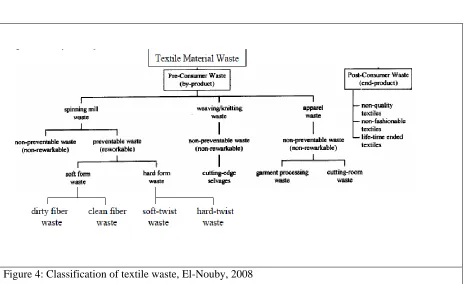
Figure 4: Classification of textile waste, El-Nouby, 2008
―Waste is any activity or product which consumes resources or creates costs without
generating any form of offsetting value stream‖ (Sroufe, 2000). Waste occurs at almost every point
in the production of textile and apparel goods, as well as use and disposal by consumers (El-Nouby,
2008). In the fashion industry product life cycles are often short, as frequent changing styles create
the need for more products. Often apparel goods are replaced before they are worn out or no longer
functional. Mass production, access to cheaper materials and labor, and a growing global middle class
have made fast fashion obtainable for a mass market. Fashion seasons have increased, and in some
availability of new products with up-to-date styling, there has also been a dramatic increase in
post-consumer textile and apparel waste, as post-consumers make room in their closets for new products.
According to the United States Environmental Protection Agency, 12.4 million tons, representing 5%
of total municipal solid waste, was generated in 2008. The EPA suggests that the textile recycling
industry prevents 2.5 billion pounds of postconsumer textile product waste from ending up in the
landfill, but a large amount of textile and apparel are still thrown away every year. In a study done on
recycling by DEFRA in England for the 2006/07 year, it was found that only 1.3% of materials
collected from households for recycling were textiles (DEFRA, 2007). According to a study done in
2004 of New York City household waste, of the textile waste disposed of clothing is the most popular
textile item, linens being the second largest group, and carpets and upholstery being the third (New
York City Department of Sanitation, 2005). The same study found that textile waste is not evenly
distributed across every type of household. Researchers found an inverse relationship between income
and textile waste generated, where higher income households disposed of less apparel goods (New
York City Department of Sanitation, 2005).
Waste in the textile and apparel industry exists at both pre- and post-consumer levels.
Pre-consumer waste may be composed of factory created waste. Post-Pre-consumer waste may be any waste
generated during the use and disposal of textiles and apparel products by the consumer.
Post-consumer waste is of particular interest, as there are many disposal options which could prevent
textiles and apparel from being landfilled, and research into various motivations and methods of
disposal of textile and apparel items by consumers is often lacking, out of date, or incomplete.
Recycling, reuse, and repurposing are a few of the viable disposition methods for textile and apparel
items. Each of these methods have challenges which must be addressed to be successful as a means of
post-consumer textiles and apparel eliminates waste from the landfill and saves natural resources
(Chang et al, 1999).
Diversion Methods
There are a variety of ways in which textile and apparel waste can be diverted from the
landfill. Prior research done on this subject has resulted in many different process maps being
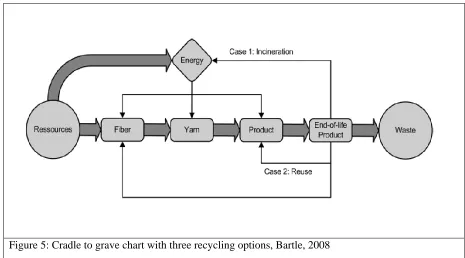
developed. Bartl developed a map in 2006, which depicts the normal ‗cradle-to-grave‘ flow of textile
and apparel items, with three possible recycling options. The first diversion option was recapturing
energy creating through incineration of textile and apparel items. The second option was reuse of the
product without processing. The diversion option was breaking the end-of-life product back into fiber
form to be used in the creation of new products (See Figure 5).
Figure 5: Cradle to grave chart with three recycling options, Bartle, 2008
Hawley created a more in-depth version of post-consumer textile waste diversion methods in
charitable resale organization, or discarded to the landfill. Of those items donated to a charitable
organization, some will be sold in a second-hand shop and a percentage will be sold to rag sorters.
Items sold to rag sorters may be used in a variety of ways, or may also be discarded to the landfill
(see Figure 6).
Figure 6: Post-consumer Textile Waste Map, Hawley, 2006
Each of these methods of diversion requires different amounts of energy, and some of the
in terms of environmental savings. Incineration of fibers generally does not recapture enough energy
to make it the most ideal form of textile waste diversion (Bartl, 2008).
Fraser developed another diversion map in 2009, which included upcycling in the possible
diversion routes. Upcycling is the ―process of converting waste materials or useless products into new
materials or products into new materials or products of better quality or a higher environmental
value‖ (Eco Index, 2010). Although there are firms performing this service for customers, largely this
is done by the consumer (see Figure 7).
Figure 7: Diversion of discarded clothing from landfill, Fraser, 2009
In the United States, there are a variety of different types of organizations whose primary
goal is to divert textiles from the waste stream, some which may be private organizations or
government operated. Some municipalities have established curb side efforts to collect textiles. Each
week alongside other normally recycled goods, such as glass, paper, and plastic (Platt, 1997). Others
may limit collections to monthly or even annually. Other municipalities may not offer curbside
collections at all, but will provide drop off sites for used textile and apparel goods. The type of
textiles accepted may differ per municipality; some only collect clothing, while others will accept
shoes, belts, and other accessories. If municipalities do collect textile and apparel curbside, some will
only accept textiles which are separated and stored in weather resistant containers, due to possible
damage from rain or snow. Others will allow textiles to be mixed with other recyclable items (Platt,
1997). Beginning a textile recycling program can cost municipalities very little, or possibly no money
at all. Rag traders may pay anywhere from $80 to $160 per ton of used clothing, which is often
enough to cover other recycling efforts (Platt, 1997). Convincing consumers to donate clothing to
municipality run recycling efforts has often proven difficult, as many consumers would rather donate
clothing to charitable organizations (Platt, 1997). Often municipality programs can work concurrently
with private charity resale stores, as potentially there are too many goods for a private retailer to
process. Private organizations can often provide an efficient means for collecting and transporting
used textiles and apparel. Trans America Trading Company, a leading rag-sorter located in Clifton,
New Jersey, collects post-consumer textiles and apparel in over 20 municipalities, mainly in the New
York area (Trans America Trading Company, n.d.). They provide containers and transportation for
the goods, and then grade the goods collected into a variety of secondary markets. Along with
providing logistics for collecting used clothing, Trans America also provides education materials to
market their service and increase participation among the communities (Trans American Trading
Company, n.d.).
Pre-consumer waste can also be successfully diverted from the waste system. According to
SMART, the United States Secondary Materials and Recycled Textiles Association, seventy five