ABSTRACT
WILLIAMS, LAURA JANE. Single-Response Situational Judgment Tests: The Roles of Conscientiousness, Openness, Job Tenure, and Intelligence in SJTs with Differing Response Instructions. (Under the direction of Dr. Mark Wilson).
Historically, situational judgement tests (SJTs) have been useful tools for selection and promotion in organizations (Abilitus, 2012). This paper develops and validates a single-response SJT for use in predicting engineering managers’ job performance. The current model and
procedure explore relationships among 293 engineering managers’ single-response SJT scores, personalities, job tenure, intelligence, and job performance, while simultaneously analyzing the differences between behavioral tendency and knowledge response instructions used in the SJT. Behavioral tendency response instructions ask respondents to indicate what they would do in a situation, while knowledge response instructions ask what respondents should do in the situation. Some researchers argue that construct validity favors SJTs that use behavioral tendency response instructions simply because of the difference in wording (Ployhart & Ehrhart, 2003), while others have found that neither type of response instruction is more valid than the other (Lievens, Sackett, & Buyse, 2009). Results from this study reveal that scores on SJTs using both types of response instructions are equally reflective of applicants’ personality, while Intelligence relates slightly, yet not significantly, more strongly with knowledge response instructions. This study attempts to yield insight on the best methods for predicting engineering managers’ job
Tenure, and Intelligence in SJTs with Differing Response Instructions
by
Laura Jane Williams
A thesis submitted to the Graduate Faculty of North Carolina State University
for fulfillment of the requirements for the degree of
Master of Science
Psychology
Raleigh, North Carolina 2018
APPROVED BY:
___________________________________ Dr. Mark Wilson
Chair of Advisory Committee
____________________________________ Dr. S. Bartholomew Craig
BIOGRAPHY
ACKNOWLEDGEMENTS
I would first like to thank my thesis advisor, Dr. Mark Wilson, for his guidance over many Starbucks consultations. He allowed this paper to be my own work, but steered me in the right direction when I needed it.
TABLE OF CONTENTS
LIST OF TABLES ...v
LIST OF FIGURES ...vi
Chapter 1: Single-Response Situational Judgment Tests: The Role of Conscientiousness, Openness, Job Tenure, and Intelligence on SJTs with Differing Response Instructions ...1
Introduction ...1
Method ...5
Research Design...5
Participants ...6
Measures ...8
Procedure ...11
Results ...12
Discussion ...14
Limitations ...15
Future Research ...16
Conclusion ...17
References ...18
APPENDIX ...25
LIST OF TABLES
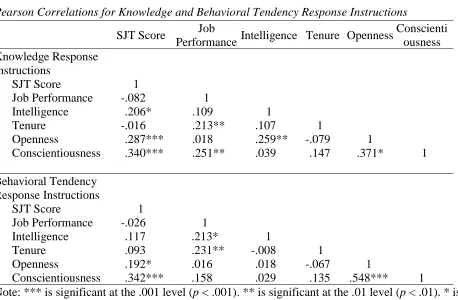
Table 1 Pearson Correlations for Knowledge and Behavioral Tendency Response
Instructions ...22 Table 2 Fisher’s Z Test for Correlation Comparisons ...23 Table 3 Stepwise Multiple Linear Regression Coefficients Predicting Job
LIST OF FIGURES
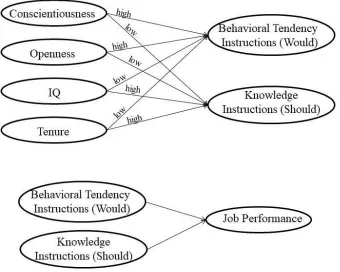
Figure 1 Conceptual Model of Knowledge and Behavioral Variables and Their
Single-Response Situational Judgment Tests: The Role of Conscientiousness, Openness, Job Tenure, and Intelligence on SJTs with Differing Response Instructions
The use of situational judgment tests (SJTs) has become popular since their introduction by Motowidlo, Dunnette, and Carter (1990). Since that time, they have been used frequently as a method for selection and promotion in organizations. The implementation of SJTs for this
purpose has increased dramatically in recent years with good reason. Not only are these tests cost effective in that they are typically computer-based and require few resources, but they are also convenient because they are user-friendly and provide quick results for recruiters (Abilitus, 2012).
ability, the “Big 5” personality traits, and a composite of the two (Clevenger, Pereira, Wiechmann, Schmitt, & Harvey, 2001; Whetzel, 2009).
The purpose of the current study is to create and validate a single-response situational judgment test as a method of predicting engineers’ performance when promoted to leadership positions. Contrary to typical SJT formats, single-response SJTs provide participants with a situation and action, then ask them to rate the effectiveness of that action using a Likert scale. This format has been recommended and validated by Crook et al. (2011) and Motowidlo, Crook, Kell, and Naemi (2009) and was chosen because of its validity and ease of development.
Several individual differences for technical managers (e.g. engineering managers) are depicted as having unique relationships to response instruction type and job performance.
Specifically, technical and project managers possess personality traits that differ from other types of business managers. While general managers are said to perform highest when they are strong in conscientiousness and emotional stability (Barrick, Mount, & Judge, 2001), Thal (2010) suggests that, although emotional stability is important, successful technical managers are most likely to score highest on conscientiousness and openness. McDaniel, Hartman, Whetzel, and Grubb (2003) have also found that general mental ability and the amount of time spent in a job should impact the employee’s performance at work. The current model seeks to predict
engineering managers’ job performance in light of these findings.
evaluate the general effectiveness of several possible responses to the incident. Likewise, when items assess behavioral tendency (would), the SJT is asking the participant to reveal how they would most likely behave in that situation. Results from McDaniel et al. showed that type of response instructions used in SJTs influence the constructs measured by the tests. Specifically, respondents’ personalities were reflected by behavioral tendency instructions more than by knowledge instructions. Therefore, it is expected that conscientiousness will relate significantly more with behavioral tendency instructions than with knowledge instructions.
Openness is also predicted to correlate more strongly with scores on SJTs that use behavioral tendency instructions than with scores on SJTs that use knowledge instructions, coinciding with the results found by McDaniel et al. (2003). Openness is exemplified by a strong intellectual curiosity and a preference for novelty and variety (Komarraju et al., 2011). Thal (2010) reports that effective technical managers differ from general managers in that they tend to exhibit higher levels of openness than general managers do. Therefore, openness is expected to be more strongly related to behavioral tendency instructions than knowledge instructions.
Effective engineering managers should also exhibit high levels of intelligence and knowledge of their job requirements and expectations. McDaniel et al. (2003) discovered through meta-analysis that cognitive ability was more correlated with SJTs that used knowledge instructions. Because general mental ability seems to be more related to knowledge instructions than behavioral tendency instructions, this study hypothesizes that engineering managers’ intelligence will be more strongly correlated with single-response SJT scores when the test uses knowledge response instructions rather than behavioral tendency response instructions.
a longer amount of time in a position should contribute to the job knowledge that the employee acquires. This study explores the idea that job tenure, or number of years in a position, will have a stronger relationship with engineering managers’ scores on SJTs using knowledge instructions than on those using behavioral tendency instructions.
As discussed, conscientiousness, openness, intelligence, and job tenure have been used in past research to validate SJTs for general managers. However, there is no evidence that these trends are still observed when using a single-response SJT with technical managers. This study attempts to explore SJT-personality and SJT-knowledge relationships specifically within the realm of engineering managers and using this particular form of assessment.
The final component of the current study includes Job Performance. At this time, very limited research exists which explains the relationships that differently phrased SJT response instructions have on overall job performance. One study by McDaniel, Schmidt, and Hunter (1998) suggests that job experience is positively related to job performance. However, while this is evidence that tenure may be related to performance, it reveals nothing with regard to type of response instructions utilized. Thus, Research Question 1 of this study asks whether scores on single-response SJTs that use knowledge response instructions or behavioral tendency response instructions will have greater correlations with engineering managers’ self-rating of overall job performance.
SJT that uses knowledge response instructions. Hypothesis 2 states that the NEO-PI-R measurement of Openness will correlate with scores on the newly-developed single-response SJT that uses behavioral tendency response instructions significantly more positively than it correlates with scores on the single-response SJT that uses knowledge response instructions. Hypothesis 3 states that intelligence, measured by high school SAT score, will correlate with scores on the single-response SJT that uses knowledge response instructions significantly more positively than it correlates with scores on the single-response SJT that uses behavioral tendency response instructions. Hypothesis 4 states that number of years in an individual’s current position will correlate with scores on the single-response SJT that uses knowledge response instructions significantly more positively than it correlates with scores on the single-response SJT that uses behavioral tendency response instructions. Finally, Research Question 1 asks if technical
managers’ self-report of job performance is more likely to be significantly correlated with scores on the newly-developed single-response SJT that uses knowledge response instructions or the single-response SJT that uses behavioral tendency response instructions.
Method
In order to test each hypothesis and research question in this study, a single-response situational judgment test was both developed and validated. Therefore, the Participants and SJT sections of this method include both a development component and a validation component. Research Design
Participants
The primary component of situational judgment tests is a collection of critical incidences of good and bad job performance (McDaniel & Nguyen, 2001). For the segments involving the development and rating of critical incidents in this study, a total of 11 Professional Engineers were used as subject matter experts (SMEs). Of these eleven, six participants affiliated with North Carolina State University developed the critical incidents. All six participants held differing engineering degrees in Civil and Environmental Engineering, Industrial Engineering, Materials Science, and Mathematics, and all were over 45 years old. Three indicated their race as White, one as Asian, and two chose not to respond. Additionally, three were male, one was female, and two chose not to respond.
A second group of five subject matter experts from Amazon’s Mechanical Turk rated the developed critical incidents on effectiveness. In this sample, Civil and Environmental
Engineering, Electrical Engineering, Computer Science, and Mechanical Engineering were represented. Of these five, two indicated they were under 30 years old, two were between 30 and 34, and one was between 35 and 39 years old. Three participants indicated their race as white, while two indicated that they were American Indian. The sample consisted of three females and two males, and four of the five were from the United States, while the fifth’s origin was India.
fulcrum were two forces at differing distances from the center, their weights indicated in kips. On the other side, one force with an undisclosed weight was presented. The participants were required to correctly calculate the mystery force before continuing with the assessment. Participants in the development and effectiveness rating groups were considered SMEs with regard to engineering management. Both the development and the rating segments took SMEs approximately 15 minutes to complete.
The participants for the model testing phase of this study were collected through
Amazon’s MTurk and included 293 (N=293) English-speaking engineering managers with B.S. degrees in Engineering. All participants were fairly evenly spread among 10 engineering fields. All age ranges from “Under 30” to “Over 50” were represented, but 41% of the participants were between 30 and 34 years old. Race was also spread among Hispanic, American Indian, Asian, Black, and White, but a majority of 203 people indicated their race as White. Additionally, 201 of the participants were male while 92 were female.
Of the 293 total participants in this phase, 145 people were randomly assigned to the knowledge instruction group, and 148 people were assigned to the behavioral tendency
Measures
SJT. The single-response format of the critical incidence portion of this SJT was recommended and validated by Motowidlo et al. (2009) and Crook et al. (2011). This style of SJT was favored for this study because of its known validity, time-saving nature, and ease of development and administration for SMEs and participants alike. To create this format, 6 Professional Engineers at North Carolina State University first generated critical incidents using a form inspired by the LAS Manager’s Critical Incident Form (Appendix A). As suggested by Motowidlo et al. (2009), SMEs first provided examples of occasions when they saw an
engineering manager do something that struck them as especially effective or ineffective. Each SME gave one example of effective consideration (person-oriented) behavior, one example of ineffective consideration behavior, one example of effective structure initiation (task-oriented) behavior, and one example of ineffective structure initiation behavior as defined by Fleishman (1953), who described these two types of behavior as the two main factors of successful
leadership. To help with this distinction, participants were first given a brief description of ideal manager characteristics:
“A good engineering manager is believed to be strong in both task-oriented and
person-oriented behaviors. Task-person-oriented managers create clear, organized, easy to follow work schedules with specific requirements and deadlines. Person-oriented managers cultivate positive working relationships and help employees feel energized about the difference they make in the company.”
of 16 critical incidents (7 consideration items and 9 structure items) were retained. Next, a second group of 5 SMEs from MTurk rated the effectiveness of each edited incident on a Likert 7-point scale. Means and standard deviations of effectiveness ratings for each incident were computed across raters. A high degree of interrater reliability was found across the critical incidents. The average measured ICC was .883 with a 95% confidence interval from .761 to .953 (F(15,60)= 9.258, p < .001). This indicated that the participants were generally in agreement on the effectiveness of the incidents’ actions. The 16 edited incidents then served as the items in the SJT, and mean SME effectiveness ratings served as a scoring key for the items.
Next, Amazon’s Mechanical Turk was used to collect responses for the 16 critical incidents. To prove their technical credibility, all MTurk participants were first required to answer the qualifying engineering-related item. If the participant responded incorrectly to this item, they were immediately disqualified from continuing with the task. Participants who responded correctly were directed to a demographic segment asking them to indicate their specific engineering degree obtained, age, race, gender, and country of origin.
Participants (N=293) were then randomly assigned to either a behavioral tendency (would) response instruction group or a knowledge (should) response instruction group. All participants were presented with the same incidents, including context, behavior, and
between the participant’s judgments and SMEs’ judgments in the work situations. This score was formulated by computing the difference between the applicant’s effectiveness rating and the mean SME rating for that item, squaring the difference, and finding the mean squared difference across all of the SJT items. Finally, individuals’ mean squared scores were multiplied by -1 so that higher scores indicated increasing similarity to SMEs’ judgments, thus indicating increasing knowledge about effectiveness of the behaviors presented.
Openness and Conscientiousness. Items measuring Openness and Conscientiousness were obtained from Costa and McCrae’s (1992) Revised NEO Personality Inventory. These items are scored using a 5-point Likert rating scale (1=Strongly Disagree, 5=Strongly Agree). Only Openness (ɑ=.87) and Conscientiousness (ɑ=.90) items were obtained from the NEO-PI-R inventory. A total of 48 Openness and 48 Conscientiousness items were included. Three
attention check items (e.g. “Choose Strongly Agree for this item.”) were also added in this segment of the questionnaire to ensure participants were sufficiently attending to the task. After responses were collected for this segment, several items for both constructs were reverse-scored according to the NEO-PI-R scoring manual.
Intelligence. General mental ability of participants was measured by a single item asking participants to indicate their SAT scores to the best of their recollection. Participants were given a 5-point scale with each point representing a range of SAT percentiles (e.g. 30th to 49th
percentile) and asked to state the percentile earned. Of the 293 total participants in this phase, 17 responses were missing, presumably because they could not remember their SAT scores. The Intelligence variable was omitted from these participants’ responses.
responses, participants were allowed to indicate tenure using decimals (e.g., 4.5 years). This number was treated as a count variable (McDaniel et al., 2003).
Job Performance. Previous research in job performance has found that employees’ past performance is a valid indicator of their future performance (Guion, 2011). Wanous and Hudy (2001) and Wanous, Reichers, and Hudy (1997) have also found sufficient reliability in single-item measures of job satisfaction and effectiveness at work. Further, Mael (1991) advocates that second-hand interpretation of events is a common method of measuring performance through biodata, and that social desirability distortion is not a serious concern in biodata measures. Therefore, participants’ job performance was measured in this study by a single item asking them to honestly, and as accurately as possible, indicate how their current supervisor would rate their performance compared to other employees. This self-rating was reported on a Likert-type 10-point scale and the item read, “According to the distribution given, how would your current supervisor rate your overall performance at work compared to others? Please respond as honestly and accurately as possible.”
Procedure
In order to validate the SJT and test the current hypotheses and research question, two different versions of the SJT with differing response instructions were administered with all participants randomly and equally assigned to one of the two versions. For each incident, participants were asked to rate the effectiveness of the presented behavior using a 7-point Likert scale. In both versions of the SJT, these critical incidents were presented alongside the NEO-PI-R questionnaire items with 3 attention checks, the single SAT score item, the single job tenure item, and the single job performance item. A total of 322 participants completed the
questionnaire, some participants did not pay attention when responding to those items.
Participants who responded incorrectly to two or more attention checks, as well as participants who chose the same response for every personality item, were omitted from analysis. With the results of the 293 remaining participants, a series of correlations and Fisher’s Z tests were run among the collection of variables. It was expected that SJT scores yielded from tests with
knowledge instructions would correlate more highly with intelligence and tenure, and that scores yielded from tests with behavioral tendency instructions would correlate more highly with personality variables.
To examine the hypotheses, a series of two-tailed Pearson correlations were run (see Table 1). To test Hypothesis 1, a correlation coefficient was run between SJT score and
Results
A significant correlation between Conscientiousness and SJT Score was found for both behavioral tendency instructions (r = .342, p < .001) and knowledge instructions (r = .340, p < .001); however, Fisher’s Z test indicated that the difference between the correlations was not significant (z = .02, p = .492). Therefore, Hypothesis 1 was not supported. Additionally, there was a significant correlation between Openness and SJT Score for both behavioral tendency (r = .192, p < .05) and knowledge instructions (r = .287, p < .001). Again, Fisher’s Z test indicated that there was not a significant difference between the two correlations (z = .85, p = .198). Hypothesis 2 was not supported. Third, there was no significant relationship between
Intelligence and SJT Score using behavioral tendency instructions (r = .117, p = .168), but there was a significant positive correlation for knowledge instructions (r = .206, p < .05). This follows the theoretical idea of Hypothesis 3; however, the difference between the two correlations was not significantly different according to Fisher’s Z test (z = .77, p = .221), so Hypothesis 3 was also not supported. Finally, the relationship between Tenure and SJT Score for both behavioral tendency and knowledge instructions were both not significant (r = .093, p = .262; r = -.016, p = .846). Fisher’s Z test revealed that there was also no significant difference between these
correlations (z = .93, p = .176); therefore, Hypothesis 4 was not supported.
Research Question 1 explored the relationship between SJT Score and Job Performance, again distinguishing between behavioral tendency (r = -.026, p = .755) and knowledge (r = -.082, p = .328) response instructions. Results indicated that the relationships were not significant and that there was no significant difference between the two correlations (z = .48, p = .316).
stepwise MLR compared model fit before and after the SJT was included (see Table 3).
Although Openness was excluded because it did not provide a significant improvement, all other variables were included in the regression. Model 1 included Tenure only (R2 = .038), Model 2 included Tenure and Conscientiousness (R2 = .062), Model 3 included Tenure,
Conscientiousness, and Intelligence (R2 = .081), and Model 4 included Tenure,
Conscientiousness, Intelligence, and SJT Score (R2 = .099). Results from this multiple linear
regression indicated that the SJT provided a significant improvement in fit over models that do not include the SJT.
Discussion
As a reflection of the findings of McDaniel et al. (2003), the current study inferred that personality variables would link significantly more strongly with behavioral tendency SJT response instructions, while intelligence and job tenure would have a significantly stronger relationship with knowledge response instructions. While none of this study’s hypotheses were fully supported, there are several interesting findings worth discussing here.
First, results indicate that, regardless of response instruction type, scores on this SJT were significantly correlated with participants’ Conscientiousness and Openness. Because Thal (2010) posits that successful engineering managers are high in these two personality traits, we may infer that a high correlation between personality and SJT score would suggest that the SJT will be a valid predictor of engineering managers’ success. However, because there is no significant difference between response instructions, we cannot confirm that one type of response instruction is superior over the other.
behavioral tendency instructions. This finding potentially gives knowledge response instructions an advantage when researchers are tasked with deciding which type of instructions to use. However, since the difference between correlations is not significant, we cannot firmly determine that there is a true difference between response instruction types.
Third, participants’ tenure was found to have no relationship with SJT score, regardless of instruction type. This means that engineering managers’ performance on SJTs is not
influenced by the amount of time they have spent in their jobs, contrary to the results found by McDaniel et al. (2003). The current study differs from the McDaniel et al. study in that it applies specifically to engineering managers; the finding that tenure is inconsequential could mean that this construct is less important in engineering managers’ success than it is in general business managers’ success.
Finally, neither SJTs with behavioral tendency instructions nor knowledge instructions were significantly correlated with job performance. Although only a research question, not a hypothesis, was associated with job performance, this result is certainly not what we would expect. An explanation of the results is described below.
Limitations
The most influential limitation of this study may be the source from which the sample was taken. MTurk was chosen because of the ease, volume, and speed at which data can be collected using the site. However, there was no way to ensure that all participants were verified current, English-speaking engineering managers. The engineering-related qualifier item
this was a low-stakes situation that was also paid, MTurk workers may have been more apt to lie or respond carelessly in order to get through the questionnaire and get paid more quickly.
Perhaps the issue behind the non-significant relationship between SJT score and job performance was the job performance measure itself. Job performance was measured by a single item asking participants to rate their own performance. With an MTurk sample, it was impossible to collect data from supervisors or colleagues. Self-ratings of performance are generally noted to be more lenient in comparison to supervisory performance appraisals (Heidemeier & Moser, 2008); thus, many participants in this study likely rated their performance higher than their true performance. Further, range restriction may have been an issue; on a scale of 1 to 10, the mean job performance rating was 7.9 with a standard deviation of 1.342. The job performance measure used here is likely not valid enough to accept the non-significant findings of this study at face value.
Future Research
Additionally, multiple linear regression results indicated that while model fit improved significantly for assessments including the SJT, the beta coefficient for SJT score was -.156. This means that for every unit increase in SJT score, participants’ job performance decreased by .156. Although this trend is not what we would expect, a more accurate measure of job performance may alter this result. Future iterations of this study with accurate performance data should involve stepwise multiple linear regressions to determine if the SJT does indeed provide better goodness of fit over assessments that do not include the SJT.
Conclusion
Results of this study attempted to yield information helpful in determining which types of response instructions will be most effective in future assessments of this nature. Both behavioral tendency and knowledge response instructions seem to reflect personality well, while knowledge instructions were able to significantly reflect participants’ intelligence. However, the SJT
REFERENCES
Abilitus (2012, March 20). Situational judgment tests: What they look like. Retrieved from http://www.abilitus.com.
Barrick, M. R., & Mount, M. K. (1991). The Big Five personality dimensions and job performance: A meta-analysis. Personnel Psychology, 44, 1-26.
Clevenger, J., Pereira, G.M., Wiechmann, D., Schmitt, N., & Harvey, V.S. (2001). Incremental Validity of Situational Judgment Tests. Journal of Applied Psychology, 86, 410-417. Costa, P. T. Jr., & McCrae, R. R. (1992). Revised NEO Personality Inventory (NEO-PI-R) and
NEO Five-Factor Inventory (NEO-FFI) professional manual. Odessa, FL: Psychological Assessment Resources.
Crook, A. E., Beier, M. E., Cox, C. B., Kell, H. J., Hanks, A. R., & Motowidlo, S.J. (2011). Measuring relationships between personality, knowledge, and performance using single-response situational judgment tests. International Journal of Selection and Assessment, 19, 363-373.
Fleishman, E. A. (1953). The description of supervisory behavior. Journal of Applied Psychology, 37, 1-6.
Guion, R. M. (2011). Assessment, Measurement, and Prediction for Personnel Decisions. New York, NY: Taylor & Francis Group.
Heidemeier, H. & Moser, K. (2008). Self-other agreement in job performance ratings: A meta-analytic test of a process model. LASER Discussion Papers, 17, 1-54.
Komarraju, M., Karau, S. J., Schmeck, R. R., & Avdic, A. (2011). The Big Five personality traits, learning styles, and academic achievement. Personality and Individual Differences, 51, 472-477.
Lievens, F., Sackett, P.R., & Buyse, T. (2009). The effects of response instructions on situational judgment test performance and validity in a high-stakes context. Journal of Applied Psychology, 94, 1095-1101.
Mael, F. A. (1991). A conceptual rationale for the domain and attributes of biodata items. Personnel Psychology, 44, 763-792.
McDaniel, M. A., Hartman, N. S., Whetzel, D. L., & Grubb, W. L. (2003). Situational judgment tests, knowledge, behavioral tendency, and validity: A meta-analysis. Personnel
Psychology, 60, 63-91.
McDaniel, M. A., Schmidt, F. L., & Hunter, J. E. (1988). Job experience correlates of job performance. Journal of Applied Psychology, 73, 327-330.
McDaniel, M.A., & Nguyen, N.T. (2001). Situational judgment tests: A review of practice and constructs assessed. International Journal of Selection and Assessment, 9, 103-113. Motowidlo, S. J., Crook, A. E., Kell, H. J., & Naemi, B. (2009). Measuring procedural
knowledge more simply with a single-response situational judgment test. Journal of Business Psychology, 24, 281-288.
Motowidlo, S. J., Dunnette, M. D., & Carter, G. W. (1990). An alternative selection procedure: The low-fidelity simulation. Journal of Applied Psychology, 75, 640-647.
Thal, A. E., & Bedingfield, J. D. (2010). Successful project managers: An exploratory study into the impact of personality. Technology Analysis & Strategic Management, 22, 243-259. Wanous, J. P. & Hudy, M. J. (2001). Single-item reliability: A replication and extension.
Organizational Research Methods, 4, 361-375.
Wanous, J. P., Reichers, A. E., and Hudy, M. J. (1997). Overall job satisfaction: How good are single-item measures? Journal of Applied Psychology, 82, 247-252.
Table 1
Pearson Correlations for Knowledge and Behavioral Tendency Response Instructions SJT Score Job
Performance Intelligence Tenure Openness
Conscienti ousness Knowledge Response
Instructions
SJT Score 1
Job Performance -.082 1
Intelligence .206* .109 1
Tenure -.016 .213** .107 1
Openness .287*** .018 .259** -.079 1
Conscientiousness .340*** .251** .039 .147 .371* 1 Behavioral Tendency
Response Instructions
SJT Score 1
Job Performance -.026 1
Intelligence .117 .213* 1
Tenure .093 .231** -.008 1
Openness .192* .016 .018 -.067 1
Conscientiousness .342*** .158 .029 .135 .548*** 1
Table 2
Fisher’s Z Test for Correlation Comparisons
Z Test p
Intelligence -> SJT Score 0.77 0.221
Tenure -> SJT Score 0.93 0.176
Conscientiousness -> SJT Score 0.02 0.492
Openness -> SJT Score 0.85 0.198
SJT Score -> Job Performance 0.48 0.316
Table 3
Stepwise Multiple Linear Regression Coefficients Predicting Job Performance, Includes both Knowledge and Behavioral Tendency Response Instructions
Model 1 Model 2 Model 3 Model 4
Variable B SE β B SE β B SE β B SE β
Tenure .076 .022 .185 .069 .022 .185 .067 .022 .178 .065 .022 .174
Conscientiousness .371 .131 .166 .362 .130 .162 .474 .136 .212
Intelligence .193 .075 .149 .223 .075 .173
SJT Score -.112 .044 -.156
R2 .038 .062 .081 .099
F for change in R2 11.762** 7.998** 6.610* 6.456*