2989
A Detailed Study Of An Internet Of Things (Iot)
Abhishek Malik, Amrit Thapa Magar, Harsh Verma, Meeta Singh, Pinki Sagar
Abstract: The word „internet‟ can be regarded as one of those constant living objects that have been developed over the past few years and has continuously been gaining the newer heights in the modern era. In other words, it has always been upgradable and changeable along with its evolution at the same time. Different various technologies with the newest features have been something very attractive that has successively gained people‟s attention. And with no doubt, this can be stated as the major reason behind the milestones that internet has received in very less time. With an evolution of an internet, various things related to the internet have been rapidly increased, which can relatively be termed as the Internet of Things (IoT). Rightfully so, the combination of technology and fun creates IoT for us. Since the use of IoT is a huge number in this short span of tim e, the growth of IoT, especially in this generation has been immense and incomparable to any other entities evolved in the recent times. In addition to this, IoT‟s success has also risen because of its reliability in daily life application and its effective use in business areas that have been ruling the market. Various studies and research also signify the need to have more focus on the term Internet of Things (IoT). Hence, IoT is also supposed to be the future internet in the upcoming years. The detailed explanation about the origin and existence of IoT have been discussed further in the article below.
Index Terms: Business,Development, Evolution, Existence, Internet, IoT, Market Study, Research, Things, Upcoming —————————— ——————————
1
INTRODUCTION
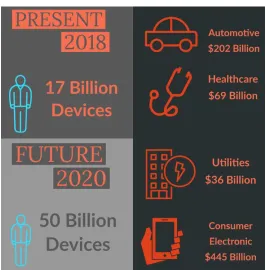
Internet of Things, IoT alike its name; can be referred to as the Internet of everything. It can also be regarded as an Industrial Internet. It can be defined as the latest technology that has proven its existence worldwide in terms of a network of machines or the devices that can interact with each other. This is the most significant area that needs to be worked on for the future technology, and has gradually received a lot of attention from various users and industries. According to the study, by 2020, 50 billion products will be connected to the Internet [2]. In addition, the statistics shows that 6 products per person (approx.) are used [2]. This means that the use of IoT will be enormous and the performance will be six times more efficient. And this is obviously an enormous number in itself to prove the future viability of IoT technology. In addition to the introduction of IoT technology manufacturers, many other service sectors are on the verge of using IoT(as shown in figure 1) technology to generate revenue through improved services and make the business extreme [4]. Retail Site Intelligence, a Krogan-based online-based retailer, is a comprehensive commerce platform for Video analysis, wireless things, computerized devices, portable sensors, IP cameras and video handling activities designed to help customers improve their shopping experience [4]. They make it easier to find products, provide desired products, and save time at the box office. The reason for the increasing diffusion of this technology is the technological, social and competitive pressure that led him to rebuild and transform [6]. Analysis of costs and benefits of IoT is becoming an important issue because IoT technology is being developed with the number of users using this technology.
Figure 1. Users of IoT in future
2 HISTORY OF IoT
In 1989, the "Internet" was first introduced and quickly spread throughout the world. Since the birth of the Internet, the trend for connecting various things to the Internet has become very large. Coffee Pot Trojan is the first application of its kind [5]. In 1990, John Romkey designed the first Internet device, a toaster that could be activated and deactivated with the Internet [2]. Steve Mann developed Wearcam in 1994. This happens almost in real time with a 64-processor system. In 1997, Paul Saffo gave first short description of censorship and his future actions. In 1999, Kevin Ashton created Internet of Things, Managing Director of the Auto-Id Center at MIT. They also formed RFID-based systems for identification of objects throughout the world [4]. As a major step in IoT commercialization, LG Electronics Giant made an announcement about its plan in 2000 to supply refrigerators that would now identify whether the stored food would be refilled or not. In 2003, the US Army used RFID in a huge
_________________________
Abhishek Malik, Student, Manav Rachna International Institute of Research and Studies, [email protected]
Amrit Thapa Magar, Student, Manav Rachna International Institute of Research and Studies, [email protected]
Harsh Verma, Student, Manav Rachna International Institute of Research and Studies, [email protected]
Dr. Meeta Singh, Associate Professor, Manav Rachna
International Institute of Research and
Studies,[email protected]
2990 number as a part of the Savi Program. In 2008, a group of
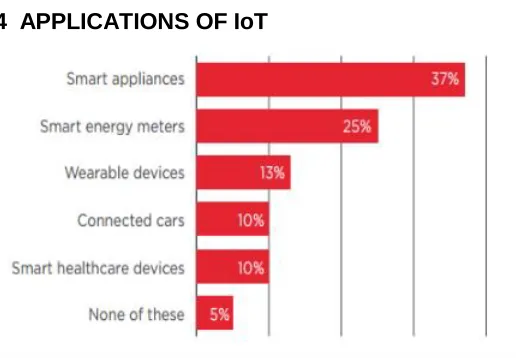
companies had established the IPSO Alliance to increase the use of Internet Protocol (IP) in the smart object network and to enable the Internet of Things. In 2008, the FCC accepted the use of the "white space spectrum" [5]. The introduction of IPv6 in 2011 has generated tremendous growth and interest in this area. IT giants such as Cisco, IBM and Ericson are continuing many educational and commercial initiatives with IoT [8]. IoT technology can also be interpreted as the most important link between people, the Internet and various things. Everything we use today in our daily lives can be monitored and monitored via the Internet (IoT). Most of the processes in IoT are carried out with the help of sensors. This sensor is used in almost all devices. The sensor first receives physical raw data or data (data), converts it into a digital signal, and sends it back to the control center. We can say that IoT(as shown in figure 2) has brought great comfort to our lives and made it very easy for all of us. In this way, we can also monitor changes in the environment in other parts of the world by using the internet remotely in the world. So, IoT has a big impact and plays an important role in our daily lives.
Figure 2. Market of IoT
3 BUILDING BLOCKS OF IoT
Let's assume all electronic devices that are currently available are connected to one another through the internet to form a certain system. And these small systems rejoin each other to form larger systems. That's IoT for you (IoT-system system). Here are the IoT building blocks:
3.1 End devices
These are the most essential devices or key things in IoT. These are the active sensing devices or actuators working in collecting the important relevant information and performs the ground level processing. For example : RFID at garment stores, temperature sensors at home and cameras at the highways [3].
3.2 Gateways
It is the local processing node/device. It connects the end devices to the network or an internet(cloud)[21,22]. It should not only transfer the relevant information collected from the sensors or actuators but also process them to some extent and forward the particular information to the cloud. It also provides the intelligence by sending back the data received from the cloud.
3.3 Connectivity
Since IoT is a network-based system; the 'connectivity' plays a vital role. The various service providers have given multiple solutions for the connectivity of the end devices to the gateways and then to the cloud. Also, it is a dual/duplex system. Hence, it works in the to and fro communication system between applications and hardware [7]. Thus, the connectivity can work both in wireless or wired mechanism. For example: Bluetooth, Wi-fi, RFID, GSM etc.
3.4 Cloud-based application and storage
The major function of this block is to compute and analyze the data received from the end devices and gateways.
4 APPLICATIONS OF IoT
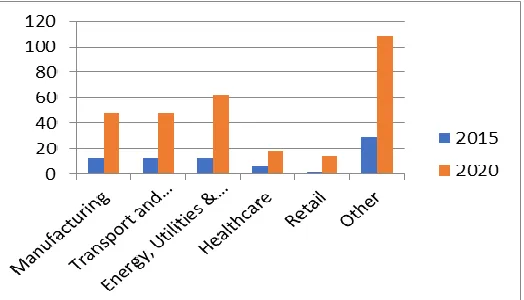
Figure 3. Use of IoT based applications
4.1 Smart Home
2991 can be placed on the home network and based on our order.
We give orders with voice, remote control or computer, the house reacts. Smart Homes works with a fairly simple system; receiver and transmitter. The receiver detects a certain signal from the transmitter issuing the order. Simply put, the history of the Smart Home begins with the installation of telephone and electrical cables in our homes. Also, General Electric Company was one of the first pioneers to develop a series of products for smart homes in the mid-1960s [9]. Every device on the network, such as lighting, light switches, door openers, pool controls and others, has its own code. When you program one of the controller options, the codes are automatically recognized. When you press the right button, the controller sends the character to the device to tell you what to do. The price of Smart Home really depends on how much 'smart' you really want.
4.2 Wearables
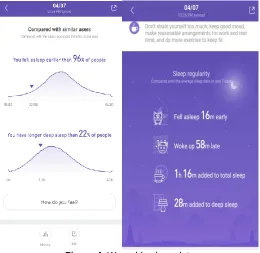
We live in a world where things change with the speed of lightning. Our devices and equipment that we use every day are connected to one or the other system. This integrated network of smart devices and sensors that exchange information, widely known as the Internet of Things (IoT), has played an important role in this radical shift to the smart era [4]. The IoT has a tremendous impact on various areas such as manufacturing, health care, consumer goods and services, banking, retail, security, agriculture, energy, transportation and logistics. Wearable technology (also known as portable devices) is a category of technological devices that the consumer can carry and often include follow-up information related to health and physical condition. Other portable technical devices include devices with small motion sensors for taking photos and synchronizing them with your mobile devices [13][23][24]. Google Glasses: It is named as a portable computer created by Google X Lab [9]. It displays information on the hands-free format of a smart phone, communicating over the Internet through a natural voice command. It gives us an experience known as an augmented reality, where the pictures dominate what the user saw in real life. Lark Pro: Lark developed a product with Harvard sleep experts and sleep coaches for pro athletes [10]. The $ 129 wireless sensor connects to the iPhone via Bluetooth and slides into the bracelet that is worn while sleeping. In addition to acting as an alarm clock, sensors on Lark track sleep patterns and measure the quality of one's sleep with Lark Up, a free application from the Apple App Store [8]. All sleep data is automatically synchronized back to Lark.com, where a deep sleep analysis can be found.
Figure 4. Wearable sleep data
4.3 Smart Meter
In the current context of countries such as India and other developing countries, we rely heavily on electromechanical and digital energy meters somewhere for energy measurement and billing purposes. In the process of doing this, it is very time consuming and takes a lot of energy at once. The main reason behind this is a traditional billing system that is irrelevant and inaccurate. This in turn also leads to delays, is expensive, less flexible and reliable in terms of accuracy, whereas on the contrary, super-fast access and completion of certain jobs are highly recommended. IoT-based smart energy gauges provide real power consumption and accurate billing. This is really very effective and less time consuming too. Smart meters are based on new technology to achieve the prospect of future electricity demand [10]. This is based on the principle of two-way communication where we can achieve increased electricity demand [13]. Smart meters would certainly be part of a wider internet in the future that integrates various aspects of service for human needs to meet all these needs.
Figure 5. Smart meeting environment
4.4 Smart Retail
2992 be explained to customers which will be done automatically.
Retailers can track products in their respective parts and fill them when the number of products decreases [11].
4.5 Smart City
IoT starts to cover our cities and improve our cities which we call 'Smart City'. These cover a fairly large range such as traffic management, water management, waste management, city security, and environmental monitoring such as air quality indices and other matters. This will solve various problems related to traffic, lack of water, lack of electricity, waste management, pollution, creating safer cities and resolving existing crimes and preventing them. Products such as cellular communication enabled by Smart Buick waste will send a warning to city services when a bin has to be emptied [12]. By using sensors and the internet, people can find free parking places in the neighborhood. Google uses an application called 'Google Neighbor' [15].
5 IOT ADOPTION
Graph 1. IoT Adoption Rate
Source: DBS Bank based on estimates by Gartner, United Nations, World Bank
Table 1. Number of IoT devices consumed
2016 2017 2018 2030
IoT units installed base-total(m)
6,382 8,381 11,197 125,000
Consumer devices(m)
3,963 5,244 7,036 75,000
Consumer devices as a % of total devices
62% 63% 63% 60%
Connected devices per person
5 5 5 5
World population(m)
7,400 8,500
IoT adoption rate 11% 14% 18% 176%
Source: DBS Bank based on estimates by Gartner, United Nations, World Bank
Graph 2. IoT spending projected to approach ~US $300bn by 2020
Table 2. Asian IoT Market
6 ADVANTAGES OF IoT
6.1 Access of Data
The more information is available, the easier it is to make an appropriate decision. You have access to real-time data and information that is far away from your location [13]. Knowing what you get from the supermarket by going out without checking yourself not only saves time but also remains practical. This is only possible because a device network gives a person access to all information in the world. This makes it very easy for people to do their work even when they are not physically present.
6.2 Connectivity
2993
6.3 Time Saving
By programming the work, whenever needed or required will be completed and doing this will save human valuable time and energy [12].
6.4 Expenditure Effective
As mentioned above, communication with electronic devices through Internet networks can be easily facilitated. It helps people in their daily work. The transfer of data packets to a connected network saves time and money [17]. The same information that can be transmitted faster can be done less than ever, just by Internet of Things.
7 DISADVANTAGES OF IoT
7.1 Privacy/Security
Privacy is a big issue with IoT. All information must be encrypted so that you can back up your financial status data [11]. Nowadays, every device is connected worldwide via the internet. This increases the risk of data loss, which can be important. This is a major disadvantage when exchanging information, as confidential information may not be secure and can easily be damaged by third parties.
7.2 Complexity
A diversified network that connects different devices together is what we call internet things. A hole in the system can affect the entire system. It is by far the most complex aspect of IoT that can have a major impact. There are various destruction options in complex systems. For example, you and your family can receive news that the milk is ready and you can all buy the same [15]. This means that you need different quantities. Or a software error has occurred that allows the printer to order ink multiple times if it only needs one cartridge.
7.3 Dependency
We may not notice it, but we see a large technology transfer and its implementation in daily life. There is no doubt that technology dominates our way of life and reflects human reliability in technology [12]. If there is a malfunction in the system, there is a risk of damaging a connected device. It will affect our daily lives, as we become increasingly dependent on it.
7.4 Business Model
In the following you will find a great impetus to start a business, to invest and to run a business. Without a good and solid business model for the Internet of Things, we have another bubble. This model should fulfill everything that is required for all types of e-commerce. standing markets, tight markets and hypermarkets. However, this category is always a victim of regulatory and legal investigation [18].
7.5 Society
Understanding the IoT from the consumer's point of view is not an easy thing to do because their needs or requirements change over time, they want new features in existing devices as well as new ones. And that happens at a fast pace; before the solution to the previous problem is found, a new problem appears. And solving problems takes time and resources, leaving a bad picture of the IoT as a whole [14].
7.6 Regulatory Standards
Regulatory standards for the information market are inadequate for information brokers leading to companies that sell data grasped from different sources [19]. Even if the data seems to be the Internet's motto, there is a lack of transparency in who has access to data and how it is used to improve products or services and to sell it to people, announcers and third parties. Clear guidance on data retention, use and security, including metadata, is required [16]. The European Union has adopted data and data-sharing regulations.
8 CONCLUSION
IoT is a technology that simplifies life and will continue to do so. That said, many innovative technologies have also been disastrous at the same time. Nuclear energy can be the best example to explain it better. In the current situation, however, it is necessary to live in the standard lifestyle equipped with various modern technologies. Technological progress can be mixed, but the long-term effects must be analyzed before they are negative. The authors hope that this article would have provided a clear picture of the IoT and its details. We hope that more research in the future will lead to the IoT trend.
ACKNOWLEDGEMENTS
The authors want to thank Dr. Prateek Jain(ACCENDERE) for his enormous support and guidance in writing this article. We also want to thank our faculty colleagues and our friends for their support and best wishes.
REFERENCES
[1] P. Suresh, J. Vijay Daniel, V. Parthasarathy, R. H. Aswathy. "A state of the art review on the Internet of Things (IoT) history, technology and fields of deployment", 2014 International Conference on Science Engineering and Management Research (ICSEMR), 2014
[2] Somayya Madakam, R. Ramaswamy. "Smart Homes (Conceptual Views)", 2014 2nd International Symposium on Computational and Business Intelligence, 2014
[3] Gavras, A. Karila, S. Fdida, M. May, and M. Potts, “Future internet research and experimentation,” ACM SIGCOMM Computer Communication Review, vol. 37, 2007.
[4] K.Bonsor-and-C.Keener,-“HowStuffWorks "How RFID
Works"” 2010,
http://electronics.howstuffworks.com/gadgets/high-tech-gadgets/rfid.htm.
[5] T. OBrien, “In a Nutshell: What Are QR Codes?,” 2010, http://www.switched.com/2010/06/21/in-anutshell-what-are-qr-codes/.
[6] International Telecommunications Union, ITU Internet Reports 2005: The Internet of Things. Executive Summary, Geneva: ITU, 2005.
[7] E. Fleisch, Auto-ID Labs: What is the Internet of Things? - An Economic Perspective, 2010.
[8] M. Chui, M. Löffler, and R. Roberts, “The Internet of Things,” Mkcinsey Quaterly, 2010, http://www.mckinseyquarterly.com/High_Tech/Hardwa re/The_Internet_of_Things_2538?gp=1.
2994 Internet of Things, European Commission, 2010.
[10] “IBM - Smarter Planet - United States,” Nov. 2010, http://www.ibm.com/smarterplanet/us/en/.
[11] Vipul Gupta and David G. Simmons, Sun Labs, Oracle “Building the Web of Things with Sun SPOTs” JavaOne 2010, Hands-on Lab.
[12] https://www.ncbi.nlm.nih.gov/pmc/articles/PMC49815 75/
[13] https://www.econlib.org/library/Topics/College/ [14] https://www.scientific.net/SSP.261.440
[15] http://rabble.ca/babble/science-technology/internet [16] https://www.academia.edu/35086213/A_SURVEY_AP
PLICATION_OF_IOT
[17] https://www.capgemini.com/beyond-the-buzz/think-big-with-iot/
[18] https://www.gartner.com/en/newsroom/press- releases/2017-02-07-gartner-says-8-billion- connected-things-will-be-in-use-in-2017-up-31-percent-from-2016
[19] https://www2.deloitte.com/insights/us/en/focus/interne t-of-things/revenue-from-iot-lessons-from-software-monetization.html
[20] https://ww.iottechnews.com/news/2017/oct/26/number -connected-iot-devices-125-billion-2030-ihs-markit/ [21] Bura, D., Singh, M., & Nandal, P. (2018). Analysis and
Development of Load Balancing Algorithms in Cloud Computing. International Journal of Information Technology and Web Engineering (IJITWE), 13(3), 35-53.
[22] Singh, M., Nandal, P., & Bura, D. (2017, October). Comparative Analysis of Different Load Balancing Algorithm Using Cloud Analyst. In International Conference on Recent Developments in Science, Engineering and Technology (pp. 321-329). Springer, Singapore.
[23] Singh, M., & Sharma, J. (2014, October). Performance analysis of secure & efficient AODV (SE-AODV) with AODV routing protocol using NS2. In Proceedings of 3rd International Conference on Reliability, Infocom Technologies and Optimization (pp. 1-6). IEEE.