University of South Carolina
Scholar Commons
Theses and Dissertations
12-14-2015
Refinement and Pilot Testing Social Networks for
Encouraging Healthy Behaviors: The Social Pounds
Off Digitally (Social POD) Study
Sarah B. Hales
University of South Carolina - Columbia
Follow this and additional works at:https://scholarcommons.sc.edu/etd Part of thePublic Health Education and Promotion Commons
This Open Access Dissertation is brought to you by Scholar Commons. It has been accepted for inclusion in Theses and Dissertations by an authorized administrator of Scholar Commons. For more information, please [email protected].
Recommended Citation
R
EFINEMENT AND PILOT TESTING SOCIAL NETWORKS FOR ENCOURAGING HEALTHY BEHAVIORS:
THE SOCIAL POUNDS OFF DIGITALLY(S
OCIALPOD)
S
TUDYby
Sarah B. Hales
Bachelor of Arts
The University of the South, Sewanee,2005
Masters of Social Work
University of South Carolina,2008
Submitted in Partial Fulfillment of the Requirements
For the Degree of Doctor of Philosophy in
Health Promotion, Education, and Behavior
The Norman J. Arnold School of Public Health
University of South Carolina
2015
Accepted by:
Gabrielle M. Turner-McGrievy, Major Professor
Homayoun Valafar, Committee Member
Rachel Davis, Committee Member
Sara Wilcox, Committee Member
D
EDICATIONMy dissertation is dedicated to my Mother, Judy McMahon; my Father, James
Bridges, my Stepfather, Jerry McMahon, and my Husband, Kevin Hales - whose love and
A
CKNOWLEDGEMENTSI would like to thank my advisor and mentor Dr. Brie Turner-McGrievy for all of
her support throughout this program and my dissertation. I would also like to
acknowledge the contribution of the research team members Dr. Homayoun Valafar, Dr.
Michael Huhns, Dr. Arjang Fahim, Andrew Freix, and Dr. Sara Wilcox for their hard
work on the Social POD studies. I would also like to thank Dr. Rachel Davis for her input
A
BSTRACTCurrently about 71% of adults in the US are considered overweight or obese.
Overweight and obesity are associated with higher risk of developing many chronic
diseases; however, health risks associated with overweight and obesity can be reduced by
as little as a 3% to 5% reduction in weight. Mobile health (mHealth) has shown promise
as a way to deliver weight loss interventions, yet maintaining participant engagement
over time has been a challenge.
The purpose of this study was to develop, refine, and pilot test the Social Pounds
Off Digitally (POD) Android app for personalized health monitoring and interaction;
revise the Social POD app based on participant feedback; and conduct a multi-site
randomized clinical trial to pilot test the second iteration of the Social POD app.
Overweight and obese adults with Android smartphones (BMI 25-49.9 kg/m2;
N=9) were recruited for a two-month weight loss pilot intervention and iterative usability
testing of the Social POD app. The app prompted participants via notification to track
daily weight, diet, and PA behaviors. Participants received the content of the behavioral
weight loss intervention via podcast. In order to re-engage infrequent users, the app
prompted frequent app users to select one of three messages to send to infrequent users
targeting one of three behavioral theory constructs: 1) social support, 2) self-efficacy, or
were assessed at baseline and two months. All participants attended one of two focus
groups to provide feedback on use of the app. Based on the usability testing, the Social
POD app was refined and a point-based incentive system was incorporated into the app
and used in a larger randomized controlled trial. Overweight and obese adults (N=51,
mean BMI=34.7 ± 6.0, 38% black) in Charleston and Columbia, SC who owned an
Android phone or tablet were recruited to participate in a 12-week behavioral weight loss
intervention delivered via mobile app and podcast. All participants received the
behavioral content of the weight loss intervention via twice weekly podcasts and were
randomized to download and use either a standard calorie tracking app (Fat Secret) or the
Social POD app. Main outcomes included kilograms lost at 12-weeks and secondary
outcomes included change in psychosocial variable scores from pre- to post-test,
association between points earned and percent weight loss at 12-weeks, and
re-engagement based on message-type received.
Following the usability testing participants lost a mean of -0.94 kg (±2.22 kg,
p=0.24) and consumed significantly fewer kcals post-intervention (1570±508 kcal/day) as
compared to baseline (2384±993 kcal/day, p=0.01). Mean number of app entries was 77.2
± 73.8 per person with a range of 2 to 219. Messages selected and sent to infrequent users
targeting social support were sent most frequently (n=32, 46%), followed by self-efficacy
(n=29, 40%), and negative outcome expectations (n=10, 14%). Themes from the focus
groups included functionality issues, revisions to the messaging system, and the addition
of a point system with rewards for achieving goals.
Participant attrition for the RCT was 12% (n=3 experimental and n=3
-7.5, -3.0) than comparison group participants (-2.23kg, CI: -3.6, -1.0; p=0.02) and had a
greater reduction in BMI (p=0.02). These outcomes were significant for both
intention-to-treat (using baseline observation carried forward) and complete case. While there were
significant differences in final positive outcome expectations scores between groups
[4.56 experimental, 3.57 comparison (scale range from 1 to 7, maximum); p=0.04], other
secondary outcomes (e.g., caloric intake and social support) were not significantly
different by group assignment while controlling for baseline values.
Among experimental group participants only, total points earned significantly
predicted percent weight loss (B=-0.02, p=0.01). In addition, higher scores for the
conscientiousness personality trait was significantly associated with total points earned
(B=9.07, p=0.03), but other personality characteristics and demographics were not.
Messages most frequently sent to infrequent users of the Social POD app were social
support (n=119), followed by outcome expectations (n=99), and then messages targeting
self-efficacy (n=97). There was a significant difference between the type of message
received and re-engagement among infrequent users (p=0.03) with self-efficacy messages
prompting the most engagement (n=7), followed by outcome expectation messages (n=5)
and social support messages (n=1).
In conclusion, use of the Social POD app led to greater weight loss than a
standard diet-tracking app (Fat Secret). This mobile health intervention has the potential
to be widely disseminated to reduce the risk of chronic disease associated with
T
ABLE OFC
ONTENTSDEDICATION ... iii
ACKNOWLEDGEMENTS ... iv
ABSTRACT ...v
LIST OF TABLES ... xi
LIST OF FIGURES ... xii
LIST OF ABBREVIATIONS ... xiii
CHAPTER 1:INTRODUCTION ...1
CHAPTER 2:BACKGROUND,SIGNIFICANCE AND LITERATURE REVIEW ...9
CHAPTER 3:METHODOLOGY ...46
CHAPTER 4:RESULTS ...86
4.1:THE SOCIAL PODAPP:AMIXED-METHODS APPROACH TO THE DEVELOPMENT, REFINEMENT, AND PILOT TESTING OF A MOBILE APPLICATION FOR IMPROVING HEALTHY BEHAVIORS ...87
4.2:SOCIAL NETWORKS FOR IMPROVING HEALTHY WEIGHT LOSS BEHAVIORS FOR OVERWEIGHT AND OBESE ADULTS:ARANDOMIZED CLINICAL TRIAL USING A MOBILE APP ...120
4.3:TRADING POINTS FOR POINTS:ENGAGEMENT AND WEIGHT LOSS IN A MOBILE INTERVENTION ...147
4.4:SOCIAL PODAPP USER-USER MESSAGING RESULTS ...168
CHAPTER 5:CONCLUSIONS ...172
REFERENCES ...183
APPENDIX B–AIM 1PRE-STUDY QUESTIONNAIRE ...197
APPENDIX C–AIM 1POST-STUDY QUESTIONNAIRE ...215
APPENDIX D–AIM 1WEEKLY QUESTIONNAIRE ...233
APPENDIX E–AIM 1MID-STUDY FOCUS GROUP INTERVIEW GUIDE ...234
APPENDIX F–AIMS 2 AND 3PARTICIPANT CONSENT FORM ...236
APPENDIX G–AIMS 2 AND 3PRE-STUDY QUESTIONNAIRE ...242
APPENDIX H–AIMS 2 AND 3POST-STUDY QUESTIONNAIRE ...264
APPENDIX I–AIMS 2 AND 3COMPARISON GROUP WEEKLY QUESTIONNAIRE ...287
APPENDIX J–AIMS 2 AND 3EXPERIMENTAL GROUP WEEKLY QUESTIONNAIRE ...288
L
IST OFT
ABLESTable 2.1 Basic Statistics of Available Weight Loss Apps from the Google Play Store ..15
Table 2.2 Table of Features Included in Weight Loss Apps Available from the Google Play Store ...17
Table 2.3 Table of Behavioral Weight Loss Feature Included by App ...19
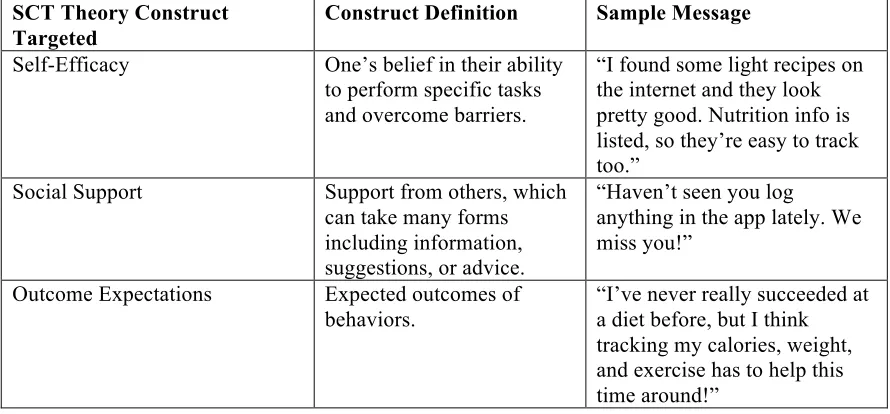
Table 3.1 User-to-User Message Types by Social Cognitive Theory Construct Targeted ...50
Table 3.2 Recruitment Strategies Implemented in the Social POD Study for Aims 2 and 3 ...55
Table 3.3 Description of App Components for Social POD and Fat Secret apps ...58
Table 3.4 Intervention Components and Theoretical Constructs Targeted ...63
Table 3.5 Detailed Study Meeting Schedule for Specific Aims 2 and 3 ...78
Table 4.1 User-user Messages Types by Social Cognitive Theory Construct Targeted ...95
Table 4.2 Baseline Demographic Characteristics ...100
Table 4.3 Theoretical constructs addressed by intervention components ...143
Table 4.4 Baseline Demographic Characteristics and History of Technology Use (N=51) ...144
Table 4.5 Baseline to 3-month Changes in Weight, Calories, and Psychosocial Characteristics ...145
Table 4.6 Baseline Demographic Characteristics and History of Technology Use (N=26) ...167
L
IST OFF
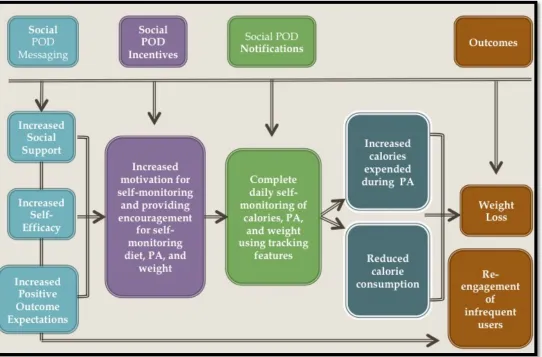
IGURESFigure 2.1 Conceptual model of the second iteration of the Social POD app ...45
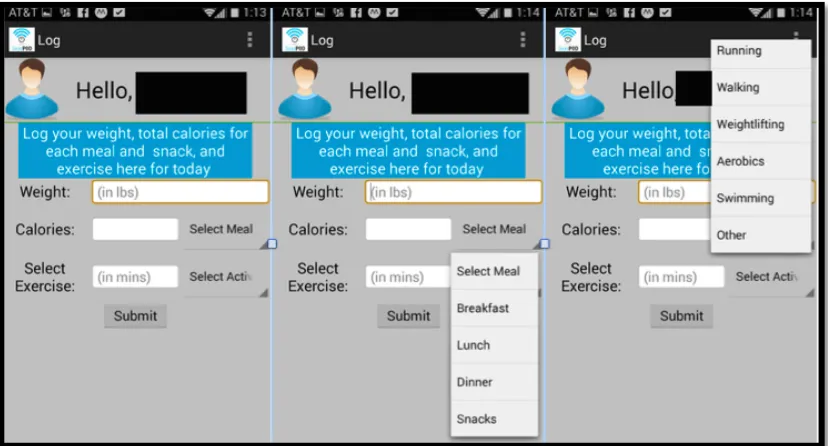
Figure 3.1 Screenshots of Social POD app home, meal tracing, and physical activity tracking screens ...48
Figure 3.2 Screenshots of the message log, message selection, and history screen of Social POD app ...50
Figure 3.3 My counter, food diary, and calorie database from Fat Secret app ...60
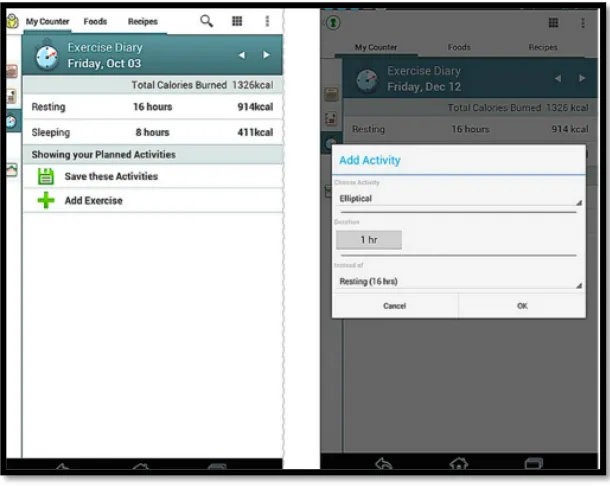
Figure 3.4 Physical activity tracking features of Fat Secret app ...61
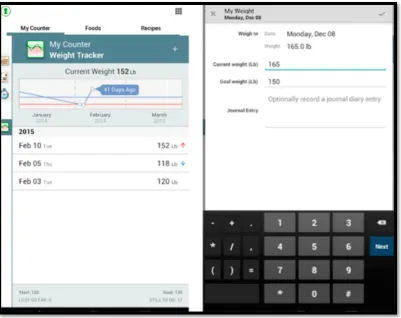
Figure 3.5 Weight graph and weight tracker of Fat Secret app ...62
Figure 3.6 Fat Secret recipe database by meal category and featured recipes ...63
Figure 3.7 Home screen with icons for selecting the calorie log, activity log, and weight log and the calorie screen ...65
Figure 3.8 Social POD app physical activity tracker and drop down menu with list of activities ...66
Figure 3.9 Weight tracker and weight graph of Social POD app ...66
Figure 3.10 Notification to send a message to an infrequent user and message- selection page of the Social POD app ...70
Figure 3.11 The Social POD goals screen and the point tracker ...72
Figure 3.12 Notifications in the device-specific notification center and newsfeed of the Social POD app ...72
Figure 3.13 Help and notes screen of the Social POD app ...73
Figure 4.1 Screenshots of Social POD app (left to right) home, meal tracking, and physical activity tracking screens ...93
L
IST OFA
BBREVIATIONSApp ... Application
ASA24 ... Automated Self-Administered 24-Hour Dietary Recall
ASPIRE ... Advanced Support Program for Innovative Research
BMI ... Body Mass Index
DPP ... Diabetes Prevention Program
MP3 ... Portable Media Player
mHealth ... Mobile Health
PA ... PA
PAR-Q ... PA Readiness Questionnaire
POD ... Pounds Off Digitally
RCT ... Randomized Clinical Trial
S.C. ... South Carolina
SCT ... Social Cognitive Theory
SCTR ... South Carolina Clinical Translational Research Institute
SDT ... Self-Determination Theory
SMS ... Short Message Service
SLT ... Social Learning Theory
TBP ... Theory-Based Podcast
CHAPTER
1
I
NTRODUCTION1a. Problem Identification and Definition
Currently over 71% of adults in the US are considered overweight or obese (BMI
>25 kg/m2).1 Overweight and obesity are associated with type 2 diabetes, hypertension, cardiovascular disease, arthritis, and asthma.2,3 There is also an increased risk of several cancers4 such as postmenopausal breast5 and prostate6 among those who are overweight or obese. Health risks associated with overweight and obesity can be reduced by as little
as a 3% to 5% reduction in weight.7,8
Behavioral interventions that target improvements in diet and physical activity
(PA) are an effective way to help people lose weight and decrease chronic disease risk
factors associated with overweight and obesity.9 mHealth has shown promise as a way to
deliver weight loss interventions and is a more convenient and less time-intensive
delivery method than face-to-face individual or group sessions, especially among
populations that are hard to reach through traditional intervention delivery.10 mHealth interventions are intended to provide participants with access to health information and
tools for monitoring health behaviors on-the-go, such as via smartphone, versus other
internet-based programs that deliver information through a more stationary modality,
such as a computer.11
Weight loss programs have been developed and delivered via internet and other
promote weight loss and reduce health risks of chronic disease. Participant engagement
with social media in the context of these weight loss interventions has been shown to be
related to weight loss.12,13 While there are many benefits of delivering weight loss
interventions using remote methodologies, maintaining participant engagement over time
as well as providing sufficient social support in these types of interventions is a
challenge.14 Furthermore, there are many free and paid weight loss apps available for
both Android and Apple platforms; however researchers have noted that few of the
available apps (free and paid) include many of the evidence-based techniques used in
weight loss interventions.15
1b. Broad Objectives of this Study
The goal of the next phase of research and the purpose of this study is to fill gaps
in existing research by integrating behavioral techniques derived from health behavior
theory, specifically Social Cognitive Theory (SCT)16 in the development of a new
Android-based smartphone and tablet app. The Social POD app was designed to enhance
participant engagement and motivation for engaging in healthy diet and PA behaviors in
the context of an entirely mobile-based weight loss intervention. Please see Table 3.3 for
a detailed description of components of the Social POD app and Chapter 3 for a detailed
description of the intervention methodology and implementation.
1c. Theoretical Framework Guiding the Development of the Social POD app
Initial components of the first iteration of the Social POD app were developed
using constructs from SCT to promote participant engagement with the app. The first
round of usability testing of the Social POD app was conducted in spring of 2014,
and engagement with the app over the summer and fall of 2014, and concluded with a
pilot randomized clinical trial (RCT) conducted in spring of 2015. Below is a description
of SCT constructs utilized in the Social POD intervention with a concluding section on
the link between health behavior theory and the development of specific components of
the Social POD app to promote healthy diet and PA behaviors for weight loss.
Social Cognitive Theory
SCT describes the reciprocal interactions between human cognitions,
environmental influences, and human behavior.16–19 SCT is based in part on Social
Learning Theory (SLT), which is grounded in the belief that individual behavior is
learned by observing and modeling the behavior of others, and therefore, not simply a
product of an individual’s personal experiences.16,17,19 SCT expands on the concepts of
SLT to incorporate the cognitive (e.g., thoughts and beliefs) and emotional relationships
(e.g., expectations) influencing and influenced by the environment (e.g., behavioral
role-models).19
According to SCT, individual behavior is determined by perceived control, which
is the belief that one has the power to control his or her behavior. Furthermore, behavior
change typically does not occur unless individuals feel they have the capacity to do so.19 Specific factors found to be related to positive health behavior change include: goal
setting, self-efficacy, and outcome expectancies.19 Of importance is an individual’s sense of self-efficacy, which is the belief or perception that one is able to perform specific
behaviors and overcome challenges.19 When planning behavioral health interventions, it
is important that participants set realistic, incremental, and achievable goals leading to
Behavioral capability is the degree to which an individual possesses the necessary
skills and training to perform specific behaviors (e.g., preparation of low calorie fruits
and vegetables to reduce daily caloric intake).19 Behavioral interventions should be designed to provide individuals with the necessary education and development of specific
skills to carryout the desired behaviors. Positive and negative expectations about the
outcome of certain behaviors are important considerations for behavior modification
interventions. Behavioral interventions should model positive outcomes of targeted
behaviors (e.g., positive expectations about dieting, engaging in PA, and self-monitoring
behaviors).19 Finding appropriate models that participants can identify with (e.g., others similar to the target audience who successfully perform desired health-related behaviors)
is important when targeting observational learning. Observational learning originated as a
construct of SLT and suggests that individuals learn from their own experiences as well
as from observing the experiences of others.19
The use of reinforcements, which are responses to behavior to increase targeted
health behaviors, is a common approach utilized for behavior modification.19Positive
reinforcements (e.g., providing rewards) tend to increase the probability that a person will
repeat a behavior whereas negative reinforcements are the removal of something that
leads to increased behavior.19SCT suggests that reinforcements are best utilized in this
framework when participants self-select their rewards and provide rewards for
themselves (i.e., internal reinforcements) rather than receiving rewards from others (i.e.,
Social POD App Components: Link between Health Behavior Theory and App Design
As self-efficacy is a central construct of SCT and is integral in bringing about
behavior change by enhancing participants confidence in performing tasks and
overcoming barriers,16,17,20 it was one of the key constructs selected as a target through the user-user messaging system in the Social Pod app. Social support, while not one of
the original constructs of SCT, works to enhance an individual’s self-efficacy by
providing support for performing specific behaviors. It has been found that when
participants receive support from others, this support serves to bolster confidence in one’s
ability to perform tasks and overcome barriers.17 In addition to social support, SCT suggests that positive outcome expectations are enhanced by increasing a participant’s
self-efficacy for performing certain behaviors (e.g., reducing caloric intake, engaging in
PA, or tracking caloric consumption using a smartphone app) thereby increasing the
frequency in which participants perform the targeted behaviors related to weight loss
(e.g., dieting, PA, and self-monitoring).17 These constructs (self-efficacy, social support, and outcome expectations) are the determinants that are targeted through the user-user
messaging system to produce desired behavior changes (engagement in dieting, PA, and
self-monitoring) among users of the Social POD app.
Podcasts, developed using SCT and tested in several interventions,13,21,22 were used by participants in this intervention to promote behavioral capability for making
healthy diet and PA behavior changes. In addition to the goal setting activity in the
podcasts, an incentive system with small and achievable goals related to app usage were
developed using principles from SCT and feedback from focus groups during the
usability-testing phase, podcast scripts were revised to reflect technology updates in diet, PA, and
weight tracking. Podcast episodes were re-recorded with new actors to improve the sound
quality and to include a wider diversity of voices. Participants were able to earn points for
achieving goals each day, and participants earned prizes in exchange for their points at
the end of the study, targeting positive reinforcements. For a detailed description of
results from usability testing of the first iteration of the Social POD app, please see the
first manuscript of Chapter 4.
1d. Research Questions and Specific Aims of this Dissertation
This study examined if use of the Social POD app and theory based podcasts
(TBP) is more effective for weight loss than using a standard tracking app (Calorie
Counter by Fat Secret) and TBP.
Aim 1: Refine our intelligent social agent mobile app (Social POD) based on results from
our usability testing (two-months, N=9) and develop new components for use in a
three-month pilot RCT.
Aim 2: Conduct a three-month pilot RCT among overweight and obese adults (N=51)
comparing a TBP plus self-monitoring using the standard tracking app (TBP + Fat
Secret) versus TBP plus self-monitoring with the Social POD (TBP + Social POD) from
February to May of 2015.
Hypothesis 2a: Participants in the experimental group (TBP+Social POD) will
lose significantly more weight than those in the comparison group (TBP+Fat Secret).
Hypothesis 2b: Participants in the experimental group will have a significantly
greater increase in social support, self-efficacy, and outcome expectation scores than
Aim 3a: To determine if the number of points earned by participants is associated with
percent weight loss at three-months among experimental group participants.
Hypothesis 3a: The number of total points earned will be significantly associated
with percent weight loss at three-months such that the more points a participant earns, the
more weight they will lose.
Aim 3b: To determine if type of message received (social support, self-efficacy, or
outcome expectations) is associated with re-engagement with the Social POD app among
infrequent users (infrequent users defined as not entering data in the Social POD app
within the past 48-hours).
Hypothesis 3b: Messages targeting social support will be sent most frequently.
Messages targeting social support will be significantly associated with re-engagement
among infrequent users.
1e. Justification of Research
Rates of overweight and obesity remain high among US adults. There are
numerous health risks associated with overweight and obesity; however, these risks can
be reduced with just a 3% to 5% reduction in body weight.7,8 Behavioral interventions are
effective at promoting weight loss among adults and have been delivered using remote
means including the Internet and smartphones.10,12,13,22–34 Benefits of electronic and mobile interventions for weight loss include reduced time and cost associated with
participation in interventions, increased anonymity, and less risk of potential
embarrassment to the participant. While there are many commercial smartphone
applications that are available to the public, most of these applications include few of the
loss interventions13,16,17,20 and most have not been rigorously tested in clinical trials to
determine which components impact health behavior and health outcomes.35A promising
avenue for enhancing the quality of mHealth interventions for public use includes the
integration of theory-based content utilizing a SCT16 framework to increase participant engagement and motivation in the context of a mobile-based weight loss intervention.
The purpose of this research is to test the effectiveness of an evidence-based smartphone
application (Social POD app) to promote participant engagement and motivation in the
context of an entirely mobile-based weight loss intervention among a sample (n=51) of
overweight and obese (BMI ≥ 25 – 49.9 kg/m2) adults with Android smartphones or
tablets in South Carolina (S.C.).
1f. Preview
In the following chapters of this dissertation, a synopsis of the background and
significance of this research will be presented along with a content analysis of currently
available commercial weight loss apps and a literature review, organized by topic, in
Chapter 2. In Chapter 3, a presentation of the methodology used will be presented and
organized by Specific Aim. In Chapter 4, three manuscripts reporting outcomes from
Specific Aims 1, 2, and 3a will be presented followed by results from Specific Aim 3b.
CHAPTER 2
B
ACKGROUND,
S
IGNIFICANCE,
ANDL
ITERATURER
EVIEW2a. Introduction
This section of the dissertation has been organized according to topic. Chapter 2
begins with a presentation of the prevalence of overweight and obesity in the U.S. and
S.C. followed by the physical health and economic costs of these conditions to
demonstrate the significance of this public health problem. A discussion of the potential
contribution of mHealth interventions to promote weight loss and reduce the burden of
overweight and obesity will be presented as a justification for pursuing this line of
research to promote healthy diet and PA behaviors among overweight and obese adults in
S.C. The background section of this chapter will begin with a presentation of current
statistics for smartphone and health app usage followed by a detailed content analysis of
current weight loss apps available on the Google Play Store for Android devices. An
expert review of commercial weight loss apps will be presented to demonstrate the need
to incorporate evidence-based components traditionally delivered in clinical behavioral
weight loss interventions to strengthen mHealth interventions. Pilot work for this current
line of research will be discussed followed by results from several technology-based
interventions for weight loss, and a review of recent literature pertaining to the
Significance of Problem and Background
The Surgeon General has declared overweight and obesity as one of the most
burdensome health issues currently affecting Americans today.36 Rates of obesity and
overweight rose over the past 30 years and have recently leveled but remain high.37
Current national obesity rates show that 34.9% of adults over age 20 are obese (BMI ≥
30).37 Rates of obesity are highest among adults of all races between the ages of 40-59 at
39.5%, followed by those age 60 or older at 35.4%, those younger than 20 at 34.9%, and
those 20-39 at 30.3%.37 The highest percentage of overweight and obesity (BMI ≥ 25) is in the age group of adults age 40-59 years at 75.3% meeting BMI criteria, followed by
those older than 60 at 71.6%, those younger than 20 at 68.5%, and those ages 20-39 at
60.3%.37
Of Non-Hispanic White adults, men of all age ranges up to age 60 have a higher
prevalence of overweight and obesity than women, although rates of overweight and
obesity among Hispanic White women in all age ranges is above 50%.
Non-Hispanic black women between the ages of 40-59 have the highest overall prevalence of
overweight and obesity among all races reported with a rate of 85.2% meeting criteria.
Among Hispanics, data indicate that 84% of women and 84.7% of men in the age range
of 40-59 meet criteria for overweight and obesity.
In S.C., adults over age 18 consist of 76.6% of the total population in 2010 and of
this group 66.9% were overweight (BMI ≥ 25) and 31.5% were obese (BMI ≥ 30).38 Only
23.3% of S.C. adults reported eating the recommended two servings of fruit per day and
only 22.9% reported consuming the recommended three servings of vegetables per day.39
engaging in 150 minutes of vigorous activity or 300 minutes of moderate-intensity PA
and 26.2% reported not engaging in any type of PA within the specified 30 day
timeframe.40 National and local data reveal that interventions are necessary to increase consumption of healthy foods (fruits and vegetables), increase PA, and aid in the
reduction of overweight and obesity among adults to reduce the incidence of chronic and
preventable diseases.
Adverse consequences of overweight and obesity
Costs of overweight and obesity are many and include detrimental health
outcomes, increased cost of health care, potential or partial disability, as well as social
stigma.36 The Surgeon General’s Call to Action to Prevent and Decrease Overweight and
Obesity suggests interventions targeting environmental and behavioral factors
contributing to overweight and obesity allow the greatest opportunity for prevention and
treatment.36 According to the Surgeon General obesity is associated with an increased risk of numerous health conditions and diseases including: type 2 diabetes, heart disease,
stroke, hypertension, gallbladder disease, sleep apnea, asthma, certain cancers, high blood
cholesterol, complications of pregnancy, menstrual irregularities, depression, and social
stigma.36
Indirect costs of obesity across the U.S. are many and include lost wages due to
inability to work or disability and lost wages due to premature death.36 According to the S.C. Obesity Burden Report of 2011, it is estimated that $1.2 billion dollars was spent
due to health conditions associated with obesity and it is projected to increase to $5.3
however, if the rate of obesity could remain the same, it would save the state an estimated
$858 per adult, which is equal to a total of $3 billion in savings.41 Nationally individuals with a BMI greater than 30 spend more in medical costs than their peers with a BMI less
than 25.42 In S.C. about 10% of Medicare expenditures and about 16% of Medicaid
expenditures are related to obesity.43
Bridging gaps and advancing science in obesity research
While there are programs designed to address the high prevalence of overweight
and obesity, there remains a need for better weight loss interventions given the continued
high rates of overweight and obesity among adults in the U.S. and S.C.37 mHealth
presents exciting new opportunities to engage large numbers of individuals in weight loss
interventions that are more convenient, less costly, and require less effort to disseminate
than traditional face-to-face or group behavioral weight loss programs.15 While there are Internet-based interventions and commercial smartphone apps available, most have not
been developed by experts in health promotion using evidence-based strategies and sound
behavioral theories.15,44,45 In addition most currently available smartphone apps have not been rigorously tested to assess efficacy and weight loss outcomes among overweight and
obese users.15 The Social POD smartphone app bridges this gap between commercially
available weight loss apps and evidence-based interventions for weight loss and can be
disseminated to a wider audience for the Android platform through the Google Play
Store.
Current Statistics of Technology Use
Current Pew Reports indicate that most adults in the U.S. own cell phones (about
owners are of Hispanic (49%) ethnicity followed by African Americans (42%) and
Caucasians (42%).44 The Android platform is the most commonly used representing 28%
of all cell phone users, iPhone at 25%, and Blackberry at only 4%, according to the most
recent Pew statistics.46
U.S. adults are using their phones to access health information and advice. Of
smartphone owners, over half (52%) use their phones to access health information, with
college educated Hispanic and African Americans between the ages of 18-49 comprising
the demographic group with the highest rate of accessing health information via
smartphone.44 About 19% of smartphone owners are also using their phones to download
and use health apps. The most popular types of apps used among smartphone owners
include those to aid with PA (38%) and diet tracking (31%), followed by weight
management (12%).44 Less frequently used apps include those designed for tracking
menstrual cycle, blood pressure, pregnancy, blood sugar (diabetes), medication
management, mood, sleep, and other types of health-related activities.44 Despite the widespread availability and use of apps to track weight loss and other health-related
behaviors, few commercially available apps for weight loss include many of the
evidence-based strategies included in traditional behavioral weight loss interventions;
furthermore, these apps have not been rigorously tested to determine their impact on
health behavior.15,35,45
The following sections provide an overview of the apps available for weight loss
on the Google Play store, and an overview of relevant research studies utilizing
2c. Content Analysis of Available Weight Loss Apps
A content analysis of current weight loss apps available for the Android platform
was conducted on September 11, 2014 and updated on February 25, 2015. The author
identified popular weight loss apps first using the “search” menu on the Google Play
store accessible via web browser and using the search term “weight loss.” The second
search was conducted using an Android tablet and searching from the category menu on
the Google Play store app. The “health and fitness” section was selected, and then the
“weight loss apps” button was selected resulting in a list of eight apps in September of
2014. The apps listed as weight loss apps in the Google Play store in September of 2014
included: Weight Watchers, My diet coach, Water your body, Sleep as Android, Couch to
5k, Daily yoga, Nexercise, and All the Cooks Recipes. From this menu, there was the
option to select a button to “see more” weight loss apps, and selecting this button resulted
in a total of 16 apps, including the eight previous apps displayed and eight others. Results
included the following additional apps: Calorie Counter with My Fitness Pal, Noom
Weight Loss, Jamie’s 20 Minute Lifestyles, Calorie Counter by Fat Secret, Noom Cardio
Trainer, Fast Food Calorie, Lose it, and 7 Minute Workout. In February of 2015,
additional apps (other than the ones listed above) displayed on the “weight loss apps”
page of the Google Play store included: Chef Tap App, Runtastic Push-ups, Runtastic
Sit-ups, and Runtastic Squats.
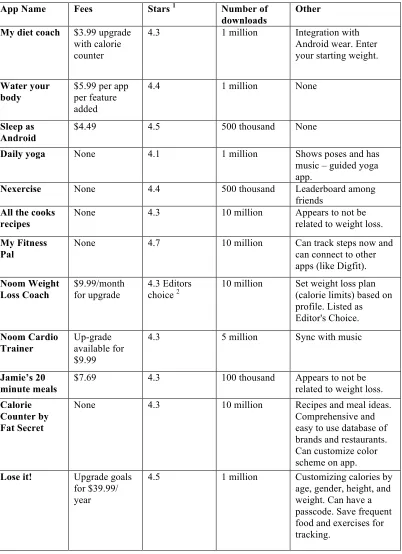
Please see Table 2.1 for results from the content analysis of apps identified as
“weight loss apps” from the Google Play store in both September of 2014 and February
of 2015. The content of these weight loss apps was examined by downloading each of the
features (if any) required a fee. Please see Table 2.1 for a description of the basic
statistics for each app.
Table 2.1: Basic Statistics of Available Weight Loss Apps from the Google Play Store
App Name Fees Stars 1 Number of
downloads
Other My diet coach $3.99 upgrade
with calorie counter
4.3 1 million Integration with Android wear. Enter your starting weight.
Water your body
$5.99 per app per feature added
4.4 1 million None
Sleep as Android
$4.49 4.5 500 thousand None
Daily yoga None 4.1 1 million Shows poses and has music – guided yoga app.
Nexercise None 4.4 500 thousand Leaderboard among friends
All the cooks recipes
None 4.3 10 million Appears to not be related to weight loss.
My Fitness Pal
None 4.7 10 million Can track steps now and can connect to other apps (like Digfit). Noom Weight
Loss Coach
$9.99/month for upgrade
4.3 Editors
choice 2 10 million Set weight loss plan (calorie limits) based on
profile. Listed as Editor's Choice. Noom Cardio Trainer Up-grade available for $9.99
4.3 5 million Sync with music
Jamie’s 20 minute meals
$7.69 4.3 100 thousand Appears to not be related to weight loss. Calorie
Counter by Fat Secret
None 4.3 10 million Recipes and meal ideas. Comprehensive and easy to use database of brands and restaurants. Can customize color scheme on app. Lose it! Upgrade goals
for $39.99/ year
7 minute workout
Pay $1.99 to remove ads.
4.3 500 thousand This is an app that takes you through a 7-minute work out (step by step, with pictures, and time count.
Fast Food Calorie Lookup
None 4.3 100 thousand Appears to be more of a calorie database of items from popular
restaurants. Couch to 5K
by RunDouble
Free trial. Upgrade for $1.60
4.7 1 million Integrate with My Fitness Pal for additional features included in MFP app. Runtastic
Pedometer
1.99 for pro version without ads.
4.3 100,000 Integration with MyFitnessPal. Provide calories expended (enter weight and height for accuracy).
Runtastic Squats Trainer
$1.99 upgrade to Pro to eliminate ads and get access to more badges for completing challenges.
4.5 1 million Upload workout to Runtastic app. Personal feedback from a "coach." Integrate with MyFitnessPal.
Runtastic Sit-ups
$1.99 upgrade to Pro to eliminate ads and get access to more badges for completing challenges.
4.3 1 million Upload workout to Runtastic app. Personal feedback from a "coach." Integrate with MyFitnessPal.
Runtastic Push-ups
$1.99 upgrade to Pro to eliminate ads and get access to more badges for completing challenges.
4.5 1 million Upload workout to Runtastic app. Personal feedback from a "coach." Integrate with MyFitnessPal.
ChefTap Recipe App
None 4.4 100,000 Not related to weight
loss. App for cataloging recipes.
1 User rating system. Minimum of 0 and maximum of 5 star ratings possible. 2 A distinction given by
Weight loss apps from the Google Play Store reviewed for this analysis typically
included several features such a newsfeed, barcode scanner, weight graph,
notifications/reminders, and journals. A newsfeed displaying status updates from others
allows users to communicate with each other to provide support, share barriers to weight
loss, and communicate about other topics as well as view and encourage each other’s
progress with weight loss-related goals. For ease of tracking calories consumed, some
apps have the ability to use the device camera to scan the barcode of packaged foods.
Some apps also include a graph of users’ body weight as entered in the app, enabling
users to view their weight over time. Prompts to track various behaviors related to weight
loss (e.g., self-monitoring caloric intake, body weight, etc.) are also included in some of
the apps as notifications or reminders. Having the ability to make notes or create a journal
with topics related to achieving weight loss goals are also included in some apps. Please
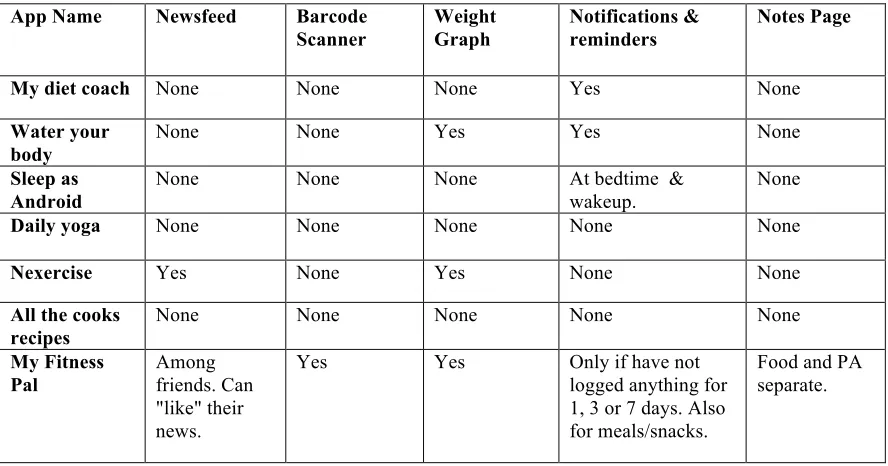
see Table 2.2 for a list of features included in each of the apps from this content analysis.
Table 2.2: Table of Features Included in Weight Loss Apps Available from the Google Play Store
App Name Newsfeed Barcode Scanner Weight Graph Notifications & reminders Notes Page
My diet coach None None None Yes None Water your
body
None None Yes Yes None
Sleep as Android
None None None At bedtime &
wakeup.
None
Daily yoga None None None None None Nexercise Yes None Yes None None All the cooks
recipes
None None None None None
My Fitness Pal Among friends. Can "like" their news.
Yes Yes Only if have not
logged anything for 1, 3 or 7 days. Also for meals/snacks.
Noom Weight Loss Coach
None None Yes Meals only. Sends
emails about re-engaging with app.
None
Noom Cardio Trainer
None None None PA, weight,
distance/calories.
None
Jamie’s 20 minute meals
None None None None None
Calorie Counter by Fat Secret
None Yes Yes Every other week
email reminders with forum info.
Yes
Lose it! With friends. None None Meals and end of day tracking. You can comment on your history. 7 minute workout
None None None Set reminders to
work out.
None
Fast Food Calorie Lookup
None None None None None
Couch to 5K by
RunDouble
None None None Reminders during
your run for pace and halfway mark.
None
Runtastic Pedometer
None None None None None
Runtastic Squats Trainer
None None None None None
Runtastic Sit-ups
None None None None None
Runtastic Push-ups
None None None None None
ChefTap Recipe App
None None None None None
Very few apps (15%) reviewed for this content analysis included some type of
newsfeed or in-app feature allowing users to communicate with each other publicly and
post information available for all users to view related to their weight loss. Two apps
included a barcode scanner for ease of tracking calories consumed from packaged foods.
Some apps (25%) included a graph showing body weight entered in the app over time
allowing users to adjust their eating and exercise behaviors to promote weight loss. A
behaviors with only 30% having reminders related to tracking diet, PA, or body weight.
Very few apps (15%) included notes or journaling features but one app (MyFitnessPal)
included a unique journal feature allowing users to make note of relevant information
pertaining to their diet and PA behaviors separately.
The author used constructs from health behavior theories including SCT16,19,20 to evaluate the inclusion of evidence-based components of behavioral interventions
included in the available weight loss apps from the Google Play store. Of the apps
analyzed for this review, only 38% (My Diet Coach, Nexercise, My Fitness Pal, Noom
Weight Loss Coach, Fat Secret, and Lose It) included some of the evidence-based
components known to be effective for weight loss and included in traditional behavioral
weight loss interventions including: self-monitoring of diet, activity, and weight (i.e.,
tracking features), social support through social media or messaging features, and
incentives or goals for achieving weight loss or weight-loss related goals in line with
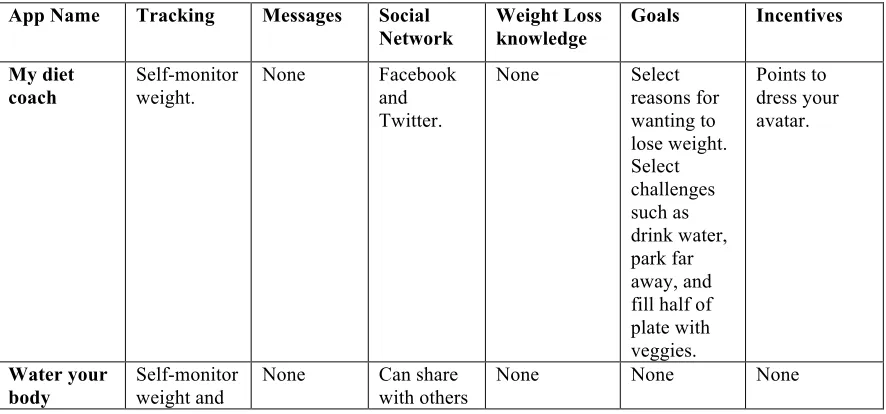
health behavioral theories. Please see Table 2.3 for a list of behavioral weight loss
features included in each of the apps from the content analysis.
Table 2.3: Table of Behavioral Weight Loss Features Included by App
App Name Tracking Messages Social Network
Weight Loss knowledge
Goals Incentives
My diet coach
Self-monitor weight.
None Facebook and Twitter.
None Select reasons for wanting to lose weight. Select challenges such as drink water, park far away, and fill half of plate with veggies.
Points to dress your avatar.
water consumption . via email. Sleep as Android The app tracks your sleep by placing the phone/tablet by your pillow and setting a wake alarm.
None Twitter None None None
Daily yoga The app tracks completion of yoga sessions completed but only with FB login. Only through Facebook
Facebook None None None
Nexercise Self-monitor weight and PA only. Track PA as you do it or track a previous work out. Earn points for activity to earn rewards. Chat with others based on topics or find friends via contacts, Facebook, Twitter, text or email. Facebook and Twitter
None None Earn points
toward gift cards at national chain stores, CVS, Walmart, Best Buy, or prizes like FitBit. All the cooks recipes No self-monitoring features.
None None None None None
My Fitness Pal Calorie, PA and weight self-monitoring. Quick add calories, recipes, save frequent food and create food items. Multiple items can be entered at one time. Email messages and ability to send between friends. Receive an email when you get a message.
Link with Facebook.
None Goals for weight and calorie limit (also set macro and micro nutrients). Fitness goals for duration, calories expended, and frequency per week. None Noom Weight Loss Coach Self-monitor weight, PA, and food consumed. Gives pre-set encourage ment when you enter a
Only with paid upgrade. Limited. Receive information with paid upgrade.
Set a weight goal.
weight. Noom Cardio Trainer Self-monitor PA only.
None Facebook and Twitter
None Race against yourself with feedback during PA. None Jamie’s 20 minute meals No self-monitoring features.
None None None None None
Calorie Counter by Fat Secret Self-monitoring of calories, PA, and weight.
None None None Reports
progress toward weight goal.
None
Lose it! Self-monitoring of calories, weight, and PA.
None Invite friends via email. Provides a calorie budget. Goal weight. Join challenges. Join support groups. Customize goals for $39.99/year with upgrade. Get badges for various things (logging weight loss). This is emailed to you. 7 minute workout App tracks when 7- minute workout is completed. No other self-monitoring features.
None Share by email and Google + PA knowledge regarding benefits of this type of PA.
None None
Fast Food Calorie Lookup No self-monitoring features.
None None None None None
Couch to 5K by RunDouble Track running progress only with GPS tracking feature. Integration with My Fitness Pal for other features. No other self-monitoring features.
Runtastic Pedometer Records all steps and calculates speed during activity. No other self-monitoring features.
None Share activities on Google+, Facebook and Twitter.
None Can
complete 10,000 steps challenge. None Runtastic Squats Trainer Tracks completed squat repetitions by holding the device while squats are performed. No other self-monitoring features. Monthly or yearly reports Share activities on Google+, Facebook and Twitter. Also via email.
None None Earn badges
for performance. Leaderboard. Runtastic Sit-ups Tracks completed sit-ups for you by placing phone/tablet on your chest. No other self-monitoring features. Monthly or yearly reports Share activities on Google+, Facebook and Twitter. Also via email.
None None Earn badges
for
performance. Leaderboard.
Runtastic
Push-ups Tracks push-ups completed by placing phone/tablet on floor near your face. No other self-monitoring features. Monthly or yearly reports Share activities on Google+, Facebook and Twitter. Also via email.
None None Earn badges
for performance. Leaderboard. ChefTap Recipe App No self-monitoring features.
None Import recipes to/from Pinterest
None None None
Many of the apps examined in the previous content analysis focused on one
component of weight loss such as diet only, PA only, or neither. Only 20% of the apps
diet and PA behaviors along with daily self-monitoring of weight (four of the 20 total
apps listed in Table 2.3), including Lose it!, My Fitness Pal, Calorie Counter by Fat
Secret, and Noom Weight Loss Coach. It is worth noting that Noom Weight Loss Coach
was the only app listed as a weight loss app in Google Play Store that received the
Editor’s Choice distinction for high quality, popularity, and ease of use; however, this
rater found the Noom app very difficult and very cumbersome to enter food consumed,
minutes of PA completed, and body weight as compared to the other apps that include
self-monitoring features. Despite the proliferation of apps marketed as weight loss apps,
very few of the ones examined in this analysis from the Google Play Store contained
behavioral weight loss techniques included in most behavioral weight loss interventions.
Other key findings from an expert review of commercial weight loss apps
In 2013, Pagoto and colleagues conducted an extensive review of the top apps for
weight loss for both the Apple and Android platforms and included both paid and free
apps.15 Pagoto and colleagues used the Diabetes Prevention Program (DPP) components
as a framework for identifying behavioral characteristics included in the reviewed apps.
Key components of lifestyle behavioral interventions according to the DPP include:
weight loss goal, dietary goal, calorie balance, PA goal, exercise safety, benefits of
healthy diet and PA, food substitutions, food pyramid, stimulus control, portion control,
lifestyle activity, target heart rate, problem solving, stress reduction, relapse prevention,
negative thinking, social cues, developing a regular pattern of eating, time management,
and nutrition label reading. While developers of commercially available smartphone apps
are continuously updated to incorporate new features (e.g., self-monitoring, social
DPP are not incorporated. The authors concluded that of the 29 apps that were reviewed,
only 65% of the key components identified by the DPP were included in these apps. The
app that included the highest percentage of evidence-based components was My Net
Diary and My Net Diary Pro (the paid version of the same app), which at the time of
publication of this article was only available for the Apple platform.15 Since publication of this article, My Net Diary Pro is available (with in-app purchases) for the Android
platform as of February 14, 2015. From the Pagoto et al analysis, the Android app with
the highest percentage of evidence-based components included was Noom Weight Loss
(also included in the previous content analysis by this author of currently available apps
for weight loss on the Google Play store) with only 25% of the evidence-based strategies
for weight loss included. Findings from the review conducted by Pagoto and colleagues
and the previous content analysis of apps for weight loss conducted for this dissertation
indicate a need for researchers and experts in health promotion and behavior to work with
app developers to incorporate key components known to be effective in producing long
lasting healthy behavior change and weight loss.
While the Social POD app contains many of the same key components included
in other Android apps (i.e., monitoring of diet, PA, and weight; reminders for
self-monitoring; incentives, goals, social networks), the goal of the Social POD app is to
enhance engagement among infrequent app users and provide external motivation for app
usage among participants in the experimental group of this weight loss intervention. The
weight loss intervention used in this study included multiple components such as: 1)
behavioral weight loss skills training delivered via podcast (both groups), 2) diet tracking
(experimental group), and 3) additional engagement and motivational features of the
Social POD app (experimental group only) tied to self-monitoring of behaviors and
providing encouragement to other users. It is hypothesized that increased engagement
among infrequent users combined with external motivation and reinforcement to
participants for use of the Social POD app will result in significantly greater weight loss
among experimental group participants as compared to comparison group participants
using the tracking features of the Fat Secret app.
2d. Pilot Work for Current line of Research
Through a grant funded by the South Carolina Clinical and Translational
Research Institute (SCTR), an interdisciplinary team of faculty, graduate, and
undergraduate students from the Computer Science, Health Promotion, Education, and
Behavior, and Exercise Science Departments at the University of South Carolina
developed the Social POD app for the Android platform in the fall semester of 2013.
Features of the first iteration of the Social POD app included: 1) tracking features for
entering calories consumed by meal (breakfast, lunch, dinner, and snacks), as well as
minutes of PA completed and weight each day; 2) daily prompting features to remind
participants to track diet, PA, and weight using the Social POD app; 3) a user-user
messaging system prompting frequent users (used app within past 48-hours) to send
messages (developed using SCT) to infrequent users (have not used app within past
48-hours) to prompt re-engagement with the app, 4) weight graph to chart changes in weight
over time; and 5) a history page to view data entered in the Social POD app.
In the spring of 2014, usability testing was conducted with nine members of the
Social POD app as well as gain participant insight into the types of incentive systems to
integrate into the app. Proposed revisions and the addition of an incentive system for the
app were based on feedback from focus group participants during our usability testing.
The next phase and the purpose of this dissertation research proposal was funded by the
USC Advanced Support for Innovative Research Excellence (ASPIRE) grant and
included the refinement of features and the development and testing of an incentive
system (multiple components listed below) to promote participant motivation and
engagement with the smartphone app and weight loss intervention. Revisions of existing
features of the Social POD app and the addition of several components for the second
iteration of the app was based in-part on the following literature review and included
input from participants provided during focus groups from our usability testing study
conducted in spring of 2014. Additional components developed during the summer and
fall of 2014 included: 1) a database with calorie content of commonly consumed foods
and beverages to improve diet tracking features; 2) notes screen for participants to track
emotions or activities related to weight loss; 3) goal screen to list participant goals tied to
use of the Social POD app; 4) point tracker to chart individual points earned in exchange
for prizes for achieving goals; 5) newsfeed to provide updates on participant goal
achievement with opportunities to send encouragement to other participants, and 6)
aesthetic revisions.
2e. Review of Technology-based Weight Loss Interventions
This section provides a description of several studies that formed the basis for the
Social POD intervention. In a study that helped inform the user-user messaging system of
underlying behavior change in an online intervention for weight loss. In this article, the
authors described the impact of SCT constructs (efficacy, social support,
self-regulation, and outcome expectations) for engaging in PA and self-monitoring behaviors
using structural equation analysis. Also of interest was how these constructs impacted
weight loss at 16-months among a group of 272 adults.
The Anderson-Bill et al. study revealed that participant weight loss at 16-months
was predicted by PA, consumption of fruits and vegetables, and caloric intake. At
six-months, improvements in PA self-efficacy, PA self-regulation, nutrition support, and
nutrition outcome expectations contributed to weight loss. Participants with increased
social support, self-efficacy, and self-regulation also had improved levels of PA. The
authors concluded that the online program influenced behavior and weight loss as
expected using these constructs, and that improving participant's self-efficacy, social
support, self-regulation, and outcome expectations in varying combinations led to
healthier diet and PA behaviors resulting in weight loss.17 During the study, participants most interested in online interventions experienced higher initial levels of self-efficacy
but authors concluded that even participants with lower interest in online interventions
may still receive intended benefits.
Social support, self-efficacy, and outcome expectations were chosen as
determinants of weight loss behaviors in the Social POD app based on findings from
Anderson-Bill et al., as results from this study demonstrated significant changes in diet
and PA behaviors which resulted in weight loss among a sample of overweight and obese
expectations regarding diet and PA behaviors resulting in weight loss using a mobile
intervention accessible via smartphone and tablet app.
Others sought to examine ways to effectively engage participants in a weight loss
intervention delivered via mobile technology with additional social support provided via
Twitter.22 The type of social support (delivered via messages posted to Twitter) was examined as well as whether posting to Twitter was correlated with weight loss among
study participants enrolled in a six-month weight loss intervention. Results indicated that
the number of Twitter posts was significantly correlated with percent weight loss at
six-months. Participants reporting initial weight loss predicted engagement with Twitter.
Prior use and initial engagement with Twitter did not predict later engagement with
Twitter. The most frequent type of support provided among participants using Twitter
was informational (teaching sub-type) and took the form of a status update. Other types
of support used were: suggestions/advice, listening, and complements. The least utilized
type of support was tangible assistance such as direct tasks, indirect tasks, or active
participation. This study served as a basis for the initial messages developed for the
Social POD app for the user-user messaging system to target social support. Providing
supportive messages via smartphone and tablet app with the integration of other
behavioral weight loss features has the potential to shape how future behavioral weight
loss interventions are delivered.
Online discussion forums have also been examined as a way to provide support
for those attempting to lose weight. Hwang and colleagues33 studied the types of
supportive messages posted by participants using an Internet-based weight loss
a content analysis of the discussion forum messages to examine the types of social
support provided by the participants of this forum. Results from this study indicated that
about half of the participants read forum messages, 36% responded to messages, and
18.5% posted messages to the forum to start a discussion. Major themes that emerged
from forum discussions were motivation and encouragement (mentioned at least once by
86%), followed by information (58.5%), and shared experiences (42.5%). For the
revision of messages designed for the user-user messaging system in the second iteration
of the Social POD app, it was important to include statements that were motivational,
encouraging, and include shared experiences to gain the attention of study participants
and increase engagement among infrequent users. Participants from our usability testing
also noted that they would prefer messages that are more encouraging than the messages
previously developed and used during usability testing.
Sub-themes of messages posted from the Hwang et al. study33 included
testimonies, recognizing others for success, accountability, friendly competition, and
humor. Because it is important to recognize successes of others, the additional feature of
a newsfeed was developed and integrated into the second iteration of the Social POD app
to allow participants to provide encouragement to others for their success (e.g., sending a
“star” to participants who consistently track their diet, PA, and weight or those who have
logged at least 30 minutes of PA). The newsfeed in the Social POD app was linked to the
incentive system, such that when a participant sent a “star” to another participant for
achieving a goal, they earned an additional point. The newsfeed component of the Social
like to see how others are doing during the intervention and send encouragement in a
form other than the user-user messages, which only targeted infrequent users.
Participants in the Hwang et al. study also reported they valued anonymity,
convenience, and non-judgmental interactions of the message forum experience.33 To
help ensure anonymity is retained, participants were identified within the Social POD app
via study ID only. While some participants in the usability test reported wanting an
option to compose messages for the messaging system, the use of pre-written and
theoretically driven messages continued to be used to test which type(s) of messages
(self-efficacy, social support, or outcome expectations) best re-engage infrequent users
with the Social POD app. Authors from the Hwang study concluded that social support
played a valuable role in weight loss efforts and that further study is warranted to
improve how social support is used to augment weight loss in future interventions.33
In examining the most effective and cost effective mHealth method of prompting
participants to self-monitor their behaviors and send messages to infrequent users,
various methods were examined including Short Message Service (SMS), also called text
messaging. SMS interventions have recently been developed and implemented
internationally and in the U.S. to address overweight and obesity. Text messages are short
messages (up to 160 characters) that are sent from one mobile device to another.49 Text messaging is prevalent among cell phone users with 75% indicating use of SMS in a
recent Pew Research Report.50 In a recent study, Steinberg and colleagues conducted a
remotely delivered intervention combining goal-directed texts related to self-monitoring
and tips for weight loss among treatment group participants (n=26) compared to an
texts were helpful, there was no significant weight loss found among treatment groups
post-intervention (six-months) as compared to baseline measures of body weight. In
addition the authors did not find a significant relationship between texting and percent
weight lost.51
While significant weight loss was not achieved in the previous study utilizing a
text messaging intervention, others have found significant weight loss with this mode of
delivery as compared to control groups.49 In a literature review of text message-based interventions for weight loss, Shaw and Bosworth found that within the past four years,
eleven of 14 studies using text message-based interventions found significant weight loss
outcomes.49 In addition, this type of intervention delivery was concluded to be feasible as text messaging can be automated and is less costly than traditional weight loss programs.
However, this review conducted by Shaw and Bosworth found that monetary costs of
these interventions were typically not reported in manuscripts.49 Because there are monetary costs associated with sending and receiving texts, these types of remotely
delivered interventions are potentially more costly for those who are implementing and
participating in them than using other modalities, such as podcasting and smartphone
apps. To reduce the burden of added costs on participants and study implementers, the
Social POD app relied on in-app messaging and prompts delivered through existing
smartphone and tablet notifications rather than text messages.
Podcasts, which are audio files that are downloaded from the Internet to an MP3
player, smartphone, or computer present another platform to remotely deliver weight loss
interventions.13,21,22 In one of the first studies of its kind, Turner-McGrievy and
enhanced podcasts to commercially available podcasts for weight loss among a group of
78 overweight and obese adults in the southeastern U.S. Results indicated that
participants using the enhanced podcasts lost more weight and had a greater reduction in
BMI than control group participants at the end of the 12-week RCT. In addition,
treatment group participants reported greater weight loss knowledge as a result of using
the enhanced podcasts compared to the control group.21 The podcasts that were used in
these interventions (Specific Aims 1, 2, and 3) were those developed and tested by
Turner-McGrievy and colleagues. Podcasts were updated between usability testing and
the RCT to improve sound quality and to reflect changes in technology (e.g., using apps
to determine calorie content of foods versus calorie books) as part of the SCTR study but
all other content delivered via podcast remained the same.
In a subsequent six-month mobile intervention, Turner-McGrievy and colleagues
combined the enhanced podcasts from the previous study with a mobile app for diet and
PA tracking (My Fitness Pal) and Twitter for social support for the enhanced group
(Mobile group) compared to a podcast only group (Control group) (n=96).22 Results from
this study indicated that there were no significant differences in weight loss between the
two groups. There were significant differences in how participants tracked their diets
with the Mobile group using the mobile app and the Control group participants using a
Web-based program or a paper and pencil approach to diet tracking. In addition Mobile
participants downloaded more podcasts than Control group participants, and results
indicated that downloading podcasts was correlated with weight loss among both
Authors concluded that this study demonstrated that evidence-based intervention
can be successfully implemented via Podcast but that prompting mobile communication
(Twitter and My Fitness Pal) without any feedback did not enhance weight loss among
participants.22 A strength of this study was that it utilized a completely mobile-based intervention delivery, as in the Social POD studies, and used existing technology (Twitter
and My Fitness Pal) to enhance weight loss outcomes. A limitation of this study was the
lack of Twitter use among participants to enhance social support. Authors concluded that
further research is needed to enhance engagement with mHealth interventions to promote
social support in the context of mobile-based weight loss interventions.22
Engaging participants in the context of remotely-delivered interventions has been
a challenge in the emerging field of mHealth and continues to be at the forefront of
research in this area.14 The development of the Social POD app with a user-user
messaging system to provide support to participants is the result of years of research on
the part of this team. The next phase of research, and the focus of Specific Aims 1, 2, and
3, entailed further refining of the Social POD app to enhance engagement, motivation,
and support for participants.
In an effort to incorporate features to help motivate participants to use the
self-monitoring and messaging features of the Social POD app, both tailored and pre-set goals
tied to rewards were considered to enhance participant motivation. In a review article
conducted by Teixeira and colleagues examining motivational interviewing,
Self-Determination Theory (SDT), and weight loss, authors concluded that when participants
were internally motivated to lose weight such as engaging in dieting behaviors for their