Sheep Losses
on Selected Ranches in
Southern
Wyoming
JAMES R. TIGNER AND GARY E. LARSON
Highlight: To help resolve conflicting claims about the severity of predator losses to the sheep industry, sheep losses from all causes were assessed during 1973-75 in five southern Wyoming ranches. Although herd sizes varied seasonally and yearly, about 6,000 ewes and their lambs were monitored each year during spring lambing and the summer and winter grazing seasons. Most of the sheep were tended by herders. Lamb bss was greater than ewe, and spring losses were always greater than summer and winter losses combined. Of 4,440 dead sheep examined, predators killed 1,030 or 23%. Although predation was the largest single cause of death for lambs (24%), weather-related losses such as deaths from exposure, starvation, accidents or disease, if combined, would probably have been higher. Disease killed the most ewes (260/o), with predation the second most important cause of death (18%). Of the deaths from predation, coyotes caused 77%, black bears ll%, and golden eagles 9%. During the 3 years, known predator kills were 0.2% of the ewes each year and l.S%, 2.1%, and 3.2%, respectively, of the lambs from the study herds. There were 1,235 ewes and iambs missing, mostly after the summer season, mainly due to miscounting and loose management-from one ranch.
The conflict between sheep pro-
ducers and their critics over the loss of sheep to predators, chiefly coyotes (Canis Zatrans), has opened a credibili- ty gap of major proportion. The sheep industry states that predator losses are severe and that it cannot survive without effective predator control. Op- ponents believe that the predator losses claimed by sheepmen are exaggerated,
control practices pose problems of
environmental contamination, preda-
tors are public property and have positive social value, and predator management should stem from a basis broader than control alone.
Although not supported by un-
challengeable data, evidence from the Cain Committee (Cain et al. 1972) suggested that predator control in some
Authors are wildlife biologists, U.S. Fish and Wild- life Service, Rawlins, Wyoming 82301.
The authors wish to acknowledge the following persons and organizations whose cooperation made this tesearch possible: Divide Sheep Company. Palm Live- stock Company, Salisbury Livestock Company, Darwin Dunn, Sandstone Sheep Company, Stratton Sheep Company; the Rawlins District, Bureau of Land Management, U.S. Department of the Interior; Brush Creek, Laramie, and Little Snake River Districts, Med- icine Bow National Forest, and the Routt National Forest, U.S. Department of Agriculture; Carbon Coun- ty Agricultural Agents; Carbon County Woolgrowers; Department of Animal Science, University of Wyo- ming; Carbon County Fair Board; and U.S. Fish and Wildlife Service personnel who advised and worked on the project.
244
areas may not be as effective as popu- larly believed, the predation rate may not be density dependent, and predation
on sheep may not be as great as
commonly thought. One of the Com- mittee’s recommendations was to ban all existing toxic chemicals for use in operational predator control, and this was among the steps implemented by
Federal Executive Order 11643 in
1972. The Cain Committee also recom- mended a long-term research program based in the Division of Research, U.S.
Fish and Wildlife Service, which
would provide information on the
ecological problems associated with predators, including the actual live- stock losses they caused. Subsequent-
ly, the Service’s Denver Wildlife
Research Center was charged with the responsibility for this and other preda- tor research. This article reports the findings of one of the resulting investi- gations: a 3-year field study to deter-
mine the magnitude and causes of
sheep loss during range operations in the mountain West.
Methods
This study was conducted from April 1973 through December 1975 on five sheep ranches based in Carbon and
Sweetwater counties, Wyoming. One
herd, chosen by the rancher, was studied on each ranch, but only three were followed for the entire period. Ranch C was dropped from the study in April 1975 for lack of project per- sonnel; Ranch A went out of business in April 1975, and a second herd from
Ranch D (Herd D-2) was followed
during the rest of 1975.
Ranch Operations and Husbandry Practices
Range sheep operations have been developed for use in the vast desert and mountain areas of the West. Since the land is semiarid and forage tends to be sparse, grazing must extend over con- siderable areas. Large tracts of public land, often leased for grazing, are inter- spersed with private land, and relative- ly little of it is fenced. In response to these conditions the five ranchers in the study, like most in the area, used sheep- herders to tend their herds (one ranch, B, used herders only in the summer),
lambed on the range rather than in a shed, and had separate winter and summer grazing ranges, much of it on public lands.
The ranchers’ crossbred ewes were
predominantly of the fine-wooled
Rambouillet and medium-wooled Co-
lumbia breeds. Suffolk and Hampshire rams were sometimes used to improve the meat quality of lambs. Various types and intensities of predator control were used for all herds throughout the study; project personnel neither as- sisted nor interfered with it.
From about October through June, sheep were grazed and lambed in the semiarid rolling plains and foothills averaging about 2,000-m elevation. In this area, precipitation (mostly summer rain) ranges from 13- to 3 l-cm a year, and the vegetation is dominated by big sagebrush (Artemisia tridentatu), but depending on the elevation, exposure, and soil type, other woody plants occur, including juniper (Juniper-us
scopulorum), aspen (Populus tremu-
loides), saltbush (Atriplex sp. ) , grease- wood (Sarcobatus vermiculatus), serv- iceberry (Amelanchier alnifolia), bit- terbrush (Purshia tridentatu), moun-
tainmahogany (Cercocarpus montan-
us), Gambel oak (Quercus gambellii), and chokecherry (Prunus virginianus).
The dominant grasses are western
wheatgrass (Agropyron smithii), June-\ grass (Koeleria cristutu), Indian rice- grass (Oryzopsis hymenoides), Sand-
berg bluegrass (Poa secunda), and
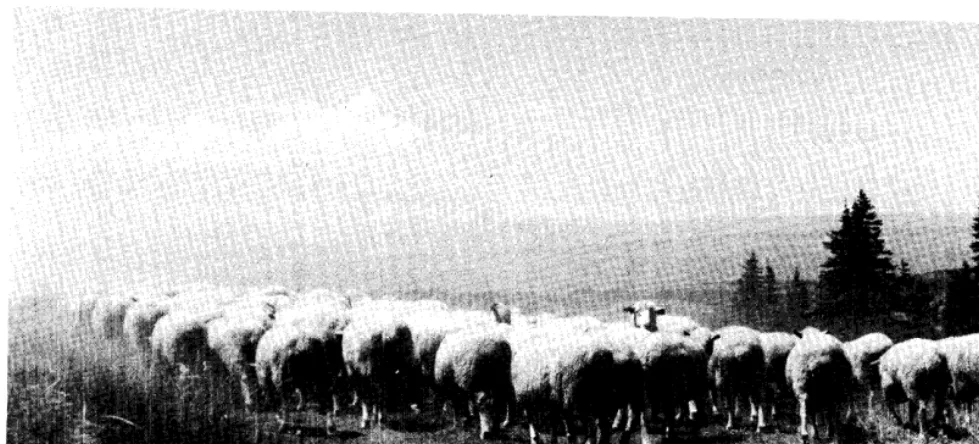
Fig. 2. Typical vegetation in the fall, winter, and spring sheep ranges in southern Wyoming.
JOURNAL OF RANGE MANAGEMENT 30(4), July 1977
dominated by big sagebrush.
needleandthread (Stipa comata). Im- portant forbs are umbrella plant (Eri-
ogonum sp.), biscuitroot (Lomatium
SP.), phlox (Phlox sp.), and scarlet
globemallow (Sphaerulcea coccinea).
Poisonous or noxious plants present are woody aster (Aster xylorrhiza), haloge-
ton (Halogeton glomeratus), vetch
(Astragalus sp.), death camas (Zyga- denus sp.), and greasewood. The area’s characteristic strong winds promote evaporation and increase the severity of winter storms but also permit winter
grazing by blowing snow from the
ridges.
During July through September,
sheep grazed mountain allotments in the Medicine Bow and Routt National Forests. Elevations in the area range from about 2,150 to 3,650 m, and the climate and vegetation vary according- ly. In general, sheep were grazed in
montane habitat, where stands of
conifers and other trees are interspersed with hillsides and meadows. The vege- tation is quite variable, with extensive areas of lodgepole pine (Pinus con- tortu), aspen, Gambel oak, alpine fir
(Abies Zasiocarpa), and Engelmann
spruce (Picea engelmannii), inter-
spersed with meadows and hillsides
containing big sagebrush, timothy
(Phleum pratense), hairgrass (Des-
champsia sp.), sedge (Carex sp.), blue- grass (Poa sp.), Idaho fescue (Festuca
It is
iduhoensis), needlegrass (Stipa sp. ),
bromegrass (Bromus sp.), mulesears
(Wyethia amplexicaulis), dandelion
(Taraxacum sp.), geranium (Geranium
sp.), as well as less important forage species.
One herd of sheep grazed in the sub- alpine and alpine tundra in 1975. Knight et al. (1975) referred to the vegetative cover as alpine turf, which occurs in open areas and is predomi- nantly bluegrass, alpine avens (Geum rossii) , alpine sagewort (Artemisia
scopulorum), sedges, rushes (Juncus
sp.), Parry clover (Trifolium parryi), and dandelion. Willows (Salk sp.) are found along the streams.
Range lambing began by forming
herds of about 1,000 to 2,000 ewes as they left the shearing pens in late April or early May. Except on Ranch B these herds were tended by herders through- out lambing. The sheep usually bedded near the sheep camp at night and in the
morning the main herd was moved
away from the ewes that had lambed during the night (the drop bunch). This
procedure began about May 10 and
drop bunches was started from the main herd until a band of 500 was gathered and the lambs docked. These two bands
made up
a lambing herd of about 1,000 ewes and their lambs. Remaining ewes that had not yet lambed were put withthe
late-lambing ewes from other herds to make up the late-lambing herd.On Ranch B, the lambing herd was placed in a fenced 2,000 ha pasture and allowed to graze, bed, and give birth unattended. Some sheepmen use this method because of the difficulty of obtaining competent herders and be- cause the range is utilized better by unherded sheep.
In this study, the entire lambing herd was monitored until the late-lambing and dry ewes were separated, and then the herd of early-lambing ewes and their lambs was followed. This herd usually maintained its identity through the summer and shipping, but a few
summer herds were composed of
animals from several lambing herds, thus changing the number and individu- al sheep being monitored.
After the summer herds were formed in June or July they were driven to the summer range (about a week’s trip) in the mountains or occasionally were hauled there by truck. In September, the sheep were driven off the summer range to the shipping point. Then in early October, the lambs (except re- placement ewes) were separated and shipped either to a farming area for further fattening or directly to market. The remaining winter herds of about
2,000 ewes and replacement ewe-
lambs were formed and driven to the winter range. Rams were put with the ewes for breeding from about mid- December to about February 1. The ewes grazed on the winter range until shearing, after which they were moved to the lambing ground, completing the annual cycle.
Project personnel made a concerted effort to interfere as little as possible with routine ranch activities so that the normal operation of the ranch would continue (it was particularly important
not to disturb ewes with newborn
lambs), and so that predation patterns would not be changed.
Although a few counts of sheep
herds were made for the purpose of this study, most were scheduled to coincide with ranch operations. Usually the first count in the calendar year was at shearing in late April orearly May when the lambing herds were formed. Other
246
counts were made when the lambs were docked and marked, when sheep were moved to the summer range, as they left the summer range, and again when the lambs were shipped in October. The other regularly scheduled count took place in late November or early Decem- ber when the wool around the sheep’s
eyes was sheared. Because of the
difficulty of counting large numbers of
sheep, any herd count where two
individuals counted within five or ten animals of each other was considered good. Two persons usually counted the sheep as a precaution against error.
In 1973, each technician lived in the closest town and tried to monitor two herds; this proved unsatisfactory be- cause too little time could be spent with each herd. In subsequent years one man was assigned to each herd and given a small camp trailer so he could live near the herd and move with it in spring and
summer. During the spring lambing
season, technicians generally worked from dawn to dusk, 6 days a week, and
when possible another observer
searched on the seventh day. Herds on summer ranges were monitored 5 days a week, as were the winter herds except on Ranch B, if weather permitted. The Ranch B herd was not monitored in winter because ewes from several herds were placed together, unherded, in a 5,200-ha pasture where accurate sur- veillance was impossible.
On each working day, the technician searched the area for dead sheep, generally on horseback. Horses pro-
vided good visibility as well as
mobility, and since they are a common part of ranch operations, were unlikely to affect predation. While the tech- nician was responsible for the searches, any reports of dead sheep by herders, ranchers, or others were investigated.
During winter, when horses could
generally not be hauled to the grazing areas because of bad weather and road
conditions, herders provided much
information to aid in finding dead animals.
Mortality and
Productivity Measurements
Each dead sheep found was necrop- sied on the site and the cause of death determined if possible. In 1973, the technicians were given training by the project leader in necropsy techniques and in general followed the procedure
outlined by Rowley (1970) whereby
dead, newborn lambs were examined to determine whether they had breathed,
walked, nursed, or digested milk. In January 1974, a short course in sheep diseases and necropsy techniques was conducted for project personnel under contract by the College of Veterinary Medicine at Colorado State University. Necropsy results for each sheep were recorded in the field on a pocket-sized necropsy card. Data were also entered on the animal’s identity and location and, where possible, on its sex, age, weight, and the circumstances sur- rounding its death.
Any wounds on the sheep were
examined closely for subcutaneous
bleeding, indicating that the animal was alive when wounded; this usually was evidence of predation. The way each species of predator killed sheep was quite distinctive and, coupled with other clues such as animal sign at the
scene or the geographic location,
usually allowed positive identification even when more than one species of predator had fed on the carcass. In general, coyotes attacked ewes at the throat and lambs at the head or throat, or both, depending on the size of the lambs. Golden eagles (Aquifa chry- saetos) in this study killed only smaller lambs (less than about 22-kg) with the
talons entering the lamb anywhere
along the back and sides from the tail to the head. It was rare for an eagle to break a bone larger than a rib, although they did dissect parts of the skeleton at the joints and could open the skull of small lambs. Black bears (Ursus amer-
icana) appeared less selective than
coyotes and eagles. They took ewes nearly as readily as lambs and generally inflicted much greater anatomical dam- age than did coyotes. Bobcats (Lynx r&us) killed a few lambs, leaving their distinctive claw marks on the prey. Domestic dogs killed some sheep in their usual messy attacks; they were apt to bite the sheep anywhere and might only wound the victim.
While predation was usually easy to diagnose, other causes of death such as exposure, disease, or poisonous plants were not, particularly if the carcass was
decayed. When temperatures were
high, it was usually impossible to determine the cause of death after more than one or two days unless there was subcutaneous bleeding. If predation was not the cause of death and the diagnosis could not be made from gross
evidence, the death was listed as
undetermined.
With rough terrain and thick vegeta-
tion in the study areas and the possi- bility of predators carrying carcasses away, it was virtually impossible to account for all the lambs born on the range. Therefore, a contract was made
with the Department of Animal
Science, University of Wyoming, to
determine the birth rate of the study herds in a lambing shed. The ewes had their lambs under the surveillance of the Extension Sheep Specialist from the University of Wyoming. Birth rates, lamb mortality, sexes and weights, and
other pertinent information were
recorded, and then the ewes and lambs were returned to the ranchers. Since the results of this work have now been Eported in a separate publication (Faulkner and Tigner 1977), only birth and docking counts are reported here.
Results
Sheep losses were estimated from three main categories of data: the number of dead sheep found and the cause of their death as determined by field necropsy, a comparison of lamb production in the lambing sheds with lamb counts on the range, and the counts of sheep at the beginning and end of each season. Each of these indicators presented some problems, but together they completed enough of the picture to show certain patterns.
Necropsy results for the 4,440 dead sheep examined during the study are summarized in Table 1. As expected, lambs were more vulnerable than ewes, especially during their first weeks of life. Of the causes of death that could be
Table 1. Necropsy results for 3 years:
each cause of death, by season.
Table 2. Productivity and predocking losses in range lambing as estimated by birth rates and docking counts.
Lambs per 100 ewes Projected % In sheds On range of range
lambs miss- Total Alive at Total known Undecked Alive at ing (-) or Year Ranch born docking born known dead’ docking surplus (+)
1973 A - - 83.6 11.7 71.9 - B 110.0 97.5 100.5 7.0 93.5 - 9.5 C 154.0 140.0 115.5 2.2 113.3 -38.5 D 97.6 83.1 92.8 8.2 84.6 - 4.8 E 122.0 105.0 85.7 3.1 82.6 -36.3 1974 A 94.6 73.9 112.0 32.8 79.2 + 17.4
B 144.2 133.3 120.7 23.2 97.5 -23.5 C 128.5 118.7 136.7 9.4 127.3 + 8.2 D 132.0 124.3 116.0 12.4 103.6 - 16.0 E 128.0 120.0 108.3 9.3 99.0 - 19.7 1975 B 114.7 95.3 115.6 30.6 85.0 + 0.9
D 110.4 103.2 112.2 36.0 76.2 + 1.8 E 110.0 93.9 105.1 12.2 92.9 - 4.9 Mean for all
herds and years 120.5 107.4 108. I 15.2 92.8 - 10.2 ’ Includes orphaned (bummed) lambs removed from herd.
determined, disease and predation took the greatest percentage of ewes, and predation, exposure, and starvation took the greatest percentage of lambs. Coyotes were the dominant predator throughout the study and essentially the only one in winter; golden eagles killed only spring lambs, and black bears killed sheep only in summer. After 1973, with better surveillance of the
herds and improved competence in
necropsy techniques, the number of
sheep found and examined each year
increased by about 50%, and more
were assigned to definite causes of death. Even during the last two years, however, an unexpectedly large num-
percentages of dead ewes, rams,’ and lambs assigned to
Cause of death Spring Summer Winter All seasons Ewes (n = 840)
Physical abnormality 0.4 - - Disease 23.2 23.1 30.8 Accident 10.0 6.6 7.5 Poisonous plant 4.3 5.2 0.9 Predation 9.6 23.1 21.8 Exposure 2.9 - - Other 15.7 1.0 11.2 Undetermined 33.9 41.0 27.9 Lambs (n = 3600)
Stillborn 10.9 - - Physical abnormality 0.6 - - Disease 3.8 4.9 6.5 Accident 5.1 5.8 2.7 Poisonous plant 0.1 0.2 1.4 Predation 16.0 63.0 38.7 Starvation 17.5 2.1 0.3 Exposure 18.6 - 32.4 Other 2.2 3.2 11.4 Undetermined 25.3 20.8 6.5
’ Only 16 rams were known to have died, so they are included with the ewes. ” Winter period covers 1973-74, 1974-75, and October to December 1975.
0.1 26.3 8.1 3.1 18.1 1.0 10.1 33.2 8.4 0.5 4.2 4.9 0.2 24.4 13.7 17.6 3.2 22.8
Table 2 compares lamb production in
the shed-lambing study with lamb
counts on the range during the study. The figures for lambs born in the sheds include both stillborn and live young, so could be considered an index of the herd’s reproductive potential. Birth rates in the shed were higher than the University personnel or the ranchers anticipated. The percentage of lambs returned to the rancher from the sheds was comparable with this same count on the range except that the shed count was usually conservative because ewes were sometimes returned to the ranch before all had had their lambs. These late-lambing ewes were included in the calculations for shed docking, but often their lambs were not, since the ewes were rarely identifiable after being returned to the parent herd. To provide an estimate of range losses before the lambs were counted at docking, lambs born in the sheds are compared with lambs accounted for at docking time on the range (those alive at docking plus those known dead before docking).
JOURNAL OF RANGE MANAGEMENT 30(4), July 1977
Table 3. Major causes of death and overall losses of ewes (E) and lambs (L) during the spring season.’
Number of sheep known dead by causes
Total known
Herd size at Stillbirth and Disease and Accident dead (includes Percentage start of season Exposure Starvation Predation abnormality poisonous plant and other undetermined) known dead YearRanch E L E L E L E L E L E L E L E L E L 1973 A 935 777 46
B 1144 1146 1 10 C 1373 1580 3 D 1247 1153 22 E 5095 4363 2 75 1974 A 797 883
B 1257 1483 C 2017 2728 1 D 1035 1178 E 1110 1199
1975 B 1531 1716 171 D 1387 1496 7 277 D-2 1066 708
E 1195 1231 57 Totals 21,18921,641 8 508
58 42 55 18 28 62 23 41 483
3 29 7 4 4 4 16 138 11 1 17 1 2 8 96 13 6 5 1 40 1 24 8 2 4 3 10 11 119 1 8 40 2 5 12 12 161 59 2 1 5 2 522 8 275 4 48 15 5 7 3 4 30 283 37 36 7 2 4 11 20 170 2 5 35 3 19 4 9 24 146 8 19 2 14 3 34 7 113 10 156 49 16 21 15 15 53 491 1 20 54 29 15 11 41” 56 501 12 17 8 4 2 12 11 84 5 12 13 4 3 14 4 24 149 27 442 1 318 77 106 72 209 280 2,766
1.7 17.8 0.7 8.4 0 2.5 0.9 10.3 0.2 3.7 1.0 31.1 2.4 19.1 1.0 6.2 2.3 12.4 0.6 9.4 3.5 28.6 4.0 33.5 1.0 11.9 2.0 12.1 1.3 12.8
-
’ For the spring season, when accurate counts of ewes could be made before lambing those figures were used; when they were not, herd size figures for ewes and lambs are the total alive at docking plus the number found dead before docking.
Includes 15 orphaned (bummed) and removed from herd. ‘I Includes 9 orphaned (bummed) and removed from herd.
This extrapolation projects the percent- marize the major causes of sheep loss age of lambs that were born and for each study herd each year during the probably died on the range but were not three major seasons in sheep man-
found. agement .
In southern Wyoming the weather
plays an important part in sheep
management. Winter weather affects
the timing and success of breeding and thus the date of lambing, as well as the survival and physical condition of the
pregnant ewes and their resultant
productivity. Spring weather also af- fects survival, particularly that of new- born lambs, and spring and summer weather is important to forage pro- duction. Since the weather and other factors were different each year, Tabies 3, 4, and 5 give herd counts and sum-
Spring Losses
Spring losses include those recorded from the time the sheep left the shearing pens to begin lambing until they were counted onto the summer range. The study began at shearing time in late April 1973, following the most severe
and prolonged winter since 1949.
Heavy snows started before the breed- ing season in mid-December and con- tinued until the first of May. Large
numbers of sheep died during the
winter despite the ranchers’ efforts to
supplement their natural feed. The
herds from Ranches A, D, and E
suffered the most, and their produc- tivity was low (Table 2). Those from
Ranch B and particularly Ranch C
survived the winter much better, and both their appearance and productivity indicated better physical condition. After the first of May the 1973 lambing season had generally good weather; precipitation was above average and produced good forage. Survival of the remaining ewes and lambs was good, but there were probably more deaths than are indicated in Table 3. With the bad weather and the greater number of animals monitored in 1973, one would have expected more dead lambs to have
Table 4. Major causes of death and overall losses of ewes (E) and lambs (L) during the summer season
Year Ranch
Number of sheep known dead by causes
Total known
Herd size at Disease and Accident dead (includes Percentage start of season Starvation Predation poisonous plant and other undetermined) known dead
E L E L E L E L E L E L E L 1973 A 2630 1210 16 11 1 60 59 2.3 4.9
B 1021 1086 3 2 13 4 2 6 18 0.6 1.7 C 1469 1657 1 8 1 1 3 10 0.2 0.6 D 1091 1059 2 1 1 2 13 8 18 0.7 1.7 E 1246 1200 1 1 12 2 4 11 22 0.9 1.8 1974 A 1742 1405 8 11 4 3 3 24 26 1.4 1.9 B 1060 1264 2 2 12 5 2 1 9 20 0.9 1.6 C’ 2055 2703 17 5 1 2 8 21 0.4 0.8 D 1031 1115 2 4 15 9 3 1 3 16 27 1.6 2.4 E 1498 1605 2 54 3 2 2 3 9 66 0.6 4.1
1975 B 1007 1046 4 69 2 1 2 5 8 76 0.8 7.3
D 1053 980 2 29 2 4 5 6 8 45 0.8 4.6
D-2 1040 575 6 26 21 2 36 35 3.5 6.1
E 1226 1135 1 16 3 5 1 6 24 0.5 2.1
Totals 19,169 18,040 10 49 294 60 24 16 42 212 467 1.1 2.6
’ Ranch C dropped from study August 9; losses recorded only through that date.
Table 5. Major causes of death and overall losses of ewes (E) and lambs (L) during the winter season.
Number of sheep known dead by causes Total known
Herd size at Disease and Accident dead (includes Percentage start of season Exposure Starvation Predation poisonous plant and other undetermined) known dead Year Ranch E L E L E L E L E L E L E L E L
1973-74 A C D E 1974-75 A D E 1975 to D Dec. 31 D-2
E
1929’ 2203 ’
1576 504 1043 833 1805’ 1610 509
586 1414 2030 0 820 1067 512 1510
119 4 13 6 17 65 129 10.1’ 20’ 10 13 3 47 3 2.3’ 3 10 1 1 1 3 17 17 1.1 3.4 7’ 12 8 3 7 4 39 19 3.7 2.3 20 1 28 44 312 5 13 5 102 85 10.4’
6 20 13 8 9 2 31 34 1.9 6.7 26 72 5 3 12 10 45 1.7 3.2 7 16” 23 1.1 -
1 15 11 1 1 13 17 1.6 1.6 15 1 3 1 18 0.2 1.2 Totals 8 177:j 5837:’ 139 1 76 142 110 29 65 32 348 367 1.6 2.6
- ’ Includes both ewes and ewe lambs.
’ Includes dead rams.
” Does not include winter herds in which ewes and ewe lambs were counted together.
been found. One explanation was that there were too few staff members, they were inexperienced, and lambing con- ditions did not lend themselves to searching. For example, the ewes from Ranch E were sheared later than normal because of the long winter so they began giving birth in the shearing pens. They were then driven some 65km to the lambing grounds, and many gave birth on the trail. Lamb survival was
predictably poor under these con-
ditions, but accurate monitoring of 5,000 ewes over a 65-km trail was virtually impossible. Had conditions been more favorable, most categories of death would probably have been sub- stantially higher (and the number of missing sheep lower). Conceivably, predation was not as severe in 1973 because an unusually high winter kill of both domestic and wild ungulates left much carrion in the area. However, we rarely saw evidence of coyotes feeding on carrion, or even returning to feed on their own kills, except in winter.
In the winter of 1973-74, there was much less snow than in 1972-73, but the wind was strong and persistent. However, the sheep wintered well and
the lambing season had favorable
weather. The summer was drier than in 1973 but there was adequate forage. Productivity in most herds was excel- lent; those from Ranches A and C, in fact, produced more range lambs than
projected from the shed-lambing
counts (Table 2). Although no lambs were known to have died of exposure,
173 starved and 157 were killed by predators (Table 3). It appeared that the increased predation and the associated harassment of ewes and lambs might
have led to more lambs being aban- doned and thus starving,but this hy- pothesis could not be followed up in
1975 because bad weather obscured
any such relationship that might have existed. In spring 1974 there was an unusually large number of undeter- mined deaths. Nearly half of these occurred on Ranch B, where the ewes lambed unherded in a 2,000 ha pasture.
An early June snowstorm was sus-
pected of killing many of them, but it was not possible to thoroughly search more than a third of the area each day. and since sheep carcasses decayed very rapidly in warm weather and golden eagles had fed on many of them, the cause of death often could not be determined.
In the winter of 1974-75 there was
more snow but less wind than in
1973-74, and the sheep survived in good condition. It appeared that the spring of 1975 would produce a bumper crop of lambs, but two severe snow storms a week apart during the peak of lambing caused heavy losses. This is reflected in the low survival at docking (Table 2) and the large number of exposure deaths recorded (Table 3).
Ranches B and D were the most
severely affected by the bad weather. Ranch B also suffered considerable predation: golden eagles took 6 1 lambs, and coyotes took 95 lambs and ten
ewes. Even though fewer animals were
monitored in 1975 because Ranch A
went out of business, the number of dead animals found increased. This was probably due to better surveillance and to the increase in deaths from predation and exposure.
Thus, it was apparent early in the
study that sheep, particularly newborn lambs, died from a variety of causes. Even with greatly different weather conditions each winter and spring of the study, losses during the lambing season always exceeded those for the other seasons combined.
Summer Losses
Summer losses include those from the time the sheep were counted onto the National Forest grazing allotments in June until lambs were separated from the ewes for shipping in early October. Deep snows and unseasonable weather sometimes changed these dates, and in
1975 severe predation coupled with poor herding caused the rancher to remove Herd D-2 before the summer allotment expired.
Losses were much lower in the
summer than the spring, but the
percentage killed by predators was substantially higher. During the three years of the study, predators were responsible for 50.5% of all known deaths on the summer range, versus
only 15.4% on the spring lambing
predation, where either the carcass was badly decomposed when found in the thick vegetation or the bear had eaten so much of it that the cause of death could not be determined. On one afternoon two technicians saw three black bears of different sizes and colors on this allotment.
In 1974 the number of sheep found dead on the summer range (Table 4) was a little greater than in 1973 and confirmed predator losses were higher, particularly coyote kills on Ranch E. The smaller number of undetermined deaths reflects better surveillance and
improved competence in diagnosis.
Still more dead sheep were found in 1975 (Table 4). Most of the increase was due to predator kills, many found
the month before shipping. Of 55
mortalities from Herd B during the month, 5 1 lambs and one ewe were killed by coyotes. The dead lambs were estimated to weigh about 32-kg each, Ranchers particularly resent predator kills at this time because they have spent most of the cost of producing the lamb and have not yet seen any return on their investment.
The D-2 Herd, while suffering
substantial predator losses, also had deaths from selenium poisoning (listed under “disease” in Tables 1 and 4). When this element is present in the soil, certain plants translocate it and can
cause death when eaten (Siegmund
1973). However, as no work was done on this allotment in 1973 or 1974, it is
not known whether losses from
selenium poisoning were different in 1975 from other years.
Winter Losses
Winter losses included those from the time the winter herds were formed at shipping in October until the spring counts at shearing in April or May.
Losses recorded during the winter
season are not directly comparable with those during other seasons because of missing time periods or herds, and
some earlier herd counts did not
distinguish replacement lambs from
adult ewes.
The largest number of winter deaths
occurred on Ranch A in 1973-74
(Table 5). According to the herder, an
uncastrated lamb bred a number of
ewes in early fall 1973; they began to lamb in late January 1974, and most of the lambs died of exposure. In addition, the Ranch A herd contained a large number of old ewes, and many died
250
from disease and exposure in both 1973- 74 and 1974-75.
Coyotes were responsible for the most losses in the winter of 1974-75 when they killed 124 of the 307 dead
animals examined. Disease and ex-
posure accounted for most of the
remaining mortalities. During the three winters, coyotes were responsible for 30.5% of all known deaths; disease and exposure for 35%.
Missing Sheep
A perplexing source of loss that is often blamed on predators is missing sheep. Other investigators have also experienced this problem (Davenport et al. 1973; Nass 1975). In 1973 we tried attaching mortality-sensing transmit- ters (Kolz 1975) to about 400 lambs in an attempt to trace missing ones. How- ever, rigid collar attachments could not be used on growing lambs and would probably have interfered with preda- tion. The attachment method chosen in feedlot trials, cementing the 15-cm transmitter to the wool behind the withers, proved unsatisfactory, and
much time was wasted in tracing
unattached transmitters. Therefore, we abandoned attempts at radio telemetry and relied mainly on herd counts to indicate the number of missing animals. If sheep were missing from the Nation- al Forest grazing allotments at the end of summer, aerial searches of the allotments and drive trails were made. Generally these were not very produc- tive, since the deciduous trees had not yet lost their leaves, but about 100 head from Ranch A were found by aerial search in September 1974.
Numbers of sheep missing during the lambing season were difficult to deter- mine. The projected predocking losses of lambs (Table 2) suggested unusually large numbers missing in herds C and E
in 1973 and in herd B in 1974.
However, since these extrapolations showed surplus lambs in four cases, they should be interpreted cautiously. It was even difficult to account for all
ewes on the lambing range. For
example, on Ranch B, ewes and lambs
from adjacent pastures were often
found in the pasture with the study herd, and sometimes accurate counts were not made of the late-lambing and
dry ewes removed from the herds.
Although unaccountably missing sheep may not be a severe problem in the spring, there were so many uneaten or only partially eaten predator-killed
lambs that we suspected that other carcasses may have been carried off by predators.
This situation changed in summer (T’able 6). Four examples of high numbers of missing sheep are apparent: Ranch A in 1973 and Ranches A, B, and E in 1974. The Ranch A herd was managed far less intensively than the others and showed disproportionately high losses to most causes. Even so, it is difficult to accept that 346 and 501 sheep were left either dead or alive on the forest allotment at the end of the two
summer seasons. The intensive
searches after the sheep left the area
would have located many of these
animals had they been there. The
manner of their disappearance is still a matter for conjecture.
Table 6. Number of sheep missing after the summer grazing season.
Base herd Number Percent Year Ranch size missing missing 1973 A 3840 346 9.0
B 2107 17 0.8 C 3126 0 0 D 2150 9 0.4 E 2446 59 2.4 1974 A 3147 501 15.9 B 2324 99’ 4.3 C 4758 -2
D 2146 25 1.2 - E 3103 85 2.7 1975 B 2053 -3 _
D 2033 24 1.2 D-2 1615 49 3.0 E 236 1 21 0.9 Total 13,669 1,235 4.1
’ Ranch employee saw sheep mix with another herd but could not get a count.
’ Ranch C was dropped from study on August 9, so missing sheep unknown.
,’ The herder left one-fourth to one-half of the sheep on the summer range, so number missing is unknown.
Some of the 99 sheep missing in the summer of 1974 from Ranch B were not lost but traveled off the summer nmge with other bands of sheep. This was reported by one of the ranch employees, but he made no accurate count of the Herd B sheep he saw in
other herds. The importance of a
competent herder was again illustrated in Herd B in 1975, when 25 to 50% of the sheep that were counted onto the summer range did not return to the shipping area. However, most of these sheep were probably recovered from the other herds because the rancher was aware of the situation. High losses in the summer of 1975 in Herd D-2 also reflected a labor problem. The herder
often allowed the sheep to scatter widely through the forest during mid- day, making it difficult to regroup them in the evening. Many of the 32 predator losses occurred during the day, proba- bly because of the “loose” herding.
The 85 sheep missing in 1974 from Herd E might be largely attributable to predation. Of the three summers, this herd was preyed on most severely in
1974, and about 75% of the dead
animals found were killed by predators, mostly coyotes. Part of the allotment is covered with thickets of Gambel oak, where dead sheep could easily have been missed by the searchers.
Sheep were sometimes missing
during the winter season as well. On Ranch D, 32 sheep were missing in winter 1973-74 and 2 1 in 1974-75. On Ranch E, 19 were missing in 1973-74 and 12 in 1974-75. During the last two
and one-half months of 1975, 49
replacement ewes but no adult ewes, were missing from Herd D-2, a puz- zling situation because more searching was done on this herd than any other. In addition to horseback searches, 3 hours were spent in an extensive aerial search in and around the areas where the herd had grazed, but the sheep were not found dead or alive. Ranch A showed
abnormally high numbers of sheep
missing when it was liquidated after the winter of 1974-75, but the counts were
incomplete and the number missing
could not be accurately determined.
Discussion
A topic of primary interest in this study was the extent of sheep losses to predators. Of the causes of death deter- mined by necropsy, predation was the second most important for ewes and most important for lambs (Table 1). Predators killed 18.1% of the dead ewes examined and 24.4% of the lambs, or 23.2% of the sheep overall. Percent- ages of the ranchers’ herds lost to known predator kills are summarized in Table 7. These figures are based on mean herd counts and mean seasonal
losses for all ranchers, so they suggest trends rather than illustrate individual loss situations. In addition they are
probably low for 1973, when sur-
veillance was inadequate because of bad weather and too few personnel, and possibly low for 1975, when the study stopped on December 31 rather than continuing through April. These cal- culations indicate that the ranchers in the study lost 0.2% of their ewes and
Table 7. Known rates of predation on study herds.
Spring 1973 1958 1803 0 0.3 0.1 0.2 3.7 1.6 1974 1243 1494 0 0.3 0.1 0.4 6.7 2.5 1975 1371 1481 0.1 0.6 0.4 1 .O 9.1 3.8 Summer 1973 1491 1242 0 0.5 0.3 1.0 1.7 1.3 1974 1477 1618 0 0.5 0.2 0.6 3.4 1.4 1975 1081 934 0 0.6 0.3 1.4 6.6 3.9 Winter 1973-74 1309 668 0.2 0.7 0.5 1.4 2.0 1.7 1974-75 1098 961 0 0.4 0.2 1.8 3.9 2.9 1975 1120 1288 0 0.3 0.1 1.0 1.4 1.2 Means for 1973 0.2 1.5 all seasons 1974 0.2 2.1
1975 0.2 13
JOURNAL OF RANGE MANAGEMENT 30(4), July 1977
1.5 to 3.2% of their lambs to predators, or 1.2% of their sheep overall.
Weather-related deaths, if they could be lumped into that broad grouping, would probably have been higher than predation losses. Exposure, however, which caused 14.5% of all deaths, is the only category easily attributable to bad weather. We know that some of the deaths attributed to starvation, acci- dents, and disease were induced by
inclement weather, but it is impossible to determine how many.
Although eagles killed lambs in the spring, bears killed ewes and lambs in
the summer, and bobcats and dogs
killed a few sheep, the coyote was the major predator. Coyotes were responsi- ble for 77% of all known predator kills during the study and for 18% of all
Ecorded deaths. Whether predator
losses have increased since the ban of toxicants on public lands went into effect in 1972 cannot, of course, be answered by this study. Nevertheless, the general trend was an increase in the rate of predation from 1973 through 1975 (Table 7). Considerable money and effort was expended by the co- operating ranches in predator control, but predation continued.
There were predator kills in every herd throughout the study. Generally, ewes were not killed if lambs were present. We monitored only one herd (D, winter 1975) in which there were no lambs; coyotes killed 0.3% of these ewes in 2 months. The greatest loss of lambs to predators was in Herd B in 1975 (Table 3). Although the lambs killed by predators composed 9.1% of
the lambing herd and 6.6% of the summer herd (Table 7), the average loss of lambs for all herds in 1975 was 3.2%.
The percentages of sheep lost to predators in this study (Tables 1 and 7) do not differ much from those reported by other workers, even though the data were collected differently. In Utah, Davenport et al. ( 1973) found that verified predator kills accounted for 1.8
to 40.3% of all recorded losses and took 1.5% of the 17,453 lambs studied. Nielson and Curle (1970) in a Utah questionnaire study found that about 6% of all sheep were lost to predators and that coyotes accounted for 78% of all predator losses. Nesse ( 1974) in a California survey, found an annual predation rate of 1.1% for ewes and 2.7% for lambs. Nass (1975) studied predator losses in Idaho and found a predation rate between 1.1% and 1.7% for lambs, and 0.7% and 1.4% for ewes. Predator control was in effect during all of these studies.
Although there are no figures to quantify the loss, we believe that predators were responsible for indirect damage to the herds as well as out- right killing. Scattering of a herd by predators, particularly a drop bunch during lambing, probably caused some
ewes and their lambs to become
separated so that lambs died from
starvation, trampling, or exposure
without their death being attributed to predation.
A part of the controversy over
attention of predators. We had hoped to throw some light on this controversy by recording the weight of dead lambs at necropsy. Unfortunately, the weights proved of little value because predators or scavengers had often removed parts of the carcass. Furthermore, for a lamb’s weight to indicate its health, its age would have to be known; but age was an estimate and often had to be
based on weight. However, it was
possible to obtain the sex of many of the dead lambs; where known, the sex ratio
was approximately equal.
In southern Wyoming, where there may be 4,000 to 6,000 or more stock sheep on a ranch, it is common for one or two herders to care for 1,000 to
2,000 sheep. Additional help was
needed during the lambing season, but rarely in our area were more than two herders assigned to a lambing herd. They usually received no supervision beyond brief visits by a “camp tender” once or twice a week. Although there are still a few good middle-aged herders and a few “old-timers” in their sixties, most of the herders hired were young and inexperienced. The combi- nation of inexperience and poor super- vision of the herders resulted in mixing of herds, accidents, missing sheep, death and abandonment on the lambing grounds, scattering of the herds, theft of lambs, and numerous other prob- lems, including predation. For exam- ple, Ranch A and Herd D-2, with poor herders, and Ranch B, with no herders
during lambing, showed excessive
predator losses. From our observations, even the most competent of herders cannot stop all losses, from predation or any other cause, but good herding can definitely reduce them. Yet, close
herding can also cause problems,
particularly in the utilization of the range, and the presence of inexperi- enced or incompetent herders on the lambing grounds can be as damaging as it is helpful. Nevertheless, good man- agement of the ewes and lambs on the
lambing ground can improve lamb
CLYDE ROBIN
NATIVE SEEDS
Castro Valley, California 94546
yields, as indicated by the docking percentages in Table 2. For example, Ranch C had fewer stock sheep than the other ranches and was managed more intensely. Every morning during the
lambing season the owner actively
participated in moving the main herd away from the ewes that had lambed, and the docking percentages reflected this care. Management intensity, how- ever, decreased as the number of sheep
under one ownership increased. Then
result was reliance on less competent employees and lower survival of lambs.
mediately if efficient and safe tech- niques for the con‘trol of predators were made available to the livestock in- dustry.
Literature Cited
Cain, S. A., J. A. Kadlec, D. L. Allen, R. A. Cooley, M. G. Hornocker, A. S. Leopold, and F. H. Wagner. 1972. Predator control-
197 1 report to the Council on Environmental Quality and the Department of Interior by the advisory committee on predator control. Univ. of Michigan Press, Ann Arbor. 297 p.
Davenport, J. W., J. E. Bowns, and J. P.
Workman. 1973. Assessment of sheep losses to coyotes-a problem to Utah sheepmen-a concern to Utah researchers. Agr. Exp. Sta., Utah State Univ., Logan. Res. Rep. 7. 17 p. Faulkner, E. K., and J. R. Tigner. 1977.
Birth rates of sheep from range operations in Carbon County, Wyoming. Agr. Ext. Serv., Univ. of Wyoming, Laramie. Res. Rep. B- 643. 14 p.
Certain problems associated with
range herds are largely unavoidable under the management systems used in
southern Wyoming. Lambing sheds
would reduce losses from weather and perhaps from predators, but apparently the lack of suitable pre- and post- lambing pasture and the labor problem precluded shed lambing. Stillbirths and
disease deaths probably cannot be
altogether eliminated but could have been reduced in some cases by zealous culling of the older orunthrifty animals. The accident rate could have been
lowered by better management, imply- ing again problems of labor, and losses following shearing could have been lessened if shearing crews were better trained and more careful. Some ewes
died from shearing injuries, some
aborted because of rough handling, and some probably could not nurse their lambs because of injuries to the udder or teats.
problem that could be alleviated im-
These examples serve to demon-
strate that while predation was a significant problem it was not the only one. Predation is dramatic and arouses emotions, but its magnitude is often tied to other circumstances. However, ranchers feel that predation, unlike weather or economic conditions, is a
Knight, D. H., A. D. Anderson, G. T. Baxter, K. L. Diem, M. Parker, P. A. Rechard, P. C. Singleton, J. F. Thiienius, A. L. Ward, and R. W. Weeks. 1975. The Medi- cine Bow ecology project: the potential sensi- tivity of various ecosystem components to winter precipitation in the Medicine Bow Mountains, Wyoming. Div. Atmos. Water Resour. Manage., Bur. Rec., U.S. Dep. Interior, Denver. 397 p.
Koiz, A. L. 1975. Mortality-sensing wildlife transmitters. Trans. Ann. Rocky Mountain Bioengineering Symp. and International ISA Biomedical Instrumentation Symp., Denver. p. 57-60.
Nielson, D., and D. Curle. 1970. Predator costs to Utah’s range sheep industry. The Nat. Wool Grower. 60(12):14-16,22.
Nass, R. D. 1975. Loss data recorded for Idaho sheep ranches. U.S. Dep. Interior, Wildl. Research Center, Denver. Unpub. narr. report, June. p. 13-14.
Nesse, G. E. 1974. Statewide coyote predation studies. Div. of Wildl. and Fish. Biology, Univ. of California, Davis. 79 p.
Rowley, I. 1970. Lamb predation in Australia: incidence, predisposing conditions, and iden- tification of wounds. CSIRO Wildl. Res. 15: 79-123.
Rahway,N. J. 1,600 p
Siegmund, 0. H. (ed.). 1973. The Merck Veterinary Manual. Merck and Co., Inc.,
Range Development
Officer
for
Texas A&M University-AID
livestock Development Project in Tanzania
The incumbent will work with Tanzanian Livestock Marketing Company to design and implement ranch management plans and related range improvement prac- tices. Headquarters is at Dar es Salam, Tanzania.
Applicant must have at least a BS in range management with experience in range management and in foreign work desirable.
Contact: Dr. 1. L. Shuster, Head, Range Science Dept., Texas A&M Univ., College Station, TX 7780 7.
Mortality Associated with Sheep Operations
in Idaho
ROGER D. NASS
. Highlight: Nine sheep bands from Idaho were monitored for mortality causes and
circumstances during 1973 and 1974; two bands were monitored during 1975. Total ewe and lamb losses for the respective years were 9.5%, 11.5%, and 11.1%. Premature births, starvation, and disease were major causes of lamb deaths during the 3-month home ranch lambing period. During the same period, disease, shearing stress, infection, and birth complications were the main causes of ewe mortality. The yearly mean total loss for lambs on the range was 5.2%, the minimum (confirmed)
bss to predators was 1.4%, and other known causes of death represented 1.1% loss.
The mean minimum predation was adjusted to 2.9% on the basis of unaccounted for bss. The minimum predation rate on ewes was 1.1% (adjusted 1.6%) even though they were on the range twice as long as lambs. Coyotes accounted for 93% of all predator-killed lambs and ewes. Predation was most severe on lambs during the first 6 weeks on the range, but more ewes were killed during the fall and winter.
The predator-sheep controversy
became especially serious after the
Executive Order of February 1972
prohibited federal use and interstate shipments of coyote toxicants. Many sheepmen claimed that coyote popu- lations would attain unprecedented high levels and thus make sheep raising unprofitable throughout the western states. Protectionist groups countered that coyotes did not kill sheep or that
sheepmen always exaggerated their
losses to predators. With increased monies available for predator research, the U.S. Fish and Wildlife Service started damage assessment studies in selected areas of Idaho and Wyoming to monitor sheep bands throughout the year for total mortality and to partition these deaths by time and circumstance. This paper reports on damage assess- ment studies from a shed lambing area of southern Idaho.
Owen Ellis and Richard Griffith, Jr.,
U.S. Fish and Wildlife Service
(USFWS), were involved with field
data collection, as were numerous
temporary workers. Owen Ellis also
Author is project leader, Damage Assessment, Sec- tion of Predator Damage, U.S. Fish and Wildlife Serv- ice, Denver Wildlife Research Center.
Manuscript received August 14, 1976.
JOURNAL OF RANGE MANAGEMENT 30(4), July 1977
helped tabulate the information from the field data cards.
Methods
Study Area
Parts of six counties, Owyhee, Twin
Falls, Cassia, Elmore, Gooding, and Camas, in south-central Idaho encom- passed the winter and summer sheep ranges of the three study ranches. Prominent vegetation on private and Bureau of Land Management (BLM) grazing areas con- sisted of sagebrush (Artemesia sp.), juniper (Juniper-us occidentalis), and crested wheatgrass (Agropyron cristatum). Foot- hill vegetation of the summer range in the Sawtooth and Boise National Forests was lodgepole pine (Pinus contorta), subalpine fir (A&es lusiocarpa), mountainmahogany (Cercocarpus ledifolius), aspen (Populus tremuloides), sagebrush, and grasses.
Sheep were typically trailed from BLM allotments to the home ranch about mid- January for lambing and stayed at the ranches after lambing until late March or early April when spring grazing was permitted on BLM administered lands. After grazing on BLM and some private lands until about June I, the ewes and lambs entered the U.S. Forest Service ranges (Fig. 1). The lambs were usually shipped to market directly frr~n the Forest Service ranges in July and August, but the ewes stayed in the mountains until grazing permits expired or they were driven down
by snow in late October or early November. The ewes then grazed on BLM and private lands until mid-January, when they arrived at their respective ranches to start the cycle once again. Shed lambing ranchers use partitioned sheds to protect newborn lambs against inclement weather and to allow close inspection of ewes and lambs during the 24-48 hours following parturition.
A herder, with at least 2 dogs, accom- panied each sheep band on the range and was usually with the sheep from 6 to 12 hours each day. Camp wagons were parked anywhere from 50 m to 1 km from the bed- grounds.
Procedures
Selection of ranches for study was based on typical 2,000-4,000 sheep herds and shed lambing operators who grazed herded bands on public lands within 241 km of Twin Falls, Idaho. Nine bands of sheep from three ranches were monitored for losses throughout 1973 and 1974, but only two sheep bands from one ranch were monitored during 1975. Predator control in this area was carried out through the Animal Damage Control Program, USFWS.
Lambing sheds and surrounding pens were inspected at 1, 2, or 3-day intervals, the exact frequency depending upon lambing intensity. Dead lambs were in- spected, sexed, and categorized by cause of death. Carcasses not mutilated by necropsy were marked with a stain, or the ears were cut off, or they were removed to a discard area to avoid repeat counts. Criteria proposed by Rowley ( 1970) were used to separate parturient and post-parturient deaths. Ewe deaths during the lambing period were also monitored and recorded as to probable cause. Shed lamb necropsy data for one ranch during 1973 came from a student working on conjunction with a local veterinarian. The remainder of the data were compiled by USFWS personnel.
Fig. 1. A band of ewes in high summer range.
every other day by vehicles, horses, or walking, depending upon the terrain. Dead sheep were necropsied to establish cause of death and data cards were filled out to describe circumstances of each incident. Predator kills were identified by hemor- rhaging and tooth puncture holes in the skin as reported by Davenport et al. (1973).
Results and Discussion Overall Losses
During 1973, 1974, and 1975, the
numbers of ewes and lambs under
surveillance were 2 1,586, 22,88 1, and 5,630, respectively. Total sheep losses were 9.5% in 1973, 11.5% in 1974, and 11.1% in 1975. The increase from 1973 to 1974 was due to more lamb mortality at and shortly after birth; during 1975 ewe mortality was ex- ceptionally severe (Table 1).
Lambing Period Losses
Ewe and lamb mortality percentages showed little variation among the three flocks during the 1973 lambing period. Ewe losses were 1.4, 0.9, and 0.8%; lamb losses were 7.4, 7.2, and 5.1%. Mean lambing period losses for the three flocks were I .O% for ewes and 6.5% for lambs. During 1974 individ- ual ranch losses increased to 2.1, 1.6,
and 1.5% forewes and 11.1, 9.1, and 7.6% for lambs. Mean losses from the three flocks were 1.7% for ewes and 9.6% for lambs. Ewe and lamb mortali- ty dropped to 1.6 and 8.5%) respective- ly, during 1975.
Unknown causes of lamb mortality
during the lambing and wintering
periods led all other categories (Table 2) because many specific causes of death were difficult to diagnose, es-
pecially without laboratory tests.
Premature births and starvation were the leading specific known factors of mortality; together they accounted for at least 3 1% of the lamb mortality. Disease and miscellaneous deaths were
second highest known factors and
included enterotoxemia, coccidieosis, pneumonia, infections, and other mis- cellaneous mortalities.
The 9% listed in Table 2 as “give away” are actually not deaths, but are included because they are lost to the rancher as a source of profit. Many of the lambs given to friends and others are in poor physical condition and die regardless of special care and veteri- nary bills (personal experience). Most ranchers do not have the equipment or manpower for raising orphan or “bum”
Table 1. Total lamb-ewe mortality figures, 1973-75.
lambs. An excess of twins and triplets coupled with poor milk production in some ewes may result in numerous bum lambs that must be grafted to good milking ewes, if any are available, or given to people that will bottle feed them.
Of 1,606 lamb carcasses sexed, 55% (848) were male; male lamb percent- ages by ranch were 53, 56, and 57.
Year
Original no.
Lambs Ewes Dead or lost
Original Dead or lost No. % no. No. % 1973 12,836 1,455 11.3 8,750 595 6.8 1974 13,808 2,104 15.2 9,073 528 5.8 1975 3,427 399 11.6 2,203 225 10.1 Totals 30,07 1 3,958 13.2 20.026 1,348 6.7
General management practices are
important in preventing deaths among newborn lambs. Sanitation, amount of space in the lambing sheds, interest of
shepherds, supplemental feeding of
ewes, and other practices have an important bearing on the number of lambs that survive. After pregnant ewes arrive at the home ranch, they are confined to a large feedlot near the lambing sheds. As they give birth or are about to, they are brought into the sheds and kept there with their lambs in small pens for 24 to 72 hours, depending upon the intensity of lambing and the space available. When many ewes are dropping lambs, those in the sheds must move outside to make way for the newborn. If weather conditions are severe, an extra 24 hours of protection in the shed can help lambs through the crucial first few days of life. Sanitation is essential to prevent diseases, and good nutrition is necessary for adequate milk production by the ewes. Shep-
herds can save numerous lambs by
switching them between good and poor milking ewes and by adding a second lamb to a good milking ewe that only had a single lamb.