The Development of a Scoring System for an Alternative Form of the Visual
Reproduction subtest of the Wechsler Memory Scale - Revised
Daniela Petrov BSc. (Hons)
A dissertation submitted in partial fulfilment of the requirements for the degree of Doctor of Psychology (Clinical Neuropsychology)
Department of Psychology Victoria University Melbourne, Australia
DECLARATION
I, Daniela Petrov, declare that the Doctor of Psychology (Clinical Neuropsychology) thesis entitled “Development of a scoring system for an Alternative Form of the Visual Reproduction subtest of the Wechsler Memory Scale – Revised Visual Reproduction subtest” is no more than 40,000 words in length, exclusive of tables, figures, appendices, references and footnotes. This thesis contains no material that has been submitted previously, in whole or in part, for the award of any other academic degree or diploma. Except where otherwise indicated, this thesis is my own work.
Signature: ____________________ Date: ___________
ACKNOWLEDGEMENTS
I would like to thank my initial supervisor Dr. Peter Dowling for his wisdom, guidance and support and for generously giving his time to assist me in completely this project.
I would also like to thank my second supervisor Dr. Gerard Kennedy for his timely feedback and editing of drafts.
To my family and friends who have provided me with unconditional love and support throughout this chapter of my life, I thank-you sincerely.
TABLE OF CONTENTS
ABSTRACT... IX
LIST OF TABLES ... X
LIST OF FIGURES ... XIV
LIST OF APPENDICES ... XVI
INTRODUCTION... 1
1.1. Theoretical Models of Memory... 1
1.2. Models of Short-Term Memory... 2
1.2.1. Information Processing Models ... 2
1.2.2. Working Memory Model ... 3
1.3. A Model of Long-Term Memory ... 5
1.4. Memory Processes... 7
1.5. The Neuroanatomy of Memory ... 7
1.5.1. The Medial Temporal Lobes... 8
1.5.2. The Diencephalon ... 11
1.5.3. The Frontal Lobes ... 11
1.5.4. From Brain Structures to Brain Systems ... 13
1.6. Memory Dysfunction ... 14
1.7. Assessment of Memory ... 16
1.8. The Wechsler Memory Scale ... 21
1.8.1. Structure and Content of the Wechsler Memory Scale... 21
1.8.2. Scoring the Wechsler Memory Scale... 21
1.8.3. Reliability of the Wechsler Memory Scale... 22
1.8.5. Validity of the Wechsler Memory Scale... 24
1.9. Wechsler Memory Scale – Revised... 26
1.9.1. Structure and Content of Wechsler Memory Scale – Revised... 26
1.9.2. Scoring of the Wechsler Memory Scale – Revised ... 28
1.9.3. Reliability of the Wechsler Memory Scale – Revised ... 30
1.9.4. Normative Data of the Wechsler Memory Scale – Revised ... 31
1.9.5. Validity of the Wechsler Memory Scale – Revised... 32
1.9.6. Clinical Utility of the Wechsler Memory Scale – Revised... 33
1.10. The Wechsler Memory Scale – Third Edition... 33
1.10.1. Structure and Content of the Wechsler Memory Scale – Third Edition ... 34
1.10.2. Scoring of the Wechsler Memory Scale – Third Edition... 37
1.10.3. Reliability of the Wechsler Memory Scale – Third Edition ... 39
1.10.4. Normative Data of the Wechsler Memory Scale – Third Edition ... 39
1.10.5. Validity of the Wechsler Memory Scale – Third Edition ... 40
1.10.6. Clinical Utility of the Wechsler Memory Scale – Third Edition ... 41
1.11. Memory Batteries versus Individual Tests ... 41
1.12. The Visual Reproduction subtest of the Wechsler Memory Scales: A Closer Look... 42
1.12.1. Design of the Visual Reproduction subtest of the Wechsler Memory Scale and its Revisions... 42
1.12.2. Scoring the Visual Reproduction Designs of the Wechsler Memory Scale and its Revisions ... 46
1.13. Rationale of the Current Study ... 50
1.13.1. Aims and Hypotheses ... 53
METHOD ... 54
2.1. Participants... 54
2.3. Design ... 58
2.3.1. Test Selection... 58
2.3.2. The Development of the Alternative Designs... 61
2.3.3. Principles in the Development of the Alternative Scoring System... 64
2.3.4. Five Stages in the Development of the Alternative Scoring System ... 66
2.3.5. Development of Additional Memory Measures: Cued and Recognition... 67
2.3.6. Development of a Cued Procedure for the Alternative Form ... 68
2.3.7. Development of a Recognition Procedure for the Alternative Form ... 70
2.3.8. The Development of a Standardised Administration Protocol for the Alternative Form... 73
2.4. Procedure... 73
2.4.1. The Development of the Alternative Scoring System ... 73
2.4.2. Development of Cued and Recognition Procedures ... 76
2.4.3. The Administration of the Alternative Form in a Non-Clinical Sample ... 77
RESULTS ... 79
3.1. The Alternative Form ... 79
3.1.1. The Alternative Designs ... 79
3.1.2. Additional Memory Measures: Cue and Recognition Procedures... 80
3.1.3. The Alternative Scoring System ... 82
3.2. Analysis ... 99
3.3. Performance Characteristics of the Participants in this Study ... 99
3.3.1. Level of Intellectual Functioning... 99
3.3.1.1. Verbal IQ and Performance IQ subtest performances ... 100
3.3.2. Performance on measures of verbal memory and learning... 101
3.3.2.1. Logical Memory subtest ... 102
3.3.2.2. Rey Auditory Verbal Learning Test ... 102
3.3.3. Measures of Non-Verbal Memory ... 103
3.3.3.1. The Rey Complex Figure Test... 103
3.3.3.2.1. The Original Scoring System... 104
3.3.3.2.2. The Revised Scoring System... 106
3.3.4. Speed of Information Processing Tests... 108
3.3.4.1. The Speed and Comprehension of Language Processing test ... 109
3.3.4.2. The Symbol Search subtest... 110
3.3.5. The Alternative Scoring System for the Alternative Form of the Visual Reproduction subtest of the Wechsler Memory Scale – Revised ... 112
3.3.5.1. Immediate Recall Performances on the Alternative Scoring System... 113
3.3.5.1.1. Total Immediate Recall scores and Full Scale IQ scores... 119
3.3.5.2. Delayed Recall performances on the Alternative Scoring System .... 120
3.3.5.1.2. Total Delayed Recall scores and Full Scale IQ scores ... 126
3.4. Hypothesis Testing ... 127
3.4.1. Reliability of the Alternative Form... 127
3.4.2. Relationship between the Alternative Form and the Visual Reproduction subtest of the Wechsler Memory Scale – Revised... 128
3.4.3. Validity ... 130
3.4.3.1. Convergent Validity... 131
3.4.3.2. Discriminant Validity... 132
3.5. Factors Potentially Influencing Performance ... 133
3.5.1. Order of Test Administration... 133
3.5.2. Age... 134
3.5.3. Education ... 136
3.5.4. Gender... 137
3.5.5. Speed of Information Processing ... 138
3.5.6. Level of Intellectual Functioning... 139
3.5.6.1. Alternative Scoring System and IQ scores ... 139
3.5.6.2. The Alternative Scoring System and IQ subtests ... 141
3.5.6.4. Original Scoring System and the Revised Scoring System of the Visual
Reproduction subtest and IQ subtests ... 143
3.6. Predictors of the Alternative Scoring System ... 146
3.6.1. Predictors of the Total Immediate Recall score on the Alternative Scoring System ... 146
3.6.2. Predictors of the Total Delayed Recall score on the Alternative Scoring System ... 147
3.6.3. Predicting performance on the Original Scoring System using the Alternative Scoring System. ... 148
3.7. Additional Memory Measures: Cued and Recognition... 149
3.7.1. Cued Procedure... 149
3.7.2. Recognition Procedure... 154
DISCUSSION ... 156
4.1. Evaluating the Equivalence of the Alternative Form and the Visual Reproduction subtest of the Wechsler Memory Scale – Revised ... 156
4.1.1. Design Aspects... 156
4.1.2. Administration Procedures... 157
4.1.3. Design of Comparison of the Alternative Form and the Visual Reproduction subtest... 158
4.1.4. Controlling for Unknown Factors... 159
4.1.5. The Relationship between the Alternative Form and the Visual ... Reproduction subtest of the Wechsler Memory Scale – Revised ... 159
4.2. The Advantages of the Alternative Scoring System... 160
4.2.1. Design Aspects... 160
4.2.2. Increased Score Range and Score Distributions ... 162
4.2.3. Additional Memory Procedures: Cued and Recognition ... 164
4.2.3.1. Cueing Procedure... 165
4.3. The Psychometric properties of the Alternative Form and Scoring System.. 169
4.3.1. Reliability of the Alternative Scoring System ... 169
4.3.2. Validity of the Alternative Scoring System ... 170
4.3.3. Discriminant Validity... 171
4.3.3. Construct Validity... 173
4.3.4. Other Findings ... 174
4.4. Problems and Limitations of the Study ... 175
4.5. Future Directions ... 179
4.6. Conclusion ... 180
REFERENCES... 182
APPENDICES ... 211
ABSTRACT
LIST OF TABLES
Table 2.01: The administration protocol for the Alternative Designs and the Cued and
Recognition measures... 74
Table 2.02: The order of test administration for Session One and Session Two... 78
Table 3.01: The scoring system for Design A of the Alternative Form ... 83
Table 3.02: The scoring system for Design B of the Alternative Form ... 87
Table 3.03: The scoring system for Design C of the Alternative Form ... 91
Table 3.04: The scoring system for Design D of the Alternative Form ... 95
Table 3.05: The mean Full Scale IQ, Verbal IQ and Performance IQ score on the Wechsler Adult Intelligence Scale – Revised (n = 44)... 100
Table 3.06: Participant scaled score performances on the subtests of Verbal IQ Scale and the Performance IQ Scale of the Wechsler Adult Intelligence Scale – Revised (n = 44). ... 101
Table 3.07: The mean, standard deviation and range of performances on the Logical Memory subtest (n = 44) ... 102
Table 3.08: The mean, standard deviation, and the range of performances on the Rey Auditory Verbal Learning Test (n = 44)... 103
Table 3.09: The mean, standard deviation, and the range of performances on the Rey Complex Figure Test (n = 44). ... 104
Table 3.11: Delayed recall performances on the Original Scoring System of the Visual
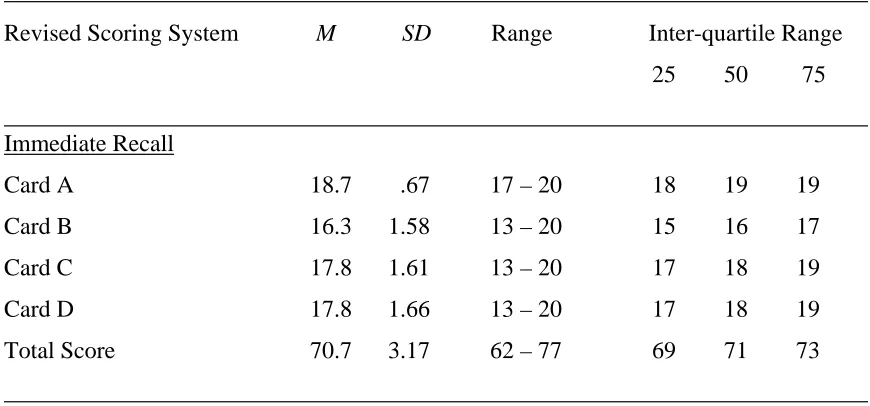
Reproduction subtest of the Wechsler Memory Scale – Revised (n = 44). ... 106
Table 3.12: Immediate recall performances on the Revised Scoring System of the Visual
Reproduction subtest of the Wechsler Memory Scale – Revised (n = 44). ... 107
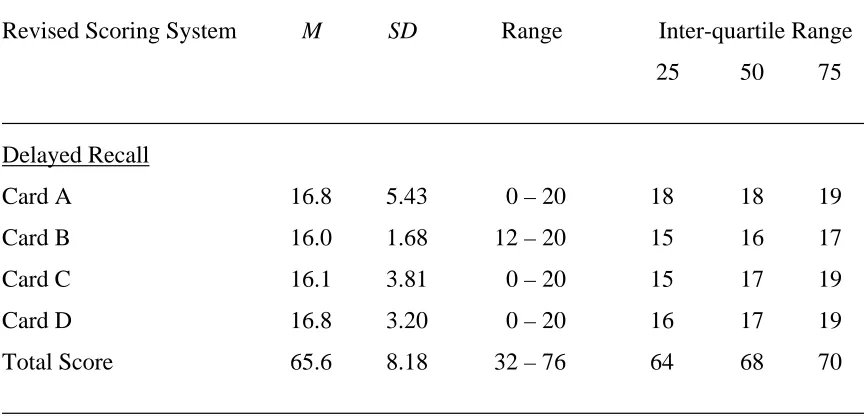
Table 3.13: Delayed recall performances on the Revised Scoring System of the Visual
Reproduction subtest of the Wechsler Memory Scale – Revised (n = 44). ... 108
Table 3.14: The Speed and Comprehension of Language Processing test performances on
Session One and Session Two and score gains on repeat administration
(n = 44). ... 109
Table 3.15: The Symbol Search subtest raw scores on Session One and Session Two and
score gain on repeat administration (n = 44). ... 111
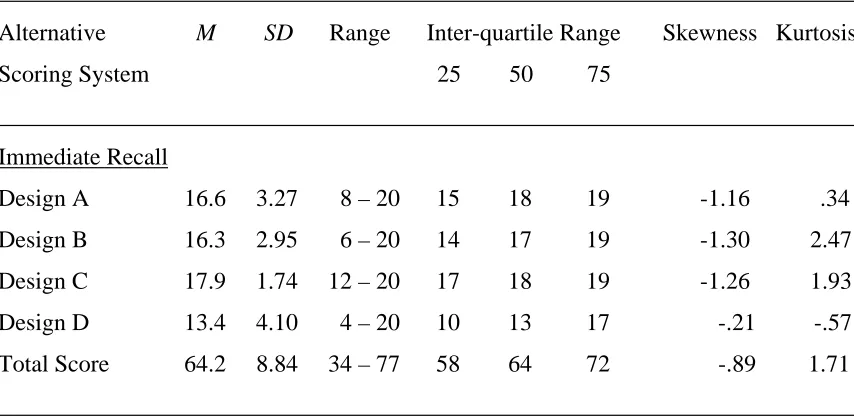
Table 3.16: The means, standard deviations, and immediate recall score distributions of
the Alternative Scoring System of the Alternative Form (n = 44). ... 114
Table 3.17: The means, standard deviations, and delayed recall score distributions for the
Alternative Scoring System of the Alternative Form (n = 44). ... 121
Table 3.18: Internal consistency of the Alternative Scoring System for immediate and
delayed recall scores of the Alternative Designs (n = 44). ... 128
Table 3.19: Correlation between the Total Immediate Recall scores on the Alternative
Scoring System and the Original Scoring System and Revised Scoring
System (n = 44). ... 129
Table 3.20: Correlation between the Total Delayed Recall scores on the Alternative
Scoring System and the Original Scoring System and Revised Scoring
Table 3.21: The relationship between the Total Delayed Recall Score of the Alternative
Scoring System and the Rey Complex Figure Test (n = 44). ... 131
Table 3.22: The association between the Alternative Scoring System and the Rey
Complex Figure Test (n = 44). ... 132
Table 3.23: The association between the Total Delayed Recall score on the Alternative
Scoring System and the Logical Memory and Rey Auditory Verbal Learning
Test delayed recall scores (n = 44). ... 132
Table 3.24: The association between the Total Immediate Recall score of the Alternative
Scoring System and the Immediate Recall score of the Logical Memory
subtest and the Learning score of the Rey Auditory Verbal Learning Test
(n = 44). ... 133
Table 3.25: The Total Immediate Recall and Total Delayed Recall scores of the
Alternative Scoring System and order of test administration (n = 44). ... 134
Table 3.26: The Total Immediate Recall and Total Delayed Recall scores of the three age
groups on the Alternative Scoring System (n = 44). ... 135
Table 3.27: The Total Immediate Recall and Total Delayed Recall performances for the
three levels of education on the Alternative Scoring System (n = 44). ... 136
Table 3.28: Performances of males (n = 24) and females (n = 20) on the Alternative
Scoring System. ... 137
Table 3.29: Pearson’s r correlation coefficients between the Alternative Scoring System
and the Symbol Search subtest (n = 44). ... 138
Table 3.30: The Pearson’s r correlation coefficients of the Full Scale IQ, Verbal IQ and
Performance IQ scores with the Total Immediate Recall and Total Delayed
Table 3.31: The Pearson’s r correlation coefficients of the individual Wechsler Adult
Intelligence Scale – Revised subtests with the Total Immediate Recall and
Total Delayed Recall scores on the Alternative Scoring System (n = 44). ... 141
Table 3.32: The relationship between the immediate and delayed performance on the
Original Scoring System and Full Scale IQ, Verbal IQ, and Performance IQ
scores (n = 44). ... 143
Table 3.33: The Pearson’s r correlation coefficients of the individual Wechsler Adult
Intelligence Scale – Revised subtests with the immediate recall performances
on the Original Scoring System and Revised Scoring System (n = 44). ... 144
Table 3.34: The Pearson’s r correlation coefficients of the individual Wechsler Adult
Intelligence Scale – Revised subtests with the delayed recall performances
on the Original Scoring System and Revised Scoring System (n = 44). ... 145
Table 3.35: The provision cues to facilitate recall of the Alternative Designs (n = 30)... 149
Table 3.36: The number of cues given for the Alternative Designs and those who
benefited from a cue (n = 30). ... 150
Table 3.37: The mean gain scores on the Alternative Designs of the Alternative Form
(n = 30). ... 151
Table 3.38: The mean gain in scores on Total Delayed Recall on Alternative Form
(n = 30). ... 152
Table 3.39: Performance on the recognition procedure for participants who benefited and
LIST OF FIGURES
Figure 2.01: The Alternative Designs of the Alternative Form... 63
Figure 2.02: The cues for the Alternative Designs of the Alternative Form. ... 69
Figure 2.03: The recognition cards for the Alternative Designs of the Alternative Form... 72
Figure 3.01: The Alternative Designs for the Alternative Form ... 79
Figure 3.02: The Cues for the Alternative Designs of the Alternative Form ... 80
Figure 3.03: The Recognition cards for the Alternative Designs of the Alternative Form ... 81
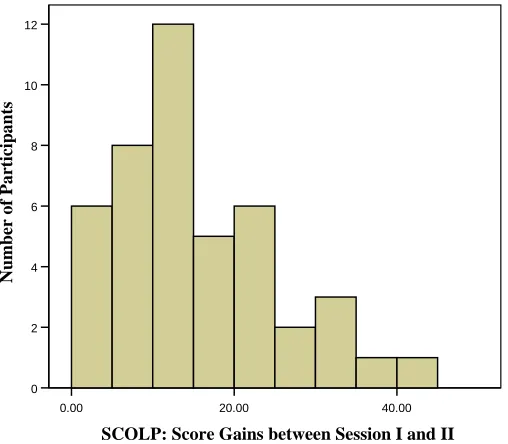
Figure 3.04: The distribution of score gains between Session One and Session Two on the Speed and Comprehension of Language Processing test... 110
Figure 3.05: The distribution of raw score gains on the Symbol Search subtest between Session One and Session Two. ... 112
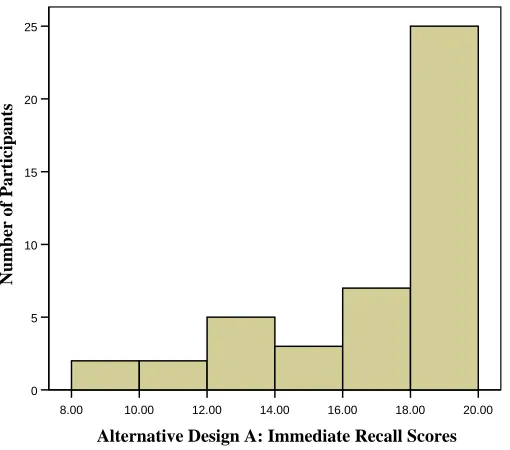
Figure 3.06: The immediate recall score distributions of Design A of the Alternative Form. ... 115
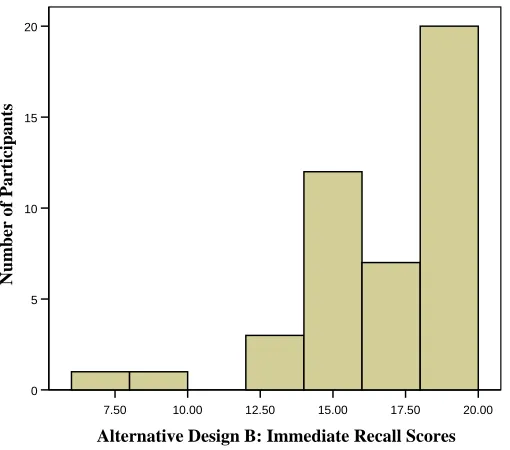
Figure 3.07: The immediate recall score distributions of Design B of the Alternative Form. ... 116
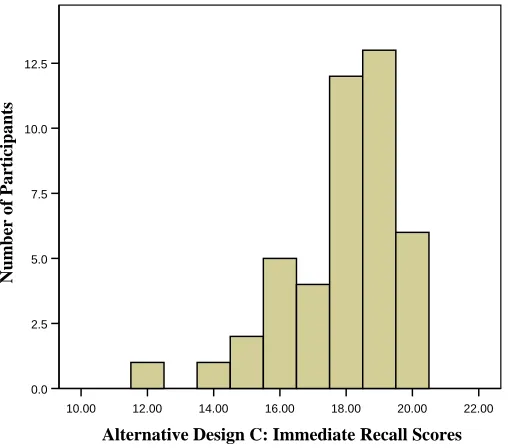
Figure 3.08: The immediate recall score distributions of Design C of the Alternative Form. ... 117
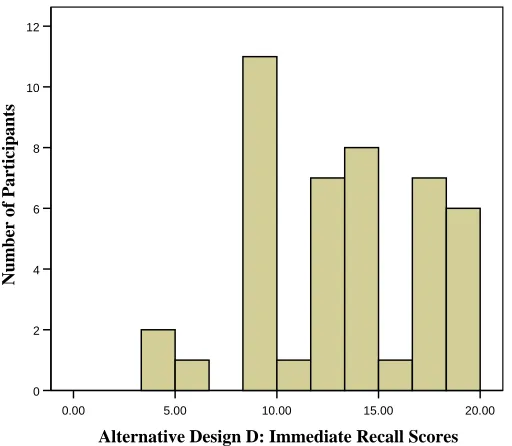
Figure 3.09: The immediate recall score distributions of Design D of the Alternative Form. ... 118
Figure 3.10: The Total Immediate Recall score distributions of the Alternative Designs of the Alternative Form ... 119
Figure 3.12: The delayed recall score distributions of Design A of the Alternative Form. ... 122
Figure 3.13: The delayed recall score distributions of Design B of the Alternative Form... 123
Figure 3.14: The delayed recall score distributions of Design C of the Alternative Form... 124
Figure 3.15: The delayed recall score distributions of Design D of the Alternative Form. ... 125
Figure 3.16: The Total Delayed Recall score distributions of the designs of the Alternative Form . ... 126
Figure 3.17: The distribution of total delayed scores of the Alternative Form and general intellectual ability. ... 127
Figure 3.18: The relationship between the Total Immediate Recall scores on the Alternative Scoring System and Immediate Recall performances on the Original Scoring System ... 148
Figure 3.19: The distribution of score gains on the cued recall measure ... 153
LIST OF APPENDICES
Appendix A: The Original Scoring System of the Visual Reproduction subtest of the
Wechsler Memory Scale – Revised………..211
Appendix B: The Revised Scoring System of the Visual Reproduction subtest of the
Wechsler Memory Scale – Revised………..225
Appendix C: Participants Information Sheet………231
INTRODUCTION
Leonardo Da Vinci stated “Whoever in discussion adduces authority uses not intellect but rather memory” (Knowles, 2004, p. 481). Indeed, there has been longstanding interest in memory function, but it has only been in the last 100 years that it has been scientifically evaluated. In fact, most knowledge about memory function has only been gathered from the second half of the 20th century. Memory dysfunction plays a critical role in many neurological and neuropsychological conditions, therefore its assessment becomes of major clinical value. This thesis pertains to an investigation of the development of an alternative form of the Visual Reproduction subtest of the Wechsler Memory Scale – Revised.
There have been various approaches to the scientific thinking of memory, but for a long time the assumption was held that memory function was a unitary process. Dissociable memory systems between short-term memory and long-term memory were postulated as early as 1890 by William James and again in 1949 by Donald Hebb, but it was not until the 1960’s and early 1970’s that the unitary concept of memory was challenged (Atkinson & Shiffrin, 1968; Tulving, 1972). Advances in experimental procedures, developments in neuro-imaging techniques and studies of brain damaged patients at an individual and group level have contributed to our understanding of the complexity of memory function.
1.1. Theoretical Models of Memory
1.2. Models of Short-Term Memory
1.2.1. Information Processing Models
Many early models of memory were derived from theories of acquisition and were often based on the temporal duration of retention (Waugh & Norman, 1965; Atkinson & Shiffrin, 1968). One of the most influential models of its time was Atkinson and Shiffrin’s (1968) ‘modal’ model of memory.
The modal model proposed memory as a sequence of three discrete processes in which information was transferred from one form of memory store to another. External stimuli from the environment initially entered a visual or auditory sensory memory system; namely iconic memory (visual sensory memory) and echoic memory (auditory sensory memory) for a period of a few seconds. Information was then selected via attentional processes and passed into short-term store. The short-term store was viewed to have a limited storage capacity, capable to hold information for approximately 30 seconds before it decayed. The assumption holds that the longer information was maintained in short-term store through sub-vocal rehearsal, the greater likelihood of its transfer into long-term memory. At each stage, information could be lost due to decay or interference from the presentation of new information. Long-term memory was proposed to have an unlimited storage capacity and was a relatively permanent store of information (Atkinson & Shiffrin, 1968; Baddeley 1994).
The information processing models were primarily a unitary short-term storage system and proved to be oversimplified. Problems with the model came from evidence that holding an item in short-term store did not always guarantee its transfer into long-term memory (Baddeley, 1995; Parkin, 1997) and observations of brain damaged patients who had deficits in short-term memory, but relatively preserved learning ability (Shallice & Warrington, 1970).
In abandoning the assumption of a unitary system, Baddeley and Hitch (1974) proposed a more elaborate and flexible temporary store called working memory. The working memory system plays a greater role in the temporary maintenance and manipulation of complex cognitive processes such as comprehension, learning and reasoning (Emilien, Durlach, Antoniadis, Van der Linden & Maloteeaux, 2004).
1.2.2. Working Memory Model
In the original formulation by Baddeley and Hitch (1974), the working memory model consisted of two modality-specific storage systems, namely the articulatory loop (used for the processing of auditory-verbal information) and the visuo-spatial sketchpad (used for the processing of visual and spatial information). The articulatory loop (later revised to the phonological loop) and the visuo-spatial sketchpad are under the control of the central executive, which integrates, organizes and monitors the information from the two ‘slave’ systems (Baddeley, 1986; Baddeley, 1995).
There has been less research on the visuo-spatial sketchpad conducted than on the phonological loop, and consequently the components about the visuo-spatial sketchpad are less elaborated. There are suggestions of a subcomponent visuo-spatial passive store as well as a visual rehearsal process (Baddeley 1994; Cornoldi, & Vecchi, 2003). The visuo-spatial sketchpad has also been implied to play a role in the maintenance of visual representations of verbally encoded stimuli (Baddeley, 1999). Furthermore, the visuospatial sketchpad has recently been suggested to be more closely tied to the central executive than the phonological store (Miyake, Friedman, Shah, Rettinger & Hegarty, 2001).
In Baddeley’s model, the central executive has a supervisory role in the integration and organization of information from the phonological loop and visuo-spatial sketchpad, and in the transfer and retrieval of information from long-term memory (Baddeley, 1986; 1997). The central executive has been described as an attentional control system responsible for strategy selection, control and execution of various processing tasks. The greater complexity of the central executive relative to the two ‘slave’ systems makes it the least well understood component of working memory and the most difficult to investigate (Baddeley 1999; 2004).
Criticisms of the concept of a central executive led Baddeley (2000) to propose an additional component to the model termed the ‘episodic buffer.’ The episodic buffer is assumed to have the capacity to temporarily store information from both slave systems and from long-term memory, to form an episodic representation available for conscious recollection (Baddeley, 2000; Gooding, Isaac & Mayes, 2005).
1.3. A Model of Long-Term Memory
The organization of long-term memory has been the subject of ongoing debate and investigation. Over the last 30 years there has been considerable controversy regarding how long-term memory should be conceptualized, but it is now widely accepted that it is not a simple unitary system.
In early conceptualizations of long-term memory, Tulving (1972) proposed a dual classification system of semantic and episodic memory. Episodic memory referred to memory for personal events and experiences. Semantic memory represented the acquisition of knowledge about the world (e.g. the meaning of words, objects, concepts, facts and people) independent of the context in which this information was initially acquired (Tulving, 1972). Initially, the episodic and semantic memory systems were considered functionally distinct. This was supported by findings from studies of amnesic patients who showed impaired episodic learning, but relatively spared semantic memory (Kinsbourne & Wood, 1975; Parkin, 1982; Wood, Ebert & Kinsbourne, 1982).
Evidence against such a simple dissociation of long-term memory came from brain damaged patients with similarly impaired factual knowledge and loss of memory for personal experiences. Tulving (1983) revised his model and proposed that episodic memory was dependent on the integrity of semantic knowledge and had evolved from semantic memory. Episodic memory was assumed to share many properties and capabilities with the semantic system, but transcended it in the ability to recollect and relate experiences from the past in subjective time (Tulving, 2002; Schacter & Tulving, 1994).
& Hodges 2000; Snowden, 2002; Emilien et al, 2004; Kazui, Hashimoto, Hirono & Mori, 2003; Mummery, Patterson, Wise, Price, Hodges & Vandenbergh, 1999; Hodges, Patterson, Oxbury & Funnell, 1992).
Some researchers have questioned the need to distinguish between episodic and semantic memory, subsuming them under a single declarative system. Squire (1992) proposed a declarative system of episodic and semantic memory, as both are available to conscious awareness and can be utilised in many novel situations. The relationship between episodic and semantic memory is an area of ongoing research, but the distinction nonetheless remains clinically useful, often for diagnostic issues.
A clear distinction between declarative forms of memory and procedural memory was proposed due to the finding that amnesic patients have an ability to show some forms of learning and not others (Cohen & Squire, 1980; Graf & Schacter, 1985). The relative preservation of procedural memory in amnesic patients means that the acquisition of skills can occur via an incremental learning process. This is believed to operate at an automatic level without conscious awareness (Papanicolaou, 2006). The concept of procedural memory was later revised and it became synonymous with the term non-declarative memory, thus encompassing a large set of heterogeneous non-conscious mnestic abilities, including the learning of skills and habits, non-associative learning, priming and simple classical conditioning (Squire, 1987; Squire, 1992).
1.4. Memory Processes
The information processing models delineate encoding, storage and retrieval memory processes (Craik & Lockhart, 1972; Tulving & Thompson, 1973). Encoding reflects the processing of incoming information and the laying down of a memory trace involving two phases; an acquisition and consolidation phase. The acquisition phase registers external inputs into sensory buffers and sensory analysis stages, while the consolidation phase creates a stronger representation of this information over time (Nadel & Moscovitch, 1997). The consolidation process converts information from short-term memory into long-term memory and is susceptible to modification (Emilien et al, 2004). Storage is the result of the acquisition and consolidation phases, where a permanent record of information is maintained. The retrieval process re-constructs stored information from long-term memory to create a conscious representation or to execute a procedural learnt behaviour or motor response, such as riding a bicycle (Lezak, Howieson & Loring, 2004).
There is substantial evidence that memory processes are organised in a dynamic way and continually being modified and re-organised (Kopelman, 2002; Nadel, 1992; Reber, et al, 1996). Investigators in memory research have accepted that no model can entirely account for the complex and multivariate nature of the processes and organization of memory (Nade, 1994; Schacter & Tulving, 1994).
1.5. The Neuroanatomy of Memory
The structures implicated in sub-serving a crucial role for declarative memory are the hippocampus and related anatomical structures of the medial temporal lobe, the medial diencephalic structures and the basal forebrain (Zola-Morgan & Squire, 1993; Squire, Knowlton & Musen, 1993).
1.5.1. The Medial Temporal Lobes
Much of the understanding of the key role of the medial temporal lobes in memory function stems from Scoville and Milner’s (1957) description of patient H.M who underwent bilateral resection of the medial temporal lobes for the relief of intractable epilepsy. Patient H.M developed severe anterograde amnesia (a severe impairment in new learning ability) and retrograde amnesia (impaired recollection for events prior to the surgery) that extended several years. This amnesia persisted for the rest of his life. Animal research in monkeys involving similar lesions approximating the damage sustained by patient H.M reproduced similar features of memory impairment in that species (Zola-Morgan & Squire, 1993). The evidence from H.M and animal models strongly implicated the hippocampal complex (including the dentate gyrus and subiculum) as critical structures for the acquisition of new episodic and semantic memories (Mishkin, 1982; Tulving & Markowitsch, 1998; Broadbent, Clark, Zola & Squire, 2002; Deweer, Pillon, Pochon & Dubois, 2001; Lee, Yip & Jones-Gotman, 2002).
becomes more severe when these cortical regions are damaged as well (Zola-Morgan & Squire, 1993; Zola, 1998; Zola-Morgan et al, 1989; Graham et al, 2000; Nadel, 1994).
The neuroanatomical damage typically associated with anterograde amnesia from virus induced lesions, such as herpes simplex encephalitis, involves the medial temporal lobe structures (including the hippocampus, entorhinal, perirhinal and parahippocampal cortices), polar limbic regions and the amygdala (Zola-Morgan & Squire, 1993; Rotenberg & Weinberg, 1999; Squire & Zola-Morgan, 1991). Furthermore, greater severity of memory deficits has been described with lesions involving the amygdala, hippocampus, and the perirhinal and parahippocampal cortices when compared with hippocampal damage alone (Zola-Morgan, et al, 1989; Gleisnner, Helmstaedter, Schramm & Elger, 2002; Miller, Lai & Munoz, 1998).
Even partial damage to the hippocampus has been found to produce substantial memory impairment in humans and monkeys (Zola-Morgan & Squire, 1993; Mishkin, Vargha-Khadem & Gadian, 1998). Findings from patient R.B, who had circumscribed memory impairment as a result of a hypoxic brain injury, revealed that a bilateral lesion involving the CA1 field of the hippocampus was sufficient to produce severe anterograde amnesia (Zola-Morgan, Squire & Amaral, 1986). Magnetic Resonance Imaging studies also indicate a reduction in hippocampal size in those with clinically significant memory impairments (Squire et al, 1990; Markowitsch, 2003; Mayes & Montaldi, 1999).
Recent data from studies of humans, monkeys and rats suggest the hippocampus plays an essential role in novelty discrimination (Broadbent et al, 2002; Squire & Zola, 1998; Dolan & Fletcher, 1997; Redoblado, Garyson & Miller, 2003). Furthermore, functional brain imaging studies have shown selective activation of the right mesial temporal region in response to novel and unfamiliar pictures and words (Wiggs, Weisberg, & Martin, 1999; Iidaka, Sadato, Yamada & Yonekura, 2000; Mayes & Montaldi, 2001).
Studies of amnesic patients have consistently suggested that the hippocampus plays a key role in spatial memory (Scoville & Milner, 1957; Nadel, 1992; Corkin, et al, 1997; Emilien et al, 2004; Nunn, Polkey & Morris, 1998; Winocur, Moscovitch, Caruana & Binns, 2005; Moye, 1997). Specifically, the parahippocampal cortex has been suggested to be especially important for spatial memory and the perirhinal cortex as important for visual memory (Markowitsch, 2000; Baxter & Murray, 2001), suggesting that the hippocampus and surrounding structures are essential for the consolidation of information into memory irrespective of modality.
Hemispheric specialisation of the left and right medial temporal structures for verbal declarative memory and non-verbal learning are widely documented in the literature (Parkin, 1997; Frisk & Milner, 1990; Lee et al, 2002). Damage to the left temporal lobe has consistently demonstrated deficits in the learning of verbal information. Although findings are not as consistent, damage to the right temporal lobe has been shown to cause non-verbal memory deficits (Chelune & Bornstein, 1988; Squire & Butters, 1992; Baxendale, 1997; Squire, 1986; Jones-Gotman, 1986; Chelune & Bornstein, 1988; Naugle, Chelune, Cheek, Luders & Awad, 1993). The inconsistencies in the findings with regard to non-verbal memory are considered to reflect methodological issues and the difficulty in developing a valid measure of non-verbal memory. This issue will be discussed later in section 1.12.
1998; LaBar & LeDoux, 2003). The amygdala has been implicated to play a potentially central role in the development of conditioned fear and influence the behavioural response to a neutral stimulus from previous experience (LeDoux, 1992). Furthermore, perceived stressful or dangerous stimuli are suggested to foster highly affective sensory representations that can disrupt the consolidation functions of the hippocampus from traumatic episodes (Zola-Morgan & Squire, 1993; LeDoux, 1992; Nadel & Jacobs, 1998).
1.5.2. The Diencephalon
Early investigations of memory impairment involving the medial diencephalon came from the study of patients with Wernicke Korsakoff Syndrome (Butters et al, 1995). Damage to the dorso-medial thalamic nucleus, mamillary bodies, mamillothalamic tract, fornix and areas adjacent to the third ventricle were implicated in extensive anterograde and retrograde deficits characteristic of Wernicke Korsakoff Syndrome and other diencephalic amnesias (Parkin, 1997; Victor, Adams & Collins, 1989; Butters, Salmon, Cullum, Cairns, Troster, Jacobs et al, 1988; Carr, 1982; Gaffan, Parker & Easton, 2001). Significant memory difficulties because of damage specific to the internal medullary lamina of the thalamus have been documented in recent studies with experimental animals and amnesic patients (Van der Werf, Witter, Uylings & Jolles, 2000; Zola-Morgan & Squire, 1993). The severe amnesia that arises from thalamic strokes involving bilateral infarction of medial thalamic structures has been well documented (Markowitsch, 2000; Aggleton, & Brown, 1999). Retrograde amnesia has been associated with lesions to the nuclei in the mamillary bodies and to the thalamus and to its interconnecting pathways to cortical regions, particularly the forebrain (Van der Werf, Scheltens, Lindeboom, Witter, Uylings & Jolles, 2003).
1.5.3. The Frontal Lobes
& Fletcher, 1997; Buckner, Kelley & Petersen, 1999; Busch, Booth, McBride, Vanderploeg, Curtiss & Duchnick, 2005). Damage to the frontal lobes can result in impairment to prospective memory (the ability to remember an upcoming event or scheduled commitment), meta-memory (knowledge about memory), memory for temporal order (sequencing facts from the past in order of their occurrence), context and source memory (how specific knowledge was acquired), working memory and retrieval processes (Parkin, 1997; Baddeley, 2004; Zola, 1998; Zola-Morgan & Squire, 1993; Nadel & Moscovitch, 1997; Fletcher, Shallice, Frith, Frackowiak & Dolan, 1998; McDaniel & Einstein, 2007).
Functional neuro-imaging studies have identified bilateral prefrontal involvement during encoding and retrieval of episodic memories (Nyberg, McIntosh & Tulving, 1998; Lee, Robbins, Pickard & Owen, 2000; Fletcher, Shallice & Dolan, 1998; Fletcher et al, 1998). Both the encoding and retrieval of verbal material has been shown to activate the left prefrontal cortex. The left prefrontal cortex has been associated with active and strategic operation of mnemonic representations (Iidaka et al, 2000; Klingberg & Roland, 1998) and the success of a retrieval attempt. The right prefrontal cortex has been associated with monitoring processes and retrieval attempt, rather than retrieval success (Iidaka et al, 2000; Wiggs et al, 1999).
There are still arguments with respect to the lateralization of prefrontal activation during encoding of non-verbal material (Nyberg et al, 1998). In some studies, pattern specific encoding predominately activated the right prefrontal cortex. Other studies have observed left prefrontal activation during encoding of non-verbal material such as object location and faces (Klingber & Roland, 1998; Lee et al, 2000). Left prefrontal activation in the encoding of non-verbal information has been attributed to the use of verbal strategies and semantic representations of visual stimuli (Iidaka et al, 2000).
the medial temporal lobe, particularly the hippocampus, and to other areas of the cerebral cortex (Zola-Morgan & Squire, 1993). Decreased activity of cholineacetyltransferase in the hippocampus and in the cortex as well as reduced cell numbers in the basal forebrain are evident in patients with Alzheimer’s disease, who exhibit memory impairment early in the neurodegenerative process (O’Connor & Verfaellie, 2004). The memory impairments from anterior communicating artery aneurysms are less severe than the other amnesias but are relatively consistent with frontal lobe dysfunction. The disruption of frontal circuits to medial temporal and diencephalic structures and systems have also been implicated (Parkin & Leng, 1993).
1.5.4. From Brain Structures to Brain Systems
The connections between neural structures are suggested to play as an important role in normal memory functioning as the structures themselves. Rather than there being a single site for memories, a number of contributions from many cortical and subcortical structures within brain systems are considered to sub-serve functional roles for memory performance (Nadel & Moscovitch, 1997; Iidaka et al, 2000).
The interconnections between medial temporal lobes, the diencephalon and the frontal lobes have been identified as essential for the acquisition and consolidation of declarative memory. The complexity of the circuitry extends to include the neocortex, which is suggested as the repository for the storage of long-term memories, gradually supporting the storage of information independent of the frontal, medial temporal and diencephalic systems (Zola-Morgan & Squire, 1993; Nadel & Moscovitch, 1997; Mayes & Montaldi, 1999; Zola-Morgan & Squire, 1990).
mamillothalamic tract to the anterior nucleus of the thalamus, possibly on to the cingulate cortex and back to the hippocampus. The amygdalar pathway projects from the amygdala to the dorsomedial thalamic nucleus on to the orbito-frontal cortex before returning to the amygdala (Mayes, 1986; Markowitsch, 2003). This dual circuit model has gained support, but it is argued that damage to the hippocampal system alone may be sufficient to produce a severe amnesic syndrome (Parkin & Leng, 1993; Papanicolaou, 2006).
Non-declarative memory represents relatively independent memory systems mostly involving anatomical structures outside the medial temporal lobes and diencephalon (Squire, Knowlton & Musen, 1993). However, the corticostriatal systems involving reciprocal connections between the neocortex and the basal ganglia are seen as subserving non-declarative memories (Iidaka et al, 2000). The type of information processing required in performing a specific task typically determines the brain regions that are involved (e.g., the pre-motor cortex is often implicated in motor tasks such as walking) (Markowitsch, 2003).
Historically, investigations in the neuro-anatomical bases of non-declarative memory systems have been limited. The growing research on the nature of implicit memory has been fuelled by interest in preserved skills of individuals with severe memory dysfunction (Zola-Morgan & Squire, 1993; Lezak et al, 2004; Papanicolaou, 2006).
1.6. Memory Dysfunction
The most severe disorders of declarative memory have typical features that are collectively described as the amnesic syndrome. Typically, the amnesic syndrome is defined as a circumscribed deficit in memory in the context of relatively preserved intellectual function, insight, language and social skills (Scoville & Milner, 1957; Parkin & Leng, 1993; Papanicolaou, 2006). Severe anterograde amnesia is a cardinal feature of the amnesic syndrome, but it can also occur with other memory syndromes (such as dementia). The severity of the retrograde amnesia can be variable, depending on the extent and nature of structural compromise and can occur in the absence of anterograde memory loss, as in cases of focal retrograde amnesia (Kapur, 1993). Moreover, the retrograde amnesia typically follows a temporal gradient. That is, memories from the distant past (such as childhood) are better preserved compared to recent memories (Parkin, 1997).
Despite the severity and extent of anterograde memory impairment, immediate memory and working memory capacity (the ability to hold and manipulate a limited amount of information in mind for a very brief period of time) are usually preserved in amnesic patients (Papanicolaou, 2006). Moreover, well established semantic memories also remain relatively unimpaired, as evidenced by intact knowledge of tasks and word meanings (Baddeley, 1997). Non-declarative memory, as measured by perceptuo-motor skill acquisition, priming, and classical conditioning are often preserved, since these forms of memory are independent of the medial temporal structures, which is the site of damage in many amnesic disorders (Baddeley, 1995; Squire, 1986; Parkin, 1997; O’Connor & Verfaellie, 2004).
amnesia with a temporal gradient, and the compromise of at least one other cognitive function (Kopelman, 2002). Neuro-degenerative diseases such as Huntington’s disease, Multiple Sclerosis, Parkinson’s disease and Progressive Supranuclear Palsy are collectively known as subcortical dementias. The memory impairment in patients with subcortical dementias is more pronounced for procedural learning tasks than for tasks involving declarative memory (Howieson & Lezak, 2004).
Generally, memory loss in dementia differs from amnesia as immediate memory span and semantic memory is often affected in dementia. The progressive nature of dementia results in increasing disorientation, personality and behavioural change, intellectual and cognitive compromise, as opposed to the static nature of an amnesic syndrome (Walsh & Darby, 2001; Parkin & Leng, 1993; Papanicolaou, 2006).
The cognitive profile of individuals with cognitive dysfunction and certainly the pattern of memory difficulties needs to take into account not only aetiological factors, but a range of potential metabolic, medical, and psychological problems (O’Connor & Verfaellie, 2004). A comprehensive neuropsychological evaluation that considers all these factors is important in order to determine which functions are compromised and which are preserved.
1.7. Assessment of Memory
different neuro-pathological conditions, and also for evaluating theoretical conceptualizations of memory (Howieson & Lezak, 2004; Wilson, 2004).
The development of neuropsychological measures often reflects the theoretical conceptualization of memory at the time of its development. Traditionally, memory assessment and test development have largely focused on declarative memory and so this area will be the focus of this review.
Standardized measures of memory need to meet certain criteria if they are to be clinically useful. Memory tests need to deliver reliable and consistent results and they need to measure the construct that they purport to measure (Cohen, 1988; Tabachnick & Fidell, 1996). A measurement procedure is considered reliable if relatively stable and consistent scores are produced when an individual is tested under the same conditions on another occasion (Gravetter & Wallnau, 1996). The reliability of a measure can be evaluated in a number of ways; including test-retest procedures, split-half reliability, Cronbach’s alpha, and standard errors of measurement. Although a measure that is not reliable cannot be valid, a measure may not be valid even if it is reliable (Cohen, 1988; Tabachnick & Fidell, 1996).
measure it should poorly be associated with) of a measure can be determined (Gravetter & Wallnau, 1996; Willmes, 2003).
For measurement of memory function to be useful, there must be comprehensive statistical and normative data available for the measures used so that abnormalities can be clearly identified and the severity of deficit quantified (Lezak et al, 2004). Scoring systems also need to be reliable and test ceiling and floor effects need to be minimised to ensure that all levels of memory performance can be quantified. That is, the measure is not too easy for some individuals and too difficult for others (Mayes, 1995; Eadie & Shum, 1995). The ease and duration of administration of a measure and the availability of alternative forms are considered to be important factors in establishing the clinical utility of a measure (Willmes, 2003; Wilson, 2004).
The inclusion of testing procedures that allow for inferences regarding the relative integrity of encoding, storage and retrieval processes are currently viewed as essential in the comprehensive evaluation of memory functions (Gass, 1995). If a psychometric measure incorporates both immediate and long-term memory processes, the contribution of each process needs to be established. The assessment of memory also needs to quantify the extent that competing information interferes with the retrieval of old information and new learning ability (Butters, Delis & Lucas, 1995; Lezak et al, 2004; Emilien et al, 2004). In evaluating the basis of retrieval deficits, a recognition procedure is often the most direct method of assessment (Gass, 1995). The administration of a cued recall procedure may facilitate the recall of information from long-term memory and hence provide important information regarding the extent of retrieval difficulties.
of increasing length of sentences have been developed as measures of immediate memory capacity, as deficits on these tasks are common in many disorders of memory (Goodglass & Kaplan, 1983).
Memory for lists of words include measures such as the Rey Auditory Verbal Learning Test (Rey, 1964b), the California Verbal Learning Test (Delis, Kramer, Kaplan & Ober, 1987) and its second revision (Delis, Kramer Kaplan & Ober 2000), the Hopkins Verbal Learning Test (Brandt, 1991) and the Selective Reminding Test (Hannay & Levin, 1985). These tests often assess immediate memory, rate of learning and learning ability, the presence of interference effects, long-term memory and recognition. Verbal paired associate tasks involve the learning of word pairs and the subsequent recall of word associations that evaluate the integrity of the left hippocampal system (Wechsler, 1945; Wechsler, 1987).
Tests of story memory are usually developed to simulate language used in everyday conversation and typically evaluate memory for meaningful information. The most widely used test of story memory is the Logical Memory subtest from the Wechsler Memory Scale and its revisions (Wechsler, 1945; Wechsler 1987; Wechsler, 1997) although several other story memory measures have been developed (Heaton, Grant & Williams, 1991; Lezak, 1995; Williams, 1991).
The most common memory tests for visually presented stimuli require the reproduction of geometric designs and include the Rey Complex Figure Test (Rey, 1964; Meyers & Meyers, 1995), Biber Figure Learning Test (Glosser, Goodglass & Biber, 1989), Benton Visual Retention Test (Benton, 1992), and the Visual Reproduction subtest of the Wechsler Memory Scale and its revisions (Wechsler, 1945; Wechsler 1987; Wechsler 1997). These tests are designed to assess immediate and long-term memory for visuo-spatial material. However, other neuropsychological deficits such as visuo-perceptual problems and drawing difficulties can compromise performance and lead to misdiagnosis of the extent and nature of non-verbal memory impairments (Smith et al, 1992; Larrabee & Curtiss, 1995; Haut, Weber, Wilheim, Keefover & Rankin, 1994; Loring, 1989; Gfeller et al, 1995; Moye, 1997; Bowden, Ritter, Carstairs, Shores, Pead, Greeley et al, 2001). A limited number of standardised measures have included recognition procedures to provide information on the relative contributions of encoding, storage and retrieval on visual memory performance (Glosser et al, 1989; Meyers & Meyers, 1995).
Recognition measures have been developed to help overcome problems with tasks that require a motor response, but these are criticised for not having immediate and delayed free recall components. Tests of recognition memory include the Continuous Recognition Memory Test (Hannay, Levin & Grossman, 1979), Figural Memory subtest (Wechsler, 1987), Faces and Family Pictures subtests (Wechsler, 1997) and the Warrington Recognition Memory Test (Warrington, 1984).
1.8. The Wechsler Memory Scale
The Wechsler Memory Scale has arguably been one of the most widely used measures of memory. The Wechsler Memory Scale was developed due to the lack of a ‘rapid, simple and practical’ standardised measure in the clinical assessment of memory and its disorders (Wechsler, 1945, p. 3).
1.8.1. Structure and Content of the Wechsler Memory Scale
The Wechsler Memory Scale consisted of seven subtests: (1) Personal and Current Information (e.g., questions such as name, age, date of birth, current government leaders); (2) Orientation (e.g., questions relating to place and time); (3) Mental Control (e.g., counting backwards, reciting the alphabet and counting by 3’s under time constraints); (4) Logical Memory, which is a test of immediate auditory memory (e.g., reciting and recalling the content presented in two stories); (5) Memory Span/Digits Span, a test of attention and immediate auditory memory (e.g., repeating digits and reciting digits in reverse order); (6) Visual Reproduction, which is a test of immediate visual memory (e.g., the drawing of geometric designs from memory); and (7) Associate Learning (e.g., verbal recall of the correct response to six semantically related (easy) and four unrelated word pairs (hard) over three trials) (Wechsler, 1945; Mitrushina, Boone & D’Elia, 1999).
An alternative form (Form II) of the Wechsler Memory Scale was also developed for the interchangeable use in repeated memory assessments. Form II was comparatively matched to the design of form I, consisting of seven subtests, but with changes made to the content of some subtests (i.e., Mental Control, Logical Memory, Visual Reproduction and Associate Learning).
1.8.2. Scoring the Wechsler Memory Scale
score, the global Memory Quotient (Wechsler, 1945). The Memory Quotient was intended to be comparable with performance on measures of intellectual functioning.
Administration procedures, such as test instructions and materials were relatively straightforward, but problems with the scoring procedures existed. The scoring procedures for the Logical Memory and Visual Reproduction subtests were brief, imprecise and inadequate and resulted in low inter-scorer agreement (Prigatano, 1978; Loring & Papanicolaou, 1987; Herman, 1988).
A problem with the concept of the Memory Quotient was also identified. The use of a single score to reflect memory functioning assumed that memory was a unitary construct. A unitary view of memory functioning was inconsistent with clinical and research findings and is a theoretical concept contemporarily rejected (Lezak et al, 2004). The use of a single score was further criticised for its potential to mask variability among subtest performances as it did not allow the differentiation of distinct memory functions, consequently limiting its sensitivity as a diagnostic instrument (Parkin & Leng, 1993).
Questions over the clinical utility of the IQ – Memory Quotient discrepancy in identifying true memory impairment and the usefulness of the Wechsler Memory Scale in differentiating organic from psychiatric memory problems were raised (Prigatano, 1978). For example, individuals with amnesic syndromes performed well on the measure mainly because it did not test long-term memory. The high correlation between the Memory Quotient score and intelligence measures questioned whether the Wechsler Memory Scale was a measure of memory or intellectual functioning (Erickson & Scott, 1977).
1.8.3. Reliability of the Wechsler Memory Scale
the Logical Memory and Visual Reproduction subtests suggested poor inter-rater reliability (Mitchell, 1987).
Although an approximate equal level of difficulty between the two forms was documented, the Visual Reproduction subtest has been found to be easier on Form II and the Associate Learning subtest easier on Form I, making interpretation of equivalence between the two forms somewhat tenuous (Prigatano, 1978; Ivison, 1993).
1.8.4. Normative Data of the Wechsler Memory Scale
Wechsler’s reports of the standardization of the original Wechsler Memory Scale are inconsistent. He noted that the standardization of Form I was based on 200 normal participants aged 25-50 years. However, data in the manual was only shown for two groups of individuals aged 20-29 years (n = 50) and aged 40-49 years (n = 46). No data on the standardization of Form II was given and norms were only available for Form I (Mitrushina et al, 1999).
The Wechsler Memory Scale data published has been extensively criticised for inadequate provision of norms across age groups, a small and restricted sample, and limited information regarding characteristics of the standardization sample (Loring & Papanicolaou, 1987). The percentage of men and women in the sample were not reported nor were differences in performances on subtests between the sexes. The restricted age range of the normative sample limited the clinical utility of the measure, as lower memory performance is seen in normal elderly populations.
1.8.5. Validity of the Wechsler Memory Scale
Numerous factor analyses have appeared in the literature revealing a three factor structure of the Wechlser Memory Scale of 1) immediate learning and recall 2) attention and concentration 3) orientation (Mitrushina et al, 1999; Skilbeck & Woods, 1980).
The construct validity of the Wechsler Memory Scale as primarily a measure of short-term verbal memory has been consistently supported. Research demonstrated considerable face validity of the Wechsler Memory Scale as primarily a measure of verbal memory with six of the seven subtests being verbal in nature (Chelune & Bornstein, 1988).
The Wechsler Memory Scale has been found to be sensitive to memory disturbances associated with left temporal lesions, but generally insensitive to the detection of memory dysfunction related to right temporal damage (Prigatano, 1978; Larrabee, Kane & Shuck, 1983; Skilbeck & Woods, 1980). The insensitivity of the Wechsler Memory Scale to right hemispheric dysfunction was suggested to be the result of the inclusion of only the Visual Reproduction subtest as a measure of visual memory. In addition, the predominant verbal nature of the Wechsler Memory Scale implied that individuals who have verbal expressive problems could also be unduly penalised (Erickson & Scott, 1977; Prigatano, 1978).
The composition of the Wechsler Memory Scale was further challenged because of its inclusion of measures thought to reflect other cognitive functions, like attention and concentration (e.g., Information, Orientation, Mental Control and Digit Span subtests) (Erikson & Scott, 1977; Prigatano, 1978). The inclusion of tests that addressed other functions had the potential to overestimate or mask important patterns of memory performance (Delis, 1989).
information (Mayes, 1995). In an attempt to address some of the limitations of the original scale, two independent variations of the Wechsler Memory Scale were developed.
Russell (1975) developed delayed recall procedures for the Logical Memory, Visual Reproduction and Paired Associate task, improved the scoring procedures for the Logical Memory subtest and introduced the calculation of saving scores (i.e. percent retention scores) for both the Logical Memory subtest and the Visual Reproduction subtest. The additional procedures considerably improved the utility of the Wechsler Memory Scale (Larrabee, Kane, Schuck & Francis, 1985). However, a problem with Russell’s revision was the normative data incorporated cuing procedures, making it difficult to compare to the original scale. In addition, no data was provided on how individuals of different levels of intellectual ability performed on these procedures (Waldmann & Dickson, 1991). Nonetheless, the Russell revision was a popular and widely used variant in clinical settings.
The Boston Revision of the Wechsler Memory Scale (Milberg, Hebben & Kaplan, 1986) included delayed recall and recognition measures for the Visual Reproduction, Logical Memory and Paired Associate subtests. Additional procedures included copy and perceptual match trials to cater for sensorimotor deficits. The inclusion of recognition and copy trails immediately after an initial presentation was a major criticism as it allowed for multiple exposures to the material to confound performance. Therefore, the Boston revision was not comparable to the original Wechsler Memory Scale. In addition, no detailed normative data was made available for this revision.
The Wechsler Memory Scale was an early step in the development of clinical assessment tools. The Logical Memory subtest and the hard pairs on the Associate Learning task were considered good predictors of an amnesic syndrome and subsequently used as screening measures (Parkin & Leng 1993, Lezak, 1995). Despite its shortcoming, the relatively quick administration time of approximately 30 minutes made the Wechsler Memory Scale a popular test amongst many clinicians for a number of decades. It was not until 1987 that a review of the Wechsler Memory Scale was published.
1.9. Wechsler Memory Scale – Revised
The Wechsler Memory Scale – Revised was revised to address the limitations associated with the original scale. The Wechsler Memory Scale – Revised was described as a ‘diagnostic and screening device’ to better assist in the clinical evaluation of memory functions (Wechsler, 1987, p. 1).
1.9.1. Structure and Content of Wechsler Memory Scale – Revised
The Wechsler Memory Scale – Revised retained six of the subtests from the original Wechsler Memory Scale. With the inclusion of three new visual memory measures, the Wechsler Memory Scale – Revised comprised nine subtests in total: (1) Information and Orientation; (2) Mental Control; (3) Figural Memory; (4) Logical Memory; (5) Associate Learning (now called Verbal Paired Associates); (6) Visual Paired Associates; (7) Visual Reproduction; (8) Digit Span; and (9) Visual Memory Span.
New designs were developed that replaced the last two of the four designs of the original Visual Reproduction subtest. The Verbal Paired Associates subtest maintained most of the original word pairs, with the elimination of two easily learned word pairs to shorten the subtest. An additional three trials of the Verbal Paired Associate subtest were included so that the learning of the word pairs could be examined over a longer time frame, but these extra trials did not contribute to the total score. Delayed recall procedures were also developed for each of the Logical Memory, Visual Reproduction and Verbal Paired Associate measures in response to the criticisms of the original Wechsler Memory Scale.
In an effort to provide a more balanced assessment of visual memory the Figural Memory and Visual Paired Associate subtests were developed. Also a visual attention task, Visual Memory Span was developed as the analogue of the Digit Span subtest (Loring, 1989).
The Figural Memory subtest was devised to measure memory for figural stimuli. The task involved the identification of target abstract visual patterns from a larger set of designs in a multiple choice recognition format. The Visual Paired Associate subtest was designed as the visual equivalent of the Verbal Paired Associate task in the Wechsler Memory Scale – Revised. The Visual Paired Associate subtest required the recall of the association between colours and six abstract line drawings. The Visual Memory Span task involved tapping a sequence of coloured squares of increasing length in a predetermined order as demonstrated by the examiner. A reversal recall component was also included.
The Visual Paired Associate task clustered more with verbal than non-verbal measures in factor analytic studies and was criticised for the ease with which verbal encoding could be employed (Wong & Gilpin, 1993; Loring et al, 1989). The visual memory span task loaded on memory and attention factors, indicating that processing requirements exceeded the capacity of short-term memory consequently making the measure incomparable to the Digit Span subtest (Bornstein & Chelune, 1988).
A criticism of the Wechsler Memory Scale – Revised was the lack of the provision of cues following failure on the delayed free recall procedure, particularly for the Visual Reproduction measure. Limited recognition procedures were a further shortcoming of the Wechsler Memory Scale – Revised as the relationship between recall and recognition could not be clearly established (Troster et al, 1993; Mayes, 1995). As some clinical groups perform much better on recognition than on recall the lack of cued and recognition procedures limited the ability of the Wechsler Memory Scale – Revised to differentiate among clinical populations (Butters et al, 1988). Researchers have developed cued and recognition procedures for the Visual Reproduction subtest, the Logical Memory subtest and Paired Associate subtest in an attempt to remediate this important omission (Gass, 1995; Fastenau, 1996; Milberg et al, 1986).
1.9.2. Scoring of the Wechsler Memory Scale – Revised
The Attention/Concentration Index comprised the Mental Control, Digit Span and Visual Memory Span subtests. The General Memory Index score is a combination of immediate recall measures of the verbal and visual tasks that also represent separate Verbal Memory and Visual Memory Indexes. The addition of delayed recall procedures for the Logical Memory, Visual Paired Associates, Verbal Paired Associates and Visual Reproduction subtests produced a Delayed Recall Index score (Elwood, 1991). However, the Delayed Recall Index score was not material specific as it encompassed both verbal and nonverbal tasks.
Unfortunately, the General Memory Index cannot be compared to the Delayed Recall Index score as the maximum possible scores that constitute the immediate and delayed
indexes differed considerably from one another. The score ranges for the Logical Memory subtest and the Visual Reproduction subtest were greater than the
Verbal Paired Associate task and the Visual Paired Associate tasks and there was no delayed recall procedure for the Figural Memory subtest, resulting in differential weightings of the subtests to the index scores. The availability of cues for the Logical Memory subtest in the delayed procedure introduced yet another bias with interpretation of the Delayed Recall Index (Lezak et al, 2004). Furthermore, literal interpretation of what the General Memory Index measured was cautioned against as the index score was derived from heavily weighted measures of verbal memory (Loring et al, 1989; Lezak et al, 2004).
The restriction of major indexes to a low-end score of 50 created floor effects with the potential to inflate memory performance and inaccurately reflect the severity of anterograde amnesia (Butters, et al, 1988). It also limited the discrimination of memory deficits in those with more severe memory disorders (Mitrushina et al, 2005).
The inclusion of new subtests and delayed procedures extended the administration time of the battery from approximately 30-45 minutes to an hour. From a practical and clinical viewpoint, this could be a disadvantage with factors such as mental fatigue and reduced concentration potentially confounding performance and subsequent test interpretation.
A short form of the Wechsler Memory Scale – Revised can be administered by eliminating the delayed recall components, but a major criticism of the original Wechsler Memory Scale was the absence of measures evaluating retention of information over time (Wechsler, 1987; Lezak et al, 2004; Mitrushina et al, 2005). A short form comprised of the Logical Memory, Visual Reproduction and Verbal Paired Associate subtests that reduced administration time without sacrificing the clinical efficiency of the measure was described by Woodard and Axelrod (1995) and has received some support (Hoffman, Scott, Tremont, Adams & Oommen, 1997).
1.9.3. Reliability of the Wechsler Memory Scale – Revised
Reliability coefficients for the subtests and indices across age groups ranged from .41 to .90 with a median of .74. Ivison (1990) reported that the internal consistency for Wechsler Memory Scale – Revised subtests ranged from .45 to .79 and for the General Memory Index it was .80, comparable to that documented in the manual. Restricted score ranges however, resulted in low reliability for several of the subtests. Inter-scorer reliability for the Logical Memory subtest and the Visual Reproduction subtest was .99 and .97 respectively (Wechsler, 1987).
1.9.4. Normative Data of the Wechsler Memory Scale – Revised
The normative data was extended to include information from 316 individuals aged 16 years, 0 months to 74 years, 11 months. Approximately 50 subjects were included in each age group stratified at six levels: 16-17, 20-24, 35-44, 55-64, 65-69 and 70-74. The normative age groups were set to parallel those of the Wechsler Adult Intelligence Scale –Revised age intervals for comparative purposes. Although the manual reported norms stratified at nine age levels, the norms for three of the groups 18-19; 25-34, and 45-54 were estimated statistically by interpolation.
The normative sample was stratified according to age, gender, ethnicity, geographic region, IQ and education (at three levels 0-11 years, 12 years and 13 years or more). However, no normative data were provided by years of education and IQ level, despite this information being readily available (Mitrushina et al, 1999).
Despite the significant improvement in the standardization and normative data, large standard errors of measurement along with sampling errors were found on the Wechsler Memory Scale – Revised. Major criticisms were made regarding the use of interpolated means of the normative data that were based on a relatively small standardization sample (Mitrushina et al, 2005; Loring, 1989). The inclusion of actual performance data for the 55-64 age band would have been advantageous as memory abilities of individuals in this age group can vary considerably and it is often the age when memory difficulties are first identified (Butters et al, 1995; Lezak et al, 2004).
Additional normative studies have been conducted to account for some of the standardization inadequacies. These studies have largely been based on American populations (Mitrushina et al, 2005). However, Shores and Carstairs (2000) published normative data for an Australian population aged 18 to 34 years providing local norms for this age group.
1.9.5. Validity of the Wechsler Memory Scale – Revised
Wechsler reported general memory and attention factor solutions to best represent the structure of the Wechsler Memory Scale – Revised in a mixed clinical group. A subsequent confirmatory factor analysis reportedly favoured a similar two-factor solution (Roid et al, 1988). Bornstein and Chelune (1988) replicated Wechsler’s analyses utilising immediate measures and identified similar general memory and attention factors. The inclusion of both immediate and delayed indexes revealed a three-factor structure of discrete attentional, verbal and visual factors (Chelune & Bornstein, 1988).
Roth, Conboy, Reeder and Boll (1990) also derived a three-factor solution of attention, general memory and delayed recall factors in a traumatic brain injured population. Burton, Mittenberg and Burton (1993) confirmed the factor solutions described by Roth et al (1990) as the most accurate in explaining the variability in memory function. Support for the three-factor model has been demonstrated in clinical studies including Alzheimer’s disease, Huntington’s disease, Wernicke Korsakoff Syndrome and severe closed head injury populations (Butters et al, 1988; Wechsler 1987). Other authors have found the factor structure of the Wechsler Memory Scale – Revised varied according to age, years of education and the diagnostic group (Loring et al, 1989; Bornstein & Chelune, 1988).