WAGNER-GILLESPIE, MONTANA KATHERINE. Heterogeneous Holder Pasteurization Methods: Implications on the Quality of Banked Human Milk. (Under the direction of Dr. April Fogleman and Dr. Jonathan Allen).
Background
Holder pasteurization (HoP), 62.5°C for 30 minutes, is used to heat-treat all donor human
milk processed in milk banks accredited by the Human Milk Banking Association of North
America (HMBANA). This pasteurized donor human milk (PDHM) is provided to medically
fragile infants. HMBANA provides guidelines for acceptable temperature ranges of human milk
during pasteurization. However, the equipment and methods used to achieve HoP vary from
bank to bank and within the literature.
Objective
Our objective was to define current equipment and methods used to achieve HoP in
HMBANA milk banks and those found within the literature. Specifically, we sought to better
define the ideal preheat temperature range for use in milk banks by analyzing the varying preheat
temperatures’ effect on selected bioactive proteins found in PDHM.
Methods
Thirty-four original research articles that employed HoP as heat treatment for human
milk were reviewed. The equipment and methods for achieving HoP in each article were
summarized. Milk banks and industry professionals were surveyed to determine what equipment
and heating methods were currently in use within HMBANA. The protocol for this survey and
subsequent milk analysis was given exempt status by North Carolina State University’s
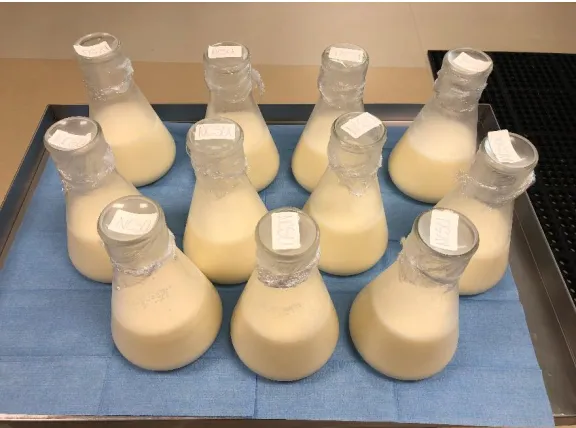
Institutional Review Board. Milk samples from 80 approved milk donors were pooled. From this
samples were analyzed for Secretory Immunoglobulin A (sIgA) and lysozyme activity.
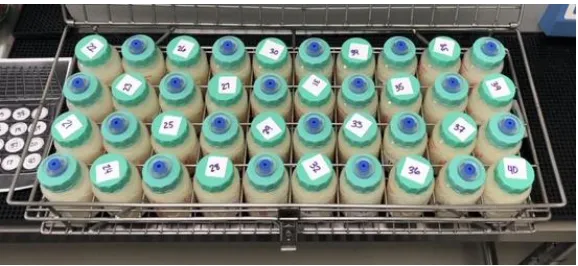
Temperature data was also recorded for each batch using Type T thermocouples and a data
logger.
Results
HoP equipment and methodology varied within the 34 articles reviewed and within
HMBANA milk banks surveyed. Of the milk samples pasteurized with different preheat
temperatures, the highest preheat temperature, of 95°C, had significantly lower sIgA activity
(0.42 mg/mL ± 0.10) than those preheated at 65°C (0.49 mg/mL ± 0.11) or 80°C (0.48 mg/mL ±
0.09). Lysozyme activity showed no statistically significant difference across all preheat
temperatures, but did show variation within each heat-treated batch based on bottle location.
Conclusions
Several processing methods are being investigated as an alternative to HoP. However, in
order for researchers’ findings to translate to human milk banks, they should attempt to emulate
current milk bank practices when using HoP as a means of comparison. Optimization HoP in
HMBANA milk banks is also needed to provide a consistent, high quality product to the fragile
infants they serve. More research is needed to determine ideal heating patterns, equipment, and
cooling practices. In the interim, HMBANA milk banks should utilize lower preheat
temperatures prior to HoP, as lower preheat temperatures were associated with higher retention
© Copyright 2019 by Montana Wagner-Gillespie
Milk
by
Montana Katherine Wagner-Gillespie
A thesis submitted to the Graduate Faculty of North Carolina State University
in partial fulfillment of the requirements for the degree of
Master of Science
Nutrition
Raleigh, North Carolina
2019
APPROVED BY:
_______________________________ _______________________________
April Fogleman Jonathan Allen
Committee Co-Chair Committee Co-Chair
_______________________________
ii
DEDICATION
This thesis is dedicated to Zachary Gillespie. I would not have been able to complete this
program without your unprecedented compassion and support. You have always put me and my
goals above all else, and for that I am continuously amazed, and forever grateful. When I was
trying to decide whether or not this was something I could take on, you promised that you’d do
everything you could to help me succeed. I had no idea what all that entailed until now. Your
generosity of spirit has been nothing short of amazing. There are not enough words to express
my gratitude for the unconditional love you’ve given, emotional outbursts you’ve comforted,
editing you’ve done, hours you’ve cleaned, stressful moments you’ve quelled, samples you’ve
pipetted, laughter you’ve elicited, meals you’ve cooked, loads of laundry you’ve run, and
countless commas you’ve added. You are the best partner I could ever ask for in this and all
iii
BIOGRAPHY
Montana is an International Board Certified Lactation Consultant and is currently the
Milk Bank Manager of the WakeMed Mothers’ Milk Bank in Cary, North Carolina; one of only
25 nonprofit milk banks in the United States. She received her Bachelor of Science degrees in
Nutrition Science and Biological Sciences from North Carolina State University in 2013. Her
current research interests include milk banking practices and optimization of pasteurization
iv
ACKNOWLEDGMENTS
First and foremost, I would like to acknowledge April Fogleman for believing in me
when I didn’t believe in myself and for being an unwavering source of encouragement and
compassion in academia and in life. I would like to acknowledge my committee (April
Fogleman, Jonathan Allen, and KP Sandeep) for their support, feedback, and guidance
throughout this project. I would like to acknowledge Michael Bumgardner and KP Sandeep at
North Carolina State University for assisting with the thermocouple data collection. I would like
to thank Hope Lima for her support and sharing her lab expertise. I would also like to thank the
staff at the WakeMed Mothers’ Milk Bank for their support and assisting with the collection of
all milk samples for this project. Lastly, I would like to thank my family and friends for their
v
TABLE OF CONTENTS
LIST OF TABLES ... viii
LIST OF FIGURES ... ix
Introduction: Human Milk Banking ... 1
Milk Banking Background ... 1
Donor Milk Processing... 2
Human Milk Components ... 3
Sources of Variation ... 5
References ... 7
Chapter 1: Heterogeneous Holder Pasteurization Methods: A Review ... 9
Introduction ... 9
Methods ... 10
Results ... 11
Holder Definition ... 11
Aliquot Size ... 11
Pasteurization Equipment ... 11
Preheat Temperatures ... 12
Temperature Control... 12
Container Type ... 13
Cooling Method ... 13
Discussion ... 19
Holder Definition ... 19
vi
Pasteurization Equipment ... 19
Preheat Temperatures ... 20
Temperature Control... 20
Container Type ... 21
Cooling Method ... 21
Conclusions ... 21
References ... 23
Chapter 2: Current Pasteurization Methods in HMBANA Milk Banks... 29
Introduction ... 29
Methods ... 29
Results ... 30
Automated Pasteurizers ... 30
Shaking Water Baths ... 30
Bottle Brands and Material Type ... 31
Discussion ... 32
Automated Pasteurizers ... 32
Shaking Water Baths ... 33
Bottle Brands and Material Type ... 34
Conclusions ... 34
References ... 35
Chapter 3: The Effects of Holder Pasteurization Preheat Temperature Profiles on Bioactive Proteins in Banked Donor Human Milk ... 36
vii
Materials & Methods... 37
Raw Milk Pool ... 37
Thermocouples ... 39
Heat Treatment ... 41
Secretory Immunoglobulin A Activity ... 42
Lysozyme Activity ... 43
Statistical Analysis ... 44
Results ... 44
Secretory Immunoglobulin A Activity ... 44
Lysozyme Activity ... 45
Heat Treatment ... 47
Discussion ... 48
Conclusions ... 50
References ... 51
APPENDICES ... 53
Chapter 1 Appendix A: PRISMA Flow Diagram ... 54
viii
LIST OF TABLES
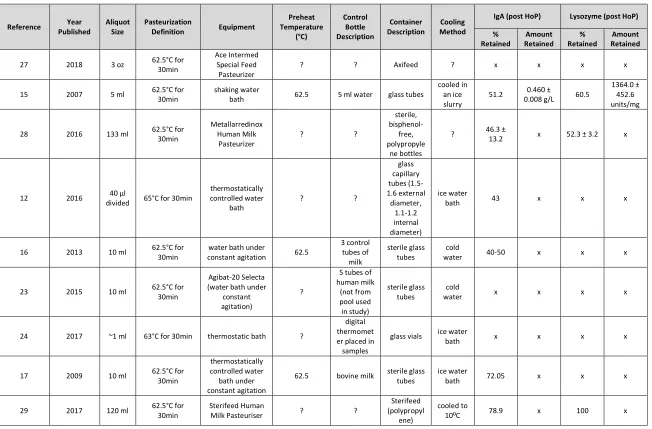
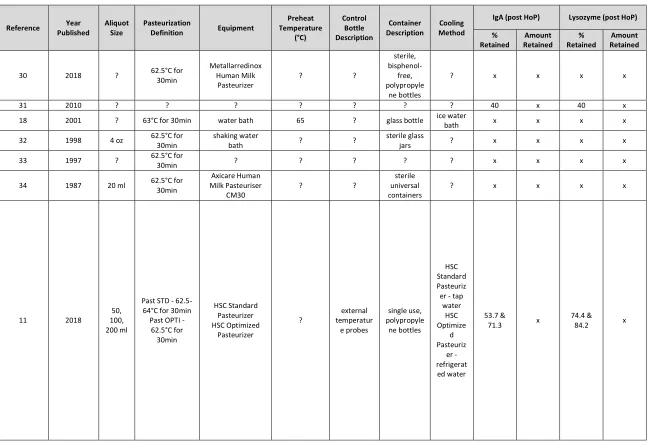
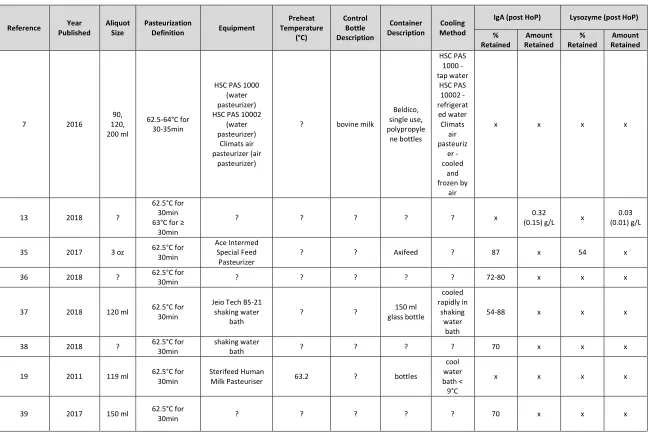
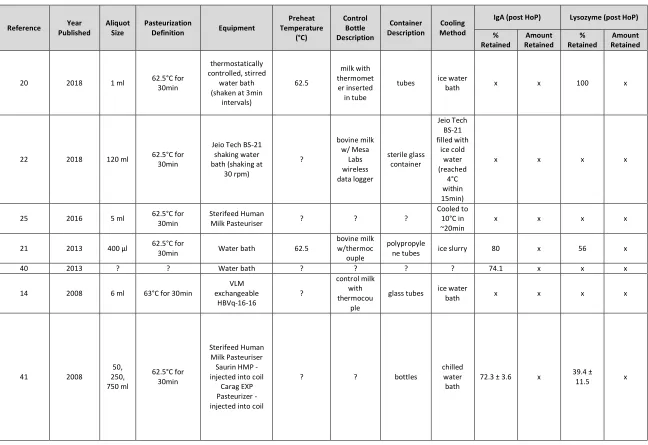
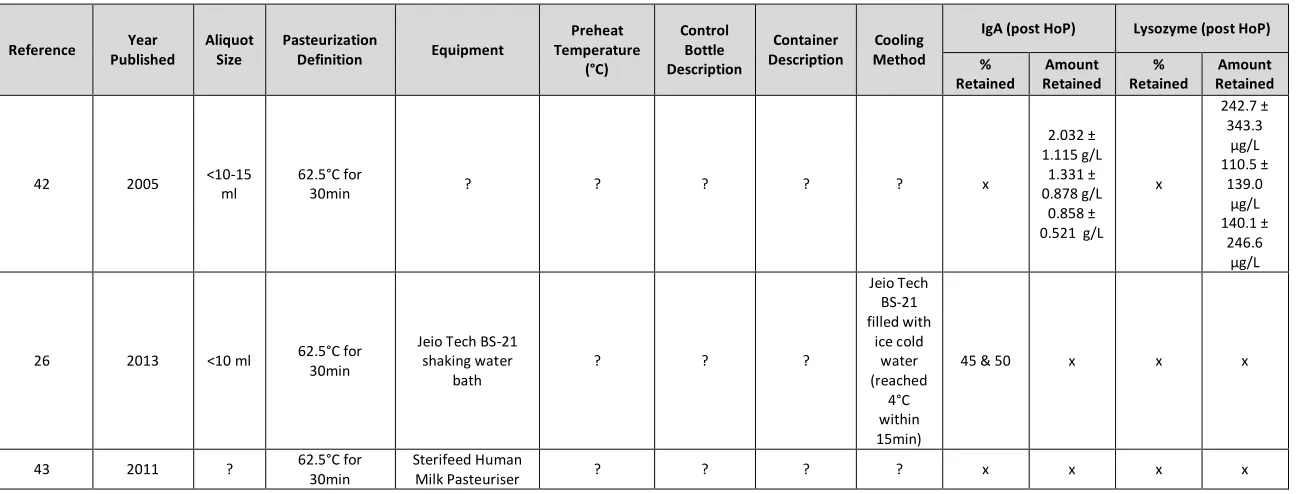
Table 1.1 Summary of Holder Pasteurization Methods, Equipment, sIgA and Lysozyme
Retention Rates. ... 14
ix
LIST OF FIGURES
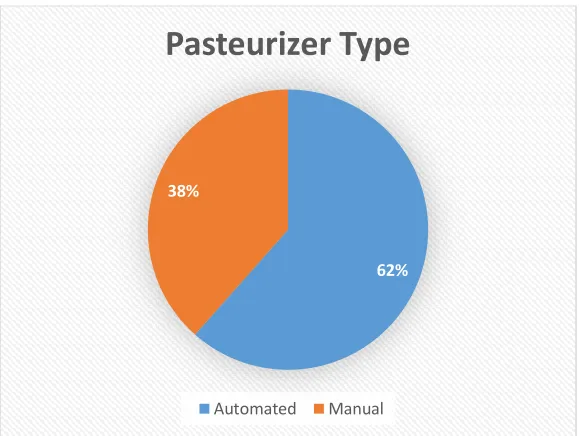
Figure 2.1 Pasteurizer Type ... 30
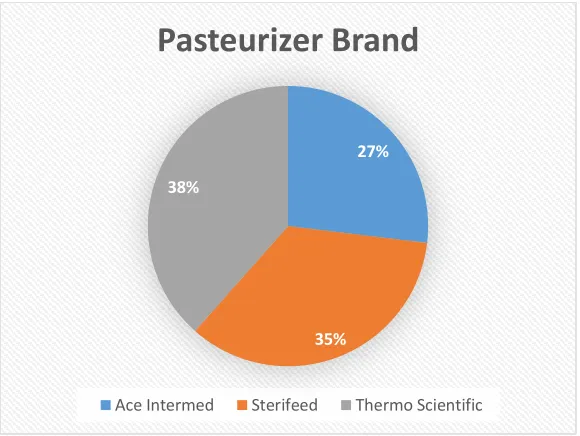
Figure 2.2 Pasteurizer Brand ... 31
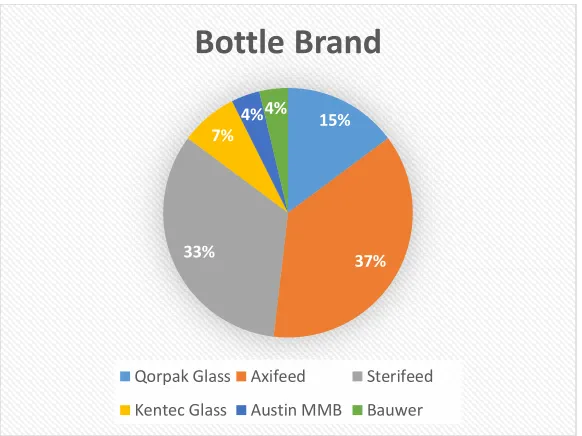
Figure 2.3 Bottle Brand ... 32
Figure 2.4 Bottle Material ... 32
Figure 3.1 Raw Milk Pool ... 38
Figure 3.2 Sealed Bottles of Raw Milk ... 38
Figure 3.3 Numbered Bottles Outfitted with Probe Caps ... 39
Figure 3.4 Bottles in Rack with Type T Thermocouple Probes ... 40
Figure 3.5 Bottle Rack Rows and Columns ... 40
Figure 3.6 Bottle Rack in Shaking Water Bath with Thermocouples and Data Logger ... 41
Figure 3.7 Secretory Immunoglobulin A Activity vs. Batch... 45
Figure 3.8 Lysozyme Activity vs. Batch ... 46
Figure 3.9 Lysozyme Activity by Bottle Location ... 47
1
INTRODUCTION Human Milk Banking Milk Banking Background
Donor milk banks exist in many countries. The first human milk bank in the United
States was established in 1910 at the Boston Floating Children’s Hospital in Boston,
Massachusetts [1]. The Boston Milk Bank was not a “milk bank” in the modern sense, but rather
a home for wet nurses who fed infants that were admitted to the hospital [1]. Over time, the
Boston Milk Bank evolved into a place where donors would provide milk instead of wet nursing
infants [1]. This concept gave rise to the modern milk bank as we know it today [1].
Milk banks are sites that screen donors, collect their pumped milk, process and pasteurize
the milk, and dispense it to infants in need [1]. The majority of the recipients of pasteurized
donor human milk (PDHM), are infants admitted to the neonatal intensive care unit (NICU) [1].
When their own mother’s milk is not available or in sufficient supply, donor milk can be used as
a supplementary feeding for premature, sick, and medically fragile infants [1]. Because of the
vulnerable population served, milk banks must follow strict guidelines for operation [1].
Different countries rely on different organizations for milk bank oversight, depending on
the existing laws and regulations within that country [1]. In the United States and Canada, the
Human Milk Banking Association of North America (HMBANA) provides evidence-based
guidelines, inspects, and accredits all nonprofit milk banks, of which there are currently twenty
seven [1]. HMBANA was established in 1985 to develop donor screening and processing
guidelines for milk banks in response to safety concerns brought forward during the AIDS crisis
2
Donor Milk Processing
Current HMBANA guidelines require milk donations to be pooled together. This process
involves thawing milk donations from at least two different donors and mixing them together.
Pooled milk is then aliquoted into clean containers. Milk is pasteurized in sealed containers.
HMBANA requires that all milk be heat-treated prior to dispensation, unless a patient’s
prescribing health care provider requires only raw milk to be dispensed [1]. The dispensation of
raw milk requires that milk fall within certain bacterial growth parameters to ensure its safety
[1]. The majority of milk dispensed is heat-treated, for use in the NICU setting [1]. Current
HMBANA guidelines require milk be pasteurized using a method known as Holder
pasteurization (HoP) [1].
The HoP method was first published by Nicolas Appert in 1831 and was later patented by
Louis Pasteur in 1865 for the purpose of pasteurizing wine [2]. HoP was later adopted by the
dairy industry [2]. Bovine milk was heated in “holder trays” which lead to the term Holder
pasteurization [2]. HoP was adopted by the human milk banking industry as it was thought to be
the best compromise that kept bioactive components of human milk available in relatively high
percentages for the infant but also killed pathogenic bacteria and viruses that could harm the
infant [2]. The temperature used to achieve HoP in milk banks has changed over the years. As
recently as 2000, HMBANA required milk to be heated between 57 and 63 degrees C [3]. The
current HMBANA guidelines require that all milk is heated to 62.5 degrees C and held between
62 and 64.5 degrees C for thirty minutes [1]. Following the thirty minutes of pasteurization milk
must be rapidly cooled to avoid further damage to human milk’s beneficial, heat liable
3 HoP can be achieved with different equipment [1]. Human milk pasteurizers are
automated pasteurizers specifically designed for pasteurizing donor milk [1]. These pasteurizers
heat and cool the milk in one unit automatically, without the need for monitoring and manual
transfer by milk bank personnel [1]. Automated pasteurizers use either ambient tap water or
refrigerated water to cool the milk post pasteurization [4, 5]. There are no HMBANA guidelines
for operation of an automated human milk pasteurizer, only that the manufacturer’s instructions
for pasteurization should be followed [1].
Manual pasteurizers or shaking water baths are common lab equipment, not specifically
designed for the pasteurization of human milk, but can be used for this purpose [6]. HMBANA
provides more exhaustive guidelines for the pasteurization of human milk in a shaking water
bath [1]. Shaking water baths used for pasteurization should be only used to heat human milk [1].
Milk is placed in the preheated water bath and brought up to the desired 62.5 degrees C using a
control bottle monitored by milk bank personnel [1]. This control bottle may either be filled with
the same volume of milk or water found in the bottles being pasteurized. The control bottle
should be the same temperature of the milk prior to pasteurization, this bottle is outfitted with a
calibrated thermometer to monitor temperature throughout pasteurization [1]. Once the control
bottles reaches 62.5 degrees C, the thirty minute pasteurization period begins [1]. Milk must be
monitored for the remaining thirty minutes and maintained between 62 and 64.5 degrees C for
the entire pasteurization period [1]. Post pasteurization, milk must be manually transferred from
the shaking water bath to an ice bath to cool the milk to 4 degrees C [1].
Human Milk Components
Human milk is a complete and dynamic source of nutrition for infants; its composition
4 This specifically tailored source of nutrition, makes human milk the preferred source of nutrition
for human infants.
Human milk contains lipids that increase in concentration throughout a feed and over
time [10]. Ninety-eight percent of the lipids in human milk are triglycerides that facilitate the
transport of fat-soluble vitamins [11, 12]. Part of the human milk lipid fraction is made up of
polyunsaturated fatty acids (PUFAs). These PUFAs vary in chain length and their concentrations
vary depending on maternal diet [13]. The long-chained polyunsaturated fatty acids (LCPUFAs)
found in human milk have been found to improve visual and retinal function and increase visual
acuity in breastfed infants in clinical trials [14, 15].
Lactose is the primary carbohydrate found in human milk. When compared to the milk of
other species, human milk has one of the highest concentrations of lactose [16]. Human milk also
contains over 200 different structures of oligosaccharides or carbohydrates not able to be
digested by the infant. These human milk oligosaccharides (HMOs) function as a prebiotic by
providing an energy source for beneficial bacteria in the infant gut [17]. HMOs are not able to be
used by undesirable bacteria, giving the beneficial bacteria an advantage to grow and thrive in
the infant’s intestines [17].
There are over 400 proteins found in human milk [18]. These proteins include immune
and growth factors, enzymes and hormones [18]. Human milk contains both casein and whey
components. The whey-to-casein ratio starts at 80:20 during early lactation and eventually
reaches approximately 50:50 [19]. Lysozyme is an enzyme found in the whey portion of human
milk [19]. It has the ability to degrade the cell wall and kill gram-positive and gram-negative
bacteria in the infant’s intestinal tract [9, 20]. This function gives lysozyme an important role in
5 role in the health of infants. sIgA is also found in the whey portion of human milk [21]. sIgA is
the predominant immunoglobulin found in human milk comprising over 90% of the
immunoglobulin fraction [22]. It works by binding to microbial antigens in the infant gut without
causing inflammation associated with other immunoglobulins [19, 22, 23].
Sources of Variation
Because human milk is a dynamic fluid that changes throughout the infants life,
throughout the day, and even throughout an individual feeding or pumping session, it stands to
reason that the human milk donated to milk banks can vary in composition as well [7, 8, 9].
HMBANA does not have an age limit for the infant of a donor mother [1]. Therefore, donors to
HMBANA milk banks could be pumping for a 2 month old or 2 year old child. There is also
variance in the maternal diet of donor mothers that could affect components like lipid
concentration and type [13]. While some milk banks complete nutritional analysis on individual
donor’s milk it is not a HMBANA requirement [1].
Outside of donor to donor variation, the milk bank itself may be a source of variation in
PDHM composition. Pooling practices are not well defined within the HMBANA guidelines [1].
Guidelines are provided for thawing human milk donations [1]. However, the only pooling
requirement is that “pooling of fresh raw or defrosted fresh-frozen milk is conducted under clean
conditions” [1]. This leaves the milk pooling and mixing technique up the director of the milk
bank, causing variation between banks. While HoP is a requirement of HMBANA, the
equipment used to achieve it is varied [1]. HoP may be accomplished with shaking water baths
or automated human milk pasteurizers [1]. The use of different equipment may also result in
different milk heating patterns and denaturation of the proteins found in human milk,
6 The primary recipients of PDHM are infants admitted to the NICU. These infants are
premature, medically fragile, and sick infants. The amounts of milk consumed in the NICU are
often very small. Therefore source of variation in PDHM should be carefully examined and
minimized as much as possible in order to provide the highest quality product to those fragile
7
REFERENCES
1. Human Milk Banking Association of North America. Guidelines for the establishment and
operation of a donor human milk bank. 10th ed. Fort Worth, Texas: 2018.
2. Buffin R, Pradat P, Trompette J, et al. Air and water processes do not produce the same high-quality pasteurization of donor human milk. Journal of Human Lactation. 2017;33(4):717-724. https://journals.sagepub.com/doi/full/10.1177/0890334417707962. doi:
10.1177/0890334417707962.
3. Gayà A, Calvo J. Improving pasteurization to preserve the biological components of donated
human milk. Frontiers in Pediatrics. 2018;6:288.
https://www.ncbi.nlm.nih.gov/pubmed/30356694. doi: 10.3389/fped.2018.00288.
4. Ace Intermed Limited. HMP 2070-40HC UL Operator/Maintenance Instruction Manual.
5. Medcare Colgate Ltd. S180ECO USA/208V PASTEURISER MANUAL. January 2015.
6. Precision User Manual Shaking Water Baths Manual Part Number U01366, August 01, 2016
[PDF]. (n.d.). Thermoscientific.
7. Daly SE, Kent JC, Owens RA, Hartmann PE. Frequency and degree of milk removal and the
short-term control of human milk synthesis. Exp Physiol. 1996;81(5):861-875.
8. Dewey KG, Finley DA, Lonnerdal B. Breast milk volume and composition during late
lactation (7-20 months). J Pediatr Gastroenterol Nutr. 1984;3(5):713-720.
9. Lonnerdal B. Nutritional and physiologic significance of human milk proteins. Am J Clin Nutr. 2003;77(6):1537s-1543s.
10.Gidrewicz DA, Fenton TR. A systematic review and meta-analysis of the nutrient content of
preterm and term breast milk. BMC Pediatr. 2014;14:216.
11.Manson WG, Weaver LT. Fat digestion in the neonate. Arch Dis Child Fetal Neonatal Ed.
1997;76(3):F206-F211.
12.Jensen RG. Lipids in human milk. Lipids. 1999;34(12):1243-1271.
13.Weseler AR, Dirix CE, Bruins MJ, Hornstra G. Dietary arachidonic acid dose-dependently
increases the arachidonic acid concentration in human milk. J Nutr. 2008;138(11):2190-2197.
14.Jensen RG, Hagerty MM, McMahon KE. Lipids of human milk and infant formulas: a
8
15.Jensen CL, Prager TC, Fraley JK, Chen H, Anderson RE, Heird WC. Effect of dietary
linoleic/alpha-linolenic acid ratio on growth and visual function of term infants. J Pediatr. 1997;131(2):200-209.
16.Jenness R. Biochemical and nutritional aspects of milk and colostrum. In: Larson BL, ed. Lactation. Iowa State University Press; 1985: 164 - 197.
17.Bode L. The functional biology of human milk oligosaccharides. Early Hum Dev.
2015;91(11):619-622.
18.Andreas NJ, Kampmann B, Mehring Le-Doare K. Human breast milk: a review on its
composition and bioactivity. Early Hum Dev. 2015;91(11):629-635.
19.Atkinson SA, Lödderdal B. Proteins and Non-protein Nitrogen in Human Milk. Boca Raton,
FL: CRC Press; 1989.
20.Chipman DM, Sharon N. Mechanism of lysozyme action. Science. 1969;165(3892):454-465.
21.Jensen R. Handbook of Milk Composition. San Diego, CA: Academic Press Inc; 1995.
22.Sousa SG, Delgadillo I, Saraiva JA. Effect of thermal pasteurisation and high-pressure processing on immunoglobulin content and lysozyme and lactoperoxidase activity in human colostrum. Food Chemistry. 2014;151:79-85.
https://www.sciencedirect.com/science/article/pii/S0308814613016476. doi: 10.1016/j.foodchem.2013.11.024.
23.Tully DB, Jones F, Tully MR. Donor milk: What's in it and what's not. J Hum Lact.
2001;17(2):152-155. https://www.ncbi.nlm.nih.gov/pubmed/11847831. Accessed November 27, 2018.
24.Ballard O, Morrow AL. Human milk composition: nutrients and bioactive factors. Pediatr
Clin North Am. 2013;60(1):49-74.
9
CHAPTER 1
Heterogeneous Holder Pasteurization Methods: A Review Introduction
Human milk is the ideal source of nutrition for all infants. It contains an array of
bioactive components that help protect infants from pathogens [1]. Maintenance of an exclusive
human milk diet, is especially important for those infants born premature. Human milk offers
many well-documented benefits to premature and fragile infants including protection from a
variety of illnesses, most notably, Necrotizing Enterocolitis (NEC), a bowel disease that can be
fatal to premature infants [2, 3]. When mother’s own milk is not available or in sufficient supply
for her premature or medically fragile infant, pasteurized donor human milk (PDHM) from an
accredited human milk bank (HMB) is the preferred choice for feeding [2, 4, 5]. HMBs collect
milk donations from screened donors, pool donations together, pasteurize the milk, and dispense
it to Neonatal Intensive Care Units (NICUs) to supplement the needs of the premature and
medically fragile infants in their care [6]. The PDHM that HMBs provide, is recognized as the
preferred second choice to mother’s own milk for premature infants by the World Health
Organization (WHO) and the American Academy of Pediatrics (AAP) [2, 4, 5].
International human milk banking guidelines require donor human milk to be pasteurized
using the Holder pasteurization (HoP) method (62.5°C for 30 minutes) to effectively rid it of
pathogens that could adversely affect the health of the NICU patients who receive it [6]. HoP is
also referred to as low temperature long time (LTLT). LTLT was patented in 1865 by Louis
Pasteur for the purpose of pasteurizing wine [7]. LTLT was historically used in the dairy industry
to pasteurize cow’s milk. It is the method of choice for HMBs because HoP is regarded as the
best compromise between destruction of harmful pathogens and maintenance of human milk
10 For this reason, it has been recommended that future research seek to improve human milk
processing methods [3]. High temperature short time (HTST), ultraviolet-C irradiation (UV-C),
high pressure processing (HPP), and ultrasonic processing are being explored as alternatives to
the reference method of HoP for future use in HMBs [9]. Each one of these alternative
processing methods would need to be compared to the reference method of HoP, to determine if
it is an effective method for use in HMBs.
Despite the extensive body of research describing HoP’s effect on the components of
human milk, there is heterogeneity in the materials and methods used to achieve HoP. In a 2016
review of 44 articles, Peila et al. described the variable findings related to the quality of milk
before and after pasteurization [10]. They concluded that heterogeneity of test protocols may be
a possible explanation of the variation [10]. Buffin et al. stated that most HoP studies have been
conducted “in vitro with very small samples of human milk, with discrepancies in the results
[11].” In this review, we aim to describe sources of heterogeneity and their possible impact on
human milk.
Methods
Databases PubMed, Food Science and Technology Abstracts, and Web of Science were
searched using Boolean term: ((“Human milk” OR “breast milk” OR breastmilk) AND
(Processing OR pasteurization OR holder OR LTLT OR “low temperature long time” or
low-temperature-long-time)) on December 14th 2018, to identify studies that employed HoP as heat
treatment for human milk. PubMed, Food Science and Technology Abstracts, and Web of
Science generated 442, 154, and 515 articles respectively. Inclusion criteria consisted of
peer-reviewed articles published between 1980 and December 2018 that assessed or peer-reviewed HoP’s
11 bactericidal activity. Of the 1,111 articles generated by the search, 49 were found to be relevant.
Relevant articles had full English text available through the North Carolina State University
Library licenses. The 49 articles’ references were also reviewed for relevant content. Of the 49
relevant articles, 34 were original research (Table 1.1,Chapter 1 Appendix A).
Results
Holder Definition
All 34 original research articles either sourced their milk from a HMB that utilized HoP
or defined their heating parameters for HoP (Table 1.1). However, definitions varied from study to study. Most studies reported heating their milk samples to 62.5°C for 30 minutes. Out of the
34 studies, 5 reported heating their milk higher than 62.5°C, with the highest pasteurization
temperature being 65°C [7,11,12, 13,14]. Out of the 34 studies, 2 reported heating their milk
samples longer than 30 minutes [7,13].
Aliquot Size
Of the 34 articles reviewed, 25 reported aliquot size used during HoP. Of those 25, the
reported aliquot size ranged from 40 µL to 750 mL (Table 1.1). The 25 articles describe 31 aliquots of human milk, and 17 of the 31 aliquots reported, fell within the range of practical sizes
that would be pasteurized in a HMB (30 – 250 mL).
Pasteurization Equipment
Twenty-nine of the 34 articles reviewed reported the type of equipment used to achieve
HoP (Table 1.1). Some studies used equipment specifically designed for human milk pasteurization, which are referred to as automated human milk pasteurizers. Nine different
12 equipment type. Sixteen of the 29 studies reported using a water bath to heat milk. Water baths
used varied in size, model, and agitation.
Preheat Temperatures
The preheat temperature is the temperature of the water in the water bath or human milk
pasteurizers, when the milk samples are added for a cycle of HoP. Only 7 of the 34 studies
reviewed, specifically reported a preheat temperature for the water baths or human milk
pasteurizers used to achieve HoP [15, 16, 17, 18, 19, 20, 21]. Five studies reported using 62.5°C
water to preheat their milk [15, 16, 17, 20, 21]. One study reported using 63.2°C water to preheat
their milk and one study reported using 65°C as their preheat temperature [18, 19].
Temperature Control
When pasteurizing human milk, a control bottle outfitted with a thermometer is used to
monitor the milk’s temperature. Ten of the 34 articles reviewed described the type of liquid used
for the control bottle (Table 1.1). Four of the articles described using bovine milk in their temperature control container, citing similar heating patterns to human milk, and a desire not to
waste human milk in the control bottle as it is typically not used for analysis [7, 17, 21, 22]. Five
studies used human milk for the control bottle, but it is not clear which studies used the same
pool of milk being analyzed, or separate human milk samples available to them [14, 16, 20, 23,
24]. Only one study reported using water in their control bottle [15]. Different pieces of
equipment were also used to measure the temperature of the milk. External probes, digital
thermometers, and thermocouples were all employed to measure temperature. None of the
13
Container Type
Twenty-three of the 34 studies reviewed described the container used for pasteurization.
The container descriptions were varied (Table 1.1). Most milk samples were pasteurized in small aliquots using glass and polypropylene tubes, while, some milk samples were pasteurized in
glass, polypropylene, and high-density polyethylene bottles or containers more similar to those
that would be used in a HMB. Some containers were sterile, but most were not described as
sterile or non-sterile. Only one study described the thickness of the container wall [12].
Cooling Method
Nineteen studies reported their method of cooling after the pasteurization period was
complete. Milk was cooled using ambient temperature tap water, refrigerated water, and ice
baths/slurries. Only three articles reported the time in which it took their milk samples to reach
the desired chilled temperature. Desired temperatures were reached between 15 and 20 minutes
post pasteurization [22, 25, 26]. Two studies utilized a separate shaking water bath, filled with
14
Table 1.1. Summary of Holder Pasteurization Methods, Equipment, sIgA and Lysozyme Retention Rates.
Reference Year Published
Aliquot Size
Pasteurization
Definition Equipment
Preheat Temperature (°C) Control Bottle Description Container Description Cooling Method
IgA (post HoP) Lysozyme (post HoP) % Retained Amount Retained % Retained Amount Retained 27 2018 3 oz 62.5°C for
30min
Ace Intermed Special Feed
Pasteurizer
? ? Axifeed ? x x x x
15 2007 5 ml 62.5°C for 30min
shaking water
bath 62.5 5 ml water glass tubes
cooled in an ice slurry
51.2 0.460 ±
0.008 g/L 60.5
1364.0 ± 452.6 units/mg
28 2016 133 ml 62.5°C for 30min Metallarredinox Human Milk Pasteurizer ? ? sterile, bisphenol-free, polypropyle ne bottles
? 46.3 ±
13.2 x 52.3 ± 3.2 x
12 2016 40 µl
divided 65°C for 30min
thermostatically controlled water bath ? ? glass capillary tubes (1.5-1.6 external diameter, 1.1-1.2 internal diameter) ice water
bath 43 x x x
16 2013 10 ml 62.5°C for 30min
water bath under
constant agitation 62.5
3 control tubes of milk sterile glass tubes cold
water 40-50 x x x
23 2015 10 ml 62.5°C for 30min
Agibat-20 Selecta (water bath under
constant agitation)
?
5 tubes of human milk (not from pool used in study) sterile glass tubes cold
water x x x x
24 2017 ~1 ml 63°C for 30min thermostatic bath ?
digital thermomet er placed in
samples
glass vials ice water
bath x x x x
17 2009 10 ml 62.5°C for 30min
thermostatically controlled water bath under constant agitation
62.5 bovine milk sterile glass tubes
ice water
bath 72.05 x x x
29 2017 120 ml 62.5°C for 30min
Sterifeed Human
Milk Pasteuriser ? ?
Sterifeed (polypropyl
ene)
cooled to
15
Table 1.1. Summary of Holder Pasteurization Methods, Equipment, sIgA and Lysozyme Retention Rates (Continued).
Reference Year Published
Aliquot Size
Pasteurization
Definition Equipment
Preheat Temperature (°C) Control Bottle Description Container Description Cooling Method
IgA (post HoP) Lysozyme (post HoP) % Retained Amount Retained % Retained Amount Retained
30 2018 ? 62.5°C for 30min Metallarredinox Human Milk Pasteurizer ? ? sterile, bisphenol-free, polypropyle ne bottles
? x x x x
31 2010 ? ? ? ? ? ? ? 40 x 40 x
18 2001 ? 63°C for 30min water bath 65 ? glass bottle ice water
bath x x x x
32 1998 4 oz 62.5°C for 30min
shaking water
bath ? ?
sterile glass
jars ? x x x x
33 1997 ? 62.5°C for
30min ? ? ? ? ? x x x x
34 1987 20 ml 62.5°C for 30min Axicare Human Milk Pasteuriser CM30 ? ? sterile universal containers
? x x x x
11 2018
50, 100, 200 ml
Past STD - 62.5-64°C for 30min Past OPTI -
62.5°C for 30min HSC Standard Pasteurizer HSC Optimized Pasteurizer ? external temperatur e probes single use, polypropyle ne bottles HSC Standard Pasteuriz
er - tap water HSC Optimize d Pasteuriz er - refrigerat ed water 53.7 &
71.3 x
74.4 &
16
Table 1.1. Summary of Holder Pasteurization Methods, Equipment, sIgA and Lysozyme Retention Rates (Continued).
Reference Year Published
Aliquot Size
Pasteurization
Definition Equipment
Preheat Temperature (°C) Control Bottle Description Container Description Cooling Method
IgA (post HoP) Lysozyme (post HoP) % Retained Amount Retained % Retained Amount Retained
7 2016
90, 120, 200 ml
62.5-64°C for 30-35min
HSC PAS 1000 (water pasteurizer) HSC PAS 10002
(water pasteurizer)
Climats air pasteurizer (air
pasteurizer)
? bovine milk
Beldico, single use, polypropyle ne bottles HSC PAS 1000 - tap water HSC PAS 10002 - refrigerat ed water Climats air pasteuriz er - cooled and frozen by air
x x x x
13 2018 ?
62.5°C for 30min 63°C for ≥
30min
? ? ? ? ? x 0.32
(0.15) g/L x
0.03 (0.01) g/L
35 2017 3 oz 62.5°C for 30min
Ace Intermed Special Feed
Pasteurizer
? ? Axifeed ? 87 x 54 x
36 2018 ? 62.5°C for
30min ? ? ? ? ? 72-80 x x x
37 2018 120 ml 62.5°C for 30min
Jeio Tech BS-21 shaking water
bath
? ? 150 ml
glass bottle cooled rapidly in shaking water bath
54-88 x x x
38 2018 ? 62.5°C for 30min
shaking water
bath ? ? ? ? 70 x x x
19 2011 119 ml 62.5°C for 30min
Sterifeed Human
Milk Pasteuriser 63.2 ? bottles
cool water bath < 9°C
x x x x
39 2017 150 ml 62.5°C for
17
Table 1.1. Summary of Holder Pasteurization Methods, Equipment, sIgA and Lysozyme Retention Rates (Continued).
Reference Year Published
Aliquot Size
Pasteurization
Definition Equipment
Preheat Temperature (°C) Control Bottle Description Container Description Cooling Method
IgA (post HoP) Lysozyme (post HoP) % Retained Amount Retained % Retained Amount Retained
20 2018 1 ml 62.5°C for 30min
thermostatically controlled, stirred
water bath (shaken at 3min
intervals) 62.5 milk with thermomet er inserted in tube
tubes ice water
bath x x 100 x
22 2018 120 ml 62.5°C for 30min
Jeio Tech BS-21 shaking water bath (shaking at
30 rpm) ? bovine milk w/ Mesa Labs wireless data logger sterile glass container Jeio Tech BS-21 filled with ice cold water (reached 4°C within 15min)
x x x x
25 2016 5 ml 62.5°C for 30min
Sterifeed Human
Milk Pasteuriser ? ? ?
Cooled to 10°C in ~20min
x x x x
21 2013 400 µl 62.5°C for
30min Water bath 62.5
bovine milk w/thermoc
ouple
polypropyle
ne tubes ice slurry 80 x 56 x
40 2013 ? ? Water bath ? ? ? ? 74.1 x x x
14 2008 6 ml 63°C for 30min
VLM exchangeable HBVq-16-16 ? control milk with thermocou ple
glass tubes ice water
bath x x x x
41 2008
50, 250, 750 ml 62.5°C for 30min Sterifeed Human Milk Pasteuriser
Saurin HMP - injected into coil
Carag EXP Pasteurizer - injected into coil
? ? bottles
chilled water bath
72.3 ± 3.6 x 39.4 ±
18
Table 1.1. Summary of Holder Pasteurization Methods, Equipment, sIgA and Lysozyme Retention Rates (Continued).
Reference Year Published
Aliquot Size
Pasteurization
Definition Equipment
Preheat Temperature (°C) Control Bottle Description Container Description Cooling Method
IgA (post HoP) Lysozyme (post HoP) % Retained Amount Retained % Retained Amount Retained
42 2005 <10-15 ml
62.5°C for
30min ? ? ? ? ? x
2.032 ± 1.115 g/L
1.331 ± 0.878 g/L
0.858 ± 0.521 g/L
x 242.7 ± 343.3 µg/L 110.5 ± 139.0 µg/L 140.1 ± 246.6 µg/L
26 2013 <10 ml 62.5°C for 30min
Jeio Tech BS-21 shaking water bath ? ? ? Jeio Tech BS-21 filled with ice cold water (reached 4°C within 15min)
45 & 50 x x x
43 2011 ? 62.5°C for 30min
Sterifeed Human
19
Discussion
Holder Definition
HoP is defined by international milk banking guidelines as 62.5°C for 30 minutes [6].
However, of the 34 studies reviewed, six defined HoP differently. Czank et al. found that small
changes in temperature had the greatest effect on the retention levels of secretory
immunoglobulin A, lysozyme, and lactoferrin when compared to changes in overall holding time
[41, 44]. At least 90% of the immunological activity is retained when milk is pasteurized at 57°C
for 30 minutes [41]. Any increase over 57°C has detrimental effects on these proteins [41,44].
While the temperature variance between the 34 studies was small, only 2.5 degrees C, this
variance could have a significant impact on retention rates of immunological proteins; especially
given than 62.5°C is already considered by many as excessive for maintaining the safety of
human milk [44].
Aliquot Size
The aliquot sizes of the 34 studies reviewed varied greatly. Many of them were not
consistent with the bottle sizes used in HMBs. Small aliquot sizes require shorter overall heating
periods, as they do not experience the same lag time (time to it takes to reach the desired
pasteurization temperature) that larger volumes of human milk do [41]. When larger volumes of
milk are pasteurized, they experience a considerable lag time [41]. This lag time can sometimes
be close to the desired pasteurization holding time. Czank et al. report lag times of 15 and 30
minutes for two different pieces of pasteurization equipment [41].
Pasteurization Equipment
The 34 studies reviewed used different equipment to heat human milk and achieve HoP.
20 These different heat curves may have differing impacts on immunological protein retention rates
after pasteurization, particularly, if they spend a considerable amount of their lag time above
57°C [41, 44]. Some of the pasteurization equipment agitated the milk during the heating
process. The frequency, and intensity of the agitation was not well reported. Agitation is
recommended by international human milk banking guidelines when a shaking water bath is
used for pasteurization, but the intensity is not defined [6].
Preheat Temperatures
Preheat temperatures were not well reported. The preheat temperature used, has the
potential to impact the lag time of the milk; warmer temperatures with shorter lag times, cooler
temperatures with longer lag times. Omission of the preheat temperature from the methods when
discussing HoP, is omission of a key piece of information for others to be able to replicate the
experiment, and may have an impact on the quality of the milk samples and retention of
immunological proteins [41,44].
Temperature Control
Human milk composition varies throughout lactation and from mother to mother [45, 46].
Fat content is variable from mother to mother and from pumping session to pumping session [46,
47]. Varying milk composition, especially fat, changes the density of milk [46, 48]. The
composition of milk varies between species and differs from the density of water [48, 49].
Bovine milk density ranges from 1027 to 1033 kg /V at 20° C [46, 48, 50]. Water density is
998.2 kg /V at 20°C [46, 48, 50]. Density plays a role in thermal transfer [51, 52]. Since the
density of milk is varied and denser than water, the control bottles used in some of the articles
reviewed may not have been a true representation of the heat profile of the milk samples being
21
Container Type
Container type can play a role in the retention of immunological proteins found in human
milk [53]. Some container materials, like Pyrex glass, have been shown to retain immunological
proteins at higher rates during storage [53]. The majority of containers used in the 34 studies
reviewed, were glass tubes used only in the research laboratory setting. Only one study described
the wall thickness of the milk container used, a glass capillary tube [12]. While glass containers
are used in the milk bank setting, their wall thickness is much greater than that of a capillary tube
[6]. Wall thickness may affect the intensity and rate that heat can penetrate through to the milk
inside the container.
Cooling Method
Of the 19 studies that reported cooling protocols, milk samples were cooled using varying
methods. Samples were cooled using ambient temperature tap water, refrigerated tap water, or in
an ice bath or ice slurry. Two studies utilized shaking water baths to agitate the milk during the
cooling process. Each of these different methods could affect the overall temperature curve of
the milk samples, because they have the potential to cool the milk at different rates [22, 26].
International milk banking guidelines recommend cooling milk rapidly after pasteurization to
minimize quality loss [6].
Conclusions
Heterogeneity of HoP methods could affect the quality of the milk being tested and may
skew the perception of HoP’s overall impact on human milk [11, 41, 44]. HoP must be optimized
and executed under conditions similar to those found in HMBs in order to ensure clinical
relevance [11, 41, 44]. Without an optimized protocol for HoP, it is not possible to compare it to
22 processing. The European Society for Paediatric Gastroenterology Hepatology and Nutrition, has
called for improvement of milk processing methods stating that “pasteurization should be
optimized to maintain microbiological safety while preserving the highest amount and activity o f
the bioactive milk components” [3, 30]. Defined holding temperature, aliquot size, pasteurization
equipment, preheat temperature, control sample, container type, and cooling methods varied
between all 34 studies that were reviewed. Optimization of these variables could improve the
quality of milk currently processed in HMBs, and the consistency of the body of research
23
REFERENCES
1. Tully DB, Jones F, Tully MR. Donor milk: What's in it and what's not. J Hum Lact.
2001;17(2):152-155. https://www.ncbi.nlm.nih.gov/pubmed/11847831. Accessed November 27, 2018.
2. Donor human milk for the high-risk infant: Preparation, safety, and usage options in the Snited states. Pediatrics. 2017;139(1):e20163440.
3. Arslanoglu S, Corpeleijn W, Moro G, et al. Donor human milk for preterm infants: Current
evidence and research directions. Journal of Pediatric Gastroenterology and Nutrition. 2013;57(4):535-542.
4. V H Holsinger, K T Rajkowski, J R Stabel. Milk pasteurisation and safety: A brief history and update. Revue scientifique et technique (International Office of Epizootics).
1997;16(2):441-451.
5. World Health Organization. U, World Health Organization, UNAIDS. Global strategy for
infant and young child feeding. Albany: World Health Organization; 2003.
6. Human Milk Banking Association of North America. Guidelines for the establishment and
operation of a donor human milk bank. 10th ed. Fort Worth, Texas: 2018.
7. Buffin R, Pradat P, Trompette J, et al. Air and water processes do not produce the same high-quality pasteurization of donor human milk. Journal of Human Lactation. 2017;33(4):717-724. https://journals.sagepub.com/doi/full/10.1177/0890334417707962. doi:
10.1177/0890334417707962.
8. Picaud, Jean-Charles, MD, PhD|Buffin, Rachel, MD. Human Milk—Treatment and quality
of banked human milk. Clinics in Perinatology. 2016;44(1):95-119. https://www.clinicalkey.es/playcontent/1-s2.0-S0095510816301014. doi: 10.1016/j.clp.2016.11.003.
9. Peila C, Emmerik NE, Giribaldi M, et al. Human milk processing: A systematic review of
innovative techniques to ensure the safety and quality of donor milk. J Pediatr Gastroenterol Nutr. 2017;64(3):353-361. https://www.ncbi.nlm.nih.gov/pubmed/27755345. Accessed November 27, 2018.
10.Peila C, Moro GE, Bertino E, et al. The effect of holder pasteurization on nutrients and biologically-active components in donor human milk: A review. Nutrients. 2016;8(8):477. https://www.ncbi.nlm.nih.gov/pubmed/27490567. doi: 10.3390/nu8080477.
11.Buffin R, Hays S, Drai J, Sarda M, Picaud J. Better control of holder pasteurization results in higher retention of human milk lactoferrin, IgA, and lysozyme. Frontiers in Pediatrics. 2018;6:381. https://www.ncbi.nlm.nih.gov/pubmed/30560111. doi:
24 12.Mayayo C, Montserrat M, Ramos SJ, et al. Effect of high pressure and heat treatments on
IgA immunoreactivity and lysozyme activity in human milk. European Food Research and Technology. 2016;242(6):891-898.
13.Meredith-Dennis L, Xu G, Goonatilleke E, Lebrilla CB, Underwood MA, Smilowitz JT.
Composition and variation of macronutrients, immune proteins, and human milk oligosaccharides in human milk from nonprofit and commercial milk banks. Journal of Human Lactation. 2018;34(1):120-129.
https://journals.sagepub.com/doi/full/10.1177/0890334417710635. doi: 10.1177/0890334417710635.
14.Silvestre D, Ruiz P, Martínez-Costa C, Plaza A, López MC. Effect of pasteurization on the bactericidal capacity of human milk. Journal of Human Lactation. 2008;24(4):371-376. https://journals.sagepub.com/doi/full/10.1177/0890334408319158. doi:
10.1177/0890334408319158.
15.Viazis S, Farkas BE, Allen JC. Effects of high-pressure processing on immunoglobulin A
and lysozyme activity in human milk. Journal of Human Lactation. 2007;23(3):253-261.
16.Contador R, Delgado-Adamez J, Delgado FJ, Cava R, Ramirez R. Effect of thermal
pasteurisation or high pressure processing on immunoglobulin and leukocyte contents of human milk. Int Dairy J. 2013;32(1):1-5.
17.Permanyer M, Castellote C, Ramirez-Santana C, et al. Maintenance of breast milk immunoglobulin A after high-pressure processing. J Dairy Sci. 2010;93(3):877-883.
18.Chen HY, Allen JC. Human milk antibacterial factors: The effect of temperature on defense systems. Advances in experimental medicine and biology. 2001;501:341.
https://www.ncbi.nlm.nih.gov/pubmed/11787700.
19.Ewaschuk JB, Unger S, O'Connor DL, et al. Effect of pasteurization on selected immune
components of donated human breast milk. Journal of Perinatology. 2011;31(9):593-598. http://dx.doi.org/10.1038/jp.2010.209. doi: 10.1038/jp.2010.209.
20.Guerra AF, Mellinger-Silva C, Rosenthal A, Luchese RH. Hot topic: Holder pasteurization of
human milk affects some bioactive proteins. Journal of Dairy Science. 2018;101(4):2814-2818. https://www.sciencedirect.com/science/article/pii/S0022030218300778. doi: 10.3168/jds.2017-13789.
21.Sousa SG, Delgadillo I, Saraiva JA. Effect of thermal pasteurisation and high-pressure processing on immunoglobulin content and lysozyme and lactoperoxidase activity in human colostrum. Food Chemistry. 2014;151:79-85.
25
22.Escuder-Vieco D, Espinosa-Martos I, Rodríguez JM, et al. High-temperature short-time
pasteurization system for donor milk in a human milk bank setting. Frontiers in microbiology. 2018;9:926. https://www.ncbi.nlm.nih.gov/pubmed/29867837. doi: 10.3389/fmicb.2018.00926.
23.Contador R, Delgado FJ, Garcia-Parra J, Garrido M, Ramirez R. Volatile profile of breast milk subjected to high-pressure processing or thermal treatment. Food Chem. 2015;180:17-24.
24.Parron JA, Ripolles D, Ramos SJ, Perez MD, Calvo M, Sanchez L. Effect of thermal and
high-pressure treatments on the antirotaviral activity of human milk fractions. Innovative Food Science and Emerging Technologies. 2018;47:262-270.
25.Peila C, Coscia A, Bertino E, et al. Effects of holder pasteurization on the protein profile of human milk. Italian Journal of Pediatrics. 2016;42(1):36.
https://www.ncbi.nlm.nih.gov/pubmed/27056486. doi: 10.1186/s13052-016-0248-5.
26.Espinosa-Martos I, Montilla A, Segura AG, et al. Bacteriological, biochemical, and immunological modifications in human colostrum after holder pasteurisation. Journal of Pediatric Gastroenterology and Nutrition. 2013;56(5):560-568.
27.Lima H, Vogel K, Wagner-Gillespie M, Wimer C, Dean L, Fogleman A. Nutritional
comparison of raw, holder pasteurized, and shelf-stable human milk products. J Pediatr Gastroenterol Nutr. 2018;67(5):649-653. https://www.ncbi.nlm.nih.gov/pubmed/30063585. Accessed November 27, 2018.
28.Giribaldi M, Coscia A, Peila C, et al. Pasteurization of human milk by a benchtop high-temperature short-time device. Innovative Food Science and Emerging Technologies. 2016;36:228-233.
29.Daniels B, Schmidt S, King T, Israel-Ballard K, Amundson Mansen KM, Coutsoudis A. The
effect of simulated flash-heat pasteurization on immune components of human milk. Nutrients. 2017;9(2):1.
30.Donalisio M, Ritta M, Francese R, et al. High temperature-short time pasteurization has a lower impact on the antiviral properties of human milk than holder pasteurization. Frontiers in Pediatrics. 2018;6:304. doi: 10.3389/fped.2018.00304.
31.Akinbi H, Meinzen-Derr J, Auer C, et al. Alterations in the host defense properties of human milk following prolonged storage or pasteurization. J Pediatr Gastroenterol Nutr.
2010;51(3):347-352. doi: 10.1097/MPG.0b013e3181e07f0a.
32.Henderson TR, Fay TN, Hamosh M. Effect of pasteurization on long chain polyunsaturated
26
33.Lepri L, Del Bubba M, Maggini R, Donzelli GP, Galvan P. Effect of pasteurization and
storage on some components of pooled human milk. Journal of Chromatography B. 1997;704(1-2):1-10. doi: 10.1016/S0378-4347(97)00439-8.
34.REES E. Human-breast milk - laboratory detection of enzymes, and their use as markers for control of the pasteurization process. Med Lab Sci. 1987;44(4):345-349.
35.Lima HK, Wagner-Gillespie M, Perrin MT, Fogleman AD. Bacteria and bioactivity in holder
pasteurized and shelf-stable human milk products. Current Developments in Nutrition. 2017;1(8):e001438. https://www.ncbi.nlm.nih.gov/pubmed/29955718. doi:
10.3945/cdn.117.001438.
36.Rodríguez-Camejo C, Puyol A, Fazio L, et al. Antibody profile of colostrum and the effect of processing in human milk banks: Implications in immunoregulatory properties. Journal of Human Lactation. 2018;34(1):137-147.
https://journals.sagepub.com/doi/full/10.1177/0890334417706359. doi: 10.1177/0890334417706359.
37.Escuder-Vieco D, Espinosa-Martos I, Rodríguez JM, Fernández L, Pallás-Alonso CR. Effect
of HTST and holder pasteurization on the concentration of immunoglobulins, growth factors, and hormones in donor human milk. Frontiers in Immunology. 2018;9:2222.
https://www.ncbi.nlm.nih.gov/pubmed/30319659. doi: 10.3389/fimmu.2018.02222.
38.Adhisivam B, Vishnu Bhat B, Rao K, Kingsley SM, Plakkal N, Palanivel C. Effect of holder
pasteurization on macronutrients and immunoglobulin profile of pooled donor human milk. The journal of maternal-fetal & neonatal medicine : the official journal of the European Association of Perinatal Medicine, the Federation of Asia and Oceania Perinatal Societies, the International Society of Perinatal Obstetricians. 2018:1-4.
https://www.ncbi.nlm.nih.gov/pubmed/29587541. doi: 10.1080/14767058.2018.1455089.
39.Arroyo G, Ortiz Barrientos KA, Lange K, et al. Effect of the various steps in the processing of human milk in the concentrations of IgA, IgM, and lactoferrin. Breastfeeding Medicine. 2017;12(7):443-445. https://www.liebertpub.com/doi/abs/10.1089/bfm.2016.0154. doi: 10.1089/bfm.2016.0154.
40.Chang J, Chen C, Fang L, Tsai C, Chang Y, Wang T. Influence of prolonged storage process,
pasteurization, and heat treatment on biologically-active human milk proteins. Pediatrics and Neonatology. 2013;54(6):360. https://www.ncbi.nlm.nih.gov/pubmed/23721828.
41.Czank C, Prime DK, Hartmann B, Simmer K, Hartmann PE. Retention of the immunological
27
42.Koenig Á, Diniz, Edna Maria de Albuquerque, Barbosa SFC, Vaz FAC. Immunologic factors
in human milk: The effects of gestational age and pasteurization. Journal of Human Lactation. 2005;21(4):439-443.
https://journals.sagepub.com/doi/full/10.1177/0890334405280652. doi: 10.1177/0890334405280652.
43.Van Gysel M, Cossey V, Fieuws S, Schuermans A. Impact of pasteurization on the
antibacterial properties of human milk. Eur J Pediatr. 2012;171(8):1231-1237. https://www.ncbi.nlm.nih.gov/pubmed/22581208. doi: 10.1007/s00431-012-1750-4.
44.Gayà A, Calvo J. Improving pasteurization to preserve the biological components of donated human milk. Frontiers in Pediatrics. 2018;6:288.
https://www.ncbi.nlm.nih.gov/pubmed/30356694. doi: 10.3389/fped.2018.00288.
45.Perrin MT, Fogleman AD, Newburg DS, Allen JC. A longitudinal study of human milk
composition in the second year postpartum: Implications for human milk banking. Maternal & Child Nutrition. 2017;13(1):e12239. doi: 10.1111/mcn.12239.
46.Heinig MJ, Nommsen LA, Peerson JM, Lonnerdal B, Dewey KG. Energy and protein intakes
of breast-fed and formula-fed infants during the first year of life and their association with growth velocity: The DARLING study. The American journal of clinical nutrition.
1993;58(2):152-161. https://www.ncbi.nlm.nih.gov/pubmed/8338041. doi: 10.1093/ajcn/58.2.152.
47.de Halleux V, Rigo J. Variability in human milk composition: Benefit of individualized fortification in very-low-birth-weight infants. The American Journal of Clinical Nutrition. 2013;98(2):535S.
48.Walstra P. Dairy Technology. Vol 90. New York; Basel: Dekker; 1999.
49.Gantner V. The overall and fat composition of milk of various species. MLjekarstvo. 2015;65(4):223-231.
50.Ueda A. Relationship among milk density composition, and texture. Thesis. University of Guelph; 1999.
51.Mattar HL, Minim LA, Coimbra JSR, Minim VPR, Saraiva SH, Telis-Romero J. Modeling
thermal conductivity, specific heat, and density of milk: A neural network approach. International Journal of Food Properties. 2004;7(3):531-539.
http://www.tandfonline.com/doi/abs/10.1081/JFP-200032964. doi: 10.1081/JFP-200032964.
52.Sharron Bransburg-Zabary, Alexander Virozub, Francis B Mimouni. Human milk warming
temperatures using a simulation of currently available storage and warming methods. PLoS One. 2015;10(6):e0128806. https://www.ncbi.nlm.nih.gov/pubmed/26061694. doi:
28 53.Takci S, Gulmez D, Yigit S, Dogan O, Hascelik G. Container type and bactericidal activity
of human milk during refrigerated storage. Journal of Human Lactation. 2013;29(3):406-411. https://journals.sagepub.com/doi/full/10.1177/0890334413480272. doi:
29
CHAPTER 2
Current Pasteurization Methods in HMBANA Milk Banks Introduction
All nonprofit milk banks in the United States and Canada are accredited by the Human
Milk Banking Association of North America [1] [1]. HMBANA provides evidence-based
guidelines for donor screening, milk processing, and milk distribution, which are updated
biennially [1]. HMBANA recommends that human milk be pasteurized using the Holder
pasteurization (HoP) method [1]. HoP is defined as heating milk to 62.5°C for 30 minutes by
submerging milk containers in heated water [1]. HMBANA milk banks achieve HoP via
automated pasteurizers which heat and cool the water automatically, or shaking water baths and
ice baths, which require the manual transfer of milk from one bath to another, once the
pasteurization process is complete. HMBANA guidelines provide an acceptable temperature
range for the milk during HoP [1]. Once the milk has reached 62.5°C, brief milk temperature
fluctuations between 62 and 64.5°C are acceptable over the 30 minute time course [1].
HMBANA does not define an acceptable lag time (time it takes for internal milk temperature to
reach 62.5°C) or preheat temperature (the temperature of the water in the bath when the milk
bottles are initially submerged).
Methods
The North Carolina State University Institutional Review Board deemed this study
exempt from ethical approval, as it did not use human subjects. In order to better understand the
types of equipment used in HMBANA milk banks, a survey was issued to the entire HMBANA
membership in September of 2017 (Chapter 2 Appendix A). Member milk banks were asked to
30 a shaking water bath, their bath preheat temperature was also requested. Of the banks polled, 24
of 27 member milk banks responded.
Results
Automated Pasteurizers
The survey revealed that there are two different brands of automated pasteurizers
currently in use within HMBANA milk banks across the United States and Canada; Ace
Intermed and Sterifeed. At the time of the survey, 7 of the 24 banks were using the Ace Intermed
pasteurizers, and 9 or 24 using the Sterifeed pasteurizers (Figure 2.1, 2.2).
Figure 2.1 Pasteurizer Type
Shaking Water Baths
In the HMBANA milk banks where an automated pasteurizer is not used, or in addition
to an automated pasteurizer, shaking water baths are used to heat human milk. Ten HMBANA
milk banks reported using shaking water baths. Thermo Scientific’s Precision Shaking Water
Bath was the only water bath brand reported (Figure 2.2).
62% 38%
Pasteurizer Type
31
Figure 2.2 Pasteurizer Brand
Bottle Brands and Material Type
There are different storage containers used for pasteurized donor human milk. The 24
HMBANA milk banks surveyed, reported six different brands of bottles used for milk storage
(Figure 2.3). Of the brands whose material was available, bottles were found to be manufactured from three different materials; glass, high density polyethylene (HDPE), and polypropylene
(Figure 2.4).
27%
35% 38%
Pasteurizer Brand
32
Figure 2.3 Bottle Brand
Figure 2.4 Bottle Material
Discussion
Automated Pasteurizers
Automated pasteurizers come in varying sizes depending on the milk bank’s needs, and
are programmed to a specific preheat temperature, as well as follow heating and cooling
parameters predetermined by the manufacturer [2,3,4,5]. According to the manufacturer, the
15%
37% 33%
7% 4%4%
Bottle Brand
Qorpak Glass Axifeed Sterifeed
Kentec Glass Austin MMB Bauwer
22%
41% 33%
4%
Bottle Material
33 Sterifeed Human Milk Pasteurisers, used by HMBANA milk banks, have two different preheat
temperatures depending on their date of manufacture [2]. Prior to 2017, the Sterifeed Human
Milk Pasteuriser’s preheat setting was 62.5 - 63°C. Bottles were submerged into water held at
this temperature until they had reached 62.5°C for 30 minutes [2]. In 2017, Sterifeed adjusted the
preheat temperature to 80°C in order to heat the milk up to 62.5°C more quickly [2]. Both series
of Sterifeed Human Milk Pasteurisers (pre and post 2017) cool the milk to ≤4°C with chilled
circulating water [5].
Field testing was completed at a HMBANA milk bank on two different series of Ace
Intermed Human Milk Pasteurisers to determine their manufacturer set preheat temperatures [3].
The Ace Intermed Human Milk Pasteurisers were found to have preheat settings that vary
depending on model and date of manufacture [3]. Based on this field testing, the preheat
temperatures range from 24 - 50°C [3]. This pasteurizer is unique in that it starts at a temperature
below the desired 62.5°C and heats the surrounding water, while the milk containers are already
submerged. After pasteurization is complete, the Ace Intermed Human Milk Pasteuriser uses
ambient temperature tap water to cool the bath to 18°C [4]. There is no cooling element within
this pasteurizer, therefore, milk does not reach 4°C until it is placed in a freezer post
pasteurization [4]. The Ace Intermed Human Milk Pasteuriser is the only pasteurizer that does
not require a bottle of milk to be outfitted with a temperature probe during pasteurization [4]. It
has preset heat settings based on bottle size and measures the temperature of the water
circulating around the milk versus the milk temperature itself [4].
Shaking Water Baths
The shaking water bath brand used in HMBANA milk banks is the Thermo Scientific
34 individual user, with a programmable range from 5 degrees C above the ambient temperature of
the room (~23°C) all the way up to 100°C [6]. The self-reported preheat temperatures of
HMBANA milk banks varied and were as follows; 62.5, 63, 65, 70, 73, 78, 80, and 87°C.
Bottle Brands and Material Type
HMBANA milk banks reported use of different bottle brands made from a variety of
materials. They range in size from 50 – 250 mL. The 6 different bottle types reported represent
the container used for heating and storage, since HMBANA milk banks’ milk is heated in the
same sealed bottles used for storage [1]. Glass bottles seal using a metal cap with plastisol cap
liner, HDPE bottles have a manually applied tamper evident cap, and polypropylene bottles use a
handheld induction sealer to activate the adhesive and adhere a foil liner that seals the bottle [7,
8, 9].
Conclusions
The pasteurization equipment and methods employed in HMBANA milk banks are
varied. The varying pasteurization methods and preheat temperatures, coupled with the different
bottle brand, size, and material may result in variable heating patterns of human milk prior to,
during, and immediately after pasteurization. Human milk contains bioactive proteins that
denature to varying degrees, depending on how they are heated [10]. Some pasteurization
methods and equipment may result in decreased quality of the milk. In order to produce a more
consistent, high quality product across all HMBANA milk banks, HoP should be optimized and
35
REFERENCES
1. Human Milk Banking Association of North America. Guidelines for the establishment and
operation of a donor human milk bank. 10th ed. Fort Worth, Texas: 2018.
2. Mode/Kentec Medical B. (2018, November 28). Pasteurizer Question. [E-mail to the author].
3. Smith/OhioHealth C. (2018 December 4). OhioHealth Mothers' Milk Bank Temps.
December 2018. [E-mail to the author].
4. Ace Intermed Limited. HMP 2070-40HC UL Operator/Maintenance Instruction Manual.
5. Medcare Colgate Ltd. S180ECO USA/208V PASTEURISER MANUAL. January 2015.
6. Precision User Manual Shaking Water Baths Manual Part Number U01366, August 01, 2016
[PDF]. (n.d.). Thermoscientific.
7. Axifeed 21 EBM Storage Bottles [Pamphlet]. (n.d.). Intavent Othofix.
8. Lewis/Qorpak, S. (2017, October 19). Amber & Clear Glass Bottles [E-mail to the author].
9. Polypropylene & Glass Bottles: Breastmilk Collection & Storage Bottles [Pamphlet]. (n.d.). Medicare Colgate Ltd.
10.Gayà A, Calvo J. Improving pasteurization to preserve the biological components of donated human milk. Frontiers in pediatrics. 2018;6:288.
36
CHAPTER 3
The Effects of Holder Pasteurization Preheat Temperature Profiles on Bioactive Proteins in Banked Donor Human Milk
Introduction
Human milk is the gold standard of neonatal nutrition; it contains bioactive proteins that
help protect infants from pathogens [1]. This protection is especially important for
immunocompromised, premature infants. However, in some circumstances, mother’s own milk
is not available or is not in sufficient supply. In these instances, the World Health Organization
(WHO) and the American Academy of Pediatrics (AAP) recommend the use of pasteurized
donor human milk (PDHM) as a supplement for premature infants [2, 3, 4]. Human milk banks
(HMBs) provide PDHM to neonatal intensive care units (NICUs), where it is fed to premature
infants [5]. In the United States and Canada, non-profit HMBs are accredited by the Human Milk
Banking Association of North America [1] [5]. HMBANA provides guidelines for donor
screening, milk processing, and operation [5].
HMBANA requires human milk to be pasteurized using the Holder pasteurization
method (HoP) [5]. HoP is defined as heating milk to 62.5°C for 30 minutes [5]. HMBANA milk
banks utilize different equipment to achieve HoP. Some HMBs utilize automated pasteurizers
that heat and cool the milk automatically, while others utilize shaking water baths that require
manual temperature control by the operator [6, 7, 8]. HMBANA guidelines state that milk must
be heated to 62.5°C and held for 30 minutes. Brief milk temperature fluctuations between 62 and
64.5°C are acceptable over the 30 minute time course. After 30 minutes, the milk must be rapidly
cooled to varying degrees depending on equipment used [5]. HMBANA does not define