11/24/2014
Final Project Thesis
Instance Pointcuts
George de Heer
S1366696
1st Supervisor:
Christoph Bockisch
2nd Supervisor:
Page | 1
Table of Contents
Abstract ... 3
1. Part I ... 4
1.1 Introduction ... 4
1.2 Background on Object SelectIon ... 5
1.3 Terminology ... 5
1.4 Research Questions ... 6
1.5 Solution Approach... 7
1.6 Thesis Structure ... 8
1.6.1 The AspectJ Implementation ... 8
1.6.2 The Instance Pointcuts Extension ... 8
2. Part II ... 9
2.1 Background ... 9
2.1.1 AspectJ ... 9
2.1.2 Model-driven engineering ... 9
2.1.3 EMFText / JaMoPP ... 10
2.2 AspectJ Implementation ... 11
2.2.1 AspectBench Compiler ... 11
2.2.2 AspectJ-Front ... 11
2.2.3 ReflexBorg ... 12
2.3 Defining our AspectJ Metamodel ... 13
2.3.1 The Commons Package ... 13
2.3.2 The Pointcuts Package ... 15
2.3.3 The PcExp Package ... 16
2.3.4 The Advice Package ... 17
2.3.5 The Patterns Package ... 18
2.4 Transformation of AspectJ models to Java (JaMoPP) models ... 19
2.5 Testing and Evaluation ... 26
3. Part III ... 29
3.1 Introduction ... 29
3.2 Instance Pointcuts Implementation ... 29
3.2.1 Instance Pointcuts ... 30
Page | 2
3.2.3 Events ... 31
3.2.4 Composite Instance Pointcuts ... 31
3.2.5 Refined Instance Pointcuts ... 31
3.2.6 Multisets ... 32
3.3 Instance Pointcuts Transformation ... 32
3.3.1 Multiset Transformation ... 33
3.4 Case Studies ... 35
3.4.1 Bohnanza ... 35
3.4.2 Calendar Application ... 44
3.4.3 Evaluation of Case Studies ... 50
3.5 Conclusion & Future Work ... 50
Page | 3
Abstract
In this thesis I will be looking at two challenges; the main goal being to implement a language extension named Instance Pointcuts, based on an implementation strategy defined by Kardelen Hatun, and give case studies to show the benefits of the language compared to their original Java implementation. To support this research, first I will be implementing a modular and extensible AspectJ language that offers a clear and simple structure from which new languages can be derived.
The purpose of the Instance Pointcuts language extension is to be able to select objects within an application during its execution based on its participation in certain events; not simply it’s class type. This functionality is useful in several scenarios, mostly when a specific class’ objects are accessed regularly during runtime, where these pointcuts allow us to pick out specific objects that have followed a certain pattern, and interact with them separately from the other objects of the class.
I aim to demonstrate and further prove the usefulness of the Instance Pointcuts language through the use of case studies that will be implemented using our language specification, which will also
demonstrate how our AspectJ implementation can be easily used to create new languages of some level of complexity.
Page | 4
1. Part I
1.1 Introduction
In software development, when creating an application in a popular Object-Oriented language such as Java, we often require classes to interact with each other and reference one another. While this requirement is supported by the language; in a big project this will in most cases lead to scattered and tangled code across the system. This leads to increased complexity and difficulty to understand the system, and also reduces the ability to perform maintenance.
Aspect-Oriented languages such as AspectJ do aim to solve this problem by using aspects to monitor and adapt a program when certain events of importance happen, allowing the developer to move their otherwise tangled code to the more modular aspect which sits on top of the project. One feature Aspect-Oriented languages lack by default however is the ability to look at the history of an object, and be able to store an object or collection of objects based on their usage pattern during execution.
This feature, which I will be referring to as Instance Pointcuts, can be implemented currently in Java code or in an application using an existing Aspect-Oriented language. This however comes at a cost of likely requiring a lot of invasive code, depending on the size and complexity of the application, to be able to find such objects based on their usage pattern, since such event information may be scattered
throughout the application.
The Instance Pointcuts feature would remove the need for writing invasive code into the application by adding a new type of pointcut to aspects which themselves aim to be modular and simply monitor or adapt an application. This new type of pointcut would be able to select and store objects based on their participation in certain events, and allow the application to interact with these collections of objects – giving object interaction on a finer level of granularity.
The code necessary to implement these pointcuts within an application would usually be placed within a class-like entity called an Aspect, as defined by AspectJ. This greatly reduces the scattering of the code that would otherwise occur when implementing the same functionality in traditional Java methods, even though these pointcuts are optionally allowed to be written in Java classes as well. Furthermore, there is evidence, provided by Kardelen Hatun’s study [24], that amount of effort necessary to
implement these pointcuts is significantly lower than in Java; partly because the language benefits from the functionality provided by AspectJ. Instance Pointcuts however provide reusability and compose-ability, as well as managing the objects in a multiset behind the scenes. This make the language both easy to use as well being powerful in regards to amount of code necessary to achieve the desired functionality.
Implementing this functionality as well as finding use cases that prove its effectiveness and usefulness is the main goal and focus of this thesis. This functionality will be created within a language called Instance Pointcuts, which already exists in a prototype stage defined by Kardelen Hatun [24]. I will then be using the Instance Pointcuts language to implement some existing projects, written originally in, in my defined language instead, and comparing the two implementations to find out if, and to what extent, the
application benefits from being written in the Instance Pointcuts language.
Page | 5 there are already several implementations of an AspectJ compilers, including a prototype Kardelen Hatun has defined for the purpose of the Instance Pointcuts language, I must first assess if any of the current compilers meet the requirements of modularity and extensibility that we seek, and if not, what approach we should take as a foundation for defining our own AspectJ language.
Once the AspectJ compiler has been chosen, implemented, and tested, I can then move on to my second challenge which would be to define the Instance Pointcuts language based on Kardelen Hatun’s
prototype and strategy for implementation. While I would aim to make the language as
feature-complete as possible as defined by the strategy, the most important requirement is to make sure what I do implement is correct, and furthermore that it can be transformed back into our AspectJ
implementation.
1.2 Background on Object SelectIon
In the study I presented in [20], an in-depth literature study was made on the topic of Instance
Pointcuts. In this study I presented both the current progress in the implementation of the language as done by Kardelen Hatun, as well as an analysis into other areas of related work where the goal was being able to refer to and interact with objects based on more than just their type.
These related works are relevant to my research since they present different approaches that may improve the modularity of code within an application, even if they do not cover all the functionality that we are interested in. While we may also argue that within some applications and under some
circumstances our Instance Pointcuts language may be superior to these approaches; for my focus I have only looked at these approaches as alternatives to my implementation of instance pointcuts.
In my study I did an investigation into the topics of Eos [21], OQL [22], and Typestates [23], which all offer different methods of accessing objects as well as offering a varying amount of functionality in interacting with the objects. This study did show that only the Instance Pointcuts language offers the functionality of selecting objects based on their history; so we are bringing something new to the table. There is however some future potential of the Instance Pointcuts language, in regards to being
combined with one of these languages, such as a combination with Typestates to offer verification of the correctness of objects that we select with our pointcuts.
A large focus of my previous study was to find potential applications for the language; which is an important part of this project as well. In Part III I will be looking into detail on case studies for the language; which will be java applications were found based on specific heuristics I defined as criteria which potential applications had to meet.
1.3 Terminology
Instance Pointcuts – A specific type of pointcut that we define in the Instance Pointcuts
language, which allows us to select an object or set of objects based on their participation in an event. An event can be defined for the instance pointcut for when an object may be added to a multiset collection which the instance pointcut represents, and also an event may be defined for when an object is removed from the collection. An instance pointcut is also defined with a type unlike regular pointcuts which do not declare one.
after-Page | 6 event or before-event, or both, to find objects that will be added or removed from the instance pointcut.
Events – There are two types of events, which similar to advices in AspectJ are named before, and after, representing at what point in time regarding the event the object is exposed to the instance pointcut expression. An event’s body consists of a pointcut expression as defined in AspectJ which will locate objects of relevance to the instance pointcut.
Multisets – These are a specific type of collection or set, which behave like ordinary sets, but allow for elements within the set to be of a multiset type themselves, leading to the ability to have sets within sets. This is a necessary feature instance pointcuts require, as often multiple objects will need to be added to the collection at once, and also to support composite instance pointcuts these multisets would have to be able to be combined while still retaining their original structure.
Composite Instance Pointcuts – These are another new type of pointcut which as the name suggests are made up of a composition of two or more instance pointcuts. The composite instance pointcuts do not have any instance pointcut expressions themselves; instead they monitor the set operations of the instance pointcuts it is composed of, and updates its own set accordingly. Furthermore the type of the composite instance poincut has to be type compatible with all the types of the instance pointcuts it is composed of.
Refined Expressions – With the introduction of composite instance pointcuts, this new feature of refining instance pointcuts gains significance. As instance pointcuts can be referenced by other instance pointcuts; the referenced pointcut will be composed of a refinement expression. There are several levels of refinement that can be done to the referenced instance pointcut:
o An instance pointcut can be referenced directly by just its name, and the refinement expression will take all the before/after events of the add/remove expression of the referenced instance pointcut. For our implementation of the Instance Pointcuts language, this is the only level of refinement we will support.
o An instance pointcut could however also be referenced by its name and add/remove expression, or even also its before/after event, which provide different levels of access to the instance pointcut, and offer a finer granularity of refinement of the expression.
1.4 Research Questions
In this section I will first be presenting the main research questions I will be answering in this thesis; since the study presented in [20] they have not been modified, only one new question (4) was added since some research was required to find a suitable AspectJ compiler. Apart from that, the focus of the project has remained the same so the original questions still stand. Question 1 is the main research question to be answered, with questions 2, 3 and 4 being the sub research questions that are required to answer the main question.
1. Can Instance Pointcuts provide improvements or advantages to the quality of the code of a program over the same program written only in an object-oriented or other aspect-oriented language?
2. How can any improvements an application written in the new Instance Pointcuts language has over the original application written in plain Java or AspectJ be measured?
Page | 7 4. Is there an already existing AspectJ compiler, which is both modular and extensible, that can be
used as a base for the Instance Pointcut language to extend upon, or will it be necessary to write our own?
1.5 Solution Approach
To answer the Research Questions I defined, the first milestone of the project consisted of establishing an AspectJ implementation that could be used and extended upon for the Instance Pointcuts language extension. As it was decided I collaborate with Hristofor Mirchev on this part since he required a similar AspectJ implementation for his project; we as a team agreed on implementing our own extensible AspectJ language definition using Model Driven Engineering techniques.
Along with defining the language, we also decided to do testing on the implementation to make sure AspectJ models could be derived from it and the syntax and semantics of the language was correct. While testing does not have much significance to my individual research, we still decided to do it to make sure we implement a sound and reusable AspectJ language.
On top of that, we also had to write the transformation from AspectJ into Java so that applications can be compiled. While there are several methods of doing a transformation from one language to another; as we were using MDE techniques for developing the language, it made sense to use a Model-to-Model transformation language.
Once the AspectJ implementation has been finalised the focus could be shifted back to the Instance Pointcuts language extension. Similar to the AspectJ implementation, first the language needs developing using MDE techniques, as well as writing the transformation back to AspectJ.
After that, the case studies can be done, by first selecting Java applications that have potential to benefit from being implemented in the language extension. Once they have been selected they could be implemented in the Instance Pointcuts language. Instance pointcuts may only apply to certain areas of the application, so overall, depending on the application, a part of it will still be kept in its original form.
The first step to implement the case study in the new language is to write all the new syntax for the class or classes that I am aiming to improve. This can be achieved through running the language’s resource project in a new Eclipse instance [13]. From that instance, the existing case study project can be imported and the new syntax can be defined and overwrite the existing Java code where necessary. Since the syntax rules are defined in the concrete syntax of the language; it is very strict how the Instance Pointcut entities are written. While I do aim to reduce the code scattering in the application, I do not want to introduce any invasive Java code alterations unless it is necessary; so it is good to remove any redundant code, but not introduce any further code scattering.
Page | 8 model is a more meaningful comparison to judge the benefits of my defined language. A conclusion can then be drawn based on an analysis determining what the benefits are of the Instance Pointcuts
language over the original Java.
1.6 Thesis Structure
The remainder of the thesis can be broken down into two parts; the first part about implementing the AspectJ language and the second part about the Instance Pointcuts extension.
1.6.1 The AspectJ Implementation
This part of the thesis discusses the collaborated work between Hristofor Mirchev and I, where we first will give an introduction and background information on the language and current implementations of AspectJ, as well as our approach for implementing the language.
After that we will discuss our design choices for the implementation of the language and how we came to our final structure for the language. Since the language is built on top of Java, we have also had to define a transformation into Java code so it can be compiled, and finally we will also be discussing the testing we have done to get a degree of correctness for the language.
1.6.2 The Instance Pointcuts Extension
In this part I will be presenting my individual contributions in the form of not only implementing the Instance Pointcuts language extension on top of AspectJ, but also proving its worth through the use of case studies. These case studies will all be existing applications written in Java, and re-implemented in the new language. A comparison will then follow to prove the language fulfils its design goals, as well as to what degree it grants benefits to the application against a set criteria.
Page | 9
2. Part II
AspectJ Metamodel Implementation and Transformation to JaMoPP
Collaboration of Hristofor Mirchev & George de Heer
2.1 Background
This chapter’s contributions were divided roughly equally between myself (George de Heer) and
Hristofor Mirchev, with the sections on AspectJ and part of EMFText written by myself, and the sections on Model Driven Engineering and half of EMFText written by Hristofor Mirchev.
2.1.1 AspectJ
Aspect-oriented programming (AOP) is a paradigm that strives to increase modularity in programming by separating pieces of the program that rely on or affect other parts of it. While object-oriented programming (OOP) offers us a way to modularize common concerns, AOP offers a way to modularize cross-cutting concerns in particular.
AspectJ is a Java extension that supports AOP. It adds a few new concepts to Java. A join point is a point in the program flow. Examples of join points include method calls, method executions, constructor executions, object instantiations and others. A pointcut is a predicate on a set of join points that selects a subset of them. Advice is code meant to be implicitly executed when the program flow encounters a join point matched by a pointcut. Finally, an aspect is the module that encapsulates all these new constructs. Another feature of AspectJ called inter-type declarations, whichaffects the static structure of the program, namely it allows the programmer to add fields, methods or interfaces to existing classes, is outside the scope of our research.
2.1.2 Model-driven engineering
Model-driven engineering (MDE) is a system development methodology that focuses on the creation and use of models. Models are abstract representations of the concepts related to a specific problem domain. A model can describe the entities in a domain, their attributes, relationships between them and constraints on those relationships. Models are specified using some notation, described in a modeling language. This notation usually consists of at least a description of the abstract syntax (i.e. the concepts and relationships) and a description of the concrete syntax (i.e. the physical appearance of those concepts and relationships). The abstract syntax is commonly defined through a metamodel. All the terminology and considerations for models are applicable for the metamodel as well, as the metamodel is just a model of the model.
MDE strives to increase productivity in at least three respects. First, by raising the level of abstraction MDE closes the semantic gap for domain experts that may otherwise not be experienced in
Page | 10 implementing a language conforming to our design goals. Most MDE tools generate a lot of the complex components (i.e. lexers and parsers) for the programmer, which leaves him with the task of
implementing only a few highly modular elements of the metamodel. Extensibility, on the other hand, can easily be achieved through the reuse of the metamodel or model transformations.
Frameworks for building applications and whole systems using models are called modeling frameworks or language workbenches. A very mature and popular modeling framework is the Eclipse Modeling Framework (EMF). Its metamodeling language (Ecore) is based on EMOF (a standardized metamodeling language) and it provides easy to use tools for code generation for EMF models that lay the grounds for interoperability with other EMF-based applications.
2.1.3 EMFText / JaMoPP
EMFText is a language workbench for defining textual languages, be it domain-specific (DSL) or general-purpose (e.g. Java) based on Ecore metamodels. It provides a rich DSL for syntax specification – the Concrete Specification Language (CS) based on EBNF, that can generate an editor with features like syntax highlighting and code folding, and components to parse and print instances of the metamodel. The general development process with EMFText consists of the following steps:
1. Specifying the abstract syntax for the language (the .ecore metamodel)
To define a language’s metamodel we must consider how to break down the language into what entities it consists of, what attributes do they have and what are the relations or references between them. References have to further be distinguished into containment and non-containment references. A containment reference relates an element of the model (a parent) with another, defined in the same context (a child). A non-containment reference relates a model element with one that is defined somewhere else. Let us consider the example of modeling a standard Java class. The class entity would hold a containment reference for a method declaration inside the class, but a non-containment reference to a method for a method call statement since the method can be defined elsewhere.
2. Specifying the concrete syntax for the language (the .cs file)
Having completed the metamodel we continue by defining the textual representation of all its entities in the .cs file. The .cs file can be roughly broken down to two sections. The first one contains metadata for the language. This can be information on what the file extension for the language is going to be, what is the root element of the language, what are the tokens (to help the lexer tokenise the input correctly) and how to highlight them, and some code-generation instructions. The second part of the .cs file contains the syntax rules for the language. A rule is a textual representation of a specific entity in the metamodel with its attributes and references. Various other concepts such as keywords, operators for multiplicity (*, ?. +) and brackets for nested sub-rules are also regularly used in a syntax rule.
3. Generating the tools for the language
After defining the syntax specification, we can use the EMFText generator to create the accompanying language infrastructure. This includes the Java-based implementation of the metamodel, a parser and printer, reference resolvers that resolve names of non-containment references and classes related to an Eclipse-based editing functionality like syntax highlighting. 4. (Optional) Customizing the tools for the language
Page | 11 semantic validation post parsing and more. For languages where the trivial reference resolvers, generated in the previous step, are not sufficient, EMFText also provides means for writing custom ones that override the behaviour. This can usually be the case in general-purpose programming languages where references can span cross-resources like Java or AspectJ.
The Java Model Parser and Printer (JaMoPP) is a complete implementation of Java 5 in EMFText. It offers a metamodel covering the whole language, a text syntax conforming to the Java specification and custom-written reference resolvers that correctly capture the Java static semantics when cross-referencing metaclass entities.
2.2 AspectJ Implementation
Before getting into the discussions of our AspectJ implementation in detail, let us examine the existing open AspectJ compilers and how they align with our design goals. This section’s main contributor was myself (George de Heer), with the AspectJ-Front section written by Hristofor Mirchev.
2.2.1 AspectBench Compiler
The AspectBench compiler (abc) is a complete implementation of theAspectJ 5 language that “aims to make it easy to implement both extensions and optimizations of the core language” [8]. It is based on the Polyglot [9] and Soot [10] frameworks.
A simplified overview of the workflow of abc begins when the Polyglot parser parses the input .java source file into an abstract syntax tree (AST). It then runs a series of transformations to separate the AST in two parts. One part holds only the pure Java constructs, while the other contains the additional AspectJ information like the advice bodies, inter-type declarations and others. The process is then taken over by the Soot framework. It takes the purely Java AST and transforms it to its internal representation called Jimple. The framework then uses several modules that can convert freely between Jimples, Java byte code and Java source code to conduct the weaving process and output the final .class and .java files.
Compared to our approach, using abc has two disadvantages. First, Polyglot offers a clean and modular way to extend the grammar, but has a standard lexer for interpreting it, which is not extensible. This means that to make abc recognize the new language we would need to extend the existing grammar and copy, and rewrite the existing lexer. Since the lexical analysis in AspectJ is already complicated enough due to pattern matching, for example, rewriting the lexer for the extension will be an intimidating task.
This is not the case in our approach, as the CS language in EMFText allows us to reuse the lexer written for JaMoPP. Secondly, we argue that the weaving process in our approach is handled with less effort. The declarative way in which we “carry” the AspectJ information to be woven by using the annotation-based style is easier to understand than Polyglot’s transformations that separate its AST. This also enables us to delegate the complexity of the weaving process to AspectJ’s load time weaver, something that cannot be done in abc, rather than having to implement it in Soot ourselves.
2.2.2 AspectJ-Front
Page | 12 specifically for program transformations. The printer is written as transformation rules that change the initial parse result (stored in Spoofax’s ATerm format) into text.
AspectJ-front by itself is an extension of a similar combination of syntax definition and printer for Java called Java-front. This already shows that extensions can be written with relative ease which matches one of our design criteria we set out to achieve - extensibility. AspectJ-front is also modular as the syntax definition is clearly separated from the printing rules. Thus, it also matches the second criteria we have set. The reason why we did not opt to use it is because it did not match the third design goal we have –
We argue that picking EMF with respect to simplicity is better than the alternative of using Spoofax for two reasons. First, building an extension on top of previous work in EMF would require extending both the Ecore metamodel and the CS syntax definition. Having done that, EMF generates a parser and printer for you. The same result in Spoofax would require extending the SDF syntax definition, but also writing a new printer. One might argue that for the additional cost of writing the printer by hand, Spoofax at least skips the metamodeling step, however this is not truly the case. A programmer still has to have a mental image of the metamodel to follow when writing the syntax definition. EMF simply externalizes that process and produces a tangible artifact (i.e. the .ecore file) that can be shared and used as a specification between programmers. Secondly and more importantly, we believe that starting out with Spoofax in general is the harder approach. The complexity comes from the framework itself. Spoofax is not mature and lacks proper documentation. The framework is outdated and barely supported anymore. To develop an extension in Spoofax you have to understand its internal representation of models (i.e. ATerm), the syntax definition language (i.e. SDF) and the Stratego/XT toolset it provides. This combined with the lack of proper documentation can be a daunting task. EMF, on the other hand, is still supported, has an extensive documentation and requires less EMF-specific knowledge to get started.
2.2.3 ReflexBorg
“The ReflexBorg approach is a method for implementing aspect-oriented extensions ofJava, including both their syntax and semantics” [11]. It consists of three layers. One layer is for the syntax definition of the language, written in SDF. Another is for the transformation of the abstract terms of the aspect language into Java code instantiating Reflex elements, which is written in Stratego. The final one takes care of the semantics and weaving and is written in Reflex. Reflex is a Java implementation of a versatile kernel for aspect-oriented programming using bytecode transformation.
Page | 13
2.3 Defining our AspectJ Metamodel
This sections main contributor was myself (George de Heer), with Hristofor Mirchev writing the Patterns section. In implementing of the AspectJ language however this part was divided equally, with my focus being on Pointcuts, Pointcut Expressions and Advices, and Hristofor Mirchev’s focus being on Patterns and the Commons package.
Following the naming convention set out from Kardelen, whose AspectJ prototype we used as inspiration, our metamodel consists of five subpacakges:
1.
Commons package - contains entities for the top-level first class members in AspectJ (i.e. aspect, pointcut and advice). [image:14.612.71.493.356.576.2]2.
Pointcuts package – contains entities for the 18 primitive pointcuts that the language supports.3.
PcExp package – contains entities for the acceptable pointcut combinators. Those are && (and),|| (or) and ! (negated).
4.
Advice package – contains entities for the 5 different advice types (i.e. Before, After, After Returning, After Throwing and Around).5. Patterns package – contains entities for the pattern matching in pointcuts.
2.3.1 The Commons Package
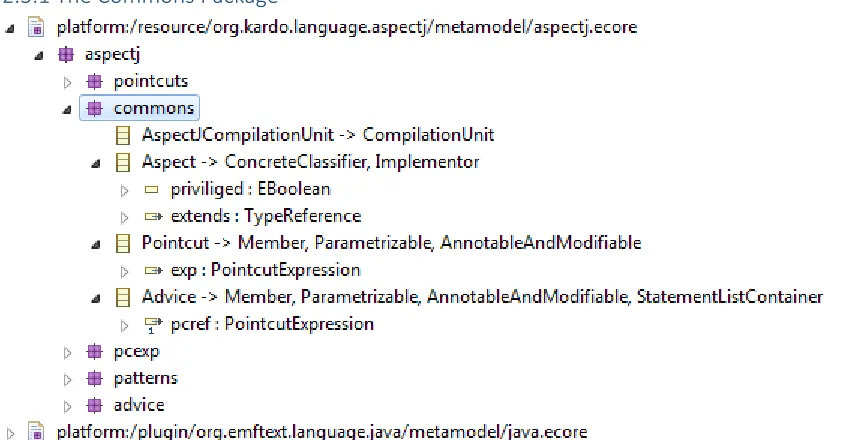
Figure 1. The Commons Package Structure
Page | 14 Advice extending from the Java class ‘Member’ is of course not behaviour that should be allowed; since Advices should never be able to be written in a Java class just like a method. Pointcut definitions at least are allowed to be written in a Java class. As we don’t want the prohibited behaviour of Advice to occur, with this design choice it forces us to write a check to prevent it in a post-processing stage by doing a semantic check. We ended up opting for this design choice for two reasons:
1. First, it simplifies the metamodel. Enforcing such a constraint in the metamodel would result in an overhead of entities. We would need to make one entity that “captures” all the class contents (e.g. methods, fields and pointucts) and another for the Advice. This differentiation would also result in a need for two more entities so that a compilation unit can hold both aspects and classes. Without this overhead the metamodel is more streamlined.
2. Secondly, the JaMoPP model that we are using as a foundation comes with setter and getter methods implemented for the different entities it has. Directly extending these entities lets us reuse these methods which eased the process of implementing the custom reference resolvers for our AspectJ implementation. Another important structural decision we made in the
commons package was to make Pointcut and Advice exist within the package rather than be stored within their respective packages. While this does not affect the behaviour of the metamodel, it would have made the overall structure be more confusing. This is because especially for Pointcuts, the Pointcut class is among 20 other classes, and not seen clearly on a higher level.
The AspectJ compilation unit directly extends the Java compilation unit. Since it contains a reference to ConcreteClassifiers, we make the aspect extend ConcreteClassifier. We also directly extend Implementor to complete the functionality of an aspect to implement another. It contains one attribute of type boolean to determine if the aspect is priviliged or not and one reference to a type, in case the aspect extends another. The ConcreteClassifier entity contains a reference to Member, which is a supertype for the different class members (e.g. methods, fields). Thus, we model the pointcut and advice as Members. Both advice and pointcut entities contain a reference to a pointcut expression.
Page | 15
2.3.2 The Pointcuts Package
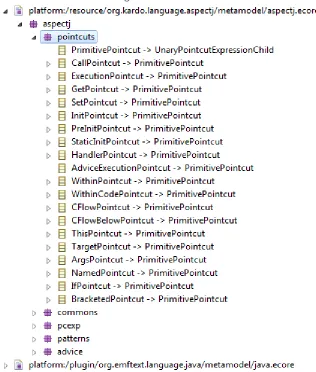
Figure 2. The Pointcuts Package Structure
In the Pointcuts package there are many types of pointcuts which all inherit from PrimitivePointcut, which makes the structure of the package very clear and simple – even while having all of the 18 AspectJ pointcuts being supported within it [1]. Such a design allows for an easy implementation of pointcut extensions. For a new type of primitive pointcuts, a programmer can add a new entity that extends PrimitivePointcut or he can modify it to introduce new global pointcut functionality.
Page | 16
2.3.3 The PcExp Package
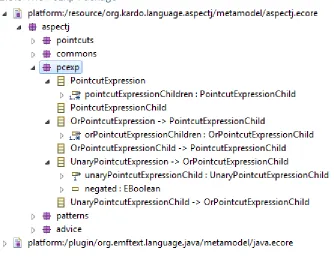
Figure 3. The Pointcut Expression Package Structure
The Pcexp package has several classes defining PointcutExpressions and combining them with and (&&) and or (||). The hierarchy of how it is done is through having children, a PointcutExpression has children which are of the type OrExpression or OrExpressionChild, and OrExpression has children of the type OrExpressionChild, AndExpression or AndExpressionChild. AndExpression similarly has children of the type AndExpressionChild.
Page | 17
2.3.4 The Advice Package
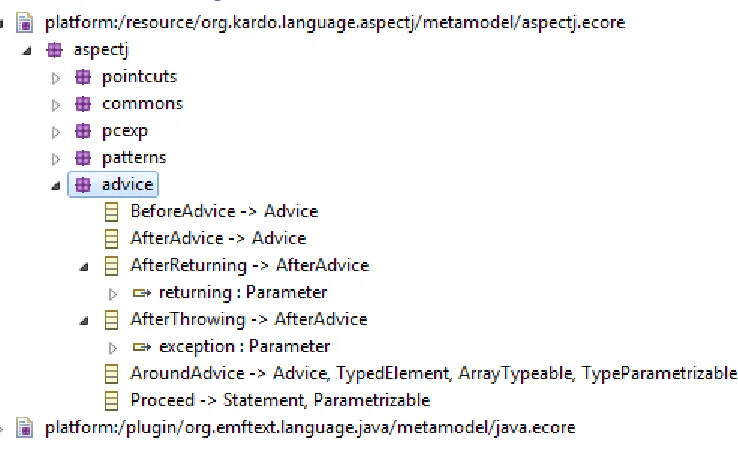
Figure 4. The Advice Package Structure
The Before and After advice are simple and inherit directly from our basic Advice entity without extending it with any additional functionality. The After Returning and After Throwing extend the After advice with the addition of one extra reference to the returned or thrown parameter respectively. Finally, the return type of Around advice determines the need to inherit from TypedElement.
Page | 18
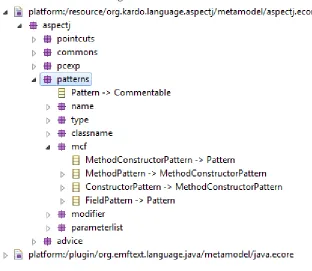
2.3.5 The Patterns Package
Figure 5. The Patterns Package Structure
Due to the numerous symbols and combinations, and possible ambiguity, implementing the pattern matching mechanics proved to be one of the hardest parts of designing the metamodel. We used the abc AspectJ grammar [12] as a reference guide for this particular part of the process.
There are three important families of patterns. The first one is located in the mcf package. It contains the FieldPattern, the ConstructorPattern and the MethodPattern. The first one is used in case of a get and set pointcuts. The second is used in the context of initialization and preinitialization pointcuts. The final one and the ConstructorPattern are subtypes of the MethodConstructorPattern since many of the pointcuts can match either a method call or a constructor call (e.g. call, execution, withincode). The second family of patterns match class names. They are located in the classname package and are used with respect to the within, handler and staticinitialization pointcuts. The final big family of patterns is responsible for matching types and identifiers and is located in the type package. Patterns from this family are used with this, target and args pointcuts.
Page | 19
2.4 Transformation of AspectJ models to Java (JaMoPP) models
This section’s main contributor was Hristofor Mirchev. In the practical work we divided it a bit more equally with myself working on the transformations for Advices – not the Proceed statement however, and Hristofor on the remainder of the transformation rules.
Aspectj 5 introduced an alternative to writing aspect declaration in the old traditional way by
incorporating an annotation-based style. The gained benefit was that now programs written in that style can be compiled with a regular Java5 compiler and separately be woven at a later stage. Typically both of these processes are encapsulated in the ajc compiler. Separating these two concerns (compiling and weaving) is what allows us to focus on making a moular AspectJ implementation and handle the
compiling and weaving processes with traditional tools (i.e. the Java compiler javac and AspectJ’s load-time weaver). Unlike in other AspectJ compilers like abc, not having to implement complex weaving mechanics is the key factor for an easier and faster extension development.
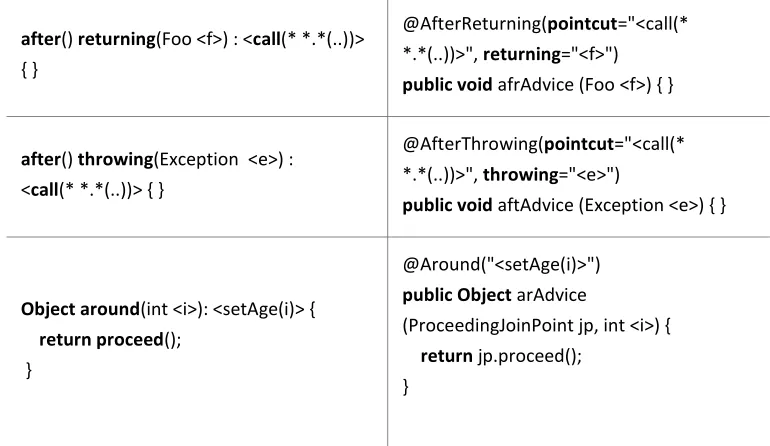
The following table provides an example overview of the main Aspectj concepts written in both regular and annotation-based styles, taken from the official AspectJ 5 Development Kit Developer’s Notebook [1].
Regular style
Annotation style
public aspect <Foo> { } @Aspect
public class <Foo> { }
pointcut <AnyCall>() : <call(* *.* (..))>; @Pointcut(“<call(* *.* (..))>”)
void <AnyCall> () { }
before() : <call(* *.*(..))> { } @Before(“<call(* *.*(..))>”)
public void bfAdvice () { }
after() : <call(* *.*(..))> { } @After(“<call(* *.*(..))>”)
Page | 20
after() returning(Foo <f>) : <call(* *.*(..))> { }
@AfterReturning(pointcut="<call(* *.*(..))>", returning="<f>")
public void afrAdvice (Foo <f>) { }
after() throwing(Exception <e>) : <call(* *.*(..))> { }
@AfterThrowing(pointcut="<call(* *.*(..))>", throwing="<e>")
public void aftAdvice (Exception <e>) { }
Object around(int <i>): <setAge(i)> { return proceed();
}
@Around("<setAge(i)>")
public Object arAdvice
(ProceedingJoinPoint jp, int <i>) { return jp.proceed();
[image:21.612.76.461.74.297.2]}
Table 1. AspectJ Components in Regular and Annotation Style
To get the model we obtain after parsing from the regular AspectJ style to the annotation style, we must use a model transformation language. More precisely, we need a model-to-model transformation language to translate a model conforming to our AspectJ metamodel to one that conforms to the Java metamodel provided by JaMoPP. We considered two of the most popular and mature transformation frameworks that support EMF-based models – Model-to-Model Transformation (MMT)[13] and Epsilon [14].
MMT consists of two very distinct model-to-model toolkits – QVT and ATL. QVT is a standardized set of three model-to-model languages – QVT-Operational, QVT-Relations and QVT-Core. The first one is an imperative language, while the other two are both declarative and are therefore commonly jointly called QVT-Declarative [15].
ATL was initially designed as an alternative to QVT before getting paired with it in MMT. ATL supports both imperative and declarative styles of writing transformations. The recommended style is declarative as it is better for simple and straightforward transformation rules, but imperative can also be used for more complex ones [16].
Page | 21 In comparison, both MMT and Epsilon allow us to have rules that transform any number of input models to any number of output ones. Both frameworks also support imperative and declarative styles of writing. Finally, both frameworks are mature and rich, and offer a diverse set of extra functionality like syntax highlighting, error detection and debugging in Eclipse. With respect to these common
classification criteria Epsilon and MMT are similar to each other. The only deciding requirement we had was how easy it is to call class methods outside the context of the transformation, since, as can be seen from Table, to transform a pointcut or advice a programmer would need to transform the pointcut expression they contain to a string and pass it along as a parameter of the annotation. Since no
transformation language would be able to perform this task natively, we needed an easy way to call our generated printer to do that.
In QVT such cases are referred to as “black box operations” [17]. We found this approach to make the project and its design more complicated. Epsilon, on the other hand, has a clear way of doing this and even lists it among the main features to use the framework [14]. Later in this section we are going to explain more in-depth exactly how we accomplished this task as it proved to be rather challenging, but this was the sole reason we picked Epsilon over MMT. The choice, however, will also allow us to re-use code from our transformation rules to implement model validity or unit tests for the transformation in future work, as all languages in Epsilon share a common syntactical foundation.
Page | 22
1. (pre | post) <name> { 2. statements+ 3. }
4.
5. (@abstract)? 6. (@lazy)? 7. (@primary)? 8. rule <name>
9. transform <sourceParameterName> : <sourceParameterType> 10. (, <sourceParameterName> : <sourceParameterType>)* 11. to <rightParameterName> : <rightParameterType> 12. (, <rightParameterName> : <rightParameterType>)* 13. (extends <ruleName> (, <ruleName>)*)? {
14.
15. (guard (:expression) | ( { statementBlock }))? 16.
17. statements+ 18. }
Listing 1. Syntax of a Transformation Rule and Pre/Post block
The pre and post blocks consist of the respective identifiers (pre or post), an optional name for the block and the set of statements to be executed. The transformation rule can be declared as abstract, lazy or primary via annotations, followed by the rule identifier and the rule name. The source and target models are declared following the transform and to keywords. A rule can also extend any number of different transformation rules declared after the ‘extends’ keyword. Apart from the EOL statements a
programmer can also specify a guard statement to limit the applicability of the rule to a selected subset of source models [18].
In the following subsections we are only going to demonstrate our transformation rule for the Before advice as the rest are analogous. We believe it still sufficiently captures most of the challenging logic we faced when designing the transformation. As can be seen from Table, a Before advice declaration using the annotation style is just a regular public Java method that returns void and has the @Before
annotation. Two important considerations here are:
1.
Although the advice declaration does not have a name, the Java method should have an unique name.2.
The pointcut expression that the advice contains is passed as a string parameter to the annotation.Page | 23
1. rule Advice2Method
2. transform ajAdvice : aspectj!Advice 3. to jMethod : java!ClassMethod { 4.
5. jMethod.name = getUniqueAdviceName(ajAdvice); 6. jMethod.parameters = ajAdvice.parameters; 7. }
8.
9. rule BeforeAdvice2Method
10. transform ajBeforeAdvice : aspectj!BeforeAdvice 11. to jMethod : java!ClassMethod
12. extends Advice2Method { 13.
14. jMethod.annotationsAndModifiers.add(getAnnotation(ajLibBefore! Commentable.allInstances().first(), "Before", ajBeforeAdvice.pcref));
15. jMethod.annotationsAndModifiers.add(new java!Public); 16.
17. jMethod.typeReference = new java!Void; 18. jMethod.statements = ajBeforeAdvice.statements;
19. }
Listing 2. Before Advice Transformation Rule
Lines 1 – 7 describe a common rule that all other advice rules extend. It takes care of the first consideration we noted by calling a getUniqueAdviceName helper method and passes along the parameters that the advice might have as parameters of the new method. Lines 15, 17, 18 set the method to be public, return void and pass along the body of statements the advice contains as the body of the new method. These three lines are common for all advice types except Around (the annotated method for Around has the return type of the Around advice itself and a proceed statement will get transformed rather than copied verbatim). Thus, one can argue that those three lines could also be extracted to the common advice rule and have a separate and specific rule for Around. We liked our approach better as an Around advice is still a type of advice and thus the relationship is still of an is-a kind, which is represented by inheritance. Finally, line 14 and the call to getAnnotation handle the second consideration we mentioned.
Page | 24
1. pre {
2. var globalAdviceCounter : Integer = 0; 3. }
4.
5. operationAny getUniqueAdviceName(ajAdvice : aspectj!Advice) : String { 6. globalAdviceCounter = globalAdviceCounter + 1;
7. var name : String = "aj$" + ajAdvice.eClass.name + "$" + ajAdvice.eContainer.name + "$" + globalAdviceCounter + "$" + ajAdvice.hashCode();
8.
9. return name.replace(" ", "_"); 10. }
Listing 3. Getting the Unique Name for Advice Methods
Listing 3 shows how we handle the first consideration of generating an unique name for the advice method. We looked at how the official AspectJ compiler ajc handled the same issue and tried to imitate the same behavior. Line 7 shows how we form the name of the method. We start with the string aj (a mnemonic for AspectJ), concatenate the type of advice (in our example this would be “Before”), the name of the aspect that contains the advice, a global counter of advice and finally we add a hash value. We use a pre block to create an advice counter variable as since it gets executed only once before the actual transformation, it simulates the global variable we need.
1. operation Any printModelElement(elem : Any) : String {
2. var resourcePrinter = newNative("org.kardo.language.aspectj.resource.aspectj.mopp.ParameterlessAspectjPrinter"); 3.
4. if (elem.isDefined()) {
5. return resourcePrinter.printElement(elem); 6. } else {
7. return ""; 8. }
9. } 10. …
11. operation Any getAnnotation(libModel : Any, annotation : String, pointcutExpression : aspectj!PointcutExpression) : java!AnnotationInstance {
12. var anno = makeAnnotationInstance(libModel, annotation); 13.
14. if (pointcutExpression.isDefined()) {
15. var pcExp : String = printModelElement(pointcutExpression); 16. var param = new java!SingleAnnotationParameter;
17. param.value = getParameterValue(pcExp); 18. anno.parameter = param;
19. }
20. return anno; 21. }
Page | 25 Creating and setting up the annotations was one of the major issues we encountered while working on the transformation. We were facing two problems with this task.
First, how to create an instance of the annotation entity of the Java metamodel we use that “points” to the actual annotation located in the AspectJ library. An annotation in JaMoPP’s Java metamodel is represented by an optional namespace part (i.e. an ordered set of strings) for the fully qualified annotation name, and a name part (i.e. an element of type Classifier). Classifier is another entity in the metamodel, but it is abstract, which means we can not directly “create” it and set it to the correct annotation name (i.e. Before in our case). To solve the problem we took all the actual .java files of the annotations from the AspectJ library, parsed them with JaMoPP and fed the resulting models to the transformaton. At that point, setting the name part of the annotation we are trying to create was just a mapping to the correct model. The query to obtain the correct model is done in the
makeAnnotationInstance method.
Page | 26
2.5 Testing and Evaluation
This section’s main contributor was Hristofor Mirchev. In the practical work this was split more finely with myself writing the custom test cases, and Hristofor Mirchev working on setting up the testing environment.
In the previous subsections we presented our AspectJ metamodel as well as some challenges and design decisions we faced along the way. In order to evaluate the approach we have devised a test suite to demonstrate the correct parsing of AspectJ applications in reference to the official AspectJ compiler - ajc.
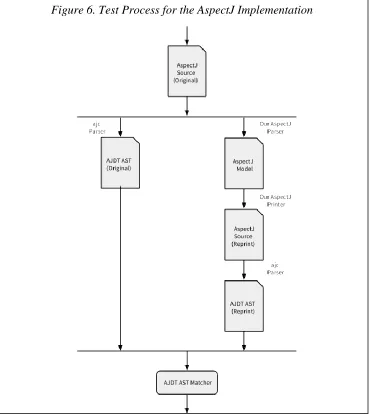
[image:27.612.76.446.305.719.2]The goals of the suite are to test 1) that our parser accepts valid AspectJ code, 2) that the model instance created after parsing has the expected structure, 3) that the generated printer outputs a code representation of the model that is semantically equivalent to the input. To achieve these goals we employed a testing process similar to how JaMoPP was tested [7]. The process is shown on Fig. 6.
Figure 6. Test Process for the AspectJ Implementation
Page | 27 Beginning with a valid AspectJ source file, both our generated parser and the reference one (the ajc) process the file and create their respective internal representations of it. In our case, this is a model instance of the AspectJ metamodel with unresolved cross-references. In ajc’s case, this is an abstract syntax tree (AST). Next, our generated resolvers attempt to resolve the cross-references after which the generated printer reprints the model in its text form. The reprinted source file is fed to the reference compiler which creates another AST. Finally, the AST of the reprint is compared to the original one via an AST matcher provided by ajc.
We believe this approach meets the goals we set out to achieve. First, if our parser accepts all the valid AspectJ test programs we give it and not throw a parsing error, then we can conclude that the
soundness property in our first goal is met. Secondly, the structure of the model instance is checked for correctness by the AST matcher. If there are any unresolved or missing elements, they will cause resolving errors and not get reprinted, which will be detected by the AST matcher. Lastly, any other mismatches that might raise error messages will also be detected by the matcher. In those cases, we manually checked the reprinted source file and compared it with the original to discover the source of the error. In nearly half of our test cases we exhibited such reprinting errors although all of them were parsed without errors. Often times white space, empty blocks and other layout information led to the mismatches causing the errors.
Due to limitations we imposed on the metamodel by design, running our test suite with official AspectJ benchmarks was impractical as it would require us to go through each source file and modify uses of functionality we did not implement. Thus, as input for the test process we provided 18 AspectJ files we custom wrote ourselves. We tried to achieve maximum coverage by exposing every variation of each AspectJ element in our model. The overview of the test files separated over the packages in our metamodel is the following:
advice package – Contains 5 test files, one for each advice type. Each file tests for an empty advice, for an advice that exposes a parameter, for a strictfp advice and for an advice written in annotation style.
commons package – Contains 3 test files. The first one test for all possible classifier declarations in a compilation unit (i.e. an aspect, a class, an annotation, an enum and an interface). The second tests for all possible non-AOP contents of an aspect (i.e. a nested class, a field and a regular method). The last one tests for all possible pointcut declaration variations (i.e. one without a modifier, one without a pointcut expression, one where the pointcut expression is just a primitive pointcut and one where it is a conjunction).
patterns package – Contains 8 test files that also thoroughly test all the variations of the pattern types we have modeled (refer to the patterns subsection in Sec. 0).
pcexp package – Contains 1 test file. It checks for a pointcut declaration with a regular pointcut expression and one with a negated pointcut expression.
Page | 28 all possible primitive pointcuts.
The testing was automated with the Junit framework and special effort went into making the environment easily extendable with more tests. A programmer simply has to put a valid AspectJ source file ending with the .aspectj extension of our implementation in the src-input folder of the testing project and then rerun the tests. In the end all 18 files passed the test suite.
In conclusion, we can say that while this test process does not guarantee completeness, it does give us enough confidence that our AspectJ implementation is sound and can be the foundation of language extensions that can be used in practice.
To incorporate a similar testing process for the transformation, we would first have to write a script to run all the test files we have through our parser. After that, we would execute the transformation on the resulting models and run them through the JaMoPP printer. The resulting Java source files can then be put through the same testing process. The difference being that this time we use JaMoPP’s parser, the standard Java compiler javac and the JDT AST matcher rather than their respective AspectJ equivalents. Setting up such a testing environment would take much time in integrating JaMoPP, javac and the JDT matcher, so we left this for future work and opted for a smaller and more manual approach.
We fed the 18 test files we had made to our parser and ran the transformation on the resulting models. After that, we only inspected the new models that the transformation produced by hand. The results satisfied our expectations and therefore, we can say with some amount of certainty that the
Page | 29
3. Part III
3.1 Introduction
In this section I will be presenting my Instance Pointcuts language implementation, as well as applying the language to some case studies to analyse and compare the language to plain Java. Following the design process for the AspectJ implementation, I used the same structure of working by first
implementing the metamodel for the extension language using MDE techniques. Once that was complete I then transformed the result to our defined AspectJ language with Epsilon’s Transformation Language for model-model transformation.
Since it is not the main goal of this thesis to guarantee correctness of the language beyond that the language works, the entities behave as expected in my case study, and that the syntax rules are correct as Kardelen’s research has specified [24]; the testing of the metamodel itself has been left out. This may make it uncertain if the language correctly enforces all of its syntax rules, and also if multisets behave correctly with all types of objects, especially when a composite instance pointcut is created as a union or intersection of multiple multisets. For the purpose of answering my research questions however it is not vital to test the limits of the language’s capability. Instead, our main goal is to implement case studies in our language, which will automatically test the functionality of Instance Pointcuts; if the application still behaves as expected in runtime when written in our language, then we can already safely assume the language works.
3.2 Instance Pointcuts Implementation
The strategy I decided on for implementing the language structure was to keep it simple, and only contain the entities necessary for the features I wanted the language to support. These features were selected from the specification of the language defined by Kardelen’s research [24]. From that list I first chose the features that were either an integral part of the language, and then added features based on the complexity to implement, both in the metamodel and to transform to AspectJ, and what impact the feature would have when included in a case study application. Due to time constraints not all features could be implemented, but this does not have a major impact on the usefulness of the language. As the number of classes for instance pointcuts is very small compared to those of the AspectJ implementation, no further structuring was needed, as it would add unnecessary complexity to the metamodel, so all classes were placed in the same package.
The language can be broken down into several features:
1. Instance Pointcuts; the main feature of the language which contains instance pointcut expressions, multisets and a typereference.
2. Instance Pointcut Expressions; these expressions are made up of a mandatory sub expression for adding objects, and an optional sub expression to remove objects from the multiset. Sub
expressions contain the events that need to occur within an object to be added or removed to the multiset.
3. Events; these are made up of before and after events, similar to AspectJs advices.
4. Composite Instance Pointcuts; these add the first level of complexity to the language, as they allow new instance pointcuts to be composed of existing ones.
Page | 30 6. Multisets; these get generated with each instance pointcut to store all the objects that the
[image:31.612.86.382.89.559.2]events find, and is accessible to users in an unmodifiable set only.
Figure 7. The Complete Structure of the Instance Pointcuts Metamodel
3.2.1 Instance Pointcuts
As Figure 7 shows, all the types of instance pointcuts inherit from an abstract parent named Ipc, which should not be confused with the child Instance Pointcut. The Ipc entity stores the TypeReference and Multiset for each type of instance pointcut, and it also extends Java’s Member and
Page | 31 While Ipcs are able to store individual objects based on more than just their class type – they do also store a TypeReference themselves, which makes it possible to put a limit on the scope of objects these pointcuts look at within an application. Both the name and type of the Ipc is mandatory.
The child entity Instance Pointcut stores a mandatory instance pointcut expression, or IpcExpression, alongside the fields specified by the Ipc entity. The reason the instance pointcut expression is not stored in the Ipc as well is because refined instance pointcuts (at the level of granularity I have implemented) and composite instance pointcuts do not need to store them. Since refined and composite instance pointcuts are made up of a reference to existing Ipcs; there is no need to store the expressions as well since these pointcuts will not modify the expression in any way. While composite instance pointcuts do store an expression themselves, it is of a different type, which is discussed later.
3.2.2 Instance Pointcut Expression
Instance Pointcut Expressions contain up to two subexpressions, and the instance pointcut expression itself does not need to inherit any properties from AspectJ or Java since it behaves differently to a Pointcut expression or a Java expression.
3.2.3 Events
Events, while similar to AspectJ’s Advices in terms of being an abstract entity that Before/After events inherit from, does have some fundamental differences that prevent them from inheriting from Advice. Events do contain a pointcut expression, which could be a named or composed pointcut. But unlike Advices, Events do not allow a user to apply any adaptation or modification of the object that is returned by the pointcut expression before or after it is passed to the multiset. Also as Events should not be definable outside the scope of an instance pointcut expression, it was best to make Event have no dependency on Advice at all.
3.2.4 Composite Instance Pointcuts
Composite Instance Pointcuts inherit from the abstract Ipc class, and contain a special type of expression named an IpcComposition, which allow multiple existing instance pointcuts to be composed as a new single instance pointcut. The composition can happen in several ways; it can either be composed of a single Ipc, or a union of two or more Ipcs, or the intersection between two or more Ipcs, or both a union and intersection. I use the class Ipcs for the composition, because the composition may be of either instance pointcuts or refined instance pointcuts, or an existing composition – allowing for nesting of instance pointcuts.
The union and intersection keywords of the composition are important since they refer directly to the multiset that each Ipc holds, and will mean if either the union or intersection of these sets of objects is taken for the composition.
3.2.5 Refined Instance Pointcuts
While the refinement of instance pointcuts is a feature of the language that can become quite large and complex, I decided to implement it only in its lowest level of granularity, which enables users to define a refined instance pointcut, with a reference to the existing Ipc it is refining from. At this level of
Page | 32
3.2.6 Multisets
Multisets, as a class feature of the language does seem out of place, since unlike the other class features of the language it does not provide any aspect-oriented functionality, but it still has an important purpose to store objects, or sets of objects within one multiset. It provides its functionality for adding and removing objects to its set in the form of an Aspect, which is able to monitor the Events of an Instance Pointcut and whether the event belongs to an Add or Remove subexpression to determine what action it should do to the object.
One Multiset should be generated for each Ipc, with the same name and type of the Ipc so it knows to which Ipc is belongs to. The metamodel however only encompasses the name and type the multiset will have; the generated code is not generated until the transformation into AspectJ. This was fundamentally done due to desiring a simple and clean metamodel; and having the complete aspect syntax be
generated at this stage would significantly increase the complexity of the language. Since compiling and executing of any Instance Pointcut application would be done through transformation into AspectJ and Java, this decision has no negative consequences.
3.3 Instance Pointcuts Transformation
The implementation of the metamodel resulted in the instance pointcut language supporting most of the important features of the specified language description – enough for applications in Java to at least be supported to a degree where some comparisons can be drawn been an Instance Pointcut
implementation and a Java implementation. As far as this thesis is concerned, the metamodel of the language is at least complete and the transformation could be implemented, using the Epsilon Transformation Language as we did with AspectJ.
There are a number of entities that the Instance Pointcut language defines, but only few of them have an easy mapping to an AspectJ element. Unlike with the AspectJ language, we do need to specify how each property matches to either an AspectJ or Java element, as we cannot in this case simply transform properties to annotated form. This is because there is no existing compiler that can take annotated Instance Pointcuts code and compile it to a form that can be executed in a Java environment, and we do not plan on defining one.
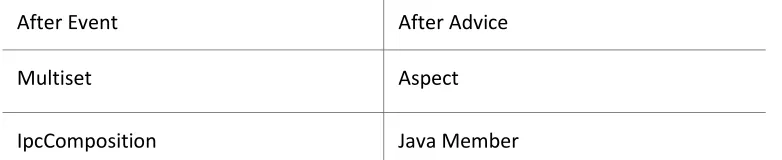
The mapping of Instance Pointcut entities to AspectJ entities is as follows:
Instance Pointcut
AspectJ / Java
IpcCompilationUnit AspectJCompilationUnit
Instance Pointcut, Refined/Composite Aspect
IpcSubExpression Java Member
Page | 33
After Event After Advice
Multiset Aspect
[image:34.612.78.469.75.155.2]IpcComposition Java Member
Table 2. Transformation of entities from Instance Pointcuts to AspectJ/Java
As the table shows, some transformations are straightforward, such as events to advice, and from one compilation unit to the other. It also highlights how the AspectJ application will be structured once the Instance Pointcut application gets transformed into it.
While instance pointcuts are a special type of pointcut, they do not get transformed to a pointcut entity for several reasons. The syntax for instance pointcuts is structured very differently to ordinary pointcuts, and it does not take a PointcutExpression. Instead, as it contains an IpcExpression, which holds an add/remove expression, which can each have a before or after event or both; it ends up holding a lot more data than an ordinary pointcut. For this reason, transforming instance pointcuts to Aspects enables it to contain all the sub expressions and events as Java Members.
Refined instance pointcuts at the low level of granularity I have implemented do transform into mostly empty Aspects, but an Aspect is still the best match for this entity, since it is a type of instance pointcut, but one that simply points to an existing instance pointcut. For future extensions if a higher level of granularity is achieved for refinement; the Aspect will in turn become larger in size as it will contain the refined instance pointcut expression or even refined events.
Finally, composite instance pointcuts again transform into Aspects, but have a higher level of complexity than refined instance pointcuts. While it is easily possible to get all the Ipc entities that a composite instance pointcut is made up of, and then add them all as Java Members to the composite aspect, this does have a negative consequence. The consequence is that the way the instance pointcut is composed gets lost in transformation, so the Ipc entities are all loosely placed within the aspect, without a
reference to whether their multiset should be created as a union or an intersection. Since the
metamodel definition does not include the logic of how multiset union or intersection works or should occur, it is up to the transformation stage to define this logic. Since composite instance pointcuts are not a fundamental part of the language, and only a useful feature in certain scenarios, I have left this for future work.
3.3.1 Multiset Transformation
Page | 34 The Multiset Aspect code that should be generated for each Ipc would resemble the following structure:
Figure 8. The Multiset Aspect code
41. import java.util.Collections; 42. import java.util.Set;
43. import com.google.common.collect.HashMultiset; 44. import com.google.common.collect.Multiset; 45. import com.google.common.collect.Multiset.Entry;
46. publicaspect MultisetAspect {
47. protected Multiset<Object> nameHS = HashMultiset.create();
48. public Set<Entry<Object>> getHSet() {
49. final Set<Entry<Object>> tempSet = Collections.unmodifiableSet(nameHS.entrySet()); 50. return tempSet;
51. }
52. // after add
53. after(Type instance) : call(* ..) && target(instance) { 54. addToNameHS(instance);
55. }
56. // before add
57. before(Type instance) : .. target(instance) { 58. addToNameHS(instance);
59. }
60. privatevoid addToNameHS(Type instance) { 61. if (!nameHS.contains(instance)) {
62. nameHS.add(instance); 63. // we add for the first time
64. addedFirstToNameHS(instance); 65. }
66. else {
67. nameHS.add(instance); 68. }
69. }
70. pointcut addedFirstToNameHS(Type instance) : call(addedFirstToNameHS(..)) && args(instance);
71. privatevoid addedFirstToNameHS(Type instance) {}
72. privatevoid removeFromNameHS(Type instance) { 73. if (!nameHS.contains(instance)) {
74. //error
75. } 76. else {
77. nameHS.remove(instance); 78. }