*Abeer Mokhtar Mohammad Ibrahim
ARTICLE INFO ABSTRACT
A study in the purpose of pain assessment in neonates and relief of pain cycles; not only for ethical view but also because repeated painful exposures can cause deleterious consequences. Gathered information from various medical references and previous
modulation and pain calibration instruments all are provided for this purpose. In Egypt, pain in neonates is underestimated and it's prevalent among the public that circumcision is preferably carried out in the first
neonatal age.
Copyright © 2015 Abeer Mokhtar Mohammad Ibrahim.
unrestricted use, distribution, and reproduction in any medium, provided the original work is properly cited.
INTRODUCTION
Physiology of pain in neonates
The "standard" definition of pain is that of the International Association for the Study of Pain which states that it is an unpleasant sensory or emotional experience
actual or potential tissue damage, or described in terms of such damage, always subjective (Argoff, 2009).
Modulation of pain
Modulation of pain occurs peripherally at the nociceptor, in the spinal cord, or in supraspinal structures (cen
modulation can either inhibit (suppress) or facilitate (aggravate) pain (Apkarian et al., 2005).
A.Peripheral modulation:
Primary hyperalgesia:
Sensitization of the nociceptors results in a decrease in pain threeshold, an increase in the response to the same stimulus intensity, a decrease in response latency and spontaneous firing even after cessation of the stimulus. Primary hyperalgesia is mediated by the release of alogens from damaged tissues. Bradykinin is released from tissues following activation of factor XII. Bradykinin activates free nerve endings via specific receptors (B1 and B2) (Wiech and Ploner, 2008)
*Corresponding author:Abeer Mokhtar Mohammad Ibrahim
Zagazig-Egypt
ISSN: 0975-833X
Article History:
Received 25th July, 2015 Received in revised form 06th August, 2015
Accepted 19th September, 2015 Published online 31st October,2015
Key words:
Pain cycles, Medical reference.
Citation:Abeer Mokhtar Mohammad Ibrahim,
REVIEW ARTICLE
PAIN IN NEONATES
Abeer Mokhtar Mohammad Ibrahim
Zagazig-Egypt
ABSTRACT
A study in the purpose of pain assessment in neonates and relief of pain cycles; not only for ethical view but also because repeated painful exposures can cause deleterious consequences. Gathered information from various medical references and previous studies discussing pain physiology, modulation and pain calibration instruments all are provided for this purpose. In Egypt, pain in neonates is underestimated and it's prevalent among the public that circumcision is preferably carried out in the first week. And from this point, we were determined to make this study about pain in neonatal age.
. This is an open access article distributed under the Creative Commons Att use, distribution, and reproduction in any medium, provided the original work is properly cited.
The "standard" definition of pain is that of the International Association for the Study of Pain which states that it is an unpleasant sensory or emotional experience associated with actual or potential tissue damage, or described in terms of such
Modulation of pain occurs peripherally at the nociceptor, in the spinal cord, or in supraspinal structures (central). This modulation can either inhibit (suppress) or facilitate
Sensitization of the nociceptors results in a decrease in pain threeshold, an increase in the response to the same stimulus intensity, a decrease in response latency and spontaneous firing even after cessation of the stimulus. Primary hyperalgesia is ted by the release of alogens from damaged tissues. Bradykinin is released from tissues following activation of factor XII. Bradykinin activates free nerve endings via specific
(Wiech and Ploner, 2008).
Mokhtar Mohammad Ibrahim
Secondary hyperalgesia:
It is manifested by the "triple response" of a red flush around the site of injury (flare), local tissue edema, and sensitization to noxious stimuli. Secondary hyperalgesia is primarily due to antidromic release of sP (and probably CGRP) from collateral axons of the primary afferent neuron.
B.Central modulation
a.Facilitation:
At least three mechanisms are responsible for central sensitization in the spinal cord:
1- Wind-up and sensitization of second
neurons increase their discharge frequency with the same repetitive stimuli, and exhibit prolonged discharge, even after afferent C fiber input has stopped.
2- Receptor field expansion. Dorsal horn neuro
their receptive fields such that adjacent neurons become responsive to stimuli (whether noxious or not) to which they were previously unresponsive.
3- Hyperexcitability of flexion reflexes. Enhancement of
flexion reflexes is observed both ipsilat laterally.
b.Inhibition:
Transmission of nociceptive input in the spinal cord can be inhibited by segmental activity in the cord itself, as well as descending neural activity from supraspinal centers.
International Journal of Current Research
Vol. 7, Issue, 10, pp.21767-21774, October, 2015
INTERNATIONAL
, 2015. “Pain in neonates”, International Journal of Current Research
A study in the purpose of pain assessment in neonates and relief of pain cycles; not only for ethical view but also because repeated painful exposures can cause deleterious consequences. Gathered studies discussing pain physiology, modulation and pain calibration instruments all are provided for this purpose. In Egypt, pain in neonates is underestimated and it's prevalent among the public that circumcision is preferably carried week. And from this point, we were determined to make this study about pain in
is an open access article distributed under the Creative Commons Attribution License, which permits
It is manifested by the "triple response" of a red flush around the site of injury (flare), local tissue edema, and sensitization to noxious stimuli. Secondary hyperalgesia is primarily due to antidromic release of sP (and probably CGRP) from collateral axons of the primary afferent neuron.
At least three mechanisms are responsible for central sensitization in the spinal cord:
up and sensitization of second-order neurons. WDR neurons increase their discharge frequency with the same repetitive stimuli, and exhibit prolonged discharge, even after afferent C fiber input has stopped.
Receptor field expansion. Dorsal horn neurons increase their receptive fields such that adjacent neurons become responsive to stimuli (whether noxious or not) to which they were previously unresponsive.
Hyperexcitability of flexion reflexes. Enhancement of flexion reflexes is observed both ipsilaterally and contra
Transmission of nociceptive input in the spinal cord can be inhibited by segmental activity in the cord itself, as well as descending neural activity from supraspinal centers.
INTERNATIONAL JOURNAL OF CURRENT RESEARCH
Etiology of acute pain in neonates
A.Invasive procedures in NICU
[image:2.595.40.283.230.387.2]Preterm and term neonates admitted to the NICU are exposed to numerous and varied sources of pain and stress some for investigation and some for treatment (Porter and Anand, 1998). In children and adults, pain produced by such procedures is recognized and treated on humanitarian grounds. In the sick infant invasive procedures can cause major physiological disturbances, which can be reduced by providing analgesia (Speidle, 1998).
Table 1. Painful procedures performed in neonatal intensive care units
Surgical Therapeutic
Diagnostic
-Other surgical Procedures -Peritoneal Drain -Venous Cut down -Bladder catheriziation.
-central line insertion/ removal
-Chest tube insertion/ removal
-Chest physiotherapy -Dressing change -Gavage tube insertion -Intra muscular injection -Postural drainage -removal of adhesive Tap -ventricular Tap -Tracheal
intubation/extubation -Suture removal -Arterial puncture
-Heel lancing -Lumbar puncture. -Retinopathy of prematurity examination -Suprapubic bladder tip -veni puncture -eye examination
(Anand, 2001)
B.Birth events
Although they are rare occurrence, scalp lacerations, sever head molding and clavicular fractures are sources of new born pain (Van Lingen et al., 2001).
C.Environmental causes of pain
Noise pollution:
Safety standards require that the mean noise levels inside an incubator should not exceed 60 decibels (Long et al., 2000). Ambient light exposure:
Light may damage the retinas of extremely low birth weight babies (Glass et al., 1995).
Handling.
Daily rhythms and deep sleep:
In most intensive care units there is no clear pronounced diurnal rhythm in noise and light intensity and staff activities (Lawson et al., 1997).
Determinants of premature infants to pain
Gestational age
Prior exposure to painful procedure State and response to pain
Severity of illness Gender
Impact of pain on neonates
A.Immediate response of the neonate to painful stimuli B.Long-term effects of neonatal pain
A.Immediate response of the neonate to painful stimuli
Immediate response to pain can be protective, the response allows the individuals to mobilize energy and resources to the site of injury and activate autonomic nervous system to serve as warning signal for potentially damaging stimuli. (Mitchell and Boss. 2002).
a.Behavioral
1-Facial expression
This is the most comprehensively studied behavioral response; as it is considered the most reliable indicator of pain across population and type and, as such, should be considered the gold standard of behavioral response of pain in infants. The facial expressions of infants experiencing acute pain include: nasal roots broadened and bulged, depended nasolabil furrow, a square mouth and a taut cupped tongue. (Grunau and Craig, 1987).
The behavioral state of infants immediately before painful stimulation affects the robustness of the response. Infants in a deep sleep state shows less vigorous facial expressions (Stevens et al., 1994). An interesting finding is that female neonates of all gestational ages expressed more facial features of pain than male infant during capillary puncture (McIntosh et al., 1993).
2-Crying
The pain cry has specific behavioral characteristics and spectrographic properties in healthy full term neonate (Anand
et al., 1988). In a series of studies by (Fuller 1995); (Fuller
and Horii 1996) and (Horii, 1998), they found that the acoustic characteristics of infants cries differs between hunger, pain and cooing cries, the main scores for the cry pitch measured in HZ was higher in hunger and pain further in cooing , pitch was significantly higher for hunger than for pain cries.
3-Body movement
In a study by (Holsti et al., 2007), the frequency of behaviors as judged by “New Born Individualized Development Care and Assessment Program” (NIDCAP) were investigated in relation to pain or clustered care in preterm infants and the following results were noted.
Table 2. Body movements in pain and during clustered care
Body movements In pain During clustered care
Flex arms 8.1 9.1
Flex legs 5.5 5.6
Extended legs 8.6 16.9
Hand on face 3.8 11.9
Finger splay 5.1 40.3
Statue 3.5 13.5
Frown 11.4 8.2
Yawning 3.4 36.9
Tongue extension 0.9 14.4
Extended arms 1.1 31.6
Airplane 0.4 6.1
Sit on air 3.2 6.0
Hand to mouth 1.2 4.7
[image:2.595.315.552.606.752.2]b. Physiological
1-Vital signs
i. Heart rate: Too many studies proved that neonatal pain increases in heart rate by up to 11%. Interestingly, they showed also that the relation between pain and heart rate response was gender related i.e. it was only found in male subjects (Tousignant et al., 2005).
ii. Blood pressure:(Gessler et al., 2004) showed that blood pressure increased after painful stimulation which was confirmed later by Taksande (2005).
iii. Respiratory rate: Respiratory rate was found to increase significantly in response to painful procedures (Tousignant
et al., 2005).
2-Oxygen saturation: Significant decrease in oxygen saturation occurs in response to painful stimuli, this was reported by (Anand et al. 1988) and (Harmesh et al. 2000).
3-Autonomic changes: Pain can cause several autonomic changes in the neonate such as mydriasis, sweating flushing and pallor (Mathew et al., 2003).
4-GIT: Pain can cause gastric stasis, gastric dilation or ileus (Golianu et al., 2000).
5-Hormonal changes: Cortisol, catecholamine, glucagon, growth hormone, rennin, aldosterone and ADH all increase by pain, while insulin decreases (Mathew et al., 2003).
6-Metabolic changes: The above hormonal responses lead to
the following metabolic changes hyper metabolism,
hyperglycemia, protein catabolism and lipolysis (Golianu et al., 2000).
7-Haemotalogical and immune reactions: Platelet aggregation, hypercoagulability, venous stasis, increased fibrinolysin, altered immune function and cytokine production are consequences of neonatal pain (Golianu et al., 2000).
8-CNS alteration: It was found that multiple invasive procedures in premature infants cause marked fluctuations in intracranial pressure leading to early Intraventricular Hemorrhage (IVH) or periventricular leukomalacia.
B.Long-term effects of neonatal pain
a.Effect on pain sensitivity later in life
1-In term infants
In one of the most cited studies, term born males who had undergone unanaesthesized neonatal circumcision, responded more intensely to mmunization at age 4-6 months than uncircumcised infants, pretreatment with EMLA cream partially attenuated this hypersensitivity (Taddio et al., 1997). However, it was found that hypersensitivity is not restricted to the ipsilateral side of tissue damage but extends to the contralateral side. (Andrews and Fitzgerald, 2002)
2-In preterm neonates
Heightened response: It is well established that preterm infants have heightened tactile sensitivity (Fitzgerld, 2005)
and react behaviorally and physiologically to invasive procedures later in life (Porter et al., 1998). Moreover, and on the other hand, acute invasive procedure prime preterm infant biobehavioural response systems to subsequent handling (Porter et al., 1998), even routine handling before a skin-breaking procedure leads to similarly heightened responses. (Grunau et al., 2006)
Slowed recovery: It has been shown recently that when behavioral responses were recorded over a 20 minute period during recovery from heel lance, preterm infants showed sustained body movement responses indicative of stress that lasted 4-18 minutes after the last contact of the laboratory technician (Morison et al., 2003).
Behavior and cognition: It was found also that later in childhood, behaviorally from 3 to 9 years, extremely preterm children, even those with normal intelligence showuncertainty
and anxiety when dealing with novel cognitive
challenge.(Whitfield et al., 1997)
b.Long-term behavioral sequelae related to perinatal complications
1-Self-destructive behavior
2-Drug abuse
Administration of multiple doses of opiates, barbiturates and nitrous oxide to mothers during delivery were found to increase the occurrence of subsequent opiate or amphetamine addiction in the offspring as compared to when no drug was given (Jacobson et al., 1990).
c.Long-term neurobehavioral effects related to perinatal complications
Ex-premature infants often have more educational, behavioral and emotional difficulties during school age and adolescene as compared to their ex-full term peers (Hack et al., 1994).
Assessment of neonatal pain
Components of neonatal pain assessment tools
A.Behavioral indicators
a. Facial expression: Facial expression is generally considered the most sensitive indicator of pain in neonates (Grunau et al., 1990). An example of a unidimentional instrument focusing on facial expression is the “Neonatal Facial Coding System” (NFCS), which assesses ten discrete facial actions, either from videotaped material or from bedside observation (Grunau et al., 1998).
b. Body movement and muscle tone: One drawback is that it may be misleading in the immobile painful infant (Van Dijk et al., 2004). Posture is assessed by observation and tone by touching the neonates arm or leg.
d. Behavioral state/sleep pattern: The PIPP includes behavioral state because sleeping infants exhibit fewer sustainable responses, therefore score higher on this item than those awake, which corrects for the less vigorous response to acute pain when asleep.
e. Consolability: Consolability, which assesses if an infant is condonable and how long it takes to calm the infant is included in 3 of the neonatal pain instruments: the Behavioral Pain Score (BPS), the Bernese Pain Scale for Neonates (BP NS) and the Echelle Douleur Incomfort Nouveau - Ne (EDIN) (Cignacco et al., 2002).
f. Skin color: Four instruments use skin color as indication for pain:
1- Pain Assessment Tool (PAT).
2- Distress for Ventilated Newborn Infant (DSVNI).
3- Bernese Pain Scale for Neonates (BPNS).
4- Nepean Neonatal Intensive Care Unit Pain Assessment
Tool (NNICU PAT).
B.Physiological indicators
Heart rate, blood pressure, oxygen saturation and breathing (frequency or ir regularity) are the most frequently used physiological indicators of pain (Sweet and McGrath, 1998).
There are 10 pain instrument tools include physiological indicators. There are multiple draw bakes in using these physiological indicators in pain assessment.
1- Deviations in these physiological parameters may be
caused by underlying illness making them less specific for pain.
2- Daily medical interventions aim at keeping heart rate, blood pressure and oxygen saturation at acceptable levels without treating pain .
3- Physiological indicators are not specific for pain in the postoperative setting.
4- Increases in heart rate due to acute pain may be short lasting and therefore remain unnoticed. (van Dijk et al., 2001)
C. Biochemical indicators
a. Catecholamines, glucagon and insulin: (Anand et al. 2000) demonstrated a marked increase in adrenaline, noradrenalin and glucagon with a reduction in insulin secretion; these changes were ablated by preoperative treatment with fentanyl.
b. Endorphins: (Anand and Hickey 1987) found that CSF levels of β endorphins were increased markedly in newborns with apnea of prematurity, infection or hypoxemia.
c. Cortisol: The most important stress hormone secreted in response to pain and stress, it will be discussed in detail in next section.
d.Malondialdehyde (MDA): There is significant relationship between procedural pain and detectable oxidative stress in neonates which is evaluated by measuring uric acid and Malondialdehyde (MDA) concentration in plasma.
Pain asssessment instruments
Selection of an appropriate clinical pain assessment method
should be based first on the developmental age of the infant and second on the type of pain or medical condition for which specific assessment tool exist e.g. for procedural or post-operative pain.
The NIPS, PIPP, CRIES and the NFCS were selected by an
international consensus meeting group. The first two have been validated for acute procedural pain, the CRIES primarily for post-operative pain. The NFCS is primarily used in studies which use video material to assess the NFCS during painful procedures (Anand, 2001).
Management of pain in neonates
Reduction of painful events:
The most effective way of reducing minor procedural pain
in the neonates is to reduce the number of procedures performed.
The most effective way of reducing minor procedural pain
in the neonates is to reduce the number of procedures performed (Gibbins et al., 2003).
A.Non-pharmacological pain prevention procedures
a.
BreastfeedingBreastfeeding was associated with reduction in changes in heart rate, duration of crying,percentage time crying and improvement in validated and non validated pain measures when compared to placebo /no intervention /positioning in neonates (Shah et al., 2006).
b.
Non-Nutritive sucking (NNs)The pacifying effects of non-nutritive sucking were clearly shown in multiple studies that reported decreased crying, lower heart rates and increased oxygenation in term and preterm neonates during painful procedures like heel sticks and venipuncture.
c.
Kangaroo cared.
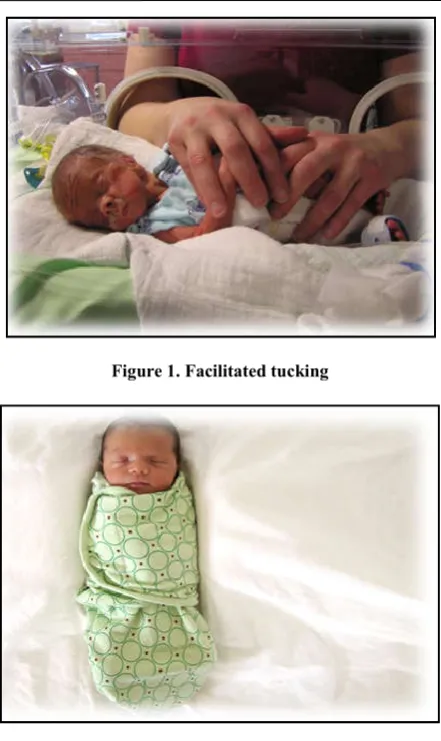
Facilitated tuckingIn tucking, the nurse or parent holds the infant by her or his hands in a side-lying, flexed fetal-type position, offering support and skin contact (Axelin, 2010).
e.
SwaddlingSwaddling involves wrapping the neonate in a fabric cloth. swaddling after a painful intervention is associated with clear reduction in the heart rate and it also has an effect on oxygen saturation for all age groups(ACignacco et al.,2001).
f.
PositioningFigure 1. Facilitated tucking
Figure 2. Swaddling
g.
Olfactory and multisensorial stimulationA familiar odor might be effective in relieving distress associated painful stimuli in pre-term infant like odor of breast milk (Cignacco et al., 2007).
h.
MusicBeneficial effects of music on pain response are lowering of heart rate and rise in oxygen saturation and a reduction in excitation state in infants more than 31 weeks of gestation. (Hartling et al., 2009).
B.Pharmacological pain prevention methods
a. Sucrose
Small amount of sweet solutions placed on the neonates tongues have been shown to mediate an increase in endogenous opioid release, reduce the procedural pain and minimize crying following the procedure (Stevens et al., 2004). Sucrose should be used in conjunction with environmental and behavioral measures to relieve pain in the following doses:
24-26 week gestation:0.1 ml. 27- 31 week gestation:0.25 ml. 32- 36 week gestation:0.5 ml.
37 week gestation:1 ml.
b. Paracetamol and other NSAIDs:
Paracetamol (acetaminophen) acts primarily by inhibiting the COX enzymes in the brain and has been well studied in the newborns, particularly for mild procedural pain or fever reduction after immunizations.
c. Opioids:
Opioids inhibit afferent pain in the spinal cord and activate descending inhibitory pathways. Due to their action in other opioid receptors they can cause respiratory depression sedation, ileus, urinary retention, nausea and vomiting and physical dependence (Bellur et al., 2005).
1- Morphine
(Chay et al., 2002) demonstrated that a concentration of morphine of 125 ng/ml was necessary to produce adequate sedation in 50% of newborns studied at term and premature.The recommended doses for the neonatal period are intermittent intravenous administration of 0.05 to 0.20 mg/kg per dose up to every 4 hours. Continuous administration for newborns at term of 5 to 20µg/kg /h and 2 to 10 µg/kg/h in premature neonates (Taddio, 2002).
2- Fentanyl
Fentanyl is commonly used in neonatology for its capacity of providing fast analgesia with hemodynamic stability (Aranda
et al., 2005). It has faster onset of action and shorter duration
(less than 2 hours) than morphine its T½keo is 6.4 minutes and a context sensitive half life of 260 minutes after 4 hours of infusion. (Stoelting and Hiller, 2006)
The recommended doses for the neonatal period are:
Intermittent intravenous administration of 1-4 µg/kg every 2-4 hours.
Continuous intravenous administration in newborns at term
of 0.5-3µg/kg/hour and 0.5-2µg/kg/hour in premature neonates the down side of the continuous infusion is the fast development of tolerance with the need of increasing doses to achieve the desired analgesia (Guinsburg, 1999) Fast administration of high doses (above 5 µg/kg) could
cause muscle rigidity especially in the thorax hindering ventilation and inducing laryngeal spasm in newborns (Greco and Berdo, 2000).
d. Sedatives:
Midazolam and lorazopam are used extensively in neonates but diazepam is used infrequently because of its limited metabolism in neonates (Jacqz et al., 1994).
e. Narcotics:
Despite its theoretical advantage as a potent analgesic, sedative and amnestic agent, Ketamine has been minimally studied in neonates; thus, it should be used mostly in approved research protocols (Soriano et al., 2005). Similarly, Propofol has gained increasing popularity as an anesthetic agent for neonates (Davis et al., 2001)
f. Local anesthetics:
Local anesthetics effectively reduce procedural pain in neonates. Injectable lidocaine and topical creams have both been studied in various neonatal population. Lidocaine is used commonly for dorsal penile nerve block in circumcision, but a head-to-head comparison reported ring block to be more effective than either dorsal penile block or topical anesthetics (Lander et al., 1997). Lidocaine infiltration however is not effective for lumber puncture in neonates (Porter et al., 1991). Complications of therapy with lidocaine include case reports of seizures and changes in brain stem auditory response with lidocaine injection. Various topical anesthetics have been tried in neonates with variable success. The first of these is Eutectic Mixture of Local Anesthetics (EMLA) cream was studied
extensively in neonates for procedural pain.
(Taddio et al., 1998)
Although newer agents have a shorter onset of action and may be more effective e.g. the pain from heal prick the most skin breaking procedure in neonates is not affected by EMLA cream (Stevens et al., 1999) although multiple studies have shown its efficacy for venepuncture, lumbar puncture or immunization, it was less effective than sucrose for venepuncture or lidocaine blocks for circumcision (Anand and Hall, 2006) complications of topical anesthetics include methoglobinemia from prilocaine component if EMLA cream is not applied correctly, or transient skin reactions from various agents.
Another remedy of local anesthetics used for pain relief is the novel tetracaine patch whose efficacy was tested by (Long et al., 2003) in 32 newborn infants (32 to 42 weeks gestational age), they found that 14 out of 15 tetracaine patch treated infants (93%) had little or no pain in response to venepuncture after applying tetracaine containing patch 30 minutes before the procedure.
REFERENCES
Anand KJS 2000. Pain, plasticity and premature birth: a prescription for permanent suffering? Nat Med., 6 (9): 971-3.
Anand KJS 2001. Consensus statement for the prevention and
management of pain in the newborn. Arch Pediatr Adolesc
Med., 155:173-180.
Anand KJS and Hall RW 2006. Pharmacological therapy for analgesia and sedation in the newborn. Arch Dis Child Fetal Neonatal Ed; 91: F448-53.
Anand KJS, Hansen DD, Hickey PR 2000. Hormonal- metabolic stress responses in neonates undergoing cardiac surgery. Anesthesiology, 37: 661-670.
Anand KJS, Hickey PR 1988. Pain and its effects in the human neonates and fetus. New Eng J Med., 317:1321-1329.9
Anand KJS, Hickey PRR 1987. Pain and its effects in the human neonate and fetus. The New England Journal of
Medicine, 317 (21): 1321-1329.
Anand KJS, Scalzo FM 2000. Can adverse neonatal experiences alter brain development and subsequent behavior? Biol Neonate, 77: 69-82
Andrews K, Fitzgerald M 2002. Wound sensitivity as a measure of analgesic effects following surgery in human neonates and infants. Pain, 99:185-95.
Apkarian AV, Bushnell MC and Treede RD 2005. Human brain mechanisms of pain perception and regulation in health and disease. Eur J Pain, 9(4): 463-484.
Aranda JV, Carlow, Hummel P. et al 2005. analgesia and sedation during Mechanical ventilation in Neonates. Clin
Ther., 27:877-899
Argoff CE. 2009. Pain management secrets. American College of Chest Physicians; 12(34): 15-18
Axelin A 2010. Parents as pain killers in pain mangement of preterm infants; 32 -33.
Bellur R, de waal KA, Zanini R 2005. Opioids for neonates receiving mechanical ventilation, Cochrane Database Syt Rev ;1:CD004212
Chay, PC Dyffy BJ, Walker JS 2002. Pharmacokintics- Pharmacodynamic relationship of morphine in neonates
-ClinpharmcolTher., 51:334-342
Cignacco E, Hamers JP, Gessler P. 2002. First validation of the Bernese pain scale for neonates'. 10th world congress on pain, San Diego. USA.
Cignacco E, Hamers JP, Stoffel L, et al. 2007. The efficacy of non-pharmacological interventions in the management of procedural pain in preterm and term neonates: A systematic literature review. Eur J Pain, 11: 139-52.
Davis PJ, Galinkin J, McGowan FX, et al. 2001. A randomized
multicenter study of remifentanil compared with halothane in neonates and infants undergoing pyloromyotomy: I. Emergence and recovery profiles. AnesthANalg, 93: 1380-86.
Fitzgerald M. 2005. The development of nociceptive circuits.
Not Rev Neurosci, 6:507-20.
Fuller B 1995. FM Signals in infant vocalization. Cry, 6: 5-10. Fuller B, Horii Y 1996. Differences in fundamenatal frequency
jitter and shimmer among four types of infant vocalization.
J Comm Dis., 19:111-118.
Fuller B, Horii Y 1998. Spectral energy distribution in four types of infant vacolizartion. J Comm Dis., 20: 111-121. Gibbins S, Stevens B, AsZtalos E. 2003. Assessment and
management of acute pain in high-risk neonates. Expert Opinpharmacother. 4:475-483.
Golianu B, Krane EJ, Gallowy KS, et al. 2000. Pediatric acute pain management. Pediatric Clinics of North America; 47(3): 559-87.
Greco C, Berde C. 2000. The acutely ill chil; pain Management in children in nelson text book of pediatrics, ed by Behraman RE, Kliegman RM, Jenson HB, 16th ed, WB Saunders Company, Part VIII, Chapter 74. 306-312. Grunau RE and Craig KD 1987. Pain expression in neonate,
facial action and cry. Pain; 28: 395-410.
Grunau REV, Craig KD 1990. Facial activity as a measure of neonatal pain expression. In: Tyler DC, Krane EJ, eds. Advances in pain research and therapy. New York: Raven press, 147-155.
Grunau RVE, Johnston CC, Craig KD 1990. Neonatal facial and cry responses to invasive and non-invasive procedures. Pain; 42:295-305.
Grunau, R.E., Holsti, L., and Peters, J,W. 2006. Long-term consequences of pain in human neonates. Seminars in Fetal and Neonatal Medicine,11(4), 268-275
Guinsburg R 1999. Avaliacaoetratamento da dornorrecem-nascido . J pediar (RJ ); 75:149 -160
Hack M, Taylor HG, Klein N, et al. 1994. School-age
outcomes in children with birth weights under 750 g. N Engl J Med 1999;331:753.
Harmesh Singh, Daljit Singh, R.K. Soni 2000. Comparison of pain response to venepuncture between term and preterm neonates. Indian Pediatr; 179-181.
Hartling L, Shaik MS, Tjosvold L, et al. 2009. Music for medical indications in the neonatal period: A systematic review of randomized controlled trials. Arch. Dis. Child. Fetal Neonatal Ed; 94: F1-F7.
Jacobson B, Nyberg K, Gronbladh L, et al. 1990. Opiate addiction in adult offspring through possible imprinting after obstetric treatment. BMJ; 301: 1067-1070.
Jacqz-Aigrain E, Daoud P, Burtin P, et al. 1994. Placebo-controlled trial of midazolam sedation in mechanically ventilated newborn babies. Lancet; 344: 646-50.
Lander J, Brady-Fryer B, Metcalfe JB, et al. 1997. Comaprison of ring block, dorsal penile nerve block, and topical anesthesia for neonatal circumcision: A randomized controlled trial. JAMA; 278: 2157-62.
Lawson K, Daum C, Turkewitz G 1997. Analgasia E SedacaoEmSituacoes De Emergencia E Unidades De Tretamento intensive Pediatrico. J. Pediatr (RJ); 79: 223-2230.
Long CP, McCafferty DF, Sittlington NM, et al. 2003.
Randomized trial of novel tetracaine patch to provide local anaesthesia in neonates undergoing venepuncture. Br J Anaesth; 91(4):514-8.
Long JG ,Phillip AGS , Lucey JF 2000. Excessive handling as acause of hypoxemia . Pediatrics; 65 :203-207 .
Mathew JW and Mathew JL 2003. Assessment and management of pain in infants. Postgraduate Medical Journal; 79(934): 438-43.
McIntosh N, Van Veen L, Brameyer H 1993. The pain of heel prick and its measurement in preterm infants. Pain Jan; 52(1) : 71-74.
Mitchell A , Boss B 2002. Adverse effects of pain on the nervous systems of newborns and young children : A review of the literature. Journal of neuroscience ; 34 (5):228-236.
Morison SJ ,Holsti L , Grunau RE, et al. 2003. Are there developmentally distinct motor indicators of pain in preterm infants ? Early Hum Dev; 72 (2):131-46.
Osborn DA, Jeffery HE and Cole MJ 2002. Sedativesfor opiate withdrawal in newborn infants. Cochrane Database Syst Rev; 3: CD002053.
Pereira AL, Guinsburg, de Almeida MF, et al. 1999. Validity of behavioral and physiologic parameters for acute pain
assessment of term newborn infants. Sao Paulo Med J; 117(2): 72-80.
Porter FL and Anand KJS 1998. Epidemiology of pain in neonates. Research and Clinical Formus; 20: 9-18.
Porter FL, Miller JP, Cole FS, et al. 1991. A controlled clinical trial of local anesthesia for lumbar punctures in newborns. Pediatrics; 88: 663-9.
Porter, F.L., Wolf, C.M., & Miller, J.P. 1998. The effect of handling and immobilization on the response to acute pain in newborn infants. Pediatrics, 102(6), 1383-1389.
Shah PS, Aliwalas LL and Shah VS 2006. Breastfeeding or breast milk for procvedural pain in neonates. Cochrane Database of Systematic Reviews; 3: CD004950.
Shah V, Taddio A and Ohlsson A 1998. Randomized controlled trial of paracetamol for heel prick pain in neonates. Arch Dis Child Fetal Neonatal Ed; 79: F209-211. Soriano S G, Anand K J S, Rovnaghi C R. et al. 2005. Of mice
and men: should we extrapolate rodent experimental data to the care of human neonates? Anesthesiology; 10: 2866– 869.
Speidel BD 1998. Adverse effects of routine procedure on preterm infants .lancet I , 846-5.
Stevens B, Johnston C, Franck L, et al. 1999. The efficacy of developmentally sensitive interventions and sucrose for relieving procedural pain in very low birth weight neonates. Nurs Res; 48: 35-43.
Stevens B, Johnston C, Horton L 1994. Factors that influence the behavioral pain responses of premature infants. Pain; 59: 101-109.
Stevens B, Johnston C, Taddio A, et al. 1999. Management of
pain from heel lance with lidocaine-prilocaine (EMLA) cream: Is it safe and efficacious in preterm infants? J DevBehavPediatr; 20: 216-21.
Stevens B, Yamada J and Ohlsson A 2004. Sucrose for
analgesia in newborn infants undergoing painful
procedures. Cochrane Database Syst. Rev.; 3: CD001069. Stoelting, RK, Hiller SC 2006. Opioids agnoists and
antagonists, em :stoeltingRik, Hiller SC Pharmacology and Physiology in Anesthetic Practice, 4th ed, Philadlephia, Lippincott Williams and Wilkins, 87-126.
Sweet DS, McGrath PJ. 1998. Physiological measures of pain. In: Finley GA, McGrath PJ, eds. Maesurment of pain in infants and children. Progress in pain research and management. Seattle: IASP press; 59-81.
Taddio A 2002. Opioid analgasia for infants in the neonatal intensive care unit .ClinPerinatol ; 29: 493-509.
Taddio A, Katz J, Ilersich AL, et al. 1997. Effect of neonatal circumcision in pain response during subsequent routine vaccination. Lancet; 49: 599-603.
Taddio A, Ohlsson A, Einarson TR, et al. 1998. A systematic review of lidocaineprilocaine cream (EMLA) in the treatment of acute pain in neonates. Pediatrics; 101: E1. TousignantLaflamme Y., Rainville P, Marchand S. 2005.
Establishing a link between heart rate and pain in healthy subjects: a gender effect. The journal of pain, 6(6): 341 – 347.
Van Dijk M, de Boer JB, Koot HM et al. 2001. The
Van Dijk M, Simons S and Tibboel D 2004. Paediatric and perinatal drug therapy ; 6 :97-103.
Van Lingen RA 2001. Effects of rectally administered paracetamol on infants delivered by vaccum extraction. European Journal of Obestetrics and Gynecology and Reproductive Biology ; 94 : 73 – 78 .
Whitfield MF, Grunau RE, Holsti L 1997. Extremely premature (<8000g) school childred: multiple areas of hidden disability. Arch Dis Child fetal neonatal Ed; 77:F85-90.
Wiech K and Ploner M 2008. Neurocognitive aspects of pain perception. Trends CognSci; 12(8): 306-313.