499
©IJRASET: All Rights are Reserved
Automatic Open Drain Cleaning System
Mr. Ankur Kulthe1, Ms. Sreelakshmi K.V.2, Mr. Tahir Mukadam3, Prof. Ragini Gaikwad4
1, 2, 3, 4Department of Instrumentation Engineering, Ramrao Adik Institute of Technology, Nerul, India
Abstract: The weather is changing rapidly and unexpected heavy downpour leads to lot of problems. The main reason behind the floods is due to the clogged drainage system. There is no easy flow of rain water due to the solid wastes clogging the pipes of drainage system. This project aims at automatically cleaning the water in the drainage system each time any solid wastes appears with the help of claws which are driven by chain sprocket to grasp the solid waste and throw it into the tank. Once the waste gets accumulated in the tank, a message signal would be send to the operator to get the tank cleaned. The main technology used in this project is Raspberry pi which executes and controls the whole process. We are also including weather forecasting in order to keep the operator updated about the weather in that particular area. This would help him to take necessary actions during certain weather conditions. All this information will be displayed on Thingspeak in graphical form. This project largely helps in reducing the difficulties endured due to solid wastes in the open drain and its resulting consequences.
Keywords: Raspberry Pi, Thing Speak
I. INTRODUCTION
There are different types of drainage systems in our country, one of which is open drain. The open drain is surface drains and is open to air. Different kinds of solids wastes gets into it through various ways which would even-tually lead to clogging in interconnected drainage pipes. Clogging of pipes can lead to blockage and there would be lack of smooth flow of drain water through the pipes. This problem can have some drastic consequences like floods during heavy down pour.
Mumbai is a city located on the coast of Arabian Sea and is also the Financial capital of India and also the capital city of Indian state of Maharashtra. It faces floods every year and the heaviest of them was seen on 26th of July, 2016. Floods in Mumbai are said to be caused by heavy rains accompanied with high tides but, these are not only the reasons that contributes to the floods every year, various other reasons accompanied by these are responsible for the heavy flooding in Mumbai.
[image:1.612.199.415.508.715.2]Huge amounts of solid wastes accumulated in the drainage system is one the major reason for it. Deaths due to drowning in floods is perhaps the most dramatic signs of the suffering that drainage can help to alleviate.[3] Less notice-able to outsider but of greater impact on residents living in a poor community. A steady toll of diseases causing deaths is a major problem during floods. Automatic Open Drain Water Cleaning overcomes all sorts of drainage problems and promotes blockage free drains promoting continuous flow of drain water. This project mainly focuses on cleaning up the solid wastes in the open drain and clearing the path for the drain water to have a smooth flow in the closed drains(pipes).
500
©IJRASET: All Rights are Reserved
Our proposed system is used to clean the drainage water using auto mechanism technique. Raspberry pi is the ma-jor executing and controlling unit. The weather forecasting data will be graphically displayed on ThingSpeak, an Iot platform. In this system we use motor, chain, driver, bucket, frame as mechanical parts.
II. OBJECTIVE
The major motivational factor for making of this project is floods caused due to clogging of drain pipes with solid wastes which flows with the sewage. This project helps to remove all the solid wastes (plastic bottles, polythene bags, papers, etc) which flows along with the drain water. Automation of the setup reduces man power and saves time.
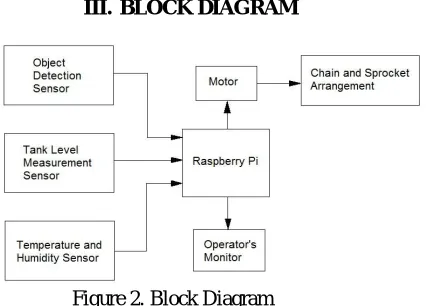
[image:2.612.220.433.197.350.2]III. BLOCK DIAGRAM
Figure 2. Block Diagram
Major blocks of the circuit consists of the Raspberry pi, object detection sensors, tank level sensor, motors and ThingSpeak server. The automation part of this project mainly uses three sensors. Ultrasonic sensor, IR sensor and humidity sensor are the three sensors used in this project. The sensors provides their sensed parameters to the GPIO ports of the Raspberry pi. Raspberry pi is the heart of the system which processes and executes the program.
The ultrasonic sensor is used as an object detection sen-sor. Whenever solid wastes such as plastic bottles, polythene carry bags, papers etc. flow through the drain, they are detected by the ultrasonic sensor and thus a signal is send to the Raspberry pi.
The Raspberry pi later gives binary signal 1 to the motor which initiates the motor. The motor is connected to the hardware setup via a coupling. The collector jaw in the setup carries the waste detected and drops it in the tank.
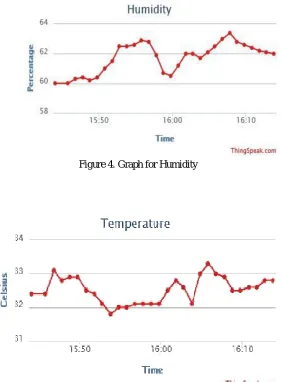
The IR sensor is used to measure the level of the tank where waste is collected. Once the tank is full, the IR sensor sends a signal to the Raspberry pi and later it alerts the operator to empty the tank. The humidity sensor measures the humidity of the surrounding and give live updates about the climatic changes to the operator. All the data collected by DHT11 is represented on Thing Speak in a graphical form for the convinience of the operator.
IV. HARDWARE REQUIREMENTS
A. Raspberry Pi
Raspberry Pi is a series of Single Board Computers (SBC) that are ARM based, developed by Raspberry Pi foundation in United Kingdom. These credit card sized computers runs Debian based GNU/Linux operating system-Raspbian. All Pi models have a Broadcom system on a chip (SoC) with an integrated ARM compatible central processing unit (CPU) and on-chip graphics processing unit (GPU). Raspberry Pi 3B is the latest model of the series with a Broadcom BCM2837 processor and a Quadcore ARM Cortex-A53, 64Bit CPU. It has a current capacity of 2.5A and a 400MHz Videocore GPU. Because of its low cost, Pi has become a widely used mini-computer for robotics, automation and industrial use.[11]
B. Ultrasonic Sensor
501
©IJRASET: All Rights are Reserved
C. IR Sensor
IR sensor module is used to measure the tank level. An emitter, typically infrared, sends a beam of light to a receiver that merely detects the presence of the IR light. IR Sensors work by using a specific light sensor to detect a select light wavelength in the Infra-Red (IR) spectrum. By using an LED which produces light at the same wavelength as what the sensor is looking for, the user can look at the intensity of the received light. When an object is close to the sensor, the light from the LED bounces off the object and into the light sensor. This results in a large jump in the intensity, which can be detected using a threshold.[9]
D. Temperature and Humidity Sensor (DHT11)
Humidity and temperature sensor used here is a DHT11 sensor. The DHT11 detects water vapors by measuring the electrical resistance between two electrodes. The humidity sensing component is a moisture holding substrate with elec-trodes applied to the surface. When water vapor is absorbed by the substrate, ions are released by the substrate which in-creases the conductivity between the electrodes. The change in resistance between the two electrodes is proportional to the relative humidity. Higher relative humidity decreases the resistance between the electrodes, while lower relative humidity increases the resistance between the electrodes. The DHT11 measures temperature with a surface mounted NTC temperature sensor (thermistor) built into the unit. [10]
V. SOFTWARE REQUIREMENTS
A. Python
Python is a multi-paradigm, integrated high level pro-gramming language for general purpose programming. The language is easy to use and it is easy for any user or programmer to develop a code. It is compact but at the same time efficient to run object oriented and structured programs as it is highly extensible.
B. IoT based Platform – Thing Speak
ThingSpeak is an open source Internet of Things (IoT) application and Application Programme Interface (API) to store and retrieve any data from the devices in the network using the HTTP protocol over the Internet or via a Local Area Network (LAN). It enables the creation of sensor logging applications, location tracking applications, and a social network of things with status updates. Different and many channels can be created by a user and viewed anytime. Here a separate channel is created for a patient and the corresponding data is retrieved. Every channel can contain tables for parameter entries and those parameters are also plotted and shown in the form of a graph.[12]
VI. OPERATION
An IR sensor is placed for tank level measurement. When the tank gets full with the deposited wastes, the IR sensor detects it and sends a message to operator.
The humidity and temperature sensor(DHT11) plays a role in weather forecasting. It detects the humidity and temperature of that area and notifies the operator of any climate change. This data is displayed on ThingSpeak. If there is a possibility of rain, the operator is notified of it and the system can be deactivated.
The hardware consists of sprocket and chain arrange-ment, collector jaw, frame bed, shaft, coupling. The collector jaw is attached to sprocket and chain arrangement which is further mounted on a frame bed. The motor is attached to the hardware with the help of a coupling which is further attached to the sprockets using shaft. [4] When the motor receives signal from the Raspberry pi, it rotates the shaft to which the sprocket and chain is attached. Hence the collector jaw moves, collecting the wastes and depositing it in the tank. Automating this setup using sensors was a step towards making it a smart system.
VII.RESULTS
The Ultrasonic sensor(Object detection sensor) sends signal to the Raspberry Pi to run the motor. The motor runs in clockwise direction to get the collector jaw attached to the chain-sprocket arrangement from bottom to the top where the tank is present The IR sensor gives the status of the tank level to the operator. Continuous Real Time data is being send to the operator about the tank level. Once the tank is full, it notifies the operator about the same
502
©IJRASET: All Rights are Reserved
Figure3. Circuit Diagram
The Ultrasonic sensor senses the incoming solid wastes and detects it up to 20 inches distance. When it detects any object within this range, it sends a signal to the Raspberry Pi. Raspberry Pi then sends a signal to the DC motor to start running. When no object is detected, no signal is sent to the DC motor by the Raspberry Pi. Once the motor starts, the sprocket and chain arrangement starts running to which the collector jaw is attached. The collector jaw collects the incoming wastes and carries it to the tank. The waste is then deposited in the tank.
[image:4.612.168.450.325.707.2]Figure 4. Graph for Humidity
503
©IJRASET: All Rights are Reserved
TABLE 1. DATA COLLECTED FROM DT11 SENSOR
sr.no Humidity
Temperatur e
1 60 32.4
2 60 32.4
3 60.3 33.1
4 60.4 32.8
5 60.2 32.9
6 60.4 32.9
7 61 32.5
8 61.5 32.4
9 62.5 32.1
10 62.5 31.8
VIII. FUTURE SCOPE
This Project can have a great future scope in the new technologies to be implemented in drainage system. Au-tomating the cleaning system of open drain system reduces man-work and saves the miserable lives of people who cleans the drains. It also ensures efficient cleaning time and saves a city from floods during heavy downpour and diseases spread through it. The operator would get messages when his intervention is required. In cities which employs old technology drainage system and manual cleaning of it, this project would be a great milestone.
IX. CONCLUSION
Automation is a technology concerned with this applica-tion of mechanical, electronic and computer based systems to operate and control production. This system is used to automatically clean the open drains in order to avoid clogging of the drain pipes.
REFERENCES
[1] Design of machine elements (DME-II) by K Raghavendra , first edition 2015.
[2] Design and Data hand book for Mechanical Engineers by K Mahadevan and K Balaveera Reddy. Fourth edition 2013.
[3] NDUBUISI C. Daniels, Drainage System Cleaner A Solution to Envi-ronmental Hazards, (IRJES) ISSN (Online) 2319-183X, (Print) 2319-1821Volume 3, Issue
3(March 2014), PP.54-60.
[4] M. Shende, R. Kolhe, R. Wadhbude, A. Ingle, Automatic Debris Seperator Machine For Floating Material, International Journal of Research In Science and
Engineering e-ISSN: 2394-8299 Volume: 3 Issue: 2 March-April 2017
[5] M. Rathod, V. Pund, R. Pungle, J. Rathod, Automatic Floating Waste Collector, IJARIIE-ISSN(O)-2395-4396, Vol-3 Issue-3 2017
[6] S S Rattan, Theory of Machines, Department of Mechanical Engineer-ing, Regional Engineering College Kurukshetra (2004). Publication: Tata McGraw-Hill
Publishing company Limited.
[7] http://nevonprojects.com/automated-draingutte r-cleaner-project/
[8] http://education.rec.ri.cmu.edu/content/electronics/boe/ultrasonic-sensor/1.html
[9] https://www.elprocus.com/infrared-ir-sensor-circuit-and-working/
[10] https://github.com/adafruit/Adafruit-Python-DHT
[11] https://www.raspberrypi.org/
[12] https://thingspeak.com/