To the Minister for Enterprise & Employment
Pursuant to the Industrial Development Act, 1993, Forfás herewith presents its report and accounts for the year ended December 31, 1997
Do Aire Fiontar & Fostaíochta
De bhun an Achta um Fhorbairt Tionscail, 1993, tá a thuarscáil agus a chuntais don bhliain dar chríoch 31 Nollaig, 1997, a dtíolacadh leis seo ag Forfás.
CHAIRMAN'S STATEMENT
Ireland continues to be one of the best locations in the world in which to do business. This is reflected in our high level of investor confidence and strong economic growth sustained over six years – ranking Ireland among the best performing economies in Europe.
This growth has been driven by the private enterprise sector. The combination of the agreement between the social partners on pay, taxation, social and economic issues, together with the efficient management of the public finances and other areas of public policy, has contributed to low inflation and rising employment. Building on the success achieved in recent years is the major challenge that lies ahead.
Globalisation
Ireland’s success is being achieved against a background of rapid change in the international economy in the form of greater global economic integration in areas such as trade, capital flows and technology flows. Increased competition from low-wage countries is also a feature of the trading environment facing Irish firms. This competition is driven strongly by the outsourcing of production capacity from more developed economies to low-wage countries. Underlying the international expansion of firms are technological advances particularly in communications, liberalisation of markets and increased mobility of production factors. Accelerating technological change in particular is changing the nature of production and business development strategies. Trade liberalisation and the free movement of capital are both driving the process of globalisation and resulting from that process. Labour movement across national boundaries is also becoming increasingly common, especially skilled labour. These developments will further increase the level of involvement by foreign firms in the Irish economy. Irish-owned firms will also become increasingly involved in overseas ventures. Utilities, transport, retail and financial services are among the areas of the Irish services sector which will be most affected by these trends.
EMU will accelerate these developments, as will the emergence of newly industrialising economies such as Russia, China and the Eastern European countries which have the advantages of proximity to the EU, low costs and high skills. The recent turmoil in a number of Asian economies can be expected to lead to even more intense competition from that region for EU countries including Ireland.
Ireland has benefited from globalisation in the form of increased foreign direct investment and increased external trading opportunities for Irish-based firms, resulting in greater
employment. A feature of the accelerating process of globalisation is increasing transparency in relation to the strengths and weaknesses of national economies across a range of facets, including - economic management, institutional effectiveness and efficiency, regulatory clarity and consistency, labour and other input costs for enterprise, educational attainment, skills and R&D. If Ireland is to continue to successfully exploit the opportunities which globalisation opens up and to avoid the pitfalls it can also bring, it is essential that developments in Ireland in these areas is benchmarked against best international practice. This benchmarking should be a crucial input into the formulation and review of policies to attract and retain investment. While the Government clearly has a pre-eminent role in this process, it will not be effective unless the social partners also engage fully and participate in the process.
Small firms need particular assistance to meet the opportunities and challenges of
Competitiveness
Competitiveness has become as much an issue for countries as for companies.
Governments are starting to recognise that both their influence on economic conditions and the supporting institutions they provide should enable enterprises to compete effectively in world markets.
In Ireland, this competitiveness challenge will require the establishment of a new industrial structure which will be flexible and responsive to fresh new challenges with the clear aim of increasing innovative activity. By encouraging new companies to emerge and convincing existing firms of the need to innovate, it can generate and nourish a strong and healthy enterprise culture.
In tandem with this new structure, education and training courses will need to be upgraded to incorporate elements which enable the workforce to play its part in Ireland’s future economic well-being. In May 1997, the Competitiveness Council was established by the Government as part of the Partnership 2000 Agreement. Originally recommended by the Forfás strategy document Shaping Our Future: A Strategy for Enterprise in Ireland in the 21st Century, the Council is required to report to the Taoiseach on key issues and to recommend policy actions which are needed to improve Ireland’s competitiveness.
I strongly welcome the establishment of the council, which can play a key role in improving competitiveness over a whole range of issues at national and company level. Forfás is represented on the council and is also providing research and secretariat support for the work of the council.
Telecommunications
One has only to look around one’s own home or office to see how personal computers and digital telecoms are changing home, lifestyles and work. Software, education and training products are increasingly distributed over telecom lines and the Internet. Digital distribution offers tremendous opportunities in terms of employment and development, not alone in emerging sectors such as multimedia and electronic communications, but in new sectors that have not yet been fully defined.
Other telecom products and service providers are also beginning to enter the market in Ireland. These developments require to be strongly promoted and encouraged within a well-resourced, transparent and pro-competitive regulatory framework.
EMU
When Ireland joins the European Monetary Union on 1 January 1999, Irish businesses will encounter a fundamental change in their competitive environment. Not only will we see the introduction of the euro but the opportunities for Irish firms will be enhanced through the reduction in transaction costs and through market transparency. The potential of the Single Market across the European Union will be greatly enhanced. However, these benefits will be equally available to firms in other participating countries. As a result, EMU will result in the need for further competitiveness and flexibility in the Irish economy. Key factors such as skills, costs, infrastructure and quality will play an even more important role in determining the success of Irish enterprises in the face of competition abroad and within the Irish marketplace itself.
EMU will also herald other major changes. Mergers and acquisitions can be expected to increase, most notably in the food distribution and financial sectors. Foreign direct investment from outside the EU may increase, attracted by the scale of the market and the simplicity of dealing with a single currency.
Macroeconomic stability is one of the key aims of EMU. The achievement of that stability will result in low levels of inflation continuing. Ireland should also reap the benefits of a low interest rate environment. Together these factors should generate a positive climate for investment in the Irish economy.
Acknowledgments
I wish to acknowledge the support of the Tánaiste and Minister for Enterprise, Trade and Employment, other Ministers and the Government for the work of Forfás in 1997. That support has been well reflected in a range of Government publications, policies and actions which are of substantial importance to the development of the enterprise sector in Ireland. I also pay tribute to the excellent results achieved in 1997 by our colleagues in Forbairt and IDA Ireland. The development agencies, including ABT, FÁS and Shannon Development have played an important role in Ireland’s economic growth and successful employment creation in recent years as have the third level education sector, employer bodies and business organisations, trade unions and the media. All of these have been supportive of our work. And that support is acknowledged and appreciated.
As Chairman I extend my thanks and appreciation to my fellow Board members and to the many organisations which have contributed to the work of Forfás in 1997.
I wish to acknowledge the significant support provided by the EU for industrial development and the support of Science and Technology in Ireland through the Operational Programme for Industrial Development and through a range of other programmes which significantly impact on the environment for enterprise.
Finally I want to thank sincerely the staff of Forfás for their continued dedication, hard work and professionalism throughout the year.
CHIEF EXECUTIVE'S REPORT
After four successive years of growth, strong foundations have been laid for further gains in employment and living standards in Ireland as we head towards the next millennium.
However, that growth cannot be taken for granted. Much of that growth and improvement has derived from policies and investment developed in earlier years. It is now essential that the policies which will provide similar high dividends ten years from now are developed and to ensure that these policies are advanced in the annual budgetary cycle.
Increased investment in human, technological and infrastructural resources will be required to capitalise on emerging development opportunities arising from areas such as globalisation and EMU. In order to be able to respond to unexpected events, both the public and private sectors need to enhance their capabilities to formulate and implement policies that enhance competitiveness in an uncertain world subject to rapid and unpredictable change. This can best be achieved within the proven approach of social partnership but a social partnership that evolves and recognises the need for flexibility and change.
Recent economic turmoil in East Asia is a reminder that prerequisites for social and economic advance are the avoidance of complacency and ensuring a capacity to adapt to any challenging economic events.
If these lessons are learned and policies adjusted accordingly, 1998 and the years beyond should see further significant advances both in the reduction of unemployment levels and in the achievement of further significant increases in the standards of living for people in all sectors and across all regions of the country.
1997 Overview
For the fourth successive year employment generation in Ireland achieved record levels in 1997. Employment increased by 59,000 according to the ESRI (April 1998 Quarterly Economic Commentary) and helped to reduce unemployment from 11.2% to 9.9%. Most encouragingly, long-term unemployment fell to 86,300 in the year ending April 1997 - a reduction of 16%.
Total permanent employment in companies under the remit of IDA Ireland, Forbairt, Shannon Development and Údarás na Gaeltachta reached a new record increase of 16,000 or 6.4% by the year-end. Employment in manufacturing in Ireland in the ten-year period 1988-1997 grew by 17.7%. This is an excellent performance compared to other countries, such as the UK and the USA, where manufacturing employment fell during the same ten year period by over 16% and 4% respectively.
Ireland’s increased employment and its strong economic growth of 7.7% in GNP were underpinned by the performances of manufacturing and internationally traded service
companies which increased their expenditure on Irish goods and services, as well as their tax payments to the Exchequer. In 1997 the overall corporation tax take amounted to £1,700 million, compared to £1,426 million in 1996, and 45% came from manufacturing
internationally traded, and international financial services companies.
These included:
• The White Paper on Human Resource Development.
• A Government Strategy for Services: Employment Initiatives through the Millennium.
• A Comprehensive Policy for Enterprise and Jobs - Growing Our Employment - Sharing our Growth.
Forfás also finalised a significant number of statements and reports as an input into the formulation of Government policies. A number of these were published including:
• Information Society Ireland: Strategy for Action.
• Teltec Ireland: An Evaluation of the Telecommunications Programme in Advanced Technology (PAT).
• Survey of Process and Product Innovation in Irish Industry 1993-1995.
• Forfás 1996 Employment Survey.
• Annual Survey of Irish Economy Expenditures.
• Statement of the Irish Council for Science, Technology and Innovation (ICSTI) on Public Expenditure Priorities for 1998.
• State Investment in Science & Technology 1997.
• Annual Competitiveness Report - National Competitiveness Council (published in 1998).
• Broadband Telecommunications Investment in Ireland (published in 1998).
These reports were followed through by substantive discussions with the relevant
Government Departments and agencies and formed the basis for a range of Government decisions important to the development of the enterprise sector.
A key focus of activity in 1997 was to help secure implementation of the key
recommendations of Shaping Our Future: A Strategy for Enterprise in Ireland in the 21st Century, published by Forfás in 1996. Overall 80% of the main proposals have been fully or partly implemented.
In 1997, Forfás continued to co-ordinate the work of An Bord Tráchtála, FÁS, Forbairt and IDA Ireland, to evaluate their programmes and to undertake a range of surveys and analyses of performance essential to policy formulation and development. The executive functions involved in the accreditation of laboratories and certification bodies were effectively
discharged through the National Accreditation Board (NAB), which operates as a division of Forfás.
Competitiveness
Ireland’s economic growth has gathered momentum. However, this momentum will not, of itself, provide Irish businesses with the resources required for the challenges of globalisation and EMU. In the absence of national monetary policy instruments for influencing
competitiveness, the social partners will need to enhance the partnership approach in order to exploit the opportunities arising from the liberalisation of world markets and to guard against the threats which increased competition will generate - especially for the traditional sectors of the economy. It will also be necessary to pursue consistently prudent
macroeconomic sectoral and structural policies in order to sustain present growth and broaden it to a wider range of economic sectors, especially services.
competitiveness issues, identified future challenges and has provided an annual comparison of Ireland’s performance with key aspects in competing countries.
Innovation
Investment in science, technology and innovation has made a significant contribution to Ireland’s industrial growth. The potential here is great, especially by creating an innovation-based economy. Instead of competing on the basis of labour costs, Ireland must develop the skills, innovative capability and associated productivity which will secure competitive
advantages for firms and generate further increases in employment and improvements in living standards.
Over the past ten years EU Structural Funds have facilitated substantial investment in the national innovation system across various sectors. The £250 million Scientific and
Technological Education (Investment) Fund announced by the Minister for Education and Science in 1997 will significantly increase S&T funding in third level colleges and also strengthen college links with industry.
Nonetheless, certain weaknesses still exist. Ireland lags behind its European counterparts in relation to total R&D spending. Business expenditure on R&D, at 1% of GDP, is still below the EU average of 1.2% and indigenous companies account for just one third of this expenditure. The numbers of researchers and technicians in the workforce are only three-quarters of the European average and the numbers of students taking Leaving Certificate basic science subjects have fallen since the mid 1980s. Clearly, further steps are necessary to ensure that the business, higher education and public sectors continue to increase their investment, both quantitatively and more wisely.
In the first round of European Structural Funds (1989-1993), the S&T programme for
industrial development amounted to £200m. of public and private monies. This figure doubled to just over £400m. for the second round (1994-1999). It is essential that this investment momentum be improved upon. To reach the EU average, R&D spend would need to increase by £100m. per annum but to become a truly innovation-based economy, even that may be insufficient. Finland, for example, plans to invest 2.9% of GDP in R&D by 1999, compared to 1.5% for Ireland at present.
However, investment in Science, Technology and Innovation (STI) will be sustained and increased only if its capability for delivering on national social and economic objectives can be clearly demonstrated. This issue presents a significant challenge for the STI community and for all users of STI. Recognising such challenges, Forfás has developed policy initiatives to support and encourage innovation. It has evaluated the impact and effectiveness of a number of existing schemes, co-ordinated a review of the innovation support strategy and assessed constraints such as skill shortages and information technology infrastructure. During 1998 these separate threads will be brought together to form a comprehensive proposal to provide a key input into Ireland’s submission to the European Union for structural funding after 1999.
In this work Forfás operates closely with the Irish Council for Science, Technology and Innovation, (ICSTI) established by the Government in 1997 under Forfás legislation. The Council is chaired by Dr. Edward Walsh. Its mandate includes prioritisation of state spending on science and technology, scientific research, education, technology and R&D in enterprises, financing of innovation, as well as public awareness of science and technology. Forfás provides the research and secretariat support for the Council.
Skills
Clearly, investment in education and training, in life-long learning which enhances both personal development and the potential of people for well-paid employment can prepare Ireland’s growing, labour force for success and can generate economic dividends. Such investment needs to be increased, both qualitatively and quantitatively, in order to continue the recent advances in employment creation and living standards. Other countries,
recognising how human resource development offers a key to a more egalitarian economy, are investing very significant resources in its potential. In order to advance Ireland needs to invest more in the development of languages, science and technology skills. The education system has to respond to these challenges. Improved links between the education and enterprise sectors need to be developed to ensure that the curriculum at all levels adequately reflects the need of students to be well-prepared to engage effectively in an enterprise oriented society.
In response to these challenges, companies are committing more resources to recruitment and training. A reliable system for forecasting the demand and supply of skills is required to ensure that emerging needs are met by the education and training system. An Interim Skills Group, established by Forfás, at the request of the Department of Enterprise, Trade & Employment, developed proposals which led to a Government Action Plan for Skills and an extra 3,200 places in third level education.
The work of the Interim Skills Group also formed an important input into the government decision to establish a £250m. Scientific and Technological Education (Investment) Fund which will help third level institutions to meet the skill needs of the technological sectors. During 1997 also, the Government announced the establishment of a a Business-Education Partnership under the aegis of Forfás and the Higher Education Authority which involves, an Expert Group on Future Skills, a high level Management Implementation Group and a Business-Education Forum.
The Expert Group on Future Skills which is chaired by Dr. Chris Horn, is continuing the work of the Interim Skills Group in forecasting the demand and supply of particular skills and is advising on related issues.
Infrastructure
Unprecedented levels of economic growth have generated unanticipated demand for the development of all aspects of infrastructure - land requirements, water and sewerage, environmental protection, transportation (including roads, ports, bus and rail), energy and telecommunications. Urgent action is necessary to meet this demand and provide the high standard of infrastructure which is crucial to the continued attraction of new investment and for the development of existing industry.
Helped by EU funding, significant improvements have been achieved in road development in recent years. But much remains to be done, particularly with respect to port access and city traffic congestion.
Economic and Monetary Union
Ireland will be among the first countries joining Economic and Monetary Union (EMU), one of the most significant developments in the world economy. On 1 January 1999 the component currencies will be replaced by the euro.
EMU will represent a fundamental change in the competitive environment facing Irish business. The Irish domestic market will become more integrated with a Single European market of over 300 million people. Simultaneously Irish firms will experience opportunities for developing new markets, sourcing from a wider range of alternative suppliers and building on their capabilities in customer orientation and service delivery. However, closer attention will need to be paid to costs, quality and innovation. The opportunities will only be fully reaped if the Irish product and labour markets display the flexibility and efficiency required to respond rapidly to changing demands and increased competition.
Each firm will need to carefully analyse the opportunities and threats within its business environment and develop appropriate strategies. These analyses are best carried out before deciding on detailed functional changes in internal operations.
Irish enterprises that are dependent on the UK market, or face competition from UK producers on the Irish market, will require to take substantive measures to improve their competitiveness. They will need to reduce their exposure to potential changes in the value of sterling, either by increasing the flexibility of their cost base, by hedging or in other ways. Detailed advice for business firms on this and on other EMU related issues are set out in the relevant publications of the Forfás EMU Business Awareness Campaign which have been widely distributed and discussed with business firms.
In the EMU Business Awareness Campaign, Forfás has worked closely with representatives of business, Government departments, the Central Bank and State Agencies to develop and keep updated a comprehensive “information pack” for the business sector and to disseminate this widely to the sector. Forfás is further strengthening this campaign in 1998 as part of the Government’s overall information campaign.
Retail
The increasing presence of UK multiples in Ireland can benefit the consumer and existing firms by encouraging greater efficiency, quality and innovation. However, foreign retailers may tend to source their goods from one supplier, which may be based in their home country. It has been argued that Irish firms will receive opportunities to serve wider markets through access to foreign retailers operating here. Nevertheless, many Irish firms may not have the expansion capability required to avail of such opportunities.
In the medium term the UK multiples’ share of the Irish grocery market is likely to increase from 25% at present to 50% and the “own-label” share of the retail market is forecast to rise from the present 4% to 20-25%. The quality, product innovation, production systems and distribution requirements of these multiples are more demanding than those of Irish retailers. Accordingly those Irish suppliers that have not previously supplied substantially to UK multiples and are seeking to maintain their present outlets face significant competitiveness challenges.
Conclusion
Ireland has come a long way in economic terms during the past four years. We must now prepare our economy for the competitiveness challenges of the 21st century.
John Travers
AN OVERVIEW OF 1997
1. Introduction
The Irish economy again experienced record growth in 1997. The CSO has estimated that real GNP growth of 7.7% was achieved in 1997. Despite rapid economic growth, inflation was held to an annualised rate of 1.3%, compared to the EU forecast average of 1.8%.
2. Employment
Overall Employment and Unemployment
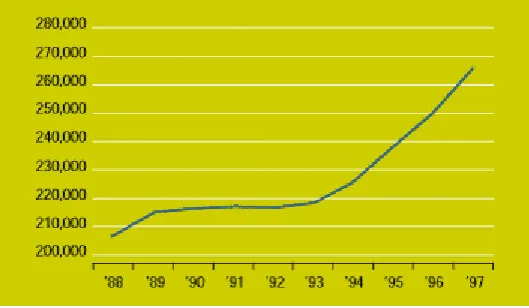
Overall, employment in the economy increased by 59,000 in 1997, according to the ESRI (April 1998 Quarterly Economic Commentary). Unemployment continued to decline from 11.2% in 1996 to 9.9% in 1997. Perhaps the most encouraging aspect of this decline in unemployment has been the significant reduction in long-term unemployment. The numbers of long-term unemployed fell from 102,300 in the year ending April 1996 to 86,300 in the year ending April 1997 - a decline of 16%..
Manufacturing and International Traded Services
In companies under the remit of Forbairt, IDA Ireland, Shannon Development and
Údarás na Gaeltachta there was a net increase of almost 16,000 (6.4%) in permanent
full-time jobs in manufacturing, internationally traded services and international
financial services. This increase is the highest yet recorded. Manufacturing accounted
for over 10,000 (65%) of the net permanent full-time jobs created in 1997 and
internationally traded and international financial services accounted for just under
6,000 (35%) of the net increase. (Figure 1)
Figure 1
Trends in Full Time Employment 1987 - 1996
Manufacturing, Internationally Traded and International Services (IDA Ireland, Forbairt, Shannon Development and Údarás na Gaeltachta)
Source: Forfás Annual Employment Survey 1997
[image:11.595.149.414.532.686.2]Full time employment in IDA Ireland and Forbairt backed companies rose by around 15,000 (6.8%) in 1997. Job gains in companies supported by Forbairt and IDA Ireland amounted to just over 28,000 in 1997, of which just under 24,000 were new first time jobs, the fifth year in a row of record growth. Job losses were around 13,000.
Two sectors, metals and engineering (including electronics) and non-manufacturing grant aided (mainly internationally traded services), accounted for 90% of the net change in employment recorded in 1997. Employment in internationally traded and financial services sectors increased by 25.5% to over 27,000. The East Region accounted for 70% of net new jobs.
Cost Per Job
The average cost of each job sustained over a seven year period for IDA Ireland and Forbairt backed companies continued the downward trend of recent years and fell from £10,900 in 1996 to £10,700 in 1997. The trend is shown in Figure 2.
OECD figures show that Ireland is unique in displaying significantly increased manufacturing employment over the ten-year period 1988/1997. Figure 3 highlights the growth in
[image:12.595.147.419.383.605.2]manufacturing employment in Ireland over the past ten years and contrasts this with some major economies for which data is available. The US suffered a decline in manufacturing employment of 4.3% since 1988 and manufacturing employment in Japan declined by 4.7% since 1990. Ireland’s rate of manufacturing employment growth over the ten-year period was 17.7%.
Figure 2
Cost per job sustained at 1997 prices
Figure 3
International Trends in Manufacturing Employment 1988-1997 (Employment expressed as a percentage of 1988 level1
Source: OECD Main Economic Indicators and UK office for National Statistics
Part-time, Temporary and Short-term Contract Employment
Part-time, temporary and short-term contract employment increased by 19% to just under 28,000 in 1997. Employment in this area has grown by 164.5% since 1988 with the most rapid growth being in foreign-owned companies.
Figure 4
Trends in Part-Time, Temporary and Short-Term Contract Employment 1988-19972
Source: Forfás Annual Employment Survey
[image:13.595.164.436.449.651.2]
Skills
During 1997 Forfás commissioned the ESRI to carry out a survey of the skill needs of the international trading sector. The following findings emerged:
• A net inflow of people into the country in 1996 as the current strong economic growth both cuts emigration and encourages Irish people (and indeed other EU nationals) to come to Ireland for employment.
• the average rate of staff turnover for the sectors covered in the survey was 17.5%. This was roughly the same as the average turnover rate in the UK for manufacturing, finance and business services in 1995 (17%) and significantly higher than the turnover rate for these firms in 1996 (12.5%)
• vacancy rates were highest for computer technicians (15%), computer professionals (12%), engineering professionals (8%) and science professionals (6%)
• the percentages of firms reporting hard-to-fill vacancies were: International Services 59%
High-Tech Manufacturing 53%
Financial Services 31%
Other Manufacturing 36%
Overall 44%
• the vacancies most frequently cited as hard-to-fill were semi-skilled (e.g. sewing machinists, boners), skilled (e.g. electricians and welders), managers, computer specialists and engineers
• third of employers anticipated recruitment difficulties over the next year and one-quarter expected difficulties over the next four years.
3. Expenditure
Manufacturing and Internationally Traded Services Firms
Firms in manufacturing and internationally traded services have continued to increase their spending in the Irish economy to further boost indirect employment growth. The latest Forfás Irish Economy Expenditures (IEEs) Survey shows that manufacturing and internationally traded services companies spent around IR£22.8bn. in the economy in 1996, up £3.3bn. (17.2%) on 1995 in real terms. This is the highest increase in IEEs recorded to date, and follows a 12.5% rise in spending in 1995.
This spending is a significant factor underpinning the overall growth in the economy and confirms the very strong contribution by both Irish and foreign owned firms to growth and employment creation.
FIGURE 5
Estimated Irish Economy Expenditure (IEEs) of Manufacturing and International Traded Service Industry 1996
1996
%
Irish- owned
£m
Foreign- owned
£m Total £m
% Change
Over 1995
Total Sales 15,621 25,678 41,299 15.6
Total Irish Economy Expenditures 12,381 10,434 22,815 17.2
Of Which
Wages & Salaries 2,274 2,493 4,767 9.6
Irish Raw Materials 7,311 2,935 10,246 16.6
Irish Services 1,997 4,540 6,537 29.9
Profits (all Irish industry profits and corporation tax paid
by overseas firms) 799 466 1,265 3.9
IEEs % Sales 79.3 40.6 55.2 1.3
Source: Forfás Irish Economy Expenditures Survey
State Investment on Enterprise Promotion
Forfás has undertaken an analysis of State investment to promote the development of the enterprise sector and create employment in Ireland. This indicates that:
• the cost of State support to the enterprise sector in the form of direct expenditure (all costs of operating the development agencies, grants etc.) was approximately £567m. in 1997. This represents a rise of 41% in real terms (3.9% per annum) over the period 1988-1997
• over the period 1988 to 1997, direct expenditure on the promotion of the enterprise sector increased by 41% in real terms compared with growth in Government
expenditure of 35%. The growth in GNP in real terms over the same period was 61%
• there has been a swing from fixed asset supports such as capital grants to other forms of finance such as employment grants, R&D, equity investment etc. In 1988 fixed asset grants accounted for 46.5% of total direct expenditure. By 1996 the percentage had fallen to 39.5%
Figure 6
State Expenditure on Enterprise Development (Constant Prices £m.)
Source: Forfás; Financial Support by Government for the Development of Enterprise in Ireland
Corporate Tax
The cost to the State of fostering the development of enterprise has been offset by the rise in corporation tax payments, and in particular from corporation tax paid at the low (10%) rate by manufacturing and internationally traded/financial services firms. This is evident from the following:
• the total corporation tax take amounted to £1,699m3. in 1997. This represents a rise of over 300% in real terms in the period 1988-1997 (16.5% per annum)
• corporation tax paid by manufacturing, internationally traded and international financial services firms surveyed by Forfás amounted to £762m. in 1997, or almost 45% of total corporation tax receipts.
3
Figure 7
Corporation Tax Payments (Constant Prices £m.)
Source: Forfás; Corporation Tax Survey
Innovation in the Business Sector
A Forfás survey of product and process innovation in Irish industry between 1993 and 1995 developed a profile of Ireland’s industrial base using a “scale of innovativeness”. Of the 3,500 manufacturing and internationally-traded services companies in the survey fewer than 500 (or 14%) appear at the top of the scale with an expenditure of at least £100,000 per year on R&D on a continuous basis over a number of years. The remainder of the industrial base is divided into groups with varying degrees of commitment to innovation. There is a complete absence of any element of product or process innovation or any investment in R&D during the periods 1993-1995 for 30% of companies positioned at the bottom of the scale. A
significant finding from the analysis is that indigenous enterprises are as likely to be engaged in innovative activity as their foreign-owned counterparts where comparisons are made between companies of similar size and operating in similar sectors.
Forfás launched the Irish element of a pan-European survey of innovation in 1997 - the Second Community Innovation Survey. The results of this survey will be published in 1998 and will be comparable with results from other EU member states.
The preliminary findings from the survey suggest:
• the incidence of product and process innovation is in line with the results from the survey relating to 1993-1995 (Figure 8)
• the average share of sales in 1996 from new and improved products in
manufacturing firms, at 10% and 11% respectively, places Ireland at a mid-range position compared with results from earlier innovation surveys in other countries
Figure 8
Level of Industrial Innovation 1993-1995
State Investment in Science & Technology
[image:18.595.95.472.462.743.2]The State Investment in Science and Technology report, published by Forfás, shows the total Government allocations to science and technology activities in 1997 at around £820m., an increase of £43m. (or 5.6%) over 1996.
FIGURE 9
State Investment Allocations in Science & Technology - 1997 [Exchequer and EU Funds]
DEPARTMENTS
Total Public Funding
£'000 % Total
Taoiseach 457 0.07
Finance 1,476 0.21
Justice 14,502 2.09
Environment 9,192 1.33
Education 310,800 44.89
Marine 13,586 1.96
Arts, Culture & The Gaeltacht 2,756 0.40
Agriculture, Food & Forestry 65,780 9.50
Enterprise, Trade & Employment 86,961 12.56
Transport, Energy & Communications 14,330 2.07
Social Welfare 4,477 0.65
Health 138,331 19.98
Government Offices 29,703 4.29
Total 692,3514 100.00
Source: Forfás
The contribution of Structural Funds to public sector science and technology continues to increase, rising to £133m. in 1997 from £106m. in 1996 and representing almost 20% of public funding of science and technology in Ireland. In the area of research and development £56m. out of a total of £168m. (or 33%) comes from Structural Funds.
Figure 10
Distribution of Government Supported S&T by sources of Funds
(!997 Prices - £m)
ACTIVITIES IN 1997
Introduction
In 1994, Forfás was established as the Advisory Board for Industrial Policy and Science and Technology. In this capacity Forfás:
• advises the Minister for Enterprise, Trade and Employment on the development of State policies designed to stimulate enterprise and employment
• is responsible for co-ordinating key aspects of the activities of the promotional agencies
• is responsible for evaluation and monitoring programmes which promote enterprise development, science and technology.
The Irish National Accreditation Board (NAB) operates as a division of Forfás.
1. Policy Introduction
In 1997 Forfás developed policy recommendations on a wide range of issues impacting on the development of industry in Ireland. It also worked closely with bodies established by Government under the broad auspices of Forfás to consider specific issues critical to economic performance and job creation including the National Competitiveness Council, the Irish Council for Science, Technology and Innovation, the Expert Group on Future Skills and the Information Society Commission. This section reports briefly on some of the work undertaken by Forfás during 1997 in the following areas:
• Competitiveness
• Implementation of Long Term Strategy
• Skills
• Information Society
• Science, Technology and Innovation
• Science and Technology after 1999
• Taxation
• Finance
• Transport
• Pre-Designated Industrial Zone
Competitiveness
Further improvements to Ireland’s competitiveness are necessary in order to sustain present growth, deepen it to include more Irish-owned enterprises, and broaden it to include the full range of economic sectors, especially services.
During 1997 Forfás undertook the following activities in relation to competitiveness:
• a first Annual Competitiveness Report which compared the performance of Ireland with other countries under a variety of indicators was prepared
• extensive discussion on the competitiveness issues and the emerging conclusions of the report were held with industry associations, government departments, the trade union movement and others
• additional work was undertaken focusing especially on costs, small businesses and public administration
• research and secretariat support was provided to the National Competitiveness Council which had its first meeting in June 1997
as inputs to the work of the Council, an extensive analysis was undertaken, assessing the main competitiveness issues, progress achieved to date and the required policy changes. A review of international work on competitiveness was also undertaken
• a draft summary statement on competitiveness was prepared for the Council that reviewed the main areas of policy and highlighted the actions required
at EU level, Forfás participated in a pilot benchmarking project on information and communications technologies and organisational change. This project examines the role of policies in the diffusion of these technologies and their use in new forms of business operations both internally and between firms. Studies were initiated at country level of competitiveness policies and institutions in comparative companies.
Implementation of long term strategy
The medium term strategy for promoting the development of the enterprise sector “Shaping Our Future”, published by Forfás in May 1996, has received wide acceptance. During 1997 Forfás worked to help secure implementation of the main recommendations of the strategy, in particular the recommendations relating to finance, tax, science and technology, skills and education and telecoms. Overall, 40% of the main proposals have been fully or mostly implemented; 40% have been partly implemented; and 20% have had little or no progress made on implementation.
Among the Shaping Our Future recommendations which have been implemented are:
• the establishment of the National Competitiveness Council
• the setting up of the Science, Technology and Innovation Council
• the adoption of a strategy for developing an Information Society
• the proposal for a single rate of Corporation Taxation
• the development of the Services Strategy, which places services alongside manufacturing at the heart of enterprise strategy; and
• the establishment of a National Transport and Logistics Institute.
Skills
The response to the growing demand for skills has been substantial. An Interim Skills Group chaired by Forfás developed proposals for additional places which led to a Government Action Plan for Skills and an extra 3,200 students intake in third level education. The
Building on the work of the Forfás Interim Skills Group, the Expert Group on Future Skill Needs, which operates under the aegis of Forfás, is assessing the ongoing requirements for technology skills and medium/low level skills in the economy. The initial work has involved the following studies:
• skill projections based on an ESRI Medium Term Macro model which provides output and job projections for the economy
• analysis of skill needs in the electronic hardware sector based on a survey of the major companies in the sector, carried out for Forfás by Consultants, Eirlink International
• analysis of skill needs in the software industry based on a survey carried out for FÁS by McIver Consultants
• examination of the supply of professional and technician graduates
• survey of the skill needs of the internationally traded sector.
Information Society
A Steering Committee was established by the Minister for Enterprise, Trade & Employment, under the aegis of Forfás in 1996, to develop a strategy for the Information Society.
The report of the Committee, Information Society Ireland - A Strategy for Action; published in March 1997 sets out a vision for Ireland in the Information Society, requiring action in five strategic areas: awareness, infrastructure, learning, enterprise, government. Nine tactical actions were identified, including::
• creation of an Information Society Commission
• provision of a broadband telecommunications service
• an awareness campaign
• development of an initiative relating to skills and knowledge
• creation of a Digital Park.
As part of the Government response to the report, an Information Society Commission was established under the auspices of the Department of the Taoiseach, as recommended in the report. The Commission will spearhead the implementation of the national strategy to ensure that the benefits of the Information Society are spread throughout society and not limited to those who can afford to purchase the technology themselves.
During the year considerable progress was made on implementing the other
recommendations in the Information Society Committee’s report. Six task forces were established by the new Information Society Commission to work in the areas of awareness, infrastructure, learning, enterprise, government and law reform. The Government announced an education initiative amounting to £30m. over five years aimed at improving access to computers in primary and secondary schools. Telecom Eireann have committed to connecting every school in the country to the Internet and have announced Ennis as the winner of a competition which will see the widespread deployment of information and communications technologies throughout the town in every home, school and business. Forfás continues to provide on-going technical and strategic support to the new Commission and its working groups as it oversees Ireland’s preparations for the Information Society.
Telecommunications
by international telecommunications consultants, Analysys Limited. A report, Broadband Investment in Ireland, highlighted that a gap exists between the broadband services available in Ireland and other countries with which we compete.
The work concluded that investment in broadband infrastructure and services can best be achieved by encouraging competition through a pro-competitive regulatory framework. The establishment of a such a framework requires that the overall objectives of the Director of Telecommunications Regulation should be stated explicitly in the Telecommunications Act, 1996 and should serve as a set of guiding principles for the work of the Director
• the overriding responsibility of the Director should be to develop a competitive, liberalised telecom market as an instrument of national economic and social policy
• the Director should have a public interest responsibility to look after the interests of the different categories of consumer
• the Director should have responsibility for effective regulation of the terms for connecting calls between customers of different network operators, known as the terms of interconnection
• the Director should have responsibility for the regulation and monitoring of prices for telecoms services and should be asked to review the 1996 Price Cap Order in 1998
• the Director should have adequate legal powers of enforcement. Sanctions for non-compliance with the Act should be more than commensurate with any benefit gained from non-compliance and should represent a significant proportion of an operator’s revenues so as to be a deterrent for non-compliance.
Other recommendations include:
• Cablelink should be sold to a party that would invest significantly in the network
• the derogation on competition which applies until the year 2000 on voice telephony should be ceded immediately
• a telecoms marketing expert should be appointed to encourage investment in broadband telecoms by telecom operators
• a number portability facility needs to be established by the date of full liberalisation the use of Structural Funding to accelerate the provision of broadband in certain areas across the country where the market fails to provide the required services in advance of demand needs to be considered.
Digital Park
During 1997 Forfás carried out a study relating to the Information Society Committee’s recommendation on a Digital Park. A Steering Group was established to investigate the viability of this proposal. The group recommended that a Digital Park with sophisticated broadband telecommunications infrastructure be established in the Dublin region. Activities in the new Park would address the following target markets:
• multimedia for the education and entertainment industries
• electronic commerce
• on-line data and information services
• “mirror sites”, providing backup to the computer networks of large companies
Science, Technology & Innovation
The Government established a Council for Science, Technology and Innovation (ICSTI) in 1997 under the Forfás legislation to advise Government on the strategic direction of science and technology policy. It is chaired by Dr Edward Walsh, President, University of Limerick and its members come mainly from the business and academic communities. Forfás is providing the research support and secretariat for the Council.
In its first formal advice to Government in September 1997 ICSTI recommended that public expenditure should give priority to the following specific actions:
• greater commitment and resources for science in schools
• increased resources for third level education to provide additional places in areas of skill shortages, to upgrade equipment levels and to increase the level of basic research
• further support for industrial innovation in enterprises
• detailed contingency planning for the ending of the current Structural Funds round in 1999, as Irish S&T activities are heavily dependent on such funds
the establishment of a Strategic Innovation Investment Fund for priority investments of importance for national development purposes.
Subsequent to the Council’s September Statement the Government made two
announcements covering many of the issues the Council had raised. The most important was the £250m Scientific and Technological Education (Investment) Fund. Early in 1998 the Government approved the establishment of a new £2.5m Innovation Investment Fund to support innovative science and technology projects.
ICSTI has also decided to undertake a Technology Foresight exercise for Ireland.
Technology is changing at an ever-increasing rate, creating problems for all those involved in identifying and formulating responses to those trends. A Technology Foresight exercise is an attempt, on a national scale, to bring some order and consistency to identifying the key trends and assisting those most closely involved to prepare to meet the challenges of the future.
Science and Technology after 1999
Public funding of science and technology in Ireland is very dependent on EU support via Structural Funds, particularly the area of research and development where £56m. or 44% of total public funds of £126m. allocated in 1997 comes from Structural Funds. There is therefore considerable concern about what will happen when the current round of Structural Funds ends in 1999.
Forfás has begun to address this issue with a series of studies on particular aspects of science and technology policy. The first two such studies, completed last year, focused on supports for business sector R&D and for higher education-industry collaboration.
Public Funding of Business R&D
This study assessed the goals of policy towards business R&D, examined whether or not there is a continual need for such support and how that support should be delivered in the future if appropriate.
aggregate terms, a profile of the industrial base with respect to its capacity for innovation shows that much needs to be done to improve the capability of the broad majority of enterprises. It is recommended that policy instruments should become more focused on particular types of firms while still endeavouring to create an environment in which R&D investment in Ireland will be an attractive proposition for all companies. A new policy mix of targeted grant aid combined with improved and more widely available tax incentives is the route proposed to meet the objective.
Third Level-Industry Collaboration
The third level colleges - universities and institutes of technology - represent critical
concentrations of highly skilled scientists and engineers who can generate new technologies and innovative ideas that can be channelled and diffused into industry. However, cultural and other barriers need to be reduced if interactions between the two parties are to be increased. The Forfás study identified a number of actions to address these barriers with the help of EU Structural Funds, including:
• each college should develop a “statement of research policy”, to include a research charter as well as a model contract for collaboration with industry. A primary
objective should be to increase the rewards and incentives for academics who work with industry rather than publish research papers. Consideration should be given to the introduction of a “points system” to credit staff involved with industry
• government, via the new Scientific and Technological Education (Investment) Fund and other mechanisms, should address the serious deficiencies in the colleges in relation to equipment and research buildings and facilities
• the booming economy, allied to inadequate financial support mechanisms, is seriously depleting the numbers registering for postgraduate studies. The level of support for postgraduate and postdoctoral researchers should be increased to a realistic level, in order to attract more people to work on industrial problems
• the feasibility of staff exchange programmes between industry and the colleges should be assessed.
Taxation
Single Corporation Tax Rate Implementation
Arising from work undertaken by Forfás, three options for a future Corporation Tax Regime were outlined. These may be summarised as follows:
i. extension of the present 10% regime
ii. introduction of a Single Low Rate of Corporate Tax as close as possible to the 10% rate with appropriate anti-avoidance and anti-abuse arrangements
iii. introduction of a “ruling system” which would allow discretion to the Revenue Commissioners on the tax level payable by corporations taking the national economic impact of projects into account.
Following detailed consideration of the options by the Forfás Tax Working Group and by the Departments of Enterprise, Trade & Employment, Finance and the Revenue Commissioners the option decided upon by Government was the Single Low Rate of Tax.
This option will give a strong boost to small business and the services sector in particular, in addition to continuing to attract foreign direct investment.
Capital Gains Tax
The system of taxation plays a key role in facilitating risk-taking by entrepreneurs and the promotion of enterprise, particularly in relation to small business. One of the key taxation issues for Irish-owned firms identified by a survey conducted by Forfás was Capital Taxation. Shaping Our Future highlighted the need to reduce capital taxation in order to reward risk taking and to encourage entrepreneurs to build businesses of scale.
In its submission for the budget, announced by the Government in December 1997, Forfás sought the extension of the 26% Capital Gains Tax rate, which applied to gains in smaller unquoted companies, to all gains arising from productive investments.
The December 1997 budget measures went further than this by reducing the standard rate of Capital Gains Tax from 40% to 20%.
Savings and Investment
A Forfás Study on Capital Markets completed in 1997 highlighted the very high level of tax incentives provided for investment in low risk areas such as property and special savings schemes. The Forfás recommendations included reducing the level of incentives for individuals investing in property by placing a cap of £25,000p.a. on capital allowances available to individual passive investors, and by restricting reliefs and allowances to investors in residential property. This recommendation was subsequently introduced by the
Government. The rate of taxation on special savings accounts was increased to 20%. This should have the beneficial effect of increasing the relative attractiveness of investment in the enterprise sector.
Finance
Seed and Venture Capital
In line with policy recommendations made by Forfás in 1997, there has been an increase in the supply of risk capital in the Irish market for investment in the enterprise sector through initiatives such as:
• the provision of venture capital by Irish pension funds
• the provision of risk capital under the seed and venture capital measure in the current EU Operational Programme (1994-1999), through which a total of £66m will be subscribed jointly by the public and private sectors for investment in smaller emerging firms with good prospects for growth. Some 25% will be invested in the form of seed capital
• the introduction of the Developing Companies Market (DCM) on the Irish Stock Exchange and the listing of four companies on the DCM in 1997
the refocusing of the BES to help smaller firms raise risk capital.
Alternative Sources of Finance for Infrastructure
The provision of a high standard of infrastructure is crucial to the continued attraction of new investment and to the development of the existing base of Irish and foreign owned
companies operating here.
Given the Government’s desire to contain public expenditure and the possibility of some curtailment in the availability of EU Structural Funds after 1999, Forfás undertook research on the scope for alternative sources of finance to fund infrastructural development which would assist the continued growth of Irish industry. The areas of infrastructure involved included the transport system, energy, communications, water, sewage and solid waste disposal, skills investment and aspects of R&D infrastructure. The work undertaken has identified a set of principles of good practice to be followed in seeking private sector finance for infrastructural development. These cover the issue of value for money, better and more efficient service delivery, better risk allocation between the public and private sector, the setting and monitoring of standards of performance and the retention of regulation by the public sector.
Arising from work undertaken by Forfás and others in this area, the Minister for Finance has established an Inter-Departmental Group to develop criteria for and advise on the issues arising in implementing Public Private Partnership (PPPs) mechanisms for meeting public infrastructural needs. An informal advisory group with public and private sector participation has also been established on which Forfás is represented.
Transport
National Institute of Transport and Logistics
Logistics is critical in the development of the enterprise sector. Forfás has accordingly pursued the establishment of a National Institute of Transport and Logistics as a resource to provide industry with commercially relevant, high quality education, training and research facilities in the increasingly critical business function of transport and logistics.
This has been accepted and Structural Funds of £1m. were allocated for the project. Following an open competition run by Forfás the new Institute has been established within the Dublin Institute of Technology (DIT). An Advisory Board, including private sector representation, has been established to oversee the operations of the Institute.
Benchmarking Study on Transport and Logistics
The EU Industry Council agreed in early 1997 to carry out pilot competitiveness benchmarking studies in a number of areas. Ireland is to be the lead country. Forfás
manages the project for Ireland. The research phase started in November 1997, and is to be completed in 1998
Pre-Designated Industrial Zones
The increasing globalisation of business is heightening the need for consistency, speed and transparency in the physical planning processes, particularly in the location decisions of international firms. While Ireland has demonstrated its ability to secure planning permission for inward investors within the timeframes set out in existing legislation, inward investors still face considerable uncertainty in the Irish planning process relative to competitor countries. Forfás, in consultation with the development agencies and the Department of the
proactively plans for industrial development on suitable sites in advance of specific projects being identified, thereby streamlining the planning process when suitable projects are identified, while protecting the environment and the rights of individuals.
The approach developed by Forfás was endorsed in the Partnership 2000 agreement. Forfás engaged in further consultations on these proposals during 1997, which are being considered as part of the Department of the Environment and Local Government’s Review of Planning Legislation initiated in 1997.
2. Co-ordination
Introduction
Co-ordination between the industrial development agencies is part of the core business of Forfás. This is given effect through the Board, which includes the Chief Executives of the industrial development agencies and the Secretary General of the Department of Enterprise, Trade and Employment and through an inter-agency planning group, chaired by Forfás, to facilitate an integrated approach across agencies to the development needs of Irish
enterprise. Forfás also operates a number of cross-agency working groups on specific areas and works closely with individual agencies to help achieve operational consistency.
This section provides an overview of some issues which involve co-ordination by Forfás.
Services
In March 1997, the Minister for Enterprise, Trade and Employment launched the
Government’s strategy document for growing employment and stimulating enterprise in the services sector over the next four years, A Government Strategy for Services - Employment Initiatives through the Millennium. The strategy was developed by the Minister and the Department in close consultation with Forfás. It outlines the principles adopted by Government for the development of the services sector and sets out targets and
commitments for development. Under the strategy, Forfás has been assigned the role of co-ordinating and reporting on implementation.
The first Forfás report on the Implementation of the Services Strategy was presented to the Tánaiste in December 1997.
The Report shows that good initial progress has been made and identifies priorities for further action in 1998. These include:
• inclusion of services in future competitiveness reviews
• the need to increase the level of risk and development finance
• the implementation of the White Paper on Human Resource Development to take account of the needs of service firms
• the inclusion of all service firms as potentially eligible for agency support to enhance their management and other capabilities
• the on-going shift of agency resources to service firms and
• the need to increase the linkages activities of the agencies for service firms.
Business Information System
Údarás na Gaeltachta, An Bord Tráchtála, An Bord Bia, FÁS and the Central Statistics Office. It will enhance the analytical capabilities of participants and facilitate robust analysis and evaluation of enterprise support measures by the agencies and departments contributing to enterprise development.
The new Business Information System is being managed and administered by Forfás and makes standard information available to all participating agencies.
In the longer term, the system will provide a comprehensive source of accurate information and will allow management across agencies and departments to undertake detailed analyses to an extent not possible previously. It will help rationalise data collection from agency clients and will provide comprehensive data for policy analysis.
Awareness campaigns
Forfás co-ordinates awareness campaigns on the EMU, on Science, Technology and Innovation and on Skills.
EMU Business Awareness Campaign
In response to the challenges of EMU membership, Forfás further developed the EMU Business Awareness Campaign, which it was asked by the Government to initiate in
December 1996. During 1997 approximately 28,000 Information Packs were disseminated, in excess of 110,000 hits were recorded on the Campaign’s website in 1997 and it is estimated that the Campaign dealt with over 50 enquiries per week throughout 1997. The Campaign also carried out a wide range of other information activities, including taking stands at exhibitions, making presentations to interested groups, providing speakers for meetings and organising information meetings around the country, in co-operation with other agencies and Chambers of Commerce. Working groups were also set up to deal with the technical aspects of the changeover in relation to information technology, training and the retail sector.
Leading representatives of government and business attended a major national conference in Dublin Castle in April to launch the planning tools to help business prepare for the changeover. The banking sector and the Revenue Commissioners also availed of the occasion to announce their arrangements to deal with transactions in the new currency. Furthermore, to assist Irish industry to deal with the issues arising from the UK’s initial absence, a study was undertaken in order to determine the appropriate actions for
A survey of companies, to determine the levels of EMU awareness and preparedness among Irish enterprises in 1997, showed that 53% were aware of the Campaign. However, the SME sector showed a distinct lack of awareness. As a result, renewed efforts were made to address this audience and a summary brochure highlighting the key messages for SMEs was prepared and almost 50,000 copies distributed by year end. A special mailing was carried out with the co-operation of the Revenue Commissioners reaching 140,000 enterprises with the essential details on EMU and the need to prepare for the changeover. A pilot radio
advertising campaign was also undertaken to alert businesses to the euro and the availability of information.
As the start date for EMU approaches the practical issues, especially those dealt with by the IT, Retail and Training Working Groups, will take on a more heightened relevance. Guidance documents based on the work of these groups are being finalised for wide distribution. In addition, an EMU Inter Agency Co-ordinating Group, chaired by Forfás, is playing an important role in co-ordinating the work of Forbairt, FÁS and the County Enterprise Boards in promoting EMU preparedness among client companies at regional level.
Science, Technology & Innovation Awareness
Forfás manages a three-year programme on behalf of the Office of Science and Technology to promote Science, Technology and Innovation (STI). The Programme, which arises out of the 1996 White Paper on STI, is aimed at a number of target audiences including young people and their educators, the general public, the business sector and decision makers in Government.
The key messages of the programme are that Science, Technology and Innovation
• develops leading edge industry and skilled jobs
• develops exciting career options
• develops creativity in our children.
A number of flagship activities formed the core of the 1997 Programme:
• over 25,000 people attended the Science, Technology and Innovation pavilion at the Ideal Homes Exhibition in the RDS
• the Science Works Roadshow brought science in an entertaining and informative way to primary schools throughout the country. By June 1998 it is estimated that some 17,000 children will have experienced it at first hand
• a CD ROM, The Worlds of Engineering was sponsored in association with the National Centre for Guidance and Education and the Institute of Engineers and was distributed to all Post-Primary Schools
• the Irish Scientist Year Book 1997, which contains the best of scientific research and other STI issues of Irish relevance, was funded and distributed at home and abroad
• the year culminated in the first ever Science Week Ireland, which took place from the 10-16 November. Professional bodies, voluntary groups, colleges, businesses and the public sector combined to organise some 50 events countrywide. Events ranged from conferences and lectures to interactive exhibitions and debates, and a
competition for primary school pupils. The Programme publicised and promoted the events including a calendar circulated to over 100,000 people
• a National Innovation Conference, which focused on business partnerships and networking as a source of innovation, was held in Limerick on 10 December 1997 and was attended by 120 delegates.
A greater coverage of science, technology and innovation matters was evident in the media in 1997, including, for example, dedicated coverage in The Irish Times and a weekly radio series on RTE. As a result of funding by the Programme, RTE completed a pilot television programme in 1997 and will broadcast a series of documentaries on science in 1998.
Skills Awareness
A Skills Awareness Campaign, co-ordinated by Forfás, aims to increase awareness of the career options that technology can offer, especially in the areas of electronic technicians, software engineers and teleservices. The Campaign, co-ordinated by Forfás, involves IDA Ireland, Forbairt, FÁS, and the private sector.
The key actions in 1997 were as follows:
• a skills opportunities brochure, Where the Jobs Are and How to Get Them, was issued in May 1997 to the 85,000 school-leavers of 1997
• an updated brochure was issued in December 1997 to the school-leavers of 1998
• detailed background briefings were made to the education and business media
• educational videos on software and the role of technicians were developed. The videos explain these functions in today’s business environment and chart the available career opportunities.
EU Support for Industrial Development
EU support comes principally through the Operational Programme for Industry (OPI). Forfás works with the national development agencies on structural funds matters. In particular it reports on the implementation of evaluations of EU supported programmes. The Operational Programme for Industry aims to help the Irish economy adjust to increased forms of
competition and to achieve a sustainable improvement in industrial performance to support further improvements in living standards. Total projected expenditure under the Programme by both the public and private sectors amounts to £3.6 billion in 1994 prices over the period 1994-1999. Projected EU co-financing of this expenditure amounts to £800 million.
EU Research Framework Programmes
The Framework Programme enables organisations in Ireland, in partnership with
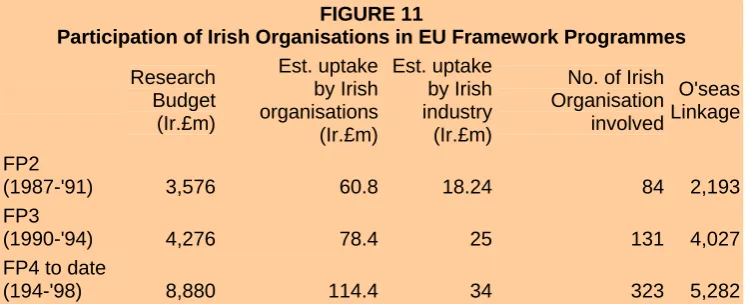
[image:32.595.95.470.204.356.2]organisations in Europe and beyond, to compete for funding for specific research which the European Community considers important for its industrial competitiveness and quality of life. Forfás monitors the participation of Irish organisations in Framework Programmes and co-ordinates the National Delegates responsible for the promotion of the programmes in Ireland. These programmes assist in the development of international linkages and are a significant source of research funds for Irish organisations as illustrated in Figure 11. Forfás also provides policy advice and technical support to the Minister and Office of Science and Technology in relation to EU RTD policy issues.
FIGURE 11
Participation of Irish Organisations in EU Framework Programmes
Research Budget (Ir.£m) Est. uptake by Irish organisations (Ir.£m) Est. uptake by Irish industry (Ir.£m)
No. of Irish Organisation involved
O'seas Linkage FP2
(1987-'91) 3,576 60.8 18.24 84 2,193
FP3
(1990-'94) 4,276 78.4 25 131 4,027
FP4 to date
(194-'98) 8,880 114.4 34 323 5,282
The current Framework Programme (4th) has been in place since 1994 and concludes at the end of 1998.
The 5th Framework Programme is scheduled to begin in 1999. Throughout 1997, negotiations between the EU Commission, Parliament and the Council have been taking pla