Original Article
Effect of metformin on cognitive dysfunction in
animal with insulin resistance: a non-quantitative
systematic review of randomized controlled trials
Tian Cai1, Xiaoqian Zhang2, Zhongwen Zhang2, Rui Zhang3, Huangao Zhu3, Lin Liao2
1Division of Endocrinology, Department of Medicine, Shandong Provincial Qianfoshan Hospital, Shandong
University of Traditional Chinese Medicine, Jinan, Shandong, China; 2Division of Endocrinology, Department of
Medicine, Shandong Provincial Qianfoshan Hospital, Shandong University, Jinan, Shandong, China; 3Division of
Endocrinology, Department of Medicine, Shandong University, Jinan, Shandong, China
Received October 30, 2015; Accepted January 15, 2016; Epub February 15, 2016; Published February 29, 2016
Abstract: Background: Current reports from observational studies and randomized controlled trials (RCTs) on the effect of metformin on cognitive dysfunction are inconsistent. This systematic review aimed at analyzing the ef-fect of metformin on cognitive and memory function in animal models with insulin resistance (IR). Methods: We conducted a literature search of PubMed, Embase, Sinomed, the Cochrane library, CNKI, Wanfang, VIP and clinical trial registries, for English and Chinese articles on RCTs exploring the association between metformin and cognitive dysfunction induced by IR in animals. Heterogeneity and paucity of original data precluded a meta-analysis, and hence, two independent reviewers performed a non-quantitative systematic review of RCTs. Results: Eight studies met the inclusion criteria; two were in English and others in Chinese. Two studies were in mice models and the rest in rat models. Coincidently, all of these studies reported that metformin had beneficial effects on cognitive func-tion. Conclusions: Studies in animal models with IR suggest improvements in cognitive dysfunction by metformin. The results imply a possible therapeutic benefit of peripheral insulin-sensitizer metformin in AD and mild cognitive impairment (MCI). These findings also provide direct evidences linking IR and AD or MCI. However, further studies are required to confirm the effects of metformin on cognitive dysfunction.
Keywords: Cognition disorders, Alzheimer disease, diabetes mellitus, insulin resistance, metformin
Introduction
Globally, most individuals might be at an increased risk of dementia given the trends for increasing incidence of obesity, hyperinsu-linemia, insulin resistance (IR) and diabetes mellitus (DM). Alzheimer’s disease (AD), the most common cause of dementia, is character-ized by progressive cognitive impairment, loss of memory and abnormal behavior. AD is very common in the elderly. Genetic and environ-mental factors contribute to its occurrence and development. Currently, DM is one of leading causes of increase in the incidence of disease. It is expressed as a set of metabolic syndrome characterized by hyperglycemia resulting from pancreatic island function defects or/and insu-lin resistance. Metformin is widely used as a first line drug in patients with type 2 DM for the
higher in patients with DM than that of sporadic AD [2]. Rachel Whitmer, an American scholar, reported that the incidence of sporadic demen-tia is two times higher in patients with DM, and metformin significantly reduces the risk, while other anti-hyperglycemia agents (including insulin) increase the risk [3]. However,
observa-1). Studies were considered eligible if they ful-filled the following criteria:
Inclusion criteria
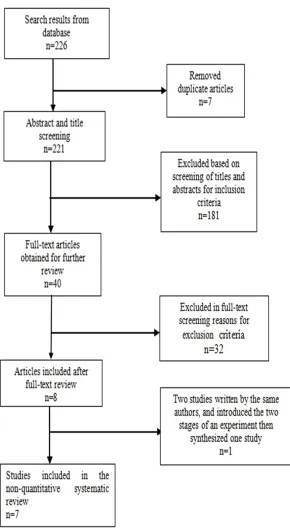
[image:2.612.93.383.67.597.2](1) they were published in English or Chinese language; (2) subjects were primary animals Figure 1. Literature search flow diagram.
tional studies and random-ized controlled trials (RCTs) have yielded inconsistent results on the effects of metformin on cognitive dysfunction. Heterogeneity and paucity of original data precluded a meta-analysis; hence, we proceeded with a non-quantitative system-atic review of RCTs. Methods
Search strategy
wherein metformin was compared with a pla-cebo or blank control; (3) subjects were primary animals with induced DM or IR; (4) they were RCTs; (5) the outcomes provided information on the change in cognition levels before and after metformin therapies in animals; (6) stud-ies available as full-text article.
Exclusion criteria
(1) Population-based case-control studies or a single case reports, summary, conference reports; (2) metformin compared with insulin or other anti-hyperglycemic therapy oral drugs; (3) the experiment process described not detailed; (4) not induced DM or IR animal models.
Outcomes
The main outcome was the change in cognitive and memory function before and after metfor-min therapy. Cognition learning and memory was tested using water mazes, such as the Morris water maze, the Channel water maze, and the Barnes maze. Other key outcomes included: (1) change from baseline in plasma glucose and plasma insulin; (2) change from baseline in body weight and the threshold value for IR, the homeostatic model assessment-IR (HOMA-IR); (3) pathophysiology index change in the hippocampus tissue of animals.
Results
The initial electronic and manual searches yielded 226 potential literature citations, of which 186 were excluded after scanning the titles and abstracts. Two authors independent-ly searched full articles for the remaining 40 citations, and excluded additional 32 studies for various reasons. Finally, eight RCTs that evaluated the effect of metformin on cognitive function in animals with IR were shortlisted. Of these, two studies were by the same authors; we opined that they are the two stages of an experiment, and therefore, considered it as one study. Among these eight studies, two studies were in English, and the rest in Chinese. Three studies were in mice models and the others in rat models. Coincidently, all of these studies observed that metformin had beneficial effects on brain neurons and effectively improved cog-nitive function. Since these studies introduced different mechanisms of action of metformin on cognition, and because only three studies
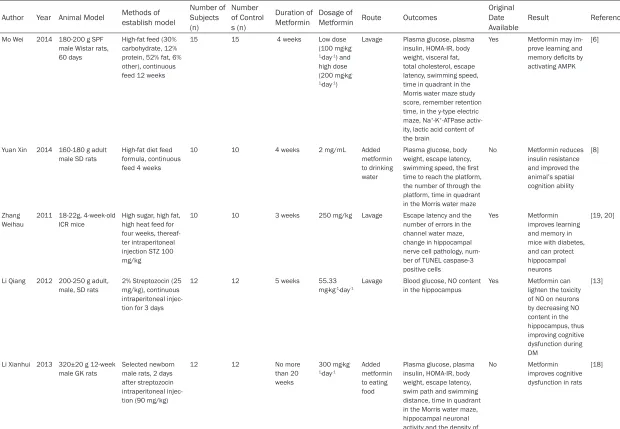
had original data, a quantitative systematic review (meta-analysis) was not feasible. Hence, we proceeded with a non-quantitative system-atic review of RCTs. The main characteristics of the eight trials are summarized in Table 1. Discussion
AD is a complex and heterogeneous disorder and efforts to understand the pathogenesis of AD is ongoing; and hence, the role of DM in increasing the incidence of dementia is largely unknown. Long-term metformin treatment either improved or decreased cognitive func-tion in animals with IR, as reported in the fol-lowing studies.
Li et al. [4] reported that phospho-tau and the β-amyloid peptide (Aβ) levels were increased in the hippocampus area of mice with IR. Concurrently, the levels of phosphorylated/acti-vated 54 KD c-Jun N-terminal kinase (JNK), a major tau protein kinase also significantly increased [5]. However, metformin attenuated the increase of total tau protein, phospho-tau, and activated JNK, and decrease of Aβ levels in the hippocampus of IR mice. This study sug-gested that metformin had a beneficial effect on cognition in IR animals.
Mo Wei et al. [6] put forth a new hypothesis that metformin improved peripheral IR, and protect-ed the central nervous system. Research indi-cates that metformin can activate AMP-activated protein kinase (AMPK); AMPK plays an important role in cell lipid and glucose metabolism. AMPK affects learning and memo-ry function [7]. Further, they suggested that metformin might improve learning and memory deficits in rats with IR by activating AMPK. They also observed that IR prevented insulin from entering the brain; thereby causing an aberra-tion in the energy metabolism in the brain cells, leading to lactic acid accumulation and decline of Na+-K+-ATPase activation in these rats [6]. However, metformin could regulate energy metabolism by promoting the passage of insu-lin into the brain.
Table 1. Characteristics of randomized controlled trials included in the non-quantitative systemic review
Author Year Animal Model Methods of establish model Number of Subjects
(n)
Number of Control s (n)
Duration of
Metformin Dosage of Metformin Route Outcomes
Original Date
Available Result Reference
Mo Wei 2014 180-200 g SPF male Wistar rats, 60 days
High-fat feed (30% carbohydrate, 12% protein, 52% fat, 6% other), continuous feed 12 weeks
15 15 4 weeks Low dose (100 mg·kg -1·day-1) and
high dose (200 mg·kg -1·day-1)
Lavage Plasma glucose, plasma insulin, HOMA-IR, body weight, visceral fat, total cholesterol, escape latency, swimming speed, time in quadrant in the Morris water maze study score, remember retention time, in the y-type electric maze, Na+-K+-ATPase
activ-ity, lactic acid content of the brain
Yes Metformin may im-prove learning and memory deficits by activating AMPK
[6]
Yuan Xin 2014 160-180 g adult male SD rats
High-fat diet feed formula, continuous feed 4 weeks
10 10 4 weeks 2 mg/mL Added metformin to drinking water
Plasma glucose, body weight, escape latency, swimming speed, the first time to reach the platform, the number of through the platform, time in quadrant in the Morris water maze
No Metformin reduces insulin resistance and improved the animal’s spatial cognition ability
[8]
Zhang Weihau
2011 18-22g, 4-week-old ICR mice
High sugar, high fat, high heat feed for four weeks, thereaf-ter intraperitoneal injection STZ 100 mg/kg
10 10 3 weeks 250 mg/kg Lavage Escape latency and the number of errors in the channel water maze, change in hippocampal nerve cell pathology, num-ber of TUNEL caspase-3 positive cells
Yes Metformin improves learning and memory in mice with diabetes, and can protect hippocampal neurons
[19, 20]
Li Qiang 2012 200-250 g adult,
male, SD rats 2% Streptozocin (25 mg/kg), continuous intraperitoneal injec-tion for 3 days
12 12 5 weeks 55.33 mg·kg-1·day-1
Lavage Blood glucose, NO content
in the hippocampus Yes Metformin can lighten the toxicity of NO on neurons by decreasing NO content in the hippocampus, thus improving cognitive dysfunction during DM
[13]
Li Xianhui 2013 320±20 g 12-week
male GK rats Selected newborn male rats, 2 days after streptozocin intraperitoneal injec-tion (90 mg/kg)
12 12 No more than 20 weeks
300 mg·kg -1·day-1
Added metformin to eating food
Plasma glucose, plasma insulin, HOMA-IR, body weight, escape latency, swim path and swimming distance, time in quadrant in the Morris water maze, hippocampal neuronal activity and the density of the dendritic spines
No Metformin improves cognitive dysfunction in rats
Hiranya
Pintana 2012 180-200 g, 5-week-old, male Wistar rats
59.28% fat, 14.27% carbohydrates, 26.45% protein with an energy content of 5.35 kcal/g and 59.28% fat of total energy
8 8 3 weeks 15 mg/kg,
twice daily Gavage Body weight, plasma total cholesterol, total protein, plasma glucose, plasma insulin, HOMA-IR, plasma MDA, brain MDA, time to reach platform, time in target quadrant of the Mor-ris water maze test, brain mitochondrial levels and oxidative stress levels
Incomplete Metformin improved learning and memory be-haviors in HFD-fed rats. Metformin attenuated brain mitochondrial dysfunction and decreased the brain oxidative stress levels in HFD-fed rats
[12]
Jiejie Li 2011 6-week-old male
db/db mice Diabetes-prone mice model 11 11 No more than 18 weeks
200 mg·kg -1·day-1
Intra-peritoneal delivery of metformin
Lactate, glucose, plasma insulin, HbA1cbody weight, time spent in the hole, latency to find target box in the Barnes maze, expres-sion of phosphorylated tau and total tau in the mouse hippocampus, ratio of phosphor tau to total tau, Aβ42 assay
Incomplete Metformin attenu-ated the increase of phosphor-tau and of synapto-physin in the db/ db mouse brain, suggesting a role in these animals with diabetes
[4]
entwining of nerve fibers [10] and skeletal dam-age to the nerve cells. IR can also promote Aβ deposition in the brain, thereby accelerating the symptomatic progress of AD and dementia [11]. However, metformin can rapidly cross the blood brain barrier and probably acts directly as a neuroprotective agent in the central ner-vous system. Thus, metformin aids in improving high blood sugar, reducing the formation of advanced glycosylation terminal product, improving blood flow to the brain and blood brain barrier function, and alleviating the extent of damage to the central nervous system caused by hyperglycemia [8].
Pintana et al. [12] demonstrated that oxidative stress in the brain and plasma, brain mitochon-drial dysfunction, as well as the impairment of cognitive function could be induced by long-term high fat diet. Metformin improved the peripheral insulin sensitivity, thus decreasing plasma and brain mitochondrial oxidative stress, improved brain mitochondrial function, prevented mitochondrial membrane depolar-ization, and protected brain cells from mito-chondrial swelling.
Li et al. [13] discovered that nitric oxide (NO), a kind of free gas molecule, played an important role in tumor destruction, immune defense, blood vessels balance, and nerve conduction. Diabetic microangiopathy could cause hippo-campal ischemia, and subsequently increase the content of excitatory amino acid that could activate N-methyl-aspartate receptor, finally lead to excessive NO production [14, 15]. Excessive NO causes nerve toxicity [16, 17]. Metformin could aid in lowering NO toxicity by decreasing NO content in the hippocampus, thereby, leading to improve cognitive function in diabetes rats.
Li Xian-Hui et al. [18] indicated that cognitive dysfunction induced by DM may be due to the decline in the activity of protein kinase B or Akt of hippocampal neurons, which causes a reduc-tion in cAMP-responsive element-binding pro-tein (CREB) phosphorylation, which in turn, affect the transcription of a variety of target genes related to memory, eventually lead to learning and memory dysfunctions. Therefore, improvement in Akt/CREB signal pathway may be effective in treating diabetic encephalopa-thy. Metformin increases activity of neurons and the density of dendritic spines in the
hip-pocampus. After intervention with metformin, the hippocampal neurons arranged closely, and the cell viability significantly increased, and there was a corresponding significant increase in the density of the dendritic spines. Metformin significantly activated the Akt/CREB pathway and increased the expression of memory-relat-ed proteins in the downstream part of the Akt/ CREB pathway, such as Akt, CREB, synaptophy-sin and glutamate receptor 1. These results suggested that metformin activates these points to play a role in improving cognitive dysfunction.
Conclusion
In conclusion, we opine that these studies indi-cate that metformin ameliorates cognitive dys-function in IR animal models receiving long-term metformin therapy. In this regard, our data indirectly provide the possibility that metformin might improve some of outcomes associated with AD and provide the basis for a therapeutic strategy for the human nervous system. But Clinical trials and further investigations are necessary to confirm the role of metformin on cognitive function in DM.
Acknowledgements
This work was funded by National Natural Science Foundation of China Grants (8107- 0637, 81273082), Shandong Provincial Na- tural Science Foundation of China Grants (No. Y2006C76, Y2008C73, ZR2010HM044), Shandong Provincial Science & Technology Development Program, China (2009GGB- 14001, 2010GSF10228, 2012GGH11862, 2014GSF118118), Fund for the Returned Oversea Scholars Sponsored by National Ministry of Personnel (2008, No. 102), Grant for Excellent Young, and Middle-aged Scientists of Shandong Province (No. 2004BS02016). Disclosure of conflict of interest
None.
References
[1] Vignini A, Giulietti A, Nanetti L, Raffaelli F, Giusti L, Mazzanti L, Provinciali L. Alzheimer’s disease and diabetes: new insights and unify-ing therapies. Curr Diabetes Rev 2013; 9: 218-227.
[2] Cukierman T. Gerstein HC. Williamson JD. Cognitive decline and dementia in diabetes-systematic overview of prospective observa-tional studies. Diabetologia 2005; 48: 2460-2469.
[3] Whitmer R, Quesenberry C, Allison J, Karter A. Anti-hyperglycemic therapy and risk of demen-tia: A new user cohort study. Alzheimers Dement 2013; 9: 136.
[4] Li JJ, Deng J, Sheng WL, Zuo ZY. Metformin at-tenuates Alzheimer’s disease-like neuropa-thology in obese, leptin-resistant mice. Pharmacol Biochem Behav 2012; 101: 564-574.
[5] Malm T, Koistinaho M, Muona A, Magga J, Koistinaho J. The role and therapeutic poten-tial of monocytic cells in Alzheimer’s disease. Glia 2010; 58: 889-900.
[6] Mo W, Qian GF. Metformin for high fat diet in-duced insulin resistance the effect of space cognition, learning and memory and cerebral energy metabolism. Chinese Journal of Gerontology 2014; 34: 2813-2815.
[7] Potter WB, O’Riordan KJ, Barnett D, Osting SM, Wagoner M, Burger C, Roopra A. Metabolic regulation of neuronal plasticity by the energy sensor AMPK. PLoS One 2010; 5: e8996. [8] Yuan X, Chen YB, Gan DN, Cheng YF, Xu JP.
Metformin improves learning and memory of rats induced by high-fat diet. Military Medical Sciences 2014; 38: 17-21.
[9] Clodfelder-Miller BJ, Zmijewska AA, Johnson GV, Jope RS. Tau is hyperphosphorylated at multiple sites in mouse brain in vivo after streptozotocin-induced insulin deficiency. Dia- betes 2006; 55: 3320-3325.
[10] Geschwind DH. Tau phosphorylation, tangles, and neurodegeneration: the chicken or the egg. Neuron 2003; 40: 457-460.
[11] Craft S. Alzheimer disease: insulin resistance and AD-extending the translational path. Nat Rev Neurol 2012; 8: 360-362.
[12] Pintana H, Apaijai N, Pratchayasakul W, Chattipakorn N, Chattipakorn SC. Effects of metformin on learning and memory behaviors and brain mitochondrial functions in high fat diet induced insulin resistant rats. Life Sci 2012; 91: 409-14.
[13] Li Q, Yan Y, Qiao ZY, Chen ZH. Changes of NO content in hippocampus of diabetes mellitus rats and protective effects of sericin. Journal of Chengde Medical College 2012: 234-237. [14] Cardenas A, Moro MA, Hurtado O, Leza JC,
Lorenzo P, Castrillo A, Bodelón OG, Boscá L, Lizasoain I. Implication of glutamate in the ex-pression of inducible nitric oxide synthase af-ter oxygen and glucose deprivation in rat fore-brain slices. J Neurochem 2000; 74: 2041-2048.
[15] Monnerie H, Le Roux PD. Glutamate alteration of glutamic acid decarboxylase (GAD) in GABAergic neurons: the role of cysteine prote-ases. Exp Neurol 2008; 213: 145-153. [16] Parathath SR, Parathath S, Tsirka SE. Nitric
ox-ide mediates neurodegeneration and break-down of the blood-brain barrier in tPA-depen-dent excitotoxic injury in mice. J Cell Sci 2006; 119: 339-349.
[17] Melnik S, Wright M, Tanner JA, Tsintsadze T, Tsintsadze V, Miller AD, Lozovaya N. Diadenosine polyphosphate analog controls postsynaptic excitation in CA3-CA1 synapses via a nitric oxidedependent mechanism. J Pharmacol Exp Ther 2006; 318: 579-588. [18] Li XH. Pentamethylquercetin protects against
cognitive dysfunction in diabetes rats depart-ment of pharmacology. Hubei Tongji Medical College Huazhong University of Science and Technology Wuhan 2013; 1-77.
[19] Zhang WH, Liu Z, Shi FG, Chen ZM. Huanglian wendan tang in mice with type 2 diabetes and the impact on the learning and memory and the form of hippocampal nerve cells. Lishizhen Medicine and Materia Medica Research 2012; 23: 948-949.